
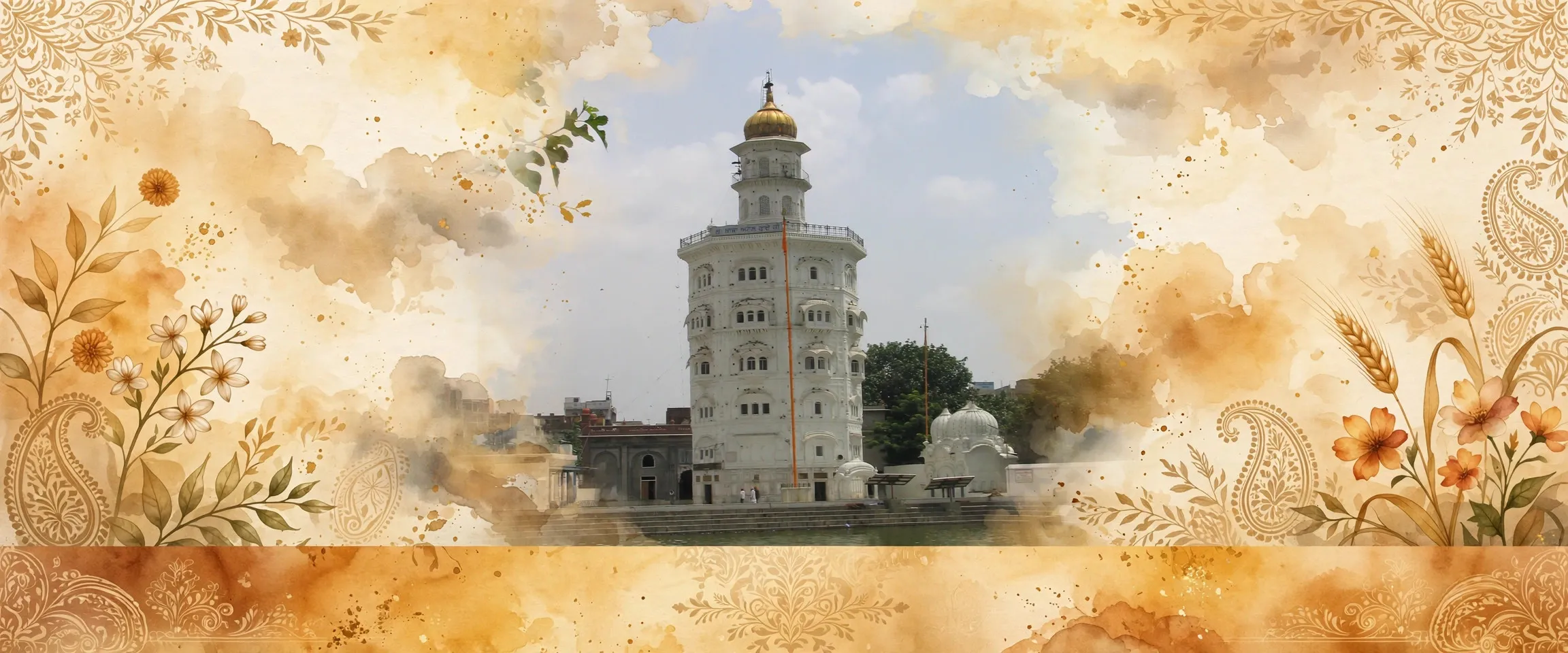
Gurdwara Baba Atal Sahib is a nine-storey octagonal tower in Amritsar, memorialising Baba Atal Rai (1619-1628), the young son of Guru Hargobind. Each of its nine storeys echoes one year of his short life, and its walls carry celebrated 19th-century frescoes of Sikh history. It stands on the bank of the Kaulsar tank, a short walk south of the Golden Temple.
- Punjabi name
- ਗੁਰਦੁਆਰਾ ਬਾਬਾ ਅਟੱਲ ਸਾਹਿਬ
- Name
- Gurdwara Baba Atal Sahib
- Dedicated to
- Baba Atal Rai (1619-1628), son of Guru Hargobind
- Tower
- Nine storeys, about 40 metres high
- Built
- Samadhi early 17th century; present tower late 18th / early 19th century
- Country
- India
- City
- Amritsar, Punjab
Gurdwara Baba Atal Sahib is a nine-storey octagonal tower in Amritsar that memorialises Baba Atal Rai (1619-1628), the young son of Guru Hargobind. Each of its nine storeys echoes one year of his short life, and its walls carry celebrated 19th-century frescoes of Sikh history. It stands on the bank of the Kaulsar tank, a short walk south of the Golden Temple.
Who was Baba Atal Rai?
Atal Rai was a son of Guru Hargobind, the sixth Sikh Guru. Sikh tradition, told in the Gurbilas Chhevin Patshahi, says that as a boy of nine he brought his friend Mohan back to life after the boy died of a snake bite. His father was displeased: the Gurus forbid the display of miracles, teaching that spiritual power should show itself in purity of doctrine and holiness of living. Atal Rai answered that he would lay down his own life for breaking the law of nature. He withdrew to the bank of the Kaulsar tank in Amritsar in a meditative trance, and died there on 13 September 1628. He was cremated on the same bank. Though he died a child, he was honoured with the title of Baba, usually given to aged and respected men, for the spiritual power he had shown.
Why nine storeys?
A small samadhi, a cenotaph, was first raised over the cremation spot, and with the passage of time it grew into a gurdwara. The tower's nine storeys echo the nine years of Baba Atal's life. The present structure was raised in the last quarter of the 18th century: the foundation was laid in 1779, the first two storeys were built under the direction of Jodh Singh Ramgarhia, and the rest rose through the contributions of Sikh sardars and public donations. The gilt dome crowning the tower was presented by Desa Singh Majithia. As early as 1881, a report by Henry Hardy Cole notes the shrine under restoration by the Sikh temple management of Amritsar.
The tower's architecture
Rising about 40 metres, the tower was long the tallest building in Amritsar. It is a double octagon: a larger outer tower rises around a smaller inner one, and the passage between them serves as a circumambulatory. The outer storeys stop at the sixth level while the inner tower climbs the full nine, crowned by the gilded dome. A double staircase runs within the thickness of the walls, giving entry to every floor; the tower is climbed by 110 steps. The ground floor has four doors, one on each side, with the main entrance facing east. Within the inner octagon the Guru Granth Sahib rests beneath a finely wrought brass canopy topped by a chhatri. The doors are of brass and silver, embossed with figures from Sikh and Hindu themes. From the middle of the 19th century onward, devotees presented embossed brass plates, and some still carry the donors' names and addresses. A treasury building, the toshakhana, stands beside the tower.
Frescoes of Sikh history
The first floor's walls carry one of Punjab's great mural cycles. A long series unfolds the life of Guru Nanak from the Janam Sakhi tradition: it opens with the gods entreating the Almighty to send a holy person to relieve the earth of the dark age, and closes with Nanak appointing Angad as his successor. Other panels show Nanak's childhood, including the school scene where the young Nanak explains the first letter to his teacher; the ten Gurus; the lineage of Baba Buddha; Sri Chand and Lakhmi Das, the sons of Guru Nanak; the Sikh martyrs, including the four sons of Guru Gobind Singh; and the battle of Muktsar. The murals were painted in the last decade of the 19th century, in Indian red, ochre and earth colours with touches of gold, by artists including Mehtab Singh. Many have been lost: a 1971 repainting in gaudy chemical colours damaged the old work, and by 1988 only 42 panels survived.
The langar and the Baba Atal saying
The gurdwara was famed for its langar. Pilgrims and the destitute were fed freely through the day, and devotees brought prepared food to be shared with all who were present. From this grew a saying heard across Punjab: "Baba Atal, pakkian pakain chall", meaning Baba Atal sends prepared meals. The shrine still feeds the poor and the needy.
Visiting Gurdwara Baba Atal Sahib
The gurdwara stands south of the Golden Temple on the bank of the Kaulsar, one of Amritsar's five holy sarovars, near Sarai Guru Ram Das. It is an easy walk from the main complex, and visitors climb the tower for its murals and its view: in 1903 the rooftop offered a panorama stretching from the Himalayas in the north to Tarn Taran in the east. It pairs naturally with the Harmandir Sahib and the Akal Takht in a day's pilgrimage through Amritsar. More of the city's historic shrines are listed in the Gurdwaras in India guide.
ਗੁਰਦੁਆਰਾ ਬਾਬਾ ਅਟੱਲ ਸਾਹਿਬ ਅੰਮ੍ਰਿਤਸਰ ਵਿੱਚ ਇੱਕ ਨੌ-ਮੰਜ਼ਿਲਾ ਅੱਠ-ਕੋਣਾ ਬੁਰਜ ਹੈ, ਜੋ ਬਾਬਾ ਅਟੱਲ ਰਾਏ (1619-1628) ਦੀ ਯਾਦ ਵਿੱਚ ਬਣਿਆ ਹੈ ਬਾਬਾ ਅਟੱਲ ਰਾਏ ਗੁਰੂ ਹਰਿਗੋਬਿੰਦ ਸਾਹਿਬ ਦੇ ਛੋਟੇ ਸਪੁੱਤਰ ਸਨ ਬੁਰਜ ਦੀਆਂ ਨੌ ਮੰਜ਼ਿਲਾਂ ਉਨ੍ਹਾਂ ਦੇ ਨੌ ਸਾਲਾਂ ਦੇ ਜੀਵਨ ਦੀ ਯਾਦ ਦਿਵਾਉਂਦੀਆਂ ਹਨ, ਅਤੇ ਇਸ ਦੀਆਂ ਕੰਧਾਂ ਉੱਤੇ ਸਿੱਖ ਇਤਿਹਾਸ ਦੀਆਂ ਮਸ਼ਹੂਰ ਫਰੈਸਕੋ ਪੇਂਟਿੰਗਾਂ ਬਣੀਆਂ ਹੋਈਆਂ ਹਨ ਇਹ ਗੁਰਦੁਆਰਾ ਕੌਲਸਰ ਸਰੋਵਰ ਦੇ ਕੰਢੇ, ਹਰਿਮੰਦਰ ਸਾਹਿਬ ਤੋਂ ਥੋੜ੍ਹੀ ਦੂਰ ਦੱਖਣ ਵੱਲ ਹੈ
ਬਾਬਾ ਅਟੱਲ ਰਾਏ ਕੌਣ ਸਨ?
ਅਟੱਲ ਰਾਏ ਛੇਵੇਂ ਸਿੱਖ ਗੁਰੂ, ਗੁਰੂ ਹਰਿਗੋਬਿੰਦ ਸਾਹਿਬ ਦੇ ਸਪੁੱਤਰ ਸਨ ਗੁਰਬਿਲਾਸ ਛੇਵੀਂ ਪਾਤਸ਼ਾਹੀ ਵਿੱਚ ਲਿਖਿਆ ਹੈ ਕਿ ਨੌ ਸਾਲ ਦੀ ਉਮਰ ਵਿੱਚ ਉਨ੍ਹਾਂ ਨੇ ਆਪਣੇ ਮਿੱਤਰ ਮੋਹਨ ਨੂੰ ਜਿਉਂਦਾ ਕਰ ਦਿੱਤਾ ਸੀ, ਜੋ ਸੱਪ ਦੇ ਡੰਗਣ ਨਾਲ ਮਰ ਗਿਆ ਸੀ ਪਿਤਾ ਨੂੰ ਇਹ ਚੰਗਾ ਨਾ ਲੱਗਾ: ਗੁਰੂ ਸਾਹਿਬਾਨ ਕਰਾਮਾਤ ਦਿਖਾਉਣ ਦੀ ਮਨਾਹੀ ਕਰਦੇ ਹਨ, ਅਤੇ ਸਿਖਾਉਂਦੇ ਹਨ ਕਿ ਰੂਹਾਨੀ ਸ਼ਕਤੀ ਸਿਧਾਂਤ ਦੀ ਪਵਿੱਤਰਤਾ ਅਤੇ ਜੀਵਨ ਦੀ ਸੁੱਚਤਾ ਵਿੱਚ ਦਿਖਣੀ ਚਾਹੀਦੀ ਹੈ ਅਟੱਲ ਰਾਏ ਨੇ ਕਿਹਾ ਕਿ ਕੁਦਰਤ ਦੇ ਨੇਮ ਨੂੰ ਤੋੜਨ ਦੀ ਸਜ਼ਾ ਵਜੋਂ ਉਹ ਆਪਣੀ ਜਾਨ ਦੇ ਦੇਣਗੇ ਉਹ ਅੰਮ੍ਰਿਤਸਰ ਦੇ ਕੌਲਸਰ ਸਰੋਵਰ ਦੇ ਕੰਢੇ ਸਮਾਧੀ ਵਿੱਚ ਬੈਠ ਗਏ ਅਤੇ 13 ਸਤੰਬਰ 1628 ਨੂੰ ਅਕਾਲ ਚਲਾਣਾ ਕਰ ਗਏ ਉਨ੍ਹਾਂ ਦਾ ਸਸਕਾਰ ਉਸੇ ਕੰਢੇ ਕੀਤਾ ਗਿਆ ਭਾਵੇਂ ਉਹ ਬਾਲ ਉਮਰ ਵਿੱਚ ਹੀ ਚਲੇ ਗਏ, ਉਨ੍ਹਾਂ ਦੀ ਰੂਹਾਨੀ ਸ਼ਕਤੀ ਕਾਰਨ ਉਨ੍ਹਾਂ ਨੂੰ ਬਾਬਾ ਦਾ ਖ਼ਿਤਾਬ ਦਿੱਤਾ ਗਿਆ, ਜੋ ਆਮ ਤੌਰ ਉੱਤੇ ਬਜ਼ੁਰਗਾਂ ਨੂੰ ਮਿਲਦਾ ਹੈ
ਨੌ ਮੰਜ਼ਿਲਾਂ ਕਿਉਂ?
ਪਹਿਲਾਂ ਸਸਕਾਰ ਵਾਲੀ ਥਾਂ ਉੱਤੇ ਇੱਕ ਛੋਟੀ ਸਮਾਧੀ ਬਣਾਈ ਗਈ, ਜੋ ਸਮੇਂ ਨਾਲ ਗੁਰਦੁਆਰਾ ਬਣ ਗਈ ਬੁਰਜ ਦੀਆਂ ਨੌ ਮੰਜ਼ਿਲਾਂ ਬਾਬਾ ਅਟੱਲ ਦੇ ਨੌ ਸਾਲਾਂ ਦੇ ਜੀਵਨ ਦੀ ਯਾਦ ਦਿਵਾਉਂਦੀਆਂ ਹਨ ਮੌਜੂਦਾ ਇਮਾਰਤ ਅਠਾਰਵੀਂ ਸਦੀ ਦੇ ਆਖ਼ਰੀ ਹਿੱਸੇ ਵਿੱਚ ਬਣੀ: 1779 ਵਿੱਚ ਨੀਂਹ ਰੱਖੀ ਗਈ, ਪਹਿਲੀਆਂ ਦੋ ਮੰਜ਼ਿਲਾਂ ਜੋਧ ਸਿੰਘ ਰਾਮਗੜ੍ਹੀਆ ਦੀ ਨਿਗਰਾਨੀ ਵਿੱਚ ਬਣੀਆਂ, ਅਤੇ ਬਾਕੀ ਸਿੱਖ ਸਰਦਾਰਾਂ ਤੇ ਸੰਗਤ ਦੇ ਦਾਨ ਨਾਲ ਉੱਸਰੀਆਂ ਬੁਰਜ ਦੇ ਸਿਖਰਲਾ ਸੁਨਹਿਰੀ ਗੁੰਬਦ ਦੇਸਾ ਸਿੰਘ ਮਜੀਠੀਆ ਨੇ ਭੇਟ ਕੀਤਾ ਸੀ 1881 ਵਿੱਚ ਹੈਨਰੀ ਹਾਰਡੀ ਕੋਲ ਦੀ ਰਿਪੋਰਟ ਵਿੱਚ ਵੀ ਇਸ ਅਸਥਾਨ ਦੀ ਮੁਰੰਮਤ ਦਾ ਜ਼ਿਕਰ ਹੈ
ਬੁਰਜ ਦੀ ਬਣਤਰ
ਲਗਭਗ 40 ਮੀਟਰ ਉੱਚਾ ਇਹ ਬੁਰਜ ਲੰਮੇ ਸਮੇਂ ਤੱਕ ਅੰਮ੍ਰਿਤਸਰ ਦੀ ਸਭ ਤੋਂ ਉੱਚੀ ਇਮਾਰਤ ਰਿਹਾ ਇਹ ਦੋਹਰਾ ਅੱਠ-ਕੋਣਾ ਹੈ: ਇੱਕ ਵੱਡਾ ਬਾਹਰਲਾ ਬੁਰਜ ਛੋਟੇ ਅੰਦਰਲੇ ਬੁਰਜ ਦੇ ਦੁਆਲੇ ਉੱਠਦਾ ਹੈ, ਅਤੇ ਵਿਚਕਾਰਲੀ ਥਾਂ ਪ੍ਰਕਰਮਾ ਦਾ ਕੰਮ ਦਿੰਦੀ ਹੈ ਬਾਹਰਲੀਆਂ ਮੰਜ਼ਿਲਾਂ ਛੇਵੇਂ ਪੱਧਰ ਉੱਤੇ ਰੁਕ ਜਾਂਦੀਆਂ ਹਨ, ਜਦੋਂ ਕਿ ਅੰਦਰਲਾ ਬੁਰਜ ਪੂਰੀਆਂ ਨੌ ਮੰਜ਼ਿਲਾਂ ਚੜ੍ਹਦਾ ਹੈ ਅਤੇ ਸੁਨਹਿਰੀ ਗੁੰਬਦ ਨਾਲ ਮੁਕੰਮਲ ਹੁੰਦਾ ਹੈ ਕੰਧਾਂ ਦੀ ਮੋਟਾਈ ਵਿੱਚ ਦੋਹਰੀ ਪੌੜੀ ਹਰ ਮੰਜ਼ਿਲ ਤੱਕ ਜਾਂਦੀ ਹੈ; ਬੁਰਜ ਉੱਤੇ 110 ਪੌੜੀਆਂ ਚੜ੍ਹੀਆਂ ਜਾਂਦੀਆਂ ਹਨ ਹੇਠਲੀ ਮੰਜ਼ਿਲ ਵਿੱਚ ਚਾਰ ਦਰਵਾਜ਼ੇ ਹਨ, ਮੁੱਖ ਦਰਵਾਜ਼ਾ ਪੂਰਬ ਵੱਲ ਅੰਦਰਲੇ ਅੱਠ-ਕੋਣੇ ਵਿੱਚ ਗੁਰੂ ਗ੍ਰੰਥ ਸਾਹਿਬ ਪਿੱਤਲ ਦੇ ਸੁੰਦਰ ਚੰਦੋਏ ਹੇਠ ਸੁਸ਼ੋਭਿਤ ਹਨ ਦਰਵਾਜ਼ੇ ਪਿੱਤਲ ਅਤੇ ਚਾਂਦੀ ਦੇ ਹਨ, ਜਿਨ੍ਹਾਂ ਉੱਤੇ ਸਿੱਖ ਅਤੇ ਹਿੰਦੂ ਵਿਸ਼ਿਆਂ ਦੀਆਂ ਤਸਵੀਰਾਂ ਉੱਕਰੀਆਂ ਹੋਈਆਂ ਹਨ ਉਨ੍ਹੀਵੀਂ ਸਦੀ ਦੇ ਮੱਧ ਤੋਂ ਸ਼ਰਧਾਲੂ ਪਿੱਤਲ ਦੀਆਂ ਉੱਕਰੀਆਂ ਤਖ਼ਤੀਆਂ ਭੇਟ ਕਰਦੇ ਆਏ ਹਨ
ਸਿੱਖ ਇਤਿਹਾਸ ਦੀਆਂ ਫਰੈਸਕੋ ਪੇਂਟਿੰਗਾਂ
ਪਹਿਲੀ ਮੰਜ਼ਿਲ ਦੀਆਂ ਕੰਧਾਂ ਉੱਤੇ ਪੰਜਾਬ ਦੀਆਂ ਮਹਾਨ ਕੰਧ-ਚਿੱਤਰ ਲੜੀਆਂ ਵਿੱਚੋਂ ਇੱਕ ਬਣੀ ਹੋਈ ਹੈ ਇੱਕ ਲੰਮੀ ਲੜੀ ਜਨਮਸਾਖੀ ਪਰੰਪਰਾ ਅਨੁਸਾਰ ਗੁਰੂ ਨਾਨਕ ਦੇਵ ਜੀ ਦਾ ਜੀਵਨ ਦਿਖਾਉਂਦੀ ਹੈ: ਇਹ ਦੇਵਤਿਆਂ ਦੀ ਅਕਾਲ ਪੁਰਖ ਅੱਗੇ ਅਰਦਾਸ ਤੋਂ ਸ਼ੁਰੂ ਹੁੰਦੀ ਹੈ ਕਿ ਕਲਿਯੁਗ ਵਿੱਚ ਧਰਤੀ ਦਾ ਭਾਰ ਲਾਹੁਣ ਲਈ ਕੋਈ ਪਵਿੱਤਰ ਪੁਰਸ਼ ਭੇਜਿਆ ਜਾਵੇ, ਅਤੇ ਨਾਨਕ ਦੇਵ ਜੀ ਵੱਲੋਂ ਅੰਗਦ ਦੇਵ ਜੀ ਨੂੰ ਗੁਰਗੱਦੀ ਸੌਂਪਣ ਉੱਤੇ ਮੁੱਕਦੀ ਹੈ ਹੋਰ ਤਸਵੀਰਾਂ ਵਿੱਚ ਨਾਨਕ ਦੇਵ ਜੀ ਦਾ ਬਚਪਨ, ਦਸ ਗੁਰੂ ਸਾਹਿਬਾਨ, ਬਾਬਾ ਬੁੱਢਾ ਜੀ ਦੀ ਵੰਸ਼ਾਵਲੀ, ਸ੍ਰੀ ਚੰਦ ਅਤੇ ਲੱਖਮੀ ਦਾਸ, ਸ਼ਹੀਦ ਸਿੰਘ ਅਤੇ ਮੁਕਤਸਰ ਦੀ ਲੜਾਈ ਦਿਖਾਈ ਦਿੰਦੀ ਹੈ ਇਹ ਪੇਂਟਿੰਗਾਂ ਉਨ੍ਹੀਵੀਂ ਸਦੀ ਦੇ ਆਖ਼ਰੀ ਦਹਾਕੇ ਵਿੱਚ ਬਣੀਆਂ ਸਨ, ਜਿਨ੍ਹਾਂ ਵਿੱਚ ਮਹਿਤਾਬ ਸਿੰਘ ਵਰਗੇ ਕਾਰੀਗਰਾਂ ਨੇ ਕੰਮ ਕੀਤਾ ਬਹੁਤ ਸਾਰੀਆਂ ਨਸ਼ਟ ਹੋ ਚੁੱਕੀਆਂ ਹਨ: 1971 ਵਿੱਚ ਭੜਕੀਲੇ ਰਸਾਇਣਕ ਰੰਗਾਂ ਨਾਲ ਕੀਤੀ ਗਈ ਮੁਰੰਮਤ ਨੇ ਪੁਰਾਣੇ ਕੰਮ ਨੂੰ ਨੁਕਸਾਨ ਪਹੁੰਚਾਇਆ, ਅਤੇ 1988 ਤੱਕ ਸਿਰਫ਼ 42 ਪੈਨਲ ਬਚੇ ਸਨ
ਲੰਗਰ ਅਤੇ ਬਾਬਾ ਅਟੱਲ ਦੀ ਕਹਾਵਤ
ਇਹ ਗੁਰਦੁਆਰਾ ਆਪਣੇ ਲੰਗਰ ਲਈ ਮਸ਼ਹੂਰ ਸੀ ਸਾਰਾ ਦਿਨ ਸ਼ਰਧਾਲੂ ਅਤੇ ਲੋੜਵੰਦ ਮੁਫ਼ਤ ਛਕਦੇ ਸਨ, ਅਤੇ ਸੰਗਤ ਤਿਆਰ ਭੋਜਨ ਲਿਆ ਕੇ ਸਭ ਵਿੱਚ ਵੰਡਦੀ ਸੀ ਇਸੇ ਤੋਂ ਪੰਜਾਬ ਭਰ ਵਿੱਚ ਕਹਾਵਤ ਬਣੀ: 'ਬਾਬਾ ਅਟੱਲ, ਪੱਕੀਆਂ ਪਕਾਈਆਂ ਚੱਲ', ਭਾਵ ਬਾਬਾ ਅਟੱਲ ਤਿਆਰ ਭੋਜਨ ਭੇਜਦਾ ਹੈ ਇਹ ਅਸਥਾਨ ਅੱਜ ਵੀ ਗ਼ਰੀਬਾਂ ਅਤੇ ਲੋੜਵੰਦਾਂ ਨੂੰ ਛਕਾਉਂਦਾ ਹੈ
ਗੁਰਦੁਆਰਾ ਬਾਬਾ ਅਟੱਲ ਸਾਹਿਬ ਦੇ ਦਰਸ਼ਨ
ਇਹ ਗੁਰਦੁਆਰਾ ਹਰਿਮੰਦਰ ਸਾਹਿਬ ਤੋਂ ਦੱਖਣ ਵੱਲ, ਅੰਮ੍ਰਿਤਸਰ ਦੇ ਪੰਜ ਪਵਿੱਤਰ ਸਰੋਵਰਾਂ ਵਿੱਚੋਂ ਇੱਕ ਕੌਲਸਰ ਦੇ ਕੰਢੇ, ਸਰਾਂ ਗੁਰੂ ਰਾਮਦਾਸ ਦੇ ਨੇੜੇ ਹੈ ਮੁੱਖ ਕੰਪਲੈਕਸ ਤੋਂ ਇਹ ਪੈਦਲ ਹੀ ਪਹੁੰਚਿਆ ਜਾ ਸਕਦਾ ਹੈ ਸ਼ਰਧਾਲੂ ਪੇਂਟਿੰਗਾਂ ਅਤੇ ਨਜ਼ਾਰੇ ਲਈ ਬੁਰਜ ਉੱਤੇ ਚੜ੍ਹਦੇ ਹਨ: 1903 ਵਿੱਚ ਇਸ ਦੀ ਛੱਤ ਤੋਂ ਉੱਤਰ ਵਿੱਚ ਹਿਮਾਲਿਆ ਤੋਂ ਲੈ ਕੇ ਪੂਰਬ ਵਿੱਚ ਤਰਨ ਤਾਰਨ ਤੱਕ ਦਾ ਨਜ਼ਾਰਾ ਦਿਖਦਾ ਸੀ ਇਹ ਹਰਿਮੰਦਰ ਸਾਹਿਬ ਅਤੇ ਅਕਾਲ ਤਖ਼ਤ ਦੇ ਨਾਲ ਅੰਮ੍ਰਿਤਸਰ ਦੀ ਇੱਕ ਦਿਨ ਦੀ ਯਾਤਰਾ ਵਿੱਚ ਸੋਹਣਾ ਜੁੜਦਾ ਹੈ