
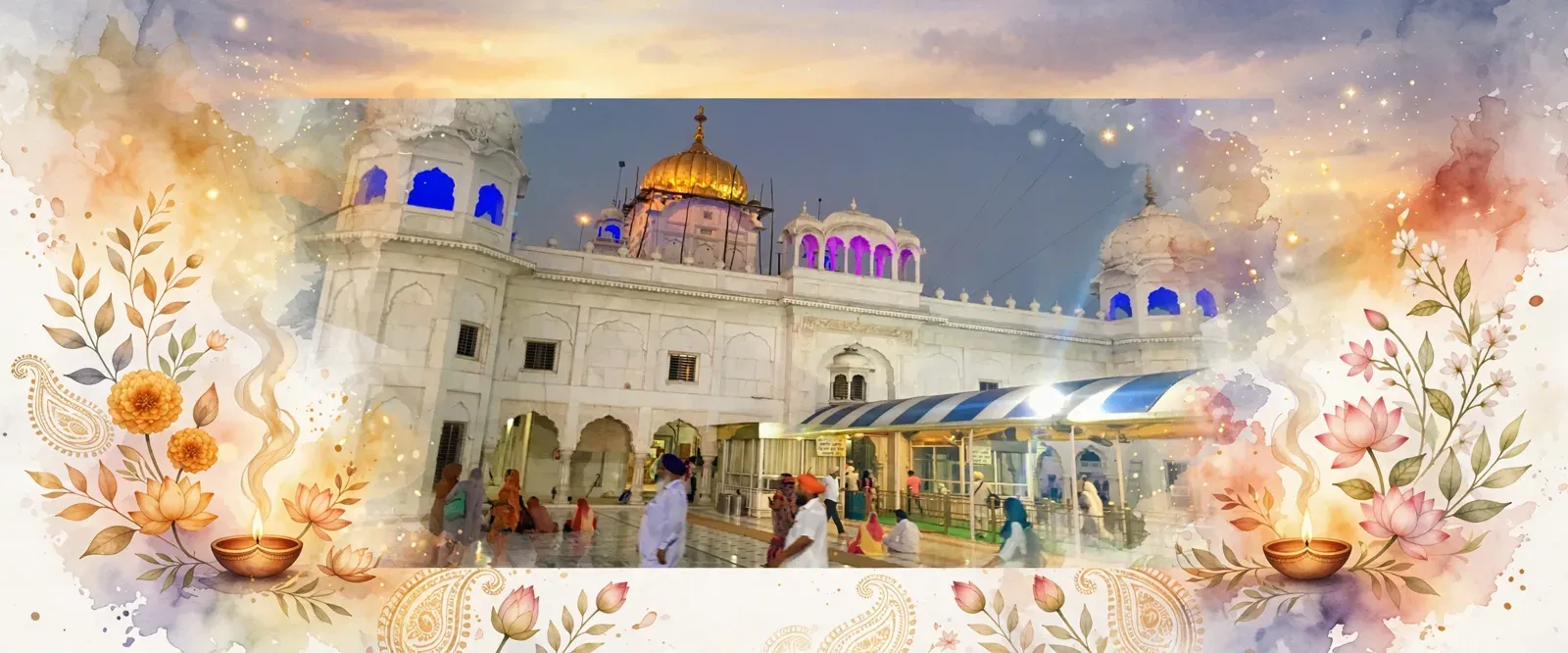
Gurdwara Dukhniwaran Sahib is a historic gurdwara in Patiala, Punjab, on the site of Lehal village, where Guru Tegh Bahadur Ji sat under a banyan tree beside a pond on 24 January 1672 at the villagers' request. Tradition holds that the sickness troubling Lehal then subsided, giving the place its name, eradicator of suffering, and its sarovar is still visited for its healing repute.
- Punjabi name
- ਗੁਰਦੁਆਰਾ ਦੁਖਨਿਵਾਰਨ ਸਾਹਿਬ
- Type
- Historic gurdwara
- Country
- India
- City
- Patiala
- District
- Patiala
- Region
- Malwa
All 11 facts
- Earlier village
- Lehal, now part of Patiala city
- Associated event
- Visit of Guru Tegh Bahadur Ji, 24 January 1672
- Present building
- Built 1930 to 1942 under Maharaja Yadavindra Singh
- Administered by
- Shiromani Gurdwara Parbandhak Committee
- Main festival
- Basant Panchami, marking the day of the Guru's visit
Gurdwara Dukhniwaran Sahib is a historic gurdwara in Patiala, Punjab, standing where the village of Lehal once was, on the spot where Guru Tegh Bahadur Ji sat under a banyan tree beside a pond on 24 January 1672. Local tradition holds that a sickness troubling the village eased after his visit, and the place took the name Dukh Nivaran: the eradicator of suffering. Its sarovar is still visited for its healing repute.
Why is it called Dukh Nivaran, the eradicator of suffering?
It is called Dukh Nivaran because of what the village believed happened here in 1672. Lehal had long been troubled by a serious and mysterious sickness. After Guru Tegh Bahadur Ji came at the villagers' request, sat by the pond and held his diwan under the banyan, the sickness subsided. The ground where he sat was remembered by the meaning of the event itself: dukh is suffering, and nivaran is its removal. The name is not a title given later by any court or committee. It is the village's own verdict on the day, kept for three and a half centuries.
A village asks for help: the visit of 1672
The story is preserved, the gurdwara says, in an old handwritten document still kept at the shrine. Bhag Ram, a jhivar of Lehal, heard that Guru Tegh Bahadur Ji was staying at nearby Saifabad, now Bahadurgarh, and went to him with a simple request: come to our village, bless it, and free its people from the sickness that has been their burden for so long. The Guru agreed. On Magh Sudi 5, 1728 Bikram, which is 24 January 1672, he came to Lehal, sat under the banyan tree beside the village pond, and spent time there in prayer and discourse.
What followed is the heart of the shrine. The sickness in the village subsided, and the pond beside which the Guru had sat gained a lasting repute for healing. Devotees have held that faith ever since: the water of the sarovar that later took the pond's place is still approached by people carrying illness and worry, in the belief that the Guru's visit blessed this ground in a way that did not end with his departure.
The garden, the banyan and the railway that stopped
For generations the site was kept not by a building but by a garden. Raja Amar Singh of Patiala, who ruled from 1748 to 1782, had a memorial garden laid out here and entrusted it to Nihang Sikhs. Records of a court case in 1870 still speak of a Guru's garden and a Nihangs' well on the spot, which tells us the memory was being actively tended more than a century after the visit, long before any gurdwara stood here.
The banyan tree itself became the shrine's defender. In 1920, surveyors marking the proposed Sirhind to Patiala to Jakhal railway line found that the line would require the old tree to be felled. The men charged with cutting it refused to touch it. The matter rose to Maharaja Bhupinder Singh of Patiala, who ordered the entire project cancelled rather than see the tree destroyed. A railway was given up for a tree, because the tree was the last living witness of 1672 that Lehal possessed.
The shrine built at last, 1930 to 1942
Remarkably, no gurdwara building rose here until the twentieth century. Only in 1930 was a committee formed to collect funds and begin construction, and the work took twelve years, completing in 1942. Maharaja Yadavindra Singh, the last Maharaja of Patiala and a devout Sikh, built the present building and its sarovar. On completion the gurdwara passed under the Patiala state government, then to the Dharam Arth Board of the Patiala and East Punjab States Union, and eventually to the Shiromani Gurdwara Parbandhak Committee, which administers it today.
Architecture and the healing sarovar
The complex spreads over several acres. A two storey gateway with a collapsible iron gate and black and white marble flooring opens onto the pathway to the main building. To the left of that path stands a small marble shrine marking the very place where the Guru sat under the banyan. The central building is two storeys on a raised base, with an octagonal domed chamber at each corner and a pinnacled lotus dome above, its round sun windows set into each side. Inside, white and grey marble paves the floor and panels the walls and pillars, the ceiling carries floral stucco work, and the Guru Granth Sahib is seated under a square canopy at the far end.
The sarovar, about 75 metres square and since considerably extended, lies to the right as one enters, with the Guru ka Langar on the left. For most visitors the sarovar is the reason for coming: people bathe in it or take its water home in faith in the healing repute it has carried since the pond of Lehal. The gurdwara's daily life runs on that faith and on the ordinary rhythm of Sikh worship: kirtan, the reading of the Guru Granth Sahib, and langar served to all.
Festivals and visiting Dukhniwaran Sahib
A large gathering is held here on the fifth day of the light half of every lunar month, but the festival of the year is Basant Panchami, which marks the day of Guru Tegh Bahadur Ji's visit itself. Patiala keeps its Guru Tegh Bahadur memory at two shrines: this one, from his 1672 visit to Lehal, and Gurdwara Moti Bagh Sahib, which marks a halt on his final journey in 1675. Pilgrims often visit both in one round of the city. Patiala has its own railway station and road links with Chandigarh, Ambala and Ludhiana, and the gurdwara stands within the city, in what was once Lehal village. The Gurdwaras in India guide lists Dukhniwaran Sahib among Patiala's essential shrines.
ਗੁਰਦੁਆਰਾ ਦੁਖਨਿਵਾਰਨ ਸਾਹਿਬ ਪੰਜਾਬ ਦੇ ਪਟਿਆਲਾ ਸ਼ਹਿਰ ਵਿੱਚ ਇੱਕ ਇਤਿਹਾਸਕ ਗੁਰਦੁਆਰਾ ਹੈ, ਜੋ ਉਸ ਥਾਂ ਉੱਤੇ ਖੜ੍ਹਾ ਹੈ ਜਿੱਥੇ ਕਦੇ ਲੇਹਲ ਪਿੰਡ ਹੁੰਦਾ ਸੀ, ਉਸੇ ਥਾਂ ਉੱਤੇ ਜਿੱਥੇ ਗੁਰੂ ਤੇਗ਼ ਬਹਾਦਰ ਜੀ 24 ਜਨਵਰੀ 1672 ਨੂੰ ਇੱਕ ਛੱਪੜ ਕੰਢੇ ਬੋਹੜ ਹੇਠ ਬੈਠੇ ਸਨ ਸਥਾਨਕ ਪਰੰਪਰਾ ਅਨੁਸਾਰ ਉਨ੍ਹਾਂ ਦੇ ਆਉਣ ਤੋਂ ਬਾਅਦ ਪਿੰਡ ਨੂੰ ਤੰਗ ਕਰਦੀ ਬਿਮਾਰੀ ਘੱਟ ਗਈ, ਅਤੇ ਇਸ ਥਾਂ ਦਾ ਨਾਂ ਦੁਖ ਨਿਵਾਰਨ ਪੈ ਗਿਆ: ਦੁੱਖਾਂ ਨੂੰ ਦੂਰ ਕਰਨ ਵਾਲਾ ਇਸ ਦਾ ਸਰੋਵਰ ਅੱਜ ਵੀ ਆਪਣੀ ਸ਼ਫ਼ਾ ਵਾਲੀ ਮਹਿਮਾ ਲਈ ਜਾਣਿਆ ਜਾਂਦਾ ਹੈ
ਇਸ ਨੂੰ ਦੁਖ ਨਿਵਾਰਨ, ਦੁੱਖਾਂ ਦਾ ਨਿਵਾਰਨ ਕਰਨ ਵਾਲਾ, ਕਿਉਂ ਕਹਿੰਦੇ ਹਨ?
ਇਸ ਨੂੰ ਦੁਖ ਨਿਵਾਰਨ ਇਸ ਲਈ ਕਹਿੰਦੇ ਹਨ ਕਿਉਂਕਿ ਪਿੰਡ ਦਾ ਵਿਸ਼ਵਾਸ ਹੈ ਕਿ 1672 ਵਿੱਚ ਇੱਥੇ ਇਹੀ ਹੋਇਆ ਸੀ ਲੇਹਲ ਲੰਬੇ ਸਮੇਂ ਤੋਂ ਇੱਕ ਗੰਭੀਰ ਅਤੇ ਰਹੱਸਮਈ ਬਿਮਾਰੀ ਤੋਂ ਤੰਗ ਸੀ ਜਦੋਂ ਗੁਰੂ ਤੇਗ਼ ਬਹਾਦਰ ਜੀ ਪਿੰਡ ਵਾਲਿਆਂ ਦੀ ਬੇਨਤੀ ਉੱਤੇ ਆਏ, ਛੱਪੜ ਕੰਢੇ ਬੈਠੇ ਅਤੇ ਬੋਹੜ ਹੇਠ ਦੀਵਾਨ ਸਜਾਇਆ, ਤਾਂ ਬਿਮਾਰੀ ਘੱਟ ਗਈ ਜਿਸ ਥਾਂ ਉੱਤੇ ਉਹ ਬੈਠੇ ਸਨ, ਉਸ ਨੂੰ ਉਸੇ ਘਟਨਾ ਦੇ ਅਰਥ ਨਾਲ ਯਾਦ ਕੀਤਾ ਗਿਆ: ਦੁਖ ਦਾ ਮਤਲਬ ਹੈ ਪੀੜਾ, ਅਤੇ ਨਿਵਾਰਨ ਦਾ ਮਤਲਬ ਹੈ ਉਸ ਨੂੰ ਦੂਰ ਕਰਨਾ ਇਹ ਨਾਂ ਕਿਸੇ ਦਰਬਾਰ ਜਾਂ ਕਮੇਟੀ ਨੇ ਬਾਅਦ ਵਿੱਚ ਨਹੀਂ ਦਿੱਤਾ ਇਹ ਉਸ ਦਿਨ ਬਾਰੇ ਪਿੰਡ ਦਾ ਆਪਣਾ ਫ਼ੈਸਲਾ ਹੈ, ਜੋ ਸਾਢੇ ਤਿੰਨ ਸਦੀਆਂ ਤੋਂ ਕਾਇਮ ਹੈ
ਇੱਕ ਪਿੰਡ ਮਦਦ ਮੰਗਦਾ ਹੈ: 1672 ਦਾ ਫੇਰਾ
ਇਹ ਕਹਾਣੀ, ਗੁਰਦੁਆਰਾ ਸਾਹਿਬ ਦੱਸਦਾ ਹੈ, ਇੱਕ ਪੁਰਾਣੇ ਹੱਥ ਲਿਖਤ ਦਸਤਾਵੇਜ਼ ਵਿੱਚ ਸੰਭਾਲੀ ਹੋਈ ਹੈ ਜੋ ਅਜੇ ਵੀ ਇਸ ਅਸਥਾਨ ਉੱਤੇ ਰੱਖਿਆ ਹੈ ਲੇਹਲ ਦੇ ਇੱਕ ਝਿਊਰ, ਭਾਗ ਰਾਮ, ਨੇ ਸੁਣਿਆ ਕਿ ਗੁਰੂ ਤੇਗ਼ ਬਹਾਦਰ ਜੀ ਨੇੜਲੇ ਸੈਫ਼ਾਬਾਦ, ਅੱਜ ਦੇ ਬਹਾਦਰਗੜ੍ਹ, ਵਿੱਚ ਠਹਿਰੇ ਹੋਏ ਹਨ, ਅਤੇ ਉਹ ਇੱਕ ਸਾਦੀ ਬੇਨਤੀ ਲੈ ਕੇ ਉਨ੍ਹਾਂ ਕੋਲ ਗਿਆ: ਸਾਡੇ ਪਿੰਡ ਆਓ, ਇਸ ਨੂੰ ਅਸੀਸ ਦਿਓ, ਅਤੇ ਇਸ ਦੇ ਲੋਕਾਂ ਨੂੰ ਉਸ ਬਿਮਾਰੀ ਤੋਂ ਛੁਟਕਾਰਾ ਦਿਵਾਓ ਜੋ ਲੰਬੇ ਸਮੇਂ ਤੋਂ ਉਨ੍ਹਾਂ ਦਾ ਭਾਰ ਬਣੀ ਹੋਈ ਹੈ ਗੁਰੂ ਜੀ ਮੰਨ ਗਏ ਮਾਘ ਸੁਦੀ 5, 1728 ਬਿਕਰਮੀ ਨੂੰ, ਜੋ 24 ਜਨਵਰੀ 1672 ਬਣਦੀ ਹੈ, ਉਹ ਲੇਹਲ ਆਏ, ਪਿੰਡ ਦੇ ਛੱਪੜ ਕੰਢੇ ਬੋਹੜ ਹੇਠ ਬੈਠੇ, ਅਤੇ ਕੁਝ ਸਮਾਂ ਉੱਥੇ ਭਗਤੀ ਅਤੇ ਉਪਦੇਸ਼ ਵਿੱਚ ਬਿਤਾਇਆ
ਜੋ ਇਸ ਤੋਂ ਬਾਅਦ ਹੋਇਆ, ਉਹੀ ਇਸ ਅਸਥਾਨ ਦਾ ਦਿਲ ਹੈ ਪਿੰਡ ਦੀ ਬਿਮਾਰੀ ਘੱਟ ਗਈ, ਅਤੇ ਜਿਸ ਛੱਪੜ ਕੰਢੇ ਗੁਰੂ ਜੀ ਬੈਠੇ ਸਨ, ਉਸ ਨੂੰ ਸ਼ਫ਼ਾ ਦੀ ਸਦੀਵੀ ਮਹਿਮਾ ਮਿਲ ਗਈ ਸ਼ਰਧਾਲੂਆਂ ਨੇ ਉਹ ਵਿਸ਼ਵਾਸ ਉਦੋਂ ਤੋਂ ਰੱਖਿਆ ਹੈ: ਬਾਅਦ ਵਿੱਚ ਉਸ ਛੱਪੜ ਦੀ ਥਾਂ ਬਣਿਆ ਸਰੋਵਰ ਅੱਜ ਵੀ ਉਨ੍ਹਾਂ ਲੋਕਾਂ ਵੱਲੋਂ ਸ਼ਰਧਾ ਨਾਲ ਵੇਖਿਆ ਜਾਂਦਾ ਹੈ ਜੋ ਬਿਮਾਰੀ ਅਤੇ ਚਿੰਤਾ ਲੈ ਕੇ ਆਉਂਦੇ ਹਨ, ਇਸ ਵਿਸ਼ਵਾਸ ਨਾਲ ਕਿ ਗੁਰੂ ਜੀ ਦੇ ਫੇਰੇ ਨੇ ਇਸ ਧਰਤੀ ਨੂੰ ਅਜਿਹੀ ਅਸੀਸ ਦਿੱਤੀ ਜੋ ਉਨ੍ਹਾਂ ਦੇ ਜਾਣ ਨਾਲ ਖ਼ਤਮ ਨਹੀਂ ਹੋਈ
ਬਾਗ਼, ਬੋਹੜ ਅਤੇ ਉਹ ਰੇਲਵੇ ਲਾਈਨ ਜੋ ਰੁਕ ਗਈ
ਪੀੜ੍ਹੀਆਂ ਤੱਕ ਇਸ ਥਾਂ ਨੂੰ ਕਿਸੇ ਇਮਾਰਤ ਨੇ ਨਹੀਂ, ਇੱਕ ਬਾਗ਼ ਨੇ ਸੰਭਾਲਿਆ ਪਟਿਆਲਾ ਦੇ ਰਾਜਾ ਅਮਰ ਸਿੰਘ, ਜਿਨ੍ਹਾਂ ਨੇ 1748 ਤੋਂ 1782 ਤੱਕ ਰਾਜ ਕੀਤਾ, ਨੇ ਇੱਥੇ ਇੱਕ ਯਾਦਗਾਰੀ ਬਾਗ਼ ਲਗਵਾਇਆ ਅਤੇ ਇਸ ਨੂੰ ਨਿਹੰਗ ਸਿੰਘਾਂ ਦੇ ਹਵਾਲੇ ਕੀਤਾ 1870 ਦੇ ਇੱਕ ਅਦਾਲਤੀ ਮੁਕੱਦਮੇ ਦੇ ਰਿਕਾਰਡ ਅਜੇ ਵੀ ਇਸ ਥਾਂ ਉੱਤੇ ਗੁਰੂ ਜੀ ਦੇ ਬਾਗ਼ ਅਤੇ ਨਿਹੰਗਾਂ ਦੇ ਖੂਹ ਦੀ ਗੱਲ ਕਰਦੇ ਹਨ, ਜੋ ਦੱਸਦਾ ਹੈ ਕਿ ਫੇਰੇ ਤੋਂ ਇੱਕ ਸਦੀ ਤੋਂ ਵੱਧ ਸਮੇਂ ਬਾਅਦ ਵੀ, ਇੱਥੇ ਕੋਈ ਗੁਰਦੁਆਰਾ ਖੜ੍ਹਾ ਹੋਣ ਤੋਂ ਬਹੁਤ ਪਹਿਲਾਂ, ਇਸ ਯਾਦ ਦੀ ਸਰਗਰਮੀ ਨਾਲ ਸੰਭਾਲ ਹੋ ਰਹੀ ਸੀ
ਬੋਹੜ ਆਪ ਇਸ ਅਸਥਾਨ ਦਾ ਰਾਖਾ ਬਣ ਗਿਆ 1920 ਵਿੱਚ ਸਰਹਿੰਦ ਤੋਂ ਪਟਿਆਲਾ ਅਤੇ ਜਾਖਲ ਰੇਲਵੇ ਲਾਈਨ ਦਾ ਸਰਵੇਖਣ ਕਰਨ ਵਾਲਿਆਂ ਨੇ ਵੇਖਿਆ ਕਿ ਲਾਈਨ ਲਈ ਪੁਰਾਣੇ ਰੁੱਖ ਨੂੰ ਵੱਢਣਾ ਪਵੇਗਾ ਜਿਨ੍ਹਾਂ ਬੰਦਿਆਂ ਨੂੰ ਇਸ ਨੂੰ ਵੱਢਣ ਦਾ ਕੰਮ ਸੌਂਪਿਆ ਗਿਆ, ਉਨ੍ਹਾਂ ਨੇ ਇਸ ਨੂੰ ਹੱਥ ਲਾਉਣ ਤੋਂ ਇਨਕਾਰ ਕਰ ਦਿੱਤਾ ਮਾਮਲਾ ਪਟਿਆਲਾ ਦੇ ਮਹਾਰਾਜਾ ਭੁਪਿੰਦਰ ਸਿੰਘ ਕੋਲ ਪਹੁੰਚਿਆ, ਜਿਨ੍ਹਾਂ ਨੇ ਰੁੱਖ ਵੱਢਿਆ ਵੇਖਣ ਦੀ ਬਜਾਏ ਸਾਰਾ ਪ੍ਰੋਜੈਕਟ ਹੀ ਰੱਦ ਕਰਨ ਦਾ ਹੁਕਮ ਦਿੱਤਾ ਇੱਕ ਰੇਲਵੇ ਲਾਈਨ ਇੱਕ ਰੁੱਖ ਲਈ ਛੱਡ ਦਿੱਤੀ ਗਈ, ਕਿਉਂਕਿ ਉਹ ਰੁੱਖ 1672 ਦਾ ਆਖ਼ਰੀ ਜੀਵਤ ਗਵਾਹ ਸੀ ਜੋ ਲੇਹਲ ਕੋਲ ਸੀ
ਅਖ਼ੀਰ ਬਣਿਆ ਅਸਥਾਨ, 1930 ਤੋਂ 1942
ਹੈਰਾਨੀ ਦੀ ਗੱਲ ਹੈ ਕਿ ਵੀਹਵੀਂ ਸਦੀ ਤੱਕ ਇੱਥੇ ਕੋਈ ਗੁਰਦੁਆਰਾ ਇਮਾਰਤ ਨਹੀਂ ਬਣੀ ਸਿਰਫ਼ 1930 ਵਿੱਚ ਫੰਡ ਇਕੱਠੇ ਕਰਨ ਅਤੇ ਉਸਾਰੀ ਸ਼ੁਰੂ ਕਰਨ ਲਈ ਇੱਕ ਕਮੇਟੀ ਬਣੀ, ਅਤੇ ਕੰਮ ਬਾਰਾਂ ਸਾਲ ਲੱਗਾ, 1942 ਵਿੱਚ ਪੂਰਾ ਹੋਇਆ ਪਟਿਆਲਾ ਦੇ ਆਖ਼ਰੀ ਮਹਾਰਾਜਾ ਅਤੇ ਸ਼ਰਧਾਲੂ ਸਿੱਖ, ਮਹਾਰਾਜਾ ਯਾਦਵਿੰਦਰ ਸਿੰਘ, ਨੇ ਮੌਜੂਦਾ ਇਮਾਰਤ ਅਤੇ ਇਸ ਦਾ ਸਰੋਵਰ ਬਣਵਾਇਆ ਪੂਰਾ ਹੋਣ ਉੱਤੇ ਗੁਰਦੁਆਰਾ ਪਟਿਆਲਾ ਰਿਆਸਤ ਦੀ ਸਰਕਾਰ ਅਧੀਨ ਆਇਆ, ਫਿਰ ਪਟਿਆਲਾ ਅਤੇ ਪੂਰਬੀ ਪੰਜਾਬ ਰਿਆਸਤਾਂ ਸੰਘ ਦੇ ਧਰਮ ਅਰਥ ਬੋਰਡ ਕੋਲ, ਅਤੇ ਅਖ਼ੀਰ ਸ਼੍ਰੋਮਣੀ ਗੁਰਦੁਆਰਾ ਪ੍ਰਬੰਧਕ ਕਮੇਟੀ ਕੋਲ, ਜੋ ਅੱਜ ਇਸ ਦਾ ਪ੍ਰਬੰਧ ਕਰਦੀ ਹੈ
ਇਮਾਰਤ ਅਤੇ ਸ਼ਫ਼ਾ ਵਾਲਾ ਸਰੋਵਰ
ਇਹ ਕੰਪਲੈਕਸ ਕਈ ਏਕੜਾਂ ਵਿੱਚ ਫੈਲਿਆ ਹੈ ਦੋ ਮੰਜ਼ਿਲਾ ਦਰਵਾਜ਼ਾ, ਜਿਸ ਵਿੱਚ ਲੋਹੇ ਦਾ ਖੁੱਲ੍ਹਣ ਵਾਲਾ ਗੇਟ ਅਤੇ ਕਾਲੇ ਚਿੱਟੇ ਸੰਗਮਰਮਰ ਦਾ ਫ਼ਰਸ਼ ਹੈ, ਮੁੱਖ ਇਮਾਰਤ ਵੱਲ ਜਾਂਦੇ ਰਸਤੇ ਉੱਤੇ ਖੁੱਲ੍ਹਦਾ ਹੈ ਉਸ ਰਸਤੇ ਦੇ ਖੱਬੇ ਪਾਸੇ ਇੱਕ ਛੋਟਾ ਸੰਗਮਰਮਰ ਦਾ ਅਸਥਾਨ ਉਸੇ ਥਾਂ ਨੂੰ ਦਰਸਾਉਂਦਾ ਹੈ ਜਿੱਥੇ ਗੁਰੂ ਜੀ ਬੋਹੜ ਹੇਠ ਬੈਠੇ ਸਨ ਕੇਂਦਰੀ ਇਮਾਰਤ ਉੱਚੇ ਥੜ੍ਹੇ ਉੱਤੇ ਦੋ ਮੰਜ਼ਿਲਾ ਹੈ, ਹਰ ਕੋਨੇ ਉੱਤੇ ਇੱਕ ਅੱਠਭੁਜੀ ਗੁੰਬਦ ਵਾਲਾ ਕਮਰਾ ਅਤੇ ਉੱਪਰ ਇੱਕ ਨੋਕਦਾਰ ਕਮਲ ਗੁੰਬਦ ਹੈ, ਜਿਸ ਦੇ ਹਰ ਪਾਸੇ ਗੋਲ ਖਿੜਕੀਆਂ ਹਨ ਅੰਦਰ ਚਿੱਟਾ ਅਤੇ ਸਲੇਟੀ ਸੰਗਮਰਮਰ ਫ਼ਰਸ਼ ਉੱਤੇ ਵਿਛਿਆ ਹੈ ਅਤੇ ਕੰਧਾਂ ਅਤੇ ਥੰਮ੍ਹਾਂ ਉੱਤੇ ਚੜ੍ਹਿਆ ਹੈ, ਛੱਤ ਉੱਤੇ ਫੁੱਲਾਂ ਵਾਲੀ ਸਟਕੋ ਕਾਰੀ ਹੈ, ਅਤੇ ਗੁਰੂ ਗ੍ਰੰਥ ਸਾਹਿਬ ਦੂਰ ਸਿਰੇ ਉੱਤੇ ਇੱਕ ਚੌਰਸ ਛਤਰੀ ਹੇਠ ਬਿਰਾਜਮਾਨ ਹਨ
ਸਰੋਵਰ, ਲਗਭਗ 75 ਮੀਟਰ ਵਰਗ ਅਤੇ ਬਾਅਦ ਵਿੱਚ ਕਾਫ਼ੀ ਵਧਾਇਆ ਗਿਆ, ਅੰਦਰ ਵੜਦਿਆਂ ਸੱਜੇ ਪਾਸੇ ਹੈ, ਅਤੇ ਗੁਰੂ ਕਾ ਲੰਗਰ ਖੱਬੇ ਪਾਸੇ ਜ਼ਿਆਦਾਤਰ ਯਾਤਰੀਆਂ ਲਈ ਸਰੋਵਰ ਹੀ ਆਉਣ ਦਾ ਕਾਰਨ ਹੈ: ਲੋਕ ਇਸ ਵਿੱਚ ਇਸ਼ਨਾਨ ਕਰਦੇ ਹਨ ਜਾਂ ਇਸ ਦਾ ਪਾਣੀ ਘਰ ਲੈ ਜਾਂਦੇ ਹਨ, ਉਸ ਸ਼ਫ਼ਾ ਵਾਲੀ ਮਹਿਮਾ ਵਿੱਚ ਵਿਸ਼ਵਾਸ ਨਾਲ ਜੋ ਇਸ ਨੇ ਲੇਹਲ ਦੇ ਛੱਪੜ ਤੋਂ ਹੀ ਰੱਖੀ ਹੈ ਗੁਰਦੁਆਰੇ ਦਾ ਰੋਜ਼ਾਨਾ ਜੀਵਨ ਉਸੇ ਵਿਸ਼ਵਾਸ ਅਤੇ ਸਿੱਖ ਭਗਤੀ ਦੀ ਸਾਧਾਰਨ ਲੈਅ ਉੱਤੇ ਚੱਲਦਾ ਹੈ: ਕੀਰਤਨ, ਗੁਰੂ ਗ੍ਰੰਥ ਸਾਹਿਬ ਦਾ ਪਾਠ, ਅਤੇ ਸਭ ਲਈ ਵਰਤਦਾ ਲੰਗਰ
ਤਿਉਹਾਰ ਅਤੇ ਦੁਖਨਿਵਾਰਨ ਸਾਹਿਬ ਜਾਣਾ
ਹਰ ਚੰਦਰ ਮਹੀਨੇ ਦੇ ਚਾਨਣ ਪੱਖ ਦੇ ਪੰਜਵੇਂ ਦਿਨ ਇੱਥੇ ਵੱਡਾ ਇਕੱਠ ਹੁੰਦਾ ਹੈ, ਪਰ ਸਾਲ ਦਾ ਤਿਉਹਾਰ ਬਸੰਤ ਪੰਚਮੀ ਹੈ, ਜੋ ਗੁਰੂ ਤੇਗ਼ ਬਹਾਦਰ ਜੀ ਦੇ ਫੇਰੇ ਦੇ ਦਿਨ ਨੂੰ ਹੀ ਦਰਸਾਉਂਦੀ ਹੈ ਪਟਿਆਲਾ ਗੁਰੂ ਤੇਗ਼ ਬਹਾਦਰ ਜੀ ਦੀ ਯਾਦ ਦੋ ਅਸਥਾਨਾਂ ਉੱਤੇ ਰੱਖਦਾ ਹੈ: ਇਹ, ਲੇਹਲ ਵਿੱਚ ਉਨ੍ਹਾਂ ਦੇ 1672 ਦੇ ਫੇਰੇ ਤੋਂ, ਅਤੇ ਗੁਰਦੁਆਰਾ ਮੋਤੀ ਬਾਗ਼ ਸਾਹਿਬ, ਜੋ 1675 ਵਿੱਚ ਉਨ੍ਹਾਂ ਦੀ ਆਖ਼ਰੀ ਯਾਤਰਾ ਦੇ ਇੱਕ ਠਹਿਰਾਅ ਨੂੰ ਦਰਸਾਉਂਦਾ ਹੈ ਯਾਤਰੀ ਅਕਸਰ ਸ਼ਹਿਰ ਦੇ ਇੱਕੋ ਫੇਰੇ ਵਿੱਚ ਦੋਵਾਂ ਦੇ ਦਰਸ਼ਨ ਕਰਦੇ ਹਨ ਪਟਿਆਲਾ ਦਾ ਆਪਣਾ ਰੇਲਵੇ ਸਟੇਸ਼ਨ ਹੈ ਅਤੇ ਚੰਡੀਗੜ੍ਹ, ਅੰਬਾਲਾ ਅਤੇ ਲੁਧਿਆਣਾ ਨਾਲ ਸੜਕ ਸੰਪਰਕ ਹਨ, ਅਤੇ ਗੁਰਦੁਆਰਾ ਸ਼ਹਿਰ ਦੇ ਅੰਦਰ ਖੜ੍ਹਾ ਹੈ, ਉਸ ਥਾਂ ਉੱਤੇ ਜਿੱਥੇ ਕਦੇ ਲੇਹਲ ਪਿੰਡ ਹੁੰਦਾ ਸੀ ਭਾਰਤ ਦੇ ਗੁਰਦੁਆਰੇ ਗਾਈਡ ਦੁਖਨਿਵਾਰਨ ਸਾਹਿਬ ਨੂੰ ਪਟਿਆਲਾ ਦੇ ਜ਼ਰੂਰੀ ਅਸਥਾਨਾਂ ਵਿੱਚ ਗਿਣਦੀ ਹੈ