
CAQM deploys flying squads in 34 Punjab and Haryana districts to curb stubble burningਪਰਾਲੀ ਸਾੜਨ 'ਤੇ ਰੋਕ ਲਈ 34 ਜ਼ਿਲ੍ਹਿਆਂ ਵਿੱਚ ਫਲਾਈਂਗ ਸਕੁਐਡ ਤੈਨਾਤ
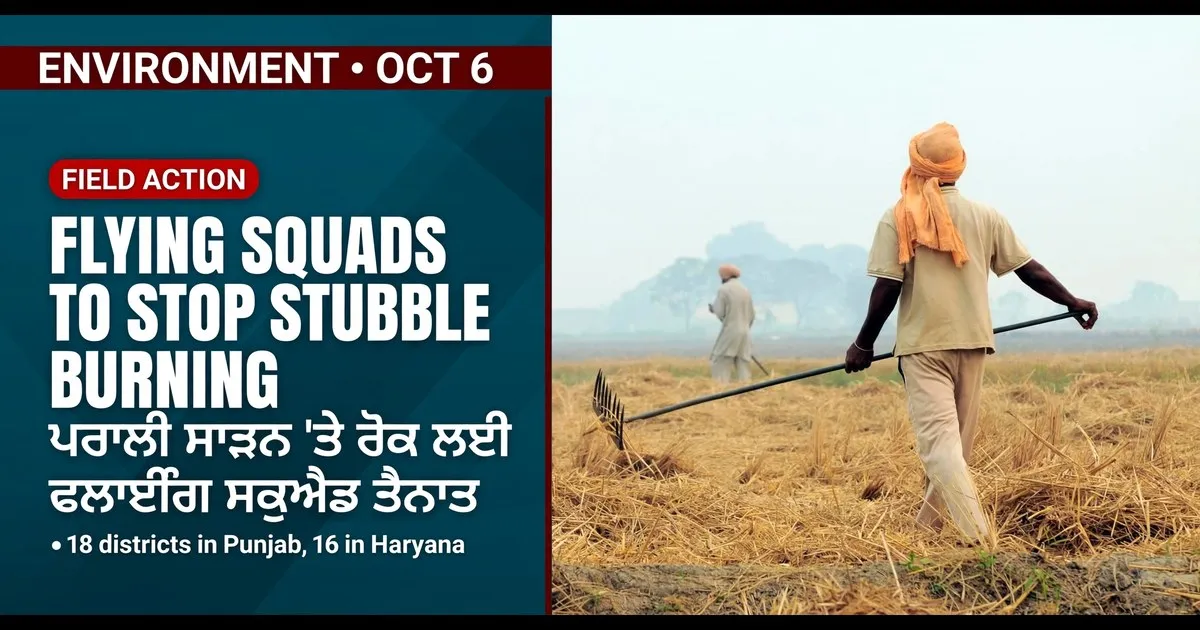
The Commission for Air Quality Management (CAQM) has stepped up enforcement on the ground, deploying flying squads across 34 districts in Punjab and Haryana to prevent paddy stubble burning during the 2026 harvest season. The move, announced on October 5, targets the annual post-harvest fires that choke northern India every winter.
The deployment has been communicated through the Central Pollution Control Board (CPCB), which will anchor the field mechanism. The squads will remain on the ground from October 1 to November 30, 2026 — the critical paddy harvesting window — with deployment structured in successive phases so that no district loses coverage between rotations.
How the squads will work
The flying squads will assess the ground-level situation in their allocated districts and work closely with district administrations, enforcement authorities and other field-level stakeholders responsible for preventing and controlling paddy residue burning, the Commission said.
Their brief is to make sure preventive measures are actually reaching farmers and that authorities respond quickly when fire incidents are detected. The ground situation, along with the steps taken to prevent further fires, will be reported to the CAQM Cell on a daily basis.
Which districts are covered
In Punjab, the deployment covers 18 districts: Sangrur, Tarn Taran, Firozpur, Muktsar, Bathinda, Amritsar, Moga, Mansa, Fazilka, Patiala, Ludhiana, Kapurthala, Faridkot, Barnala, Malerkotla, Gurdaspur, Jalandhar and Fatehgarh Sahib.
In Haryana, the monitored districts are Jind, Fatehabad, Hisar, Kaithal, Sonipat, Rohtak, Sirsa, Karnal, Palwal, Jhajjar, Kurukshetra, Ambala, Yamunanagar, Faridabad, Panipat and Hansi — 16 districts in all.
Why this season matters
Paddy stubble burning in Punjab and Haryana is a major contributor to the episodic deterioration of air quality across the northern plains, particularly the winter smog that envelops Delhi-NCR every year. CAQM has been continuously monitoring, coordinating and reviewing the implementation of prevention measures with state governments, state pollution control boards and district administrations.
The Commission has reiterated the need for concerted efforts by all concerned agencies, along with active facilitation and cooperation from farmers and other stakeholders, to keep farm fires down through the season. The daily field reports from the flying squads will let it assess the situation continuously and follow up with the concerned authorities wherever needed.
Which districts in Punjab will have flying squads?
The squads cover 18 districts in Punjab — including Sangrur, Tarn Taran, Firozpur, Bathinda, Amritsar, Ludhiana, Patiala and Jalandhar — alongside 16 districts in Haryana.
How long will the squads stay deployed?
The deployment runs from October 1 to November 30, 2026, in phased rotations so that monitoring stays uninterrupted through the entire paddy harvest season.
What will the squads do in the field?
They will assess the ground situation in their districts, coordinate with district administrations and enforcement agencies, push preventive action where fires are detected, and send daily reports to the CAQM Cell.
ਏਅਰ ਕੁਆਲਿਟੀ ਮੈਨੇਜਮੈਂਟ ਕਮਿਸ਼ਨ (ਸੀਏਕਿਊਐਮ) ਨੇ ਝੋਨੇ ਦੀ ਪਰਾਲੀ ਸਾੜਨ 'ਤੇ ਰੋਕ ਲਗਾਉਣ ਲਈ ਜ਼ਮੀਨੀ ਪੱਧਰ 'ਤੇ ਨਿਗਰਾਨੀ ਹੋਰ ਤੇਜ਼ ਕਰ ਦਿੱਤੀ ਹੈ। ਕਮਿਸ਼ਨ ਨੇ 5 ਅਕਤੂਬਰ ਨੂੰ ਐਲਾਨ ਕੀਤਾ ਕਿ ਪੰਜਾਬ ਅਤੇ ਹਰਿਆਣਾ ਦੇ 34 ਜ਼ਿਲ੍ਹਿਆਂ ਵਿੱਚ ਫਲਾਈਂਗ ਸਕੁਐਡ ਤੈਨਾਤ ਕੀਤੇ ਜਾਣਗੇ। ਇਹ ਕਦਮ ਝੋਨੇ ਦੀ ਕਟਾਈ ਤੋਂ ਬਾਅਦ ਲੱਗਣ ਵਾਲੀਆਂ ਉਨ੍ਹਾਂ ਅੱਗਾਂ ਨੂੰ ਰੋਕਣ ਲਈ ਹੈ ਜੋ ਹਰ ਸਰਦੀ ਵਿੱਚ ਉੱਤਰੀ ਭਾਰਤ ਦੀ ਹਵਾ ਨੂੰ ਜ਼ਹਿਰੀਲਾ ਕਰ ਦਿੰਦੀਆਂ ਹਨ।
ਇਹ ਤੈਨਾਤੀ ਕੇਂਦਰੀ ਪ੍ਰਦੂਸ਼ਣ ਨਿਯੰਤਰਣ ਬੋਰਡ (ਸੀਪੀਸੀਬੀ) ਰਾਹੀਂ ਕੀਤੀ ਗਈ ਹੈ, ਜੋ ਇਸ ਪੂਰੀ ਖੇਤਰੀ ਵਿਵਸਥਾ ਦੀ ਨਿਗਰਾਨੀ ਕਰੇਗਾ। ਫਲਾਈਂਗ ਸਕੁਐਡ 1 ਅਕਤੂਬਰ ਤੋਂ 30 ਨਵੰਬਰ 2026 ਤੱਕ — ਝੋਨੇ ਦੀ ਕਟਾਈ ਦੇ ਸਭ ਤੋਂ ਨਾਜ਼ੁਕ ਸਮੇਂ ਦੌਰਾਨ — ਮੈਦਾਨ ਵਿੱਚ ਰਹਿਣਗੇ। ਤੈਨਾਤੀ ਕਈ ਪੜਾਵਾਂ ਵਿੱਚ ਹੋਵੇਗੀ ਤਾਂ ਜੋ ਕਿਸੇ ਵੀ ਜ਼ਿਲ੍ਹੇ ਵਿੱਚ ਨਿਗਰਾਨੀ ਵਿੱਚ ਖਾਲੀ ਸਮਾਂ ਨਾ ਰਹੇ।
ਦਸਤੇ ਕਿਵੇਂ ਕੰਮ ਕਰਨਗੇ
ਫਲਾਈਂਗ ਸਕੁਐਡ ਆਪਣੇ ਜ਼ਿਲ੍ਹਿਆਂ ਵਿੱਚ ਜ਼ਮੀਨੀ ਹਾਲਾਤ ਦਾ ਜਾਇਜ਼ਾ ਲੈਣਗੇ ਅਤੇ ਜ਼ਿਲ੍ਹਾ ਪ੍ਰਸ਼ਾਸਨ, ਅਮਲ ਕਰਾਉਣ ਵਾਲੇ ਅਧਿਕਾਰੀਆਂ ਅਤੇ ਖੇਤਰੀ ਸਾਥੀਆਂ ਨਾਲ ਮਿਲ ਕੇ ਪਰਾਲੀ ਸਾੜਨ ਨੂੰ ਰੋਕਣ ਲਈ ਕੰਮ ਕਰਨਗੇ, ਕਮਿਸ਼ਨ ਨੇ ਕਿਹਾ।
ਇਨ੍ਹਾਂ ਦਾ ਕੰਮ ਇਹ ਯਕੀਨੀ ਬਣਾਉਣਾ ਹੋਵੇਗਾ ਕਿ ਰੋਕਥਾਮ ਦੇ ਉਪਾਅ ਕਿਸਾਨਾਂ ਤੱਕ ਪਹੁੰਚ ਰਹੇ ਹਨ ਅਤੇ ਜਿੱਥੇ ਅੱਗ ਲੱਗਣ ਦੀ ਸੂਚਨਾ ਮਿਲਦੀ ਹੈ, ਉੱਥੇ ਪ੍ਰਸ਼ਾਸਨ ਤੁਰੰਤ ਕਾਰਵਾਈ ਕਰੇ। ਜ਼ਮੀਨੀ ਹਾਲਾਤ ਅਤੇ ਹੋਰ ਅੱਗਾਂ ਨੂੰ ਰੋਕਣ ਲਈ ਚੁੱਕੇ ਕਦਮਾਂ ਦੀ ਰਿਪੋਰਟ ਹਰ ਰੋਜ਼ ਸੀਏਕਿਊਐਮ ਸੈੱਲ ਨੂੰ ਭੇਜੀ ਜਾਵੇਗੀ।
ਕਿਹੜੇ ਜ਼ਿਲ੍ਹੇ ਕਵਰ ਹੋਣਗੇ
ਪੰਜਾਬ ਵਿੱਚ ਤੈਨਾਤੀ 18 ਜ਼ਿਲ੍ਹਿਆਂ ਨੂੰ ਕਵਰ ਕਰੇਗੀ — ਸੰਗਰੂਰ, ਤਰਨਤਾਰਨ, ਫ਼ਿਰੋਜ਼ਪੁਰ, ਮੁਕਤਸਰ, ਬਠਿੰਡਾ, ਅੰਮ੍ਰਿਤਸਰ, ਮੋਗਾ, ਮਾਨਸਾ, ਫ਼ਾਜ਼ਿਲਕਾ, ਪਟਿਆਲਾ, ਲੁਧਿਆਣਾ, ਕਪੂਰਥਲਾ, ਫ਼ਰੀਦਕੋਟ, ਬਰਨਾਲਾ, ਮਾਲੇਰਕੋਟਲਾ, ਗੁਰਦਾਸਪੁਰ, ਜਲੰਧਰ ਅਤੇ ਫਤਿਹਗੜ੍ਹ ਸਾਹਿਬ।
ਹਰਿਆਣਾ ਦੇ 16 ਜ਼ਿਲ੍ਹੇ ਸ਼ਾਮਲ ਹਨ — ਜੀਂਦ, ਫਤਿਹਾਬਾਦ, ਹਿਸਾਰ, ਕੈਥਲ, ਸੋਨੀਪਤ, ਰੋਹਤਕ, ਸਿਰਸਾ, ਕਰਨਾਲ, ਪਲਵਲ, ਝੱਜਰ, ਕੁਰੂਕਸ਼ੇਤਰ, ਅੰਬਾਲਾ, ਯਮੁਨਾਨਗਰ, ਫਰੀਦਾਬਾਦ, ਪਾਣੀਪਤ ਅਤੇ ਹਾਂਸੀ।
ਇਹ ਸੀਜ਼ਨ ਕਿਉਂ ਮਹੱਤਵਪੂਰਨ ਹੈ
ਪੰਜਾਬ ਅਤੇ ਹਰਿਆਣਾ ਵਿੱਚ ਝੋਨੇ ਦੀ ਪਰਾਲੀ ਸਾੜਨ ਉੱਤਰੀ ਭਾਰਤ ਦੇ ਮੈਦਾਨੀ ਇਲਾਕਿਆਂ, ਖਾਸਕਰ ਦਿੱਲੀ-ਐਨਸੀਆਰ ਵਿੱਚ ਸਰਦੀਆਂ ਦੇ ਧੁੰਦ ਦਾ ਮੁੱਖ ਕਾਰਨ ਹੈ। ਸੀਏਕਿਊਐਮ ਸੂਬਾ ਸਰਕਾਰਾਂ, ਸੂਬਾ ਪ੍ਰਦੂਸ਼ਣ ਨਿਯੰਤਰਣ ਬੋਰਡਾਂ ਅਤੇ ਜ਼ਿਲ੍ਹਾ ਪ੍ਰਸ਼ਾਸਨ ਨਾਲ ਮਿਲ ਕੇ ਰੋਕਥਾਮ ਦੇ ਉਪਾਵਾਂ ਦੀ ਲਗਾਤਾਰ ਨਿਗਰਾਨੀ ਕਰ ਰਿਹਾ ਹੈ।
ਕਮਿਸ਼ਨ ਨੇ ਸਾਰੇ ਸਬੰਧਤ ਵਿਭਾਗਾਂ ਤੋਂ ਮਿਲ ਕੇ ਕੰਮ ਕਰਨ ਅਤੇ ਕਿਸਾਨਾਂ ਸਮੇਤ ਸਾਰੇ ਹਿੱਸੇਦਾਰਾਂ ਤੋਂ ਸਹਿਯੋਗ ਦੀ ਮੰਗ ਕੀਤੀ ਹੈ। ਦਸਤਿਆਂ ਦੀਆਂ ਰੋਜ਼ਾਨਾ ਰਿਪੋਰਟਾਂ ਤੋਂ ਕਮਿਸ਼ਨ ਹਾਲਾਤ ਦਾ ਲਗਾਤਾਰ ਜਾਇਜ਼ਾ ਲੈ ਸਕੇਗਾ ਅਤੇ ਜਿੱਥੇ ਲੋੜ ਹੋਵੇਗੀ, ਉੱਥੇ ਸਬੰਧਤ ਅਧਿਕਾਰੀਆਂ ਨਾਲ ਅੱਗੇ ਕਾਰਵਾਈ ਕਰੇਗਾ।
ਹਵਾ ਗੁਣਵੱਤਾ ਮਾਹਰਾਂ ਦਾ ਕਹਿਣਾ ਹੈ ਕਿ ਕਟਾਈ ਦੇ ਇਸ ਨਾਜ਼ੁਕ ਦੌਰਾਨ ਲਗਾਤਾਰ ਮੈਦਾਨੀ ਨਿਗਰਾਨੀ ਹੀ ਉਹ ਕੜੀ ਹੈ ਜੋ ਪਿਛਲੇ ਸਾਲਾਂ ਵਿੱਚ ਕਈ ਵਾਰ ਕਮਜ਼ੋਰ ਰਹੀ ਹੈ — ਇਸ ਵਾਰ ਦਸਤਿਆਂ ਦੀ ਪੜਾਵਾਰ ਅਤੇ ਲਗਾਤਾਰ ਤੈਨਾਤੀ ਨਾਲ ਇਹ ਖਾਮੀ ਦੂਰ ਕਰਨ ਦੀ ਕੋਸ਼ਿਸ਼ ਹੈ।
Key facts
- CAQM has deployed flying squads in 34 districts — 18 in Punjab and 16 in Haryana — to prevent paddy stubble burning.
- The squads will operate from October 1 to November 30, 2026, in phased deployments through the paddy harvest season.
- Teams will assess the ground situation, coordinate with district administrations and enforcement agencies, and report daily to the CAQM Cell.
- The deployment was communicated through the CPCB; the squads work with state governments, pollution control boards and district administrations.