
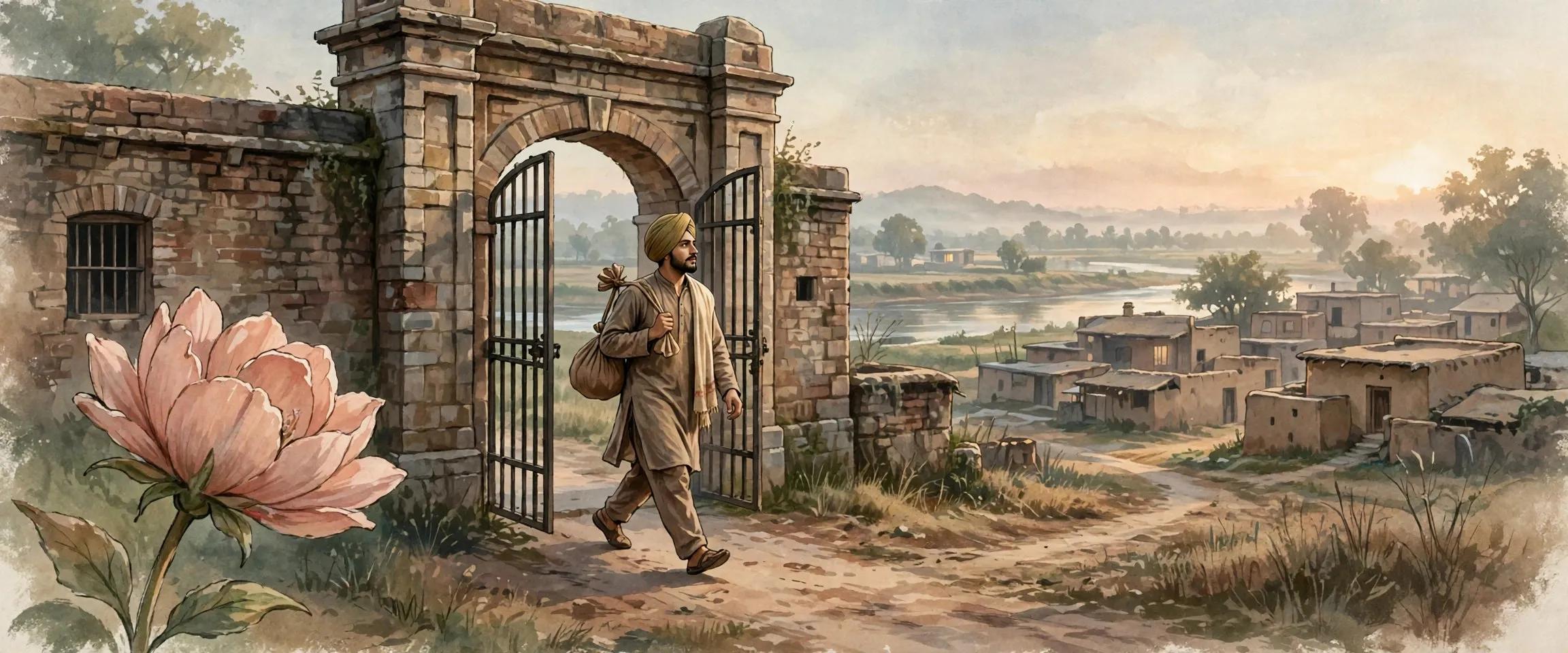
Adh Khidya Phul (The Half-Blossomed Flower) is a Punjabi novel by Nanak Singh (1897 to 1971), the father of the Punjabi novel. It follows Kuldeep Singh, jailed in Lahore for anti-British agitation, who comes home to Peshawar to find his wife dead and his infant son motherless, and must rebuild his life among a holy man, his childhood friend Saroj and the maid Prakash. First drafted during Nanak Singh's own jail term, it reached English readers as A Life Incomplete in 2012.
Punjabi, Gurmukhi, with an English translation- Punjabi name
- ਅੱਧ ਖਿੜਿਆ ਫੁੱਲ
- Author
- Nanak Singh (1897 to 1971)
- First published
- 1940, per HarperCollins; listed as 1948 in the Sikh Encyclopedia
- Language
- Punjabi (Gurmukhi)
- Form
- Novel
- Setting
- Lahore jail and Peshawar, Punjab in the 1920s
All 8 facts
- Main character
- Kuldeep Singh
- English translation
- A Life Incomplete, translated by Navdeep Suri (HarperCollins, 2012)
Characters
Adh Khidya Phul, in English The Half-Blossomed Flower, is a Punjabi novel by Nanak Singh (1897 to 1971), the writer honoured as the father of the Punjabi novel. Set in the Punjab of the 1920s, it tells of Kuldeep Singh, a political prisoner in Lahore jail, whose longing for home carries him through his sentence, and of the broken life he must remake when freedom finally comes. Few Punjabi novels carry so much of their author's own life inside them: Nanak Singh first drafted this story during his own months in a Lahore jail, and its English translation, A Life Incomplete, brought it to world readers in 2012.
What is Adh Khidya Phul about?
Kuldeep Singh is serving a jail term for taking part in anti-British agitations. All that sustains him through his dark days in jail, his publisher writes, are thoughts of his beautiful wife Satwant and the dream of going home. He is desperate to return to Peshawar and to mend fences with Satwant, who had suspected him of being unfaithful. In jail he strikes up an unusual friendship with a Pathan guard, Ahmed Khan, a bond the translator held up as a testimony of inter-faith tolerance at a time when hostility between Hindus and Muslims was on the rise.
When Kuldeep finally comes home, he finds that Satwant has died, leaving behind their infant child. His world collapses, and he is pulled in different directions: a holy man urges him towards renunciation, his childhood friend Saroj has always loved him, and he finds himself drawn to Prakash, his child's maid, a tempestuous woman who hides an unsavoury past. In the ending that readers remember, Kuldeep hands his infant son to his Muslim friend Ahmad and Ahmad's wife Zubeida, and the beauty of the story, as the scholar Mohinder Singh put it at the translation launch, lies in Ahmad's care to raise the Sikh child while observing Sikh taboos, such as the one against tobacco. The translator Navdeep Suri calls the book a tragedy: an intense meditation on the choices people make and the consequences those choices carry.
A novel first drafted in a jail cell
The novel grew out of Nanak Singh's own imprisonment. It is based on his ten month stay in Lahore jail in the 1920s: he wrote a first draft in jail and redrafted it eighteen years later as the finished novel. Kuldeep is an autobiographical character, cast, as Suri says, in the shade of the writer himself. Saroj, too, has a real model: as a youngster Nanak Singh had loved a child widow named Savitri, on whom the character of Saroj is modelled, and his message against child marriage runs through the book.
Readers should know that the book's first year is reported differently. HarperCollins, which publishes the English translation, dates the Punjabi original to 1940. The Encyclopaedia of Indian Literature tradition, as carried in the Sikh Encyclopedia's survey of Nanak Singh's novels, lists Adh Khiriaphul among the novels of his second phase with the year 1948. This page reports both dates rather than choosing between them: what is certain is the jail draft of the 1920s, the long gap, and the redrafted novel that followed.
Themes: choice, faith and the half-opened life
The half-blossomed flower of the title is a life cut off before it could open fully, and the novel returns again and again to the moment where a person's road forks. Its publisher points to the author's engagement with the social questions of his Punjab: superstition and blind faith, religious bigotry, casteism and the emancipation of women, and judges that engagement as fresh today as when he wrote. Against those forces the book sets private loyalties: a prisoner's friendship across the religious divide, a friend's lifelong love, and a father's decision about who will raise his son. Character, in Nanak Singh's fiction, decides the incident, and the incident then tests the character.
The author
Nanak Singh was born as Hans Raj on 4 July 1897 at Chak Hamid in Jhelum district, and took the name Nanak Singh after embracing Sikhism. Jailed for some time as an Akali satyagrahi, he read the Urdu novelist Premchand in jail and found Gandhian egalitarianism easy to hold together with Sikh humanism, a dual spirit that runs through his novels. He wrote 59 books, including 38 novels, among them Chitta Lahu, Pavitar Papi, Khoon De Sohile and Agg Di Khed, all in this Kosh, and won the Sahitya Akademi Award in 1962 for his historical novel Ik Mian Do Talwaran. He died on 28 December 1971. His full entry is in the people section of this Kosh.
Reception and the English translation
At the launch of the English translation, Mohinder Singh, honorary director of the Bhai Vir Singh Sahitya Sadan, rated Adh Khidiya Phool as the best among Nanak Singh's 59 works. The Punjabi original was by then in its 30th reprint, a mark of how steadily Punjab's own readers have kept the book in print. The translation, A Life Incomplete, was the first English rendering of the novel. It was translated by the author's grandson, the diplomat and writer Navdeep Suri, published by HarperCollins India, and released in New Delhi in February 2012 at the Bhai Vir Singh Sahitya Sadan. It was Suri's second translation of his grandfather's work, after Pavitra Paapi appeared as Saintly Sinner in 2003, and it carried the novel to the Punjabi diaspora and to readers who cannot read Gurmukhi.
ਆਧ ਖਿੜਿਆ ਫੁੱਲ ਨਾਨਕ ਸਿੰਘ (1897 ਤੋਂ 1971) ਦਾ ਪੰਜਾਬੀ ਨਾਵਲ ਹੈ। ਨਾਨਕ ਸਿੰਘ ਨੂੰ ਪੰਜਾਬੀ ਨਾਵਲ ਦਾ ਪਿਤਾ ਕਿਹਾ ਜਾਂਦਾ ਹੈ। ਕਹਾਣੀ 1920ਵਿਆਂ ਦੇ ਪੰਜਾਬ ਦੀ ਹੈ। ਇਸ ਦਾ ਨਾਇਕ ਕੁਲਦੀਪ ਸਿੰਘ ਲਾਹੌਰ ਦੀ ਜੇਲ੍ਹ ਵਿੱਚ ਸਿਆਸੀ ਕੈਦੀ ਹੈ। ਘਰ ਵਾਪਸੀ ਦੀ ਤਾਂਘ ਹੀ ਉਸ ਨੂੰ ਕੈਦ ਦੇ ਔਖੇ ਦਿਨਾਂ ਵਿੱਚ ਸਹਾਰਾ ਦਿੰਦੀ ਹੈ। ਜਦੋਂ ਉਹ ਅਜ਼ਾਦ ਹੁੰਦਾ ਹੈ, ਤਾਂ ਉਸ ਨੂੰ ਟੁੱਟੀ ਹੋਈ ਜ਼ਿੰਦਗੀ ਮੁੜ ਬਣਾਉਣੀ ਪੈਂਦੀ ਹੈ। ਇਸ ਨਾਵਲ ਵਿੱਚ ਲੇਖਕ ਦੀ ਆਪਣੀ ਜ਼ਿੰਦਗੀ ਬਹੁਤ ਡੂੰਘੀ ਝਲਕਦੀ ਹੈ, ਕਿਉਂਕਿ ਨਾਨਕ ਸਿੰਘ ਨੇ ਇਸ ਕਹਾਣੀ ਦਾ ਪਹਿਲਾ ਖਰੜਾ ਆਪਣੀ ਲਾਹੌਰ ਜੇਲ੍ਹ ਦੀ ਕੈਦ ਦੌਰਾਨ ਹੀ ਲਿਖਿਆ ਸੀ। ਇਸ ਦਾ ਅੰਗਰੇਜ਼ੀ ਅਨੁਵਾਦ A Life Incomplete 2012 ਵਿੱਚ ਛਪਿਆ ਅਤੇ ਨਾਵਲ ਦੁਨੀਆ ਭਰ ਦੇ ਪਾਠਕਾਂ ਤੱਕ ਪਹੁੰਚਿਆ।
ਆਧ ਖਿੜਿਆ ਫੁੱਲ ਕਿਸ ਬਾਰੇ ਹੈ?
ਕੁਲਦੀਪ ਸਿੰਘ ਅੰਗਰੇਜ਼ਾਂ ਖਿਲਾਫ ਅੰਦੋਲਨ ਵਿੱਚ ਹਿੱਸਾ ਲੈਣ ਕਰਕੇ ਜੇਲ੍ਹ ਵਿੱਚ ਸਜ਼ਾ ਕੱਟ ਰਿਹਾ ਹੈ। ਪ੍ਰਕਾਸ਼ਕ ਅਨੁਸਾਰ ਜੇਲ੍ਹ ਦੇ ਹਨੇਰੇ ਦਿਨਾਂ ਵਿੱਚ ਉਸ ਨੂੰ ਸਿਰਫ ਆਪਣੀ ਸੋਹਣੀ ਪਤਨੀ ਸਤਵੰਤ ਦੀਆਂ ਯਾਦਾਂ ਅਤੇ ਘਰ ਜਾਣ ਦਾ ਸੁਪਨਾ ਹੀ ਸਹਾਰਾ ਦਿੰਦਾ ਹੈ। ਉਹ ਪਿਸ਼ਾਵਰ ਵਾਪਸ ਜਾ ਕੇ ਸਤਵੰਤ ਨਾਲ ਸੁਲਾਹ ਕਰਨਾ ਚਾਹੁੰਦਾ ਹੈ, ਕਿਉਂਕਿ ਸਤਵੰਤ ਨੂੰ ਉਸ ਉੱਤੇ ਬੇਵਫਾਈ ਦਾ ਸ਼ੱਕ ਸੀ। ਜੇਲ੍ਹ ਵਿੱਚ ਉਸ ਦੀ ਦੋਸਤੀ ਪਠਾਣ ਸਿਪਾਹੀ ਅਹਿਮਦ ਖਾਨ ਨਾਲ ਹੋ ਜਾਂਦੀ ਹੈ। ਅਨੁਵਾਦਕ ਨੇ ਇਸ ਦੋਸਤੀ ਨੂੰ ਉਸ ਸਮੇਂ ਦੀ ਮਿਸਾਲ ਕਿਹਾ ਹੈ ਜਦੋਂ ਹਿੰਦੂਆਂ ਅਤੇ ਮੁਸਲਮਾਨਾਂ ਵਿੱਚ ਦੁਸ਼ਮਣੀ ਵਧ ਰਹੀ ਸੀ।
ਜਦੋਂ ਕੁਲਦੀਪ ਘਰ ਪਹੁੰਚਦਾ ਹੈ, ਤਾਂ ਸਤਵੰਤ ਮਰ ਚੁੱਕੀ ਹੁੰਦੀ ਹੈ ਅਤੇ ਪਿੱਛੇ ਆਪਣਾ ਨਿੱਕਾ ਬੱਚਾ ਛੱਡ ਗਈ ਹੁੰਦੀ ਹੈ। ਉਸ ਦੀ ਦੁਨੀਆ ਢਹਿ ਜਾਂਦੀ ਹੈ। ਇਕ ਸਾਧ ਉਸ ਨੂੰ ਤਿਆਗ ਵੱਲ ਖਿੱਚਦਾ ਹੈ, ਬਚਪਨ ਦੀ ਸਹੇਲੀ ਸਰੋਜ ਨੇ ਹਮੇਸ਼ਾ ਉਸ ਨੂੰ ਪਿਆਰ ਕੀਤਾ ਹੁੰਦਾ ਹੈ, ਅਤੇ ਉਹ ਆਪਣੇ ਬੱਚੇ ਦੀ ਨੌਕਰਾਣੀ ਪ੍ਰਕਾਸ਼ ਵੱਲ ਖਿੱਚਿਆ ਜਾਂਦਾ ਹੈ, ਜਿਸ ਦਾ ਅਤੀਤ ਚੰਗਾ ਨਹੀਂ ਹੁੰਦਾ। ਕਹਾਣੀ ਦੇ ਅੰਤ ਵਿੱਚ ਕੁਲਦੀਪ ਆਪਣਾ ਬੱਚਾ ਆਪਣੇ ਮੁਸਲਮਾਨ ਦੋਸਤ ਅਹਿਮਦ ਅਤੇ ਉਸ ਦੀ ਪਤਨੀ ਜ਼ੁਬੈਦਾ ਨੂੰ ਸੌਂਪ ਦਿੰਦਾ ਹੈ। ਵਿਦਵਾਨ ਮੋਹਿੰਦਰ ਸਿੰਘ ਅਨੁਸਾਰ ਕਹਾਣੀ ਦੀ ਸੋਹਣਾਈ ਇਸ ਗੱਲ ਵਿੱਚ ਹੈ ਕਿ ਅਹਿਮਦ ਸਿੱਖ ਬੱਚੇ ਨੂੰ ਸਿੱਖ ਰਹਿਤ ਦਾ ਖਿਆਲ ਰੱਖ ਕੇ ਪਾਲਦਾ ਹੈ, ਜਿਵੇਂ ਤੰਬਾਕੂ ਤੋਂ ਪਰਹੇਜ਼। ਅਨੁਵਾਦਕ ਨਵਦੀਪ ਸੂਰੀ ਇਸ ਕਿਤਾਬ ਨੂੰ ਦੁਖਾਂਤ ਕਹਿੰਦਾ ਹੈ। ਇਹ ਮਨੁੱਖ ਦੀਆਂ ਚੋਣਾਂ ਅਤੇ ਉਨ੍ਹਾਂ ਦੇ ਨਤੀਜਿਆਂ ਉੱਤੇ ਡੂੰਘੀ ਸੋਚ ਹੈ।
ਜੇਲ੍ਹ ਵਿੱਚ ਲਿਖਿਆ ਗਿਆ ਨਾਵਲ
ਇਹ ਨਾਵਲ ਨਾਨਕ ਸਿੰਘ ਦੀ ਆਪਣੀ ਕੈਦ ਵਿੱਚੋਂ ਨਿਕਲਿਆ ਹੈ। ਇਹ 1920ਵਿਆਂ ਵਿੱਚ ਉਸ ਦੀ ਲਾਹੌਰ ਜੇਲ੍ਹ ਦੀ ਦਸ ਮਹੀਨਿਆਂ ਦੀ ਕੈਦ ਉੱਤੇ ਅਧਾਰਿਤ ਹੈ। ਪਹਿਲਾ ਖਰੜਾ ਉਸ ਨੇ ਜੇਲ੍ਹ ਵਿੱਚ ਲਿਖਿਆ ਅਤੇ ਅਠਾਰਾਂ ਸਾਲ ਬਾਅਦ ਉਸ ਨੂੰ ਮੁੜ ਲਿਖ ਕੇ ਨਾਵਲ ਦਾ ਰੂਪ ਦਿੱਤਾ। ਸੂਰੀ ਅਨੁਸਾਰ ਕੁਲਦੀਪ ਲੇਖਕ ਦੇ ਆਪਣੇ ਪਰਛਾਵੇਂ ਵਿੱਚ ਢਲਿਆ ਪਾਤਰ ਹੈ। ਸਰੋਜ ਦਾ ਵੀ ਅਸਲੀ ਆਧਾਰ ਹੈ। ਨੌਜਵਾਨ ਨਾਨਕ ਸਿੰਘ ਨੂੰ ਸਾਵਿਤਰੀ ਨਾਂ ਦੀ ਬਾਲ ਵਿਧਵਾ ਨਾਲ ਪਿਆਰ ਸੀ, ਜਿਸ ਉੱਤੇ ਸਰੋਜ ਦਾ ਪਾਤਰ ਬਣਿਆ ਹੈ, ਅਤੇ ਬਾਲ ਵਿਆਹ ਖਿਲਾਫ ਉਸ ਦਾ ਸੁਨੇਹਾ ਸਾਰੇ ਨਾਵਲ ਵਿੱਚ ਚੱਲਦਾ ਹੈ।
ਪਾਠਕਾਂ ਨੂੰ ਪਤਾ ਹੋਣਾ ਚਾਹੀਦਾ ਹੈ ਕਿ ਕਿਤਾਬ ਦੇ ਪਹਿਲੇ ਸਾਲ ਬਾਰੇ ਸਰੋਤਾਂ ਵਿੱਚ ਫਰਕ ਹੈ। ਅੰਗਰੇਜ਼ੀ ਅਨੁਵਾਦ ਛਾਪਣ ਵਾਲਾ ਹਰਪਰਕੋਲਿਨਜ਼ ਪੰਜਾਬੀ ਮੂਲ ਨੂੰ 1940 ਦਾ ਦੱਸਦਾ ਹੈ। ਸਿੱਖ ਇਨਸਾਈਕਲੋਪੀਡੀਆ ਨਾਨਕ ਸਿੰਘ ਦੇ ਨਾਵਲਾਂ ਦੀ ਸੂਚੀ ਵਿੱਚ ਆਧ ਖਿੜਿਆ ਫੁੱਲ ਨੂੰ ਉਸ ਦੇ ਦੂਜੇ ਦੌਰ ਦੇ ਨਾਵਲਾਂ ਵਿੱਚ 1948 ਦੇ ਸਾਲ ਨਾਲ ਦਰਜ ਕਰਦਾ ਹੈ। ਇਹ ਸਫ਼ਾ ਦੋਵੇਂ ਸਾਲ ਦੱਸਦਾ ਹੈ, ਕਿਸੇ ਇਕ ਦੀ ਚੋਣ ਨਹੀਂ ਕਰਦਾ। ਪੱਕੀ ਗੱਲ ਇਹ ਹੈ ਕਿ ਖਰੜਾ 1920ਵਿਆਂ ਦੀ ਜੇਲ੍ਹ ਵਿੱਚ ਲਿਖਿਆ ਗਿਆ, ਫਿਰ ਲੰਮਾ ਫਰਕ ਪਿਆ, ਅਤੇ ਫਿਰ ਮੁੜ ਲਿਖਿਆ ਨਾਵਲ ਸਾਹਮਣੇ ਆਇਆ।
ਵਿਸ਼ੇ: ਚੋਣ, ਵਿਸ਼ਵਾਸ ਅਤੇ ਅੱਧ ਖਿੜਿਆ ਜੀਵਨ
ਸਿਰਲੇਖ ਦਾ ਅੱਧ ਖਿੜਿਆ ਫੁੱਲ ਉਹ ਜ਼ਿੰਦਗੀ ਹੈ ਜੋ ਪੂਰੀ ਖਿੜਨ ਤੋਂ ਪਹਿਲਾਂ ਹੀ ਕੱਟੀ ਗਈ। ਨਾਵਲ ਵਾਰ ਵਾਰ ਉਸ ਮੋੜ ਉੱਤੇ ਆਉਂਦਾ ਹੈ ਜਿੱਥੇ ਮਨੁੱਖ ਦਾ ਰਾਹ ਦੋਫਾੜ ਹੁੰਦਾ ਹੈ। ਪ੍ਰਕਾਸ਼ਕ ਅਨੁਸਾਰ ਲੇਖਕ ਨੇ ਆਪਣੇ ਪੰਜਾਬ ਦੇ ਸਮਾਜਿਕ ਸਵਾਲਾਂ ਨੂੰ ਛੋਹਿਆ ਹੈ: ਅੰਧਵਿਸ਼ਵਾਸ, ਧਾਰਮਿਕ ਕੱਟੜਤਾ, ਜਾਤ ਪਾਤ ਅਤੇ ਔਰਤਾਂ ਦੀ ਅਜ਼ਾਦੀ, ਅਤੇ ਇਹ ਛੋਹ ਅੱਜ ਵੀ ਓਨੀ ਹੀ ਤਾਜ਼ਾ ਹੈ। ਇਨ੍ਹਾਂ ਤਾਕਤਾਂ ਦੇ ਸਾਹਮਣੇ ਨਾਵਲ ਨਿੱਜੀ ਵਫਾਦਾਰੀਆਂ ਰੱਖਦਾ ਹੈ: ਜੇਲ੍ਹ ਵਿੱਚ ਧਰਮ ਦੀ ਵੰਡ ਤੋਂ ਪਾਰ ਦੋਸਤੀ, ਸਹੇਲੀ ਦਾ ਜੀਵਨ ਭਰ ਦਾ ਪਿਆਰ, ਅਤੇ ਪਿਓ ਦਾ ਫੈਸਲਾ ਕਿ ਉਸ ਦਾ ਪੁੱਤ ਕੌਣ ਪਾਲੇਗਾ। ਨਾਨਕ ਸਿੰਘ ਦੇ ਨਾਵਲਾਂ ਵਿੱਚ ਪਾਤਰ ਘਟਨਾ ਨੂੰ ਤੈਅ ਕਰਦਾ ਹੈ ਅਤੇ ਘਟਨਾ ਪਾਤਰ ਨੂੰ ਪਰਖਦੀ ਹੈ।
ਲੇਖਕ
ਨਾਨਕ ਸਿੰਘ ਦਾ ਜਨਮ ਹੰਸ ਰਾਜ ਵਜੋਂ 4 ਜੁਲਾਈ 1897 ਨੂੰ ਜੇਹਲਮ ਜ਼ਿਲ੍ਹੇ ਦੇ ਪਿੰਡ ਚੱਕ ਹਾਮਿਦ ਵਿੱਚ ਹੋਇਆ। ਸਿੱਖ ਧਰਮ ਅਪਨਾਉਣ ਮਗਰੋਂ ਉਸ ਦਾ ਨਾਂ ਨਾਨਕ ਸਿੰਘ ਪਿਆ। ਅਕਾਲੀ ਸੱਤਿਆਗ੍ਰਹੀ ਵਜੋਂ ਉਹ ਕੁਝ ਸਮਾਂ ਜੇਲ੍ਹ ਵਿੱਚ ਰਿਹਾ। ਜੇਲ੍ਹ ਵਿੱਚ ਉਸ ਨੇ ਉਰਦੂ ਨਾਵਲਕਾਰ ਪ੍ਰੇਮਚੰਦ ਨੂੰ ਪੜ੍ਹਿਆ। ਉਸ ਨੇ 59 ਕਿਤਾਬਾਂ ਲਿਖੀਆਂ, ਜਿਨ੍ਹਾਂ ਵਿੱਚ 38 ਨਾਵਲ ਹਨ। ਚਿੱਟਾ ਲਹੂ, ਪਵਿੱਤਰ ਪਾਪੀ, ਖੂਨ ਦੇ ਸੋਹਿਲੇ ਅਤੇ ਅੱਗ ਦੀ ਖੇਡ ਇਸੇ ਕੋਸ਼ ਵਿੱਚ ਹਨ। ਉਸ ਨੂੰ ਆਪਣੇ ਇਤਿਹਾਸਕ ਨਾਵਲ ਇਕ ਮਿਆਨ ਦੋ ਤਲਵਾਰਾਂ ਲਈ 1962 ਵਿੱਚ ਸਾਹਿਤ ਅਕਾਦਮੀ ਪੁਰਸਕਾਰ ਮਿਲਿਆ। ਉਸ ਦੀ ਮੌਤ 28 ਦਸੰਬਰ 1971 ਨੂੰ ਹੋਈ। ਉਸ ਦੀ ਪੂਰੀ ਜਾਣਕਾਰੀ ਇਸ ਕੋਸ਼ ਦੇ ਲੋਕ ਖੰਡ ਵਿੱਚ ਹੈ।
ਸਵਾਗਤ ਅਤੇ ਅੰਗਰੇਜ਼ੀ ਅਨੁਵਾਦ
ਅੰਗਰੇਜ਼ੀ ਅਨੁਵਾਦ ਦੀ ਰਿਲੀਜ਼ ਸਮੇਂ ਭਾਈ ਵੀਰ ਸਿੰਘ ਸਾਹਿਤ ਸਦਨ ਦੇ ਆਨਰੇਰੀ ਨਿਰਦੇਸ਼ਕ ਮੋਹਿੰਦਰ ਸਿੰਘ ਨੇ ਆਧ ਖਿੜਿਆ ਫੁੱਲ ਨੂੰ ਨਾਨਕ ਸਿੰਘ ਦੀਆਂ 59 ਰਚਨਾਵਾਂ ਵਿੱਚੋਂ ਸਭ ਤੋਂ ਵਧੀਆ ਕਿਹਾ। ਉਦੋਂ ਤੱਕ ਪੰਜਾਬੀ ਮੂਲ ਦੇ 30 ਐਡੀਸ਼ਨ ਛਪ ਚੁੱਕੇ ਸਨ, ਜੋ ਦੱਸਦਾ ਹੈ ਕਿ ਪੰਜਾਬ ਦੇ ਪਾਠਕਾਂ ਨੇ ਇਸ ਕਿਤਾਬ ਨੂੰ ਕਿੰਨੀ ਸਥਿਰ ਥਾਂ ਦਿੱਤੀ ਹੈ। A Life Incomplete ਇਸ ਨਾਵਲ ਦਾ ਪਹਿਲਾ ਅੰਗਰੇਜ਼ੀ ਅਨੁਵਾਦ ਸੀ। ਇਹ ਅਨੁਵਾਦ ਲੇਖਕ ਦੇ ਪੋਤੇ, ਰਾਜਦੂਤ ਅਤੇ ਲੇਖਕ ਨਵਦੀਪ ਸੂਰੀ ਨੇ ਕੀਤਾ। ਹਰਪਰਕੋਲਿਨਜ਼ ਇੰਡੀਆ ਨੇ ਇਸ ਨੂੰ ਫਰਵਰੀ 2012 ਵਿੱਚ ਨਵੀਂ ਦਿੱਲੀ ਦੇ ਭਾਈ ਵੀਰ ਸਿੰਘ ਸਾਹਿਤ ਸਦਨ ਵਿੱਚ ਰਿਲੀਜ਼ ਕੀਤਾ। ਇਹ ਸੂਰੀ ਦਾ ਆਪਣੇ ਦਾਦਾ ਜੀ ਦੀ ਰਚਨਾ ਦਾ ਦੂਜਾ ਅਨੁਵਾਦ ਸੀ। ਇਸ ਤੋਂ ਪਹਿਲਾਂ 2003 ਵਿੱਚ ਪਵਿੱਤਰ ਪਾਪੀ Saintly Sinner ਵਜੋਂ ਛਪਿਆ ਸੀ। ਇਸ ਅਨੁਵਾਦ ਨਾਲ ਨਾਵਲ ਪੰਜਾਬੀ ਪਰਵਾਸੀਆਂ ਅਤੇ ਗੁਰਮੁਖੀ ਨਾ ਪੜ੍ਹ ਸਕਣ ਵਾਲੇ ਪਾਠਕਾਂ ਤੱਕ ਪਹੁੰਚਿਆ।
Editions and translations
- Adh Khidya PhulPunjabi · Gurmukhi · original · Gurmukhi title: ਅੱਧ ਖਿੜਿਆ ਫੁੱਲOriginal
- A Life IncompleteEnglish translation by Navdeep Suri · HarperCollins India, 2012Translation
The author

Connected
More to read
Sources (5)
- HarperCollins India: A Life Incomplete, first chapter and book description
- sikhchic.com (from The Tribune): Another Nanak Singh Novel Now In English Translation
- WorldSnap (IANS): Opening up a treasure trove of Punjabi literature, on the A Life Incomplete launch
- Sikh Encyclopedia: Singh, Nanak (1897 to 1971)
- Wikipedia: Nanak Singh
Jugti is free and independent. Reader support keeps the Kosh growing.
Support