
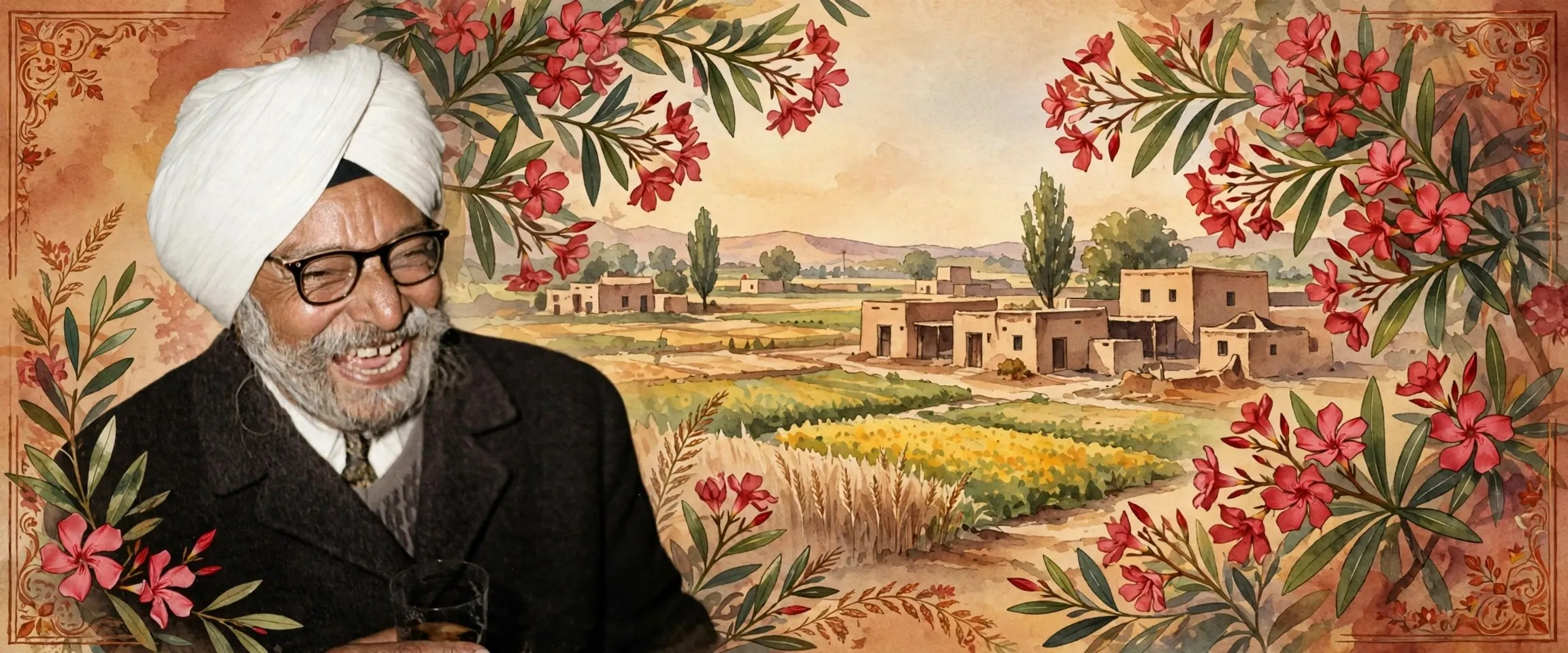
Kasumbhra (The Red Oleander) is a 1939 Punjabi poetry collection by Mohan Singh, his second book after Sawe Pattar. The Central Institute of Indian Languages survey says its Marxist and Freudian influences established him as the representative poet of his period, through poems on social problems, British rule and blocked love, including the celebrated Taj Mahal.
Punjabi, Gurmukhi- Punjabi name
- ਕਸੁੰਭੜਾ
- Author
- Mohan Singh (1905 to 1978)
- Published
- 1939
- Language
- Punjabi (Gurmukhi)
- Form
- Poetry collection
- Title means
- The Red Oleander
All 9 facts
- Position
- Second collection, after Sawe Pattar and before Adhvate (1944)
- Poem discussed by scholars
- Taj Mahal, which reads the monument through the workers who built it
- Author's later honour
- Sahitya Akademi Award, 1959, for Wadda Vela
About the book
Kasumbhra, also spelled Kasumbhara, is a Punjabi poetry collection by Mohan Singh, published in 1939. It was his second collection, following Sawe Pattar, the first book of which the Central Institute of Indian Languages survey says that it made him so popular that some of its poems became household songs of the people. The Encyclopaedia of the Sikhs lists Kasumbhra in the same place in his bibliography, dated 1939, between Saave Pater (1936) and Adhvate (1944). The survey renders the title as The Red Oleander, after the oleander flower, bright, bitter and impossible to ignore, which is a fair emblem for the book itself.
The collection appeared while Mohan Singh was teaching Persian at Khalsa College, Amritsar, in the years 1933 to 1939 when, as the Encyclopaedia records, Teja Singh, Sant Singh Sekhon and Gurbachan Singh Talib became his friends, and he studied Blake, Keats, Shelley, Wordsworth, Browning and the other English romantic poets, together with the Oxford Book of English Ballads. It also appeared in 1939, the year he started his famous literary Punjabi monthly, Panj Darya. Kasumbhra is the book of that Amritsar circle: a college poet absorbing English romantic poetry and the new progressive ideas moving through Lahore and Amritsar, and remaking both in Punjabi.
What is Kasumbhra about?
The Central Institute survey gives the shortest accurate answer. The influence of Marxism and Freudian psychoanalysis is explicitly evident in his second collection of poems, Kasumbhara, it says, a book that established him as the representative poet of the period. Inside it are poems written on contemporary social and political problems, poems to inspire youth to rise against the British rulers, and beautiful love poems built on a single hard theme: that love could not be realised in a hierarchical society based on the suppression of human desire. That mixture, politics, desire and lyric beauty held inside one small book, was new in Punjabi poetry, and it explains why this second collection, rather than the more purely romantic first one, is treated as the announcement of a modern age.
Taj Mahal: beauty built on labour
Its most celebrated single poem is Taj Mahal. The survey describes it in one sentence that has followed the poem ever since: in this celebrated poem, he rejects the grandeur and beauty of the Taj Mahal built on the exploitation of ill paid workers. The move is characteristic of the whole collection. A monument every love poet was expected to praise becomes, in Mohan Singh's hands, a question about the hands that built it: what were the workers paid, and whose love story does the marble actually tell? Romance is not abandoned in Kasumbhra. It is audited, and made to answer for the world that produced it.
Themes: love that a divided society blocks
The love poems carry the book's second argument, and the survey states their shared structure exactly: beautiful love poems mainly structured around the theme that love could not be realised in a hierarchical society based on the suppression of human desire. Desire, in Kasumbhra, is neither a private failing nor a private joy. It is blocked or freed by the order of the world around it, by rank, wealth and custom. That is the Freudian half of the book answering its Marxist half, and it is why the love poems read less like escapes from the political poems than like their other half.
SikhiWiki's account of the poet describes the same turn in the language of a life: a progression from romance to reality, from conventional love to an uninhibited expression of the man and woman relationship, in a poetry that, under the radical western influence of Marx and Freud, graduated from feathers to iron. Kasumbhra is where that graduation happens. Its archetypal conflict, between blood and judgment, between body and soul, between dream and reality, is already the engine of these poems, which is why its political poems still read as songs and its love poems still read as arguments.
The author
Mohan Singh (1905 to 1978) was born in Mardan, now in Pakistan, and belonged to Dhamial, his ancestral village near Rawalpindi. He took a master's degree in Persian and from 1933 taught Persian language and literature at Khalsa College, Amritsar. In 1940 he became a lecturer at Sikh National College, Lahore, then left teaching to start the firm Hind Publishers, having already founded the monthly Panj Darya in 1939. After the Partition of 1947 he shifted his business to Amritsar and then to Jalandhar, later taught at Khalsa College, Patiala, and was appointed Professor Emeritus at Punjab Agricultural University, Ludhiana, where he died. His collections run from Saave Pater (1936) to Buhe (1977), with the epic Nanakayan (1971) among them, and in 1959 he received the Sahitya Akademi Award for Wadda Vela.
Reception and legacy
The verdict of the surveys is unusually united. The Central Institute survey credits Mohan Singh with enunciating a truly modern age of Punjabi poetry, liberating it from the all pervading mysticism of Bhai Vir Singh and Puran Singh, and names Kasumbhara as the collection that established him as the representative poet of the period. The Encyclopaedia of the Sikhs calls him a major force in Punjabi poetry after 1935 who, in the next twenty five years, influenced the generations of Punjabi poets, created new norms in Punjabi poetry and created the language of new metaphors, and who is considered the most important Punjabi poet after Waris Shah.
For a reader today, Kasumbhra is the essential second step after Sawe Pattar. The green leaves of the first book turn, in the second, to the red oleander: the same lyric gift, now carrying an argument about labour, rank and desire that Punjabi poetry had not made before in this form. Start with Taj Mahal, then read the love poems against it, and the founding argument of modern Punjabi poetry, that a love song and a social conscience belong in the same book, is in your hands.
ਕਿਤਾਬ ਬਾਰੇ
ਕਸੁੰਭੜਾ, ਜਿਸ ਨੂੰ ਕਸੁੰਭਾਰਾ ਵੀ ਲਿਖਿਆ ਜਾਂਦਾ ਹੈ, ਮੋਹਨ ਸਿੰਘ ਦਾ ਪੰਜਾਬੀ ਕਾਵਿ ਸੰਗ੍ਰਹਿ ਹੈ, ਜੋ 1939 ਵਿੱਚ ਛਪਿਆ। ਇਹ ਉਸ ਦਾ ਦੂਜਾ ਸੰਗ੍ਰਹਿ ਸੀ, ਸਾਵੇ ਪੱਤਰ ਤੋਂ ਬਾਅਦ, ਉਹ ਪਹਿਲੀ ਕਿਤਾਬ ਜਿਸ ਬਾਰੇ ਕੇਂਦਰੀ ਭਾਰਤੀ ਭਾਸ਼ਾਵਾਂ ਸੰਸਥਾਨ ਦਾ ਸਰਵੇਖਣ ਕਹਿੰਦਾ ਹੈ ਕਿ ਉਸ ਨੇ ਉਸ ਨੂੰ ਐਨਾ ਪ੍ਰਸਿੱਧ ਕਰ ਦਿੱਤਾ ਕਿ ਉਸ ਦੀਆਂ ਕੁਝ ਕਵਿਤਾਵਾਂ ਲੋਕਾਂ ਦੇ ਘਰ ਘਰ ਦੇ ਗੀਤ ਬਣ ਗਈਆਂ। ਸਿੱਖ ਵਿਸ਼ਵਕੋਸ਼ ਇਸ ਨੂੰ ਉਸ ਦੀ ਸੂਚੀ ਵਿੱਚ ਉਸੇ ਥਾਂ, 1939 ਦੀ ਤਾਰੀਖ ਨਾਲ, ਸਾਵੇ ਪੱਤਰ (1936) ਅਤੇ ਅੱਧਵਾਟੇ (1944) ਵਿਚਕਾਰ ਦਰਜ ਕਰਦਾ ਹੈ। ਸਰਵੇਖਣ ਸਿਰਲੇਖ ਦਾ ਅਨੁਵਾਦ ਲਾਲ ਕਨੇਰ ਕਰਦਾ ਹੈ, ਕਨੇਰ ਦੇ ਫੁੱਲ ਦੇ ਨਾਂ ਉੱਤੇ, ਚਮਕਦਾਰ, ਕੌੜਾ ਅਤੇ ਨਜ਼ਰਅੰਦਾਜ਼ ਕਰਨਾ ਅਸੰਭਵ, ਜੋ ਇਸ ਕਿਤਾਬ ਦਾ ਵੀ ਢੁੱਕਵਾਂ ਪ੍ਰਤੀਕ ਹੈ।
ਇਹ ਸੰਗ੍ਰਹਿ ਉਸ ਸਮੇਂ ਆਇਆ ਜਦੋਂ ਮੋਹਨ ਸਿੰਘ ਖਾਲਸਾ ਕਾਲਜ, ਅੰਮ੍ਰਿਤਸਰ ਵਿੱਚ ਫਾਰਸੀ ਪੜ੍ਹਾ ਰਿਹਾ ਸੀ, 1933 ਤੋਂ 1939 ਦੇ ਸਾਲਾਂ ਵਿੱਚ, ਜਦੋਂ, ਜਿਵੇਂ ਵਿਸ਼ਵਕੋਸ਼ ਦਰਜ ਕਰਦਾ ਹੈ, ਤੇਜਾ ਸਿੰਘ, ਸੰਤ ਸਿੰਘ ਸੇਖੋਂ ਅਤੇ ਗੁਰਬਚਨ ਸਿੰਘ ਤਾਲਿਬ ਉਸ ਦੇ ਮਿੱਤਰ ਬਣੇ, ਅਤੇ ਉਸ ਨੇ ਬਲੇਕ, ਕੀਟਸ, ਸ਼ੈਲੀ, ਵਰਡਜ਼ਵਰਥ, ਬਰਾਊਨਿੰਗ ਅਤੇ ਹੋਰ ਅੰਗਰੇਜ਼ੀ ਰੋਮਾਂਟਿਕ ਕਵੀਆਂ ਦਾ, ਆਕਸਫੋਰਡ ਬੁੱਕ ਆਫ ਇੰਗਲਿਸ਼ ਬੈਲਡਜ਼ ਸਮੇਤ, ਅਧਿਐਨ ਕੀਤਾ। ਇਹ 1939 ਵਿੱਚ ਹੀ ਆਇਆ, ਉਹ ਸਾਲ ਜਿਸ ਵਿੱਚ ਉਸ ਨੇ ਆਪਣਾ ਪ੍ਰਸਿੱਧ ਸਾਹਿਤਕ ਪੰਜਾਬੀ ਮਾਸਿਕ, ਪੰਜ ਦਰਿਆ, ਸ਼ੁਰੂ ਕੀਤਾ। ਕਸੁੰਭੜਾ ਉਸ ਅੰਮ੍ਰਿਤਸਰ ਮੰਡਲੀ ਦੀ ਕਿਤਾਬ ਹੈ: ਇੱਕ ਕਾਲਜ ਕਵੀ ਜੋ ਅੰਗਰੇਜ਼ੀ ਰੋਮਾਂਟਿਕ ਕਵਿਤਾ ਅਤੇ ਲਾਹੌਰ ਅਤੇ ਅੰਮ੍ਰਿਤਸਰ ਵਿੱਚ ਘੁੰਮਦੇ ਨਵੇਂ ਪ੍ਰਗਤੀਸ਼ੀਲ ਵਿਚਾਰਾਂ ਨੂੰ ਅੰਦਰ ਲੈ ਰਿਹਾ ਸੀ, ਅਤੇ ਦੋਹਾਂ ਨੂੰ ਪੰਜਾਬੀ ਵਿੱਚ ਮੁੜ ਢਾਲ ਰਿਹਾ ਸੀ।
ਕਸੁੰਭੜਾ ਕਿਸ ਬਾਰੇ ਹੈ?
ਕੇਂਦਰੀ ਸੰਸਥਾਨ ਦਾ ਸਰਵੇਖਣ ਸਭ ਤੋਂ ਛੋਟਾ ਸਹੀ ਜਵਾਬ ਦਿੰਦਾ ਹੈ। ਉਹ ਕਹਿੰਦਾ ਹੈ ਕਿ ਮਾਰਕਸਵਾਦ ਅਤੇ ਫਰਾਇਡੀ ਮਨੋਵਿਸ਼ਲੇਸ਼ਣ ਦਾ ਪ੍ਰਭਾਵ ਉਸ ਦੇ ਦੂਜੇ ਕਾਵਿ ਸੰਗ੍ਰਹਿ ਕਸੁੰਭੜਾ ਵਿੱਚ ਸਪੱਸ਼ਟ ਤੌਰ ਉੱਤੇ ਸਾਫ਼ ਵਿਖਾਈ ਦਿੰਦਾ ਹੈ, ਅਤੇ ਇਸ ਕਿਤਾਬ ਨੇ ਉਸ ਨੂੰ ਉਸ ਦੌਰ ਦਾ ਪ੍ਰਤੀਨਿਧ ਕਵੀ ਬਣਾ ਦਿੱਤਾ। ਇਸ ਵਿੱਚ ਸਮਕਾਲੀ ਸਮਾਜਿਕ ਅਤੇ ਰਾਜਨੀਤਿਕ ਸਮੱਸਿਆਵਾਂ ਉੱਤੇ ਲਿਖੀਆਂ ਕਵਿਤਾਵਾਂ ਹਨ, ਨੌਜਵਾਨਾਂ ਨੂੰ ਅੰਗਰੇਜ਼ ਹਾਕਮਾਂ ਵਿਰੁੱਧ ਉੱਠਣ ਲਈ ਪ੍ਰੇਰਨ ਵਾਲੀਆਂ ਕਵਿਤਾਵਾਂ ਹਨ, ਅਤੇ ਸੋਹਣੀਆਂ ਪਿਆਰ ਕਵਿਤਾਵਾਂ ਹਨ ਜੋ ਇੱਕੋ ਔਖੇ ਵਿਸ਼ੇ ਉੱਤੇ ਬਣੀਆਂ ਹਨ: ਕਿ ਪਿਆਰ ਇੱਕ ਅਜਿਹੇ ਵਰਗ ਵੰਡੇ ਸਮਾਜ ਵਿੱਚ ਸਾਕਾਰ ਨਹੀਂ ਹੋ ਸਕਦਾ ਜੋ ਮਨੁੱਖੀ ਇੱਛਾ ਨੂੰ ਦਬਾਉਣ ਉੱਤੇ ਖੜਾ ਹੈ। ਇਹ ਰਲਾਅ, ਰਾਜਨੀਤੀ, ਇੱਛਾ ਅਤੇ ਗੀਤਾਤਮਕ ਖੂਬਸੂਰਤੀ ਇੱਕੋ ਛੋਟੀ ਕਿਤਾਬ ਵਿੱਚ, ਪੰਜਾਬੀ ਕਵਿਤਾ ਵਿੱਚ ਨਵਾਂ ਸੀ, ਅਤੇ ਇਹੋ ਸਮਝਾਉਂਦਾ ਹੈ ਕਿ ਕਿਉਂ ਇਸ ਦੂਜੇ ਸੰਗ੍ਰਹਿ ਨੂੰ, ਵੱਧ ਸ਼ੁੱਧ ਰੋਮਾਂਟਿਕ ਪਹਿਲੇ ਨਾਲੋਂ ਵੱਧ, ਆਧੁਨਿਕ ਯੁੱਗ ਦੀ ਘੋਸ਼ਣਾ ਮੰਨਿਆ ਜਾਂਦਾ ਹੈ।
ਤਾਜ ਮਹਿਲ: ਮਿਹਨਤ ਉੱਤੇ ਬਣੀ ਖੂਬਸੂਰਤੀ
ਇਸ ਦੀ ਸਭ ਤੋਂ ਪ੍ਰਸਿੱਧ ਇੱਕਲੀ ਕਵਿਤਾ ਤਾਜ ਮਹਿਲ ਹੈ। ਸਰਵੇਖਣ ਇਸ ਨੂੰ ਇੱਕੋ ਵਾਕ ਵਿੱਚ ਦੱਸਦਾ ਹੈ ਜੋ ਉਸ ਤੋਂ ਬਾਅਦ ਹਮੇਸ਼ਾ ਇਸ ਕਵਿਤਾ ਦੇ ਨਾਲ ਚਲਦਾ ਆਇਆ ਹੈ: ਇਸ ਪ੍ਰਸਿੱਧ ਕਵਿਤਾ ਵਿੱਚ ਉਹ ਤਾਜ ਮਹਿਲ ਦੀ ਉਸ ਸ਼ਾਨ ਅਤੇ ਖੂਬਸੂਰਤੀ ਨੂੰ ਰੱਦ ਕਰਦਾ ਹੈ ਜੋ ਘੱਟ ਮਜ਼ਦੂਰੀ ਵਾਲੇ ਮਜ਼ਦੂਰਾਂ ਦੇ ਸ਼ੋਸ਼ਣ ਉੱਤੇ ਬਣੀ ਹੈ। ਇਹ ਚਾਲ ਪੂਰੇ ਸੰਗ੍ਰਹਿ ਦੀ ਪਛਾਣ ਹੈ। ਉਹ ਸਮਾਰਕ ਜਿਸ ਦੀ ਹਰ ਪਿਆਰ ਕਵੀ ਤੋਂ ਸ਼ਲਾਘਾ ਦੀ ਉਮੀਦ ਕੀਤੀ ਜਾਂਦੀ ਸੀ, ਮੋਹਨ ਸਿੰਘ ਦੇ ਹੱਥਾਂ ਵਿੱਚ ਉਨ੍ਹਾਂ ਹੱਥਾਂ ਬਾਰੇ ਸਵਾਲ ਬਣ ਜਾਂਦਾ ਹੈ ਜਿਨ੍ਹਾਂ ਨੇ ਇਸ ਨੂੰ ਬਣਾਇਆ: ਮਜ਼ਦੂਰਾਂ ਨੂੰ ਕੀ ਮਜ਼ਦੂਰੀ ਮਿਲੀ, ਅਤੇ ਸੰਗਮਰਮਰ ਅਸਲ ਵਿੱਚ ਕਿਸ ਦੀ ਪਿਆਰ ਕਹਾਣੀ ਦੱਸਦਾ ਹੈ? ਕਸੁੰਭੜਾ ਵਿੱਚ ਰੋਮਾਂਸ ਛੱਡਿਆ ਨਹੀਂ ਜਾਂਦਾ। ਉਸ ਦਾ ਹਿਸਾਬ ਮੰਗਿਆ ਜਾਂਦਾ ਹੈ, ਅਤੇ ਉਸ ਨੂੰ ਉਸ ਸੰਸਾਰ ਦਾ ਜਵਾਬ ਦੇਣ ਲਈ ਕਿਹਾ ਜਾਂਦਾ ਹੈ ਜਿਸ ਨੇ ਉਸ ਨੂੰ ਪੈਦਾ ਕੀਤਾ।
ਵਿਸ਼ੇ: ਉਹ ਪਿਆਰ ਜਿਸ ਨੂੰ ਵੰਡਿਆ ਸਮਾਜ ਰੋਕਦਾ ਹੈ
ਪਿਆਰ ਕਵਿਤਾਵਾਂ ਕਿਤਾਬ ਦੀ ਦੂਜੀ ਦਲੀਲ ਚੁੱਕਦੀਆਂ ਹਨ, ਅਤੇ ਸਰਵੇਖਣ ਉਨ੍ਹਾਂ ਦਾ ਸਾਂਝਾ ਢਾਂਚਾ ਠੀਕ ਠੀਕ ਦੱਸਦਾ ਹੈ: ਸੋਹਣੀਆਂ ਪਿਆਰ ਕਵਿਤਾਵਾਂ ਜੋ ਮੁੱਖ ਤੌਰ ਉੱਤੇ ਇਸ ਵਿਸ਼ੇ ਦੁਆਲੇ ਬਣੀਆਂ ਹਨ ਕਿ ਪਿਆਰ ਇੱਕ ਅਜਿਹੇ ਵਰਗ ਵੰਡੇ ਸਮਾਜ ਵਿੱਚ ਸਾਕਾਰ ਨਹੀਂ ਹੋ ਸਕਦਾ ਜੋ ਮਨੁੱਖੀ ਇੱਛਾ ਨੂੰ ਦਬਾਉਣ ਉੱਤੇ ਖੜਾ ਹੈ। ਕਸੁੰਭੜਾ ਵਿੱਚ ਇੱਛਾ ਨਾ ਕੋਈ ਨਿੱਜੀ ਕਮਜ਼ੋਰੀ ਹੈ ਅਤੇ ਨਾ ਕੋਈ ਨਿੱਜੀ ਖੁਸ਼ੀ। ਉਸ ਨੂੰ ਉਸ ਦੇ ਆਲੇ ਦੁਆਲੇ ਦੇ ਸੰਸਾਰ ਦੀ ਵਿਵਸਥਾ, ਦਰਜੇ, ਦੌਲਤ ਅਤੇ ਰੀਤ, ਰੋਕਦੀ ਜਾਂ ਰਾਹ ਦਿੰਦੀ ਹੈ। ਇਹ ਕਿਤਾਬ ਦਾ ਫਰਾਇਡੀ ਅੱਧ ਹੈ ਜੋ ਇਸ ਦੇ ਮਾਰਕਸੀ ਅੱਧ ਨੂੰ ਜਵਾਬ ਦਿੰਦਾ ਹੈ, ਅਤੇ ਇਹੋ ਕਾਰਨ ਹੈ ਕਿ ਪਿਆਰ ਕਵਿਤਾਵਾਂ ਰਾਜਨੀਤਿਕ ਕਵਿਤਾਵਾਂ ਤੋਂ ਭੱਜਣ ਵਰਗੀਆਂ ਨਹੀਂ, ਉਨ੍ਹਾਂ ਦਾ ਦੂਜਾ ਅੱਧ ਲੱਗਦੀਆਂ ਹਨ।
ਸਿੱਖੀ ਵਿਕੀ ਦਾ ਕਵੀ ਬਾਰੇ ਵਰਣਨ ਉਹੋ ਮੋੜ ਇੱਕ ਜੀਵਨ ਦੀ ਭਾਸ਼ਾ ਵਿੱਚ ਦੱਸਦਾ ਹੈ: ਰੋਮਾਂਸ ਤੋਂ ਹਕੀਕਤ ਵੱਲ, ਰਵਾਇਤੀ ਪਿਆਰ ਤੋਂ ਮਰਦ ਔਰਤ ਸੰਬੰਧ ਦੇ ਨਿਰਸੰਕੋਚ ਪ੍ਰਗਟਾਅ ਵੱਲ, ਇੱਕ ਅਜਿਹੀ ਕਵਿਤਾ ਵਿੱਚ ਜੋ ਮਾਰਕਸ ਅਤੇ ਫਰਾਇਡ ਦੇ ਤਿੱਖੇ ਪੱਛਮੀ ਪ੍ਰਭਾਵ ਹੇਠ ਖੰਭਾਂ ਤੋਂ ਲੋਹੇ ਵੱਲ ਵਧੀ। ਕਸੁੰਭੜਾ ਉਹ ਥਾਂ ਹੈ ਜਿੱਥੇ ਇਹ ਗਰੈਜੂਏਸ਼ਨ ਹੁੰਦੀ ਹੈ। ਇਸ ਦਾ ਬੁਨਿਆਦੀ ਟਕਰਾਅ, ਖੂਨ ਅਤੇ ਨਿਰਣੇ ਵਿਚਕਾਰ, ਸਰੀਰ ਅਤੇ ਆਤਮਾ ਵਿਚਕਾਰ, ਸੁਪਨੇ ਅਤੇ ਹਕੀਕਤ ਵਿਚਕਾਰ, ਪਹਿਲਾਂ ਹੀ ਇਨ੍ਹਾਂ ਕਵਿਤਾਵਾਂ ਦਾ ਇੰਜਣ ਹੈ, ਜਿਸ ਕਰਕੇ ਇਸ ਦੀਆਂ ਰਾਜਨੀਤਿਕ ਕਵਿਤਾਵਾਂ ਅੱਜ ਵੀ ਗੀਤਾਂ ਵਾਂਗ ਪੜ੍ਹੀਆਂ ਜਾਂਦੀਆਂ ਹਨ ਅਤੇ ਪਿਆਰ ਕਵਿਤਾਵਾਂ ਦਲੀਲਾਂ ਵਾਂਗ।
ਲੇਖਕ
ਮੋਹਨ ਸਿੰਘ (1905 ਤੋਂ 1978) ਦਾ ਜਨਮ ਮਰਦਾਨ ਵਿੱਚ ਹੋਇਆ, ਜੋ ਹੁਣ ਪਾਕਿਸਤਾਨ ਵਿੱਚ ਹੈ, ਅਤੇ ਉਹ ਰਾਵਲਪਿੰਡੀ ਨੇੜੇ ਆਪਣੇ ਜੱਦੀ ਪਿੰਡ ਧਮਿਆਲ ਨਾਲ ਸੰਬੰਧਿਤ ਸੀ। ਉਸ ਨੇ ਫਾਰਸੀ ਵਿੱਚ ਮਾਸਟਰ ਡਿਗਰੀ ਕੀਤੀ ਅਤੇ 1933 ਤੋਂ ਖਾਲਸਾ ਕਾਲਜ, ਅੰਮ੍ਰਿਤਸਰ ਵਿੱਚ ਫਾਰਸੀ ਭਾਸ਼ਾ ਅਤੇ ਸਾਹਿਤ ਪੜ੍ਹਾਇਆ। 1940 ਵਿੱਚ ਉਹ ਸਿੱਖ ਨੈਸ਼ਨਲ ਕਾਲਜ, ਲਾਹੌਰ ਵਿੱਚ ਲੈਕਚਰਾਰ ਬਣਿਆ, ਫਿਰ ਅਧਿਆਪਨ ਛੱਡ ਕੇ ਹਿੰਦ ਪਬਲਿਸ਼ਰਜ਼ ਫਰਮ ਸ਼ੁਰੂ ਕੀਤੀ, ਜਦੋਂ ਕਿ 1939 ਵਿੱਚ ਉਹ ਪੰਜ ਦਰਿਆ ਮਾਸਿਕ ਪਹਿਲਾਂ ਹੀ ਸਥਾਪਿਤ ਕਰ ਚੁੱਕਾ ਸੀ। 1947 ਦੀ ਵੰਡ ਤੋਂ ਬਾਅਦ ਉਸ ਨੇ ਆਪਣਾ ਕੰਮ ਅੰਮ੍ਰਿਤਸਰ ਅਤੇ ਫਿਰ ਜਲੰਧਰ ਤਬਦੀਲ ਕੀਤਾ, ਬਾਅਦ ਵਿੱਚ ਖਾਲਸਾ ਕਾਲਜ, ਪਟਿਆਲਾ ਵਿੱਚ ਪੜ੍ਹਾਇਆ, ਅਤੇ ਪੰਜਾਬ ਐਗਰੀਕਲਚਰਲ ਯੂਨੀਵਰਸਿਟੀ, ਲੁਧਿਆਣਾ ਵਿੱਚ ਪ੍ਰੋਫੈਸਰ ਐਮੇਰਿਟਸ ਨਿਯੁਕਤ ਹੋਇਆ, ਜਿੱਥੇ ਉਸ ਦਾ ਦੇਹਾਂਤ ਹੋਇਆ। ਉਸ ਦੇ ਸੰਗ੍ਰਹਿ ਸਾਵੇ ਪੱਤਰ (1936) ਤੋਂ ਬੂਹੇ (1977) ਤੱਕ ਚਲਦੇ ਹਨ, ਉਨ੍ਹਾਂ ਵਿੱਚ ਮਹਾਂਕਾਵਿ ਨਨਕਾਇਨ (1971) ਸਮੇਤ, ਅਤੇ 1959 ਵਿੱਚ ਉਸ ਨੂੰ ਵੱਡਾ ਵੇਲਾ ਲਈ ਸਾਹਿਤ ਅਕਾਦਮੀ ਪੁਰਸਕਾਰ ਮਿਲਿਆ।
ਪ੍ਰਤੀਕਿਰਿਆ ਅਤੇ ਵਿਰਾਸਤ
ਸਰਵੇਖਣਾਂ ਦਾ ਫੈਸਲਾ ਅਸਾਧਾਰਨ ਤੌਰ ਉੱਤੇ ਇੱਕਮਤ ਹੈ। ਕੇਂਦਰੀ ਸੰਸਥਾਨ ਦਾ ਸਰਵੇਖਣ ਮੋਹਨ ਸਿੰਘ ਨੂੰ ਪੰਜਾਬੀ ਕਵਿਤਾ ਦੇ ਸੱਚਮੁੱਚ ਆਧੁਨਿਕ ਯੁੱਗ ਦੀ ਘੋਸ਼ਣਾ ਕਰਨ ਦਾ ਸਿਹਰਾ ਦਿੰਦਾ ਹੈ, ਇਸ ਨੂੰ ਭਾਈ ਵੀਰ ਸਿੰਘ ਅਤੇ ਪੂਰਨ ਸਿੰਘ ਦੇ ਸਰਬਵਿਆਪੀ ਰਹੱਸਵਾਦ ਤੋਂ ਮੁਕਤ ਕਰਦਿਆਂ, ਅਤੇ ਕਸੁੰਭੜਾ ਨੂੰ ਉਹ ਸੰਗ੍ਰਹਿ ਦੱਸਦਾ ਹੈ ਜਿਸ ਨੇ ਉਸ ਨੂੰ ਉਸ ਦੌਰ ਦਾ ਪ੍ਰਤੀਨਿਧ ਕਵੀ ਬਣਾਇਆ। ਸਿੱਖ ਵਿਸ਼ਵਕੋਸ਼ ਉਸ ਨੂੰ 1935 ਤੋਂ ਬਾਅਦ ਪੰਜਾਬੀ ਕਵਿਤਾ ਦੀ ਇੱਕ ਵੱਡੀ ਤਾਕਤ ਕਹਿੰਦਾ ਹੈ ਜਿਸ ਨੇ ਅਗਲੇ ਪੰਝੀ ਸਾਲਾਂ ਵਿੱਚ ਪੰਜਾਬੀ ਕਵੀਆਂ ਦੀਆਂ ਪੀੜ੍ਹੀਆਂ ਨੂੰ ਪ੍ਰਭਾਵਿਤ ਕੀਤਾ, ਪੰਜਾਬੀ ਕਵਿਤਾ ਵਿੱਚ ਨਵੇਂ ਮਾਪਦੰਡ ਅਤੇ ਨਵੇਂ ਬਿੰਬਾਂ ਦੀ ਨਵੀਂ ਭਾਸ਼ਾ ਬਣਾਈ, ਅਤੇ ਜਿਸ ਨੂੰ ਵਾਰਿਸ ਸ਼ਾਹ ਤੋਂ ਬਾਅਦ ਸਭ ਤੋਂ ਮਹੱਤਵਪੂਰਨ ਪੰਜਾਬੀ ਕਵੀ ਮੰਨਿਆ ਜਾਂਦਾ ਹੈ।
ਅੱਜ ਦੇ ਪਾਠਕ ਲਈ ਕਸੁੰਭੜਾ ਸਾਵੇ ਪੱਤਰ ਤੋਂ ਬਾਅਦ ਜ਼ਰੂਰੀ ਦੂਜਾ ਕਦਮ ਹੈ। ਪਹਿਲੀ ਕਿਤਾਬ ਦੇ ਹਰੇ ਪੱਤੇ ਦੂਜੀ ਵਿੱਚ ਲਾਲ ਕਨੇਰ ਬਣ ਜਾਂਦੇ ਹਨ: ਉਹੋ ਗੀਤਾਤਮਕ ਤੋਹਫਾ, ਹੁਣ ਮਿਹਨਤ, ਦਰਜੇ ਅਤੇ ਇੱਛਾ ਬਾਰੇ ਇੱਕ ਅਜਿਹੀ ਦਲੀਲ ਚੁੱਕੀ ਜੋ ਪੰਜਾਬੀ ਕਵਿਤਾ ਨੇ ਇਸ ਰੂਪ ਵਿੱਚ ਪਹਿਲਾਂ ਨਹੀਂ ਦਿੱਤੀ ਸੀ। ਤਾਜ ਮਹਿਲ ਤੋਂ ਸ਼ੁਰੂ ਕਰੋ, ਫਿਰ ਪਿਆਰ ਕਵਿਤਾਵਾਂ ਨੂੰ ਉਸ ਦੇ ਸਾਹਮਣੇ ਰੱਖ ਕੇ ਪੜ੍ਹੋ, ਅਤੇ ਆਧੁਨਿਕ ਪੰਜਾਬੀ ਕਵਿਤਾ ਦੀ ਸੰਸਥਾਪਕ ਦਲੀਲ, ਕਿ ਇੱਕ ਪਿਆਰ ਗੀਤ ਅਤੇ ਸਮਾਜਿਕ ਜ਼ਮੀਰ ਇੱਕੋ ਕਿਤਾਬ ਵਿੱਚ ਰਹਿਣੇ ਚਾਹੀਦੇ ਹਨ, ਤੁਹਾਡੇ ਹੱਥਾਂ ਵਿੱਚ ਹੈ।
Editions and translations
- KasumbhraPunjabi · Gurmukhi · original, 1939 · also spelled KasumbharaOriginal
The author

Connected
More to read
Sources (3)
Jugti is free and independent. Reader support keeps the Kosh growing.
Support