
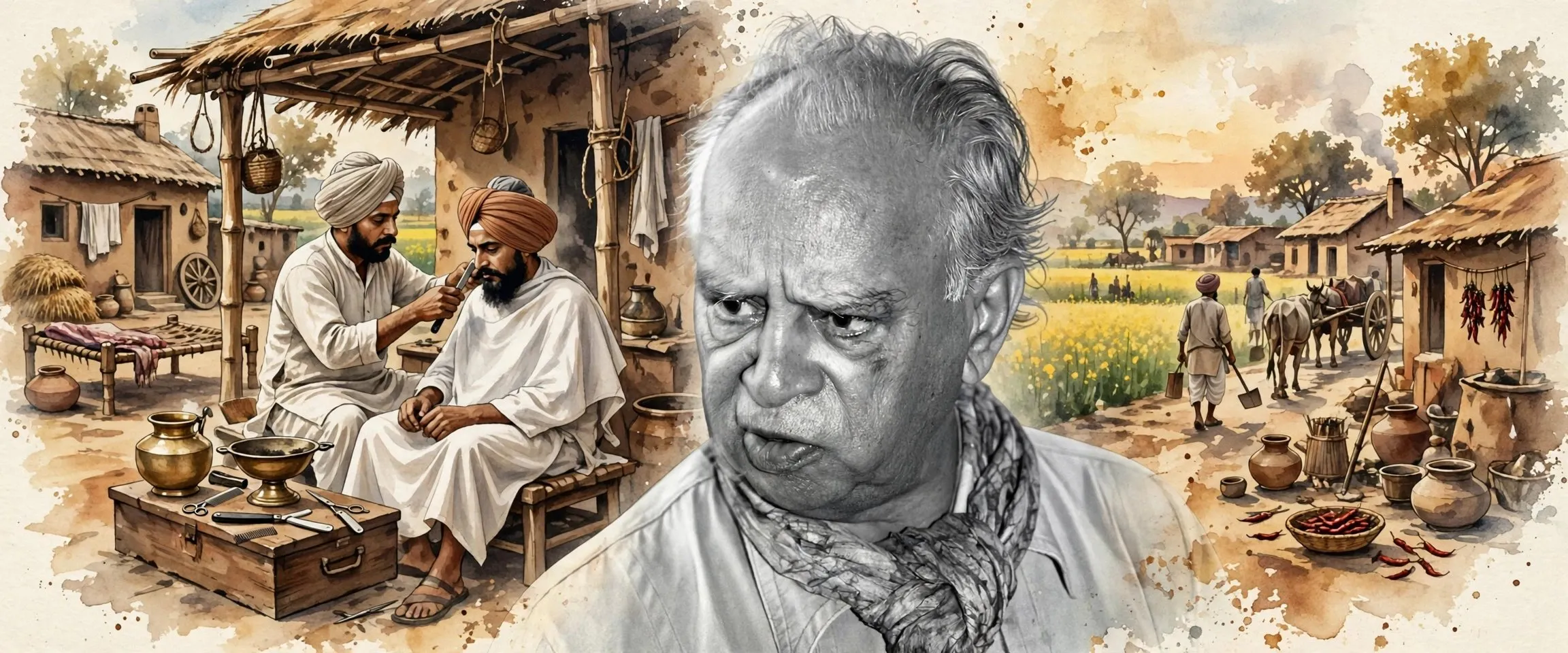
The Barber's Trade Union and Other Stories is Mulk Raj Anand's second collection of short stories, published in London by Jonathan Cape in 1944. Its title story follows Chandu, a village barber boy who, after being humiliated for dressing above his caste, stops shaving the village elders and organises the district's barbers into a union. The book reprints the stories of Anand's first collection, The Lost Child (1934), and shows the social protest that runs through all his early work.
English- Author
- Mulk Raj Anand
- Published
- 1944
- Publisher
- Jonathan Cape, London
- Language
- English
- Form
- Short story collection
- Setting
- A Punjabi village and the nearby town of Behari
All 8 facts
- Title story hero
- Chandu, a village barber boy
- First collection reprinted
- The Lost Child and Other Stories (1934)
Characters
About the book
The Barber's Trade Union and Other Stories, published in London by Jonathan Cape in 1944, is the second short story collection of Mulk Raj Anand. It came ten years after his first, The Lost Child and Other Stories (1934), and it reprints those early stories alongside new ones. Anand was living in London during the Second World War, working as a scriptwriter for the BBC, and the book belongs to the most productive decade of his life: Untouchable had appeared in 1935, Coolie in 1936, Two Leaves and a Bud in 1937, and the trilogy of The Village, Across the Black Waters and The Sword and the Sickle between 1939 and 1942.
The collection is short fiction in Anand's plainest mode. Its stories are set in Punjabi villages and small towns, and their people are barbers, cobblers, clerks, schoolboys and farmers: the poor and the overlooked, whom Anand called the real makers of modern India. The title story had already become one of his best known pieces, and it gives the book its shape: a joke that turns into a protest.
What happens in the title story?
The story is told by an upper-caste boy who remembers his childhood friend Chandu, the barber's son, about six months older than himself. The two boys play together, and Chandu, clever with his hands and quick with his tongue, is the narrator's hero. When Chandu's father dies of plague, the boy must leave school after the fifth class and take up his father's trade, going from house to house to shave the village gentlemen.
Chandu is not like his father. He visits the nearby town of Behari, watches the doctors, lawyers and British officials, and dreams of dressing with the same dignity. One morning he arrives at the narrator's house in a white turban, a khaki velvet coat, blue check trousers and shiny black leather shoes, his scissors and razors in a small leather bag across his shoulder. He looks, to his own delight, like a doctor.
The village does not laugh with him. The landlord Bijay Chand throws him out of his house for daring to dress above his station, and the priest Pandit Parmanand humiliates him further, accusing him of polluting religion. Chandu runs back to the narrator in tears and swears revenge, not with his fists but with a lesson the elders will never forget.
ਕਿਤਾਬ ਬਾਰੇ
ਦ ਬਾਰਬਰਜ਼ ਟਰੇਡ ਯੂਨੀਅਨ ਐਂਡ ਅਦਰ ਸਟੋਰੀਜ਼ 1944 ਵਿੱਚ ਲੰਡਨ ਤੋਂ ਜੋਨਾਥਨ ਕੇਪ ਨੇ ਛਾਪੀ, ਅਤੇ ਇਹ ਮੁਲਕ ਰਾਜ ਆਨੰਦ ਦਾ ਦੂਜਾ ਕਹਾਣੀ ਸੰਗ੍ਰਹਿ ਹੈ। ਇਹ ਉਸ ਦੇ ਪਹਿਲੇ ਸੰਗ੍ਰਹਿ, ਦ ਲੌਸਟ ਚਾਇਲਡ ਐਂਡ ਅਦਰ ਸਟੋਰੀਜ਼ (1934), ਤੋਂ ਦਸ ਸਾਲ ਬਾਅਦ ਆਈ, ਅਤੇ ਇਸ ਵਿੱਚ ਪਹਿਲੀਆਂ ਕਹਾਣੀਆਂ ਦੇ ਨਾਲ ਨਵੀਆਂ ਕਹਾਣੀਆਂ ਵੀ ਹਨ। ਉਨ੍ਹਾਂ ਦਿਨੀਂ ਆਨੰਦ ਦੂਜੀ ਸੰਸਾਰ ਜੰਗ ਦੌਰਾਨ ਲੰਡਨ ਵਿੱਚ ਰਹਿ ਕੇ ਬੀ.ਬੀ.ਸੀ. ਲਈ ਪਟਕਥਾਵਾਂ ਲਿਖ ਰਿਹਾ ਸੀ, ਅਤੇ ਇਹ ਕਿਤਾਬ ਉਸ ਦੇ ਜੀਵਨ ਦੇ ਸਭ ਤੋਂ ਉਪਜਾਊ ਦਹਾਕੇ ਦੀ ਹੈ: ਅਨਟਚੇਬਲ 1935 ਵਿੱਚ, ਕੂਲੀ 1936 ਵਿੱਚ, ਟੂ ਲੀਵਜ਼ ਐਂਡ ਅ ਬਡ 1937 ਵਿੱਚ, ਅਤੇ ਦ ਵਿਲੇਜ, ਅਕਰੌਸ ਦ ਬਲੈਕ ਵਾਟਰਜ਼ ਤੇ ਦ ਸੌਰਡ ਐਂਡ ਦ ਸਿਕਲ 1939 ਤੋਂ 1942 ਦੇ ਵਿਚਕਾਰ ਛਪੇ।
ਇਹ ਸੰਗ੍ਰਹਿ ਆਨੰਦ ਦੀ ਸਭ ਤੋਂ ਸਾਦੀ ਸ਼ੈਲੀ ਵਿੱਚ ਲਿਖਿਆ ਗਿਆ ਛੋਟਾ ਗਲਪ ਹੈ। ਇਸ ਦੀਆਂ ਕਹਾਣੀਆਂ ਪੰਜਾਬ ਦੇ ਪਿੰਡਾਂ ਅਤੇ ਛੋਟੇ ਕਸਬਿਆਂ ਵਿੱਚ ਵਾਪਰਦੀਆਂ ਹਨ, ਅਤੇ ਇਨ੍ਹਾਂ ਦੇ ਲੋਕ ਨਾਈ, ਮੋਚੀ, ਕਲਰਕ, ਸਕੂਲੀ ਮੁੰਡੇ ਅਤੇ ਕਿਸਾਨ ਹਨ: ਗ਼ਰੀਬ ਅਤੇ ਅਣਗੌਲੇ ਲੋਕ, ਜਿਨ੍ਹਾਂ ਨੂੰ ਆਨੰਦ ਆਧੁਨਿਕ ਭਾਰਤ ਦੇ ਅਸਲੀ ਨਿਰਮਾਤਾ ਕਹਿੰਦਾ ਸੀ। ਮੁੱਖ ਕਹਾਣੀ ਪਹਿਲਾਂ ਹੀ ਉਸ ਦੀਆਂ ਸਭ ਤੋਂ ਮਸ਼ਹੂਰ ਲਿਖਤਾਂ ਵਿੱਚੋਂ ਇੱਕ ਬਣ ਚੁੱਕੀ ਸੀ, ਅਤੇ ਉਹੀ ਕਿਤਾਬ ਨੂੰ ਆਕਾਰ ਦਿੰਦੀ ਹੈ: ਇੱਕ ਮਜ਼ਾਕ ਜੋ ਵਿਰੋਧ ਵਿੱਚ ਬਦਲ ਜਾਂਦਾ ਹੈ।
ਮੁੱਖ ਕਹਾਣੀ ਵਿੱਚ ਕੀ ਹੁੰਦਾ ਹੈ?
ਇਹ ਕਹਾਣੀ ਇੱਕ ਉੱਚੀ ਜਾਤ ਦੇ ਮੁੰਡੇ ਦੀ ਜ਼ੁਬਾਨੀ ਸੁਣਾਈ ਗਈ ਹੈ, ਜੋ ਆਪਣੇ ਬਚਪਨ ਦੇ ਦੋਸਤ ਚੰਦੂ ਨੂੰ ਯਾਦ ਕਰਦਾ ਹੈ। ਚੰਦੂ ਪਿੰਡ ਦੇ ਨਾਈ ਦਾ ਪੁੱਤ ਹੈ ਅਤੇ ਕਥਾਵਾਚਕ ਤੋਂ ਲਗਭਗ ਛੇ ਮਹੀਨੇ ਵੱਡਾ ਹੈ। ਦੋਵੇਂ ਮੁੰਡੇ ਇਕੱਠੇ ਖੇਡਦੇ ਹਨ, ਅਤੇ ਚੰਦੂ, ਹੱਥਾਂ ਦਾ ਹੁਨਰਮੰਦ ਅਤੇ ਜ਼ੁਬਾਨ ਦਾ ਤੇਜ਼, ਕਥਾਵਾਚਕ ਦਾ ਹੀਰੋ ਹੈ। ਜਦੋਂ ਚੰਦੂ ਦਾ ਪਿਉ ਪਲੇਗ ਨਾਲ ਮਰ ਜਾਂਦਾ ਹੈ, ਤਾਂ ਮੁੰਡੇ ਨੂੰ ਪੰਜਵੀਂ ਜਮਾਤ ਤੋਂ ਬਾਅਦ ਸਕੂਲ ਛੱਡ ਕੇ ਪਿਉ ਦਾ ਧੰਦਾ ਸੰਭਾਲਣਾ ਪੈਂਦਾ ਹੈ: ਘਰ ਘਰ ਜਾ ਕੇ ਪਿੰਡ ਦੇ ਵੱਡਿਆਂ ਦੀ ਹਜਾਮਤ ਕਰਨੀ।
ਚੰਦੂ ਆਪਣੇ ਪਿਉ ਵਰਗਾ ਨਹੀਂ ਹੈ। ਉਹ ਨੇੜੇ ਦੇ ਕਸਬੇ ਬਿਹਾਰੀ ਜਾਂਦਾ ਹੈ, ਡਾਕਟਰਾਂ, ਵਕੀਲਾਂ ਅਤੇ ਅੰਗਰੇਜ਼ ਅਫ਼ਸਰਾਂ ਨੂੰ ਵੇਖਦਾ ਹੈ, ਅਤੇ ਉਨ੍ਹਾਂ ਵਰਗੀ ਇੱਜ਼ਤ ਨਾਲ ਰਹਿਣ ਦਾ ਸੁਪਨਾ ਵੇਖਦਾ ਹੈ। ਇੱਕ ਸਵੇਰੇ ਉਹ ਕਥਾਵਾਚਕ ਦੇ ਘਰ ਚਿੱਟੀ ਪੱਗ, ਖਾਕੀ ਮਖ਼ਮਲੀ ਕੋਟ, ਨੀਲੀਆਂ ਚੈੱਕ ਵਾਲੀਆਂ ਪਤਲੂਣਾਂ ਅਤੇ ਚਮਕਦੇ ਕਾਲੇ ਚਮੜੇ ਦੇ ਜੁੱਤਿਆਂ ਵਿੱਚ ਆਉਂਦਾ ਹੈ, ਕੈਂਚੀਆਂ ਅਤੇ ਉਸਤਰੇ ਮੋਢੇ 'ਤੇ ਲਟਕਦੇ ਛੋਟੇ ਚਮੜੇ ਦੇ ਬੈਗ ਵਿੱਚ ਪਾ ਕੇ। ਆਪਣੀ ਨਜ਼ਰ ਵਿੱਚ ਉਹ ਡਾਕਟਰ ਲੱਗਦਾ ਹੈ।
ਪਿੰਡ ਉਸ ਨਾਲ ਹੱਸਦਾ ਨਹੀਂ। ਜ਼ਿਮੀਂਦਾਰ ਬਿਜੈ ਚੰਦ ਉਸ ਨੂੰ ਆਪਣੀ ਜਾਤ ਤੋਂ ਉੱਪਰ ਪਹਿਨਣ 'ਤੇ ਘਰੋਂ ਕੱਢ ਦਿੰਦਾ ਹੈ, ਅਤੇ ਪੁਜਾਰੀ ਪੰਡਿਤ ਪਰਮਾਨੰਦ ਉਸ ਨੂੰ ਹੋਰ ਜ਼ਲੀਲ ਕਰਦਾ ਹੈ ਅਤੇ ਧਰਮ ਨੂੰ ਭ੍ਰਿਸ਼ਟ ਕਰਨ ਦਾ ਦੋਸ਼ ਲਾਉਂਦਾ ਹੈ। ਚੰਦੂ ਰੋਂਦਾ ਹੋਇਆ ਕਥਾਵਾਚਕ ਕੋਲ ਮੁੜਦਾ ਹੈ ਅਤੇ ਸਹੁੰ ਖਾਂਦਾ ਹੈ ਕਿ ਬਦਲਾ ਲਵੇਗਾ, ਮੁੱਕਿਆਂ ਨਾਲ ਨਹੀਂ, ਸਗੋਂ ਇੱਕ ਅਜਿਹਾ ਸਬਕ ਸਿਖਾ ਕੇ ਜੋ ਵੱਡੇ ਕਦੇ ਨਾ ਭੁੱਲਣ।
His revenge is practical. He buys a second-hand bicycle, takes paid work shaving British soldiers at the military cantonment, and stops visiting the elders' homes altogether. Within two weeks the village notables are unshaven and absurd, because custom forbade upper-caste men from cutting their own hair. Chandu rides to the neighbouring villages, talks to his fellow barbers, and organises them into a union that refuses service to the abusive elders. In the end he opens his own shop in the town, and the elders must walk to him like ordinary customers and pay cash. The words trade union appear only once in the whole story, in its last line.
The other stories in the collection
The book's second anchor is 'The Lost Child', the story that gave Anand's first collection its title. A small boy is separated from his parents at a village fair and refuses every toy and sweet offered to him by the stranger who rescued him. All he wants, between sobs, is his mother and his father. Anand said a saying of Guru Nanak was in his mind as he wrote it: we are all children lost in the world fair.
The rest of the collection works the same ground as the title story: village life, caste, poverty and the clash between the old order and the new. Later selections of Anand's stories draw heavily on this book. The Penguin Selected Short Stories, edited by M. K. Naik, takes a good few of its pieces from the 1944 collection and reproduces them as they first appeared.
Why does the story still matter?
The Barber's Trade Union is one of the most taught Indian short stories. It appears in school and university syllabuses in India, including CBSE and ISC courses, and generations of students have met Chandu before they met Anand's novels. Its appeal is easy to see: the story is funny, the revenge is bloodless, and the moral is carried by the plot rather than preached.
It also shows Anand's method at its clearest. The bicycle does the work of an argument: it gives Chandu movement, money and independence, and it lets him organise beyond his own village. The union does the rest. Chandu never raises his voice after the first humiliation and never lifts a hand against anyone. He simply withdraws his labour, and the men who despised him discover they cannot do without him. It is a story about caste, but it is also a story about how the powerless can win, and it has outlived the world it describes.
The author
Mulk Raj Anand (1905 to 2004) was born in Peshawar on 12 December 1905 and educated at Khalsa College, Amritsar, University College London and Cambridge, where he took a PhD in philosophy in 1929. His first novel, Untouchable (1935), about a single day in the life of the sweeper Bakha, made him one of the founders of the Indian novel in English, alongside R. K. Narayan and Raja Rao. He helped found the Progressive Writers' Association, spent the war years at the BBC, founded the arts magazine Marg, and was awarded the Padma Bhushan in 1968 and the Sahitya Akademi Award in 1971. He died in Pune on 28 September 2004, aged 98.
Anand often said his short stories were paid less attention than his novels, and he was right. His novels took the honours, but the stories are where his eye for village life is sharpest, and this collection is the best place to start with them.
Reception and legacy
The collection confirmed Anand as a short story writer of the first rank, not only a novelist. Its title story became one of the most anthologised Indian stories in English, and it is still the piece readers quote when they talk about Anand's humour: the protest that arrives as a joke, and the union that is named only in the last line. The stories live on in selections of Anand's work, and in classrooms where Chandu still gets his revenge.
ਉਸ ਦਾ ਬਦਲਾ ਅਮਲੀ ਹੈ। ਉਹ ਇੱਕ ਪੁਰਾਣਾ ਸਾਈਕਲ ਖਰੀਦਦਾ ਹੈ, ਛਾਉਣੀ ਵਿੱਚ ਅੰਗਰੇਜ਼ ਸਿਪਾਹੀਆਂ ਦੀ ਹਜਾਮਤ ਕਰਕੇ ਨਕਦ ਕਮਾਉਣ ਲੱਗਦਾ ਹੈ, ਅਤੇ ਵੱਡਿਆਂ ਦੇ ਘਰ ਜਾਣਾ ਬਿਲਕੁਲ ਬੰਦ ਕਰ ਦਿੰਦਾ ਹੈ। ਦੋ ਹਫ਼ਤਿਆਂ ਵਿੱਚ ਪਿੰਡ ਦੇ ਵੱਡੇ ਬਿਨਾਂ ਹਜਾਮਤ ਤੋਂ ਹਾਸੋਹੀਣੇ ਲੱਗਣ ਲੱਗਦੇ ਹਨ, ਕਿਉਂਕਿ ਰਿਵਾਜ ਅਨੁਸਾਰ ਉੱਚੀ ਜਾਤ ਦੇ ਮਰਦ ਆਪਣੇ ਵਾਲ ਖ਼ੁਦ ਨਹੀਂ ਕੱਟ ਸਕਦੇ ਸਨ। ਚੰਦੂ ਆਲੇ ਦੁਆਲੇ ਦੇ ਪਿੰਡਾਂ ਵਿੱਚ ਜਾ ਕੇ ਹੋਰ ਨਾਈਆਂ ਨੂੰ ਮਿਲਦਾ ਹੈ ਅਤੇ ਉਨ੍ਹਾਂ ਨੂੰ ਇੱਕ ਯੂਨੀਅਨ ਵਿੱਚ ਜੋੜ ਲੈਂਦਾ ਹੈ, ਜੋ ਜ਼ੁਲਮ ਕਰਨ ਵਾਲੇ ਵੱਡਿਆਂ ਦੀ ਸੇਵਾ ਕਰਨ ਤੋਂ ਇਨਕਾਰ ਕਰ ਦਿੰਦੀ ਹੈ। ਅੰਤ ਵਿੱਚ ਉਹ ਕਸਬੇ ਵਿੱਚ ਆਪਣੀ ਦੁਕਾਨ ਖੋਲ੍ਹ ਲੈਂਦਾ ਹੈ, ਅਤੇ ਵੱਡਿਆਂ ਨੂੰ ਆਮ ਗਾਹਕਾਂ ਵਾਂਗ ਉਸ ਕੋਲ ਆ ਕੇ ਨਕਦ ਦੇਣਾ ਪੈਂਦਾ ਹੈ। ਪੂਰੀ ਕਹਾਣੀ ਵਿੱਚ ਟਰੇਡ ਯੂਨੀਅਨ ਸ਼ਬਦ ਸਿਰਫ਼ ਇੱਕ ਵਾਰ, ਅਖ਼ੀਰਲੀ ਸਤਰ ਵਿੱਚ ਆਉਂਦਾ ਹੈ।
ਸੰਗ੍ਰਹਿ ਦੀਆਂ ਹੋਰ ਕਹਾਣੀਆਂ
ਕਿਤਾਬ ਦਾ ਦੂਜਾ ਥੰਮ੍ਹ 'ਦ ਲੌਸਟ ਚਾਇਲਡ' ਹੈ, ਉਹ ਕਹਾਣੀ ਜਿਸ ਨੇ ਆਨੰਦ ਦੇ ਪਹਿਲੇ ਸੰਗ੍ਰਹਿ ਨੂੰ ਨਾਂ ਦਿੱਤਾ ਸੀ। ਇੱਕ ਛੋਟਾ ਮੁੰਡਾ ਪਿੰਡ ਦੇ ਮੇਲੇ ਵਿੱਚ ਮਾਪਿਆਂ ਤੋਂ ਵਿਛੜ ਜਾਂਦਾ ਹੈ, ਅਤੇ ਉਸ ਨੂੰ ਬਚਾਉਣ ਵਾਲੇ ਅਜਨਬੀ ਵੱਲੋਂ ਦਿੱਤੇ ਖਿਡੌਣੇ ਅਤੇ ਮਿਠਾਈਆਂ ਉਸ ਨੂੰ ਨਹੀਂ ਚਾਹੀਦੀਆਂ। ਰੋਂਦੇ ਹੋਏ ਉਹ ਸਿਰਫ਼ ਆਪਣੀ ਮਾਂ ਅਤੇ ਆਪਣੇ ਪਿਉ ਨੂੰ ਮੰਗਦਾ ਹੈ। ਆਨੰਦ ਨੇ ਕਿਹਾ ਸੀ ਕਿ ਲਿਖਦੇ ਸਮੇਂ ਗੁਰੂ ਨਾਨਕ ਦਾ ਬਚਨ ਉਸ ਦੇ ਮਨ ਵਿੱਚ ਗੂੰਜ ਰਿਹਾ ਸੀ: ਅਸੀਂ ਸਭ ਸੰਸਾਰ ਦੇ ਮੇਲੇ ਵਿੱਚ ਗੁਆਚੇ ਹੋਏ ਬੱਚੇ ਹਾਂ।
ਸੰਗ੍ਰਹਿ ਦੀਆਂ ਬਾਕੀ ਕਹਾਣੀਆਂ ਉਹੀ ਧਰਤੀ ਜੋਤਦੀਆਂ ਹਨ ਜੋ ਮੁੱਖ ਕਹਾਣੀ: ਪਿੰਡ ਦਾ ਜੀਵਨ, ਜਾਤ, ਗ਼ਰੀਬੀ ਅਤੇ ਪੁਰਾਣੇ ਢਾਂਚੇ ਨਾਲ ਨਵੇਂ ਜ਼ਮਾਨੇ ਦੀ ਟੱਕਰ। ਆਨੰਦ ਦੀਆਂ ਕਹਾਣੀਆਂ ਦੇ ਬਾਅਦ ਵਾਲੇ ਚੋਣ ਸੰਗ੍ਰਹਿ ਇਸ ਕਿਤਾਬ ਤੋਂ ਬਹੁਤ ਕੁਝ ਲੈਂਦੇ ਹਨ। ਐਮ. ਕੇ. ਨਾਇਕ ਦੇ ਸੰਪਾਦਨ ਹੇਠ ਪੈਂਗੁਇਨ ਸਿਲੈਕਟਡ ਸ਼ੌਰਟ ਸਟੋਰੀਜ਼ ਵਿੱਚੋਂ ਕਈ ਕਹਾਣੀਆਂ 1944 ਦੇ ਇਸ ਸੰਗ੍ਰਹਿ ਵਿੱਚੋਂ ਲਈਆਂ ਗਈਆਂ ਹਨ ਅਤੇ ਉਹ ਉਸੇ ਰੂਪ ਵਿੱਚ ਛਾਪੀਆਂ ਗਈਆਂ ਹਨ ਜਿਵੇਂ ਪਹਿਲੀ ਵਾਰ ਛਪੀਆਂ ਸਨ।
ਇਹ ਕਹਾਣੀ ਅੱਜ ਵੀ ਕਿਉਂ ਮਹੱਤਵ ਰੱਖਦੀ ਹੈ?
ਦ ਬਾਰਬਰਜ਼ ਟਰੇਡ ਯੂਨੀਅਨ ਭਾਰਤ ਦੀਆਂ ਸਭ ਤੋਂ ਵੱਧ ਪੜ੍ਹਾਈਆਂ ਜਾਣ ਵਾਲੀਆਂ ਅੰਗਰੇਜ਼ੀ ਕਹਾਣੀਆਂ ਵਿੱਚੋਂ ਇੱਕ ਹੈ। ਇਹ ਭਾਰਤ ਦੇ ਸਕੂਲਾਂ ਅਤੇ ਯੂਨੀਵਰਸਿਟੀਆਂ ਦੇ ਪਾਠਕ੍ਰਮਾਂ ਵਿੱਚ ਹੈ, ਜਿਨ੍ਹਾਂ ਵਿੱਚ ਸੀ.ਬੀ.ਐਸ.ਈ. ਅਤੇ ਆਈ.ਐਸ.ਸੀ. ਦੇ ਕੋਰਸ ਵੀ ਹਨ, ਅਤੇ ਵਿਦਿਆਰਥੀਆਂ ਦੀਆਂ ਪੀੜ੍ਹੀਆਂ ਚੰਦੂ ਨੂੰ ਆਨੰਦ ਦੇ ਨਾਵਲਾਂ ਤੋਂ ਪਹਿਲਾਂ ਮਿਲਦੀਆਂ ਹਨ। ਇਸ ਦੀ ਖਿੱਚ ਸਾਫ਼ ਹੈ: ਕਹਾਣੀ ਮਜ਼ਾਕੀਆ ਹੈ, ਬਦਲਾ ਬਿਨਾਂ ਖ਼ੂਨ ਖ਼ਰਾਬੇ ਤੋਂ ਲਿਆ ਜਾਂਦਾ ਹੈ, ਅਤੇ ਸਬਕ ਕਹਾਣੀ ਰਾਹੀਂ ਮਿਲਦਾ ਹੈ, ਉਪਦੇਸ਼ ਰਾਹੀਂ ਨਹੀਂ।
ਇਹ ਕਹਾਣੀ ਆਨੰਦ ਦੇ ਢੰਗ ਨੂੰ ਸਭ ਤੋਂ ਸਾਫ਼ ਦਿਖਾਉਂਦੀ ਹੈ। ਸਾਈਕਲ ਦਲੀਲ ਦਾ ਕੰਮ ਕਰਦਾ ਹੈ: ਇਹ ਚੰਦੂ ਨੂੰ ਚਾਲ, ਪੈਸਾ ਅਤੇ ਆਜ਼ਾਦੀ ਦਿੰਦਾ ਹੈ, ਅਤੇ ਉਸ ਨੂੰ ਆਪਣੇ ਪਿੰਡ ਤੋਂ ਬਾਹਰ ਸੰਗਠਿਤ ਹੋਣ ਦਿੰਦਾ ਹੈ। ਯੂਨੀਅਨ ਬਾਕੀ ਕੰਮ ਕਰਦੀ ਹੈ। ਪਹਿਲੇ ਅਪਮਾਨ ਤੋਂ ਬਾਅਦ ਚੰਦੂ ਨਾ ਆਵਾਜ਼ ਉੱਚੀ ਕਰਦਾ ਹੈ ਅਤੇ ਨਾ ਕਿਸੇ 'ਤੇ ਹੱਥ ਚੁੱਕਦਾ ਹੈ। ਉਹ ਸਿਰਫ਼ ਆਪਣੀ ਮਿਹਨਤ ਵਾਪਸ ਲੈ ਲੈਂਦਾ ਹੈ, ਅਤੇ ਜਿਨ੍ਹਾਂ ਮਰਦਾਂ ਨੇ ਉਸ ਨੂੰ ਤੁੱਛ ਸਮਝਿਆ ਸੀ, ਉਨ੍ਹਾਂ ਨੂੰ ਪਤਾ ਲੱਗਦਾ ਹੈ ਕਿ ਉਸ ਤੋਂ ਬਿਨਾਂ ਉਨ੍ਹਾਂ ਦਾ ਕੰਮ ਨਹੀਂ ਚੱਲਦਾ। ਇਹ ਜਾਤ ਬਾਰੇ ਕਹਾਣੀ ਹੈ, ਪਰ ਨਾਲ ਹੀ ਇਹ ਇਸ ਬਾਰੇ ਵੀ ਹੈ ਕਿ ਬੇਵੱਸ ਲੋਕ ਕਿਵੇਂ ਜਿੱਤ ਸਕਦੇ ਹਨ, ਅਤੇ ਇਹ ਉਸ ਸੰਸਾਰ ਤੋਂ ਬਾਅਦ ਵੀ ਜਿਉਂਦੀ ਹੈ ਜਿਸ ਨੂੰ ਇਹ ਦਰਸਾਉਂਦੀ ਹੈ।
ਲੇਖਕ
ਮੁਲਕ ਰਾਜ ਆਨੰਦ (1905 ਤੋਂ 2004) ਦਾ ਜਨਮ 12 ਦਸੰਬਰ 1905 ਨੂੰ ਪਿਸ਼ਾਵਰ ਵਿੱਚ ਹੋਇਆ। ਉਸ ਨੇ ਖਾਲਸਾ ਕਾਲਜ, ਅੰਮ੍ਰਿਤਸਰ, ਯੂਨੀਵਰਸਿਟੀ ਕਾਲਜ ਲੰਡਨ ਅਤੇ ਕੈਂਬਰਿਜ ਵਿੱਚ ਪੜ੍ਹਾਈ ਕੀਤੀ, ਜਿੱਥੋਂ 1929 ਵਿੱਚ ਫ਼ਲਸਫ਼ੇ ਵਿੱਚ ਪੀ.ਐਚ.ਡੀ. ਕੀਤੀ। ਉਸ ਦਾ ਪਹਿਲਾ ਨਾਵਲ, ਅਨਟਚੇਬਲ (1935), ਜੋ ਭੰਗੀ ਬਖਾ ਦੇ ਜੀਵਨ ਦੇ ਇੱਕ ਦਿਨ ਬਾਰੇ ਹੈ, ਨੇ ਉਸ ਨੂੰ ਆਰ. ਕੇ. ਨਾਰਾਇਣ ਅਤੇ ਰਾਜਾ ਰਾਓ ਦੇ ਨਾਲ ਅੰਗਰੇਜ਼ੀ ਵਿੱਚ ਭਾਰਤੀ ਨਾਵਲ ਦੇ ਮੋਢੀਆਂ ਵਿੱਚੋਂ ਇੱਕ ਬਣਾ ਦਿੱਤਾ। ਉਸ ਨੇ ਪ੍ਰਗਤੀਵਾਦੀ ਲੇਖਕ ਸੰਘ ਦੀ ਸਥਾਪਨਾ ਵਿੱਚ ਮਦਦ ਕੀਤੀ, ਜੰਗ ਦੇ ਸਾਲ ਬੀ.ਬੀ.ਸੀ. ਵਿੱਚ ਬਿਤਾਏ, ਕਲਾ ਪੱਤਰਕਾ ਮਾਰਗ ਸ਼ੁਰੂ ਕੀਤੀ, ਅਤੇ 1968 ਵਿੱਚ ਪਦਮ ਭੂਸ਼ਣ ਤੇ 1971 ਵਿੱਚ ਸਾਹਿਤ ਅਕਾਦਮੀ ਪੁਰਸਕਾਰ ਮਿਲਿਆ। 28 ਸਤੰਬਰ 2004 ਨੂੰ 98 ਸਾਲ ਦੀ ਉਮਰ ਵਿੱਚ ਪੁਣੇ ਵਿੱਚ ਉਸ ਦਾ ਦੇਹਾਂਤ ਹੋਇਆ।
ਆਨੰਦ ਅਕਸਰ ਕਹਿੰਦਾ ਸੀ ਕਿ ਉਸ ਦੀਆਂ ਕਹਾਣੀਆਂ ਵੱਲ ਉਸ ਦੇ ਨਾਵਲਾਂ ਨਾਲੋਂ ਘੱਟ ਧਿਆਨ ਦਿੱਤਾ ਗਿਆ, ਅਤੇ ਉਹ ਸਹੀ ਸੀ। ਸਨਮਾਨ ਨਾਵਲਾਂ ਨੂੰ ਮਿਲੇ, ਪਰ ਕਹਾਣੀਆਂ ਵਿੱਚ ਹੀ ਪਿੰਡ ਦੇ ਜੀਵਨ 'ਤੇ ਉਸ ਦੀ ਨਜ਼ਰ ਸਭ ਤੋਂ ਤਿੱਖੀ ਹੈ, ਅਤੇ ਇਹ ਸੰਗ੍ਰਹਿ ਉਨ੍ਹਾਂ ਨਾਲ ਸ਼ੁਰੂਆਤ ਕਰਨ ਲਈ ਸਭ ਤੋਂ ਵਧੀਆ ਥਾਂ ਹੈ।
ਸਵਾਗਤ ਅਤੇ ਵਿਰਾਸਤ
ਇਸ ਸੰਗ੍ਰਹਿ ਨੇ ਆਨੰਦ ਨੂੰ ਸਿਰਫ਼ ਨਾਵਲਕਾਰ ਨਹੀਂ, ਸਗੋਂ ਪਹਿਲੇ ਦਰਜੇ ਦਾ ਕਹਾਣੀਕਾਰ ਸਾਬਤ ਕੀਤਾ। ਇਸ ਦੀ ਮੁੱਖ ਕਹਾਣੀ ਅੰਗਰੇਜ਼ੀ ਵਿੱਚ ਲਿਖੀਆਂ ਭਾਰਤੀ ਕਹਾਣੀਆਂ ਵਿੱਚੋਂ ਸਭ ਤੋਂ ਵੱਧ ਚੁਣੀਆਂ ਜਾਣ ਵਾਲੀਆਂ ਵਿੱਚੋਂ ਇੱਕ ਬਣ ਗਈ, ਅਤੇ ਅੱਜ ਵੀ ਪਾਠਕ ਆਨੰਦ ਦੇ ਹਾਸੇ ਦੀ ਗੱਲ ਕਰਦਿਆਂ ਇਹੀ ਕਹਾਣੀ ਯਾਦ ਕਰਦੇ ਹਨ: ਉਹ ਵਿਰੋਧ ਜੋ ਮਜ਼ਾਕ ਵਾਂਗ ਆਉਂਦਾ ਹੈ, ਅਤੇ ਉਹ ਯੂਨੀਅਨ ਜਿਸ ਦਾ ਨਾਂ ਸਿਰਫ਼ ਅਖ਼ੀਰਲੀ ਸਤਰ ਵਿੱਚ ਆਉਂਦਾ ਹੈ। ਇਹ ਕਹਾਣੀਆਂ ਆਨੰਦ ਦੀਆਂ ਲਿਖਤਾਂ ਦੇ ਚੋਣ ਸੰਗ੍ਰਹਿਆਂ ਵਿੱਚ ਜਿਉਂਦੀਆਂ ਹਨ, ਅਤੇ ਕਲਾਸਰੂਮਾਂ ਵਿੱਚ ਜਿੱਥੇ ਚੰਦੂ ਅੱਜ ਵੀ ਆਪਣਾ ਬਦਲਾ ਲੈਂਦਾ ਹੈ।
The author

Connected
More to read
Sources (4)
Jugti is free and independent. Reader support keeps the Kosh growing.
Support