
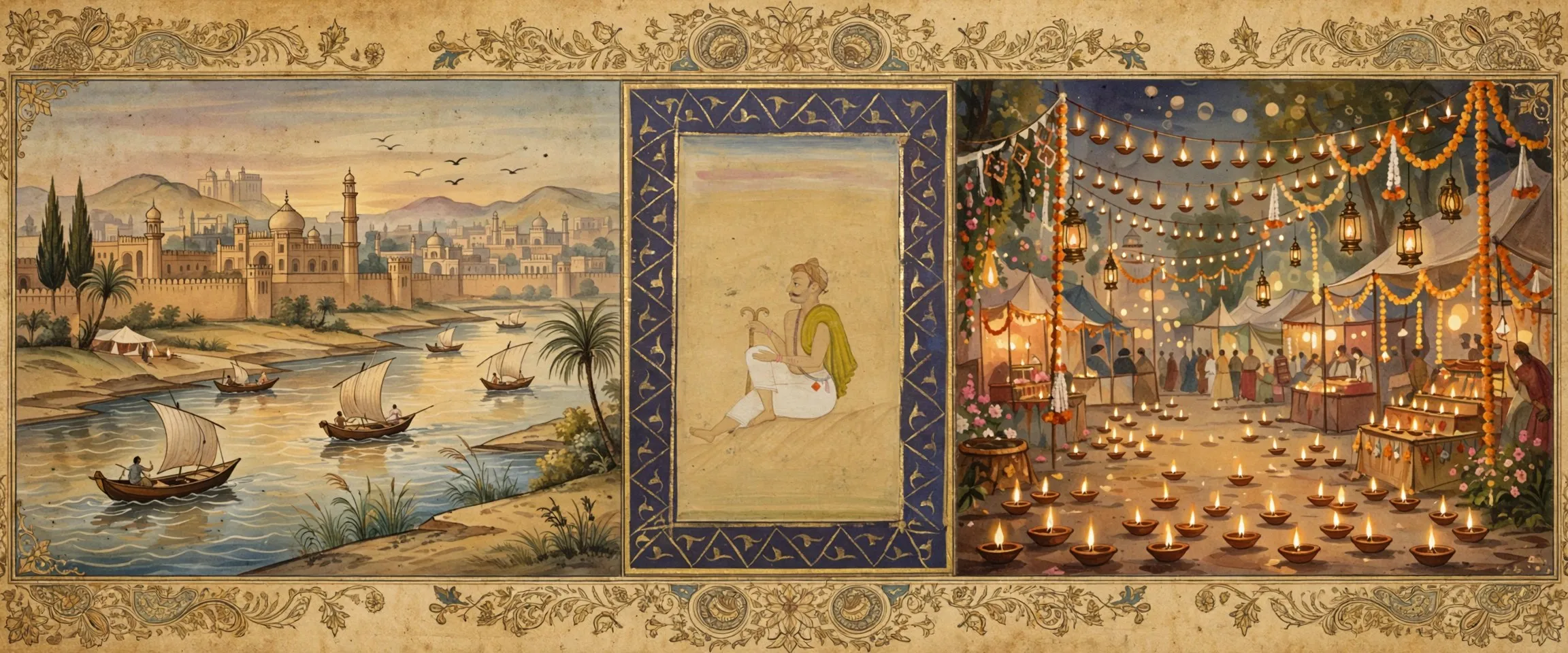
Shah Hussain (1538 to 1599), also known as Madho Lal Hussain, was a Punjabi Sufi poet of Lahore regarded as the pioneer of the kafi, the short sung poem at the heart of Punjabi Sufi poetry. His kafis, written in the voice of ordinary people and of Heer herself, are still sung across Punjab, and his Lahore shrine hosts Mela Chiraghan, the Festival of Lights.
- Punjabi name
- ਸ਼ਾਹ ਹੁਸੈਨ
- Born
- 1538, Lahore
- Died
- 1599, Lahore, near the River Ravi
- Home town
- Lahore
- District
- Lahore
- Tehsil
- Lahore
All 12 facts
- Region
- Majha
- Also known as
- Madho Lal Hussain
- Teacher
- Shaikh Bahlol Daryai, Qadiriyya order
- Known work
- Kafiyan Shah Hussain
- Shrine
- Baghbanpura, Lahore, beside the Shalimar Gardens
- Festival
- Mela Chiraghan (Festival of Lights)
Shah Hussain (1538 to 1599), also known as Madho Lal Hussain, was a Punjabi Sufi poet of Lahore who is regarded as the pioneer of the kafi, the short sung poem that became a central form of Punjabi poetry. A weaver's son who gave up a scholar's life for that of a faqir, he wrote in the voice of ordinary people, and his verses are still sung across Punjab today.
Early life in Lahore
Hussain was born in 1538 inside the walled city of Lahore, in the Punjab of the early Mughal era. His father, Sheikh Usman, was a weaver of the Dhudha clan of Rajputs, and his grandfather Kaljas Rai is recorded as a convert to Islam. The family trade stayed with the poet all his life: in some verses he signed himself Faqir Hussain Julaha, Hussain the weaver, and the spinning, thread and cloth of a weaver's daily work run through the images of his poems.
He was educated near his home, at a mosque in the city, and accounts of his life name Sheikh Hafiz Abubakar among his teachers. He then became a student of Shaikh Bahlol Daryai, the Sufi saint who founded the Bahlol Shahi branch of the Qadiriyya order. Before his death, Bahlol is said to have named Hussain as his representative in Lahore, a sign of how far the young scholar had already travelled on the Sufi path.
The scholar who walked away
The turning point of his life is placed at the age of thirty six. Accounts describe Hussain debating the meaning of verses of the Quran with his teacher, and then leaving everything behind to take up a non-material life. The valued name Shah, meaning a king, he kept only alongside the word Faqir, a mendicant: he is remembered as Shah Hussain Faqir, the dervish king, a man who held a title of rule and chose the life of a beggar saint instead.
From then on his classroom was the street. He sang and danced in the lanes of Lahore in a state his contemporaries struggled to explain, and his sitting place inside Taxali Gate in the walled city is still pointed out. To the keepers of respectable religion this was scandal. To Hussain, the later tradition suggests, outward respectability was exactly the trap: his poems return again and again to the gap between the religion of rules and the religion of love.
Why is Shah Hussain called Madho Lal Hussain?
The name by which Punjab knows him best is a double name, and it records the defining bond of his later life. Madho Lal was a Hindu Brahmin boy from Shahdara, across the River Ravi from Lahore. Hussain's devotion to Madho became the centre of his life: he celebrated the Hindu festivals of Basant and Holi with him, and Madho in time became his disciple and spiritual successor. After Hussain's death, Madho is said to have carried his legacy forward for forty eight years.
So complete was the fusion that the disciple's name was placed before the master's, and the two are remembered as a single figure: Madho Lal Hussain. Their shrine makes the same point in stone, for Madho's tomb lies next to Hussain's. In a Punjab often divided by creed, the joint name has long been read as a statement in itself: a Muslim Sufi and his Hindu disciple, inseparable in memory, held up as a picture of the universal love Hussain preached.
Poetry made to be sung: the kafi
Hussain's whole surviving work is made of kafis, and he is credited with giving the form its shape. A typical kafi is short: a refrain, then between four and ten rhymed lines, built to be sung to the rhythms and tunes of Punjabi folk music. Nothing in it is written for the page alone. His language is the simple, direct Punjabi of the street and the spinning wheel, and the Daily Times account of his work notes the other edge of that simplicity: the poems speak for the common man and condemn inequality based on caste.
His favourite device is a woman's voice. Again and again the soul speaks as a bride waiting for, longing for, or united with the beloved, who is God: the happily married suhagan against the deserted duhagan. In his best known verses he borrows the voice of Heer herself: Ranjhan mera, main Ranjhan di, Ranjha is mine and I am Ranjha's, let people say Heer has gone mad. Singers have never let the kafis rest. They belong to the traditional qawwali repertoire and have been performed by Nusrat Fateh Ali Khan, Abida Parveen, Noor Jehan and Ghulam Ali, among many others.
Shrine and Mela Chiraghan
Hussain died in 1599 near the River Ravi. His tomb and shrine stand at Baghbanpura in Lahore, beside the Shalimar Gardens, with Madho's tomb next to his. His death anniversary, the urs, is kept there every year as Mela Chiraghan, the Festival of Lights, when devotees light lamps and a great fire at the shrine and dervishes dance the dhamaal to the beat of the dhol.
The festival carries his message in its own history. The urs at the shrine and the spring mela at the Shalimar Gardens were once two separate events, a Muslim observance and a festival Hindus loved. Maharaja Ranjit Singh combined them into the single Mela Chiraghan, and himself led the procession from his palace to the shrine barefoot, accompanied by thousands of Sikhs, Muslims and Hindus. It is still described as the biggest festival of Punjab, and as a symbol of love, devotion and harmony across its communities.
Legacy
Shah Hussain is regarded as the first major early modern poet of the Punjab, and the kafi he shaped became the vehicle later Sufi poets of Punjab, Bulleh Shah among them, made their own. His own collection, the Kafiyan Shah Hussain, has stayed in print for centuries in edition after edition, and in English his verses reached new readers in Naveed Alam's translation, Verses of a Lowly Fakir. More than four hundred years after his death, a Lahori who has never opened a book of poetry may still know his lines by heart, because Punjab never stopped singing them.
ਸ਼ਾਹ ਹੁਸੈਨ (1538 ਤੋਂ 1599), ਜਿਨ੍ਹਾਂ ਨੂੰ ਮਾਧੋ ਲਾਲ ਹੁਸੈਨ ਵੀ ਕਿਹਾ ਜਾਂਦਾ ਹੈ, ਲਾਹੌਰ ਦੇ ਪੰਜਾਬੀ ਸੂਫੀ ਕਵੀ ਸਨ, ਜਿਨ੍ਹਾਂ ਨੂੰ ਕਾਫੀ ਦਾ ਮੋਹਰੀ ਮੰਨਿਆ ਜਾਂਦਾ ਹੈ। ਕਾਫੀ ਉਹ ਛੋਟੀ ਗਾਈ ਜਾਣ ਵਾਲੀ ਕਵਿਤਾ ਹੈ ਜੋ ਪੰਜਾਬੀ ਕਵਿਤਾ ਦੀ ਕੇਂਦਰੀ ਵਿਧਾ ਬਣ ਗਈ। ਇੱਕ ਜੁਲਾਹੇ ਦੇ ਪੁੱਤਰ ਨੇ ਵਿਦਵਾਨ ਦੀ ਜ਼ਿੰਦਗੀ ਛੱਡ ਕੇ ਫਕੀਰੀ ਦਾ ਰਾਹ ਫੜਿਆ, ਆਮ ਲੋਕਾਂ ਦੀ ਆਵਾਜ਼ ਵਿੱਚ ਲਿਖਿਆ, ਅਤੇ ਉਨ੍ਹਾਂ ਦੀਆਂ ਕਾਫੀਆਂ ਅੱਜ ਵੀ ਸਾਰੇ ਪੰਜਾਬ ਵਿੱਚ ਗਾਈਆਂ ਜਾਂਦੀਆਂ ਹਨ।
ਲਾਹੌਰ ਵਿੱਚ ਸ਼ੁਰੂਆਤੀ ਜੀਵਨ
ਹੁਸੈਨ ਦਾ ਜਨਮ 1538 ਵਿੱਚ ਲਾਹੌਰ ਦੇ ਅੰਦਰਲੇ ਸ਼ਹਿਰ ਵਿੱਚ ਹੋਇਆ, ਜੋ ਉਸ ਸਮੇਂ ਮੁੱਢਲੇ ਮੁਗਲ ਕਾਲ ਦਾ ਪੰਜਾਬ ਸੀ। ਉਨ੍ਹਾਂ ਦੇ ਪਿਤਾ ਸ਼ੇਖ ਉਸਮਾਨ ਢੂਢਾ ਰਾਜਪੂਤ ਗੋਤ ਦੇ ਜੁਲਾਹੇ ਸਨ, ਅਤੇ ਦਾਦਾ ਕਲਜਸ ਰਾਇ ਬਾਰੇ ਲਿਖਿਆ ਮਿਲਦਾ ਹੈ ਕਿ ਉਨ੍ਹਾਂ ਨੇ ਇਸਲਾਮ ਕਬੂਲ ਕੀਤਾ ਸੀ। ਪਰਿਵਾਰ ਦਾ ਕਿੱਤਾ ਕਵੀ ਨਾਲ ਉਮਰ ਭਰ ਰਿਹਾ। ਕੁਝ ਕਾਫੀਆਂ ਵਿੱਚ ਉਨ੍ਹਾਂ ਨੇ ਆਪਣੇ ਆਪ ਨੂੰ ਫਕੀਰ ਹੁਸੈਨ ਜੁਲਾਹਾ ਕਿਹਾ, ਅਤੇ ਜੁਲਾਹੇ ਦੇ ਰੋਜ਼ ਦੇ ਕੰਮ ਦੀਆਂ ਧਾਗੇ, ਕਤਾਈ ਅਤੇ ਕੱਪੜੇ ਵਰਗੀਆਂ ਤਸਵੀਰਾਂ ਉਨ੍ਹਾਂ ਦੀ ਕਵਿਤਾ ਵਿੱਚ ਥਾਂ ਥਾਂ ਮਿਲਦੀਆਂ ਹਨ।
ਉਨ੍ਹਾਂ ਨੇ ਘਰ ਦੇ ਨੇੜੇ ਸ਼ਹਿਰ ਦੀ ਇੱਕ ਮਸਜਿਦ ਤੋਂ ਪੜ੍ਹਾਈ ਕੀਤੀ, ਅਤੇ ਉਨ੍ਹਾਂ ਦੇ ਜੀਵਨ ਬਿਰਤਾਂਤਾਂ ਵਿੱਚ ਸ਼ੇਖ ਹਾਫਿਜ਼ ਅਬੂਬਕਰ ਦਾ ਨਾਮ ਉਨ੍ਹਾਂ ਦੇ ਅਧਿਆਪਕਾਂ ਵਿੱਚ ਆਉਂਦਾ ਹੈ। ਫਿਰ ਉਹ ਸ਼ੇਖ ਬਹਿਲੋਲ ਦਰਿਆਈ ਦੇ ਮੁਰੀਦ ਬਣੇ, ਉਹ ਸੂਫੀ ਸੰਤ ਜਿਨ੍ਹਾਂ ਨੇ ਕਾਦਰੀਆ ਸਿਲਸਿਲੇ ਦੀ ਬਹਿਲੋਲ ਸ਼ਾਹੀ ਸ਼ਾਖਾ ਸਥਾਪਤ ਕੀਤੀ। ਕਿਹਾ ਜਾਂਦਾ ਹੈ ਕਿ ਬਹਿਲੋਲ ਨੇ ਆਪਣੀ ਵਫਾਤ ਤੋਂ ਪਹਿਲਾਂ ਹੁਸੈਨ ਨੂੰ ਲਾਹੌਰ ਵਿੱਚ ਆਪਣਾ ਜਾਨਸ਼ੀਨ ਥਾਪਿਆ, ਜੋ ਇਸ ਗੱਲ ਦਾ ਸਬੂਤ ਸੀ ਕਿ ਨੌਜਵਾਨ ਵਿਦਵਾਨ ਸੂਫੀ ਰਾਹ ਉੱਤੇ ਕਿੰਨੀ ਦੂਰ ਜਾ ਚੁੱਕਾ ਸੀ।
ਵਿਦਵਾਨ ਜੋ ਸਭ ਛੱਡ ਗਿਆ
ਉਨ੍ਹਾਂ ਦੀ ਜ਼ਿੰਦਗੀ ਦਾ ਮੋੜ ਛੱਤੀ ਸਾਲ ਦੀ ਉਮਰ ਵਿੱਚ ਆਇਆ ਮੰਨਿਆ ਜਾਂਦਾ ਹੈ। ਬਿਰਤਾਂਤਾਂ ਅਨੁਸਾਰ ਹੁਸੈਨ ਆਪਣੇ ਅਧਿਆਪਕ ਨਾਲ ਕੁਰਾਨ ਦੀਆਂ ਆਇਤਾਂ ਦੇ ਅਰਥਾਂ ਉੱਤੇ ਬਹਿਸ ਕਰ ਰਹੇ ਸਨ, ਅਤੇ ਫਿਰ ਉਹ ਸਭ ਕੁਝ ਛੱਡ ਕੇ ਦੁਨਿਆਵੀ ਜ਼ਿੰਦਗੀ ਤੋਂ ਦੂਰ ਹੋ ਗਏ। ਸ਼ਾਹ ਦਾ ਅਰਥ ਹੈ ਬਾਦਸ਼ਾਹ, ਪਰ ਉਨ੍ਹਾਂ ਨੇ ਇਹ ਨਾਮ ਸਿਰਫ ਫਕੀਰ ਸ਼ਬਦ ਨਾਲ ਜੋੜ ਕੇ ਰੱਖਿਆ। ਉਹ ਸ਼ਾਹ ਹੁਸੈਨ ਫਕੀਰ ਵਜੋਂ ਯਾਦ ਕੀਤੇ ਜਾਂਦੇ ਹਨ, ਉਹ ਫਕੀਰ ਬਾਦਸ਼ਾਹ ਜਿਸ ਨੇ ਰਾਜ ਦਾ ਖਿਤਾਬ ਰੱਖ ਕੇ ਵੀ ਭਿਖਾਰੀ ਸੰਤ ਦੀ ਜ਼ਿੰਦਗੀ ਚੁਣੀ।
ਉਸ ਤੋਂ ਬਾਅਦ ਉਨ੍ਹਾਂ ਦੀ ਪਾਠਸ਼ਾਲਾ ਗਲੀ ਬਣ ਗਈ। ਉਹ ਲਾਹੌਰ ਦੀਆਂ ਗਲੀਆਂ ਵਿੱਚ ਗਾਉਂਦੇ ਅਤੇ ਝੂਮਦੇ ਰਹੇ, ਅਜਿਹੀ ਹਾਲਤ ਵਿੱਚ ਜਿਸ ਦੀ ਵਿਆਖਿਆ ਉਸ ਸਮੇਂ ਦੇ ਲੋਕਾਂ ਲਈ ਔਖੀ ਸੀ, ਅਤੇ ਅੰਦਰਲੇ ਸ਼ਹਿਰ ਦੇ ਟੈਕਸਾਲੀ ਦਰਵਾਜ਼ੇ ਅੰਦਰ ਉਨ੍ਹਾਂ ਦੀ ਬੈਠਕ ਅੱਜ ਵੀ ਵਿਖਾਈ ਜਾਂਦੀ ਹੈ। ਸਤਿਕਾਰਯੋਗ ਧਰਮ ਦੇ ਰਖਵਾਲਿਆਂ ਲਈ ਇਹ ਸ਼ਰਮ ਦੀ ਗੱਲ ਸੀ। ਪਰ ਹੁਸੈਨ ਲਈ, ਜਿਵੇਂ ਬਾਅਦ ਦੀ ਪਰੰਪਰਾ ਸੁਝਾਉਂਦੀ ਹੈ, ਬਾਹਰੀ ਸਤਿਕਾਰ ਹੀ ਅਸਲ ਜਾਲ ਸੀ। ਉਨ੍ਹਾਂ ਦੀਆਂ ਕਾਫੀਆਂ ਵਾਰ ਵਾਰ ਉਸੇ ਫਰਕ ਵੱਲ ਪਰਤਦੀਆਂ ਹਨ ਜੋ ਨਿਯਮਾਂ ਦੇ ਧਰਮ ਅਤੇ ਪਿਆਰ ਦੇ ਧਰਮ ਵਿੱਚ ਹੈ।
ਸ਼ਾਹ ਹੁਸੈਨ ਨੂੰ ਮਾਧੋ ਲਾਲ ਹੁਸੈਨ ਕਿਉਂ ਕਿਹਾ ਜਾਂਦਾ ਹੈ?
ਜਿਸ ਨਾਮ ਨਾਲ ਪੰਜਾਬ ਉਨ੍ਹਾਂ ਨੂੰ ਸਭ ਤੋਂ ਵੱਧ ਜਾਣਦਾ ਹੈ, ਉਹ ਦੂਹਰਾ ਨਾਮ ਹੈ, ਅਤੇ ਉਹ ਉਨ੍ਹਾਂ ਦੀ ਬਾਅਦ ਦੀ ਜ਼ਿੰਦਗੀ ਦੇ ਸਭ ਤੋਂ ਡੂੰਘੇ ਰਿਸ਼ਤੇ ਨੂੰ ਦਰਜ ਕਰਦਾ ਹੈ। ਮਾਧੋ ਲਾਲ ਸ਼ਾਹਦਰਾ ਦਾ ਇੱਕ ਹਿੰਦੂ ਬ੍ਰਾਹਮਣ ਮੁੰਡਾ ਸੀ, ਜੋ ਲਾਹੌਰ ਤੋਂ ਰਾਵੀ ਦਰਿਆ ਦੇ ਪਾਰ ਵਸਦਾ ਸੀ। ਹੁਸੈਨ ਦੀ ਮਾਧੋ ਨਾਲ ਲਗਨ ਉਨ੍ਹਾਂ ਦੀ ਜ਼ਿੰਦਗੀ ਦਾ ਕੇਂਦਰ ਬਣ ਗਈ। ਉਨ੍ਹਾਂ ਨੇ ਉਸ ਨਾਲ ਬਸੰਤ ਅਤੇ ਹੋਲੀ ਦੇ ਤਿਉਹਾਰ ਮਨਾਏ, ਅਤੇ ਮਾਧੋ ਸਮੇਂ ਨਾਲ ਉਨ੍ਹਾਂ ਦਾ ਮੁਰੀਦ ਅਤੇ ਰੂਹਾਨੀ ਜਾਨਸ਼ੀਨ ਬਣ ਗਿਆ। ਕਿਹਾ ਜਾਂਦਾ ਹੈ ਕਿ ਹੁਸੈਨ ਦੀ ਵਫਾਤ ਤੋਂ ਬਾਅਦ ਮਾਧੋ ਨੇ ਅਠਤਾਲੀ ਸਾਲ ਉਨ੍ਹਾਂ ਦੀ ਵਿਰਾਸਤ ਅੱਗੇ ਤੋਰੀ।
ਇਹ ਮੇਲ ਇੰਨਾ ਪੂਰਾ ਸੀ ਕਿ ਮੁਰੀਦ ਦਾ ਨਾਮ ਮੁਰਸ਼ਦ ਦੇ ਨਾਮ ਤੋਂ ਪਹਿਲਾਂ ਆ ਗਿਆ, ਅਤੇ ਦੋਵੇਂ ਇੱਕੋ ਸ਼ਖਸੀਅਤ ਵਜੋਂ ਯਾਦ ਕੀਤੇ ਜਾਂਦੇ ਹਨ: ਮਾਧੋ ਲਾਲ ਹੁਸੈਨ। ਉਨ੍ਹਾਂ ਦਾ ਦਰਬਾਰ ਪੱਥਰ ਵਿੱਚ ਵੀ ਇਹੀ ਗੱਲ ਕਹਿੰਦਾ ਹੈ, ਕਿਉਂਕਿ ਮਾਧੋ ਦੀ ਕਬਰ ਹੁਸੈਨ ਦੀ ਕਬਰ ਦੇ ਨਾਲ ਹੈ। ਅਕਸਰ ਧਰਮਾਂ ਵਿੱਚ ਵੰਡੇ ਪੰਜਾਬ ਵਿੱਚ ਇਹ ਸਾਂਝਾ ਨਾਮ ਆਪਣੇ ਆਪ ਵਿੱਚ ਇੱਕ ਬਿਆਨ ਵਜੋਂ ਪੜ੍ਹਿਆ ਜਾਂਦਾ ਰਿਹਾ ਹੈ: ਇੱਕ ਮੁਸਲਮਾਨ ਸੂਫੀ ਅਤੇ ਉਸ ਦਾ ਹਿੰਦੂ ਮੁਰੀਦ, ਯਾਦ ਵਿੱਚ ਅਟੁੱਟ, ਉਸ ਸਰਬ ਵਿਆਪਕ ਪਿਆਰ ਦੀ ਤਸਵੀਰ ਜਿਸ ਦਾ ਹੁਸੈਨ ਪ੍ਰਚਾਰ ਕਰਦੇ ਸਨ।
ਗਾਈ ਜਾਣ ਲਈ ਬਣੀ ਕਵਿਤਾ: ਕਾਫੀ
ਹੁਸੈਨ ਦੀ ਸਾਰੀ ਬਚੀ ਰਚਨਾ ਕਾਫੀਆਂ ਦੀ ਹੈ, ਅਤੇ ਕਾਫੀ ਨੂੰ ਉਸ ਦਾ ਰੂਪ ਦੇਣ ਦਾ ਸਿਹਰਾ ਉਨ੍ਹਾਂ ਨੂੰ ਜਾਂਦਾ ਹੈ। ਆਮ ਕਾਫੀ ਛੋਟੀ ਹੁੰਦੀ ਹੈ: ਇੱਕ ਟੇਕ, ਫਿਰ ਚਾਰ ਤੋਂ ਦਸ ਤੁਕਾਂ, ਪੰਜਾਬੀ ਲੋਕ ਸੰਗੀਤ ਦੀਆਂ ਧੁਨਾਂ ਅਤੇ ਤਾਲਾਂ ਉੱਤੇ ਗਾਈ ਜਾਣ ਲਈ ਬਣੀ। ਇਸ ਵਿੱਚ ਕੁਝ ਵੀ ਸਿਰਫ ਪੰਨੇ ਲਈ ਨਹੀਂ ਲਿਖਿਆ। ਉਨ੍ਹਾਂ ਦੀ ਭਾਸ਼ਾ ਗਲੀ ਅਤੇ ਚਰਖੇ ਦੀ ਸਰਲ, ਸਿੱਧੀ ਪੰਜਾਬੀ ਹੈ, ਅਤੇ ਉਨ੍ਹਾਂ ਦੇ ਕੰਮ ਬਾਰੇ ਡੇਲੀ ਟਾਈਮਜ਼ ਦਾ ਲੇਖ ਉਸ ਸਰਲਤਾ ਦਾ ਦੂਜਾ ਪਾਸਾ ਵੀ ਦੱਸਦਾ ਹੈ: ਇਹ ਕਵਿਤਾ ਆਮ ਮਨੁੱਖ ਦੀ ਗੱਲ ਕਰਦੀ ਹੈ ਅਤੇ ਜਾਤ ਦੇ ਅਧਾਰ ਉੱਤੇ ਅਸਮਾਨਤਾ ਦੀ ਨਿੰਦਾ ਕਰਦੀ ਹੈ।
ਉਨ੍ਹਾਂ ਦੀ ਪਿਆਰੀ ਜੁਗਤ ਔਰਤ ਦੀ ਆਵਾਜ਼ ਹੈ। ਵਾਰ ਵਾਰ ਰੂਹ ਇੱਕ ਲਾੜੀ ਵਜੋਂ ਬੋਲਦੀ ਹੈ ਜੋ ਆਪਣੇ ਮਾਹੀ ਦੀ ਉਡੀਕ ਕਰ ਰਹੀ ਹੈ, ਉਸ ਲਈ ਤੜਫ ਰਹੀ ਹੈ ਜਾਂ ਉਸ ਨਾਲ ਮਿਲ ਚੁੱਕੀ ਹੈ, ਅਤੇ ਉਹ ਮਾਹੀ ਰੱਬ ਹੈ: ਸੁਖੀ ਸੁਹਾਗਣ ਦੇ ਮੁਕਾਬਲੇ ਛੱਡੀ ਹੋਈ ਦੁਹਾਗਣ। ਆਪਣੀਆਂ ਸਭ ਤੋਂ ਜਾਣੀਆਂ ਕਾਫੀਆਂ ਵਿੱਚ ਉਹ ਹੀਰ ਦੀ ਆਵਾਜ਼ ਹੀ ਫੜਦੇ ਹਨ: ਰਾਂਝਣ ਮੇਰਾ, ਮੈਂ ਰਾਂਝਣ ਦੀ, ਰਾਂਝਾ ਮੇਰਾ ਹੈ ਅਤੇ ਮੈਂ ਰਾਂਝੇ ਦੀ ਹਾਂ, ਲੋਕ ਕਹਿਣ ਹੀਰ ਕਮਲੀ ਹੋ ਗਈ ਹੈ। ਗਾਇਕਾਂ ਨੇ ਕਾਫੀਆਂ ਨੂੰ ਕਦੇ ਠੰਢਾ ਨਹੀਂ ਪੈਣ ਦਿੱਤਾ। ਇਹ ਰਵਾਇਤੀ ਕੱਵਾਲੀ ਭੰਡਾਰ ਦਾ ਹਿੱਸਾ ਹਨ ਅਤੇ ਨੁਸਰਤ ਫਤਿਹ ਅਲੀ ਖਾਨ, ਆਬਿਦਾ ਪਰਵੀਨ, ਨੂਰ ਜਹਾਂ ਅਤੇ ਗੁਲਾਮ ਅਲੀ ਸਮੇਤ ਕਈ ਗਾਇਕਾਂ ਨੇ ਇਨ੍ਹਾਂ ਨੂੰ ਗਾਇਆ ਹੈ।
ਦਰਬਾਰ ਅਤੇ ਮੇਲਾ ਚਿਰਾਗਾਂ
ਹੁਸੈਨ ਦੀ ਵਫਾਤ 1599 ਵਿੱਚ ਰਾਵੀ ਦਰਿਆ ਦੇ ਨੇੜੇ ਹੋਈ। ਉਨ੍ਹਾਂ ਦੀ ਕਬਰ ਅਤੇ ਦਰਬਾਰ ਲਾਹੌਰ ਦੇ ਬਾਗਬਾਨਪੁਰਾ ਵਿੱਚ ਸ਼ਾਲੀਮਾਰ ਬਾਗ ਦੇ ਨਾਲ ਹੈ, ਅਤੇ ਮਾਧੋ ਦੀ ਕਬਰ ਉਨ੍ਹਾਂ ਦੇ ਨਾਲ ਹੈ। ਉਨ੍ਹਾਂ ਦਾ ਉਰਸ ਹਰ ਸਾਲ ਉੱਥੇ ਮੇਲਾ ਚਿਰਾਗਾਂ, ਰੌਸ਼ਨੀਆਂ ਦੇ ਤਿਉਹਾਰ, ਵਜੋਂ ਮਨਾਇਆ ਜਾਂਦਾ ਹੈ, ਜਦੋਂ ਸ਼ਰਧਾਲੂ ਦਰਬਾਰ ਵਿੱਚ ਦੀਵੇ ਅਤੇ ਵੱਡੀ ਅੱਗ ਬਾਲਦੇ ਹਨ ਅਤੇ ਮਲੰਗ ਢੋਲ ਦੀ ਥਾਪ ਉੱਤੇ ਧਮਾਲ ਪਾਉਂਦੇ ਹਨ।
ਇਸ ਤਿਉਹਾਰ ਦਾ ਆਪਣਾ ਇਤਿਹਾਸ ਵੀ ਉਨ੍ਹਾਂ ਦਾ ਸੁਨੇਹਾ ਦਿੰਦਾ ਹੈ। ਦਰਬਾਰ ਦਾ ਉਰਸ ਅਤੇ ਸ਼ਾਲੀਮਾਰ ਬਾਗ ਦਾ ਬਸੰਤ ਮੇਲਾ ਕਦੇ ਦੋ ਵੱਖਰੇ ਮੌਕੇ ਸਨ, ਇੱਕ ਮੁਸਲਮਾਨ ਰਸਮ ਅਤੇ ਇੱਕ ਤਿਉਹਾਰ ਜਿਸ ਨੂੰ ਹਿੰਦੂ ਪਿਆਰ ਕਰਦੇ ਸਨ। ਮਹਾਰਾਜਾ ਰਣਜੀਤ ਸਿੰਘ ਨੇ ਦੋਵਾਂ ਨੂੰ ਇੱਕੋ ਮੇਲਾ ਚਿਰਾਗਾਂ ਵਿੱਚ ਮਿਲਾ ਦਿੱਤਾ, ਅਤੇ ਆਪ ਆਪਣੇ ਮਹਿਲ ਤੋਂ ਦਰਬਾਰ ਤੱਕ ਨੰਗੇ ਪੈਰੀਂ ਜਲੂਸ ਦੀ ਅਗਵਾਈ ਕੀਤੀ, ਜਿਸ ਵਿੱਚ ਹਜ਼ਾਰਾਂ ਸਿੱਖ, ਮੁਸਲਮਾਨ ਅਤੇ ਹਿੰਦੂ ਸ਼ਾਮਲ ਸਨ। ਇਸ ਨੂੰ ਅੱਜ ਵੀ ਪੰਜਾਬ ਦਾ ਸਭ ਤੋਂ ਵੱਡਾ ਤਿਉਹਾਰ ਕਿਹਾ ਜਾਂਦਾ ਹੈ, ਅਤੇ ਆਪਣੇ ਸਾਰੇ ਭਾਈਚਾਰਿਆਂ ਵਿੱਚ ਪਿਆਰ, ਸ਼ਰਧਾ ਅਤੇ ਸਦਭਾਵਨਾ ਦਾ ਪ੍ਰਤੀਕ ਮੰਨਿਆ ਜਾਂਦਾ ਹੈ।
ਵਿਰਾਸਤ
ਸ਼ਾਹ ਹੁਸੈਨ ਨੂੰ ਪੰਜਾਬ ਦਾ ਪਹਿਲਾ ਵੱਡਾ ਮੁੱਢਲਾ ਆਧੁਨਿਕ ਕਵੀ ਮੰਨਿਆ ਜਾਂਦਾ ਹੈ, ਅਤੇ ਜਿਸ ਕਾਫੀ ਨੂੰ ਉਨ੍ਹਾਂ ਨੇ ਘੜਿਆ, ਉਹੀ ਵਿਧਾ ਬਾਅਦ ਦੇ ਪੰਜਾਬੀ ਸੂਫੀ ਕਵੀਆਂ, ਬੁੱਲ੍ਹੇ ਸ਼ਾਹ ਸਮੇਤ, ਦੀ ਆਪਣੀ ਬਣ ਗਈ। ਉਨ੍ਹਾਂ ਦਾ ਆਪਣਾ ਸੰਗ੍ਰਹਿ, ਕਾਫੀਆਂ ਸ਼ਾਹ ਹੁਸੈਨ, ਸਦੀਆਂ ਤੋਂ ਐਡੀਸ਼ਨ ਦਰ ਐਡੀਸ਼ਨ ਛਪਦਾ ਆ ਰਿਹਾ ਹੈ, ਅਤੇ ਅੰਗਰੇਜ਼ੀ ਵਿੱਚ ਉਨ੍ਹਾਂ ਦੀਆਂ ਕਾਫੀਆਂ ਨਵੀਦ ਆਲਮ ਦੇ ਅਨੁਵਾਦ ਰਾਹੀਂ ਨਵੇਂ ਪਾਠਕਾਂ ਤੱਕ ਪਹੁੰਚੀਆਂ। ਉਨ੍ਹਾਂ ਦੀ ਵਫਾਤ ਤੋਂ ਚਾਰ ਸੌ ਸਾਲ ਤੋਂ ਵੱਧ ਸਮੇਂ ਬਾਅਦ ਵੀ, ਕੋਈ ਲਾਹੌਰੀ ਜਿਸ ਨੇ ਕਦੇ ਕਵਿਤਾ ਦੀ ਕਿਤਾਬ ਨਾ ਖੋਲ੍ਹੀ ਹੋਵੇ, ਉਨ੍ਹਾਂ ਦੀਆਂ ਤੁਕਾਂ ਜ਼ਬਾਨੀ ਜਾਣ ਸਕਦਾ ਹੈ, ਕਿਉਂਕਿ ਪੰਜਾਬ ਨੇ ਇਨ੍ਹਾਂ ਨੂੰ ਗਾਉਣਾ ਕਦੇ ਬੰਦ ਨਹੀਂ ਕੀਤਾ।
Works
People


Places

More writers & poets
See all


Sources (3)
Jugti is free and independent. Reader support keeps the Kosh growing.
Support