
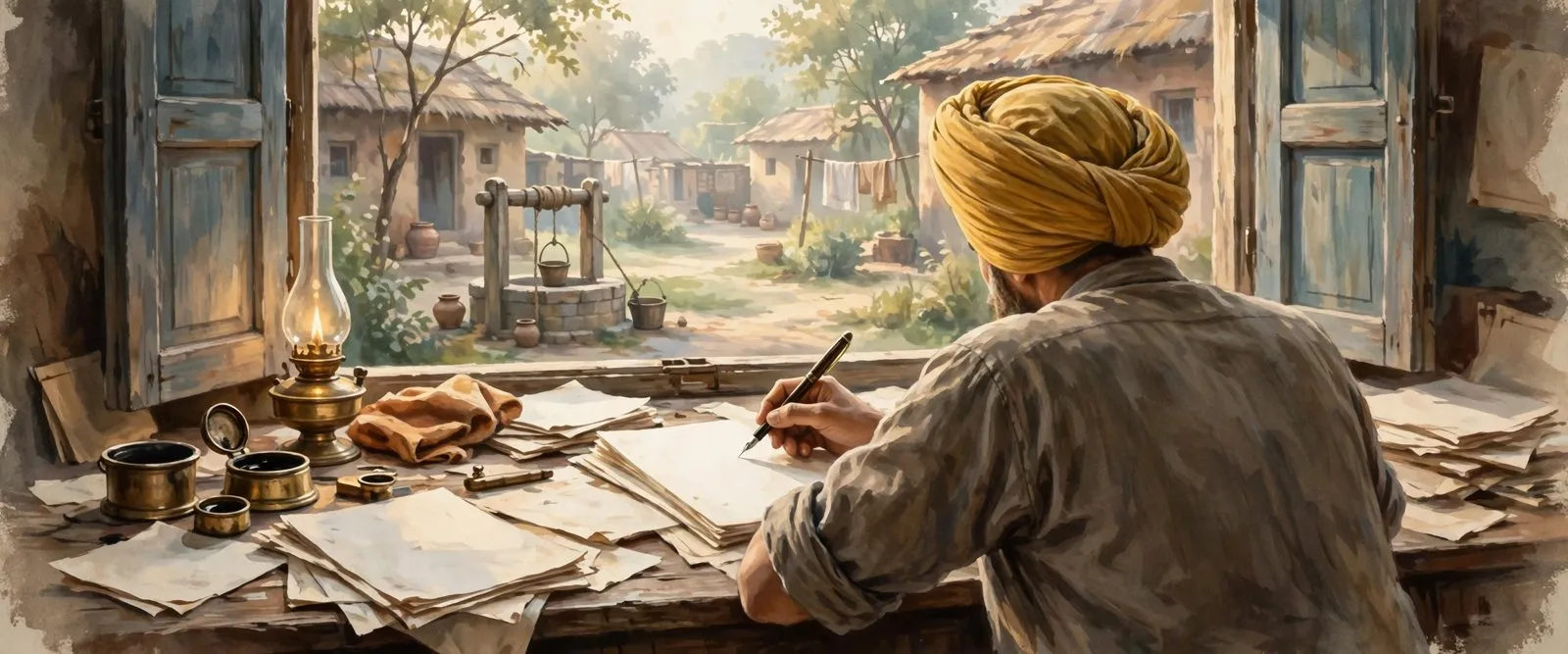
Sujan Singh (1909-1993) was a Punjabi short story writer from Dera Baba Nanak in Gurdaspur district. His first collection, Dukh Sukh (1939), is counted among the founding works of the modern Punjabi short story, and his later collection Shehar Te Garaan won the Sahitya Akademi Award in 1986. A teacher and college principal, he led the Kendri Punjabi Lekhak Sabha and wrote about the lives of ordinary people, farmers, labourers and migrants, with a close eye on their inner lives.
- Punjabi name
- ਸੁਜਾਨ ਸਿੰਘ
- Born
- 29 July 1909, Dera Baba Nanak, Gurdaspur district, Punjab
- Died
- 21 April 1993 (aged 83)
- First collection
- Dukh Sukh, 1939
- Sahitya Akademi Award
- Shehar Te Garaan, 1986
- Career
- Bank clerk, teacher, headmaster, lecturer, principal of Guru Nanak College, Gurdaspur
All 8 facts
- President
- Kendri Punjabi Lekhak Sabha
- Family
- Married Joginder Kaur; three sons and five daughters
Early life
Sujan Singh was born on 29 July 1909 in Dera Baba Nanak, a town in Gurdaspur district, to Hakim Singh. He was brought up by his maternal grandparents and spent part of his early childhood in Calcutta. The deaths of his grandparents and his father left the family in hardship, and the boyhood shaped by that loss runs through the fiction he would later write: his stories keep returning to people with little money and less security.
His schooling began at Bal Mukand Khatri Middle School. He took his Bachelor of Arts from Khalsa College in Amritsar, and went on to complete the Giani course and a Master of Arts in Punjabi by correspondence, studying while he earned his living. The combination stayed with him: a teacher's training, a reader's knowledge of world literature, and a memory of what hardship felt like from the inside.
From bank clerk to principal
Singh began working life as a bank clerk. He then became a Punjabi teacher in Quetta, later a headmaster, then a lecturer, and finally principal of Guru Nanak College in Gurdaspur. He was often called Principal Sujan Singh, and the title stayed with him for the rest of his life.
Teaching gave him his material and his audience. He spent his working years among students and staff in Punjab's colleges, and his fiction draws on the same world: small towns, classrooms, offices, and the villages his students came from. He married Joginder Kaur, and they had three sons and five daughters. The Punjabi poet Bawa Balwant was among his close friends.
Writing and themes
Singh wrote short stories, essays, and retellings of stories about the Sikh Gurus. His first essay, Tawian wala Waaja, appeared in the monthly magazine Likhari. He published two collections of essays, Jammu Jee Tusi Barhe Raa and Khumban Da Shikar, and three books on the lives of Guru Nanak, Guru Amar Das and Guru Gobind Singh.
ਸ਼ੁਰੂਆਤੀ ਜੀਵਨ
ਸੁਜਾਨ ਸਿੰਘ ਦਾ ਜਨਮ 29 ਜੁਲਾਈ 1909 ਨੂੰ ਗੁਰਦਾਸਪੁਰ ਜ਼ਿਲ੍ਹੇ ਦੇ ਕਸਬੇ ਡੇਰਾ ਬਾਬਾ ਨਾਨਕ ਵਿੱਚ ਹੋਇਆ। ਉਨ੍ਹਾਂ ਦੇ ਪਿਤਾ ਦਾ ਨਾਂ ਹਕੀਮ ਸਿੰਘ ਸੀ। ਉਹ ਆਪਣੇ ਨਾਨਕਿਆਂ ਕੋਲ ਪਲੇ ਅਤੇ ਬਚਪਨ ਦਾ ਕੁਝ ਸਮਾਂ ਕਲਕੱਤਾ ਵਿੱਚ ਬਿਤਾਇਆ। ਨਾਨਾ ਨਾਨੀ ਅਤੇ ਪਿਤਾ ਦੇ ਦੇਹਾਂਤ ਤੋਂ ਬਾਅਦ ਪਰਿਵਾਰ ਨੂੰ ਬੜੀ ਤੰਗੀ ਦਾ ਸਾਹਮਣਾ ਕਰਨਾ ਪਿਆ, ਅਤੇ ਉਸ ਔਖੇ ਬਚਪਨ ਦੀ ਛਾਪ ਉਨ੍ਹਾਂ ਦੀਆਂ ਕਹਾਣੀਆਂ ਵਿੱਚ ਸਾਫ਼ ਦਿਸਦੀ ਹੈ: ਉਨ੍ਹਾਂ ਦੀਆਂ ਕਹਾਣੀਆਂ ਵਾਰ ਵਾਰ ਉਨ੍ਹਾਂ ਲੋਕਾਂ ਕੋਲ ਜਾਂਦੀਆਂ ਹਨ ਜਿਨ੍ਹਾਂ ਕੋਲ ਪੈਸਾ ਘੱਟ ਅਤੇ ਸਹਾਰਾ ਹੋਰ ਵੀ ਘੱਟ ਹੈ।
ਉਨ੍ਹਾਂ ਦੀ ਪੜ੍ਹਾਈ ਬਾਲ ਮੁਕੰਦ ਖੱਤਰੀ ਮਿਡਲ ਸਕੂਲ ਤੋਂ ਸ਼ੁਰੂ ਹੋਈ। ਉਨ੍ਹਾਂ ਨੇ ਖਾਲਸਾ ਕਾਲਜ, ਅੰਮ੍ਰਿਤਸਰ ਤੋਂ ਬੀ.ਏ. ਕੀਤੀ, ਫਿਰ ਪੱਤਰ ਵਿਹਾਰ ਰਾਹੀਂ ਗਿਆਨੀ ਦੀ ਪੜ੍ਹਾਈ ਅਤੇ ਪੰਜਾਬੀ ਵਿੱਚ ਐਮ.ਏ. ਕੀਤੀ, ਨਾਲ ਨਾਲ ਕਮਾਈ ਵੀ ਕਰਦੇ ਰਹੇ। ਇਹ ਸੁਮੇਲ ਉਨ੍ਹਾਂ ਨਾਲ ਸਾਰੀ ਉਮਰ ਰਿਹਾ: ਅਧਿਆਪਕ ਦੀ ਸਿਖਲਾਈ, ਵਿਸ਼ਵ ਸਾਹਿਤ ਦੀ ਜਾਣਕਾਰੀ, ਅਤੇ ਤੰਗੀ ਨੂੰ ਅੰਦਰੋਂ ਜਾਣਨ ਦੀ ਸਮਝ।
ਬੈਂਕ ਕਲਰਕ ਤੋਂ ਪ੍ਰਿੰਸੀਪਲ ਤੱਕ
ਸਿੰਘ ਨੇ ਕੰਮ ਦੀ ਸ਼ੁਰੂਆਤ ਬੈਂਕ ਕਲਰਕ ਵਜੋਂ ਕੀਤੀ। ਫਿਰ ਉਹ ਕਵੇਟਾ ਵਿੱਚ ਪੰਜਾਬੀ ਦੇ ਅਧਿਆਪਕ ਬਣੇ, ਬਾਅਦ ਵਿੱਚ ਹੈੱਡਮਾਸਟਰ, ਫਿਰ ਲੈਕਚਰਾਰ, ਅਤੇ ਅੰਤ ਵਿੱਚ ਗੁਰੂ ਨਾਨਕ ਕਾਲਜ, ਗੁਰਦਾਸਪੁਰ ਦੇ ਪ੍ਰਿੰਸੀਪਲ ਬਣੇ। ਉਨ੍ਹਾਂ ਨੂੰ ਅਕਸਰ ਪ੍ਰਿੰਸੀਪਲ ਸੁਜਾਨ ਸਿੰਘ ਕਿਹਾ ਜਾਂਦਾ ਸੀ, ਅਤੇ ਇਹ ਨਾਂ ਉਨ੍ਹਾਂ ਨਾਲ ਸਾਰੀ ਉਮਰ ਜੁੜਿਆ ਰਿਹਾ।
ਅਧਿਆਪਨ ਨੇ ਉਨ੍ਹਾਂ ਨੂੰ ਵਿਸ਼ਾ ਅਤੇ ਪਾਠਕ ਦੋਵੇਂ ਦਿੱਤੇ। ਉਨ੍ਹਾਂ ਨੇ ਆਪਣੇ ਕੰਮ ਦੇ ਸਾਲ ਪੰਜਾਬ ਦੇ ਕਾਲਜਾਂ ਵਿੱਚ ਵਿਦਿਆਰਥੀਆਂ ਅਤੇ ਸਟਾਫ਼ ਵਿਚਕਾਰ ਬਿਤਾਏ, ਅਤੇ ਉਨ੍ਹਾਂ ਦੀਆਂ ਕਹਾਣੀਆਂ ਉਸੇ ਦੁਨੀਆ ਵਿੱਚੋਂ ਆਉਂਦੀਆਂ ਹਨ: ਛੋਟੇ ਕਸਬੇ, ਕਲਾਸਰੂਮ, ਦਫ਼ਤਰ, ਅਤੇ ਉਹ ਪਿੰਡ ਜਿਨ੍ਹਾਂ ਤੋਂ ਉਨ੍ਹਾਂ ਦੇ ਵਿਦਿਆਰਥੀ ਆਉਂਦੇ ਸਨ। ਉਨ੍ਹਾਂ ਦਾ ਵਿਆਹ ਜੋਗਿੰਦਰ ਕੌਰ ਨਾਲ ਹੋਇਆ, ਅਤੇ ਉਨ੍ਹਾਂ ਦੇ ਤਿੰਨ ਪੁੱਤਰ ਅਤੇ ਪੰਜ ਧੀਆਂ ਹੋਈਆਂ। ਪੰਜਾਬੀ ਕਵੀ ਬਾਵਾ ਬਲਵੰਤ ਉਨ੍ਹਾਂ ਦੇ ਨਜ਼ਦੀਕੀ ਮਿੱਤਰਾਂ ਵਿੱਚੋਂ ਸਨ।
ਲਿਖਤ ਅਤੇ ਵਿਸ਼ੇ
ਸਿੰਘ ਨੇ ਕਹਾਣੀਆਂ, ਲੇਖ, ਅਤੇ ਸਿੱਖ ਗੁਰੂਆਂ ਦੀਆਂ ਕਥਾਵਾਂ ਨੂੰ ਮੁੜ ਲਿਖਣ ਦਾ ਕੰਮ ਕੀਤਾ। ਉਨ੍ਹਾਂ ਦਾ ਪਹਿਲਾ ਲੇਖ, ਤਵੀਆਂ ਵਾਲਾ ਵਾਜਾ, ਮਾਸਿਕ ਪੱਤਰ ਲਿਖਾਰੀ ਵਿੱਚ ਛਪਿਆ। ਉਨ੍ਹਾਂ ਨੇ ਲੇਖਾਂ ਦੇ ਦੋ ਸੰਗ੍ਰਹਿ, ਜੰਮੂ ਜੀ ਤੁਸੀਂ ਬੜੇ ਰਾ ਅਤੇ ਖੁੰਬਾਂ ਦਾ ਸ਼ਿਕਾਰ, ਅਤੇ ਗੁਰੂ ਨਾਨਕ, ਗੁਰੂ ਅਮਰਦਾਸ ਅਤੇ ਗੁਰੂ ਗੋਬਿੰਦ ਸਿੰਘ ਦੇ ਜੀਵਨ ਉੱਤੇ ਤਿੰਨ ਕਿਤਾਬਾਂ ਲਿਖੀਆਂ।
His stories take up human relationships and the lives of socially disadvantaged people: farmers, labourers, women, and migrants caught between village and city. He was associated with the progressive literary movement, and his writing carries its concerns without turning into a lecture. What sets his stories apart is the attention to the inner life: he knew world literature well and tried to write short stories that could stand beside the classical stories of world literature, with the same compression and the same psychological depth.
His story collections, in order, were Dukh Sukh (1939), Dukh Sukh Ton Pichhon (1944), Dedh Aadmi, Manukh Te Pashu (1954), Kalgi Dian Annian (1969) and Shehar Te Garaan (1984). The first of these, Dukh Sukh, is now counted among the founding works of the modern Punjabi short story. The last won him the Sahitya Akademi Award.
Why is Sujan Singh called a pioneer of the modern Punjabi short story?
Because he was among the first Punjabi writers to treat the short story as a serious literary form in its own right, rather than as a sketch or a moral tale. His stories are short, complete, and built around a single human situation. They look at ordinary people without sentimentality and without contempt, and they give the characters an inner life of their own.
Later critics have described him as a pioneer of the modern Punjabi short story, and the Sahitya Akademi's own monograph on him, in its Makers of Indian Literature series, records the same standing. The description has stuck because the work supports it: story collections written across five decades, from Dukh Sukh in 1939 to Shehar Te Garaan in the 1980s, that kept the same focus on the people at the bottom of Punjab's social order.
Honours and later life
In 1972 the Language Department of Punjab presented Singh with an award for Punjabi short-story writing. His highest honour came in 1986, when the Sahitya Akademi, India's National Academy of Letters, gave him its annual award for Shehar Te Garaan. He served as president of the Kendri Punjabi Lekhak Sabha, as senior vice-president of the Punjabi Sahitya Akademi in Ludhiana, and as a member of the presidiums of the Progressive Writers' Association of India and the Afro-Asian Writers Association.
He died on 21 April 1993, aged 83.
Legacy
Sujan Singh's legacy is the modern Punjabi short story itself. Writers who came after him found a form that was already serious, already attentive to the poor and the overlooked, and already willing to look inside a character's mind. His collections are still read in Punjab's colleges, and Dukh Sukh and Shehar Te Garaan remain the two books readers are most often pointed to first.
For readers new to his work, the best place to start is Shehar Te Garaan, the award-winning collection, and then Dukh Sukh, to see where the modern Punjabi short story began.
ਉਨ੍ਹਾਂ ਦੀਆਂ ਕਹਾਣੀਆਂ ਮਨੁੱਖੀ ਰਿਸ਼ਤਿਆਂ ਅਤੇ ਸਮਾਜਿਕ ਤੌਰ ਉੱਤੇ ਪਛੜੇ ਲੋਕਾਂ ਦੇ ਜੀਵਨ ਬਾਰੇ ਹਨ: ਕਿਸਾਨ, ਮਜ਼ਦੂਰ, ਔਰਤਾਂ, ਅਤੇ ਪਿੰਡ ਅਤੇ ਸ਼ਹਿਰ ਵਿਚਕਾਰ ਫਸੇ ਪਰਵਾਸੀ। ਉਹ ਪ੍ਰਗਤੀਵਾਦੀ ਸਾਹਿਤਕ ਲਹਿਰ ਨਾਲ ਜੁੜੇ ਹੋਏ ਸਨ, ਅਤੇ ਉਨ੍ਹਾਂ ਦੀ ਲਿਖਤ ਵਿੱਚ ਉਸ ਦੇ ਸਰੋਕਾਰ ਦਿਸਦੇ ਹਨ, ਪਰ ਉਹ ਕਦੇ ਉਪਦੇਸ਼ ਨਹੀਂ ਬਣਦੀ। ਉਨ੍ਹਾਂ ਦੀਆਂ ਕਹਾਣੀਆਂ ਨੂੰ ਵੱਖਰਾ ਕਰਨ ਵਾਲੀ ਗੱਲ ਅੰਦਰਲੇ ਜੀਵਨ ਵੱਲ ਧਿਆਨ ਹੈ: ਉਹ ਵਿਸ਼ਵ ਸਾਹਿਤ ਨੂੰ ਚੰਗੀ ਤਰ੍ਹਾਂ ਜਾਣਦੇ ਸਨ ਅਤੇ ਅਜਿਹੀਆਂ ਕਹਾਣੀਆਂ ਲਿਖਣਾ ਚਾਹੁੰਦੇ ਸਨ ਜੋ ਵਿਸ਼ਵ ਸਾਹਿਤ ਦੀਆਂ ਕਲਾਸਿਕ ਕਹਾਣੀਆਂ ਦੇ ਬਰਾਬਰ ਖੜ੍ਹ ਸਕਣ, ਉਸੇ ਸੰਖੇਪਤਾ ਅਤੇ ਉਸੇ ਮਨੋਵਿਗਿਆਨਕ ਡੂੰਘਾਈ ਨਾਲ।
ਉਨ੍ਹਾਂ ਦੇ ਕਹਾਣੀ ਸੰਗ੍ਰਹਿ, ਤਰਤੀਬ ਵਾਰ, ਦੁੱਖ ਸੁੱਖ (1939), ਦੁੱਖ ਸੁੱਖ ਤੋਂ ਪਿੱਛੋਂ (1944), ਡੇਢ ਆਦਮੀ, ਮਨੁੱਖ ਤੇ ਪਸ਼ੂ (1954), ਕਲਗੀ ਦੀਆਂ ਅੰਨੀਆਂ (1969) ਅਤੇ ਸ਼ਹਿਰ ਤੇ ਗਰਾਂ (1984) ਸਨ। ਇਨ੍ਹਾਂ ਵਿੱਚੋਂ ਪਹਿਲਾ, ਦੁੱਖ ਸੁੱਖ, ਅੱਜ ਆਧੁਨਿਕ ਪੰਜਾਬੀ ਕਹਾਣੀ ਦੀਆਂ ਨੀਂਹ ਪੱਥਰਾਂ ਵਿੱਚੋਂ ਗਿਣਿਆ ਜਾਂਦਾ ਹੈ। ਆਖ਼ਰੀ ਸੰਗ੍ਰਹਿ ਨੇ ਉਨ੍ਹਾਂ ਨੂੰ ਸਾਹਿਤ ਅਕਾਦਮੀ ਪੁਰਸਕਾਰ ਦਿਵਾਇਆ।
ਸੁਜਾਨ ਸਿੰਘ ਨੂੰ ਆਧੁਨਿਕ ਪੰਜਾਬੀ ਕਹਾਣੀ ਦਾ ਮੋਢੀ ਕਿਉਂ ਕਿਹਾ ਜਾਂਦਾ ਹੈ?
ਕਿਉਂਕਿ ਉਹ ਉਨ੍ਹਾਂ ਪਹਿਲੇ ਪੰਜਾਬੀ ਲੇਖਕਾਂ ਵਿੱਚੋਂ ਸਨ ਜਿਨ੍ਹਾਂ ਨੇ ਕਹਾਣੀ ਨੂੰ ਆਪਣੇ ਆਪ ਵਿੱਚ ਇੱਕ ਗੰਭੀਰ ਸਾਹਿਤਕ ਰੂਪ ਮੰਨਿਆ, ਨਾ ਕਿ ਕੋਈ ਖਾਕਾ ਜਾਂ ਨੈਤਿਕ ਕਥਾ। ਉਨ੍ਹਾਂ ਦੀਆਂ ਕਹਾਣੀਆਂ ਛੋਟੀਆਂ, ਮੁਕੰਮਲ, ਅਤੇ ਇੱਕੋ ਮਨੁੱਖੀ ਹਾਲਤ ਦੁਆਲੇ ਬਣੀਆਂ ਹੁੰਦੀਆਂ ਹਨ। ਉਹ ਆਮ ਲੋਕਾਂ ਨੂੰ ਭਾਵੁਕਤਾ ਤੋਂ ਬਿਨਾਂ ਅਤੇ ਤੁੱਛਤਾ ਤੋਂ ਬਿਨਾਂ ਦੇਖਦੀਆਂ ਹਨ, ਅਤੇ ਹਰ ਪਾਤਰ ਨੂੰ ਆਪਣਾ ਅੰਦਰਲਾ ਜੀਵਨ ਦਿੰਦੀਆਂ ਹਨ।
ਬਾਅਦ ਦੇ ਆਲੋਚਕਾਂ ਨੇ ਉਨ੍ਹਾਂ ਨੂੰ ਆਧੁਨਿਕ ਪੰਜਾਬੀ ਕਹਾਣੀ ਦਾ ਮੋਢੀ ਕਿਹਾ ਹੈ, ਅਤੇ ਸਾਹਿਤ ਅਕਾਦਮੀ ਦੀ ਉਨ੍ਹਾਂ ਉੱਤੇ ਲਿਖੀ ਜੀਵਨੀ, ਮੇਕਰਜ਼ ਆਫ਼ ਇੰਡੀਅਨ ਲਿਟਰੇਚਰ ਲੜੀ ਵਿੱਚ, ਇਹੀ ਦਰਜਾ ਦਿੰਦੀ ਹੈ। ਇਹ ਵਰਣਨ ਇਸ ਲਈ ਟਿਕਿਆ ਹੋਇਆ ਹੈ ਕਿਉਂਕਿ ਕੰਮ ਇਸ ਦੀ ਪੁਸ਼ਟੀ ਕਰਦਾ ਹੈ: ਪੰਜ ਦਹਾਕਿਆਂ ਵਿੱਚ ਲਿਖੇ ਕਹਾਣੀ ਸੰਗ੍ਰਹਿ, 1939 ਦੇ ਦੁੱਖ ਸੁੱਖ ਤੋਂ ਲੈ ਕੇ 1980ਵਿਆਂ ਦੇ ਸ਼ਹਿਰ ਤੇ ਗਰਾਂ ਤੱਕ, ਜਿਨ੍ਹਾਂ ਦਾ ਧਿਆਨ ਹਮੇਸ਼ਾ ਪੰਜਾਬ ਦੇ ਸਮਾਜਿਕ ਢਾਂਚੇ ਦੇ ਹੇਠਲੇ ਪੱਧਰ ਦੇ ਲੋਕਾਂ ਉੱਤੇ ਰਿਹਾ।
ਸਨਮਾਨ ਅਤੇ ਬਾਅਦ ਦਾ ਜੀਵਨ
1972 ਵਿੱਚ ਪੰਜਾਬ ਦੇ ਭਾਸ਼ਾ ਵਿਭਾਗ ਨੇ ਸਿੰਘ ਨੂੰ ਪੰਜਾਬੀ ਕਹਾਣੀ ਲਿਖਣ ਲਈ ਪੁਰਸਕਾਰ ਦਿੱਤਾ। ਸਭ ਤੋਂ ਵੱਡਾ ਸਨਮਾਨ 1986 ਵਿੱਚ ਆਇਆ, ਜਦੋਂ ਸਾਹਿਤ ਅਕਾਦਮੀ, ਭਾਰਤ ਦੀ ਰਾਸ਼ਟਰੀ ਸਾਹਿਤ ਅਕਾਦਮੀ, ਨੇ ਉਨ੍ਹਾਂ ਨੂੰ ਸ਼ਹਿਰ ਤੇ ਗਰਾਂ ਲਈ ਆਪਣਾ ਸਾਲਾਨਾ ਪੁਰਸਕਾਰ ਦਿੱਤਾ। ਉਹ ਕੇਂਦਰੀ ਪੰਜਾਬੀ ਲੇਖਕ ਸਭਾ ਦੇ ਪ੍ਰਧਾਨ, ਲੁਧਿਆਣਾ ਦੀ ਪੰਜਾਬੀ ਸਾਹਿਤ ਅਕਾਦਮੀ ਦੇ ਸੀਨੀਅਰ ਉਪ ਪ੍ਰਧਾਨ, ਅਤੇ ਪ੍ਰਗਤੀਵਾਦੀ ਲੇਖਕ ਸੰਘ ਭਾਰਤ ਅਤੇ ਐਫ਼ਰੋ ਏਸ਼ੀਅਨ ਲੇਖਕ ਸੰਘ ਦੇ ਪ੍ਰੀਜ਼ੀਡੀਅਮ ਦੇ ਮੈਂਬਰ ਰਹੇ।
ਉਨ੍ਹਾਂ ਦਾ ਦੇਹਾਂਤ 21 ਅਪ੍ਰੈਲ 1993 ਨੂੰ ਹੋਇਆ, ਉਸ ਵੇਲੇ ਉਮਰ 83 ਸਾਲ ਸੀ।
ਵਿਰਾਸਤ
ਸੁਜਾਨ ਸਿੰਘ ਦੀ ਵਿਰਾਸਤ ਖ਼ੁਦ ਆਧੁਨਿਕ ਪੰਜਾਬੀ ਕਹਾਣੀ ਹੈ। ਉਨ੍ਹਾਂ ਤੋਂ ਬਾਅਦ ਆਉਣ ਵਾਲੇ ਲੇਖਕਾਂ ਨੂੰ ਇੱਕ ਅਜਿਹਾ ਰੂਪ ਮਿਲਿਆ ਜੋ ਪਹਿਲਾਂ ਹੀ ਗੰਭੀਰ ਸੀ, ਗ਼ਰੀਬਾਂ ਅਤੇ ਅਣਗੌਲੇ ਲੋਕਾਂ ਵੱਲ ਪਹਿਲਾਂ ਹੀ ਧਿਆਨ ਦੇਣ ਵਾਲਾ ਸੀ, ਅਤੇ ਪਾਤਰ ਦੇ ਮਨ ਵਿੱਚ ਝਾਤੀ ਪਾਉਣ ਲਈ ਪਹਿਲਾਂ ਹੀ ਤਿਆਰ ਸੀ। ਉਨ੍ਹਾਂ ਦੇ ਸੰਗ੍ਰਹਿ ਪੰਜਾਬ ਦੇ ਕਾਲਜਾਂ ਵਿੱਚ ਅੱਜ ਵੀ ਪੜ੍ਹੇ ਜਾਂਦੇ ਹਨ, ਅਤੇ ਦੁੱਖ ਸੁੱਖ ਅਤੇ ਸ਼ਹਿਰ ਤੇ ਗਰਾਂ ਉਹ ਦੋ ਕਿਤਾਬਾਂ ਹਨ ਜਿਨ੍ਹਾਂ ਵੱਲ ਪਾਠਕਾਂ ਨੂੰ ਸਭ ਤੋਂ ਪਹਿਲਾਂ ਇਸ਼ਾਰਾ ਕੀਤਾ ਜਾਂਦਾ ਹੈ।
ਉਨ੍ਹਾਂ ਦੇ ਕੰਮ ਤੋਂ ਨਵੇਂ ਜਾਣੂ ਹੋਣ ਵਾਲੇ ਪਾਠਕਾਂ ਲਈ ਸਭ ਤੋਂ ਵਧੀਆ ਸ਼ੁਰੂਆਤ ਸ਼ਹਿਰ ਤੇ ਗਰਾਂ ਹੈ, ਪੁਰਸਕਾਰ ਜੇਤੂ ਸੰਗ੍ਰਹਿ, ਅਤੇ ਫਿਰ ਦੁੱਖ ਸੁੱਖ, ਇਹ ਦੇਖਣ ਲਈ ਕਿ ਆਧੁਨਿਕ ਪੰਜਾਬੀ ਕਹਾਣੀ ਕਿੱਥੋਂ ਸ਼ੁਰੂ ਹੋਈ ਸੀ।
Works
People
Places
More people




Sources (3)
Jugti is free and independent. Reader support keeps the Kosh growing.
Support