
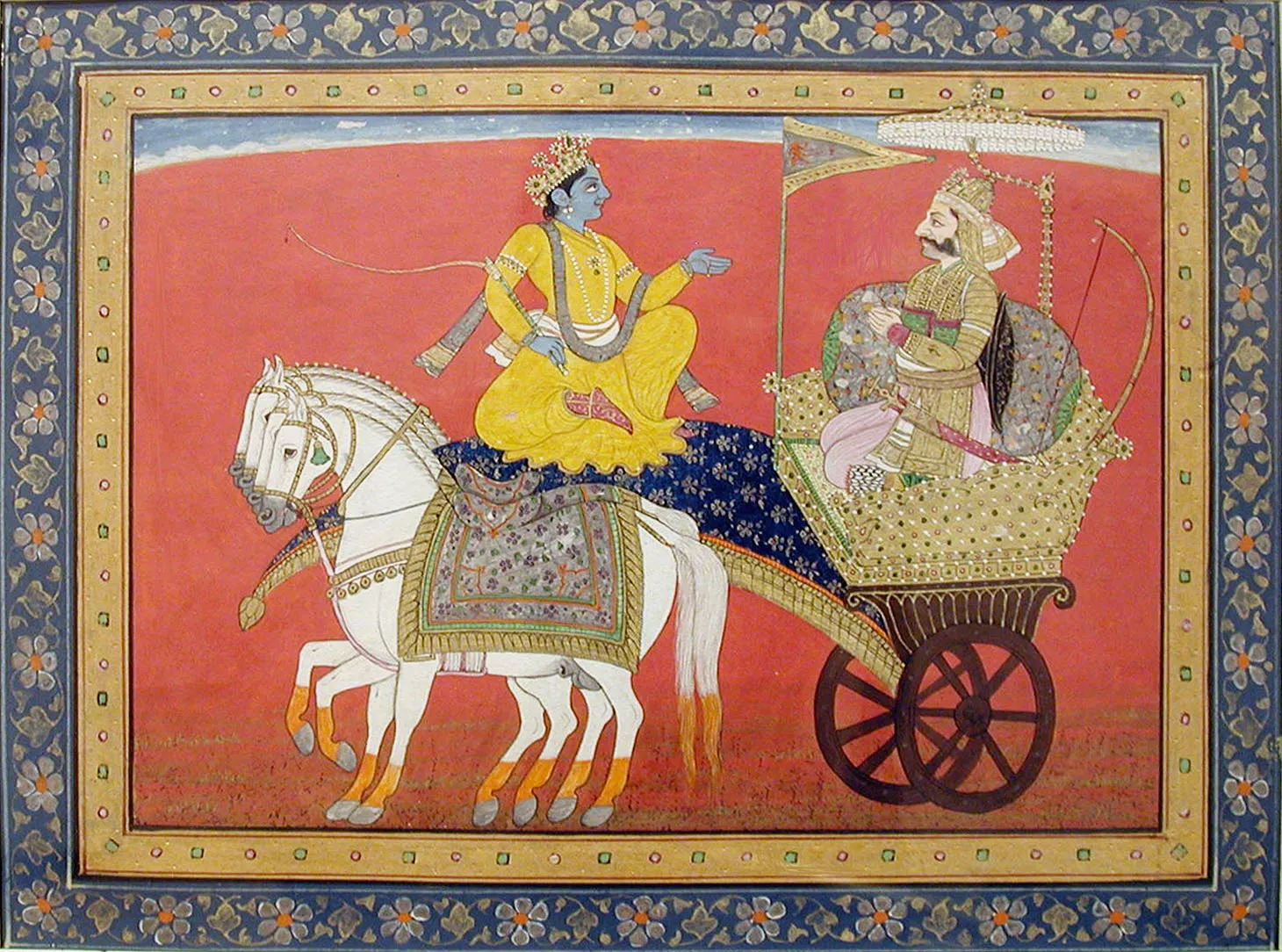
The Bhagavad Gita, the Song of the Lord, is a dialogue of about 700 Sanskrit verses in 18 chapters, set inside the Mahabharata on the battlefield of Kurukshetra. The warrior Arjuna, paralysed by grief at having to fight his own kin, is counselled by his charioteer, Krishna, who teaches him duty, selfless action without attachment to results, knowledge of the eternal self, and devotion. It is among the most read, translated and commented texts of Hinduism.
- Punjabi name
- ਭਗਵਦ ਗੀਤਾ
- Name
- Song of the Lord, from bhagavat (the Lord, Krishna) and gita (song)
- Length
- About 700 verses in 18 chapters
- Place in the canon
- Bhishma Parva, chapters 23 to 40, of the Mahabharata; counted in the Prasthanatrayi, the three foundations of Vedanta
- Speakers
- Krishna and Arjuna; narrated by Sanjaya to the blind king Dhritarashtra
- Setting
- Kurukshetra, between the two armies, moments before the great war
All 8 facts
- Core teachings
- Duty (dharma), selfless action (karma yoga), knowledge (jnana) and devotion (bhakti)
- Great commentators
- Shankara (Advaita), Ramanuja (Vishishtadvaita), Madhva (Dvaita)
The Bhagavad Gita is a conversation held in the worst possible place at the worst possible moment: between two armies, with the conches already blown, a great warrior asks his charioteer whether the war in front of him should be fought at all. The answer, given by the charioteer who is also God, became the single most influential text in Hindu religious life, quoted in courts and kitchens alike, carried into battle by soldiers and into prison by freedom fighters.
What is the Bhagavad Gita?
The Gita is a poem of about 700 verses in 18 chapters, written in Sanskrit and embedded in the Bhishma Parva of the Mahabharata, where it forms chapters 23 to 40. Its title means the Song of the Lord, the Lord being Krishna. Formally it is smriti, remembered tradition rather than revealed scripture, yet its authority rivals the Upanishads, and Vedanta counts it among the Prasthanatrayi, the three foundational sources, alongside the Upanishads and the Brahma Sutras. The frame is careful: the dialogue is reported by Sanjaya, who has been granted divine sight, to the blind king Dhritarashtra, father of the Kauravas.
Arjuna's collapse
Arjuna, the greatest archer of the Pandava brothers, asks Krishna to drive his chariot between the armies so he can see who he must fight. What he sees breaks him: grandfathers, teachers, cousins and old friends stand in the enemy ranks, and the victory on offer turns to ash. He lays down his bow and declares he will not fight, giving reason after reason: the sin of killing kin, the ruin of families, the collapse of dharma itself. His collapse is the Gita's doorway, because his arguments are not foolish; they are the arguments any thoughtful person would make, and Krishna must answer them, not dismiss them.
Krishna's teaching
Krishna answers on several levels at once. As a Kshatriya, Arjuna's dharma is to fight a righteous war, and refusing it brings dishonour, not virtue. Deeper down, the self, the atman, is eternal: it is not born and does not die, weapons cannot cut it and fire cannot burn it, so grief for the undying is misplaced. Action itself is unavoidable, since even stillness is an act, but action binds only through attachment: do your work as duty and offering, without clutching at its fruits, and you are free inside the act, the teaching the tradition names karma yoga. In the eleventh chapter the teaching turns to vision: Arjuna asks to see Krishna's true form and is shown the Vishvarupa, the whole universe blazing inside one body, time devouring all these warriors already. The dialogue closes with devotion: knowledge and discipline flower into love and surrender to God.
One text, many readings
Every great teacher of Vedanta wrote a commentary on the Gita, and they do not agree, which is part of its life. Shankara read it through Advaita, non-duality: the self and Brahman are one, and knowledge liberates. Ramanuja read it through Vishishtadvaita, qualified non-duality, centring devotion to a personal God. Madhva read it as Dvaita, dualism, God and soul eternally distinct. In the twentieth century the text went political: Bal Gangadhar Tilak read its karma yoga as a call to action for India's freedom, Gandhi called it his spiritual dictionary and read its war as an allegory of the inner struggle, and Aurobindo drew from it a philosophy of spiritual evolution. Few books anywhere have been carried so far by so many different readers.
The Gita in Punjab
The Gita travelled in Punjab too, and left physical proof: manuscripts of the Gita were copied in Punjab not only in Devanagari but in the Gurmukhi script, a surviving folio of its third chapter is held by Punjab University in Chandigarh, and the text circulated among the region's Hindu and Sikh readers alike. Its battlefield, Kurukshetra, lies in present-day Haryana at Punjab's border, and Punjabi families have made the pilgrimage there for as long as the text has been read. The Gita's core discipline, work done fully and honestly without greed for its reward, sits close to Punjab's own ethic of kirat, and its verses are quoted in Punjabi homes alongside the region's other scriptures.
Why the Gita endures
The Gita endures because it begins where religion usually ends: with a good man unable to act, doubting that the right thing and the kind thing are the same. It answers without denying the doubt, holding duty, knowledge, action and love in a single conversation, and it leaves its last word not with the teacher but with the student: Arjuna, his delusion gone, picks up his bow. Sanjaya's closing verdict on the dialogue, that where Krishna and Arjuna stand together there will be victory and righteousness, is the tradition's own summary of why this conversation, of all conversations, was remembered.
ਭਗਵਦ ਗੀਤਾ ਇੱਕ ਗੱਲਬਾਤ ਹੈ ਜੋ ਸਭ ਤੋਂ ਮਾੜੀ ਥਾਂ ਉੱਤੇ ਸਭ ਤੋਂ ਮਾੜੇ ਪਲ ਵਿੱਚ ਹੋਈ: ਦੋ ਫੌਜਾਂ ਵਿਚਕਾਰ, ਸ਼ੰਖ ਪਹਿਲਾਂ ਹੀ ਵੱਜੇ ਹੋਏ, ਇੱਕ ਮਹਾਨ ਯੋਧਾ ਆਪਣੇ ਸਾਰਥੀ ਨੂੰ ਪੁੱਛਦਾ ਹੈ ਕਿ ਕੀ ਉਸ ਦੇ ਸਾਹਮਣੇ ਵਾਲੀ ਜੰਗ ਲੜੀ ਹੀ ਜਾਣੀ ਚਾਹੀਦੀ ਹੈ ਜਵਾਬ, ਜੋ ਉਹ ਸਾਰਥੀ ਦਿੰਦਾ ਹੈ ਜੋ ਪਰਮਾਤਮਾ ਵੀ ਹੈ, ਹਿੰਦੂ ਧਾਰਮਿਕ ਜੀਵਨ ਦਾ ਸਭ ਤੋਂ ਪ੍ਰਭਾਵਸ਼ਾਲੀ ਗ੍ਰੰਥ ਬਣ ਗਿਆ, ਅਦਾਲਤਾਂ ਅਤੇ ਰਸੋਈਆਂ ਵਿੱਚ ਬਰਾਬਰ ਹਵਾਲਾ ਦਿੱਤਾ ਗਿਆ, ਸਿਪਾਹੀਆਂ ਵੱਲੋਂ ਜੰਗ ਵਿੱਚ ਅਤੇ ਆਜ਼ਾਦੀ ਘੁਲਾਟੀਆਂ ਵੱਲੋਂ ਜੇਲ੍ਹ ਵਿੱਚ ਲਿਜਾਇਆ ਗਿਆ
ਭਗਵਦ ਗੀਤਾ ਕੀ ਹੈ?
ਗੀਤਾ ਲਗਭਗ 700 ਸ਼ਲੋਕਾਂ ਵਿੱਚ 18 ਅਧਿਆਵਾਂ ਦੀ ਇੱਕ ਕਵਿਤਾ ਹੈ, ਸੰਸਕ੍ਰਿਤ ਵਿੱਚ ਲਿਖੀ ਗਈ ਅਤੇ ਮਹਾਭਾਰਤ ਦੇ ਭੀਸ਼ਮ ਪਰਵ ਵਿੱਚ ਸ਼ਾਮਲ, ਜਿੱਥੇ ਇਹ ਅਧਿਆਏ 23 ਤੋਂ 40 ਬਣਾਉਂਦੀ ਹੈ ਇਸ ਦੇ ਸਿਰਲੇਖ ਦਾ ਅਰਥ ਹੈ ਪ੍ਰਭੂ ਦਾ ਗੀਤ, ਪ੍ਰਭੂ ਕ੍ਰਿਸ਼ਨ ਹੈ ਰਸਮੀ ਤੌਰ ਉੱਤੇ ਇਹ ਸਮ੍ਰਿਤੀ ਹੈ, ਪ੍ਰਗਟ ਕੀਤੇ ਗ੍ਰੰਥ ਦੀ ਥਾਂ ਯਾਦ ਰੱਖੀ ਗਈ ਪਰੰਪਰਾ, ਫਿਰ ਵੀ ਇਸ ਦਾ ਅਧਿਕਾਰ ਉਪਨਿਸ਼ਦਾਂ ਦੇ ਬਰਾਬਰ ਹੈ, ਅਤੇ ਵੇਦਾਂਤ ਇਸ ਨੂੰ ਪ੍ਰਸਥਾਨਤ੍ਰਯੀ, ਤਿੰਨ ਬੁਨਿਆਦੀ ਸਰੋਤਾਂ, ਵਿੱਚ ਗਿਣਦਾ ਹੈ, ਉਪਨਿਸ਼ਦਾਂ ਅਤੇ ਬ੍ਰਹਮ ਸੂਤਰਾਂ ਦੇ ਨਾਲ ਢਾਂਚਾ ਸਾਵਧਾਨ ਹੈ: ਇਹ ਸੰਵਾਦ ਸੰਜਯ ਵੱਲੋਂ ਸੁਣਾਇਆ ਗਿਆ ਹੈ, ਜਿਸ ਨੂੰ ਦਿਵਿਆ ਦ੍ਰਿਸ਼ਟੀ ਦਿੱਤੀ ਗਈ ਸੀ, ਅੰਨ੍ਹੇ ਰਾਜੇ ਧ੍ਰਿਤਰਾਸ਼ਟਰ ਨੂੰ, ਕੌਰਵਾਂ ਦੇ ਪਿਤਾ ਨੂੰ
ਅਰਜੁਨ ਦਾ ਟੁੱਟਣਾ
ਅਰਜੁਨ, ਪਾਂਡਵ ਭਰਾਵਾਂ ਵਿੱਚੋਂ ਸਭ ਤੋਂ ਮਹਾਨ ਤੀਰਅੰਦਾਜ਼, ਕ੍ਰਿਸ਼ਨ ਨੂੰ ਕਹਿੰਦਾ ਹੈ ਕਿ ਉਹ ਉਸ ਦਾ ਰਥ ਫੌਜਾਂ ਵਿਚਕਾਰ ਲੈ ਜਾਵੇ ਤਾਂ ਜੋ ਉਹ ਵੇਖ ਸਕੇ ਕਿ ਉਸ ਨੂੰ ਕਿਸ ਨਾਲ ਲੜਨਾ ਹੈ ਜੋ ਉਹ ਵੇਖਦਾ ਹੈ ਉਹ ਉਸ ਨੂੰ ਤੋੜ ਦਿੰਦਾ ਹੈ: ਦਾਦੇ, ਗੁਰੂ, ਚਚੇਰੇ ਭਰਾ ਅਤੇ ਪੁਰਾਣੇ ਦੋਸਤ ਦੁਸ਼ਮਣ ਦੀਆਂ ਕਤਾਰਾਂ ਵਿੱਚ ਖੜ੍ਹੇ ਹਨ, ਅਤੇ ਪੇਸ਼ ਹੋਈ ਜਿੱਤ ਸੁਆਹ ਬਣ ਜਾਂਦੀ ਹੈ ਉਹ ਆਪਣਾ ਕਮਾਨ ਰੱਖ ਦਿੰਦਾ ਹੈ ਅਤੇ ਐਲਾਨ ਕਰਦਾ ਹੈ ਕਿ ਉਹ ਨਹੀਂ ਲੜੇਗਾ, ਕਾਰਨ ਦਰ ਕਾਰਨ ਦਿੰਦਾ ਹੈ: ਰਿਸ਼ਤੇਦਾਰਾਂ ਨੂੰ ਮਾਰਨ ਦਾ ਪਾਪ, ਪਰਿਵਾਰਾਂ ਦੀ ਤਬਾਹੀ, ਖੁਦ ਧਰਮ ਦਾ ਟੁੱਟਣਾ ਉਸ ਦਾ ਟੁੱਟਣਾ ਗੀਤਾ ਦਾ ਦਰਵਾਜ਼ਾ ਹੈ, ਕਿਉਂਕਿ ਉਸ ਦੀਆਂ ਦਲੀਲਾਂ ਮੂਰਖਤਾ ਵਾਲੀਆਂ ਨਹੀਂ ਹਨ; ਉਹ ਦਲੀਲਾਂ ਹਨ ਜੋ ਕੋਈ ਵੀ ਸੋਚਵਾਨ ਇਨਸਾਨ ਦੇਵੇਗਾ, ਅਤੇ ਕ੍ਰਿਸ਼ਨ ਨੂੰ ਉਨ੍ਹਾਂ ਦਾ ਜਵਾਬ ਦੇਣਾ ਹੀ ਹੈ, ਉਨ੍ਹਾਂ ਨੂੰ ਰੱਦ ਨਹੀਂ ਕਰਨਾ
ਕ੍ਰਿਸ਼ਨ ਦੀ ਸਿੱਖਿਆ
ਕ੍ਰਿਸ਼ਨ ਇੱਕੋ ਸਮੇਂ ਕਈ ਪੱਧਰਾਂ ਉੱਤੇ ਜਵਾਬ ਦਿੰਦਾ ਹੈ ਕਸ਼ਤਰੀ ਵਜੋਂ ਅਰਜੁਨ ਦਾ ਧਰਮ ਨਿਆਂ ਵਾਲੀ ਜੰਗ ਲੜਨਾ ਹੈ, ਅਤੇ ਇਸ ਨੂੰ ਨਕਾਰਨਾ ਬੇਇੱਜ਼ਤੀ ਲਿਆਉਂਦਾ ਹੈ, ਪੁੰਨ ਨਹੀਂ ਡੂੰਘੇ ਪੱਧਰ ਉੱਤੇ ਆਪਾ, ਆਤਮਾ, ਸਦੀਵੀ ਹੈ: ਇਹ ਨਾ ਜੰਮਦੀ ਹੈ ਨਾ ਮਰਦੀ ਹੈ, ਹਥਿਆਰ ਇਸ ਨੂੰ ਵੱਢ ਨਹੀਂ ਸਕਦੇ ਅਤੇ ਅੱਗ ਇਸ ਨੂੰ ਸਾੜ ਨਹੀਂ ਸਕਦੀ, ਇਸ ਲਈ ਨਾ ਮਰਨ ਵਾਲੇ ਲਈ ਸੋਗ ਥਾਂ ਤੋਂ ਬਾਹਰ ਹੈ ਕਰਮ ਆਪਣੇ ਆਪ ਵਿੱਚ ਅਟੱਲ ਹੈ, ਕਿਉਂਕਿ ਚੁੱਪ ਵੀ ਇੱਕ ਕਰਮ ਹੈ, ਪਰ ਕਰਮ ਸਿਰਫ ਲਗਾਅ ਰਾਹੀਂ ਬੰਨ੍ਹਦਾ ਹੈ: ਆਪਣਾ ਕੰਮ ਫਰਜ਼ ਅਤੇ ਭੇਟ ਵਜੋਂ ਕਰੋ, ਇਸ ਦੇ ਫਲਾਂ ਨੂੰ ਪਕੜੇ ਬਿਨਾਂ, ਅਤੇ ਤੁਸੀਂ ਕਰਮ ਦੇ ਅੰਦਰ ਆਜ਼ਾਦ ਹੋ, ਉਹ ਸਿੱਖਿਆ ਜਿਸ ਨੂੰ ਪਰੰਪਰਾ ਕਰਮ ਯੋਗ ਕਹਿੰਦੀ ਹੈ ਗਿਆਰ੍ਹਵੇਂ ਅਧਿਆਏ ਵਿੱਚ ਸਿੱਖਿਆ ਦਰਸ਼ਨ ਵੱਲ ਮੁੜਦੀ ਹੈ: ਅਰਜੁਨ ਕ੍ਰਿਸ਼ਨ ਦਾ ਸੱਚਾ ਰੂਪ ਵੇਖਣ ਲਈ ਕਹਿੰਦਾ ਹੈ ਅਤੇ ਉਸ ਨੂੰ ਵਿਸ਼ਵਰੂਪ ਵਿਖਾਇਆ ਜਾਂਦਾ ਹੈ, ਸਾਰਾ ਬ੍ਰਹਿਮੰਡ ਇੱਕ ਸਰੀਰ ਦੇ ਅੰਦਰ ਬਲਦਾ ਹੋਇਆ, ਸਮਾਂ ਇਨ੍ਹਾਂ ਸਾਰੇ ਯੋਧਿਆਂ ਨੂੰ ਪਹਿਲਾਂ ਹੀ ਨਿਗਲਦਾ ਹੋਇਆ ਸੰਵਾਦ ਭਗਤੀ ਨਾਲ ਮੁੱਕਦਾ ਹੈ: ਗਿਆਨ ਅਤੇ ਅਨੁਸ਼ਾਸਨ ਪਰਮਾਤਮਾ ਪ੍ਰਤੀ ਪਿਆਰ ਅਤੇ ਸਮਰਪਣ ਵਿੱਚ ਖਿੜਦੇ ਹਨ
ਇੱਕ ਗ੍ਰੰਥ, ਕਈ ਪੜ੍ਹਤਾਂ
ਵੇਦਾਂਤ ਦੇ ਹਰ ਮਹਾਨ ਅਧਿਆਪਕ ਨੇ ਗੀਤਾ ਉੱਤੇ ਟੀਕਾ ਲਿਖਿਆ, ਅਤੇ ਉਹ ਸਹਿਮਤ ਨਹੀਂ ਹਨ, ਜੋ ਇਸ ਦੇ ਜੀਵਨ ਦਾ ਹਿੱਸਾ ਹੈ ਸ਼ੰਕਰ ਨੇ ਇਸ ਨੂੰ ਅਦਵੈਤ, ਅਦਵੈਤਵਾਦ, ਰਾਹੀਂ ਪੜ੍ਹਿਆ: ਆਪਾ ਅਤੇ ਬ੍ਰਹਮ ਇੱਕ ਹਨ, ਅਤੇ ਗਿਆਨ ਮੁਕਤੀ ਦਿੰਦਾ ਹੈ ਰਾਮਾਨੁਜ ਨੇ ਇਸ ਨੂੰ ਵਿਸ਼ਿਸ਼ਟਾਦਵੈਤ, ਯੋਗ ਅਦਵੈਤ, ਰਾਹੀਂ ਪੜ੍ਹਿਆ, ਇੱਕ ਨਿੱਜੀ ਪਰਮਾਤਮਾ ਪ੍ਰਤੀ ਭਗਤੀ ਨੂੰ ਕੇਂਦਰ ਵਿੱਚ ਰੱਖਿਆ ਮਾਧਵ ਨੇ ਇਸ ਨੂੰ ਦਵੈਤ, ਦਵੈਤਵਾਦ, ਵਜੋਂ ਪੜ੍ਹਿਆ, ਪਰਮਾਤਮਾ ਅਤੇ ਆਤਮਾ ਸਦਾ ਵੱਖਰੇ ਵੀਹਵੀਂ ਸਦੀ ਵਿੱਚ ਇਹ ਗ੍ਰੰਥ ਰਾਜਨੀਤਿਕ ਹੋ ਗਿਆ: ਬਾਲ ਗੰਗਾਧਰ ਤਿਲਕ ਨੇ ਇਸ ਦੇ ਕਰਮ ਯੋਗ ਨੂੰ ਭਾਰਤ ਦੀ ਆਜ਼ਾਦੀ ਲਈ ਕਰਮ ਦੀ ਆਵਾਜ਼ ਵਜੋਂ ਪੜ੍ਹਿਆ, ਗਾਂਧੀ ਨੇ ਇਸ ਨੂੰ ਆਪਣਾ ਅਧਿਆਤਮਿਕ ਸ਼ਬਦਕੋਸ਼ ਕਿਹਾ ਅਤੇ ਇਸ ਦੀ ਜੰਗ ਨੂੰ ਅੰਦਰੂਨੀ ਸੰਘਰਸ਼ ਦਾ ਰੂਪਕ ਪੜ੍ਹਿਆ, ਅਤੇ ਔਰੋਬਿੰਦੋ ਨੇ ਇਸ ਵਿੱਚੋਂ ਅਧਿਆਤਮਿਕ ਵਿਕਾਸ ਦਾ ਦਰਸ਼ਨ ਕੱਢਿਆ ਸੰਸਾਰ ਵਿੱਚ ਥੋੜ੍ਹੀਆਂ ਕਿਤਾਬਾਂ ਨੂੰ ਇੰਨੇ ਵੱਖ ਵੱਖ ਪਾਠਕਾਂ ਨੇ ਇੰਨੀ ਦੂਰ ਤੱਕ ਲਿਜਾਇਆ ਹੈ
ਪੰਜਾਬ ਵਿੱਚ ਗੀਤਾ
ਗੀਤਾ ਪੰਜਾਬ ਵਿੱਚ ਵੀ ਸਫਰ ਕਰਦੀ ਰਹੀ, ਅਤੇ ਭੌਤਿਕ ਸਬੂਤ ਛੱਡ ਗਈ: ਗੀਤਾ ਦੀਆਂ ਹੱਥ ਲਿਖਤਾਂ ਪੰਜਾਬ ਵਿੱਚ ਸਿਰਫ ਦੇਵਨਾਗਰੀ ਵਿੱਚ ਨਹੀਂ ਸਗੋਂ ਗੁਰਮੁਖੀ ਲਿਪੀ ਵਿੱਚ ਵੀ ਨਕਲ ਕੀਤੀਆਂ ਗਈਆਂ, ਇਸ ਦੇ ਤੀਜੇ ਅਧਿਆਏ ਦਾ ਇੱਕ ਬਚਿਆ ਪੱਤਰਾ ਪੰਜਾਬ ਯੂਨੀਵਰਸਿਟੀ, ਚੰਡੀਗੜ੍ਹ, ਕੋਲ ਹੈ, ਅਤੇ ਇਹ ਗ੍ਰੰਥ ਖੇਤਰ ਦੇ ਹਿੰਦੂ ਅਤੇ ਸਿੱਖ ਪਾਠਕਾਂ ਵਿੱਚ ਬਰਾਬਰ ਫੈਲਿਆ ਇਸ ਦਾ ਜੰਗ ਦਾ ਮੈਦਾਨ, ਕੁਰੂਕਸ਼ੇਤਰ, ਅੱਜ ਦੇ ਹਰਿਆਣਾ ਵਿੱਚ ਪੰਜਾਬ ਦੀ ਸਰਹੱਦ ਉੱਤੇ ਹੈ, ਅਤੇ ਪੰਜਾਬੀ ਪਰਿਵਾਰ ਉੱਥੇ ਯਾਤਰਾ ਉਦੋਂ ਤੋਂ ਕਰਦੇ ਆ ਰਹੇ ਹਨ ਜਦੋਂ ਤੋਂ ਇਹ ਗ੍ਰੰਥ ਪੜ੍ਹਿਆ ਜਾ ਰਿਹਾ ਹੈ ਗੀਤਾ ਦਾ ਕੇਂਦਰੀ ਅਨੁਸ਼ਾਸਨ, ਫਲ ਦੀ ਲਾਲਸਾ ਤੋਂ ਬਿਨਾਂ ਪੂਰੀ ਤਰ੍ਹਾਂ ਅਤੇ ਇਮਾਨਦਾਰੀ ਨਾਲ ਕੀਤਾ ਕੰਮ, ਪੰਜਾਬ ਦੇ ਆਪਣੇ ਕਿਰਤ ਦੇ ਸਿਧਾਂਤ ਦੇ ਨੇੜੇ ਬੈਠਦਾ ਹੈ, ਅਤੇ ਇਸ ਦੇ ਸ਼ਲੋਕ ਪੰਜਾਬੀ ਘਰਾਂ ਵਿੱਚ ਖੇਤਰ ਦੇ ਹੋਰ ਗ੍ਰੰਥਾਂ ਦੇ ਨਾਲ ਹਵਾਲਾ ਦਿੱਤੇ ਜਾਂਦੇ ਹਨ
ਗੀਤਾ ਕਿਉਂ ਕਾਇਮ ਹੈ
ਗੀਤਾ ਇਸ ਲਈ ਕਾਇਮ ਹੈ ਕਿਉਂਕਿ ਇਹ ਉੱਥੋਂ ਸ਼ੁਰੂ ਹੁੰਦੀ ਹੈ ਜਿੱਥੇ ਮਜ਼ਹਬ ਆਮ ਤੌਰ ਉੱਤੇ ਮੁੱਕਦਾ ਹੈ: ਇੱਕ ਚੰਗੇ ਇਨਸਾਨ ਨਾਲ ਜੋ ਕਰਮ ਕਰਨ ਤੋਂ ਅਸਮਰੱਥ ਹੈ, ਸ਼ੱਕ ਕਰਦਾ ਹੈ ਕਿ ਸਹੀ ਚੀਜ਼ ਅਤੇ ਦਿਆਲੂ ਚੀਜ਼ ਇੱਕੋ ਹਨ ਇਹ ਸ਼ੱਕ ਨੂੰ ਨਕਾਰੇ ਬਿਨਾਂ ਜਵਾਬ ਦਿੰਦੀ ਹੈ, ਫਰਜ਼, ਗਿਆਨ, ਕਰਮ ਅਤੇ ਪਿਆਰ ਨੂੰ ਇੱਕੋ ਗੱਲਬਾਤ ਵਿੱਚ ਰੱਖਦੀ ਹੈ, ਅਤੇ ਆਪਣਾ ਆਖਰੀ ਸ਼ਬਦ ਅਧਿਆਪਕ ਕੋਲ ਨਹੀਂ ਸਗੋਂ ਚੇਲੇ ਕੋਲ ਛੱਡਦੀ ਹੈ: ਅਰਜੁਨ, ਆਪਣਾ ਭੁਲੇਖਾ ਦੂਰ ਹੋਣ ਉੱਤੇ, ਆਪਣਾ ਕਮਾਨ ਚੁੱਕਦਾ ਹੈ ਸੰਵਾਦ ਉੱਤੇ ਸੰਜਯ ਦਾ ਅੰਤਿਮ ਫੈਸਲਾ, ਕਿ ਜਿੱਥੇ ਕ੍ਰਿਸ਼ਨ ਅਤੇ ਅਰਜੁਨ ਇਕੱਠੇ ਖੜ੍ਹੇ ਹਨ ਉੱਥੇ ਜਿੱਤ ਅਤੇ ਧਰਮ ਹੋਵੇਗਾ, ਪਰੰਪਰਾ ਦਾ ਆਪਣਾ ਸਾਰ ਹੈ ਕਿ ਸਾਰੀਆਂ ਗੱਲਬਾਤਾਂ ਵਿੱਚੋਂ ਇਹ ਗੱਲਬਾਤ ਕਿਉਂ ਯਾਦ ਰੱਖੀ ਗਈ