
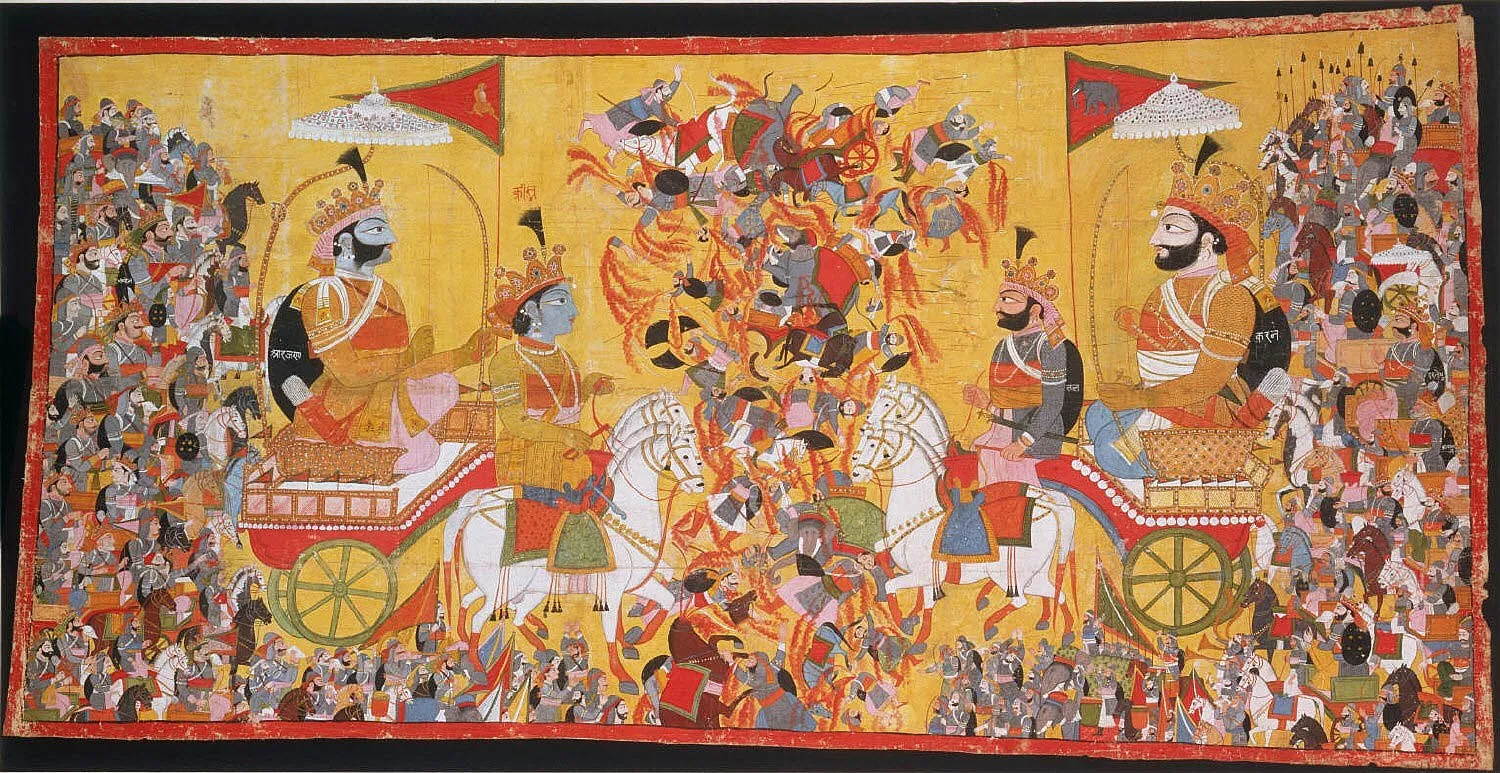
The Mahabharata is the Sanskrit epic of the Kuru dynasty, attributed to the sage Vyasa and the longest epic poem known, at about 100,000 couplets in eighteen books. It tells how the five Pandava brothers, cheated of their kingdom in a rigged dice game and exiled for thirteen years, fought their hundred Kaurava cousins in the eighteen-day war at Kurukshetra. Inside it stands the Bhagavad Gita, and around its main story it gathers hundreds of tales, teachings and genealogies, an encyclopedia of early India.
- Punjabi name
- ਮਹਾਭਾਰਤ
- Author
- Attributed to the sage Vyasa, Krishna Dvaipayana, also credited with compiling the Vedas
- Length
- About 100,000 shlokas, over 200,000 verse lines, in 18 parvas (books) plus the Harivamsha supplement
- Growth
- Tradition says it grew from the Jaya of 8,800 verses through the Bharata to the full Mahabharata
- Dating
- Scholarly composition roughly 400 BCE to 400 CE
- Contains
- The Bhagavad Gita; the tales of Shakuntala, Savitri and Satyavan, Nala and Damayanti, and hundreds more
All 8 facts
- The war
- Eighteen days at Kurukshetra between the five Pandavas and the hundred Kauravas
- Standing
- One of the two Itihasas, the Sanskrit epics, with the Ramayana
The Mahabharata is not so much a book as a library that grew around a war. Its central story, of two sets of royal cousins destroying each other over a throne, occupies perhaps a fifth of it; the rest is story inside story, law, philosophy, genealogy, geography and teaching, until the poem becomes an encyclopedia of its world. Its own proud claim is that what is found here may be found elsewhere, but what is not here is nowhere, and after two thousand years of Indian life, the claim is hard to wave away.
What is the Mahabharata?
The Mahabharata is a Sanskrit epic of about 100,000 shlokas, over 200,000 lines of verse, the longest epic poem ever composed. It is arranged in eighteen parvas, books, with the Harivamsha attached as a supplement. Tradition attributes it to Vyasa, the dark sage Krishna Dvaipayana, who is also credited with arranging the Vedas, and who walks inside his own poem as the grandfather of both warring houses. Tradition also says the poem grew: first the Jaya, the victory song of 8,800 verses, then the Bharata of 24,000, then the full Mahabharata. Scholars, dating its composition broadly between 400 BCE and 400 CE, hear in that legend the true history of a text assembled over centuries.
The house of Kuru and the dice game
The story turns on the Kuru throne of Hastinapura. The blind Dhritarashtra, passed over for the crown because of his blindness, watches his brother Pandu rule, retire to the forest and die; Pandu's five sons, the Pandavas, and Dhritarashtra's hundred sons, the Kauravas, grow up together in rivalry. Yudhishthira, the eldest Pandava, is anointed heir, and the kingdom is eventually divided, the Pandavas building their own splendid capital at Indraprastha. Then comes the hinge of the epic: a dice match to which Yudhishthira, a man bound to accept a challenge, is invited, and in which Shakuni, the Kauravas' uncle, plays with loaded skill. Stakes rise from gold to kingdom to brothers to himself, all lost, and last of all Draupadi, the Pandavas' wife, is staked and dragged into the hall, where her public humiliation, and the questions she puts to the assembled elders about law and dharma, stand among the most searing scenes in world literature.
Exile and return
The price of the dice is twelve years of forest exile and a thirteenth year in hiding, with the condition that if the Pandavas are recognised in that last year, the term begins again. The exile books are the epic's great storehouse of side stories, told to console and instruct the exiles: Shakuntala, whose son Bharata names India in tradition; Savitri, who talks Death itself out of her husband's soul; Nala and Damayanti, a king ruined by dice like Yudhishthira himself. The hidden year is spent in disguise at the court of Virata. When the term ends, the Pandavas ask for their kingdom back, and then, through Krishna's failed peace mission, for as little as five villages. Duryodhana, the eldest Kaurava, refuses them land enough for a needle's point. The war becomes unavoidable.
Eighteen days at Kurukshetra
The war at Kurukshetra lasts eighteen days, and the epic narrates it in pitiless detail: the great commanders fall in sequence, Bhishma on his bed of arrows, Drona by a half-truth about an elephant, Karna with his wheel in the mud, until on the eighteenth day Duryodhana's thighs are smashed and the Kaurava cause dies with him. It is on this field, before the first clash, that Krishna speaks the Bhagavad Gita to Arjuna. The victory, when it comes, is ashes: nearly every warrior on both sides is dead, Gandhari curses Krishna himself, and Yudhishthira, crowned at last, rules a kingdom of widows while longing to renounce it. The epic closes in weariness and ascent: the Pandavas' final journey toward the mountains, falling one by one, and Yudhishthira's last, strange test in heaven and hell.
An encyclopedia, not only a war
Readers old and modern alike have treated the Mahabharata as India's memory of itself. Its frame story, a king hearing his ancestors' tale from a bard, nests narration inside narration until nearly every theme of classical India is treated somewhere in its hundred thousand verses: the duties of kings and the limits of those duties, the four aims of life, the conduct of just war and its horror, fate against effort, and the question the whole poem keeps asking, what dharma requires when every choice is stained. Its characters are correspondingly human: its heroes lie, gamble and fail; its villain Duryodhana is brave, loyal to friends and wronged in ways the poem itself records. That moral untidiness, more than its size, is why it has never stopped being retold.
The Mahabharata in Punjab
Punjab holds the epic's ground zero within reach: Kurukshetra, where the war was fought and the Gita spoken, lies just across the state border in Haryana, and Punjabi families have bathed at its tanks and visited its temples for centuries. Mahabharata stories saturate Punjabi folk culture, its proverbs cite Karna's generosity and Shakuni's cunning, its television retellings in the modern era emptied Punjab's streets as surely as anywhere in India, and the Ramayana's Punjab autumn of Ramlila is matched all year by katha and discourse on the Mahabharata in the region's temples. The epic's central family, with its blind king, its divided house and its ruinous inheritance quarrel, is one Punjab's own village histories understand very well.
ਮਹਾਭਾਰਤ ਇੰਨੀ ਕਿਤਾਬ ਨਹੀਂ ਹੈ ਜਿੰਨੀ ਇੱਕ ਜੰਗ ਦੇ ਆਲੇ ਦੁਆਲੇ ਵਧੀ ਇੱਕ ਲਾਇਬ੍ਰੇਰੀ ਹੈ ਇਸ ਦੀ ਕੇਂਦਰੀ ਕਥਾ, ਸ਼ਾਹੀ ਚਚੇਰੇ ਭਰਾਵਾਂ ਦੇ ਦੋ ਸਮੂਹਾਂ ਦੀ ਇੱਕ ਗੱਦੀ ਉੱਤੇ ਇੱਕ ਦੂਜੇ ਨੂੰ ਨਸ਼ਟ ਕਰਨ ਦੀ, ਸ਼ਾਇਦ ਇਸ ਦਾ ਪੰਜਵਾਂ ਹਿੱਸਾ ਹੈ; ਬਾਕੀ ਕਥਾ ਦੇ ਅੰਦਰ ਕਥਾ, ਕਾਨੂੰਨ, ਦਰਸ਼ਨ, ਵੰਸ਼ਾਵਲੀ, ਭੂਗੋਲ ਅਤੇ ਸਿੱਖਿਆ ਹੈ, ਜਦੋਂ ਤੱਕ ਇਹ ਕਵਿਤਾ ਆਪਣੇ ਸੰਸਾਰ ਦਾ ਵਿਸ਼ਵਕੋਸ਼ ਨਹੀਂ ਬਣ ਜਾਂਦੀ ਇਸ ਦਾ ਆਪਣਾ ਮਾਣ ਵਾਲਾ ਦਾਅਵਾ ਹੈ ਕਿ ਜੋ ਇੱਥੇ ਮਿਲਦਾ ਹੈ ਉਹ ਕਿਤੇ ਹੋਰ ਮਿਲ ਸਕਦਾ ਹੈ, ਪਰ ਜੋ ਇੱਥੇ ਨਹੀਂ ਹੈ ਉਹ ਕਿਤੇ ਨਹੀਂ, ਅਤੇ ਭਾਰਤੀ ਜੀਵਨ ਦੇ ਦੋ ਹਜ਼ਾਰ ਸਾਲਾਂ ਤੋਂ ਬਾਅਦ, ਇਸ ਦਾਅਵੇ ਨੂੰ ਝਿੜਕਣਾ ਮੁਸ਼ਕਲ ਹੈ
ਮਹਾਭਾਰਤ ਕੀ ਹੈ?
ਮਹਾਭਾਰਤ ਲਗਭਗ 100,000 ਸ਼ਲੋਕਾਂ, 200,000 ਤੋਂ ਵੱਧ ਸ਼ਲੋਕ ਲਾਈਨਾਂ, ਦਾ ਇੱਕ ਸੰਸਕ੍ਰਿਤ ਮਹਾਂਕਾਵਿ ਹੈ, ਸਭ ਤੋਂ ਲੰਮਾ ਮਹਾਂਕਾਵਿ ਜੋ ਕਦੇ ਰਚਿਆ ਗਿਆ ਇਹ ਅਠਾਰਾਂ ਪਰਵਾਂ, ਕਿਤਾਬਾਂ, ਵਿੱਚ ਸੰਗਠਿਤ ਹੈ, ਹਰਿਵੰਸ਼ ਇੱਕ ਪੂਰਕ ਵਜੋਂ ਜੁੜਿਆ ਹੋਇਆ ਹੈ ਪਰੰਪਰਾ ਇਸ ਨੂੰ ਵਿਆਸ ਨਾਲ ਜੋੜਦੀ ਹੈ, ਸਾਂਵਲੇ ਰਿਸ਼ੀ ਕ੍ਰਿਸ਼ਨ ਦਵੈਪਾਯਨ, ਜਿਨ੍ਹਾਂ ਨੂੰ ਵੇਦਾਂ ਨੂੰ ਸੰਗਠਿਤ ਕਰਨ ਦਾ ਸਿਹਰਾ ਵੀ ਦਿੱਤਾ ਜਾਂਦਾ ਹੈ, ਅਤੇ ਜੋ ਆਪਣੀ ਕਵਿਤਾ ਦੇ ਅੰਦਰ ਦੋਵਾਂ ਲੜਾਕੂ ਘਰਾਣਿਆਂ ਦੇ ਦਾਦੇ ਵਜੋਂ ਚਲਦੇ ਹਨ ਪਰੰਪਰਾ ਇਹ ਵੀ ਕਹਿੰਦੀ ਹੈ ਕਿ ਇਹ ਕਵਿਤਾ ਵਧੀ: ਪਹਿਲਾਂ ਜਯ, 8,800 ਸ਼ਲੋਕਾਂ ਦਾ ਜਿੱਤ ਗੀਤ, ਫਿਰ 24,000 ਦਾ ਭਾਰਤ, ਫਿਰ ਪੂਰਾ ਮਹਾਭਾਰਤ ਵਿਦਵਾਨ, ਇਸ ਦੀ ਰਚਨਾ ਨੂੰ ਵਿਆਪਕ ਤੌਰ ਉੱਤੇ 400 ਈਸਾ ਪੂਰਵ ਅਤੇ 400 ਈਸਵੀ ਦੇ ਵਿਚਕਾਰ ਰੱਖਦੇ ਹੋਏ, ਉਸ ਦੰਤਕਥਾ ਵਿੱਚ ਇੱਕ ਗ੍ਰੰਥ ਦਾ ਸੱਚਾ ਇਤਿਹਾਸ ਸੁਣਦੇ ਹਨ ਜੋ ਸਦੀਆਂ ਵਿੱਚ ਇਕੱਠਾ ਹੋਇਆ
ਕੁਰੂ ਘਰਾਣਾ ਅਤੇ ਪਾਸਿਆਂ ਦੀ ਖੇਡ
ਇਹ ਕਥਾ ਹਸਤਿਨਾਪੁਰ ਦੀ ਕੁਰੂ ਗੱਦੀ ਉੱਤੇ ਘੁੰਮਦੀ ਹੈ ਅੰਨ੍ਹਾ ਧ੍ਰਿਤਰਾਸ਼ਟਰ, ਆਪਣੇ ਅੰਨ੍ਹੇਪਣ ਕਾਰਨ ਤਾਜ ਤੋਂ ਵਾਂਝਾ, ਵੇਖਦਾ ਹੈ ਕਿ ਉਸ ਦਾ ਭਰਾ ਪਾਂਡੂ ਰਾਜ ਕਰਦਾ ਹੈ, ਜੰਗਲ ਵੱਲ ਸੇਵਾ ਮੁਕਤ ਹੁੰਦਾ ਹੈ ਅਤੇ ਮਰ ਜਾਂਦਾ ਹੈ; ਪਾਂਡੂ ਦੇ ਪੰਜ ਪੁੱਤਰ, ਪਾਂਡਵ, ਅਤੇ ਧ੍ਰਿਤਰਾਸ਼ਟਰ ਦੇ ਸੌ ਪੁੱਤਰ, ਕੌਰਵ, ਮੁਕਾਬਲੇ ਵਿੱਚ ਇਕੱਠੇ ਵੱਡੇ ਹੁੰਦੇ ਹਨ ਸਭ ਤੋਂ ਵੱਡੇ ਪਾਂਡਵ ਯੁਧਿਸ਼ਠਿਰ ਨੂੰ ਵਾਰਸ ਨਿਯੁਕਤ ਕੀਤਾ ਜਾਂਦਾ ਹੈ, ਅਤੇ ਰਾਜ ਅੰਤ ਵਿੱਚ ਵੰਡਿਆ ਜਾਂਦਾ ਹੈ, ਪਾਂਡਵ ਇੰਦਰਪ੍ਰਸਥ ਵਿਖੇ ਆਪਣੀ ਸ਼ਾਨਦਾਰ ਰਾਜਧਾਨੀ ਬਣਾਉਂਦੇ ਹਨ ਫਿਰ ਮਹਾਂਕਾਵਿ ਦਾ ਧੁਰਾ ਆਉਂਦਾ ਹੈ: ਇੱਕ ਪਾਸਿਆਂ ਦਾ ਮੈਚ ਜਿਸ ਲਈ ਯੁਧਿਸ਼ਠਿਰ, ਇੱਕ ਇਨਸਾਨ ਜੋ ਚੁਣੌਤੀ ਕਬੂਲ ਕਰਨ ਲਈ ਬੱਝਾ ਹੈ, ਨੂੰ ਸੱਦਾ ਦਿੱਤਾ ਜਾਂਦਾ ਹੈ, ਅਤੇ ਜਿਸ ਵਿੱਚ ਕੌਰਵਾਂ ਦਾ ਮਾਮਾ ਸ਼ਕੁਨੀ, ਭਾਰੀ ਹੁਨਰ ਨਾਲ ਖੇਡਦਾ ਹੈ ਦਾਅ ਸੋਨੇ ਤੋਂ ਰਾਜ ਤੱਕ, ਭਰਾਵਾਂ ਤੱਕ, ਆਪਣੇ ਆਪ ਤੱਕ ਵਧਦੇ ਹਨ, ਸਭ ਹਾਰਿਆ, ਅਤੇ ਸਭ ਤੋਂ ਅੰਤ ਵਿੱਚ ਪਾਂਡਵਾਂ ਦੀ ਪਤਨੀ ਦ੍ਰੋਪਦੀ ਨੂੰ ਦਾਅ ਉੱਤੇ ਲਾਇਆ ਜਾਂਦਾ ਹੈ ਅਤੇ ਹਾਲ ਵਿੱਚ ਘਸੀਟਿਆ ਜਾਂਦਾ ਹੈ, ਜਿੱਥੇ ਉਸ ਦੀ ਜਨਤਕ ਬੇਇੱਜ਼ਤੀ, ਅਤੇ ਕਾਨੂੰਨ ਤੇ ਧਰਮ ਬਾਰੇ ਇਕੱਠੇ ਹੋਏ ਵੱਡਿਆਂ ਨੂੰ ਉਸ ਦੇ ਪੁੱਛੇ ਸਵਾਲ, ਸੰਸਾਰ ਸਾਹਿਤ ਦੇ ਸਭ ਤੋਂ ਦਰਦਨਾਕ ਦ੍ਰਿਸ਼ਾਂ ਵਿੱਚੋਂ ਹਨ
ਬਨਵਾਸ ਅਤੇ ਵਾਪਸੀ
ਪਾਸਿਆਂ ਦੀ ਕੀਮਤ ਬਾਰਾਂ ਸਾਲ ਦਾ ਜੰਗਲ ਬਨਵਾਸ ਅਤੇ ਇੱਕ ਤੇਰ੍ਹਵਾਂ ਸਾਲ ਛੁਪ ਕੇ ਬਿਤਾਉਣਾ ਹੈ, ਇਸ ਸ਼ਰਤ ਨਾਲ ਕਿ ਜੇ ਪਾਂਡਵ ਉਸ ਆਖਰੀ ਸਾਲ ਵਿੱਚ ਪਛਾਣੇ ਜਾਂਦੇ ਹਨ, ਤਾਂ ਮਿਆਦ ਮੁੜ ਸ਼ੁਰੂ ਹੋ ਜਾਂਦੀ ਹੈ ਬਨਵਾਸ ਦੀਆਂ ਕਿਤਾਬਾਂ ਮਹਾਂਕਾਵਿ ਦਾ ਮਹਾਨ ਪਾਸੇ ਦੀਆਂ ਕਥਾਵਾਂ ਦਾ ਭੰਡਾਰ ਹਨ, ਬਨਵਾਸੀਆਂ ਨੂੰ ਦਿਲਾਸਾ ਦੇਣ ਅਤੇ ਸਿਖਾਉਣ ਲਈ ਦੱਸੀਆਂ ਗਈਆਂ: ਸ਼ਕੁੰਤਲਾ, ਜਿਸ ਦਾ ਪੁੱਤਰ ਭਰਤ ਪਰੰਪਰਾ ਵਿੱਚ ਭਾਰਤ ਨੂੰ ਨਾਮ ਦਿੰਦਾ ਹੈ; ਸਾਵਿਤਰੀ, ਜੋ ਮੌਤ ਨੂੰ ਖੁਦ ਆਪਣੇ ਪਤੀ ਦੀ ਆਤਮਾ ਛੱਡਣ ਲਈ ਮਨਾ ਲੈਂਦੀ ਹੈ; ਨਲ ਅਤੇ ਦਮਯੰਤੀ, ਇੱਕ ਰਾਜਾ ਜੋ ਯੁਧਿਸ਼ਠਿਰ ਵਾਂਗ ਹੀ ਪਾਸਿਆਂ ਨਾਲ ਬਰਬਾਦ ਹੋਇਆ ਛੁਪਿਆ ਸਾਲ ਵਿਰਾਟ ਦੇ ਦਰਬਾਰ ਵਿੱਚ ਭੇਸ ਬਦਲ ਕੇ ਬਿਤਾਇਆ ਜਾਂਦਾ ਹੈ ਜਦੋਂ ਮਿਆਦ ਮੁੱਕਦੀ ਹੈ, ਪਾਂਡਵ ਆਪਣਾ ਰਾਜ ਵਾਪਸ ਮੰਗਦੇ ਹਨ, ਅਤੇ ਫਿਰ, ਕ੍ਰਿਸ਼ਨ ਦੇ ਅਸਫਲ ਸ਼ਾਂਤੀ ਮਿਸ਼ਨ ਰਾਹੀਂ, ਸਿਰਫ ਪੰਜ ਪਿੰਡ ਮੰਗਦੇ ਹਨ ਸਭ ਤੋਂ ਵੱਡਾ ਕੌਰਵ ਦੁਰਯੋਧਨ, ਉਨ੍ਹਾਂ ਨੂੰ ਸੂਈ ਦੇ ਨੱਕੇ ਜਿੰਨੀ ਜ਼ਮੀਨ ਵੀ ਦੇਣ ਤੋਂ ਇਨਕਾਰ ਕਰਦਾ ਹੈ ਜੰਗ ਅਟੱਲ ਹੋ ਜਾਂਦੀ ਹੈ
ਕੁਰੂਕਸ਼ੇਤਰ ਵਿੱਚ ਅਠਾਰਾਂ ਦਿਨ
ਕੁਰੂਕਸ਼ੇਤਰ ਦੀ ਜੰਗ ਅਠਾਰਾਂ ਦਿਨ ਚਲਦੀ ਹੈ, ਅਤੇ ਮਹਾਂਕਾਵਿ ਇਸ ਨੂੰ ਬੇਰਹਿਮ ਵੇਰਵੇ ਨਾਲ ਬਿਆਨ ਕਰਦਾ ਹੈ: ਮਹਾਨ ਸੈਨਾਪਤੀ ਕ੍ਰਮ ਵਿੱਚ ਡਿੱਗਦੇ ਹਨ, ਭੀਸ਼ਮ ਆਪਣੇ ਤੀਰਾਂ ਦੇ ਬਿਸਤਰੇ ਉੱਤੇ, ਦ੍ਰੋਣ ਇੱਕ ਹਾਥੀ ਬਾਰੇ ਅੱਧ ਸੱਚ ਨਾਲ, ਕਰਨ ਆਪਣੇ ਪਹੀਏ ਦੇ ਚਿੱਕੜ ਵਿੱਚ ਫਸਣ ਨਾਲ, ਜਦੋਂ ਤੱਕ ਅਠਾਰ੍ਹਵੇਂ ਦਿਨ ਦੁਰਯੋਧਨ ਦੇ ਪੱਟ ਭੰਨੇ ਨਹੀਂ ਜਾਂਦੇ ਅਤੇ ਕੌਰਵ ਕਾਰਨ ਉਸ ਨਾਲ ਮਰ ਨਹੀਂ ਜਾਂਦਾ ਇਸੇ ਮੈਦਾਨ ਉੱਤੇ, ਪਹਿਲੀ ਟੱਕਰ ਤੋਂ ਪਹਿਲਾਂ, ਕ੍ਰਿਸ਼ਨ ਅਰਜੁਨ ਨੂੰ ਭਗਵਦ ਗੀਤਾ ਕਹਿੰਦਾ ਹੈ ਜਿੱਤ, ਜਦੋਂ ਆਉਂਦੀ ਹੈ, ਸੁਆਹ ਹੈ: ਦੋਵਾਂ ਪਾਸਿਆਂ ਦੇ ਲਗਭਗ ਸਾਰੇ ਯੋਧੇ ਮਰ ਚੁੱਕੇ ਹਨ, ਗਾਂਧਾਰੀ ਖੁਦ ਕ੍ਰਿਸ਼ਨ ਨੂੰ ਸਰਾਪ ਦਿੰਦੀ ਹੈ, ਅਤੇ ਯੁਧਿਸ਼ਠਿਰ, ਅੰਤ ਵਿੱਚ ਤਾਜ ਪਹਿਨ ਕੇ, ਵਿਧਵਾਵਾਂ ਦੇ ਰਾਜ ਉੱਤੇ ਰਾਜ ਕਰਦਾ ਹੈ ਜਦੋਂ ਕਿ ਇਸ ਨੂੰ ਤਿਆਗਣ ਦੀ ਲਾਲਸਾ ਰੱਖਦਾ ਹੈ ਮਹਾਂਕਾਵਿ ਥਕਾਵਟ ਅਤੇ ਚੜ੍ਹਾਈ ਵਿੱਚ ਮੁੱਕਦਾ ਹੈ: ਪਾਂਡਵਾਂ ਦੀ ਪਰਬਤਾਂ ਵੱਲ ਅੰਤਿਮ ਯਾਤਰਾ, ਇੱਕ ਇੱਕ ਕਰਕੇ ਡਿੱਗਦੇ ਹੋਏ, ਅਤੇ ਸਵਰਗ ਤੇ ਨਰਕ ਵਿੱਚ ਯੁਧਿਸ਼ਠਿਰ ਦੀ ਆਖਰੀ, ਅਜੀਬ ਪ੍ਰੀਖਿਆ
ਇੱਕ ਵਿਸ਼ਵਕੋਸ਼, ਸਿਰਫ ਜੰਗ ਨਹੀਂ
ਪੁਰਾਣੇ ਅਤੇ ਆਧੁਨਿਕ ਪਾਠਕਾਂ ਨੇ ਮਹਾਭਾਰਤ ਨੂੰ ਭਾਰਤ ਦੀ ਆਪਣੇ ਬਾਰੇ ਯਾਦ ਵਜੋਂ ਲਿਆ ਹੈ ਇਸ ਦੀ ਢਾਂਚਾ ਕਥਾ, ਇੱਕ ਰਾਜਾ ਇੱਕ ਬਾਰਦ ਤੋਂ ਆਪਣੇ ਪੁਰਖਿਆਂ ਦੀ ਕਥਾ ਸੁਣਦਾ ਹੋਇਆ, ਬਿਆਨ ਨੂੰ ਬਿਆਨ ਦੇ ਅੰਦਰ ਰੱਖਦੀ ਹੈ ਜਦੋਂ ਤੱਕ ਸ਼ਾਸਤਰੀ ਭਾਰਤ ਦਾ ਲਗਭਗ ਹਰ ਵਿਸ਼ਾ ਇਸ ਦੇ ਲੱਖ ਸ਼ਲੋਕਾਂ ਵਿੱਚ ਕਿਤੇ ਨਾ ਕਿਤੇ ਨਾ ਵਿਚਾਰਿਆ ਜਾਵੇ: ਰਾਜਿਆਂ ਦੇ ਫਰਜ਼ ਅਤੇ ਉਨ੍ਹਾਂ ਫਰਜ਼ਾਂ ਦੀਆਂ ਸੀਮਾਵਾਂ, ਜੀਵਨ ਦੇ ਚਾਰ ਟੀਚੇ, ਨਿਆਂ ਵਾਲੀ ਜੰਗ ਦਾ ਆਚਰਣ ਅਤੇ ਇਸ ਦੀ ਭਿਆਨਕਤਾ, ਕਿਸਮਤ ਬਨਾਮ ਮਿਹਨਤ, ਅਤੇ ਉਹ ਸਵਾਲ ਜੋ ਸਾਰੀ ਕਵਿਤਾ ਪੁੱਛਦੀ ਰਹਿੰਦੀ ਹੈ, ਜਦੋਂ ਹਰ ਚੋਣ ਦਾਗੀ ਹੋਵੇ ਤਾਂ ਧਰਮ ਨੂੰ ਕੀ ਚਾਹੀਦਾ ਹੈ ਇਸ ਦੇ ਪਾਤਰ ਉਸੇ ਅਨੁਸਾਰ ਮਨੁੱਖੀ ਹਨ: ਇਸ ਦੇ ਨਾਇਕ ਝੂਠ ਬੋਲਦੇ ਹਨ, ਜੂਆ ਖੇਡਦੇ ਹਨ ਅਤੇ ਅਸਫਲ ਹੁੰਦੇ ਹਨ; ਇਸ ਦਾ ਖਲਨਾਇਕ ਦੁਰਯੋਧਨ ਬਹਾਦਰ ਹੈ, ਦੋਸਤਾਂ ਪ੍ਰਤੀ ਵਫਾਦਾਰ ਹੈ ਅਤੇ ਉਨ੍ਹਾਂ ਤਰੀਕਿਆਂ ਨਾਲ ਉਸ ਨਾਲ ਜ਼ੁਲਮ ਹੋਇਆ ਹੈ ਜੋ ਕਵਿਤਾ ਖੁਦ ਦਰਜ ਕਰਦੀ ਹੈ ਇਹ ਨੈਤਿਕ ਗੜਬੜ, ਇਸ ਦੇ ਆਕਾਰ ਨਾਲੋਂ ਵੱਧ, ਇਸੇ ਲਈ ਇਹ ਮੁੜ ਮੁੜ ਦੱਸੀ ਜਾਣੋਂ ਕਦੇ ਨਹੀਂ ਮੁੱਕੀ
ਪੰਜਾਬ ਵਿੱਚ ਮਹਾਭਾਰਤ
ਪੰਜਾਬ ਮਹਾਂਕਾਵਿ ਦੇ ਕੇਂਦਰ ਨੂੰ ਪਹੁੰਚ ਵਿੱਚ ਰੱਖਦਾ ਹੈ: ਕੁਰੂਕਸ਼ੇਤਰ, ਜਿੱਥੇ ਜੰਗ ਲੜੀ ਗਈ ਅਤੇ ਗੀਤਾ ਕਹੀ ਗਈ, ਹਰਿਆਣਾ ਵਿੱਚ ਸੂਬੇ ਦੀ ਸਰਹੱਦ ਤੋਂ ਪਾਰ ਹੈ, ਅਤੇ ਪੰਜਾਬੀ ਪਰਿਵਾਰ ਸਦੀਆਂ ਤੋਂ ਇਸ ਦੇ ਕੁੰਡਾਂ ਵਿੱਚ ਇਸ਼ਨਾਨ ਕਰਦੇ ਅਤੇ ਇਸ ਦੇ ਮੰਦਰਾਂ ਵਿੱਚ ਜਾਂਦੇ ਰਹੇ ਹਨ ਮਹਾਭਾਰਤ ਦੀਆਂ ਕਥਾਵਾਂ ਪੰਜਾਬੀ ਲੋਕ ਸੱਭਿਆਚਾਰ ਨੂੰ ਭਰਦੀਆਂ ਹਨ, ਇਸ ਦੀਆਂ ਕਹਾਵਤਾਂ ਕਰਨ ਦੀ ਉਦਾਰਤਾ ਅਤੇ ਸ਼ਕੁਨੀ ਦੀ ਚਾਲਾਕੀ ਦਾ ਹਵਾਲਾ ਦਿੰਦੀਆਂ ਹਨ, ਆਧੁਨਿਕ ਯੁੱਗ ਵਿੱਚ ਇਸ ਦੇ ਟੈਲੀਵਿਜ਼ਨ ਮੁੜ ਬਿਆਨਾਂ ਨੇ ਪੰਜਾਬ ਦੀਆਂ ਗਲੀਆਂ ਨੂੰ ਉਸੇ ਤਰ੍ਹਾਂ ਖਾਲੀ ਕੀਤਾ ਜਿਵੇਂ ਭਾਰਤ ਵਿੱਚ ਕਿਤੇ ਵੀ, ਅਤੇ ਰਾਮਾਇਣ ਦੀ ਪੰਜਾਬੀ ਪਤਝੜ ਵਾਲੀ ਰਾਮਲੀਲਾ ਨਾਲ ਖੇਤਰ ਦੇ ਮੰਦਰਾਂ ਵਿੱਚ ਮਹਾਭਾਰਤ ਉੱਤੇ ਕਥਾ ਅਤੇ ਵਿਚਾਰ ਸਾਲ ਭਰ ਮੇਲ ਖਾਂਦੇ ਹਨ ਮਹਾਂਕਾਵਿ ਦਾ ਕੇਂਦਰੀ ਪਰਿਵਾਰ, ਆਪਣੇ ਅੰਨ੍ਹੇ ਰਾਜੇ, ਵੰਡੇ ਘਰ ਅਤੇ ਤਬਾਹਕੁਨ ਵਿਰਾਸਤ ਝਗੜੇ ਨਾਲ, ਉਹ ਹੈ ਜਿਸ ਨੂੰ ਪੰਜਾਬ ਦੇ ਆਪਣੇ ਪਿੰਡਾਂ ਦੇ ਇਤਿਹਾਸ ਬਹੁਤ ਚੰਗੀ ਤਰ੍ਹਾਂ ਸਮਝਦੇ ਹਨ