
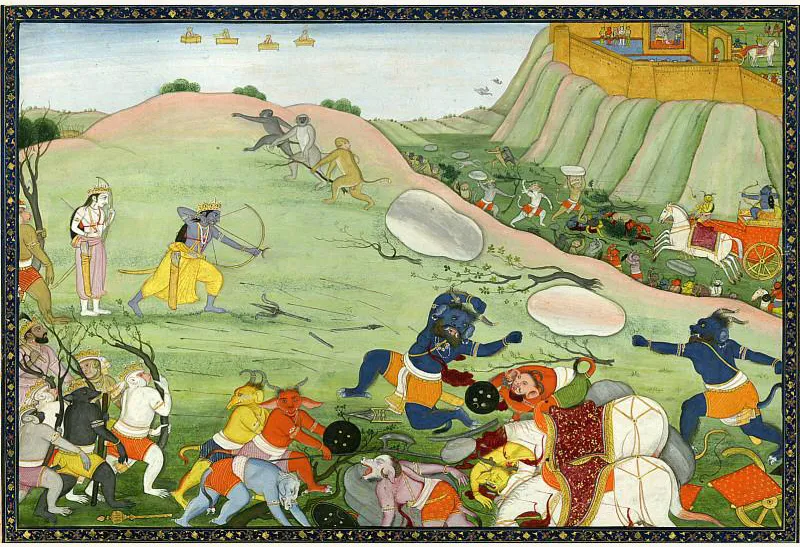
The Ramayana is the Sanskrit epic of Prince Ram of Ayodhya, attributed to the sage Valmiki and composed in some 24,000 couplets across seven books. Cheated of his throne and exiled for fourteen years, Ram loses his wife Sita to the demon king Ravana, wins her back with the help of the monkey armies and the devoted Hanuman, and returns home to be crowned, the homecoming Diwali remembers. It is one of India's two great epics, the Itihasas, and the fountainhead of versions in every Asian language.
- Punjabi name
- ਰਾਮਾਇਣ
- Author
- Attributed to the sage Valmiki, honoured as the Adi Kavi, the first poet
- Length
- About 24,000 shlokas (couplets) in seven kandas (books) and 500 sargas
- The hero
- Ram, prince of Ayodhya in Kosala, seventh avatar of Vishnu
- The story in one line
- Exile, Sita abducted by Ravana to Lanka, the vanara alliance, war, return and coronation
- Standing
- One of the two Itihasas, the Sanskrit epics, with the Mahabharata
All 8 facts
- Great retellings
- Tulsidas's Ramcharitmanas (Awadhi), Kamban's Iramavataram (Tamil), the Thai Ramakien, the Cambodian Reamker
- Dating
- Scholarly estimates for the core range from the 8th to the 4th century BCE, with later layers added into the early centuries CE
The Ramayana is the story India tells about what a good life costs. Its hero does everything right: he gives up a throne without bitterness, keeps his father's word at the price of his own crown, and stays faithful through fourteen years of forest and war, and the poem never pretends the price was small. That is why the epic is not a museum piece but a living text, staged every autumn in Ramlila grounds, retold at bedsides, and carried across Asia wherever Indian stories travelled.
What is the Ramayana?
The Ramayana is a Sanskrit epic of about 24,000 shlokas arranged in seven kandas, books, and some 500 sargas, chapters. Tradition attributes it to Valmiki, honoured as the Adi Kavi, the first poet, who is said to have invented the shloka metre in a moment of grief and to appear inside his own poem, sheltering Sita in its later chapters. With the Mahabharata it forms the Itihasas, the two great epics, histories as the tradition counts them, of ancient India. Scholars date its core composition somewhere between the eighth and fourth centuries BCE, with passages and the final book added over following centuries, and the text survives in northern and southern recensions that differ in detail but not in story.
The story of Ram
Ram, eldest son of King Dasharatha of Ayodhya, is the heir apparent, perfect in every virtue. On the eve of his coronation his stepmother Kaikeyi claims two old boons: the throne for her own son Bharata, and fourteen years of forest exile for Ram. Ram accepts without protest, and his wife Sita and his brother Lakshmana refuse to be left behind. In the forest the demoness Shurpanakha's insulted desire brings her brother Ravana, the ten-headed king of Lanka, into the story; by a trick, a golden deer that draws the brothers away, Ravana carries Sita off to Lanka. Ram allies with the vanaras, the monkey people of Kishkindha, and their greatest servant finds her: Hanuman, who leaps the sea, speaks with Sita in her captivity, and carries her message back. A bridge is built, the armies cross, and after a terrible war Ravana falls. Sita is restored, the fourteen years end almost to the day, and Ram returns to Ayodhya to be crowned at last, the return that Diwali celebrates and Dussehra anticipates.
The seven books
The seven kandas carry the arc. Bala Kanda tells Ram's birth, childhood and marriage to Sita. Ayodhya Kanda, the book of the court, builds to the boons, the exile and old Dasharatha's death of grief. Aranya Kanda is the forest book, ending with Sita's abduction. Kishkindha Kanda makes the monkey alliance. Sundara Kanda, the beautiful book, belongs to Hanuman and is still recited on its own as a prayer. Yuddha Kanda is the war for Lanka. Uttara Kanda, the last book, tells what followed, including Sita's final exile and the end of Ram's time on earth; scholars widely treat it, like parts of the first book, as a later addition to the core poem.
Ram: the ideal and the god
Ram is honoured as maryada purushottam, the supreme man of honour, the ideal son, husband, brother and king, whose excellence lies in keeping dharma when it costs him everything. He is also worshipped as God: the seventh avatar of Vishnu, born to destroy Ravana. The poem holds both together, and India has argued about their balance ever since: the very human grief of Ram at Sita's loss, and his treatment of her after the war, are passages the tradition itself reads with discomfort as much as devotion, and modern retellings keep returning to them. Sita is no decoration in this: her refusal, her captivity, her fire ordeal and her final withdrawal are the moral weight of the poem's second half.
The Ramayana across Asia
No Indian text travelled further. In the sixteenth century Tulsidas retold the story in Awadhi as the Ramcharitmanas, the book that put Ram into the daily devotion of the Hindi north and remains, for millions, the Ramayana itself. Kamban's Tamil Iramavataram is older still and a classic in its own right. Beyond India the story became national epics: the Thai Ramakien, with its own Hanuman-centred splendours, the Cambodian Reamker carved on Angkor's walls, the Malay Hikayat Seri Rama, Javanese and Lao versions, and Jain and Buddhist tellings in which the characters carry different values entirely. The bones stay the same everywhere: exile, loss, loyalty, war and return.
The Ramayana in Punjab
Punjab meets the Ramayana most visibly in the autumn: the Ramlila grounds of its towns stage the epic night by night through Navratri to Dussehra, and the burning of Ravana's effigies is the signal that Diwali is twenty days away. Tulsidas's Ramcharitmanas is read and sung in Punjab's temples and homes, and the story's sites are woven into the region's own map: tradition attaches episodes of Ram's exile and Sita's story to places across the wider Punjab region, and its characters, Ram, Sita, Lakshmana, Hanuman, are household names in Punjabi speech, where a loyal man is still a Lakshman and treachery still has a Vibhishana to answer it.
ਰਾਮਾਇਣ ਉਹ ਕਥਾ ਹੈ ਜੋ ਭਾਰਤ ਇਸ ਬਾਰੇ ਦੱਸਦਾ ਹੈ ਕਿ ਚੰਗੀ ਜ਼ਿੰਦਗੀ ਦੀ ਕੀ ਕੀਮਤ ਹੁੰਦੀ ਹੈ ਇਸ ਦਾ ਨਾਇਕ ਸਭ ਕੁਝ ਸਹੀ ਕਰਦਾ ਹੈ: ਉਹ ਬਿਨਾਂ ਕੁੜੱਤਣ ਇੱਕ ਗੱਦੀ ਛੱਡ ਦਿੰਦਾ ਹੈ, ਆਪਣੇ ਤਾਜ ਦੀ ਕੀਮਤ ਉੱਤੇ ਆਪਣੇ ਪਿਤਾ ਦਾ ਵਚਨ ਨਿਭਾਉਂਦਾ ਹੈ, ਅਤੇ ਚੌਦਾਂ ਸਾਲ ਦੇ ਜੰਗਲ ਅਤੇ ਜੰਗ ਭਰ ਵਫਾਦਾਰ ਰਹਿੰਦਾ ਹੈ, ਅਤੇ ਇਹ ਕਵਿਤਾ ਕਦੇ ਇਹ ਦਿਖਾਵਾ ਨਹੀਂ ਕਰਦੀ ਕਿ ਕੀਮਤ ਛੋਟੀ ਸੀ ਇਸੇ ਲਈ ਇਹ ਮਹਾਂਕਾਵਿ ਕੋਈ ਅਜਾਇਬ ਘਰ ਦੀ ਚੀਜ਼ ਨਹੀਂ ਸਗੋਂ ਇੱਕ ਜੀਉਂਦਾ ਗ੍ਰੰਥ ਹੈ, ਹਰ ਪਤਝੜ ਰਾਮਲੀਲਾ ਮੈਦਾਨਾਂ ਵਿੱਚ ਖੇਡਿਆ ਗਿਆ, ਬਿਸਤਰਿਆਂ ਕੋਲ ਸੁਣਾਇਆ ਗਿਆ, ਅਤੇ ਸਾਰੇ ਏਸ਼ੀਆ ਵਿੱਚ ਲਿਜਾਇਆ ਗਿਆ ਜਿੱਥੇ ਵੀ ਭਾਰਤੀ ਕਥਾਵਾਂ ਸਫਰ ਕਰਦੀਆਂ ਰਹੀਆਂ
ਰਾਮਾਇਣ ਕੀ ਹੈ?
ਰਾਮਾਇਣ ਲਗਭਗ 24,000 ਸ਼ਲੋਕਾਂ ਦਾ ਇੱਕ ਸੰਸਕ੍ਰਿਤ ਮਹਾਂਕਾਵਿ ਹੈ ਜੋ ਸੱਤ ਕਾਂਡਾਂ, ਕਿਤਾਬਾਂ, ਅਤੇ ਲਗਭਗ 500 ਸਰਗਾਂ, ਅਧਿਆਵਾਂ, ਵਿੱਚ ਸੰਗਠਿਤ ਹੈ ਪਰੰਪਰਾ ਇਸ ਨੂੰ ਵਾਲਮੀਕਿ ਨਾਲ ਜੋੜਦੀ ਹੈ, ਜੋ ਆਦਿ ਕਵੀ, ਪਹਿਲੇ ਕਵੀ, ਵਜੋਂ ਸਨਮਾਨਿਤ ਹਨ, ਜਿਨ੍ਹਾਂ ਬਾਰੇ ਕਿਹਾ ਜਾਂਦਾ ਹੈ ਕਿ ਉਨ੍ਹਾਂ ਨੇ ਸੋਗ ਦੇ ਇੱਕ ਪਲ ਵਿੱਚ ਸ਼ਲੋਕ ਛੰਦ ਕੱਢਿਆ ਅਤੇ ਉਹ ਆਪਣੀ ਕਵਿਤਾ ਦੇ ਅੰਦਰ ਝਲਕਦੇ ਹਨ, ਇਸ ਦੇ ਪਿਛਲੇ ਅਧਿਆਵਾਂ ਵਿੱਚ ਸੀਤਾ ਨੂੰ ਆਸਰਾ ਦਿੰਦੇ ਹਨ ਮਹਾਭਾਰਤ ਨਾਲ ਇਹ ਇਤਿਹਾਸ ਬਣਾਉਂਦਾ ਹੈ, ਦੋ ਮਹਾਨ ਮਹਾਂਕਾਵਿ, ਪ੍ਰਾਚੀਨ ਭਾਰਤ ਦੇ ਇਤਿਹਾਸ ਜਿਵੇਂ ਪਰੰਪਰਾ ਉਨ੍ਹਾਂ ਨੂੰ ਗਿਣਦੀ ਹੈ ਵਿਦਵਾਨ ਇਸ ਦੀ ਕੇਂਦਰੀ ਰਚਨਾ ਨੂੰ ਅੱਠਵੀਂ ਅਤੇ ਚੌਥੀ ਸਦੀ ਈਸਾ ਪੂਰਵ ਦੇ ਵਿਚਕਾਰ ਕਿਤੇ ਰੱਖਦੇ ਹਨ, ਅਗਲੀਆਂ ਸਦੀਆਂ ਵਿੱਚ ਹਿੱਸੇ ਅਤੇ ਆਖਰੀ ਕਾਂਡ ਜੋੜੇ ਗਏ, ਅਤੇ ਇਹ ਗ੍ਰੰਥ ਉੱਤਰੀ ਅਤੇ ਦੱਖਣੀ ਪਾਠਾਂ ਵਿੱਚ ਬਚਿਆ ਹੈ ਜੋ ਵੇਰਵੇ ਵਿੱਚ ਵੱਖਰੇ ਹਨ ਪਰ ਕਥਾ ਵਿੱਚ ਨਹੀਂ
ਰਾਮ ਦੀ ਕਥਾ
ਅਯੁੱਧਿਆ ਦੇ ਰਾਜੇ ਦਸ਼ਰਥ ਦਾ ਸਭ ਤੋਂ ਵੱਡਾ ਪੁੱਤਰ ਰਾਮ, ਹਰ ਗੁਣ ਵਿੱਚ ਪੂਰਨ, ਵਾਰਸ ਅਧਿਕਾਰੀ ਹੈ ਉਸ ਦੀ ਤਾਜਪੋਸ਼ੀ ਦੀ ਪਹਿਲੀ ਰਾਤ ਉਸ ਦੀ ਮਤਰੇਈ ਮਾਂ ਕੈਕੇਈ ਦੋ ਪੁਰਾਣੇ ਵਰਦਾਨ ਮੰਗਦੀ ਹੈ: ਆਪਣੇ ਪੁੱਤਰ ਭਰਤ ਲਈ ਗੱਦੀ, ਅਤੇ ਰਾਮ ਲਈ ਚੌਦਾਂ ਸਾਲ ਦਾ ਜੰਗਲ ਬਨਵਾਸ ਰਾਮ ਬਿਨਾਂ ਵਿਰੋਧ ਕਬੂਲ ਕਰਦਾ ਹੈ, ਅਤੇ ਉਸ ਦੀ ਪਤਨੀ ਸੀਤਾ ਅਤੇ ਉਸ ਦਾ ਭਰਾ ਲਕਸ਼ਮਣ ਪਿੱਛੇ ਰਹਿਣ ਤੋਂ ਇਨਕਾਰ ਕਰਦੇ ਹਨ ਜੰਗਲ ਵਿੱਚ ਦੈਂਤੀ ਸ਼ੂਰਪਨਖਾ ਦੀ ਬੇਇੱਜ਼ਤ ਇੱਛਾ ਉਸ ਦੇ ਭਰਾ ਰਾਵਣ, ਲੰਕਾ ਦੇ ਦਸ ਸਿਰਾਂ ਵਾਲੇ ਰਾਜੇ, ਨੂੰ ਕਥਾ ਵਿੱਚ ਲਿਆਉਂਦੀ ਹੈ; ਇੱਕ ਚਾਲ ਨਾਲ, ਇੱਕ ਸੁਨਹਿਰੀ ਹਿਰਨ ਜੋ ਭਰਾਵਾਂ ਨੂੰ ਦੂਰ ਖਿੱਚਦਾ ਹੈ, ਰਾਵਣ ਸੀਤਾ ਨੂੰ ਲੰਕਾ ਚੁੱਕ ਕੇ ਲੈ ਜਾਂਦਾ ਹੈ ਰਾਮ ਕਿਸ਼ਕਿੰਧਾ ਦੇ ਬਾਂਦਰ ਲੋਕਾਂ, ਵਾਨਰਾਂ, ਨਾਲ ਗਠਜੋੜ ਕਰਦਾ ਹੈ, ਅਤੇ ਉਨ੍ਹਾਂ ਦਾ ਸਭ ਤੋਂ ਮਹਾਨ ਸੇਵਕ ਉਸ ਨੂੰ ਲੱਭਦਾ ਹੈ: ਹਨੂੰਮਾਨ, ਜੋ ਸਮੁੰਦਰ ਛਾਲ ਮਾਰਦਾ ਹੈ, ਉਸ ਦੀ ਕੈਦ ਵਿੱਚ ਸੀਤਾ ਨਾਲ ਗੱਲ ਕਰਦਾ ਹੈ, ਅਤੇ ਉਸ ਦਾ ਸੰਦੇਸ਼ ਵਾਪਸ ਲਿਆਉਂਦਾ ਹੈ ਇੱਕ ਪੁਲ ਬਣਾਇਆ ਜਾਂਦਾ ਹੈ, ਫੌਜਾਂ ਪਾਰ ਕਰਦੀਆਂ ਹਨ, ਅਤੇ ਇੱਕ ਭਿਆਨਕ ਜੰਗ ਤੋਂ ਬਾਅਦ ਰਾਵਣ ਡਿੱਗਦਾ ਹੈ ਸੀਤਾ ਬਹਾਲ ਹੁੰਦੀ ਹੈ, ਚੌਦਾਂ ਸਾਲ ਲਗਭਗ ਦਿਨ ਤੱਕ ਮੁੱਕਦੇ ਹਨ, ਅਤੇ ਰਾਮ ਅੰਤ ਵਿੱਚ ਤਾਜ ਪਹਿਨਣ ਲਈ ਅਯੁੱਧਿਆ ਵਾਪਸ ਆਉਂਦਾ ਹੈ, ਉਹ ਵਾਪਸੀ ਜਿਸ ਨੂੰ ਦੀਵਾਲੀ ਮਨਾਉਂਦੀ ਹੈ ਅਤੇ ਦੁਸਹਿਰਾ ਉਸ ਦੀ ਉਡੀਕ ਕਰਦਾ ਹੈ
ਸੱਤ ਕਾਂਡ
ਸੱਤ ਕਾਂਡ ਚਾਪ ਨੂੰ ਲੈ ਜਾਂਦੇ ਹਨ ਬਾਲ ਕਾਂਡ ਰਾਮ ਦੇ ਜਨਮ, ਬਚਪਨ ਅਤੇ ਸੀਤਾ ਨਾਲ ਵਿਆਹ ਦੀ ਕਥਾ ਦੱਸਦਾ ਹੈ ਅਯੁੱਧਿਆ ਕਾਂਡ, ਦਰਬਾਰ ਦੀ ਕਿਤਾਬ, ਵਰਦਾਨਾਂ, ਬਨਵਾਸ ਅਤੇ ਬਜ਼ੁਰਗ ਦਸ਼ਰਥ ਦੀ ਸੋਗ ਨਾਲ ਮੌਤ ਤੱਕ ਬਣਦਾ ਹੈ ਅਰਣਯ ਕਾਂਡ ਜੰਗਲ ਦੀ ਕਿਤਾਬ ਹੈ, ਸੀਤਾ ਦੇ ਅਗਵਾ ਨਾਲ ਮੁੱਕਦਾ ਹੈ ਕਿਸ਼ਕਿੰਧਾ ਕਾਂਡ ਬਾਂਦਰ ਗਠਜੋੜ ਬਣਾਉਂਦਾ ਹੈ ਸੁੰਦਰ ਕਾਂਡ, ਸੋਹਣੀ ਕਿਤਾਬ, ਹਨੂੰਮਾਨ ਦੀ ਹੈ ਅਤੇ ਅੱਜ ਵੀ ਆਪਣੇ ਆਪ ਵਿੱਚ ਇੱਕ ਅਰਦਾਸ ਵਜੋਂ ਪੜ੍ਹੀ ਜਾਂਦੀ ਹੈ ਯੁੱਧ ਕਾਂਡ ਲੰਕਾ ਲਈ ਜੰਗ ਹੈ ਉੱਤਰ ਕਾਂਡ, ਆਖਰੀ ਕਿਤਾਬ, ਉਸ ਤੋਂ ਬਾਅਦ ਦੀ ਕਥਾ ਦੱਸਦਾ ਹੈ, ਸੀਤਾ ਦੇ ਅੰਤਿਮ ਬਨਵਾਸ ਅਤੇ ਧਰਤੀ ਉੱਤੇ ਰਾਮ ਦੇ ਸਮੇਂ ਦੇ ਅੰਤ ਸਮੇਤ; ਵਿਦਵਾਨ ਇਸ ਨੂੰ, ਪਹਿਲੀ ਕਿਤਾਬ ਦੇ ਹਿੱਸਿਆਂ ਵਾਂਗ, ਵਿਆਪਕ ਤੌਰ ਉੱਤੇ ਕੇਂਦਰੀ ਕਵਿਤਾ ਵਿੱਚ ਬਾਅਦ ਦਾ ਵਾਧਾ ਮੰਨਦੇ ਹਨ
ਰਾਮ: ਆਦਰਸ਼ ਅਤੇ ਦੇਵਤਾ
ਰਾਮ ਨੂੰ ਮਰਯਾਦਾ ਪੁਰੁਸ਼ੋਤਮ ਵਜੋਂ ਸਨਮਾਨਿਤ ਕੀਤਾ ਜਾਂਦਾ ਹੈ, ਸਨਮਾਨ ਦਾ ਸਰਵੋਤਮ ਮਨੁੱਖ, ਆਦਰਸ਼ ਪੁੱਤਰ, ਪਤੀ, ਭਰਾ ਅਤੇ ਰਾਜਾ, ਜਿਸ ਦੀ ਮਹਾਨਤਾ ਧਰਮ ਨੂੰ ਨਿਭਾਉਣ ਵਿੱਚ ਹੈ ਜਦੋਂ ਇਸ ਦੀ ਉਸ ਨੂੰ ਸਭ ਕੁਝ ਕੀਮਤ ਪੈਂਦੀ ਹੈ ਉਸ ਨੂੰ ਪਰਮਾਤਮਾ ਵਜੋਂ ਵੀ ਪੂਜਿਆ ਜਾਂਦਾ ਹੈ: ਵਿਸ਼ਨੂੰ ਦਾ ਸੱਤਵਾਂ ਅਵਤਾਰ, ਰਾਵਣ ਦਾ ਨਾਸ਼ ਕਰਨ ਲਈ ਜਨਮਿਆ ਇਹ ਕਵਿਤਾ ਦੋਵਾਂ ਨੂੰ ਇਕੱਠੇ ਰੱਖਦੀ ਹੈ, ਅਤੇ ਭਾਰਤ ਉਦੋਂ ਤੋਂ ਉਨ੍ਹਾਂ ਦੇ ਸੰਤੁਲਨ ਉੱਤੇ ਬਹਿਸ ਕਰਦਾ ਆ ਰਿਹਾ ਹੈ: ਸੀਤਾ ਦੇ ਗੁਆਚਣ ਉੱਤੇ ਰਾਮ ਦਾ ਬਹੁਤ ਮਨੁੱਖੀ ਸੋਗ, ਅਤੇ ਜੰਗ ਤੋਂ ਬਾਅਦ ਉਸ ਨਾਲ ਉਸ ਦਾ ਵਿਵਹਾਰ, ਉਹ ਹਿੱਸੇ ਹਨ ਜਿਨ੍ਹਾਂ ਨੂੰ ਪਰੰਪਰਾ ਖੁਦ ਭਗਤੀ ਜਿੰਨੇ ਹੀ ਅਸਹਿਜਤਾ ਨਾਲ ਪੜ੍ਹਦੀ ਹੈ, ਅਤੇ ਆਧੁਨਿਕ ਮੁੜ ਕਥਾਵਾਂ ਉਨ੍ਹਾਂ ਉੱਤੇ ਵਾਪਸ ਆਉਂਦੀਆਂ ਰਹਿੰਦੀਆਂ ਹਨ ਸੀਤਾ ਇਸ ਵਿੱਚ ਕੋਈ ਸਜਾਵਟ ਨਹੀਂ ਹੈ: ਉਸ ਦਾ ਇਨਕਾਰ, ਉਸ ਦੀ ਕੈਦ, ਉਸ ਦੀ ਅਗਨੀ ਪ੍ਰੀਖਿਆ ਅਤੇ ਉਸ ਦਾ ਅੰਤਿਮ ਪਿੱਛੇ ਹਟਣਾ ਕਵਿਤਾ ਦੇ ਦੂਜੇ ਅੱਧ ਦਾ ਨੈਤਿਕ ਭਾਰ ਹੈ
ਏਸ਼ੀਆ ਭਰ ਵਿੱਚ ਰਾਮਾਇਣ
ਕੋਈ ਭਾਰਤੀ ਗ੍ਰੰਥ ਇੰਨੀ ਦੂਰ ਨਹੀਂ ਗਿਆ ਸੋਲ੍ਹਵੀਂ ਸਦੀ ਵਿੱਚ ਤੁਲਸੀਦਾਸ ਨੇ ਕਥਾ ਨੂੰ ਅਵਧੀ ਵਿੱਚ ਰਾਮਚਰਿਤਮਾਨਸ ਵਜੋਂ ਮੁੜ ਦੱਸਿਆ, ਉਹ ਕਿਤਾਬ ਜਿਸ ਨੇ ਰਾਮ ਨੂੰ ਹਿੰਦੀ ਉੱਤਰ ਦੀ ਰੋਜ਼ਾਨਾ ਭਗਤੀ ਵਿੱਚ ਪਾਇਆ ਅਤੇ ਲੱਖਾਂ ਲਈ, ਖੁਦ ਰਾਮਾਇਣ ਹੀ ਹੈ ਕੰਬਨ ਦੀ ਤਾਮਿਲ ਇਰਾਮਾਵਤਾਰਮ ਹੋਰ ਵੀ ਪੁਰਾਣੀ ਹੈ ਅਤੇ ਆਪਣੇ ਆਪ ਵਿੱਚ ਇੱਕ ਕਲਾਸਿਕ ਹੈ ਭਾਰਤ ਤੋਂ ਪਾਰ ਇਹ ਕਥਾ ਰਾਸ਼ਟਰੀ ਮਹਾਂਕਾਵਿ ਬਣ ਗਈ: ਥਾਈ ਰਾਮਾਕਿਏਨ, ਆਪਣੀਆਂ ਹਨੂੰਮਾਨ ਕੇਂਦਰਿਤ ਸ਼ਾਨਾਂ ਨਾਲ, ਅੰਗਕੋਰ ਦੀਆਂ ਕੰਧਾਂ ਉੱਤੇ ਉੱਕਰੀ ਕੰਬੋਡੀਆਈ ਰੀਮਕੇਰ, ਮਾਲੇਈ ਹਿਕਾਇਤ ਸੇਰੀ ਰਾਮਾ, ਜਾਵਾਨੀ ਅਤੇ ਲਾਓ ਸੰਸਕਰਣ, ਅਤੇ ਜੈਨ ਤੇ ਬੋਧੀ ਕਥਾਵਾਂ ਜਿਨ੍ਹਾਂ ਵਿੱਚ ਪਾਤਰ ਬਿਲਕੁਲ ਵੱਖਰੇ ਮੁੱਲ ਰੱਖਦੇ ਹਨ ਹੱਡੀਆਂ ਹਰ ਥਾਂ ਇੱਕੋ ਰਹਿੰਦੀਆਂ ਹਨ: ਬਨਵਾਸ, ਗੁਆਚਣਾ, ਵਫਾਦਾਰੀ, ਜੰਗ ਅਤੇ ਵਾਪਸੀ
ਪੰਜਾਬ ਵਿੱਚ ਰਾਮਾਇਣ
ਪੰਜਾਬ ਰਾਮਾਇਣ ਨੂੰ ਸਭ ਤੋਂ ਵੱਧ ਦਿਖਣ ਤੌਰ ਉੱਤੇ ਪਤਝੜ ਵਿੱਚ ਮਿਲਦਾ ਹੈ: ਇਸ ਦੇ ਕਸਬਿਆਂ ਦੇ ਰਾਮਲੀਲਾ ਮੈਦਾਨ ਨਵਰਾਤਰੀ ਭਰ ਰਾਤ ਦਰ ਰਾਤ ਦੁਸਹਿਰੇ ਤੱਕ ਮਹਾਂਕਾਵਿ ਖੇਡਦੇ ਹਨ, ਅਤੇ ਰਾਵਣ ਦੇ ਪੁਤਲਿਆਂ ਦਾ ਸੜਨਾ ਉਹ ਇਸ਼ਾਰਾ ਹੈ ਕਿ ਦੀਵਾਲੀ ਵੀਹ ਦਿਨ ਦੂਰ ਹੈ ਤੁਲਸੀਦਾਸ ਦੀ ਰਾਮਚਰਿਤਮਾਨਸ ਪੰਜਾਬ ਦੇ ਮੰਦਰਾਂ ਅਤੇ ਘਰਾਂ ਵਿੱਚ ਪੜ੍ਹੀ ਅਤੇ ਗਾਈ ਜਾਂਦੀ ਹੈ, ਅਤੇ ਕਥਾ ਦੇ ਸਥਾਨ ਖੇਤਰ ਦੇ ਆਪਣੇ ਨਕਸ਼ੇ ਵਿੱਚ ਬੁਣੇ ਹੋਏ ਹਨ: ਪਰੰਪਰਾ ਰਾਮ ਦੇ ਬਨਵਾਸ ਅਤੇ ਸੀਤਾ ਦੀ ਕਥਾ ਦੀਆਂ ਘਟਨਾਵਾਂ ਨੂੰ ਵਿਸ਼ਾਲ ਪੰਜਾਬ ਖੇਤਰ ਦੀਆਂ ਥਾਵਾਂ ਨਾਲ ਜੋੜਦੀ ਹੈ, ਅਤੇ ਇਸ ਦੇ ਪਾਤਰ, ਰਾਮ, ਸੀਤਾ, ਲਕਸ਼ਮਣ, ਹਨੂੰਮਾਨ, ਪੰਜਾਬੀ ਬੋਲੀ ਵਿੱਚ ਘਰੇਲੂ ਨਾਮ ਹਨ, ਜਿੱਥੇ ਇੱਕ ਵਫਾਦਾਰ ਮਨੁੱਖ ਅੱਜ ਵੀ ਲਕਸ਼ਮਣ ਹੈ ਅਤੇ ਧੋਖੇ ਕੋਲ ਅੱਜ ਵੀ ਜਵਾਬ ਦੇਣ ਲਈ ਇੱਕ ਵਿਭੀਸ਼ਨ ਹੈ