
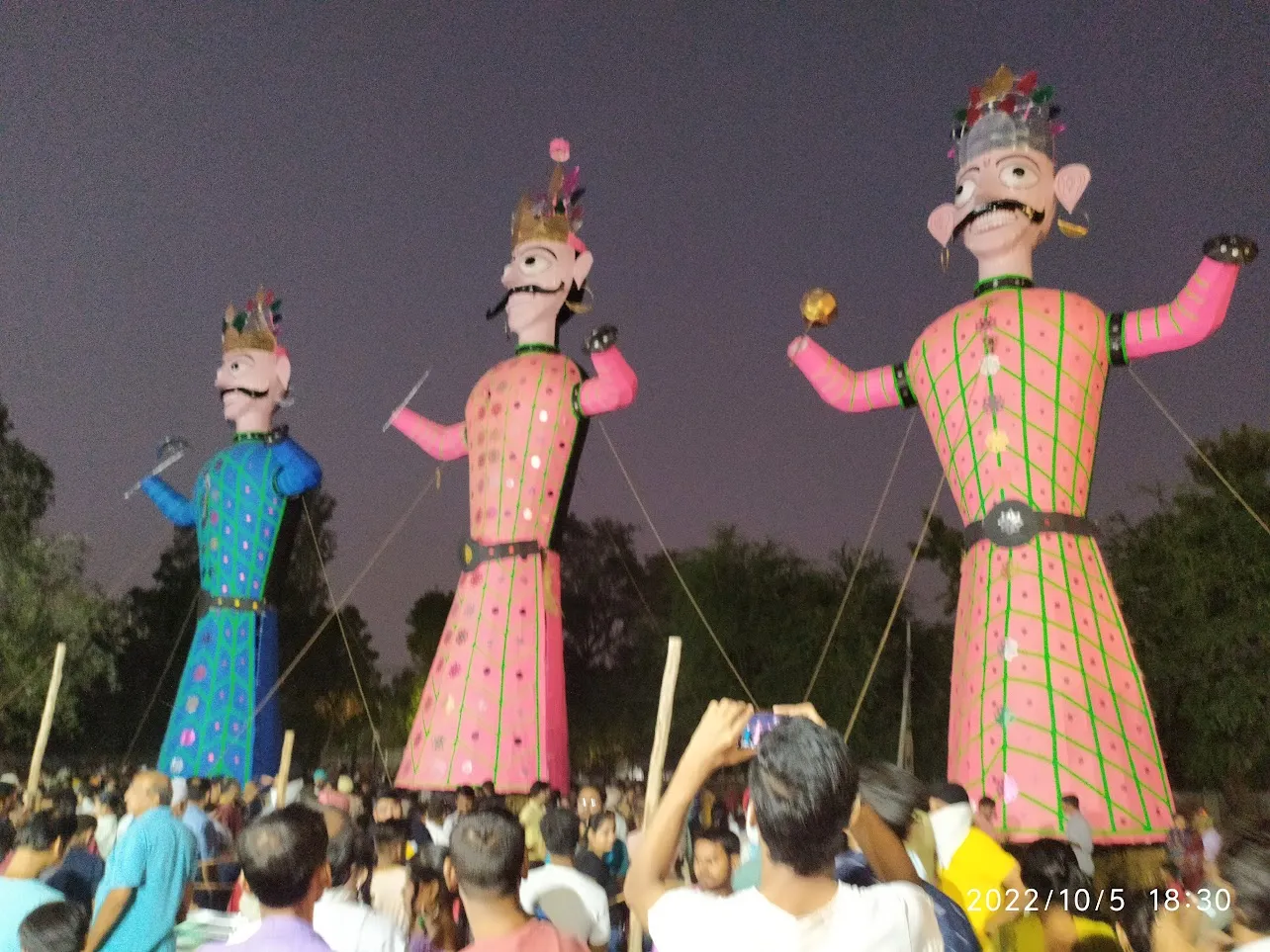
Dussehra, also called Vijayadashami, is the Hindu festival on the tenth day of the bright half of the month of Ashvina, in September or October, that brings Navratri to its close. In northern India it celebrates Ram's victory over Ravana, the ten-headed demon king of Lanka, retold through the Ramlila and the burning of giant effigies. In eastern India the same day ends Durga Puja and marks Durga's victory over the buffalo demon Mahishasura. It falls twenty days before Diwali.
- Punjabi name
- ਦੁਸਹਿਰਾ
- Also called
- Vijayadashami, Dasara; Dashain in Nepal
- When
- The tenth day of the bright half of Ashvina, September to October
- Name
- From the Sanskrit dasha, ten, and hara, defeat: the defeat of the ten-headed one
- Marks in the north
- Ram's victory over Ravana, told in the Ramayana
- Marks in the east
- Durga's victory over Mahishasura, the close of Durga Puja
All 8 facts
- Closes
- The nine nights of Navratri
- Relation to Diwali
- Falls twenty days before it
Dussehra is the day the autumn festivals turn toward their climax: nine nights of fasting and worship end in a public declaration that good has won. In the north the declaration is theatrical, with the demon king Ravana going up in flames before cheering crowds; in the east it is emotional, as the goddess Durga, after her victory, is carried to the river and bid farewell. Both festivals share one day and one meaning.
What is Dussehra?
Dussehra falls on the tenth day of the bright half of the month of Ashvina, in September or October. The name is usually explained from the Sanskrit dasha, ten, and hara, defeat: the defeat of the ten-headed Ravana. Its other name, Vijayadashami, means the tenth day of victory. The two names are used interchangeably across India, though regions lean on different stories, and the day closes the nine nights of Navratri. For many families Dussehra also begins the countdown and preparation for Diwali, which follows twenty days later. Teachers often read Ravana's ten heads symbolically as well: the ten faces of the inner enemy, anger, pride, greed, delusion, envy and the rest, which the festival's victory is meant to defeat in the worshipper too, so the day works on two levels at once, a public story from the epic and a private audit of conduct.
Ram, Ravana and the Ramlila
In the Ramayana, Ravana, the learned and mighty king of Lanka, carries off Sita, the wife of Ram, and Ram crosses the sea with an army of monkeys and bears to win her back. The war ends with Ravana's fall. Through the Navratri nights, towns across northern India stage the Ramlila, open-air plays that retell the epic episode by episode, often by neighbourhood troupes whose actors are local boys. On Dussehra evening the play reaches its end in a public ground, where towering effigies of Ravana, his brother Kumbhakaran and his son Meghnad, stuffed with fireworks, are shot with a flaming arrow and burn to the ground amid cheers.
Durga and Mahishasura
In Bengal, Assam and the east, the day is Vijayadashami, the victory tenth that ends Durga Puja. The goddess Durga, created by the combined power of the gods when none of them could defeat the buffalo demon Mahishasura, fought him through the festival's days and destroyed him, restoring the order of the world. On the tenth day her clay images, with Lakshmi, Saraswati, Ganesh and Kartikeya, are carried in procession with music and chanting to a river or the sea and immersed, as the goddess departs for Mount Kailash until next year. Kolkata's Durga Puja was added to UNESCO's Representative List of the Intangible Cultural Heritage of Humanity in 2021.
How is Dussehra celebrated?
Forms vary by region. In the south, the day carries Ayudha Puja, when tools, instruments, vehicles and weapons are cleaned, garlanded and worshipped, and Vidyarambham, when small children are guided to write their first letters. Mysuru's Dasara, led by the royal family's procession, is famous across India. In the hills of Kullu in Himachal Pradesh, Dussehra runs the other way: a week-long festival that begins on Vijayadashami just as the plains finish, with village gods carried in palanquins to the fair ground. Everywhere, the day is considered auspicious for new beginnings: new work, new study and new ventures are started under its sign of victory.
Dussehra in Punjab
Punjab keeps Dussehra in the northern style: Ramlila grounds in Amritsar, Ludhiana, Jalandhar, Patiala and smaller towns host nightly plays through Navratri, and on the tenth evening the effigies burn before large crowds, with fairs, swings and food stalls around them. The festival was just as much a part of the undivided Punjab: a photograph from 1923 shows the great Ravan Dahan at Minto Park in Lahore, with the effigy towering over the crowd, evidence that the same autumn night was celebrated across the Punjab of a century ago. Dussehra is a public holiday in the state, and its end turns every bazaar toward Diwali.
When is Dussehra?
Dussehra falls on the tenth lunar day (dashami) of the bright half of Ashvina, the day after the ninth night of Navratri. In the Gregorian calendar it comes in September or October, and it stands twenty days before Diwali, on the new moon of Kartika.
ਦੁਸਹਿਰਾ ਉਹ ਦਿਨ ਹੈ ਜਦੋਂ ਪਤਝੜ ਦੇ ਤਿਉਹਾਰ ਆਪਣੇ ਸਿਖਰ ਵੱਲ ਮੁੜਦੇ ਹਨ: ਨੌਂ ਰਾਤਾਂ ਦੇ ਵਰਤ ਅਤੇ ਪੂਜਾ ਇੱਕ ਜਨਤਕ ਐਲਾਨ ਨਾਲ ਮੁੱਕਦੀਆਂ ਹਨ ਕਿ ਨੇਕੀ ਜਿੱਤ ਗਈ ਹੈ ਉੱਤਰ ਵਿੱਚ ਇਹ ਐਲਾਨ ਨਾਟਕੀ ਹੈ, ਦੈਂਤ ਰਾਜਾ ਰਾਵਣ ਜੈਕਾਰੇ ਲਾਉਂਦੀ ਭੀੜ ਸਾਹਮਣੇ ਅੱਗ ਵਿੱਚ ਜਾਂਦਾ ਹੈ; ਪੂਰਬ ਵਿੱਚ ਇਹ ਭਾਵੁਕ ਹੈ, ਜਦੋਂ ਦੇਵੀ ਦੁਰਗਾ ਨੂੰ ਉਸ ਦੀ ਜਿੱਤ ਤੋਂ ਬਾਅਦ ਦਰਿਆ ਤੱਕ ਲੈ ਜਾ ਕੇ ਵਿਦਾ ਕੀਤਾ ਜਾਂਦਾ ਹੈ ਦੋਵੇਂ ਤਿਉਹਾਰ ਇੱਕੋ ਦਿਨ ਅਤੇ ਇੱਕੋ ਅਰਥ ਰੱਖਦੇ ਹਨ
ਦੁਸਹਿਰਾ ਕੀ ਹੈ?
ਦੁਸਹਿਰਾ ਅੱਸੂ ਮਹੀਨੇ ਦੇ ਚਾਨਣ ਪੱਖ ਦੇ ਦਸਵੇਂ ਦਿਨ ਆਉਂਦਾ ਹੈ, ਸਤੰਬਰ ਜਾਂ ਅਕਤੂਬਰ ਵਿੱਚ ਇਸ ਨਾਮ ਦੀ ਵਿਆਖਿਆ ਆਮ ਤੌਰ ਉੱਤੇ ਸੰਸਕ੍ਰਿਤ ਸ਼ਬਦਾਂ ਦਸ਼, ਦਸ, ਅਤੇ ਹਰ, ਹਾਰ, ਤੋਂ ਕੀਤੀ ਜਾਂਦੀ ਹੈ: ਦਸ ਸਿਰਾਂ ਵਾਲੇ ਦੀ ਹਾਰ ਇਸ ਦਾ ਦੂਜਾ ਨਾਮ, ਵਿਜੇਦਸ਼ਮੀ, ਦਾ ਅਰਥ ਹੈ ਜਿੱਤ ਦਾ ਦਸਵਾਂ ਦਿਨ ਦੋਵੇਂ ਨਾਮ ਸਾਰੇ ਭਾਰਤ ਵਿੱਚ ਇੱਕ ਦੂਜੇ ਦੀ ਥਾਂ ਵਰਤੇ ਜਾਂਦੇ ਹਨ, ਹਾਲਾਂਕਿ ਵੱਖ ਵੱਖ ਖੇਤਰ ਵੱਖ ਵੱਖ ਕਥਾਵਾਂ ਉੱਤੇ ਜ਼ੋਰ ਦਿੰਦੇ ਹਨ, ਅਤੇ ਇਹ ਦਿਨ ਨਵਰਾਤਰੀ ਦੀਆਂ ਨੌਂ ਰਾਤਾਂ ਨੂੰ ਸਮਾਪਤ ਕਰਦਾ ਹੈ ਕਈ ਪਰਿਵਾਰਾਂ ਲਈ ਦੁਸਹਿਰਾ ਦੀਵਾਲੀ ਦੀ ਗਿਣਤੀ ਅਤੇ ਤਿਆਰੀ ਵੀ ਸ਼ੁਰੂ ਕਰਦਾ ਹੈ, ਜੋ ਵੀਹ ਦਿਨ ਬਾਅਦ ਆਉਂਦੀ ਹੈ ਅਧਿਆਪਕ ਅਕਸਰ ਰਾਵਣ ਦੇ ਦਸ ਸਿਰਾਂ ਨੂੰ ਪ੍ਰਤੀਕਾਤਮਕ ਤੌਰ ਉੱਤੇ ਵੀ ਪੜ੍ਹਦੇ ਹਨ: ਅੰਦਰੂਨੀ ਦੁਸ਼ਮਣ ਦੇ ਦਸ ਮੂੰਹ, ਕ੍ਰੋਧ, ਹੰਕਾਰ, ਲਾਲਚ, ਭੁਲੇਖਾ, ਈਰਖਾ ਅਤੇ ਬਾਕੀ, ਜਿਨ੍ਹਾਂ ਨੂੰ ਤਿਉਹਾਰ ਦੀ ਜਿੱਤ ਪੂਜਾ ਕਰਨ ਵਾਲੇ ਦੇ ਅੰਦਰ ਵੀ ਹਰਾਉਣ ਲਈ ਹੈ, ਇਸ ਲਈ ਇਹ ਦਿਨ ਇੱਕੋ ਸਮੇਂ ਦੋ ਪੱਧਰਾਂ ਉੱਤੇ ਕੰਮ ਕਰਦਾ ਹੈ, ਮਹਾਂਕਾਵਿ ਦੀ ਇੱਕ ਜਨਤਕ ਕਥਾ ਅਤੇ ਆਚਰਣ ਦਾ ਇੱਕ ਨਿੱਜੀ ਹਿਸਾਬ
ਰਾਮ, ਰਾਵਣ ਅਤੇ ਰਾਮਲੀਲਾ
ਰਾਮਾਇਣ ਵਿੱਚ ਲੰਕਾ ਦਾ ਵਿਦਵਾਨ ਅਤੇ ਸ਼ਕਤੀਸ਼ਾਲੀ ਰਾਜਾ ਰਾਵਣ ਰਾਮ ਦੀ ਪਤਨੀ ਸੀਤਾ ਨੂੰ ਚੁੱਕ ਕੇ ਲੈ ਜਾਂਦਾ ਹੈ, ਅਤੇ ਰਾਮ ਬਾਂਦਰਾਂ ਅਤੇ ਰਿੱਛਾਂ ਦੀ ਫੌਜ ਨਾਲ ਸਮੁੰਦਰ ਪਾਰ ਕਰਕੇ ਉਸ ਨੂੰ ਵਾਪਸ ਜਿੱਤਣ ਜਾਂਦਾ ਹੈ ਜੰਗ ਰਾਵਣ ਦੇ ਪਤਨ ਨਾਲ ਮੁੱਕਦੀ ਹੈ ਨਵਰਾਤਰੀ ਦੀਆਂ ਰਾਤਾਂ ਭਰ ਉੱਤਰੀ ਭਾਰਤ ਦੇ ਕਸਬੇ ਰਾਮਲੀਲਾ ਕਰਦੇ ਹਨ, ਖੁੱਲ੍ਹੇ ਮੈਦਾਨਾਂ ਵਿੱਚ ਖੇਡੇ ਜਾਣ ਵਾਲੇ ਨਾਟਕ ਜੋ ਮਹਾਂਕਾਵਿ ਨੂੰ ਕੜੀ ਦਰ ਕੜੀ ਦੁਹਰਾਉਂਦੇ ਹਨ, ਅਕਸਰ ਮੁਹੱਲਿਆਂ ਦੀਆਂ ਟੋਲੀਆਂ ਵੱਲੋਂ ਜਿਨ੍ਹਾਂ ਦੇ ਕਲਾਕਾਰ ਸਥਾਨਕ ਮੁੰਡੇ ਹੁੰਦੇ ਹਨ ਦੁਸਹਿਰੇ ਵਾਲੀ ਸ਼ਾਮ ਨਾਟਕ ਇੱਕ ਜਨਤਕ ਮੈਦਾਨ ਵਿੱਚ ਆਪਣੇ ਅੰਤ ਉੱਤੇ ਪਹੁੰਚਦਾ ਹੈ, ਜਿੱਥੇ ਰਾਵਣ, ਉਸ ਦੇ ਭਰਾ ਕੁੰਭਕਰਨ ਅਤੇ ਉਸ ਦੇ ਪੁੱਤਰ ਮੇਘਨਾਦ ਦੇ ਵਿਸ਼ਾਲ ਪੁਤਲੇ, ਆਤਸ਼ਬਾਜ਼ੀ ਨਾਲ ਭਰੇ ਹੋਏ, ਜਲਦੇ ਤੀਰ ਨਾਲ ਡੇਗੇ ਜਾਂਦੇ ਹਨ ਅਤੇ ਜੈਕਾਰਿਆਂ ਵਿੱਚ ਸੜ ਕੇ ਜ਼ਮੀਨ ਉੱਤੇ ਆ ਜਾਂਦੇ ਹਨ
ਦੁਰਗਾ ਅਤੇ ਮਹਿਸ਼ਾਸੁਰ
ਬੰਗਾਲ, ਅਸਾਮ ਅਤੇ ਪੂਰਬ ਵਿੱਚ ਇਹ ਦਿਨ ਵਿਜੇਦਸ਼ਮੀ ਹੈ, ਜਿੱਤ ਵਾਲਾ ਦਸਵਾਂ ਦਿਨ ਜੋ ਦੁਰਗਾ ਪੂਜਾ ਨੂੰ ਸਮਾਪਤ ਕਰਦਾ ਹੈ ਦੇਵੀ ਦੁਰਗਾ, ਜੋ ਦੇਵਤਿਆਂ ਦੀ ਮਿਲੀ ਹੋਈ ਸ਼ਕਤੀ ਤੋਂ ਉਸ ਵੇਲੇ ਬਣਾਈ ਗਈ ਜਦੋਂ ਉਨ੍ਹਾਂ ਵਿੱਚੋਂ ਕੋਈ ਵੀ ਮੱਝ ਦੈਂਤ ਮਹਿਸ਼ਾਸੁਰ ਨੂੰ ਹਰਾ ਨਹੀਂ ਸਕਿਆ, ਤਿਉਹਾਰ ਦੇ ਦਿਨਾਂ ਭਰ ਉਸ ਨਾਲ ਲੜੀ ਅਤੇ ਉਸ ਨੂੰ ਨਸ਼ਟ ਕਰ ਦਿੱਤਾ, ਸੰਸਾਰ ਦਾ ਕ੍ਰਮ ਮੁੜ ਕਾਇਮ ਕੀਤਾ ਦਸਵੇਂ ਦਿਨ ਉਸ ਦੀਆਂ ਮਿੱਟੀ ਦੀਆਂ ਮੂਰਤੀਆਂ, ਲਕਸ਼ਮੀ, ਸਰਸਵਤੀ, ਗਣੇਸ਼ ਅਤੇ ਕਾਰਤਿਕੇਯ ਸਮੇਤ, ਸੰਗੀਤ ਅਤੇ ਜੈਕਾਰਿਆਂ ਨਾਲ ਜਲੂਸ ਵਿੱਚ ਦਰਿਆ ਜਾਂ ਸਮੁੰਦਰ ਤੱਕ ਲੈ ਜਾਈਆਂ ਜਾਂਦੀਆਂ ਹਨ ਅਤੇ ਵਿਸਰਜਿਤ ਕੀਤੀਆਂ ਜਾਂਦੀਆਂ ਹਨ, ਜਦੋਂ ਦੇਵੀ ਅਗਲੇ ਸਾਲ ਤੱਕ ਲਈ ਕੈਲਾਸ਼ ਪਰਬਤ ਵੱਲ ਵਿਦਾ ਹੁੰਦੀ ਹੈ ਕੋਲਕਾਤਾ ਦੀ ਦੁਰਗਾ ਪੂਜਾ ਨੂੰ 2021 ਵਿੱਚ ਯੂਨੈਸਕੋ ਦੀ ਮਨੁੱਖਤਾ ਦੀ ਅਦ੍ਰਿਸ਼ ਸੱਭਿਆਚਾਰਕ ਵਿਰਾਸਤ ਦੀ ਸੂਚੀ ਵਿੱਚ ਸ਼ਾਮਲ ਕੀਤਾ ਗਿਆ ਸੀ
ਦੁਸਹਿਰਾ ਕਿਵੇਂ ਮਨਾਇਆ ਜਾਂਦਾ ਹੈ?
ਰੂਪ ਖੇਤਰ ਅਨੁਸਾਰ ਬਦਲਦੇ ਹਨ ਦੱਖਣ ਵਿੱਚ ਇਹ ਦਿਨ ਆਯੁਧ ਪੂਜਾ ਰੱਖਦਾ ਹੈ, ਜਦੋਂ ਔਜ਼ਾਰ, ਸਾਜ਼, ਗੱਡੀਆਂ ਅਤੇ ਹਥਿਆਰ ਸਾਫ ਕਰਕੇ, ਹਾਰ ਪਾ ਕੇ ਪੂਜੇ ਜਾਂਦੇ ਹਨ, ਅਤੇ ਵਿਦਿਆਰੰਭ ਹੁੰਦਾ ਹੈ, ਜਦੋਂ ਛੋਟੇ ਬੱਚਿਆਂ ਨੂੰ ਉਨ੍ਹਾਂ ਦੇ ਪਹਿਲੇ ਅੱਖਰ ਲਿਖਣ ਲਈ ਅਗਵਾਈ ਦਿੱਤੀ ਜਾਂਦੀ ਹੈ ਸ਼ਾਹੀ ਪਰਿਵਾਰ ਦੇ ਜਲੂਸ ਦੀ ਅਗਵਾਈ ਵਾਲਾ ਮੈਸੂਰੂ ਦਾ ਦਸਹਿਰਾ ਸਾਰੇ ਭਾਰਤ ਵਿੱਚ ਮਸ਼ਹੂਰ ਹੈ ਹਿਮਾਚਲ ਪ੍ਰਦੇਸ਼ ਦੀਆਂ ਕੁੱਲੂ ਪਹਾੜੀਆਂ ਵਿੱਚ ਦੁਸਹਿਰਾ ਉਲਟਾ ਚਲਦਾ ਹੈ: ਇੱਕ ਹਫਤੇ ਦਾ ਤਿਉਹਾਰ ਜੋ ਵਿਜੇਦਸ਼ਮੀ ਨੂੰ ਉਸ ਵੇਲੇ ਸ਼ੁਰੂ ਹੁੰਦਾ ਹੈ ਜਦੋਂ ਮੈਦਾਨੀ ਇਲਾਕੇ ਮੁਕਾ ਰਹੇ ਹੁੰਦੇ ਹਨ, ਪਿੰਡਾਂ ਦੇ ਦੇਵਤੇ ਪਾਲਕੀਆਂ ਵਿੱਚ ਮੇਲੇ ਦੇ ਮੈਦਾਨ ਤੱਕ ਲਿਆਂਦੇ ਜਾਂਦੇ ਹਨ ਹਰ ਥਾਂ ਇਹ ਦਿਨ ਨਵੀਆਂ ਸ਼ੁਰੂਆਤਾਂ ਲਈ ਸ਼ੁਭ ਮੰਨਿਆ ਜਾਂਦਾ ਹੈ: ਨਵਾਂ ਕੰਮ, ਨਵੀਂ ਪੜ੍ਹਾਈ ਅਤੇ ਨਵੇਂ ਕਾਰੋਬਾਰ ਇਸ ਦੀ ਜਿੱਤ ਦੇ ਨਿਸ਼ਾਨ ਹੇਠ ਸ਼ੁਰੂ ਕੀਤੇ ਜਾਂਦੇ ਹਨ
ਪੰਜਾਬ ਵਿੱਚ ਦੁਸਹਿਰਾ
ਪੰਜਾਬ ਦੁਸਹਿਰਾ ਉੱਤਰੀ ਅੰਦਾਜ਼ ਵਿੱਚ ਮਨਾਉਂਦਾ ਹੈ: ਅੰਮ੍ਰਿਤਸਰ, ਲੁਧਿਆਣਾ, ਜਲੰਧਰ, ਪਟਿਆਲਾ ਅਤੇ ਛੋਟੇ ਕਸਬਿਆਂ ਦੇ ਰਾਮਲੀਲਾ ਮੈਦਾਨ ਨਵਰਾਤਰੀ ਭਰ ਹਰ ਰਾਤ ਨਾਟਕ ਪੇਸ਼ ਕਰਦੇ ਹਨ, ਅਤੇ ਦਸਵੀਂ ਸ਼ਾਮ ਪੁਤਲੇ ਵੱਡੀਆਂ ਭੀੜਾਂ ਸਾਹਮਣੇ ਸੜਦੇ ਹਨ, ਆਲੇ ਦੁਆਲੇ ਮੇਲੇ, ਝੂਲੇ ਅਤੇ ਖਾਣੇ ਦੀਆਂ ਰੇਹੜੀਆਂ ਹੁੰਦੀਆਂ ਹਨ ਇਹ ਤਿਉਹਾਰ ਅਣਵੰਡੇ ਪੰਜਾਬ ਦਾ ਵੀ ਓਨਾ ਹੀ ਹਿੱਸਾ ਸੀ: 1923 ਦੀ ਇੱਕ ਤਸਵੀਰ ਲਾਹੌਰ ਦੇ ਮਿੰਟੋ ਪਾਰਕ ਵਿੱਚ ਵੱਡਾ ਰਾਵਣ ਦਹਨ ਵਿਖਾਉਂਦੀ ਹੈ, ਪੁਤਲਾ ਭੀੜ ਉੱਤੇ ਉੱਚਾ ਖੜ੍ਹਾ, ਇਸ ਗੱਲ ਦਾ ਸਬੂਤ ਕਿ ਉਹੀ ਪਤਝੜ ਵਾਲੀ ਰਾਤ ਇੱਕ ਸਦੀ ਪਹਿਲਾਂ ਦੇ ਪੰਜਾਬ ਵਿੱਚ ਵੀ ਮਨਾਈ ਜਾਂਦੀ ਸੀ ਦੁਸਹਿਰਾ ਸੂਬੇ ਵਿੱਚ ਸਰਕਾਰੀ ਛੁੱਟੀ ਹੈ, ਅਤੇ ਇਸ ਦਾ ਅੰਤ ਹਰ ਬਾਜ਼ਾਰ ਨੂੰ ਦੀਵਾਲੀ ਵੱਲ ਮੋੜ ਦਿੰਦਾ ਹੈ
ਦੁਸਹਿਰਾ ਕਦੋਂ ਹੁੰਦਾ ਹੈ?
ਦੁਸਹਿਰਾ ਅੱਸੂ ਦੇ ਚਾਨਣ ਪੱਖ ਦੇ ਦਸਵੇਂ ਚੰਦਰਮਾ ਦਿਨ, ਦਸ਼ਮੀ ਨੂੰ ਆਉਂਦਾ ਹੈ, ਨਵਰਾਤਰੀ ਦੀ ਨੌਵੀਂ ਰਾਤ ਤੋਂ ਅਗਲੇ ਦਿਨ ਅੰਗਰੇਜ਼ੀ ਕੈਲੰਡਰ ਵਿੱਚ ਇਹ ਸਤੰਬਰ ਜਾਂ ਅਕਤੂਬਰ ਵਿੱਚ ਆਉਂਦਾ ਹੈ, ਅਤੇ ਇਹ ਦੀਵਾਲੀ ਤੋਂ ਵੀਹ ਦਿਨ ਪਹਿਲਾਂ ਖੜ੍ਹਾ ਹੁੰਦਾ ਹੈ, ਜੋ ਕੱਤਕ ਦੀ ਅਮਾਵਸ ਨੂੰ ਆਉਂਦੀ ਹੈ