
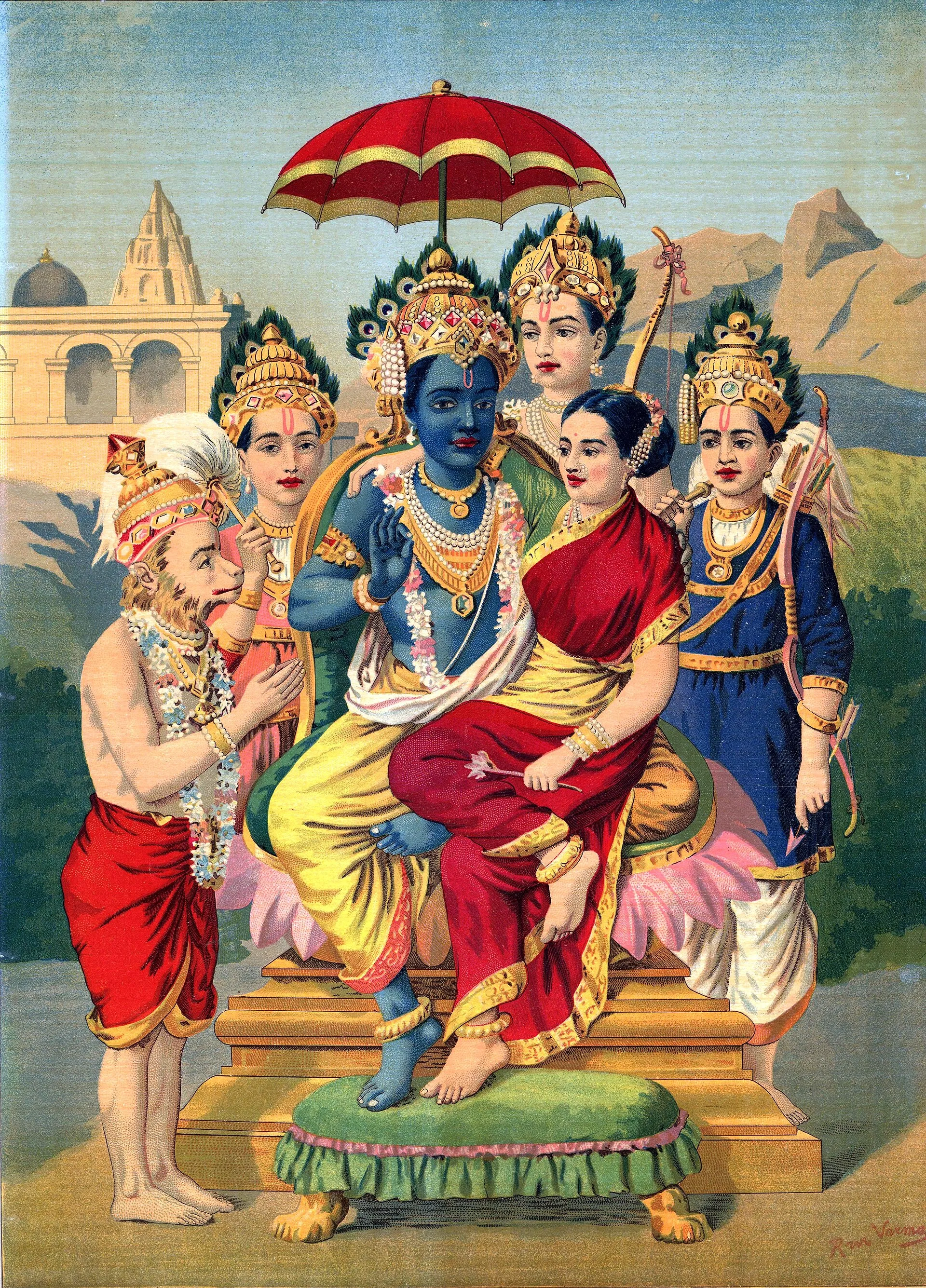
Ram, also called Rama or Ramachandra, is one of the most widely worshipped gods of Hinduism, the seventh avatar of Vishnu and the hero of the epic Ramayana. Hindus honour him as Maryada Purushottam, the perfect man: a prince who gave up a throne for his father's word, lived fourteen years in forest exile, and defeated the demon king Ravana to rescue his wife Sita. His birth, victory and homecoming are celebrated as Ram Navami, Dussehra and Diwali.
- Punjabi name
- ਰਾਮ
- Place among the gods
- Seventh avatar of Vishnu
- Parents
- King Dasharatha and Queen Kausalya of Ayodhya
- Brothers
- Bharata, Lakshmana and Shatrughna
- Wife
- Sita
- Great devotee
- Hanuman
All 9 facts
- Epic
- The Ramayana, attributed to the sage Valmiki
- Main festivals
- Ram Navami (birth), Dussehra (victory over Ravana), Diwali (homecoming)
- Famous temple
- Ram Mandir, Ayodhya
Ram is the hero at the heart of the Ramayana, one of the two great Sanskrit epics of India, and for millions of Hindus he is much more than a hero: he is God, the seventh descent of Vishnu to earth, and the pattern of how a human being should live. His name is on people's lips constantly in northern India, called out in greeting as Ram Ram, spoken in joy and in grief, and traditionally the name most invoked at the hour of death.
Who is Ram?
Ram is worshipped as Maryada Purushottam, the man of perfect measure, the embodiment of dharma, the moral order by which life should be lived. Tradition centres on Ramachandra, the prince of Ayodhya, though the name Ram also belongs to two other figures, Parashurama and Balarama. In art he is shown as a noble prince, dark in colour like Vishnu, wearing the tall kirita-makuta crown, holding his bow, with Sita beside him and his brother Lakshmana and the devotee Hanuman in attendance.
The story of the Ramayana
According to the Ramayana, Ram was the eldest son of King Dasharatha of Ayodhya. On the eve of his coronation, his stepmother Kaikeyi claimed an old promise from the king and demanded that her own son Bharata take the throne and Ram spend fourteen years in exile. Ram accepted without protest, and his wife Sita and his brother Lakshmana went with him into the forest. In exile they faced demons and hardships, until Ravana, the ten-headed king of Lanka, abducted Sita and carried her across the sea. Searching for her, Ram allied with the monkey king Sugriva, and it was Sugriva's minister Hanuman who crossed the ocean, found Sita in Lanka and became Ram's greatest devotee. With a monkey army, Ram built a bridge of stones to Lanka, fought Ravana and killed him, and rescued Sita. The exile complete, Ram returned to Ayodhya to universal joy and was crowned king; his just reign, Ram Rajya, remains the byword for good government. Later tradition adds the sadder ending in which doubts raised about Sita led to her banishment.
Why Ram matters
Hindus read Ram's life as a lesson in dharma worked out through hard choices: a son's obedience, a brother's loyalty, a husband's duty, a king's justice. The epic exists in hundreds of versions. Valmiki's Sanskrit Ramayana is the oldest; Tulsidas retold it in the 16th century as the Ramcharitmanas, the beloved Hindi text that carries Ram's story into village squares, where Ramlila plays act it out every autumn. Versions of the story spread across Asia, from Thailand's Ramakien to Cambodia's Reamker.
Festivals and temples
Three of Hinduism's greatest festivals belong to Ram: Ram Navami, his birthday in spring; Dussehra, also called Vijayadashami, marking his victory over Ravana, when effigies of the demon king burn in public grounds; and Diwali, the festival of lights, celebrating his return to Ayodhya, when lamps were lit to guide him home. His birthplace at Ayodhya is now crowned by the great Ram Mandir, opened in 2024 after a decades-long movement, and the Ramanathaswamy Temple at Rameswaram, one of India's holiest Shiva shrines, is bound by tradition to Ram's journey south.
Ram in Punjab
The Ramayana's second most loved figure may be Ram's brother Bharata. When Ram left Ayodhya, Bharata, who was away and innocent of his mother's plot, pursued him into the forest and begged him on his knees to come back and take the throne. Ram refused: the promise had been given, and a promise is not broken even by its victim. So Bharata carried Ram's wooden sandals back to Ayodhya, set them on the throne, and ruled the kingdom for fourteen years as a regent from the village of Nandigrama, sleeping on the ground and living as an ascetic while the sandals reigned. The episode, the Bharata Milap, is performed in Ramlilas to this day, and audiences weep at it.
No Indian story has been retold more often. Valmiki's Sanskrit Ramayana runs to some 24,000 verses, but the version that shaped the devotion of the north is Tulsidas's Ramcharitmanas, written in the Awadhi language in the 16th century and read aloud in homes and temples ever since. Kamban retold it in Tamil in the 12th century, and there are Jain, Buddhist and folk Ramayanas besides. The story travelled with trade and faith across Asia: Thailand's national epic is the Ramakien, Cambodia's is the Reamker, and Ram's exile, Sita's abduction and the battle for Lanka are carved on temple walls from Ayutthaya to Bali.
No god is more woven into Punjabi speech than Ram: the greeting Ram Ram is heard across the region's Hindu homes, and his name anchors everyday oaths and blessings. Every autumn, towns across Punjab stage Ramlila and burn Ravana's effigies at Dussehra, and Diwali is the region's most loved festival. Since the Ayodhya temple opened, Punjabi devotees have travelled there in large numbers, and Ram Navami processions fill the streets of cities from Amritsar to Ludhiana.
ਰਾਮ ਰਾਮਾਇਣ ਦੇ ਕੇਂਦਰ ਵਿੱਚ ਨਾਇਕ ਹਨ, ਜੋ ਭਾਰਤ ਦੇ ਦੋ ਮਹਾਨ ਸੰਸਕ੍ਰਿਤ ਮਹਾਂਕਾਵਿਆਂ ਵਿੱਚੋਂ ਇੱਕ ਹੈ, ਅਤੇ ਲੱਖਾਂ ਹਿੰਦੂਆਂ ਲਈ ਉਹ ਨਾਇਕ ਤੋਂ ਕਿਤੇ ਵੱਧ ਹਨ: ਉਹ ਪਰਮਾਤਮਾ ਹਨ, ਵਿਸ਼ਨੂੰ ਦਾ ਸੱਤਵਾਂ ਅਵਤਾਰ ਧਰਤੀ ਉੱਤੇ, ਅਤੇ ਇਸ ਦਾ ਨਮੂਨਾ ਕਿ ਮਨੁੱਖ ਨੂੰ ਕਿਵੇਂ ਜੀਣਾ ਚਾਹੀਦਾ ਹੈ ਉੱਤਰੀ ਭਾਰਤ ਵਿੱਚ ਉਨ੍ਹਾਂ ਦਾ ਨਾਮ ਲੋਕਾਂ ਦੀ ਜ਼ਬਾਨ ਉੱਤੇ ਹਮੇਸ਼ਾ ਰਹਿੰਦਾ ਹੈ, ਰਾਮ ਰਾਮ ਕਹਿ ਕੇ ਸਤਿਕਾਰ ਕੀਤਾ ਜਾਂਦਾ ਹੈ, ਖੁਸ਼ੀ ਅਤੇ ਦੁੱਖ ਵਿੱਚ ਬੋਲਿਆ ਜਾਂਦਾ ਹੈ, ਅਤੇ ਪਰੰਪਰਾ ਅਨੁਸਾਰ ਮੌਤ ਦੀ ਘੜੀ ਵਿੱਚ ਸਭ ਤੋਂ ਵੱਧ ਲਿਆ ਜਾਣ ਵਾਲਾ ਨਾਮ ਹੈ
ਰਾਮ ਕੌਣ ਹਨ?
ਰਾਮ ਨੂੰ ਮਰਿਆਦਾ ਪੁਰਸ਼ੋਤਮ ਵਜੋਂ ਪੂਜਿਆ ਜਾਂਦਾ ਹੈ, ਸੰਪੂਰਨ ਮਾਪ ਵਾਲਾ ਮਨੁੱਖ, ਧਰਮ ਦਾ ਸਾਕਾਰ ਰੂਪ, ਉਹ ਨੈਤਿਕ ਵਿਵਸਥਾ ਜਿਸ ਅਨੁਸਾਰ ਜੀਵਨ ਜੀਣਾ ਚਾਹੀਦਾ ਹੈ ਪਰੰਪਰਾ ਅਯੋਧਿਆ ਦੇ ਰਾਜਕੁਮਾਰ ਰਾਮਚੰਦਰ ਉੱਤੇ ਕੇਂਦਰਤ ਹੈ, ਹਾਲਾਂਕਿ ਰਾਮ ਨਾਮ ਦੋ ਹੋਰ ਹਸਤੀਆਂ ਦਾ ਵੀ ਹੈ, ਪਰਸ਼ੁਰਾਮ ਅਤੇ ਬਲਰਾਮ ਕਲਾ ਵਿੱਚ ਉਨ੍ਹਾਂ ਨੂੰ ਇੱਕ ਸ਼ਾਹੀ ਰਾਜਕੁਮਾਰ ਵਜੋਂ ਵਿਖਾਇਆ ਜਾਂਦਾ ਹੈ, ਵਿਸ਼ਨੂੰ ਵਾਂਗ ਗੂੜ੍ਹੇ ਰੰਗ ਦੇ, ਉੱਚਾ ਕੀਰਟ-ਮੁਕੁਟ ਤਾਜ ਪਹਿਨਿਆ ਹੋਇਆ, ਕਮਾਨ ਫੜਿਆ ਹੋਇਆ, ਨਾਲ ਸੀਤਾ ਅਤੇ ਸੇਵਾ ਵਿੱਚ ਭਰਾ ਲਕਸ਼ਮਣ ਅਤੇ ਭਗਤ ਹਨੂੰਮਾਨ
ਰਾਮਾਇਣ ਦੀ ਕਥਾ
ਰਾਮਾਇਣ ਅਨੁਸਾਰ, ਰਾਮ ਅਯੋਧਿਆ ਦੇ ਰਾਜਾ ਦਸ਼ਰਥ ਦੇ ਸਭ ਤੋਂ ਵੱਡੇ ਪੁੱਤਰ ਸਨ ਉਨ੍ਹਾਂ ਦੇ ਤਾਜਪੋਸ਼ੀ ਦੀ ਪੂਰਵ ਸੰਧਿਆ ਉੱਤੇ, ਉਨ੍ਹਾਂ ਦੀ ਮਤਰੇਈ ਮਾਂ ਕੈਕੇਈ ਨੇ ਰਾਜੇ ਤੋਂ ਪੁਰਾਣਾ ਵਾਅਦਾ ਮੰਗਿਆ ਅਤੇ ਮੰਗ ਕੀਤੀ ਕਿ ਉਸ ਦਾ ਆਪਣਾ ਪੁੱਤਰ ਭਰਤ ਗੱਦੀ ਲਵੇ ਅਤੇ ਰਾਮ ਚੌਦਾਂ ਸਾਲ ਵਣਵਾਸ ਵਿੱਚ ਬਿਤਾਉਣ ਰਾਮ ਨੇ ਬਿਨਾਂ ਇਤਰਾਜ਼ ਸਵੀਕਾਰ ਕਰ ਲਿਆ, ਅਤੇ ਉਨ੍ਹਾਂ ਦੀ ਪਤਨੀ ਸੀਤਾ ਅਤੇ ਭਰਾ ਲਕਸ਼ਮਣ ਉਨ੍ਹਾਂ ਨਾਲ ਜੰਗਲ ਵਿੱਚ ਚਲੇ ਗਏ ਵਣਵਾਸ ਵਿੱਚ ਉਨ੍ਹਾਂ ਨੇ ਦੈਂਤਾਂ ਅਤੇ ਮੁਸ਼ਕਲਾਂ ਦਾ ਸਾਹਮਣਾ ਕੀਤਾ, ਜਦ ਤੱਕ ਲੰਕਾ ਦੇ ਦਸ ਸਿਰਾਂ ਵਾਲੇ ਰਾਜੇ ਰਾਵਣ ਨੇ ਸੀਤਾ ਨੂੰ ਅਗਵਾ ਕਰਕੇ ਸਮੁੰਦਰ ਪਾਰ ਨਾ ਲਿਜਾਇਆ ਉਸ ਦੀ ਭਾਲ ਵਿੱਚ ਰਾਮ ਨੇ ਬਾਂਦਰ ਰਾਜੇ ਸੁਗਰੀਵ ਨਾਲ ਗਠਜੋੜ ਕੀਤਾ, ਅਤੇ ਇਹ ਸੁਗਰੀਵ ਦਾ ਮੰਤਰੀ ਹਨੂੰਮਾਨ ਸੀ ਜਿਸ ਨੇ ਸਮੁੰਦਰ ਪਾਰ ਕੀਤਾ, ਲੰਕਾ ਵਿੱਚ ਸੀਤਾ ਨੂੰ ਲੱਭਿਆ ਅਤੇ ਰਾਮ ਦਾ ਸਭ ਤੋਂ ਵੱਡਾ ਭਗਤ ਬਣ ਗਿਆ ਬਾਂਦਰ ਸੈਨਾ ਨਾਲ ਰਾਮ ਨੇ ਲੰਕਾ ਤੱਕ ਪੱਥਰਾਂ ਦਾ ਪੁਲ ਬਣਾਇਆ, ਰਾਵਣ ਨਾਲ ਲੜਿਆ ਅਤੇ ਉਸ ਨੂੰ ਮਾਰ ਦਿੱਤਾ, ਅਤੇ ਸੀਤਾ ਨੂੰ ਬਚਾਇਆ ਵਣਵਾਸ ਪੂਰਾ ਹੋਣ ਉੱਤੇ ਰਾਮ ਸਭ ਦੀ ਖੁਸ਼ੀ ਵਿੱਚ ਅਯੋਧਿਆ ਮੁੜੇ ਅਤੇ ਰਾਜਾ ਬਣੇ; ਉਨ੍ਹਾਂ ਦਾ ਨਿਆਂਪੂਰਨ ਰਾਜ, ਰਾਮ ਰਾਜ, ਚੰਗੀ ਸਰਕਾਰ ਦਾ ਪ੍ਰਤੀਕ ਬਣਿਆ ਰਿਹਾ ਬਾਅਦ ਦੀ ਪਰੰਪਰਾ ਉਹ ਦੁਖਦਾਈ ਅੰਤ ਵੀ ਜੋੜਦੀ ਹੈ ਜਿਸ ਵਿੱਚ ਸੀਤਾ ਬਾਰੇ ਉੱਠੇ ਸ਼ੱਕਿਆਂ ਕਾਰਨ ਉਸ ਨੂੰ ਕੱਢਣਾ ਪਿਆ
ਰਾਮ ਮਹੱਤਵਪੂਰਨ ਕਿਉਂ ਹਨ
ਹਿੰਦੂ ਰਾਮ ਦੇ ਜੀਵਨ ਨੂੰ ਔਖੇ ਫੈਸਲਿਆਂ ਰਾਹੀਂ ਨਿਭਾਏ ਧਰਮ ਦੇ ਸਬਕ ਵਜੋਂ ਪੜ੍ਹਦੇ ਹਨ: ਪੁੱਤਰ ਦੀ ਆਗਿਆਕਾਰੀ, ਭਰਾ ਦੀ ਵਫਾਦਾਰੀ, ਪਤੀ ਦਾ ਫਰਜ਼, ਰਾਜੇ ਦਾ ਨਿਆਂ ਇਹ ਮਹਾਂਕਾਵਿ ਸੈਂਕੜੇ ਰੂਪਾਂ ਵਿੱਚ ਮੌਜੂਦ ਹੈ ਵਾਲਮੀਕਿ ਦੀ ਸੰਸਕ੍ਰਿਤ ਰਾਮਾਇਣ ਸਭ ਤੋਂ ਪੁਰਾਣੀ ਹੈ; ਤੁਲਸੀਦਾਸ ਨੇ ਸੋਲਵੀਂ ਸਦੀ ਵਿੱਚ ਇਸ ਨੂੰ ਰਾਮਚਰਿਤਮਾਨਸ ਵਜੋਂ ਫਿਰ ਦੱਸਿਆ, ਜੋ ਪਿਆਰਾ ਹਿੰਦੀ ਗ੍ਰੰਥ ਹੈ ਜੋ ਰਾਮ ਦੀ ਕਥਾ ਪਿੰਡਾਂ ਦੇ ਚੌਕਾਂ ਤੱਕ ਲੈ ਜਾਂਦਾ ਹੈ, ਜਿੱਥੇ ਹਰ ਪਤਝੜ ਰਾਮਲੀਲਾ ਦੇ ਮੰਚਨ ਇਸ ਨੂੰ ਸਾਕਾਰ ਕਰਦੇ ਹਨ ਇਸ ਕਥਾ ਦੇ ਰੂਪ ਸਾਰੇ ਏਸ਼ੀਆ ਵਿੱਚ ਫੈਲ ਗਏ, ਥਾਈਲੈਂਡ ਦੀ ਰਾਮਕੀਏਨ ਤੋਂ ਕੰਬੋਡੀਆ ਦੀ ਰੀਮਕਰ ਤੱਕ
ਤਿਉਹਾਰ ਅਤੇ ਮੰਦਰ
ਹਿੰਦੂ ਧਰਮ ਦੇ ਤਿੰਨ ਸਭ ਤੋਂ ਵੱਡੇ ਤਿਉਹਾਰ ਰਾਮ ਨਾਲ ਜੁੜੇ ਹਨ: ਰਾਮ ਨੌਮੀ, ਬਸੰਤ ਵਿੱਚ ਉਨ੍ਹਾਂ ਦਾ ਜਨਮ ਦਿਨ; ਦੁਸਹਿਰਾ, ਜਿਸ ਨੂੰ ਵਿਜੇਦਸ਼ਮੀ ਵੀ ਕਿਹਾ ਜਾਂਦਾ ਹੈ, ਰਾਵਣ ਉੱਤੇ ਉਨ੍ਹਾਂ ਦੀ ਜਿੱਤ ਦਾ ਪ੍ਰਤੀਕ, ਜਦੋਂ ਜਨਤਕ ਮੈਦਾਨਾਂ ਵਿੱਚ ਦੈਂਤ ਰਾਜੇ ਦੇ ਪੁਤਲੇ ਸਾੜੇ ਜਾਂਦੇ ਹਨ; ਅਤੇ ਦੀਵਾਲੀ, ਰੋਸ਼ਨੀਆਂ ਦਾ ਤਿਉਹਾਰ, ਜੋ ਅਯੋਧਿਆ ਵੱਲ ਉਨ੍ਹਾਂ ਦੀ ਵਾਪਸੀ ਦਾ ਜਸ਼ਨ ਹੈ, ਜਦੋਂ ਉਨ੍ਹਾਂ ਨੂੰ ਘਰ ਦਾ ਰਾਹ ਵਿਖਾਉਣ ਲਈ ਦੀਵੇ ਜਗਾਏ ਗਏ ਸਨ ਅਯੋਧਿਆ ਵਿੱਚ ਉਨ੍ਹਾਂ ਦੇ ਜਨਮ ਸਥਾਨ ਉੱਤੇ ਹੁਣ ਮਹਾਨ ਰਾਮ ਮੰਦਰ ਖੜ੍ਹਾ ਹੈ, ਜੋ ਦਹਾਕਿਆਂ ਲੰਬੀ ਲਹਿਰ ਤੋਂ ਬਾਅਦ 2024 ਵਿੱਚ ਖੋਲ੍ਹਿਆ ਗਿਆ, ਅਤੇ ਰਾਮੇਸ਼ਵਰਮ ਦਾ ਰਾਮਨਾਥਸਵਾਮੀ ਮੰਦਰ, ਭਾਰਤ ਦੇ ਸਭ ਤੋਂ ਪਵਿੱਤਰ ਸ਼ਿਵ ਸਥਾਨਾਂ ਵਿੱਚੋਂ ਇੱਕ, ਪਰੰਪਰਾ ਅਨੁਸਾਰ ਰਾਮ ਦੀ ਦੱਖਣ ਯਾਤਰਾ ਨਾਲ ਜੁੜਿਆ ਹੈ
ਪੰਜਾਬ ਵਿੱਚ ਰਾਮ
ਰਾਮਾਇਣ ਦੀ ਦੂਜੀ ਸਭ ਤੋਂ ਪਿਆਰੀ ਹਸਤੀ ਰਾਮ ਦਾ ਭਰਾ ਭਰਤ ਹੋ ਸਕਦਾ ਹੈ ਜਦੋਂ ਰਾਮ ਅਯੁੱਧਿਆ ਛੱਡ ਗਏ, ਭਰਤ, ਜੋ ਦੂਰ ਸੀ ਅਤੇ ਆਪਣੀ ਮਾਂ ਦੀ ਚਾਲ ਤੋਂ ਬੇਕਸੂਰ ਸੀ, ਉਨ੍ਹਾਂ ਦੇ ਪਿੱਛੇ ਜੰਗਲ ਵਿੱਚ ਗਿਆ ਅਤੇ ਗੋਡਿਆਂ ਭਾਰ ਬੇਨਤੀ ਕੀਤੀ ਕਿ ਉਹ ਵਾਪਸ ਆ ਕੇ ਗੱਦੀ ਲੈ ਲੈਣ ਰਾਮ ਨੇ ਇਨਕਾਰ ਕੀਤਾ: ਵਚਨ ਦਿੱਤਾ ਗਿਆ ਸੀ, ਅਤੇ ਵਚਨ ਉਸ ਦੇ ਸ਼ਿਕਾਰ ਦੁਆਰਾ ਵੀ ਨਹੀਂ ਤੋੜਿਆ ਜਾਂਦਾ ਇਸ ਲਈ ਭਰਤ ਰਾਮ ਦੀਆਂ ਲੱਕੜ ਦੀਆਂ ਖੜਾਵਾਂ ਵਾਪਸ ਅਯੁੱਧਿਆ ਲੈ ਆਇਆ, ਉਨ੍ਹਾਂ ਨੂੰ ਗੱਦੀ ਉੱਤੇ ਰੱਖਿਆ, ਅਤੇ ਰਾਜ ਉੱਤੇ ਚੌਦਾਂ ਸਾਲ ਨੰਦੀਗ੍ਰਾਮ ਪਿੰਡ ਤੋਂ ਰਾਜ-ਪ੍ਰਤੀਨਿਧ ਵਜੋਂ ਰਾਜ ਕੀਤਾ, ਜ਼ਮੀਨ ਉੱਤੇ ਸੌਂਦਿਆਂ ਅਤੇ ਤਪੱਸਵੀ ਵਾਂਗ ਰਹਿੰਦਿਆਂ ਜਦੋਂ ਖੜਾਵਾਂ ਰਾਜ ਕਰਦੀਆਂ ਰਹੀਆਂ ਇਹ ਘਟਨਾ, ਭਰਤ ਮਿਲਾਪ, ਅੱਜ ਵੀ ਰਾਮਲੀਲਾਵਾਂ ਵਿੱਚ ਖੇਡੀ ਜਾਂਦੀ ਹੈ, ਅਤੇ ਦਰਸ਼ਕ ਇਸ ਉੱਤੇ ਰੋਂਦੇ ਹਨ
ਕਿਸੇ ਵੀ ਭਾਰਤੀ ਕਹਾਣੀ ਨੂੰ ਐਨੀ ਵਾਰ ਦੁਬਾਰਾ ਨਹੀਂ ਦੱਸਿਆ ਗਿਆ ਵਾਲਮੀਕਿ ਦੀ ਸੰਸਕ੍ਰਿਤ ਰਾਮਾਇਣ ਲਗਭਗ 24,000 ਸ਼ਲੋਕਾਂ ਦੀ ਹੈ, ਪਰ ਜਿਸ ਰੂਪ ਨੇ ਉੱਤਰ ਦੀ ਭਗਤੀ ਨੂੰ ਢਾਲਿਆ ਉਹ ਤੁਲਸੀਦਾਸ ਦੀ ਰਾਮਚਰਿਤਮਾਨਸ ਹੈ, ਜੋ 16ਵੀਂ ਸਦੀ ਵਿੱਚ ਅਵਧੀ ਭਾਸ਼ਾ ਵਿੱਚ ਲਿਖੀ ਗਈ ਅਤੇ ਉਦੋਂ ਤੋਂ ਘਰਾਂ ਅਤੇ ਮੰਦਰਾਂ ਵਿੱਚ ਉੱਚੀ ਪੜ੍ਹੀ ਜਾਂਦੀ ਹੈ ਕੰਬਨ ਨੇ ਇਸ ਨੂੰ 12ਵੀਂ ਸਦੀ ਵਿੱਚ ਤਾਮਿਲ ਵਿੱਚ ਦੁਬਾਰਾ ਦੱਸਿਆ, ਅਤੇ ਇਸ ਤੋਂ ਬਿਨਾਂ ਜੈਨ, ਬੋਧੀ ਅਤੇ ਲੋਕ ਰਾਮਾਇਣਾਂ ਵੀ ਹਨ ਇਹ ਕਹਾਣੀ ਵਪਾਰ ਅਤੇ ਧਰਮ ਨਾਲ ਸਾਰੇ ਏਸ਼ੀਆ ਵਿੱਚ ਯਾਤਰਾ ਕਰ ਗਈ: ਥਾਈਲੈਂਡ ਦਾ ਰਾਸ਼ਟਰੀ ਮਹਾਕਾਵਿ ਰਾਮਾਕਿਏਨ ਹੈ, ਕੰਬੋਡੀਆ ਦਾ ਰੀਮਕਰ ਹੈ, ਅਤੇ ਰਾਮ ਦਾ ਜਲਾਵਤਨ, ਸੀਤਾ ਦਾ ਅਪਹਰਨ ਅਤੇ ਲੰਕਾ ਲਈ ਲੜਾਈ ਅਯੁੱਧਿਆ ਤੋਂ ਬਾਲੀ ਤੱਕ ਮੰਦਰ ਦੀਆਂ ਕੰਧਾਂ ਉੱਤੇ ਉੱਕਰੀ ਹੋਈ ਹੈ
ਕੋਈ ਦੇਵਤਾ ਪੰਜਾਬੀ ਬੋਲੀ ਵਿੱਚ ਰਾਮ ਜਿੰਨਾ ਬੁਣਿਆ ਹੋਇਆ ਨਹੀਂ ਹੈ: ਰਾਮ ਰਾਮ ਦੀ ਸਤਿਕਾਰ ਖੇਤਰ ਦੇ ਹਿੰਦੂ ਘਰਾਂ ਵਿੱਚ ਸੁਣਾਈ ਦਿੰਦੀ ਹੈ, ਅਤੇ ਉਨ੍ਹਾਂ ਦਾ ਨਾਮ ਰੋਜ਼ਾਨਾ ਦੀਆਂ ਸੌਂਹਾਂ ਅਤੇ ਅਸੀਸਾਂ ਦੀ ਨੀਂਹ ਹੈ ਹਰ ਪਤਝੜ ਪੰਜਾਬ ਦੇ ਕਸਬੇ ਰਾਮਲੀਲਾ ਕਰਦੇ ਹਨ ਅਤੇ ਦੁਸਹਿਰੇ ਉੱਤੇ ਰਾਵਣ ਦੇ ਪੁਤਲੇ ਸਾੜਦੇ ਹਨ, ਅਤੇ ਦੀਵਾਲੀ ਖੇਤਰ ਦਾ ਸਭ ਤੋਂ ਪਿਆਰਾ ਤਿਉਹਾਰ ਹੈ ਅਯੋਧਿਆ ਮੰਦਰ ਖੁੱਲ੍ਹਣ ਤੋਂ ਬਾਅਦ ਪੰਜਾਬੀ ਸ਼ਰਧਾਲੂ ਵੱਡੀ ਗਿਣਤੀ ਵਿੱਚ ਉੱਥੇ ਗਏ ਹਨ, ਅਤੇ ਰਾਮ ਨੌਮੀ ਦੇ ਜਲੂਸ ਅੰਮ੍ਰਿਤਸਰ ਤੋਂ ਲੁਧਿਆਣਾ ਤੱਕ ਸ਼ਹਿਰਾਂ ਦੀਆਂ ਗਲੀਆਂ ਭਰ ਦਿੰਦੇ ਹਨ