
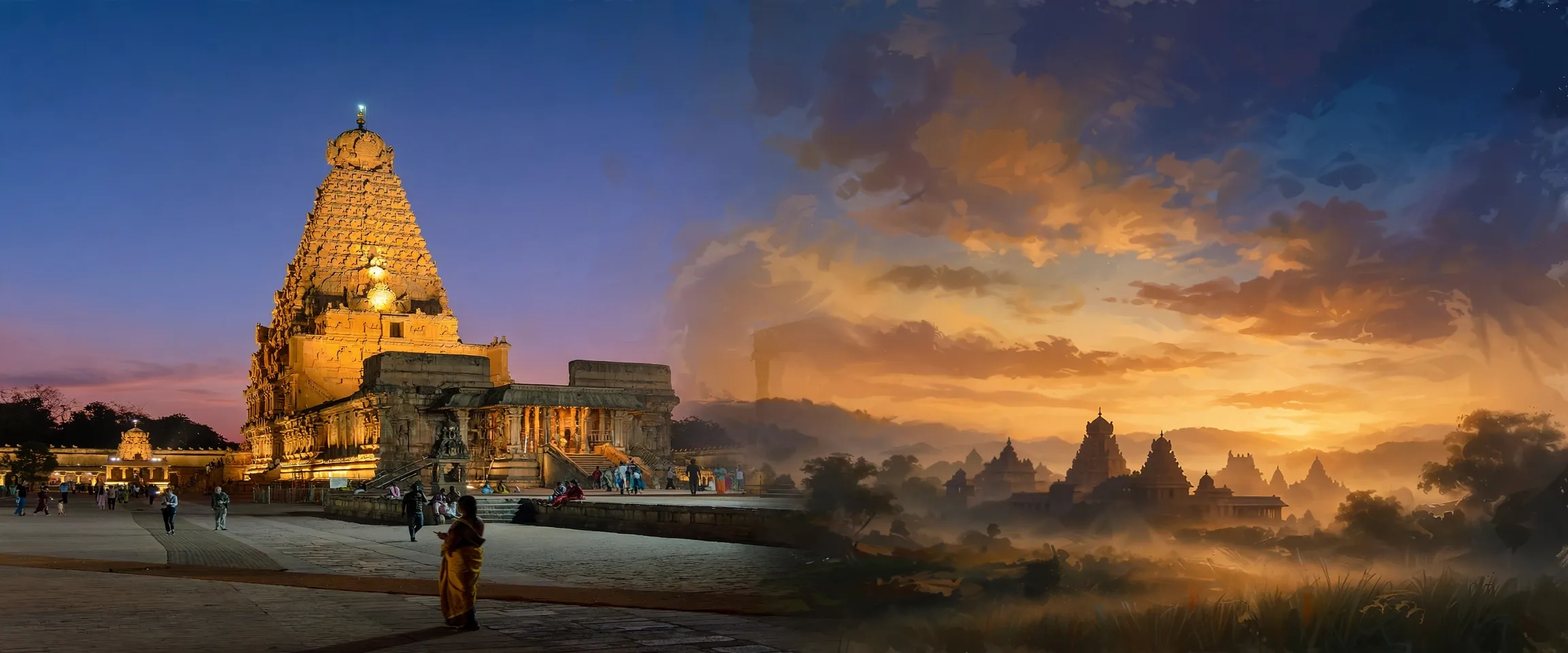
The Brihadeeswara Temple in Thanjavur, Tamil Nadu, is the thousand-year-old granite masterpiece of Chola emperor Rajaraja I, built between 1003 and 1010 CE and crowned by a 66-metre (216-foot) vimana, one of the tallest temple towers in the world. It is the defining monument of Dravida architecture and, with the temples at Gangaikonda Cholapuram and Darasuram, forms the UNESCO World Heritage site known as the Great Living Chola Temples, inscribed in 1987. Its 29-foot Shiva linga and 25-tonne monolithic Nandi are counted among the largest in India.
- Punjabi name
- ਬ੍ਰਿਹਦੇਸ਼ਵਰ ਮੰਦਰ, ਥੰਜਾਵੁਰ
- Country
- India
- State
- Tamil Nadu
- City
- Thanjavur
- Location
- South bank of the Cauvery river
- Deity
- Shiva (as Brihadisvara/Peruvudaiyar); also Parvati, Murugan, Ganesha and others
All 17 facts
- Built
- 1003 to 1010 CE by Chola emperor Rajaraja I; completed 1010 CE
- Architectural style
- Dravida (Chola architecture); the defining fully-realised Dravida vimana
- Tower
- Vimana about 66 m (216 ft) high, 16 storeys, 13 tapering squares; octagonal sikhara dome of 25 tons on a single 80-ton granite block
- Material
- Entirely granite; nearest quarries about 60 km to the west
- Nandi
- Monolithic bull, about 2 m high, 6 m long, 2.5 m wide; about 25 tonnes
- Linga
- Shiva linga 29 ft (8.7 m) high, one of the largest monolithic lingas in India
- Complex
- About 240 m by 121 m; 450 m prakara corridor for circumambulation; fortified walls added after the 16th century
- UNESCO
- Great Living Chola Temples, inscribed 1987 (cultural criteria ii, iii); with Gangaikonda Cholapuram and Airavatesvara
- Millennium
- Turned 1,000 in 2010; India Post issued a 5-rupee stamp on 26 September 2010
- Maintained by
- Archaeological Survey of India
- Festival
- Maha Shivaratri
The Brihadeeswara Temple in Thanjavur, Tamil Nadu, is the thousand-year-old granite masterpiece of Chola emperor Rajaraja I, completed in 1010 CE and crowned by a vimana tower 66 metres (216 feet) high, one of the tallest temple towers in the world. It is the defining monument of Dravida architecture and, with the temples at Gangaikonda Cholapuram and Darasuram, forms the UNESCO World Heritage site known as the Great Living Chola Temples, inscribed in 1987.
Why did Rajaraja I build the Big Temple?
Rajaraja I ruled the Chola empire between 985 and 1014 CE, and his reign marked its peak of naval power, trade and administration. The builder himself called the temple Rajarajeshvaram, the temple of the god of Rajaraja, and locals still call it Thanjai Periya Kovil, the Big Temple of Thanjavur. Work began in 1003 CE and finished in 1010 CE, and the temple sat at the heart of the Chola capital on the south bank of the Cauvery river. A great royal temple served two purposes at once: it was a house of Shiva and a public statement that the Chola king stood at the centre of the sacred order. The temple's Tamil inscriptions, one of the richest documentary records of the medieval Indian world, list hundreds of temple staff by name and role, from priests and lamp-lighters to dancers and accountants, and record the land grants that paid them. Chola painters also left murals on the walls, including a portrait of Rajaraja himself with his guru, and the temple commissioned the bronze Nataraja, Shiva as lord of dance, in the 11th century. The bronze Nataraja of Thanjavur found in museums around the world began here.
How was the 216-foot vimana built?
The great tower, the vimana, rises about 66 metres (216 feet) above the sanctum, a massive 16-storey pyramid of which 13 storeys are tapering squares, standing on a square base 30.18 metres wide. At its summit sits an octagonal cupolic dome weighing 25 tons, which itself rests on a single block of granite weighing about 80 tons. Everything here is granite, and that is the wonder of the place: the whole structure is bonded and notched stone, without mortar, and the nearest granite quarries lie about 60 kilometres to the west of Thanjavur. Historians believe the builders moved enormous blocks with earth ramps and manpower on a scale the region had never seen. The tower was already a thousand years old in 2010, when India Post released a 5-rupee stamp on 26 September 2010 featuring the giant Raja Gopuram as part of the millennium celebrations.
What is inside the Brihadeeswara Temple?
Walk the main axis from the east and you pass the Keralantakan tiruvasal, the sacred gate named for Rajaraja's title, then the inner Rajarajan tiruvasal into the great courtyard, a rectangle about 240 metres by 121 metres. In its middle stand five connected sections: the sanctum with the towering sri vimana, the Nandi hall, the main community hall, the great gathering hall, and the pavilion joining the great hall to the sanctum. A pillared prakara corridor, about 450 metres around, rings the courtyard for circumambulation. Inside the sanctum, called Karuvarai, the Tamil word for womb chamber, sits a Shiva linga 29 feet (8.7 metres) high, occupying two storeys of the shrine and counted among the largest monolithic lingas in India. Facing the sanctum across the courtyard, the Nandi mandapam holds a seated bull carved from a single stone, about 2 metres high, 6 metres long and 2.5 metres wide, weighing about 25 tonnes, one of the largest monolithic Nandis in India. Around the main shrine run axial sub-shrines to Parvati, Murugan, Ganesha, Nandi, Varahi, Chandeshvara, Dakshinamurti and the sage Karuvoorar, the guru of Rajaraja. The walls carry sculpture from every corner of the Hindu imagination: the great mandapa celebrates Vaishnavism and Shaktism alongside Shaivism, with symmetric panels of Vishnu, Mahishasuramardini, Bhairava, Saraswati and others. The temple's fully realised southern tower-over-sanctum form is the classic statement of the Dravida style explained here, which its neighbour Meenakshi Temple at Madurai continues in a later idiom.
How did the temple survive a thousand years?
A thousand years leave marks. Raids and wars between the Madurai sultans and the Hindu kings of Thanjavur damaged the temple, and later Hindu dynasties repaired it. The great shrines of Murugan, Parvati and Nandi belong to the 16th and 17th-century Nayaka era, and the Dakshinamurti shrine came later too. The Marathas of Thanjavur maintained it carefully, and in 1777 the French colonial forces built the outer defensive wall with gun-holes, turning the complex briefly into an arsenal. Today the Archaeological Survey of India maintains the monument, with restored lighting designed to bring out the natural colour of the granite. It remains one of the most visited tourist attractions in Tamil Nadu and a living shrine, not a ruin.
Why is it called the Dakshina Meru?
In the temple tradition it is called Dakshina Meru, the Meru of the South, after Mount Meru, the cosmic mountain at the centre of the Hindu world. The name fits the vimana's meaning in Dravida architecture: the tower is not decoration, it is the mountain of the gods rising directly over the sanctum, and at Thanjavur the architects made it one of the tallest stone towers ever built in the ancient world. UNESCO recognised exactly this when it inscribed the temple in 1987 as part of the Great Living Chola Temples, cultural criteria two and three, alongside the Gangaikonda Cholapuram temple about 70 kilometres to the northeast and the Airavatesvara temple about 40 kilometres away. The word living matters: this is not a dead monument but a working temple where worship continues every day.
What should visitors know before going?
The temple is an easy day trip from Tiruchirappalli, about 55 kilometres away, with Thanjavur connected by rail and national highways to Chennai, about 350 kilometres to the northeast. Maha Shivaratri is the grandest festival of the year here. Come early to walk the prakara before the crowds, and do not miss the sub-shrines and the bronze-dance hall panels that carry the full story of Chola sculpture. The Brihadeeswara Temple stands among the great ancient mandirs of India (see the mandirs-in-india hub).
ਥੰਜਾਵੁਰ, ਤਾਮਿਲ ਨਾਡੂ ਵਿੱਚ ਬ੍ਰਿਹਦੇਸ਼ਵਰ ਮੰਦਰ ਚੋਲਾ ਸਮਰਾਟ ਰਾਜਰਾਜਾ ਪਹਿਲੇ ਦਾ ਹਜ਼ਾਰ ਸਾਲ ਪੁਰਾਣਾ ਗ੍ਰੇਨਾਈਟ ਸ਼ਾਹਕਾਰ ਹੈ, ਜੋ 1010 ਈਸਵੀ ਵਿੱਚ ਪੂਰਾ ਹੋਇਆ ਅਤੇ ਜਿਸਦਾ ਵਿਮਾਨ ਬੁਰਜ 66 ਮੀਟਰ (216 ਫੁੱਟ) ਉੱਚਾ ਹੈ, ਦੁਨੀਆ ਦੇ ਸਭ ਤੋਂ ਉੱਚੇ ਮੰਦਰ ਬੁਰਜਾਂ ਵਿੱਚੋਂ ਇੱਕ ਇਹ ਦ੍ਰਾਵਿੜ ਭਵਨ-ਕਲਾ ਦਾ ਪਰਿਭਾਸ਼ਕ ਸਮਾਰਕ ਹੈ ਅਤੇ ਗੰਗੈਕੋਂਡਾ ਚੋਲਾਪੁਰਮ ਅਤੇ ਦਾਰਾਸੁਰਮ ਦੇ ਮੰਦਰਾਂ ਨਾਲ ਮਿਲ ਕੇ ਯੂਨੈਸਕੋ ਵਿਸ਼ਵ ਵਿਰਾਸਤ ਸਥਾਨ ਬਣਾਉਂਦਾ ਹੈ, ਜਿਸਨੂੰ 1987 ਵਿੱਚ "ਗ੍ਰੇਟ ਲਿਵਿੰਗ ਚੋਲਾ ਟੈਂਪਲਜ਼" ਵਜੋਂ ਸੂਚੀਬੱਧ ਕੀਤਾ ਗਿਆ
ਰਾਜਰਾਜਾ ਪਹਿਲੇ ਨੇ ਵੱਡਾ ਮੰਦਰ ਕਿਉਂ ਬਣਵਾਇਆ?
ਰਾਜਰਾਜਾ ਪਹਿਲੇ ਨੇ 985 ਤੋਂ 1014 ਈਸਵੀ ਤੱਕ ਚੋਲਾ ਸਾਮਰਾਜ ਉੱਤੇ ਰਾਜ ਕੀਤਾ, ਅਤੇ ਉਨ੍ਹਾਂ ਦਾ ਰਾਜ ਸਾਮੁੰਦਰੀ ਸ਼ਕਤੀ, ਵਪਾਰ ਅਤੇ ਪ੍ਰਸ਼ਾਸਨ ਦੇ ਸਿਖਰ ਦਾ ਸਮਾਂ ਸੀ ਬਣਵਾਉਣ ਵਾਲੇ ਨੇ ਖ਼ੁਦ ਮੰਦਰ ਦਾ ਨਾਂ ਰਾਜਰਾਜੇਸ਼ਵਰਮ ਰੱਖਿਆ, ਰਾਜਰਾਜਾ ਦੇ ਦੇਵਤਾ ਦਾ ਮੰਦਰ, ਅਤੇ ਸਥਾਨਕ ਲੋਕ ਅੱਜ ਵੀ ਇਸਨੂੰ ਥੰਜੈ ਪੇਰਿਆ ਕੋਇਲ, ਥੰਜਾਵੁਰ ਦਾ ਵੱਡਾ ਮੰਦਰ ਕਹਿੰਦੇ ਹਨ ਕੰਮ 1003 ਈਸਵੀ ਵਿੱਚ ਸ਼ੁਰੂ ਹੋਇਆ ਅਤੇ 1010 ਈਸਵੀ ਵਿੱਚ ਪੂਰਾ ਹੋਇਆ, ਅਤੇ ਮੰਦਰ ਕਾਵੇਰੀ ਨਦੀ ਦੇ ਦੱਖਣੀ ਕੰਢੇ ਉੱਤੇ ਚੋਲਾ ਰਾਜਧਾਨੀ ਦੇ ਕੇਂਦਰ ਵਿੱਚ ਸੀ ਇੱਕ ਮਹਾਨ ਸ਼ਾਹੀ ਮੰਦਰ ਦੋ ਕੰਮ ਇੱਕੋ ਵੇਲੇ ਕਰਦਾ ਸੀ: ਇਹ ਸ਼ਿਵ ਦਾ ਘਰ ਸੀ ਅਤੇ ਇਸ ਗੱਲ ਦਾ ਜਨਤਕ ਐਲਾਨ ਕਿ ਚੋਲਾ ਰਾਜਾ ਪਵਿੱਤਰ ਵਿਵਸਥਾ ਦੇ ਕੇਂਦਰ ਵਿੱਚ ਖੜ੍ਹਾ ਹੈ ਮੰਦਰ ਦੇ ਤਾਮਿਲ ਸ਼ਿਲਾਲੇਖ, ਮੱਧਕਾਲੀ ਭਾਰਤੀ ਦੁਨੀਆ ਦੇ ਸਭ ਤੋਂ ਅਮੀਰ ਦਸਤਾਵੇਜ਼ੀ ਰਿਕਾਰਡਾਂ ਵਿੱਚੋਂ ਇੱਕ, ਸੈਂਕੜੇ ਮੰਦਰ ਕਰਮਚਾਰੀਆਂ ਦੇ ਨਾਂ ਅਤੇ ਕੰਮ ਸੂਚੀਬੱਧ ਕਰਦੇ ਹਨ, ਪੁਜਾਰੀਆਂ ਅਤੇ ਦੀਵੇ ਜਗਾਉਣ ਵਾਲਿਆਂ ਤੋਂ ਲੈ ਕੇ ਨਾਚਕੀਆਂ ਅਤੇ ਲੇਖਾਕਾਰਾਂ ਤੱਕ, ਅਤੇ ਉਹ ਜ਼ਮੀਨੀ ਦਾਨ ਦਰਜ ਕਰਦੇ ਹਨ ਜਿਨ੍ਹਾਂ ਨਾਲ ਉਨ੍ਹਾਂ ਦੀ ਤਨਖ਼ਾਹ ਮਿਲਦੀ ਸੀ ਚੋਲਾ ਚਿੱਤਰਕਾਰਾਂ ਨੇ ਕੰਧਾਂ ਉੱਤੇ ਭਿੱਤੀ-ਚਿੱਤਰ ਵੀ ਛੱਡੇ, ਜਿਨ੍ਹਾਂ ਵਿੱਚ ਰਾਜਰਾਜਾ ਦੀ ਆਪਣੇ ਗੁਰੂ ਨਾਲ ਤਸਵੀਰ ਸ਼ਾਮਲ ਹੈ, ਅਤੇ ਮੰਦਰ ਨੇ 11ਵੀਂ ਸਦੀ ਵਿੱਚ ਕਾਂਸੀ ਦੇ ਨਟਰਾਜ, ਨ੍ਰਿਤ ਦੇ ਸਵਾਮੀ ਦੇ ਰੂਪ ਵਿੱਚ ਸ਼ਿਵ, ਦੀ ਮੂਰਤੀ ਬਣਵਾਈ ਦੁਨੀਆ ਭਰ ਦੇ ਅਜਾਇਬ-ਘਰਾਂ ਵਿੱਚ ਮਿਲਣ ਵਾਲਾ ਥੰਜਾਵੁਰ ਦਾ ਕਾਂਸੀ ਨਟਰਾਜ ਇੱਥੋਂ ਸ਼ੁਰੂ ਹੋਇਆ
216 ਫੁੱਟ ਦਾ ਵਿਮਾਨ ਕਿਵੇਂ ਬਣਿਆ?
ਮਹਾਨ ਬੁਰਜ, ਵਿਮਾਨ, ਗਰਭ-ਗ੍ਰਹਿ ਉੱਤੇ ਲਗਭਗ 66 ਮੀਟਰ (216 ਫੁੱਟ) ਉੱਚਾ ਉੱਠਦਾ ਹੈ, 16 ਮੰਜ਼ਿਲਾਂ ਦਾ ਵਿਸ਼ਾਲ ਪਿਰਾਮਿਡ ਜਿਸ ਵਿੱਚੋਂ 13 ਮੰਜ਼ਿਲਾਂ ਸੁੰਗੜਦੇ ਚੌਕੋਰ ਹਨ, 30.18 ਮੀਟਰ ਚੌੜੇ ਚੌਕੋਰ ਆਧਾਰ ਉੱਤੇ ਖੜ੍ਹਾ ਇਸ ਦੇ ਸਿਖਰ ਉੱਤੇ 25 ਟਨ ਦਾ ਅੱਠਕੋਣੀ ਗੁੰਬਦ ਹੈ, ਜੋ ਖ਼ੁਦ ਲਗਭਗ 80 ਟਨ ਦੇ ਗ੍ਰੇਨਾਈਟ ਦੇ ਇੱਕੋ ਪੱਥਰ ਉੱਤੇ ਟਿਕਿਆ ਹੈ ਇੱਥੇ ਸਭ ਕੁਝ ਗ੍ਰੇਨਾਈਟ ਦਾ ਹੈ, ਅਤੇ ਇਹੀ ਇਸ ਥਾਂ ਦਾ ਅਜੂਬਾ ਹੈ: ਪੂਰਾ ਢਾਂਚਾ ਬਿਨਾਂ ਗਾਰੇ ਦੇ ਜੋੜੇ ਅਤੇ ਖਾਚਿਆਂ ਵਾਲੇ ਪੱਥਰ ਦਾ ਹੈ, ਅਤੇ ਸਭ ਤੋਂ ਨੇੜਲੀਆਂ ਗ੍ਰੇਨਾਈਟ ਖਾਨਾਂ ਥੰਜਾਵੁਰ ਤੋਂ ਲਗਭਗ 60 ਕਿਲੋਮੀਟਰ ਪੱਛਮ ਵਿੱਚ ਹਨ ਇਤਿਹਾਸਕਾਰਾਂ ਦਾ ਮੰਨਣਾ ਹੈ ਕਿ ਬਣਾਉਣ ਵਾਲਿਆਂ ਨੇ ਮਿੱਟੀ ਦੇ ਢਲਵੇਂ ਰਾਸਤੇ ਅਤੇ ਉਸ ਪੈਮਾਨੇ ਦੀ ਮਨੁੱਖੀ ਸ਼ਕਤੀ ਨਾਲ ਵਿਸ਼ਾਲ ਪੱਥਰ ਢੋਏ, ਜੋ ਉਸ ਇਲਾਕੇ ਨੇ ਪਹਿਲਾਂ ਕਦੇ ਨਹੀਂ ਵੇਖੀ ਸੀ ਬੁਰਜ 2010 ਵਿੱਚ ਪਹਿਲਾਂ ਹੀ ਹਜ਼ਾਰ ਸਾਲ ਪੁਰਾਣਾ ਸੀ, ਜਦੋਂ ਇੰਡੀਆ ਪੋਸਟ ਨੇ 26 ਸਤੰਬਰ 2010 ਨੂੰ ਸਹਸ੍ਰਾਬਦੀ ਸਮਾਗਮਾਂ ਦੇ ਹਿੱਸੇ ਵਜੋਂ ਵਿਸ਼ਾਲ ਰਾਜਾ ਗੋਪੁਰਮ ਵਾਲੀ 5 ਰੁਪਏ ਦੀ ਡਾਕ ਟਿਕਟ ਜਾਰੀ ਕੀਤੀ
ਮੰਦਰ ਦੇ ਅੰਦਰ ਕੀ ਹੈ?
ਪੂਰਬ ਤੋਂ ਮੁੱਖ ਧੁਰੀ ਉੱਤੇ ਚੱਲੋ ਤਾਂ ਕੇਰਲਾਂਤਕਨ ਤਿਰੂਵਾਸਲ ਮਿਲਦਾ ਹੈ, ਰਾਜਰਾਜਾ ਦੇ ਖ਼ਿਤਾਬ ਦੇ ਨਾਂ ਉੱਤੇ ਪਵਿੱਤਰ ਦਰਵਾਜ਼ਾ, ਫਿਰ ਅੰਦਰਲਾ ਰਾਜਰਾਜਨ ਤਿਰੂਵਾਸਲ ਮਹਾਨ ਵਿਹੜੇ ਵਿੱਚ ਲੈ ਜਾਂਦਾ ਹੈ, ਲਗਭਗ 240 ਮੀਟਰ ਗੁਣਾ 121 ਮੀਟਰ ਦਾ ਆਇਤ ਇਸ ਦੇ ਵਿਚਕਾਰ ਪੰਜ ਜੁੜੇ ਭਾਗ ਖੜ੍ਹੇ ਹਨ: ਉੱਚੇ ਸ਼੍ਰੀ ਵਿਮਾਨ ਵਾਲਾ ਗਰਭ-ਗ੍ਰਹਿ, ਨੰਦੀ ਹਾਲ, ਮੁੱਖ ਸਮੁਦਾਇ ਹਾਲ, ਮਹਾਨ ਸਭਾ ਹਾਲ, ਅਤੇ ਮਹਾਨ ਹਾਲ ਨੂੰ ਗਰਭ-ਗ੍ਰਹਿ ਨਾਲ ਜੋੜਨ ਵਾਲਾ ਮੰਡਪ ਥੰਮ੍ਹਾਂ ਵਾਲਾ ਪ੍ਰਕਾਰਾ ਬਰਾਂਡਾ, ਲਗਭਗ 450 ਮੀਟਰ ਦਾ ਘੇਰਾ, ਪਰਿਕਰਮਾ ਲਈ ਵਿਹੜੇ ਨੂੰ ਘੇਰਦਾ ਹੈ ਗਰਭ-ਗ੍ਰਹਿ ਦੇ ਅੰਦਰ, ਜਿਸਨੂੰ ਕਰੂਵਰੈ ਕਹਿੰਦੇ ਹਨ, ਤਾਮਿਲ ਸ਼ਬਦ ਜਿਸਦਾ ਅਰਥ ਹੈ ਗਰਭ-ਕਮਰਾ, 29 ਫੁੱਟ (8.7 ਮੀਟਰ) ਉੱਚਾ ਸ਼ਿਵ ਲਿੰਗ ਬਿਰਾਜਮਾਨ ਹੈ, ਧਾਮ ਦੀਆਂ ਦੋ ਮੰਜ਼ਿਲਾਂ ਘੇਰਦਾ, ਭਾਰਤ ਦੇ ਸਭ ਤੋਂ ਵੱਡੇ ਇਕਪੱਥਰੀ ਲਿੰਗਾਂ ਵਿੱਚੋਂ ਇੱਕ ਵਿਹੜੇ ਦੇ ਪਾਰ ਗਰਭ-ਗ੍ਰਹਿ ਵੱਲ ਮੂੰਹ ਕਰਕੇ ਨੰਦੀ ਮੰਡਪਮ ਵਿੱਚ ਇੱਕ ਹੀ ਪੱਥਰ ਵਿੱਚੋਂ ਕੱਢਿਆ ਬੈਠਾ ਬਲਦ ਹੈ, ਲਗਭਗ 2 ਮੀਟਰ ਉੱਚਾ, 6 ਮੀਟਰ ਲੰਬਾ ਅਤੇ 2.5 ਮੀਟਰ ਚੌੜਾ, ਲਗਭਗ 25 ਟਨ ਭਾਰਾ, ਭਾਰਤ ਦੇ ਸਭ ਤੋਂ ਵੱਡੇ ਇਕਪੱਥਰੀ ਨੰਦੀਆਂ ਵਿੱਚੋਂ ਇੱਕ ਮੁੱਖ ਧਾਮ ਦੇ ਦੁਆਲੇ ਧੁਰੀ ਉੱਤੇ ਛੋਟੇ ਧਾਮ ਹਨ, ਪਾਰਵਤੀ, ਮੁਰੂਗਨ, ਗਣੇਸ਼, ਨੰਦੀ, ਵਰਾਹੀ, ਚੰਡੇਸ਼ਵਰ, ਦਕਸ਼ਿਣਾਮੂਰਤੀ ਅਤੇ ਰਾਜਰਾਜਾ ਦੇ ਗੁਰੂ ਸਿੱਧਰ ਕਰੂਵੂਰਾਰ ਦੇ ਕੰਧਾਂ ਉੱਤੇ ਹਿੰਦੂ ਕਲਪਨਾ ਦੇ ਹਰ ਕੋਨੇ ਦੀ ਮੂਰਤੀ-ਕਲਾ ਹੈ: ਮਹਾਨ ਮੰਡਪ ਸ਼ੈਵਵਾਦ ਦੇ ਨਾਲ-ਨਾਲ ਵੈਸ਼ਨਵਵਾਦ ਅਤੇ ਸ਼ਾਕਤਵਾਦ ਮਨਾਉਂਦਾ ਹੈ, ਵਿਸ਼ਨੂੰ, ਮਹਿਸ਼ਾਸੁਰਮਰਦਿਨੀ, ਭੈਰਵ, ਸਰਸਵਤੀ ਅਤੇ ਹੋਰਾਂ ਦੇ ਸਮਮਿਤ ਪੈਨਲਾਂ ਨਾਲ ਮੰਦਰ ਦਾ ਪੂਰੀ ਤਰ੍ਹਾਂ ਵਿਕਸਿਤ ਦੱਖਣੀ ਗਰਭ-ਗ੍ਰਹਿ-ਉੱਤੇ-ਬੁਰਜ ਰੂਪ ਦ੍ਰਾਵਿੜ ਸ਼ੈਲੀ ਦਾ ਕਲਾਸਿਕ ਬਿਆਨ ਹੈ, ਜਿਸਨੂੰ ਮਦੁਰੈ ਦਾ ਮੀਨਾਕਸ਼ੀ ਮੰਦਰ ਬਾਅਦ ਦੀ ਸ਼ੈਲੀ ਵਿੱਚ ਅੱਗੇ ਵਧਾਉਂਦਾ ਹੈ
ਮੰਦਰ ਹਜ਼ਾਰ ਸਾਲ ਕਿਵੇਂ ਬਚਿਆ?
ਹਜ਼ਾਰ ਸਾਲ ਨਿਸ਼ਾਨ ਛੱਡਦੇ ਹਨ ਮਦੁਰੈ ਦੇ ਸੁਲਤਾਨਾਂ ਅਤੇ ਥੰਜਾਵੁਰ ਦੇ ਹਿੰਦੂ ਰਾਜਿਆਂ ਵਿਚਕਾਰ ਛਾਪਿਆਂ ਅਤੇ ਯੁੱਧਾਂ ਨੇ ਮੰਦਰ ਨੂੰ ਨੁਕਸਾਨ ਪਹੁੰਚਾਇਆ, ਅਤੇ ਬਾਅਦ ਦੇ ਹਿੰਦੂ ਰਾਜਵੰਸ਼ਾਂ ਨੇ ਇਸ ਦੀ ਮੁਰੰਮਤ ਕੀਤੀ ਮੁਰੂਗਨ, ਪਾਰਵਤੀ ਅਤੇ ਨੰਦੀ ਦੇ ਮਹਾਨ ਧਾਮ 16ਵੀਂ ਅਤੇ 17ਵੀਂ ਸਦੀ ਦੇ ਨਾਇਕਾ ਯੁੱਗ ਦੇ ਹਨ, ਅਤੇ ਦਕਸ਼ਿਣਾਮੂਰਤੀ ਦਾ ਧਾਮ ਵੀ ਬਾਅਦ ਵਿੱਚ ਆਇਆ ਥੰਜਾਵੁਰ ਦੇ ਮਰਾਠਿਆਂ ਨੇ ਇਸ ਦੀ ਧਿਆਨ ਨਾਲ ਸੰਭਾਲ ਕੀਤੀ, ਅਤੇ 1777 ਵਿੱਚ ਫ਼ਰਾਂਸੀਸੀ ਬਸਤੀਵਾਦੀ ਫ਼ੌਜਾਂ ਨੇ ਬੰਦੂਕਾਂ ਦੇ ਛੇਕਾਂ ਵਾਲੀ ਬਾਹਰੀ ਰੱਖਿਆਤਮਕ ਕੰਧ ਬਣਾਈ, ਪਰਿਸਰ ਨੂੰ ਥੋੜ੍ਹੇ ਸਮੇਂ ਲਈ ਸ਼ਸਤਰ-ਭੰਡਾਰ ਬਣਾ ਦਿੱਤਾ ਅੱਜ ਭਾਰਤੀ ਪੁਰਾਤੱਤਵ ਸਰਵੇਖਣ ਸਮਾਰਕ ਦੀ ਸੰਭਾਲ ਕਰਦਾ ਹੈ, ਗ੍ਰੇਨਾਈਟ ਦੇ ਕੁਦਰਤੀ ਰੰਗ ਨੂੰ ਉਭਾਰਨ ਵਾਲੀ ਮੁਰੰਮਤ ਕੀਤੀ ਰੋਸ਼ਨੀ ਨਾਲ ਇਹ ਤਾਮਿਲ ਨਾਡੂ ਦੇ ਸਭ ਤੋਂ ਵੱਧ ਵੇਖੇ ਜਾਣ ਵਾਲੇ ਸੈਲਾਨੀ ਆਕਰਸ਼ਣਾਂ ਵਿੱਚੋਂ ਇੱਕ ਹੈ ਅਤੇ ਜੀਵੰਤ ਧਾਮ ਹੈ, ਖੰਡਰ ਨਹੀਂ
ਇਸਨੂੰ ਦੱਖਣ ਮੇਰੂ ਕਿਉਂ ਕਹਿੰਦੇ ਹਨ?
ਮੰਦਰ ਪਰੰਪਰਾ ਵਿੱਚ ਇਸਨੂੰ ਦੱਖਣ ਮੇਰੂ, ਦੱਖਣ ਦਾ ਮੇਰੂ ਕਹਿੰਦੇ ਹਨ, ਮੇਰੂ ਪਰਬਤ ਦੇ ਨਾਂ ਉੱਤੇ, ਹਿੰਦੂ ਦੁਨੀਆ ਦੇ ਕੇਂਦਰ ਦਾ ਬ੍ਰਹਮਾਂਡੀ ਪਰਬਤ ਇਹ ਨਾਂ ਵਿਮਾਨ ਦੇ ਅਰਥ ਨਾਲ ਮੇਲ ਖਾਂਦਾ ਹੈ ਦ੍ਰਾਵਿੜ ਭਵਨ-ਕਲਾ ਵਿੱਚ: ਬੁਰਜ ਸਜਾਵਟ ਨਹੀਂ ਹੈ, ਇਹ ਗਰਭ-ਗ੍ਰਹਿ ਉੱਤੇ ਸਿੱਧਾ ਉੱਠਦਾ ਦੇਵਤਿਆਂ ਦਾ ਪਰਬਤ ਹੈ, ਅਤੇ ਥੰਜਾਵੁਰ ਵਿੱਚ ਭਵਨਕਾਰਾਂ ਨੇ ਇਸਨੂੰ ਪ੍ਰਾਚੀਨ ਦੁਨੀਆ ਵਿੱਚ ਬਣੇ ਸਭ ਤੋਂ ਉੱਚੇ ਪੱਥਰ ਦੇ ਬੁਰਜਾਂ ਵਿੱਚੋਂ ਇੱਕ ਬਣਾਇਆ ਯੂਨੈਸਕੋ ਨੇ 1987 ਵਿੱਚ ਮੰਦਰ ਨੂੰ ਗ੍ਰੇਟ ਲਿਵਿੰਗ ਚੋਲਾ ਟੈਂਪਲਜ਼ ਦੇ ਹਿੱਸੇ ਵਜੋਂ ਸੂਚੀਬੱਧ ਕਰਦੇ ਸਮੇਂ ਬਿਲਕੁਲ ਇਹੀ ਪਛਾਣਿਆ, ਸੱਭਿਆਚਾਰਕ ਮਾਪਦੰਡ ਦੋ ਅਤੇ ਤਿੰਨ, ਗੰਗੈਕੋਂਡਾ ਚੋਲਾਪੁਰਮ ਮੰਦਰ ਦੇ ਨਾਲ ਜੋ ਲਗਭਗ 70 ਕਿਲੋਮੀਟਰ ਉੱਤਰ-ਪੂਰਬ ਵਿੱਚ ਹੈ ਅਤੇ ਐਰਾਵਤੇਸ਼ਵਰ ਮੰਦਰ ਜੋ ਲਗਭਗ 40 ਕਿਲੋਮੀਟਰ ਦੂਰ ਹੈ ਜੀਵੰਤ ਸ਼ਬਦ ਮਾਇਨੇ ਰੱਖਦਾ ਹੈ: ਇਹ ਮਰਿਆ ਹੋਇਆ ਸਮਾਰਕ ਨਹੀਂ, ਸਗੋਂ ਕੰਮ ਕਰਦਾ ਮੰਦਰ ਹੈ ਜਿੱਥੇ ਹਰ ਰੋਜ਼ ਪੂਜਾ ਹੁੰਦੀ ਹੈ
ਜਾਣ ਤੋਂ ਪਹਿਲਾਂ ਕੀ ਪਤਾ ਹੋਣਾ ਚਾਹੀਦਾ ਹੈ?
ਤਿਰੂਚਿਰਾਪੱਲੀ ਤੋਂ, ਲਗਭਗ 55 ਕਿਲੋਮੀਟਰ ਦੂਰ, ਇਹ ਆਸਾਨ ਦਿਨ-ਭਰ ਦੀ ਯਾਤਰਾ ਹੈ, ਥੰਜਾਵੁਰ ਰੇਲ ਅਤੇ ਰਾਸ਼ਟਰੀ ਰਾਜਮਾਰਗਾਂ ਨਾਲ ਚੇਨਈ ਨਾਲ ਜੁੜਿਆ ਹੈ, ਜੋ ਲਗਭਗ 350 ਕਿਲੋਮੀਟਰ ਉੱਤਰ-ਪੂਰਬ ਵਿੱਚ ਹੈ ਮਹਾ ਸ਼ਿਵਰਾਤਰੀ ਇੱਥੇ ਸਾਲ ਦਾ ਸਭ ਤੋਂ ਮਹਾਨ ਤਿਉਹਾਰ ਹੈ ਭੀੜ ਤੋਂ ਪਹਿਲਾਂ ਪ੍ਰਕਾਰਾ ਵਿੱਚ ਸੈਰ ਕਰਨ ਲਈ ਸਵੇਰੇ ਆਓ, ਅਤੇ ਛੋਟੇ ਧਾਮਾਂ ਅਤੇ ਕਾਂਸੀ-ਨ੍ਰਿਤ ਹਾਲ ਪੈਨਲਾਂ ਨੂੰ ਨਾ ਭੁੱਲੋ ਜੋ ਚੋਲਾ ਮੂਰਤੀ-ਕਲਾ ਦੀ ਪੂਰੀ ਕਹਾਣੀ ਦੱਸਦੇ ਹਨ ਬ੍ਰਿਹਦੇਸ਼ਵਰ ਮੰਦਰ ਭਾਰਤ ਦੇ ਮਹਾਨ ਪ੍ਰਾਚੀਨ ਮੰਦਰਾਂ ਵਿੱਚੋਂ ਇੱਕ ਹੈ