
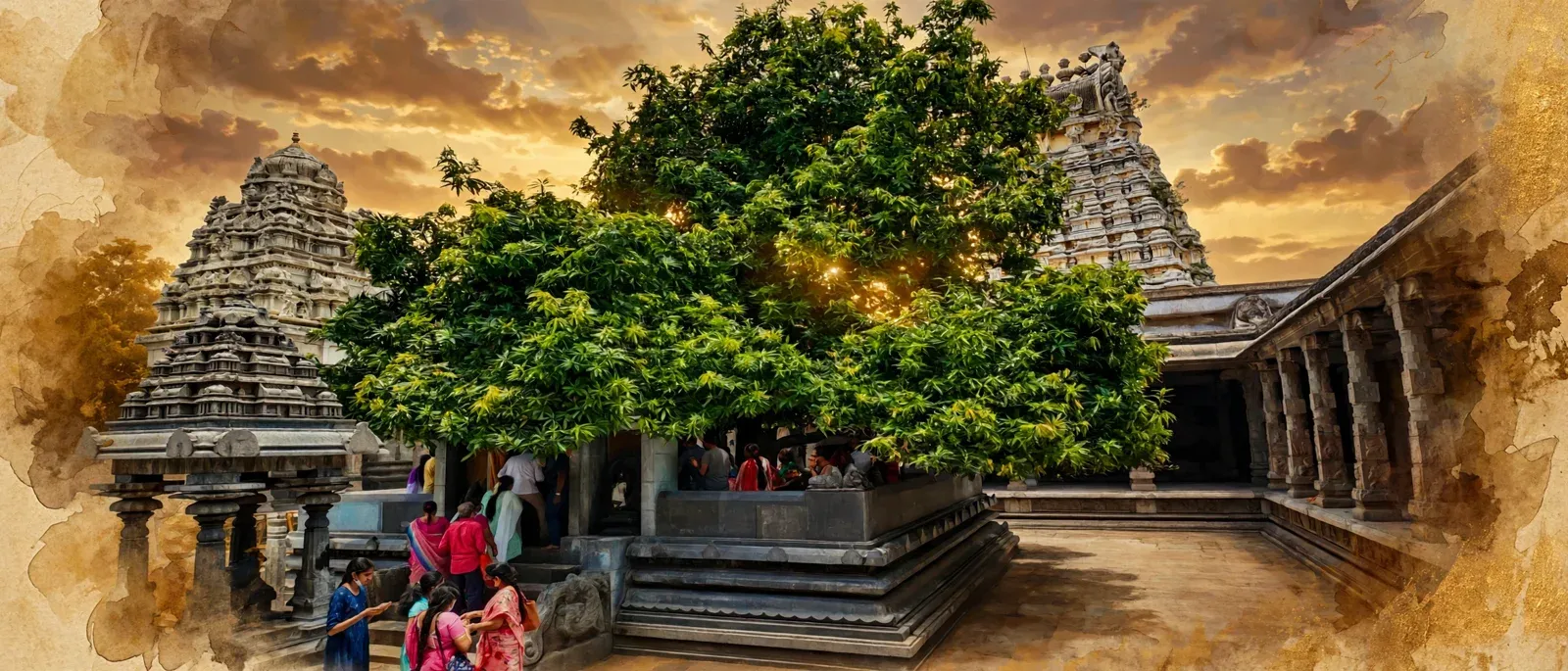
Ekambareswarar Temple in Kanchipuram, Tamil Nadu, is one of South India's great Shiva temples and the earth shrine (Prithvi lingam) among the five Pancha Bhoota Stalas. It is named for the legend of Parvati shaping a sand lingam under a mango tree, after which Shiva appeared as Ekambareswarar, the Lord of the Mango Tree. The complex covers 25 acres, with a 192-foot Vijayanagara-era gopuram, the thousand-pillared hall, and a sacred mango tree believed to be 3,500 years old.
- Punjabi name
- ਏਕੰਬਰੇਸ਼ਵਰ ਮੰਦਰ (ਕਾਂਚੀਪੁਰਮ)
- Country
- India
- State
- Tamil Nadu
- District
- Kanchipuram
- City
- Kanchipuram
- Deity
- Shiva, worshipped as Ekambareswarar (the Lord of the Mango Tree)
All 12 facts
- Significance
- Prithvi (earth) shrine of the Pancha Bhoota Stalas; a Paadal Petra Sthalam of the Tevaram canon
- Architectural style
- Dravidian (Tamil)
- Temple area
- 25 acres (10 hectares)
- Tallest gopuram
- 58.5 m (192 ft), 11 storeys, built by Krishnadevaraya of Vijayanagara
- Sacred tree
- Mango tree (sthalavriksham), believed to be 3,500 years old
- Administration
- Hindu Religious and Charitable Endowments Department, Government of Tamil Nadu
The legend of the mango tree
The name itself tells the temple's founding story: Eka-amra-ishvara, the Lord of the Mango Tree. Legend says Parvati, the consort of Shiva, came to the banks of the Vegavati river to perform penance under a mango tree. Shiva tested her devotion by sending fire, and when Parvati called on Vishnu, he brought the moon, whose rays cooled the tree. Then Shiva sent the river Ganga to flood her penance, and Parvati shaped a lingam out of sand to worship him. Pleased, Shiva appeared before her as Ekambareswarar, the Lord of the Mango Tree.
Another telling of the story gives the temple one of its most loved details. When the Vegavati threatened to wash away the sand lingam, Parvati, worshipped here as Kamakshi, embraced the lingam to protect it. Shiva, moved by the gesture, appeared in person and married her. In Tamil hymns he is called Tazhuva kuzhainthaar, "He who melted in Her embrace".
Earth among the five elements
Ekambareswarar is one of the Pancha Bhoota Stalas, the five temples where Shiva is worshipped as the five elements of nature. Here he is the Prithvi lingam, the lingam of earth; the other four are water at Jambukeswarar in Thiruvanaikaval, sky at Chidambaram, fire at Arunachaleswarar in Thiruvannamalai, and air at Srikalahasti. Four of the five stand in Tamil Nadu. The temple is sung by all four Saivite poet-saints in the 7th-century Tevaram, which places it among the 276 Paadal Petra Sthalams, the canonised shrines of Tamil Shaivism.
A temple 1,400 years in the making
The temple is among the most ancient in India. It was in existence by at least 600 CE, and 2nd-century Tamil poetry already spoke of Kama kottam and Kumara kottam at this spot. The first temple here was built by the Pallavas. That early structure was later pulled down and rebuilt by the Chola kings in the 9th century, which dates the present masonry. The Vijayanagara kings of the 15th century added much of what visitors see today, and the Nattukottai Chettiars funded major renovations recorded in the Archaeological Survey of India's 1905-06 report. Inscriptions from 1532 record gifts of villages by the Vijayanagara ruler Achutaraya. In modern times the temple is maintained by the Hindu Religious and Charitable Endowments Department of Tamil Nadu, and a kumbhabhishekam, the ritual reconsecration, was performed on 8 December 2025 in the presence of the Shankaracharyas of the Kanchi Kamakoti Peetham.
Inside the complex: the tallest gopuram and the thousand pillars
The temple complex is among the largest in India. Four gateway towers rise around it, and the southern Raja gopuram, built by Krishnadevaraya of Vijayanagara, climbs 11 storeys to about 192 feet, making it one of the tallest temple towers in the country. Behind it stands the Aayiram Kaal Mandapam, the thousand-pillared hall built by the Vijayanagara kings, and the inner precinct walls carry 1,008 Siva lingams, one of them a Sahasra Lingam sculpted with 1,008 miniature lingams. The flagstaff, the temple tank with its central mandapa, and shrines of Vinayaka and Murugan complete the courtyards, all built in the classic Dravidian temple style.
Two features inside the complex are destinations in their own right. One is the sthalavriksham, the temple's sacred tree: a mango tree believed to be 3,500 years old, whose four branches are said to yield four different varieties of mango. The other is a small shrine to Nilathingal Thundam Perumal, a form of Vishnu worshipped as Vamana, which the Alvar poet-saints celebrate as one of the 108 Divya Desams. That makes this Shiva temple sacred ground for Vaishnavites as well.
Why is there no separate Parvati shrine?
Visitors used to north Indian Shiva temples often look for the goddess's shrine and find none. That is the custom of Kanchipuram: none of the city's Shiva temples carries a separate Parvati shrine. Local belief holds that the deity worshipped at the Kamakshi Amman Temple, a short walk away, is the consort of Ekambaranathar. In the sanctum itself, behind the lingam, a plaque shows Shiva as Tazhuvakuzhainthaar with Parvati as Elavarkuzhali, keeping the divine couple together in one shrine.
Panguni Uthiram and the six daily rituals
The temple's calendar carries twelve yearly festivals. The greatest is the Panguni Brahmotsavam, thirteen days through the Tamil month of Panguni, roughly March to April, centred on Panguni Uthiram. Processions carry the festive images of the deities through the streets around the temple for ten days; on the sixth day the 63 Nayanmar saints join the procession, and the festival ends with the Kalyanotsavam, the ceremonial marriage of Ekambareswarar, an event thousands gather to witness. Daily worship follows the Tamil Shaivite pattern: six rituals from the pre-dawn hours to 10 at night, each with the sacred bath, decoration, food offering and the waving of lamps. Because the lingam itself is a mound of sand, water is poured only over the pedestal, never the lingam. It is listed, with its fellow great temples, in Jugti's guide to Hindu mandirs in India.
ਅੰਬ ਦੇ ਰੁੱਖ ਦੀ ਕਥਾ
ਮੰਦਰ ਦਾ ਨਾਮ ਹੀ ਇਸ ਦੀ ਕਥਾ ਦੱਸਦਾ ਹੈ ਏਕ ਅੰਬ੍ਰ ਈਸ਼ਵਰ, ਅੰਬ ਦੇ ਰੁੱਖ ਦਾ ਪ੍ਰਭੂ ਕਥਾ ਅਨੁਸਾਰ ਪਾਰਵਤੀ ਵੇਗਾਵਤੀ ਨਦੀ ਦੇ ਕੰਢੇ ਅੰਬ ਦੇ ਰੁੱਖ ਹੇਠ ਤਪੱਸਿਆ ਕਰਨ ਆਈ ਸ਼ਿਵ ਨੇ ਉਸ ਦੀ ਭਗਤੀ ਪਰਖਣ ਲਈ ਅੱਗ ਭੇਜੀ, ਅਤੇ ਪਾਰਵਤੀ ਨੇ ਵਿਸ਼ਨੂੰ ਨੂੰ ਯਾਦ ਕੀਤਾ ਤਾਂ ਉਹ ਚੰਦ ਲੈ ਆਏ ਜਿਸ ਦੀਆਂ ਕਿਰਨਾਂ ਨੇ ਰੁੱਖ ਨੂੰ ਠੰਢਾ ਕੀਤਾ ਫਿਰ ਸ਼ਿਵ ਨੇ ਗੰਗਾ ਨੂੰ ਭੇਜਿਆ ਕਿ ਉਹ ਉਸ ਦੀ ਤਪੱਸਿਆ ਵਿਗਾੜ ਦੇਵੇ, ਪਰ ਪਾਰਵਤੀ ਨੇ ਰੇਤ ਦਾ ਸ਼ਿਵਲਿੰਗ ਬਣਾ ਕੇ ਉਸ ਦੀ ਪੂਜਾ ਕੀਤੀ ਪ੍ਰਸੰਨ ਹੋ ਕੇ ਸ਼ਿਵ ਉਸ ਦੇ ਸਾਹਮਣੇ ਏਕੰਬਰੇਸ਼ਵਰ ਦੇ ਰੂਪ ਵਿੱਚ ਪ੍ਰਗਟ ਹੋਏ
ਇੱਕ ਹੋਰ ਬਿਰਤਾਂਤ ਅਨੁਸਾਰ ਜਦੋਂ ਵੇਗਾਵਤੀ ਨਦੀ ਨੇ ਰੇਤ ਦੇ ਲਿੰਗ ਨੂੰ ਡੋਬਣ ਦਾ ਖਤਰਾ ਪੈਦਾ ਕੀਤਾ ਤਾਂ ਪਾਰਵਤੀ ਨੇ, ਜਿਸ ਨੂੰ ਇੱਥੇ ਕਾਮਾਕਸ਼ੀ ਮੰਨਿਆ ਜਾਂਦਾ ਹੈ, ਲਿੰਗ ਨੂੰ ਆਪਣੀ ਗੋਦ ਵਿੱਚ ਲੈ ਲਿਆ ਸ਼ਿਵ ਉਸ ਦੇ ਇਸ ਭਾਵ ਨਾਲ ਪ੍ਰਸੰਨ ਹੋ ਕੇ ਸਾਕਸ਼ਾਤ ਪ੍ਰਗਟ ਹੋਏ ਅਤੇ ਉਸ ਨਾਲ ਵਿਆਹ ਕੀਤਾ ਤਾਮਿਲ ਭਜਨਾਂ ਵਿੱਚ ਉਨ੍ਹਾਂ ਨੂੰ ਤਜ਼ੁਵਾ ਕੁਜ਼ੈਂਥਾਰ ਕਿਹਾ ਗਿਆ ਹੈ, ਜਿਸ ਦਾ ਅਰਥ ਹੈ ਉਹ ਜੋ ਉਸ ਦੇ ਗਲਵਕੜੀ ਵਿੱਚ ਪਿਘਲ ਗਿਆ
ਪੰਜ ਤੱਤਾਂ ਵਿੱਚ ਧਰਤੀ
ਏਕੰਬਰੇਸ਼ਵਰ ਪੰਚ ਭੂਤ ਸਥਲਾਂ ਵਿੱਚੋਂ ਇੱਕ ਹੈ, ਉਹ ਪੰਜ ਮੰਦਰ ਜਿੱਥੇ ਸ਼ਿਵ ਦੀ ਪੂਜਾ ਕੁਦਰਤ ਦੇ ਪੰਜ ਤੱਤਾਂ ਦੇ ਰੂਪ ਵਿੱਚ ਹੁੰਦੀ ਹੈ ਇੱਥੇ ਉਹ ਪ੍ਰਿਥਵੀ ਲਿੰਗਮ ਹੈ, ਧਰਤੀ ਦਾ ਲਿੰਗਮ ਬਾਕੀ ਚਾਰ ਹਨ: ਥਿਰੁਵਾਨੈਕਾਵਲ ਦੇ ਜੰਬੁਕੇਸ਼ਵਰ ਵਿੱਚ ਜਲ, ਚਿਦੰਬਰਮ ਵਿੱਚ ਆਕਾਸ਼, ਥਿਰੁਵੰਨਾਮਲਈ ਦੇ ਅਰੁਣਾਚਲੇਸ਼ਵਰ ਵਿੱਚ ਅਗਨੀ ਅਤੇ ਸ੍ਰੀਕਾਲਹਸਤੀ ਵਿੱਚ ਵਾਯੂ ਪੰਜਾਂ ਵਿੱਚੋਂ ਚਾਰ ਤਾਮਿਲਨਾਡੂ ਵਿੱਚ ਹਨ ਇਸ ਮੰਦਰ ਦਾ ਗੁਣਗਾਨ ਚਾਰਾਂ ਸੈਵ ਸੰਤ ਕਵੀਆਂ ਨੇ 7ਵੀਂ ਸਦੀ ਦੇ ਤੇਵਾਰਮ ਵਿੱਚ ਕੀਤਾ ਹੈ, ਜਿਸ ਕਰਕੇ ਇਹ ਤਾਮਿਲ ਸੈਵ ਧਰਮ ਦੇ 276 ਪਾਡਲ ਪੇਤਰਾ ਸਥਲਮਾਂ ਵਿੱਚ ਗਿਣਿਆ ਜਾਂਦਾ ਹੈ
ਹਜ਼ਾਰਾਂ ਸਾਲ ਪੁਰਾਣਾ ਇਤਿਹਾਸ
ਇਹ ਮੰਦਰ ਭਾਰਤ ਦੇ ਸਭ ਤੋਂ ਪੁਰਾਣੇ ਮੰਦਰਾਂ ਵਿੱਚੋਂ ਇੱਕ ਹੈ ਇਹ ਘੱਟੋ-ਘੱਟ 600 ਈਸਵੀ ਤੋਂ ਮੌਜੂਦ ਹੈ, ਅਤੇ ਦੂਜੀ ਸਦੀ ਦੀ ਤਾਮਿਲ ਕਵਿਤਾ ਵਿੱਚ ਵੀ ਇੱਥੋਂ ਦੇ ਕਾਮ ਕੋਟਟਮ ਅਤੇ ਕੁਮਾਰ ਕੋਟਟਮ ਦਾ ਜ਼ਿਕਰ ਮਿਲਦਾ ਹੈ ਪਹਿਲਾ ਮੰਦਰ ਪੱਲਵ ਰਾਜਿਆਂ ਨੇ ਬਣਵਾਇਆ ਸੀ ਉਸ ਪੁਰਾਣੀ ਇਮਾਰਤ ਨੂੰ ਬਾਅਦ ਵਿੱਚ ਢਾਹ ਕੇ ਚੋਲ ਰਾਜਿਆਂ ਨੇ 9ਵੀਂ ਸਦੀ ਵਿੱਚ ਦੁਬਾਰਾ ਬਣਵਾਇਆ, ਜਿਸ ਤੋਂ ਅੱਜ ਦੀ ਪੱਥਰ ਦੀ ਇਮਾਰਤ ਦੀ ਨੀਂਹ ਪਈ 15ਵੀਂ ਸਦੀ ਦੇ ਵਿਜਯਨਗਰ ਰਾਜਿਆਂ ਨੇ ਇਸ ਵਿੱਚ ਬਹੁਤ ਵਾਧਾ ਕੀਤਾ, ਅਤੇ ਨੱਟੂਕੋਟਟਈ ਚੇਟਟੀਆਰਾਂ ਨੇ ਵੱਡੇ ਪੱਧਰ 'ਤੇ ਮੁਰੰਮਤ ਕਰਵਾਈ, ਜਿਸ ਦਾ ਜ਼ਿਕਰ ਆਰਕਿਆਲੋਜਿਕਲ ਸਰਵੇ ਆਫ ਇੰਡੀਆ ਦੀ 1905-06 ਦੀ ਰਿਪੋਰਟ ਵਿੱਚ ਮਿਲਦਾ ਹੈ 1532 ਦੇ ਸ਼ਿਲਾਲੇਖ ਦੱਸਦੇ ਹਨ ਕਿ ਵਿਜਯਨਗਰ ਦੇ ਸ਼ਾਸਕ ਅਚੁਤਰਾਯ ਨੇ ਮੰਦਰ ਨੂੰ ਪਿੰਡ ਦਾਨ ਕੀਤੇ ਸਨ ਅੱਜ ਮੰਦਰ ਤਾਮਿਲਨਾਡੂ ਸਰਕਾਰ ਦੇ ਹਿੰਦੂ ਧਾਰਮਿਕ ਅਤੇ ਚੈਰਿਟੇਬਲ ਐਂਡੋਮੈਂਟਸ ਵਿਭਾਗ ਦੇ ਪ੍ਰਬੰਧ ਹੇਠ ਹੈ, ਅਤੇ 8 ਦਸੰਬਰ 2025 ਨੂੰ ਕਾਂਚੀ ਕਾਮਕੋਟੀ ਪੀਠਮ ਦੇ ਸ਼ੰਕਰਾਚਾਰੀਆਂ ਦੀ ਹਾਜ਼ਰੀ ਵਿੱਚ ਇਸ ਦਾ ਕੁੰਭਾਭਿਸ਼ੇਕਮ, ਮੁੜ ਪ੍ਰਤਿਸ਼ਠਾ ਸਮਾਰੋਹ ਕਰਵਾਇਆ ਗਿਆ
ਮੰਦਰ ਅੰਦਰੋਂ: ਗੋਪੁਰਮ, ਹਜ਼ਾਰ ਥੰਮ੍ਹਾਂ ਵਾਲਾ ਹਾਲ ਅਤੇ ਅੰਬ ਦਾ ਰੁੱਖ
ਮੰਦਰ ਦਾ ਪਰਿਸਰ ਭਾਰਤ ਦੇ ਸਭ ਤੋਂ ਵੱਡੇ ਮੰਦਰ ਪਰਿਸਰਾਂ ਵਿੱਚੋਂ ਇੱਕ ਹੈ ਇਸ ਦੇ ਦੁਆਲੇ ਚਾਰ ਗੋਪੁਰਮ, ਪ੍ਰਵੇਸ਼ ਦੁਆਰਾਂ ਦੇ ਟਾਵਰ ਹਨ, ਅਤੇ ਦੱਖਣੀ ਰਾਜਾ ਗੋਪੁਰਮ ਵਿਜਯਨਗਰ ਦੇ ਕ੍ਰਿਸ਼ਨਦੇਵਰਾਯ ਨੇ ਬਣਵਾਇਆ ਸੀ ਜੋ 11 ਮੰਜ਼ਿਲਾਂ ਨਾਲ ਲਗਭਗ 192 ਫੁੱਟ ਉੱਚਾ ਹੈ ਇਹ ਦੇਸ਼ ਦੇ ਸਭ ਤੋਂ ਉੱਚੇ ਮੰਦਰ ਟਾਵਰਾਂ ਵਿੱਚੋਂ ਇੱਕ ਹੈ ਇਸ ਦੇ ਪਿੱਛੇ ਆਯਿਰਮ ਕਾਲ ਮੰਡਪਮ, ਹਜ਼ਾਰ ਥੰਮ੍ਹਾਂ ਵਾਲਾ ਹਾਲ ਹੈ ਜੋ ਵਿਜਯਨਗਰ ਰਾਜਿਆਂ ਨੇ ਬਣਵਾਇਆ ਸੀ, ਅਤੇ ਅੰਦਰੂਨੀ ਪਰਿਸਰ ਦੀਆਂ ਕੰਧਾਂ 'ਤੇ 1,008 ਸ਼ਿਵਲਿੰਗ ਉੱਕਰੇ ਹੋਏ ਹਨ, ਜਿਨ੍ਹਾਂ ਵਿੱਚੋਂ ਇੱਕ ਸਹਸ੍ਰ ਲਿੰਗਮ 'ਤੇ 1,008 ਛੋਟੇ ਲਿੰਗਮ ਬਣੇ ਹਨ
ਪਰਿਸਰ ਦੀਆਂ ਦੋ ਖਾਸੀਅਤਾਂ ਆਪਣੇ ਆਪ ਵਿੱਚ ਦਰਸ਼ਨ ਯੋਗ ਹਨ ਇੱਕ ਹੈ ਸਥਲ ਵ੍ਰਿਕਸ਼ਮ, ਮੰਦਰ ਦਾ ਪਵਿੱਤਰ ਰੁੱਖ: ਇੱਕ ਅੰਬ ਦਾ ਰੁੱਖ ਜੋ ਲਗਭਗ 3,500 ਸਾਲ ਪੁਰਾਣਾ ਮੰਨਿਆ ਜਾਂਦਾ ਹੈ ਅਤੇ ਜਿਸ ਦੀਆਂ ਚਾਰ ਟਹਣੀਆਂ ਤੋਂ ਚਾਰ ਵੱਖ-ਵੱਖ ਕਿਸਮਾਂ ਦੇ ਅੰਬ ਲੱਗਦੇ ਦੱਸੇ ਜਾਂਦੇ ਹਨ ਦੂਜੀ ਹੈ ਨੀਲਾਥਿੰਗਲ ਥੁੰਡਮ ਪੇਰੁਮਾਲ ਦਾ ਛੋਟਾ ਮੰਦਰ, ਵਿਸ਼ਨੂੰ ਦਾ ਵਾਮਨ ਰੂਪ, ਜਿਸ ਦਾ ਗੁਣਗਾਨ ਆਲਵਾਰ ਸੰਤ ਕਵੀਆਂ ਨੇ 108 ਦਿਵਯ ਦੇਸਮਾਂ ਵਿੱਚੋਂ ਇੱਕ ਵਜੋਂ ਕੀਤਾ ਹੈ ਇਸ ਕਰਕੇ ਇਹ ਸ਼ਿਵ ਮੰਦਰ ਵੈਸ਼ਨਵਾਂ ਲਈ ਵੀ ਪਵਿੱਤਰ ਥਾਂ ਹੈ
ਇੱਥੇ ਪਾਰਵਤੀ ਦਾ ਵੱਖਰਾ ਮੰਦਰ ਕਿਉਂ ਨਹੀਂ?
ਉੱਤਰੀ ਭਾਰਤ ਦੇ ਸ਼ਿਵ ਮੰਦਰਾਂ ਤੋਂ ਆਉਣ ਵਾਲੇ ਦਰਸ਼ਕ ਅਕਸਰ ਦੇਵੀ ਦਾ ਮੰਦਰ ਲੱਭਦੇ ਹਨ ਅਤੇ ਉਨ੍ਹਾਂ ਨੂੰ ਕੋਈ ਨਹੀਂ ਮਿਲਦਾ ਇਹ ਕਾਂਚੀਪੁਰਮ ਦਾ ਰਿਵਾਜ ਹੈ: ਸ਼ਹਿਰ ਦੇ ਕਿਸੇ ਵੀ ਸ਼ਿਵ ਮੰਦਰ ਵਿੱਚ ਪਾਰਵਤੀ ਦਾ ਵੱਖਰਾ ਮੰਦਰ ਨਹੀਂ ਹੈ ਸਥਾਨਕ ਮਾਨਤਾ ਅਨੁਸਾਰ ਕਾਮਾਕਸ਼ੀ ਅੰਮਨ ਮੰਦਰ ਵਿੱਚ ਪੂਜੀ ਜਾਣ ਵਾਲੀ ਦੇਵੀ ਹੀ ਏਕੰਬਰਨਾਥਰ ਦੀ ਪਤਨੀ ਹੈ ਗਰਭਗ੍ਰਿਹ ਵਿੱਚ ਲਿੰਗ ਦੇ ਪਿੱਛੇ ਇੱਕ ਤਖਤੀ 'ਤੇ ਤਜ਼ੁਵਾਕੁਜ਼ੈਂਥਾਰ ਦੇ ਰੂਪ ਵਿੱਚ ਸ਼ਿਵ ਅਤੇ ਏਲਵਰਕੁਜ਼ਲੀ ਦੇ ਰੂਪ ਵਿੱਚ ਪਾਰਵਤੀ ਦੀ ਮੂਰਤ ਹੈ, ਜੋ ਦੈਵੀ ਜੋੜੇ ਨੂੰ ਇੱਕ ਹੀ ਮੰਦਰ ਵਿੱਚ ਇਕੱਠਾ ਰੱਖਦੀ ਹੈ
ਪੰਗੁਨੀ ਉਥਿਰਮ ਅਤੇ ਰੋਜ਼ਾਨਾ ਪੂਜਾ
ਮੰਦਰ ਦੇ ਸਾਲਾਨਾ ਪੰਚਾਂਗ ਵਿੱਚ ਬਾਰਾਂ ਤਿਉਹਾਰ ਹਨ ਸਭ ਤੋਂ ਵੱਡਾ ਹੈ ਪੰਗੁਨੀ ਬ੍ਰਹਮੋਤਸਵਮ, ਤਾਮਿਲ ਮਹੀਨੇ ਪੰਗੁਨੀ, ਲਗਭਗ ਮਾਰਚ ਤੋਂ ਅਪ੍ਰੈਲ ਵਿੱਚ ਤੇਰਾਂ ਦਿਨ ਮਨਾਇਆ ਜਾਣ ਵਾਲਾ ਤਿਉਹਾਰ ਜਿਸ ਦਾ ਕੇਂਦਰ ਪੰਗੁਨੀ ਉਥਿਰਮ ਹੈ ਦਸ ਦਿਨ ਮੰਦਰ ਦੇ ਦੁਆਲੇ ਗਲੀਆਂ ਵਿੱਚ ਦੇਵਤਿਆਂ ਦੀਆਂ ਉਤਸਵ ਮੂਰਤੀਆਂ ਦੀ ਸਵਾਰੀ ਨਿਕਲਦੀ ਹੈ ਛੇਵੇਂ ਦਿਨ 63 ਨਾਯਨਮਾਰ ਸੰਤਾਂ ਦੀ ਸਵਾਰੀ ਨਿਕਲਦੀ ਹੈ, ਅਤੇ ਤਿਉਹਾਰ ਦਾ ਅੰਤ ਕਲਯਾਣੋਤਸਵਮ ਨਾਲ ਹੁੰਦਾ ਹੈ, ਏਕੰਬਰੇਸ਼ਵਰ ਦੇ ਵਿਆਹ ਦਾ ਰਸਮੀ ਸਮਾਰੋਹ ਜਿਸ ਨੂੰ ਦੇਖਣ ਹਜ਼ਾਰਾਂ ਲੋਕ ਇਕੱਠੇ ਹੁੰਦੇ ਹਨ ਰੋਜ਼ਾਨਾ ਪੂਜਾ ਤਾਮਿਲ ਸੈਵ ਪਰੰਪਰਾ ਅਨੁਸਾਰ ਹੁੰਦੀ ਹੈ: ਭੋਰ ਤੋਂ ਰਾਤ 10 ਵਜੇ ਤੱਕ ਛੇ ਵਾਰ ਪੂਜਾ, ਹਰ ਵਾਰ ਪਵਿੱਤਰ ਸਨਾਨ, ਸ਼ਿੰਗਾਰ, ਭੋਗ ਅਤੇ ਦੀਪ ਅਰਾਧਨਾ ਕਿਉਂਕਿ ਲਿੰਗ ਖੁਦ ਰੇਤ ਦਾ ਢੇਰ ਹੈ, ਇਸ ਲਈ ਜਲ ਸਿਰਫ ਪੀਠ 'ਤੇ ਚੜ੍ਹਾਇਆ ਜਾਂਦਾ ਹੈ, ਲਿੰਗ 'ਤੇ ਨਹੀਂ