
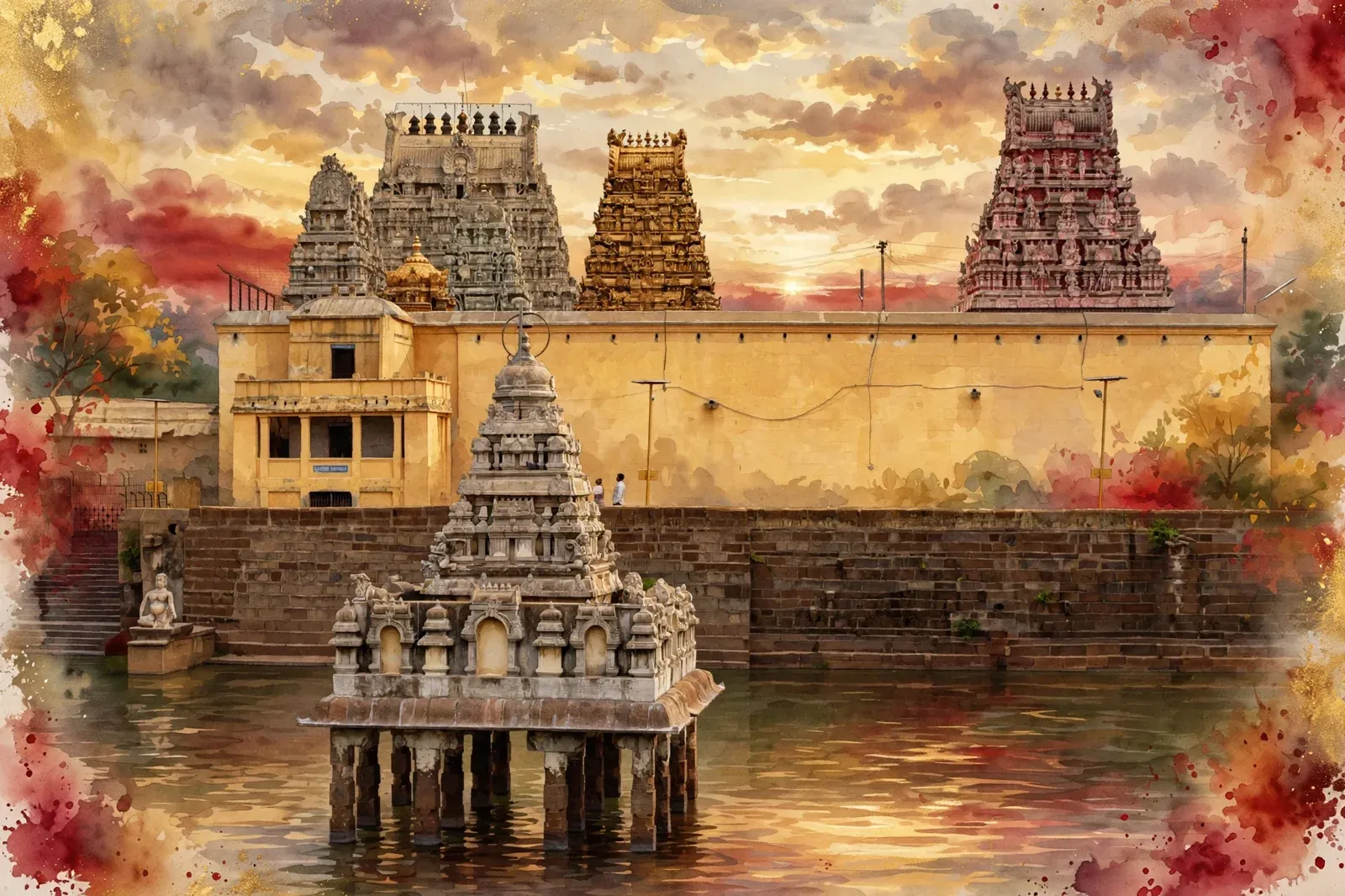
Kamakshi Amman Temple in Kanchipuram, Tamil Nadu, is one of the 18 main Shakta Pithas and a leading centre of Shaktism, dedicated to Kamakshi, an aspect of the supreme goddess Adi Shakti. Her sanctum idol sits in the lotus posture under a gold-plated vimanam, with a Sri Chakra that, temple tradition holds, was installed by Adi Shankaracharya. It is the only Shakti shrine in Kanchipuram, the centre of the Kanchi Kamakoti Peetham, and its great spring festival is Maasi Pooram.
- Punjabi name
- ਕਾਮਾਕਸ਼ੀ ਅੰਮਨ ਮੰਦਰ (ਕਾਂਚੀਪੁਰਮ)
- Country
- India
- State
- Tamil Nadu
- District
- Kanchipuram
- City
- Kanchipuram
- Deity
- Kamakshi (Adi Shakti / Tripura Sundari)
All 11 facts
- Significance
- One of the 18 main Shakta Pithas (Nabhi Peetham / Odhyana Peetham, per tradition)
- Architectural style
- Dravidian (Tamil)
- Temple area
- 5 acres (2.0 hectares)
- Founded
- Pallava era, 5th-8th century CE (most accounts); structure renewed in the 14th and 17th centuries
- Administration
- Kanchi Kamakoti Peetham; the Jagadguru Shankaracharya is hereditary trustee
Five forms of one goddess
Kamakshi is worshipped in five forms across the complex. The principal idol, Sri Kamakshi Para Bhattarika, sits at the centre of the inner sanctum in padmasana, the lotus pose, unusual among Parvati temples where the goddess usually stands. Seated on a throne and carrying a noose, a goad, a sugarcane bow and a flower arrow, she is flanked by a parrot perched near the flower bunch, a signature of the goddess in Tamil Nadu. Around the sanctum stand four more forms: Tapa Kamakshi, the goddess in yogic penance; Anjana Kamakshi, also called Arupa Lakshmi, the formless Lakshmi; Swarna Kamakshi, the golden goddess; and Utsava Kamakshi, the processional idol carried through the streets during festivals. The sanctum hall itself, the Gayatri Mandapa, is traditionally described as built by the celestials, its four walls standing for the four Vedas and its twenty-four pillars for the twenty-four syllables of the Gayatri Mantra.
The Sri Chakra and Adi Shankaracharya
In front of the idol stands the temple's most charged object: the Sri Chakra, the sacred geometric diagram of Shaktism. Temple tradition credits Adi Shankaracharya, the 8th-century philosopher-saint, with installing it before Kamakshi to personify her as the Shanta Swaroopini, the peaceful form, after she had first appeared as the fierce Ugra Swaroopini. Tradition holds that Shankaracharya asked her never to leave the temple complex, which is why the festival image of Kamakshi is said to take leave from his shrine in the inner prakaram each time she goes out in procession. The temple remains the centre of the Kanchi Kamakoti Peetham, the monastic seat founded in his name, and its Jagadguru Shankaracharya serves as the temple's hereditary trustee.
Why is there no Shiva shrine here?
There is no shrine for Shiva in the Kamakshi complex, and the reason is a point of theology: Kamakshi is understood here as more powerful than Shiva. Most Hindu deities are paired with their consorts; here the goddess stands supreme alone. The same singularity runs through Kanchipuram itself: this is the only Parvati or Shakti shrine in the city, despite Kanchipuram holding hundreds of temples. One legend in the Kamakshivilasa holds that the goddess had to absorb all other Shakti forms to grant a boon to Manmatha, the god of love, from whom she takes her name. Whatever the telling, the city's goddess worship begins and ends at this one temple.
Vishnu, by contrast, does have a place here. The complex houses a shrine to Varaha Perumal, the boar form of Vishnu, the Tirukkalvanur Divya Desam, one of the 108 sacred Vaishnavite shrines. The original Tirukkalvanur temple stood nearby; when it fell into ruin its deity was moved inside the Kamakshi complex, where Vishnu is honoured as the brother of the goddess.
A history told three ways
The temple's origins are told differently depending on the telling. The most common account traces it to the Pallava kings of the 5th to 8th centuries, whose capital was Kanchipuram, and the 6th-9th century Vaishnavite Alvar saints sing its glory in the Naalayira Divya Prabandham. A later account credits the Cholas with building the temple in the 14th century, and the structure was modified again in the 14th and 17th centuries. A third telling follows a golden statue of the goddess: carried across South India by attendants after the fall of Vijayanagara in 1565, kept at Tiruvarur from 1739 to 1781, and finally installed in a Kamakshi temple built in 1783. Rather than one tidy date, the honest record is a shrine whose sanctity reaches back to the Pallava age, whose stones have been renewed by every ruling power since.
One of its oldest claims carries the weight of myth: Kanchipuram is counted among the 51 Shakta Pithas, the places where parts of the goddess Sati's body are believed to have fallen, and this temple is one of the 18 most visited. Tradition says the navel fell here, giving the shrine its names Nabhi Peetham and Odhyana Peetham.
Maasi Pooram: the spring festival
The temple's great festival, the Mahotsavam, falls in the Tamil month of Masi, from mid-February to mid-March, spring in the Tamil calendar. Its high point is Maasi Pooram, celebrated as the day of Lalitha Maha Tripura Sundari's manifestation in Kanchipuram. The chariot festival, the Ther, and the float festival, the Theppam, draw the largest crowds of the year. Navaratri, Aadi Pooram and Aippasi Pooram, Sankara Jayanthi and the Vasanta Utsavam fill the rest of the calendar, and every Friday is treated as sacred. Worship runs to four services a day, beginning with Gau Pooja and Gaja Pooja, and each morning at five the temple's elephant trumpets its salutation to the goddess.
What the name Kamakshi means
Kamakshi breaks into kama, desire or love, and akshi, the eyes: she whose eyes grant all desires, or the goddess who brings joy to the mind of Kameshwara, Shiva. The name carries the Manmatha legend with it, and it is also why the temple is called Kamakottam and Kamakoti Nayaki Kovil. Like her neighbour Meenakshi in Madurai, whose name means fish-eyed, Kamakshi belongs to the Tamil country tradition of the goddess as mother and queen rather than as a distant consort. Nearby Brihadeeswara at Thanjavur and the other great Dravidian temples share the same India mandir tradition she anchors.
Her neighbour in Kanchipuram itself, the Ekambareswarar Temple, completes the city's great Shaiva-Shakta pair: his is the earth shrine, hers the supreme goddess's seat.
ਇੱਕ ਦੇਵੀ ਦੇ ਪੰਜ ਰੂਪ
ਕਾਮਾਕਸ਼ੀ ਦੀ ਪੂਜਾ ਪਰਿਸਰ ਵਿੱਚ ਪੰਜ ਰੂਪਾਂ ਵਿੱਚ ਹੁੰਦੀ ਹੈ ਮੁੱਖ ਮੂਰਤ, ਸ੍ਰੀ ਕਾਮਾਕਸ਼ੀ ਪਰਾ ਭਟਟਾਰਿਕਾ, ਅੰਦਰੂਨੀ ਗਰਭਗ੍ਰਿਹ ਦੇ ਵਿਚਕਾਰ ਪਦਮਾਸਨ, ਕਮਲ ਆਸਨ ਵਿੱਚ ਬੈਠੀ ਹੈ, ਜੋ ਪਾਰਵਤੀ ਦੇ ਮੰਦਰਾਂ ਵਿੱਚ ਅਸਾਧਾਰਨ ਹੈ ਜਿੱਥੇ ਦੇਵੀ ਆਮ ਤੌਰ 'ਤੇ ਖੜ੍ਹੀ ਹੁੰਦੀ ਹੈ ਆਪਣੇ ਚਾਰ ਹੱਥਾਂ ਵਿੱਚ ਪਾਸ਼, ਅੰਕੁਸ਼, ਗੰਨੇ ਦਾ ਧਨੁਸ਼ ਅਤੇ ਫੁੱਲਾਂ ਦਾ ਤੀਰ ਲਈ ਉਹ ਸਿੰਘਾਸਨ 'ਤੇ ਬੈਠੀ ਹੈ, ਅਤੇ ਫੁੱਲਾਂ ਦੇ ਗੁੱਛੇ ਕੋਲ ਤੋਤਾ ਬੈਠਾ ਹੈ, ਜੋ ਤਾਮਿਲਨਾਡੂ ਵਿੱਚ ਦੇਵੀ ਦੀ ਪਹਿਚਾਣ ਹੈ ਗਰਭਗ੍ਰਿਹ ਦੇ ਦੁਆਲੇ ਚਾਰ ਹੋਰ ਰੂਪ ਹਨ: ਤਪ ਕਾਮਾਕਸ਼ੀ, ਯੋਗ ਤਪੱਸਿਆ ਵਿੱਚ ਦੇਵੀ; ਅੰਜਨਾ ਕਾਮਾਕਸ਼ੀ, ਜਿਸ ਨੂੰ ਅਰੂਪ ਲਕਸ਼ਮੀ, ਨਿਰਾਕਾਰ ਲਕਸ਼ਮੀ ਵੀ ਕਿਹਾ ਜਾਂਦਾ ਹੈ; ਸਵਰਣ ਕਾਮਾਕਸ਼ੀ, ਸੁਨਹਿਰੀ ਦੇਵੀ; ਅਤੇ ਉਤਸਵ ਕਾਮਾਕਸ਼ੀ, ਤਿਉਹਾਰਾਂ ਵਿੱਚ ਗਲੀਆਂ ਵਿੱਚ ਲਿਜਾਈ ਜਾਣ ਵਾਲੀ ਸਵਾਰੀ ਮੂਰਤ ਗਰਭਗ੍ਰਿਹ ਦਾ ਹਾਲ, ਗਾਇਤਰੀ ਮੰਡਪਮ, ਪਰੰਪਰਾ ਅਨੁਸਾਰ ਦੇਵਤਿਆਂ ਨੇ ਬਣਾਇਆ ਸੀ, ਜਿਸ ਦੀਆਂ ਚਾਰ ਕੰਧਾਂ ਚਾਰ ਵੇਦਾਂ ਅਤੇ ਚੌਵੀ ਥੰਮ੍ਹ ਗਾਇਤਰੀ ਮੰਤਰ ਦੇ ਚੌਵੀ ਅੱਖਰਾਂ ਨੂੰ ਦਰਸਾਉਂਦੇ ਹਨ
ਸ੍ਰੀ ਚੱਕਰ ਅਤੇ ਆਦਿ ਸ਼ੰਕਰਾਚਾਰੀਆ
ਮੂਰਤ ਦੇ ਸਾਹਮਣੇ ਮੰਦਰ ਦੀ ਸਭ ਤੋਂ ਪਵਿੱਤਰ ਵਸਤੂ ਹੈ: ਸ੍ਰੀ ਚੱਕਰ, ਸ਼ਾਕਤ ਧਰਮ ਦਾ ਪਵਿੱਤਰ ਜਿਓਮੈਟ੍ਰਿਕ ਯੰਤਰ ਮੰਦਰ ਦੀ ਪਰੰਪਰਾ ਅਨੁਸਾਰ 8ਵੀਂ ਸਦੀ ਦੇ ਦਾਰਸ਼ਨਿਕ ਸੰਤ ਆਦਿ ਸ਼ੰਕਰਾਚਾਰੀਆ ਨੇ ਇਸ ਨੂੰ ਕਾਮਾਕਸ਼ੀ ਦੇ ਸਾਹਮਣੇ ਸਥਾਪਿਤ ਕੀਤਾ ਸੀ ਤਾਂ ਜੋ ਉਹ ਸ਼ਾਂਤ ਸਵਰੂਪਿਨੀ, ਸ਼ਾਂਤ ਰੂਪ ਵਜੋਂ ਪੂਜੀ ਜਾਵੇ, ਕਿਉਂਕਿ ਪਹਿਲਾਂ ਉਹ ਉਗ੍ਰ ਸਵਰੂਪਿਨੀ, ਭਿਆਨਕ ਰੂਪ ਵਿੱਚ ਪ੍ਰਗਟ ਹੋਈ ਸੀ ਮਾਨਤਾ ਹੈ ਕਿ ਸ਼ੰਕਰਾਚਾਰੀਆ ਨੇ ਉਸ ਨੂੰ ਮੰਦਰ ਪਰਿਸਰ ਤੋਂ ਬਾਹਰ ਨਾ ਜਾਣ ਲਈ ਕਿਹਾ ਸੀ, ਇਸ ਲਈ ਹਰ ਵਾਰ ਜਦੋਂ ਉਤਸਵ ਮੂਰਤ ਸਵਾਰੀ 'ਤੇ ਨਿਕਲਦੀ ਹੈ ਤਾਂ ਉਹ ਅੰਦਰੂਨੀ ਪ੍ਰਾਕਾਰਮ ਵਿੱਚ ਉਨ੍ਹਾਂ ਦੇ ਮੰਦਰ ਤੋਂ ਆਗਿਆ ਲੈਂਦੀ ਹੈ ਇਹ ਮੰਦਰ ਕਾਂਚੀ ਕਾਮਕੋਟੀ ਪੀਠਮ, ਉਨ੍ਹਾਂ ਦੇ ਨਾਮ 'ਤੇ ਸਥਾਪਿਤ ਮਠ ਦਾ ਕੇਂਦਰ ਹੈ, ਅਤੇ ਇਸ ਦੇ ਜਗਦਗੁਰੂ ਸ਼ੰਕਰਾਚਾਰੀਆ ਮੰਦਰ ਦੇ ਵੰਡਵੇਂ ਟਰੱਸਟੀ ਹਨ
ਇੱਥੇ ਸ਼ਿਵ ਦਾ ਮੰਦਰ ਕਿਉਂ ਨਹੀਂ?
ਕਾਮਾਕਸ਼ੀ ਪਰਿਸਰ ਵਿੱਚ ਸ਼ਿਵ ਦਾ ਕੋਈ ਮੰਦਰ ਨਹੀਂ ਹੈ, ਅਤੇ ਇਸ ਦਾ ਕਾਰਨ ਧਾਰਮਿਕ ਹੈ: ਇੱਥੇ ਕਾਮਾਕਸ਼ੀ ਨੂੰ ਸ਼ਿਵ ਨਾਲੋਂ ਵਧੇਰੇ ਸ਼ਕਤੀਸ਼ਾਲੀ ਮੰਨਿਆ ਜਾਂਦਾ ਹੈ ਜ਼ਿਆਦਾਤਰ ਹਿੰਦੂ ਦੇਵਤੇ ਆਪਣੀਆਂ ਪਤਨੀਆਂ ਨਾਲ ਜੋੜੇ ਵਿੱਚ ਹੁੰਦੇ ਹਨ, ਪਰ ਇੱਥੇ ਦੇਵੀ ਇਕੱਲੀ ਸਰਵੋਚ ਹੈ ਇਹੀ ਇਕੱਲਾਪਣ ਕਾਂਚੀਪੁਰਮ ਵਿੱਚ ਵੀ ਹੈ: ਸੈਂਕੜੇ ਮੰਦਰਾਂ ਵਾਲੇ ਇਸ ਸ਼ਹਿਰ ਵਿੱਚ ਇਹ ਇਕੱਲਾ ਪਾਰਵਤੀ ਜਾਂ ਸ਼ਕਤੀ ਦਾ ਮੰਦਰ ਹੈ ਕਾਮਾਕਸ਼ੀਵਿਲਾਸ ਦੀ ਇੱਕ ਕਥਾ ਅਨੁਸਾਰ ਦੇਵੀ ਨੂੰ ਪ੍ਰੇਮ ਦੇ ਦੇਵਤੇ ਮਨਮਥ ਨੂੰ ਵਰ ਦੇਣ ਲਈ ਸਾਰੇ ਹੋਰ ਸ਼ਕਤੀ ਰੂਪਾਂ ਨੂੰ ਆਪਣੇ ਵਿੱਚ ਸਮਾਉਣਾ ਪਿਆ ਸੀ, ਜਿਸ ਤੋਂ ਉਸ ਦਾ ਨਾਮ ਪਿਆ ਬਿਰਤਾਂਤ ਜੋ ਵੀ ਹੋਵੇ, ਸ਼ਹਿਰ ਦੀ ਦੇਵੀ ਪੂਜਾ ਇਸੇ ਇੱਕ ਮੰਦਰ ਤੋਂ ਸ਼ੁਰੂ ਹੋ ਕੇ ਇਸੇ 'ਤੇ ਖਤਮ ਹੁੰਦੀ ਹੈ
ਇਸ ਦੇ ਉਲਟ ਵਿਸ਼ਨੂੰ ਨੂੰ ਇੱਥੇ ਥਾਂ ਮਿਲੀ ਹੈ ਪਰਿਸਰ ਵਿੱਚ ਵਰਾਹ ਪੇਰੁਮਾਲ, ਵਿਸ਼ਨੂੰ ਦੇ ਸੂਰ ਰੂਪ ਦਾ ਮੰਦਰ ਹੈ, ਥਿਰੁਕਲਵਨੂਰ ਦਿਵਯ ਦੇਸਮ, 108 ਪਵਿੱਤਰ ਵੈਸ਼ਨਵ ਮੰਦਰਾਂ ਵਿੱਚੋਂ ਇੱਕ ਅਸਲੀ ਥਿਰੁਕਲਵਨੂਰ ਮੰਦਰ ਨੇੜੇ ਹੀ ਸੀ ਜਦੋਂ ਉਹ ਖੰਡਰ ਹੋ ਗਿਆ ਤਾਂ ਉਸ ਦੀ ਮੂਰਤ ਕਾਮਾਕਸ਼ੀ ਪਰਿਸਰ ਦੇ ਅੰਦਰ ਲਿਆਂਦੀ ਗਈ, ਜਿੱਥੇ ਵਿਸ਼ਨੂੰ ਦੀ ਦੇਵੀ ਦੇ ਭਰਾ ਵਜੋਂ ਪੂਜਾ ਹੁੰਦੀ ਹੈ
ਇਤਿਹਾਸ ਦੇ ਤਿੰਨ ਬਿਰਤਾਂਤ
ਮੰਦਰ ਦੀ ਉਤਪਤੀ ਬਿਰਤਾਂਤ ਅਨੁਸਾਰ ਵੱਖ-ਵੱਖ ਦੱਸੀ ਜਾਂਦੀ ਹੈ ਸਭ ਤੋਂ ਆਮ ਬਿਰਤਾਂਤ ਇਸ ਨੂੰ 5ਵੀਂ ਤੋਂ 8ਵੀਂ ਸਦੀ ਦੇ ਪੱਲਵ ਰਾਜਿਆਂ ਨਾਲ ਜੋੜਦਾ ਹੈ, ਜਿਨ੍ਹਾਂ ਦੀ ਰਾਜਧਾਨੀ ਕਾਂਚੀਪੁਰਮ ਸੀ, ਅਤੇ 6ਵੀਂ ਤੋਂ 9ਵੀਂ ਸਦੀ ਦੇ ਵੈਸ਼ਨਵ ਆਲਵਾਰ ਸੰਤਾਂ ਨੇ ਨਾਲਾਯਿਰ ਦਿਵਯ ਪ੍ਰਬੰਧਮ ਵਿੱਚ ਇਸ ਦਾ ਗੁਣਗਾਨ ਕੀਤਾ ਹੈ ਇੱਕ ਬਾਅਦ ਦਾ ਬਿਰਤਾਂਤ 14ਵੀਂ ਸਦੀ ਵਿੱਚ ਚੋਲਾਂ ਨੂੰ ਮੰਦਰ ਦਾ ਨਿਰਮਾਤਾ ਦੱਸਦਾ ਹੈ, ਅਤੇ ਇਮਾਰਤ ਵਿੱਚ 14ਵੀਂ ਅਤੇ 17ਵੀਂ ਸਦੀ ਵਿੱਚ ਫਿਰ ਤਬਦੀਲੀਆਂ ਹੋਈਆਂ ਤੀਜਾ ਬਿਰਤਾਂਤ ਦੇਵੀ ਦੀ ਸੁਨਹਿਰੀ ਮੂਰਤ ਦਾ ਪਿੱਛਾ ਕਰਦਾ ਹੈ: 1565 ਵਿੱਚ ਵਿਜਯਨਗਰ ਦੇ ਪਤਨ ਤੋਂ ਬਾਅਦ ਸੇਵਕਾਂ ਨੇ ਇਸ ਨੂੰ ਦੱਖਣੀ ਭਾਰਤ ਵਿੱਚ ਘੁਮਾਇਆ, 1739 ਤੋਂ 1781 ਤੱਕ ਇਹ ਥਿਰੁਵਾਰੂਰ ਵਿੱਚ ਰਹੀ, ਅਤੇ ਅੰਤ ਵਿੱਚ 1783 ਵਿੱਚ ਬਣੇ ਕਾਮਾਕਸ਼ੀ ਮੰਦਰ ਵਿੱਚ ਸਥਾਪਿਤ ਕੀਤੀ ਗਈ ਇੱਕ ਸਾਫ਼-ਸੁਥਰੀ ਤਾਰੀਖ ਦੀ ਬਜਾਏ ਇਮਾਨਦਾਰ ਰਿਕਾਰਡ ਇਹ ਹੈ ਕਿ ਇਸ ਮੰਦਰ ਦੀ ਪਵਿੱਤਰਤਾ ਪੱਲਵ ਯੁੱਗ ਤੱਕ ਪਹੁੰਚਦੀ ਹੈ ਅਤੇ ਉਸ ਤੋਂ ਬਾਅਦ ਹਰ ਸ਼ਾਸਕ ਸ਼ਕਤੀ ਨੇ ਇਸ ਦੇ ਪੱਥਰਾਂ ਨੂੰ ਨਵਿਆਇਆ ਹੈ
ਇਸ ਦੇ ਸਭ ਤੋਂ ਪੁਰਾਣੇ ਦਾਅਵਿਆਂ ਵਿੱਚੋਂ ਇੱਕ ਕਥਾ ਦਾ ਭਾਰ ਰੱਖਦਾ ਹੈ: ਕਾਂਚੀਪੁਰਮ 51 ਸ਼ਕਤੀ ਪੀਠਾਂ ਵਿੱਚ ਗਿਣਿਆ ਜਾਂਦਾ ਹੈ, ਉਹ ਥਾਵਾਂ ਜਿੱਥੇ ਦੇਵੀ ਸਤੀ ਦੇ ਸਰੀਰ ਦੇ ਅੰਗ ਡਿੱਗੇ ਮੰਨੇ ਜਾਂਦੇ ਹਨ, ਅਤੇ ਇਹ ਮੰਦਰ ਸਭ ਤੋਂ ਵੱਧ ਦਰਸ਼ਨ ਕੀਤੇ ਜਾਣ ਵਾਲੇ 18 ਵਿੱਚੋਂ ਇੱਕ ਹੈ ਪਰੰਪਰਾ ਅਨੁਸਾਰ ਇੱਥੇ ਨਾਭੀ ਡਿੱਗੀ ਸੀ, ਜਿਸ ਕਰਕੇ ਇਸ ਮੰਦਰ ਨੂੰ ਨਾਭੀ ਪੀਠਮ ਅਤੇ ਓਢਯਾਨ ਪੀਠਮ ਕਿਹਾ ਜਾਂਦਾ ਹੈ
ਮਾਸੀ ਪੂਰਮ: ਬਸੰਤ ਦਾ ਤਿਉਹਾਰ
ਮੰਦਰ ਦਾ ਵੱਡਾ ਤਿਉਹਾਰ, ਮਹੋਤਸਵਮ, ਤਾਮਿਲ ਮਹੀਨੇ ਮਾਸੀ, ਫਰਵਰੀ ਦੇ ਅੱਧ ਤੋਂ ਮਾਰਚ ਦੇ ਅੱਧ ਤੱਕ, ਤਾਮਿਲ ਪੰਚਾਂਗ ਵਿੱਚ ਬਸੰਤ ਰੁੱਤ ਵਿੱਚ ਪੈਂਦਾ ਹੈ ਇਸ ਦਾ ਸਿਖਰ ਹੈ ਮਾਸੀ ਪੂਰਮ, ਜਿਸ ਨੂੰ ਕਾਂਚੀਪੁਰਮ ਵਿੱਚ ਲਲਿਤਾ ਮਹਾ ਤ੍ਰਿਪੁਰ ਸੁੰਦਰੀ ਦੇ ਪ੍ਰਗਟ ਹੋਣ ਦੇ ਦਿਨ ਵਜੋਂ ਮਨਾਇਆ ਜਾਂਦਾ ਹੈ ਰਥ ਤਿਉਹਾਰ, ਥੇਰ, ਅਤੇ ਤੈਰਦਾ ਤਿਉਹਾਰ, ਥੇਪਪਮ, ਸਾਲ ਦੀ ਸਭ ਤੋਂ ਵੱਡੀ ਭੀੜ ਖਿੱਚਦੇ ਹਨ ਨਵਰਾਤਰੀ, ਆਡਿ ਪੂਰਮ ਅਤੇ ਆਈਪਸੀ ਪੂਰਮ, ਸ਼ੰਕਰ ਜਯੰਤੀ ਅਤੇ ਵਸੰਤ ਉਤਸਵਮ ਬਾਕੀ ਪੰਚਾਂਗ ਭਰਦੇ ਹਨ, ਅਤੇ ਹਰ ਸ਼ੁੱਕਰਵਾਰ ਨੂੰ ਪਵਿੱਤਰ ਮੰਨਿਆ ਜਾਂਦਾ ਹੈ ਪੂਜਾ ਦਿਨ ਵਿੱਚ ਚਾਰ ਵਾਰ ਹੁੰਦੀ ਹੈ, ਗਊ ਪੂਜਾ ਅਤੇ ਗਜ ਪੂਜਾ ਤੋਂ ਸ਼ੁਰੂ ਹੋ ਕੇ, ਅਤੇ ਹਰ ਸਵੇਰ 5 ਵਜੇ ਮੰਦਰ ਦਾ ਹਾਥੀ ਦੇਵੀ ਨੂੰ ਆਪਣਾ ਸਲਾਮ ਕਰਦਾ ਹੈ
ਕਾਮਾਕਸ਼ੀ ਨਾਮ ਦਾ ਅਰਥ
ਕਾਮਾਕਸ਼ੀ ਕਾਮ, ਇੱਛਾ ਜਾਂ ਪ੍ਰੇਮ, ਅਤੇ ਅਕਸ਼ੀ, ਅੱਖਾਂ ਤੋਂ ਬਣਿਆ ਹੈ: ਉਹ ਜਿਸ ਦੀਆਂ ਅੱਖਾਂ ਸਾਰੀਆਂ ਇੱਛਾਵਾਂ ਪੂਰੀਆਂ ਕਰਦੀਆਂ ਹਨ, ਜਾਂ ਉਹ ਦੇਵੀ ਜੋ ਕਾਮੇਸ਼ਵਰ, ਸ਼ਿਵ ਦੇ ਮਨ ਨੂੰ ਆਨੰਦ ਦਿੰਦੀ ਹੈ ਨਾਮ ਆਪਣੇ ਨਾਲ ਮਨਮਥ ਦੀ ਕਥਾ ਲੈਂਦਾ ਹੈ, ਅਤੇ ਇਸੇ ਕਰਕੇ ਮੰਦਰ ਨੂੰ ਕਾਮਕੋਟਟਮ ਅਤੇ ਕਾਮਕੋਟੀ ਨਾਯਕੀ ਕੋਵਿਲ ਵੀ ਕਿਹਾ ਜਾਂਦਾ ਹੈ ਮਦੁਰੈ ਦੀ ਮੀਨਾਕਸ਼ੀ ਵਾਂਗ, ਜਿਸ ਦੇ ਨਾਮ ਦਾ ਅਰਥ ਹੈ ਮੱਛੀ ਵਰਗੀਆਂ ਅੱਖਾਂ ਵਾਲੀ, ਕਾਮਾਕਸ਼ੀ ਵੀ ਤਾਮਿਲ ਦੇਸ਼ ਦੀ ਉਸ ਪਰੰਪਰਾ ਦੀ ਦੇਵੀ ਹੈ ਜਿਸ ਵਿੱਚ ਦੇਵੀ ਦੂਰ ਦੀ ਪਤਨੀ ਨਹੀਂ ਸਗੋਂ ਮਾਂ ਅਤੇ ਰਾਣੀ ਹੈ
ਇਸੇ ਕਾਂਚੀਪੁਰਮ ਦਾ ਏਕੰਬਰੇਸ਼ਵਰ ਮੰਦਰ ਸ਼ਹਿਰ ਦੀ ਮਹਾਨ ਸੈਵ-ਸ਼ਾਕਤ ਜੋੜੀ ਨੂੰ ਪੂਰਾ ਕਰਦਾ ਹੈ: ਉਨ੍ਹਾਂ ਦਾ ਮੰਦਰ ਧਰਤੀ ਦਾ ਮੰਦਰ ਹੈ, ਅਤੇ ਇਹ ਦੇਵੀ ਦੇ ਸਰਵੋਚ ਆਸਨ ਦਾ ਮੰਦਰ ਹੈ