
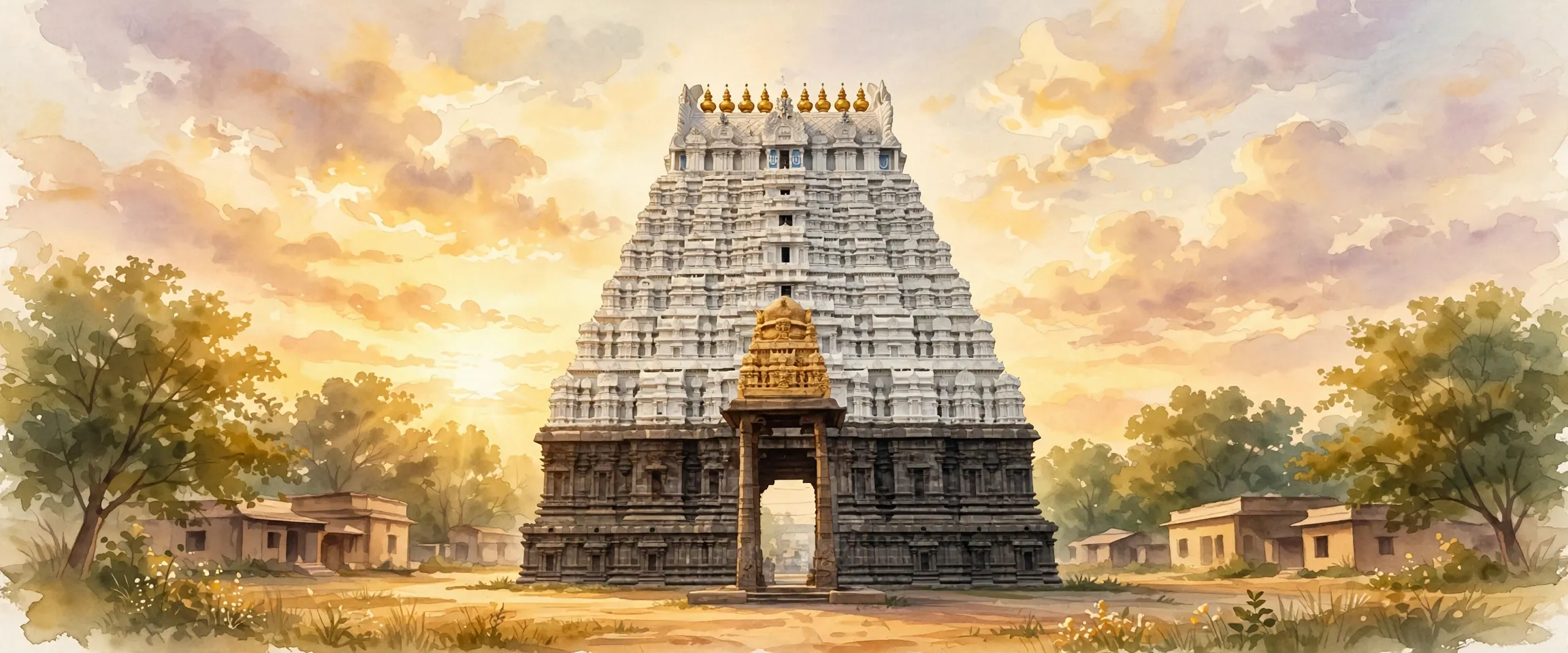
Varadharaja Perumal Temple in Vishnu Kanchi, Kanchipuram, Tamil Nadu, is one of the 108 Divya Desams, dedicated to Vishnu as Varadharaja, the king who grants boons. Renovated by the Cholas in 1053 and spread over about 23 acres with 32 shrines, it is famous for its 100-pillared hall, its gold and silver lizards, and Athi Varadar, a wooden image kept under the temple tank's water and raised for worship once every 40 years.
- Punjabi name
- ਵਰਦਰਾਜ ਪੇਰੂਮਲ ਮੰਦਰ (ਕਾਂਚੀਪੁਰਮ)
- Country
- India
- State
- Tamil Nadu
- City
- Kanchipuram (Vishnu Kanchi, Hastagiri)
- Deity
- Vishnu as Varadharaja Perumal; consort Perundevi Thayar
- Tradition
- Vaishnavism; one of the 108 Divya Desams
All 10 facts
- Built
- Renovated by the Cholas in 1053; expanded under later Chola and Vijayanagara kings
- Architectural style
- Dravidian
- Complex
- About 23 acres; 32 shrines; 19 vimanams
- Famous for
- Athi Varadar rising (last 2019, next 2059); Vaigasi Brahmotsavam; stone chain in the 100-pillared hall
In Vishnu Kanchi, the eastern quarter of Kanchipuram in Tamil Nadu, stands the largest temple of the city: Varadharaja Perumal Temple, also called Hastagiri, Attigiri and simply Perumal Koil, the Temple of Perumal. It is dedicated to Vishnu as Varadharaja, the king who grants boons, and it is one of the 108 Divya Desams, the holy abodes of Vishnu sung by the Alvar poet-saints. Together with Ekambareswarar Temple and Kamakshi Amman Temple, it forms the Mumurtivasam, the abode of the trio that defines Kanchipuram: Shiva, Vishnu and the Goddess in one sacred city.
The boon-giver on Elephant Hill
The temple rises on Hastagiri, Elephant Hill, a low hillock about 360 metres long. Temple tradition ties the name to Indra, king of the gods, who is said to have been cursed to roam as an elephant and freed here by Vishnu. Another tradition tells how Brahma performed a great sacrifice on this spot, and how Vishnu lay flat to hold back the flooding river Vegavati so the rite could finish, emerging from the sacred fig tree as Varadharaja. These are devotional traditions, told here as the temple tells them. What is certain is the sanctum arrangement: devotees usually visit the shrine of Perundevi Thayar, the goddess, first, then climb to the main shrine, where the granite image of Varadharaja, about 3 metres tall, stands facing west beneath the Punyakoti Vimanam.
Rebuilt in 1053, written over with 350 inscriptions
The Cholas renovated the temple in 1053, and the great Chola kings Kulottunga I and Vikrama Chola expanded it; a further wall and gopuram came in the 14th century, and Vijayanagara-era kings added some of its finest sculpture. Around 350 inscriptions survive in its walls, left by the Chola, Pandya, Chera, Kakatiya, Hoysala and Vijayanagara dynasties, recording gifts of villages, gold and land. In 1688, fearing a Mughal invasion, the temple's main image was carried away to Udayarpalayam and only brought back in 1710 after long negotiation, an event the temple still commemorates. A later visitor left a famous gift: Robert Clive presented a valuable necklace, still known as the Clive Maharkandi, which the deity wears on special occasions.
What will you see inside the 23-acre complex?
The complex covers about 23 acres in three outer courtyards, with 32 shrines, 19 vimanams and hundreds of pillared halls. You enter through a seven-tiered rajagopuram about 40 metres tall; unusually, the eastern gopuram is taller than the western one. The masterpiece is the 100-pillared hall, a Vijayanagara-era mandapa whose pillars carry scenes from the Ramayana and the Mahabharata, and whose corners hold the temple's most famous carving: a chain sculpted from a single stone. Near the sanctum, two carved lizards, one plated in gold and one in silver, recall the legend of two disciples of the sage Gautama who were cursed to live as lizards and freed by Vishnu's grace. The temple tank, Anantha Theertham, lies within the complex, and on its eastern side stands a shrine to Chakrathalvar, the discus of Vishnu, with one of the largest such images in India. The whole complex is a textbook of Dravida temple architecture, built up over six centuries.
Athi Varadar: the wooden god who rises every 40 years
Hidden under the water of the temple tank lies the temple's strangest treasure: Athi Varadar, a 3-metre image of the deity carved from the wood of the athi, or fig, tree. Tradition says it was the original presiding image, hidden in the 16th century to protect it from invaders and rediscovered in 1709 when the tank was emptied. Since then it has been raised for public worship once every 40 years, for 48 days: first in a reclining posture for 24 days, then standing for 24 days. The festival was last held from 1 July to 17 August 2019 and drew enormous crowds to Kanchipuram. The next rising is due in 2059.
Ramanuja and the six questions
Few temples are so bound up with a philosopher. Ramanuja, the great teacher of Vishishtadvaita, is believed to have resided here, and tradition says he received answers to his six questions from Varadharaja through the devotee Thirukkachi Nambigal, who walked daily from Poovirundhavalli with flowers and fanned the deity. Ramanuja ordained Nambigal's descendant Tirukkurukai Piran Pillan as the first of his 74 teaching seats and chose him to write the first commentary on the Tiruvaymoli. The Alvar hymns sing this shrine too: Thirumangai Alvar wrote four hymns for it, Bhoothathalvar two and Peyalvar one. The temple follows the Pancharatra tradition, its hereditary custodians are the Thathacharyas, and it is administered by the Hindu Religious and Charitable Endowments Department of Tamil Nadu.
Festivals and visiting today
The great festival is the Brahmotsavam in Vaigasi, May to June, when thousands fill the courtyards and the crowds double again for the Garuda Vahanam procession and the temple car festival. Kanchipuram is about 75 km south-west of Chennai, and Vishnu Kanchi lies in the eastern part of the town; most visitors combine Varadharaja with Ekambareswarar and Kamakshi in a single day, the Shaiva, Vaishnava and Shakta hearts of one city. Among the mandirs of India, Varadharaja is the one where a wooden god sleeps under water for 40 years at a time, and where a philosopher's questions are still part of the daily story.
ਤਾਮਿਲਨਾਡੂ ਦੇ ਕਾਂਚੀਪੁਰਮ ਦੇ ਪੂਰਬੀ ਹਿੱਸੇ, ਵਿਸ਼ਨੂੰ ਕਾਂਚੀ ਵਿੱਚ, ਸ਼ਹਿਰ ਦਾ ਸਭ ਤੋਂ ਵੱਡਾ ਮੰਦਰ ਖੜ੍ਹਾ ਹੈ: ਵਰਦਰਾਜ ਪੇਰੂਮਲ ਮੰਦਰ, ਜਿਸਨੂੰ ਹਸਤਗਿਰੀ, ਅੱਤੀਗਿਰੀ ਅਤੇ ਸਿਰਫ਼ ਪੇਰੂਮਲ ਕੋਇਲ, ਭਾਵ ਪੇਰੂਮਲ ਦਾ ਮੰਦਰ, ਵੀ ਕਿਹਾ ਜਾਂਦਾ ਹੈ ਇਹ ਵਿਸ਼ਨੂੰ ਨੂੰ ਵਰਦਰਾਜ, ਵਰ ਦੇਣ ਵਾਲੇ ਰਾਜੇ, ਵਜੋਂ ਸਮਰਪਿਤ ਹੈ, ਅਤੇ ਇਹ 108 ਦਿਵਿਆ ਦੇਸਮਾਂ ਵਿੱਚੋਂ ਇੱਕ ਹੈ, ਵਿਸ਼ਨੂੰ ਦੇ ਉਹ ਪਵਿੱਤਰ ਧਾਮ ਜਿਨ੍ਹਾਂ ਦੀ ਮਹਿਮਾ ਅਲਵਾਰ ਸੰਤ ਕਵੀਆਂ ਨੇ ਗਾਈ ਏਕਾਂਬਰੇਸ਼ਵਰ ਮੰਦਰ ਅਤੇ ਕਾਮਾਕਸ਼ੀ ਅੰਮਨ ਮੰਦਰ ਦੇ ਨਾਲ ਮਿਲ ਕੇ ਇਹ ਮੁਮੂਰਤੀવાસਮ ਬਣਾਉਂਦਾ ਹੈ, ਉਹ ਤਿੱਕੜੀ ਜੋ ਕਾਂਚੀਪੁਰਮ ਦੀ ਪਛਾਣ ਹੈ: ਇੱਕੋ ਪਵਿੱਤਰ ਸ਼ਹਿਰ ਵਿੱਚ ਸ਼ਿਵ, ਵਿਸ਼ਨੂੰ ਅਤੇ ਦੇਵੀ
ਹਾਥੀ ਪਹਾੜੀ ਉੱਤੇ ਵਰ ਦੇਣ ਵਾਲਾ
ਮੰਦਰ ਹਸਤਗਿਰੀ, ਹਾਥੀ ਪਹਾੜੀ, ਉੱਤੇ ਖੜ੍ਹਾ ਹੈ, ਲਗਭਗ 360 ਮੀਟਰ ਲੰਬੀ ਇੱਕ ਨੀਵੀਂ ਪਹਾੜੀ ਮੰਦਰ ਪਰੰਪਰਾ ਇਸ ਨਾਂ ਨੂੰ ਇੰਦਰ ਨਾਲ ਜੋੜਦੀ ਹੈ, ਜਿਸ ਬਾਰੇ ਕਿਹਾ ਜਾਂਦਾ ਹੈ ਕਿ ਸਰਾਪ ਨਾਲ ਉਹ ਹਾਥੀ ਬਣ ਕੇ ਘੁੰਮਿਆ ਅਤੇ ਇੱਥੇ ਵਿਸ਼ਨੂੰ ਨੇ ਉਸਨੂੰ ਮੁਕਤ ਕੀਤਾ ਇੱਕ ਹੋਰ ਪਰੰਪਰਾ ਦੱਸਦੀ ਹੈ ਕਿ ਬ੍ਰਹਮਾ ਨੇ ਇਸ ਥਾਂ ਮਹਾਨ ਯੱਗ ਕੀਤਾ, ਅਤੇ ਵਿਸ਼ਨੂੰ ਨੇ ਹੜ੍ਹ ਆਈ ਵੇਗਾਵਤੀ ਨਦੀ ਨੂੰ ਰੋਕਣ ਲਈ ਲੇਟ ਕੇ ਯੱਗ ਪੂਰਾ ਹੋਣ ਦਿੱਤਾ, ਅਤੇ ਪਵਿੱਤਰ ਅੰਜੀਰ ਦੇ ਰੁੱਖ ਵਿੱਚੋਂ ਵਰਦਰਾਜ ਵਜੋਂ ਪ੍ਰਗਟ ਹੋਏ ਇਹ ਸ਼ਰਧਾ ਦੀਆਂ ਪਰੰਪਰਾਵਾਂ ਹਨ, ਇੱਥੇ ਉਵੇਂ ਹੀ ਦੱਸੀਆਂ ਗਈਆਂ ਹਨ ਜਿਵੇਂ ਮੰਦਰ ਦੱਸਦਾ ਹੈ ਪੱਕੀ ਗੱਲ ਗਰਭਗ੍ਰਹਿ ਦਾ ਪ੍ਰਬੰਧ ਹੈ: ਸ਼ਰਧਾਲੂ ਆਮ ਤੌਰ ਉੱਤੇ ਪਹਿਲਾਂ ਦੇਵੀ ਪੇਰੁਨਦੇਵੀ ਥਾਯਾਰ ਦੇ ਧਾਮ ਜਾਂਦੇ ਹਨ, ਫਿਰ ਮੁੱਖ ਧਾਮ ਚੜ੍ਹਦੇ ਹਨ, ਜਿੱਥੇ ਪੁਨਿਆਕੋਟੀ ਵਿਮਾਨਮ ਹੇਠ ਪੱਛਮ ਵੱਲ ਮੂੰਹ ਕੀਤੇ ਲਗਭਗ 3 ਮੀਟਰ ਉੱਚੀ ਗ੍ਰੇਨਾਈਟ ਮੂਰਤੀ ਖੜ੍ਹੀ ਹੈ
1053 ਵਿੱਚ ਦੁਬਾਰਾ ਬਣਿਆ, 350 ਸ਼ਿਲਾਲੇਖਾਂ ਨਾਲ ਭਰਿਆ
ਚੋਲਾਂ ਨੇ 1053 ਵਿੱਚ ਮੰਦਰ ਦੀ ਮੁਰੰਮਤ ਕੀਤੀ, ਅਤੇ ਮਹਾਨ ਚੋਲ ਰਾਜਿਆਂ ਕੁਲੋਤੁੰਗ ਪਹਿਲੇ ਅਤੇ ਵਿਕਰਮ ਚੋਲ ਨੇ ਇਸਨੂੰ ਵਧਾਇਆ; ਚੌਦ੍ਹਵੀਂ ਸਦੀ ਵਿੱਚ ਇੱਕ ਹੋਰ ਕੰਧ ਅਤੇ ਗੋਪੁਰਮ ਬਣਿਆ, ਅਤੇ ਵਿਜਯਨਗਰ ਕਾਲ ਦੇ ਰਾਜਿਆਂ ਨੇ ਇਸਦੀ ਕੁਝ ਸਭ ਤੋਂ ਵਧੀਆ ਮੂਰਤੀ ਕਲਾ ਜੋੜੀ ਇਸਦੀਆਂ ਕੰਧਾਂ ਵਿੱਚ ਲਗਭਗ 350 ਸ਼ਿਲਾਲੇਖ ਬਚੇ ਹਨ, ਜੋ ਚੋਲ, ਪਾਂਡਿਆ, ਚੇਰ, ਕਾਕਤੀਆ, ਹੋਇਸਲ ਅਤੇ ਵਿਜਯਨਗਰ ਵੰਸ਼ਾਂ ਨੇ ਛੱਡੇ, ਜਿਨ੍ਹਾਂ ਵਿੱਚ ਪਿੰਡਾਂ, ਸੋਨੇ ਅਤੇ ਜ਼ਮੀਨ ਦੇ ਦਾਨ ਦਰਜ ਹਨ 1688 ਵਿੱਚ, ਮੁਗਲ ਹਮਲੇ ਦੇ ਡਰੋਂ, ਮੰਦਰ ਦੀ ਮੁੱਖ ਮੂਰਤੀ ਉਦਯਾਰਪਾਲਯਮ ਲੈ ਜਾਈ ਗਈ ਅਤੇ ਲੰਬੀ ਗੱਲਬਾਤ ਤੋਂ ਬਾਅਦ 1710 ਵਿੱਚ ਹੀ ਵਾਪਸ ਆਈ, ਇੱਕ ਘਟਨਾ ਜਿਸਨੂੰ ਮੰਦਰ ਅੱਜ ਵੀ ਮਨਾਉਂਦਾ ਹੈ ਇੱਕ ਬਾਅਦ ਦੇ ਮਹਿਮਾਨ ਨੇ ਮਸ਼ਹੂਰ ਤੋਹਫ਼ਾ ਛੱਡਿਆ: ਰਾਬਰਟ ਕਲਾਈਵ ਨੇ ਇੱਕ ਕੀਮਤੀ ਹਾਰ ਭੇਟ ਕੀਤਾ, ਜੋ ਅੱਜ ਵੀ ਕਲਾਈਵ ਮਹਾਰਕੰਡੀ ਵਜੋਂ ਜਾਣਿਆ ਜਾਂਦਾ ਹੈ ਅਤੇ ਖਾਸ ਮੌਕਿਆਂ ਉੱਤੇ ਦੇਵਤੇ ਨੂੰ ਪਹਿਨਾਇਆ ਜਾਂਦਾ ਹੈ
23 ਏਕੜ ਦੇ ਪਰਿਸਰ ਵਿੱਚ ਤੁਸੀਂ ਕੀ ਦੇਖੋਗੇ?
ਪਰਿਸਰ ਲਗਭਗ 23 ਏਕੜ ਵਿੱਚ ਤਿੰਨ ਬਾਹਰੀ ਵਿਹੜਿਆਂ ਨਾਲ ਫੈਲਿਆ ਹੈ, ਜਿਸ ਵਿੱਚ 32 ਧਾਮ, 19 ਵਿਮਾਨਮ ਅਤੇ ਸੈਂਕੜੇ ਥੰਮ੍ਹਾਂ ਵਾਲੇ ਹਾਲ ਹਨ ਤੁਸੀਂ ਲਗਭਗ 40 ਮੀਟਰ ਉੱਚੇ ਸੱਤ ਮੰਜ਼ਲਾ ਰਾਜਗੋਪੁਰਮ ਰਾਹੀਂ ਅੰਦਰ ਜਾਂਦੇ ਹੋ; ਅਸਾਧਾਰਨ ਗੱਲ ਇਹ ਕਿ ਪੂਰਬੀ ਗੋਪੁਰਮ ਪੱਛਮੀ ਨਾਲੋਂ ਉੱਚਾ ਹੈ ਸ਼ਾਹਕਾਰ ਹੈ ਸੌ ਥੰਮ੍ਹਾਂ ਵਾਲਾ ਹਾਲ, ਵਿਜਯਨਗਰ ਕਾਲ ਦਾ ਮੰਡਪ, ਜਿਸਦੇ ਥੰਮ੍ਹਾਂ ਉੱਤੇ ਰਾਮਾਇਣ ਅਤੇ ਮਹਾਭਾਰਤ ਦੇ ਦ੍ਰਿਸ਼ ਹਨ, ਅਤੇ ਜਿਸਦੇ ਕੋਨਿਆਂ ਵਿੱਚ ਮੰਦਰ ਦੀ ਸਭ ਤੋਂ ਮਸ਼ਹੂਰ ਨੱਕਾਸ਼ੀ ਹੈ: ਇੱਕੋ ਪੱਥਰ ਵਿੱਚੋਂ ਘੜੀ ਹੋਈ ਜ਼ੰਜੀਰ ਗਰਭਗ੍ਰਹਿ ਦੇ ਨੇੜੇ ਦੋ ਉੱਕਰੀਆਂ ਛਿਪਕਲੀਆਂ, ਇੱਕ ਸੋਨੇ ਦੀ ਪਲੇਟ ਵਾਲੀ ਅਤੇ ਇੱਕ ਚਾਂਦੀ ਦੀ, ਉਸ ਕਥਾ ਨੂੰ ਯਾਦ ਕਰਦੀਆਂ ਹਨ ਜਿਸ ਵਿੱਚ ਰਿਸ਼ੀ ਗੌਤਮ ਦੇ ਦੋ ਸ਼ਿਸ਼ਿਆਂ ਨੂੰ ਛਿਪਕਲੀ ਬਣਨ ਦਾ ਸਰਾਪ ਮਿਲਿਆ ਅਤੇ ਵਿਸ਼ਨੂੰ ਦੀ ਕਿਰਪਾ ਨਾਲ ਮੁਕਤੀ ਮਿਲੀ ਮੰਦਰ ਦਾ ਤਾਲਾਬ, ਅਨੰਤ ਥੀਰਥਮ, ਪਰਿਸਰ ਦੇ ਅੰਦਰ ਹੈ, ਅਤੇ ਇਸਦੇ ਪੂਰਬੀ ਪਾਸੇ ਚਕਰਥਾਲਵਰ, ਵਿਸ਼ਨੂੰ ਦੇ ਚੱਕਰ, ਦਾ ਧਾਮ ਹੈ, ਜਿਸ ਵਿੱਚ ਭਾਰਤ ਦੀਆਂ ਸਭ ਤੋਂ ਵੱਡੀਆਂ ਅਜਿਹੀਆਂ ਮੂਰਤੀਆਂ ਵਿੱਚੋਂ ਇੱਕ ਹੈ ਸਾਰਾ ਪਰਿਸਰ ਛੇ ਸਦੀਆਂ ਵਿੱਚ ਬਣੀ ਦ੍ਰਵਿੜ ਮੰਦਰ ਭਵਨ ਨਿਰਮਾਣ ਕਲਾ ਦੀ ਪਾਠ ਪੁਸਤਕ ਹੈ
ਅੱਤਿ ਵਰਦਰ: ਲੱਕੜ ਦਾ ਦੇਵਤਾ ਜੋ ਹਰ 40 ਸਾਲ ਬਾਅਦ ਉੱਠਦਾ ਹੈ
ਮੰਦਰ ਦੇ ਤਾਲਾਬ ਦੇ ਪਾਣੀ ਹੇਠ ਇਸਦਾ ਸਭ ਤੋਂ ਅਨੂਠਾ ਖ਼ਜ਼ਾਨਾ ਲੁਕਿਆ ਹੈ: ਅੱਤਿ ਵਰਦਰ, ਦੇਵਤੇ ਦੀ 3 ਮੀਟਰ ਦੀ ਮੂਰਤੀ, ਜੋ ਅੱਤਿ, ਭਾਵ ਅੰਜੀਰ, ਦੇ ਰੁੱਖ ਦੀ ਲੱਕੜ ਵਿੱਚੋਂ ਘੜੀ ਗਈ ਹੈ ਪਰੰਪਰਾ ਕਹਿੰਦੀ ਹੈ ਕਿ ਇਹ ਮੂਲ ਮੁੱਖ ਮੂਰਤੀ ਸੀ, ਸੋਲ੍ਹਵੀਂ ਸਦੀ ਵਿੱਚ ਹਮਲਾਵਰਾਂ ਤੋਂ ਬਚਾਉਣ ਲਈ ਲੁਕਾਈ ਗਈ ਅਤੇ 1709 ਵਿੱਚ ਤਾਲਾਬ ਖਾਲੀ ਹੋਣ ਉੱਤੇ ਮੁੜ ਲੱਭੀ ਉਦੋਂ ਤੋਂ ਇਹ ਹਰ 40 ਸਾਲ ਬਾਅਦ 48 ਦਿਨਾਂ ਲਈ ਜਨਤਕ ਪੂਜਾ ਲਈ ਕੱਢੀ ਜਾਂਦੀ ਹੈ: ਪਹਿਲੇ 24 ਦਿਨ ਲੇਟੀ ਹਾਲਤ ਵਿੱਚ, ਫਿਰ 24 ਦਿਨ ਖੜ੍ਹੀ ਹਾਲਤ ਵਿੱਚ ਇਹ ਉਤਸਵ ਆਖਰੀ ਵਾਰ 1 ਜੁਲਾਈ ਤੋਂ 17 ਅਗਸਤ 2019 ਤੱਕ ਹੋਇਆ ਅਤੇ ਕਾਂਚੀਪੁਰਮ ਵਿੱਚ ਭਾਰੀ ਭੀੜ ਖਿੱਚੀ ਅਗਲਾ ਉਠਾਅ 2059 ਵਿੱਚ ਹੋਵੇਗਾ
ਰਾਮਾਨੁਜ ਅਤੇ ਛੇ ਸਵਾਲ
ਬਹੁਤ ਘੱਟ ਮੰਦਰ ਕਿਸੇ ਦਾਰਸ਼ਨਿਕ ਨਾਲ ਇੰਨੇ ਜੁੜੇ ਹਨ ਰਾਮਾਨੁਜ, ਵਿਸ਼ਿਸ਼ਟਾਦਵੈਤ ਦੇ ਮਹਾਨ ਅਧਿਆਪਕ, ਬਾਰੇ ਮੰਨਿਆ ਜਾਂਦਾ ਹੈ ਕਿ ਉਹ ਇੱਥੇ ਰਹੇ, ਅਤੇ ਪਰੰਪਰਾ ਕਹਿੰਦੀ ਹੈ ਕਿ ਉਹਨਾਂ ਨੂੰ ਆਪਣੇ ਛੇ ਸਵਾਲਾਂ ਦੇ ਜਵਾਬ ਵਰਦਰਾਜ ਤੋਂ ਸ਼ਰਧਾਲੂ ਥਿਰੁਕਾਚੀ ਨੰਬੀਗਲ ਰਾਹੀਂ ਮਿਲੇ, ਜੋ ਰੋਜ਼ ਪੂਵਿਰੁੰਦਾਵਲੀ ਤੋਂ ਫੁੱਲ ਲੈ ਕੇ ਆਉਂਦੇ ਅਤੇ ਦੇਵਤੇ ਨੂੰ ਪੱਖਾ ਝੱਲਦੇ ਸਨ ਰਾਮਾਨੁਜ ਨੇ ਨੰਬੀਗਲ ਦੇ ਵੰਸ਼ਜ ਥਿਰੁਕੁਰੁਕਾਈ ਪਿਰਾਨ ਪਿੱਲਨ ਨੂੰ ਆਪਣੇ 74 ਅਧਿਆਪਨ ਆਸਣਾਂ ਵਿੱਚੋਂ ਪਹਿਲਾ ਨਿਯੁਕਤ ਕੀਤਾ ਅਤੇ ਤਿਰੁਵਾਇਮੋੜੀ ਦੀ ਪਹਿਲੀ ਟੀਕਾ ਲਿਖਣ ਲਈ ਚੁਣਿਆ ਅਲਵਾਰ ਭਜਨ ਵੀ ਇਸ ਧਾਮ ਨੂੰ ਗਾਉਂਦੇ ਹਨ: ਥਿਰੁਮੰਗਾਈ ਅਲਵਾਰ ਨੇ ਚਾਰ, ਭੂਥਥਲਵਾਰ ਨੇ ਦੋ ਅਤੇ ਪੇਅਲਵਾਰ ਨੇ ਇੱਕ ਭਜਨ ਲਿਖਿਆ ਮੰਦਰ ਪੰਚਰਾਤਰ ਪਰੰਪਰਾ ਅਨੁਸਾਰ ਚੱਲਦਾ ਹੈ, ਇਸਦੇ ਵੰਸ਼ਵਾਰੀ ਸਰਪ੍ਰਸਤ ਥਾਥਾਚਾਰਿਆ ਹਨ, ਅਤੇ ਪ੍ਰਬੰਧ ਤਾਮਿਲਨਾਡੂ ਸਰਕਾਰ ਦੇ ਹਿੰਦੂ ਧਾਰਮਿਕ ਅਤੇ ਚੈਰੀਟੇਬਲ ਐਂਡੋਮੈਂਟ ਵਿਭਾਗ ਕੋਲ ਹੈ
ਉਤਸਵ ਅਤੇ ਅੱਜ ਦੀ ਯਾਤਰਾ
ਮਹਾਨ ਉਤਸਵ ਵੈਗਾਸੀ, ਮਈ ਤੋਂ ਜੂਨ, ਵਿੱਚ ਬ੍ਰਹਮੋਤਸਵ ਹੈ, ਜਦੋਂ ਹਜ਼ਾਰਾਂ ਲੋਕ ਵਿਹੜੇ ਭਰ ਦਿੰਦੇ ਹਨ ਅਤੇ ਗਰੁੜ ਵਾਹਨਮ ਸ਼ੋਭਾ ਯਾਤਰਾ ਅਤੇ ਰੱਥ ਉਤਸਵ ਉੱਤੇ ਭੀੜ ਦੁੱਗਣੀ ਹੋ ਜਾਂਦੀ ਹੈ ਕਾਂਚੀਪੁਰਮ ਚੇਨਈ ਤੋਂ ਲਗਭਗ 75 ਕਿਲੋਮੀਟਰ ਦੱਖਣ ਪੱਛਮ ਵਿੱਚ ਹੈ, ਅਤੇ ਵਿਸ਼ਨੂੰ ਕਾਂਚੀ ਸ਼ਹਿਰ ਦੇ ਪੂਰਬੀ ਹਿੱਸੇ ਵਿੱਚ ਹੈ; ਜ਼ਿਆਦਾਤਰ ਸੈਲਾਨੀ ਵਰਦਰਾਜ ਨੂੰ ਏਕਾਂਬਰੇਸ਼ਵਰ ਅਤੇ ਕਾਮਾਕਸ਼ੀ ਨਾਲ ਇੱਕੋ ਦਿਨ ਜੋੜਦੇ ਹਨ, ਇੱਕੋ ਸ਼ਹਿਰ ਦੇ ਸ਼ੈਵ, ਵੈਸ਼ਨਵ ਅਤੇ ਸ਼ਾਕਤ ਹਿਰਦੇ ਭਾਰਤ ਦੇ ਮੰਦਰਾਂ ਵਿੱਚ ਵਰਦਰਾਜ ਉਹ ਮੰਦਰ ਹੈ ਜਿੱਥੇ ਇੱਕ ਲੱਕੜ ਦਾ ਦੇਵਤਾ ਇੱਕ ਵਾਰ ਵਿੱਚ 40 ਸਾਲ ਪਾਣੀ ਹੇਠ ਸੌਂਦਾ ਹੈ, ਅਤੇ ਜਿੱਥੇ ਇੱਕ ਦਾਰਸ਼ਨਿਕ ਦੇ ਸਵਾਲ ਅੱਜ ਵੀ ਰੋਜ਼ ਦੀ ਕਹਾਣੀ ਦਾ ਹਿੱਸਾ ਹਨ