
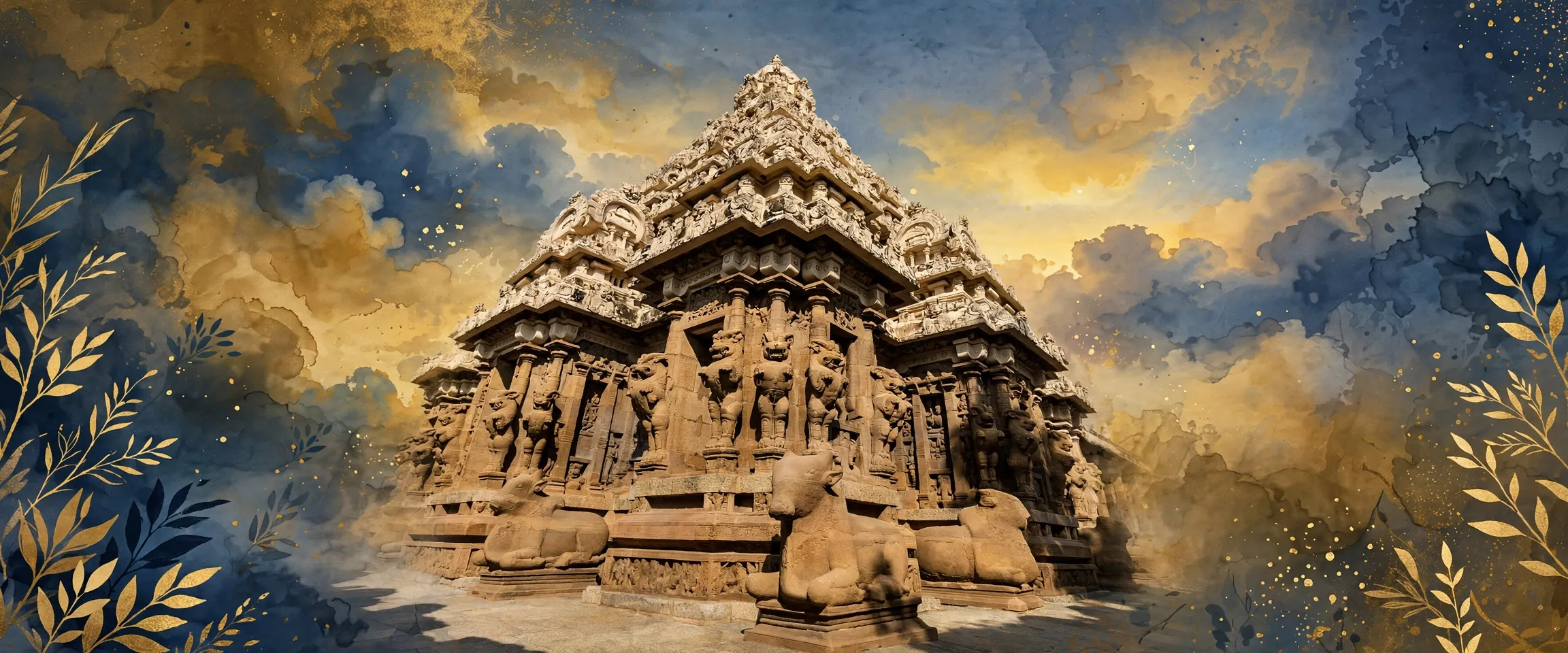
The mandirs of Kanchipuram centre on four shrines. The Ekambareswarar Temple honours Shiva as the earth lingam of the Pancha Bhoota Sthalams, the Kamakshi Amman Temple is a principal Shakta Pitha of the goddess, and the Varadharaja Perumal Temple is a Divya Desam of Vishnu. The Kailasanathar Temple, built around 700 CE by the Pallava king Narasimhavarman II, is the oldest surviving temple in the city.
- Punjabi name
- ਕਾਂਚੀਪੁਰਮ ਦੇ ਮੰਦਰ
- Country
- India
- State
- Tamil Nadu
- City
- Kanchipuram
- Guide covers
- Ekambareswarar Temple, Kamakshi Amman Temple, Varadharaja Perumal Temple, Kailasanathar Temple
- Traditions
- Shaiva, Shakta and Vaishnava shrines in one city, the Mumurtivasam trio
- Oldest shrine
- Kailasanathar Temple, built around 700 CE under the Pallavas
Kanchipuram, about 72 kilometres south-west of Chennai on the Vegavathi river, is the city of a thousand temples, and its mandirs fall into a pattern no other Indian city matches. Its three greatest shrines honour three different traditions side by side: Shiva at the Ekambareswarar Temple, the Goddess at the Kamakshi Amman Temple, and Vishnu at the Varadharaja Perumal Temple, a trio devotees call the Mumurtivasam, the abode of the three. A fourth shrine, the Kailasanathar Temple, is the oldest of all, a Pallava sandstone temple of about 700 CE. This guide covers the four together. Jugti's full entries for the first three are linked below; Kailasanathar is introduced here in full and will receive its own entry in time.
Ekambareswarar Temple: Shiva as the earth itself
The Ekambareswarar Temple is one of the largest temple complexes in India and the Shaiva heart of the city. Tradition counts it among the Pancha Bhoota Sthalams, the five Shiva temples of the elements, and here the element is earth: Shiva is worshipped as the Prithvi Lingam, the lingam of earth. The temple tree, the sthala vriksham, is a mango tree said to be 3,500 years old, whose four branches are said to give four different kinds of mango. There is no separate shrine for Parvati inside the complex: local belief holds that the Kamakshi temple nearby is itself the consort's home for Ekambareswarar, which ties the city's two Shaiva and Shakta giants into one story. A small Vishnu shrine inside the complex, Nilathingal Thundam Perumal, is itself counted among the 108 Divya Desams.
Kamakshi Amman Temple: the Goddess who rules Kanchi
The Kamakshi Amman Temple honours the goddess Kamakshi, a form of the supreme goddess of Shaktism, and it is ranked among the principal Shakta Pithas of India. The temple stands on about 5 acres. In the sanctum the goddess sits in a seated posture, flanked by images of Brahma, Vishnu and Shiva, with a Sri Yantra placed before her that tradition credits to Adi Shankaracharya. Smaller shrines around the sanctum honour Bangaru Kamakshi, Adi Shankara and Saraswati. The temple's annual festival comes in the Tamil month of Masi, from mid February to mid March, and its chariot and float festivals draw the whole city out. The temple is administered in connection with the Kanchi Kamakoti Peetham, the monastic seat whose head serves as hereditary trustee.
Varadharaja Perumal Temple: Vishnu on the elephant hill
The Varadharaja Perumal Temple stands in Vishnu Kanchi, the eastern quarter given to Vishnu temples, and it is one of the 108 Divya Desams sung by the Alvar saints. The grounds cover about 23 acres, with three outer precincts, 32 shrines and hundreds of pillared halls. The temple was renovated by the Cholas in 1053 CE and carries around 350 inscriptions from many dynasties. Its wooden image of Varadharaja, made from the sacred fig tree and kept preserved under water in the temple tank, is brought out for worship only once every 40 years. A high point of the carving is a huge stone chain cut from a single stone, and two gilded lizards on the ceiling near the sanctum, linked in legend to two cursed disciples who found release here. The philosopher Ramanuja is believed to have resided in this temple.
Kailasanathar Temple: the oldest temple in the city
West of the city centre stands the Kailasanathar Temple, built around 700 CE by the Pallava king Narasimhavarman II, with the front facade and gopuram completed by his son Mahendravarman III. It is honoured as the first structural temple built in South India: where earlier shrines were cut into rock or built of wood, this one was raised in stone, sandstone over granite foundations, and it set the pattern for temples that followed. The main sanctum holds a 16 sided black granite lingam, and 58 small shrines, one for many forms of Shiva, are built into the niches of the high compound wall. Its inner walls carry some of the earliest and best Hindu mural painting in Tamil Nadu. Local tradition says Rajaraja Chola I visited this temple and drew inspiration from it for the great Brihadeeswara Temple at Thanjavur. The temple is now maintained by the Archaeological Survey of India.
How do the Kanchipuram temples fit together on a visit?
The old city divides itself for the visitor into Shiva Kanchi in the west, around Ekambareswarar, Kamakshi and Kailasanathar, and Vishnu Kanchi in the east, around Varadharaja. Kanchipuram was the capital of the Pallava kingdom between the 4th and 9th centuries, and it is counted among the seven sacred cities, the Sapta Puri, that tradition says grant liberation. All four shrines in this guide are classic work of the Dravida style, from Kailasanathar's early sandstone experiment to the great gopurams raised over the later temples. Pilgrims often add the city's handwoven silk saris to the same trip: the weaving streets around the temples are as famous as the shrines. This guide is part of Jugti's mandirs in India collection.
All Mandirs in Kanchipuram
- Ekambareswarar Temple : Shiva as the earth lingam of the Pancha Bhoota Sthalams, with its ancient mango tree and thousand pillared hall
- Kamakshi Amman Temple : the great Shakta Pitha of the seated goddess Kamakshi, on about 5 acres at the city's sacred centre
- Varadharaja Perumal Temple : the Divya Desam of Vishnu on Hastagiri, with the wooden deity raised from the tank once in 40 years
- Kailasanathar Temple: the Pallava sandstone temple of about 700 CE, the oldest surviving temple in Kanchipuram, with 58 small shrines in its compound wall (full entry coming)
ਕਾਂਚੀਪੁਰਮ, ਵੇਗਾਵਤੀ ਨਦੀ ਉੱਤੇ ਚੇਨਈ ਤੋਂ ਲਗਭਗ 72 ਕਿਲੋਮੀਟਰ ਦੱਖਣ ਪੱਛਮ ਵਿੱਚ, ਹਜ਼ਾਰ ਮੰਦਰਾਂ ਦਾ ਸ਼ਹਿਰ ਹੈ, ਅਤੇ ਇਸਦੇ ਮੰਦਰ ਇੱਕ ਅਜਿਹੇ ਨਮੂਨੇ ਵਿੱਚ ਆਉਂਦੇ ਹਨ ਜੋ ਕਿਸੇ ਹੋਰ ਭਾਰਤੀ ਸ਼ਹਿਰ ਵਿੱਚ ਨਹੀਂ ਮਿਲਦਾ ਇਸਦੇ ਤਿੰਨ ਸਭ ਤੋਂ ਵੱਡੇ ਧਾਮ ਤਿੰਨ ਵੱਖ ਵੱਖ ਪਰੰਪਰਾਵਾਂ ਨੂੰ ਨਾਲ ਨਾਲ ਸਨਮਾਨ ਦਿੰਦੇ ਹਨ: ਏਕੰਬਰੇਸ਼ਵਰ ਮੰਦਰ ਵਿੱਚ ਸ਼ਿਵ, ਕਾਮਾਕਸ਼ੀ ਅੰਮਣ ਮੰਦਰ ਵਿੱਚ ਦੇਵੀ, ਅਤੇ ਵਰਦਰਾਜ ਪੇਰੂਮਲ ਮੰਦਰ ਵਿੱਚ ਵਿਸ਼ਨੂੰ, ਜਿਸ ਤਿੱਕੜੀ ਨੂੰ ਸ਼ਰਧਾਲੂ ਮੁਮੂਰਤੀਵਾਸਮ, ਤਿੰਨਾਂ ਦਾ ਨਿਵਾਸ, ਕਹਿੰਦੇ ਹਨ ਚੌਥਾ ਧਾਮ, ਕੈਲਾਸਨਾਥਰ ਮੰਦਰ, ਸਭ ਤੋਂ ਪੁਰਾਣਾ ਹੈ, ਲਗਭਗ 700 ਈਸਵੀ ਦਾ ਪੱਲਵ ਕਾਲ ਦਾ ਬਲੂਏ ਪੱਥਰ ਦਾ ਮੰਦਰ ਇਹ ਗਾਈਡ ਚਾਰਾਂ ਨੂੰ ਇਕੱਠੇ ਕਵਰ ਕਰਦੀ ਹੈ ਜੁਗਤੀ ਦੀਆਂ ਪਹਿਲੇ ਤਿੰਨਾਂ ਬਾਰੇ ਪੂਰੀਆਂ ਐਂਟਰੀਆਂ ਹੇਠਾਂ ਲਿੰਕ ਹਨ; ਕੈਲਾਸਨਾਥਰ ਇੱਥੇ ਪੂਰੀ ਤਰ੍ਹਾਂ ਪੇਸ਼ ਕੀਤਾ ਗਿਆ ਹੈ ਅਤੇ ਸਮੇਂ ਨਾਲ ਆਪਣੀ ਐਂਟਰੀ ਪ੍ਰਾਪਤ ਕਰੇਗਾ
ਏਕੰਬਰੇਸ਼ਵਰ ਮੰਦਰ: ਧਰਤੀ ਵਜੋਂ ਸ਼ਿਵ
ਏਕੰਬਰੇਸ਼ਵਰ ਮੰਦਰ ਭਾਰਤ ਦੇ ਸਭ ਤੋਂ ਵੱਡੇ ਮੰਦਰ ਪਰਿਸਰਾਂ ਵਿੱਚੋਂ ਇੱਕ ਹੈ ਅਤੇ ਸ਼ਹਿਰ ਦਾ ਸ਼ੈਵ ਹਿਰਦਾ ਹੈ ਪਰੰਪਰਾ ਇਸਨੂੰ ਪੰਚ ਭੂਤ ਸਥਲਾਂ, ਤੱਤਾਂ ਦੇ ਪੰਜ ਸ਼ਿਵ ਮੰਦਰਾਂ, ਵਿੱਚ ਗਿਣਦੀ ਹੈ, ਅਤੇ ਇੱਥੇ ਤੱਤ ਧਰਤੀ ਹੈ: ਸ਼ਿਵ ਦੀ ਪੂਜਾ ਪ੍ਰਿਥਵੀ ਲਿੰਗਮ, ਧਰਤੀ ਦੇ ਲਿੰਗਮ, ਵਜੋਂ ਹੁੰਦੀ ਹੈ ਮੰਦਰ ਦਾ ਰੁੱਖ, ਸਥਲ ਵ੍ਰਿਕਸ਼, ਇੱਕ ਅੰਬ ਦਾ ਰੁੱਖ ਹੈ ਜੋ 3,500 ਸਾਲ ਪੁਰਾਣਾ ਦੱਸਿਆ ਜਾਂਦਾ ਹੈ, ਜਿਸਦੀਆਂ ਚਾਰ ਟਾਹਣੀਆਂ ਬਾਰੇ ਕਿਹਾ ਜਾਂਦਾ ਹੈ ਕਿ ਉਹ ਚਾਰ ਵੱਖ ਵੱਖ ਕਿਸਮਾਂ ਦੇ ਅੰਬ ਦਿੰਦੀਆਂ ਹਨ ਪਰਿਸਰ ਅੰਦਰ ਪਾਰਵਤੀ ਲਈ ਕੋਈ ਵੱਖਰਾ ਧਾਮ ਨਹੀਂ ਹੈ: ਸਥਾਨਕ ਮਾਨਤਾ ਹੈ ਕਿ ਨੇੜਲਾ ਕਾਮਾਕਸ਼ੀ ਮੰਦਰ ਖ਼ੁਦ ਏਕੰਬਰੇਸ਼ਵਰ ਲਈ ਪਤਨੀ ਦਾ ਘਰ ਹੈ, ਜੋ ਸ਼ਹਿਰ ਦੇ ਦੋ ਸ਼ੈਵ ਅਤੇ ਸ਼ਾਕਤ ਵੱਡੇ ਧਾਮਾਂ ਨੂੰ ਇੱਕੋ ਕਹਾਣੀ ਵਿੱਚ ਜੋੜਦਾ ਹੈ ਪਰਿਸਰ ਅੰਦਰ ਵਿਸ਼ਨੂੰ ਦਾ ਇੱਕ ਛੋਟਾ ਧਾਮ, ਨੀਲਾਥਿੰਗਲ ਥੁੰਡਮ ਪੇਰੂਮਲ, ਖ਼ੁਦ 108 ਦਿਵਯ ਦੇਸਮਾਂ ਵਿੱਚ ਗਿਣਿਆ ਜਾਂਦਾ ਹੈ
ਕਾਮਾਕਸ਼ੀ ਅੰਮਣ ਮੰਦਰ: ਕਾਂਚੀ ਉੱਤੇ ਰਾਜ ਕਰਨ ਵਾਲੀ ਦੇਵੀ
ਕਾਮਾਕਸ਼ੀ ਅੰਮਣ ਮੰਦਰ ਦੇਵੀ ਕਾਮਾਕਸ਼ੀ ਦਾ ਸਨਮਾਨ ਕਰਦਾ ਹੈ, ਜੋ ਸ਼ਕਤੀ ਪਰੰਪਰਾ ਦੀ ਸਰਵਉੱਚ ਦੇਵੀ ਦਾ ਇੱਕ ਰੂਪ ਹੈ, ਅਤੇ ਇਹ ਭਾਰਤ ਦੇ ਪ੍ਰਮੁੱਖ ਸ਼ਕਤੀ ਪੀਠਾਂ ਵਿੱਚ ਗਿਣਿਆ ਜਾਂਦਾ ਹੈ ਮੰਦਰ ਲਗਭਗ 5 ਏਕੜ ਉੱਤੇ ਖੜ੍ਹਾ ਹੈ ਗਰਭਗ੍ਰਹਿ ਵਿੱਚ ਦੇਵੀ ਬੈਠੀ ਮੁਦਰਾ ਵਿੱਚ ਵਿਰਾਜਮਾਨ ਹੈ, ਨਾਲ ਬ੍ਰਹਮਾ, ਵਿਸ਼ਨੂੰ ਅਤੇ ਸ਼ਿਵ ਦੀਆਂ ਮੂਰਤੀਆਂ ਹਨ, ਅਤੇ ਉਸਦੇ ਸਾਹਮਣੇ ਇੱਕ ਸ੍ਰੀ ਯੰਤਰ ਰੱਖਿਆ ਹੈ ਜਿਸਨੂੰ ਪਰੰਪਰਾ ਆਦਿ ਸ਼ੰਕਰਾਚਾਰਿਆ ਨਾਲ ਜੋੜਦੀ ਹੈ ਗਰਭਗ੍ਰਹਿ ਦੇ ਆਲੇ ਦੁਆਲੇ ਛੋਟੇ ਧਾਮ ਬੰਗਾਰੂ ਕਾਮਾਕਸ਼ੀ, ਆਦਿ ਸ਼ੰਕਰ ਅਤੇ ਸਰਸਵਤੀ ਦਾ ਸਨਮਾਨ ਕਰਦੇ ਹਨ ਮੰਦਰ ਦਾ ਸਾਲਾਨਾ ਤਿਉਹਾਰ ਤਮਿਲ ਮਹੀਨੇ ਮਾਸੀ ਵਿੱਚ ਆਉਂਦਾ ਹੈ, ਫਰਵਰੀ ਦੇ ਵਿਚਕਾਰ ਤੋਂ ਮਾਰਚ ਦੇ ਵਿਚਕਾਰ ਤੱਕ, ਅਤੇ ਇਸਦੇ ਰਥ ਅਤੇ ਤੈਰਨ ਵਾਲੇ ਤਿਉਹਾਰ ਸਾਰੇ ਸ਼ਹਿਰ ਨੂੰ ਬਾਹਰ ਕੱਢਦੇ ਹਨ ਮੰਦਰ ਦਾ ਪ੍ਰਬੰਧ ਕਾਂਚੀ ਕਾਮਕੋਟੀ ਪੀਠ ਨਾਲ ਜੁੜਿਆ ਹੈ, ਉਹ ਮੱਠ ਜਿਸਦਾ ਮੁਖੀ ਵੰਸ਼ਾਵਲੀ ਟਰੱਸਟੀ ਵਜੋਂ ਸੇਵਾ ਕਰਦਾ ਹੈ
ਵਰਦਰਾਜ ਪੇਰੂਮਲ ਮੰਦਰ: ਹਾਥੀ ਪਹਾੜੀ ਉੱਤੇ ਵਿਸ਼ਨੂੰ
ਵਰਦਰਾਜ ਪੇਰੂਮਲ ਮੰਦਰ ਵਿਸ਼ਨੂੰ ਕਾਂਚੀ ਵਿੱਚ ਖੜ੍ਹਾ ਹੈ, ਵਿਸ਼ਨੂੰ ਮੰਦਰਾਂ ਨੂੰ ਦਿੱਤਾ ਪੂਰਬੀ ਇਲਾਕਾ, ਅਤੇ ਇਹ ਆਲਵਾਰ ਸੰਤਾਂ ਦੇ ਗਾਏ 108 ਦਿਵਯ ਦੇਸਮਾਂ ਵਿੱਚੋਂ ਇੱਕ ਹੈ ਮੈਦਾਨ ਲਗਭਗ 23 ਏਕੜ ਫੈਲਿਆ ਹੈ, ਤਿੰਨ ਬਾਹਰੀ ਵਾੜਿਆਂ, 32 ਧਾਮਾਂ ਅਤੇ ਸੈਂਕੜੇ ਥੰਮ੍ਹਾਂ ਵਾਲੇ ਹਾਲਾਂ ਸਮੇਤ ਮੰਦਰ ਦਾ ਨਵੀਨੀਕਰਨ ਚੋਲਾਂ ਨੇ 1053 ਈਸਵੀ ਵਿੱਚ ਕੀਤਾ ਅਤੇ ਇਸ ਵਿੱਚ ਕਈ ਰਾਜਵੰਸ਼ਾਂ ਦੇ ਲਗਭਗ 350 ਸ਼ਿਲਾਲੇਖ ਹਨ ਵਰਦਰਾਜ ਦੀ ਲੱਕੜ ਦੀ ਮੂਰਤੀ, ਪਵਿੱਤਰ ਅੰਜੀਰ ਦੇ ਰੁੱਖ ਤੋਂ ਬਣੀ ਅਤੇ ਮੰਦਰ ਦੇ ਤਾਲਾਬ ਵਿੱਚ ਪਾਣੀ ਹੇਠ ਰੱਖੀ, ਹਰ 40 ਸਾਲਾਂ ਵਿੱਚ ਸਿਰਫ਼ ਇੱਕ ਵਾਰ ਪੂਜਾ ਲਈ ਬਾਹਰ ਕੱਢੀ ਜਾਂਦੀ ਹੈ ਨੱਕਾਸ਼ੀ ਦੀ ਇੱਕ ਉਚਾਈ ਇੱਕੋ ਪੱਥਰ ਤੋਂ ਕੱਟੀ ਵੱਡੀ ਪੱਥਰ ਦੀ ਜ਼ੰਜੀਰ ਹੈ, ਅਤੇ ਗਰਭਗ੍ਰਹਿ ਦੇ ਨੇੜੇ ਛੱਤ ਉੱਤੇ ਦੋ ਸੁਨਹਿਰੀ ਕਿਰਲੀਆਂ, ਜਿਨ੍ਹਾਂ ਨੂੰ ਕਥਾ ਦੋ ਸਰਾਪੇ ਚੇਲਿਆਂ ਨਾਲ ਜੋੜਦੀ ਹੈ ਜਿਨ੍ਹਾਂ ਨੂੰ ਇੱਥੇ ਮੁਕਤੀ ਮਿਲੀ ਦਾਰਸ਼ਨਿਕ ਰਾਮਾਨੁਜ ਬਾਰੇ ਮੰਨਿਆ ਜਾਂਦਾ ਹੈ ਕਿ ਉਹ ਇਸ ਮੰਦਰ ਵਿੱਚ ਰਹੇ ਸਨ
ਕੈਲਾਸਨਾਥਰ ਮੰਦਰ: ਸ਼ਹਿਰ ਦਾ ਸਭ ਤੋਂ ਪੁਰਾਣਾ ਮੰਦਰ
ਸ਼ਹਿਰ ਦੇ ਕੇਂਦਰ ਦੇ ਪੱਛਮ ਵਿੱਚ ਕੈਲਾਸਨਾਥਰ ਮੰਦਰ ਖੜ੍ਹਾ ਹੈ, ਜੋ ਲਗਭਗ 700 ਈਸਵੀ ਵਿੱਚ ਪੱਲਵ ਰਾਜਾ ਨਰਸਿੰਘਵਰਮਨ ਦੂਜੇ ਨੇ ਬਣਾਇਆ, ਜਿਸਦਾ ਅਗਲਾ ਮੁਹਾਂਦਰਾ ਅਤੇ ਗੋਪੁਰਮ ਉਸਦੇ ਪੁੱਤਰ ਮਹਿੰਦਰਵਰਮਨ ਤੀਜੇ ਨੇ ਪੂਰਾ ਕੀਤਾ ਇਸਨੂੰ ਦੱਖਣੀ ਭਾਰਤ ਵਿੱਚ ਬਣਿਆ ਪਹਿਲਾ ਢਾਂਚਾਗਤ ਮੰਦਰ ਮੰਨਿਆ ਜਾਂਦਾ ਹੈ: ਜਿੱਥੇ ਪਹਿਲੇ ਧਾਮ ਚੱਟਾਨ ਵਿੱਚ ਕੱਟੇ ਜਾਂ ਲੱਕੜ ਦੇ ਬਣੇ ਸਨ, ਇਹ ਪੱਥਰ ਵਿੱਚ ਉੱਠਿਆ, ਗ੍ਰੇਨਾਈਟ ਨੀਂਹਾਂ ਉੱਤੇ ਬਲੂਆ ਪੱਥਰ, ਅਤੇ ਇਸਨੇ ਅੱਗੇ ਆਉਣ ਵਾਲੇ ਮੰਦਰਾਂ ਲਈ ਨਮੂਨਾ ਬਣਾਇਆ ਮੁੱਖ ਗਰਭਗ੍ਰਹਿ ਵਿੱਚ 16 ਪਾਸਿਆਂ ਵਾਲਾ ਕਾਲੇ ਗ੍ਰੇਨਾਈਟ ਦਾ ਲਿੰਗਮ ਹੈ, ਅਤੇ 58 ਛੋਟੇ ਧਾਮ, ਸ਼ਿਵ ਦੇ ਕਈ ਰੂਪਾਂ ਲਈ ਇੱਕ ਇੱਕ, ਉੱਚੀ ਵਾੜ ਕੰਧ ਦੇ ਆਲਿਆਂ ਵਿੱਚ ਬਣੇ ਹਨ ਇਸਦੀਆਂ ਅੰਦਰਲੀਆਂ ਕੰਧਾਂ ਤਮਿਲਨਾਡੂ ਦੀ ਸਭ ਤੋਂ ਪੁਰਾਣੀ ਅਤੇ ਵਧੀਆ ਹਿੰਦੂ ਕੰਧ ਚਿੱਤਰਕਲਾ ਸਾਂਭਦੀਆਂ ਹਨ ਸਥਾਨਕ ਪਰੰਪਰਾ ਕਹਿੰਦੀ ਹੈ ਕਿ ਰਾਜਰਾਜ ਚੋਲ ਪਹਿਲੇ ਨੇ ਇਸ ਮੰਦਰ ਦਾ ਦੌਰਾ ਕੀਤਾ ਅਤੇ ਥੰਜਾਵੁਰ ਦੇ ਮਹਾਨ ਬ੍ਰਿਹਦੀਸ਼ਵਰ ਮੰਦਰ ਲਈ ਇਸ ਤੋਂ ਪ੍ਰੇਰਨਾ ਲਈ ਮੰਦਰ ਦੀ ਦੇਖਭਾਲ ਹੁਣ ਭਾਰਤੀ ਪੁਰਾਤੱਤਵ ਸਰਵੇਖਣ ਕਰਦਾ ਹੈ
ਇੱਕ ਯਾਤਰਾ ਵਿੱਚ ਕਾਂਚੀਪੁਰਮ ਦੇ ਮੰਦਰ ਕਿਵੇਂ ਜੁੜਦੇ ਹਨ?
ਪੁਰਾਣਾ ਸ਼ਹਿਰ ਸੈਲਾਨੀ ਲਈ ਆਪਣੇ ਆਪ ਵੰਡਿਆ ਜਾਂਦਾ ਹੈ, ਪੱਛਮ ਵਿੱਚ ਏਕੰਬਰੇਸ਼ਵਰ, ਕਾਮਾਕਸ਼ੀ ਅਤੇ ਕੈਲਾਸਨਾਥਰ ਦੇ ਆਲੇ ਦੁਆਲੇ ਸ਼ਿਵ ਕਾਂਚੀ, ਅਤੇ ਪੂਰਬ ਵਿੱਚ ਵਰਦਰਾਜ ਦੇ ਆਲੇ ਦੁਆਲੇ ਵਿਸ਼ਨੂੰ ਕਾਂਚੀ ਕਾਂਚੀਪੁਰਮ ਚੌਥੀ ਅਤੇ ਨੌਵੀਂ ਸਦੀ ਦੇ ਵਿਚਕਾਰ ਪੱਲਵ ਰਾਜ ਦੀ ਰਾਜਧਾਨੀ ਸੀ, ਅਤੇ ਇਹ ਸੱਤ ਪਵਿੱਤਰ ਸ਼ਹਿਰਾਂ, ਸਪਤ ਪੁਰੀ, ਵਿੱਚ ਗਿਣਿਆ ਜਾਂਦਾ ਹੈ ਜਿਨ੍ਹਾਂ ਬਾਰੇ ਪਰੰਪਰਾ ਕਹਿੰਦੀ ਹੈ ਕਿ ਉਹ ਮੁਕਤੀ ਦਿੰਦੇ ਹਨ ਇਸ ਗਾਈਡ ਦੇ ਚਾਰੇ ਧਾਮ ਦ੍ਰਾਵਿੜ ਸ਼ੈਲੀ ਦਾ ਕਲਾਸਿਕ ਕੰਮ ਹਨ, ਕੈਲਾਸਨਾਥਰ ਦੇ ਸ਼ੁਰੂਆਤੀ ਬਲੂਏ ਪੱਥਰ ਦੇ ਪ੍ਰਯੋਗ ਤੋਂ ਲੈ ਕੇ ਬਾਅਦ ਦੇ ਮੰਦਰਾਂ ਉੱਤੇ ਉੱਠੇ ਮਹਾਨ ਗੋਪੁਰਮਾਂ ਤੱਕ ਸ਼ਰਧਾਲੂ ਅਕਸਰ ਉਸੇ ਯਾਤਰਾ ਵਿੱਚ ਸ਼ਹਿਰ ਦੀਆਂ ਹੱਥ ਬੁਣੀਆਂ ਰੇਸ਼ਮੀ ਸਾੜੀਆਂ ਜੋੜਦੇ ਹਨ: ਮੰਦਰਾਂ ਦੇ ਆਲੇ ਦੁਆਲੇ ਬੁਣਕਰ ਗਲੀਆਂ ਧਾਮਾਂ ਜਿੰਨੀਆਂ ਹੀ ਮਸ਼ਹੂਰ ਹਨ ਇਹ ਗਾਈਡ ਜੁਗਤੀ ਦੇ ਭਾਰਤ ਦੇ ਮੰਦਰਾਂ ਸੰਗ੍ਰਹਿ ਦਾ ਹਿੱਸਾ ਹੈ
ਕਾਂਚੀਪੁਰਮ ਦੇ ਸਾਰੇ ਮੰਦਰ
- ਏਕੰਬਰੇਸ਼ਵਰ ਮੰਦਰ : ਪੰਚ ਭੂਤ ਸਥਲਾਂ ਦੇ ਧਰਤੀ ਲਿੰਗਮ ਵਜੋਂ ਸ਼ਿਵ, ਆਪਣੇ ਪ੍ਰਾਚੀਨ ਅੰਬ ਦੇ ਰੁੱਖ ਅਤੇ ਹਜ਼ਾਰ ਥੰਮ੍ਹਾਂ ਵਾਲੇ ਹਾਲ ਸਮੇਤ
- ਕਾਮਾਕਸ਼ੀ ਅੰਮਣ ਮੰਦਰ : ਬੈਠੀ ਦੇਵੀ ਕਾਮਾਕਸ਼ੀ ਦਾ ਮਹਾਨ ਸ਼ਕਤੀ ਪੀਠ, ਸ਼ਹਿਰ ਦੇ ਪਵਿੱਤਰ ਕੇਂਦਰ ਵਿੱਚ ਲਗਭਗ 5 ਏਕੜ ਉੱਤੇ
- ਵਰਦਰਾਜ ਪੇਰੂਮਲ ਮੰਦਰ : ਹਸਤਗਿਰੀ ਉੱਤੇ ਵਿਸ਼ਨੂੰ ਦਾ ਦਿਵਯ ਦੇਸਮ, ਜਿਸਦਾ ਲੱਕੜ ਦਾ ਦੇਵਤਾ 40 ਸਾਲਾਂ ਵਿੱਚ ਇੱਕ ਵਾਰ ਤਾਲਾਬ ਵਿੱਚੋਂ ਉੱਠਦਾ ਹੈ
- ਕੈਲਾਸਨਾਥਰ ਮੰਦਰ: ਲਗਭਗ 700 ਈਸਵੀ ਦਾ ਪੱਲਵ ਬਲੂਏ ਪੱਥਰ ਦਾ ਮੰਦਰ, ਕਾਂਚੀਪੁਰਮ ਦਾ ਸਭ ਤੋਂ ਪੁਰਾਣਾ ਬਚਿਆ ਮੰਦਰ, ਆਪਣੀ ਵਾੜ ਕੰਧ ਵਿੱਚ 58 ਛੋਟੇ ਧਾਮਾਂ ਸਮੇਤ (ਪੂਰੀ ਐਂਟਰੀ ਜਲਦੀ)