
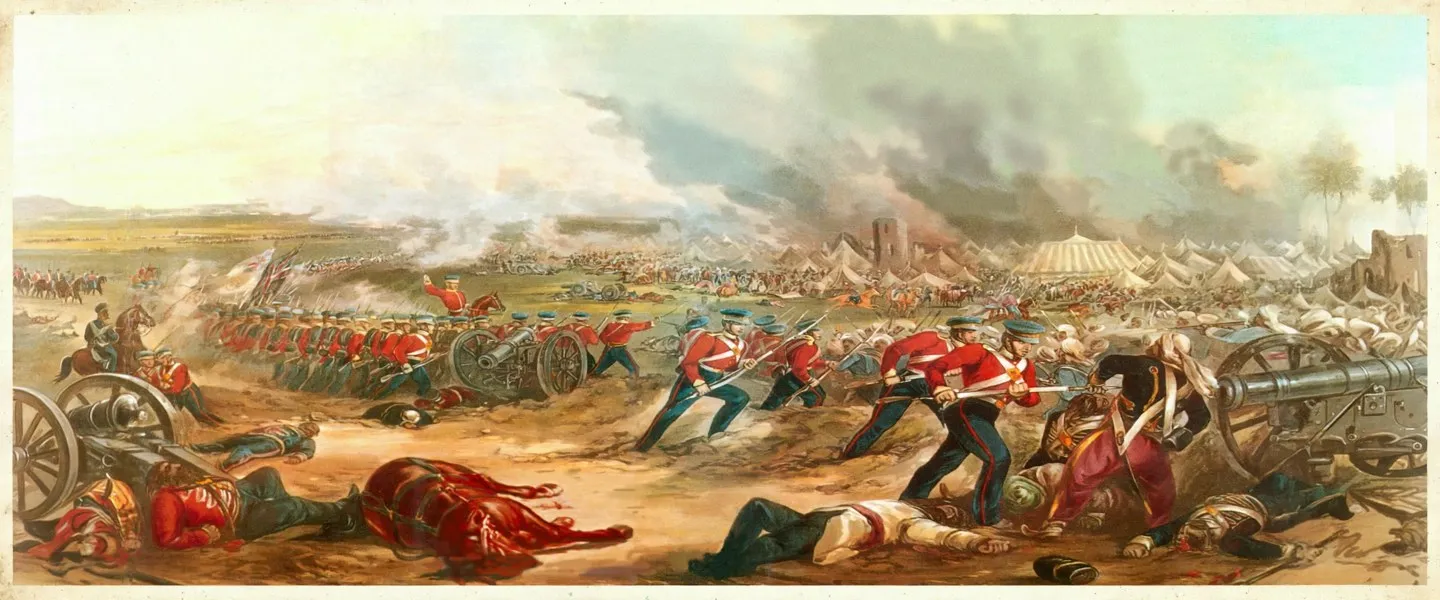
The Anglo-Sikh War Memorial at Ferozeshah in Ferozepur district is a three-storey war museum unveiled in 1976. It honours the soldiers who fell at Mudki and Ferozeshah in December 1845, at Sabhraon in 1846 and at Chillianwala in 1849, and it holds Kirpal Singh's enormous battle paintings and Anglo-Sikh war weapons.
- ਪੰਜਾਬੀ ਨਾਂ
- ਐਂਗਲੋ-ਸਿੱਖ ਜੰਗ ਯਾਦਗਾਰ, ਫਿਰੋਜ਼ਸ਼ਾਹ
- ਜ਼ਿਲ੍ਹਾ
- ਫ਼ਿਰੋਜ਼ਪੁਰ
- Commemorates
- Mudki, Ferozeshah, Sabhraon and Chillianwala
- The wars
- First and Second Anglo-Sikh Wars, 1845 to 1849
- Unveiled
- April 1976
- Designed by
- H. S. Chopra
All 8 facts
- ਪ੍ਰਸਿੱਧੀ
- Kirpal Singh's giant battle paintings
- ਭਾਸ਼ਾ
- ਫ਼ਿਰੋਜ਼ਪੁਰ
What is the Anglo-Sikh War Memorial at Ferozeshah?
The Anglo-Sikh War Memorial is a war museum at Ferozeshah in Ferozepur district, raised by the Punjab government on one of the battlefields of the Anglo-Sikh wars. The three-storey memorial, unveiled in April 1976, honours the soldiers who fell fighting the British at Mudki on 18 December 1845, at Ferozeshah on 21 and 22 December 1845, at Sabhraon on 10 February 1846 and at Chillianwala on 13 January 1849, the battles that between them ended the Sikh Empire. Inside, some of the largest history paintings ever made in India carry the story across its walls.
Four battles that ended an empire
The First Anglo-Sikh War opened at Mudki on 18 December 1845, where the discipline and gallantry of the Sikh army won the admiration even of its enemies. Three days later came Ferozeshah, the hardest fight of the war: the British commander-in-chief Sir Hugh Gough, with Governor-General Lord Hardinge at the field, lost 748 men killed, among them 54 officers, and 1,625 wounded, losses that caused a furore in England. At Sabhraon on 10 February 1846 the Sikh position on the Sutlej collapsed amid the failures of its commanders, though general Sham Singh Attariwala died in a last stand that Punjab still sings about. The Second War closed at Chillianwala on 13 January 1849, among the bloodiest battles the East India Company ever fought, weeks before Punjab was annexed.
Ferozeshah's second act is the stuff of regimental legend. After the first day's assaults stalled among the Sikh guns, the British army spent the night of 21 December bivouacked inside the captured entrenchment, among the dead of both sides, short of water and ammunition and expecting a counter-attack at dawn. When morning came the Sikh army, its own command failing it, drew off, and the field was British, at a price that shocked London. Period prints of that night bivouac, the campfires inside the enemy's works, remain among the most reproduced images of the war.
Building the memorial
The memorial was the project of M. S. Randhawa, who chaired the Ferozeshah Memorial Committee set up by the Punjab government. Work began in 1972; the senior architect of Punjab Agricultural University, H. S. Chopra, designed the three-storey building, with landscaping by Hari Singh Sandhu, and Chief Minister Giani Zail Singh laid the foundation on 11 February 1973. It stands on a plot of about two hectares of the Ferozeshah battlefield itself, off the Moga road near the Sirhind Feeder and the Rajasthan Canal, its ground floor raised two metres above the surrounding fields. The memorial was unveiled in April 1976 before senior Indian military officers.
Inside the museum
The heart of the memorial is art. The painter Kirpal Singh spent three years on eleven works for the building, including battle canvases of Mudki, Ferozeshah, Sabraon and Chillianwala measuring ten feet by twenty, among the largest paintings in India, alongside portraits of Gough, Sham Singh Attariwala and Tej Singh; murals by Jaswant Singh share the walls. Bronze panels carry passages on the wars from Cunningham's history of the Sikhs and from Shah Mohammad's Jangnama, the great Punjabi war poem of the same conflict. Galleries display Anglo-Sikh war weapons sent from the Patiala Museum, so that the visitor moves between the painted battle and the real steel that fought it.
The wider field and visiting
Ferozeshah's museum is the centre of a whole landscape of memory in Ferozepur district: the older battlefield obelisks at Mudki, whose stone still carries the date 18th December 1845, at Mishriwala and at Sabhraon are state-protected monuments (a status recorded for the Mudki, Sabhraon, Ferozeshah and Mishriwala monuments in Parliament in 2006), and the district also holds the Saragarhi Memorial and Hussainiwala. Reports in recent years have flagged neglect at the memorial, a shame for a building of this ambition. It pairs naturally with the cantonment memorials in Ferozepur town: arrive by the Moga road, give the paintings the slow hour they deserve, and read the four battle dates on the wall as what they are, the calendar of an empire's fall. The nearest railhead is Ferozepur Cantonment, and the memorial makes the natural first stop on a battlefield circuit that runs on to Mudki and Sabhraon.
ਫਿਰੋਜ਼ਸ਼ਾਹ ਵਿਖੇ ਐਂਗਲੋ-ਸਿੱਖ ਜੰਗ ਯਾਦਗਾਰ ਕੀ ਹੈ?
ਐਂਗਲੋ-ਸਿੱਖ ਜੰਗ ਯਾਦਗਾਰ ਫਿਰੋਜ਼ਪੁਰ ਜ਼ਿਲ੍ਹੇ ਦੇ ਫਿਰੋਜ਼ਸ਼ਾਹ ਵਿਖੇ ਇੱਕ ਜੰਗੀ ਅਜਾਇਬਘਰ ਹੈ, ਜੋ ਪੰਜਾਬ ਸਰਕਾਰ ਨੇ ਐਂਗਲੋ-ਸਿੱਖ ਜੰਗਾਂ ਦੇ ਇੱਕ ਜੰਗੀ ਮੈਦਾਨ ਉੱਤੇ ਬਣਾਇਆ। ਅਪ੍ਰੈਲ 1976 ਵਿੱਚ ਖੁੱਲ੍ਹੀ ਇਹ ਤਿੰਨ ਮੰਜ਼ਿਲਾ ਯਾਦਗਾਰ ਉਨ੍ਹਾਂ ਸੈਨਿਕਾਂ ਦਾ ਸਨਮਾਨ ਕਰਦੀ ਹੈ ਜੋ 18 ਦਸੰਬਰ 1845 ਨੂੰ ਮੁਦਕੀ, 21 ਅਤੇ 22 ਦਸੰਬਰ 1845 ਨੂੰ ਫਿਰੋਜ਼ਸ਼ਾਹ, 10 ਫਰਵਰੀ 1846 ਨੂੰ ਸਭਰਾਓਂ ਅਤੇ 13 ਜਨਵਰੀ 1849 ਨੂੰ ਚੇਲੀਆਂਵਾਲਾ ਵਿਖੇ ਅੰਗਰੇਜ਼ਾਂ ਨਾਲ ਲੜਦੇ ਸ਼ਹੀਦ ਹੋਏ, ਉਹ ਲੜਾਈਆਂ ਜਿਨ੍ਹਾਂ ਨੇ ਮਿਲ ਕੇ ਸਿੱਖ ਸਾਮਰਾਜ ਦਾ ਅੰਤ ਕੀਤਾ। ਅੰਦਰ, ਭਾਰਤ ਵਿੱਚ ਬਣੀਆਂ ਸਭ ਤੋਂ ਵੱਡੀਆਂ ਇਤਿਹਾਸਕ ਤਸਵੀਰਾਂ ਵਿੱਚੋਂ ਕੁਝ ਇਸ ਕਹਾਣੀ ਨੂੰ ਇਸ ਦੀਆਂ ਕੰਧਾਂ ਉੱਤੇ ਚੁੱਕਦੀਆਂ ਹਨ।
ਚਾਰ ਲੜਾਈਆਂ ਜਿਨ੍ਹਾਂ ਨੇ ਇੱਕ ਸਾਮਰਾਜ ਖਤਮ ਕੀਤਾ
ਪਹਿਲੀ ਐਂਗਲੋ-ਸਿੱਖ ਜੰਗ 18 ਦਸੰਬਰ 1845 ਨੂੰ ਮੁਦਕੀ ਤੋਂ ਸ਼ੁਰੂ ਹੋਈ, ਜਿੱਥੇ ਸਿੱਖ ਫੌਜ ਦੇ ਅਨੁਸ਼ਾਸਨ ਅਤੇ ਬਹਾਦਰੀ ਨੇ ਦੁਸ਼ਮਣਾਂ ਦੀ ਵੀ ਪ੍ਰਸ਼ੰਸਾ ਜਿੱਤੀ। ਤਿੰਨ ਦਿਨ ਬਾਅਦ ਫਿਰੋਜ਼ਸ਼ਾਹ ਆਇਆ, ਜੰਗ ਦੀ ਸਭ ਤੋਂ ਸਖਤ ਲੜਾਈ: ਅੰਗਰੇਜ਼ ਸੈਨਾਪਤੀ ਸਰ ਹਿਊਗ ਗਫ ਨੇ, ਜਿਸ ਦੇ ਨਾਲ ਮੈਦਾਨ ਵਿੱਚ ਗਵਰਨਰ ਜਨਰਲ ਲਾਰਡ ਹਾਰਡਿੰਗ ਸੀ, 748 ਸੈਨਿਕ ਗੁਆਏ, ਜਿਨ੍ਹਾਂ ਵਿੱਚ 54 ਅਧਿਕਾਰੀ ਸਨ, ਅਤੇ 1,625 ਜ਼ਖਮੀ ਹੋਏ, ਉਹ ਨੁਕਸਾਨ ਜਿਸ ਨੇ ਇੰਗਲੈਂਡ ਵਿੱਚ ਹਲਚਲ ਮਚਾ ਦਿੱਤੀ। 10 ਫਰਵਰੀ 1846 ਨੂੰ ਸਭਰਾਓਂ ਵਿਖੇ ਸਤਲੁਜ ਉੱਤੇ ਸਿੱਖ ਮੋਰਚਾ ਆਪਣੇ ਸਰਦਾਰਾਂ ਦੀਆਂ ਅਸਫਲਤਾਵਾਂ ਵਿੱਚ ਢਹਿ ਗਿਆ, ਹਾਲਾਂਕਿ ਸਰਦਾਰ ਸ਼ਾਮ ਸਿੰਘ ਅਟਾਰੀਵਾਲਾ ਆਖਰੀ ਮੋਰਚੇ ਵਿੱਚ ਸ਼ਹੀਦ ਹੋਇਆ ਜਿਸ ਨੂੰ ਪੰਜਾਬ ਅੱਜ ਵੀ ਗਾਉਂਦਾ ਹੈ। ਦੂਜੀ ਜੰਗ 13 ਜਨਵਰੀ 1849 ਨੂੰ ਚੇਲੀਆਂਵਾਲਾ ਵਿਖੇ ਬੰਦ ਹੋਈ, ਈਸਟ ਇੰਡੀਆ ਕੰਪਨੀ ਦੀਆਂ ਸਭ ਤੋਂ ਖੂਨੀ ਲੜਾਈਆਂ ਵਿੱਚੋਂ ਇੱਕ, ਪੰਜਾਬ ਦੇ ਅੰਗਰੇਜ਼ੀ ਰਾਜ ਵਿੱਚ ਮਿਲਣ ਤੋਂ ਕੁਝ ਹਫਤੇ ਪਹਿਲਾਂ।
ਫਿਰੋਜ਼ਸ਼ਾਹ ਦਾ ਦੂਜਾ ਅੰਕ ਰੈਜੀਮੈਂਟੀ ਦੰਤਕਥਾ ਵਾਲੀ ਗੱਲ ਹੈ। ਪਹਿਲੇ ਦਿਨ ਦੇ ਹਮਲੇ ਸਿੱਖ ਤੋਪਾਂ ਵਿੱਚ ਅਟਕ ਜਾਣ ਤੋਂ ਬਾਅਦ ਅੰਗਰੇਜ਼ ਫੌਜ ਨੇ 21 ਦਸੰਬਰ ਦੀ ਰਾਤ ਕਬਜ਼ਾ ਕੀਤੇ ਮੋਰਚੇ ਦੇ ਅੰਦਰ ਬਿਵਾਕ ਵਿੱਚ ਕੱਟੀ, ਦੋਹਾਂ ਪਾਸਿਆਂ ਦੇ ਮ੍ਰਿਤਕਾਂ ਦਰਮਿਆਨ, ਪਾਣੀ ਅਤੇ ਗੋਲਾ-ਬਾਰੂਦ ਦੀ ਕਮੀ ਨਾਲ ਅਤੇ ਸਵੇਰੇ ਜਵਾਬੀ ਹਮਲੇ ਦੀ ਉਮੀਦ ਵਿੱਚ। ਜਦੋਂ ਸਵੇਰ ਹੋਈ ਤਾਂ ਸਿੱਖ ਫੌਜ, ਜਿਸ ਦੀ ਆਪਣੀ ਕਮਾਨ ਉਸ ਨੂੰ ਅਸਫਲ ਕਰ ਰਹੀ ਸੀ, ਪਿੱਛੇ ਹਟ ਗਈ, ਅਤੇ ਮੈਦਾਨ ਅੰਗਰੇਜ਼ਾਂ ਦਾ ਸੀ, ਉਸ ਕੀਮਤ ਉੱਤੇ ਜਿਸ ਨੇ ਲੰਡਨ ਨੂੰ ਹਿਲਾ ਦਿੱਤਾ। ਉਸ ਰਾਤ ਦੇ ਬਿਵਾਕ ਦੀਆਂ ਉਸ ਸਮੇਂ ਦੀਆਂ ਤਸਵੀਰਾਂ, ਦੁਸ਼ਮਣ ਦੇ ਮੋਰਚਿਆਂ ਅੰਦਰ ਬਲਦੀਆਂ ਅੱਗਾਂ, ਜੰਗ ਦੀਆਂ ਸਭ ਤੋਂ ਵੱਧ ਛਪੀਆਂ ਤਸਵੀਰਾਂ ਵਿੱਚ ਰਹੀਆਂ ਹਨ।
ਯਾਦਗਾਰ ਦੀ ਉਸਾਰੀ
ਇਹ ਯਾਦਗਾਰ ਐਮ. ਐਸ. ਰੰਧਾਵਾ ਦਾ ਪ੍ਰੋਜੈਕਟ ਸੀ, ਜੋ ਪੰਜਾਬ ਸਰਕਾਰ ਵੱਲੋਂ ਬਣਾਈ ਫਿਰੋਜ਼ਸ਼ਾਹ ਯਾਦਗਾਰ ਕਮੇਟੀ ਦੇ ਮੁਖੀ ਸਨ। ਕੰਮ 1972 ਵਿੱਚ ਸ਼ੁਰੂ ਹੋਇਆ; ਪੰਜਾਬ ਖੇਤੀਬਾੜੀ ਯੂਨੀਵਰਸਿਟੀ ਦੇ ਸੀਨੀਅਰ ਆਰਕੀਟੈਕਟ ਐਚ. ਐਸ. ਚੋਪੜਾ ਨੇ ਤਿੰਨ ਮੰਜ਼ਿਲਾ ਇਮਾਰਤ ਡਿਜ਼ਾਈਨ ਕੀਤੀ, ਹਰੀ ਸਿੰਘ ਸੰਧੂ ਨੇ ਬਾਗਬਾਨੀ ਨਕਸ਼ਾ ਬਣਾਇਆ, ਅਤੇ ਮੁੱਖ ਮੰਤਰੀ ਗਿਆਨੀ ਜ਼ੈਲ ਸਿੰਘ ਨੇ 11 ਫਰਵਰੀ 1973 ਨੂੰ ਨੀਂਹ ਰੱਖੀ। ਇਹ ਫਿਰੋਜ਼ਸ਼ਾਹ ਦੇ ਜੰਗੀ ਮੈਦਾਨ ਦੇ ਹੀ ਲਗਭਗ ਦੋ ਹੈਕਟੇਅਰ ਪਲਾਟ ਉੱਤੇ ਖੜ੍ਹੀ ਹੈ, ਮੋਗਾ ਸੜਕ ਕੋਲ ਸਰਹਿੰਦ ਫੀਡਰ ਅਤੇ ਰਾਜਸਥਾਨ ਨਹਿਰ ਦੇ ਨੇੜੇ, ਜਿਸ ਦੀ ਹੇਠਲੀ ਮੰਜ਼ਿਲ ਆਸ-ਪਾਸ ਦੇ ਖੇਤਾਂ ਤੋਂ ਦੋ ਮੀਟਰ ਉੱਚੀ ਹੈ। ਯਾਦਗਾਰ ਅਪ੍ਰੈਲ 1976 ਵਿੱਚ ਸੀਨੀਅਰ ਭਾਰਤੀ ਫੌਜੀ ਅਧਿਕਾਰੀਆਂ ਦੀ ਹਾਜ਼ਰੀ ਵਿੱਚ ਖੋਲ੍ਹੀ ਗਈ।
ਅਜਾਇਬਘਰ ਦੇ ਅੰਦਰ
ਯਾਦਗਾਰ ਦਾ ਦਿਲ ਕਲਾ ਹੈ। ਚਿੱਤਰਕਾਰ ਕਿਰਪਾਲ ਸਿੰਘ ਨੇ ਇਸ ਇਮਾਰਤ ਲਈ ਗਿਆਰਾਂ ਕ੍ਰਿਤੀਆਂ ਉੱਤੇ ਤਿੰਨ ਸਾਲ ਲਗਾਏ, ਜਿਨ੍ਹਾਂ ਵਿੱਚ ਮੁਦਕੀ, ਫਿਰੋਜ਼ਸ਼ਾਹ, ਸਭਰਾਓਂ ਅਤੇ ਚੇਲੀਆਂਵਾਲਾ ਦੀਆਂ ਦਸ ਫੁੱਟ ਗੁਣਾ ਵੀਹ ਫੁੱਟ ਦੀਆਂ ਜੰਗੀ ਤਸਵੀਰਾਂ ਸ਼ਾਮਲ ਹਨ, ਭਾਰਤ ਦੀਆਂ ਸਭ ਤੋਂ ਵੱਡੀਆਂ ਤਸਵੀਰਾਂ ਵਿੱਚੋਂ, ਗਫ, ਸ਼ਾਮ ਸਿੰਘ ਅਟਾਰੀਵਾਲਾ ਅਤੇ ਤੇਜ ਸਿੰਘ ਦੇ ਪੋਰਟਰੇਟਾਂ ਸਮੇਤ; ਜਸਵੰਤ ਸਿੰਘ ਦੀਆਂ ਭਿੱਤੀ ਤਸਵੀਰਾਂ ਕੰਧਾਂ ਸਾਂਝੀਆਂ ਕਰਦੀਆਂ ਹਨ। ਕਾਂਸੇ ਦੀਆਂ ਤਖਤੀਆਂ ਉੱਤੇ ਕਨਿੰਘਮ ਦੇ ਸਿੱਖ ਇਤਿਹਾਸ ਅਤੇ ਸ਼ਾਹ ਮੁਹੰਮਦ ਦੇ ਜੰਗਨਾਮੇ, ਉਸੇ ਜੰਗ ਦੀ ਮਹਾਨ ਪੰਜਾਬੀ ਜੰਗੀ ਕਵਿਤਾ, ਵਿੱਚੋਂ ਜੰਗਾਂ ਬਾਰੇ ਅੰਸ਼ ਉੱਕਰੇ ਹਨ। ਗੈਲਰੀਆਂ ਵਿੱਚ ਪਟਿਆਲਾ ਅਜਾਇਬਘਰ ਤੋਂ ਭੇਜੇ ਐਂਗਲੋ-ਸਿੱਖ ਜੰਗ ਦੇ ਹਥਿਆਰ ਪ੍ਰਦਰਸ਼ਿਤ ਹਨ, ਤਾਂ ਜੋ ਸੈਲਾਨੀ ਪੇਂਟ ਕੀਤੀ ਲੜਾਈ ਅਤੇ ਇਸ ਨੂੰ ਲੜਨ ਵਾਲੇ ਅਸਲੀ ਫੌਲਾਦ ਦਰਮਿਆਨ ਘੁੰਮ ਸਕੇ।
ਵਿਸ਼ਾਲ ਮੈਦਾਨ ਅਤੇ ਫੇਰੀ
ਫਿਰੋਜ਼ਸ਼ਾਹ ਦਾ ਅਜਾਇਬਘਰ ਫਿਰੋਜ਼ਪੁਰ ਜ਼ਿਲ੍ਹੇ ਵਿੱਚ ਯਾਦ ਦੇ ਸਾਰੇ ਦ੍ਰਿਸ਼ ਦਾ ਕੇਂਦਰ ਹੈ: ਮੁਦਕੀ ਦੇ ਪੁਰਾਣੇ ਜੰਗੀ ਮੈਦਾਨ ਸਤੰਭ, ਜਿਸ ਦੇ ਪੱਥਰ ਉੱਤੇ ਅੱਜ ਵੀ 18 ਦਸੰਬਰ 1845 ਦੀ ਤਾਰੀਖ ਹੈ, ਮਿਸ਼ਰੀਵਾਲਾ ਅਤੇ ਸਭਰਾਓਂ ਰਾਜ-ਸੁਰੱਖਿਅਤ ਸਮਾਰਕ ਹਨ (ਉਹ ਦਰਜਾ ਜੋ 2006 ਵਿੱਚ ਸੰਸਦ ਵਿੱਚ ਮੁਦਕੀ, ਸਭਰਾਓਂ, ਫਿਰੋਜ਼ਸ਼ਾਹ ਅਤੇ ਮਿਸ਼ਰੀਵਾਲਾ ਸਮਾਰਕਾਂ ਲਈ ਦਰਜ ਕੀਤਾ ਗਿਆ ਸੀ), ਅਤੇ ਜ਼ਿਲ੍ਹੇ ਵਿੱਚ ਸਾਰਾਗੜ੍ਹੀ ਯਾਦਗਾਰ ਅਤੇ ਹੁਸੈਨੀਵਾਲਾ ਵੀ ਹਨ। ਹਾਲੀਆ ਸਾਲਾਂ ਦੀਆਂ ਰਿਪੋਰਟਾਂ ਨੇ ਯਾਦਗਾਰ ਦੀ ਅਣਦੇਖੀ ਵੱਲ ਇਸ਼ਾਰਾ ਕੀਤਾ ਹੈ, ਇੰਨੀ ਮਹੱਤਵਾਕਾਂਖੀ ਇਮਾਰਤ ਲਈ ਸ਼ਰਮ ਦੀ ਗੱਲ। ਇਹ ਫਿਰੋਜ਼ਪੁਰ ਸ਼ਹਿਰ ਦੀਆਂ ਛਾਉਣੀ ਯਾਦਗਾਰਾਂ ਨਾਲ ਕੁਦਰਤੀ ਜੋੜੀ ਬਣਾਉਂਦੀ ਹੈ: ਮੋਗਾ ਸੜਕ ਰਾਹੀਂ ਆਓ, ਤਸਵੀਰਾਂ ਨੂੰ ਉਹ ਹੌਲੀ ਘੰਟਾ ਦਿਓ ਜਿਸ ਦੇ ਉਹ ਹੱਕਦਾਰ ਹਨ, ਅਤੇ ਕੰਧ ਉੱਤੇ ਚਾਰ ਲੜਾਈਆਂ ਦੀਆਂ ਤਾਰੀਖਾਂ ਨੂੰ ਉਸੇ ਤਰ੍ਹਾਂ ਪੜ੍ਹੋ ਜਿਵੇਂ ਉਹ ਹਨ, ਇੱਕ ਸਾਮਰਾਜ ਦੇ ਪਤਨ ਦਾ ਕੈਲੰਡਰ। ਸਭ ਤੋਂ ਨੇੜਲਾ ਰੇਲਵੇ ਸਟੇਸ਼ਨ ਫਿਰੋਜ਼ਪੁਰ ਛਾਉਣੀ ਹੈ, ਅਤੇ ਇਹ ਯਾਦਗਾਰ ਜੰਗੀ ਮੈਦਾਨਾਂ ਦੇ ਉਸ ਚੱਕਰ ਦਾ ਕੁਦਰਤੀ ਪਹਿਲਾ ਪੜਾਅ ਹੈ ਜੋ ਅੱਗੇ ਮੁਦਕੀ ਅਤੇ ਸਭਰਾਓਂ ਤੱਕ ਜਾਂਦਾ ਹੈ।
Landmarks


Nearby
ਸਰੋਤ (3)
ਜੁਗਤੀ ਮੁਫ਼ਤ ਅਤੇ ਸੁਤੰਤਰ ਹੈ। ਪਾਠਕਾਂ ਦਾ ਸਹਿਯੋਗ ਕੋਸ਼ ਨੂੰ ਵਧਾਉਂਦਾ ਹੈ।
ਸਹਿਯੋਗ