
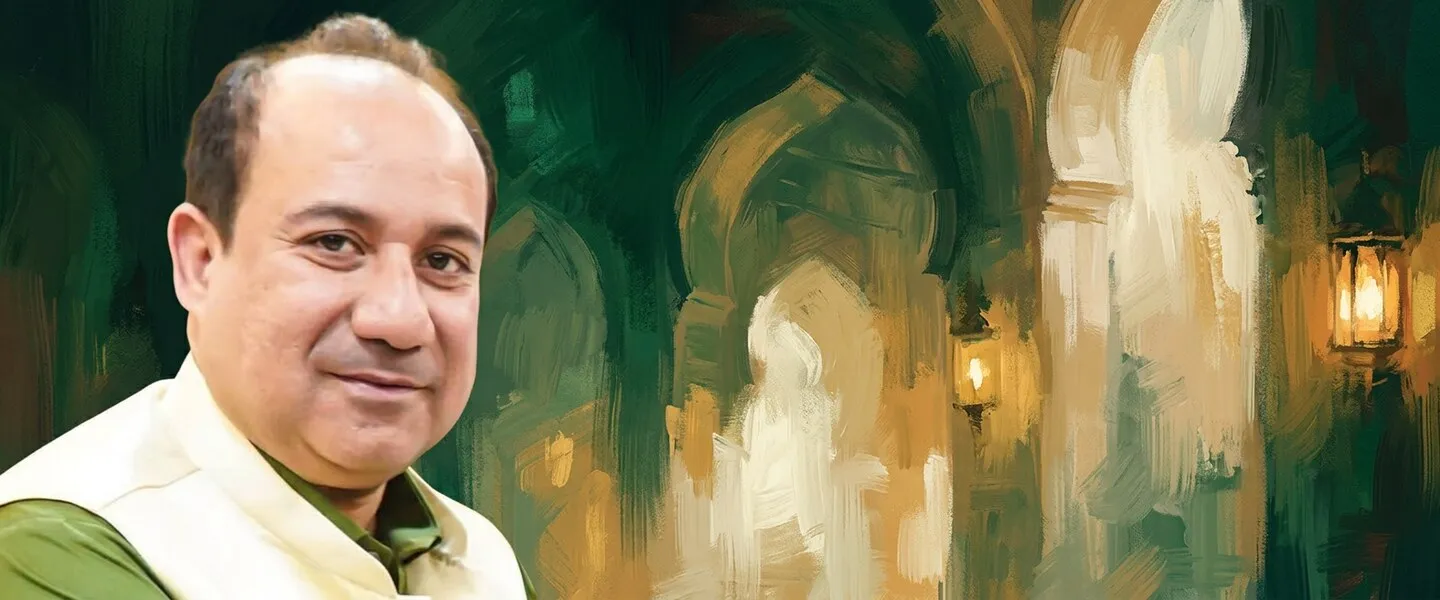
Rahat Fateh Ali Khan is a Qawwali and Sufi singer from Faisalabad in Pakistani Punjab, and the nephew and chosen successor of Nusrat Fateh Ali Khan. Trained from the age of seven, he became a leading Bollywood playback singer and Filmfare Award winner. In 2014 he became the first Pakistani to perform at the Nobel Peace Prize concert.
ਜੀਵਨ ਇੱਕ ਨਜ਼ਰ ਵਿੱਚ
- 1974ਜਨਮ Faisalabad, Punjab, Pakistan
- 2003Bollywood debut Paap
- 2014Milestone First Pakistani to perform at a Nobel Prize concert
- 2018ਸਨਮਾਨ Sitara-i-Imtiaz
- 2019ਸਨਮਾਨ University of Oxford
- 2024ਸਨਮਾਨ Hilal-e-Imtiaz
- ਪੰਜਾਬੀ ਨਾਂ
- ਰਾਹਤ ਫ਼ਤਿਹ ਅਲੀ ਖ਼ਾਨ
- ਜਨਮ
- 9 December 1974, Faisalabad, Punjab, Pakistan
- ਪਰਿਵਾਰ
- Son of Farrukh Fateh Ali Khan; nephew of Nusrat Fateh Ali Khan; grandson of Fateh Ali Khan
- Training
- Singing from age three; formal Qawwali training under Nusrat Fateh Ali Khan from age seven
- First performance
- 1979, aged nine, at his grandfather's death anniversary
- Bollywood debut
- 'Mann Ki Lagan', Paap (2003)
All 11 facts
- Award
- Filmfare Award for Best Male Playback Singer, for 'Dil Toh Bachcha Hai Ji' (Ishqiya)
- Milestone
- First Pakistani to perform at a Nobel Prize concert (2014)
- ਸਨਮਾਨ
- Honorary doctorate in music, University of Oxford (2019); Sitara-i-Imtiaz (2018); Hilal-e-Imtiaz (2024)
- Coke Studio
- Five editions, including 'Afreen Afreen' with Momina Mustehsan
- ਜ਼ਿਲ੍ਹਾ
- ਫ਼ੈਸਲਾਬਾਦ
Rahat Fateh Ali Khan, born on 9 December 1974 in Faisalabad, Punjab, Pakistan, is a Pakistani Punjabi singer of Qawwali, the devotional music of the Sufis. He is the nephew and chosen successor of Nusrat Fateh Ali Khan, and one of the most popular South Asian voices of his generation, equally at home in a Qawwali mehfil, a Bollywood soundtrack and an arena concert.
Early life and training
Rahat was born into a family of Qawwals and classical singers whose name became closely tied to South Asian musical tradition. His grandfather Fateh Ali Khan was a noted Qawwali singer, his father Farrukh Fateh Ali Khan sang in Nusrat's party, and his uncle Nusrat Fateh Ali Khan rose to become the most famous Qawwali singer in the world. Rahat has said in interviews that the family tradition is six hundred years old, and that becoming a singer was never in question.
Music began almost as soon as he could speak. He has recalled starting to sing at the age of three under his father's guidance, with formal training from his uncle beginning at seven. His first stage performance came in 1979, aged nine, at a ceremony marking his grandfather's death anniversary, and in 1985 he sang a solo Punjabi ghazal, 'Mukh Tera Sohneya Sharab Nalon Changa Ae', at a concert in Birmingham. As he moved through his teens he became a regular member of Nusrat's celebrated touring party.
Carrying the family Qawwali forward
When Nusrat Fateh Ali Khan died in 1997, Rahat, who had been selected by his uncle to lead the touring party after him, took over its leadership. The responsibility was large: a style built on long improvisations and on call and response between the lead singer and the chorus had to be carried to a new generation of listeners. Rahat kept the repertoire of his grandfather and uncle at the centre of his concerts while presenting it to younger audiences in Pakistan, India and the diaspora.
His voice also travelled through film work abroad. Working alongside his uncle, he contributed to the soundtrack of the Hollywood film Dead Man Walking (1995), collaborated with the composer James Horner on The Four Feathers (2002), and sang on the soundtrack of Apocalypto (2006).
What are Rahat Fateh Ali Khan's most famous songs?
His Bollywood playback debut came with 'Mann Ki Lagan' in the film Paap (2003), a composition of Nusrat's that had first been recorded for an unreleased album. Film songs then made him a household name across India and the diaspora. He has himself named 'Mann Ki Lagan' and 'O Re Piya' among his signature songs, and his duet 'Teri Ore' with Shreya Ghoshal, from Singh Is Kinng (2008), was a major hit. 'Dil Toh Bachcha Hai Ji', from Ishqiya, won him the Filmfare Award for Best Male Playback Singer.
Outside films, his best known recording is 'Zaroori Tha', from the 2014 album Back 2 Love. Its video became the first original non-film music video from the Indian subcontinent to pass 100 million views on YouTube, passed 200 million within three years of its release, and eventually crossed a billion views.
Coke Studio and the world stage
Rahat has appeared in five editions of Coke Studio Pakistan, and those appearances map his range: 'Garaj Baras' with Ali Azmat in the first season, 'Chhaap Tilak Sab Chheeni' with Abida Parveen in season 7, and in season 9 'Afreen Afreen' with Momina Mustehsan, which passed 300 million YouTube views and became the first Pakistani song to cross that mark. In the same season he sang 'Aaj Rang Hai' with Amjad Sabri, in what became Sabri's final performance.
In April 2012 he played Wembley Arena and the Manchester Arena in the United Kingdom, drawing a combined audience of more than 20,000 people. Two years later he reached a different kind of stage: at the 2014 Nobel Peace Prize concert he became the first Pakistani to perform at a Nobel Prize concert, singing his uncle's 'Tumhe Dillagi' and 'Mast Qalandar' along with 'Aao Parhao'. He has also appeared on MTV Unplugged India and worked as a judge on television singing shows in India and Pakistan.
Honours and later life
Honours have followed the music. In 2017 the University of Oxford named a rehearsal room the Ustad Rahat Fateh Ali Khan Music Room, an honour reported as the first of its kind for a South Asian artiste, and in 2019 Oxford awarded him an honorary doctorate in music. Pakistan gave him the Sitara-i-Imtiaz in 2018, and on Pakistan Day in 2024 the Hilal-e-Imtiaz, the country's second-highest civilian award, was conferred on him for his services to music. He continues to tour internationally, performing Qawwali and his film songs to arena audiences, and says Qawwali remains his first love.
Personal life and legacy
Rahat married Nida in 2001. They have two daughters, Maheen and Filza, and a son, Shahzaman, who has followed him into Qawwali singing. At home he is known by the nickname Tipu.
His legacy is continuity. Rahat took a family art form shaped in the mehfils of Punjab and carried it, without dropping its devotional core, into cinemas, streaming charts and concert halls from Faisalabad to London. For many younger listeners his voice is the first door into Qawwali, and through it, into the music of Nusrat Fateh Ali Khan.
ਰਾਹਤ ਫ਼ਤਿਹ ਅਲੀ ਖ਼ਾਨ ਦਾ ਜਨਮ 9 ਦਸੰਬਰ 1974 ਨੂੰ ਪਾਕਿਸਤਾਨ ਦੇ ਪੰਜਾਬ ਸੂਬੇ ਦੇ ਸ਼ਹਿਰ ਫ਼ੈਸਲਾਬਾਦ ਵਿੱਚ ਹੋਇਆ। ਉਹ ਸੂਫ਼ੀਆਂ ਦੇ ਭਗਤੀ ਸੰਗੀਤ, ਕੱਵਾਲੀ, ਦੇ ਪਾਕਿਸਤਾਨੀ ਪੰਜਾਬੀ ਗਾਇਕ ਹਨ। ਉਹ ਨੁਸਰਤ ਫ਼ਤਿਹ ਅਲੀ ਖ਼ਾਨ ਦੇ ਭਤੀਜੇ ਅਤੇ ਉਨ੍ਹਾਂ ਦੇ ਚੁਣੇ ਹੋਏ ਵਾਰਸ ਹਨ, ਅਤੇ ਆਪਣੀ ਪੀੜ੍ਹੀ ਦੀਆਂ ਦੱਖਣੀ ਏਸ਼ੀਆ ਦੀਆਂ ਸਭ ਤੋਂ ਹਰਮਨਪਿਆਰੀਆਂ ਆਵਾਜ਼ਾਂ ਵਿੱਚੋਂ ਇੱਕ ਹਨ, ਕੱਵਾਲੀ ਦੀ ਮਹਿਫ਼ਲ ਹੋਵੇ, ਬਾਲੀਵੁੱਡ ਦਾ ਗੀਤ ਹੋਵੇ ਜਾਂ ਵੱਡਾ ਸੰਗੀਤ ਸਮਾਗਮ, ਹਰ ਥਾਂ ਬਰਾਬਰ ਸਹਿਜ।
ਮੁੱਢਲਾ ਜੀਵਨ ਅਤੇ ਸਿਖਲਾਈ
ਰਾਹਤ ਦਾ ਜਨਮ ਕੱਵਾਲਾਂ ਅਤੇ ਸ਼ਾਸਤਰੀ ਗਾਇਕਾਂ ਦੇ ਇੱਕ ਪਰਿਵਾਰ ਵਿੱਚ ਹੋਇਆ, ਜਿਸ ਦਾ ਨਾਂ ਦੱਖਣੀ ਏਸ਼ੀਆ ਦੀ ਸੰਗੀਤ ਪਰੰਪਰਾ ਨਾਲ ਜੁੜ ਗਿਆ। ਉਨ੍ਹਾਂ ਦੇ ਦਾਦਾ ਫ਼ਤਿਹ ਅਲੀ ਖ਼ਾਨ ਮਸ਼ਹੂਰ ਕੱਵਾਲ ਸਨ, ਪਿਤਾ ਫ਼ਰੂਖ਼ ਫ਼ਤਿਹ ਅਲੀ ਖ਼ਾਨ ਨੁਸਰਤ ਦੀ ਪਾਰਟੀ ਵਿੱਚ ਗਾਉਂਦੇ ਸਨ, ਅਤੇ ਚਾਚਾ ਨੁਸਰਤ ਫ਼ਤਿਹ ਅਲੀ ਖ਼ਾਨ ਦੁਨੀਆ ਦੇ ਸਭ ਤੋਂ ਮਸ਼ਹੂਰ ਕੱਵਾਲ ਬਣੇ। ਰਾਹਤ ਨੇ ਇੰਟਰਵਿਊਆਂ ਵਿੱਚ ਕਿਹਾ ਹੈ ਕਿ ਉਨ੍ਹਾਂ ਦੀ ਪਰਿਵਾਰਕ ਪਰੰਪਰਾ ਛੇ ਸੌ ਸਾਲ ਪੁਰਾਣੀ ਹੈ ਅਤੇ ਗਾਇਕ ਬਣਨਾ ਉਨ੍ਹਾਂ ਲਈ ਕਦੇ ਸਵਾਲ ਹੀ ਨਹੀਂ ਸੀ।
ਸੰਗੀਤ ਲਗਭਗ ਉਦੋਂ ਹੀ ਸ਼ੁਰੂ ਹੋ ਗਿਆ ਜਦੋਂ ਉਹ ਬੋਲਣ ਲੱਗੇ। ਉਨ੍ਹਾਂ ਨੇ ਦੱਸਿਆ ਹੈ ਕਿ ਤਿੰਨ ਸਾਲ ਦੀ ਉਮਰ ਵਿੱਚ ਉਹ ਪਿਤਾ ਦੀ ਅਗਵਾਈ ਵਿੱਚ ਗਾਉਣ ਲੱਗ ਪਏ ਸਨ ਅਤੇ ਸੱਤ ਸਾਲ ਦੀ ਉਮਰ ਤੋਂ ਚਾਚਾ ਜੀ ਕੋਲੋਂ ਰਸਮੀ ਸਿਖਲਾਈ ਸ਼ੁਰੂ ਹੋਈ। ਉਨ੍ਹਾਂ ਦੀ ਪਹਿਲੀ ਸਟੇਜ ਪੇਸ਼ਕਾਰੀ 1979 ਵਿੱਚ, ਨੌਂ ਸਾਲ ਦੀ ਉਮਰ ਵਿੱਚ, ਦਾਦਾ ਜੀ ਦੀ ਬਰਸੀ ਦੇ ਸਮਾਗਮ ਵਿੱਚ ਹੋਈ, ਅਤੇ 1985 ਵਿੱਚ ਉਨ੍ਹਾਂ ਨੇ ਬਰਮਿੰਘਮ ਦੇ ਇੱਕ ਸਮਾਗਮ ਵਿੱਚ ਇਕੱਲਿਆਂ ਪੰਜਾਬੀ ਗ਼ਜ਼ਲ 'ਮੁੱਖ ਤੇਰਾ ਸੋਹਣਿਆ ਸ਼ਰਾਬ ਨਾਲੋਂ ਚੰਗਾ ਏ' ਗਾਈ। ਕਿਸ਼ੋਰ ਉਮਰ ਵਿੱਚ ਹੀ ਉਹ ਨੁਸਰਤ ਦੀ ਮਸ਼ਹੂਰ ਪਾਰਟੀ ਦੇ ਪੱਕੇ ਮੈਂਬਰ ਬਣ ਗਏ।
ਪਰਿਵਾਰ ਦੀ ਕੱਵਾਲੀ ਨੂੰ ਅੱਗੇ ਲਿਜਾਣਾ
ਜਦੋਂ 1997 ਵਿੱਚ ਨੁਸਰਤ ਫ਼ਤਿਹ ਅਲੀ ਖ਼ਾਨ ਦਾ ਦਿਹਾਂਤ ਹੋਇਆ, ਤਾਂ ਰਾਹਤ ਨੇ ਪਾਰਟੀ ਦੀ ਅਗਵਾਈ ਸੰਭਾਲੀ, ਕਿਉਂਕਿ ਚਾਚਾ ਜੀ ਨੇ ਉਨ੍ਹਾਂ ਨੂੰ ਆਪਣੇ ਬਾਅਦ ਪਾਰਟੀ ਦੀ ਅਗਵਾਈ ਲਈ ਚੁਣਿਆ ਸੀ। ਇਹ ਜ਼ਿੰਮੇਵਾਰੀ ਵੱਡੀ ਸੀ: ਲੰਬੀਆਂ ਇੰਮਪ੍ਰੋਵਾਈਜ਼ੇਸ਼ਨਾਂ ਅਤੇ ਮੁੱਖ ਗਾਇਕ ਤੇ ਕੋਰਸ ਦਰਮਿਆਨ ਸਵਾਲ-ਜਵਾਬ ਉੱਤੇ ਖੜ੍ਹੀ ਸ਼ੈਲੀ ਨੂੰ ਸਰੋਤਿਆਂ ਦੀ ਨਵੀਂ ਪੀੜ੍ਹੀ ਤੱਕ ਪਹੁੰਚਾਉਣਾ ਸੀ। ਰਾਹਤ ਨੇ ਦਾਦਾ ਜੀ ਅਤੇ ਚਾਚਾ ਜੀ ਦੇ ਭੰਡਾਰ ਨੂੰ ਆਪਣੇ ਸਮਾਗਮਾਂ ਦੇ ਕੇਂਦਰ ਵਿੱਚ ਰੱਖਿਆ ਅਤੇ ਨਾਲ ਹੀ ਇਸ ਨੂੰ ਪਾਕਿਸਤਾਨ, ਭਾਰਤ ਅਤੇ ਪ੍ਰਵਾਸ ਵਿੱਚ ਰਹਿੰਦੇ ਨੌਜਵਾਨ ਸਰੋਤਿਆਂ ਸਾਹਮਣੇ ਪੇਸ਼ ਕੀਤਾ।
ਉਨ੍ਹਾਂ ਦੀ ਆਵਾਜ਼ ਵਿਦੇਸ਼ੀ ਫ਼ਿਲਮਾਂ ਰਾਹੀਂ ਵੀ ਪਹੁੰਚੀ। ਚਾਚਾ ਜੀ ਨਾਲ ਕੰਮ ਕਰਦਿਆਂ ਉਨ੍ਹਾਂ ਨੇ ਹਾਲੀਵੁੱਡ ਫ਼ਿਲਮ Dead Man Walking (1995) ਦੇ ਸਾਊਂਡਟਰੈਕ ਵਿੱਚ ਹਿੱਸਾ ਪਾਇਆ, The Four Feathers (2002) ਵਿੱਚ ਸੰਗੀਤਕਾਰ James Horner ਨਾਲ ਕੰਮ ਕੀਤਾ, ਅਤੇ Apocalypto (2006) ਦੇ ਸਾਊਂਡਟਰੈਕ ਵਿੱਚ ਗਾਇਆ।
ਰਾਹਤ ਫ਼ਤਿਹ ਅਲੀ ਖ਼ਾਨ ਦੇ ਸਭ ਤੋਂ ਮਸ਼ਹੂਰ ਗੀਤ ਕਿਹੜੇ ਹਨ?
ਬਾਲੀਵੁੱਡ ਵਿੱਚ ਉਨ੍ਹਾਂ ਦੀ ਪਲੇਬੈਕ ਸ਼ੁਰੂਆਤ ਫ਼ਿਲਮ Paap (2003) ਦੇ ਗੀਤ 'ਮਨ ਕੀ ਲਗਨ' ਨਾਲ ਹੋਈ, ਜੋ ਨੁਸਰਤ ਦੀ ਧੁਨ ਸੀ ਅਤੇ ਪਹਿਲਾਂ ਇੱਕ ਅਣਰਿਲੀਜ਼ ਐਲਬਮ ਲਈ ਰਿਕਾਰਡ ਹੋਈ ਸੀ। ਫਿਰ ਫ਼ਿਲਮੀ ਗੀਤਾਂ ਨੇ ਉਨ੍ਹਾਂ ਨੂੰ ਭਾਰਤ ਅਤੇ ਪ੍ਰਵਾਸ ਵਿੱਚ ਘਰ-ਘਰ ਪਹੁੰਚਾ ਦਿੱਤਾ। ਉਨ੍ਹਾਂ ਨੇ ਖ਼ੁਦ 'ਮਨ ਕੀ ਲਗਨ' ਅਤੇ 'ਓ ਰੇ ਪੀਆ' ਨੂੰ ਆਪਣੇ ਪਛਾਣ ਵਾਲੇ ਗੀਤਾਂ ਵਿੱਚ ਗਿਣਿਆ ਹੈ, ਅਤੇ Singh Is Kinng (2008) ਦਾ ਸ਼੍ਰੇਆ ਘੋਸ਼ਾਲ ਨਾਲ ਗਾਇਆ ਜੋੜੀ ਗੀਤ 'ਤੇਰੀ ਓਰੇ' ਵੱਡਾ ਹਿੱਟ ਰਿਹਾ। Ishqiya ਦੇ ਗੀਤ 'ਦਿਲ ਤੋ ਬੱਚਾ ਹੈ ਜੀ' ਲਈ ਉਨ੍ਹਾਂ ਨੂੰ ਸਰਵੋਤਮ ਪੁਰਸ਼ ਪਲੇਬੈਕ ਗਾਇਕ ਦਾ ਫ਼ਿਲਮਫ਼ੇਅਰ ਪੁਰਸਕਾਰ ਮਿਲਿਆ।
ਫ਼ਿਲਮਾਂ ਤੋਂ ਬਾਹਰ ਉਨ੍ਹਾਂ ਦੀ ਸਭ ਤੋਂ ਜਾਣੀ-ਪਛਾਣੀ ਰਿਕਾਰਡਿੰਗ 'ਜ਼ਰੂਰੀ ਥਾ' ਹੈ, ਜੋ 2014 ਦੀ ਐਲਬਮ Back 2 Love ਦਾ ਗੀਤ ਹੈ। ਇਸ ਦਾ ਵੀਡੀਓ ਭਾਰਤੀ ਉਪਮਹਾਂਦੀਪ ਦਾ ਪਹਿਲਾ ਗ਼ੈਰ-ਫ਼ਿਲਮੀ ਮੂਲ ਮਿਊਜ਼ਿਕ ਵੀਡੀਓ ਬਣਿਆ ਜਿਸ ਨੇ YouTube ਉੱਤੇ 100 ਮਿਲੀਅਨ ਵਿਊ ਪਾਰ ਕੀਤੇ, ਰਿਲੀਜ਼ ਦੇ ਤਿੰਨ ਸਾਲਾਂ ਦੇ ਅੰਦਰ 200 ਮਿਲੀਅਨ ਵਿਊ ਪਾਰ ਕੀਤੇ ਅਤੇ ਅੰਤ ਵਿੱਚ ਇੱਕ ਅਰਬ ਵਿਊ ਵੀ ਪਾਰ ਕਰ ਗਿਆ।
ਕੋਕ ਸਟੂਡੀਓ ਅਤੇ ਦੁਨੀਆ ਦਾ ਸਟੇਜ
ਰਾਹਤ ਕੋਕ ਸਟੂਡੀਓ ਪਾਕਿਸਤਾਨ ਦੇ ਪੰਜ ਸੀਜ਼ਨਾਂ ਵਿੱਚ ਆਏ ਹਨ ਅਤੇ ਉਹ ਪੇਸ਼ਕਾਰੀਆਂ ਉਨ੍ਹਾਂ ਦੀ ਵਿਸ਼ਾਲ ਲੜੀ ਦਿਖਾਉਂਦੀਆਂ ਹਨ: ਪਹਿਲੇ ਸੀਜ਼ਨ ਵਿੱਚ ਅਲੀ ਅਜ਼ਮਤ ਨਾਲ 'ਗਰਜ ਬਰਸ', ਸੀਜ਼ਨ 7 ਵਿੱਚ ਆਬਿਦਾ ਪਰਵੀਨ ਨਾਲ 'ਛਾਪ ਤਿਲਕ ਸਬ ਛੀਨੀ', ਅਤੇ ਸੀਜ਼ਨ 9 ਵਿੱਚ ਮੋਮਿਨਾ ਮੁਸਤੇਹਸਨ ਨਾਲ 'ਆਫ਼ਰੀਨ ਆਫ਼ਰੀਨ', ਜਿਸ ਨੇ YouTube ਉੱਤੇ 300 ਮਿਲੀਅਨ ਤੋਂ ਵੱਧ ਵਿਊ ਹਾਸਲ ਕੀਤੇ ਅਤੇ ਇਹ ਸੀਮਾ ਪਾਰ ਕਰਨ ਵਾਲਾ ਪਹਿਲਾ ਪਾਕਿਸਤਾਨੀ ਗੀਤ ਬਣਿਆ। ਉਸੇ ਸੀਜ਼ਨ ਵਿੱਚ ਉਨ੍ਹਾਂ ਨੇ ਅਮਜਦ ਸਾਬਰੀ ਨਾਲ 'ਆਜ ਰੰਗ ਹੈ' ਗਾਇਆ, ਜੋ ਸਾਬਰੀ ਦੀ ਆਖ਼ਰੀ ਪੇਸ਼ਕਾਰੀ ਸਾਬਤ ਹੋਈ।
ਅਪਰੈਲ 2012 ਵਿੱਚ ਉਨ੍ਹਾਂ ਨੇ ਬਰਤਾਨੀਆ ਵਿੱਚ Wembley Arena ਅਤੇ Manchester Arena ਵਿੱਚ ਗਾਇਆ, ਜਿੱਥੇ ਦੋਵਾਂ ਥਾਵਾਂ ਮਿਲਾ ਕੇ 20,000 ਤੋਂ ਵੱਧ ਸਰੋਤੇ ਆਏ। ਦੋ ਸਾਲ ਬਾਅਦ ਉਹ ਇੱਕ ਵੱਖਰੀ ਕਿਸਮ ਦੇ ਸਟੇਜ ਉੱਤੇ ਪਹੁੰਚੇ: 2014 ਦੇ ਨੋਬਲ ਸ਼ਾਂਤੀ ਪੁਰਸਕਾਰ ਸਮਾਗਮ ਵਿੱਚ ਉਹ ਨੋਬਲ ਪੁਰਸਕਾਰ ਸਮਾਗਮ ਵਿੱਚ ਗਾਉਣ ਵਾਲੇ ਪਹਿਲੇ ਪਾਕਿਸਤਾਨੀ ਬਣੇ, ਉੱਥੇ ਉਨ੍ਹਾਂ ਨੇ ਚਾਚਾ ਜੀ ਦੀਆਂ 'ਤੁਮਹੇ ਦਿਲਲਗੀ' ਅਤੇ 'ਮਸਤ ਕਲੰਦਰ' ਨਾਲ 'ਆਓ ਪੜ੍ਹਾਓ' ਵੀ ਗਾਇਆ। ਉਹ MTV Unplugged India ਵਿੱਚ ਵੀ ਆਏ ਹਨ ਅਤੇ ਭਾਰਤ ਤੇ ਪਾਕਿਸਤਾਨ ਵਿੱਚ ਟੈਲੀਵਿਜ਼ਨ ਗਾਇਕੀ ਸ਼ੋਆਂ ਵਿੱਚ ਜੱਜ ਵਜੋਂ ਕੰਮ ਕਰ ਚੁੱਕੇ ਹਨ।
ਸਨਮਾਨ ਅਤੇ ਬਾਅਦ ਦਾ ਜੀਵਨ
ਸੰਗੀਤ ਦੇ ਨਾਲ ਸਨਮਾਨ ਵੀ ਮਿਲਦੇ ਰਹੇ। 2017 ਵਿੱਚ ਆਕਸਫ਼ੋਰਡ ਯੂਨੀਵਰਸਿਟੀ ਨੇ ਇੱਕ ਰਿਹਰਸਲ ਕਮਰੇ ਦਾ ਨਾਂ Ustad Rahat Fateh Ali Khan Music Room ਰੱਖਿਆ, ਜਿਸ ਬਾਰੇ ਕਿਹਾ ਗਿਆ ਕਿ ਇਹ ਕਿਸੇ ਦੱਖਣੀ ਏਸ਼ੀਆਈ ਕਲਾਕਾਰ ਲਈ ਆਪਣੀ ਕਿਸਮ ਦਾ ਪਹਿਲਾ ਸਨਮਾਨ ਸੀ, ਅਤੇ 2019 ਵਿੱਚ ਆਕਸਫ਼ੋਰਡ ਨੇ ਉਨ੍ਹਾਂ ਨੂੰ ਸੰਗੀਤ ਵਿੱਚ ਆਨਰੇਰੀ ਡਾਕਟਰੇਟ ਦਿੱਤੀ। ਪਾਕਿਸਤਾਨ ਨੇ ਉਨ੍ਹਾਂ ਨੂੰ 2018 ਵਿੱਚ ਸਿਤਾਰਾ-ਏ-ਇਮਤਿਆਜ਼ ਦਿੱਤਾ, ਅਤੇ 2024 ਵਿੱਚ ਪਾਕਿਸਤਾਨ ਦਿਵਸ ਉੱਤੇ ਉਨ੍ਹਾਂ ਨੂੰ ਦੇਸ਼ ਦਾ ਦੂਜਾ ਸਭ ਤੋਂ ਵੱਡਾ ਸਿਵਲ ਪੁਰਸਕਾਰ, ਹਿਲਾਲ-ਏ-ਇਮਤਿਆਜ਼, ਸੰਗੀਤ ਦੀਆਂ ਸੇਵਾਵਾਂ ਲਈ ਦਿੱਤਾ ਗਿਆ। ਉਹ ਅੰਤਰਰਾਸ਼ਟਰੀ ਦੌਰੇ ਕਰਦੇ ਰਹਿੰਦੇ ਹਨ, ਵੱਡੇ ਅਖਾੜਿਆਂ ਵਿੱਚ ਕੱਵਾਲੀ ਅਤੇ ਆਪਣੇ ਫ਼ਿਲਮੀ ਗੀਤ ਗਾਉਂਦੇ ਹਨ, ਅਤੇ ਕਹਿੰਦੇ ਹਨ ਕਿ ਕੱਵਾਲੀ ਹੀ ਉਨ੍ਹਾਂ ਦਾ ਪਹਿਲਾ ਪਿਆਰ ਹੈ।
ਨਿੱਜੀ ਜੀਵਨ ਅਤੇ ਵਿਰਾਸਤ
ਰਾਹਤ ਦਾ ਵਿਆਹ 2001 ਵਿੱਚ ਨਿਦਾ ਨਾਲ ਹੋਇਆ। ਉਨ੍ਹਾਂ ਦੀਆਂ ਦੋ ਧੀਆਂ, ਮਹੀਨ ਅਤੇ ਫਿਲਜ਼ਾ, ਅਤੇ ਇੱਕ ਪੁੱਤਰ ਸ਼ਾਹਜ਼ਮਾਨ ਹੈ, ਜੋ ਕੱਵਾਲੀ ਗਾਇਕੀ ਵਿੱਚ ਉਨ੍ਹਾਂ ਦੇ ਪਿੱਛੇ ਆਇਆ ਹੈ। ਘਰ ਵਿੱਚ ਉਨ੍ਹਾਂ ਨੂੰ ਟੀਪੂ ਕਹਿੰਦੇ ਹਨ।
ਉਨ੍ਹਾਂ ਦੀ ਵਿਰਾਸਤ ਨਿਰੰਤਰਤਾ ਹੈ। ਰਾਹਤ ਨੇ ਪੰਜਾਬ ਦੀਆਂ ਮਹਿਫ਼ਲਾਂ ਵਿੱਚ ਪਲੀ ਇੱਕ ਪਰਿਵਾਰਕ ਕਲਾ ਨੂੰ, ਉਸ ਦੇ ਭਗਤੀ ਕੇਂਦਰ ਨੂੰ ਛੱਡੇ ਬਿਨਾਂ, ਸਿਨੇਮਾ ਘਰਾਂ, ਸਟ੍ਰੀਮਿੰਗ ਚਾਰਟਾਂ ਅਤੇ ਫ਼ੈਸਲਾਬਾਦ ਤੋਂ ਲੰਡਨ ਤੱਕ ਦੇ ਸਮਾਗਮ ਹਾਲਾਂ ਤੱਕ ਪਹੁੰਚਾਇਆ। ਬਹੁਤ ਸਾਰੇ ਨੌਜਵਾਨ ਸਰੋਤਿਆਂ ਲਈ ਉਨ੍ਹਾਂ ਦੀ ਆਵਾਜ਼ ਕੱਵਾਲੀ ਵੱਲ ਪਹਿਲਾ ਦਰਵਾਜ਼ਾ ਹੈ, ਅਤੇ ਉਸ ਰਾਹੀਂ ਨੁਸਰਤ ਫ਼ਤਿਹ ਅਲੀ ਖ਼ਾਨ ਦੇ ਸੰਗੀਤ ਵੱਲ।
ਲੋਕ

ਥਾਵਾਂ

More music
ਸਾਰੇ ਵੇਖੋ


ਸਰੋਤ (3)
ਜੁਗਤੀ ਮੁਫ਼ਤ ਅਤੇ ਸੁਤੰਤਰ ਹੈ। ਪਾਠਕਾਂ ਦਾ ਸਹਿਯੋਗ ਕੋਸ਼ ਨੂੰ ਵਧਾਉਂਦਾ ਹੈ।
ਸਹਿਯੋਗ