
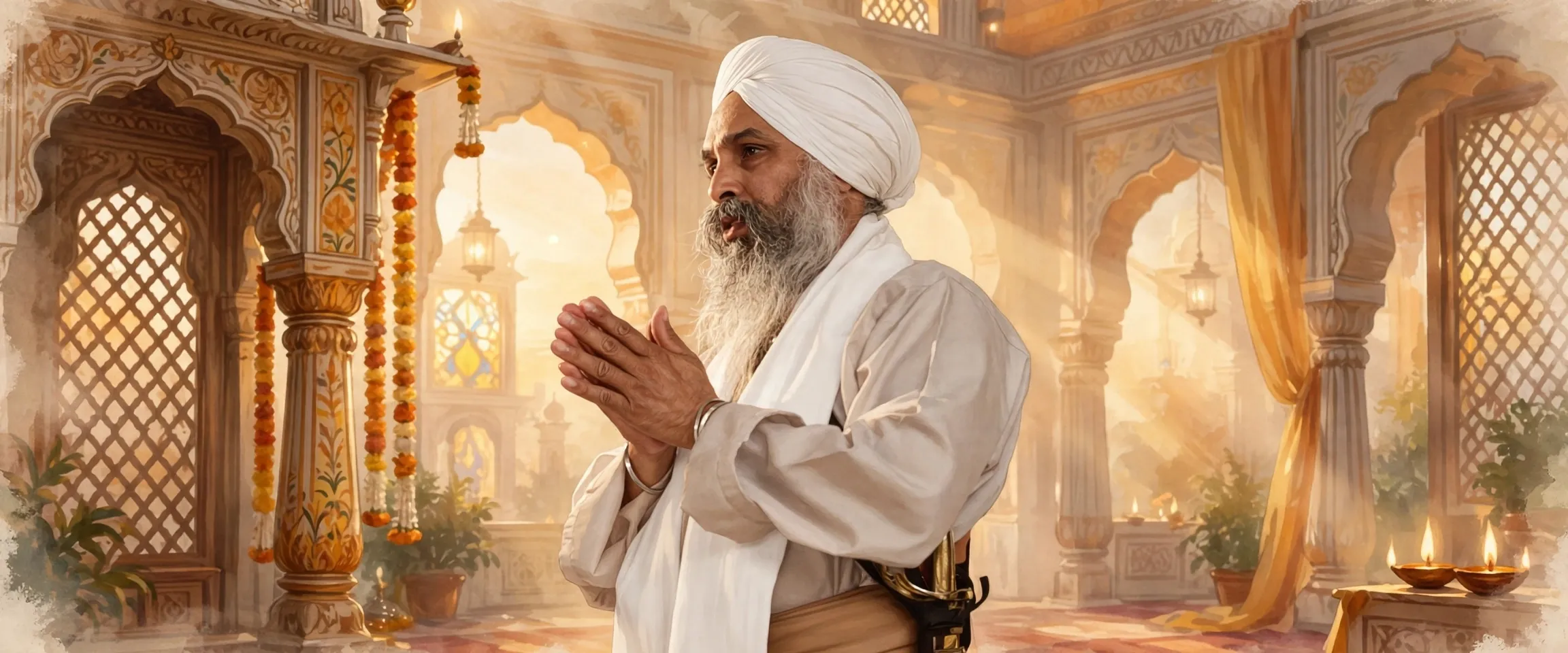
ਅਰਦਾਸ ਸਿੱਖਾਂ ਦੀ ਰਸਮੀ ਅਰਦਾਸ ਹੈ, ਜੋ ਲਗਭਗ ਹਰ ਸਿੱਖ ਸੇਵਾ ਦੇ ਅੰਤ ਵਿੱਚ ਅਤੇ ਕਿਸੇ ਵੀ ਅਹਿਮ ਕੰਮ ਤੋਂ ਪਹਿਲਾਂ ਜਾਂ ਬਾਅਦ ਵਿੱਚ ਹੱਥ ਜੋੜ ਕੇ ਖੜ੍ਹੇ ਹੋ ਕੇ ਕੀਤੀ ਜਾਂਦੀ ਹੈ। ਅੱਧੀ ਯਾਦ ਅਤੇ ਅੱਧੀ ਬੇਨਤੀ, ਇਹ ਦਸਾਂ ਗੁਰੂਆਂ, ਗੁਰੂ ਗ੍ਰੰਥ ਸਾਹਿਬ ਜੀ ਅਤੇ ਖਾਲਸੇ ਦੀਆਂ ਕੁਰਬਾਨੀਆਂ ਨੂੰ ਯਾਦ ਕਰਦੀ ਹੈ, ਅਤੇ ਸਾਰੀ ਮਨੁੱਖਤਾ ਦੇ ਭਲੇ ਦੀ ਮੰਗ ਨਾਲ ਮੁੱਕਦੀ ਹੈ: ਨਾਨਕ ਨਾਮ ਚੜ੍ਹਦੀ ਕਲਾ, ਤੇਰੇ ਭਾਣੇ ਸਰਬੱਤ ਦਾ ਭਲਾ।
- ਪੰਜਾਬੀ ਨਾਂ
- ਅਰਦਾਸ
- ਗੁਰਮੁਖੀ
- ਅਰਦਾਸ
- ਅਰਥ
- ਬੇਨਤੀ ਜਾਂ ਅਰਜ਼, ਫ਼ਾਰਸੀ ਅਰਜ਼ਦਾਸ਼ਤ ਤੋਂ
- ਰੂਪ
- ਤਿੰਨ ਭਾਗਾਂ ਵਿੱਚ ਖੜ੍ਹ ਕੇ ਕੀਤੀ ਜਾਣ ਵਾਲੀ ਸਾਂਝੀ ਅਰਦਾਸ
- ਨਿਸ਼ਚਿਤ ਕੀਤਾ
- ਗੁਰੂ ਗੋਬਿੰਦ ਸਿੰਘ ਜੀ ਨੇ ਸ਼ੁਰੂਆਤੀ ਅਤੇ ਅੰਤਿਮ ਹਿੱਸੇ ਨਿਸ਼ਚਿਤ ਕੀਤੇ
- ਮਿਆਰੀ ਪਾਠ
- ਸਿੱਖ ਰਹਿਤ ਮਰਯਾਦਾ (ਸ਼੍ਰੋਮਣੀ ਕਮੇਟੀ) ਵਿੱਚ ਪ੍ਰਵਾਨਿਤ ਪਾਠ
All 8 facts
- ਕਦੋਂ ਹੁੰਦੀ ਹੈ
- ਸੇਵਾਵਾਂ ਦੀ ਸਮਾਪਤੀ ਤੇ, ਪ੍ਰਕਾਸ਼ ਅਤੇ ਸੁਖ ਆਸਣ ਵੇਲੇ, ਜੀਵਨ ਦੀਆਂ ਰਸਮਾਂ ਤੇ, ਅਤੇ ਅਹਿਮ ਕੰਮਾਂ ਤੋਂ ਪਹਿਲਾਂ
- ਅੰਤਿਮ ਸ਼ਬਦ
- ਨਾਨਕ ਨਾਮ ਚੜ੍ਹਦੀ ਕਲਾ, ਤੇਰੇ ਭਾਣੇ ਸਰਬੱਤ ਦਾ ਭਲਾ
Ardas is the set prayer that frames Sikh worship. When a service ends, when the Guru Granth Sahib Ji is opened or put to rest, when a child is named, a couple married or a family bereaved, the congregation rises, folds its hands and stands for Ardas. One voice leads, everyone stands together, and the petition to Waheguru carries five centuries of Sikh memory inside it.
What is Ardas?
Ardas is a supplication: a formal request made in humility. The word comes from the Persian arzdasht, a written petition presented by an inferior to a superior, and that sense of a humble request before a higher authority still shapes the prayer. Ardas is not found in the Guru Granth Sahib Ji. It is one of the few well known Sikh prayers not written in full by the Gurus, because it grew with the community: its fixed core was set by Guru Gobind Singh Ji, and its middle section has been revised across the centuries as new chapters of Sikh history were added to the remembrance. Any Sikh, man or woman, may lead it.
The three parts of Ardas
The first part is fixed and may not be altered or omitted. It opens with lines from Chandi di Var, the ballad in the Dasam Granth that begins Pritham Bhagauti Simar Kai: remember first the divine power, then Guru Nanak Dev Ji, and then each Guru in turn, Angad, Amar Das, Ram Das, Arjan, Hargobind, Har Rai, Har Krishan and Tegh Bahadur Ji, closing with the tenth Guru and with the light of all ten Gurus present in the Guru Granth Sahib Ji, at which the congregation calls out Waheguru.
The second part is the memory of the Panth. It recalls the ਪੰਜ ਪਿਆਰੇ, the Chaar Sahibzade, the Forty Mukte and the generations of Sikhs who, in the words of the prayer, gave their heads but not their faith, and it turns the mind to the five takhts and to all gurdwaras. It prays for the Khalsa: for protection wherever Sikhs live, and for deg and tegh, the cauldron and the sword, charity and courage, never to fail. This is the flexible part of Ardas: here the leader adds the petition of the day, for a family, a journey, a recovery, a beginning, before the prayer moves to its close.
The third part is again fixed. It asks forgiveness for errors and omissions, asks that the purposes of all be fulfilled and that the Sikhs be granted the company of those who keep the Name in mind, and it ends with the best known lines of the prayer: Nanak Naam Chardikala, Tere Bhane Sarbat Da Bhala. In Your will, may the Name of Nanak rise ever higher, and may the good of all prevail. The prayer asks for everyone, and it names no enemy.
Where does Ardas come from?
Sikh tradition attributes Ardas to Guru Gobind Singh Ji, who fixed its opening lines and its closing section; those parts are treated as unalterable. The remembrance in the middle kept growing as the community lived through the persecutions and struggles of the eighteenth century and after, which is why an early manuscript fragment of the prayer, dating to about the 1730s, already differs in detail from the text used today. In the twentieth century the Tat Khalsa reformers revised the middle section extensively, and the Shiromani Gurdwara Parbandhak Committee published an approved version of the whole Ardas in the Sikh Rahit Maryada, the Sikh code of conduct. In the gurdwara, Ardas is usually preceded by the singing of Tu Thakur Tum Peh Ardas, the eighth stanza of the fourth ashtapadi of Sukhmani Sahib: You are our Master, to You we offer this prayer.
When is Ardas performed?
Ardas is performed more often than any other Sikh prayer. It is offered at prakash, when the Guru Granth Sahib Ji is opened in the morning, and at sukhasan, when it is put to rest at night. It closes the diwan after kirtan, it opens and closes an Akhand Path, and it is repeated several times during Amrit Sanchar, when the Panj Pyare prepare and administer amrit. It is read at the naming of a child, at engagements, at the start of the Anand Karaj wedding, and through the funeral rites; the final Ardas at the bhog that ends the mourning period is known to every Sikh family as the Antim Ardas. Sikhs also say Ardas before a journey, an examination, a new business or any significant task, and a devout Sikh may say it morning and evening at home. If there is no time for the full text, a short Ardas is made: the prayer allows a brief form.
How do you stand for Ardas?
Everyone stands. The leader, who may be any Sikh, stands facing the Guru Granth Sahib Ji while the sangat stands behind with feet together, head covered, shoes removed and palms pressed together at the chest in an attitude of humility. At the points where the prayer says Bolo Ji Waheguru, utter Waheguru, the congregation responds aloud with the Name. When the prayer ends, the sangat bows together and proclaims the greeting of the Khalsa: Waheguru Ji Ka Khalsa, Waheguru Ji Ki Fateh. The Khalsa belongs to Waheguru; victory belongs to Waheguru.
Why does Ardas end with the good of all?
The close of Ardas explains the whole prayer. A Sikh does not ask only for himself or even only for Sikhs: the final petition is sarbat da bhala, the welfare of all, prayed in a spirit of chardikala, the ever rising optimism that refuses despair. Commentators on Ardas point to the values it is meant to plant in the person praying: nimrata, humility; daya, compassion; and surrender to the divine will, the acceptance that what comes in hukam is finally for the good. Because the prayer is said standing together, rich and poor, elder and child in one row, it is also a weekly lesson in equality: the community remembers its martyrs, and then asks for the good of the very world those martyrs lived in.
ਅਰਦਾਸ ਸਿੱਖ ਧਰਮ ਦੀ ਉਹ ਨਿਸ਼ਚਿਤ ਅਰਦਾਸ ਹੈ ਜੋ ਹਰ ਸਿੱਖ ਸੇਵਾ ਨੂੰ ਘੇਰਦੀ ਹੈ। ਜਦੋਂ ਕੋਈ ਦੀਵਾਨ ਸਮਾਪਤ ਹੁੰਦਾ ਹੈ, ਜਦੋਂ ਗੁਰੂ ਗ੍ਰੰਥ ਸਾਹਿਬ ਜੀ ਦਾ ਪ੍ਰਕਾਸ਼ ਜਾਂ ਸੁਖ ਆਸਣ ਹੁੰਦਾ ਹੈ, ਜਦੋਂ ਬੱਚੇ ਦਾ ਨਾਂ ਰੱਖਿਆ ਜਾਂਦਾ ਹੈ, ਵਿਆਹ ਹੁੰਦਾ ਹੈ ਜਾਂ ਕਿਸੇ ਪਰਿਵਾਰ ਵਿੱਚ ਸੋਗ ਪੈਂਦਾ ਹੈ, ਸਾਰੀ ਸੰਗਤ ਉੱਠਦੀ ਹੈ, ਹੱਥ ਜੋੜਦੀ ਹੈ ਅਤੇ ਅਰਦਾਸ ਵਿੱਚ ਖੜ੍ਹੀ ਹੁੰਦੀ ਹੈ। ਇੱਕ ਆਵਾਜ਼ ਅਗਵਾਈ ਕਰਦੀ ਹੈ, ਸਾਰੇ ਇਕੱਠੇ ਖੜ੍ਹੇ ਹੁੰਦੇ ਹਨ, ਅਤੇ ਵਾਹਿਗੁਰੂ ਅੱਗੇ ਕੀਤੀ ਇਹ ਬੇਨਤੀ ਆਪਣੇ ਅੰਦਰ ਸਿੱਖ ਇਤਿਹਾਸ ਦੀਆਂ ਪੰਜ ਸਦੀਆਂ ਦੀ ਯਾਦ ਸਮੋਈ ਬੈਠੀ ਹੈ।
ਅਰਦਾਸ ਕੀ ਹੈ?
ਅਰਦਾਸ ਇੱਕ ਬੇਨਤੀ ਹੈ: ਨਿਮਰਤਾ ਨਾਲ ਕੀਤੀ ਗਈ ਰਸਮੀ ਅਰਜ਼। ਇਹ ਸ਼ਬਦ ਫ਼ਾਰਸੀ ਦੇ ਅਰਜ਼ਦਾਸ਼ਤ ਤੋਂ ਆਇਆ ਹੈ, ਜਿਸ ਦਾ ਅਰਥ ਹੈ ਕਿਸੇ ਵੱਡੇ ਅਧਿਕਾਰੀ ਅੱਗੇ ਪੇਸ਼ ਕੀਤੀ ਗਈ ਲਿਖਤੀ ਅਰਜ਼ੀ, ਅਤੇ ਕਿਸੇ ਉੱਚੀ ਸ਼ਕਤੀ ਅੱਗੇ ਨਿਮਰ ਬੇਨਤੀ ਦਾ ਇਹ ਭਾਵ ਅੱਜ ਵੀ ਇਸ ਅਰਦਾਸ ਵਿੱਚ ਜਿਉਂਦਾ ਹੈ। ਅਰਦਾਸ ਗੁਰੂ ਗ੍ਰੰਥ ਸਾਹਿਬ ਜੀ ਵਿੱਚ ਦਰਜ ਨਹੀਂ ਹੈ। ਇਹ ਉਨ੍ਹਾਂ ਗਿਣਤੀਆਂ ਦੀਆਂ ਸਿੱਖ ਅਰਦਾਸਾਂ ਵਿੱਚੋਂ ਇੱਕ ਹੈ ਜੋ ਪੂਰੀ ਤਰ੍ਹਾਂ ਗੁਰੂ ਸਾਹਿਬਾਨ ਨੇ ਨਹੀਂ ਲਿਖੀ, ਕਿਉਂਕਿ ਇਹ ਪੰਥ ਨਾਲ ਨਾਲ ਵਧਦੀ ਰਹੀ: ਇਸ ਦਾ ਨਿਸ਼ਚਿਤ ਹਿੱਸਾ ਗੁਰੂ ਗੋਬਿੰਦ ਸਿੰਘ ਜੀ ਨੇ ਬੰਨ੍ਹਿਆ, ਅਤੇ ਇਸ ਦਾ ਵਿਚਕਾਰਲਾ ਹਿੱਸਾ ਸਦੀਆਂ ਵਿੱਚ ਬਦਲਦਾ ਰਿਹਾ, ਜਿਵੇਂ ਜਿਵੇਂ ਸਿੱਖ ਇਤਿਹਾਸ ਦੇ ਨਵੇਂ ਪੰਨੇ ਯਾਦ ਵਿੱਚ ਜੁੜਦੇ ਗਏ। ਅਰਦਾਸ ਕੋਈ ਵੀ ਸਿੱਖ, ਮਰਦ ਜਾਂ ਔਰਤ, ਕਰਵਾ ਸਕਦਾ ਹੈ।
ਅਰਦਾਸ ਦੇ ਤਿੰਨ ਭਾਗ
ਪਹਿਲਾ ਭਾਗ ਨਿਸ਼ਚਿਤ ਹੈ ਅਤੇ ਨਾ ਬਦਲਿਆ ਜਾ ਸਕਦਾ ਹੈ ਅਤੇ ਨਾ ਛੱਡਿਆ ਜਾ ਸਕਦਾ ਹੈ। ਇਹ ਚੰਡੀ ਦੀ ਵਾਰ ਦੀਆਂ ਸਤਰਾਂ ਨਾਲ ਸ਼ੁਰੂ ਹੁੰਦਾ ਹੈ, ਜੋ ਪ੍ਰਿਥਮ ਭਗੌਤੀ ਸਿਮਰਿ ਕੈ ਤੋਂ ਆਰੰਭ ਹੁੰਦੀ ਹੈ: ਪਹਿਲਾਂ ਉਸ ਸ਼ਕਤੀ ਦਾ ਸਿਮਰਨ, ਫਿਰ ਗੁਰੂ ਨਾਨਕ ਦੇਵ ਜੀ ਦਾ, ਅਤੇ ਫਿਰ ਵਾਰੀ ਵਾਰੀ ਹਰ ਗੁਰੂ ਦਾ, ਅੰਗਦ, ਅਮਰਦਾਸ, ਰਾਮਦਾਸ, ਅਰਜਨ, ਹਰਿਗੋਬਿੰਦ, ਹਰਿਰਾਇ, ਹਰਿਕ੍ਰਿਸ਼ਨ ਅਤੇ ਤੇਗ ਬਹਾਦਰ ਜੀ ਦਾ, ਅਤੇ ਅੰਤ ਵਿੱਚ ਦਸਵੇਂ ਗੁਰੂ ਅਤੇ ਗੁਰੂ ਗ੍ਰੰਥ ਸਾਹਿਬ ਜੀ ਵਿੱਚ ਮੌਜੂਦ ਦਸਾਂ ਗੁਰੂਆਂ ਦੀ ਜੋਤ ਦਾ, ਜਿੱਥੇ ਸੰਗਤ ਵਾਹਿਗੁਰੂ ਬੋਲਦੀ ਹੈ।
ਦੂਜਾ ਭਾਗ ਪੰਥ ਦੀ ਯਾਦ ਹੈ। ਇਸ ਵਿੱਚ ਪੰਜ ਪਿਆਰਿਆਂ, ਚਾਰ ਸਾਹਿਬਜ਼ਾਦਿਆਂ, ਚਾਲੀ ਮੁਕਤਿਆਂ ਅਤੇ ਉਨ੍ਹਾਂ ਪੀੜ੍ਹੀਆਂ ਦਾ ਸਿਮਰਨ ਹੈ ਜਿਨ੍ਹਾਂ ਨੇ, ਅਰਦਾਸ ਦੇ ਸ਼ਬਦਾਂ ਵਿੱਚ, ਸੀਸ ਦਿੱਤੇ ਪਰ ਸਿੱਖੀ ਨਹੀਂ ਛੱਡੀ, ਅਤੇ ਮਨ ਪੰਜਾਂ ਤਖ਼ਤਾਂ ਅਤੇ ਸਾਰੇ ਗੁਰਦੁਆਰਿਆਂ ਵੱਲ ਜਾਂਦਾ ਹੈ। ਇਸ ਵਿੱਚ ਖਾਲਸੇ ਲਈ ਅਰਦਾਸ ਹੈ: ਜਿੱਥੇ ਜਿੱਥੇ ਸਿੱਖ ਵੱਸਦੇ ਹਨ ਉੱਥੇ ਰੱਖਿਆ ਹੋਵੇ, ਦੇਗ ਅਤੇ ਤੇਗ, ਦਾਨ ਅਤੇ ਹਿੰਮਤ, ਕਦੇ ਨਾ ਰੁਕਣ। ਇਹੀ ਅਰਦਾਸ ਦਾ ਲਚਕੀਲਾ ਹਿੱਸਾ ਹੈ: ਇੱਥੇ ਅਗਵਾਈ ਕਰਨ ਵਾਲਾ ਉਸ ਦਿਨ ਦੀ ਬੇਨਤੀ ਜੋੜਦਾ ਹੈ, ਕਿਸੇ ਪਰਿਵਾਰ ਲਈ, ਕਿਸੇ ਸਫ਼ਰ ਲਈ, ਕਿਸੇ ਦੀ ਸਿਹਤਯਾਬੀ ਲਈ, ਕਿਸੇ ਨਵੀਂ ਸ਼ੁਰੂਆਤ ਲਈ, ਜਿਸ ਤੋਂ ਬਾਅਦ ਅਰਦਾਸ ਆਪਣੇ ਅੰਤ ਵੱਲ ਵਧਦੀ ਹੈ।
ਤੀਜਾ ਭਾਗ ਫਿਰ ਨਿਸ਼ਚਿਤ ਹੈ। ਇਸ ਵਿੱਚ ਭੁੱਲਾਂ ਚੁੱਕਾਂ ਦੀ ਮਾਫ਼ੀ ਮੰਗੀ ਜਾਂਦੀ ਹੈ, ਸਭ ਦੇ ਕਾਰਜ ਰਾਸ ਹੋਣ ਦੀ ਅਰਦਾਸ ਹੁੰਦੀ ਹੈ, ਅਤੇ ਸਿੱਖਾਂ ਨੂੰ ਉਨ੍ਹਾਂ ਦੀ ਸੰਗਤ ਮਿਲਣ ਦੀ ਮੰਗ ਹੁੰਦੀ ਹੈ ਜਿਨ੍ਹਾਂ ਨੂੰ ਮਿਲ ਕੇ ਨਾਮ ਚਿੱਤ ਆਵੇ। ਇਹ ਅਰਦਾਸ ਦੀਆਂ ਸਭ ਤੋਂ ਜਾਣੀਆਂ ਪਛਾਣੀਆਂ ਸਤਰਾਂ ਨਾਲ ਮੁੱਕਦੀ ਹੈ: ਨਾਨਕ ਨਾਮ ਚੜ੍ਹਦੀ ਕਲਾ, ਤੇਰੇ ਭਾਣੇ ਸਰਬੱਤ ਦਾ ਭਲਾ। ਤੇਰੇ ਭਾਣੇ ਵਿੱਚ, ਨਾਨਕ ਦਾ ਨਾਮ ਸਦਾ ਉੱਚਾ ਰਹੇ ਅਤੇ ਸਭ ਦਾ ਭਲਾ ਹੋਵੇ। ਇਹ ਅਰਦਾਸ ਸਭ ਲਈ ਮੰਗਦੀ ਹੈ, ਅਤੇ ਕਿਸੇ ਦੁਸ਼ਮਣ ਦਾ ਨਾਂ ਨਹੀਂ ਲੈਂਦੀ।
ਅਰਦਾਸ ਕਿੱਥੋਂ ਆਈ?
ਸਿੱਖ ਪਰੰਪਰਾ ਅਰਦਾਸ ਦਾ ਮੂਲ ਗੁਰੂ ਗੋਬਿੰਦ ਸਿੰਘ ਜੀ ਨਾਲ ਜੋੜਦੀ ਹੈ, ਜਿਨ੍ਹਾਂ ਨੇ ਇਸ ਦੀਆਂ ਸ਼ੁਰੂਆਤੀ ਸਤਰਾਂ ਅਤੇ ਇਸ ਦਾ ਅੰਤਿਮ ਹਿੱਸਾ ਨਿਸ਼ਚਿਤ ਕੀਤਾ; ਇਹ ਹਿੱਸੇ ਅਟੱਲ ਮੰਨੇ ਜਾਂਦੇ ਹਨ। ਵਿਚਕਾਰਲੀ ਯਾਦ ਵਾਲਾ ਹਿੱਸਾ ਵਧਦਾ ਰਿਹਾ, ਜਿਵੇਂ ਜਿਵੇਂ ਪੰਥ ਅਠਾਰ੍ਹਵੀਂ ਸਦੀ ਅਤੇ ਉਸ ਤੋਂ ਬਾਅਦ ਦੇ ਜ਼ੁਲਮਾਂ ਅਤੇ ਸੰਘਰਸ਼ਾਂ ਵਿੱਚੋਂ ਲੰਘਦਾ ਰਿਹਾ, ਇਸੇ ਲਈ ਲਗਭਗ 1730 ਦੇ ਦਹਾਕੇ ਦੀ ਅਰਦਾਸ ਦੀ ਇੱਕ ਪੁਰਾਣੀ ਹੱਥ ਲਿਖਤ ਅੱਜ ਵਾਲੇ ਪਾਠ ਨਾਲੋਂ ਵੇਰਵੇ ਵਿੱਚ ਕੁਝ ਵੱਖਰੀ ਹੈ। ਵੀਹਵੀਂ ਸਦੀ ਵਿੱਚ ਟਾਟ ਖਾਲਸਾ ਸੁਧਾਰਕਾਂ ਨੇ ਵਿਚਕਾਰਲੇ ਹਿੱਸੇ ਵਿੱਚ ਵੱਡੀਆਂ ਤਬਦੀਲੀਆਂ ਕੀਤੀਆਂ, ਅਤੇ ਸ਼੍ਰੋਮਣੀ ਗੁਰਦੁਆਰਾ ਪ੍ਰਬੰਧਕ ਕਮੇਟੀ ਨੇ ਸਿੱਖ ਰਹਿਤ ਮਰਯਾਦਾ ਵਿੱਚ ਪੂਰੀ ਅਰਦਾਸ ਦਾ ਪ੍ਰਵਾਨਿਤ ਪਾਠ ਪ੍ਰਕਾਸ਼ਿਤ ਕੀਤਾ। ਗੁਰਦੁਆਰੇ ਵਿੱਚ ਅਰਦਾਸ ਤੋਂ ਪਹਿਲਾਂ ਆਮ ਤੌਰ ਤੇ ਤੂ ਠਾਕੁਰੁ ਤੁਮ ਪਹਿ ਅਰਦਾਸਿ ਗਾਇਆ ਜਾਂਦਾ ਹੈ, ਜੋ ਸੁਖਮਨੀ ਸਾਹਿਬ ਦੀ ਚੌਥੀ ਅਸ਼ਟਪਦੀ ਦਾ ਅੱਠਵਾਂ ਪਦਾ ਹੈ: ਤੂੰ ਸਾਡਾ ਮਾਲਕ ਹੈਂ, ਤੇਰੇ ਅੱਗੇ ਹੀ ਅਸੀਂ ਇਹ ਅਰਦਾਸ ਕਰਦੇ ਹਾਂ।
ਅਰਦਾਸ ਕਦੋਂ ਕੀਤੀ ਜਾਂਦੀ ਹੈ?
ਅਰਦਾਸ ਕਿਸੇ ਵੀ ਹੋਰ ਸਿੱਖ ਅਰਦਾਸ ਨਾਲੋਂ ਵੱਧ ਵਾਰ ਕੀਤੀ ਜਾਂਦੀ ਹੈ। ਇਹ ਪ੍ਰਕਾਸ਼ ਵੇਲੇ ਹੁੰਦੀ ਹੈ, ਜਦੋਂ ਸਵੇਰੇ ਗੁਰੂ ਗ੍ਰੰਥ ਸਾਹਿਬ ਜੀ ਖੋਲ੍ਹੇ ਜਾਂਦੇ ਹਨ, ਅਤੇ ਸੁਖ ਆਸਣ ਵੇਲੇ, ਜਦੋਂ ਰਾਤ ਨੂੰ ਉਨ੍ਹਾਂ ਨੂੰ ਵਿਸ਼ਰਾਮ ਦਿੱਤਾ ਜਾਂਦਾ ਹੈ। ਇਹ ਕੀਰਤਨ ਤੋਂ ਬਾਅਦ ਦੀਵਾਨ ਦੀ ਸਮਾਪਤੀ ਕਰਦੀ ਹੈ, ਅਖੰਡ ਪਾਠ ਨੂੰ ਖੋਲ੍ਹਦੀ ਅਤੇ ਭੋਗ ਪਾਉਂਦੀ ਹੈ, ਅਤੇ ਅੰਮ੍ਰਿਤ ਸੰਚਾਰ ਵਿੱਚ ਕਈ ਵਾਰ ਦੁਹਰਾਈ ਜਾਂਦੀ ਹੈ, ਜਦੋਂ ਪੰਜ ਪਿਆਰੇ ਅੰਮ੍ਰਿਤ ਤਿਆਰ ਕਰਦੇ ਅਤੇ ਛਕਾਉਂਦੇ ਹਨ। ਇਹ ਬੱਚੇ ਦੇ ਨਾਮਕਰਨ, ਮੰਗਣੀ, ਅਨੰਦ ਕਾਰਜ ਦੀ ਸ਼ੁਰੂਆਤ ਅਤੇ ਸੰਸਕਾਰ ਦੀਆਂ ਰਸਮਾਂ ਵਿੱਚ ਪੜ੍ਹੀ ਜਾਂਦੀ ਹੈ; ਸੋਗ ਦੀ ਮਿਆਦ ਮੁੱਕਣ ਤੇ ਭੋਗ ਵੇਲੇ ਦੀ ਆਖਰੀ ਅਰਦਾਸ ਹਰ ਸਿੱਖ ਪਰਿਵਾਰ ਵਿੱਚ ਅੰਤਿਮ ਅਰਦਾਸ ਵਜੋਂ ਜਾਣੀ ਜਾਂਦੀ ਹੈ। ਸਿੱਖ ਸਫ਼ਰ, ਇਮਤਿਹਾਨ, ਨਵੇਂ ਕਾਰੋਬਾਰ ਜਾਂ ਕਿਸੇ ਵੀ ਅਹਿਮ ਕੰਮ ਤੋਂ ਪਹਿਲਾਂ ਵੀ ਅਰਦਾਸ ਕਰਦੇ ਹਨ, ਅਤੇ ਸ਼ਰਧਾਲੂ ਸਿੱਖ ਘਰ ਵਿੱਚ ਸਵੇਰੇ ਸ਼ਾਮ ਵੀ ਅਰਦਾਸ ਕਰ ਸਕਦਾ ਹੈ। ਜੇ ਪੂਰੇ ਪਾਠ ਦਾ ਸਮਾਂ ਨਾ ਹੋਵੇ ਤਾਂ ਛੋਟੀ ਅਰਦਾਸ ਕੀਤੀ ਜਾਂਦੀ ਹੈ: ਇਸ ਅਰਦਾਸ ਵਿੱਚ ਛੋਟੇ ਰੂਪ ਦੀ ਵੀ ਥਾਂ ਹੈ।
ਅਰਦਾਸ ਵਿੱਚ ਕਿਵੇਂ ਖੜ੍ਹੇ ਹੁੰਦੇ ਹਨ?
ਸਾਰੇ ਖੜ੍ਹੇ ਹੁੰਦੇ ਹਨ। ਅਗਵਾਈ ਕਰਨ ਵਾਲਾ, ਜੋ ਕੋਈ ਵੀ ਸਿੱਖ ਹੋ ਸਕਦਾ ਹੈ, ਗੁਰੂ ਗ੍ਰੰਥ ਸਾਹਿਬ ਜੀ ਵੱਲ ਮੂੰਹ ਕਰਕੇ ਖੜ੍ਹਦਾ ਹੈ ਅਤੇ ਸੰਗਤ ਉਸ ਦੇ ਪਿੱਛੇ ਪੈਰ ਜੋੜ ਕੇ, ਸਿਰ ਢੱਕ ਕੇ, ਜੁੱਤੇ ਉਤਾਰ ਕੇ ਅਤੇ ਛਾਤੀ ਅੱਗੇ ਹੱਥ ਜੋੜ ਕੇ ਨਿਮਰਤਾ ਨਾਲ ਖੜ੍ਹੀ ਹੁੰਦੀ ਹੈ। ਜਿਨ੍ਹਾਂ ਥਾਵਾਂ ਤੇ ਅਰਦਾਸ ਵਿੱਚ ਬੋਲੋ ਜੀ ਵਾਹਿਗੁਰੂ ਆਉਂਦਾ ਹੈ, ਸੰਗਤ ਉੱਚੀ ਆਵਾਜ਼ ਵਿੱਚ ਨਾਮ ਨਾਲ ਜਵਾਬ ਦਿੰਦੀ ਹੈ। ਜਦੋਂ ਅਰਦਾਸ ਮੁੱਕਦੀ ਹੈ, ਸੰਗਤ ਇਕੱਠੀ ਝੁਕਦੀ ਹੈ ਅਤੇ ਖਾਲਸੇ ਦੀ ਫਤਹਿ ਬੁਲਾਉਂਦੀ ਹੈ: ਵਾਹਿਗੁਰੂ ਜੀ ਕਾ ਖਾਲਸਾ, ਵਾਹਿਗੁਰੂ ਜੀ ਕੀ ਫਤਹਿ। ਖਾਲਸਾ ਵਾਹਿਗੁਰੂ ਦਾ ਹੈ; ਫਤਹਿ ਵਾਹਿਗੁਰੂ ਦੀ ਹੈ।
ਅਰਦਾਸ ਸਰਬੱਤ ਦੇ ਭਲੇ ਨਾਲ ਕਿਉਂ ਮੁੱਕਦੀ ਹੈ?
ਅਰਦਾਸ ਦਾ ਅੰਤ ਪੂਰੀ ਅਰਦਾਸ ਨੂੰ ਸਮਝਾ ਦਿੰਦਾ ਹੈ। ਸਿੱਖ ਸਿਰਫ਼ ਆਪਣੇ ਲਈ ਜਾਂ ਸਿਰਫ਼ ਸਿੱਖਾਂ ਲਈ ਨਹੀਂ ਮੰਗਦਾ: ਆਖਰੀ ਬੇਨਤੀ ਸਰਬੱਤ ਦਾ ਭਲਾ ਹੈ, ਸਭ ਦਾ ਭਲਾ, ਜੋ ਚੜ੍ਹਦੀ ਕਲਾ ਦੀ ਭਾਵਨਾ ਨਾਲ ਮੰਗਿਆ ਜਾਂਦਾ ਹੈ, ਉਹ ਸਦਾ ਚੜ੍ਹਦੀ ਆਸ ਜੋ ਨਿਰਾਸ਼ਾ ਨੂੰ ਨਹੀਂ ਮੰਨਦੀ। ਅਰਦਾਸ ਦੇ ਵਿਆਖਿਆਕਾਰ ਉਨ੍ਹਾਂ ਗੁਣਾਂ ਵੱਲ ਇਸ਼ਾਰਾ ਕਰਦੇ ਹਨ ਜੋ ਇਹ ਅਰਦਾਸ ਕਰਨ ਵਾਲੇ ਵਿੱਚ ਪੈਦਾ ਕਰਨ ਲਈ ਹੈ: ਨਿਮਰਤਾ, ਦਇਆ, ਅਤੇ ਰੱਬੀ ਭਾਣੇ ਨੂੰ ਮੰਨਣਾ, ਇਹ ਸਵੀਕਾਰ ਕਰਨਾ ਕਿ ਜੋ ਹੁਕਮ ਵਿੱਚ ਆਉਂਦਾ ਹੈ ਅੰਤ ਵਿੱਚ ਭਲੇ ਲਈ ਹੀ ਹੁੰਦਾ ਹੈ। ਕਿਉਂਕਿ ਇਹ ਅਰਦਾਸ ਇਕੱਠੇ ਖੜ੍ਹ ਕੇ ਕੀਤੀ ਜਾਂਦੀ ਹੈ, ਅਮੀਰ ਗਰੀਬ, ਬਜ਼ੁਰਗ ਬੱਚਾ ਇੱਕੋ ਕਤਾਰ ਵਿੱਚ, ਇਹ ਬਰਾਬਰੀ ਦਾ ਹਫ਼ਤਾਵਾਰੀ ਸਬਕ ਵੀ ਹੈ: ਪੰਥ ਆਪਣੇ ਸ਼ਹੀਦਾਂ ਨੂੰ ਯਾਦ ਕਰਦਾ ਹੈ, ਅਤੇ ਫਿਰ ਉਸੇ ਸੰਸਾਰ ਦੇ ਭਲੇ ਦੀ ਮੰਗ ਕਰਦਾ ਹੈ ਜਿਸ ਵਿੱਚ ਉਹ ਸ਼ਹੀਦ ਜੀਏ ਸਨ।
More religion entries to explore
ਸਰੋਤ (3)
ਜੁਗਤੀ ਮੁਫ਼ਤ ਅਤੇ ਸੁਤੰਤਰ ਹੈ। ਪਾਠਕਾਂ ਦਾ ਸਹਿਯੋਗ ਕੋਸ਼ ਨੂੰ ਵਧਾਉਂਦਾ ਹੈ।
ਸਹਿਯੋਗ