
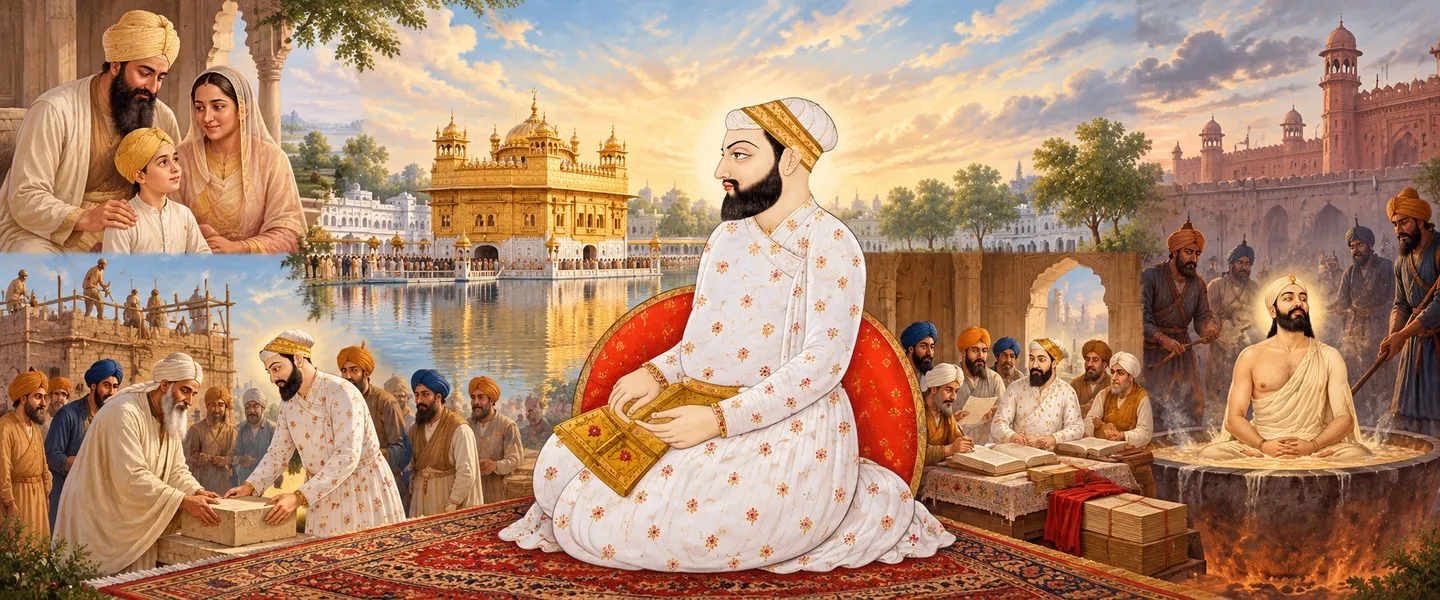
Guru Arjan Dev Ji (1563 to 1606) was the fifth Sikh Guru. He completed the Harmandir Sahib in Amritsar, compiled the Adi Granth in 1604 with 2,218 of his own hymns, and was martyred in Lahore in 1606, becoming the first Sikh martyr.
- ਪੰਜਾਬੀ ਨਾਂ
- ਗੁਰੂ ਅਰਜਨ ਦੇਵ ਜੀ
- Years
- 1563 to 1606
- ਪ੍ਰਸਿੱਧੀ
- Adi Granth, 1604
- ਇਲਾਕਾ
- ਮਾਝਾ
- ਜਨਮ
- 1563
- ਦੇਹਾਂਤ
- 1606
- Guruship
- 1581 to 1606
ਮੁੱਢਲਾ ਜੀਵਨ
Guru Arjan Dev Ji was born in 1563 at Goindval, the youngest son of Guru Ram Das Ji and Mata Bhani. As a child he was known for his gentle nature and his devotion. Sikh accounts say he spent his first eleven years at Goindval and the next seven at Ramdaspur. As a youth he lived two years in Lahore, sent by his father for a cousin's wedding and to help establish a Sikh congregation. He learned Gurmukhi and the Gurbani from Baba Buddha Ji, and the SGPC records that he also studied Persian, Hindi and Sanskrit. Historians record two marriages: to Mata Ram Dei in 1579 and to Mata Ganga in 1589, the mother of his son and successor Hargobind.
When his father tested his three sons for the succession, it was Arjan, the youngest, who proved the worthiest, and in 1581 he became the fifth Sikh Guru at the age of eighteen. His elder brother Prithi Chand never accepted the decision. Prithi Chand's followers came to be called Minas. Sikh tradition says he opposed his brother bitterly, made three attempts on the young Hargobind's life, and after the Guru's martyrdom declared himself the rightful Guru at Amritsar. The middle brother, Mahadev, had chosen an ascetic life and stood apart from the dispute.
The Harmandir Sahib
Arjan inherited a growing community centred on the new town of Ramdaspur. He threw himself into completing his father's work: the great tank, the Amrit Sarovar, was excavated and lined, and in its centre he began building the shrine that would become the Harmandir Sahib, the Temple of God, known today as the Golden Temple. Sikh tradition holds that its foundation stone was laid by the Muslim Sufi saint Mian Mir, a gesture of the Guru's universal spirit.
The Harmandir Sahib was revolutionary in its design. Unlike Hindu temples built on raised platforms, it was constructed on a level with the ground, and lower than the surrounding land, so that every visitor must step down to enter, a physical expression of humility. It was given four doors, facing all four directions, symbolising that the house of God was open to all people regardless of caste, creed or gender. Completed in the early 1600s, it became the spiritual heart of Sikhism, and Sikhs began to call the Guru Sacha Patshah, the True King, a title that unsettled the Mughal court and the orthodox clergy.
Guru Arjan Dev Ji also systematised the community's finances. He formalised the practice of Dasvandh, the contribution of one-tenth of one's income to the community, and expanded the Masand system, a network of representatives who collected offerings and spread the Guru's teaching. Under his administration the Sikh community became wealthy, organised and increasingly visible, which drew the attention of the Mughal state.
Towns and works beyond Amritsar
Guru Arjan Dev Ji founded new towns as well as institutions. In 1590 he founded Tarn Taran, near Goindval and about 24 kilometres south of Amritsar, having a great tank dug there. The name means the place that frees one from the cycle of birth and death, and beside the tank he had a house built for lepers.
He laid the foundation stone of Kartarpur in the Doaba region near Jalandhar, the City of God, in the early 1590s, and established Hargobindpur, now Sri Gobindpur, on the river Beas, naming it for his young son Hargobind. The SGPC also records a baoli, a stepwell, built by him at Dabbi-Bazar in Lahore, later destroyed under Shah Jahan and re-excavated under Maharaja Ranjit Singh, and a large irrigation well at Chheharta near Amritsar.
Did Guru Arjan Dev Ji meet Emperor Akbar?
Yes. On 24 November 1598 the Mughal emperor Akbar visited the Guru at Goindwal, a meeting recorded in the Akbarnama of Abu'l-Fazl. Akbar listened to the kirtan, walked around the commune, and ate in the langar. Enemies of the Guru had told the emperor that the new scripture maligned Islam, but when passages were read to him, Akbar was pleased. The SGPC quotes his verdict: the work was the greatest Granth of synthesis, worthy of reverence.
The visit had a political background too. After a dispute over Mughal land revenue, the revenue of the Bari doab was eased following the meeting; one account says Akbar reduced it by a sixth at the Guru's request, when the region was suffering famine.
Compiling the Adi Granth
Guru Arjan Dev Ji's greatest scholarly achievement was the compilation of the Adi Granth, the first version of the Sikh scripture, completed in 1604. Working with Bhai Gurdas as scribe, he gathered the hymns of the first four Gurus along with the compositions of Hindu and Muslim saints, including Kabir, Farid, Namdev and Ravidas, whose teachings aligned with the Sikh message. The inclusion of these Bhagats remains one of the most remarkable acts of religious inclusiveness in history. The completed volume was installed in the Harmandir Sahib with great ceremony, with Baba Buddha appointed as its first Granthi.
The compilation was also a response to rivalry. Baba Mohan at Goindval held an early collection of hymns, and Prithi Chand kept a rival collection at Guru Harsahai, while distorted hymns attributed to Guru Nanak were in circulation. By gathering the authentic compositions into one authorised volume, Guru Arjan Dev Ji fixed the scripture against corruption. His own contribution, 2,218 hymns, stands as the largest by any single author in the Guru Granth Sahib.
What is the Sukhmani Sahib?
The Sukhmani Sahib, the Prayer of Peace, is Guru Arjan Dev Ji's most loved composition. Sukh means peace and mani the jewel of the mind. Set in Raag Gauri, it runs from Ang 262 to 296 of the Guru Granth Sahib: twenty-four ashtpadis, each opening with a two-line salok followed by eight stanzas. It was composed around 1602 at Ramsar in Amritsar and first recited at Gurdwara Barth Sahib in Gurdaspur district.
It is among the most recited of all Sikh prayers, read alone or in the sangat at home or in the gurdwara. A full recitation takes an hour to an hour and a half, and Sikhs believe it brings peace to the mind and steadies the remembrance of God. Its themes are simran, the saints and the holy congregation, true devotion, the nature of the mind, the evil of slander, and the acceptance of death.
Martyrdom and legacy
The Guru's growing influence alarmed the Mughal emperor Jahangir, pressed by hostile courtiers and Prithi Chand's faction. The SGPC records that Prithi Chand allied with Sulhi Khan, a revenue officer, to harm the Guru, and that Sulhi Khan died after falling into a burning brick kiln. Then Chandu Shah, one of Jahangir's diwans, added his weight against the Guru: Sikh accounts say the Guru had refused, on the Delhi sangat's counsel, to marry Hargobind to Chandu's daughter, and that Chandu, an orthodox Hindu, opposed the egalitarian movement. In 1606 Guru Arjan Dev Ji was arrested in Lahore on charges of treason, accused of blessing the emperor's rebellious son Khusrau. Jahangir's own memoir, the Tuzk-e-Jahangiri, written on 6 June 1606, calls him a Hindu named Arjan and records the emperor's wish to put a stop to the affair.
A heavy fine was demanded and the removal of certain hymns from the Granth; the Guru refused to pay or to alter the scripture. He was handed to the Lahore governor and, Sikh tradition says, subjected to days of torture: seated on a red-hot iron plate, with burning sand poured over his blistered body, given neither food nor water. Through it all he uttered the shabad Tera kiya meetha laage: whatever you ordain appears sweet, I ask only for the gift of your Name. The Spanish Jesuit Jerome Xavier recorded that the Sikhs pleaded with Jahangir to commute the torture to a fine, and failed; the cleric Shaikh Ahmad Sirhindi publicly cheered the punishment, while the Sufi saint Mian Mir is said to have tried to intercede, though Sikh accounts say the Guru asked him not to interfere.
Guru Arjan Dev Ji died in Lahore on 30 May 1606. Scholars note that the exact manner of his death is disputed, with some accounts saying he was thrown into the Ravi river, but Sikh tradition holds him as Shaheedan de Sartaj, the crown of martyrs, the first martyr of the faith. The spot is marked today by Gurdwara Dera Sahib in Lahore's walled city.
His martyrdom is remembered each year on the 24th of Jeth in the Nanakshahi calendar as Shaheedi Diwas, widely called Chabeel Day for the free cold sweet drinks, kachchi lassi and rose sherbet, served to passersby in his memory, a symbol of coolness against the heat of oppression. Gurdwaras hold akhand paths with the bhog on the morning of the day, kirtan, langar and nagar kirtan.
The martyrdom was a turning point. The peaceful community of Nanak's followers now understood that faith might demand the ultimate sacrifice. Before his death, Guru Arjan Dev Ji is said to have instructed his son Hargobind to take up arms in defence of righteousness, a directive that led to the Sikh doctrine of Miri-Piri, the union of spiritual and temporal authority.
Guru Arjan Dev Ji gave Sikhism its scripture, its central shrine, and its first martyr. The Adi Granth he compiled became the Guru Granth Sahib, the living Guru of the Sikhs. The Harmandir Sahib he built is the most recognisable symbol of the faith. And his martyrdom set the community on the path from a devotional movement to a people prepared to defend their beliefs, a transformation completed by his successors.
ਮੁੱਢਲਾ ਜੀਵਨ
ਗੁਰੂ ਅਰਜਨ ਦੇਵ ਜੀ ਦਾ ਜਨਮ 1563 ਵਿੱਚ ਗੋਇੰਦਵਾਲ ਵਿੱਚ ਹੋਇਆ। ਉਹ ਗੁਰੂ ਰਾਮਦਾਸ ਜੀ ਅਤੇ ਮਾਤਾ ਭਾਨੀ ਜੀ ਦੇ ਸਭ ਤੋਂ ਛੋਟੇ ਪੁੱਤਰ ਸਨ। ਬਚਪਨ ਤੋਂ ਹੀ ਉਹ ਸ਼ਾਂਤ ਸੁਭਾਅ ਅਤੇ ਭਗਤੀ ਲਈ ਜਾਣੇ ਜਾਂਦੇ ਸਨ। ਸਿੱਖ ਵਰਣਨਾਂ ਅਨੁਸਾਰ ਉਨ੍ਹਾਂ ਨੇ ਆਪਣੇ ਪਹਿਲੇ ਗਿਆਰਾਂ ਸਾਲ ਗੋਇੰਦਵਾਲ ਵਿੱਚ ਅਤੇ ਅਗਲੇ ਸੱਤ ਸਾਲ ਰਾਮਦਾਸਪੁਰ ਵਿੱਚ ਬਿਤਾਏ। ਜਵਾਨੀ ਵਿੱਚ ਉਹ ਦੋ ਸਾਲ ਲਾਹੌਰ ਰਹੇ, ਜਿੱਥੇ ਪਿਤਾ ਨੇ ਉਨ੍ਹਾਂ ਨੂੰ ਇੱਕ ਚਚੇਰੇ ਭਰਾ ਦੇ ਵਿਆਹ ਅਤੇ ਸਿੱਖ ਸੰਗਤ ਕਾਇਮ ਕਰਨ ਲਈ ਭੇਜਿਆ ਸੀ। ਉਨ੍ਹਾਂ ਨੇ ਬਾਬਾ ਬੁੱਢਾ ਜੀ ਤੋਂ ਗੁਰਮੁਖੀ ਅਤੇ ਗੁਰਬਾਣੀ ਸਿੱਖੀ, ਅਤੇ ਸ਼੍ਰੋਮਣੀ ਕਮੇਟੀ ਦੇ ਰਿਕਾਰਡ ਅਨੁਸਾਰ ਉਨ੍ਹਾਂ ਨੇ ਫ਼ਾਰਸੀ, ਹਿੰਦੀ ਅਤੇ ਸੰਸਕ੍ਰਿਤ ਵੀ ਪੜ੍ਹੀ। ਇਤਿਹਾਸਕਾਰ ਦੋ ਵਿਆਹ ਦੱਸਦੇ ਹਨ: 1579 ਵਿੱਚ ਮਾਤਾ ਰਾਮ ਦੇਈ ਨਾਲ ਅਤੇ 1589 ਵਿੱਚ ਮਾਤਾ ਗੰਗਾ ਨਾਲ, ਜੋ ਉਨ੍ਹਾਂ ਦੇ ਪੁੱਤਰ ਅਤੇ ਵਾਰਸ ਹਰਗੋਬਿੰਦ ਦੀ ਮਾਤਾ ਸਨ।
ਜਦੋਂ ਪਿਤਾ ਨੇ ਆਪਣੇ ਤਿੰਨਾਂ ਪੁੱਤਰਾਂ ਦੀ ਪਰਖ ਲਈ ਤਾਂ ਸਭ ਤੋਂ ਛੋਟੇ ਅਰਜਨ ਹੀ ਸਭ ਤੋਂ ਯੋਗ ਨਿਕਲੇ। 1581 ਵਿੱਚ ਉਹ ਅਠਾਰਾਂ ਸਾਲ ਦੀ ਉਮਰ ਵਿੱਚ ਪੰਜਵੇਂ ਸਿੱਖ ਗੁਰੂ ਬਣੇ। ਉਨ੍ਹਾਂ ਦੇ ਵੱਡੇ ਭਰਾ ਪ੍ਰਿਥੀ ਚੰਦ ਨੇ ਇਹ ਫ਼ੈਸਲਾ ਕਦੇ ਮੰਨਿਆ ਨਹੀਂ। ਪ੍ਰਿਥੀ ਚੰਦ ਦੇ ਚੇਲੇ ਮੀਣੇ ਕਹਾਉਣ ਲੱਗੇ। ਸਿੱਖ ਪਰੰਪਰਾ ਅਨੁਸਾਰ ਉਸਨੇ ਆਪਣੇ ਭਰਾ ਦਾ ਡਟ ਕੇ ਵਿਰੋਧ ਕੀਤਾ, ਨੌਜਵਾਨ ਹਰਗੋਬਿੰਦ ਦੀ ਜਾਨ ਲੈਣ ਦੀਆਂ ਤਿੰਨ ਕੋਸ਼ਿਸ਼ਾਂ ਕੀਤੀਆਂ, ਅਤੇ ਗੁਰੂ ਦੀ ਸ਼ਹਾਦਤ ਤੋਂ ਬਾਅਦ ਉਸਨੇ ਅੰਮ੍ਰਿਤਸਰ ਵਿੱਚ ਆਪਣੇ ਆਪ ਨੂੰ ਅਸਲੀ ਗੁਰੂ ਐਲਾਨ ਦਿੱਤਾ। ਵਿਚਕਾਰਲੇ ਭਰਾ ਮਹਾਦੇਵ ਨੇ ਤਪੱਸਵੀ ਜੀਵਨ ਚੁਣਿਆ ਸੀ ਅਤੇ ਇਸ ਝਗੜੇ ਤੋਂ ਦੂਰ ਰਹੇ।
ਹਰਿਮੰਦਰ ਸਾਹਿਬ
ਅਰਜਨ ਨੂੰ ਰਾਮਦਾਸਪੁਰ ਦੇ ਨਵੇਂ ਸ਼ਹਿਰ ਦੁਆਲੇ ਵੱਧ ਰਹੀ ਸੰਗਤ ਵਿਰਾਸਤ ਵਿੱਚ ਮਿਲੀ। ਉਨ੍ਹਾਂ ਨੇ ਆਪਣੇ ਪਿਤਾ ਦਾ ਕੰਮ ਪੂਰਾ ਕਰਨ ਵਿੱਚ ਪੂਰੀ ਤਨਦੇਹੀ ਲਾਈ: ਵੱਡਾ ਸਰੋਵਰ, ਅੰਮ੍ਰਿਤ ਸਰੋਵਰ, ਖੁਦਵਾਇਆ ਅਤੇ ਪੱਕਾ ਕਰਵਾਇਆ ਗਿਆ, ਅਤੇ ਇਸਦੇ ਕੇਂਦਰ ਵਿੱਚ ਉਨ੍ਹਾਂ ਨੇ ਉਹ ਅਸਥਾਨ ਬਣਵਾਉਣਾ ਸ਼ੁਰੂ ਕੀਤਾ ਜੋ ਹਰਿਮੰਦਰ ਸਾਹਿਬ, ਭਾਵ ਰੱਬ ਦਾ ਮੰਦਰ, ਬਣਿਆ, ਜਿਸਨੂੰ ਅੱਜ ਦਰਬਾਰ ਸਾਹਿਬ ਜਾਂ ਸ੍ਰੀ ਹਰਿਮੰਦਰ ਸਾਹਿਬ ਵਜੋਂ ਜਾਣਿਆ ਜਾਂਦਾ ਹੈ। ਸਿੱਖ ਪਰੰਪਰਾ ਅਨੁਸਾਰ ਇਸਦੀ ਨੀਂਹ ਦਾ ਪੱਥਰ ਮੁਸਲਮਾਨ ਸੂਫ਼ੀ ਸੰਤ ਮੀਆਂ ਮੀਰ ਨੇ ਰੱਖਿਆ ਸੀ, ਜੋ ਗੁਰੂ ਦੀ ਸਰਬ-ਸਾਂਝੀ ਭਾਵਨਾ ਦਾ ਪ੍ਰਤੀਕ ਹੈ।
ਹਰਿਮੰਦਰ ਸਾਹਿਬ ਦਾ ਨਕਸ਼ਾ ਆਪਣੇ ਸਮੇਂ ਲਈ ਕ੍ਰਾਂਤੀਕਾਰੀ ਸੀ। ਹਿੰਦੂ ਮੰਦਰਾਂ ਵਾਂਗ ਉੱਚੇ ਚਬੂਤਰੇ ਉੱਤੇ ਬਣਨ ਦੀ ਥਾਂ ਇਸਨੂੰ ਜ਼ਮੀਨ ਦੇ ਬਰਾਬਰ, ਸਗੋਂ ਆਲੇ-ਦੁਆਲੇ ਦੀ ਜ਼ਮੀਨ ਤੋਂ ਨੀਵਾਂ ਬਣਾਇਆ ਗਿਆ, ਤਾਂ ਜੋ ਹਰ ਆਉਣ ਵਾਲਾ ਨਿਮਰਤਾ ਨਾਲ ਥੱਲੇ ਉੱਤਰ ਕੇ ਅੰਦਰ ਜਾਵੇ। ਇਸਨੂੰ ਚਾਰ ਦਰਵਾਜ਼ੇ ਦਿੱਤੇ ਗਏ, ਚਾਰੇ ਦਿਸ਼ਾਵਾਂ ਵੱਲ, ਜਿਸਦਾ ਅਰਥ ਸੀ ਕਿ ਰੱਬ ਦਾ ਘਰ ਜਾਤ, ਧਰਮ ਜਾਂ ਲਿੰਗ ਦੇ ਭੇਦ ਤੋਂ ਬਿਨਾਂ ਸਭ ਲਈ ਖੁੱਲ੍ਹਾ ਹੈ। ਸਤਾਰਵੀਂ ਸਦੀ ਦੇ ਸ਼ੁਰੂ ਵਿੱਚ ਇਹ ਮੁਕੰਮਲ ਹੋਇਆ ਅਤੇ ਸਿੱਖ ਧਰਮ ਦਾ ਆਤਮਕ ਕੇਂਦਰ ਬਣ ਗਿਆ।
ਗੁਰੂ ਅਰਜਨ ਦੇਵ ਜੀ ਦੇ ਸਮੇਂ ਸੰਗਤ ਇੰਨੀ ਵੱਧੀ ਅਤੇ ਸੰਗਠਿਤ ਹੋਈ ਕਿ ਸਿੱਖ ਉਨ੍ਹਾਂ ਨੂੰ ਸੱਚਾ ਪਾਤਸ਼ਾਹ ਕਹਿਣ ਲੱਗੇ, ਜਿਸ ਉਪਾਧੀ ਨੇ ਮੁਗ਼ਲ ਦਰਬਾਰ ਅਤੇ ਕੱਟੜ ਧਾਰਮਿਕ ਆਗੂਆਂ ਦੋਵਾਂ ਨੂੰ ਚਿੰਤਾ ਵਿੱਚ ਪਾ ਦਿੱਤਾ।
ਗੁਰੂ ਅਰਜਨ ਦੇਵ ਜੀ ਨੇ ਸੰਗਤ ਦੇ ਵਿੱਤੀ ਪ੍ਰਬੰਧ ਨੂੰ ਵੀ ਸੁਚਾਰੂ ਬਣਾਇਆ। ਉਨ੍ਹਾਂ ਨੇ ਦਸਵੰਧ, ਭਾਵ ਆਮਦਨ ਦਾ ਦਸਵਾਂ ਹਿੱਸਾ ਸੰਗਤ ਨੂੰ ਦੇਣ ਦੀ ਪ੍ਰਥਾ, ਨੂੰ ਪੱਕਾ ਕੀਤਾ ਅਤੇ ਮਸੰਦ ਪ੍ਰਣਾਲੀ ਦਾ ਵਿਸਤਾਰ ਕੀਤਾ, ਜਿਸ ਵਿੱਚ ਦੂਰ-ਦੁਰਾਡੇ ਰਹਿੰਦੇ ਭਰੋਸੇਮੰਦ ਸਿੱਖ ਆਗੂ ਚੰਦਾ ਇਕੱਠਾ ਕਰਦੇ ਅਤੇ ਗੁਰੂ ਦੀ ਸਿੱਖਿਆ ਦਾ ਪ੍ਰਚਾਰ ਕਰਦੇ ਸਨ। ਉਨ੍ਹਾਂ ਦੇ ਪ੍ਰਬੰਧ ਹੇਠ ਸਿੱਖ ਸੰਗਤ ਅਮੀਰ, ਸੰਗਠਿਤ ਅਤੇ ਵੱਧਦੀ ਦਿੱਖਣ ਵਾਲੀ ਬਣ ਗਈ, ਜਿਸ ਨੇ ਮੁਗ਼ਲ ਸਰਕਾਰ ਦਾ ਧਿਆਨ ਖਿੱਚਿਆ।
ਅੰਮ੍ਰਿਤਸਰ ਤੋਂ ਬਾਹਰ ਸ਼ਹਿਰ ਅਤੇ ਕਾਰਜ
ਗੁਰੂ ਅਰਜਨ ਦੇਵ ਜੀ ਨੇ ਸੰਸਥਾਵਾਂ ਦੇ ਨਾਲ-ਨਾਲ ਨਵੇਂ ਸ਼ਹਿਰ ਵੀ ਵਸਾਏ। 1590 ਵਿੱਚ ਉਨ੍ਹਾਂ ਨੇ ਤਰਨ ਤਾਰਨ ਵਸਾਇਆ, ਜੋ ਗੋਇੰਦਵਾਲ ਨੇੜੇ ਅਤੇ ਅੰਮ੍ਰਿਤਸਰ ਤੋਂ ਲਗਭਗ 24 ਕਿਲੋਮੀਟਰ ਦੱਖਣ ਵਿੱਚ ਹੈ। ਉੱਥੇ ਉਨ੍ਹਾਂ ਨੇ ਇੱਕ ਵੱਡਾ ਸਰੋਵਰ ਖੁਦਵਾਇਆ। ਤਰਨ ਤਾਰਨ ਦਾ ਅਰਥ ਹੈ ਉਹ ਥਾਂ ਜੋ ਜਨਮ-ਮਰਨ ਦੇ ਚੱਕਰ ਤੋਂ ਪਾਰ ਕਰ ਦੇਵੇ, ਅਤੇ ਸਰੋਵਰ ਦੇ ਕੰਢੇ ਉਨ੍ਹਾਂ ਨੇ ਕੋਹੜੀਆਂ ਲਈ ਇੱਕ ਘਰ ਵੀ ਬਣਵਾਇਆ।
ਉਨ੍ਹਾਂ ਨੇ ਦੁਆਬੇ ਵਿੱਚ ਜਲੰਧਰ ਨੇੜੇ ਕਰਤਾਰਪੁਰ, ਭਾਵ ਰੱਬ ਦਾ ਸ਼ਹਿਰ, ਦੀ ਨੀਂਹ 1590 ਦੇ ਦਹਾਕੇ ਦੇ ਸ਼ੁਰੂ ਵਿੱਚ ਰੱਖੀ, ਅਤੇ ਬਿਆਸ ਨਦੀ ਕੰਢੇ ਹਰਗੋਬਿੰਦਪੁਰ ਵਸਾਇਆ, ਜਿਸਨੂੰ ਅੱਜ ਸ੍ਰੀ ਗੋਬਿੰਦਪੁਰ ਕਿਹਾ ਜਾਂਦਾ ਹੈ ਅਤੇ ਜਿਸਦਾ ਨਾਮ ਉਨ੍ਹਾਂ ਨੇ ਆਪਣੇ ਨੌਜਵਾਨ ਪੁੱਤਰ ਹਰਗੋਬਿੰਦ ਦੇ ਨਾਮ ਉੱਤੇ ਰੱਖਿਆ। ਸ਼੍ਰੋਮਣੀ ਕਮੇਟੀ ਦੇ ਰਿਕਾਰਡ ਅਨੁਸਾਰ ਉਨ੍ਹਾਂ ਨੇ ਲਾਹੌਰ ਦੇ ਡੱਬੀ ਬਾਜ਼ਾਰ ਵਿੱਚ ਇੱਕ ਬਾਉਲੀ ਵੀ ਬਣਵਾਈ ਸੀ, ਜਿਸਨੂੰ ਬਾਅਦ ਵਿੱਚ ਸ਼ਾਹਜਹਾਂ ਦੇ ਸਮੇਂ ਢਾਹ ਦਿੱਤਾ ਗਿਆ ਅਤੇ ਮਹਾਰਾਜਾ ਰਣਜੀਤ ਸਿੰਘ ਦੇ ਸਮੇਂ ਫਿਰ ਖੁਦਵਾਇਆ ਗਿਆ, ਅਤੇ ਅੰਮ੍ਰਿਤਸਰ ਨੇੜੇ ਛੇਹਰਟਾ ਵਿੱਚ ਸਿੰਚਾਈ ਲਈ ਇੱਕ ਵੱਡਾ ਖੂਹ ਵੀ ਖੁਦਵਾਇਆ।
ਕੀ ਗੁਰੂ ਅਰਜਨ ਦੇਵ ਜੀ ਅਕਬਰ ਨੂੰ ਮਿਲੇ ਸਨ?
ਹਾਂ। 24 ਨਵੰਬਰ 1598 ਨੂੰ ਮੁਗ਼ਲ ਬਾਦਸ਼ਾਹ ਅਕਬਰ ਗੋਇੰਦਵਾਲ ਵਿੱਚ ਗੁਰੂ ਨੂੰ ਮਿਲਣ ਆਇਆ, ਜਿਸ ਮੁਲਾਕਾਤ ਦਾ ਜ਼ਿਕਰ ਅਬੁਲ ਫ਼ਜ਼ਲ ਦੇ ਅਕਬਰਨਾਮੇ ਵਿੱਚ ਮਿਲਦਾ ਹੈ। ਅਕਬਰ ਨੇ ਕੀਰਤਨ ਸੁਣਿਆ, ਸੰਗਤ ਦੇ ਟਿਕਾਣੇ ਦਾ ਚੱਕਰ ਲਾਇਆ ਅਤੇ ਲੰਗਰ ਛਕਿਆ। ਗੁਰੂ ਦੇ ਵਿਰੋਧੀਆਂ ਨੇ ਬਾਦਸ਼ਾਹ ਨੂੰ ਕਿਹਾ ਸੀ ਕਿ ਨਵਾਂ ਗ੍ਰੰਥ ਇਸਲਾਮ ਦੀ ਨਿੰਦਾ ਕਰਦਾ ਹੈ, ਪਰ ਜਦੋਂ ਉਸਦੇ ਸਾਹਮਣੇ ਗ੍ਰੰਥ ਦੇ ਹਿੱਸੇ ਪੜ੍ਹੇ ਗਏ ਤਾਂ ਅਕਬਰ ਖੁਸ਼ ਹੋਇਆ। ਸ਼੍ਰੋਮਣੀ ਕਮੇਟੀ ਉਸਦੇ ਫ਼ੈਸਲੇ ਨੂੰ ਇਸ ਤਰ੍ਹਾਂ ਦੱਸਦੀ ਹੈ: ਇਹ ਸੁਮੇਲ ਦਾ ਸਭ ਤੋਂ ਵੱਡਾ ਗ੍ਰੰਥ ਹੈ, ਸਤਿਕਾਰ ਦੇ ਯੋਗ।
ਇਸ ਮੁਲਾਕਾਤ ਦੀ ਰਾਜਨੀਤਿਕ ਪਿੱਠਭੂਮੀ ਵੀ ਸੀ। ਇਸ ਤੋਂ ਪਹਿਲਾਂ ਮੁਗ਼ਲ ਲਗਾਨ ਨੂੰ ਲੈ ਕੇ ਝਗੜਾ ਹੋਇਆ ਸੀ, ਅਤੇ ਮੁਲਾਕਾਤ ਤੋਂ ਬਾਅਦ ਬਾਰੀ ਦੁਆਬ ਦਾ ਲਗਾਨ ਹਲਕਾ ਕਰ ਦਿੱਤਾ ਗਿਆ; ਇੱਕ ਵਰਣਨ ਅਨੁਸਾਰ ਅਕਬਰ ਨੇ ਗੁਰੂ ਦੀ ਬੇਨਤੀ ਉੱਤੇ ਅਕਾਲ ਦੇ ਸਮੇਂ ਲਗਾਨ ਛੇਵੇਂ ਹਿੱਸੇ ਘਟਾ ਦਿੱਤਾ ਸੀ।
ਆਦਿ ਗ੍ਰੰਥ ਦਾ ਸੰਪਾਦਨ
ਗੁਰੂ ਅਰਜਨ ਦੇਵ ਜੀ ਦੀ ਸਭ ਤੋਂ ਵੱਡੀ ਵਿਦਵਤਾਪੂਰਨ ਪ੍ਰਾਪਤੀ ਆਦਿ ਗ੍ਰੰਥ ਦਾ ਸੰਪਾਦਨ ਸੀ, ਜੋ 1604 ਵਿੱਚ ਮੁਕੰਮਲ ਹੋਇਆ ਅਤੇ ਸਿੱਖ ਧਰਮ ਗ੍ਰੰਥ ਦਾ ਪਹਿਲਾ ਰੂਪ ਸੀ। ਭਾਈ ਗੁਰਦਾਸ ਨੂੰ ਲਿਖਾਰੀ ਬਣਾ ਕੇ ਉਨ੍ਹਾਂ ਨੇ ਪਹਿਲੇ ਚਾਰ ਗੁਰੂਆਂ ਦੀ ਬਾਣੀ ਦੇ ਨਾਲ-ਨਾਲ ਹਿੰਦੂ ਅਤੇ ਮੁਸਲਮਾਨ ਸੰਤਾਂ, ਜਿਨ੍ਹਾਂ ਵਿੱਚ ਕਬੀਰ, ਫ਼ਰੀਦ, ਨਾਮਦੇਵ ਅਤੇ ਰਵਿਦਾਸ ਸ਼ਾਮਲ ਸਨ, ਦੀਆਂ ਰਚਨਾਵਾਂ ਇਕੱਠੀਆਂ ਕੀਤੀਆਂ, ਜਿਨ੍ਹਾਂ ਦੀਆਂ ਸਿੱਖਿਆਵਾਂ ਸਿੱਖ ਸੰਦੇਸ਼ ਨਾਲ ਮਿਲਦੀਆਂ ਸਨ। ਇਨ੍ਹਾਂ ਭਗਤਾਂ ਨੂੰ ਸ਼ਾਮਲ ਕਰਨਾ ਇਤਿਹਾਸ ਵਿੱਚ ਧਾਰਮਿਕ ਸਹਿਣਸ਼ੀਲਤਾ ਦੇ ਸਭ ਤੋਂ ਅਨੋਖੇ ਕਾਰਜਾਂ ਵਿੱਚੋਂ ਇੱਕ ਹੈ।
ਇਸ ਸੰਪਾਦਨ ਦਾ ਇੱਕ ਕਾਰਨ ਵਿਰੋਧ ਵੀ ਸੀ। ਗੋਇੰਦਵਾਲ ਵਿੱਚ ਬਾਬਾ ਮੋਹਨ ਕੋਲ ਸ਼ਬਦਾਂ ਦਾ ਇੱਕ ਪੁਰਾਣਾ ਸੰਗ੍ਰਹਿ ਸੀ ਅਤੇ ਪ੍ਰਿਥੀ ਚੰਦ ਕੋਲ ਗੁਰੂ ਹਰਸਹਾਏ ਵਿੱਚ ਇੱਕ ਵਿਰੋਧੀ ਸੰਗ੍ਰਹਿ ਸੀ, ਅਤੇ ਗੁਰੂ ਨਾਨਕ ਦੇਵ ਜੀ ਦੇ ਨਾਮ ਉੱਤੇ ਵਿਗੜੇ ਹੋਏ ਸ਼ਬਦ ਵੀ ਫੈਲ ਰਹੇ ਸਨ। ਪ੍ਰਮਾਣਿਕ ਰਚਨਾਵਾਂ ਨੂੰ ਇੱਕ ਅਧਿਕਾਰਤ ਗ੍ਰੰਥ ਵਿੱਚ ਇਕੱਠਾ ਕਰਕੇ ਗੁਰੂ ਅਰਜਨ ਦੇਵ ਜੀ ਨੇ ਗ੍ਰੰਥ ਨੂੰ ਵਿਗਾੜ ਤੋਂ ਬਚਾ ਲਿਆ। ਉਨ੍ਹਾਂ ਦੀ ਆਪਣੀ ਰਚਨਾ, 2,218 ਸ਼ਬਦ, ਗੁਰੂ ਗ੍ਰੰਥ ਸਾਹਿਬ ਵਿੱਚ ਕਿਸੇ ਇੱਕ ਲੇਖਕ ਦਾ ਸਭ ਤੋਂ ਵੱਡਾ ਯੋਗਦਾਨ ਹੈ।
ਮੁਕੰਮਲ ਗ੍ਰੰਥ ਨੂੰ ਵੱਡੇ ਸਮਾਰੋਹ ਨਾਲ ਹਰਿਮੰਦਰ ਸਾਹਿਬ ਵਿੱਚ ਸਥਾਪਿਤ ਕੀਤਾ ਗਿਆ, ਅਤੇ ਬਾਬਾ ਬੁੱਢਾ ਜੀ ਨੂੰ ਇਸਦਾ ਪਹਿਲਾ ਗ੍ਰੰਥੀ ਨਿਯੁਕਤ ਕੀਤਾ ਗਿਆ।
ਸੁਖਮਨੀ ਸਾਹਿਬ ਕੀ ਹੈ?
ਸੁਖਮਨੀ ਸਾਹਿਬ, ਭਾਵ ਸੁਖ ਦੀ ਪ੍ਰਾਰਥਨਾ, ਗੁਰੂ ਅਰਜਨ ਦੇਵ ਜੀ ਦੀ ਸਭ ਤੋਂ ਪਿਆਰੀ ਰਚਨਾ ਹੈ। ਸੁਖ ਦਾ ਅਰਥ ਹੈ ਸ਼ਾਂਤੀ ਅਤੇ ਮਨੀ ਦਾ ਅਰਥ ਹੈ ਮਨ ਦਾ ਹੀਰਾ। ਇਹ ਰਾਗ ਗਉੜੀ ਵਿੱਚ ਹੈ ਅਤੇ ਗੁਰੂ ਗ੍ਰੰਥ ਸਾਹਿਬ ਦੇ ਅੰਗ 262 ਤੋਂ 296 ਤੱਕ ਹੈ: ਚੌਵੀ ਅਸ਼ਟਪਦੀਆਂ, ਹਰ ਅਸ਼ਟਪਦੀ ਦੋ ਸਤਰਾਂ ਦੇ ਸਲੋਕ ਨਾਲ ਸ਼ੁਰੂ ਹੋ ਕੇ ਅੱਠ ਪਉੜੀਆਂ ਵਿੱਚ ਵੰਡੀ ਹੋਈ। ਇਹ ਲਗਭਗ 1602 ਵਿੱਚ ਅੰਮ੍ਰਿਤਸਰ ਦੇ ਰਾਮਸਰ ਵਿੱਚ ਰਚੀ ਗਈ ਅਤੇ ਪਹਿਲੀ ਵਾਰ ਗੁਰਦਾਸਪੁਰ ਜ਼ਿਲ੍ਹੇ ਦੇ ਗੁਰਦੁਆਰਾ ਬਾਰਠ ਸਾਹਿਬ ਵਿੱਚ ਪੜ੍ਹੀ ਗਈ।
ਇਹ ਸਿੱਖਾਂ ਦੀਆਂ ਸਭ ਤੋਂ ਵੱਧ ਪੜ੍ਹੀਆਂ ਜਾਣ ਵਾਲੀਆਂ ਬਾਣੀਆਂ ਵਿੱਚੋਂ ਇੱਕ ਹੈ, ਜਿਸਨੂੰ ਘਰ ਜਾਂ ਗੁਰਦੁਆਰੇ ਵਿੱਚ ਇਕੱਲੇ ਜਾਂ ਸੰਗਤ ਵਿੱਚ ਪੜ੍ਹਿਆ ਜਾਂਦਾ ਹੈ। ਪੂਰਾ ਪਾਠ ਕਰਨ ਵਿੱਚ ਇੱਕ ਤੋਂ ਡੇਢ ਘੰਟਾ ਲੱਗਦਾ ਹੈ, ਅਤੇ ਸਿੱਖ ਮੰਨਦੇ ਹਨ ਕਿ ਇਹ ਮਨ ਨੂੰ ਸ਼ਾਂਤੀ ਦਿੰਦੀ ਹੈ ਅਤੇ ਰੱਬ ਦੇ ਸਿਮਰਨ ਨੂੰ ਟਿਕਾਉਂਦੀ ਹੈ। ਇਸਦੇ ਵਿਸ਼ੇ ਹਨ ਸਿਮਰਨ, ਸੰਤਾਂ ਅਤੇ ਸਾਧ ਸੰਗਤ ਦੀ ਮਹਿਮਾ, ਸੱਚੀ ਭਗਤੀ, ਮਨ ਦਾ ਸੁਭਾਅ, ਨਿੰਦਾ ਦੀ ਬੁਰਾਈ ਅਤੇ ਮੌਤ ਨੂੰ ਸਵੀਕਾਰ ਕਰਨਾ।
ਸ਼ਹਾਦਤ ਅਤੇ ਵਿਰਾਸਤ
ਗੁਰੂ ਦੇ ਵੱਧਦੇ ਪ੍ਰਭਾਵ ਨੇ ਮੁਗ਼ਲ ਬਾਦਸ਼ਾਹ ਜਹਾਂਗੀਰ ਨੂੰ ਚਿੰਤਾ ਵਿੱਚ ਪਾ ਦਿੱਤਾ, ਜਿਸ ਉੱਤੇ ਵਿਰੋਧੀ ਦਰਬਾਰੀਆਂ ਅਤੇ ਪ੍ਰਿਥੀ ਚੰਦ ਦੇ ਧੜੇ ਦਾ ਦਬਾਅ ਵੀ ਸੀ। ਸ਼੍ਰੋਮਣੀ ਕਮੇਟੀ ਦੱਸਦੀ ਹੈ ਕਿ ਪ੍ਰਿਥੀ ਚੰਦ ਨੇ ਗੁਰੂ ਨੂੰ ਨੁਕਸਾਨ ਪਹੁੰਚਾਉਣ ਲਈ ਲਗਾਨ ਅਧਿਕਾਰੀ ਸੁਲਹੀ ਖ਼ਾਨ ਨਾਲ ਮਿਲਾਪ ਕੀਤਾ ਸੀ, ਅਤੇ ਸੁਲਹੀ ਖ਼ਾਨ ਜਲਦੀ ਭੱਠੀ ਵਿੱਚ ਡਿੱਗ ਕੇ ਮਰ ਗਿਆ। ਫਿਰ ਜਹਾਂਗੀਰ ਦੇ ਇੱਕ ਦੀਵਾਨ ਚੰਦੂ ਸ਼ਾਹ ਨੇ ਗੁਰੂ ਵਿਰੁੱਧ ਆਪਣਾ ਭਾਰ ਪਾ ਦਿੱਤਾ। ਸਿੱਖ ਵਰਣਨਾਂ ਅਨੁਸਾਰ ਇਸਦੇ ਦੋ ਕਾਰਨ ਸਨ: ਦਿੱਲੀ ਦੀ ਸੰਗਤ ਦੀ ਸਲਾਹ ਉੱਤੇ ਗੁਰੂ ਨੇ ਆਪਣੇ ਪੁੱਤਰ ਹਰਗੋਬਿੰਦ ਦਾ ਵਿਆਹ ਚੰਦੂ ਦੀ ਧੀ ਨਾਲ ਕਰਨ ਤੋਂ ਇਨਕਾਰ ਕਰ ਦਿੱਤਾ ਸੀ, ਅਤੇ ਇੱਕ ਕੱਟੜ ਹਿੰਦੂ ਹੋਣ ਕਰਕੇ ਚੰਦੂ ਗੁਰੂ ਦੀ ਬਰਾਬਰੀ ਦੀ ਲਹਿਰ ਦਾ ਵਿਰੋਧੀ ਸੀ।
1606 ਵਿੱਚ ਗੁਰੂ ਅਰਜਨ ਦੇਵ ਜੀ ਨੂੰ ਲਾਹੌਰ ਵਿੱਚ ਦੇਸ਼ਧ੍ਰੋਹ ਦੇ ਦੋਸ਼ ਹੇਠ ਗ੍ਰਿਫ਼ਤਾਰ ਕਰ ਲਿਆ ਗਿਆ, ਇਹ ਦੋਸ਼ ਲਾ ਕੇ ਕਿ ਉਨ੍ਹਾਂ ਨੇ ਬਾਦਸ਼ਾਹ ਦੇ ਬਾਗ਼ੀ ਪੁੱਤਰ ਖੁਸਰੋ ਨੂੰ ਅਸੀਸ ਦਿੱਤੀ ਸੀ। ਜਹਾਂਗੀਰ ਦੀ ਆਪਣੀ ਯਾਦ, ਤੁਜ਼ਕ-ਏ-ਜਹਾਂਗੀਰੀ, ਜੋ 6 ਜੂਨ 1606 ਨੂੰ ਲਿਖੀ ਗਈ, ਉਨ੍ਹਾਂ ਨੂੰ ਅਰਜਨ ਨਾਮ ਦਾ ਹਿੰਦੂ ਦੱਸਦੀ ਹੈ ਜਿਸਨੇ ਤਿੰਨ-ਚਾਰ ਪੀੜ੍ਹੀਆਂ ਤੋਂ ਇਹ ਦੁਕਾਨ ਗਰਮ ਰੱਖੀ ਹੋਈ ਸੀ ਅਤੇ ਭੋਲੇ-ਭਾਲੇ ਹਿੰਦੂਆਂ ਤੇ ਮੁਸਲਮਾਨਾਂ ਨੂੰ ਆਪਣੇ ਵੱਲ ਖਿੱਚ ਲਿਆ ਸੀ, ਅਤੇ ਬਾਦਸ਼ਾਹ ਇਸ ਮਾਮਲੇ ਨੂੰ ਖ਼ਤਮ ਕਰਨਾ ਚਾਹੁੰਦਾ ਸੀ।
ਭਾਰੀ ਜੁਰਮਾਨਾ ਮੰਗਿਆ ਗਿਆ ਅਤੇ ਗ੍ਰੰਥ ਵਿੱਚੋਂ ਕੁਝ ਸ਼ਬਦ ਕੱਢਣ ਲਈ ਕਿਹਾ ਗਿਆ; ਗੁਰੂ ਨੇ ਜੁਰਮਾਨਾ ਦੇਣ ਜਾਂ ਗ੍ਰੰਥ ਬਦਲਣ ਤੋਂ ਇਨਕਾਰ ਕਰ ਦਿੱਤਾ। ਉਨ੍ਹਾਂ ਨੂੰ ਲਾਹੌਰ ਦੇ ਸੂਬੇਦਾਰ ਦੇ ਹਵਾਲੇ ਕਰ ਦਿੱਤਾ ਗਿਆ ਅਤੇ ਸਿੱਖ ਪਰੰਪਰਾ ਅਨੁਸਾਰ ਉਨ੍ਹਾਂ ਨੂੰ ਦਿਨਾਂ ਤੱਕ ਤਸੀਹੇ ਦਿੱਤੇ ਗਏ: ਲਾਲ-ਸੁਰਖ਼ ਲੋਹੇ ਦੀ ਤਵੀ ਉੱਤੇ ਬਿਠਾਇਆ ਗਿਆ, ਸੜੇ ਹੋਏ ਸਰੀਰ ਉੱਤੇ ਗਰਮ ਰੇਤ ਪਾਈ ਗਈ, ਅਤੇ ਇੱਕ ਵਰਣਨ ਅਨੁਸਾਰ ਕੜਾਹੇ ਵਿੱਚ ਉਬਾਲਿਆ ਗਿਆ, ਨਾ ਖਾਣਾ ਦਿੱਤਾ ਗਿਆ ਨਾ ਪਾਣੀ। ਇਸ ਸਭ ਦੌਰਾਨ ਉਹ ਤੇਰਾ ਕੀਆ ਮੀਠਾ ਲਾਗੇ ਸ਼ਬਦ ਉਚਾਰਦੇ ਰਹੇ, ਜਿਸਦਾ ਅਰਥ ਹੈ ਤੇਰੀ ਰਜ਼ਾ ਮੈਨੂੰ ਮਿੱਠੀ ਲੱਗਦੀ ਹੈ, ਮੈਂ ਸਿਰਫ਼ ਤੇਰੇ ਨਾਮ ਦੀ ਦਾਤ ਮੰਗਦਾ ਹਾਂ। ਲਾਹੌਰ ਵਿੱਚ ਮੌਜੂਦ ਸਪੇਨੀ ਪਾਦਰੀ ਜੇਰੋਮ ਜ਼ੇਵੀਅਰ ਨੇ ਲਿਖਿਆ ਕਿ ਸਿੱਖਾਂ ਨੇ ਜਹਾਂਗੀਰ ਅੱਗੇ ਤਸੀਹਿਆਂ ਦੀ ਥਾਂ ਜੁਰਮਾਨੇ ਦੀ ਬੇਨਤੀ ਕੀਤੀ, ਪਰ ਨਾਕਾਮ ਰਹੇ; ਕੱਟੜ ਮੌਲਵੀ ਸ਼ੇਖ਼ ਅਹਿਮਦ ਸਰਹਿੰਦੀ ਨੇ ਇਸ ਸਜ਼ਾ ਦੀ ਖੁੱਲ੍ਹ ਕੇ ਸ਼ਲਾਘਾ ਕੀਤੀ, ਜਦੋਂ ਕਿ ਸੂਫ਼ੀ ਸੰਤ ਮੀਆਂ ਮੀਰ ਨੇ ਬਾਦਸ਼ਾਹ ਅੱਗੇ ਸਿਫ਼ਾਰਸ਼ ਕਰਨ ਦੀ ਕੋਸ਼ਿਸ਼ ਕੀਤੀ, ਹਾਲਾਂਕਿ ਸਿੱਖ ਵਰਣਨਾਂ ਅਨੁਸਾਰ ਗੁਰੂ ਨੇ ਉਨ੍ਹਾਂ ਨੂੰ ਦਖ਼ਲ ਦੇਣ ਤੋਂ ਰੋਕ ਦਿੱਤਾ ਸੀ।
ਗੁਰੂ ਅਰਜਨ ਦੇਵ ਜੀ 30 ਮਈ 1606 ਨੂੰ ਲਾਹੌਰ ਵਿੱਚ ਸ਼ਹੀਦ ਹੋ ਗਏ। ਵਿਦਵਾਨ ਦੱਸਦੇ ਹਨ ਕਿ ਉਨ੍ਹਾਂ ਦੀ ਮੌਤ ਦੇ ਠੀਕ ਢੰਗ ਉੱਤੇ ਮਤਭੇਦ ਹੈ, ਕੁਝ ਵਰਣਨਾਂ ਅਨੁਸਾਰ ਉਨ੍ਹਾਂ ਨੂੰ ਰਾਵੀ ਨਦੀ ਵਿੱਚ ਸੁੱਟ ਦਿੱਤਾ ਗਿਆ ਸੀ, ਪਰ ਸਿੱਖ ਪਰੰਪਰਾ ਉਨ੍ਹਾਂ ਨੂੰ ਸ਼ਹੀਦਾਂ ਦੇ ਸਰਤਾਜ, ਧਰਮ ਦਾ ਪਹਿਲਾ ਸ਼ਹੀਦ ਮੰਨਦੀ ਹੈ। ਅੱਜ ਲਾਹੌਰ ਦੇ ਅੰਦਰੂਨ ਸ਼ਹਿਰ ਵਿੱਚ ਗੁਰਦੁਆਰਾ ਡੇਰਾ ਸਾਹਿਬ ਉਸ ਥਾਂ ਦੀ ਨਿਸ਼ਾਨਦੇਹੀ ਕਰਦਾ ਹੈ।
ਉਨ੍ਹਾਂ ਦੀ ਸ਼ਹਾਦਤ ਹਰ ਸਾਲ ਨਾਨਕਸ਼ਾਹੀ ਕੈਲੰਡਰ ਵਿੱਚ ਜੇਠ ਦੀ 24 ਤਰੀਕ ਨੂੰ ਸ਼ਹੀਦੀ ਦਿਵਸ ਵਜੋਂ ਮਨਾਈ ਜਾਂਦੀ ਹੈ। ਇਹ ਦਿਨ ਛਬੀਲ ਦਿਵਸ ਵਜੋਂ ਵੀ ਜਾਣਿਆ ਜਾਂਦਾ ਹੈ, ਕਿਉਂਕਿ ਉਨ੍ਹਾਂ ਦੀ ਯਾਦ ਵਿੱਚ ਰਾਹਗੀਰਾਂ ਨੂੰ ਮੁਫ਼ਤ ਠੰਢੇ ਮਿੱਠੇ ਸ਼ਰਬਤ, ਕੱਚੀ ਲੱਸੀ ਅਤੇ ਗੁਲਾਬ ਦਾ ਸ਼ਰਬਤ ਛਕਾਇਆ ਜਾਂਦਾ ਹੈ, ਜੋ ਜ਼ੁਲਮ ਦੀ ਗਰਮੀ ਵਿਰੁੱਧ ਠੰਢਕ ਦਾ ਪ੍ਰਤੀਕ ਹੈ। ਗੁਰਦੁਆਰਿਆਂ ਵਿੱਚ ਅਖੰਡ ਪਾਠ ਹੁੰਦੇ ਹਨ ਜਿਨ੍ਹਾਂ ਦਾ ਭੋਗ ਉਸ ਦਿਨ ਸਵੇਰੇ ਪੈਂਦਾ ਹੈ, ਕੀਰਤਨ, ਲੰਗਰ ਅਤੇ ਨਗਰ ਕੀਰਤਨ ਹੁੰਦੇ ਹਨ।
ਸ਼ਹਾਦਤ ਇੱਕ ਮੋੜ ਸੀ। ਨਾਨਕ ਦੇ ਸ਼ਾਂਤੀਪੂਰਨ ਸਿੱਖ ਹੁਣ ਸਮਝ ਗਏ ਕਿ ਧਰਮ ਲਈ ਸਭ ਤੋਂ ਵੱਡੀ ਕੁਰਬਾਨੀ ਵੀ ਦੇਣੀ ਪੈ ਸਕਦੀ ਹੈ। ਕਿਹਾ ਜਾਂਦਾ ਹੈ ਕਿ ਚਲਾਣੇ ਤੋਂ ਪਹਿਲਾਂ ਗੁਰੂ ਅਰਜਨ ਦੇਵ ਜੀ ਨੇ ਆਪਣੇ ਪੁੱਤਰ ਹਰਗੋਬਿੰਦ ਨੂੰ ਧਰਮ ਦੀ ਰੱਖਿਆ ਲਈ ਹਥਿਆਰ ਚੁੱਕਣ ਦਾ ਹੁਕਮ ਦਿੱਤਾ ਸੀ, ਜਿਸ ਤੋਂ ਸਿੱਖ ਸਿਧਾਂਤ ਮੀਰੀ-ਪੀਰੀ, ਭਾਵ ਆਤਮਕ ਅਤੇ ਸੰਸਾਰਕ ਸ਼ਕਤੀ ਦਾ ਸੁਮੇਲ, ਨਿਕਲਿਆ।
ਗੁਰੂ ਅਰਜਨ ਦੇਵ ਜੀ ਨੇ ਸਿੱਖ ਧਰਮ ਨੂੰ ਉਸਦਾ ਗ੍ਰੰਥ ਦਿੱਤਾ, ਉਸਦਾ ਕੇਂਦਰੀ ਅਸਥਾਨ ਦਿੱਤਾ ਅਤੇ ਉਸਦਾ ਪਹਿਲਾ ਸ਼ਹੀਦ ਦਿੱਤਾ। ਉਨ੍ਹਾਂ ਦਾ ਸੰਪਾਦਿਤ ਆਦਿ ਗ੍ਰੰਥ ਗੁਰੂ ਗ੍ਰੰਥ ਸਾਹਿਬ ਬਣਿਆ, ਸਿੱਖਾਂ ਦਾ ਜਿਉਂਦਾ ਗੁਰੂ। ਉਨ੍ਹਾਂ ਦਾ ਬਣਵਾਇਆ ਹਰਿਮੰਦਰ ਸਾਹਿਬ ਧਰਮ ਦਾ ਸਭ ਤੋਂ ਪਛਾਣਿਆ ਜਾਣ ਵਾਲਾ ਪ੍ਰਤੀਕ ਹੈ। ਅਤੇ ਉਨ੍ਹਾਂ ਦੀ ਸ਼ਹਾਦਤ ਨੇ ਸੰਗਤ ਨੂੰ ਭਗਤੀ ਦੀ ਲਹਿਰ ਤੋਂ ਆਪਣੇ ਵਿਸ਼ਵਾਸਾਂ ਦੀ ਰੱਖਿਆ ਲਈ ਤਿਆਰ ਕੌਮ ਦੇ ਰਾਹ ਉੱਤੇ ਤੋਰ ਦਿੱਤਾ, ਜਿਸ ਤਬਦੀਲੀ ਨੂੰ ਉਨ੍ਹਾਂ ਦੇ ਵਾਰਸਾਂ ਨੇ ਪੂਰਾ ਕੀਤਾ।
More religion entries to explore
ਸਰੋਤ (6)
ਜੁਗਤੀ ਮੁਫ਼ਤ ਅਤੇ ਸੁਤੰਤਰ ਹੈ। ਪਾਠਕਾਂ ਦਾ ਸਹਿਯੋਗ ਕੋਸ਼ ਨੂੰ ਵਧਾਉਂਦਾ ਹੈ।
ਸਹਿਯੋਗ