
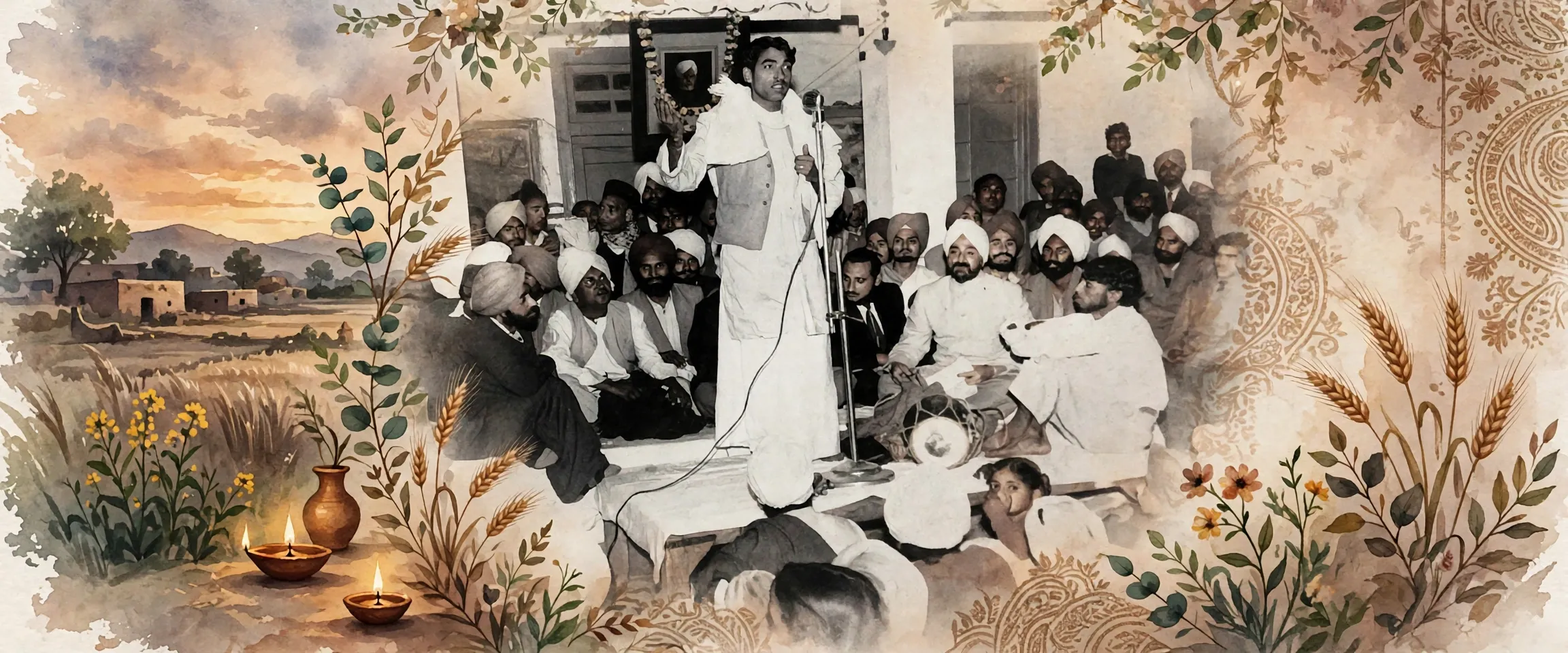
Dardmandan Diyan Aahin (1964) is a Punjabi poetry collection by Shiv Kumar Batalvi. Its title means the sighs of those in pain. Published in the same year as Birha Tu Sultan, between Mainu Vida Karo (1963) and Loona (1965), it holds the poems of pain, separation and birha that made Batalvi the sultan of separation.
Punjabi, Gurmukhi- Punjabi name
- ਦਰਦਮੰਦਾਂ ਦੀਆਂ ਆਹੀਂ
- Author
- Shiv Kumar Batalvi
- Published
- 1964
- Language
- Punjabi, Gurmukhi
- Form
- Poetry
- Title meaning
- The sighs of those in pain
All 9 facts
- Same year
- Birha Tu Sultan (1964)
- Before it
- Mainu Vida Karo (1963)
- After it
- Loona (1965)
About the book
Dardmandan Diyan Aahin, published in 1964, is a poetry collection by Shiv Kumar Batalvi. The title can be rendered in English as The Sighs of Those in Pain. It appeared in the busiest stretch of Batalvi's short writing life. His first anthology, Piran da Paraga, had come out in 1960 and made him famous at once. Lajwanti followed in 1961, Aate Diyan Chiriyaan in 1962 and Mainu Vida Karo in 1963. In 1964 he published two books, Dardmandan Diyan Aahin and Birha Tu Sultan, and a year later came Loona, the verse play that would win him the Sahitya Akademi Award and fix his place in Punjabi literature.
The collection therefore sits between the early books of love and farewell and the great work of his maturity. It is one of the books that built the figure Punjabi readers came to call Birha da Sultan, the sultan of separation. Batalvi wrote for only thirteen years, from 1960 to his death in 1973, and Dardmandan Diyan Aahin is part of the small, complete shelf of books he left behind.
What does the title mean?
The title means the sighs of those who suffer. Dardmandan are the people of pain, those who carry sorrow, and aahin are sighs, the sounds pain makes when it has no other language. The phrase itself is older than Batalvi. It belongs to the Sufi vocabulary of Punjab, and it appears in the kalaam of Sultan Bahu, where a line speaks of mountains crumbling at the sighs of the suffering. Batalvi, whose poetry constantly reaches back into folk and Sufi speech, took a phrase every Punjabi listener already half knew and made it the name of a book.
That choice tells the reader what kind of poems to expect. These are not poems that argue or explain. They sigh. The speaker in Batalvi is most often a lover separated from the beloved, sometimes speaking in a woman's voice, as he often did, and the poem is the sound of that separation held for a page. The title is a promise the book keeps from the first poem to the last.
Themes: pain, separation and birha
Batalvi's subjects were settled early and he never left them: passion, pathos, separation and the lover's agony. Reference works describe him in almost the same words, a poet of passion, agony and separation, and modern readers describe the same pull in his shayari, romantic motifs driven by melancholy and longing. Dardmandan Diyan Aahin is written entirely inside that territory. Its poems turn on birha, the pain of being parted from the beloved, and on the dignity Batalvi gives to suffering itself. In his world pain is not a defect in the lover. It is the proof of love.
ਕਿਤਾਬ ਬਾਰੇ
ਦਰਦਮੰਦਾਂ ਦੀਆਂ ਆਹੀਂ 1964 ਵਿੱਚ ਛਪਿਆ ਸ਼ਿਵ ਕੁਮਾਰ ਬਟਾਲਵੀ ਦਾ ਕਵਿਤਾ ਸੰਗ੍ਰਹਿ ਹੈ। ਇਸ ਨਾਂ ਦਾ ਅਰਥ ਹੈ ਦਰਦ ਵਾਲਿਆਂ ਦੀਆਂ ਆਹਾਂ। ਇਹ ਕਿਤਾਬ ਬਟਾਲਵੀ ਦੀ ਛੋਟੀ ਜਿਹੀ ਲਿਖਣ ਜ਼ਿੰਦਗੀ ਦੇ ਸਭ ਤੋਂ ਰੁੱਝੇ ਸਾਲਾਂ ਵਿੱਚ ਆਈ। ਉਸ ਦਾ ਪਹਿਲਾ ਸੰਗ੍ਰਹਿ ਪੀੜਾਂ ਦਾ ਪਰਾਗਾ 1960 ਵਿੱਚ ਆਇਆ ਅਤੇ ਉਸ ਨੂੰ ਇੱਕੋ ਵਾਰ ਮਸ਼ਹੂਰ ਕਰ ਗਿਆ। 1961 ਵਿੱਚ ਲਾਜਵੰਤੀ, 1962 ਵਿੱਚ ਆਟੇ ਦੀਆਂ ਚਿੜੀਆਂ ਅਤੇ 1963 ਵਿੱਚ ਮੈਨੂੰ ਵਿਦਾ ਕਰੋ ਆਈਆਂ। 1964 ਵਿੱਚ ਉਸ ਦੀਆਂ ਦੋ ਕਿਤਾਬਾਂ ਛਪੀਆਂ, ਦਰਦਮੰਦਾਂ ਦੀਆਂ ਆਹੀਂ ਅਤੇ ਬਿਰਹਾ ਤੂੰ ਸੁਲਤਾਨ, ਅਤੇ ਇੱਕ ਸਾਲ ਬਾਅਦ ਲੂਣਾ ਆਈ, ਉਹ ਕਾਵਿ ਨਾਟਕ ਜਿਸ ਨੇ ਉਸ ਨੂੰ ਸਾਹਿਤ ਅਕਾਦਮੀ ਪੁਰਸਕਾਰ ਦਿੱਤਾ ਅਤੇ ਪੰਜਾਬੀ ਸਾਹਿਤ ਵਿੱਚ ਉਸ ਦੀ ਥਾਂ ਪੱਕੀ ਕੀਤੀ।
ਇਸ ਲਈ ਇਹ ਸੰਗ੍ਰਹਿ ਮੁਹੱਬਤ ਤੇ ਵਿਦਾਈ ਦੀਆਂ ਸ਼ੁਰੂਆਤੀ ਕਿਤਾਬਾਂ ਅਤੇ ਉਸ ਦੀ ਪੱਕੀ ਉਮਰ ਦੀ ਵੱਡੀ ਰਚਨਾ ਦੇ ਵਿਚਕਾਰ ਖੜ੍ਹਾ ਹੈ। ਇਹ ਉਹਨਾਂ ਕਿਤਾਬਾਂ ਵਿੱਚੋਂ ਇੱਕ ਹੈ ਜਿਹਨਾਂ ਨੇ ਉਹ ਸ਼ਖ਼ਸੀਅਤ ਬਣਾਈ ਜਿਸ ਨੂੰ ਪੰਜਾਬੀ ਪਾਠਕ ਬਿਰਹਾ ਦਾ ਸੁਲਤਾਨ ਕਹਿਣ ਲੱਗੇ। ਬਟਾਲਵੀ ਨੇ ਸਿਰਫ਼ ਤੇਰਾਂ ਸਾਲ ਲਿਖਿਆ, 1960 ਤੋਂ 1973 ਵਿੱਚ ਉਸ ਦੀ ਮੌਤ ਤੱਕ, ਅਤੇ ਦਰਦਮੰਦਾਂ ਦੀਆਂ ਆਹੀਂ ਉਸ ਛੋਟੀ ਤੇ ਮੁਕੰਮਲ ਕਤਾਰ ਦਾ ਹਿੱਸਾ ਹੈ ਜੋ ਉਹ ਪਿੱਛੇ ਛੱਡ ਗਿਆ।
ਨਾਂ ਦਾ ਅਰਥ ਕੀ ਹੈ?
ਨਾਂ ਦਾ ਅਰਥ ਹੈ ਦਰਦ ਵਾਲਿਆਂ ਦੀਆਂ ਆਹਾਂ। ਦਰਦਮੰਦ ਉਹ ਲੋਕ ਹਨ ਜੋ ਦੁੱਖ ਚੁੱਕੀ ਫਿਰਦੇ ਹਨ, ਅਤੇ ਆਹੀਂ ਉਹ ਆਵਾਜ਼ਾਂ ਹਨ ਜੋ ਦਰਦ ਉਦੋਂ ਕੱਢਦਾ ਹੈ ਜਦੋਂ ਉਸ ਕੋਲ ਹੋਰ ਕੋਈ ਭਾਸ਼ਾ ਨਹੀਂ ਰਹਿੰਦੀ। ਇਹ ਵਾਕੰਸ਼ ਬਟਾਲਵੀ ਤੋਂ ਪੁਰਾਣਾ ਹੈ। ਇਹ ਪੰਜਾਬ ਦੀ ਸੂਫ਼ੀ ਬੋਲੀ ਦਾ ਹਿੱਸਾ ਹੈ, ਅਤੇ ਇਹ ਸੁਲਤਾਨ ਬਾਹੂ ਦੇ ਕਲਾਮ ਵਿੱਚ ਆਉਂਦਾ ਹੈ, ਜਿੱਥੇ ਇੱਕ ਸਤਰ ਦਰਦਮੰਦਾਂ ਦੀਆਂ ਆਹਾਂ ਨਾਲ ਪਹਾੜਾਂ ਦੇ ਢਹਿਣ ਦੀ ਗੱਲ ਕਰਦੀ ਹੈ। ਬਟਾਲਵੀ, ਜਿਸ ਦੀ ਕਵਿਤਾ ਹਮੇਸ਼ਾ ਲੋਕ ਤੇ ਸੂਫ਼ੀ ਬੋਲੀ ਵੱਲ ਪਿੱਛੇ ਮੁੜਦੀ ਸੀ, ਨੇ ਉਹ ਵਾਕੰਸ਼ ਲਿਆ ਜੋ ਹਰ ਪੰਜਾਬੀ ਸੁਣਨ ਵਾਲਾ ਪਹਿਲਾਂ ਹੀ ਅੱਧਾ ਜਾਣਦਾ ਸੀ ਅਤੇ ਉਸ ਨੂੰ ਕਿਤਾਬ ਦਾ ਨਾਂ ਬਣਾ ਦਿੱਤਾ।
ਇਹ ਚੋਣ ਪਾਠਕ ਨੂੰ ਦੱਸ ਦਿੰਦੀ ਹੈ ਕਿ ਕਿਹੋ ਜਿਹੀਆਂ ਕਵਿਤਾਵਾਂ ਮਿਲਣਗੀਆਂ। ਇਹ ਉਹ ਕਵਿਤਾਵਾਂ ਨਹੀਂ ਜੋ ਬਹਿਸ ਕਰਦੀਆਂ ਜਾਂ ਸਮਝਾਉਂਦੀਆਂ ਹਨ। ਇਹ ਆਹਾਂ ਭਰਦੀਆਂ ਹਨ। ਬਟਾਲਵੀ ਵਿੱਚ ਬੋਲਣ ਵਾਲਾ ਅਕਸਰ ਮਹਿਬੂਬ ਤੋਂ ਵਿਛੜਿਆ ਆਸ਼ਕ ਹੁੰਦਾ ਹੈ, ਕਈ ਵਾਰ ਔਰਤ ਦੀ ਆਵਾਜ਼ ਵਿੱਚ ਬੋਲਦਾ ਹੋਇਆ, ਜਿਵੇਂ ਉਹ ਅਕਸਰ ਕਰਦਾ ਸੀ, ਅਤੇ ਕਵਿਤਾ ਉਸ ਵਿਛੋੜੇ ਦੀ ਆਵਾਜ਼ ਹੁੰਦੀ ਹੈ ਜੋ ਇੱਕ ਸਫ਼ੇ ਤੱਕ ਠਹਿਰੀ ਰਹਿੰਦੀ ਹੈ। ਨਾਂ ਇੱਕ ਵਾਅਦਾ ਹੈ ਜੋ ਕਿਤਾਬ ਪਹਿਲੀ ਕਵਿਤਾ ਤੋਂ ਆਖ਼ਰੀ ਤੱਕ ਨਿਭਾਉਂਦੀ ਹੈ।
ਵਿਸ਼ੇ: ਦਰਦ, ਵਿਛੋੜਾ ਅਤੇ ਬਿਰਹਾ
ਬਟਾਲਵੀ ਦੇ ਵਿਸ਼ੇ ਸ਼ੁਰੂ ਵਿੱਚ ਹੀ ਤੈਅ ਹੋ ਗਏ ਸਨ ਅਤੇ ਉਸ ਨੇ ਉਹ ਕਦੇ ਨਹੀਂ ਛੱਡੇ: ਜਜ਼ਬਾ, ਦਰਦ, ਵਿਛੋੜਾ ਅਤੇ ਆਸ਼ਕ ਦੀ ਤੜਪ। ਹਵਾਲਾ ਕਿਤਾਬਾਂ ਉਸ ਨੂੰ ਲਗਭਗ ਇਹਨਾਂ ਹੀ ਸ਼ਬਦਾਂ ਵਿੱਚ ਦੱਸਦੀਆਂ ਹਨ, ਜਜ਼ਬੇ, ਤੜਪ ਤੇ ਵਿਛੋੜੇ ਦਾ ਕਵੀ, ਅਤੇ ਅੱਜ ਦੇ ਪਾਠਕ ਉਸ ਦੀ ਸ਼ਾਇਰੀ ਵਿੱਚ ਉਹੀ ਖਿੱਚ ਦੱਸਦੇ ਹਨ, ਉਦਾਸੀ ਤੇ ਤਾਂਘ ਨਾਲ ਚੱਲਦੇ ਰੋਮਾਂਟਿਕ ਭਾਵ। ਦਰਦਮੰਦਾਂ ਦੀਆਂ ਆਹੀਂ ਪੂਰੀ ਤਰ੍ਹਾਂ ਇਸੇ ਇਲਾਕੇ ਵਿੱਚ ਲਿਖੀ ਗਈ ਹੈ। ਇਸ ਦੀਆਂ ਕਵਿਤਾਵਾਂ ਬਿਰਹਾ ਦੁਆਲੇ ਘੁੰਮਦੀਆਂ ਹਨ, ਮਹਿਬੂਬ ਤੋਂ ਵਿਛੜਨ ਦਾ ਦਰਦ, ਅਤੇ ਉਸ ਇੱਜ਼ਤ ਦੁਆਲੇ ਜੋ ਬਟਾਲਵੀ ਦੁੱਖ ਨੂੰ ਆਪ ਦਿੰਦਾ ਹੈ। ਉਸ ਦੀ ਦੁਨੀਆ ਵਿੱਚ ਦਰਦ ਆਸ਼ਕ ਦੀ ਕਮੀ ਨਹੀਂ। ਇਹ ਮੁਹੱਬਤ ਦਾ ਸਬੂਤ ਹੈ।
Two habits of his verse are already clear in the books of these years. The first is the female persona. Batalvi often adopted a woman's voice to express the anguish of his own heart, and the sighs of this collection are frequently a woman's sighs, spoken to a mother, a friend or the absent beloved. The second is the rural image. His childhood among wandering singers, snake charmers and village tellers of the Ramayana left him a stock of village metaphors, fields, lamps, sparrows, wells and seasons, which he uses the way the Sufi poets used theirs. Pain in his poems smells of the village, not the library.
The author
Shiv Kumar Batalvi (1936 to 1973) was born Shiv Kumar in Bara Pind Lohtian, in what is now Narowal district of Punjab, Pakistan. After Partition in 1947 his family settled in Batala, and he took his pen name from the town. He studied at Batala, Qadian, Baijnath and Nabha without finishing a degree, and later worked at the State Bank of India in Chandigarh. None of that is what he is remembered for. He is remembered as the most loved romantic poet of modern Punjabi, a singer of his own verse whose recitations made him popular far beyond the reading public.
In 1967 he became the youngest recipient of the Sahitya Akademi Award, for Loona (1965), his verse play on the legend of Puran Bhagat. He died of liver cirrhosis at Kiri Mangyal on 6 May 1973, aged thirty six. His books in the Kosh include Piran da Paraga, Lajwanti, Aate Diyan Chiriyaan, Mainu Vida Karo, Birha Tu Sultan, Loona and Main Te Main.
Reception and legacy
Dardmandan Diyan Aahin has never been the Batalvi book that critics single out. That honour goes to Loona, and the songs go to Piran da Paraga and Mainu Vida Karo. But the collection has stayed in print inside his complete works, and its title has passed into the language. When Punjabi singers and speakers want a short way to name Batalvi's whole manner, they reach for phrases from these years of his work, and dardmandan diyan aahin is one of them.
His wider legacy is carried by music. Jagjit Singh, Nusrat Fateh Ali Khan, Surinder Kaur, Hans Raj Hans and Ghulam Ali have all sung his poems, and lines of his have reached Hindi films, from Ajj Din Chadheya Tere Rang Varga in Love Aaj Kal to Ikk Kudi Jihda Naam Mohabbat Ghum Hai in Udta Punjab. Readers who want the poet before the fame, in the years when the voice was forming, should read the 1964 books together: Dardmandan Diyan Aahin for the sigh, Birha Tu Sultan for the crown he gave to separation, and then Loona for what the sigh became.
ਉਸ ਦੀ ਕਵਿਤਾ ਦੀਆਂ ਦੋ ਆਦਤਾਂ ਇਹਨਾਂ ਸਾਲਾਂ ਦੀਆਂ ਕਿਤਾਬਾਂ ਵਿੱਚ ਸਾਫ਼ ਦਿਸਦੀਆਂ ਹਨ। ਪਹਿਲੀ ਹੈ ਔਰਤ ਦੀ ਆਵਾਜ਼। ਬਟਾਲਵੀ ਅਕਸਰ ਆਪਣੇ ਦਿਲ ਦੀ ਤੜਪ ਕਹਿਣ ਲਈ ਔਰਤ ਦੀ ਆਵਾਜ਼ ਅਪਣਾਉਂਦਾ ਸੀ, ਅਤੇ ਇਸ ਸੰਗ੍ਰਹਿ ਦੀਆਂ ਆਹਾਂ ਅਕਸਰ ਔਰਤ ਦੀਆਂ ਆਹਾਂ ਹਨ, ਮਾਂ ਨੂੰ, ਸਹੇਲੀ ਨੂੰ ਜਾਂ ਗੈਰਹਾਜ਼ਰ ਮਹਿਬੂਬ ਨੂੰ ਕਹੀਆਂ ਗਈਆਂ। ਦੂਜੀ ਹੈ ਪੇਂਡੂ ਤਸਵੀਰ। ਘੁੰਮਦੇ ਗਾਇਕਾਂ, ਸਪੇਰਿਆਂ ਅਤੇ ਰਾਮਾਇਣ ਸੁਣਾਉਣ ਵਾਲਿਆਂ ਵਿੱਚ ਬਿਤਾਏ ਬਚਪਨ ਨੇ ਉਸ ਨੂੰ ਪਿੰਡ ਦੇ ਰੂਪਕਾਂ ਦਾ ਭੰਡਾਰ ਦਿੱਤਾ, ਖੇਤ, ਦੀਵੇ, ਚਿੜੀਆਂ, ਖੂਹ ਅਤੇ ਰੁੱਤਾਂ, ਜਿਹਨਾਂ ਨੂੰ ਉਹ ਉਸੇ ਤਰ੍ਹਾਂ ਵਰਤਦਾ ਹੈ ਜਿਵੇਂ ਸੂਫ਼ੀ ਕਵੀ ਆਪਣੇ ਰੂਪਕ ਵਰਤਦੇ ਸਨ। ਉਸ ਦੀਆਂ ਕਵਿਤਾਵਾਂ ਵਿੱਚ ਦਰਦ ਦੀ ਖੁਸ਼ਬੂ ਪਿੰਡ ਦੀ ਹੈ, ਕਿਤਾਬਾਂ ਦੀ ਨਹੀਂ।
ਲੇਖਕ
ਸ਼ਿਵ ਕੁਮਾਰ ਬਟਾਲਵੀ (1936 ਤੋਂ 1973) ਦਾ ਜਨਮ ਸ਼ਿਵ ਕੁਮਾਰ ਵਜੋਂ ਬਾਰਾ ਪਿੰਡ ਲੋਹਟੀਆਂ ਵਿੱਚ ਹੋਇਆ, ਜੋ ਹੁਣ ਪਾਕਿਸਤਾਨੀ ਪੰਜਾਬ ਦਾ ਨਾਰੋਵਾਲ ਜ਼ਿਲ੍ਹਾ ਹੈ। 1947 ਦੀ ਵੰਡ ਤੋਂ ਬਾਅਦ ਉਸ ਦਾ ਪਰਿਵਾਰ ਬਟਾਲੇ ਆ ਵੱਸਿਆ, ਅਤੇ ਉਸ ਨੇ ਆਪਣਾ ਤਖ਼ੱਲਸ ਸ਼ਹਿਰ ਤੋਂ ਲਿਆ। ਉਸ ਨੇ ਬਟਾਲੇ, ਕਾਦੀਆਂ, ਬੈਜਨਾਥ ਅਤੇ ਨਾਭੇ ਪੜ੍ਹਾਈ ਕੀਤੀ ਪਰ ਡਿਗਰੀ ਮੁਕੰਮਲ ਨਹੀਂ ਕੀਤੀ, ਅਤੇ ਬਾਅਦ ਵਿੱਚ ਚੰਡੀਗੜ੍ਹ ਵਿੱਚ ਸਟੇਟ ਬੈਂਕ ਆਫ਼ ਇੰਡੀਆ ਵਿੱਚ ਕੰਮ ਕੀਤਾ। ਉਹ ਇਹਨਾਂ ਗੱਲਾਂ ਲਈ ਯਾਦ ਨਹੀਂ ਕੀਤਾ ਜਾਂਦਾ। ਉਹ ਆਧੁਨਿਕ ਪੰਜਾਬੀ ਦੇ ਸਭ ਤੋਂ ਪਿਆਰੇ ਰੋਮਾਂਟਿਕ ਕਵੀ ਵਜੋਂ ਯਾਦ ਕੀਤਾ ਜਾਂਦਾ ਹੈ, ਆਪਣੀ ਕਵਿਤਾ ਦਾ ਆਪ ਗਾਇਕ, ਜਿਸ ਦੀਆਂ ਪੇਸ਼ਕਾਰੀਆਂ ਨੇ ਉਸ ਨੂੰ ਪੜ੍ਹਨ ਵਾਲਿਆਂ ਤੋਂ ਕਿਤੇ ਦੂਰ ਤੱਕ ਮਸ਼ਹੂਰ ਕੀਤਾ।
1967 ਵਿੱਚ ਉਹ ਸਾਹਿਤ ਅਕਾਦਮੀ ਪੁਰਸਕਾਰ ਦਾ ਸਭ ਤੋਂ ਛੋਟੀ ਉਮਰ ਦਾ ਜੇਤੂ ਬਣਿਆ, ਲੂਣਾ (1965) ਲਈ, ਪੂਰਨ ਭਗਤ ਦੀ ਕਥਾ ਉੱਤੇ ਉਸ ਦਾ ਕਾਵਿ ਨਾਟਕ। ਉਸ ਦੀ ਮੌਤ 6 ਮਈ 1973 ਨੂੰ ਕੀਰੀ ਮੰਗਿਆਲ ਵਿਖੇ ਜਿਗਰ ਦੇ ਰੋਗ ਨਾਲ ਹੋਈ, ਛੱਤੀ ਸਾਲ ਦੀ ਉਮਰ ਵਿੱਚ। ਕੋਸ਼ ਵਿੱਚ ਉਸ ਦੀਆਂ ਕਿਤਾਬਾਂ ਵਿੱਚ ਪੀੜਾਂ ਦਾ ਪਰਾਗਾ, ਲਾਜਵੰਤੀ, ਆਟੇ ਦੀਆਂ ਚਿੜੀਆਂ, ਮੈਨੂੰ ਵਿਦਾ ਕਰੋ, ਬਿਰਹਾ ਤੂੰ ਸੁਲਤਾਨ, ਲੂਣਾ ਅਤੇ ਮੈਂ ਤੇ ਮੈਂ ਸ਼ਾਮਲ ਹਨ।
ਸਵਾਗਤ ਅਤੇ ਵਿਰਾਸਤ
ਦਰਦਮੰਦਾਂ ਦੀਆਂ ਆਹੀਂ ਉਹ ਬਟਾਲਵੀ ਕਿਤਾਬ ਕਦੇ ਨਹੀਂ ਰਹੀ ਜਿਸ ਨੂੰ ਆਲੋਚਕ ਵੱਖਰਾ ਕਰਕੇ ਦੱਸਦੇ ਹਨ। ਉਹ ਮਾਣ ਲੂਣਾ ਦਾ ਹੈ, ਅਤੇ ਗੀਤ ਪੀੜਾਂ ਦਾ ਪਰਾਗਾ ਤੇ ਮੈਨੂੰ ਵਿਦਾ ਕਰੋ ਦੇ ਹਨ। ਪਰ ਇਹ ਸੰਗ੍ਰਹਿ ਉਸ ਦੀਆਂ ਮੁਕੰਮਲ ਰਚਨਾਵਾਂ ਵਿੱਚ ਛਪਦਾ ਰਿਹਾ ਹੈ, ਅਤੇ ਇਸ ਦਾ ਨਾਂ ਭਾਸ਼ਾ ਵਿੱਚ ਘੁਲ ਗਿਆ ਹੈ। ਜਦੋਂ ਪੰਜਾਬੀ ਗਾਇਕ ਤੇ ਬੋਲਣ ਵਾਲੇ ਬਟਾਲਵੀ ਦੇ ਸਾਰੇ ਅੰਦਾਜ਼ ਨੂੰ ਛੋਟੇ ਰਾਹ ਨਾਲ ਨਾਂ ਦੇਣਾ ਚਾਹੁੰਦੇ ਹਨ, ਤਾਂ ਉਹ ਇਹਨਾਂ ਸਾਲਾਂ ਦੀਆਂ ਉਸ ਦੀਆਂ ਲਿਖਤਾਂ ਦੇ ਵਾਕੰਸ਼ਾਂ ਵੱਲ ਜਾਂਦੇ ਹਨ, ਅਤੇ ਦਰਦਮੰਦਾਂ ਦੀਆਂ ਆਹੀਂ ਉਹਨਾਂ ਵਿੱਚੋਂ ਇੱਕ ਹੈ।
ਉਸ ਦੀ ਵੱਡੀ ਵਿਰਾਸਤ ਸੰਗੀਤ ਚੁੱਕੀ ਫਿਰਦਾ ਹੈ। ਜਗਜੀਤ ਸਿੰਘ, ਨੁਸਰਤ ਫ਼ਤਿਹ ਅਲੀ ਖ਼ਾਨ, ਸੁਰਿੰਦਰ ਕੌਰ, ਹੰਸ ਰਾਜ ਹੰਸ ਅਤੇ ਗ਼ੁਲਾਮ ਅਲੀ ਸਭ ਨੇ ਉਸ ਦੀਆਂ ਕਵਿਤਾਵਾਂ ਗਾਈਆਂ ਹਨ, ਅਤੇ ਉਸ ਦੀਆਂ ਸਤਰਾਂ ਹਿੰਦੀ ਫ਼ਿਲਮਾਂ ਤੱਕ ਪਹੁੰਚੀਆਂ ਹਨ, ਲਵ ਆਜ ਕਲ ਵਿੱਚ ਅੱਜ ਦਿਨ ਚੜ੍ਹਿਆ ਤੇਰੇ ਰੰਗ ਵਰਗਾ ਤੋਂ ਲੈ ਕੇ ਉੜਤਾ ਪੰਜਾਬ ਵਿੱਚ ਇਕ ਕੁੜੀ ਜਿਹਦਾ ਨਾਂ ਮੁਹੱਬਤ ਗੁੰਮ ਹੈ ਤੱਕ। ਜੋ ਪਾਠਕ ਮਸ਼ਹੂਰੀ ਤੋਂ ਪਹਿਲਾਂ ਦੇ ਕਵੀ ਨੂੰ ਪੜ੍ਹਨਾ ਚਾਹੁੰਦੇ ਹਨ, ਉਹਨਾਂ ਸਾਲਾਂ ਵਿੱਚ ਜਦੋਂ ਆਵਾਜ਼ ਬਣ ਰਹੀ ਸੀ, ਉਹਨਾਂ ਨੂੰ 1964 ਦੀਆਂ ਕਿਤਾਬਾਂ ਇਕੱਠੀਆਂ ਪੜ੍ਹਨੀਆਂ ਚਾਹੀਦੀਆਂ ਹਨ: ਆਹ ਲਈ ਦਰਦਮੰਦਾਂ ਦੀਆਂ ਆਹੀਂ, ਵਿਛੋੜੇ ਨੂੰ ਦਿੱਤੇ ਤਾਜ ਲਈ ਬਿਰਹਾ ਤੂੰ ਸੁਲਤਾਨ, ਅਤੇ ਫਿਰ ਲੂਣਾ, ਇਹ ਦੇਖਣ ਲਈ ਕਿ ਆਹ ਕੀ ਬਣੀ।
Editions and translations
- Dardmandan Diyan AahinPunjabi · first published 1964Edition
The author

Connected
More to read
Sources (4)
Jugti is free and independent. Reader support keeps the Kosh growing.
Support