
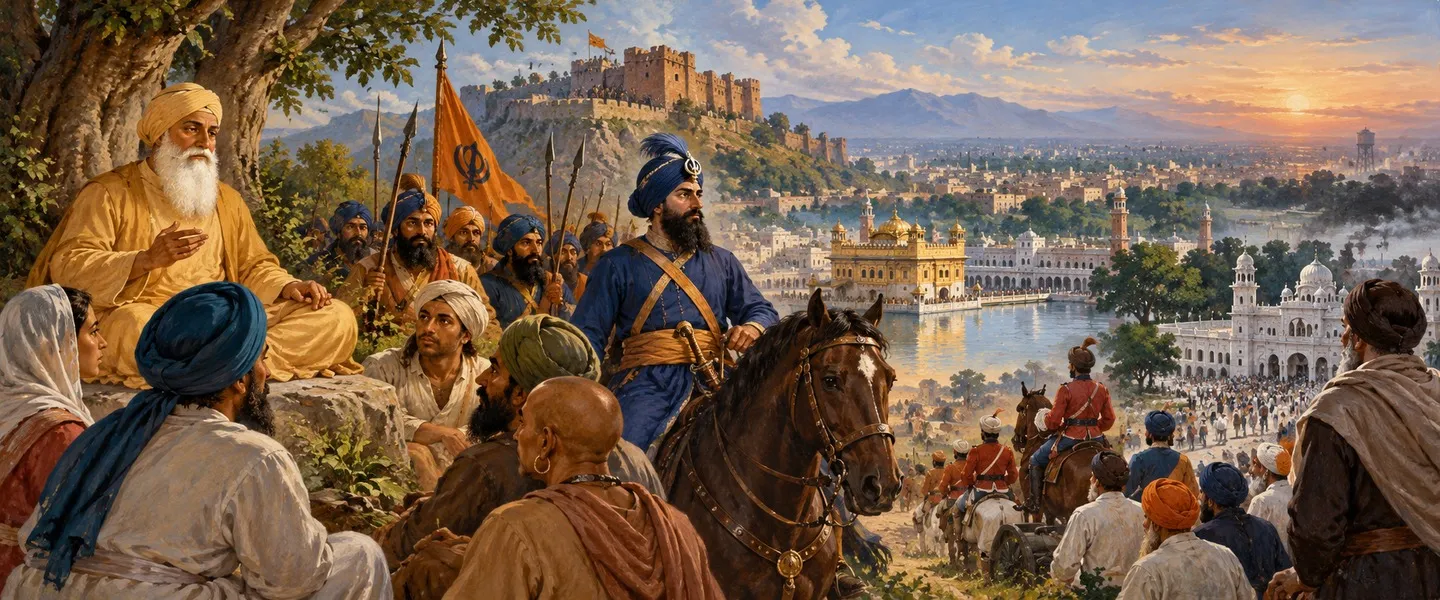
A History of the Sikhs is Khushwant Singh's classic two-volume history, Volume 1: 1469–1839 (1963), Volume 2: 1839–1966, later updated to 2004. Written for the general reader from Persian, Gurmukhi and English sources, it remains the most authoritative single history of the Sikhs.
English, with an English translation- Author
- Khushwant Singh (1915-2014)
- Published
- Vol. 1 (1469-1839) 1963; Vol. 2 (1839-1964) 1966; updated to 2004
- Publisher
- Princeton University Press (1963); Oxford University Press, India (first Indian edition 1977)
- Pages
- Volume 2, second edition, 576 pages (Oxford University Press, 2004)
- Language
- English
- Genre
- History · nonfiction
All 9 facts
- Sources
- Original documents in Persian, Gurmukhi and English
- Span
- 1469-2004, five centuries
- Reception
- 'The indispensable reference point', Times of India
About the book
A History of the Sikhs is the classic modern history of the Sikh people by Khushwant Singh (1915-2014), novelist, journalist and historian. Volume 1: 1469-1839 appeared in 1963; Volume 2: 1839-1964 followed in 1966. Later editions updated the story to 2004, covering the demand for a Sikh state, Operation Blue Star and its aftermath, the end of militancy in Punjab, and the community's return to the national mainstream.
The book was written, in the publisher's phrase, 'in Khushwant Singh's trademark style to be accessible to a general, non-scholarly audience, while being based on scholarly archival research.' Singh worked from original documents in Persian, Gurmukhi and English, the three archival languages of Punjab's past.
The second edition, published by Oxford University Press in 2004, carries the story to the present day: the return of the community to the mainstream of national life, symbolised, in Singh's own preface, by the election of a Sikh as Prime Minister of India. Volume 2 of that edition runs to 576 pages.
Why did Singh write it?
When Singh began, the standard history of the Sikhs was still Captain Joseph Davey Cunningham's History of the Sikhs, published in 1849. In his preface Singh notes that much research had been done since, scriptures translated and records unearthed, yet no one had revised Cunningham in the light of it, and no one had carried the story past the First Sikh War and the partial annexation of Punjab in 1846. His book was the first attempt to tell the story of the Sikhs from their inception to the present day.
The research took three years of travel and full-time work, made possible by the Rockefeller Foundation, with the research sponsored by Aligarh Muslim University. Singh drew on original documents in Gurmukhi, Persian and English held in archives and libraries in India, Pakistan, the United Kingdom, Canada and the United States, and he also wrote about Sikh communities scattered across the world, from Britain and Canada to Malaya, Burma and East Africa. The first edition was published by Princeton University Press in 1963; the first Indian edition followed from Oxford University Press in 1977.
ਕਿਤਾਬ ਬਾਰੇ
ਏ ਹਿਸਟਰੀ ਆਫ਼ ਦ ਸਿੱਖਸ ਖੁਸ਼ਵੰਤ ਸਿੰਘ (1915-2014), ਨਾਵਲਕਾਰ, ਪੱਤਰਕਾਰ ਅਤੇ ਇਤਿਹਾਸਕਾਰ ਦੀ ਸਿੱਖ ਕੌਮ ਦਾ ਸ਼ਾਸਤਰੀ ਆਧੁਨਿਕ ਇਤਿਹਾਸ ਹੈ। ਜਿਲਦ 1: 1469-1839 ਸੰਨ 1963 ਵਿਚ ਛਪੀ; ਜਿਲਦ 2: 1839-1964 ਸੰਨ 1966 ਵਿਚ ਆਈ। ਬਾਅਦ ਵਾਲੇ ਸੰਸਕਰਨਾਂ ਨੇ ਕਹਾਣੀ ਨੂੰ 2004 ਤੱਕ ਪਹੁੰਚਾਇਆ, ਜਿਸ ਵਿਚ ਸਿੱਖ ਰਾਜ ਦੀ ਮੰਗ, ਆਪ੍ਰੇਸ਼ਨ ਬਲਿਊ ਸਟਾਰ ਅਤੇ ਉਸ ਤੋਂ ਬਾਅਦ ਦੇ ਹਾਲਾਤ, ਪੰਜਾਬ ਵਿਚ ਅੱਤਵਾਦ ਦਾ ਅੰਤ, ਅਤੇ ਕੌਮ ਦੀ ਰਾਸ਼ਟਰੀ ਮੁੱਖਧਾਰਾ ਵਿਚ ਵਾਪਸੀ ਸ਼ਾਮਲ ਹੈ।
ਇਹ ਕਿਤਾਬ ਪ੍ਰਕਾਸ਼ਕ ਦੇ ਸ਼ਬਦਾਂ ਵਿੱਚ ਖੁਸ਼ਵੰਤ ਸਿੰਘ ਦੀ ਵਿਸ਼ੇਸ਼ ਸ਼ੈਲੀ ਵਿੱਚ ਆਮ, ਗ਼ੈਰ-ਵਿਦਵਾਨ ਪਾਠਕ ਲਈ ਸੁਲਭ ਲਿਖੀ ਗਈ ਹੈ, ਜਦੋਂ ਕਿ ਇਹ ਵਿਦਵਤਾਪੂਰਨ ਪੁਰਾਲੇਖ ਖੋਜ ਉੱਤੇ ਆਧਾਰਿਤ ਹੈ। ਸਿੰਘ ਨੇ ਫ਼ਾਰਸੀ, ਗੁਰਮੁਖੀ ਅਤੇ ਅੰਗਰੇਜ਼ੀ ਦੇ ਮੂਲ ਦਸਤਾਵੇਜ਼ਾਂ ਤੋਂ ਕੰਮ ਕੀਤਾ, ਜੋ ਪੰਜਾਬ ਦੇ ਅਤੀਤ ਦੀਆਂ ਤਿੰਨ ਪੁਰਾਲੇਖ ਭਾਸ਼ਾਵਾਂ ਹਨ।
ਦੂਜਾ ਸੰਸਕਰਨ, ਜੋ ਆਕਸਫ਼ੋਰਡ ਯੂਨੀਵਰਸਿਟੀ ਪ੍ਰੈੱਸ ਨੇ 2004 ਵਿਚ ਛਾਪਿਆ, ਕਹਾਣੀ ਨੂੰ ਅੱਜ ਤੱਕ ਲੈ ਜਾਂਦਾ ਹੈ: ਕੌਮ ਦੀ ਰਾਸ਼ਟਰੀ ਜੀਵਨ ਦੀ ਮੁੱਖਧਾਰਾ ਵਿਚ ਵਾਪਸੀ, ਜਿਸ ਦਾ ਪ੍ਰਤੀਕ ਸਿੰਘ ਦੀ ਆਪਣੀ ਭੂਮਿਕਾ ਅਨੁਸਾਰ ਭਾਰਤ ਦੇ ਪ੍ਰਧਾਨ ਮੰਤਰੀ ਵਜੋਂ ਇੱਕ ਸਿੱਖ ਦੀ ਚੋਣ ਹੈ। ਉਸ ਸੰਸਕਰਨ ਦੀ ਜਿਲਦ 2 ਵਿੱਚ 576 ਸਫ਼ੇ ਹਨ।
ਸਿੰਘ ਨੇ ਇਹ ਕਿਉਂ ਲਿਖੀ?
ਜਦੋਂ ਸਿੰਘ ਨੇ ਲਿਖਣਾ ਸ਼ੁਰੂ ਕੀਤਾ, ਸਿੱਖਾਂ ਦਾ ਮਿਆਰੀ ਇਤਿਹਾਸ ਅਜੇ ਵੀ ਕੈਪਟਨ ਜੋਸਫ਼ ਡੇਵੀ ਕਨਿੰਘਮ ਦੀ ਹਿਸਟਰੀ ਆਫ਼ ਦ ਸਿੱਖਸ ਸੀ, ਜੋ 1849 ਵਿਚ ਛਪੀ ਸੀ। ਸਿੰਘ ਆਪਣੀ ਭੂਮਿਕਾ ਵਿਚ ਲਿਖਦਾ ਹੈ ਕਿ ਉਸ ਤੋਂ ਬਾਅਦ ਬਹੁਤ ਖੋਜ ਹੋ ਚੁੱਕੀ ਸੀ, ਧਰਮ ਗ੍ਰੰਥਾਂ ਦੇ ਅਨੁਵਾਦ ਹੋਏ ਸਨ ਅਤੇ ਰਿਕਾਰਡ ਮਿਲੇ ਸਨ, ਪਰ ਕਿਸੇ ਨੇ ਵੀ ਇਸ ਨਵੀਂ ਖੋਜ ਦੀ ਰੌਸ਼ਨੀ ਵਿਚ ਕਨਿੰਘਮ ਨੂੰ ਸੋਧਿਆ ਨਹੀਂ ਸੀ, ਅਤੇ ਕਿਸੇ ਨੇ ਵੀ ਕਹਾਣੀ ਨੂੰ ਪਹਿਲੇ ਸਿੱਖ ਯੁੱਧ ਅਤੇ 1846 ਵਿਚ ਪੰਜਾਬ ਦੇ ਅੰਸ਼ਕ ਕਬਜ਼ੇ ਤੋਂ ਅੱਗੇ ਨਹੀਂ ਵਧਾਇਆ ਸੀ। ਉਸ ਦੀ ਕਿਤਾਬ ਸਿੱਖਾਂ ਦੀ ਕਹਾਣੀ ਨੂੰ ਉਨ੍ਹਾਂ ਦੀ ਸ਼ੁਰੂਆਤ ਤੋਂ ਅੱਜ ਤੱਕ ਦੱਸਣ ਦਾ ਪਹਿਲਾ ਯਤਨ ਸੀ।
ਖੋਜ ਵਿਚ ਤਿੰਨ ਸਾਲ ਦੀ ਯਾਤਰਾ ਅਤੇ ਪੂਰਾ ਸਮਾਂ ਲੱਗਾ, ਜੋ ਰਾਕਫ਼ੈਲਰ ਫ਼ਾਊਂਡੇਸ਼ਨ ਦੀ ਮਦਦ ਨਾਲ ਸੰਭਵ ਹੋਇਆ, ਅਤੇ ਖੋਜ ਨੂੰ ਅਲੀਗੜ੍ਹ ਮੁਸਲਿਮ ਯੂਨੀਵਰਸਿਟੀ ਨੇ ਸਪਾਂਸਰ ਕੀਤਾ। ਸਿੰਘ ਨੇ ਭਾਰਤ, ਪਾਕਿਸਤਾਨ, ਬਰਤਾਨੀਆ, ਕੈਨੇਡਾ ਅਤੇ ਅਮਰੀਕਾ ਦੇ ਪੁਰਾਲੇਖਾਂ ਅਤੇ ਲਾਇਬ੍ਰੇਰੀਆਂ ਵਿਚ ਪਏ ਗੁਰਮੁਖੀ, ਫ਼ਾਰਸੀ ਅਤੇ ਅੰਗਰੇਜ਼ੀ ਦੇ ਮੂਲ ਦਸਤਾਵੇਜ਼ਾਂ ਤੋਂ ਕੰਮ ਕੀਤਾ, ਅਤੇ ਦੁਨੀਆ ਭਰ ਵਿਚ ਖਿੱਲਰੀਆਂ ਸਿੱਖ ਸੰਗਤਾਂ ਬਾਰੇ ਵੀ ਲਿਖਿਆ, ਬਰਤਾਨੀਆ ਅਤੇ ਕੈਨੇਡਾ ਤੋਂ ਮਲਾਇਆ, ਬਰਮਾ ਅਤੇ ਪੂਰਬੀ ਅਫ਼ਰੀਕਾ ਤੱਕ। ਪਹਿਲਾ ਸੰਸਕਰਨ ਪ੍ਰਿੰਸਟਨ ਯੂਨੀਵਰਸਿਟੀ ਪ੍ਰੈੱਸ ਨੇ 1963 ਵਿਚ ਛਾਪਿਆ; ਪਹਿਲਾ ਭਾਰਤੀ ਸੰਸਕਰਨ ਆਕਸਫ਼ੋਰਡ ਯੂਨੀਵਰਸਿਟੀ ਪ੍ਰੈੱਸ ਤੋਂ 1977 ਵਿਚ ਆਇਆ।
What does each volume cover?
Volume 1 traces the social, religious and political background that produced the Sikh faith in the fifteenth century: Guru Nanak's revelation, the succession of the Gurus, the compilation of the Granth Sahib, the transformation, under Guru Gobind Singh, from a pacifist sect into the militant Khalsa, the long struggle with Mughals and Afghans, and the consolidation of Sikh power under Maharaja Ranjit Singh.
Volume 2 takes up the thread at Ranjit Singh's death in 1839: the Anglo-Sikh wars, the Sikhs' loyal service in the British Indian army through two world wars, the rupture of Jallianwala Bagh, the freedom movement, Partition, the Punjabi Suba agitation, the Anandpur Sahib resolution, Blue Star, the assassination of Indira Gandhi, the decade of militancy, and the community's recovery. Few histories attempt so long an arc in so readable a form.
Singh's theme throughout is survival as a distinct community: how a small religious minority preserved its identity through empire, partition and the pressures of the modern Indian state. His tone is sympathetic but unsparing, admirers and critics alike note that he does not flatter his subjects.
The author
Khushwant Singh (1915-2014) was born in Hadali (now Pakistan), educated at St Stephen's College, Delhi, Government College, Lahore and King's College London, and served in India's foreign service before becoming the country's most famous columnist ('With Malice Towards One and All'). His novels include Train to Pakistan (1956), I Shall Not Hear the Nightingale (1959) and Delhi (1990); his autobiography was Truth, Love and a Little Malice (2002). He sat in the Rajya Sabha from 1980 to 1986 and died in 2014 at ninety-nine.
He returned his Padma Bhushan, awarded in 1974, in protest against the Union Government's siege of the Golden Temple in Amritsar in 1984. It was the same bluntness that runs through the history: he calls a spade a spade, and his journalism and his history speak in the same voice.
Reception and legacy
The Times of India called the volumes 'the indispensable reference point for... a historical and sociological understanding of the Sikh tradition... a tribute to [the] capacity for both a sympathetic and a balanced rendition of Sikh history'; the Sunday Mail praised Singh for 'turning dry history into informed reading.' The book remains the standard one-volume (in two) history assigned to general readers, journalists and students approaching Sikh history for the first time, the starting point from which academic specialists then argue.
Oxford University Press calls it, simply, the most comprehensive and authoritative book on the Sikhs. Reviewing the illustrated edition in The Tribune in 2005, Roopinder Singh noted that Singh manages to be objective even about events close in time and emotion, and that he is even-handed in apportioning blame for the dark period of the 1980s to the Congress, the militants and the Akalis, as well as other small players. The illustrated edition, with more than 150 photographs, was released in New Delhi by Prime Minister Manmohan Singh.
More than sixty years after the first volume appeared, no other single history has replaced it for the general reader. Specialists argue with it, teachers assign it, and journalists reach for it first, which is the measure of a classic.
Read it if...
you want one book that covers five centuries of Sikh history without drowning you; you are reading Train to Pakistan and want the history behind the novel; or you need the background to everything from Ranjit Singh to 1984 in a single, readable narrative.
ਹਰ ਜਿਲਦ ਵਿਚ ਕੀ ਹੈ?
ਜਿਲਦ 1 ਪੰਦਰਵੀਂ ਸਦੀ ਵਿੱਚ ਸਿੱਖ ਧਰਮ ਨੂੰ ਪੈਦਾ ਕਰਨ ਵਾਲੀ ਸਮਾਜਿਕ, ਧਾਰਮਿਕ ਅਤੇ ਰਾਜਨੀਤਕ ਪਿੱਠਭੂਮੀ ਦਾ ਪਤਾ ਲਗਾਉਂਦੀ ਹੈ: ਗੁਰੂ ਨਾਨਕ ਦਾ ਪ੍ਰਕਾਸ਼, ਗੁਰੂਆਂ ਦੀ ਗੱਦੀ, ਗ੍ਰੰਥ ਸਾਹਿਬ ਦਾ ਸੰਕਲਨ, ਗੁਰੂ ਗੋਬਿੰਦ ਸਿੰਘ ਅਧੀਨ ਸ਼ਾਂਤਮਈ ਸੰਪਰਦਾ ਤੋਂ ਖ਼ਾਲਸੇ ਵਿਚ ਤਬਦੀਲੀ, ਮੁਗ਼ਲਾਂ ਅਤੇ ਅਫ਼ਗ਼ਾਨਾਂ ਨਾਲ ਲੰਮਾ ਸੰਘਰਸ਼, ਅਤੇ ਮਹਾਰਾਜਾ ਰਣਜੀਤ ਸਿੰ�ਹ ਅਧੀਨ ਸਿੱਖ ਸ਼ਕਤੀ ਦਾ ਇਕੱਠ।
ਜਿਲਦ 2 1839 ਵਿੱਚ ਰਣਜੀਤ ਸਿੰਘ ਦੀ ਮੌਤ ਤੋਂ ਧਾਗਾ ਫੜਦੀ ਹੈ: ਐਂਗਲੋ-ਸਿੱਖ ਯੁੱਧ, ਦੋਵੇਂ ਵਿਸ਼ਵ ਯੁੱਧਾਂ ਵਿੱਚ ਬ੍ਰਿਟਿਸ਼ ਭਾਰਤੀ ਫ਼ੌਜ ਵਿੱਚ ਸਿੱਖਾਂ ਦੀ ਵਫ਼ਾਦਾਰ ਸੇਵਾ, ਜਲ੍ਹਿਆਂਵਾਲਾ ਬਾਗ਼ ਦਾ ਕਤਲੇਆਮ, ਅਜ਼ਾਦੀ ਦੀ ਲਹਿਰ, ਵੰਡ, ਪੰਜਾਬੀ ਸੂਬਾ ਅੰਦੋਲਨ, ਅਨੰਦਪੁਰ ਸਾਹਿਬ ਦਾ ਮਤਾ, ਬਲਿਊ ਸਟਾਰ, ਇੰਦਰਾ ਗਾਂਧੀ ਦਾ ਕਤਲ, ਅੱਤਵਾਦ ਦਾ ਦਹਾਕਾ, ਅਤੇ ਕੌਮ ਦੀ ਸੰਭਲ। ਬਹੁਤ ਘੱਟ ਇਤਿਹਾਸ ਇੰਨੀ ਲੰਮੀ ਕਹਾਣੀ ਨੂੰ ਇੰਨੇ ਪੜ੍ਹਨਯੋਗ ਰੂਪ ਵਿਚ ਦੱਸਦੇ ਹਨ।
ਸਿੰਘ ਦਾ ਮੁੱਖ ਵਿਸ਼ਾ ਇੱਕ ਵੱਖਰੀ ਕੌਮ ਵਜੋਂ ਬਚਾਅ ਹੈ: ਇੱਕ ਛੋਟੀ ਧਾਰਮਿਕ ਘੱਟ ਗਿਣਤੀ ਨੇ ਸਾਮਰਾਜ, ਵੰਡ ਅਤੇ ਆਧੁਨਿਕ ਭਾਰਤੀ ਰਾਜ ਦੇ ਦਬਾਅ ਵਿਚ ਆਪਣੀ ਪਛਾਣ ਕਿਵੇਂ ਬਚਾਈ। ਉਸ ਦਾ ਲਹਿਜਾ ਹਮਦਰਦ ਹੈ ਪਰ ਬੇਰਹਿਮ ਵੀ, ਅਤੇ ਪ੍ਰਸ਼ੰਸਕ ਤੇ ਆਲੋਚਕ ਦੋਵੇਂ ਮੰਨਦੇ ਹਨ ਕਿ ਉਹ ਆਪਣੇ ਵਿਸ਼ਿਆਂ ਦੀ ਖ਼ੁਸ਼ਾਮਦ ਨਹੀਂ ਕਰਦਾ।
ਲੇਖਕ
ਖੁਸ਼ਵੰਤ ਸਿੰਘ (1915-2014) ਦਾ ਜਨਮ ਹਦਾਲੀ (ਹੁਣ ਪਾਕਿਸਤਾਨ) ਵਿੱਚ ਹੋਇਆ, ਉਸ ਨੇ ਸੇਂਟ ਸਟੀਫ਼ਨਜ਼ ਕਾਲਜ ਦਿੱਲੀ, ਗੌਰਮਿੰਟ ਕਾਲਜ ਲਾਹੌਰ ਅਤੇ ਕਿੰਗਜ਼ ਕਾਲਜ ਲੰਡਨ ਤੋਂ ਪੜ੍ਹਾਈ ਕੀਤੀ, ਅਤੇ ਦੇਸ਼ ਦਾ ਸਭ ਤੋਂ ਮਸ਼ਹੂਰ ਕਾਲਮਨਵੀਸ (ਵਿਦ ਮੈਲਿਸ ਟੁਵਰਡਜ਼ ਵੱਨ ਐਂਡ ਆਲ) ਬਣਨ ਤੋਂ ਪਹਿਲਾਂ ਭਾਰਤ ਦੀ ਵਿਦੇਸ਼ ਸੇਵਾ ਵਿਚ ਰਿਹਾ। ਉਸ ਦੇ ਨਾਵਲਾਂ ਵਿਚ ਟ੍ਰੇਨ ਟੂ ਪਾਕਿਸਤਾਨ (1956), ਆਈ ਸ਼ੈਲ ਨਾਟ ਹੀਅਰ ਦ ਨਾਈਟਿੰਗੇਲ (1959) ਅਤੇ ਦਿੱਲੀ (1990) ਹਨ; ਉਸ ਦੀ ਸਵੈਜੀਵਨੀ ਟਰੁੱਥ, ਲਵ ਐਂਡ ਏ ਲਿਟਲ ਮੈਲਿਸ (2002) ਸੀ। ਉਹ 1980 ਤੋਂ 1986 ਤੱਕ ਰਾਜ ਸਭਾ ਵਿਚ ਰਿਹਾ ਅਤੇ 2014 ਵਿਚ 99 ਸਾਲ ਦੀ ਉਮਰ ਵਿਚ ਚਲਾਣਾ ਕਰ ਗਿਆ।
ਉਸ ਨੇ ਆਪਣਾ ਪਦਮ ਭੂਸ਼ਣ, ਜੋ 1974 ਵਿਚ ਮਿਲਿਆ ਸੀ, 1984 ਵਿਚ ਅੰਮ੍ਰਿਤਸਰ ਦੇ ਸ੍ਰੀ ਹਰਿਮੰਦਰ ਸਾਹਿਬ ਉੱਤੇ ਕੇਂਦਰ ਸਰਕਾਰ ਦੇ ਹਮਲੇ ਦੇ ਵਿਰੋਧ ਵਿਚ ਵਾਪਸ ਕਰ ਦਿੱਤਾ। ਇਹੀ ਸਾਫ਼ਗੋਈ ਇਤਿਹਾਸ ਵਿਚ ਵੀ ਹੈ: ਉਹ ਗੱਲ ਨੂੰ ਜਿਵੇਂ ਹੈ ਉਵੇਂ ਕਹਿੰਦਾ ਹੈ, ਅਤੇ ਉਸ ਦੀ ਪੱਤਰਕਾਰੀ ਤੇ ਉਸ ਦਾ ਇਤਿਹਾਸ ਇੱਕੋ ਆਵਾਜ਼ ਵਿਚ ਬੋਲਦੇ ਹਨ।
ਪ੍ਰਤੀਕਿਰਿਆ ਅਤੇ ਵਿਰਾਸਤ
ਟਾਈਮਜ਼ ਆਫ਼ ਇੰਡੀਆ ਨੇ ਇਨ੍ਹਾਂ ਜਿਲਦਾਂ ਨੂੰ ਸਿੱਖ ਪਰੰਪਰਾ ਦੀ ਇਤਿਹਾਸਕ ਅਤੇ ਸਮਾਜਿਕ ਸਮਝ ਲਈ ਲਾਜ਼ਮੀ ਸੰਦਰਭ-ਬਿੰਦੂ ਕਿਹਾ। ਸੰਡੇ ਮੇਲ ਨੇ ਸਿੰਘ ਦੀ ਤਾਰੀਫ਼ ਕੀਤੀ ਕਿ ਉਸ ਨੇ ਸੁੱਕੇ ਇਤਿਹਾਸ ਨੂੰ ਪੜ੍ਹਨਯੋਗ ਲਿਖਤ ਬਣਾ ਦਿੱਤਾ। ਇਹ ਕਿਤਾਬ ਆਮ ਪਾਠਕਾਂ, ਪੱਤਰਕਾਰਾਂ ਅਤੇ ਵਿਦਿਆਰਥੀਆਂ ਲਈ ਸਿੱਖ ਇਤਿਹਾਸ ਵੱਲ ਪਹਿਲੀ ਵਾਰ ਆਉਣ ਦਾ ਮਿਆਰੀ ਇਤਿਹਾਸ ਬਣੀ ਹੋਈ ਹੈ, ਜਿੱਥੋਂ ਅਕਾਦਮਿਕ ਮਾਹਰ ਫਿਰ ਬਹਿਸ ਕਰਦੇ ਹਨ।
ਆਕਸਫ਼ੋਰਡ ਯੂਨੀਵਰਸਿਟੀ ਪ੍ਰੈੱਸ ਇਸ ਨੂੰ ਸਿੱਖਾਂ ਬਾਰੇ ਸਭ ਤੋਂ ਵਿਆਪਕ ਅਤੇ ਅਧਿਕਾਰਤ ਕਿਤਾਬ ਕਹਿੰਦੀ ਹੈ। 2005 ਵਿਚ ਦ ਟ੍ਰਿਬਿਊਨ ਵਿਚ ਤਸਵੀਰੀ ਸੰਸਕਰਨ ਦੀ ਸਮੀਖਿਆ ਕਰਦਿਆਂ ਰੂਪਿੰਦਰ ਸਿੰਘ ਨੇ ਲਿਖਿਆ ਕਿ ਸਿੰਘ ਸਮੇਂ ਅਤੇ ਭਾਵਨਾ ਦੇ ਇੰਨੇ ਨੇੜੇ ਦੀਆਂ ਘਟਨਾਵਾਂ ਬਾਰੇ ਵੀ ਨਿਰਪੱਖ ਰਹਿੰਦਾ ਹੈ, ਅਤੇ 1980ਵਿਆਂ ਦੇ ਹਨੇਰੇ ਦੌਰ ਦਾ ਦੋਸ਼ ਕਾਂਗਰਸ, ਅੱਤਵਾਦੀਆਂ ਅਤੇ ਅਕਾਲੀਆਂ ਸਭ ਉੱਤੇ ਬਰਾਬਰ ਪਾਉਂਦਾ ਹੈ। ਤਸਵੀਰੀ ਸੰਸਕਰਨ, ਜਿਸ ਵਿਚ 150 ਤੋਂ ਵੱਧ ਤਸਵੀਰਾਂ ਹਨ, ਨਵੀਂ ਦਿੱਲੀ ਵਿਚ ਪ੍ਰਧਾਨ ਮੰਤਰੀ ਮਨਮੋਹਨ ਸਿੰਘ ਨੇ ਜਾਰੀ ਕੀਤਾ।
ਪਹਿਲੀ ਜਿਲਦ ਛਪਣ ਤੋਂ ਸੱਠ ਸਾਲ ਤੋਂ ਵੱਧ ਬਾਅਦ ਵੀ ਆਮ ਪਾਠਕ ਲਈ ਕੋਈ ਹੋਰ ਇੱਕੋ ਇਤਿਹਾਸ ਇਸ ਦੀ ਥਾਂ ਨਹੀਂ ਲੈ ਸਕਿਆ। ਮਾਹਰ ਇਸ ਨਾਲ ਬਹਿਸ ਕਰਦੇ ਹਨ, ਅਧਿਆਪਕ ਇਸ ਨੂੰ ਪੜ੍ਹਾਉਂਦੇ ਹਨ, ਅਤੇ ਪੱਤਰਕਾਰ ਸਭ ਤੋਂ ਪਹਿਲਾਂ ਇਸੇ ਨੂੰ ਚੁੱਕਦੇ ਹਨ, ਜੋ ਕਿਸੇ ਕਲਾਸਕੀ ਕਿਤਾਬ ਦੀ ਪਛਾਣ ਹੈ।
ਇਸਨੂੰ ਪੜ੍ਹੋ ਜੇ...
ਤੁਸੀਂ ਇੱਕ ਕਿਤਾਬ ਚਾਹੁੰਦੇ ਹੋ ਜੋ ਤੁਹਾਨੂੰ ਡੁਬੋਏ ਬਿਨਾਂ ਸਿੱਖ ਇਤਿਹਾਸ ਦੀਆਂ ਪੰਜ ਸਦੀਆਂ ਕਵਰ ਕਰੇ; ਤੁਸੀਂ ਟ੍ਰੇਨ ਟੂ ਪਾਕਿਸਤਾਨ ਪੜ੍ਹ ਰਹੇ ਹੋ ਅਤੇ ਨਾਵਲ ਪਿੱਛੇ ਦਾ ਇਤਿਹਾਸ ਜਾਣਨਾ ਚਾਹੁੰਦੇ ਹੋ; ਜਾਂ ਤੁਹਾਨੂੰ ਰਣਜੀਤ ਸਿੰਘ ਤੋਂ 1984 ਤੱਕ ਦੀ ਪਿੱਠਭੂਮੀ ਇੱਕੋ ਪੜ੍ਹਨਯੋਗ ਕਹਾਣੀ ਵਿਚ ਚਾਹੀਦੀ ਹੈ।
Editions and translations
- A History of the Sikhs, Vol. 1: 1469-1839English · 1963Edition
- A History of the Sikhs, Vol. 2: 1839-2004English · second edition, Oxford University Press, October 2004, 576 pagesEdition
- The Illustrated History of the SikhsEnglish · Oxford University Press, illustrated edition, 280 pages, over 150 photographsEdition
- Oxford India Paperbacks setEnglish · two-volume setEdition
The author

Connected
More to read
Sources (5)
- A History of the Sikhs Vol. 1LibraryThing
- A History of the Sikhs Vol. 1 & 2Kitab Expo Canada
- A History of the Sikhs (Second Edition), Oxford University Press India
- Khushwant's Illustrated History of the Sikhs, Roopinder Singh, The Tribune, 22 January 2005
- A History of the Sikhs, Vol. 1 (second edition), Internet Archive scan
Jugti is free and independent. Reader support keeps the Kosh growing.
Support