
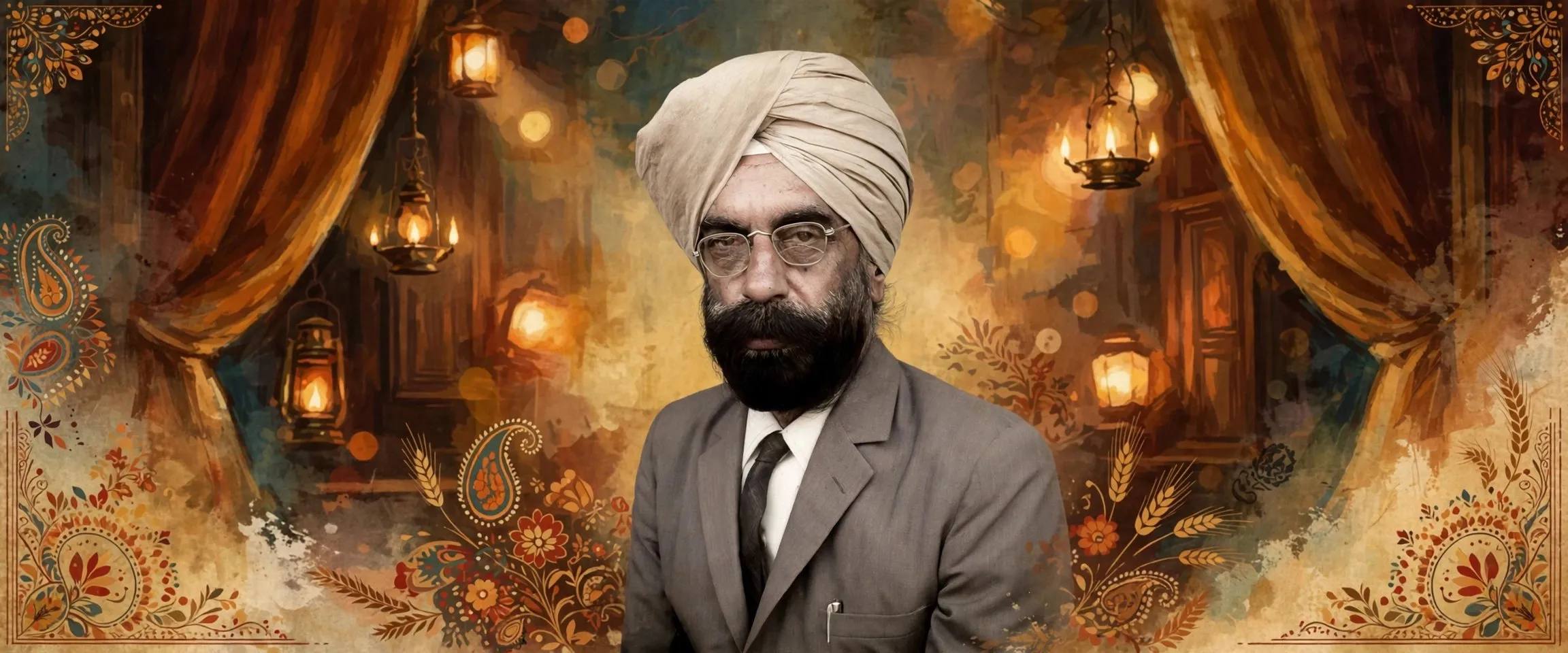
Kalakar (Artist), published in 1945, is the first full-length play of Sant Singh Sekhon, one of the founders of modern Punjabi drama. Drawn from ancient Indian mythology, it tells of an artist and the woman he loves, and asks what art owes to truth and what responsibility comes with making it. It opened a career that would run to ten full-length plays, two novels and the Sahitya Akademi Award.
Punjabi, Gurmukhi- Punjabi name
- ਕਲਾਕਾਰ
- Author
- Sant Singh Sekhon (1908-1997)
- Form
- Play (full-length drama)
- Language
- Punjabi, Gurmukhi
- Published
- 1945
- Source
- Ancient Indian mythology
All 8 facts
- Theme
- The artist, love, and the moral responsibility of art
- Place in his work
- First full-length play
Kalakar (Artist), published in 1945, is the first full-length play of Sant Singh Sekhon, one of the founders of modern Punjabi drama. Drawn from ancient Indian mythology, it tells of an artist and the woman he loves, and asks what art owes to truth and what responsibility comes with making it. It opened a career in Punjabi theatre that would run for another forty years.
About the play
Sekhon had already made his name in Punjabi theatre before Kalakar. His first collection of one-act plays, Chhe Ghar (Six Homes), had appeared in 1941 and been a critical success. But the one-act play is a small form, and Sekhon wanted a larger canvas. Kalakar, published in 1945, was his first full-length play, and the first of ten he would write over his lifetime.
What is Kalakar about?
The play takes its story from ancient Indian mythology. Its subject is the relationship between a man and a woman, and the changes that relationship registers as civilisation grows around it. Woven through it is a question about art itself: what part does art play in making something true, and what moral responsibility does the act of creation carry?
Sekhon, who believed that literature should serve social change, does not let his artist off lightly. The play asks whether beauty excuses the artist from answering for what his art does, and answers that it does not. The artist is responsible for his work in the same way any maker is responsible for what he makes.
Why did Sekhon write plays?
Sekhon came to Punjabi theatre by a roundabout road. Born in 1908 at Lyallpur, he grew up in his father's village of Dakha, near Ludhiana, and began his writing life in English, publishing in the 1930s in shared publications with W.H. Auden and Stephen Spender. He also wrote short stories in Urdu, in the company of Krishan Chander and Rajinder Singh Bedi. But he came to believe that Punjabi reached further and deeper than any other language he wrote in, and he switched to his mother tongue.
ਕਲਾਕਾਰ, 1945 ਵਿੱਚ ਪ੍ਰਕਾਸ਼ਿਤ, ਸੰਤ ਸਿੰਘ ਸੇਖੋਂ ਦਾ ਪਹਿਲਾ ਪੂਰਾ ਨਾਟਕ ਹੈ, ਜੋ ਆਧੁਨਿਕ ਪੰਜਾਬੀ ਨਾਟਕ ਦੇ ਮੋਢੀਆਂ ਵਿੱਚੋਂ ਇੱਕ ਸਨ। ਪ੍ਰਾਚੀਨ ਭਾਰਤੀ ਮਿਥਕ ਤੋਂ ਲਿਆ ਗਿਆ ਇਹ ਨਾਟਕ ਇੱਕ ਕਲਾਕਾਰ ਅਤੇ ਉਸ ਔਰਤ ਦੀ ਕਹਾਣੀ ਹੈ ਜਿਸ ਨੂੰ ਉਹ ਪਿਆਰ ਕਰਦਾ ਹੈ, ਅਤੇ ਇਹ ਪੁੱਛਦਾ ਹੈ ਕਿ ਕਲਾ ਦਾ ਸੱਚ ਨਾਲ ਕੀ ਲੈਣਾ-ਦੇਣਾ ਹੈ ਅਤੇ ਇਸ ਨੂੰ ਬਣਾਉਣ ਦੀ ਕੀ ਜ਼ਿੰਮੇਵਾਰੀ ਹੁੰਦੀ ਹੈ। ਇਸ ਨੇ ਪੰਜਾਬੀ ਰੰਗਮੰਚ ਵਿੱਚ ਇੱਕ ਜੀਵਨ ਦੀ ਸ਼ੁਰੂਆਤ ਕੀਤੀ ਜੋ ਹੋਰ ਚਾਲੀ ਸਾਲ ਚੱਲਿਆ।
ਨਾਟਕ ਬਾਰੇ
ਕਲਾਕਾਰ ਤੋਂ ਪਹਿਲਾਂ ਹੀ ਸੇਖੋਂ ਨੇ ਪੰਜਾਬੀ ਰੰਗਮੰਚ ਵਿੱਚ ਆਪਣਾ ਨਾਂ ਬਣਾ ਲਿਆ ਸੀ। ਉਨ੍ਹਾਂ ਦਾ ਪਹਿਲਾ ਇੱਕਾਂਗੀ ਸੰਗ੍ਰਹਿ, ਛੇ ਘਰ, 1941 ਵਿੱਚ ਆਇਆ ਸੀ ਅਤੇ ਆਲੋਚਕਾਂ ਵੱਲੋਂ ਸਲਾਹਿਆ ਗਿਆ ਸੀ। ਪਰ ਇੱਕਾਂਗੀ ਇੱਕ ਛੋਟਾ ਰੂਪ ਹੈ, ਅਤੇ ਸੇਖੋਂ ਨੂੰ ਇੱਕ ਵੱਡਾ ਕੈਨਵਸ ਚਾਹੀਦਾ ਸੀ। ਕਲਾਕਾਰ, 1945 ਵਿੱਚ ਪ੍ਰਕਾਸ਼ਿਤ, ਉਨ੍ਹਾਂ ਦਾ ਪਹਿਲਾ ਪੂਰਾ ਨਾਟਕ ਸੀ, ਅਤੇ ਉਨ੍ਹਾਂ ਦੀ ਜ਼ਿੰਦਗੀ ਵਿੱਚ ਲਿਖੇ ਗਏ ਦਸ ਪੂਰੇ ਨਾਟਕਾਂ ਵਿੱਚੋਂ ਪਹਿਲਾ।
ਕਲਾਕਾਰ ਕਿਸ ਬਾਰੇ ਹੈ?
ਨਾਟਕ ਦੀ ਕਹਾਣੀ ਪ੍ਰਾਚੀਨ ਭਾਰਤੀ ਮਿਥਕ ਤੋਂ ਲਈ ਗਈ ਹੈ। ਇਸ ਦਾ ਵਿਸ਼ਾ ਕਲਾ ਦਾ ਸਭ ਤੋਂ ਪੁਰਾਣਾ ਵਿਸ਼ਾ ਹੈ: ਇੱਕ ਆਦਮੀ ਅਤੇ ਇੱਕ ਔਰਤ ਵਿਚਕਾਰ ਰਿਸ਼ਤਾ, ਅਤੇ ਜਦੋਂ ਸਭਿਅਤਾ ਉਨ੍ਹਾਂ ਦੇ ਆਲੇ-ਦੁਆਲੇ ਵਧਦੀ ਹੈ ਤਾਂ ਇਸ ਵਿੱਚ ਕੀ ਬਦਲਾਅ ਆਉਂਦਾ ਹੈ। ਇਸ ਵਿੱਚ ਇੱਕ ਸਵਾਲ ਬੁਣਿਆ ਹੋਇਆ ਹੈ ਜੋ ਕਲਾ ਬਾਰੇ ਹੈ: ਕਿਸੇ ਚੀਜ਼ ਨੂੰ ਸੱਚਾ ਬਣਾਉਣ ਵਿੱਚ ਕਲਾ ਦੀ ਕੀ ਭੂਮਿਕਾ ਹੈ, ਅਤੇ ਸਿਰਜਣਾ ਦੇ ਕੰਮ ਨਾਲ ਕਿਹੜੀ ਨੈਤਿਕ ਜ਼ਿੰਮੇਵਾਰੀ ਆਉਂਦੀ ਹੈ?
ਸੇਖੋਂ, ਜੋ ਮੰਨਦੇ ਸਨ ਕਿ ਸਾਹਿਤ ਨੂੰ ਸਮਾਜਿਕ ਬਦਲਾਅ ਦੀ ਸੇਵਾ ਕਰਨੀ ਚਾਹੀਦੀ ਹੈ, ਆਪਣੇ ਕਲਾਕਾਰ ਨੂੰ ਹਲਕੇ ਢੰਗ ਨਾਲ ਨਹੀਂ ਛੱਡਦੇ। ਨਾਟਕ ਪੁੱਛਦਾ ਹੈ ਕਿ ਕੀ ਸੁੰਦਰਤਾ ਕਲਾਕਾਰ ਨੂੰ ਉਸ ਜਵਾਬਦੇਹੀ ਤੋਂ ਮੁਕਤ ਕਰਦੀ ਹੈ ਜੋ ਉਸ ਦੀ ਕਲਾ ਕਰਦੀ ਹੈ, ਅਤੇ ਇਸ ਦਾ ਜਵਾਬ ਹੈ ਕਿ ਨਹੀਂ ਕਰਦੀ। ਕਲਾਕਾਰ ਆਪਣੇ ਕੰਮ ਲਈ ਉਸੇ ਤਰ੍ਹਾਂ ਜ਼ਿੰਮੇਵਾਰ ਹੈ ਜਿਵੇਂ ਕੋਈ ਵੀ ਨਿਰਮਾਤਾ ਆਪਣੀ ਬਣਾਈ ਚੀਜ਼ ਲਈ ਹੁੰਦਾ ਹੈ।
ਸੇਖੋਂ ਨੇ ਨਾਟਕ ਕਿਉਂ ਲਿਖੇ?
ਸੇਖੋਂ ਪੰਜਾਬੀ ਨਾਟਕ ਤੱਕ ਇੱਕ ਘੁੰਮਾਅ-ਫਿਰਾਅ ਵਾਲੇ ਰਾਹ ਤੋਂ ਪਹੁੰਚੇ। ਉਨ੍ਹਾਂ ਦਾ ਜਨਮ 1908 ਵਿੱਚ ਲਾਇਲਪੁਰ ਵਿੱਚ ਹੋਇਆ, ਉਹ ਲੁਧਿਆਣੇ ਨੇੜੇ ਆਪਣੇ ਪਿਤਾ ਦੇ ਪਿੰਡ ਢਾਖਾ ਵਿੱਚ ਵੱਡੇ ਹੋਏ, ਅਤੇ ਆਪਣੀ ਲਿਖਣ ਦੀ ਜ਼ਿੰਦਗੀ ਅੰਗਰੇਜ਼ੀ ਵਿੱਚ ਸ਼ੁਰੂ ਕੀਤੀ, 1930 ਦੇ ਦਹਾਕੇ ਵਿੱਚ ਡਬਲਿਊ. ਐੱਚ. ਔਡਨ ਅਤੇ ਸਟੀਫ਼ਨ ਸਪੈਂਡਰ ਵਰਗੇ ਲੇਖਕਾਂ ਨਾਲ ਛਪੇ। ਉਨ੍ਹਾਂ ਨੇ ਕ੍ਰਿਸ਼ਨ ਚੰਦਰ ਅਤੇ ਰਾਜਿੰਦਰ ਸਿੰਘ ਬੇਦੀ ਦੀ ਸੰਗਤ ਵਿੱਚ ਉਰਦੂ ਵਿੱਚ ਛੋਟੀਆਂ ਕਹਾਣੀਆਂ ਵੀ ਲਿਖੀਆਂ। ਪਰ ਉਨ੍ਹਾਂ ਨੂੰ ਲੱਗਿਆ ਕਿ ਪੰਜਾਬੀ ਕਿਸੇ ਹੋਰ ਭਾਸ਼ਾ ਨਾਲੋਂ ਵੱਧ ਦੂਰ ਅਤੇ ਡੂੰਘਾਈ ਤੱਕ ਪਹੁੰਚਦੀ ਹੈ, ਅਤੇ ਉਹ ਆਪਣੀ ਮਾਂ-ਬੋਲੀ ਵੱਲ ਮੁੜ ਗਏ।
The switch worked. Chhe Ghar (1941) established the one-act play as a serious form in Punjabi theatre, and Kalakar followed four years later as the full-length statement of what he had learned. Like much of his work, it carries the mark of the Progressive Writers' Movement, which he had joined as a young man, and of his Marxist beliefs: art, for Sekhon, was never a private luxury but a public act with public consequences.
His plays never found much success on the stage, and he knew it. But on the page they built the modern Punjabi play, and later playwrights learned their craft from him.
The author
Sant Singh Sekhon (1908 to 1997) was born at Lyallpur, in what is now Pakistan, and raised at Dakha, near Ludhiana. He took a BA with honours in English from Mission College, Lahore, in 1928, and master's degrees in economics and in English, and spent most of his working life teaching, at Khalsa College, Amritsar, and later as principal of colleges at Fatehgarh Sahib and Jandiala. He edited the English weekly Northern Review in Lahore in 1938, contested elections four times and never won, and travelled to Russia in 1957.
His writing ran to ten full-length plays, four collections of one-act plays, five collections of short stories, two novels, Lahu Mitti and Baba Asman, and five books of literary criticism, alongside histories of the Punjabi language and a history of Punjabi literature written with Kartar Singh Duggal. His play Mittar Piara won the Sahitya Akademi Award in 1972, and he received the Padma Shri in 1987. After his death, Punjabi University, Patiala, where he had been Professor of Eminence, set up a chair in his name.
Reception and legacy
Kalakar is not the Sekhon play most often staged or most often quoted. That honour belongs to later works like Mittar Piara, which won the Sahitya Akademi Award, and to the one-act plays of Chhe Ghar, which are still performed. Kalakar's importance is as a beginning: the first full-length play by the writer who helped build modern Punjabi drama, and the first statement of the question that would run through all his work, what art is for and what it owes.
Scholars still return to it for that question, and for what it shows about a moment in Punjabi letters: a writer trained in English, steeped in Urdu fiction, choosing Punjabi as his language and mythology as his material, and making a modern play out of both. Read it as the foundation stone of a theatre that is still being built.
ਇਹ ਬਦਲਾਅ ਕੰਮ ਆਇਆ। ਛੇ ਘਰ (1941) ਨੇ ਪੰਜਾਬੀ ਰੰਗਮੰਚ ਵਿੱਚ ਇੱਕਾਂਗੀ ਨੂੰ ਇੱਕ ਗੰਭੀਰ ਰੂਪ ਵਜੋਂ ਸਥਾਪਿਤ ਕੀਤਾ, ਅਤੇ ਕਲਾਕਾਰ ਚਾਰ ਸਾਲ ਬਾਅਦ ਉਸ ਦਾ ਪੂਰਾ ਬਿਆਨ ਸੀ। ਉਨ੍ਹਾਂ ਦੇ ਬਹੁਤੇ ਕੰਮ ਵਾਂਗ, ਇਸ ਉੱਤੇ ਵੀ ਪ੍ਰਗਤੀਵਾਦੀ ਲੇਖਕ ਲਹਿਰ ਦੀ ਛਾਪ ਹੈ, ਜਿਸ ਵਿੱਚ ਉਹ ਜਵਾਨੀ ਵਿੱਚ ਸ਼ਾਮਲ ਹੋਏ ਸਨ, ਅਤੇ ਉਨ੍ਹਾਂ ਦੇ ਮਾਰਕਸਵਾਦੀ ਵਿਸ਼ਵਾਸਾਂ ਦੀ: ਕਲਾ, ਸੇਖੋਂ ਲਈ, ਕਦੇ ਨਿੱਜੀ ਸੁੱਖ ਨਹੀਂ ਸੀ, ਸਗੋਂ ਇੱਕ ਜਨਤਕ ਕੰਮ ਸੀ ਜਿਸ ਦੇ ਜਨਤਕ ਨਤੀਜੇ ਹੁੰਦੇ ਸਨ।
ਉਨ੍ਹਾਂ ਦੇ ਨਾਟਕਾਂ ਨੂੰ ਮੰਚ ਉੱਤੇ ਬਹੁਤੀ ਸਫ਼ਲਤਾ ਨਹੀਂ ਮਿਲੀ, ਅਤੇ ਉਹ ਇਹ ਜਾਣਦੇ ਸਨ। ਪਰ ਸਫ਼ੇ ਉੱਤੇ ਉਨ੍ਹਾਂ ਨੇ ਆਧੁਨਿਕ ਪੰਜਾਬੀ ਨਾਟਕ ਦੀ ਨੀਂਹ ਰੱਖੀ, ਅਤੇ ਬਾਅਦ ਦੇ ਨਾਟਕਕਾਰਾਂ ਨੇ ਆਪਣੀ ਕਲਾ ਉਨ੍ਹਾਂ ਤੋਂ ਸਿੱਖੀ।
ਲੇਖਕ
ਸੰਤ ਸਿੰਘ ਸੇਖੋਂ (1908 ਤੋਂ 1997) ਦਾ ਜਨਮ ਲਾਇਲਪੁਰ ਵਿੱਚ ਹੋਇਆ, ਜੋ ਹੁਣ ਪਾਕਿਸਤਾਨ ਵਿੱਚ ਹੈ, ਅਤੇ ਉਹ ਲੁਧਿਆਣੇ ਨੇੜੇ ਢਾਖਾ ਵਿੱਚ ਵੱਡੇ ਹੋਏ। ਉਨ੍ਹਾਂ ਨੇ 1928 ਵਿੱਚ ਮਿਸ਼ਨ ਕਾਲਜ, ਲਾਹੌਰ ਤੋਂ ਅੰਗਰੇਜ਼ੀ ਵਿੱਚ ਬੀ.ਏ. ਆਨਰਜ਼ ਕੀਤੀ, ਅਤੇ ਅਰਥ-ਸ਼ਾਸਤਰ ਅਤੇ ਅੰਗਰੇਜ਼ੀ ਵਿੱਚ ਮਾਸਟਰ ਦੀਆਂ ਡਿਗਰੀਆਂ ਲਈਆਂ, ਅਤੇ ਆਪਣੀ ਜ਼ਿੰਦਗੀ ਦਾ ਬਹੁਤਾ ਹਿੱਸਾ ਪੜ੍ਹਾਉਂਦਿਆਂ ਬਿਤਾਇਆ, ਖ਼ਾਲਸਾ ਕਾਲਜ, ਅੰਮ੍ਰਿਤਸਰ ਵਿੱਚ, ਅਤੇ ਬਾਅਦ ਵਿੱਚ ਫ਼ਤਹਿਗੜ੍ਹ ਸਾਹਿਬ ਅਤੇ ਜੰਡਿਆਲਾ ਵਿੱਚ ਕਾਲਜਾਂ ਦੇ ਪ੍ਰਿੰਸੀਪਲ ਵਜੋਂ। ਉਨ੍ਹਾਂ ਨੇ 1938 ਵਿੱਚ ਲਾਹੌਰ ਤੋਂ ਅੰਗਰੇਜ਼ੀ ਹਫ਼ਤਾਵਾਰੀ ਨਾਰਦਰਨ ਰਿਵਿਊ ਦਾ ਸੰਪਾਦਨ ਕੀਤਾ, ਚਾਰ ਵਾਰ ਚੋਣਾਂ ਲੜੀਆਂ ਅਤੇ ਕਦੇ ਨਹੀਂ ਜਿੱਤੇ, ਅਤੇ 1957 ਵਿੱਚ ਰੂਸ ਦੀ ਯਾਤਰਾ ਕੀਤੀ।
ਉਨ੍ਹਾਂ ਦੀ ਲਿਖਤ ਵਿੱਚ ਦਸ ਪੂਰੇ ਨਾਟਕ, ਇੱਕਾਂਗੀਆਂ ਦੇ ਚਾਰ ਸੰਗ੍ਰਹਿ, ਛੋਟੀਆਂ ਕਹਾਣੀਆਂ ਦੇ ਪੰਜ ਸੰਗ੍ਰਹਿ, ਦੋ ਨਾਵਲ, ਲਹੂ ਮਿੱਟੀ ਅਤੇ ਬਾਬਾ ਅਸਮਾਨ, ਅਤੇ ਸਾਹਿਤਕ ਆਲੋਚਨਾ ਦੀਆਂ ਪੰਜ ਕਿਤਾਬਾਂ ਸਨ, ਅਤੇ ਪੰਜਾਬੀ ਭਾਸ਼ਾ ਦੇ ਇਤਿਹਾਸ ਅਤੇ ਕਰਤਾਰ ਸਿੰਘ ਦੁੱਗਲ ਨਾਲ ਲਿਖਿਆ ਪੰਜਾਬੀ ਸਾਹਿਤ ਦਾ ਇਤਿਹਾਸ ਵੀ। ਉਨ੍ਹਾਂ ਦੇ ਨਾਟਕ ਮਿੱਤਰ ਪਿਆਰਾ ਨੇ 1972 ਵਿੱਚ ਸਾਹਿਤ ਅਕਾਦਮੀ ਪੁਰਸਕਾਰ ਜਿੱਤਿਆ, ਅਤੇ ਉਨ੍ਹਾਂ ਨੂੰ 1987 ਵਿੱਚ ਪਦਮ ਸ਼੍ਰੀ ਮਿਲਿਆ। ਉਨ੍ਹਾਂ ਦੇ ਦਿਹਾਂਤ ਤੋਂ ਬਾਅਦ, ਪੰਜਾਬੀ ਯੂਨੀਵਰਸਿਟੀ, ਪਟਿਆਲਾ, ਜਿੱਥੇ ਉਹ ਪ੍ਰੋਫ਼ੈਸਰ ਐਮੇਰਿਟਸ ਸਨ, ਨੇ ਉਨ੍ਹਾਂ ਦੇ ਨਾਂ ਉੱਤੇ ਇੱਕ ਚੇਅਰ ਸਥਾਪਿਤ ਕੀਤੀ।
ਸਵੀਕ੍ਰਿਤੀ ਅਤੇ ਵਿਰਾਸਤ
ਕਲਾਕਾਰ ਸੇਖੋਂ ਦਾ ਸਭ ਤੋਂ ਵੱਧ ਖੇਡਿਆ ਜਾਂ ਹਵਾਲਾ ਦਿੱਤਾ ਜਾਣ ਵਾਲਾ ਨਾਟਕ ਨਹੀਂ ਹੈ। ਇਹ ਸਨਮਾਨ ਬਾਅਦ ਦੀਆਂ ਰਚਨਾਵਾਂ ਨੂੰ ਮਿਲਦਾ ਹੈ, ਜਿਵੇਂ ਮਿੱਤਰ ਪਿਆਰਾ, ਜਿਸ ਨੇ ਸਾਹਿਤ ਅਕਾਦਮੀ ਪੁਰਸਕਾਰ ਜਿੱਤਿਆ, ਅਤੇ ਛੇ ਘਰ ਦੇ ਇੱਕਾਂਗੀਆਂ ਨੂੰ, ਜੋ ਅੱਜ ਵੀ ਖੇਡੇ ਜਾਂਦੇ ਹਨ। ਕਲਾਕਾਰ ਦੀ ਮਹੱਤਤਾ ਇੱਕ ਸ਼ੁਰੂਆਤ ਵਜੋਂ ਹੈ: ਉਸ ਲੇਖਕ ਦਾ ਪਹਿਲਾ ਪੂਰਾ ਨਾਟਕ ਜਿਸ ਨੇ ਆਧੁਨਿਕ ਪੰਜਾਬੀ ਨਾਟਕ ਦੀ ਨੀਂਹ ਰੱਖੀ, ਅਤੇ ਉਸ ਸਵਾਲ ਦਾ ਪਹਿਲਾ ਬਿਆਨ ਜੋ ਉਨ੍ਹਾਂ ਦੇ ਸਾਰੇ ਕੰਮ ਵਿੱਚ ਚੱਲਦਾ ਹੈ, ਕਲਾ ਕਿਸ ਲਈ ਹੈ ਅਤੇ ਇਸ ਦਾ ਕੀ ਕਰਜ਼ ਹੈ।
ਵਿਦਵਾਨ ਅੱਜ ਵੀ ਇਸ ਵੱਲ ਉਸ ਸਵਾਲ ਲਈ ਮੁੜਦੇ ਹਨ, ਅਤੇ ਪੰਜਾਬੀ ਸਾਹਿਤ ਦੇ ਇੱਕ ਪਲ ਲਈ: ਇੱਕ ਲੇਖਕ ਜੋ ਅੰਗਰੇਜ਼ੀ ਵਿੱਚ ਸਿਖਲਾਈ ਪ੍ਰਾਪਤ ਸੀ, ਉਰਦੂ ਗਲਪ ਵਿੱਚ ਡੁੱਬਿਆ ਹੋਇਆ ਸੀ, ਪੰਜਾਬੀ ਨੂੰ ਆਪਣੀ ਭਾਸ਼ਾ ਅਤੇ ਮਿਥਕ ਨੂੰ ਆਪਣੀ ਸਮੱਗਰੀ ਵਜੋਂ ਚੁਣਦਾ ਹੈ, ਅਤੇ ਦੋਵਾਂ ਤੋਂ ਇੱਕ ਆਧੁਨਿਕ ਨਾਟਕ ਬਣਾਉਂਦਾ ਹੈ। ਇਸ ਨੂੰ ਇੱਕ ਰੰਗਮੰਚ ਦੀ ਨੀਂਹ ਦੇ ਪੱਥਰ ਵਜੋਂ ਪੜ੍ਹੋ ਜੋ ਅੱਜ ਵੀ ਬਣ ਰਿਹਾ ਹੈ।
Editions and translations
- KalakarPunjabi · Gurmukhi · original, 1945Original
The author

Connected
More to read
Sources (3)
Jugti is free and independent. Reader support keeps the Kosh growing.
Support