

Sundari (1898) by Bhai Vir Singh is the first novel written in Punjabi. Set in 18th-century Punjab, it tells of a young Hindu woman seized by a Mughal officer, rescued by her brother Balwant Singh, who takes the Sikh faith, is renamed Sundari, and lives as a warrior of the forest jatha. It remains the most widely read novel in Punjabi.
Punjabi, Gurmukhi, with an English translation- Punjabi name
- ਸੁੰਦਰੀ
- Author
- Bhai Vir Singh (1872-1957)
- Published
- 1898
- Language
- Punjabi (Gurmukhi)
- Form
- Novel
- Setting
- Punjab, 18th century
All 8 facts
- English translation
- Sundri, translated by G. S. Mansukhani (1983)
- Followed by
- Bijay Singh, Satwant Kaur
Characters
About the book
Sundari, published in 1898, is the first novel written in the Punjabi language. Its author, Bhai Vir Singh (1872-1957), is regarded as the father of modern Punjabi literature, and Sundari is the book that opened the form: before it, Punjabi storytelling lived in verse, in the qissa and the folk song, not in the novel. Bhai Vir Singh conceived the story while he was still in high school and wrote part of it then, building it on a Punjabi folk song about a young girl carried away by force.
The novel is set in the Punjab of the 18th century, in the hard decades when Sikhs were hunted by the Mughal governors and lived in the forests. It follows a young woman who refuses to surrender her faith and her honour, and it ends with the events of 1752, the year Kaura Mal, the dewan of Mir Mannu and an ancestor of Bhai Vir Singh himself, died.
More than a century after it appeared, Sundari is still in print and still read. The introduction to its English translation records scores of editions, and a scholarly study estimates it to be the most widely read novel in Punjabi.
The story of Sundari
The story opens in a Punjab village, where a young Hindu girl, newly married and about to leave for her husband's home, is singing with her friends when a Mughal officer on a hunting trip seizes her and carries her off to his camp. Her father, brother and husband follow to plead for her release, offering silver and gold, but the officer refuses.
Left alone, the girl resolves to burn herself alive rather than lose her honour. As she gathers wood for the fire, her elder brother arrives: Balwant Singh, who had left home years earlier to become a Sikh and had not been heard from since. He lifts her from the pyre and carries her away, and when their own family turns them out in fear of the officer's revenge, brother and sister ride on to join the roving band of Sikhs hiding in the forests.
Among the jatha, the girl is received as a sister. She takes the Sikh faith, receives amrit and is given the name Sundari, and she learns to live the hard, hunted life of the forest camps: prayer at dawn, the langar shared alike, and the sword carried only to defend the defenceless. The novel follows her through the persecutions of those years and closes with the events of 1752.
Why is Sundari called the first Punjabi novel?
Because no Punjabi prose narrative of this kind existed before it. Punjabi literature before 1898 was poetry: the qissas of Waris Shah and Peelu, the kafis of Bulleh Shah and Shah Hussain, the vars and the folk epic. Bhai Vir Singh took the novel form, which he had met at school in the works of Sir Walter Scott and in English novels available in Urdu translation, and filled it with Punjabi material: a folk song, a village, a family, and the living memory of persecution.
The claim is made by the scholars who study him. Literary historians trace the origin of modern Punjabi prose, the novel, the lyric and the epic to Bhai Vir Singh, and the anniversary tribute published by Sikh Heritage Education states plainly that Sundari, published in 1898, was the first novel of the Punjabi language.
It was also a deliberate act. The Punjab of the 1890s was a generation past the fall of the Sikh kingdom, and Bhai Vir Singh wrote to restore pride in Sikh heritage at a moment when many Sikhs doubted it. The novel's didactic purpose is open: its heroine is a model of faith, courage and sacrifice, and every episode is chosen to show the Sikh character at its best.
Themes: faith, courage and chardi kala
The novel's centre is the dignity of a woman who refuses to be a victim. Sundari chooses death over dishonour, then chooses a hard life of service over safety, and the book treats her choices as the measure of a whole community's spirit.
Around her, Bhai Vir Singh sets out the Sikh ethic as he understood it: the sword is carried only for defence and to remove tyranny, never for aggression; the hungry are fed without asking their religion; even a wounded enemy is treated with charity. In one early episode Sundari tends an injured Mughal sepoy, and he turns on her with a dagger when he learns she is a Sikh: the book's answer to that hatred is not hatred in return but steadfastness.
Above all, the novel is a portrait of chardi kala, the high spirits the Sikhs kept even while hunted. The forest camps pray, sing and share their food while a price sits on their heads, and Sundari's courage is presented as the natural fruit of that faith, not as an exception to it.
The author
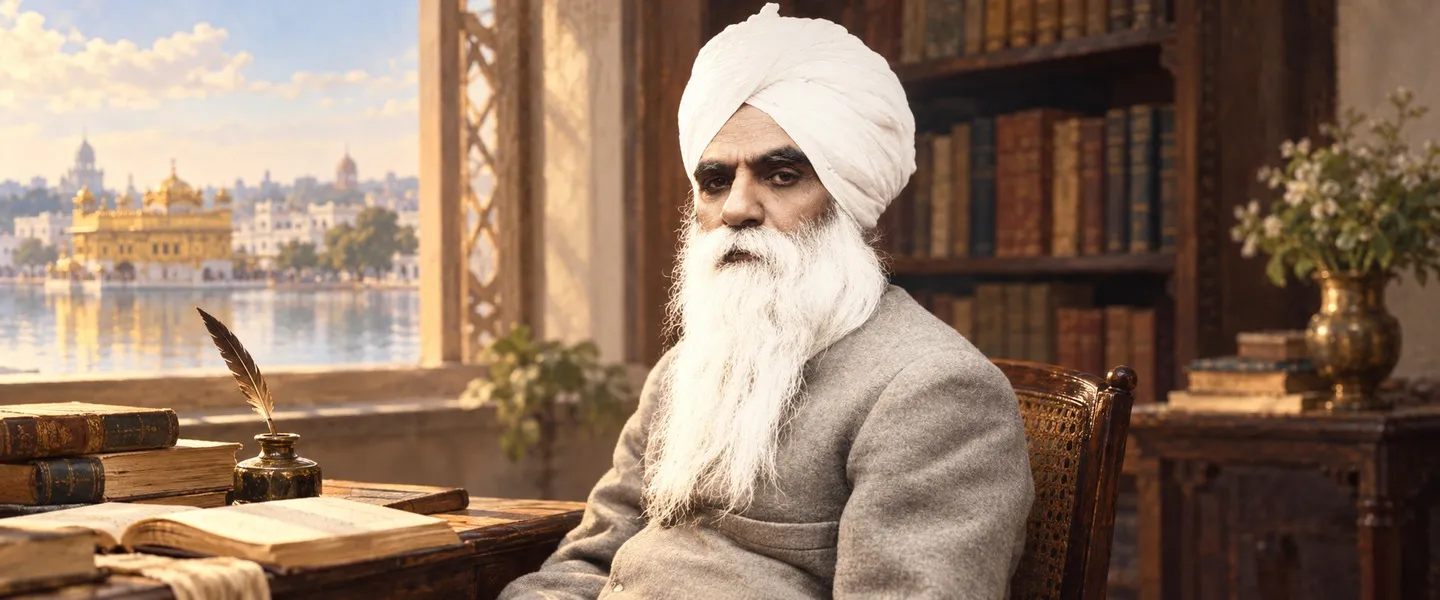
Bhai Vir Singh was born in Amritsar on 5 December 1872, into a family steeped in classical learning: his father was widely read in Sanskrit, Braj and Sikh texts, and his maternal grandfather, Giani Hazara Singh, belonged to a noted line of scholars. He studied at the Amritsar Mission School, founded a printing press in 1892 and the Khalsa Tract Society a year later, and in 1899 began the weekly Khalsa Samachar, one of the earliest Punjabi newspapers.
Sundari was his first book and the first of four novels: Bijay Singh and Satwant Kaur followed in the same historical vein, and Baba Naudh Singh (1921) moved the same ideals into a contemporary village. After 1907 he wrote no more novels, turning to poetry and scholarship, above all his epic Rana Surat Singh (1905) and his exegesis of the Sikh scriptures. He died in 1957, honoured as the father of modern Punjabi literature.
Reception and legacy
Sundari carried an instant appeal for the Sikhs who read it with enthusiasm and pride, in the words of its English edition's introduction, and it has never gone out of print: the same introduction records scores of editions, and readers still meet it in school and university syllabuses and in family libraries across Punjab and the diaspora.
Its influence is structural, not just literary. It showed that Punjabi could carry the modern novel, and the novelists who followed, from Nanak Singh to Gurdial Singh, worked in a form Bhai Vir Singh had made respectable. The characters became household words in Punjab, and the book's heroine remains the best-known woman of Punjabi fiction.
English readers can meet the novel in two translations: Dr. G. S. Mansukhani's Sundri, published by the Bhai Vir Singh Sahitya Sadan in 1983, and Bimal Kaur's translation carried by SikhNet and SikhiWiki. Both keep the novel's plain, didactic voice and its forest world intact.
ਕਿਤਾਬ ਬਾਰੇ
ਸੁੰਦਰੀ 1898 ਵਿੱਚ ਛਪਿਆ ਭਾਈ ਵੀਰ ਸਿੰਘ ਦਾ ਨਾਵਲ ਹੈ ਅਤੇ ਪੰਜਾਬੀ ਭਾਸ਼ਾ ਦਾ ਪਹਿਲਾ ਨਾਵਲ ਮੰਨਿਆ ਜਾਂਦਾ ਹੈ। ਭਾਈ ਵੀਰ ਸਿੰਘ (1872-1957) ਨੂੰ ਆਧੁਨਿਕ ਪੰਜਾਬੀ ਸਾਹਿਤ ਦਾ ਪਿਤਾਮਾ ਕਿਹਾ ਜਾਂਦਾ ਹੈ, ਅਤੇ ਸੁੰਦਰੀ ਉਹ ਕਿਤਾਬ ਹੈ ਜਿਸ ਨਾਲ ਪੰਜਾਬੀ ਵਿੱਚ ਨਾਵਲ ਦੀ ਸ਼ੁਰੂਆਤ ਹੋਈ। ਇਸ ਤੋਂ ਪਹਿਲਾਂ ਪੰਜਾਬੀ ਕਹਾਣੀ ਕਵਿਤਾ ਵਿੱਚ ਰਹਿੰਦੀ ਸੀ: ਕਿੱਸੇ, ਕਾਫ਼ੀਆਂ ਅਤੇ ਲੋਕ ਗੀਤ ਵਿੱਚ, ਨਾਵਲ ਵਿੱਚ ਨਹੀਂ। ਭਾਈ ਵੀਰ ਸਿੰਘ ਨੇ ਇਹ ਕਹਾਣੀ ਸਕੂਲ ਵਿੱਚ ਪੜ੍ਹਦਿਆਂ ਸੋਚੀ ਸੀ ਅਤੇ ਉਸ ਦਾ ਕੁਝ ਹਿੱਸਾ ਉਦੋਂ ਹੀ ਲਿਖ ਲਿਆ ਸੀ। ਕਹਾਣੀ ਇੱਕ ਪੰਜਾਬੀ ਲੋਕ ਗੀਤ ਉੱਤੇ ਆਧਾਰਿਤ ਹੈ, ਜਿਸ ਵਿੱਚ ਇੱਕ ਨੌਜਵਾਨ ਕੁੜੀ ਨੂੰ ਜ਼ਬਰਦਸਤੀ ਚੁੱਕ ਕੇ ਲਿਜਾਇਆ ਜਾਂਦਾ ਹੈ।
ਨਾਵਲ ਅਠਾਰ੍ਹਵੀਂ ਸਦੀ ਦੇ ਪੰਜਾਬ ਵਿੱਚ ਵਾਪਰਦਾ ਹੈ, ਉਸ ਔਖੇ ਸਮੇਂ ਵਿੱਚ ਜਦੋਂ ਸਿੱਖਾਂ ਨੂੰ ਮੁਗ਼ਲ ਹਾਕਮਾਂ ਵੱਲੋਂ ਸ਼ਿਕਾਰ ਕੀਤਾ ਜਾਂਦਾ ਸੀ ਅਤੇ ਉਹ ਜੰਗਲਾਂ ਵਿੱਚ ਲੁਕ ਕੇ ਰਹਿੰਦੇ ਸਨ। ਇਹ ਇੱਕ ਨੌਜਵਾਨ ਔਰਤ ਦੀ ਕਹਾਣੀ ਹੈ ਜੋ ਆਪਣਾ ਧਰਮ ਅਤੇ ਆਪਣੀ ਇੱਜ਼ਤ ਛੱਡਣ ਤੋਂ ਇਨਕਾਰ ਕਰਦੀ ਹੈ। ਨਾਵਲ 1752 ਦੀਆਂ ਘਟਨਾਵਾਂ ਨਾਲ ਖ਼ਤਮ ਹੁੰਦਾ ਹੈ, ਉਹੀ ਸਾਲ ਜਿਸ ਵਿੱਚ ਮੀਰ ਮੰਨੂ ਦਾ ਦੀਵਾਨ ਕੌੜਾ ਮੱਲ, ਜੋ ਭਾਈ ਵੀਰ ਸਿੰਘ ਦਾ ਹੀ ਵਡੇਰਾ ਸੀ, ਚਲਾਣਾ ਕਰ ਗਿਆ।
ਛਪਣ ਤੋਂ ਸੌ ਸਾਲ ਤੋਂ ਵੱਧ ਬਾਅਦ ਵੀ ਸੁੰਦਰੀ ਛਪ ਰਿਹਾ ਹੈ ਅਤੇ ਪੜ੍ਹਿਆ ਜਾ ਰਿਹਾ ਹੈ। ਇਸ ਦੇ ਅੰਗਰੇਜ਼ੀ ਅਨੁਵਾਦ ਦੀ ਭੂਮਿਕਾ ਵਿੱਚ ਲਿਖਿਆ ਹੈ ਕਿ ਇਸ ਦੇ ਦਰਜਨਾਂ ਸੰਸਕਰਣ ਛਪ ਚੁੱਕੇ ਹਨ, ਅਤੇ ਵਿਦਵਾਨ ਇਸ ਨੂੰ ਪੰਜਾਬੀ ਦਾ ਸਭ ਤੋਂ ਵੱਧ ਪੜ੍ਹਿਆ ਗਿਆ ਨਾਵਲ ਦੱਸਦੇ ਹਨ।
ਸੁੰਦਰੀ ਦੀ ਕਹਾਣੀ
ਕਹਾਣੀ ਪੰਜਾਬ ਦੇ ਇੱਕ ਪਿੰਡ ਤੋਂ ਸ਼ੁਰੂ ਹੁੰਦੀ ਹੈ, ਜਿੱਥੇ ਇੱਕ ਨੌਜਵਾਨ ਹਿੰਦੂ ਕੁੜੀ, ਜਿਸ ਦਾ ਵਿਆਹ ਹੋਇਆ ਹੀ ਹੈ ਅਤੇ ਜੋ ਸਹੁਰੇ ਘਰ ਜਾਣ ਵਾਲੀ ਹੈ, ਆਪਣੀਆਂ ਸਹੇਲੀਆਂ ਨਾਲ ਗਾ ਰਹੀ ਹੈ। ਉਸੇ ਵੇਲੇ ਸ਼ਿਕਾਰ ਉੱਤੇ ਆਇਆ ਇੱਕ ਮੁਗ਼ਲ ਅਧਿਕਾਰੀ ਉਸ ਨੂੰ ਚੁੱਕ ਕੇ ਆਪਣੇ ਡੇਰੇ ਲੈ ਜਾਂਦਾ ਹੈ। ਉਸ ਦਾ ਪਿਤਾ, ਭਰਾ ਅਤੇ ਪਤੀ ਉਸ ਨੂੰ ਛੁਡਾਉਣ ਲਈ ਪਿੱਛੇ ਜਾਂਦੇ ਹਨ ਅਤੇ ਚਾਂਦੀ ਸੋਨਾ ਦੇਣ ਦੀ ਪੇਸ਼ਕਸ਼ ਕਰਦੇ ਹਨ, ਪਰ ਅਧਿਕਾਰੀ ਨਹੀਂ ਮੰਨਦਾ।
ਇਕੱਲੀ ਰਹਿ ਗਈ ਕੁੜੀ ਫ਼ੈਸਲਾ ਕਰਦੀ ਹੈ ਕਿ ਇੱਜ਼ਤ ਗੁਆਉਣ ਨਾਲੋਂ ਅੱਗ ਵਿੱਚ ਸੜ ਕੇ ਮਰ ਜਾਣਾ ਬਿਹਤਰ ਹੈ। ਜਦੋਂ ਉਹ ਅੱਗ ਲਈ ਲੱਕੜਾਂ ਇਕੱਠੀਆਂ ਕਰ ਰਹੀ ਹੁੰਦੀ ਹੈ, ਉਸ ਦਾ ਵੱਡਾ ਭਰਾ ਆ ਪਹੁੰਚਦਾ ਹੈ: ਬਲਵੰਤ ਸਿੰਘ, ਜੋ ਸਾਲਾਂ ਪਹਿਲਾਂ ਘਰ ਛੱਡ ਕੇ ਸਿੱਖ ਬਣ ਗਿਆ ਸੀ ਅਤੇ ਜਿਸ ਦੀ ਕੋਈ ਖ਼ਬਰ ਨਹੀਂ ਸੀ। ਉਹ ਭੈਣ ਨੂੰ ਅੱਗ ਦੇ ਢੇਰ ਤੋਂ ਚੁੱਕ ਕੇ ਲੈ ਜਾਂਦਾ ਹੈ, ਅਤੇ ਜਦੋਂ ਡਰ ਕਾਰਨ ਉਸ ਦਾ ਆਪਣਾ ਪਰਿਵਾਰ ਉਨ੍ਹਾਂ ਨੂੰ ਘਰੋਂ ਕੱਢ ਦਿੰਦਾ ਹੈ, ਤਾਂ ਭਰਾ ਭੈਣ ਜੰਗਲਾਂ ਵਿੱਚ ਲੁਕੇ ਸਿੱਖ ਜੱਥੇ ਕੋਲ ਚਲੇ ਜਾਂਦੇ ਹਨ।
ਜੱਥੇ ਵਿੱਚ ਕੁੜੀ ਨੂੰ ਭੈਣ ਵਾਂਗ ਅਪਣਾਇਆ ਜਾਂਦਾ ਹੈ। ਉਹ ਸਿੱਖ ਧਰਮ ਧਾਰਨ ਕਰਦੀ ਹੈ, ਅੰਮ੍ਰਿਤ ਛਕਦੀ ਹੈ ਅਤੇ ਉਸ ਨੂੰ ਸੁੰਦਰੀ ਦਾ ਨਾਂ ਮਿਲਦਾ ਹੈ। ਉਹ ਜੰਗਲ ਦੇ ਕੈਂਪਾਂ ਦੀ ਔਖੀ ਜ਼ਿੰਦਗੀ ਜੀਉਣਾ ਸਿੱਖਦੀ ਹੈ: ਸਵੇਰ ਦੀ ਅਰਦਾਸ, ਸਾਂਝਾ ਲੰਗਰ ਅਤੇ ਤਲਵਾਰ ਜੋ ਸਿਰਫ਼ ਬੇਸਹਾਰਿਆਂ ਦੀ ਰੱਖਿਆ ਲਈ ਚੁੱਕੀ ਜਾਂਦੀ ਹੈ। ਨਾਵਲ ਉਸ ਨੂੰ ਉਨ੍ਹਾਂ ਸਾਲਾਂ ਦੇ ਜ਼ੁਲਮਾਂ ਵਿੱਚੋਂ ਲੰਘਾਉਂਦਾ ਹੈ ਅਤੇ 1752 ਦੀਆਂ ਘਟਨਾਵਾਂ ਨਾਲ ਖ਼ਤਮ ਹੁੰਦਾ ਹੈ।
ਸੁੰਦਰੀ ਨੂੰ ਪਹਿਲਾ ਪੰਜਾਬੀ ਨਾਵਲ ਕਿਉਂ ਕਿਹਾ ਜਾਂਦਾ ਹੈ?
ਕਿਉਂਕਿ ਇਸ ਤੋਂ ਪਹਿਲਾਂ ਪੰਜਾਬੀ ਵਿੱਚ ਇਸ ਤਰ੍ਹਾਂ ਦੀ ਕੋਈ ਗਦ ਕਹਾਣੀ ਨਹੀਂ ਸੀ। 1898 ਤੋਂ ਪਹਿਲਾਂ ਪੰਜਾਬੀ ਸਾਹਿਤ ਕਵਿਤਾ ਸੀ: ਵਾਰਿਸ ਸ਼ਾਹ ਅਤੇ ਪੀਲੂ ਦੇ ਕਿੱਸੇ, ਬੁੱਲ੍ਹੇ ਸ਼ਾਹ ਅਤੇ ਸ਼ਾਹ ਹੁਸੈਨ ਦੀਆਂ ਕਾਫ਼ੀਆਂ, ਵਾਰਾਂ ਅਤੇ ਲੋਕ ਮਹਾਂਕਾਵਿ। ਭਾਈ ਵੀਰ ਸਿੰਘ ਨੇ ਨਾਵਲ ਦਾ ਰੂਪ ਸਕੂਲ ਵਿੱਚ ਸਰ ਵਾਲਟਰ ਸਕਾਟ ਦੀਆਂ ਰਚਨਾਵਾਂ ਅਤੇ ਉਰਦੂ ਅਨੁਵਾਦ ਵਿੱਚ ਮਿਲਦੇ ਅੰਗਰੇਜ਼ੀ ਨਾਵਲਾਂ ਤੋਂ ਸਿੱਖਿਆ ਸੀ, ਅਤੇ ਉਸ ਰੂਪ ਨੂੰ ਪੰਜਾਬੀ ਸਮੱਗਰੀ ਨਾਲ ਭਰ ਦਿੱਤਾ: ਇੱਕ ਲੋਕ ਗੀਤ, ਇੱਕ ਪਿੰਡ, ਇੱਕ ਪਰਿਵਾਰ ਅਤੇ ਜ਼ੁਲਮ ਦੀ ਜਿਉਂਦੀ ਯਾਦ।
ਇਹ ਦਾਅਵਾ ਉਨ੍ਹਾਂ ਵਿਦਵਾਨਾਂ ਦਾ ਹੈ ਜੋ ਭਾਈ ਵੀਰ ਸਿੰਘ ਦਾ ਅਧਿਐਨ ਕਰਦੇ ਹਨ। ਸਾਹਿਤ ਦੇ ਇਤਿਹਾਸਕਾਰ ਆਧੁਨਿਕ ਪੰਜਾਬੀ ਗਦ, ਨਾਵਲ, ਗੀਤ ਅਤੇ ਮਹਾਂਕਾਵਿ ਦੀ ਸ਼ੁਰੂਆਤ ਭਾਈ ਵੀਰ ਸਿੰਘ ਤੋਂ ਮੰਨਦੇ ਹਨ, ਅਤੇ ਸਿੱਖ ਹੈਰੀਟੇਜ ਐਜੂਕੇਸ਼ਨ ਵਿੱਚ ਛਪੀ ਸ਼ਰਧਾਂਜਲੀ ਵਿੱਚ ਸਾਫ਼ ਲਿਖਿਆ ਹੈ ਕਿ 1898 ਵਿੱਚ ਛਪੀ ਸੁੰਦਰੀ ਪੰਜਾਬੀ ਭਾਸ਼ਾ ਦਾ ਪਹਿਲਾ ਨਾਵਲ ਸੀ।
ਇਹ ਇੱਕ ਸੋਚਿਆ ਸਮਝਿਆ ਕਦਮ ਵੀ ਸੀ। 1890 ਦੇ ਦਹਾਕੇ ਦਾ ਪੰਜਾਬ ਸਿੱਖ ਰਾਜ ਦੇ ਪਤਨ ਤੋਂ ਇੱਕ ਪੀੜ੍ਹੀ ਬਾਅਦ ਦਾ ਪੰਜਾਬ ਸੀ, ਅਤੇ ਭਾਈ ਵੀਰ ਸਿੰਘ ਸਿੱਖ ਵਿਰਸੇ ਉੱਤੇ ਮਾਣ ਮੁੜ ਜਗਾਉਣਾ ਚਾਹੁੰਦੇ ਸਨ, ਉਸ ਵੇਲੇ ਜਦੋਂ ਬਹੁਤ ਸਾਰੇ ਸਿੱਖ ਆਪਣੇ ਹੀ ਇਤਿਹਾਸ ਉੱਤੇ ਸ਼ੱਕ ਕਰਨ ਲੱਗੇ ਸਨ। ਨਾਵਲ ਦਾ ਉਪਦੇਸ਼ਕ ਮਕਸਦ ਖੁੱਲ੍ਹਾ ਹੈ: ਇਸ ਦੀ ਨਾਇਕਾ ਸ਼ਰਧਾ, ਹਿੰਮਤ ਅਤੇ ਕੁਰਬਾਨੀ ਦੀ ਮੂਰਤ ਹੈ, ਅਤੇ ਹਰ ਘਟਨਾ ਸਿੱਖ ਚਰਿੱਤਰ ਨੂੰ ਉਸ ਦੇ ਸਭ ਤੋਂ ਉੱਚੇ ਰੂਪ ਵਿੱਚ ਦਿਖਾਉਣ ਲਈ ਚੁਣੀ ਗਈ ਹੈ।
ਵਿਸ਼ੇ: ਸ਼ਰਧਾ, ਹਿੰਮਤ ਅਤੇ ਚੜ੍ਹਦੀ ਕਲਾ
ਨਾਵਲ ਦਾ ਕੇਂਦਰ ਉਸ ਔਰਤ ਦੀ ਸ਼ਾਨ ਹੈ ਜੋ ਸ਼ਿਕਾਰ ਬਣਨ ਤੋਂ ਇਨਕਾਰ ਕਰਦੀ ਹੈ। ਸੁੰਦਰੀ ਬੇਇੱਜ਼ਤੀ ਨਾਲੋਂ ਮੌਤ ਨੂੰ ਚੁਣਦੀ ਹੈ, ਫਿਰ ਸੁਰੱਖਿਆ ਨਾਲੋਂ ਸੇਵਾ ਦੀ ਔਖੀ ਜ਼ਿੰਦਗੀ ਨੂੰ ਚੁਣਦੀ ਹੈ, ਅਤੇ ਕਿਤਾਬ ਉਸ ਦੇ ਇਨ੍ਹਾਂ ਫ਼ੈਸਲਿਆਂ ਨੂੰ ਪੂਰੀ ਕੌਮ ਦੀ ਭਾਵਨਾ ਦਾ ਮਾਪਦੰਡ ਬਣਾਉਂਦੀ ਹੈ।
ਉਸ ਦੇ ਆਲੇ ਦੁਆਲੇ ਭਾਈ ਵੀਰ ਸਿੰਘ ਸਿੱਖ ਨੈਤਿਕਤਾ ਨੂੰ ਆਪਣੀ ਸਮਝ ਅਨੁਸਾਰ ਰੱਖਦੇ ਹਨ: ਤਲਵਾਰ ਸਿਰਫ਼ ਰੱਖਿਆ ਲਈ ਅਤੇ ਜ਼ੁਲਮ ਨੂੰ ਦੂਰ ਕਰਨ ਲਈ ਚੁੱਕੀ ਜਾਂਦੀ ਹੈ, ਹਮਲੇ ਲਈ ਨਹੀਂ; ਭੁੱਖੇ ਨੂੰ ਧਰਮ ਪੁੱਛੇ ਬਿਨਾਂ ਖਾਣਾ ਦਿੱਤਾ ਜਾਂਦਾ ਹੈ; ਜ਼ਖ਼ਮੀ ਦੁਸ਼ਮਣ ਨਾਲ ਵੀ ਦਇਆ ਕੀਤੀ ਜਾਂਦੀ ਹੈ। ਇੱਕ ਥਾਂ ਸੁੰਦਰੀ ਇੱਕ ਜ਼ਖ਼ਮੀ ਮੁਗ਼ਲ ਸਿਪਾਹੀ ਦੀ ਮਲ੍ਹਮ ਪੱਟੀ ਕਰਦੀ ਹੈ, ਅਤੇ ਉਹ ਇਹ ਜਾਣ ਕੇ ਕਿ ਉਹ ਸਿੱਖ ਔਰਤ ਹੈ, ਉਸ ਉੱਤੇ ਖੰਜਰ ਨਾਲ ਹਮਲਾ ਕਰਦਾ ਹੈ। ਕਿਤਾਬ ਦਾ ਇਸ ਨਫ਼ਰਤ ਨੂੰ ਜਵਾਬ ਨਫ਼ਰਤ ਨਹੀਂ, ਅਡੋਲਤਾ ਹੈ।
ਸਭ ਤੋਂ ਵੱਧ, ਨਾਵਲ ਚੜ੍ਹਦੀ ਕਲਾ ਦੀ ਤਸਵੀਰ ਹੈ, ਉਹ ਉੱਚੀ ਭਾਵਨਾ ਜੋ ਸਿੱਖਾਂ ਨੇ ਸ਼ਿਕਾਰ ਹੁੰਦਿਆਂ ਵੀ ਕਾਇਮ ਰੱਖੀ। ਜੰਗਲ ਦੇ ਕੈਂਪਾਂ ਵਿੱਚ ਸਿੱਖ ਅਰਦਾਸ ਕਰਦੇ ਹਨ, ਗਾਉਂਦੇ ਹਨ ਅਤੇ ਖਾਣਾ ਸਾਂਝਾ ਕਰਦੇ ਹਨ, ਜਦੋਂ ਕਿ ਉਨ੍ਹਾਂ ਦੇ ਸਿਰਾਂ ਉੱਤੇ ਇਨਾਮ ਹੈ, ਅਤੇ ਸੁੰਦਰੀ ਦੀ ਹਿੰਮਤ ਨੂੰ ਉਸੇ ਸ਼ਰਧਾ ਦਾ ਕੁਦਰਤੀ ਫ਼ਲ ਦੱਸਿਆ ਗਿਆ ਹੈ, ਕੋਈ ਅਪਵਾਦ ਨਹੀਂ।
ਲੇਖਕ
ਭਾਈ ਵੀਰ ਸਿੰਘ ਦਾ ਜਨਮ 5 ਦਸੰਬਰ 1872 ਨੂੰ ਅੰਮ੍ਰਿਤਸਰ ਵਿੱਚ ਹੋਇਆ ਸੀ, ਇੱਕ ਅਜਿਹੇ ਪਰਿਵਾਰ ਵਿੱਚ ਜੋ ਸ਼ਾਸਤਰੀ ਵਿਦਿਆ ਨਾਲ ਭਰਿਆ ਸੀ: ਉਨ੍ਹਾਂ ਦੇ ਪਿਤਾ ਸੰਸਕ੍ਰਿਤ, ਬ੍ਰਜ ਅਤੇ ਸਿੱਖ ਗ੍ਰੰਥਾਂ ਦੇ ਚੰਗੇ ਜਾਣਕਾਰ ਸਨ, ਅਤੇ ਉਨ੍ਹਾਂ ਦੇ ਨਾਨਾ ਗਿਆਨੀ ਹਜ਼ਾਰਾ ਸਿੰਘ ਵਿਦਵਾਨਾਂ ਦੀ ਮੰਨੀ ਪ੍ਰਮੰਨੀ ਪਰੰਪਰਾ ਨਾਲ ਸਬੰਧਿਤ ਸਨ। ਉਨ੍ਹਾਂ ਨੇ ਅੰਮ੍ਰਿਤਸਰ ਮਿਸ਼ਨ ਸਕੂਲ ਵਿੱਚ ਪੜ੍ਹਾਈ ਕੀਤੀ, 1892 ਵਿੱਚ ਇੱਕ ਛਾਪਾਖ਼ਾਨਾ ਲਗਾਇਆ ਅਤੇ ਅਗਲੇ ਸਾਲ ਖ਼ਾਲਸਾ ਟ੍ਰੈਕਟ ਸੁਸਾਇਟੀ ਬਣਾਈ, ਅਤੇ 1899 ਵਿੱਚ ਹਫ਼ਤਾਵਾਰੀ ਖ਼ਾਲਸਾ ਸਮਾਚਾਰ ਸ਼ੁਰੂ ਕੀਤਾ, ਜੋ ਪੰਜਾਬੀ ਦੇ ਸਭ ਤੋਂ ਪੁਰਾਣੇ ਅਖ਼ਬਾਰਾਂ ਵਿੱਚੋਂ ਇੱਕ ਹੈ।
ਸੁੰਦਰੀ ਉਨ੍ਹਾਂ ਦੀ ਪਹਿਲੀ ਕਿਤਾਬ ਸੀ ਅਤੇ ਚਾਰ ਨਾਵਲਾਂ ਵਿੱਚੋਂ ਪਹਿਲਾ: ਇਸ ਤੋਂ ਬਾਅਦ ਉਸੇ ਇਤਿਹਾਸਕ ਰੰਗ ਵਿੱਚ ਬਿਜੈ ਸਿੰਘ ਅਤੇ ਸਤਵੰਤ ਕੌਰ ਆਏ, ਅਤੇ ਬਾਬਾ ਨੌਧ ਸਿੰਘ (1921) ਨੇ ਉਹੀ ਆਦਰਸ਼ ਸਮਕਾਲੀ ਪਿੰਡ ਵਿੱਚ ਰੱਖ ਦਿੱਤੇ। 1907 ਤੋਂ ਬਾਅਦ ਉਨ੍ਹਾਂ ਨੇ ਕੋਈ ਨਾਵਲ ਨਹੀਂ ਲਿਖਿਆ ਅਤੇ ਕਵਿਤਾ ਤੇ ਵਿਦਵਤਾ ਵੱਲ ਮੁੜ ਗਏ, ਖ਼ਾਸ ਕਰਕੇ ਮਹਾਂਕਾਵਿ ਰਾਣਾ ਸੂਰਤ ਸਿੰਘ (1905) ਅਤੇ ਸਿੱਖ ਗ੍ਰੰਥਾਂ ਦੀ ਟੀਕਾ-ਵਿਆਖਿਆ ਵੱਲ। 1957 ਵਿੱਚ ਉਨ੍ਹਾਂ ਦਾ ਦੇਹਾਂਤ ਹੋਇਆ, ਅਤੇ ਉਨ੍ਹਾਂ ਨੂੰ ਆਧੁਨਿਕ ਪੰਜਾਬੀ ਸਾਹਿਤ ਦਾ ਪਿਤਾਮਾ ਮੰਨਿਆ ਜਾਂਦਾ ਹੈ।
ਸਵਾਗਤ ਅਤੇ ਵਿਰਾਸਤ
ਸੁੰਦਰੀ ਨੂੰ ਸਿੱਖਾਂ ਨੇ ਉਤਸ਼ਾਹ ਅਤੇ ਮਾਣ ਨਾਲ ਪੜ੍ਹਿਆ, ਜਿਵੇਂ ਇਸ ਦੇ ਅੰਗਰੇਜ਼ੀ ਸੰਸਕਰਣ ਦੀ ਭੂਮਿਕਾ ਵਿੱਚ ਲਿਖਿਆ ਹੈ, ਅਤੇ ਇਹ ਕਦੇ ਛਪਣੋਂ ਹਟੀ ਨਹੀਂ: ਉਸੇ ਭੂਮਿਕਾ ਵਿੱਚ ਦਰਜ ਹੈ ਕਿ ਇਸ ਦੇ ਦਰਜਨਾਂ ਸੰਸਕਰਣ ਛਪ ਚੁੱਕੇ ਹਨ, ਅਤੇ ਅੱਜ ਵੀ ਇਸ ਨੂੰ ਸਕੂਲਾਂ ਤੇ ਯੂਨੀਵਰਸਿਟੀਆਂ ਦੇ ਪਾਠਕ੍ਰਮ ਅਤੇ ਪੰਜਾਬ ਤੇ ਪ੍ਰਵਾਸ ਵਿੱਚ ਪਰਿਵਾਰਾਂ ਦੀਆਂ ਲਾਇਬ੍ਰੇਰੀਆਂ ਵਿੱਚ ਪੜ੍ਹਿਆ ਜਾਂਦਾ ਹੈ।
ਇਸ ਦਾ ਅਸਰ ਸਿਰਫ਼ ਸਾਹਿਤਕ ਨਹੀਂ, ਢਾਂਚਾਗਤ ਹੈ। ਇਸ ਨੇ ਦਿਖਾਇਆ ਕਿ ਪੰਜਾਬੀ ਆਧੁਨਿਕ ਨਾਵਲ ਨੂੰ ਸੰਭਾਲ ਸਕਦੀ ਹੈ, ਅਤੇ ਇਸ ਤੋਂ ਬਾਅਦ ਦੇ ਨਾਵਲਕਾਰ, ਨਾਨਕ ਸਿੰਘ ਤੋਂ ਗੁਰਦਿਆਲ ਸਿੰਘ ਤੱਕ, ਉਸ ਰੂਪ ਵਿੱਚ ਲਿਖਦੇ ਰਹੇ ਜਿਸ ਨੂੰ ਭਾਈ ਵੀਰ ਸਿੰਘ ਨੇ ਸਨਮਾਨ ਦਿੱਤਾ ਸੀ। ਇਸ ਦੇ ਪਾਤਰ ਪੰਜਾਬ ਵਿੱਚ ਘਰ ਘਰ ਜਾਣੇ ਜਾਂਦੇ ਹਨ, ਅਤੇ ਇਸ ਦੀ ਨਾਇਕਾ ਅੱਜ ਵੀ ਪੰਜਾਬੀ ਗਲਪ ਦੀ ਸਭ ਤੋਂ ਜਾਣੀ ਪਛਾਣੀ ਔਰਤ ਹੈ।
ਅੰਗਰੇਜ਼ੀ ਪਾਠਕ ਇਸ ਨਾਵਲ ਨੂੰ ਦੋ ਅਨੁਵਾਦਾਂ ਵਿੱਚ ਪੜ੍ਹ ਸਕਦੇ ਹਨ: ਡਾ. ਗੋਬਿੰਦ ਸਿੰਘ ਮਨਸੁਖਾਨੀ ਦਾ ਸੁੰਦਰੀ, ਜੋ ਭਾਈ ਵੀਰ ਸਿੰਘ ਸਾਹਿਤ ਸਦਨ ਨੇ 1983 ਵਿੱਚ ਛਾਪਿਆ, ਅਤੇ ਬਿਮਲ ਕੌਰ ਦਾ ਅਨੁਵਾਦ ਜੋ ਸਿੱਖਨੈੱਟ ਅਤੇ ਸਿੱਖੀਵਿਕੀ ਉੱਤੇ ਮਿਲਦਾ ਹੈ। ਦੋਵੇਂ ਨਾਵਲ ਦੀ ਸਾਦੀ, ਉਪਦੇਸ਼ਕ ਆਵਾਜ਼ ਅਤੇ ਜੰਗਲ ਦੀ ਦੁਨੀਆ ਨੂੰ ਕਾਇਮ ਰੱਖਦੇ ਹਨ।
Editions and translations
- SundariPunjabi · Gurmukhi · original, 1898 · Gurmukhi title: ਸੁੰਦਰੀOriginal
- SundriEnglish · translation · Dr. G. S. Mansukhani · Bhai Vir Singh Sahitya Sadan, 1983Translation
The author
Connected
More to read
Sources (4)
Jugti is free and independent. Reader support keeps the Kosh growing.
Support