
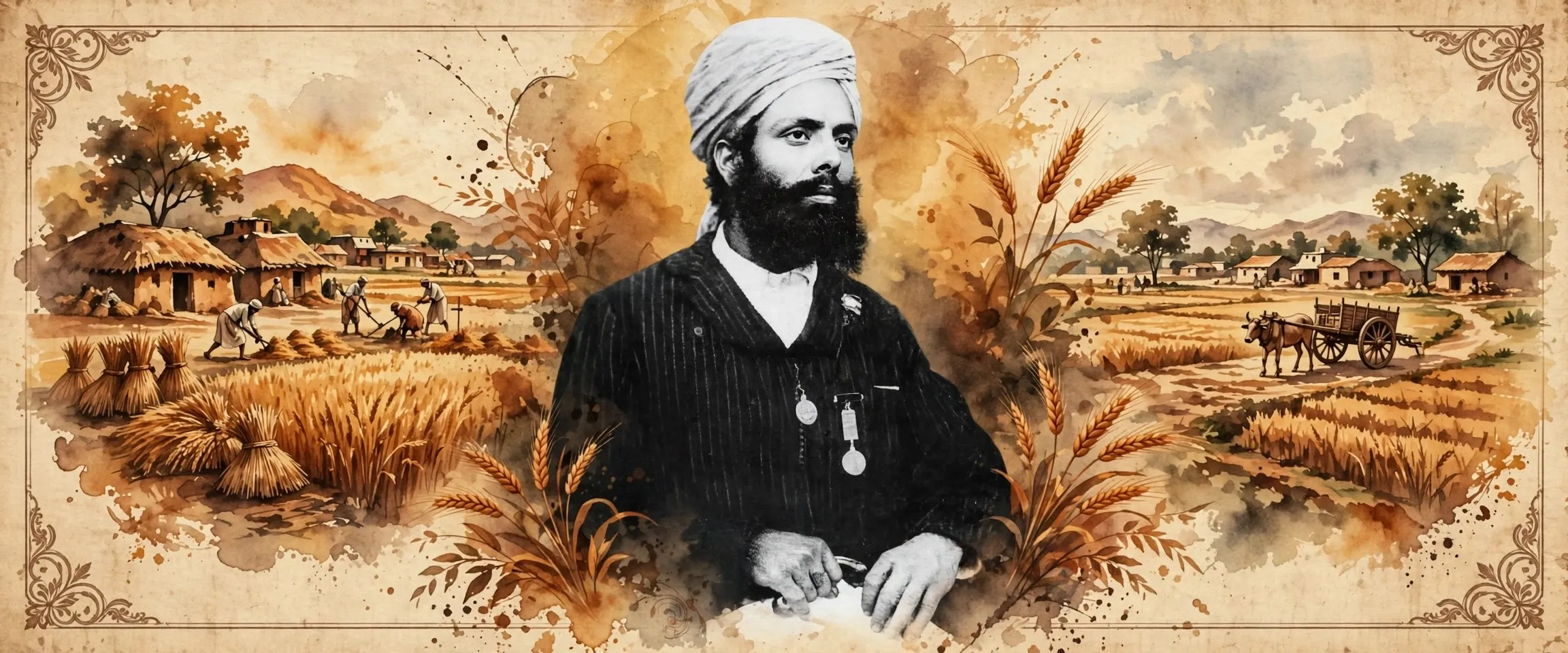
Sardar Ajit Singh was a Punjabi revolutionary and the uncle of Bhagat Singh who led the 1907 Pagri Sambhal Jatta peasant movement against British farm laws. Exiled for 38 years, he returned to India in March 1947 and died at Dalhousie on 15 August 1947 — the day India became independent.
- Facts
- Born
- 23 February 1881, Khatkar Kalan, Jullundur district (now Shaheed Bhagat Singh Nagar)
- Died
- 15 August 1947, Dalhousie
- Known for
- Pagri Sambhal Jatta Movement (1907)
- Family
- Uncle of Bhagat Singh; brothers Kishan Singh and Swaran Singh
- Exile
- 38 years, 1909–1947 (Iran, Europe, the Americas)
- Organisations
- Bharat Mata Society (1907), Bharat Mata journal and book agency
- Memorial
- Samadhi at Panjpula, Dalhousie; 1999 postage stamp
Early life
Sardar Ajit Singh was born on 23 February 1881 in Khatkar Kalan, a village in the Jullundur district of undivided Punjab (today in Shaheed Bhagat Singh Nagar). He grew up in a Jat Sikh family steeped in patriotic feeling — his parents, Arjan Singh and Jai Kaur, raised their sons on the ideas of the Arya Samaj, whose message of social reform and nationalism shaped the whole family, including his nephew Bhagat Singh. Ajit Singh studied up to his matriculation at the Saindas Anglo Sanskrit School in Jalandhar, then enrolled at the Law College in Bareilly, Uttar Pradesh. But the freedom movement was already pulling at him, and he left his law studies to work full-time for India's freedom.
The Pagri Sambhal Jatta movement (1907)
In 1906 the British government pushed through the Punjab Colonisation Act (Amendment) along with the Bari Doab Canal Act, raising water and revenue rates by a quarter on farmers already squeezed by colonial policy. Ajit Singh travelled across Punjab's villages organising protests, and in 1907 he gave the agitation its name and its battle cry: Pagri Sambhal Jatta — "Take care of your turban, O farmer." The movement spread rapidly beyond the peasantry and began to stir sympathies within the army itself. Alarmed at the scale of unrest, the British were forced to repeal the three laws in May 1907. But they did not forgive the men who had organised it: Lala Lajpat Rai was arrested on 9 May, and Ajit Singh on 2 June, and both were deported without trial to Mandalay jail in Burma. Fearing unrest in the Indian Army, the government withdrew the exile orders, and both men walked free on 11 November 1907.
Bharat Mata Society and revolutionary writing
After his release, Ajit Singh attended the Surat session of the Indian National Congress and in 1907 founded the Bharat Mata Society, a revolutionary organisation, along with its journal Bharat Mata — later compiled into a book. With his brothers Kishan Singh and Swaran Singh, and his comrade Sufi Amba Prasad, he continued publishing political literature exposing how the British planned to crush dissent. He also set up the Bharat Mata Book Agency, whose strident anti-government publications soon drew the attention of British intelligence. In Paris he founded the Indian Revolutionary Association (Bharatiya Krantikari Sangh), extending his work among Indians abroad.
Thirty-eight years in exile
In 1909, with arrest warrants closing in, Ajit Singh and Sufi Amba Prasad escaped to Iran, beginning an exile that would last thirty-eight years. From there he travelled through Rome, Geneva, Paris and Rio de Janeiro, keeping the flame of the independence movement alive among Indian expatriates. In 1918 he came into contact with the Ghadar Party in San Francisco. During the Second World War he taught Persian at a university in Naples and delivered speeches in Hindustani to Indian soldiers in North Africa, urging them to turn against the empire and fight for a free India. Through poverty, surveillance and isolation, he never abandoned the cause.
Return and death
After Jawaharlal Nehru intervened on his behalf, Ajit Singh was finally allowed to return. On 7 March 1947 he travelled back to India via London, and in April 1947 he was welcomed home in Lahore in an emotional public ceremony. He spent some time in Delhi before moving to Dalhousie in Himachal Pradesh. India became independent on the night of 14–15 August 1947; Ajit Singh listened to Nehru's "Tryst with Destiny" speech and, deeply moved, breathed his last at about 3:30 in the morning of 15 August 1947 — the very day India became free. He had been scheduled to address a public meeting celebrating independence after daybreak.
Legacy
In his last testament, Ajit Singh warned against the partition of the country, lamenting that ambitious politicians, under the patronage of foreign rulers, had let the seeds of disunion sowed by those rulers bear fruit in the "vivisection of the motherland." A samadhi in his memory stands at Panjpula in Dalhousie. In 1999 India issued a postage stamp in his honour. The 1907 movement he led — which forced the British to scrap three oppressive farm laws — is remembered as an early chapter of Punjab's long tradition of farmer resistance, and as the fire that lit the imagination of his nephew, Bhagat Singh.
FAQs about Sardar Ajit Singh
Who was Sardar Ajit Singh?
Sardar Ajit Singh was a Punjabi revolutionary and the uncle of Bhagat Singh. He led the 1907 Pagri Sambhal Jatta movement of Punjab's farmers against British colonial laws.
How long did Sardar Ajit Singh live in exile?
Thirty-eight years. He escaped to Iran in 1909 to avoid arrest and returned to India only in March 1947, shortly before independence.
When and where did Sardar Ajit Singh die?
He died at Dalhousie on 15 August 1947 — the very day India became independent — hours after listening to Nehru's "Tryst with Destiny" speech.
ਮੁੱਢਲਾ ਜੀਵਨ
ਸਰਦਾਰ ਅਜੀਤ ਸਿੰਘ ਦਾ ਜਨਮ 23 ਫਰਵਰੀ 1881 ਨੂੰ ਅਣਵੰਡੇ ਪੰਜਾਬ ਦੇ ਜਲੰਧਰ ਜ਼ਿਲ੍ਹੇ ਦੇ ਪਿੰਡ ਖਟਕੜ ਕਲਾਂ (ਅੱਜ ਸ਼ਹੀਦ ਭਗਤ ਸਿੰਘ ਨਗਰ) ਵਿੱਚ ਹੋਇਆ। ਉਹ ਇੱਕ ਜੱਟ ਸਿੱਖ ਪਰਿਵਾਰ ਵਿੱਚ ਵੱਡਾ ਹੋਇਆ ਜੋ ਦੇਸ਼ਭਗਤੀ ਨਾਲ ਭਰਿਆ ਹੋਇਆ ਸੀ — ਉਸ ਦੇ ਮਾਪੇ ਅਰਜਨ ਸਿੰਘ ਅਤੇ ਜੈ ਕੌਰ ਨੇ ਆਪਣੇ ਪੁੱਤਰਾਂ ਨੂੰ ਆਰੀਆ ਸਮਾਜ ਦੇ ਵਿਚਾਰਾਂ ਨਾਲ ਪਾਲਿਆ, ਜਿਨ੍ਹਾਂ ਦੇ ਸੁਧਾਰਵਾਦ ਅਤੇ ਰਾਸ਼ਟਰਵਾਦ ਦੇ ਸੰਦੇਸ਼ ਨੇ ਪੂਰੇ ਪਰਿਵਾਰ 'ਤੇ ਅਸਰ ਪਾਇਆ, ਜਿਸ ਵਿੱਚ ਉਸ ਦਾ ਭਤੀਜਾ ਭਗਤ ਸਿੰਘ ਵੀ ਸ਼ਾਮਲ ਸੀ। ਅਜੀਤ ਸਿੰਘ ਨੇ ਜਲੰਧਰ ਦੇ ਸੈਂਦਾਸ ਐਂਗਲੋ ਸੰਸਕ੍ਰਿਤ ਸਕੂਲ ਤੋਂ ਮੈਟ੍ਰਿਕ ਤੱਕ ਪੜ੍ਹਾਈ ਕੀਤੀ ਅਤੇ ਫਿਰ ਉੱਤਰ ਪ੍ਰਦੇਸ਼ ਦੇ ਬਰੇਲੀ ਵਿੱਚ ਲਾਅ ਕਾਲਜ ਵਿੱਚ ਦਾਖਲਾ ਲਿਆ। ਪਰ ਆਜ਼ਾਦੀ ਦੀ ਲਹਿਰ ਨੇ ਉਸ ਨੂੰ ਪੂਰੀ ਤਰ੍ਹਾਂ ਖਿੱਚ ਲਿਆ ਅਤੇ ਉਸ ਨੇ ਕਾਨੂੰਨ ਦੀ ਪੜ੍ਹਾਈ ਛੱਡ ਕੇ ਭਾਰਤ ਦੀ ਆਜ਼ਾਦੀ ਲਈ ਕੰਮ ਕਰਨਾ ਸ਼ੁਰੂ ਕਰ ਦਿੱਤਾ।
ਪੱਗੜੀ ਸੰਭਾਲ ਜੱਟਾ ਲਹਿਰ (1907)
1906 ਵਿੱਚ ਬ੍ਰਿਟਿਸ਼ ਸਰਕਾਰ ਨੇ ਪੰਜਾਬ ਕਲੋਨਾਈਜ਼ੇਸ਼ਨ ਐਕਟ (ਸੋਧ) ਅਤੇ ਬਾਰੀ ਦੋਆਬ ਕਨਾਲ ਐਕਟ ਲਾਗੂ ਕੀਤੇ, ਜਿਨ੍ਹਾਂ ਨਾਲ ਕਿਸਾਨਾਂ 'ਤੇ ਪਾਣੀ ਅਤੇ ਲਗਾਨ ਦੀਆਂ ਦਰਾਂ ਚੌਥਾਈ ਵਧਾ ਦਿੱਤੀਆਂ ਗਈਆਂ। ਅਜੀਤ ਸਿੰਘ ਪੰਜਾਬ ਦੇ ਪਿੰਡਾਂ ਵਿੱਚ ਘੁੰਮ-ਘੁੰਮ ਕੇ ਵਿਰੋਧ ਪ੍ਰਦਰਸ਼ਨ ਸੰਗਠਿਤ ਕਰਨ ਲੱਗਾ ਅਤੇ 1907 ਵਿੱਚ ਉਸ ਨੇ ਇਸ ਅੰਦੋਲਨ ਨੂੰ ਨਾਂ ਅਤੇ ਜੁਝਾਰੂ ਨਾਅਰਾ ਦਿੱਤਾ: "ਪੱਗੜੀ ਸੰਭਾਲ ਜੱਟਾ"। ਇਹ ਲਹਿਰ ਤੇਜ਼ੀ ਨਾਲ ਕਿਸਾਨਾਂ ਤੋਂ ਅੱਗੇ ਫੈਲੀ ਅਤੇ ਫੌਜ ਵਿੱਚ ਵੀ ਹਮਦਰਦੀ ਪੈਦਾ ਹੋਣ ਲੱਗੀ। ਵਧਦੇ ਵਿਰੋਧ ਤੋਂ ਘਬਰਾ ਕੇ ਅੰਗਰੇਜ਼ਾਂ ਨੂੰ ਮਈ 1907 ਵਿੱਚ ਤਿੰਨੋਂ ਕਾਨੂੰਨ ਵਾਪਸ ਲੈਣੇ ਪਏ। ਪਰ ਉਨ੍ਹਾਂ ਨੇ ਸੰਗਠਨਕਰਤਾਵਾਂ ਨੂੰ ਮਾਫ਼ ਨਹੀਂ ਕੀਤਾ: 9 ਮਈ ਨੂੰ ਲਾਲਾ ਲਾਜਪਤ ਰਾਏ ਅਤੇ 2 ਜੂਨ ਨੂੰ ਅਜੀਤ ਸਿੰਘ ਨੂੰ ਗ੍ਰਿਫਤਾਰ ਕਰਕੇ ਬਿਨਾਂ ਮੁਕੱਦਮੇ ਦੇ ਬਰਮਾ ਦੀ ਮੰਡਾਲੇ ਜੇਲ੍ਹ ਭੇਜ ਦਿੱਤਾ ਗਿਆ। ਫੌਜ ਵਿੱਚ ਵਿਰੋਧ ਦੇ ਡਰ ਤੋਂ ਸਰਕਾਰ ਨੇ ਦੇਸ਼-ਨਿਕਾਲੇ ਦੇ ਹੁਕਮ ਵਾਪਸ ਲਏ ਅਤੇ ਦੋਵੇਂ 11 ਨਵੰਬਰ 1907 ਨੂੰ ਰਿਹਾਅ ਹੋ ਗਏ।
ਭਾਰਤ ਮਾਤਾ ਸੁਸਾਇਟੀ ਅਤੇ ਕ੍ਰਾਂਤੀਕਾਰੀ ਲੇਖਣ
ਰਿਹਾਈ ਤੋਂ ਬਾਅਦ ਅਜੀਤ ਸਿੰਘ ਨੇ ਇੰਡੀਅਨ ਨੈਸ਼ਨਲ ਕਾਂਗਰਸ ਦੇ ਸੂਰਤ ਸੈਸ਼ਨ ਵਿੱਚ ਹਿੱਸਾ ਲਿਆ ਅਤੇ 1907 ਵਿੱਚ ਕ੍ਰਾਂਤੀਕਾਰੀ ਸੰਗਠਨ ਭਾਰਤ ਮਾਤਾ ਸੁਸਾਇਟੀ ਦੀ ਸਥਾਪਨਾ ਕੀਤੀ, ਨਾਲ ਹੀ "ਭਾਰਤ ਮਾਤਾ" ਨਾਂ ਦਾ ਅਖਬਾਰ ਵੀ ਚਲਾਇਆ — ਜੋ ਬਾਅਦ ਵਿੱਚ ਇੱਕ ਕਿਤਾਬ ਵਿੱਚ ਸੰਕਲਿਤ ਹੋਇਆ। ਉਸ ਨੇ ਆਪਣੇ ਭਰਾਵਾਂ ਕਿਸ਼ਨ ਸਿੰਘ ਅਤੇ ਸਵਰਨ ਸਿੰਘ ਅਤੇ ਸਾਥੀ ਸੂਫੀ ਅੰਬਾ ਪ੍ਰਸਾਦ ਨਾਲ ਮਿਲ ਕੇ ਅੰਗਰੇਜ਼ ਸਰਕਾਰ ਦੀ ਨੀਤੀ ਦਾ ਪਰਦਾਫਾਸ਼ ਕਰਨ ਵਾਲਾ ਸਿਆਸੀ ਸਾਹਿਤ ਛਾਪਣਾ ਜਾਰੀ ਰੱਖਿਆ। ਉਸ ਨੇ ਭਾਰਤ ਮਾਤਾ ਬੁੱਕ ਏਜੰਸੀ ਵੀ ਸਥਾਪਿਤ ਕੀਤੀ, ਜਿਸ ਦੇ ਤਿੱਖੇ ਸਰਕਾਰ-ਵਿਰੋਧੀ ਪ੍ਰਕਾਸ਼ਨਾਂ ਨੇ ਬ੍ਰਿਟਿਸ਼ ਖੁਫੀਆ ਏਜੰਸੀਆਂ ਦਾ ਧਿਆਨ ਖਿੱਚਿਆ। ਪੈਰਿਸ ਵਿੱਚ ਉਸ ਨੇ ਇੰਡੀਅਨ ਰੈਵੋਲਿਊਸ਼ਨਰੀ ਐਸੋਸੀਏਸ਼ਨ (ਭਾਰਤੀਆ ਕ੍ਰਾਂਤੀਕਾਰੀ ਸੰਘ) ਦੀ ਸਥਾਪਨਾ ਕੀਤੀ, ਵਿਦੇਸ਼ ਵਿੱਚ ਵੱਸਦੇ ਭਾਰਤੀਆਂ ਵਿੱਚ ਆਪਣਾ ਕੰਮ ਵਧਾਇਆ।
ਅੱਠਤੀ ਸਾਲ ਦਾ ਦੇਸ਼-ਨਿਕਾਲਾ
1909 ਵਿੱਚ, ਗ੍ਰਿਫਤਾਰੀ ਦੇ ਵਾਰੰਟ ਨੇੜੇ ਆਉਂਦੇ ਵੇਖ ਅਜੀਤ ਸਿੰਘ ਅਤੇ ਸੂਫੀ ਅੰਬਾ ਪ੍ਰਸਾਦ ਈਰਾਨ ਭੱਜ ਗਏ — ਇੱਥੋਂ ਉਸ ਦਾ ਅੱਠਤੀ ਸਾਲ ਚੱਲਣ ਵਾਲਾ ਦੇਸ਼-ਨਿਕਾਲਾ ਸ਼ੁਰੂ ਹੋਇਆ। ਉੱਥੋਂ ਉਹ ਰੋਮ, ਜਨੇਵਾ, ਪੈਰਿਸ ਅਤੇ ਰੀਓ ਡੀ ਜਨੇਰੀਓ ਵਰਗੇ ਸ਼ਹਿਰਾਂ ਵਿੱਚ ਘੁੰਮਿਆ ਅਤੇ ਭਾਰਤੀ ਪ੍ਰਵਾਸੀਆਂ ਵਿੱਚ ਆਜ਼ਾਦੀ ਦੀ ਲਹਿਰ ਦੀ ਲਾਟ ਜਗਾਈ ਰੱਖੀ। 1918 ਵਿੱਚ ਉਹ ਸੈਨ ਫਰਾਂਸਿਸਕੋ ਵਿੱਚ ਗਦਰ ਪਾਰਟੀ ਦੇ ਸੰਪਰਕ ਵਿੱਚ ਆਇਆ। ਦੂਜੇ ਵਿਸ਼ਵ ਯੁੱਧ ਦੌਰਾਨ ਉਸ ਨੇ ਨੇਪਲਜ਼ ਦੀ ਇੱਕ ਯੂਨੀਵਰਸਿਟੀ ਵਿੱਚ ਫਾਰਸੀ ਪੜ੍ਹਾਈ ਅਤੇ ਉੱਤਰੀ ਅਫਰੀਕਾ ਵਿੱਚ ਭਾਰਤੀ ਸੈਨਿਕਾਂ ਨੂੰ ਹਿੰਦੁਸਤਾਨੀ ਵਿੱਚ ਭਾਸ਼ਣ ਦੇ ਕੇ ਆਜ਼ਾਦ ਭਾਰਤ ਲਈ ਲੜਨ ਦੀ ਅਪੀਲ ਕੀਤੀ। ਗਰੀਬੀ, ਨਿਗਰਾਨੀ ਅਤੇ ਇਕੱਲਤਾ ਦੇ ਬਾਵਜੂਦ ਉਸ ਨੇ ਆਪਣਾ ਮਕਸਦ ਕਦੇ ਨਹੀਂ ਛੱਡਿਆ।
ਵਤਨ ਵਾਪਸੀ ਅਤੇ ਮੌਤ
ਜਵਾਹਰ ਲਾਲ ਨਹਿਰੂ ਦੇ ਦਖਲ ਤੋਂ ਬਾਅਦ ਅਜੀਤ ਸਿੰਘ ਨੂੰ ਅਖੀਰ ਵਤਨ ਵਾਪਸ ਆਉਣ ਦੀ ਇਜਾਜ਼ਤ ਮਿਲੀ। 7 ਮਾਰਚ 1947 ਨੂੰ ਉਹ ਲੰਡਨ ਰਾਹੀਂ ਭਾਰਤ ਪਹੁੰਚਿਆ ਅਤੇ ਅਪ੍ਰੈਲ 1947 ਵਿੱਚ ਲਾਹੌਰ ਵਿੱਚ ਇੱਕ ਭਾਵੁਕ ਜਨਤਕ ਸਮਾਰੋਹ ਵਿੱਚ ਉਸ ਦਾ ਸਵਾਗਤ ਕੀਤਾ ਗਿਆ। ਕੁਝ ਸਮਾਂ ਦਿੱਲੀ ਰਹਿਣ ਤੋਂ ਬਾਅਦ ਉਹ ਹਿਮਾਚਲ ਪ੍ਰਦੇਸ਼ ਦੇ ਡਲਹੌਜ਼ੀ ਚਲਾ ਗਿਆ। 14-15 ਅਗਸਤ 1947 ਦੀ ਰਾਤ ਨੂੰ ਭਾਰਤ ਆਜ਼ਾਦ ਹੋਇਆ; ਅਜੀਤ ਸਿੰਘ ਨੇ ਨਹਿਰੂ ਦਾ "ਟ੍ਰਿਸਟ ਵਿਦ ਡੈਸਟਿਨੀ" ਭਾਸ਼ਣ ਸੁਣਿਆ ਅਤੇ ਡੂੰਘੇ ਭਾਵੁਕ ਹੋ ਕੇ 15 ਅਗਸਤ 1947 ਦੀ ਸਵੇਰ ਕਰੀਬ 3:30 ਵਜੇ ਆਖਰੀ ਸਾਹ ਲਿਆ — ਉਸੇ ਦਿਨ ਜਿਸ ਦਿਨ ਭਾਰਤ ਆਜ਼ਾਦ ਹੋਇਆ ਸੀ। ਸਵੇਰੇ ਆਜ਼ਾਦੀ ਦਾ ਜਸ਼ਨ ਮਨਾਉਣ ਵਾਲੀ ਜਨਤਕ ਸਭਾ ਵਿੱਚ ਉਸ ਨੇ ਭਾਸ਼ਣ ਦੇਣਾ ਸੀ।
ਵਿਰਾਸਤ
ਅਜੀਤ ਸਿੰਘ ਨੇ ਆਪਣੀ ਆਖਰੀ ਵਸੀਅਤ ਵਿੱਚ ਦੇਸ਼ ਦੀ ਵੰਡ ਖ਼ਿਲਾਫ਼ ਚੇਤਾਵਨੀ ਦਿੱਤੀ, ਲਿਖਿਆ ਕਿ ਨਿੱਜੀ ਤਾਕਤ ਦੇ ਭੁੱਖੇ ਉੱਚ-ਅਭਿਲਾਸ਼ੀ ਸਿਆਸਤਦਾਨਾਂ ਨੇ ਵਿਦੇਸ਼ੀ ਹਾਕਮਾਂ ਵੱਲੋਂ ਬੀਜੇ ਵਿਤਕਰੇ ਦੇ ਬੀਜਾਂ ਨੂੰ ਮਾਂ-ਭੂਮੀ ਦੀ "ਵਿਵਿਸੈਕਸ਼ਨ" (ਚੀਰ-ਫਾੜ) ਵਿੱਚ ਬਦਲ ਦਿੱਤਾ। ਡਲਹੌਜ਼ੀ ਦੇ ਪੰਜਪੁਲਾ ਵਿੱਚ ਉਸ ਦੀ ਯਾਦ ਵਿੱਚ ਇੱਕ ਸਮਾਧੀ ਬਣੀ ਹੋਈ ਹੈ। 1999 ਵਿੱਚ ਭਾਰਤ ਨੇ ਉਸ ਦੇ ਸਨਮਾਨ ਵਿੱਚ ਡਾਕ ਟਿਕਟ ਜਾਰੀ ਕੀਤੀ। ਉਸ ਦੀ ਅਗਵਾਈ ਵਿੱਚ ਚੱਲੀ 1907 ਦੀ ਲਹਿਰ — ਜਿਸ ਨੇ ਅੰਗਰੇਜ਼ਾਂ ਨੂੰ ਤਿੰਨ ਦਮਨਕਾਰੀ ਕਾਨੂੰਨ ਵਾਪਸ ਲੈਣ ਲਈ ਮਜਬੂਰ ਕੀਤਾ — ਪੰਜਾਬ ਦੀ ਕਿਸਾਨ ਸੰਘਰਸ਼ ਦੀ ਲੰਬੀ ਪਰੰਪਰਾ ਦਾ ਮੁੱਢਲਾ ਅਧਿਆਇ ਮੰਨੀ ਜਾਂਦੀ ਹੈ, ਅਤੇ ਉਸੇ ਅੱਗ ਨੇ ਉਸ ਦੇ ਭਤੀਜੇ ਭਗਤ ਸਿੰਘ ਦੀ ਕਲਪਨਾ ਨੂੰ ਜਗਾਇਆ।
ਸਰਦਾਰ ਅਜੀਤ ਸਿੰਘ ਬਾਰੇ ਅਕਸਰ ਪੁੱਛੇ ਜਾਂਦੇ ਸਵਾਲ
ਸਰਦਾਰ ਅਜੀਤ ਸਿੰਘ ਕੌਣ ਸਨ?
ਸਰਦਾਰ ਅਜੀਤ ਸਿੰਘ ਪੰਜਾਬੀ ਕ੍ਰਾਂਤੀਕਾਰੀ ਅਤੇ ਭਗਤ ਸਿੰਘ ਦੇ ਚਾਚਾ ਸਨ। ਉਨ੍ਹਾਂ ਨੇ ਬ੍ਰਿਟਿਸ਼ ਕਾਨੂੰਨਾਂ ਖ਼ਿਲਾਫ਼ 1907 ਵਿੱਚ ਪੰਜਾਬ ਦੇ ਕਿਸਾਨਾਂ ਦੀ ਪੱਗੜੀ ਸੰਭਾਲ ਜੱਟਾ ਲਹਿਰ ਦੀ ਅਗਵਾਈ ਕੀਤੀ।
ਸਰਦਾਰ ਅਜੀਤ ਸਿੰਘ ਕਿੰਨੇ ਸਾਲ ਦੇਸ਼-ਨਿਕਾਲੇ ਵਿੱਚ ਰਹੇ?
ਅੱਠਤੀ ਸਾਲ। 1909 ਵਿੱਚ ਗ੍ਰਿਫਤਾਰੀ ਤੋਂ ਬਚਣ ਲਈ ਉਹ ਈਰਾਨ ਚਲੇ ਗਏ ਅਤੇ ਸਿਰਫ਼ ਮਾਰਚ 1947 ਵਿੱਚ, ਆਜ਼ਾਦੀ ਤੋਂ ਠੀਕ ਪਹਿਲਾਂ, ਭਾਰਤ ਵਾਪਸ ਆਏ।
ਸਰਦਾਰ ਅਜੀਤ ਸਿੰਘ ਦੀ ਮੌਤ ਕਦੋਂ ਅਤੇ ਕਿੱਥੇ ਹੋਈ?
ਉਨ੍ਹਾਂ ਦੀ ਮੌਤ 15 ਅਗਸਤ 1947 ਨੂੰ ਡਲਹੌਜ਼ੀ ਵਿੱਚ ਹੋਈ — ਉਸੇ ਦਿਨ ਜਿਸ ਦਿਨ ਭਾਰਤ ਆਜ਼ਾਦ ਹੋਇਆ — ਨਹਿਰੂ ਦਾ "ਟ੍ਰਿਸਟ ਵਿਦ ਡੈਸਟਿਨੀ" ਭਾਸ਼ਣ ਸੁਣਨ ਤੋਂ ਕੁਝ ਘੰਟਿਆਂ ਬਾਅਦ।