
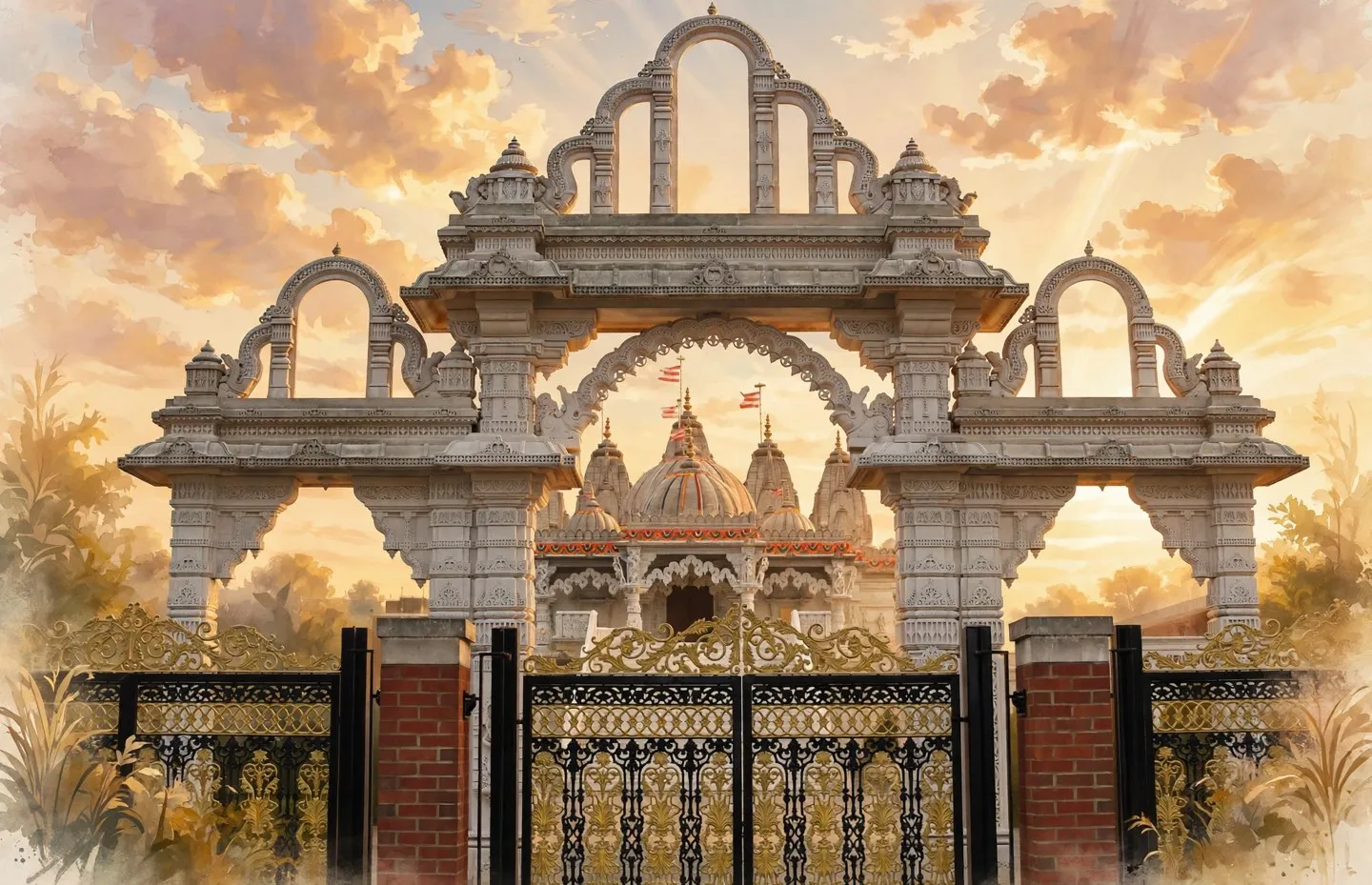
The BAPS Shri Swaminarayan Mandir in Neasden, London, known as the Neasden Temple, is a traditional Hindu stone temple in the London Borough of Brent, opened on 20 August 1995 by Pramukh Swami Maharaj. Built from Bulgarian limestone and Italian marble carved in India by 1,526 sculptors, with no structural steel, it was Europe's first traditional Hindu stone temple. Its complex includes the carved wooden Haveli cultural centre and the Understanding Hinduism exhibition.
- Punjabi name
- ਬੀਏਪੀਐਸ ਸ਼੍ਰੀ ਸੁਆਮੀਨਾਰਾਇਣ ਮੰਦਰ, ਲੰਡਨ (ਨੀਸਡਨ ਮੰਦਰ)
- Country
- United Kingdom
- City
- Neasden, London Borough of Brent, Pramukh Swami Road, London NW10 8HW
- Deity
- Bhagwan Swaminarayan, with shrines to Radha-Krishna, Rama-Sita and Shiva-Parvati
- Opened
- Inaugurated 20 August 1995 by Pramukh Swami Maharaj; building work began August 1992
- Architecture
- North Indian (Nagara) style in Bulgarian limestone and Italian Carrara marble, built to the Shilpa Shastras with no structural steel; 7 shikharas, 193 pillars
- Tradition
- BAPS (Bochasanwasi Shri Akshar Purushottam Swaminarayan Sanstha)
On a residential street in Neasden, north west London, a carved stone gateway frames a sight few expect in the capital: a full traditional Hindu mandir in white limestone and marble, its seven pinnacles rising over the rooftops of Brent. This is the BAPS Shri Swaminarayan Mandir, known to almost everyone as the Neasden Temple. When it opened in 1995 it was Europe's first traditional Hindu stone temple, built the old way, without structural steel, and it remains the best known Hindu temple in Britain.
What is the Neasden Temple?
The Neasden Temple is the BAPS Shri Swaminarayan Mandir on Pramukh Swami Road in Neasden, London. It belongs to BAPS, the Bochasanwasi Shri Akshar Purushottam Swaminarayan Sanstha, and its central shrine honours Bhagwan Swaminarayan, with further shrines to Radha and Krishna, Rama and Sita, and Shiva and Parvati. It was inaugurated on 20 August 1995 by Pramukh Swami Maharaj, the BAPS spiritual leader who inspired it. The temple's own site describes it as a sanctuary of vibrant Hindu worship, open to people of all faiths and backgrounds, with free entry all year round. Its plan follows the North Indian temple tradition described in Jugti's guide to Nagara temple architecture.
Built the traditional way, stone by stone
The mandir was designed according to the Shilpa Shastras, the ancient Vedic texts on temple architecture, under lead architect C. B. Sompura. Bulgarian limestone forms the exterior and Italian Carrara marble, with Indian marble, the interior. Crucially, the stone did not arrive ready made: it was shipped to India, where a team of 1,526 sculptors carved it, and then sent on to London as more than 26,300 numbered pieces, assembled on site like a giant jigsaw. No ferrous metal or structural steel holds the building up.
The project was funded entirely by the Hindu community and cost about 12 million pounds. Work began in August 1992, and that November the site set a British record when 4,500 tonnes of concrete were poured in 24 hours to form a foundation mat about 1.8 metres thick. The first stone was laid in June 1993, and the whole mandir was finished in roughly two and a half years, a pace that surprised the construction industry. Around 450 craftsmen worked on it, helped by 100 full time volunteers and more than 1,000 part time volunteers from the local congregation.
From a converted church to Neasden
London's BAPS story starts small. The first BAPS mandir in Britain opened in 1970 in a converted, disused church in Islington, inaugurated by Yogiji Maharaj. By 1982 the congregation had outgrown it and moved across the city to a former warehouse in Neasden. Within a decade that too was too small, and the community resolved to build properly: a permanent stone mandir on the site of a disused truck depot opposite the warehouse temple. The old warehouse building was kept and converted into a shop and vegetarian restaurant.
The mandir and the haveli
The mandir itself rises about 21 metres (70 feet) and runs 60 metres (195 feet) long. It carries 7 shikharas (pinnacles), 6 domes, 193 pillars and hundreds of carved designs, with 55 different ceiling patterns inside. Its central dome was inspired by the Dilwara Jain temples of Mount Abu in Rajasthan. On the ground floor sits Understanding Hinduism, a permanent exhibition of about 3,000 square feet that introduces Hindu values and ideas through dioramas, paintings and a short documentary, a favourite with school visits.
Beside the stone mandir stands the Haveli, a cultural centre built in the courtyard style of the old merchant houses of Gujarat. Where the mandir is stone, the haveli is wood: Burmese teak and English oak carved in India into screens, arches and balconies covered in geometric patterns, animals and flower garlands. Inside are a pillarless prayer hall seating 3,000 people, a gymnasium, a medical centre, dining facilities, a bookshop, conference rooms and offices. Formal gardens surround the complex, and they have repeatedly won local Brent in Bloom awards.
Recognition, records and royal visits
In 2000, Guinness World Records listed the Neasden Temple as the biggest Hindu temple outside India, a title later BAPS temples have since surpassed, including the vast BAPS Akshardham at Robbinsville in New Jersey. Time Out named it one of the Seven Wonders of London, and in 2007 it won the UK Pride of Place award after a national public vote. Royal visits have become part of its story: the then Prince Charles and the Duchess of Cornwall visited for Holi in 2009, sent a message for the 25th anniversary in 2020, and King Charles III and Queen Camilla visited on 29 October 2025 to mark the temple's 30th anniversary. The mandir is a close cousin of the BAPS temple in Toronto, built by the same tradition a decade later, and of Akshardham in Delhi.
Visiting the Neasden Temple
The temple is open every day and entry is free, according to the official BAPS London Mandir site, which also streams the evening arti live. Visitors of all backgrounds are welcome for darshan, the daily ceremonies and the year round festivals, and volunteers run guided tours for schools and groups. The complex sits near the North Circular Road on Pramukh Swami Road, London NW10 8HW, within walking distance of Wembley Park, Stonebridge Park, Harlesden and Neasden stations. Modest dress is expected, shoes are removed inside, and photography is restricted within the mandir itself.
ਲੰਡਨ ਦੇ ਉੱਤਰ ਪੱਛਮ ਵਿੱਚ ਨੀਸਡਨ ਦੀ ਇੱਕ ਰਿਹਾਇਸ਼ੀ ਗਲੀ ਵਿੱਚ, ਨੱਕਾਸ਼ੀਦਾਰ ਪੱਥਰ ਦਾ ਦਰਵਾਜ਼ਾ ਇੱਕ ਅਜਿਹਾ ਨਜ਼ਾਰਾ ਪੇਸ਼ ਕਰਦਾ ਹੈ ਜਿਸਦੀ ਰਾਜਧਾਨੀ ਵਿੱਚ ਘੱਟ ਹੀ ਉਮੀਦ ਹੁੰਦੀ ਹੈ: ਚਿੱਟੇ ਚੂਨੇ ਪੱਥਰ ਅਤੇ ਸੰਗਮਰਮਰ ਦਾ ਬਣਿਆ ਇੱਕ ਪੂਰਾ ਰਵਾਇਤੀ ਹਿੰਦੂ ਮੰਦਰ, ਜਿਸਦੇ ਸੱਤ ਸ਼ਿਖਰ ਬਰੈਂਟ ਦੀਆਂ ਛੱਤਾਂ ਤੋਂ ਉੱਪਰ ਉਠਦੇ ਹਨ ਇਹ BAPS ਸ਼੍ਰੀ ਸੁਆਮੀਨਾਰਾਇਣ ਮੰਦਰ ਹੈ, ਜਿਸਨੂੰ ਲਗਭਗ ਹਰ ਕੋਈ ਨੀਸਡਨ ਮੰਦਰ ਦੇ ਨਾਂ ਨਾਲ ਜਾਣਦਾ ਹੈ ਜਦੋਂ ਇਹ 1995 ਵਿੱਚ ਖੁੱਲ੍ਹਿਆ ਤਾਂ ਇਹ ਯੂਰਪ ਦਾ ਪਹਿਲਾ ਰਵਾਇਤੀ ਹਿੰਦੂ ਪੱਥਰ ਮੰਦਰ ਸੀ, ਪੁਰਾਣੇ ਢੰਗ ਨਾਲ ਬਣਿਆ, ਬਿਨਾਂ ਸਟੀਲ ਦੇ ਢਾਂਚੇ ਦੇ, ਅਤੇ ਇਹ ਅੱਜ ਵੀ ਬਰਤਾਨੀਆ ਦਾ ਸਭ ਤੋਂ ਮਸ਼ਹੂਰ ਹਿੰਦੂ ਮੰਦਰ ਹੈ
ਨੀਸਡਨ ਮੰਦਰ ਕੀ ਹੈ?
ਨੀਸਡਨ ਮੰਦਰ ਲੰਡਨ ਦੇ ਨੀਸਡਨ ਵਿੱਚ ਪ੍ਰਮੁੱਖ ਸੁਆਮੀ ਰੋਡ ਉੱਤੇ ਸਥਿਤ BAPS ਸ਼੍ਰੀ ਸੁਆਮੀਨਾਰਾਇਣ ਮੰਦਰ ਹੈ ਇਹ BAPS ਸੰਸਥਾ (ਬੋਚਾਸਣਵਾਸੀ ਸ਼੍ਰੀ ਅਕਸ਼ਰ ਪੁਰਸ਼ੋਤਮ ਸੁਆਮੀਨਾਰਾਇਣ ਸੰਸਥਾ) ਨਾਲ ਸੰਬੰਧਿਤ ਹੈ ਇਸਦੇ ਮੁੱਖ ਮੰਦਰ ਵਿੱਚ ਭਗਵਾਨ ਸੁਆਮੀਨਾਰਾਇਣ ਦੀ ਪੂਜਾ ਹੁੰਦੀ ਹੈ, ਅਤੇ ਨਾਲ ਹੀ ਰਾਧਾ ਕ੍ਰਿਸ਼ਨ, ਰਾਮ ਸੀਤਾ ਅਤੇ ਸ਼ਿਵ ਪਾਰਵਤੀ ਦੇ ਮੰਦਰ ਵੀ ਹਨ ਇਸਦਾ ਉਦਘਾਟਨ 20 ਅਗਸਤ 1995 ਨੂੰ ਪ੍ਰਮੁੱਖ ਸੁਆਮੀ ਮਹਾਰਾਜ ਨੇ ਕੀਤਾ ਸੀ, ਜਿਨ੍ਹਾਂ ਦੀ ਪ੍ਰੇਰਣਾ ਨਾਲ ਇਹ ਬਣਿਆ ਮੰਦਰ ਦੀ ਆਪਣੀ ਵੈੱਬਸਾਈਟ ਇਸਨੂੰ ਹਰ ਧਰਮ ਅਤੇ ਪਿਛੋਕੜ ਦੇ ਲੋਕਾਂ ਲਈ ਖੁੱਲ੍ਹਾ ਸਥਾਨ ਦੱਸਦੀ ਹੈ, ਜਿੱਥੇ ਸਾਰਾ ਸਾਲ ਦਾਖਲਾ ਮੁਫ਼ਤ ਹੈ
ਰਵਾਇਤੀ ਢੰਗ ਨਾਲ, ਪੱਥਰ ਦਰ ਪੱਥਰ ਬਣਿਆ
ਮੰਦਰ ਦੀ ਰੂਪ ਰੇਖਾ ਸ਼ਿਲਪ ਸ਼ਾਸਤਰਾਂ ਅਨੁਸਾਰ ਬਣਾਈ ਗਈ, ਜੋ ਮੰਦਰ ਨਿਰਮਾਣ ਬਾਰੇ ਪ੍ਰਾਚੀਨ ਵੈਦਿਕ ਗ੍ਰੰਥ ਹਨ ਇਸਦੇ ਮੁੱਖ ਸ਼ਿਲਪਕਾਰ ਸੀ. ਬੀ. ਸੋਮਪੁਰਾ ਸਨ ਬਾਹਰਲਾ ਹਿੱਸਾ ਬੁਲਗਾਰੀਆ ਦੇ ਚੂਨੇ ਪੱਥਰ ਦਾ ਹੈ ਅਤੇ ਅੰਦਰਲਾ ਹਿੱਸਾ ਇਟਲੀ ਦੇ ਕਰਾਰਾ ਸੰਗਮਰਮਰ ਅਤੇ ਭਾਰਤੀ ਸੰਗਮਰਮਰ ਦਾ ਖਾਸ ਗੱਲ ਇਹ ਹੈ ਕਿ ਪੱਥਰ ਤਿਆਰ ਰੂਪ ਵਿੱਚ ਨਹੀਂ ਆਇਆ: ਇਸਨੂੰ ਭਾਰਤ ਭੇਜਿਆ ਗਿਆ, ਜਿੱਥੇ 1,526 ਸ਼ਿਲਪਕਾਰਾਂ ਦੀ ਟੀਮ ਨੇ ਇਸਨੂੰ ਤਰਾਸ਼ਿਆ, ਫਿਰ ਇਹ 26,300 ਤੋਂ ਵੱਧ ਗਿਣੇ ਹੋਏ ਟੁਕੜਿਆਂ ਦੇ ਰੂਪ ਵਿੱਚ ਲੰਡਨ ਆਇਆ ਅਤੇ ਇੱਥੇ ਇੱਕ ਵੱਡੀ ਪਹੇਲੀ ਵਾਂਗ ਜੋੜਿਆ ਗਿਆ ਇਮਾਰਤ ਵਿੱਚ ਕੋਈ ਲੋਹਾ ਜਾਂ ਸਟੀਲ ਦਾ ਢਾਂਚਾ ਨਹੀਂ ਹੈ
ਸਾਰਾ ਖਰਚਾ ਹਿੰਦੂ ਭਾਈਚਾਰੇ ਨੇ ਆਪ ਚੁੱਕਿਆ ਅਤੇ ਲਾਗਤ ਲਗਭਗ 12 ਮਿਲੀਅਨ ਪੌਂਡ ਆਈ ਕੰਮ ਅਗਸਤ 1992 ਵਿੱਚ ਸ਼ੁਰੂ ਹੋਇਆ, ਅਤੇ ਉਸੇ ਸਾਲ ਨਵੰਬਰ ਵਿੱਚ ਇੱਥੇ 24 ਘੰਟਿਆਂ ਵਿੱਚ 4,500 ਟਨ ਕੰਕਰੀਟ ਪਾ ਕੇ ਬਰਤਾਨੀਆ ਦਾ ਰਿਕਾਰਡ ਬਣਿਆ, ਜਿਸ ਨਾਲ ਲਗਭਗ 1.8 ਮੀਟਰ ਮੋਟੀ ਨੀਂਹ ਤਿਆਰ ਹੋਈ ਪਹਿਲਾ ਪੱਥਰ ਜੂਨ 1993 ਵਿੱਚ ਰੱਖਿਆ ਗਿਆ ਅਤੇ ਸਾਰਾ ਮੰਦਰ ਲਗਭਗ ਢਾਈ ਸਾਲ ਵਿੱਚ ਤਿਆਰ ਹੋ ਗਿਆ ਇਸ ਉੱਤੇ ਕਰੀਬ 450 ਕਾਰੀਗਰਾਂ ਨੇ ਕੰਮ ਕੀਤਾ, ਜਿਨ੍ਹਾਂ ਦੀ ਮਦਦ 100 ਪੂਰੇ ਸਮੇਂ ਦੇ ਅਤੇ 1,000 ਤੋਂ ਵੱਧ ਅੰਸ਼ਕ ਸਮੇਂ ਦੇ ਸੇਵਾਦਾਰਾਂ ਨੇ ਕੀਤੀ
ਇੱਕ ਬਦਲੇ ਹੋਏ ਗਿਰਜੇ ਤੋਂ ਨੀਸਡਨ ਤੱਕ
ਲੰਡਨ ਵਿੱਚ BAPS ਦੀ ਕਹਾਣੀ ਛੋਟੀ ਜਿਹੀ ਸ਼ੁਰੂਆਤ ਤੋਂ ਬਣੀ ਬਰਤਾਨੀਆ ਦਾ ਪਹਿਲਾ BAPS ਮੰਦਰ 1970 ਵਿੱਚ ਇਜ਼ਲਿੰਗਟਨ ਵਿੱਚ ਇੱਕ ਬੇਕਾਰ ਪਏ ਗਿਰਜੇ ਨੂੰ ਬਦਲ ਕੇ ਖੋਲ੍ਹਿਆ ਗਿਆ, ਜਿਸਦਾ ਉਦਘਾਟਨ ਯੋਗੀ ਜੀ ਮਹਾਰਾਜ ਨੇ ਕੀਤਾ 1982 ਤੱਕ ਸੰਗਤ ਵਧ ਗਈ ਅਤੇ ਮੰਦਰ ਨੀਸਡਨ ਦੇ ਇੱਕ ਪੁਰਾਣੇ ਗੋਦਾਮ ਵਿੱਚ ਚਲਾ ਗਿਆ ਦਸ ਸਾਲਾਂ ਵਿੱਚ ਉਹ ਵੀ ਛੋਟਾ ਪੈ ਗਿਆ, ਤਾਂ ਭਾਈਚਾਰੇ ਨੇ ਪੱਕਾ ਫੈਸਲਾ ਕੀਤਾ: ਗੋਦਾਮ ਵਾਲੇ ਮੰਦਰ ਦੇ ਸਾਹਮਣੇ ਟਰੱਕਾਂ ਦੇ ਪੁਰਾਣੇ ਅੱਡੇ ਵਾਲੀ ਥਾਂ ਉੱਤੇ ਇੱਕ ਸਥਾਈ ਪੱਥਰ ਮੰਦਰ ਬਣਾਇਆ ਜਾਵੇ ਪੁਰਾਣੀ ਗੋਦਾਮ ਵਾਲੀ ਇਮਾਰਤ ਰੱਖ ਲਈ ਗਈ ਅਤੇ ਉਸਨੂੰ ਦੁਕਾਨ ਅਤੇ ਸ਼ਾਕਾਹਾਰੀ ਰੈਸਟੋਰੈਂਟ ਵਿੱਚ ਬਦਲ ਦਿੱਤਾ ਗਿਆ
ਮੰਦਰ ਅਤੇ ਹਵੇਲੀ
ਮੰਦਰ ਲਗਭਗ 21 ਮੀਟਰ (70 ਫੁੱਟ) ਉੱਚਾ ਅਤੇ 60 ਮੀਟਰ (195 ਫੁੱਟ) ਲੰਬਾ ਹੈ ਇਸ ਉੱਤੇ 7 ਸ਼ਿਖਰ, 6 ਗੁੰਬਦ ਅਤੇ 193 ਥੰਮ ਹਨ, ਅੰਦਰ ਸੈਂਕੜੇ ਨੱਕਾਸ਼ੀਆਂ ਅਤੇ 55 ਵੱਖਰੀਆਂ ਛੱਤਾਂ ਦੀਆਂ ਡਿਜ਼ਾਈਨਾਂ ਹਨ ਇਸਦਾ ਕੇਂਦਰੀ ਗੁੰਬਦ ਰਾਜਸਥਾਨ ਦੇ ਮਾਊਂਟ ਆਬੂ ਦੇ ਦਿਲਵਾੜਾ ਜੈਨ ਮੰਦਰਾਂ ਤੋਂ ਪ੍ਰੇਰਿਤ ਹੈ ਹੇਠਲੀ ਮੰਜ਼ਿਲ ਉੱਤੇ Understanding Hinduism ਨਾਂ ਦੀ ਸਥਾਈ ਪ੍ਰਦਰਸ਼ਨੀ ਹੈ, ਲਗਭਗ 3,000 ਵਰਗ ਫੁੱਟ ਵਿੱਚ, ਜੋ ਤਸਵੀਰਾਂ, ਝਾਕੀਆਂ ਅਤੇ ਇੱਕ ਛੋਟੀ ਦਸਤਾਵੇਜ਼ੀ ਫਿਲਮ ਰਾਹੀਂ ਹਿੰਦੂ ਕਦਰਾਂ ਕੀਮਤਾਂ ਦੀ ਜਾਣਕਾਰੀ ਦਿੰਦੀ ਹੈ ਸਕੂਲਾਂ ਦੇ ਦੌਰਿਆਂ ਲਈ ਇਹ ਖਾਸ ਪਸੰਦੀਦਾ ਹੈ
ਪੱਥਰ ਦੇ ਮੰਦਰ ਦੇ ਨਾਲ ਹਵੇਲੀ ਖੜੀ ਹੈ, ਇੱਕ ਸੱਭਿਆਚਾਰਕ ਕੇਂਦਰ ਜੋ ਗੁਜਰਾਤ ਦੇ ਪੁਰਾਣੇ ਵਪਾਰੀ ਘਰਾਂ ਦੀ ਵਿਹੜੇ ਵਾਲੀ ਸ਼ੈਲੀ ਵਿੱਚ ਬਣਿਆ ਹੈ ਮੰਦਰ ਪੱਥਰ ਦਾ ਹੈ ਤਾਂ ਹਵੇਲੀ ਲੱਕੜ ਦੀ ਹੈ: ਬਰਮਾ ਦੀ ਸਾਗਵਾਨ ਅਤੇ ਅੰਗਰੇਜ਼ੀ ਓਕ ਦੀ ਲੱਕੜ ਭਾਰਤ ਵਿੱਚ ਤਰਾਸ਼ੀ ਗਈ, ਜਿਸ ਵਿੱਚ ਜਾਲੀਆਂ, ਡਾਟਾਂ ਅਤੇ ਬਾਲਕੋਨੀਆਂ ਉੱਤੇ ਆਕਾਰਾਂ, ਜਾਨਵਰਾਂ ਅਤੇ ਫੁੱਲਾਂ ਦੀਆਂ ਨੱਕਾਸ਼ੀਆਂ ਹਨ ਅੰਦਰ 3,000 ਲੋਕਾਂ ਦੇ ਬੈਠਣ ਵਾਲਾ ਬਿਨਾਂ ਥੰਮਾਂ ਵਾਲਾ ਪ੍ਰਾਰਥਨਾ ਹਾਲ, ਜਿਮ, ਸਿਹਤ ਕੇਂਦਰ, ਖਾਣੇ ਦੀ ਸਹੂਲਤ, ਕਿਤਾਬਾਂ ਦੀ ਦੁਕਾਨ, ਮੀਟਿੰਗ ਕਮਰੇ ਅਤੇ ਦਫ਼ਤਰ ਹਨ ਆਲੇ ਦੁਆਲੇ ਦੇ ਬਾਗ ਕਈ ਵਾਰ ਸਥਾਨਕ Brent in Bloom ਇਨਾਮ ਜਿੱਤ ਚੁੱਕੇ ਹਨ
ਮਾਨਤਾ, ਰਿਕਾਰਡ ਅਤੇ ਸ਼ਾਹੀ ਦੌਰੇ
ਸਾਲ 2000 ਵਿੱਚ ਗਿਨੀਜ਼ ਵਰਲਡ ਰਿਕਾਰਡਸ ਨੇ ਨੀਸਡਨ ਮੰਦਰ ਨੂੰ ਭਾਰਤ ਤੋਂ ਬਾਹਰ ਸਭ ਤੋਂ ਵੱਡਾ ਹਿੰਦੂ ਮੰਦਰ ਦਰਜ ਕੀਤਾ ਬਾਅਦ ਵਿੱਚ BAPS ਦੇ ਹੋਰ ਮੰਦਰ ਇਸਤੋਂ ਵੱਡੇ ਬਣ ਗਏ Time Out ਨੇ ਇਸਨੂੰ ਲੰਡਨ ਦੇ ਸੱਤ ਅਜੂਬਿਆਂ ਵਿੱਚ ਗਿਣਿਆ, ਅਤੇ 2007 ਵਿੱਚ ਇਸਨੇ ਦੇਸ਼ ਭਰ ਦੀ ਵੋਟਿੰਗ ਤੋਂ ਬਾਅਦ UK Pride of Place ਇਨਾਮ ਜਿੱਤਿਆ ਸ਼ਾਹੀ ਦੌਰੇ ਵੀ ਇਸਦੀ ਕਹਾਣੀ ਦਾ ਹਿੱਸਾ ਹਨ: ਉਸ ਸਮੇਂ ਦੇ ਰਾਜਕੁਮਾਰ ਚਾਰਲਸ ਅਤੇ ਕੈਮਿਲਾ 2009 ਵਿੱਚ ਹੋਲੀ ਮੌਕੇ ਆਏ, 2020 ਵਿੱਚ 25ਵੀਂ ਵਰ੍ਹੇਗੰਢ ਉੱਤੇ ਸੰਦੇਸ਼ ਭੇਜਿਆ, ਅਤੇ 29 ਅਕਤੂਬਰ 2025 ਨੂੰ ਰਾਜਾ ਚਾਰਲਸ ਤੀਜਾ ਅਤੇ ਰਾਣੀ ਕੈਮਿਲਾ ਮੰਦਰ ਦੀ 30ਵੀਂ ਵਰ੍ਹੇਗੰਢ ਮੌਕੇ ਇੱਥੇ ਆਏ
ਨੀਸਡਨ ਮੰਦਰ ਦੇ ਦਰਸ਼ਨ
ਮੰਦਰ ਦੀ ਅਧਿਕਾਰਤ ਵੈੱਬਸਾਈਟ ਅਨੁਸਾਰ ਇਹ ਹਰ ਰੋਜ਼ ਖੁੱਲ੍ਹਾ ਹੈ ਅਤੇ ਦਾਖਲਾ ਮੁਫ਼ਤ ਹੈ, ਅਤੇ ਸ਼ਾਮ ਦੀ ਆਰਤੀ ਦਾ ਸਿੱਧਾ ਪ੍ਰਸਾਰਣ ਵੀ ਹੁੰਦਾ ਹੈ ਹਰ ਪਿਛੋਕੜ ਦੇ ਲੋਕ ਦਰਸ਼ਨਾਂ, ਰੋਜ਼ਾਨਾ ਸਮਾਗਮਾਂ ਅਤੇ ਸਾਲ ਭਰ ਦੇ ਤਿਉਹਾਰਾਂ ਲਈ ਆ ਸਕਦੇ ਹਨ ਸੇਵਾਦਾਰ ਸਕੂਲਾਂ ਅਤੇ ਸਮੂਹਾਂ ਲਈ ਦੌਰੇ ਵੀ ਕਰਵਾਉਂਦੇ ਹਨ ਇਹ ਪ੍ਰਮੁੱਖ ਸੁਆਮੀ ਰੋਡ, ਲੰਡਨ NW10 8HW ਉੱਤੇ ਹੈ, ਵੈਂਬਲੀ ਪਾਰਕ, ਸਟੋਨਬ੍ਰਿਜ ਪਾਰਕ, ਹਾਰਲਸਡਨ ਅਤੇ ਨੀਸਡਨ ਸਟੇਸ਼ਨਾਂ ਤੋਂ ਪੈਦਲ ਦੂਰੀ ਉੱਤੇ ਸਾਦਾ ਪਹਿਰਾਵਾ ਰੱਖਣਾ ਚਾਹੀਦਾ ਹੈ, ਅੰਦਰ ਜੁੱਤੇ ਉਤਾਰੇ ਜਾਂਦੇ ਹਨ, ਅਤੇ ਮੰਦਰ ਦੇ ਅੰਦਰ ਫੋਟੋਆਂ ਉੱਤੇ ਪਾਬੰਦੀ ਹੈ