
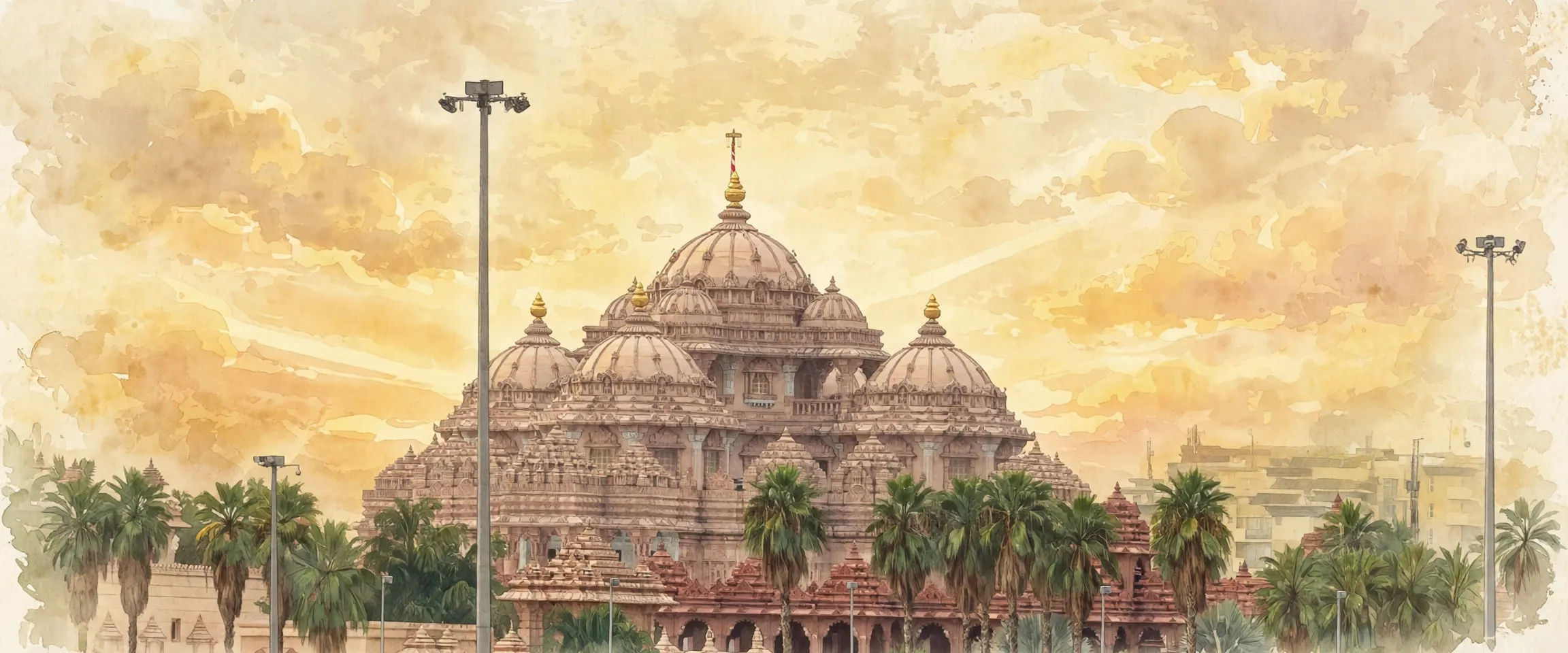
Swaminarayan Akshardham in Delhi is a 100-acre Hindu temple complex on the banks of the Yamuna, built by the BAPS Swaminarayan Sanstha and inaugurated on 6 November 2005. Its 141-foot pink sandstone mandir, carved with more than 20,000 figures and built without structural steel following ancient Shilpa Shastra rules, holds the Guinness World Record as the world's largest comprehensive Hindu temple. Beyond the shrine, the complex runs three exhibitions, a cultural boat ride and an evening multimedia water show on a story from the Kena Upanishad.
- Punjabi name
- ਸਵਾਮੀਨਾਰਾਇਣ ਅਕਸ਼ਰਧਾਮ, ਦਿੱਲੀ
- Country
- India
- State
- Delhi (National Capital Territory)
- City
- New Delhi (East Delhi)
- Location
- Banks of the Yamuna, Pandav Nagar
- Deity
- Bhagwan Swaminarayan; also Sita-Rama, Radha-Krishna, Shiva-Parvati, Lakshmi-Narayana
All 15 facts
- Completed
- 6 November 2005 (consecrated by Pramukh Swami Maharaj)
- Architectural style
- Vastu Shastra and Pancharatra Shastra; Maru-Gurjara idiom; pink sandstone and Carrara marble, no structural steel
- Dimensions
- 141 ft (43 m) high, 316 ft (96 m) wide, 356 ft (109 m) long
- Complex
- About 100 acres; 234 pillars, 9 domes, 20 pinnacles, 20,000+ carved figures
- Managed by
- BAPS Swaminarayan Sanstha
- Architect
- Virendra Trivedi (Sompura family) with BAPS swamis
- Guinness World Record
- World's Largest Comprehensive Hindu Temple, awarded 17 December 2007
- Timings
- 9:30 am to 6:30 pm, Tuesday to Sunday; closed every Monday
- Website
- akshardham.com
Swaminarayan Akshardham in Delhi is a 100-acre Hindu temple complex on the banks of the Yamuna, built by the BAPS Swaminarayan Sanstha and inaugurated on 6 November 2005. Its pink sandstone mandir, 141 feet high and carved with more than 20,000 figures without any structural steel, holds a Guinness World Record as the world's largest comprehensive Hindu temple.
What is Akshardham, and why was it built?
In the Swaminarayan Hindu tradition, Akshardham means the eternal abode of God, and the Delhi complex is built as an earthly expression of that idea. The project fulfils a blessing given in 1968 by Yogiji Maharaj, then the spiritual head of the BAPS Swaminarayan Sanstha, who told a few Delhi devotees that a grand mandir would one day rise on the banks of the Yamuna. It was his successor, Pramukh Swami Maharaj, who turned the vision into stone: he inspired the project, guided its construction, and consecrated the finished temple on 6 November 2005. The Delhi complex follows the pattern of the earlier Akshardham built at Gandhinagar in Gujarat. The official visitor guide describes it as a tribute to Bhagwan Swaminarayan (1781 to 1830), the founder of the Swaminarayan tradition, remembered as a torchbearer of Indian culture. It is meant to be a place of education, experience and enlightenment as much as a place of worship.
How was the temple built in five years?
Construction began on 8 November 2000, and the temple was opened on 6 November 2005, two days short of five years. A team of eight BAPS swamis, many of whom had worked on the Gandhinagar Akshardham, oversaw the work, with Pramukh Swami Maharaj consulted on many aspects. Seven thousand stone carvers and three thousand volunteers built the monument. More than 6,000 tons of pink sandstone came from Rajasthan, where workshops were set up around the quarries; the carvers included local farmers and fifteen hundred tribal women who had suffered from a drought and found paid work in the project. Rough cutting was done by machine, but the detailed carving was done entirely by hand, and every night more than a hundred trucks carried finished stone to Delhi, where four thousand workers and volunteers kept the site running. The design came from BAPS swamis working with Virendra Trivedi of the Sompura family of temple architects, and the swamis themselves researched 8th to 12th century stone craftsmanship at sites including Angkor Wat, Jodhpur, Puri, Konark and the temples of Bhubaneswar and South India before settling the carving programme. The opening was a national event: Pramukh Swami Maharaj consecrated the temple, and it was dedicated to the nation by President A.P.J. Abdul Kalam, with Prime Minister Manmohan Singh and opposition leader L.K. Advani present before 25,000 guests. Advani called it the most unique monument of the world.
How was Akshardham built without steel?
This is the question every engineer asks. The answer lies in the rulebook the builders chose: the temple follows the Vastu Shastra and the Pancharatra Shastra, and the ancient Shilpa Shastra guidelines on temple construction, which forbid ferrous metals. The main monument therefore uses no structural steel and, by the builders' account, no concrete either: it is pink Rajasthani sandstone on the outside and white Italian Carrara marble on the inside, held together by interlocking stone. The architecture follows the Maru-Gurjara idiom, a western branch of the Nagara tradition (see the Nagara architecture explainer). The numbers give the scale: 234 intricately carved pillars, nine domes, twenty pinnacles, and more than twenty thousand carved figures of flora, fauna, dancers, musicians and deities. Under the central dome sits the serene eleven-foot gold-plated murti of Bhagwan Swaminarayan, seated in abhayamudra, the gesture of fearlessness; around it stand the murtis of Shri Sita-Ram, Shri Radha-Krishna, Shri Lakshmi Narayan and Shri Parvati-Shiv. The whole mandir rests on the Gajendra Peeth, a 1,070-foot plinth of 148 life-size stone elephants weighing more than 3,000 tons, a tribute to the elephant's place in Indian culture and history. Around the mandir runs the Mandovar, an ornate outer wall 611 feet long and 25 feet high, made of 4,287 carved stones, carrying 48 murtis of Ganeshji and 200 sculpted figures of rishis, sadhus, devotees and acharyas. A two-tiered red stone colonnade encircles the mandir for circumambulation, each tier 3,000 feet long with 1,152 pillars and 145 viewing windows.
What are the exhibitions at Akshardham?
The mandir is only the centre of the complex. Three ticketed exhibitions surround it. Sahajanand Darshan, the Hall of Values, runs about fifty minutes and presents universal values such as ahimsa, courage, honesty and faith through scenes from the life of Bhagwan Swaminarayan, using films and light-and-sound shows with robotic figures. Neelkanth Darshan is a giant-screen theatre, 85 feet by 65 feet, showing a forty-minute film on Neelkanth Varni, the eleven-year-old child-yogi form of Swaminarayan, whose journey through India was filmed in 108 locations with a cast of more than forty-five thousand people. Sanskruti Vihar is a quarter-hour boat ride through ten thousand years of Indian culture, from the Vedic age to the present. In the evening the Yagnapurush Kund, India's largest stepwell at 300 feet by 300 feet with 2,870 steps and 108 small shrines, becomes the stage for the Sahaj Anand water show: a telling of a story from the Kena Upanishad through lasers, water jets, underwater flames, video projections and live actors, about twenty-five minutes long. Beside the kund stands a twenty-seven-foot metallic murti of Neelkanth Varni, the teenage-yogi form of Swaminarayan; devotees can also pour Ganga water over his murti in the Abhishek Mandapam. Around the monument runs the Narayan Sarovar, a lake fed through 108 gaumukhs with water brought from 151 rivers, lakes and stepwells associated with Swaminarayan, and the 22-acre Bharat Upvan garden holds 65 bronze statues of India's great men, women and children.
Why does Guinness call it the world's largest Hindu temple?
On 17 December 2007, Michael Whitty, an official Guinness World Records adjudicator, travelled to Ahmedabad to present a new world record to Pramukh Swami Maharaj: Akshardham as the World's Largest Comprehensive Hindu Temple. The certificate records the measurements, 356 feet long, 316 feet wide and 141 feet high, covering 86,342 square feet, and notes that the grand, ancient-style, ornately hand-carved stone temple was built without structural steel within five years by 11,000 artisans and volunteers. The word comprehensive matters: the record describes the single carved temple structure, not the total land of the complex.
What should visitors know before going?
Plan around Monday: the complex is closed every Monday. On other days the first entry is at 9:30 am and the last at 6:30 pm. Murti darshan is free, while the exhibitions, the musical fountain show, the food court and parking carry fees. Photography, mobile phones, cameras, bags and outside food and drink are strictly prohibited inside, as are smoking, alcohol and pets, and visitors are asked to dress respectfully. The nearest metro stop is Akshardham station, a short walk from the complex. The Premvati Ahargruh food court serves vegetarian meals in a hall designed to recall Ajanta. Akshardham stands among the great modern mandirs of India (see the mandirs-in-india hub).
ਦਿੱਲੀ ਵਿੱਚ ਸਵਾਮੀਨਾਰਾਇਣ ਅਕਸ਼ਰਧਾਮ ਯਮੁਨਾ ਦੇ ਕੰਢੇ ਉੱਤੇ 100 ਏਕੜ ਵਿੱਚ ਫੈਲਿਆ ਇੱਕ ਹਿੰਦੂ ਮੰਦਰ ਪਰਿਸਰ ਹੈ, ਜਿਸਨੂੰ ਬੀਏਪੀਐੱਸ ਸਵਾਮੀਨਾਰਾਇਣ ਸੰਸਥਾ ਨੇ ਬਣਾਇਆ ਅਤੇ 6 ਨਵੰਬਰ 2005 ਨੂੰ ਜਿਸਦਾ ਉਦਘਾਟਨ ਹੋਇਆ ਇਸ ਦਾ 141 ਫੁੱਟ ਉੱਚਾ ਗੁਲਾਬੀ ਪੱਥਰ ਦਾ ਮੰਦਰ, ਬਿਨਾਂ ਕਿਸੇ ਢਾਂਚਾਗਤ ਸਟੀਲ ਦੇ 20,000 ਤੋਂ ਵੱਧ ਨੱਕਾਸ਼ੀਆਂ ਨਾਲ ਬਣਿਆ, ਦੁਨੀਆ ਦੇ ਸਭ ਤੋਂ ਵੱਡੇ ਵਿਆਪਕ ਹਿੰਦੂ ਮੰਦਰ ਵਜੋਂ ਗਿਨੀਜ਼ ਵਰਲਡ ਰਿਕਾਰਡ ਰੱਖਦਾ ਹੈ
ਅਕਸ਼ਰਧਾਮ ਕੀ ਹੈ, ਅਤੇ ਇਹ ਕਿਉਂ ਬਣਾਇਆ ਗਿਆ?
ਸਵਾਮੀਨਾਰਾਇਣ ਹਿੰਦੂ ਪਰੰਪਰਾ ਵਿੱਚ ਅਕਸ਼ਰਧਾਮ ਦਾ ਅਰਥ ਹੈ ਭਗਵਾਨ ਦਾ ਸਦੀਵੀ ਧਾਮ, ਅਤੇ ਦਿੱਲੀ ਦਾ ਇਹ ਪਰਿਸਰ ਉਸੇ ਵਿਚਾਰ ਦੀ ਧਰਤੀ ਉੱਤੇ ਅਭਿਵਿਅਕਤੀ ਹੈ ਇਹ ਪ੍ਰੋਜੈਕਟ 1968 ਵਿੱਚ ਯੋਗੀਜੀ ਮਹਾਰਾਜ, ਜੋ ਉਦੋਂ ਬੀਏਪੀਐੱਸ ਸਵਾਮੀਨਾਰਾਇਣ ਸੰਸਥਾ ਦੇ ਅਧਿਆਤਮਿਕ ਮੁਖੀ ਸਨ, ਦੇ ਆਸ਼ੀਰਵਾਦ ਦੀ ਪੂਰਤੀ ਹੈ, ਜਿਨ੍ਹਾਂ ਨੇ ਦਿੱਲੀ ਦੇ ਕੁਝ ਸ਼ਰਧਾਲੂਆਂ ਨੂੰ ਕਿਹਾ ਸੀ ਕਿ ਇੱਕ ਦਿਨ ਯਮੁਨਾ ਦੇ ਕੰਢੇ ਇੱਕ ਮਹਾਨ ਮੰਦਰ ਉੱਠੇਗਾ ਉਨ੍ਹਾਂ ਦੇ ਉੱਤਰਾਧਿਕਾਰੀ, ਪ੍ਰਮੁਖ ਸਵਾਮੀ ਮਹਾਰਾਜ ਨੇ ਇਸ ਸੁਪਨੇ ਨੂੰ ਪੱਥਰ ਵਿੱਚ ਬਦਲਿਆ: ਉਨ੍ਹਾਂ ਨੇ ਪ੍ਰੋਜੈਕਟ ਦੀ ਪ੍ਰੇਰਣਾ ਦਿੱਤੀ, ਇਸ ਦੇ ਨਿਰਮਾਣ ਦਾ ਮਾਰਗਦਰਸ਼ਨ ਕੀਤਾ ਅਤੇ 6 ਨਵੰਬਰ 2005 ਨੂੰ ਪੂਰੇ ਹੋਏ ਮੰਦਰ ਦੀ ਪ੍ਰਤਿਸ਼ਠਾ ਕੀਤੀ ਦਿੱਲੀ ਦਾ ਇਹ ਪਰਿਸਰ ਗੁਜਰਾਤ ਦੇ ਗਾਂਧੀਨਗਰ ਵਿੱਚ ਪਹਿਲਾਂ ਬਣੇ ਅਕਸ਼ਰਧਾਮ ਦੇ ਨਮੂਨੇ ਉੱਤੇ ਹੈ ਸਰਕਾਰੀ ਦਰਸ਼ਕ ਗਾਈਡ ਇਸਨੂੰ ਭਗਵਾਨ ਸਵਾਮੀਨਾਰਾਇਣ (1781 ਤੋਂ 1830), ਸਵਾਮੀਨਾਰਾਇਣ ਪਰੰਪਰਾ ਦੇ ਸੰਸਥਾਪਕ ਨੂੰ ਸ਼ਰਧਾਂਜਲੀ ਦੱਸਦੀ ਹੈ, ਜਿਨ੍ਹਾਂ ਨੂੰ ਭਾਰਤੀ ਸੱਭਿਆਚਾਰ ਦਾ ਮਸ਼ਾਲਬਰਦਾਰ ਕਿਹਾ ਗਿਆ ਹੈ ਇਹ ਪੂਜਾ-ਸਥਲ ਜਿੰਨਾ ਹੀ ਸਿੱਖਿਆ, ਅਨੁਭਵ ਅਤੇ ਗਿਆਨ ਦਾ ਸਥਾਨ ਬਣਨਾ ਹੈ
ਮੰਦਰ ਪੰਜ ਸਾਲਾਂ ਵਿੱਚ ਕਿਵੇਂ ਬਣਿਆ?
ਨਿਰਮਾਣ 8 ਨਵੰਬਰ 2000 ਨੂੰ ਸ਼ੁਰੂ ਹੋਇਆ, ਅਤੇ ਮੰਦਰ 6 ਨਵੰਬਰ 2005 ਨੂੰ ਖੁੱਲ੍ਹਿਆ, ਪੰਜ ਸਾਲ ਪੂਰੇ ਹੋਣ ਤੋਂ ਦੋ ਦਿਨ ਪਹਿਲਾਂ ਬੀਏਪੀਐੱਸ ਦੇ ਅੱਠ ਸਵਾਮੀਆਂ ਦੀ ਟੀਮ ਨੇ ਕੰਮ ਦੀ ਦੇਖਰੇਖ ਕੀਤੀ, ਜਿਨ੍ਹਾਂ ਵਿੱਚੋਂ ਕਈ ਗਾਂਧੀਨਗਰ ਦੇ ਅਕਸ਼ਰਧਾਮ ਉੱਤੇ ਕੰਮ ਕਰ ਚੁੱਕੇ ਸਨ, ਅਤੇ ਪ੍ਰਮੁਖ ਸਵਾਮੀ ਮਹਾਰਾਜ ਨਾਲ ਕਈ ਪਹਿਲੂਆਂ ਉੱਤੇ ਸਲਾਹ ਕੀਤੀ ਗਈ ਸੱਤ ਹਜ਼ਾਰ ਪੱਥਰ-ਤਰਾਸ਼ਾਂ ਅਤੇ ਤਿੰਨ ਹਜ਼ਾਰ ਸੇਵਾਦਾਰਾਂ ਨੇ ਇਹ ਸਮਾਰਕ ਬਣਾਇਆ ਰਾਜਸਥਾਨ ਤੋਂ 6,000 ਟਨ ਤੋਂ ਵੱਧ ਗੁਲਾਬੀ ਪੱਥਰ ਆਇਆ, ਜਿੱਥੇ ਖਾਨਾਂ ਦੇ ਆਲੇ-ਦੁਆਲੇ ਵਰਕਸ਼ਾਪਾਂ ਲਗਾਈਆਂ ਗਈਆਂ ਸਨ, ਤਰਾਸ਼ਾਂ ਵਿੱਚ ਸਥਾਨਕ ਕਿਸਾਨ ਅਤੇ ਪੰਦਰਾਂ ਸੌ ਆਦਿਵਾਸੀ ਔਰਤਾਂ ਸ਼ਾਮਲ ਸਨ ਜੋ ਸੋਕੇ ਤੋਂ ਪੀੜਤ ਸਨ ਅਤੇ ਇਸ ਪ੍ਰੋਜੈਕਟ ਵਿੱਚ ਉਨ੍ਹਾਂ ਨੂੰ ਰੋਜ਼ਗਾਰ ਮਿਲਿਆ ਮੋਟੀ ਕਟਾਈ ਮਸ਼ੀਨ ਨਾਲ ਹੋਈ, ਪਰ ਬਾਰੀਕ ਨੱਕਾਸ਼ੀ ਪੂਰੀ ਤਰ੍ਹਾਂ ਹੱਥ ਨਾਲ ਕੀਤੀ ਗਈ, ਅਤੇ ਹਰ ਰਾਤ ਸੌ ਤੋਂ ਵੱਧ ਟਰੱਕ ਤਿਆਰ ਪੱਥਰ ਦਿੱਲੀ ਲੈ ਜਾਂਦੇ ਸਨ, ਜਿੱਥੇ ਚਾਰ ਹਜ਼ਾਰ ਮਜ਼ਦੂਰ ਅਤੇ ਸੇਵਾਦਾਰ ਕੰਮ ਜਾਰੀ ਰੱਖਦੇ ਸਨ ਡਿਜ਼ਾਈਨ ਬੀਏਪੀਐੱਸ ਦੇ ਸਵਾਮੀਆਂ ਨੇ ਮੰਦਰ-ਭਵਨਕਾਰਾਂ ਦੇ ਸੋਮਪੁਰਾ ਪਰਿਵਾਰ ਦੇ ਵੀਰੇਂਦਰ ਤ੍ਰਿਵੇਦੀ ਨਾਲ ਮਿਲ ਕੇ ਤਿਆਰ ਕੀਤਾ, ਅਤੇ ਸਵਾਮੀਆਂ ਨੇ ਖ਼ੁਦ ਅੰਗਕੋਰ ਵਾਟ, ਜੋਧਪੁਰ, ਪੁਰੀ, ਕੋਣਾਰਕ ਅਤੇ ਭੁਵਨੇਸ਼ਵਰ ਤੇ ਦੱਖਣ ਭਾਰਤ ਦੇ ਮੰਦਰਾਂ ਵਿੱਚ 8ਵੀਂ ਤੋਂ 12ਵੀਂ ਸਦੀ ਦੀ ਪੱਥਰ-ਕਲਾ ਦਾ ਅਧਿਐਨ ਕੀਤਾ, ਫਿਰ ਨੱਕਾਸ਼ੀ ਦਾ ਪ੍ਰੋਗਰਾਮ ਤੈਅ ਕੀਤਾ ਉਦਘਾਟਨ ਰਾਸ਼ਟਰੀ ਸਮਾਗਮ ਸੀ: ਪ੍ਰਮੁਖ ਸਵਾਮੀ ਮਹਾਰਾਜ ਨੇ ਮੰਦਰ ਦੀ ਪ੍ਰਤਿਸ਼ਠਾ ਕੀਤੀ, ਅਤੇ ਰਾਸ਼ਟਰਪਤੀ ਏ.ਪੀ.ਜੇ. ਅਬਦੁਲ ਕਲਾਮ ਨੇ ਇਸਨੂੰ ਰਾਸ਼ਟਰ ਨੂੰ ਸਮਰਪਿਤ ਕੀਤਾ, ਪ੍ਰਧਾਨ ਮੰਤਰੀ ਮਨਮੋਹਨ ਸਿੰਘ ਅਤੇ ਵਿਰੋਧੀ ਧਿਰ ਦੇ ਨੇਤਾ ਐੱਲ.ਕੇ. ਅਡਵਾਨੀ 25,000 ਮਹਿਮਾਨਾਂ ਸਾਹਮਣੇ ਹਾਜ਼ਰ ਸਨ ਅਡਵਾਨੀ ਨੇ ਇਸਨੂੰ ਦੁਨੀਆ ਦਾ ਸਭ ਤੋਂ ਅਨੂਠਾ ਸਮਾਰਕ ਕਿਹਾ
ਅਕਸ਼ਰਧਾਮ ਬਿਨਾਂ ਸਟੀਲ ਦੇ ਕਿਵੇਂ ਬਣਿਆ?
ਇਹੀ ਸਵਾਲ ਹਰ ਇੰਜੀਨੀਅਰ ਪੁੱਛਦਾ ਹੈ ਜਵਾਬ ਉਸ ਨਿਯਮ-ਪੁਸਤਕ ਵਿੱਚ ਹੈ ਜੋ ਬਣਾਉਣ ਵਾਲਿਆਂ ਨੇ ਚੁਣੀ: ਮੰਦਰ ਵਾਸਤੁ ਸ਼ਾਸਤਰ ਅਤੇ ਪਾਂਚਰਾਤਰ ਸ਼ਾਸਤਰ ਅਨੁਸਾਰ ਹੈ, ਅਤੇ ਮੰਦਰ ਨਿਰਮਾਣ ਦੇ ਪੁਰਾਤਨ ਸ਼ਿਲਪ ਸ਼ਾਸਤਰ ਦਿਸ਼ਾ-ਨਿਰਦੇਸ਼ਾਂ ਦੀ ਪਾਲਣਾ ਕਰਦਾ ਹੈ, ਜੋ ਲੋਹ-ਧਾਤਾਂ ਦੀ ਮਨਾਹੀ ਕਰਦੇ ਹਨ ਇਸ ਲਈ ਮੁੱਖ ਸਮਾਰਕ ਵਿੱਚ ਕੋਈ ਢਾਂਚਾਗਤ ਸਟੀਲ ਨਹੀਂ ਹੈ ਅਤੇ, ਬਣਾਉਣ ਵਾਲਿਆਂ ਦੇ ਕਹਿਣ ਅਨੁਸਾਰ, ਕੰਕਰੀਟ ਵੀ ਨਹੀਂ: ਬਾਹਰੋਂ ਇਹ ਰਾਜਸਥਾਨੀ ਗੁਲਾਬੀ ਪੱਥਰ ਦਾ ਹੈ ਅਤੇ ਅੰਦਰੋਂ ਇਟਲੀ ਦੇ ਚਿੱਟੇ ਕੈਰਾਰਾ ਸੰਗਮਰਮਰ ਦਾ, ਪੱਥਰਾਂ ਨੂੰ ਆਪਸ ਵਿੱਚ ਜੋੜ ਕੇ ਖੜ੍ਹਾ ਕੀਤਾ ਗਿਆ ਹੈ ਭਵਨ-ਕਲਾ ਮਾਰੂ-ਗੁਰਜਰ ਸ਼ੈਲੀ ਦੀ ਹੈ, ਨਾਗਰ ਪਰੰਪਰਾ ਦੀ ਇੱਕ ਪੱਛਮੀ ਸ਼ਾਖਾ ਅੰਕੜੇ ਪੈਮਾਨਾ ਦੱਸਦੇ ਹਨ: 234 ਬਾਰੀਕ ਨੱਕਾਸ਼ੀ ਵਾਲੇ ਥੰਮ੍ਹ, ਨੌਂ ਗੁੰਬਦ, ਵੀਹ ਸ਼ਿਖਰ, ਅਤੇ ਫੁੱਲਾਂ, ਪੱਤਿਆਂ, ਨਾਚਕੀਆਂ, ਸੰਗੀਤਕਾਰਾਂ ਅਤੇ ਦੇਵੀ-ਦੇਵਤਿਆਂ ਦੀਆਂ ਵੀਹ ਹਜ਼ਾਰ ਤੋਂ ਵੱਧ ਨੱਕਾਸ਼ੀਆਂ ਕੇਂਦਰੀ ਗੁੰਬਦ ਹੇਠ ਭਗਵਾਨ ਸਵਾਮੀਨਾਰਾਇਣ ਦੀ ਗਿਆਰਾਂ ਫੁੱਟ ਉੱਚੀ ਸੋਨੇ-ਮੜ੍ਹੀ ਮੂਰਤੀ ਬਿਰਾਜਮਾਨ ਹੈ, ਅਭਯਮੁਦਰਾ ਵਿੱਚ, ਨਿਰਭੈਤਾ ਦੇ ਭਾਵ ਵਿੱਚ, ਇਸ ਦੇ ਆਲੇ-ਦੁਆਲੇ ਸ਼੍ਰੀ ਸੀਤਾ-ਰਾਮ, ਸ਼੍ਰੀ ਰਾਧਾ-ਕ੍ਰਿਸ਼ਨ, ਸ਼੍ਰੀ ਲਕਸ਼ਮੀ-ਨਾਰਾਇਣ ਅਤੇ ਸ਼੍ਰੀ ਪਾਰਵਤੀ-ਸ਼ਿਵ ਦੀਆਂ ਮੂਰਤੀਆਂ ਹਨ ਪੂਰਾ ਮੰਦਰ ਗਜੇਂਦਰ ਪੀਠ ਉੱਤੇ ਟਿਕਿਆ ਹੈ, 1,070 ਫੁੱਟ ਲੰਬਾ ਚਬੂਤਰਾ ਜਿਸ ਉੱਤੇ 148 ਜੀਵਨ-ਆਕਾਰ ਦੇ ਪੱਥਰ ਦੇ ਹਾਥੀ ਹਨ, ਜਿਨ੍ਹਾਂ ਦਾ ਕੁੱਲ ਭਾਰ 3,000 ਟਨ ਤੋਂ ਵੱਧ ਹੈ, ਭਾਰਤੀ ਸੱਭਿਆਚਾਰ ਅਤੇ ਇਤਿਹਾਸ ਵਿੱਚ ਹਾਥੀ ਦੇ ਸਥਾਨ ਨੂੰ ਸ਼ਰਧਾਂਜਲੀ ਮੰਦਰ ਦੇ ਦੁਆਲੇ ਮੰਡੋਵਰ ਹੈ, 611 ਫੁੱਟ ਲੰਬੀ ਅਤੇ 25 ਫੁੱਟ ਉੱਚੀ ਸਜਾਵਟੀ ਬਾਹਰੀ ਕੰਧ, 4,287 ਨੱਕਾਸ਼ੀਦਾਰ ਪੱਥਰਾਂ ਦੀ ਬਣੀ, ਜਿਸ ਉੱਤੇ ਗਣੇਸ਼ ਜੀ ਦੀਆਂ 48 ਮੂਰਤੀਆਂ ਅਤੇ ਰਿਸ਼ੀਆਂ, ਸਾਧੂਆਂ, ਭਗਤਾਂ ਅਤੇ ਆਚਾਰਿਆਂ ਦੀਆਂ 200 ਮੂਰਤੀਆਂ ਹਨ ਪਰਿਕਰਮਾ ਲਈ ਮੰਦਰ ਦੇ ਦੁਆਲੇ ਦੋ-ਮੰਜ਼ਿਲਾ ਲਾਲ ਪੱਥਰ ਦਾ ਬਰਾਂਡਾ ਹੈ, ਹਰ ਮੰਜ਼ਿਲ 3,000 ਫੁੱਟ ਲੰਬੀ, 1,152 ਥੰਮ੍ਹਾਂ ਅਤੇ 145 ਝਰੋਖਿਆਂ ਨਾਲ
ਅਕਸ਼ਰਧਾਮ ਵਿੱਚ ਪ੍ਰਦਰਸ਼ਨੀਆਂ ਕੀ ਹਨ?
ਮੰਦਰ ਸਿਰਫ਼ ਪਰਿਸਰ ਦਾ ਕੇਂਦਰ ਹੈ ਇਸ ਦੇ ਆਲੇ-ਦੁਆਲੇ ਤਿੰਨ ਟਿਕਟ ਵਾਲੀਆਂ ਪ੍ਰਦਰਸ਼ਨੀਆਂ ਹਨ ਸਹਜਾਨੰਦ ਦਰਸ਼ਨ, ਮੁੱਲਾਂ ਦਾ ਹਾਲ, ਲਗਭਗ ਪੰਜਾਹ ਮਿੰਟ ਚੱਲਦਾ ਹੈ ਅਤੇ ਭਗਵਾਨ ਸਵਾਮੀਨਾਰਾਇਣ ਦੇ ਜੀਵਨ ਦੇ ਦ੍ਰਿਸ਼ਾਂ ਰਾਹੀਂ ਅਹਿੰਸਾ, ਹਿੰਮਤ, ਇਮਾਨਦਾਰੀ ਅਤੇ ਸ਼ਰਧਾ ਵਰਗੇ ਸਰਬਵਿਆਪੀ ਮੁੱਲ ਪੇਸ਼ ਕਰਦਾ ਹੈ, ਫਿਲਮਾਂ ਅਤੇ ਰੋਬੋਟਿਕ ਪੁਤਲਿਆਂ ਨਾਲ ਲਾਈਟ-ਐਂਡ-ਸਾਊਂਡ ਸ਼ੋਅ ਰਾਹੀਂ ਨੀਲਕੰਠ ਦਰਸ਼ਨ 85 ਫੁੱਟ ਗੁਣਾ 65 ਫੁੱਟ ਦੀ ਵਿਸ਼ਾਲ ਸਕ੍ਰੀਨ ਵਾਲਾ ਥੀਏਟਰ ਹੈ, ਜਿਸ ਵਿੱਚ ਨੀਲਕੰਠ ਵਰਣੀ, ਸਵਾਮੀਨਾਰਾਇਣ ਦੇ ਗਿਆਰਾਂ ਸਾਲਾ ਬਾਲ-ਯੋਗੀ ਰੂਪ ਉੱਤੇ ਚਾਲੀ ਮਿੰਟ ਦੀ ਫਿਲਮ ਚੱਲਦੀ ਹੈ, ਜਿਸ ਦੀ ਸ਼ੂਟਿੰਗ ਭਾਰਤ ਦੇ 108 ਸਥਾਨਾਂ ਉੱਤੇ ਪੈਂਤਾਲੀ ਹਜ਼ਾਰ ਤੋਂ ਵੱਧ ਕਲਾਕਾਰਾਂ ਨਾਲ ਹੋਈ ਸੰਸਕ੍ਰਿਤੀ ਵਿਹਾਰ ਭਾਰਤੀ ਸੱਭਿਆਚਾਰ ਦੇ ਦਸ ਹਜ਼ਾਰ ਸਾਲਾਂ ਵਿੱਚੋਂ ਪੰਦਰਾਂ ਮਿੰਟ ਦੀ ਕਿਸ਼ਤੀ-ਸੈਰ ਹੈ, ਵੈਦਿਕ ਯੁੱਗ ਤੋਂ ਅੱਜ ਤੱਕ ਸ਼ਾਮ ਨੂੰ ਯਗਨਪੁਰਸ਼ ਕੁੰਡ, 300 ਫੁੱਟ ਗੁਣਾ 300 ਫੁੱਟ ਦਾ ਭਾਰਤ ਦਾ ਸਭ ਤੋਂ ਵੱਡਾ ਬਾਉਲੀ, 2,870 ਪੌੜੀਆਂ ਅਤੇ 108 ਛੋਟੇ ਧਾਮਾਂ ਨਾਲ, ਸਹਜ ਆਨੰਦ ਜਲ-ਸ਼ੋਅ ਦਾ ਮੰਚ ਬਣਦਾ ਹੈ: ਲੇਜ਼ਰਾਂ, ਪਾਣੀ ਦੀਆਂ ਧਾਰਾਂ, ਪਾਣੀ ਹੇਠਲੀਆਂ ਲਾਟਾਂ, ਵੀਡੀਓ ਪ੍ਰੋਜੈਕਸ਼ਨਾਂ ਅਤੇ ਜੀਵੰਤ ਕਲਾਕਾਰਾਂ ਰਾਹੀਂ ਕੇਨ ਉਪਨਿਸ਼ਦ ਦੀ ਇੱਕ ਕਥਾ, ਲਗਭਗ ਪੱਚੀ ਮਿੰਟ ਲੰਬੀ ਕੁੰਡ ਕੋਲ ਨੀਲਕੰਠ ਵਰਣੀ, ਸਵਾਮੀਨਾਰਾਇਣ ਦੇ ਕਿਸ਼ੋਰ-ਯੋਗੀ ਰੂਪ ਦੀ ਸਤਾਈ ਫੁੱਟ ਉੱਚੀ ਧਾਤ ਦੀ ਮੂਰਤੀ ਖੜ੍ਹੀ ਹੈ, ਸ਼ਰਧਾਲੂ ਅਭਿਸ਼ੇਕ ਮੰਡਪਮ ਵਿੱਚ ਉਨ੍ਹਾਂ ਦੀ ਮੂਰਤੀ ਉੱਤੇ ਗੰਗਾ ਜਲ ਵੀ ਚੜ੍ਹਾ ਸਕਦੇ ਹਨ ਸਮਾਰਕ ਦੇ ਦੁਆਲੇ ਨਾਰਾਇਣ ਸਰੋਵਰ ਹੈ, ਇੱਕ ਝੀਲ ਜਿਸ ਵਿੱਚ 108 ਗਊਮੁਖਾਂ ਰਾਹੀਂ ਸਵਾਮੀਨਾਰਾਇਣ ਨਾਲ ਜੁੜੀਆਂ 151 ਨਦੀਆਂ, ਝੀਲਾਂ ਅਤੇ ਬਾਉਲੀਆਂ ਦਾ ਪਾਣੀ ਆਉਂਦਾ ਹੈ, ਅਤੇ 22 ਏਕੜ ਦਾ ਭਾਰਤ ਉਪਵਨ ਬਾਗ਼ ਭਾਰਤ ਦੀਆਂ ਮਹਾਨ ਹਸਤੀਆਂ ਦੀਆਂ 65 ਕਾਂਸੀ ਮੂਰਤੀਆਂ ਰੱਖਦਾ ਹੈ
ਗਿਨੀਜ਼ ਇਸਨੂੰ ਦੁਨੀਆ ਦਾ ਸਭ ਤੋਂ ਵੱਡਾ ਹਿੰਦੂ ਮੰਦਰ ਕਿਉਂ ਕਹਿੰਦੀ ਹੈ?
17 ਦਸੰਬਰ 2007 ਨੂੰ ਗਿਨੀਜ਼ ਵਰਲਡ ਰਿਕਾਰਡਜ਼ ਦੇ ਅਧਿਕਾਰਤ ਨਿਰਣਾਇਕ ਮਾਈਕਲ ਵਿਟੀ ਅਹਿਮਦਾਬਾਦ ਗਏ ਅਤੇ ਪ੍ਰਮੁਖ ਸਵਾਮੀ ਮਹਾਰਾਜ ਨੂੰ ਇੱਕ ਨਵਾਂ ਵਰਲਡ ਰਿਕਾਰਡ ਸੌਂਪਿਆ: ਅਕਸ਼ਰਧਾਮ ਨੂੰ ਦੁਨੀਆ ਦਾ ਸਭ ਤੋਂ ਵੱਡਾ ਵਿਆਪਕ ਹਿੰਦੂ ਮੰਦਰ ਸਰਟੀਫਿਕੇਟ ਵਿੱਚ ਮਾਪ ਦਰਜ ਹਨ, 356 ਫੁੱਟ ਲੰਬਾ, 316 ਫੁੱਟ ਚੌੜਾ ਅਤੇ 141 ਫੁੱਟ ਉੱਚਾ, 86,342 ਵਰਗ ਫੁੱਟ ਵਿੱਚ ਫੈਲਿਆ, ਅਤੇ ਲਿਖਿਆ ਹੈ ਕਿ ਪੁਰਾਤਨ ਸ਼ੈਲੀ ਦਾ ਇਹ ਮਹਾਨ, ਹੱਥ ਨਾਲ ਨੱਕਾਸ਼ੀਦਾਰ ਪੱਥਰ ਦਾ ਮੰਦਰ ਬਿਨਾਂ ਢਾਂਚਾਗਤ ਸਟੀਲ ਦੇ ਪੰਜ ਸਾਲਾਂ ਵਿੱਚ 11,000 ਕਾਰੀਗਰਾਂ ਅਤੇ ਸੇਵਾਦਾਰਾਂ ਨੇ ਬਣਾਇਆ ਵਿਆਪਕ ਸ਼ਬਦ ਮਾਇਨੇ ਰੱਖਦਾ ਹੈ: ਇਹ ਰਿਕਾਰਡ ਇਕੱਲੇ ਨੱਕਾਸ਼ੀਦਾਰ ਮੰਦਰ ਢਾਂਚੇ ਦਾ ਹੈ, ਪੂਰੇ ਪਰਿਸਰ ਦੀ ਜ਼ਮੀਨ ਦਾ ਨਹੀਂ
ਜਾਣ ਤੋਂ ਪਹਿਲਾਂ ਦਰਸ਼ਕਾਂ ਨੂੰ ਕੀ ਪਤਾ ਹੋਣਾ ਚਾਹੀਦਾ ਹੈ?
ਸੋਮਵਾਰ ਦਾ ਧਿਆਨ ਰੱਖੋ: ਪਰਿਸਰ ਹਰ ਸੋਮਵਾਰ ਬੰਦ ਰਹਿੰਦਾ ਹੈ ਬਾਕੀ ਦਿਨਾਂ ਵਿੱਚ ਪਹਿਲੀ ਐਂਟਰੀ ਸਵੇਰੇ 9:30 ਵਜੇ ਅਤੇ ਆਖ਼ਰੀ ਸ਼ਾਮ 6:30 ਵਜੇ ਹੁੰਦੀ ਹੈ ਮੂਰਤੀ ਦਰਸ਼ਨ ਮੁਫ਼ਤ ਹੈ, ਜਦੋਂਕਿ ਪ੍ਰਦਰਸ਼ਨੀਆਂ, ਸੰਗੀਤਕ ਫੁਹਾਰਾ ਸ਼ੋਅ, ਫੂਡ ਕੋਰਟ ਅਤੇ ਪਾਰਕਿੰਗ ਲਈ ਫੀਸ ਲੱਗਦੀ ਹੈ ਅੰਦਰ ਫੋਟੋਗ੍ਰਾਫੀ, ਮੋਬਾਈਲ ਫੋਨ, ਕੈਮਰੇ, ਬੈਗ ਅਤੇ ਬਾਹਰ ਦਾ ਖਾਣਾ-ਪੀਣਾ ਸਖ਼ਤੀ ਨਾਲ ਮਨ੍ਹਾ ਹੈ, ਜਿਵੇਂ ਸਿਗਰਟ, ਸ਼ਰਾਬ ਅਤੇ ਪਾਲਤੂ ਜਾਨਵਰ, ਅਤੇ ਦਰਸ਼ਕਾਂ ਨੂੰ ਸਤਿਕਾਰਯੋਗ ਪਹਿਰਾਵੇ ਦੀ ਬੇਨਤੀ ਕੀਤੀ ਜਾਂਦੀ ਹੈ ਸਭ ਤੋਂ ਨੇੜਲਾ ਮੈਟਰੋ ਸਟੇਸ਼ਨ ਅਕਸ਼ਰਧਾਮ ਹੈ, ਪਰਿਸਰ ਤੋਂ ਥੋੜ੍ਹੀ ਦੂਰੀ ਉੱਤੇ ਪ੍ਰੇਮਵਤੀ ਆਹਾਰਗ੍ਰਹਿ ਫੂਡ ਕੋਰਟ ਅਜੰਤਾ ਦੀ ਯਾਦ ਦਿਵਾਉਣ ਵਾਲੇ ਹਾਲ ਵਿੱਚ ਸ਼ਾਕਾਹਾਰੀ ਭੋਜਨ ਪਰੋਸਦਾ ਹੈ ਅਕਸ਼ਰਧਾਮ ਭਾਰਤ ਦੇ ਮਹਾਨ ਆਧੁਨਿਕ ਮੰਦਰਾਂ ਵਿੱਚੋਂ ਇੱਕ ਹੈ