
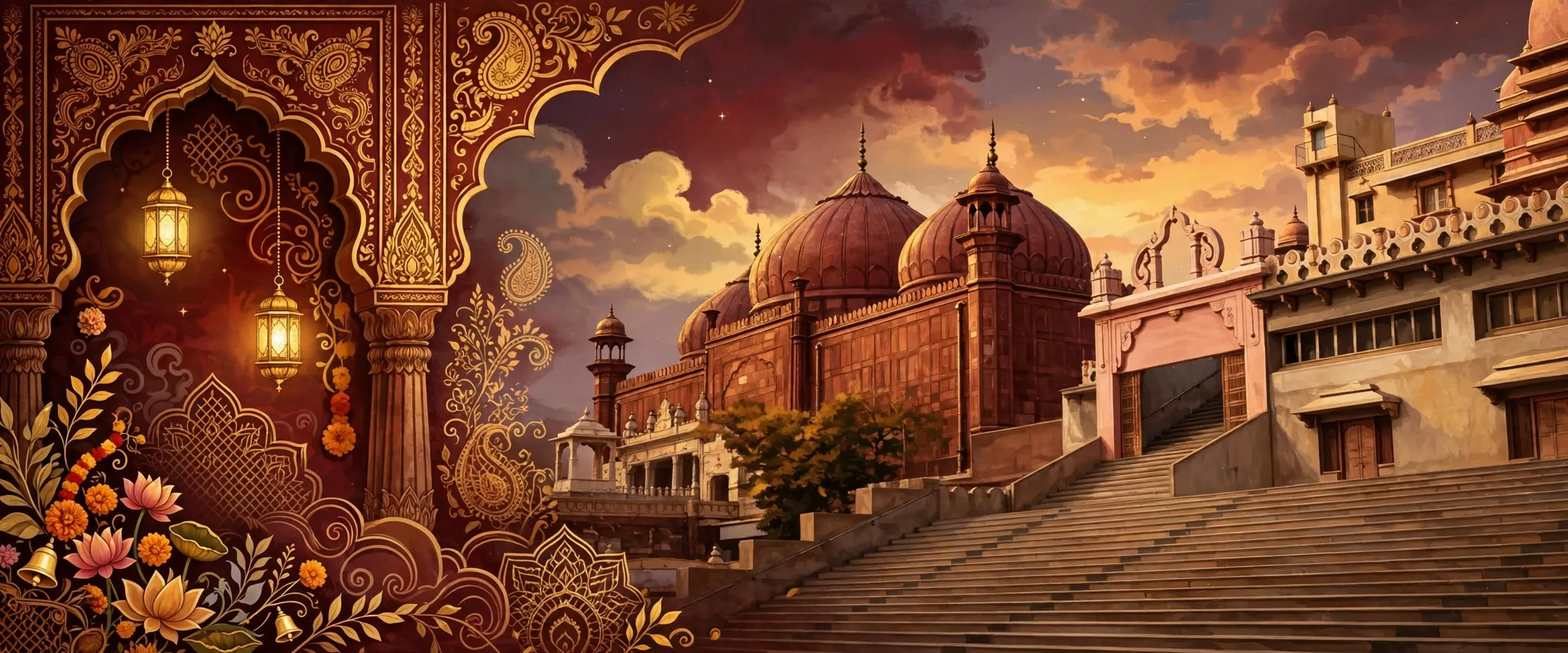
Krishna Janmasthan is a Hindu temple complex in Mathura, Uttar Pradesh, built around the prison cell where the deity Krishna is believed to have been born. Tradition credits Krishna's great-grandson Vajranabh with the first shrine on the spot, and the present complex, funded by industrialist families, was completed in 1982 after centuries of destruction and rebuilding. Its three main shrines are the Keshavdeva temple, the Garbhagriha marking the birthplace, and the Bhagavata Bhavan dedicated to the Shrimad Bhagavata.
- Punjabi name
- ਕ੍ਰਿਸ਼ਨ ਜਨਮਸਥਾਨ ਮੰਦਰ
- Country
- India
- City
- Mathura, Uttar Pradesh
- Deity
- Krishna (Keshavdeva)
- Architectural style
- Modern 20th-century complex (1953-1982) in traditional carved-sandstone style
- Complex area
- 13.37 acres (5.41 hectares)
All 9 facts
- Keshavdeva temple consecrated
- 1958
- Trust
- Shri Krishna Janmasthan Seva Sansthan (registered 1951)
- Festival
- Krishna Janmashtami
What is Krishna Janmasthan?
Krishna Janmasthan is a Hindu temple complex in Mathura, Uttar Pradesh, in the heart of the Braj region. It stands at Katra Keshavdeva, on a plot of 13.37 acres that Hindus believe is the exact place where Krishna was born. The site takes its name from the Keshavdeva temple: Krishna, the deity of the complex, is worshipped here under the name Keshavdev. Three main shrines make up the complex today. The first is the Keshavdeva temple itself, dedicated to Krishna. The second is the Garbhagriha, a small, dimly lit chamber that marks the prison cell where tradition says Krishna was born, with the birthplace marked by a stone slab. The third is the Bhagavata Bhavan, a larger temple dedicated to the Shrimad Bhagavata, where the presiding deities are Radha and Krishna. All three are managed by the Shri Krishna Janmasthan Seva Sansthan, the trust that rebuilt the complex in the 20th century.
Is Krishna Janmasthan the exact birthplace of Krishna?
The claim rests on religious tradition rather than on documents or excavations. According to the tradition, Krishna was born to Devaki and her husband Vasudeva inside a prison cell. Kansa, the king of Mathura and Devaki's maternal uncle, had locked the couple up after a prophecy warned him that Devaki's child would bring his death. The same tradition credits Krishna's great-grandson Vajranabh with building the first temple on the spot. Excavations at Katra Keshavdeva have found pottery and terracotta going back to the 6th century BCE, along with Jain sculptures and a large Buddhist complex, so the ground was a sacred site long before any standing temple. A Vaishnava shrine may have stood here as early as the first century CE. None of this can confirm a birth, and no excavation could: the birthplace is a matter of faith, and the temple keeps it as such.
Two thousand years of destruction and rebuilding
Few Indian temple sites have been built and demolished so many times. The Gupta emperor Chandragupta II rebuilt the complex in 400 CE, and a late 8th-century inscription records donations to the site by the Rashtrakutas. In 1017 or 1018, Mahmud of Ghazni plundered Mathura, burning its temples and carrying away gold and silver images in a train of a hundred camels. A Sanskrit stone inscription from the site records that in 1150 a man named Jajja, possibly a vassal of the Gahadavala king, raised a new Vishnu temple here that was, in the inscription's words, brilliantly white and touching the clouds.
The cycle continued in the medieval period. Delhi Sultan Sikandar Lodi had Mathura's temples destroyed in the 16th century and restricted Hindu worship in the city. Then, in the more tolerant reign of the Mughal emperor Jahangir, Raja Veer Singh Deva Bundela of Orchha built a grand octagonal temple of red sandstone in 1618 at an enormous cost. The French traveller Tavernier, who saw it in 1650, and the Italian Manucci both described its splendour, and the Mughal prince Dara Shikoh patronised it. But Aurangzeb ordered the temple destroyed in 1670 and raised the Shahi Eidgah mosque on its raised plinth. The mosque still stands there today.
The modern rebuilding began after the British auctioned the 13.37 acres of Katra in 1815; a Banaras banker, Raja Patnimal, bought the land, and his descendants kept it undivided. In 1935 the Allahabad High Court ruled for Rai Krishna Das in two suits over ownership. On 7 February 1944, the educationist Madan Mohan Malaviya acquired the land for Rs 13,000 with the help of the industrialist Jugal Kishore Birla. Birla then registered the Shri Krishna Janmasthan Seva Sansthan trust on 21 February 1951, and entrusted construction to the philanthropist Jaidayal Dalmia. Work began in October 1953 and finished in February 1982, funded by the Dalmia, Birla and Goenka families, among others.
The three shrines inside the complex
The Keshavdeva temple was built by Ramkrishna Dalmia in memory of his mother, Jadiadevi Dalmia. Construction started on 29 June 1957 and the temple was inaugurated on 6 September 1958 by Hanuman Prasad Poddar. It stands south of the Shahi Eidgah. The Garbhagriha shrine is the emotional centre of the complex: a marble pavilion and an underground chamber built where the prison cell is believed to have been, set against the rear wall of the Eidgah. Near it stands a small shrine to the eight-handed goddess Yogmaya.
The Bhagavata Bhavan, dedicated to the Shrimad Bhagavata, is the largest of the three. Construction began on 11 February 1965 and the deities were installed on 12 February 1982. It holds five shrines. The main one houses a six-foot pair of Radha and Krishna. To the right stand Balarama, Subhadra and Jagannatha; to the left, Rama, Lakshmana and Sita. A Garuda pillar, Chaitanya Mahaprabhu, Hanuman, Durga and a Shivalinga complete the shrines. The assembly hall's ceiling, walls and pillars carry frescoes of Krishna's life, and the text of the Bhagavad Gita is engraved on copper plates along the circumambulation path. Statues of Malaviya and Birla in the complex honour their part in the rebuilding. Southeast of the temple lies Potra Kund, also called Pavitra Kund, a large stepped water tank where tradition says the newborn Krishna had his first bath; Mahadji Scindia built its steps in 1782 and his descendants restored them in 1850.
Why do a mosque and a temple share the same plot?
Because the mosque was built on top of the old temple's ground. In 1670 Aurangzeb had the Keshavdeva temple destroyed and raised the Shahi Eidgah on its raised plinth, and the mosque and the temple complex have stood side by side ever since. Visitors to the complex see the Eidgah's domes rising beside the temple gate, a reminder of the site's layered past. In 1968 the temple trust and the Eidgah committee signed a compromise agreement dividing the land and its management; that agreement was later challenged in court after 1992, and the dispute continues in the legal record. The facts of the shared plot are part of the site's history, and the entry states them as such, without taking sides.
When should you visit?
Krishna Janmashtami, the celebration of Krishna's birth, is the biggest day of the year at the complex. The temple is lit up, and the celebrations, devotional songs and dances run through the night. Radhashtami, Holi and Diwali are the other great festivals, drawing crowds from across Braj, and Mathura's Holi is famous well beyond the region. Mathura lies about 150 km south of Delhi and is easy to reach by road and rail, so the complex has become one of the most visited temples in India. A museum, library, guest house and shops inside the complex serve the steady stream of pilgrims.
ਕ੍ਰਿਸ਼ਨ ਜਨਮਸਥਾਨ ਕੀ ਹੈ?
ਕ੍ਰਿਸ਼ਨ ਜਨਮਸਥਾਨ ਮਥੁਰਾ, ਉੱਤਰ ਪ੍ਰਦੇਸ਼ ਵਿੱਚ ਬ੍ਰਜ ਖੇਤਰ ਦੇ ਕੇਂਦਰ ਵਿੱਚ ਇੱਕ ਹਿੰਦੂ ਮੰਦਰ ਪਰਿਸਰ ਹੈ ਇਹ ਕਟਰਾ ਕੇਸ਼ਵਦੇਵ ਵਿਖੇ 13.37 ਏਕੜ ਜ਼ਮੀਨ ਉੱਤੇ ਹੈ, ਜਿਸਨੂੰ ਹਿੰਦੂ ਕ੍ਰਿਸ਼ਨ ਦੇ ਜਨਮ ਦਾ ਅਸਲ ਅਸਥਾਨ ਮੰਨਦੇ ਹਨ ਇਸ ਅਸਥਾਨ ਦਾ ਨਾਮ ਕੇਸ਼ਵਦੇਵ ਮੰਦਰ ਤੋਂ ਪਿਆ ਹੈ: ਪਰਿਸਰ ਦੇ ਦੇਵਤੇ ਕ੍ਰਿਸ਼ਨ ਨੂੰ ਇੱਥੇ ਕੇਸ਼ਵਦੇਵ ਦੇ ਨਾਮ ਨਾਲ ਪੂਜਿਆ ਜਾਂਦਾ ਹੈ ਅੱਜ ਪਰਿਸਰ ਵਿੱਚ ਤਿੰਨ ਮੁੱਖ ਮੰਦਰ ਹਨ ਪਹਿਲਾ ਖੁਦ ਕੇਸ਼ਵਦੇਵ ਮੰਦਰ ਹੈ, ਜੋ ਕ੍ਰਿਸ਼ਨ ਨੂੰ ਸਮਰਪਿਤ ਹੈ ਦੂਜਾ ਗਰਭਗ੍ਰਿਹ ਹੈ, ਇੱਕ ਛੋਟਾ, ਹਲਕੇ ਰੌਸ਼ਨੀ ਵਾਲਾ ਕਮਰਾ ਜੋ ਉਸ ਕੈਦਖਾਨੇ ਦੀ ਨਿਸ਼ਾਨੀ ਹੈ ਜਿੱਥੇ ਪਰੰਪਰਾ ਅਨੁਸਾਰ ਕ੍ਰਿਸ਼ਨ ਦਾ ਜਨਮ ਹੋਇਆ ਸੀ, ਅਤੇ ਜਨਮ ਅਸਥਾਨ ਨੂੰ ਇੱਕ ਪੱਥਰ ਦੀ ਸਲੈਬ ਨਾਲ ਨਿਸ਼ਾਨਬੱਧ ਕੀਤਾ ਗਿਆ ਹੈ ਤੀਜਾ ਭਾਗਵਤ ਭਵਨ ਹੈ, ਸ਼੍ਰੀਮਦ ਭਾਗਵਤ ਨੂੰ ਸਮਰਪਿਤ ਇੱਕ ਵੱਡਾ ਮੰਦਰ, ਜਿੱਥੇ ਰਾਧਾ ਅਤੇ ਕ੍ਰਿਸ਼ਨ ਮੁੱਖ ਦੇਵਤੇ ਹਨ ਤਿੰਨੋਂ ਮੰਦਰਾਂ ਦੀ ਦੇਖਭਾਲ ਸ਼੍ਰੀ ਕ੍ਰਿਸ਼ਨ ਜਨਮਸਥਾਨ ਸੇਵਾ ਸੰਸਥਾਨ ਕਰਦਾ ਹੈ, ਉਹੀ ਟਰੱਸਟ ਜਿਸਨੇ 20ਵੀਂ ਸਦੀ ਵਿੱਚ ਪਰਿਸਰ ਦਾ ਨਵ-ਨਿਰਮਾਣ ਕੀਤਾ
ਕੀ ਕ੍ਰਿਸ਼ਨ ਜਨਮਸਥਾਨ ਹੀ ਕ੍ਰਿਸ਼ਨ ਦਾ ਅਸਲ ਜਨਮ ਅਸਥਾਨ ਹੈ?
ਇਹ ਦਾਅਵਾ ਦਸਤਾਵੇਜ਼ਾਂ ਜਾਂ ਖੁਦਾਈ ਨਾਲੋਂ ਧਾਰਮਿਕ ਪਰੰਪਰਾ ਉੱਤੇ ਆਧਾਰਿਤ ਹੈ ਪਰੰਪਰਾ ਅਨੁਸਾਰ ਕ੍ਰਿਸ਼ਨ ਦਾ ਜਨਮ ਦੇਵਕੀ ਅਤੇ ਉਸਦੇ ਪਤੀ ਵਸੁਦੇਵ ਦੇ ਇੱਕ ਕੈਦਖਾਨੇ ਵਿੱਚ ਹੋਇਆ ਸੀ ਮਥੁਰਾ ਦੇ ਰਾਜਾ ਅਤੇ ਦੇਵਕੀ ਦੇ ਮਾਮੇ ਕੰਸ ਨੇ ਇਸ ਜੋੜੇ ਨੂੰ ਉਦੋਂ ਕੈਦ ਕਰ ਲਿਆ ਸੀ ਜਦੋਂ ਇੱਕ ਭਵਿੱਖਬਾਣੀ ਨੇ ਉਸਨੂੰ ਚੇਤਾਵਨੀ ਦਿੱਤੀ ਕਿ ਦੇਵਕੀ ਦੀ ਸੰਤਾਨ ਉਸਦੀ ਮੌਤ ਦਾ ਕਾਰਨ ਬਣੇਗੀ ਇਸੇ ਪਰੰਪਰਾ ਅਨੁਸਾਰ ਕ੍ਰਿਸ਼ਨ ਦੇ ਪੋਤੇ ਵਜ੍ਰਨਾਭ ਨੇ ਇਸ ਅਸਥਾਨ ਉੱਤੇ ਪਹਿਲਾ ਮੰਦਰ ਬਣਾਇਆ ਸੀ ਕਟਰਾ ਕੇਸ਼ਵਦੇਵ ਦੀ ਖੁਦਾਈ ਵਿੱਚ 6ਵੀਂ ਸਦੀ ਈਸਾ ਪੂਰਵ ਦੇ ਮਿੱਟੀ ਦੇ ਬਰਤਨ ਅਤੇ ਟੈਰਾਕੋਟਾ ਮਿਲੇ ਹਨ, ਨਾਲ ਹੀ ਜੈਨ ਮੂਰਤੀਆਂ ਅਤੇ ਇੱਕ ਵੱਡਾ ਬੋਧੀ ਪਰਿਸਰ, ਇਸ ਲਈ ਇਹ ਜ਼ਮੀਨ ਕਿਸੇ ਵੀ ਖੜ੍ਹੇ ਮੰਦਰ ਤੋਂ ਬਹੁਤ ਪਹਿਲਾਂ ਪਵਿੱਤਰ ਅਸਥਾਨ ਸੀ ਪਹਿਲੀ ਸਦੀ ਈਸਵੀ ਵਿੱਚ ਹੀ ਇੱਥੇ ਵੈਸ਼ਨਵ ਮੰਦਰ ਹੋ ਸਕਦਾ ਹੈ ਇਸ ਵਿੱਚੋਂ ਕੋਈ ਵੀ ਗੱਲ ਜਨਮ ਦੀ ਪੁਸ਼ਟੀ ਨਹੀਂ ਕਰ ਸਕਦੀ, ਅਤੇ ਕੋਈ ਖੁਦਾਈ ਅਜਿਹਾ ਕਰ ਹੀ ਨਹੀਂ ਸਕਦੀ: ਜਨਮ ਅਸਥਾਨ ਵਿਸ਼ਵਾਸ ਦੀ ਗੱਲ ਹੈ, ਅਤੇ ਮੰਦਰ ਇਸਨੂੰ ਉਸੇ ਤਰ੍ਹਾਂ ਕਾਇਮ ਰੱਖਦਾ ਹੈ
ਦੋ ਹਜ਼ਾਰ ਸਾਲ: ਤਬਾਹੀ ਅਤੇ ਨਵ-ਨਿਰਮਾਣ
ਭਾਰਤ ਵਿੱਚ ਸ਼ਾਇਦ ਹੀ ਕੋਈ ਮੰਦਰ ਅਸਥਾਨ ਇੰਨੀ ਵਾਰ ਬਣਾਇਆ ਅਤੇ ਤੋੜਿਆ ਗਿਆ ਹੋਵੇ ਗੁਪਤ ਸਮਰਾਟ ਚੰਦਰਗੁਪਤ II ਨੇ 400 ਈਸਵੀ ਵਿੱਚ ਪਰਿਸਰ ਦਾ ਨਵ-ਨਿਰਮਾਣ ਕਰਵਾਇਆ, ਅਤੇ 8ਵੀਂ ਸਦੀ ਦੇ ਅੰਤਲੇ ਇੱਕ ਸ਼ਿਲਾਲੇਖ ਵਿੱਚ ਰਾਸ਼ਟਰਕੂਟਾਂ ਵੱਲੋਂ ਇਸ ਅਸਥਾਨ ਨੂੰ ਦਾਨ ਦਾ ਜ਼ਿਕਰ ਹੈ 1017 ਜਾਂ 1018 ਵਿੱਚ ਮਹਿਮੂਦ ਗਜ਼ਨਵੀ ਨੇ ਮਥੁਰਾ ਨੂੰ ਲੁੱਟਿਆ, ਮੰਦਰਾਂ ਨੂੰ ਸਾੜਿਆ ਅਤੇ ਸੋਨੇ-ਚਾਂਦੀ ਦੀਆਂ ਮੂਰਤੀਆਂ ਸੌ ਊਂਟਾਂ ਦੇ ਕਾਫਲੇ ਉੱਤੇ ਲੱਦ ਕੇ ਲੈ ਗਿਆ ਅਸਥਾਨ ਤੋਂ ਮਿਲੇ ਇੱਕ ਸੰਸਕ੍ਰਿਤ ਸ਼ਿਲਾਲੇਖ ਤੋਂ ਪਤਾ ਲਗਦਾ ਹੈ ਕਿ 1150 ਵਿੱਚ ਜੱਜਾ ਨਾਮ ਦੇ ਇੱਕ ਵਿਅਕਤੀ, ਸ਼ਾਇਦ ਗਹੜਵਾਲ ਰਾਜੇ ਦਾ ਸਾਮੰਤ, ਨੇ ਇੱਥੇ ਇੱਕ ਨਵਾਂ ਵਿਸ਼ਨੂੰ ਮੰਦਰ ਬਣਾਇਆ ਜੋ, ਸ਼ਿਲਾਲੇਖ ਦੇ ਸ਼ਬਦਾਂ ਵਿੱਚ, ਚਮਕਦਾਰ ਚਿੱਟਾ ਅਤੇ ਬੱਦਲਾਂ ਨੂੰ ਛੂੰਹਦਾ ਸੀ
ਮੱਧਕਾਲ ਵਿੱਚ ਇਹ ਚੱਕਰ ਜਾਰੀ ਰਿਹਾ ਦਿੱਲੀ ਦੇ ਸੁਲਤਾਨ ਸਿਕੰਦਰ ਲੋਧੀ ਨੇ 16ਵੀਂ ਸਦੀ ਵਿੱਚ ਮਥੁਰਾ ਦੇ ਮੰਦਰ ਤੁੜਵਾਏ ਅਤੇ ਸ਼ਹਿਰ ਵਿੱਚ ਹਿੰਦੂ ਪੂਜਾ ਉੱਤੇ ਰੋਕਾਂ ਲਗਾਈਆਂ ਫਿਰ ਮੁਗਲ ਬਾਦਸ਼ਾਹ ਜਹਾਂਗੀਰ ਦੇ ਵਧੇਰੇ ਸਹਿਣਸ਼ੀਲ ਰਾਜ ਵਿੱਚ ਓੜਛਾ ਦੇ ਰਾਜਾ ਵੀਰ ਸਿੰਘ ਦੇਵ ਬੁੰਦੇਲਾ ਨੇ 1618 ਵਿੱਚ ਲਾਲ ਰੇਤਲੇ ਪੱਥਰ ਦਾ ਇੱਕ ਸ਼ਾਨਦਾਰ ਅੱਠਕੋਣਾ ਮੰਦਰ ਬਣਾਇਆ, ਜਿਸ ਉੱਤੇ ਬਹੁਤ ਖਰਚ ਆਇਆ 1650 ਵਿੱਚ ਇਸਨੂੰ ਵੇਖਣ ਵਾਲੇ ਫਰਾਂਸੀਸੀ ਯਾਤਰੀ ਟੈਵਰਨੀਅਰ ਅਤੇ ਇਤਾਲਵੀ ਮਾਨੂੱਚੀ ਨੇ ਇਸਦੀ ਸ਼ਾਨ ਦਾ ਵਰਣਨ ਕੀਤਾ, ਅਤੇ ਮੁਗਲ ਸ਼ਹਿਜ਼ਾਦਾ ਦਾਰਾ ਸ਼ਿਕੋਹ ਨੇ ਇਸਦੀ ਸਰਪ੍ਰਸਤੀ ਕੀਤੀ ਪਰ ਔਰੰਗਜ਼ੇਬ ਨੇ 1670 ਵਿੱਚ ਮੰਦਰ ਤੁੜਵਾ ਦਿੱਤਾ ਅਤੇ ਇਸਦੇ ਉੱਚੇ ਚਬੂਤਰੇ ਉੱਤੇ ਸ਼ਾਹੀ ਈਦਗਾਹ ਮਸਜਿਦ ਬਣਾ ਦਿੱਤੀ ਇਹ ਮਸਜਿਦ ਅੱਜ ਵੀ ਉੱਥੇ ਖੜ੍ਹੀ ਹੈ
ਆਧੁਨਿਕ ਨਵ-ਨਿਰਮਾਣ ਦੀ ਸ਼ੁਰੂਆਤ ਉਦੋਂ ਹੋਈ ਜਦੋਂ ਅੰਗਰੇਜ਼ਾਂ ਨੇ 1815 ਵਿੱਚ ਕਟਰਾ ਦੀ 13.37 ਏਕੜ ਜ਼ਮੀਨ ਨੀਲਾਮ ਕੀਤੀ; ਬਨਾਰਸ ਦੇ ਬੈਂਕਰ ਰਾਜਾ ਪਤਨੀਮਲ ਨੇ ਇਹ ਜ਼ਮੀਨ ਖਰੀਦ ਲਈ, ਅਤੇ ਉਸਦੇ ਵਾਰਸਾਂ ਨੇ ਇਸਨੂੰ ਬਿਨਾਂ ਵੰਡੇ ਰੱਖਿਆ 1935 ਵਿੱਚ ਇਲਾਹਾਬਾਦ ਹਾਈਕੋਰਟ ਨੇ ਮਾਲਕੀ ਦੇ ਦੋ ਮੁਕੱਦਮਿਆਂ ਵਿੱਚ ਰਾਏ ਕ੍ਰਿਸ਼ਨ ਦਾਸ ਦੇ ਹੱਕ ਵਿੱਚ ਫੈਸਲਾ ਦਿੱਤਾ 7 ਫਰਵਰੀ 1944 ਨੂੰ ਸਿੱਖਿਆ ਸ਼ਾਸਤਰੀ ਮਦਨ ਮੋਹਨ ਮਾਲਵੀਆ ਨੇ ਉਦਯੋਗਪਤੀ ਜੁਗਲ ਕਿਸ਼ੋਰ ਬਿਰਲਾ ਦੀ ਮਦਦ ਨਾਲ 13,000 ਰੁਪਏ ਵਿੱਚ ਇਹ ਜ਼ਮੀਨ ਹਾਸਲ ਕੀਤੀ ਬਿਰਲਾ ਨੇ 21 ਫਰਵਰੀ 1951 ਨੂੰ ਸ਼੍ਰੀ ਕ੍ਰਿਸ਼ਨ ਜਨਮਸਥਾਨ ਸੇਵਾ ਸੰਸਥਾਨ ਟਰੱਸਟ ਰਜਿਸਟਰ ਕੀਤਾ, ਅਤੇ ਨਿਰਮਾਣ ਦਾ ਕੰਮ ਪਰਉਪਕਾਰੀ ਜੈਦਿਆਲ ਡਾਲਮੀਆ ਨੂੰ ਸੌਂਪਿਆ ਅਕਤੂਬਰ 1953 ਵਿੱਚ ਕੰਮ ਸ਼ੁਰੂ ਹੋਇਆ ਅਤੇ ਫਰਵਰੀ 1982 ਵਿੱਚ ਪੂਰਾ ਹੋਇਆ, ਜਿਸਦਾ ਖਰਚ ਡਾਲਮੀਆ, ਬਿਰਲਾ ਅਤੇ ਗੋਇਨਕਾ ਪਰਿਵਾਰਾਂ ਸਮੇਤ ਹੋਰਾਂ ਨੇ ਚੁੱਕਿਆ
ਪਰਿਸਰ ਦੇ ਤਿੰਨ ਮੁੱਖ ਮੰਦਰ
ਕੇਸ਼ਵਦੇਵ ਮੰਦਰ ਰਾਮਕ੍ਰਿਸ਼ਨ ਡਾਲਮੀਆ ਨੇ ਆਪਣੀ ਮਾਤਾ ਜਾਦੀਦੇਵੀ ਡਾਲਮੀਆ ਦੀ ਯਾਦ ਵਿੱਚ ਬਣਾਇਆ ਸੀ 29 ਜੂਨ 1957 ਨੂੰ ਨਿਰਮਾਣ ਸ਼ੁਰੂ ਹੋਇਆ ਅਤੇ 6 ਸਤੰਬਰ 1958 ਨੂੰ ਹਨੂੰਮਾਨ ਪ੍ਰਸਾਦ ਪੋੱਦਾਰ ਨੇ ਇਸਦਾ ਉਦਘਾਟਨ ਕੀਤਾ ਇਹ ਸ਼ਾਹੀ ਈਦਗਾਹ ਦੇ ਦੱਖਣ ਵਿੱਚ ਹੈ ਗਰਭਗ੍ਰਿਹ ਮੰਦਰ ਪਰਿਸਰ ਦਾ ਭਾਵਨਾਤਮਕ ਕੇਂਦਰ ਹੈ: ਇੱਕ ਸੰਗਮਰਮਰ ਦਾ ਮੰਡਪ ਅਤੇ ਇੱਕ ਭੂਮੀਗਤ ਕਮਰਾ, ਜਿੱਥੇ ਕੈਦਖਾਨਾ ਹੋਣ ਦਾ ਵਿਸ਼ਵਾਸ ਹੈ, ਈਦਗਾਹ ਦੀ ਪਿਛਲੀ ਕੰਧ ਦੇ ਨਾਲ ਲੱਗਾ ਹੋਇਆ ਹੈ ਨੇੜੇ ਹੀ ਅੱਠ ਭੁਜਾਵਾਂ ਵਾਲੀ ਦੇਵੀ ਯੋਗਮਾਇਆ ਦਾ ਇੱਕ ਛੋਟਾ ਮੰਦਰ ਹੈ
ਭਾਗਵਤ ਭਵਨ, ਸ਼੍ਰੀਮਦ ਭਾਗਵਤ ਨੂੰ ਸਮਰਪਿਤ, ਤਿੰਨੋਂ ਵਿੱਚੋਂ ਸਭ ਤੋਂ ਵੱਡਾ ਹੈ 11 ਫਰਵਰੀ 1965 ਨੂੰ ਨਿਰਮਾਣ ਸ਼ੁਰੂ ਹੋਇਆ ਅਤੇ 12 ਫਰਵਰੀ 1982 ਨੂੰ ਦੇਵਤਿਆਂ ਦੀ ਸਥਾਪਨਾ ਹੋਈ ਇਸ ਵਿੱਚ ਪੰਜ ਮੰਦਰ ਹਨ ਮੁੱਖ ਮੰਦਰ ਵਿੱਚ ਛੇ ਫੁੱਟ ਦੀ ਰਾਧਾ ਅਤੇ ਕ੍ਰਿਸ਼ਨ ਦੀ ਜੋੜੀ ਹੈ ਸੱਜੇ ਪਾਸੇ ਬਲਰਾਮ, ਸੁਭਦਰਾ ਅਤੇ ਜਗਨਨਾਥ ਹਨ; ਖੱਬੇ ਪਾਸੇ ਰਾਮ, ਲਛਮਣ ਅਤੇ ਸੀਤਾ ਇੱਕ ਗਰੁੜ ਥੰਮ੍ਹ, ਚੈਤਨਯ ਮਹਾਪ੍ਰਭੂ, ਹਨੂੰਮਾਨ, ਦੁਰਗਾ ਅਤੇ ਇੱਕ ਸ਼ਿਵਲਿੰਗ ਹੋਰ ਮੰਦਰਾਂ ਨੂੰ ਪੂਰਾ ਕਰਦੇ ਹਨ ਸਭਾ ਹਾਲ ਦੀ ਛੱਤ, ਕੰਧਾਂ ਅਤੇ ਥੰਮ੍ਹਾਂ ਉੱਤੇ ਕ੍ਰਿਸ਼ਨ ਦੇ ਜੀਵਨ ਦੇ ਭਿੱਤੀ ਚਿੱਤਰ ਬਣੇ ਹਨ, ਅਤੇ ਪਰਿਕਰਮਾ ਮਾਰਗ ਦੇ ਨਾਲ-ਨਾਲ ਤਾਂਬੇ ਦੀਆਂ ਪਲੇਟਾਂ ਉੱਤੇ ਭਗਵਦ ਗੀਤਾ ਦਾ ਪਾਠ ਉੱਕਰਿਆ ਹੋਇਆ ਹੈ ਪਰਿਸਰ ਵਿੱਚ ਮਾਲਵੀਆ ਅਤੇ ਬਿਰਲਾ ਦੀਆਂ ਮੂਰਤੀਆਂ ਨਵ-ਨਿਰਮਾਣ ਵਿੱਚ ਉਨ੍ਹਾਂ ਦੇ ਯੋਗਦਾਨ ਦਾ ਸਨਮਾਨ ਕਰਦੀਆਂ ਹਨ ਮੰਦਰ ਦੇ ਦੱਖਣ-ਪੂਰਬ ਵਿੱਚ ਪੋਤਰਾ ਕੁੰਡ, ਜਿਸਨੂੰ ਪਵਿੱਤਰ ਕੁੰਡ ਵੀ ਕਹਿੰਦੇ ਹਨ, ਇੱਕ ਵੱਡਾ ਪੌੜੀਆਂ ਵਾਲਾ ਤਲਾਬ ਹੈ, ਜਿੱਥੇ ਪਰੰਪਰਾ ਅਨੁਸਾਰ ਨਵਜੰਮੇ ਕ੍ਰਿਸ਼ਨ ਨੂੰ ਪਹਿਲਾ ਇਸ਼ਨਾਨ ਕਰਵਾਇਆ ਗਿਆ ਸੀ; ਮਹਾਦਜੀ ਸਿੰਧੀਆ ਨੇ 1782 ਵਿੱਚ ਇਸਦੀਆਂ ਪੌੜੀਆਂ ਬਣਵਾਈਆਂ ਅਤੇ ਉਸਦੇ ਵਾਰਸਾਂ ਨੇ 1850 ਵਿੱਚ ਉਨ੍ਹਾਂ ਦੀ ਮੁਰੰਮਤ ਕਰਵਾਈ
ਇੱਕੋ ਪਲਾਟ ਉੱਤੇ ਮਸਜਿਦ ਅਤੇ ਮੰਦਰ ਕਿਉਂ ਹਨ?
ਕਿਉਂਕਿ ਮਸਜਿਦ ਪੁਰਾਣੇ ਮੰਦਰ ਦੀ ਜ਼ਮੀਨ ਉੱਤੇ ਬਣਾਈ ਗਈ ਸੀ 1670 ਵਿੱਚ ਔਰੰਗਜ਼ੇਬ ਨੇ ਕੇਸ਼ਵਦੇਵ ਮੰਦਰ ਤੁੜਵਾ ਕੇ ਇਸਦੇ ਉੱਚੇ ਚਬੂਤਰੇ ਉੱਤੇ ਸ਼ਾਹੀ ਈਦਗਾਹ ਬਣਾ ਦਿੱਤੀ, ਅਤੇ ਉਦੋਂ ਤੋਂ ਮਸਜਿਦ ਅਤੇ ਮੰਦਰ ਪਰਿਸਰ ਇੱਕ ਦੂਜੇ ਦੇ ਨਾਲ ਖੜ੍ਹੇ ਹਨ ਪਰਿਸਰ ਵਿੱਚ ਆਉਣ ਵਾਲੇ ਸ਼ਰਧਾਲੂ ਮੰਦਰ ਦੇ ਦਰਵਾਜ਼ੇ ਦੇ ਨਾਲ ਈਦਗਾਹ ਦੇ ਗੁੰਬਦ ਵੇਖਦੇ ਹਨ, ਜੋ ਇਸ ਅਸਥਾਨ ਦੇ ਪਰਤਾਂ ਵਾਲੇ ਅਤੀਤ ਦੀ ਯਾਦ ਦਿਵਾਉਂਦੇ ਹਨ 1968 ਵਿੱਚ ਮੰਦਰ ਟਰੱਸਟ ਅਤੇ ਈਦਗਾਹ ਕਮੇਟੀ ਨੇ ਜ਼ਮੀਨ ਅਤੇ ਇਸਦੇ ਪ੍ਰਬੰਧ ਨੂੰ ਵੰਡਣ ਵਾਲਾ ਇੱਕ ਸਮਝੌਤਾ ਕੀਤਾ; 1992 ਤੋਂ ਬਾਅਦ ਇਸ ਸਮਝੌਤੇ ਨੂੰ ਅਦਾਲਤ ਵਿੱਚ ਚੁਣੌਤੀ ਦਿੱਤੀ ਗਈ, ਅਤੇ ਇਹ ਵਿਵਾਦ ਕਾਨੂੰਨੀ ਰਿਕਾਰਡ ਵਿੱਚ ਜਾਰੀ ਹੈ ਸਾਂਝੇ ਪਲਾਟ ਦੇ ਤੱਥ ਇਸ ਅਸਥਾਨ ਦੇ ਇਤਿਹਾਸ ਦਾ ਹਿੱਸਾ ਹਨ, ਅਤੇ ਇਹ ਲੇਖ ਉਨ੍ਹਾਂ ਨੂੰ ਉਸੇ ਤਰ੍ਹਾਂ ਪੇਸ਼ ਕਰਦਾ ਹੈ, ਬਿਨਾਂ ਕਿਸੇ ਪੱਖ ਦੇ
ਕਦੋਂ ਜਾਣਾ ਚਾਹੀਦਾ ਹੈ?
ਕ੍ਰਿਸ਼ਨ ਜਨਮ ਅਸ਼ਟਮੀ, ਕ੍ਰਿਸ਼ਨ ਦੇ ਜਨਮ ਦਾ ਤਿਉਹਾਰ, ਪਰਿਸਰ ਵਿੱਚ ਸਾਲ ਦਾ ਸਭ ਤੋਂ ਵੱਡਾ ਦਿਨ ਹੈ ਮੰਦਰ ਰੌਸ਼ਨੀਆਂ ਨਾਲ ਸਜਦਾ ਹੈ, ਅਤੇ ਤਿਉਹਾਰ, ਭਗਤੀ ਗੀਤ ਅਤੇ ਨਾਚ ਸਾਰੀ ਰਾਤ ਚਲਦੇ ਹਨ ਰਾਧਾ ਅਸ਼ਟਮੀ, ਹੋਲੀ ਅਤੇ ਦੀਵਾਲੀ ਹੋਰ ਵੱਡੇ ਤਿਉਹਾਰ ਹਨ, ਜੋ ਸਮੁੱਚੇ ਬ੍ਰਜ ਤੋਂ ਭੀੜ ਖਿੱਚਦੇ ਹਨ, ਅਤੇ ਮਥੁਰਾ ਦੀ ਹੋਲੀ ਖੇਤਰ ਤੋਂ ਬਾਹਰ ਵੀ ਮਸ਼ਹੂਰ ਹੈ ਮਥੁਰਾ ਦਿੱਲੀ ਤੋਂ ਲਗਭਗ 150 ਕਿਲੋਮੀਟਰ ਦੱਖਣ ਵਿੱਚ ਹੈ ਅਤੇ ਸੜਕ ਅਤੇ ਰੇਲ ਰਾਹੀਂ ਆਸਾਨੀ ਨਾਲ ਪਹੁੰਚਿਆ ਜਾ ਸਕਦਾ ਹੈ, ਇਸ ਲਈ ਇਹ ਪਰਿਸਰ ਭਾਰਤ ਦੇ ਸਭ ਤੋਂ ਵੱਧ ਵੇਖੇ ਜਾਣ ਵਾਲੇ ਮੰਦਰਾਂ ਵਿੱਚੋਂ ਇੱਕ ਬਣ ਗਿਆ ਹੈ ਪਰਿਸਰ ਦੇ ਅੰਦਰ ਇੱਕ ਅਜਾਇਬਘਰ, ਪੁਸਤਕਾਲਿਆ, ਮਹਿਮਾਨ ਘਰ ਅਤੇ ਦੁਕਾਨਾਂ ਸ਼ਰਧਾਲੂਆਂ ਦੇ ਲਗਾਤਾਰ ਆਉਣ ਵਾਲੇ ਪ੍ਰਵਾਹ ਦੀ ਸੇਵਾ ਕਰਦੀਆਂ ਹਨ