
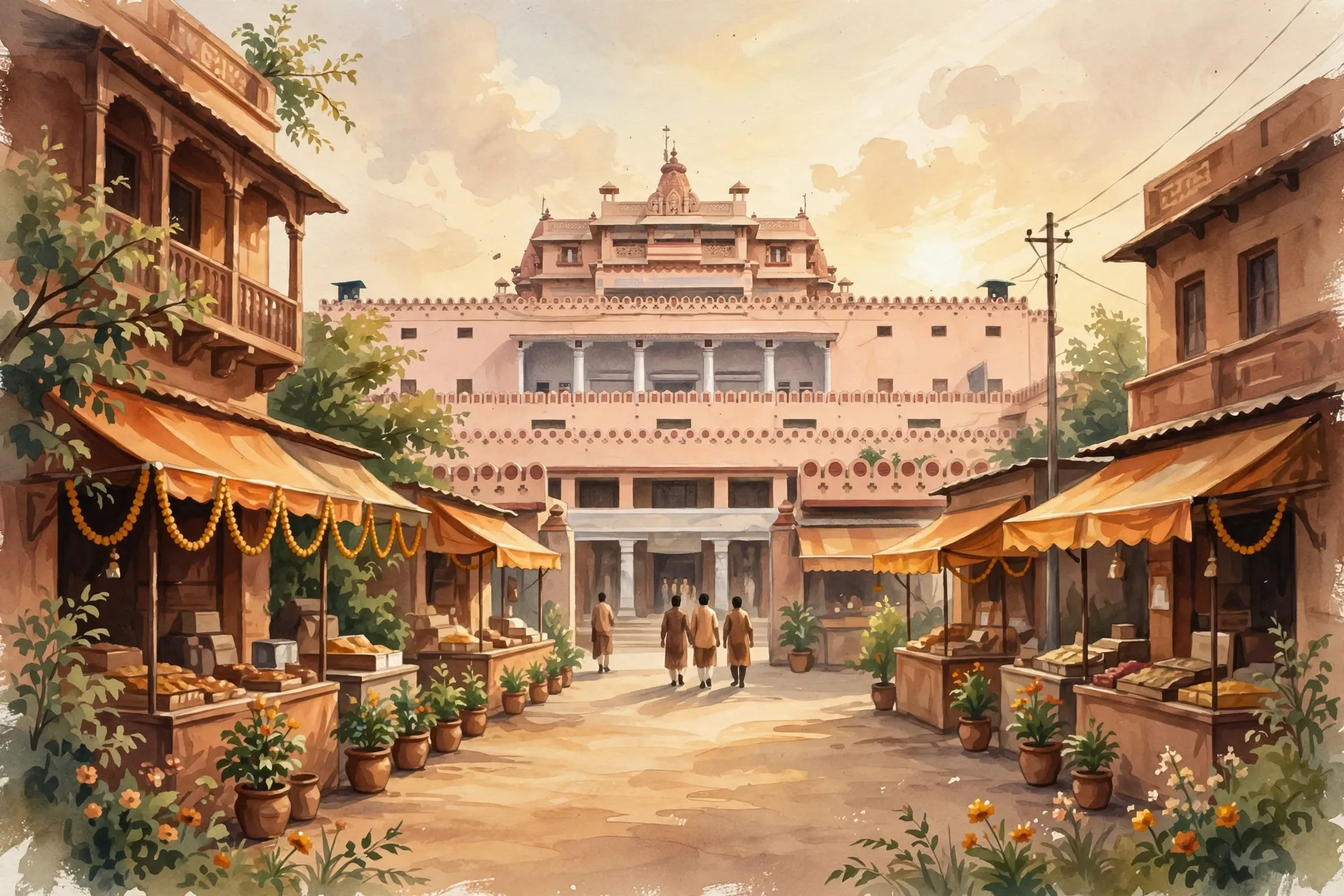
The mandirs of Mathura centre on three shrines. The Krishna Janmasthan complex marks the site tradition holds to be Krishna's birthplace, with the Keshavdeva Temple, Garbha Griha and Bhagavata Bhavan. In the old city, Dwarkadhish Temple, built in 1814, worships Krishna as King of Dwarka. On the Vrindavan road, the Gita Mandir of 1946 has all 700 verses of the Bhagavad Gita inscribed on its pillars.
- Punjabi name
- ਮਥੁਰਾ ਦੇ ਮੰਦਰ
- Country
- India
- State
- Uttar Pradesh
- City
- Mathura (Braj)
- Guide covers
- Krishna Janmasthan, Dwarkadhish Temple, Gita Mandir (Birla Mandir)
- Main shrine
- Krishna Janmasthan, Krishna's traditional birthplace
- River
- Yamuna
Mathura, on the Yamuna in the Braj region, is the city Hindu tradition celebrates as the birthplace of Krishna, and its mandirs tell that story in three different registers. The Krishna Janmasthan complex marks the birthplace itself. In the old city's lanes near the river stands Dwarkadhish Temple, where Krishna is worshipped as a king. On the road to Vrindavan stands the Gita Mandir, the Birla temple whose pillars carry the whole Bhagavad Gita. This guide covers the three together.
Krishna Janmasthan: the birthplace complex
The heart of Mathura is the Krishna Janmasthan Temple Complex, built at the site tradition holds to be Krishna's birthplace, where he is believed to have been born in a prison cell to Devaki and Vasudeva. The complex holds three main shrines: the Keshavdeva Temple, the Garbha Griha marking the believed birthplace, and the Bhagavata Bhavan, whose main shrine holds a tall pair of Radha and Krishna images. Excavations at the site have found pottery and terracotta from the 6th century BCE, and temples here were destroyed and rebuilt repeatedly across the centuries.
The earlier Keshavdeva temple was destroyed in 1670 on the orders of the Mughal emperor Aurangzeb, who built the Shahi Eidgah mosque on the site; the mosque still stands beside the complex. The modern complex rose in the 20th century: construction began in 1953 and was completed in February 1982, funded by industrialist families. The Keshavdeva Temple was inaugurated in 1958, and the Bhagavata Bhavan's deities were installed in 1982. Janmashtami, Krishna's birthday, is the complex's greatest festival, drawing pilgrims from across the Braj region. Jugti's full entry gives the site's long history in detail.
Dwarkadhish Temple: Krishna the king in the old city
A short distance away, in Mathura's old city near the Yamuna, stands the Shri Dwarkadhish Temple. Here Krishna is worshipped not as the child of the birthplace story but as Dwarkadhish, the King of Dwarka, alongside Radha as Radharani. The temple belongs to the Pushtimarg tradition of Vallabhacharya. Its present structure was built in 1814 by Seth Gokul Das Parikh, treasurer of the Gwalior State, with the approval and donation of Maharaja Daulatrao Scindia. Gokul Das was a devotee of the Pushtimarg seat at Kankroli in Rajasthan, and that link still shapes the temple's worship.
The building wears its royal theme proudly: a carved Rajasthani style entrance, steep steps up to a courtyard, and rows of richly carved pillars under a painted ceiling. The main image of Dwarkadhish is black marble, with a white marble Radharani beside it, and a small Shaligram shrine stands in the courtyard. The temple's signature festival is Hindola, thirteen days in the rainy month of Shravana, usually July to August, when the deities are placed on a decorated swing hung with gold and silver ornaments for special darshan. Janmashtami, Radhashtami, Holi and Diwali are also kept with great fervour. Note the name carefully: this Dwarkadhish is Mathura's own temple, not the Char Dham shrine at Dwarka in Gujarat, which Jugti covers separately.
Gita Mandir: the Birla temple of the inscribed Gita
On the Mathura to Vrindavan road, on the city's outskirts, stands the Gita Mandir, popularly called the Birla Mandir. It was built in 1946 by Seth Jugal Kishore Birla, the industrialist and philanthropist, in memory of his parents. Where the Janmasthan speaks of Krishna's birth and Dwarkadhish of his kingship, the Gita Mandir speaks of his teaching: its pillars are inscribed with all 700 verses of the Bhagavad Gita, divided into its 18 chapters, and a towering Gita Stambh in the complex carries the verses too.
The temple is built largely of red sandstone in a traditional style, with a white marble Krishna in the main sanctum and colourful paintings of scenes from Krishna's life on its walls. The complex also holds shrines to Lakshmi Narayan and to Ram and Sita, a small Hanuman shrine, a figure of Garuda, Vishnu's vehicle, and an image of Krishna's chariot, all within gardens that give the place a calm quite unlike the old city's lanes. Janmashtami and Holi bring its biggest crowds. It makes a natural last stop on a Mathura round, on the road onward to Vrindavan.
How do the three temples fit together on a visit?
Read together, the three shrines walk a pilgrim through Krishna's story. The Janmasthan is the beginning: the birthplace, layered with two thousand years of building, destruction and rebuilding. Dwarkadhish is the kingship: Krishna enthroned in the old city, served in the Pushtimarg manner and swung in festival splendour at Hindola. The Gita Mandir is the teaching: the whole Gita cut into stone on the road out of the city. Most visitors cover the Janmasthan and Dwarkadhish together in the old city, then stop at the Gita Mandir on the way to Vrindavan. This guide is part of Jugti's mandirs in India collection.
All Mandirs in Mathura
- Krishna Janmasthan Temple Complex: the temple complex at Krishna's traditional birthplace: Keshavdeva Temple, Garbha Griha and Bhagavata Bhavan, completed in 1982
- Dwarkadhish Temple, Mathura: Krishna as King of Dwarka in the old city, built in 1814 by Seth Gokul Das Parikh, famed for the Hindola festival (full entry coming)
- Gita Mandir (Birla Mandir): the 1946 Birla temple on the Vrindavan road, its pillars inscribed with all 700 verses of the Bhagavad Gita (full entry coming)
ਯਮੁਨਾ ਦੇ ਕੰਢੇ ਬ੍ਰਜ ਖੇਤਰ ਵਿੱਚ ਵਸੀ ਮਥੁਰਾ ਉਹ ਸ਼ਹਿਰ ਹੈ ਜਿਸਨੂੰ ਹਿੰਦੂ ਪਰੰਪਰਾ ਕ੍ਰਿਸ਼ਨ ਦਾ ਜਨਮ ਸਥਾਨ ਮੰਨਦੀ ਹੈ, ਅਤੇ ਇਸ ਦੇ ਮੰਦਰ ਉਹ ਕਹਾਣੀ ਤਿੰਨ ਵੱਖ-ਵੱਖ ਰੰਗਾਂ ਵਿੱਚ ਸੁਣਾਉਂਦੇ ਹਨ ਕ੍ਰਿਸ਼ਨ ਜਨਮਸਥਾਨ ਕੰਪਲੈਕਸ ਜਨਮ ਸਥਾਨ ਨੂੰ ਹੀ ਦਰਸਾਉਂਦਾ ਹੈ ਪੁਰਾਣੇ ਸ਼ਹਿਰ ਦੀਆਂ ਗਲੀਆਂ ਵਿੱਚ ਨਦੀ ਨੇੜੇ ਦ੍ਵਾਰਕਾਧੀਸ਼ ਮੰਦਰ ਹੈ, ਜਿੱਥੇ ਕ੍ਰਿਸ਼ਨ ਨੂੰ ਰਾਜੇ ਵਜੋਂ ਪੂਜਿਆ ਜਾਂਦਾ ਹੈ ਵ੍ਰਿੰਦਾਵਨ ਵਾਲੀ ਸੜਕ 'ਤੇ ਗੀਤਾ ਮੰਦਰ ਹੈ, ਉਹ ਬਿਰਲਾ ਮੰਦਰ ਜਿਸ ਦੇ ਥੰਮ੍ਹਾਂ 'ਤੇ ਪੂਰੀ ਭਗਵਦ ਗੀਤਾ ਉੱਕਰੀ ਹੈ ਇਹ ਗਾਈਡ ਤਿੰਨਾਂ ਨੂੰ ਇਕੱਠੇ ਪੇਸ਼ ਕਰਦੀ ਹੈ
ਕ੍ਰਿਸ਼ਨ ਜਨਮਸਥਾਨ: ਜਨਮ ਸਥਾਨ ਦਾ ਕੰਪਲੈਕਸ
ਮਥੁਰਾ ਦਾ ਦਿਲ ਕ੍ਰਿਸ਼ਨ ਜਨਮਸਥਾਨ ਮੰਦਰ ਕੰਪਲੈਕਸ ਹੈ, ਜੋ ਉਸ ਥਾਂ 'ਤੇ ਬਣਿਆ ਹੈ ਜਿਸਨੂੰ ਪਰੰਪਰਾ ਕ੍ਰਿਸ਼ਨ ਦਾ ਜਨਮ ਸਥਾਨ ਮੰਨਦੀ ਹੈ, ਜਿੱਥੇ ਮੰਨਿਆ ਜਾਂਦਾ ਹੈ ਕਿ ਉਹ ਦੇਵਕੀ ਅਤੇ ਵਸੁਦੇਵ ਦੇ ਘਰ ਇੱਕ ਕੈਦ ਕੋਠੜੀ ਵਿੱਚ ਪੈਦਾ ਹੋਏ ਸਨ ਕੰਪਲੈਕਸ ਵਿੱਚ ਤਿੰਨ ਮੁੱਖ ਮੰਦਰ ਹਨ: ਕੇਸ਼ਵਦੇਵ ਮੰਦਰ, ਗਰਭ ਗ੍ਰਹਿ ਜੋ ਮੰਨੇ ਗਏ ਜਨਮ ਸਥਾਨ ਨੂੰ ਦਰਸਾਉਂਦਾ ਹੈ, ਅਤੇ ਭਾਗਵਤ ਭਵਨ, ਜਿਸ ਦੇ ਮੁੱਖ ਮੰਦਰ ਵਿੱਚ ਰਾਧਾ ਅਤੇ ਕ੍ਰਿਸ਼ਨ ਦੀਆਂ ਉੱਚੀਆਂ ਮੂਰਤੀਆਂ ਹਨ ਇਸ ਥਾਂ ਦੀ ਖੁਦਾਈ ਵਿੱਚ ਛੇਵੀਂ ਸਦੀ ਈਸਾ ਪੂਰਵ ਦੇ ਮਿੱਟੀ ਦੇ ਭਾਂਡੇ ਅਤੇ ਟੈਰਾਕੋਟਾ ਮਿਲੇ ਹਨ, ਅਤੇ ਇੱਥੋਂ ਦੇ ਮੰਦਰ ਸਦੀਆਂ ਵਿੱਚ ਕਈ ਵਾਰ ਢਾਹੇ ਅਤੇ ਮੁੜ ਬਣਾਏ ਗਏ
ਪਹਿਲਾ ਕੇਸ਼ਵਦੇਵ ਮੰਦਰ 1670 ਵਿੱਚ ਮੁਗਲ ਬਾਦਸ਼ਾਹ ਔਰੰਗਜ਼ੇਬ ਦੇ ਹੁਕਮ 'ਤੇ ਢਾਹਿਆ ਗਿਆ ਸੀ, ਜਿਸ ਨੇ ਇਸ ਥਾਂ 'ਤੇ ਸ਼ਾਹੀ ਈਦਗਾਹ ਮਸਜਿਦ ਬਣਵਾਈ; ਮਸਜਿਦ ਅੱਜ ਵੀ ਕੰਪਲੈਕਸ ਦੇ ਨਾਲ ਖੜ੍ਹੀ ਹੈ ਆਧੁਨਿਕ ਕੰਪਲੈਕਸ 20ਵੀਂ ਸਦੀ ਵਿੱਚ ਬਣਿਆ: ਨਿਰਮਾਣ 1953 ਵਿੱਚ ਸ਼ੁਰੂ ਹੋਇਆ ਅਤੇ ਫਰਵਰੀ 1982 ਵਿੱਚ ਪੂਰਾ ਹੋਇਆ, ਜਿਸ ਦਾ ਖਰਚ ਉਦਯੋਗਪਤੀ ਪਰਿਵਾਰਾਂ ਨੇ ਦਿੱਤਾ ਕੇਸ਼ਵਦੇਵ ਮੰਦਰ ਦਾ ਉਦਘਾਟਨ 1958 ਵਿੱਚ ਹੋਇਆ, ਅਤੇ ਭਾਗਵਤ ਭਵਨ ਦੀਆਂ ਮੂਰਤੀਆਂ 1982 ਵਿੱਚ ਸਥਾਪਤ ਹੋਈਆਂ ਜਨਮ ਅਸ਼ਟਮੀ, ਕ੍ਰਿਸ਼ਨ ਦਾ ਜਨਮ ਦਿਨ, ਕੰਪਲੈਕਸ ਦਾ ਸਭ ਤੋਂ ਵੱਡਾ ਤਿਉਹਾਰ ਹੈ, ਜੋ ਸਾਰੇ ਬ੍ਰਜ ਖੇਤਰ ਤੋਂ ਸ਼ਰਧਾਲੂ ਖਿੱਚਦਾ ਹੈ ਜੁਗਤੀ ਦੀ ਪੂਰੀ ਐਂਟਰੀ ਵਿੱਚ ਇਸ ਥਾਂ ਦਾ ਲੰਮਾ ਇਤਿਹਾਸ ਵੇਰਵੇ ਨਾਲ ਦਿੱਤਾ ਗਿਆ ਹੈ
ਦ੍ਵਾਰਕਾਧੀਸ਼ ਮੰਦਰ: ਪੁਰਾਣੇ ਸ਼ਹਿਰ ਵਿੱਚ ਰਾਜਾ ਕ੍ਰਿਸ਼ਨ
ਥੋੜ੍ਹੀ ਦੂਰੀ 'ਤੇ, ਮਥੁਰਾ ਦੇ ਪੁਰਾਣੇ ਸ਼ਹਿਰ ਵਿੱਚ ਯਮੁਨਾ ਨੇੜੇ, ਸ਼੍ਰੀ ਦ੍ਵਾਰਕਾਧੀਸ਼ ਮੰਦਰ ਹੈ ਇੱਥੇ ਕ੍ਰਿਸ਼ਨ ਨੂੰ ਜਨਮ ਕਹਾਣੀ ਦੇ ਬਾਲਕ ਵਜੋਂ ਨਹੀਂ, ਸਗੋਂ ਦ੍ਵਾਰਕਾਧੀਸ਼, ਦ੍ਵਾਰਕਾ ਦੇ ਰਾਜੇ, ਵਜੋਂ ਪੂਜਿਆ ਜਾਂਦਾ ਹੈ, ਅਤੇ ਨਾਲ ਰਾਧਾ ਨੂੰ ਰਾਧਾਰਾਣੀ ਵਜੋਂ ਮੰਦਰ ਵੱਲਭਾਚਾਰਯ ਦੀ ਪੁਸ਼ਟੀਮਾਰਗ ਪਰੰਪਰਾ ਨਾਲ ਜੁੜਿਆ ਹੈ ਇਸ ਦਾ ਮੌਜੂਦਾ ਢਾਂਚਾ 1814 ਵਿੱਚ ਗਵਾਲੀਅਰ ਰਾਜ ਦੇ ਖਜ਼ਾਨਚੀ ਸੇਠ ਗੋਕੁਲ ਦਾਸ ਪਾਰਿਖ ਨੇ ਮਹਾਰਾਜਾ ਦੌਲਤਰਾਓ ਸ਼ਿੰਦੇ ਦੀ ਮਨਜ਼ੂਰੀ ਅਤੇ ਦਾਨ ਨਾਲ ਬਣਵਾਇਆ ਸੀ ਗੋਕੁਲ ਦਾਸ ਰਾਜਸਥਾਨ ਦੇ ਕਾਂਕਰੋਲੀ ਵਿਖੇ ਪੁਸ਼ਟੀਮਾਰਗ ਗੱਦੀ ਦੇ ਸ਼ਰਧਾਲੂ ਸਨ, ਅਤੇ ਉਹ ਸੰਬੰਧ ਅੱਜ ਵੀ ਮੰਦਰ ਦੀ ਪੂਜਾ ਨੂੰ ਢਾਲਦਾ ਹੈ
ਇਮਾਰਤ ਆਪਣਾ ਸ਼ਾਹੀ ਵਿਸ਼ਾ ਮਾਣ ਨਾਲ ਦਿਖਾਉਂਦੀ ਹੈ: ਨੱਕਾਸ਼ੀ ਵਾਲਾ ਰਾਜਸਥਾਨੀ ਸ਼ੈਲੀ ਦਾ ਦਰਵਾਜ਼ਾ, ਵਿਹੜੇ ਤੱਕ ਜਾਂਦੀਆਂ ਖੜ੍ਹੀਆਂ ਪੌੜੀਆਂ, ਅਤੇ ਰੰਗੀਨ ਛੱਤ ਹੇਠ ਨੱਕਾਸ਼ਦਾਰ ਥੰਮ੍ਹਾਂ ਦੀਆਂ ਕਤਾਰਾਂ ਦ੍ਵਾਰਕਾਧੀਸ਼ ਦੀ ਮੁੱਖ ਮੂਰਤੀ ਕਾਲੇ ਸੰਗਮਰਮਰ ਦੀ ਹੈ, ਨਾਲ ਚਿੱਟੇ ਸੰਗਮਰਮਰ ਦੀ ਰਾਧਾਰਾਣੀ ਹੈ, ਅਤੇ ਵਿਹੜੇ ਵਿੱਚ ਇੱਕ ਛੋਟਾ ਸ਼ਾਲਿਗ੍ਰਾਮ ਮੰਦਰ ਵੀ ਹੈ ਮੰਦਰ ਦਾ ਖਾਸ ਤਿਉਹਾਰ ਹਿੰਡੋਲਾ ਹੈ, ਜੋ ਬਰਸਾਤੀ ਮਹੀਨੇ ਸਾਵਣ ਵਿੱਚ ਤੇਰ੍ਹਾਂ ਦਿਨ ਚੱਲਦਾ ਹੈ, ਆਮ ਤੌਰ 'ਤੇ ਜੁਲਾਈ ਤੋਂ ਅਗਸਤ, ਜਦੋਂ ਦੇਵਤਿਆਂ ਨੂੰ ਸੋਨੇ-ਚਾਂਦੀ ਦੇ ਗਹਿਣਿਆਂ ਨਾਲ ਸਜੇ ਝੂਲੇ 'ਤੇ ਬਿਠਾ ਕੇ ਖਾਸ ਦਰਸ਼ਨ ਕਰਵਾਏ ਜਾਂਦੇ ਹਨ ਜਨਮ ਅਸ਼ਟਮੀ, ਰਾਧਾ ਅਸ਼ਟਮੀ, ਹੋਲੀ ਅਤੇ ਦੀਵਾਲੀ ਵੀ ਪੂਰੇ ਉਤਸ਼ਾਹ ਨਾਲ ਮਨਾਏ ਜਾਂਦੇ ਹਨ ਨਾਮ ਧਿਆਨ ਨਾਲ ਪੜ੍ਹੋ: ਇਹ ਦ੍ਵਾਰਕਾਧੀਸ਼ ਮਥੁਰਾ ਦਾ ਆਪਣਾ ਮੰਦਰ ਹੈ, ਗੁਜਰਾਤ ਦੇ ਦ੍ਵਾਰਕਾ ਵਿਖੇ ਚਾਰ ਧਾਮ ਵਾਲਾ ਮੰਦਰ ਨਹੀਂ, ਜਿਸ ਬਾਰੇ ਜੁਗਤੀ ਵੱਖਰੇ ਤੌਰ 'ਤੇ ਲਿਖਦੀ ਹੈ
ਗੀਤਾ ਮੰਦਰ: ਉੱਕਰੀ ਗੀਤਾ ਵਾਲਾ ਬਿਰਲਾ ਮੰਦਰ
ਮਥੁਰਾ ਤੋਂ ਵ੍ਰਿੰਦਾਵਨ ਵਾਲੀ ਸੜਕ 'ਤੇ, ਸ਼ਹਿਰ ਦੇ ਬਾਹਰਵਾਰ, ਗੀਤਾ ਮੰਦਰ ਹੈ, ਜਿਸਨੂੰ ਬਿਰਲਾ ਮੰਦਰ ਵੀ ਕਿਹਾ ਜਾਂਦਾ ਹੈ ਇਹ 1946 ਵਿੱਚ ਉਦਯੋਗਪਤੀ ਅਤੇ ਦਾਨੀ ਸੇਠ ਜੁਗਲ ਕਿਸ਼ੋਰ ਬਿਰਲਾ ਨੇ ਆਪਣੇ ਮਾਤਾ-ਪਿਤਾ ਦੀ ਯਾਦ ਵਿੱਚ ਬਣਵਾਇਆ ਸੀ ਜਿੱਥੇ ਜਨਮਸਥਾਨ ਕ੍ਰਿਸ਼ਨ ਦੇ ਜਨਮ ਦੀ ਗੱਲ ਕਰਦਾ ਹੈ ਅਤੇ ਦ੍ਵਾਰਕਾਧੀਸ਼ ਉਨ੍ਹਾਂ ਦੇ ਰਾਜ ਦੀ, ਉੱਥੇ ਗੀਤਾ ਮੰਦਰ ਉਨ੍ਹਾਂ ਦੀ ਸਿੱਖਿਆ ਦੀ ਗੱਲ ਕਰਦਾ ਹੈ: ਇਸ ਦੇ ਥੰਮ੍ਹਾਂ 'ਤੇ ਭਗਵਦ ਗੀਤਾ ਦੇ ਸਾਰੇ 700 ਸ਼ਲੋਕ, ਉਸ ਦੇ 18 ਅਧਿਆਇਆਂ ਵਿੱਚ ਵੰਡ ਕੇ, ਉੱਕਰੇ ਗਏ ਹਨ, ਅਤੇ ਕੰਪਲੈਕਸ ਵਿੱਚ ਇੱਕ ਉੱਚਾ ਗੀਤਾ ਸਤੰਭ ਵੀ ਇਹ ਸ਼ਲੋਕ ਧਾਰਨ ਕਰਦਾ ਹੈ
ਮੰਦਰ ਜ਼ਿਆਦਾਤਰ ਲਾਲ ਬਲੂਏ ਪੱਥਰ ਦਾ ਪਰੰਪਰਾਗਤ ਸ਼ੈਲੀ ਵਿੱਚ ਬਣਿਆ ਹੈ, ਜਿਸ ਦੇ ਮੁੱਖ ਗਰਭਗ੍ਰਹਿ ਵਿੱਚ ਚਿੱਟੇ ਸੰਗਮਰਮਰ ਦਾ ਕ੍ਰਿਸ਼ਨ ਹੈ ਅਤੇ ਕੰਧਾਂ 'ਤੇ ਕ੍ਰਿਸ਼ਨ ਦੇ ਜੀਵਨ ਦੇ ਦ੍ਰਿਸ਼ਾਂ ਦੀਆਂ ਰੰਗੀਨ ਤਸਵੀਰਾਂ ਹਨ ਕੰਪਲੈਕਸ ਵਿੱਚ ਲਕਸ਼ਮੀ ਨਾਰਾਇਣ ਅਤੇ ਰਾਮ-ਸੀਤਾ ਦੇ ਮੰਦਰ, ਇੱਕ ਛੋਟਾ ਹਨੂੰਮਾਨ ਮੰਦਰ, ਵਿਸ਼ਨੂੰ ਦੇ ਵਾਹਨ ਗਰੁੜ ਦੀ ਮੂਰਤੀ ਅਤੇ ਕ੍ਰਿਸ਼ਨ ਦੇ ਰੱਥ ਦੀ ਮੂਰਤੀ ਵੀ ਹਨ, ਸਭ ਬਾਗਾਂ ਵਿੱਚ ਘਿਰੇ, ਜੋ ਇਸ ਥਾਂ ਨੂੰ ਪੁਰਾਣੇ ਸ਼ਹਿਰ ਦੀਆਂ ਗਲੀਆਂ ਤੋਂ ਬਿਲਕੁਲ ਵੱਖਰੀ ਸ਼ਾਂਤੀ ਦਿੰਦੇ ਹਨ ਜਨਮ ਅਸ਼ਟਮੀ ਅਤੇ ਹੋਲੀ 'ਤੇ ਇੱਥੇ ਸਭ ਤੋਂ ਵੱਧ ਭੀੜ ਹੁੰਦੀ ਹੈ ਇਹ ਮਥੁਰਾ ਦੀ ਫੇਰੀ ਦਾ ਕੁਦਰਤੀ ਆਖਰੀ ਪੜਾਅ ਹੈ, ਵ੍ਰਿੰਦਾਵਨ ਜਾਂਦੀ ਸੜਕ 'ਤੇ
ਤਿੰਨੇ ਮੰਦਰ ਇੱਕ ਫੇਰੀ ਵਿੱਚ ਕਿਵੇਂ ਜੁੜਦੇ ਹਨ?
ਇਕੱਠੇ ਪੜ੍ਹਿਆਂ, ਤਿੰਨੇ ਮੰਦਰ ਸ਼ਰਧਾਲੂ ਨੂੰ ਕ੍ਰਿਸ਼ਨ ਦੀ ਕਹਾਣੀ ਵਿੱਚੋਂ ਲੰਘਾਉਂਦੇ ਹਨ ਜਨਮਸਥਾਨ ਸ਼ੁਰੂਆਤ ਹੈ: ਜਨਮ ਸਥਾਨ, ਜਿਸ 'ਤੇ ਦੋ ਹਜ਼ਾਰ ਸਾਲਾਂ ਤੋਂ ਨਿਰਮਾਣ, ਢਾਹ ਅਤੇ ਮੁੜ ਨਿਰਮਾਣ ਦੀਆਂ ਪਰਤਾਂ ਹਨ ਦ੍ਵਾਰਕਾਧੀਸ਼ ਰਾਜ ਹੈ: ਪੁਰਾਣੇ ਸ਼ਹਿਰ ਵਿੱਚ ਸਿੰਘਾਸਨ 'ਤੇ ਕ੍ਰਿਸ਼ਨ, ਪੁਸ਼ਟੀਮਾਰਗ ਤਰੀਕੇ ਨਾਲ ਸੇਵਾ ਅਤੇ ਹਿੰਡੋਲੇ 'ਤੇ ਤਿਉਹਾਰ ਦੀ ਸ਼ਾਨ ਨਾਲ ਝੂਲਦੇ ਗੀਤਾ ਮੰਦਰ ਸਿੱਖਿਆ ਹੈ: ਸ਼ਹਿਰੋਂ ਬਾਹਰ ਜਾਂਦੀ ਸੜਕ 'ਤੇ ਪੱਥਰ ਵਿੱਚ ਕੱਟੀ ਪੂਰੀ ਗੀਤਾ ਜ਼ਿਆਦਾਤਰ ਸ਼ਰਧਾਲੂ ਜਨਮਸਥਾਨ ਅਤੇ ਦ੍ਵਾਰਕਾਧੀਸ਼ ਦੇ ਦਰਸ਼ਨ ਪੁਰਾਣੇ ਸ਼ਹਿਰ ਵਿੱਚ ਇਕੱਠੇ ਕਰਦੇ ਹਨ, ਫਿਰ ਵ੍ਰਿੰਦਾਵਨ ਜਾਂਦੇ ਹੋਏ ਗੀਤਾ ਮੰਦਰ ਰੁਕਦੇ ਹਨ ਇਹ ਗਾਈਡ ਜੁਗਤੀ ਦੇ ਭਾਰਤ ਦੇ ਮੰਦਰਾਂ ਦੇ ਸੰਗ੍ਰਹਿ ਦਾ ਹਿੱਸਾ ਹੈ
ਮਥੁਰਾ ਦੇ ਸਾਰੇ ਮੰਦਰ
- ਕ੍ਰਿਸ਼ਨ ਜਨਮਸਥਾਨ ਮੰਦਰ ਕੰਪਲੈਕਸ: ਕ੍ਰਿਸ਼ਨ ਦੇ ਪਰੰਪਰਾਗਤ ਜਨਮ ਸਥਾਨ 'ਤੇ ਮੰਦਰ ਕੰਪਲੈਕਸ: ਕੇਸ਼ਵਦੇਵ ਮੰਦਰ, ਗਰਭ ਗ੍ਰਹਿ ਅਤੇ ਭਾਗਵਤ ਭਵਨ, 1982 ਵਿੱਚ ਪੂਰਾ ਹੋਇਆ
- ਦ੍ਵਾਰਕਾਧੀਸ਼ ਮੰਦਰ, ਮਥੁਰਾ: ਪੁਰਾਣੇ ਸ਼ਹਿਰ ਵਿੱਚ ਦ੍ਵਾਰਕਾ ਦੇ ਰਾਜੇ ਵਜੋਂ ਕ੍ਰਿਸ਼ਨ, 1814 ਵਿੱਚ ਸੇਠ ਗੋਕੁਲ ਦਾਸ ਪਾਰਿਖ ਨੇ ਬਣਵਾਇਆ, ਹਿੰਡੋਲਾ ਤਿਉਹਾਰ ਲਈ ਮਸ਼ਹੂਰ (ਪੂਰੀ ਐਂਟਰੀ ਜਲਦੀ)
- ਗੀਤਾ ਮੰਦਰ (ਬਿਰਲਾ ਮੰਦਰ): ਵ੍ਰਿੰਦਾਵਨ ਵਾਲੀ ਸੜਕ 'ਤੇ 1946 ਦਾ ਬਿਰਲਾ ਮੰਦਰ, ਜਿਸ ਦੇ ਥੰਮ੍ਹਾਂ 'ਤੇ ਭਗਵਦ ਗੀਤਾ ਦੇ ਸਾਰੇ 700 ਸ਼ਲੋਕ ਉੱਕਰੇ ਹਨ (ਪੂਰੀ ਐਂਟਰੀ ਜਲਦੀ)