
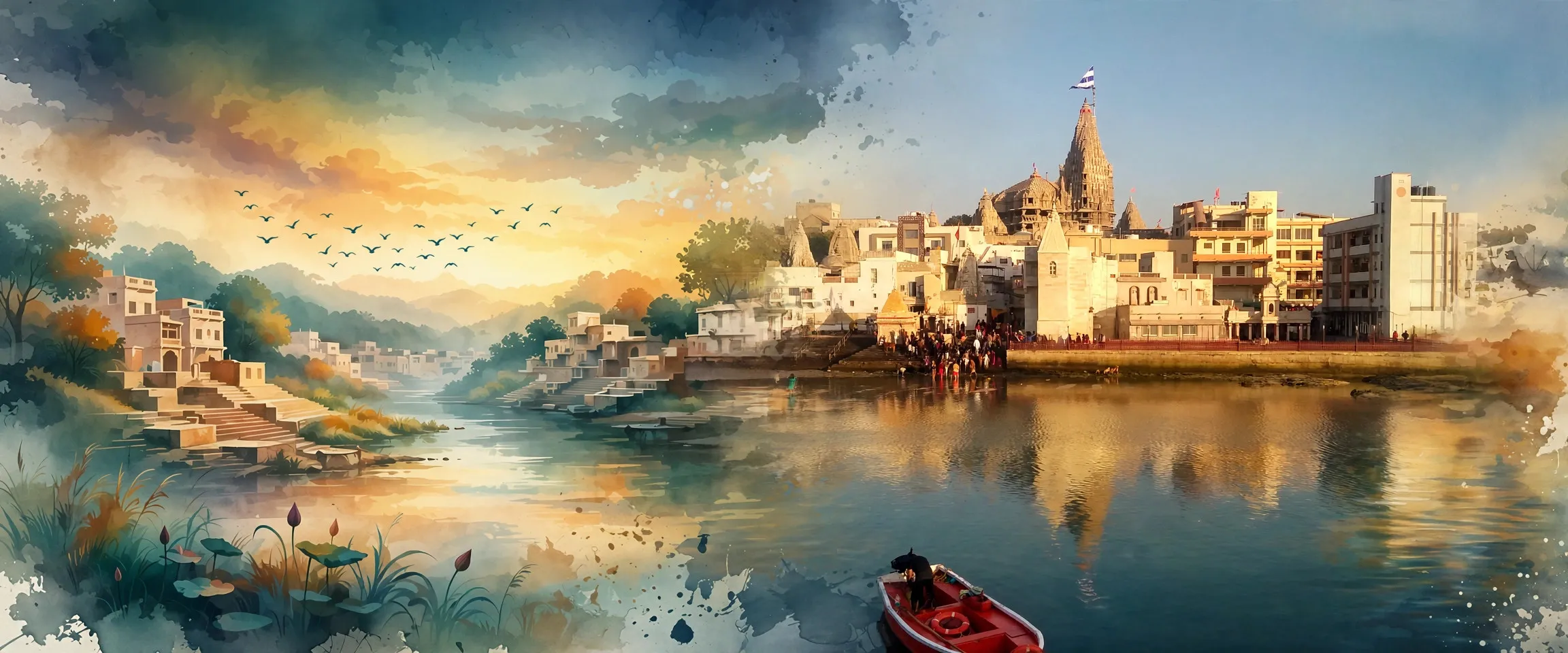
Dwarkadhish Temple, the Jagat Mandir, is the Krishna shrine in Dwarka, Gujarat, where Krishna is worshipped as the Lord of Dwaraka. It is the western anchor of the Char Dham circuit, the 98th of the 108 Divya Desams, and one of the Sapta Puri holy cities. Its five-storey Maru-Gurjara tower rises 78 metres above the Gomti river, and a 15-metre triangular flag bearing the sun and moon is changed over it four times a day.
- Punjabi name
- ਦੁਆਰਕਾਧੀਸ਼ ਮੰਦਰ
- Country
- India
- State
- Gujarat
- City
- Dwarka
- Deity
- Krishna as Dwarkadhish
- Architectural style
- Maru-Gurjara
All 9 facts
- Spire
- 78 m (256 ft)
- Pilgrimage
- Char Dham (west), 98th Divya Desam, Sapta Puri
- Timings
- 6:00 am to 1:00 pm, 5:00 to 9:30 pm
What is Dwarkadhish Temple?
Dwarkadhish Temple, also called the Jagat Mandir, is Krishna's great shrine in the coastal city of Dwarka, Gujarat, where he is worshipped as Dwarkadhish, the Lord of Dwaraka. It anchors the western end of the Char Dham circuit, is the 98th of the 108 Divya Desams, and its five-storey Maru-Gurjara tower rises 78 metres over the Gomti river.
The shrine stands on the Gomti river near its meeting with the Arabian Sea, at an elevation of about 12 metres. For Vaishnavas it is one of the most visited pilgrimage places in India, and Dwarka itself counts among the seven Sapta Puri, the seven holy cities of the Hindu tradition.
The main shrine is known as the Nija Mandir, the personal shrine, and the temple faces west, toward the setting sun over the sea. Pilgrims come here as part of the Krishna circuit that also runs through Kurukshetra and Braj-Mathura, the places tied to Krishna's life.
Why is Dwarkadhish one of the Char Dham?
The Char Dham are four pilgrimage shrines marking the four directions of India: Badrinath in the north, Jagannath at Puri in the east, Rameshwaram in the south, and Dwarkadhish in the west. The tradition credits the 8th-century philosopher Adi Shankara with bringing these four into one circuit, and his visit is recorded at Dwarka, where a memorial to him stands inside the temple complex. India's great temples are often read through two great pilgrimage ideas, the twelve Jyotirlingas and the Char Dham, and Hindu mandirs in India gathers them both.
The Shankara connection runs deeper here than at most shrines. Dvaraka Pitha, one of the four mathas, the monastic seats he is traditionally said to have established, stands near the temple. So a pilgrim who has completed Badrinath, Rameshwaram, and Puri treats Dwarkadhish as the closing western gate of the whole journey, and many plan their travels to finish at the sea. Travellers who combine the four dhams with the Himalayan shrines often add Kedarnath, high in Uttarakhand, to the same year's journey.
The temple and its architecture
The present temple is a five-storey building of limestone and sandstone, raised in the Maru-Gurjara style associated with the Solanki or Chaulukya builders of Gujarat. The footprint measures about 29 metres by 23 metres, and the complex is held up by 72 pillars carved in the regional manner.
The main shrine, the Jagat Mandir, sits at the centre and faces west, so the evening aarti looks out toward the sea. The spire rises 78 metres (256 feet), making it one of the tallest temple towers in western India and a landmark visible from far across the flat coast.
There are two great entrances. The north door is the Moksha Dwara, the Door to Salvation, which opens toward the market streets. The south door is the Swarga Dwara, the Gate to Heaven, which leads down 56 steps to the ghats on the Gomati river, where pilgrims bathe before darshan.
What is the story of the flag at Dwarkadhish?
The sight every visitor remembers is the triangular flag flying from the spire, about 15 metres (50 feet) long and marked with the sun and the moon. Devotees believe that as long as the sun and moon exist, Krishna's presence remains in Dwarka, and the flag is the visible sign of that belief.
The flag is changed four times a day, every day, a rhythm the temple has kept for generations. Devotees sponsor the new flags, and the offerings given for them go to the temple trust, which runs the shrine's daily affairs. On festival days the flag-hoisting draws its own crowd, and many pilgrims count witnessing the change as part of the darshan.
History: from an ancient shrine to the present temple
Archaeological findings suggest that a shrine has stood on this ground since about 200 BCE, and the town around it has one of the longest continuous sacred histories on the Indian coast. The temple we see today took shape after the older structure was destroyed when Mahmud Begada sacked Dwarka in 1473.
The shrine was rebuilt and enlarged in the 15th and 16th centuries, and the image now worshipped in the sanctum was installed by Aniruddhaśrama Śaṅkarācārya in 1559. The five-storey tower and its carved pillars belong to this rebuilding, which is why the temple carries the mature Maru-Gurjara style of late medieval Gujarat. Pilgrims usually pair the visit with the nearby Nageshwar Temple, one of the twelve Jyotirlingas, which stands on the same stretch of Gujarat's coast.
Legends and worship
In the Mahabharata tradition, Krishna reclaimed the land of Dwarka from the sea and made it his capital, and the city is remembered as the seat of his kingdom. Devotees visit not just a temple but the capital of Krishna's earthly life, which is why the deity is honoured here as a king, with royal rituals.
Another tradition explains why Rukmini, Krishna's chief queen, has her own shrine standing apart from the main temple: in the Durvasa episode of the legends, the sage's curse separated them, and her temple keeps that distance even today. Meera Bai, the Rajput poet-saint, is believed by her devotees to have merged with the deity at this very shrine.
Worship follows the Vaishnava calendar and reaches its fullest during Krishna Janmashtami, when the town fills with pilgrims. The temple opens from 6:00 am to 1:00 pm and again from 5:00 to 9:30 pm, and the day's rhythm moves around darshan, aarti, and the flag changes above. Gujarat's other great coastal shrine, Somnath, the first of the twelve Jyotirlingas, makes a natural pairing for a pilgrim's route through the state.
Visiting: timings and getting there
Plan around the darshan hours: 6:00 am to 1:00 pm, then 5:00 to 9:30 pm. The Swarga Dwara steps to the Gomati are best at sunrise, before the heat builds over the coast.
Dwarka railway station is about 2 kilometres from the temple. Porbandar airport is the nearer air option at roughly 95 kilometres, with Jamnagar airport about 110 kilometres away. Janmashtami and the winter months are the busiest seasons, so book stays early if you travel then.
ਦੁਆਰਕਾਧੀਸ਼ ਮੰਦਰ ਕੀ ਹੈ?
ਦੁਆਰਕਾਧੀਸ਼ ਮੰਦਰ, ਜਿਸ ਨੂੰ ਜਗਤ ਮੰਦਰ ਵੀ ਕਿਹਾ ਜਾਂਦਾ ਹੈ, ਗੁਜਰਾਤ ਦੇ ਸਮੁੰਦਰੀ ਸ਼ਹਿਰ ਦੁਆਰਕਾ ਵਿੱਚ ਕ੍ਰਿਸ਼ਨ ਜੀ ਦਾ ਮਹਾਨ ਅਸਥਾਨ ਹੈ, ਜਿੱਥੇ ਉਨ੍ਹਾਂ ਦੀ ਪੂਜਾ ਦੁਆਰਕਾਧੀਸ਼, ਅਰਥਾਤ ਦੁਆਰਕਾ ਦੇ ਸਵਾਮੀ, ਦੇ ਰੂਪ ਵਿੱਚ ਹੁੰਦੀ ਹੈ ਇਹ ਚਾਰ ਧਾਮ ਯਾਤਰਾ ਦਾ ਪੱਛਮੀ ਛੋਰ ਹੈ, 108 ਦਿਵਿਆ ਦੇਸਮਾਂ ਵਿੱਚੋਂ 98ਵਾਂ ਹੈ, ਅਤੇ ਇਸ ਦੀ ਪੰਜ ਮੰਜ਼ਿਲਾ ਮਾਰੂ-ਗੁਰਜਰ ਸ਼ੈਲੀ ਦੀ ਮੀਨਾਰ ਗੋਮਤੀ ਨਦੀ ਉੱਤੇ 78 ਮੀਟਰ ਉੱਚੀ ਉੱਠੀ ਹੋਈ ਹੈ
ਇਹ ਮੰਦਰ ਗੋਮਤੀ ਨਦੀ ਦੇ ਕੰਢੇ, ਅਰਬ ਸਾਗਰ ਦੇ ਨੇੜੇ, ਸਮੁੰਦਰ ਤਲ ਤੋਂ ਲਗਭਗ 12 ਮੀਟਰ ਉੱਚਾਈ ਉੱਤੇ ਸਥਿਤ ਹੈ ਵੈਸ਼ਨਵਾਂ ਲਈ ਇਹ ਭਾਰਤ ਦੇ ਸਭ ਤੋਂ ਵੱਧ ਦਰਸ਼ਨ ਕੀਤੇ ਜਾਣ ਵਾਲੇ ਤੀਰਥਾਂ ਵਿੱਚੋਂ ਇੱਕ ਹੈ, ਅਤੇ ਦੁਆਰਕਾ ਸ਼ਹਿਰ ਖੁਦ ਸੱਤ ਸਪਤ ਪੁਰੀਆਂ, ਹਿੰਦੂ ਪਰੰਪਰਾ ਦੇ ਸੱਤ ਪਵਿੱਤਰ ਸ਼ਹਿਰਾਂ, ਵਿੱਚ ਗਿਣਿਆ ਜਾਂਦਾ ਹੈ
ਮੁੱਖ ਗਰਭਗ੍ਰਹਿ ਨੂੰ ਨਿਜ ਮੰਦਰ ਕਿਹਾ ਜਾਂਦਾ ਹੈ ਅਤੇ ਮੰਦਰ ਦਾ ਮੂੰਹ ਪੱਛਮ ਵੱਲ ਹੈ, ਜਿੱਥੋਂ ਸ਼ਾਮ ਦੀ ਆਰਤੀ ਸਮੁੰਦਰ ਵੱਲ ਵੇਖਦੀ ਹੈ ਸ਼ਰਧਾਲੂ ਇੱਥੇ ਕ੍ਰਿਸ਼ਨ ਸਰਕਟ ਦੇ ਹਿੱਸੇ ਵਜੋਂ ਆਉਂਦੇ ਹਨ, ਜੋ ਕੁਰੂਕਸ਼ੇਤਰ ਅਤੇ ਬ੍ਰਜ-ਮਥੁਰਾ, ਕ੍ਰਿਸ਼ਨ ਜੀ ਦੇ ਜੀਵਨ ਨਾਲ ਜੁੜੇ ਸਥਾਨਾਂ, ਵਿੱਚੋਂ ਵੀ ਲੰਘਦਾ ਹੈ
ਦੁਆਰਕਾਧੀਸ਼ ਚਾਰ ਧਾਮ ਵਿੱਚ ਕਿਉਂ ਗਿਣਿਆ ਜਾਂਦਾ ਹੈ?
ਚਾਰ ਧਾਮ ਭਾਰਤ ਦੀਆਂ ਚਾਰ ਦਿਸ਼ਾਵਾਂ ਨੂੰ ਦਰਸਾਉਂਦੇ ਚਾਰ ਤੀਰਥ ਅਸਥਾਨ ਹਨ: ਉੱਤਰ ਵਿੱਚ ਬਦਰੀਨਾਥ, ਪੂਰਬ ਵਿੱਚ ਪੁਰੀ ਦਾ ਜਗਨਨਾਥ, ਦੱਖਣ ਵਿੱਚ ਰਾਮੇਸ਼ਵਰਮ ਅਤੇ ਪੱਛਮ ਵਿੱਚ ਦੁਆਰਕਾਧੀਸ਼ ਪਰੰਪਰਾ ਅਨੁਸਾਰ 8ਵੀਂ ਸਦੀ ਦੇ ਦਾਰਸ਼ਨਿਕ ਆਦਿ ਸ਼ੰਕਰਾਚਾਰੀਆ ਨੇ ਇਨ੍ਹਾਂ ਚਾਰਾਂ ਨੂੰ ਇੱਕ ਯਾਤਰਾ ਵਿੱਚ ਜੋੜਿਆ, ਅਤੇ ਦੁਆਰਕਾ ਵਿੱਚ ਉਨ੍ਹਾਂ ਦੇ ਆਗਮਨ ਦੀ ਯਾਦ ਵਿੱਚ ਮੰਦਰ ਪਰਿਸਰ ਵਿੱਚ ਇੱਕ ਸਮਾਰਕ ਸਥਿਤ ਹੈ
ਦੁਆਰਕਾ ਵਿੱਚ ਸ਼ੰਕਰਾਚਾਰੀਆ ਨਾਲ ਜੁੜਾਅ ਹੋਰ ਅਸਥਾਨਾਂ ਨਾਲੋਂ ਡੂੰਘਾ ਹੈ ਦੁਆਰਕਾ ਪੀਠ, ਚਾਰ ਮਠਾਂ ਵਿੱਚੋਂ ਇੱਕ, ਜਿਨ੍ਹਾਂ ਦੀ ਸਥਾਪਨਾ ਪਰੰਪਰਾ ਅਨੁਸਾਰ ਉਨ੍ਹਾਂ ਨੇ ਕੀਤੀ ਸੀ, ਮੰਦਰ ਦੇ ਨੇੜੇ ਹੀ ਹੈ ਇਸ ਲਈ ਬਦਰੀਨਾਥ, ਰਾਮੇਸ਼ਵਰਮ ਅਤੇ ਪੁਰੀ ਦੀ ਯਾਤਰਾ ਕਰਨ ਵਾਲਾ ਸ਼ਰਧਾਲੂ ਦੁਆਰਕਾਧੀਸ਼ ਨੂੰ ਪੂਰੀ ਯਾਤਰਾ ਦਾ ਪੱਛਮੀ ਦੁਆਰ ਮੰਨਦਾ ਹੈ, ਅਤੇ ਬਹੁਤ ਸਾਰੇ ਆਪਣੀ ਯਾਤਰਾ ਸਮੁੰਦਰ ਕੰਢੇ ਸਮਾਪਤ ਕਰਨ ਦੀ ਯੋਜਨਾ ਬਣਾਉਂਦੇ ਹਨ
ਮੰਦਰ ਅਤੇ ਇਸ ਦੀ ਸ਼ਿਲਪਕਲਾ
ਅੱਜ ਦਾ ਮੰਦਰ ਚੂਨੇ ਦੇ ਪੱਥਰ ਅਤੇ ਬਲੂਏ ਪੱਥਰ ਦੀ ਪੰਜ ਮੰਜ਼ਿਲਾ ਇਮਾਰਤ ਹੈ, ਜੋ ਗੁਜਰਾਤ ਦੇ ਸੋਲੰਕੀ ਜਾਂ ਚੌਲੁਕਿਆ ਨਿਰਮਾਤਾਵਾਂ ਨਾਲ ਜੁੜੀ ਮਾਰੂ-ਗੁਰਜਰ ਸ਼ੈਲੀ ਵਿੱਚ ਬਣੀ ਹੈ ਇਸ ਦਾ ਫ਼ਰਸ਼ੀ ਖੇਤਰ ਲਗਭਗ 29 ਮੀਟਰ ਗੁਣਾ 23 ਮੀਟਰ ਹੈ, ਅਤੇ ਪੂਰਾ ਪਰਿਸਰ 72 ਥੰਮ੍ਹਾਂ ਉੱਤੇ ਟਿਕਿਆ ਹੈ, ਜੋ ਖੇਤਰੀ ਸ਼ੈਲੀ ਵਿੱਚ ਨਕਾਸ਼ ਕੀਤੇ ਗਏ ਹਨ
ਮੁੱਖ ਅਸਥਾਨ, ਜਗਤ ਮੰਦਰ, ਕੇਂਦਰ ਵਿੱਚ ਹੈ ਅਤੇ ਇਸ ਦਾ ਮੂੰਹ ਪੱਛਮ ਵੱਲ ਹੈ, ਤਾਂ ਜੋ ਸ਼ਾਮ ਦੀ ਆਰਤੀ ਸਮੁੰਦਰ ਵੱਲ ਵੇਖੇ ਇਸ ਦੀ ਮੀਨਾਰ 78 ਮੀਟਰ (256 ਫੁੱਟ) ਉੱਚੀ ਹੈ, ਜਿਸ ਕਾਰਨ ਇਹ ਪੱਛਮੀ ਭਾਰਤ ਦੀਆਂ ਸਭ ਤੋਂ ਉੱਚੀਆਂ ਮੰਦਰ ਮੀਨਾਰਾਂ ਵਿੱਚੋਂ ਇੱਕ ਹੈ ਅਤੇ ਸਮਤਲ ਸਮੁੰਦਰੀ ਕੰਢੇ ਉੱਤੇ ਦੂਰੋਂ ਹੀ ਦਿਖਾਈ ਦਿੰਦੀ ਹੈ
ਇੱਥੇ ਦੋ ਮਹਾਨ ਦੁਆਰ ਹਨ ਉੱਤਰੀ ਦੁਆਰ ਮੋਕਸ਼ ਦੁਆਰਾ, ਮੁਕਤੀ ਦਾ ਦੁਆਰ ਹੈ, ਜੋ ਬਾਜ਼ਾਰ ਦੀਆਂ ਗਲੀਆਂ ਵੱਲ ਖੁੱਲ੍ਹਦਾ ਹੈ ਦੱਖਣੀ ਦੁਆਰ ਸਵਰਗ ਦੁਆਰਾ, ਸਵਰਗ ਦਾ ਦੁਆਰ ਹੈ, ਜਿੱਥੋਂ 56 ਪੌੜੀਆਂ ਉਤਰ ਕੇ ਗੋਮਤੀ ਨਦੀ ਦੇ ਘਾਟਾਂ ਤੱਕ ਪਹੁੰਚਿਆ ਜਾਂਦਾ ਹੈ, ਜਿੱਥੇ ਸ਼ਰਧਾਲੂ ਦਰਸ਼ਨ ਤੋਂ ਪਹਿਲਾਂ ਸਨਾਨ ਕਰਦੇ ਹਨ
ਦੁਆਰਕਾਧੀਸ਼ ਦੇ ਝੰਡੇ ਦੀ ਕਹਾਣੀ ਕੀ ਹੈ?
ਹਰ ਆਉਣ ਵਾਲੇ ਨੂੰ ਯਾਦ ਰਹਿਣ ਵਾਲਾ ਦ੍ਰਿਸ਼ ਮੀਨਾਰ ਉੱਤੇ ਲਹਿਰਾਉਂਦਾ ਤਿਕੋਣਾ ਝੰਡਾ ਹੈ, ਜੋ ਲਗਭਗ 15 ਮੀਟਰ (50 ਫੁੱਟ) ਲੰਬਾ ਹੈ ਅਤੇ ਉੱਤੇ ਸੂਰਜ ਅਤੇ ਚੰਦਰਮਾ ਬਣੇ ਹੋਏ ਹਨ ਸ਼ਰਧਾਲੂਆਂ ਦਾ ਵਿਸ਼ਵਾਸ ਹੈ ਕਿ ਜਦੋਂ ਤੱਕ ਸੂਰਜ ਅਤੇ ਚੰਦਰਮਾ ਹਨ, ਦੁਆਰਕਾ ਵਿੱਚ ਕ੍ਰਿਸ਼ਨ ਜੀ ਦੀ ਹਾਜ਼ਰੀ ਬਣੀ ਰਹੇਗੀ, ਅਤੇ ਝੰਡਾ ਇਸ ਵਿਸ਼ਵਾਸ ਦਾ ਦਿਖਾਈ ਦੇਣ ਵਾਲਾ ਚਿੰਨ੍ਹ ਹੈ
ਝੰਡਾ ਹਰ ਰੋਜ਼ ਚਾਰ ਵਾਰ ਬਦਲਿਆ ਜਾਂਦਾ ਹੈ, ਇਹ ਰਿਵਾਜ ਮੰਦਰ ਵਿੱਚ ਪੀੜ੍ਹੀਆਂ ਤੋਂ ਚਲਾ ਆ ਰਿਹਾ ਹੈ ਸ਼ਰਧਾਲੂ ਨਵੇਂ ਝੰਡਿਆਂ ਦਾ ਖਰਚਾ ਚੁੱਕਦੇ ਹਨ, ਅਤੇ ਇਸ ਲਈ ਦਿੱਤੀਆਂ ਭੇਟਾਂ ਮੰਦਰ ਟਰੱਸਟ ਨੂੰ ਜਾਂਦੀਆਂ ਹਨ, ਜੋ ਮੰਦਰ ਦੇ ਰੋਜ਼ਾਨਾ ਕੰਮ ਚਲਾਉਂਦਾ ਹੈ ਤਿਉਹਾਰਾਂ ਵਾਲੇ ਦਿਨਾਂ ਵਿੱਚ ਝੰਡਾ ਚੜ੍ਹਾਉਣ ਦੀ ਰਸਮ ਆਪਣੀ ਭੀੜ ਖਿੱਚਦੀ ਹੈ, ਅਤੇ ਬਹੁਤ ਸਾਰੇ ਸ਼ਰਧਾਲੂ ਝੰਡਾ ਬਦਲਦੇ ਵੇਖਣਾ ਵੀ ਦਰਸ਼ਨ ਦਾ ਹਿੱਸਾ ਮੰਨਦੇ ਹਨ
ਇਤਿਹਾਸ: ਪ੍ਰਾਚੀਨ ਅਸਥਾਨ ਤੋਂ ਅੱਜ ਦੇ ਮੰਦਰ ਤੱਕ
ਪੁਰਾਤੱਤਵ ਖੋਜਾਂ ਤੋਂ ਪਤਾ ਲੱਗਦਾ ਹੈ ਕਿ ਇਸ ਥਾਂ ਉੱਤੇ ਲਗਭਗ 200 ਈਸਾ ਪੂਰਵ ਤੋਂ ਹੀ ਕੋਈ ਨਾ ਕੋਈ ਅਸਥਾਨ ਰਿਹਾ ਹੈ, ਅਤੇ ਇਸ ਦੇ ਆਲੇ-ਦੁਆਲੇ ਵਸਿਆ ਸ਼ਹਿਰ ਭਾਰਤੀ ਸਮੁੰਦਰੀ ਕੰਢੇ ਦੇ ਸਭ ਤੋਂ ਪੁਰਾਣੇ ਨਿਰੰਤਰ ਪਵਿੱਤਰ ਇਤਿਹਾਸ ਵਾਲੇ ਸਥਾਨਾਂ ਵਿੱਚੋਂ ਇੱਕ ਹੈ ਅੱਜ ਦਿਖਾਈ ਦੇਣ ਵਾਲਾ ਮੰਦਰ ਉਸ ਪੁਰਾਣੇ ਢਾਂਚੇ ਦੇ ਬਾਅਦ ਬਣਿਆ, ਜੋ 1473 ਵਿੱਚ ਮਹਿਮੂਦ ਬੇਗੜਾ ਵੱਲੋਂ ਦੁਆਰਕਾ ਉੱਤੇ ਹਮਲੇ ਦੌਰਾਨ ਤਬਾਹ ਕਰ ਦਿੱਤਾ ਗਿਆ ਸੀ
15ਵੀਂ ਅਤੇ 16ਵੀਂ ਸਦੀ ਵਿੱਚ ਇਸ ਅਸਥਾਨ ਨੂੰ ਦੁਬਾਰਾ ਬਣਾਇਆ ਅਤੇ ਵਿਸਤਾਰਿਆ ਗਿਆ, ਅਤੇ ਗਰਭਗ੍ਰਹਿ ਵਿੱਚ ਅੱਜ ਪੂਜੀ ਜਾਣ ਵਾਲੀ ਮੂਰਤੀ 1559 ਵਿੱਚ ਅਨਿਰੁੱਧਾਸ਼੍ਰਮ ਸ਼ੰਕਰਾਚਾਰੀਆ ਵੱਲੋਂ ਸਥਾਪਿਤ ਕੀਤੀ ਗਈ ਸੀ ਪੰਜ ਮੰਜ਼ਿਲਾ ਮੀਨਾਰ ਅਤੇ ਇਸ ਦੇ ਨਕਾਸ਼ਦਾਰ ਥੰਮ੍ਹ ਇਸੇ ਪੁਨਰਨਿਰਮਾਣ ਦੇ ਹਨ, ਇਸੇ ਕਰਕੇ ਮੰਦਰ ਵਿੱਚ ਮੱਧਕਾਲੀ ਗੁਜਰਾਤ ਦੀ ਪਰਿਪੱਕ ਮਾਰੂ-ਗੁਰਜਰ ਸ਼ੈਲੀ ਝਲਕਦੀ ਹੈ
ਕਥਾਵਾਂ ਅਤੇ ਪੂਜਾ-ਅਰਚਨਾ
ਮਹਾਭਾਰਤ ਦੀ ਪਰੰਪਰਾ ਅਨੁਸਾਰ ਕ੍ਰਿਸ਼ਨ ਜੀ ਨੇ ਦੁਆਰਕਾ ਦੀ ਧਰਤੀ ਸਮੁੰਦਰ ਤੋਂ ਕੱਢੀ ਅਤੇ ਇਸ ਨੂੰ ਆਪਣੀ ਰਾਜਧਾਨੀ ਬਣਾਇਆ, ਅਤੇ ਇਹ ਸ਼ਹਿਰ ਉਨ੍ਹਾਂ ਦੇ ਰਾਜ ਦੇ ਆਸਣ ਵਜੋਂ ਯਾਦ ਕੀਤਾ ਜਾਂਦਾ ਹੈ ਸ਼ਰਧਾਲੂ ਇੱਥੇ ਸਿਰਫ਼ ਮੰਦਰ ਨਹੀਂ, ਕ੍ਰਿਸ਼ਨ ਜੀ ਦੇ ਧਰਤੀ ਉੱਤੇ ਜੀਵਨ ਦੀ ਰਾਜਧਾਨੀ ਦੇ ਦਰਸ਼ਨ ਕਰਨ ਆਉਂਦੇ ਹਨ, ਇਸੇ ਕਰਕੇ ਇੱਥੇ ਦੇਵਤੇ ਦੀ ਪੂਜਾ ਰਾਜੇ ਵਾਂਗ, ਸ਼ਾਹੀ ਰਸਮਾਂ ਨਾਲ ਹੁੰਦੀ ਹੈ
ਇੱਕ ਹੋਰ ਪਰੰਪਰਾ ਦੱਸਦੀ ਹੈ ਕਿ ਰੁਕਮਣੀ ਜੀ, ਕ੍ਰਿਸ਼ਨ ਜੀ ਦੀ ਮੁੱਖ ਪਤਨੀ, ਦਾ ਮੰਦਰ ਮੁੱਖ ਮੰਦਰ ਤੋਂ ਅਲੱਗ ਕਿਉਂ ਹੈ: ਕਥਾਵਾਂ ਦੇ ਦੁਰਵਾਸਾ ਪ੍ਰਸੰਗ ਵਿੱਚ ਰਿਸ਼ੀ ਦੇ ਸਰਾਪ ਨੇ ਉਨ੍ਹਾਂ ਨੂੰ ਵੱਖ ਕਰ ਦਿੱਤਾ ਸੀ, ਅਤੇ ਉਨ੍ਹਾਂ ਦਾ ਮੰਦਰ ਅੱਜ ਵੀ ਉਹ ਦੂਰੀ ਕਾਇਮ ਰੱਖਦਾ ਹੈ ਰਾਜਪੂਤ ਕਵੀ-ਸੰਤ ਮੀਰਾ ਬਾਈ ਬਾਰੇ ਉਨ੍ਹਾਂ ਦੇ ਸ਼ਰਧਾਲੂਆਂ ਦਾ ਵਿਸ਼ਵਾਸ ਹੈ ਕਿ ਉਹ ਇਸੇ ਅਸਥਾਨ ਵਿੱਚ ਦੇਵਤੇ ਵਿੱਚ ਲੀਨ ਹੋ ਗਈਆਂ ਸਨ
ਪੂਜਾ ਵੈਸ਼ਨਵ ਕੈਲੰਡਰ ਅਨੁਸਾਰ ਹੁੰਦੀ ਹੈ ਅਤੇ ਕ੍ਰਿਸ਼ਨ ਜਨਮਾਸ਼ਟਮੀ ਵੇਲੇ ਆਪਣੇ ਸਿਖਰ ਉੱਤੇ ਪਹੁੰਚਦੀ ਹੈ, ਜਦੋਂ ਸ਼ਹਿਰ ਸ਼ਰਧਾਲੂਆਂ ਨਾਲ ਭਰ ਜਾਂਦਾ ਹੈ ਮੰਦਰ ਸਵੇਰੇ 6:00 ਵਜੇ ਤੋਂ ਦੁਪਹਿਰ 1:00 ਵਜੇ ਤੱਕ ਅਤੇ ਫਿਰ ਸ਼ਾਮ 5:00 ਵਜੇ ਤੋਂ ਰਾਤ 9:30 ਵਜੇ ਤੱਕ ਖੁੱਲ੍ਹਾ ਰਹਿੰਦਾ ਹੈ, ਅਤੇ ਦਿਨ ਦੀ ਰਫ਼ਤਾਰ ਦਰਸ਼ਨ, ਆਰਤੀ ਅਤੇ ਉੱਪਰ ਬਦਲਦੇ ਝੰਡੇ ਦੇ ਦੁਆਲੇ ਘੁੰਮਦੀ ਹੈ
ਦਰਸ਼ਨ: ਸਮਾਂ ਅਤੇ ਪਹੁੰਚਣ ਦਾ ਰਸਤਾ
ਦਰਸ਼ਨ ਦੇ ਸਮੇਂ ਅਨੁਸਾਰ ਯੋਜਨਾ ਬਣਾਓ: ਸਵੇਰੇ 6:00 ਤੋਂ ਦੁਪਹਿਰ 1:00 ਵਜੇ ਤੱਕ, ਫਿਰ ਸ਼ਾਮ 5:00 ਤੋਂ ਰਾਤ 9:30 ਵਜੇ ਤੱਕ ਸਵਰਗ ਦੁਆਰੇ ਦੀਆਂ ਪੌੜੀਆਂ ਤੋਂ ਗੋਮਤੀ ਦੇ ਘਾਟ ਸੂਰਜ ਚੜ੍ਹਨ ਵੇਲੇ ਸਭ ਤੋਂ ਸੁੰਦਰ ਲੱਗਦੇ ਹਨ, ਸਮੁੰਦਰੀ ਕੰਢੇ ਉੱਤੇ ਗਰਮੀ ਵਧਣ ਤੋਂ ਪਹਿਲਾਂ
ਦੁਆਰਕਾ ਰੇਲਵੇ ਸਟੇਸ਼ਨ ਮੰਦਰ ਤੋਂ ਲਗਭਗ 2 ਕਿਲੋਮੀਟਰ ਦੂਰ ਹੈ ਹਵਾਈ ਯਾਤਰਾ ਲਈ ਨਜ਼ਦੀਕੀ ਵਿਕਲਪ ਪੋਰਬੰਦਰ ਹਵਾਈ ਅੱਡਾ ਹੈ, ਲਗਭਗ 95 ਕਿਲੋਮੀਟਰ ਦੂਰ, ਜਦੋਂ ਕਿ ਜਾਮਨਗਰ ਹਵਾਈ ਅੱਡਾ ਲਗਭਗ 110 ਕਿਲੋਮੀਟਰ ਦੂਰ ਹੈ ਜਨਮਾਸ਼ਟਮੀ ਅਤੇ ਸਰਦੀਆਂ ਦੇ ਮਹੀਨੇ ਸਭ ਤੋਂ ਭੀੜ ਵਾਲੇ ਹੁੰਦੇ ਹਨ, ਇਸ ਲਈ ਉਸ ਵੇਲੇ ਯਾਤਰਾ ਕਰੋ ਤਾਂ ਠਹਿਰਨ ਦਾ ਪ੍ਰਬੰਧ ਪਹਿਲਾਂ ਹੀ ਕਰ ਲਵੋ