
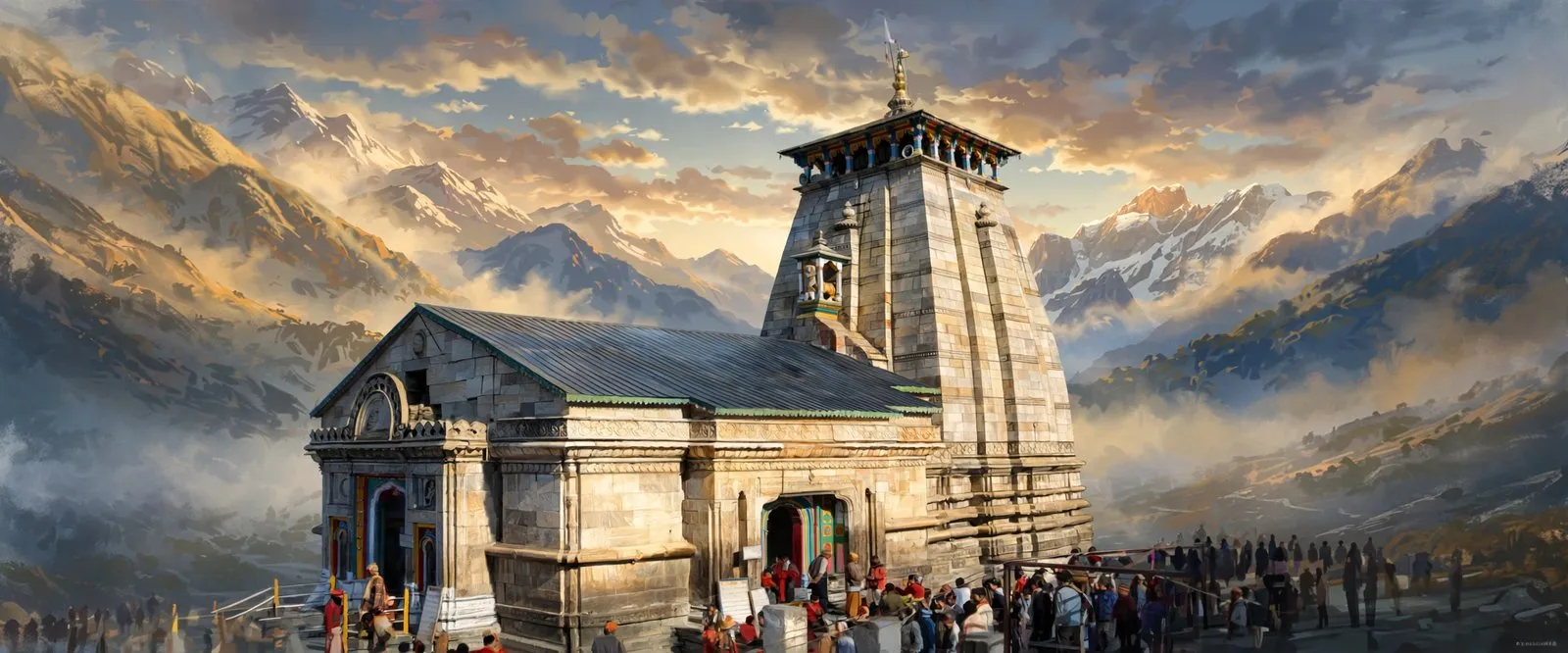
Kedarnath Temple is a stone temple to Shiva standing at 3,583 metres in the Garhwal Himalayas of Uttarakhand, the highest of the twelve Jyotirlingas and the first of the Panch Kedar shrines. Tradition credits its founding to the Pandavas and its revival to the philosopher Adi Shankara, and it is also one of the four stops of the Chota Char Dham pilgrimage. Open only from April to November because of winter snow, it draws well over a million pilgrims each summer; in June 2013 it famously survived catastrophic flash floods that destroyed the surrounding town.
- Punjabi name
- ਕੇਦਾਰਨਾਥ ਮੰਦਰ
- Country
- India
- State
- Uttarakhand
- District
- Rudraprayag
- Deity
- Shiva, as Kedarnath
- Elevation
- 3,583 m (11,755 ft), the highest of the twelve Jyotirlingas
All 10 facts
- Open
- April (Akshaya Tritiya) to November (Kartik Purnima); winter worship at Ukhimath
- Pilgrimage
- One of the twelve Jyotirlingas, one of the Chota Char Dham, first of the Panch Kedar
- Visitors
- About 1,652,000 in 2024
- Administered by
- Shri Badrinath Kedarnath Temple Committee
What is Kedarnath Temple?
Kedarnath is a stone temple to Shiva standing at 3,583 metres (11,755 feet) in the Garhwal Himalayas, near the Mandakini river in Rudraprayag district, Uttarakhand. It is the highest of the twelve Jyotirlingas, the shrines where Shiva is worshipped as a self-manifested pillar of light, and it is the first and most visited of the five Panch Kedar temples. It is also one of the four temples of the Chota Char Dham pilgrimage of the northern Himalayas, alongside Badrinath, Yamunotri and Gangotri. To Tamil Shaivas it is one of the 275 paadal petra sthalams praised in the Tevaram hymns.
The name itself is ancient. Kedarnath means "lord of the field", from the Sanskrit kedara (field) and natha (lord), and one Sanskrit text explains the name by saying "the crop of liberation" grows here. Devotees worship Shiva here as Kedarnath, Lord of Kedar Khanda, the region's historical name. The presiding lingam is regarded as svayambhu, self-manifested rather than carved by human hands, and it is traditionally anointed with ghee.
The Pandava legend and the five Panch Kedar shrines
Tradition links the temple's origin to the Pandavas of the Mahabharata. After the Kurukshetra war, the brothers wanted to atone for the killing in the battle, so they left their kingdom and went looking for Shiva's blessing. They searched first in Varanasi, but Shiva wanted to avoid them, so he took the form of a bull and hid in the Garhwal hills. Bhima spotted the bull grazing near Guptakashi, "hidden Kashi", recognised it as Shiva and grabbed it by the tail and hind legs. The bull sank into the ground and surfaced in five parts: the hump at Kedarnath, the arms at Tungnath, the face at Rudranath, the navel and stomach at Madhyamaheshwar, and the hair at Kalpeshwar. The Pandavas built temples at each of the five sites, which are worshipped together as the Panch Kedar.
Historians place the shrine's antiquity differently. The earliest written reference to Kedara appears in the Skanda Purana, from around the 7th to 8th century, and the temple was certainly a major pilgrimage centre by the 12th century, when it is named in the Kritya-kalpataru of the Gahadavala minister Bhatta Lakshmidhara. Tradition credits the 8th-century philosopher Adi Shankara with reviving the temple; one of his hagiographies says he attained Mahasamadhi in the mountains near Kedarnath, and a monument marking his purported resting place stands behind the temple. Built of great grey stone slabs, the temple shares its North-Indian Himalayan architecture with Tungnath and Madhyamaheshwar.
Why is the temple open only six months a year?
Extreme Himalayan weather keeps the temple shut for half the year. It opens around Akshaya Tritiya in April and closes around Kartik Purnima, the autumn full moon, in November. During the winter, the deity is carried down to the Omkareshwar temple at Ukhimath, about 41 kilometres away, where worship continues for six months. There is no road to the shrine: pilgrims reach it by an uphill trek of roughly 17 kilometres from Gaurikund, or by helicopter.
There is also an unwritten religious custom: after completing the darshan at the five Panch Kedar temples, pilgrims visit Vishnu at Badrinath as a final affirmation that they have received Shiva's blessing.
What happened at Kedarnath in 2013?
On 16 and 17 June 2013, the Kedarnath valley was struck by catastrophic flash floods. Water burst from the Chorabari Tal lake above the town and roared down the Mandakini, washing away shops, hotels and roads, and killing hundreds of pilgrims and residents. A massive boulder was carried to the rear of the temple and lodged there, splitting the debris flow and sending it around the sides of the building. The temple itself survived without major damage, devotees sheltered inside it for hours before the Army airlifted them out, and the rock that shielded the shrine is now worshipped as Bhim Shila, the God's Rock.
Engineers from the Archaeological Survey of India and IIT Madras later examined the structure with non-destructive testing and found it stable, with no major danger to its foundation or walls. The shrine stayed closed for a year while the debris was cleared, and then the pilgrimage resumed, larger than ever. Kedarnath received about 1,652,000 visitors in 2024, compared with 87,629 in 1987.
Who looks after the temple?
The shrine is administered by the Shri Badrinath Kedarnath Temple Committee, first constituted under a 1939 act and reconstituted by the Uttarakhand government in 2002, with seventeen members drawn from the state assembly, district councils and government nominees. Its rites carry a South Indian imprint: the head priest, the Raval, traditionally comes from the Veerashaiva (Lingayat) community of Karnataka. The Raval does not perform the pujas himself; he instructs his assistants, and five main priests rotate the head-priest role year by year. The Raval travels with the deity to Ukhimath in winter. On a ridge above the complex stands the open-air shrine of Bhairavnath, the temple's guardian deity.
ਕੇਦਾਰਨਾਥ ਮੰਦਰ ਕੀ ਹੈ?
ਕੇਦਾਰਨਾਥ ਸ਼ਿਵ ਨੂੰ ਸਮਰਪਿਤ ਪੱਥਰ ਦਾ ਮੰਦਰ ਹੈ, ਜੋ ਗੜ੍ਹਵਾਲ ਹਿਮਾਲਿਆ ਵਿੱਚ 3,583 ਮੀਟਰ (11,755 ਫੁੱਟ) ਦੀ ਉਚਾਈ 'ਤੇ, ਰੁਦਰਪ੍ਰਯਾਗ ਜ਼ਿਲ੍ਹੇ, ਉੱਤਰਾਖੰਡ ਵਿੱਚ ਮੰਦਾਕਿਨੀ ਨਦੀ ਕੋਲ ਖੜ੍ਹਾ ਹੈ ਇਹ ਬਾਰਾਂ ਜਯੋਤਿਰਲਿੰਗਾਂ ਵਿੱਚੋਂ ਸਭ ਤੋਂ ਉੱਚਾ ਹੈ, ਜਿਨ੍ਹਾਂ ਥਾਵਾਂ 'ਤੇ ਸ਼ਿਵ ਨੂੰ ਆਪ-ਪ੍ਰਗਟ ਜਯੋਤਿ ਦੇ ਰੂਪ ਵਿੱਚ ਪੂਜਿਆ ਜਾਂਦਾ ਹੈ, ਅਤੇ ਪੰਚ ਕੇਦਾਰ ਦੇ ਪੰਜ ਮੰਦਰਾਂ ਵਿੱਚੋਂ ਪਹਿਲਾ ਅਤੇ ਸਭ ਤੋਂ ਵੱਧ ਵੇਖਿਆ ਜਾਂਦਾ ਹੈ ਇਹ ਉੱਤਰੀ ਹਿਮਾਲਿਆ ਦੀ ਛੋਟਾ ਚਾਰ ਧਾਮ ਯਾਤਰਾ ਦੇ ਚਾਰ ਮੰਦਰਾਂ ਵਿੱਚੋਂ ਵੀ ਇੱਕ ਹੈ, ਜਿਸ ਵਿੱਚ ਬਦਰੀਨਾਥ, ਯਮੁਨੋਤਰੀ ਅਤੇ ਗੰਗੋਤਰੀ ਵੀ ਹਨ ਤਮਿਲ ਸ਼ੈਵ ਪਰੰਪਰਾ ਵਿੱਚ ਇਸਨੂੰ ਤੇਵਾਰਮ ਦੇ ਭਜਨਾਂ ਵਿੱਚ ਗਾਏ ਗਏ 275 ਪਾਡਲ ਪੇਟ੍ਰ ਸਥਲਮਾਂ ਵਿੱਚੋਂ ਇੱਕ ਮੰਨਿਆ ਜਾਂਦਾ ਹੈ
ਨਾਮ ਵੀ ਪੁਰਾਣਾ ਹੈ ਕੇਦਾਰਨਾਥ ਦਾ ਅਰਥ ਹੈ "ਖੇਤ ਦਾ ਮਾਲਕ", ਸੰਸਕ੍ਰਿਤ ਦੇ ਕੇਦਾਰ (ਖੇਤ) ਅਤੇ ਨਾਥ (ਮਾਲਕ) ਤੋਂ, ਅਤੇ ਇੱਕ ਸੰਸਕ੍ਰਿਤ ਗ੍ਰੰਥ ਕਹਿੰਦਾ ਹੈ ਕਿ ਇੱਥੇ "ਮੁਕਤੀ ਦੀ ਫ਼ਸਲ" ਉੱਗਦੀ ਹੈ ਸ਼ਰਧਾਲੂ ਇੱਥੇ ਸ਼ਿਵ ਨੂੰ ਕੇਦਾਰਨਾਥ, ਕੇਦਾਰ ਖੰਡ ਦੇ ਮਾਲਕ, ਵਜੋਂ ਪੂਜਦੇ ਹਨ ਮੁੱਖ ਲਿੰਗਮ ਨੂੰ ਸਵੈਭੂ ਮੰਨਿਆ ਜਾਂਦਾ ਹੈ, ਭਾਵ ਇਹ ਮਨੁੱਖਾਂ ਵੱਲੋਂ ਘੜਿਆ ਨਹੀਂ ਗਿਆ, ਅਤੇ ਇਸ 'ਤੇ ਪਰੰਪਰਾ ਅਨੁਸਾਰ ਘਿਓ ਲਾਇਆ ਜਾਂਦਾ ਹੈ
ਪਾਂਡਵਾਂ ਦੀ ਕਥਾ ਅਤੇ ਪੰਚ ਕੇਦਾਰ ਦੇ ਪੰਜ ਮੰਦਰ
ਪਰੰਪਰਾ ਮੰਦਰ ਦੀ ਉਤਪੱਤੀ ਨੂੰ ਮਹਾਭਾਰਤ ਦੇ ਪਾਂਡਵਾਂ ਨਾਲ ਜੋੜਦੀ ਹੈ ਕੁਰੁਕਸ਼ੇਤਰ ਦੀ ਲੜਾਈ ਤੋਂ ਬਾਅਦ ਭਰਾਵਾਂ ਨੇ ਲੜਾਈ ਵਿੱਚ ਹੋਈ ਹੱਤਿਆ ਦਾ ਪ੍ਰਾਯਸ਼ਚਿਤ ਕਰਨਾ ਚਾਹਿਆ, ਇਸ ਲਈ ਉਨ੍ਹਾਂ ਨੇ ਆਪਣਾ ਰਾਜ ਛੱਡਿਆ ਅਤੇ ਸ਼ਿਵ ਦੇ ਆਸ਼ੀਰਵਾਦ ਦੀ ਭਾਲ ਵਿੱਚ ਨਿਕਲ ਪਏ ਉਨ੍ਹਾਂ ਨੇ ਪਹਿਲਾਂ ਵਾਰਾਣਸੀ ਵਿੱਚ ਭਾਲ ਕੀਤੀ, ਪਰ ਸ਼ਿਵ ਉਨ੍ਹਾਂ ਤੋਂ ਬਚਣਾ ਚਾਹੁੰਦੇ ਸਨ, ਇਸ ਲਈ ਉਨ੍ਹਾਂ ਨੇ ਬਲਦ ਦਾ ਰੂਪ ਧਾਰਿਆ ਅਤੇ ਗੜ੍ਹਵਾਲ ਦੀਆਂ ਪਹਾੜੀਆਂ ਵਿੱਚ ਲੁਕ ਗਏ ਭੀਮ ਨੇ ਗੁਪਤਕਾਸ਼ੀ, "ਲੁਕੀ ਹੋਈ ਕਾਸ਼ੀ", ਕੋਲ ਚਰਦੇ ਬਲਦ ਨੂੰ ਵੇਖਿਆ, ਉਸਨੂੰ ਸ਼ਿਵ ਪਛਾਣਿਆ ਅਤੇ ਪੂਛ ਤੇ ਪਿਛਲੀਆਂ ਲੱਤਾਂ ਤੋਂ ਫੜ ਲਿਆ ਬਲਦ ਧਰਤੀ ਵਿੱਚ ਧਸ ਗਿਆ ਅਤੇ ਪੰਜ ਹਿੱਸਿਆਂ ਵਿੱਚ ਪ੍ਰਗਟ ਹੋਇਆ: ਕੇਦਾਰਨਾਥ ਵਿੱਚ ਕੁੱਬ, ਤੁੰਗਨਾਥ ਵਿੱਚ ਬਾਹਾਂ, ਰੁਦਰਨਾਥ ਵਿੱਚ ਮੁੱਖ, ਮੱਧਮਹੇਸ਼ਵਰ ਵਿੱਚ ਨਾਭੀ ਅਤੇ ਢਿੱਡ, ਅਤੇ ਕਲਪੇਸ਼ਵਰ ਵਿੱਚ ਕੇਸ ਪਾਂਡਵਾਂ ਨੇ ਇਨ੍ਹਾਂ ਪੰਜ ਥਾਵਾਂ 'ਤੇ ਮੰਦਰ ਬਣਾਏ, ਜਿਨ੍ਹਾਂ ਨੂੰ ਮਿਲ ਕੇ ਪੰਚ ਕੇਦਾਰ ਪੂਜਿਆ ਜਾਂਦਾ ਹੈ
ਇਤਿਹਾਸਕਾਰ ਮੰਦਰ ਦੀ ਪੁਰਾਤਨਤਾ ਨੂੰ ਵੱਖਰੇ ਢੰਗ ਨਾਲ ਵੇਖਦੇ ਹਨ ਕੇਦਾਰ ਦਾ ਸਭ ਤੋਂ ਪੁਰਾਣਾ ਲਿਖਤੀ ਜ਼ਿਕਰ ਸਕੰਦ ਪੁਰਾਣ ਵਿੱਚ ਮਿਲਦਾ ਹੈ, ਜੋ ਲਗਭਗ 7ਵੀਂ-8ਵੀਂ ਸਦੀ ਦਾ ਹੈ, ਅਤੇ 12ਵੀਂ ਸਦੀ ਤੱਕ ਇਹ ਯਕੀਨੀ ਤੌਰ 'ਤੇ ਇੱਕ ਵੱਡਾ ਤੀਰਥ ਸਥਾਨ ਸੀ, ਕਿਉਂਕਿ ਗਹੜਵਾਲ ਮੰਤਰੀ ਭੱਟ ਲਕਸ਼ਮੀਧਰ ਦੇ ਕ੍ਰਿਤਯ-ਕਲਪਤਰੁ ਵਿੱਚ ਇਸਦਾ ਨਾਮ ਆਉਂਦਾ ਹੈ ਪਰੰਪਰਾ 8ਵੀਂ ਸਦੀ ਦੇ ਦਾਰਸ਼ਨਿਕ ਆਦਿ ਸ਼ੰਕਰਾਚਾਰਯ ਨੂੰ ਮੰਦਰ ਦੇ ਪੁਨਰ-ਉੱਥਾਨ ਦਾ ਸਿਹਰਾ ਦਿੰਦੀ ਹੈ; ਉਨ੍ਹਾਂ ਦੀ ਇੱਕ ਜੀਵਨੀ ਕਹਿੰਦੀ ਹੈ ਕਿ ਉਨ੍ਹਾਂ ਨੇ ਕੇਦਾਰਨਾਥ ਦੇ ਪਹਾੜਾਂ ਵਿੱਚ ਮਹਾਸਮਾਧੀ ਲਈ, ਅਤੇ ਉਨ੍ਹਾਂ ਦੇ ਸੰਭਾਵਿਤ ਵਿਸ਼ਰਾਮ ਸਥਾਨ ਦਾ ਸਮਾਰਕ ਮੰਦਰ ਦੇ ਪਿੱਛੇ ਖੜ੍ਹਾ ਹੈ ਵੱਡੇ ਸਲੇਟੀ ਪੱਥਰਾਂ ਦਾ ਬਣਿਆ ਮੰਦਰ ਤੁੰਗਨਾਥ ਅਤੇ ਮੱਧਮਹੇਸ਼ਵਰ ਨਾਲ ਉੱਤਰ-ਭਾਰਤੀ ਹਿਮਾਲਈ ਵਾਸਤੂਕਲਾ ਸਾਂਝੀ ਕਰਦਾ ਹੈ
ਮੰਦਰ ਸਾਲ ਵਿੱਚ ਸਿਰਫ਼ ਛੇ ਮਹੀਨੇ ਕਿਉਂ ਖੁੱਲ੍ਹਦਾ ਹੈ?
ਹਿਮਾਲਿਆ ਦਾ ਸਖ਼ਤ ਮੌਸਮ ਮੰਦਰ ਨੂੰ ਅੱਧਾ ਸਾਲ ਬੰਦ ਰੱਖਦਾ ਹੈ ਇਹ ਅਪ੍ਰੈਲ ਵਿੱਚ ਅਕਸ਼ਯ ਤ੍ਰਿਤੀਆ ਦੇ ਆਸ-ਪਾਸ ਖੁੱਲ੍ਹਦਾ ਹੈ ਅਤੇ ਨਵੰਬਰ ਵਿੱਚ ਕਾਰਤਿਕ ਪੂਰਨਿਮਾ, ਪਤਝੜ ਦੀ ਪੂਰਨਮਾਸ਼ੀ, ਦੇ ਆਸ-ਪਾਸ ਬੰਦ ਹੁੰਦਾ ਹੈ ਸਰਦੀਆਂ ਵਿੱਚ ਦੇਵਤਾ ਨੂੰ ਲਗਭਗ 41 ਕਿਲੋਮੀਟਰ ਦੂਰ ਉਖੀਮਠ ਦੇ ਓਮਕਾਰੇਸ਼ਵਰ ਮੰਦਰ ਵਿੱਚ ਲਿਜਾਇਆ ਜਾਂਦਾ ਹੈ, ਜਿੱਥੇ ਛੇ ਮਹੀਨੇ ਪੂਜਾ ਜਾਰੀ ਰਹਿੰਦੀ ਹੈ ਮੰਦਰ ਤੱਕ ਕੋਈ ਸੜਕ ਨਹੀਂ ਜਾਂਦੀ: ਸ਼ਰਧਾਲੂ ਗੌਰੀਕੁੰਡ ਤੋਂ ਲਗਭਗ 17 ਕਿਲੋਮੀਟਰ ਦੀ ਚੜ੍ਹਾਈ ਵਾਲੀ ਪੈਦਲ ਯਾਤਰਾ ਕਰਦੇ ਹਨ, ਜਾਂ ਹੈਲੀਕਾਪਟਰ ਰਾਹੀਂ ਪਹੁੰਚਦੇ ਹਨ
ਇੱਕ ਅਲਿਖਤ ਧਾਰਮਿਕ ਰਿਵਾਜ ਵੀ ਹੈ: ਪੰਚ ਕੇਦਾਰ ਦੇ ਪੰਜ ਮੰਦਰਾਂ ਦੇ ਦਰਸ਼ਨ ਮੁਕੰਮਲ ਕਰਨ ਤੋਂ ਬਾਅਦ ਸ਼ਰਧਾਲੂ ਬਦਰੀਨਾਥ ਵਿੱਚ ਵਿਸ਼ਨੂੰ ਦੇ ਦਰਸ਼ਨ ਕਰਦੇ ਹਨ, ਇਸ ਗੱਲ ਦੀ ਅੰਤਿਮ ਪੁਸ਼ਟੀ ਵਜੋਂ ਕਿ ਉਨ੍ਹਾਂ ਨੂੰ ਸ਼ਿਵ ਦਾ ਆਸ਼ੀਰਵਾਦ ਮਿਲ ਗਿਆ ਹੈ
2013 ਵਿੱਚ ਕੇਦਾਰਨਾਥ ਵਿੱਚ ਕੀ ਹੋਇਆ ਸੀ?
16 ਅਤੇ 17 ਜੂਨ 2013 ਨੂੰ ਕੇਦਾਰਨਾਥ ਘਾਟੀ ਵਿੱਚ ਭਿਆਨਕ ਬੱਦਲ ਫਟਣ ਅਤੇ ਹੜ੍ਹ ਆਏ ਸ਼ਹਿਰ ਦੇ ਉੱਪਰ ਚੋਰਾਬਾੜੀ ਤਾਲ ਝੀਲ ਦਾ ਪਾਣੀ ਫੁੱਟਿਆ ਅਤੇ ਮੰਦਾਕਿਨੀ ਵਿੱਚ ਵਗਦਾ ਹੋਇਆ ਦੁਕਾਨਾਂ, ਹੋਟਲਾਂ ਅਤੇ ਸੜਕਾਂ ਨੂੰ ਵਹਾ ਲੈ ਗਿਆ, ਜਿਸ ਵਿੱਚ ਸੈਂਕੜੇ ਸ਼ਰਧਾਲੂ ਅਤੇ ਸਥਾਨਕ ਲੋਕ ਮਾਰੇ ਗਏ ਇੱਕ ਵਿਸ਼ਾਲ ਚੱਟਾਨ ਵਹਿ ਕੇ ਮੰਦਰ ਦੇ ਪਿੱਛੇ ਆ ਟਿਕੀ ਅਤੇ ਮਲਬੇ ਦੇ ਵਹਾਅ ਨੂੰ ਦੋ ਹਿੱਸਿਆਂ ਵਿੱਚ ਵੰਡ ਦਿੱਤਾ, ਜੋ ਮੰਦਰ ਦੇ ਦੋਵੇਂ ਪਾਸਿਆਂ ਤੋਂ ਲੰਘ ਗਿਆ ਮੰਦਰ ਨੂੰ ਖੁਦ ਕੋਈ ਵੱਡਾ ਨੁਕਸਾਨ ਨਹੀਂ ਹੋਇਆ, ਸ਼ਰਧਾਲੂ ਘੰਟਿਆਂ ਤੱਕ ਅੰਦਰ ਸ਼ਰਨ ਲੈਂਦੇ ਰਹੇ ਅਤੇ ਫਿਰ ਫ਼ੌਜ ਨੇ ਉਨ੍ਹਾਂ ਨੂੰ ਹੈਲੀਕਾਪਟਰਾਂ ਰਾਹੀਂ ਸੁਰੱਖਿਅਤ ਥਾਵਾਂ 'ਤੇ ਪਹੁੰਚਾਇਆ ਜਿਸ ਚੱਟਾਨ ਨੇ ਮੰਦਰ ਨੂੰ ਬਚਾਇਆ, ਉਸਨੂੰ ਹੁਣ ਭੀਮ ਸ਼ਿਲਾ, ਭਗਵਾਨ ਦੀ ਚੱਟਾਨ, ਵਜੋਂ ਪੂਜਿਆ ਜਾਂਦਾ ਹੈ
ਬਾਅਦ ਵਿੱਚ ਭਾਰਤੀ ਪੁਰਾਤੱਤਵ ਸਰਵੇਖਣ ਅਤੇ ਆਈਆਈਟੀ ਮਦਰਾਸ ਦੇ ਇੰਜੀਨੀਅਰਾਂ ਨੇ ਬਿਨਾਂ ਤੋੜ-ਫੋੜ ਵਾਲੇ ਯੰਤਰਾਂ ਨਾਲ ਢਾਂਚੇ ਦੀ ਜਾਂਚ ਕੀਤੀ ਅਤੇ ਇਸਨੂੰ ਸਥਿਰ ਪਾਇਆ, ਨੀਂਹ ਜਾਂ ਕੰਧਾਂ ਨੂੰ ਕੋਈ ਵੱਡਾ ਖ਼ਤਰਾ ਨਹੀਂ ਸੀ ਮਲਬਾ ਹਟਾਉਣ ਲਈ ਮੰਦਰ ਇੱਕ ਸਾਲ ਬੰਦ ਰਿਹਾ, ਫਿਰ ਯਾਤਰਾ ਪਹਿਲਾਂ ਨਾਲੋਂ ਵੱਡੇ ਪੱਧਰ 'ਤੇ ਮੁੜ ਸ਼ੁਰੂ ਹੋ ਗਈ 2024 ਵਿੱਚ ਕੇਦਾਰਨਾਥ ਵਿੱਚ ਲਗਭਗ 16,52,000 ਸ਼ਰਧਾਲੂ ਆਏ, ਜਦੋਂ ਕਿ 1987 ਵਿੱਚ ਇਹ ਗਿਣਤੀ 87,629 ਸੀ
ਮੰਦਰ ਦੀ ਦੇਖਭਾਲ ਕੌਣ ਕਰਦਾ ਹੈ?
ਮੰਦਰ ਦਾ ਪ੍ਰਬੰਧ ਸ਼੍ਰੀ ਬਦਰੀਨਾਥ ਕੇਦਾਰਨਾਥ ਮੰਦਰ ਕਮੇਟੀ ਕਰਦੀ ਹੈ, ਜੋ ਪਹਿਲੀ ਵਾਰ 1939 ਦੇ ਇੱਕ ਐਕਟ ਤਹਿਤ ਬਣੀ ਸੀ ਅਤੇ 2002 ਵਿੱਚ ਉੱਤਰਾਖੰਡ ਸਰਕਾਰ ਨੇ ਇਸਨੂੰ ਮੁੜ ਗਠਿਤ ਕੀਤਾ; ਇਸ ਵਿੱਚ ਵਿਧਾਨ ਸਭਾ, ਜ਼ਿਲ੍ਹਾ ਪ੍ਰੀਸ਼ਦਾਂ ਅਤੇ ਸਰਕਾਰੀ ਨਾਮਜ਼ਦ ਮੈਂਬਰਾਂ ਵਿੱਚੋਂ ਸਤਾਰਾਂ ਮੈਂਬਰ ਹਨ ਇਸਦੇ ਰੀਤੀ-ਰਿਵਾਜਾਂ 'ਤੇ ਦੱਖਣ ਭਾਰਤ ਦੀ ਛਾਪ ਹੈ: ਮੁੱਖ ਪੁਜਾਰੀ, ਰਾਵਲ, ਪਰੰਪਰਾ ਅਨੁਸਾਰ ਕਰਨਾਟਕ ਦੇ ਵੀਰਸ਼ੈਵ (ਲਿੰਗਾਇਤ) ਭਾਈਚਾਰੇ ਤੋਂ ਆਉਂਦੇ ਹਨ ਰਾਵਲ ਖੁਦ ਪੂਜਾ ਨਹੀਂ ਕਰਦੇ; ਉਹ ਆਪਣੇ ਸਹਾਇਕਾਂ ਨੂੰ ਨਿਰਦੇਸ਼ ਦਿੰਦੇ ਹਨ, ਅਤੇ ਪੰਜ ਮੁੱਖ ਪੁਜਾਰੀ ਹਰ ਸਾਲ ਵਾਰੀ-ਵਾਰੀ ਮੁੱਖ ਪੁਜਾਰੀ ਬਣਦੇ ਹਨ ਸਰਦੀਆਂ ਵਿੱਚ ਰਾਵਲ ਦੇਵਤਾ ਨਾਲ ਉਖੀਮਠ ਜਾਂਦੇ ਹਨ ਮੰਦਰ ਦੇ ਉੱਪਰ ਪਹਾੜੀ 'ਤੇ ਭੈਰਵਨਾਥ ਦਾ ਖੁੱਲ੍ਹਾ ਮੰਦਰ ਹੈ, ਜੋ ਕੇਦਾਰਨਾਥ ਦੇ ਰਖਵਾਲੇ ਦੇਵਤਾ ਹਨ