
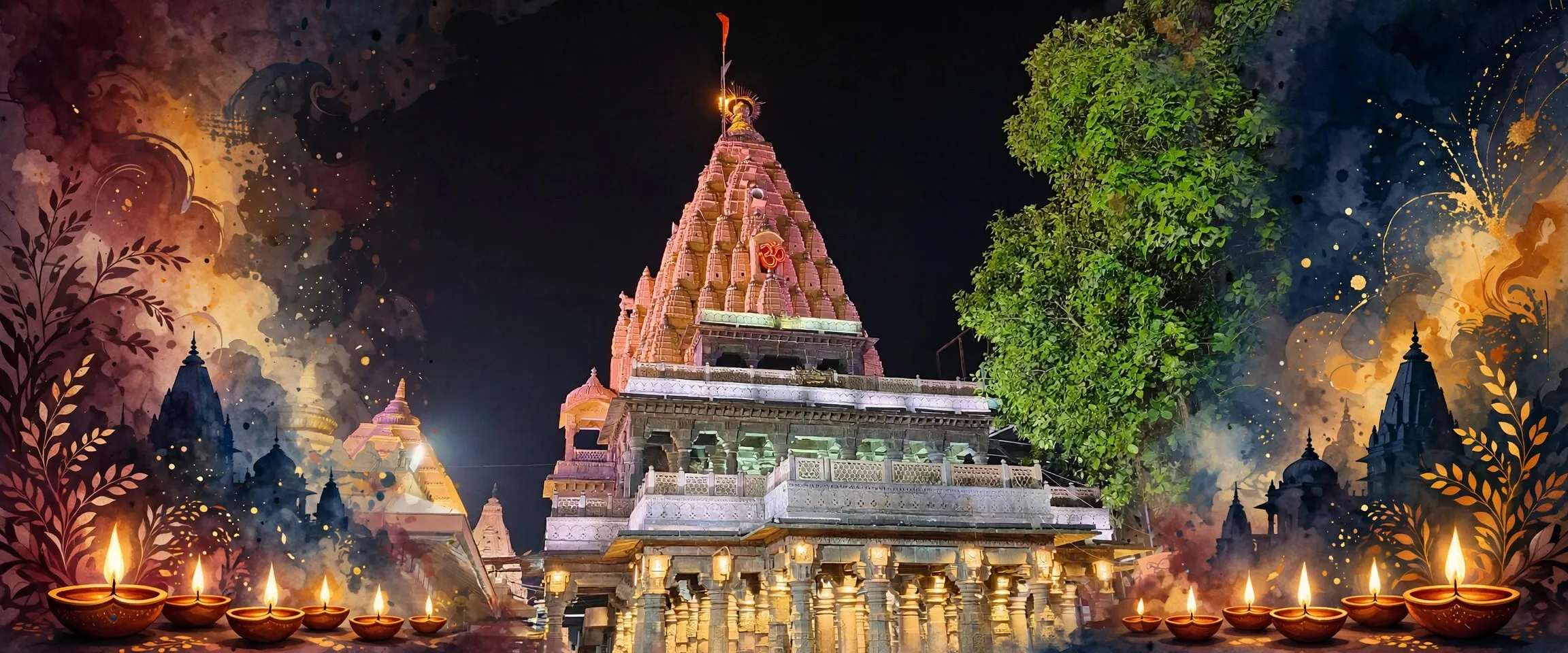
The Mahakaleshwar Temple in Ujjain, Madhya Pradesh, is one of the twelve Jyotirlingas — the most sacred shrines of Shiva. Devotees believe its lingam is swayambhu (self-manifested), and it is the only Jyotirlinga that faces south. It is famous for the daily pre-dawn Bhasma Aarti, in which Shiva is worshipped with sacred ash before sunrise.
- Punjabi name
- ਮਹਾਕਾਲੇਸ਼ਵਰ ਮੰਦਰ (ਉੱਜੈਨ)
- Country
- India
- State
- Madhya Pradesh
- City
- Ujjain
- Deity
- Shiva as Mahakaleshwar, a Jyotirlinga
- Location
- On the banks of the Shipra river
All 11 facts
- Distinction
- The only south-facing Jyotirlinga
- Daily ritual
- Bhasma Aarti, before sunrise
- Present temple
- 18th century, Maratha era
- Recent addition
- Mahakal Lok corridor, opened 2022
- Key festival
- Mahashivratri
Mahakaleshwar Temple in Ujjain, Madhya Pradesh, is one of the twelve Jyotirlingas — the shrines held most sacred to Shiva. Devotees believe the lingam here is swayambhu, self-manifested, and it is the only Jyotirlinga that faces south. The temple is equally famous for the Bhasma Aarti, a pre-dawn ritual where Shiva is worshipped with sacred ash.
Why is Mahakaleshwar one of the most important Jyotirlingas?
According to the Shiva Purana, Shiva once appeared as a fiery column of light — a jyotirlinga — to establish his supremacy, and the twelve shrines where this happened are revered as his most sacred abodes. Each of the twelve takes its name from the presiding deity; at Ujjain, he is Mahakaleshwar — Mahakal, the Lord of Time.
Ujjain, known in antiquity as Avantika, is one of India’s oldest cities and was famous as a centre of learning, astronomy and devotion. For devotees, two things set Mahakaleshwar apart from the other eleven. First, the lingam is believed to be swayambhu — self-manifested — drawing its power from within itself, rather than being installed through ritual like other images. Second, the idol is Dakshinamurti: it faces south, a feature that the tantric shivnetra tradition holds to be unique among the twelve Jyotirlingas.
The name itself tells the story of the worship. As Mahakal — the Lord of Time and Death — Shiva is believed to protect his devotees from untimely death; the Puranic legend says that those who worship him here are freed from the fear of death and disease. For millions of pilgrims, this makes Mahakaleshwar not just a temple but a refuge.
What is the Bhasma Aarti?
The Bhasma Aarti is the temple’s defining ritual and, by most accounts, the most distinctive ceremony in Hindu worship. It is performed every morning before sunrise, usually between 3:30 and 5:30 a.m., in the Brahmamuhurta. The Shiva lingam is bathed, adorned, and then worshipped with bhasma — sacred ash — amid the chanting of Vedic mantras, the beating of drums, and the blowing of conch shells. The rite lasts about two hours.
The ash is a philosophy in a handful of dust. To devotees, it says that everything in the material world is temporary and will one day be dust — a reminder of detachment, humility, and the eternity of the soul. The ritual is tied to Shiva’s oldest aspect: as the ascetic of the cremation ground, ash is his decoration, his shringar. In earlier times, tradition held that ash from the cremation ground itself was used; today the ash is prepared in a controlled, sacred manner by burning cow dung cakes — the temple’s priests reject the old crematorium claim.
It is also a rite of logistics. Devotees queue from about 1 a.m. for the limited entry, no one is allowed inside the sanctum while the aarti is performed, and passes must be booked on the temple’s official website, with a traditional dress code of dhoti for men and saree for women. Attending is considered deeply auspicious — many believe the wishes of those who witness the Bhasma Aarti are fulfilled.
A history of destruction and revival
The Puranas place Mahakaleshwar in deep time. In one well-known telling from the Shiva Purana, Ujjain was ruled by the pious King Chandrasena, a devotee of Shiva. When rival kings attacked the city with the help of the demon Dushan, the young devotee Shrikhar and the priest Vridhi prayed on the banks of the river Kshipra — and Shiva appeared in his terrifying Mahakala form, destroyed the invaders, and, at the devotees’ pleading, agreed to remain in the city as its chief deity, blessing worshippers with freedom from the fear of death and disease. The great Sanskrit poet Kalidasa mentions the temple’s evening rituals of music and dance in his Meghaduta.
The temple’s medieval history is harsher. The complex was destroyed when Iltutmish raided Ujjain in 1234–35: the Jyotirlinga was dismantled and thrown into the nearby Kotiteerth Kunda, and its Jaladhari support was carried away. It was attacked again by Jalaluddin Khalji and Alauddin Khalji in the centuries that followed.
The present temple rose under Maratha rule in the 18th century. Maratha general Ranoji Shinde is popularly credited with the reconstruction, though a study published in the Proceedings of the Indian History Congress names the Maratha diwan Ramachandra Sukthankar as the builder. The Shinde family continued to develop the shrine through the century.
After Indian independence in 1947, the Mahakaleshwar Dev Sthan Trust was first replaced by Ujjain’s municipal corporation, and the temple is today administered through the collectorate office of Ujjain district.
Inside the temple complex and Mahakal Lok
The temple is a five-level stone structure, one level underground, with a shikhar spire adorned with sculptural finery. Brass lamps light the way down to the sanctum. Within, the arrangement is a small cosmology: the shrine of Omkareshwar Mahadevji is consecrated above the Mahakal sanctum, with Ganesh to the west, Parvati to the north, Karttikeya to the east, and Nandi, Shiva’s vehicle, to the south. The image of Nagchandreshwar on the third storey is opened for darshan only on Nag Panchami. One quirk of devotion here: prasada offered to the deity may be re-offered — believers say this is unlike other shrines.
Around the ancient Rudra Sagar lake now runs Mahakal Lok, a 900-metre corridor inaugurated on 11 October 2022 as the first phase of the temple’s redevelopment. Its 108 carved sandstone pillars depict the Anand Tandav of Shiva; mural walls tell stories from the Shiva Purana; grand gateways — the Nandi Dwar and the Pinaki Dwar — frame the approach. The project, planned at around ₹856 crore, aims to decongest the temple area and restore its heritage structures.
The temple is woven into Ujjain’s calendar too. On Maha Shivaratri a huge fair gathers near the temple and worship continues through the night. In the months of Shravan and Bhadrapada, the Mahakal Sawari — a grand palanquin procession of singing and dancing devotees, opened with a ceremonial police salute — moves through the city and concludes with rituals at the Shipra Ghat.
Visiting Mahakaleshwar: what to know
Ujjain sits on the Shipra river in western Madhya Pradesh. The temple is about 2 km from Ujjain Junction railway station and roughly an hour’s drive — about 55–58 km — from Indore airport. Ujjain hosts the Simhastha Kumbh Mela, so visit during festival weeks only if you are ready for crowds.
Major festivals are Maha Shivaratri, the Shravan month, and Nag Panchami — the single day the Nagchandreshwar shrine opens. Mondays and weekends draw the heaviest crowds; midweek mornings are calmer. Online booking for darshan and aartis runs on the temple’s official website; as of October 2026, Bhasma Aarti passes were issued online-only, with devotees reporting between about 1 and 2:30 a.m.
Mahakaleshwar is one of a growing number of great Shiva temples across India — see our guide to Mandirs in India for fellow Jyotirlingas and the country’s great mandir traditions.
ਮੱਧ ਪ੍ਰਦੇਸ਼ ਦੇ ਉੱਜੈਨ ਸ਼ਹਿਰ ਵਿੱਚ ਸਥਿਤ ਮਹਾਕਾਲੇਸ਼ਵਰ ਮੰਦਰ ਸ਼ਿਵ ਦੇ ਬਾਰ੍ਹਾਂ ਜੋਤਿਰਲਿੰਗਾਂ ਵਿੱਚੋਂ ਇੱਕ ਹੈ — ਜਿਨ੍ਹਾਂ ਨੂੰ ਸ਼ਿਵ ਦੇ ਸਭ ਤੋਂ ਪਵਿੱਤਰ ਅਸਥਾਨ ਮੰਨਿਆ ਜਾਂਦਾ ਹੈ ਭਗਤਾਂ ਦਾ ਵਿਸ਼ਵਾਸ ਹੈ ਕਿ ਇੱਥੋਂ ਦਾ ਸ਼ਿਵਲਿੰਗ ਸਵਯੰਭੂ ਹੈ, ਅਰਥਾਤ ਆਪਣੇ ਆਪ ਪ੍ਰਗਟ ਹੋਇਆ ਹੈ, ਅਤੇ ਇਹ ਇੱਕੋ-ਇੱਕ ਜੋਤਿਰਲਿੰਗ ਹੈ ਜਿਸਦਾ ਮੂੰਹ ਦੱਖਣ ਵੱਲ ਹੈ ਇਹ ਮੰਦਰ ਆਪਣੀ ਸਵੇਰ-ਸਮੇਂ ਤੋਂ ਪਹਿਲਾਂ ਹੋਣ ਵਾਲੀ ਭਸਮ ਆਰਤੀ ਲਈ ਮਸ਼ਹੂਰ ਹੈ, ਜਿਸ ਵਿੱਚ ਸ਼ਿਵ ਦੀ ਪੂਜਾ ਪਵਿੱਤਰ ਭਸਮ ਨਾਲ ਕੀਤੀ ਜਾਂਦੀ ਹੈ
ਮਹਾਕਾਲੇਸ਼ਵਰ ਸਭ ਤੋਂ ਮਹੱਤਵਪੂਰਨ ਜੋਤਿਰਲਿੰਗਾਂ ਵਿੱਚੋਂ ਇੱਕ ਕਿਉਂ ਹੈ?
ਸ਼ਿਵ ਪੁਰਾਣ ਅਨੁਸਾਰ ਸ਼ਿਵ ਇੱਕ ਵਾਰ ਜੋਤਿਰਮਈ ਥੰਮ੍ਹ ਦੇ ਰੂਪ ਵਿੱਚ ਪ੍ਰਗਟ ਹੋਏ ਸਨ — ਇਹੀ ਜੋਤਿਰਲਿੰਗ ਹੈ — ਅਤੇ ਜਿਨ੍ਹਾਂ ਬਾਰ੍ਹਾਂ ਅਸਥਾਨਾਂ ਉੱਤੇ ਅਜਿਹਾ ਹੋਇਆ, ਉਹ ਉਨ੍ਹਾਂ ਦੇ ਸਭ ਤੋਂ ਪਵਿੱਤਰ ਧਾਮ ਮੰਨੇ ਜਾਂਦੇ ਹਨ ਹਰੇਕ ਅਸਥਾਨ ਦਾ ਨਾਂ ਉੱਥੋਂ ਦੇ ਮੁੱਖ ਦੇਵਤਾ ਉੱਤੇ ਹੈ; ਉੱਜੈਨ ਵਿੱਚ ਉਹ ਮਹਾਕਾਲੇਸ਼ਵਰ ਹਨ — ਮਹਾਕਾਲ, ਸਮੇਂ ਦੇ ਸਵਾਮੀ
ਪੁਰਾਣੇ ਸਮੇਂ ਵਿੱਚ ਉੱਜੈਨ ਨੂੰ ਅਵੰਤਿਕਾ ਕਿਹਾ ਜਾਂਦਾ ਸੀ — ਇਹ ਭਾਰਤ ਦੇ ਸਭ ਤੋਂ ਪੁਰਾਣੇ ਸ਼ਹਿਰਾਂ ਵਿੱਚੋਂ ਇੱਕ ਹੈ ਅਤੇ ਵਿਦਿਆ, ਖਗੋਲ-ਵਿਗਿਆਨ ਅਤੇ ਭਗਤੀ ਦਾ ਕੇਂਦਰ ਰਿਹਾ ਹੈ ਭਗਤਾਂ ਲਈ ਮਹਾਕਾਲੇਸ਼ਵਰ ਨੂੰ ਦੋ ਗੱਲਾਂ ਖਾਸ ਬਣਾਉਂਦੀਆਂ ਹਨ ਪਹਿਲੀ, ਇੱਥੋਂ ਦਾ ਸ਼ਿਵਲਿੰਗ ਸਵਯੰਭੂ ਮੰਨਿਆ ਜਾਂਦਾ ਹੈ — ਅਰਥਾਤ ਆਪਣੇ ਆਪ ਪ੍ਰਗਟ ਹੋਇਆ, ਜਿਸਦੀ ਸ਼ਕਤੀ ਅੰਦਰੋਂ ਆਉਂਦੀ ਹੈ, ਨਾ ਕਿ ਰਸਮੀ ਸਥਾਪਨਾ ਰਾਹੀਂ ਦੂਜੀ, ਇੱਥੋਂ ਦੀ ਮੂਰਤੀ ਦੱਖਣਮੁਖੀ ਹੈ — ਦੱਖਣ ਵੱਲ ਮੂੰਹ ਕਰਕੇ — ਜੋ ਤਾਂਤਰਿਕ ਸ਼ਿਵਨੇਤ੍ਰ ਪਰੰਪਰਾ ਅਨੁਸਾਰ ਬਾਰ੍ਹਾਂ ਜੋਤਿਰਲਿੰਗਾਂ ਵਿੱਚ ਵਿਲੱਖਣ ਹੈ
ਨਾਂ ਹੀ ਦੱਸਦਾ ਹੈ ਕਿ ਇੱਥੋਂ ਦੀ ਉਪਾਸਨਾ ਦਾ ਕੀ ਅਰਥ ਹੈ ਮਹਾਕਾਲ — ਸਮੇਂ ਅਤੇ ਮੌਤ ਦੇ ਸਵਾਮੀ — ਦੇ ਰੂਪ ਵਿੱਚ ਸ਼ਿਵ ਆਪਣੇ ਭਗਤਾਂ ਨੂੰ ਅਸਮੇਂ ਦੀ ਮੌਤ ਤੋਂ ਬਚਾਉਂਦੇ ਹਨ; ਪੁਰਾਣਿਕ ਕਥਾ ਕਹਿੰਦੀ ਹੈ ਕਿ ਜੋ ਇੱਥੇ ਉਨ੍ਹਾਂ ਦੀ ਪੂਜਾ ਕਰਦਾ ਹੈ, ਉਹ ਮੌਤ ਅਤੇ ਰੋਗ ਦੇ ਡਰ ਤੋਂ ਮੁਕਤ ਹੋ ਜਾਂਦਾ ਹੈ ਲੱਖਾਂ ਸ਼ਰਧਾਲੂਆਂ ਲਈ ਮਹਾਕਾਲੇਸ਼ਵਰ ਸਿਰਫ਼ ਇੱਕ ਮੰਦਰ ਨਹੀਂ, ਸਗੋਂ ਸ਼ਰਨਅਸਥਾਨ ਹੈ
ਭਸਮ ਆਰਤੀ ਕੀ ਹੈ?
ਭਸਮ ਆਰਤੀ ਇਸ ਮੰਦਰ ਦਾ ਸਭ ਤੋਂ ਖਾਸ ਰਸਮ ਹੈ ਅਤੇ, ਬਹੁਤਿਆਂ ਦੇ ਕਹਿਣ ਅਨੁਸਾਰ, ਹਿੰਦੂ ਉਪਾਸਨਾ ਦਾ ਸਭ ਤੋਂ ਵਿਲੱਖਣ ਅਨੁਸ਼ਠਾਨ ਇਹ ਹਰ ਸਵੇਰ ਸੂਰਜ ਚੜ੍ਹਨ ਤੋਂ ਪਹਿਲਾਂ, ਆਮ ਤੌਰ ਉੱਤੇ ਸਵੇਰੇ 3:30 ਤੋਂ 5:30 ਵਜੇ ਦੇ ਵਿਚਕਾਰ, ਬ੍ਰਹਮ ਮੁਹੂਰਤ ਵਿੱਚ ਹੁੰਦੀ ਹੈ ਸ਼ਿਵਲਿੰਗ ਨੂੰ ਇਸ਼ਨਾਨ ਕਰਾਇਆ ਜਾਂਦਾ ਹੈ, ਸ਼ਿੰਗਾਰਿਆ ਜਾਂਦਾ ਹੈ, ਅਤੇ ਫਿਰ ਵੈਦਿਕ ਮੰਤਰਾਂ ਦੇ ਉੱਚਾਰਣ, ਢੋਲ-ਨਗਾੜਿਆਂ ਅਤੇ ਸ਼ੰਖਨਾਦ ਦੇ ਵਿਚਕਾਰ ਭਸਮ — ਪਵਿੱਤਰ ਰਾਖ — ਨਾਲ ਪੂਜਾ ਕੀਤੀ ਜਾਂਦੀ ਹੈ ਇਹ ਰਸਮ ਲਗਭਗ ਦੋ ਘੰਟੇ ਚੱਲਦੀ ਹੈ
ਇਹ ਰਾਖ ਇੱਕ ਮੁੱਠੀ ਵਿੱਚ ਸਮਾਇਆ ਦਰਸ਼ਨ ਹੈ ਭਗਤਾਂ ਲਈ ਇਸਦਾ ਅਰਥ ਹੈ ਕਿ ਭੌਤਿਕ ਸੰਸਾਰ ਦੀ ਹਰ ਚੀਜ਼ ਨਾਸ਼ਵਾਨ ਹੈ ਅਤੇ ਇੱਕ ਦਿਨ ਰਾਖ ਹੋ ਜਾਵੇਗੀ — ਇਹ ਵੈਰਾਗ, ਨਿਮਰਤਾ ਅਤੇ ਆਤਮਾ ਦੀ ਅਮਰਤਾ ਦੀ ਯਾਦ ਦਿਵਾਉਂਦੀ ਹੈ ਇਹ ਰਸਮ ਸ਼ਿਵ ਦੇ ਸਭ ਤੋਂ ਪੁਰਾਣੇ ਰੂਪ ਨਾਲ ਜੁੜੀ ਹੈ: ਸ਼ਮਸ਼ਾਨ ਦੇ ਤਪਸਵੀ ਵਜੋਂ ਰਾਖ ਹੀ ਉਨ੍ਹਾਂ ਦਾ ਸ਼ਿੰਗਾਰ ਹੈ ਪੁਰਾਣੇ ਸਮੇਂ ਵਿੱਚ ਪਰੰਪਰਾ ਅਨੁਸਾਰ ਸ਼ਮਸ਼ਾਨ ਦੀ ਰਾਖ ਵਰਤੀ ਜਾਂਦੀ ਸੀ; ਅੱਜ ਭਸਮ ਪਵਿੱਤਰ ਅਤੇ ਨਿਯੰਤਰਿਤ ਢੰਗ ਨਾਲ ਗੋਬਰ ਦੇ ਉਪਲੇ ਜਲਾ ਕੇ ਤਿਆਰ ਕੀਤੀ ਜਾਂਦੀ ਹੈ — ਮੰਦਰ ਦੇ ਪੁਜਾਰੀ ਪੁਰਾਣੀ ਸ਼ਮਸ਼ਾਨ ਵਾਲੀ ਗੱਲ ਨੂੰ ਨਕਾਰਦੇ ਹਨ
ਇਹ ਇੱਕ ਅਜਿਹਾ ਰਸਮ ਵੀ ਹੈ ਜਿਸਦਾ ਪ੍ਰਬੰਧ ਪਹਿਲਾਂ ਤੋਂ ਕਰਨਾ ਪੈਂਦਾ ਹੈ ਸ਼ਰਧਾਲੂ ਰਾਤ ਦੇ ਲਗਭਗ 1 ਵਜੇ ਤੋਂ ਕਤਾਰ ਵਿੱਚ ਲੱਗਦੇ ਹਨ, ਰਸਮ ਦੌਰਾਨ ਗਰਭਗ੍ਰਹਿ ਵਿੱਚ ਕਿਸੇ ਨੂੰ ਜਾਣ ਦੀ ਇਜਾਜ਼ਤ ਨਹੀਂ ਹੁੰਦੀ, ਅਤੇ ਪ੍ਰਵੇਸ਼ ਪਾਸ ਮੰਦਰ ਦੀ ਅਧਿਕਾਰਤ ਵੈੱਬਸਾਈਟ ਤੋਂ ਹੀ ਬੁੱਕ ਕਰਨੇ ਪੈਂਦੇ ਹਨ — ਮਰਦਾਂ ਲਈ ਧੋਤੀ ਅਤੇ ਔਰਤਾਂ ਲਈ ਸਾੜੀ ਦੀ ਪਰੰਪਰਿਕ ਵੇਸ਼ਭੂਸ਼ਾ ਲਾਜ਼ਮੀ ਹੈ ਇਸ ਵਿੱਚ ਸ਼ਾਮਲ ਹੋਣਾ ਬਹੁਤ ਸ਼ੁਭ ਮੰਨਿਆ ਜਾਂਦਾ ਹੈ — ਬਹੁਤਿਆਂ ਦਾ ਵਿਸ਼ਵਾਸ ਹੈ ਕਿ ਜੋ ਇਸ ਆਰਤੀ ਦੇ ਦਰਸ਼ਨ ਕਰਦਾ ਹੈ, ਉਸਦੀ ਮਨੋਕਾਮਨਾ ਪੂਰੀ ਹੁੰਦੀ ਹੈ
ਤਬਾਹੀ ਅਤੇ ਪੁਨਰ-ਨਿਰਮਾਣ ਦਾ ਇਤਿਹਾਸ
ਪੁਰਾਣ ਮਹਾਕਾਲੇਸ਼ਵਰ ਨੂੰ ਬਹੁਤ ਪੁਰਾਣੇ ਸਮੇਂ ਵਿੱਚ ਰੱਖਦੇ ਹਨ ਸ਼ਿਵ ਪੁਰਾਣ ਦੀ ਇੱਕ ਪ੍ਰਸਿੱਧ ਕਥਾ ਅਨੁਸਾਰ ਉੱਜੈਨ ਉੱਤੇ ਧਾਰਮਿਕ ਰਾਜਾ ਚੰਦਰਸੇਨ ਰਾਜ ਕਰਦਾ ਸੀ, ਜੋ ਸ਼ਿਵ ਦਾ ਭਗਤ ਸੀ ਜਦੋਂ ਵਿਰੋਧੀ ਰਾਜਿਆਂ ਨੇ ਦੈਂਤ ਦੂਸ਼ਣ ਦੀ ਮਦਦ ਨਾਲ ਸ਼ਹਿਰ ਉੱਤੇ ਹਮਲਾ ਕੀਤਾ, ਤਾਂ ਨੌਜਵਾਨ ਭਗਤ ਸ਼੍ਰੀਖਰ ਅਤੇ ਪੁਜਾਰੀ ਵ੍ਰਿਧੀ ਨੇ ਕਸ਼ਿਪ੍ਰਾ ਨਦੀ ਕੰਢੇ ਪ੍ਰਾਰਥਨਾ ਕੀਤੀ — ਅਤੇ ਸ਼ਿਵ ਆਪਣੇ ਭਿਆਨਕ ਮਹਾਕਾਲ ਰੂਪ ਵਿੱਚ ਪ੍ਰਗਟ ਹੋਏ, ਹਮਲਾਵਰਾਂ ਦਾ ਨਾਸ਼ ਕੀਤਾ, ਅਤੇ ਭਗਤਾਂ ਦੀ ਬੇਨਤੀ ਉੱਤੇ ਸ਼ਹਿਰ ਦੇ ਮੁੱਖ ਦੇਵਤਾ ਵਜੋਂ ਰਹਿਣਾ ਸਵੀਕਾਰ ਕੀਤਾ, ਪੂਜਕਾਂ ਨੂੰ ਮੌਤ ਅਤੇ ਰੋਗ ਦੇ ਡਰ ਤੋਂ ਮੁਕਤੀ ਦਾ ਵਰਦਾਨ ਦਿੰਦੇ ਹੋਏ ਮਹਾਨ ਸੰਸਕ੍ਰਿਤ ਕਵੀ ਕਾਲੀਦਾਸ ਨੇ ਆਪਣੇ ਮੇਘਦੂਤ ਵਿੱਚ ਮੰਦਰ ਦੀਆਂ ਸੰਧਿਆ-ਰਸਮਾਂ ਵਿੱਚ ਸੰਗੀਤ ਅਤੇ ਨ੍ਰਿਤ ਦਾ ਜ਼ਿਕਰ ਕੀਤਾ ਹੈ
ਮੰਦਰ ਦਾ ਮੱਧਕਾਲੀ ਇਤਿਹਾਸ ਕਠੋਰ ਹੈ 1234–35 ਵਿੱਚ ਜਦੋਂ ਇਲਤੁਤਮਿਸ਼ ਨੇ ਉੱਜੈਨ ਉੱਤੇ ਹਮਲਾ ਕੀਤਾ, ਤਾਂ ਮੰਦਰ ਪਰਿਸਰ ਤਬਾਹ ਕਰ ਦਿੱਤਾ ਗਿਆ: ਜੋਤਿਰਲਿੰਗ ਨੂੰ ਉਖਾੜ ਕੇ ਨੇੜਲੇ ਕੋਟਿਤੀਰਥ ਕੁੰਡ ਵਿੱਚ ਸੁੱਟ ਦਿੱਤਾ ਗਿਆ, ਅਤੇ ਇਸਦਾ ਜਲਾਧਾਰੀ ਆਧਾਰ ਲੁੱਟ ਲਿਆ ਗਿਆ ਉਸ ਤੋਂ ਬਾਅਦ ਦੀਆਂ ਸਦੀਆਂ ਵਿੱਚ ਜਲਾਲੁੱਦੀਨ ਖਲਜੀ ਅਤੇ ਅਲਾਉੱਦੀਨ ਖਲਜੀ ਨੇ ਵੀ ਇਸ ਉੱਤੇ ਹਮਲੇ ਕੀਤੇ
ਮੌਜੂਦਾ ਮੰਦਰ 18ਵੀਂ ਸਦੀ ਵਿੱਚ ਮਰਾਠਾ ਰਾਜ ਦੌਰਾਨ ਦੁਬਾਰਾ ਬਣਿਆ ਮਰਾਠਾ ਜਰਨੈਲ ਰਣੋਜੀ ਸ਼ਿੰਦੇ ਨੂੰ ਇਸ ਪੁਨਰ-ਨਿਰਮਾਣ ਦਾ ਸਿਹਰਾ ਪ੍ਰਸਿੱਧ ਪਰੰਪਰਾ ਵਿੱਚ ਦਿੱਤਾ ਜਾਂਦਾ ਹੈ, ਹਾਲਾਂਕਿ ਇੰਡੀਅਨ ਹਿਸਟਰੀ ਕਾਂਗਰਸ ਦੀ ਕਾਰਵਾਈ ਵਿੱਚ ਪ੍ਰਕਾਸ਼ਿਤ ਇੱਕ ਅਧਿਐਨ ਮਰਾਠਾ ਦੀਵਾਨ ਰਾਮਚੰਦਰ ਸੁਖਤੰਕਰ ਨੂੰ ਨਿਰਮਾਤਾ ਦੱਸਦਾ ਹੈ ਸ਼ਿੰਦੇ ਪਰਿਵਾਰ ਨੇ ਉਸ ਸਦੀ ਦੌਰਾਨ ਮੰਦਰ ਦਾ ਹੋਰ ਵਿਕਾਸ ਜਾਰੀ ਰੱਖਿਆ
1947 ਵਿੱਚ ਭਾਰਤ ਦੀ ਆਜ਼ਾਦੀ ਤੋਂ ਬਾਅਦ ਮਹਾਕਾਲੇਸ਼ਵਰ ਦੇਵਸਥਾਨ ਟਰੱਸਟ ਦੀ ਥਾਂ ਪਹਿਲਾਂ ਉੱਜੈਨ ਦੀ ਨਗਰ ਨਿਗਮ ਨੇ ਲਈ, ਅਤੇ ਅੱਜ ਮੰਦਰ ਦਾ ਪ੍ਰਬੰਧਨ ਉੱਜੈਨ ਜ਼ਿਲ੍ਹੇ ਦੇ ਕਲੈਕਟਰੇਟ ਦਫ਼ਤਰ ਰਾਹੀਂ ਹੁੰਦਾ ਹੈ
ਮੰਦਰ ਪਰਿਸਰ ਅਤੇ ਮਹਾਕਾਲ ਲੋਕ
ਮੰਦਰ ਪੱਥਰ ਦੀ ਪੰਜ ਮੰਜ਼ਲਾ ਇਮਾਰਤ ਹੈ, ਜਿਸਦੀ ਇੱਕ ਮੰਜ਼ਲ ਜ਼ਮੀਨ ਹੇਠਾਂ ਹੈ, ਅਤੇ ਸ਼ਿਲਪਕਾਰੀ ਨਾਲ ਸਜੇ ਸ਼ਿਖਰ ਨਾਲ ਸ਼ੋਭਿਤ ਹੈ ਪਿੱਤਲ ਦੇ ਦੀਵੇ ਗਰਭਗ੍ਰਹਿ ਤੱਕ ਜਾਣ ਦਾ ਰਸਤਾ ਰੌਸ਼ਨ ਕਰਦੇ ਹਨ ਅੰਦਰ ਦੀ ਵਿਵਸਥਾ ਇੱਕ ਛੋਟੀ ਬ੍ਰਹਿਮੰਡ-ਵਿਵਸਥਾ ਵਰਗੀ ਹੈ: ਮਹਾਕਾਲ ਦੇ ਗਰਭਗ੍ਰਹਿ ਦੇ ਉੱਪਰ ਓਮਕਾਰੇਸ਼ਵਰ ਮਹਾਦੇਵ ਜੀ ਦਾ ਅਸਥਾਨ ਪ੍ਰਤਿਸ਼ਠਿਤ ਹੈ, ਪੱਛਮ ਵਿੱਚ ਗਣੇਸ਼, ਉੱਤਰ ਵਿੱਚ ਪਾਰਵਤੀ, ਪੂਰਬ ਵਿੱਚ ਕਾਰਤਿਕੇਯ, ਅਤੇ ਦੱਖਣ ਵਿੱਚ ਸ਼ਿਵ ਦੇ ਵਾਹਨ ਨੰਦੀ ਹਨ ਤੀਜੀ ਮੰਜ਼ਲ ਉੱਤੇ ਨਾਗਚੰਦ੍ਰੇਸ਼ਵਰ ਦੀ ਮੂਰਤੀ ਦੇ ਦਰਸ਼ਨ ਸਿਰਫ਼ ਨਾਗ ਪੰਚਮੀ ਵਾਲੇ ਦਿਨ ਹੁੰਦੇ ਹਨ ਇੱਥੋਂ ਦੀ ਭਗਤੀ ਦੀ ਇੱਕ ਖਾਸ ਗੱਲ: ਦੇਵਤਾ ਨੂੰ ਚੜ੍ਹਾਇਆ ਪ੍ਰਸਾਦ ਦੁਬਾਰਾ ਚੜ੍ਹਾਇਆ ਜਾ ਸਕਦਾ ਹੈ — ਭਗਤਾਂ ਦਾ ਕਹਿਣਾ ਹੈ ਕਿ ਇਹ ਹੋਰ ਅਸਥਾਨਾਂ ਤੋਂ ਵੱਖਰਾ ਹੈ
ਪੁਰਾਣੀ ਰੁਦਰਸਾਗਰ ਝੀਲ ਦੇ ਆਲੇ-ਦੁਆਲੇ ਹੁਣ ਮਹਾਕਾਲ ਲੋਕ ਫੈਲਿਆ ਹੋਇਆ ਹੈ — 900 ਮੀਟਰ ਲੰਬਾ ਗਲਿਆਰਾ, ਜਿਸਦਾ ਉਦਘਾਟਨ 11 ਅਕਤੂਬਰ 2022 ਨੂੰ ਮੰਦਰ ਦੇ ਪੁਨਰਵਿਕਾਸ ਦੇ ਪਹਿਲੇ ਪੜਾਅ ਵਜੋਂ ਹੋਇਆ ਇਸਦੇ 108 ਨੱਕਾਸ਼ਦਾਰ ਬਲੂਆ ਪੱਥਰ ਦੇ ਥੰਮ੍ਹ ਸ਼ਿਵ ਦੇ ਆਨੰਦ ਤਾਂਡਵ ਨੂੰ ਦਰਸਾਉਂਦੇ ਹਨ; ਭਿੱਤੀ-ਚਿੱਤਰ ਸ਼ਿਵ ਪੁਰਾਣ ਦੀਆਂ ਕਥਾਵਾਂ ਸੁਣਾਉਂਦੇ ਹਨ; ਨੰਦੀ ਦੁਆਰ ਅਤੇ ਪਿਨਾਕੀ ਦੁਆਰ ਵਰਗੇ ਸ਼ਾਨਦਾਰ ਦਰਵਾਜ਼ੇ ਰਸਤੇ ਨੂੰ ਸਜਾਉਂਦੇ ਹਨ ਲਗਭਗ 856 ਕਰੋੜ ਰੁਪਏ ਦੀ ਇਸ ਯੋਜਨਾ ਦਾ ਉਦੇਸ਼ ਮੰਦਰ ਖੇਤਰ ਦੀ ਭੀੜ ਘਟਾਉਣਾ ਅਤੇ ਵਿਰਾਸਤੀ ਇਮਾਰਤਾਂ ਦਾ ਸੰਭਾਲ ਹੈ
ਮੰਦਰ ਉੱਜੈਨ ਦੇ ਕੈਲੰਡਰ ਵਿੱਚ ਵੀ ਗੁੰਝਿਆ ਹੋਇਆ ਹੈ ਮਹਾਂਸ਼ਿਵਰਾਤ੍ਰੀ ਨੂੰ ਮੰਦਰ ਨੇੜੇ ਵੱਡਾ ਮੇਲਾ ਲੱਗਦਾ ਹੈ ਅਤੇ ਰਾਤ ਭਰ ਪੂਜਾ ਹੁੰਦੀ ਹੈ ਸਾਵਣ ਅਤੇ ਭਾਦੋਂ ਦੇ ਮਹੀਨਿਆਂ ਵਿੱਚ ਮਹਾਕਾਲ ਸਵਾਰੀ — ਗਾਉਂਦੇ-ਨੱਚਦੇ ਸ਼ਰਧਾਲੂਆਂ ਨਾਲ ਸਜੀ ਪਾਲਕੀ ਦੀ ਸ਼ਾਨਦਾਰ ਸ਼ੋਭਾ ਯਾਤਰਾ, ਜਿਸਦੀ ਸ਼ੁਰੂਆਤ ਪੁਲਿਸ ਦੇ ਰਸਮੀ ਸਲਾਮੀ ਨਾਲ ਹੁੰਦੀ ਹੈ — ਸ਼ਹਿਰ ਵਿੱਚੋਂ ਲੰਘਦੀ ਹੋਈ ਸ਼ਿਪਰਾ ਘਾਟ ਉੱਤੇ ਰਸਮਾਂ ਨਾਲ ਸਮਾਪਤ ਹੁੰਦੀ ਹੈ
ਮਹਾਕਾਲੇਸ਼ਵਰ ਜਾਣਾ: ਕੁਝ ਜਾਣਕਾਰੀ
ਉੱਜੈਨ ਪੱਛਮੀ ਮੱਧ ਪ੍ਰਦੇਸ਼ ਵਿੱਚ ਸ਼ਿਪਰਾ ਨਦੀ ਕੰਢੇ ਵਸਿਆ ਹੈ ਮੰਦਰ ਉੱਜੈਨ ਜੰਕਸ਼ਨ ਰੇਲਵੇ ਸਟੇਸ਼ਨ ਤੋਂ ਲਗਭਗ 2 ਕਿਲੋਮੀਟਰ ਅਤੇ ਇੰਦੌਰ ਹਵਾਈ ਅੱਡੇ ਤੋਂ ਲਗਭਗ ਇੱਕ ਘੰਟੇ ਦੀ ਡਰਾਈਵ (55–58 ਕਿਲੋਮੀਟਰ) ਦੀ ਦੂਰੀ ਉੱਤੇ ਹੈ ਉੱਜੈਨ ਸਿਮਹਸਥ ਕੁੰਭ ਮੇਲੇ ਦਾ ਸ਼ਹਿਰ ਹੈ — ਇਸ ਲਈ ਤਿਉਹਾਰਾਂ ਦੇ ਹਫ਼ਤਿਆਂ ਵਿੱਚ ਹੀ ਜਾਓ ਜੇ ਭੀੜ ਲਈ ਤਿਆਰ ਹੋ
ਮੁੱਖ ਤਿਉਹਾਰ ਮਹਾਂਸ਼ਿਵਰਾਤ੍ਰੀ, ਸਾਵਣ ਦਾ ਮਹੀਨਾ ਅਤੇ ਨਾਗ ਪੰਚਮੀ ਹਨ — ਇਹ ਇੱਕੋ ਦਿਨ ਹੈ ਜਦੋਂ ਨਾਗਚੰਦ੍ਰੇਸ਼ਵਰ ਅਸਥਾਨ ਖੁੱਲ੍ਹਦਾ ਹੈ ਸੋਮਵਾਰ ਅਤੇ ਹਫ਼ਤਾਵਾਰੀ ਛੁੱਟੀਆਂ ਵਿੱਚ ਸਭ ਤੋਂ ਵੱਧ ਭੀੜ ਹੁੰਦੀ ਹੈ; ਹਫ਼ਤੇ ਦੇ ਵਿਚਕਾਰਲੇ ਦਿਨਾਂ ਦੀਆਂ ਸਵੇਰਾਂ ਸ਼ਾਂਤ ਹੁੰਦੀਆਂ ਹਨ ਦਰਸ਼ਨ ਅਤੇ ਆਰਤੀਆਂ ਦੀ ਔਨਲਾਈਨ ਬੁਕਿੰਗ ਮੰਦਰ ਦੀ ਅਧਿਕਾਰਤ ਵੈੱਬਸਾਈਟ ਉੱਤੇ ਹੁੰਦੀ ਹੈ; ਅਕਤੂਬਰ 2026 ਤੱਕ ਭਸਮ ਆਰਤੀ ਦੇ ਪਾਸ ਸਿਰਫ਼ ਔਨਲਾਈਨ ਜਾਰੀ ਹੋ ਰਹੇ ਸਨ, ਅਤੇ ਰਿਪੋਰਟਿੰਗ ਦਾ ਸਮਾਂ ਰਾਤ ਦੇ ਲਗਭਗ 1 ਤੋਂ 2:30 ਵਜੇ ਤੱਕ ਸੀ
ਮਹਾਕਾਲੇਸ਼ਵਰ ਭਾਰਤ ਦੇ ਮਹਾਨ ਸ਼ਿਵ ਮੰਦਰਾਂ ਵਿੱਚੋਂ ਇੱਕ ਹੈ — ਭਾਰਤ ਦੇ ਮੰਦਰਾਂ ਬਾਰੇ ਸਾਡੀ ਗਾਈਡ ਵਿੱਚ ਹੋਰ ਜੋਤਿਰਲਿੰਗ ਅਤੇ ਦੇਸ਼ ਦੀਆਂ ਮਹਾਨ ਮੰਦਰ-ਪਰੰਪਰਾਵਾਂ ਵੇਖੋ: Mandirs in India