
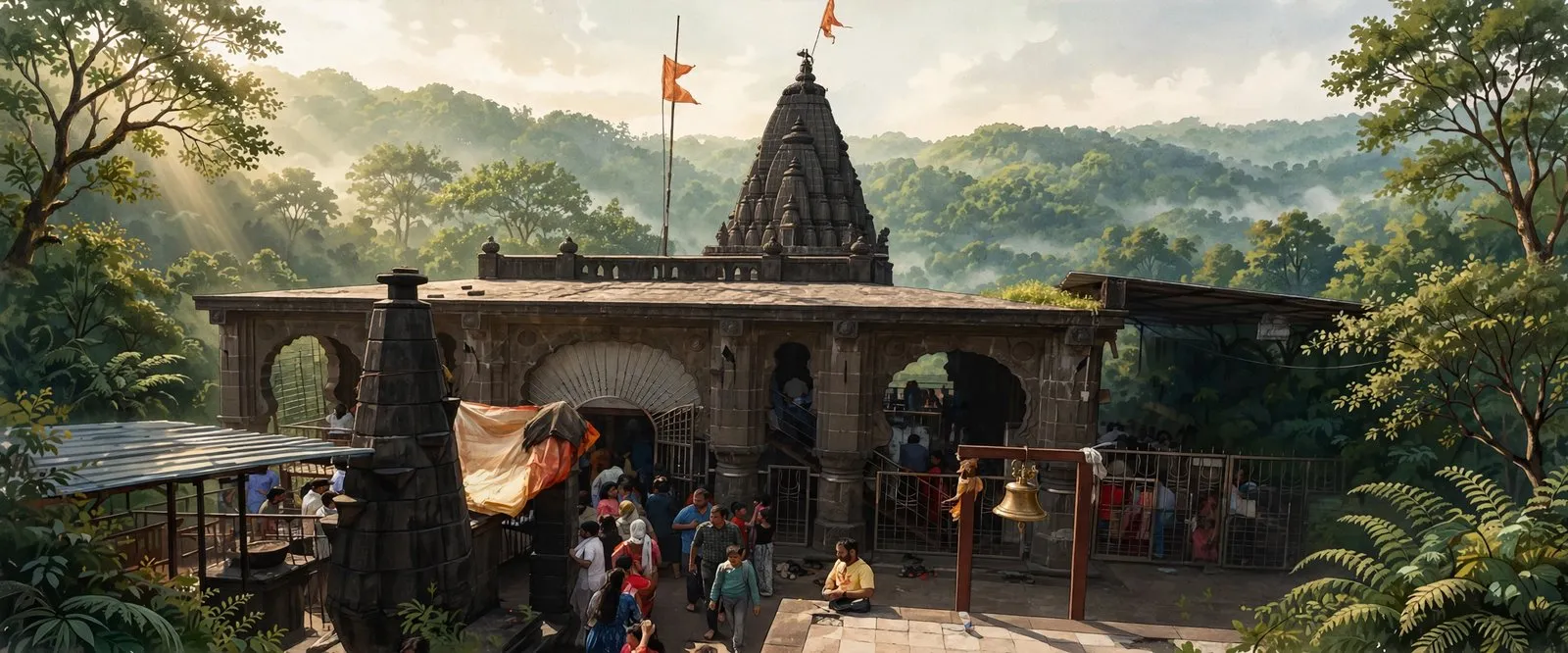
Bhimashankar Temple is a black-stone Shiva shrine in the Sahyadri hills of Pune district, Maharashtra, and one of the twelve Jyotirlingas. The present Nagara-style temple dates to the 13th century, with its pillared hall and spire added by the Maratha statesman Nana Phadnavis in the 18th century. It stands inside a wildlife sanctuary at the source of the Bhima river, about 127 kilometres by road from Pune, and draws large crowds each Mahashivratri.
- Punjabi name
- ਭੀਮਾਸ਼ੰਕਰ ਮੰਦਰ
- Country
- India
- State
- Maharashtra
- Location
- Bhimashankar village, Khed taluka, Pune district
- Deity
- Shiva, as Bhimashankar
- Elevation
- 934 m (3,064 ft)
All 11 facts
- Architecture
- Nagara style, black stone; 13th century, pillared hall and spire added 18th century
- Pilgrimage
- One of the twelve Jyotirlingas
- River
- Source of the Bhima river
- Festival
- Mahashivratri
- Distance
- About 127 km from Pune, 200 km from Mumbai
What is Bhimashankar Temple?
Bhimashankar is a Shiva temple in its own village in Khed taluka of Pune district, Maharashtra, roughly 127 kilometres by road from Pune, in the Ghat region of the Sahyadri hills. It holds one of the twelve Jyotirlingas, the most venerated Shiva shrines of Hinduism, making it one of Maharashtra's great pilgrimage centres alongside Trimbakeshwar and Grishneshwar. Unlike most Deccan temples, it is built in the Nagara style of the north, carved from black stone, with the medieval shrine later expanded under the Marathas. It stands at 934 metres in the Bhimashankar forest range, surrounded by rare plants and animals.
The Bhima river begins here, rising near the temple and flowing southeast to join the Krishna near Raichur. The shrine and the river have been known for centuries: the medieval saint Jnaneshwar is recorded as having visited, and the Bhimashankaram shrine and the Bhimarathi river appear in literature going back to the 13th century.
The Tripurasura legend
Tradition links the shrine to the asura Tripura. The story says Tripura performed such severe penance that Brahma granted him three wishes: immunity from gods, demons, yakshas and gandharvas; three flying fortresses that could not be broken; and the power to travel anywhere in the universe. Armed with these boons, Tripura conquered the three worlds, defeating even Indra, king of the heavens.
At the gods' pleading, Shiva took the form of Bhim Shankara on the crest of the Sahyadri hills and destroyed Tripura. The sweat that poured from Shiva's body after the battle is said to have formed the Bhimarathi, the Bhima river. The self-manifested (swayambhu) lingam at the centre of the sanctum marks the spot where Shiva rested after the victory. Kamalaja Mata, a form of Parvati honoured in a shrine nearby, is said to have aided Shiva in the battle, along with his ganas and the spirits Shaakini and Daakini.
Why does the temple have a Portuguese church bell?
The present temple is a blend of old and new. The core shrine is 13th-century work in the Nagara style, showing the skill of the ancient Vishwakarma sculptors; the sabhamandap (pillared hall) and the shikhara were built in the 18th century by Nana Phadnavis, the Maratha statesman and Peshwa minister. The Marathas patronised the shrine for generations: Chhatrapati Shivaji granted the village of Kharosi to the temple and made endowments for its daily worship.
The strangest object at the temple is a large Roman-style church bell hanging in front of the shrine. Chimaji Appa, brother of Bajirao I, carried church bells back as trophies after the Marathas defeated the Portuguese at the Battle of Baçaim (Vasai) in February 1739. He offered one at Bhimashankar and another at Menavali near Wai, on the banks of the Krishna. A Portuguese bell in a Hindu temple courtyard is a small, unmissable reminder of the Maratha-Portuguese wars.
What can a pilgrim see at the shrine?
As with other Shiva temples of the region, the sanctum sits at a lower level, with the swayambhu lingam precisely at the centre of the garbhagriha. The pillars and doorframes are covered in intricate carvings of deities and human figures, in a style close to the Hemadpanthi manner of the Deccan. Before the sanctum stands a large stone Nandi, Shiva's bull. Behind the temple lies Mokshakund Tirtha, the tank where pilgrims bathe before darshan, born of the sage Kaushika's penance. Within the complex is also a small Shani shrine.
Mahashivratri is the year's great festival, when a fair gathers at the temple and special buses run from Pune. The monsoon and winter months are the best seasons to visit, and the area draws trekkers, bird watchers and nature lovers as well as pilgrims.
The forest and the river around the temple
Bhimashankar sits in the Western Ghats, one of India's great biodiversity regions, and the forest range around it is protected as a wildlife sanctuary. Viewpoints like Nagphani look out over the Sahyadris, and the route from Pune runs through Manchar and the ghats. It is about 200 kilometres from Mumbai. A trip combines easily with Trimbakeshwar and Grishneshwar, Maharashtra's other Jyotirlingas, into a single Deccan pilgrimage circuit.
ਭੀਮਾਸ਼ੰਕਰ ਮੰਦਰ ਕੀ ਹੈ?
ਭੀਮਾਸ਼ੰਕਰ ਮਹਾਰਾਸ਼ਟਰ ਦੇ ਪੁਣੇ ਜ਼ਿਲ੍ਹੇ ਦੇ ਖੇੜ੍ਹ ਤਾਲੁਕੇ ਦੇ ਆਪਣੇ ਨਾਮ ਵਾਲੇ ਪਿੰਡ ਵਿੱਚ ਸ਼ਿਵ ਦਾ ਮੰਦਰ ਹੈ, ਜੋ ਸਹਿਆਦਰੀ ਦੀਆਂ ਪਹਾੜੀਆਂ ਦੇ ਘਾਟ ਇਲਾਕੇ ਵਿੱਚ ਪੁਣੇ ਤੋਂ ਸੜਕ ਰਾਹੀਂ ਲਗਭਗ 127 ਕਿਲੋਮੀਟਰ ਦੂਰ ਹੈ ਇੱਥੇ ਬਾਰਾਂ ਜਯੋਤਿਰਲਿੰਗਾਂ ਵਿੱਚੋਂ ਇੱਕ ਹੈ, ਜੋ ਹਿੰਦੂ ਧਰਮ ਦੇ ਸਭ ਤੋਂ ਪੂਜਣੀਕ ਸ਼ਿਵ ਮੰਦਰ ਹਨ, ਇਸ ਲਈ ਇਹ ਤ੍ਰਿੰਬਕੇਸ਼ਵਰ ਅਤੇ ਘ੍ਰਿਸ਼ਣੇਸ਼ਵਰ ਦੇ ਨਾਲ ਮਹਾਰਾਸ਼ਟਰ ਦੇ ਵੱਡੇ ਤੀਰਥ ਸਥਾਨਾਂ ਵਿੱਚੋਂ ਇੱਕ ਹੈ ਦੱਖਣ ਦੇ ਜ਼ਿਆਦਾਤਰ ਮੰਦਰਾਂ ਤੋਂ ਉਲਟ ਇਹ ਉੱਤਰ ਦੀ ਨਾਗਰ ਸ਼ੈਲੀ ਵਿੱਚ ਕਾਲੇ ਪੱਥਰ ਤੋਂ ਬਣਿਆ ਹੈ, ਅਤੇ ਮਰਾਠਾ ਕਾਲ ਵਿੱਚ ਮੱਧਕਾਲੀ ਮੰਦਰ ਦਾ ਵਿਸਤਾਰ ਹੋਇਆ ਇਹ 934 ਮੀਟਰ ਦੀ ਉਚਾਈ 'ਤੇ ਭੀਮਾਸ਼ੰਕਰ ਦੇ ਜੰਗਲੀ ਇਲਾਕੇ ਵਿੱਚ ਖੜ੍ਹਾ ਹੈ, ਜਿਸਦੇ ਆਲੇ-ਦੁਆਲੇ ਦੁਰਲੱਭ ਪੌਦੇ ਅਤੇ ਜਾਨਵਰ ਹਨ
ਭੀਮਾ ਨਦੀ ਇੱਥੋਂ ਸ਼ੁਰੂ ਹੁੰਦੀ ਹੈ, ਮੰਦਰ ਕੋਲੋਂ ਨਿਕਲ ਕੇ ਦੱਖਣ-ਪੂਰਬ ਵੱਲ ਵਗਦੀ ਹੋਈ ਰਾਇਚੂਰ ਕੋਲ ਕ੍ਰਿਸ਼ਨਾ ਵਿੱਚ ਮਿਲ ਜਾਂਦੀ ਹੈ ਮੰਦਰ ਅਤੇ ਨਦੀ ਸਦੀਆਂ ਤੋਂ ਜਾਣੇ ਜਾਂਦੇ ਹਨ: ਮੱਧਕਾਲੀ ਸੰਤ ਜਨਾਨੇਸ਼ਵਰ ਦੇ ਇੱਥੇ ਆਉਣ ਦਾ ਜ਼ਿਕਰ ਮਿਲਦਾ ਹੈ, ਅਤੇ ਭੀਮਾਸ਼ੰਕਰਮ ਮੰਦਰ ਤੇ ਭੀਮਰਥੀ ਨਦੀ 13ਵੀਂ ਸਦੀ ਦੇ ਸਾਹਿਤ ਵਿੱਚ ਵੀ ਆਉਂਦੇ ਹਨ
ਤ੍ਰਿਪੁਰਾਸੁਰ ਦੀ ਕਥਾ
ਪਰੰਪਰਾ ਮੰਦਰ ਨੂੰ ਅਸੁਰ ਤ੍ਰਿਪੁਰ ਨਾਲ ਜੋੜਦੀ ਹੈ ਕਥਾ ਕਹਿੰਦੀ ਹੈ ਕਿ ਤ੍ਰਿਪੁਰ ਨੇ ਐਸੀ ਘੋਰ ਤਪੱਸਿਆ ਕੀਤੀ ਕਿ ਬ੍ਰਹਮਾ ਨੇ ਉਸਨੂੰ ਤਿੰਨ ਵਰ ਦਿੱਤੇ: ਦੇਵਤਿਆਂ, ਦਾਨਵਾਂ, ਯਕਸ਼ਾਂ ਅਤੇ ਗੰਧਰਵਾਂ ਤੋਂ ਅਭੇਦਤਾ; ਤਿੰਨ ਉੱਡਦੇ ਕਿਲੇ ਜੋ ਤੋੜੇ ਨਾ ਜਾ ਸਕਣ; ਅਤੇ ਬ੍ਰਹਿਮੰਡ ਵਿੱਚ ਕਿਤੇ ਵੀ ਜਾਣ ਦੀ ਸ਼ਕਤੀ ਇਨ੍ਹਾਂ ਵਰਾਂ ਨਾਲ ਲੈਸ ਹੋ ਕੇ ਤ੍ਰਿਪੁਰ ਨੇ ਤਿੰਨਾਂ ਲੋਕਾਂ ਨੂੰ ਜਿੱਤ ਲਿਆ, ਇੱਥੋਂ ਤੱਕ ਕਿ ਸਵਰਗ ਦੇ ਰਾਜਾ ਇੰਦਰ ਨੂੰ ਵੀ ਹਰਾ ਦਿੱਤਾ
ਦੇਵਤਿਆਂ ਦੀ ਬੇਨਤੀ 'ਤੇ ਸ਼ਿਵ ਨੇ ਸਹਿਆਦਰੀ ਦੀਆਂ ਪਹਾੜੀਆਂ ਦੀ ਚੋਟੀ 'ਤੇ ਭੀਮ ਸ਼ੰਕਰ ਦਾ ਰੂਪ ਧਾਰਿਆ ਅਤੇ ਤ੍ਰਿਪੁਰ ਦਾ ਨਾਸ਼ ਕੀਤਾ ਕਿਹਾ ਜਾਂਦਾ ਹੈ ਕਿ ਲੜਾਈ ਤੋਂ ਬਾਅਦ ਸ਼ਿਵ ਦੇ ਸਰੀਰ ਤੋਂ ਵਗੇ ਪਸੀਨੇ ਤੋਂ ਭੀਮਰਥੀ, ਭੀਮਾ ਨਦੀ, ਬਣੀ ਗਰਭਗ੍ਰਹਿ ਦੇ ਕੇਂਦਰ ਵਿੱਚ ਸਵੈਭੂ ਲਿੰਗਮ ਉਸ ਥਾਂ ਦੀ ਨਿਸ਼ਾਨੀ ਹੈ ਜਿੱਥੇ ਸ਼ਿਵ ਨੇ ਜਿੱਤ ਤੋਂ ਬਾਅਦ ਵਿਸ਼ਰਾਮ ਕੀਤਾ ਕਮਲਾਜਾ ਮਾਤਾ, ਨੇੜਲੇ ਮੰਦਰ ਵਿੱਚ ਪੂਜੀ ਜਾਣ ਵਾਲੀ ਪਾਰਵਤੀ ਦਾ ਰੂਪ, ਤ੍ਰਿਪੁਰ ਵਿਰੁੱਧ ਲੜਾਈ ਵਿੱਚ ਸ਼ਿਵ ਦੀ ਸਹਾਇਤਾ ਕਰਨ ਵਾਲੀ ਮੰਨੀ ਜਾਂਦੀ ਹੈ, ਨਾਲ ਹੀ ਉਨ੍ਹਾਂ ਦੇ ਗਣ ਅਤੇ ਸ਼ਾਕਿਨੀ-ਡਾਕਿਨੀ ਵੀ
ਮੰਦਰ ਵਿੱਚ ਪੁਰਤਗਾਲੀ ਚਰਚ ਦੀ ਘੰਟੀ ਕਿਉਂ ਹੈ?
ਅੱਜ ਦਾ ਮੰਦਰ ਪੁਰਾਣੇ ਅਤੇ ਨਵੇਂ ਦਾ ਮੇਲ ਹੈ ਮੁੱਖ ਮੰਦਰ ਨਾਗਰ ਸ਼ੈਲੀ ਵਿੱਚ 13ਵੀਂ ਸਦੀ ਦਾ ਕੰਮ ਹੈ, ਜੋ ਪ੍ਰਾਚੀਨ ਵਿਸ਼ਵਕਰਮਾ ਸ਼ਿਲਪਕਾਰਾਂ ਦੀ ਕਲਾ ਦਰਸਾਉਂਦਾ ਹੈ; ਸਭਾਮੰਡਪ (ਥੰਮ੍ਹਾਂ ਵਾਲਾ ਹਾਲ) ਅਤੇ ਸ਼ਿਖਰ 18ਵੀਂ ਸਦੀ ਵਿੱਚ ਮਰਾਠਾ ਰਾਜਨੇਤਾ ਅਤੇ ਪੇਸ਼ਵਾ ਮੰਤਰੀ ਨਾਨਾ ਫੜਨਵੀਸ ਨੇ ਬਣਵਾਏ ਸਨ ਮਰਾਠਿਆਂ ਨੇ ਪੀੜ੍ਹੀਆਂ ਤੱਕ ਮੰਦਰ ਦੀ ਸਰਪ੍ਰਸਤੀ ਕੀਤੀ: ਛਤਰਪਤੀ ਸ਼ਿਵਾਜੀ ਨੇ ਖਰੋਸੀ ਪਿੰਡ ਮੰਦਰ ਨੂੰ ਦਾਨ ਕੀਤਾ ਅਤੇ ਰੋਜ਼ਾਨਾ ਪੂਜਾ ਲਈ ਦਾਨ ਦਿੱਤੇ
ਮੰਦਰ ਦੀ ਸਭ ਤੋਂ ਅਜੀਬ ਚੀਜ਼ ਮੰਦਰ ਦੇ ਸਾਹਮਣੇ ਲਟਕਦੀ ਵੱਡੀ ਰੋਮਨ ਸ਼ੈਲੀ ਦੀ ਚਰਚ ਦੀ ਘੰਟੀ ਹੈ ਚਿਮਾਜੀ ਅੱਪਾ, ਬਾਜੀਰਾਓ ਪਹਿਲੇ ਦੇ ਭਰਾ, ਫਰਵਰੀ 1739 ਵਿੱਚ ਬਸਈ (ਵਸਈ) ਦੀ ਲੜਾਈ ਵਿੱਚ ਪੁਰਤਗਾਲੀਆਂ 'ਤੇ ਮਰਾਠਿਆਂ ਦੀ ਜਿੱਤ ਤੋਂ ਬਾਅਦ ਚਰਚ ਦੀਆਂ ਘੰਟੀਆਂ ਜਿੱਤ ਦੇ ਨਿਸ਼ਾਨ ਵਜੋਂ ਲੈ ਆਏ ਸਨ ਉਨ੍ਹਾਂ ਨੇ ਇੱਕ ਘੰਟੀ ਭੀਮਾਸ਼ੰਕਰ ਨੂੰ ਅਤੇ ਦੂਜੀ ਕ੍ਰਿਸ਼ਨਾ ਕੰਢੇ ਵਾਈ ਕੋਲ ਮੇਨਵਲੀ ਨੂੰ ਚੜ੍ਹਾਈ ਹਿੰਦੂ ਮੰਦਰ ਦੇ ਵਿਹੜੇ ਵਿੱਚ ਪੁਰਤਗਾਲੀ ਘੰਟੀ ਮਰਾਠਾ-ਪੁਰਤਗਾਲੀ ਲੜਾਈਆਂ ਦੀ ਛੋਟੀ, ਅਣਦੇਖੀ ਨਾ ਹੋਣ ਵਾਲੀ ਯਾਦ ਹੈ
ਸ਼ਰਧਾਲੂ ਮੰਦਰ ਵਿੱਚ ਕੀ ਦੇਖ ਸਕਦੇ ਹਨ?
ਇਸ ਇਲਾਕੇ ਦੇ ਹੋਰ ਸ਼ਿਵ ਮੰਦਰਾਂ ਵਾਂਗ ਗਰਭਗ੍ਰਹਿ ਹੇਠਲੇ ਪੱਧਰ 'ਤੇ ਹੈ, ਅਤੇ ਸਵੈਭੂ ਲਿੰਗਮ ਗਰਭਗ੍ਰਹਿ ਦੇ ਬਿਲਕੁਲ ਕੇਂਦਰ ਵਿੱਚ ਹੈ ਥੰਮ੍ਹ ਅਤੇ ਚੌਖਟ ਦੇਵਤਿਆਂ ਅਤੇ ਮਨੁੱਖੀ ਆਕ੍ਰਿਤੀਆਂ ਦੀਆਂ ਬਾਰੀਕ ਨੱਕਾਸ਼ੀਆਂ ਨਾਲ ਢਕੇ ਹਨ, ਜੋ ਦੱਖਣ ਦੀ ਹੇਮਾਡਪੰਥੀ ਸ਼ੈਲੀ ਦੇ ਨੇੜੇ ਹੈ ਗਰਭਗ੍ਰਹਿ ਦੇ ਸਾਹਮਣੇ ਸ਼ਿਵ ਦੇ ਬਲਦ ਨੰਦੀ ਦੀ ਵੱਡੀ ਪੱਥਰ ਦੀ ਮੂਰਤੀ ਹੈ ਮੰਦਰ ਦੇ ਪਿੱਛੇ ਮੋਕਸ਼ਕੁੰਡ ਤੀਰਥ ਹੈ, ਉਹ ਤਾਲਾਬ ਜਿੱਥੇ ਸ਼ਰਧਾਲੂ ਦਰਸ਼ਨ ਤੋਂ ਪਹਿਲਾਂ ਇਸ਼ਨਾਨ ਕਰਦੇ ਹਨ, ਜੋ ਰਿਸ਼ੀ ਕੌਸ਼ਿਕ ਦੀ ਤਪੱਸਿਆ ਤੋਂ ਬਣਿਆ ਮੰਦਰ ਸਮੂਹ ਵਿੱਚ ਇੱਕ ਛੋਟਾ ਸ਼ਨੀ ਮੰਦਰ ਵੀ ਹੈ
ਮਹਾਸ਼ਿਵਰਾਤਰੀ ਸਾਲ ਦਾ ਵੱਡਾ ਤਿਉਹਾਰ ਹੈ, ਜਦੋਂ ਮੰਦਰ ਵਿੱਚ ਮੇਲਾ ਲੱਗਦਾ ਹੈ ਅਤੇ ਪੁਣੇ ਤੋਂ ਵਿਸ਼ੇਸ਼ ਬੱਸਾਂ ਚਲਦੀਆਂ ਹਨ ਜਾਣ ਲਈ ਸਭ ਤੋਂ ਵਧੀਆ ਮੌਸਮ ਮਾਨਸੂਨ ਅਤੇ ਸਰਦੀਆਂ ਹਨ, ਅਤੇ ਇਹ ਇਲਾਕਾ ਸ਼ਰਧਾਲੂਆਂ ਦੇ ਨਾਲ-ਨਾਲ ਟ੍ਰੈਕਿੰਗ ਕਰਨ ਵਾਲਿਆਂ, ਪੰਛੀ ਵੇਖਣ ਵਾਲਿਆਂ ਅਤੇ ਕੁਦਰਤ ਪ੍ਰੇਮੀਆਂ ਨੂੰ ਵੀ ਆਕਰਸ਼ਿਤ ਕਰਦਾ ਹੈ
ਮੰਦਰ ਦੇ ਆਲੇ-ਦੁਆਲੇ ਦਾ ਜੰਗਲ ਅਤੇ ਨਦੀ
ਭੀਮਾਸ਼ੰਕਰ ਪੱਛਮੀ ਘਾਟ ਵਿੱਚ ਹੈ, ਜੋ ਭਾਰਤ ਦੇ ਵੱਡੇ ਜੈਵ-ਵਿਵਿਧਤਾ ਵਾਲੇ ਇਲਾਕਿਆਂ ਵਿੱਚੋਂ ਇੱਕ ਹੈ, ਅਤੇ ਇਸਦੇ ਆਲੇ-ਦੁਆਲੇ ਦਾ ਜੰਗਲੀ ਇਲਾਕਾ ਵਣਜੀਵ ਅਭਯਾਰਣਯ ਵਜੋਂ ਸੁਰੱਖਿਅਤ ਹੈ ਨਾਗਫਣੀ ਵਰਗੀਆਂ ਥਾਵਾਂ ਤੋਂ ਸਹਿਆਦਰੀ ਦਾ ਵਿਸ਼ਾਲ ਦ੍ਰਿਸ਼ ਦਿਖਾਈ ਦਿੰਦਾ ਹੈ, ਅਤੇ ਪੁਣੇ ਤੋਂ ਸਫ਼ਰ ਮੰਚਰ ਅਤੇ ਘਾਟਾਂ ਰਾਹੀਂ ਹੁੰਦਾ ਹੈ ਇਹ ਮੁੰਬਈ ਤੋਂ ਲਗਭਗ 200 ਕਿਲੋਮੀਟਰ ਹੈ ਯਾਤਰਾ ਨੂੰ ਤ੍ਰਿੰਬਕੇਸ਼ਵਰ ਅਤੇ ਘ੍ਰਿਸ਼ਣੇਸ਼ਵਰ, ਮਹਾਰਾਸ਼ਟਰ ਦੇ ਹੋਰ ਜਯੋਤਿਰਲਿੰਗਾਂ, ਨਾਲ ਜੋੜ ਕੇ ਦੱਖਣ ਦੀ ਇੱਕ ਯਾਤਰਾ ਬਣਾਈ ਜਾ ਸਕਦੀ ਹੈ