
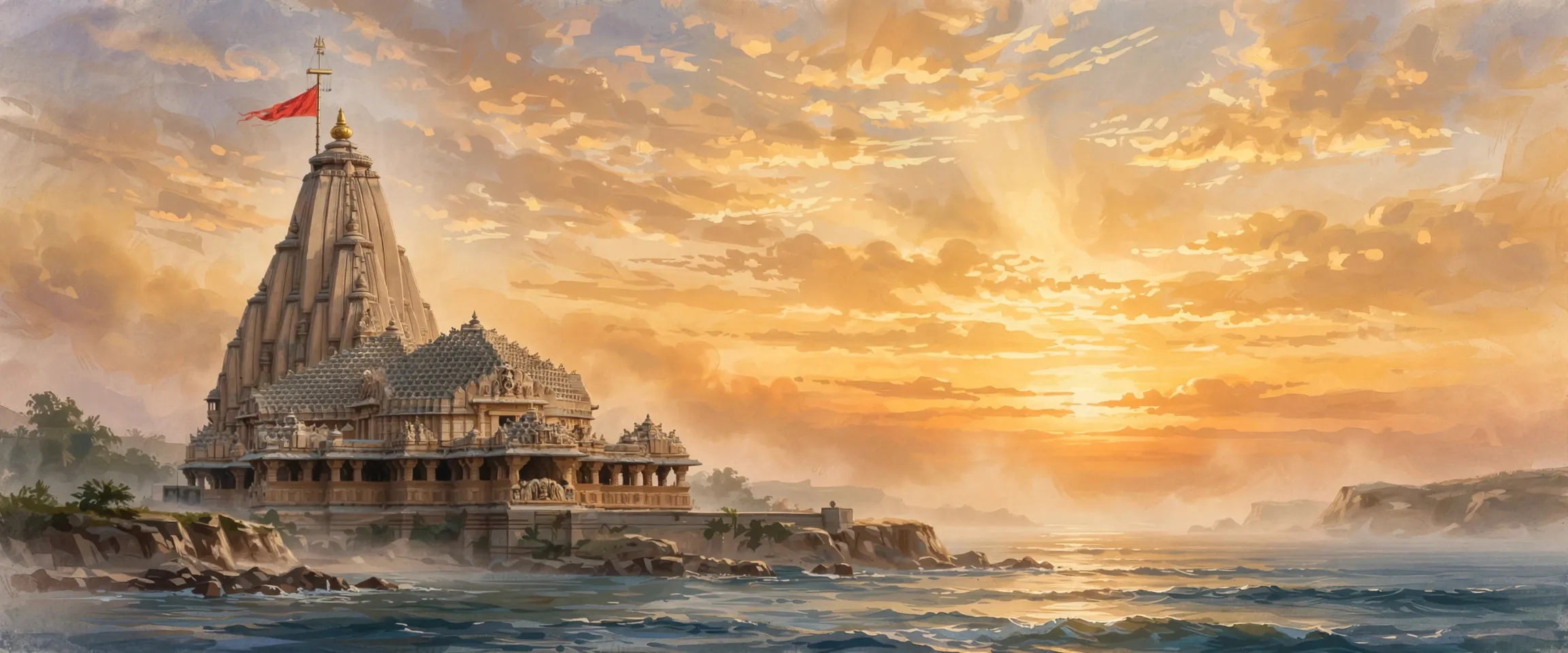
Somnath Temple at Prabhas Patan in Veraval, Gujarat, is the first and most storied of the twelve Jyotirlingas — shrines where Shiva is worshipped as a self-manifested pillar of light. It stands on the Arabian Sea coast at the Triveni Sangam of the Kapila, Hiran and Sarasvati rivers, a pilgrimage site named in the Mahabharata and the Shiva Purana. Destroyed repeatedly from Mahmud of Ghazni's 1026 raid onward, it was rebuilt in the present Māru-Gurjara style after independence on Vallabhbhai Patel's order, and consecrated by President Rajendra Prasad on 11 May 1951.
- Punjabi name
- ਸੋਮਨਾਥ ਮੰਦਰ
- Country
- India
- State
- Gujarat
- District
- Gir Somnath
- City
- Prabhas Patan, Veraval
- Deity
- Shiva (as the Somnath Jyotirlinga)
All 11 facts
- Jyotirlinga
- First of the twelve
- Architectural style
- Māru-Gurjara (Solanki), a school of the Nagara tradition
- Managed by
- Shree Somnath Trust
- Present temple completed
- May 1951
- Rebuilt by order of
- Vallabhbhai Patel, November 1947
What is Somnath Temple?
Somnath — ‘Lord of the Soma’, the moon — is one of Hinduism’s holiest shrines: a temple to Shiva standing on the Arabian Sea at Prabhas Patan, a short drive from Veraval in Gujarat’s Gir Somnath district. It is the first of the twelve Jyotirlingas, the shrines where Shiva is worshipped as a self-manifested pillar of light, and tradition places it at the head of the entire Jyotirlinga pilgrimage. The site is a Triveni Sangam — the meeting of the Kapila, Hiran and Sarasvati rivers — and its sanctity reaches back to the great Sanskrit texts: the Mahabharata and the Bhagavata Purana both name Prabhasa as a tirtha, a crossing-place of pilgrimage, on the Saurashtra coast. What makes Somnath unlike any other temple is its history of being broken and built again. Raided in 1026 by Mahmud of Ghazni and sacked and desecrated again across the medieval centuries, it was rebuilt after independence on the orders of Vallabhbhai Patel and consecrated by India’s first President, Rajendra Prasad, on 11 May 1951.
The first Jyotirlinga
The oldest known list of the twelve Jyotirlingas, in chapter 13 of the Shiva Purana’s Jnanasamhita, puts Somnath first — ‘Somesvara in Saurashtra’. That ordering is why the Jyotirlinga pilgrimage is traditionally understood to begin here. The name itself comes from a story the temple town has told for centuries: Soma, the Moon god, is said to have lost his lustre under a curse and to have bathed in the Sarasvati at this spot to regain it — the waxing and waning of the moon following from that bath, and the town’s old name, Prabhasa, meaning ‘splendour’, from the radiance that returned. Exact dates for the earliest temple are lost: estimates run from the early centuries of the first millennium to about the 9th century CE, and archaeology has found traces of a settlement at the site but no early temple. What the records do show is a shrine growing in fame: the Gurjara-Pratihara king Nagabhata II recorded visiting ‘Someshvara’ in the early 800s, and the Chaulukya king Mularaja is believed to have built or rebuilt the temple before 997 CE.
A thousand years of destruction and rebuilding
In January 1026, during the reign of Bhima I, Mahmud of Ghazni crossed the Thar desert and raided Somnath, desecrating its Jyotirlinga and carrying off enormous plunder — an attack confirmed by the 11th-century Persian historian Al-Biruni, who also criticised the raids for ruining India’s prosperity. The shrine recovered quickly: a 1038 inscription is already silent about any ruin, and pilgrimage continued. In 1169, the Solanki king Kumarapala — urged by the ascetic Bhava Brihaspati — rebuilt the temple in ‘excellent stone studded with jewels’, replacing a decaying wooden structure. Alauddin Khalji’s general Ulugh Khan sacked it during the 1299 invasion of Gujarat; the Chudasama king Mahipala I rebuilt it in 1308, and his son Khengara reinstalled the lingam between 1331 and 1351. Zafar Khan destroyed it again in 1395, and Mahmud Begada desecrated it in 1451. Aurangzeb ordered the temple destroyed in 1665 — an order that seems not to have been carried out — and again in 1706, when the order was carried out and part of the shrine converted into a mosque. Worship did not stop: around 1783, Ahilyabai Holkar, the Maratha queen of Malwa renowned for restoring Hindu shrines, built a smaller temple beside the ruins — the Old Somnath Temple — so that the Jyotirlinga’s worship could continue. After independence, with Junagadh’s accession crisis settled, Deputy Prime Minister Vallabhbhai Patel ordered the temple’s reconstruction during his 12 November 1947 visit to Junagadh. Mahatma Gandhi blessed the proposal but insisted the funds come from the public, not the state; the Somnath Trust, headed by K. M. Munshi, took charge. The ruins were cleared in October 1950, and traditional Sompura builders raised the present temple in the Māru-Gurjara style. On 11 May 1951, President Rajendra Prasad performed the installation ceremony.
The temple as it stands today
The present Somnath Temple is built in the Māru-Gurjara style of the Solanki age — a school of the Nagara tradition of temple architecture, with a tall curving shikhara rising over the sanctum. The temple is administered by the Shree Somnath Trust. Beside it stands the smaller shrine built by Ahilyabai Holkar in the late 18th century, still known as the Old Somnath Temple. Maha Shivaratri is the temple’s great festival, when devotees arrive from across the country.
Why pilgrims keep coming back
Beyond its place at the head of the Jyotirlingas, Somnath is counted among India’s five most revered seacoast shrines — alongside Dwarka in Gujarat, Puri in Odisha, and Rameswaram and Chidambaram in Tamil Nadu. Its sanctity in the texts comes from the spot itself — a Triveni Sangam where three rivers meet the sea — and the moon legend that gives the place its name. For many pilgrims, though, it is the history of return that moves them: a shrine that was broken in 1026, in 1299, in 1395 and in 1706, and rebuilt every time. The temple as it stands is itself the monument — to devotion, and to endurance.
How do I visit Somnath?
The temple is about 400 kilometres southwest of Ahmedabad and 82 kilometres south of Junagadh. By rail, Somnath Terminus is 2.5 kilometres away and Veraval Junction about 7 kilometres; the nearest airports are Keshod, 57 kilometres away, and Diu, 85 kilometres.
Is Somnath really the first Jyotirlinga?
In tradition — yes. The Shiva Purana’s Jnanasamhita, the oldest known list of the Jyotirlingas, puts it first, and the pilgrimage traditionally begins here. Historically, the date of the earliest temple is uncertain — archaeology has found no early temple remains — but the site’s fame as a tirtha is recorded from the Mahabharata’s time.
ਸੋਮਨਾਥ ਮੰਦਰ ਕੀ ਹੈ?
ਸੋਮਨਾਥ — ‘ਸੋਮਾ’ ਭਾਵ ਚੰਦਰਮਾ ਦਾ ਮਾਲਕ — ਹਿੰਦੂ ਧਰਮ ਦੇ ਸਭ ਤੋਂ ਪਵਿੱਤਰ ਧਾਰਮਿਕ ਅਸਥਾਨਾਂ ਵਿੱਚੋਂ ਇੱਕ ਸ਼ਿਵ ਮੰਦਰ ਹੈ, ਜੋ ਗੁਜਰਾਤ ਦੇ ਗਿਰ ਸੋਮਨਾਥ ਜ਼ਿਲ੍ਹੇ ਵਿੱਚ, ਵੇਰਾਵਲ ਦੇ ਨੇੜੇ ਪ੍ਰਭਾਸ ਪਾਟਣ ਵਿੱਚ ਅਰਬ ਸਾਗਰ ਦੇ ਕੰਢੇ ਖੜ੍ਹਾ ਹੈ ਇਹ ਬਾਰ੍ਹਾਂ ਜੋਤਿਰਲਿੰਗਾਂ ਵਿੱਚੋਂ ਪਹਿਲਾ ਹੈ — ਉਹ ਧਾਰਮਿਕ ਅਸਥਾਨ ਜਿੱਥੇ ਸ਼ਿਵ ਨੂੰ ਪ੍ਰਕਾਸ਼ ਦੇ ਆਪ-ਪ੍ਰਗਟ ਥੰਮ੍ਹ ਦੇ ਰੂਪ ਵਿੱਚ ਪੂਜਿਆ ਜਾਂਦਾ ਹੈ — ਅਤੇ ਪਰੰਪਰਾ ਇਸਨੂੰ ਪੂਰੀ ਜੋਤਿਰਲਿੰਗ ਯਾਤਰਾ ਦੀ ਅਗਵਾਈ ਵਿੱਚ ਰੱਖਦੀ ਹੈ ਇਹ ਅਸਥਾਨ ਤ੍ਰਿਵੇਣੀ ਸੰਗਮ ਹੈ — ਕਪਿਲਾ, ਹਿਰਣ ਅਤੇ ਸਰਸਵਤੀ ਨਦੀਆਂ ਦਾ ਮਿਲਾਪ — ਅਤੇ ਇਸਦੀ ਪਵਿੱਤਰਤਾ ਮਹਾਂਭਾਰਤ ਅਤੇ ਭਾਗਵਤ ਪੁਰਾਣ ਵਰਗੇ ਮਹਾਨ ਸੰਸਕ੍ਰਿਤ ਗ੍ਰੰਥਾਂ ਤੱਕ ਪਹੁੰਚਦੀ ਹੈ, ਜੋ ਸੌਰਾਸ਼ਟਰ ਦੇ ਤੱਟ ‘ਤੇ ਪ੍ਰਭਾਸ ਨੂੰ ਤੀਰਥ ਕਹਿੰਦੇ ਹਨ ਸੋਮਨਾਥ ਨੂੰ ਸਭ ਮੰਦਰਾਂ ਤੋਂ ਵੱਖਰਾ ਕਰਨ ਵਾਲੀ ਗੱਲ ਇਸਦਾ ਇਤਿਹਾਸ ਹੈ — ਤੋੜਿਆ ਗਿਆ ਅਤੇ ਫਿਰ ਬਣਾਇਆ ਗਿਆ, ਵਾਰ-ਵਾਰ ਸੰਨ 1026 ਵਿੱਚ ਮਹਿਮੂਦ ਗ਼ਜ਼ਨਵੀ ਦੇ ਹਮਲੇ ਤੋਂ ਬਾਅਦ, ਮੱਧਕਾਲੀ ਸਦੀਆਂ ਵਿੱਚ ਕਈ ਵਾਰ ਤਬਾਹ ਕੀਤਾ ਗਿਆ, ਇਹ ਆਜ਼ਾਦੀ ਤੋਂ ਬਾਅਦ ਵੱਲਭਭਾਈ ਪਟੇਲ ਦੇ ਹੁਕਮ ‘ਤੇ ਦੁਬਾਰਾ ਬਣਾਇਆ ਗਿਆ ਅਤੇ 11 ਮਈ 1951 ਨੂੰ ਭਾਰਤ ਦੇ ਪਹਿਲੇ ਰਾਸ਼ਟਰਪਤੀ ਰਾਜਿੰਦਰ ਪ੍ਰਸਾਦ ਨੇ ਇਸਦੀ ਪ੍ਰਾਣ-ਪ੍ਰਤਿਸ਼ਠਾ ਕੀਤੀ
ਪਹਿਲਾ ਜੋਤਿਰਲਿੰਗ
ਬਾਰ੍ਹਾਂ ਜੋਤਿਰਲਿੰਗਾਂ ਦੀ ਸਭ ਤੋਂ ਪੁਰਾਣੀ ਜਾਣੀ-ਪਛਾਣੀ ਸੂਚੀ, ਸ਼ਿਵ ਪੁਰਾਣ ਦੀ ਜਿਆਨਸੰਹਿਤਾ (ਅਧਿਆਇ 13) ਵਿੱਚ, ਸੋਮਨਾਥ ਨੂੰ ਪਹਿਲਾ ਰੱਖਦੀ ਹੈ — ‘ਸੌਰਾਸ਼ਟਰ ਵਿੱਚ ਸੋਮੇਸ਼ਵਰ’ ਇਸੇ ਕ੍ਰਮ ਕਰਕੇ ਜੋਤਿਰਲਿੰਗ ਯਾਤਰਾ ਪਰੰਪਰਾਗਤ ਤੌਰ ‘ਤੇ ਇੱਥੋਂ ਸ਼ੁਰੂ ਹੁੰਦੀ ਮੰਨੀ ਜਾਂਦੀ ਹੈ ਨਾਂ ਦੀ ਕਹਾਣੀ ਸਦੀਆਂ ਤੋਂ ਮੰਦਰ-ਨਗਰ ਵਿੱਚ ਸੁਣਾਈ ਜਾਂਦੀ ਹੈ: ਕਿਹਾ ਜਾਂਦਾ ਹੈ ਕਿ ਸੋਮਾ, ਚੰਦਰਮਾ ਦੇਵਤਾ, ਨੇ ਸਰਾਪ ਕਾਰਨ ਆਪਣੀ ਚਮਕ ਗਵਾ ਦਿੱਤੀ ਸੀ ਅਤੇ ਇਸ ਥਾਂ ‘ਤੇ ਸਰਸਵਤੀ ਵਿੱਚ ਨਹਾ ਕੇ ਉਹ ਫਿਰ ਪਾ ਲਈ — ਚੰਦਰਮਾ ਦਾ ਵਧਣਾ-ਘਟਣਾ ਉਸੇ ਨਹਾਉਣ ਤੋਂ ਹੁੰਦਾ ਹੈ, ਅਤੇ ਨਗਰ ਦਾ ਪੁਰਾਣਾ ਨਾਂ ਪ੍ਰਭਾਸ, ਭਾਵ ‘ਚਮਕ’, ਉਸੇ ਮੁੜੀ ਹੋਈ ਰੋਸ਼ਨੀ ਤੋਂ ਹੈ ਸਭ ਤੋਂ ਪਹਿਲੇ ਮੰਦਰ ਦੀਆਂ ਤਾਰੀਖਾਂ ਗੁੰਮ ਹਨ: ਅੰਦਾਜ਼ੇ ਪਹਿਲੀ ਸਦੀ ਦੀਆਂ ਸ਼ੁਰੂਆਤੀ ਸਦੀਆਂ ਤੋਂ ਲੈ ਕੇ ਲਗਭਗ 9ਵੀਂ ਸਦੀ ਈਸਵੀ ਤੱਕ ਹਨ, ਅਤੇ ਪੁਰਾਤੱਤਵ ਨੂੰ ਇੱਥੇ ਬਸਤੀ ਦੇ ਨਿਸ਼ਾਨ ਤਾਂ ਮਿਲੇ ਹਨ ਪਰ ਪੁਰਾਣੇ ਮੰਦਰ ਦਾ ਕੋਈ ਅਵਸ਼ੇਸ਼ ਨਹੀਂ ਜੋ ਰਿਕਾਰਡ ਦੱਸਦੇ ਹਨ ਉਹ ਹੈ ਵਧਦੀ ਹੋਈ ਪ੍ਰਸਿੱਧੀ: ਗੁਰਜਰ-ਪ੍ਰਤਿਹਾਰ ਰਾਜਾ ਨਾਗਭਟ ਦੂਜੇ ਨੇ 9ਵੀਂ ਸਦੀ ਦੇ ਸ਼ੁਰੂ ਵਿੱਚ ‘ਸੋਮੇਸ਼ਵਰ’ ਦੇ ਦਰਸ਼ਨ ਦਾ ਜ਼ਿਕਰ ਕੀਤਾ, ਅਤੇ ਮੰਨਿਆ ਜਾਂਦਾ ਹੈ ਕਿ ਚੌਲੁਕਿਆ (ਸੋਲੰਕੀ) ਰਾਜਾ ਮੂਲਰਾਜ ਨੇ 997 ਈਸਵੀ ਤੋਂ ਪਹਿਲਾਂ ਇੱਥੇ ਮੰਦਰ ਬਣਾਇਆ ਜਾਂ ਦੁਬਾਰਾ ਬਣਾਇਆ
ਹਜ਼ਾਰ ਸਾਲ ਦਾ ਤੋੜਨਾ ਅਤੇ ਬਣਾਉਣਾ
ਜਨਵਰੀ 1026 ਵਿੱਚ, ਭੀਮ ਪਹਿਲੇ ਦੇ ਰਾਜ ਸਮੇਂ, ਮਹਿਮੂਦ ਗ਼ਜ਼ਨਵੀ ਨੇ ਥਾਰ ਮਾਰੂਥਲ ਪਾਰ ਕਰਕੇ ਸੋਮਨਾਥ ‘ਤੇ ਹਮਲਾ ਕੀਤਾ, ਜੋਤਿਰਲਿੰਗ ਨੂੰ ਭੰਗ ਕੀਤਾ ਅਤੇ ਬੇਅੰਤ ਲੁੱਟ ਲੈ ਗਿਆ — ਇਹ ਹਮਲਾ 11ਵੀਂ ਸਦੀ ਦੇ ਫ਼ਾਰਸੀ ਇਤਿਹਾਸਕਾਰ ਅਲ-ਬਿਰੂਨੀ ਨੇ ਦਰਜ ਕੀਤਾ, ਜਿਸਨੇ ਇਨ੍ਹਾਂ ਹਮਲਿਆਂ ਦੀ ਨਿਖੇਧੀ ਵੀ ਕੀਤੀ ਕਿ ਇਨ੍ਹਾਂ ਨੇ ਭਾਰਤ ਦੀ ਖੁਸ਼ਹਾਲੀ ਤਬਾਹ ਕਰ ਦਿੱਤੀ ਮੰਦਰ ਜਲਦੀ ਸੰਭਲ ਗਿਆ: 1038 ਦੀ ਇੱਕ ਸ਼ਿਲਾਲੇਖ ਵਿੱਚ ਤਬਾਹੀ ਦਾ ਕੋਈ ਜ਼ਿਕਰ ਨਹੀਂ, ਅਤੇ ਯਾਤਰਾ ਜਾਰੀ ਰਹੀ ਸੰਨ 1169 ਵਿੱਚ ਸੋਲੰਕੀ ਰਾਜਾ ਕੁਮਾਰਪਾਲ — ਸੰਤ ਭਵ ਬ੍ਰਿਹਸਪਤੀ ਦੇ ਕਹਿਣ ‘ਤੇ — ਨੇ ਮੰਦਰ ‘ਉੱਤਮ ਪੱਥਰ ਵਿੱਚ, ਜਵਾਹਰਾਤਾਂ ਨਾਲ ਜੜ ਕੇ’ ਦੁਬਾਰਾ ਬਣਾਇਆ, ਇੱਕ ਸੜਦੇ ਲੱਕੜ ਦੇ ਢਾਂਚੇ ਦੀ ਥਾਂ ਗੁਜਰਾਤ ‘ਤੇ 1299 ਦੇ ਹਮਲੇ ਦੌਰਾਨ ਅਲਾਉੱਦੀਨ ਖ਼ਲਜੀ ਦੇ ਸੈਨਾਪਤੀ ਉਲੁਗ਼ ਖ਼ਾਨ ਨੇ ਇਸਨੂੰ ਲੁੱਟਿਆ; ਚੂਡਾਸਮਾ ਰਾਜਾ ਮਹੀਪਾਲ ਪਹਿਲੇ ਨੇ 1308 ਵਿੱਚ ਇਸਨੂੰ ਫਿਰ ਬਣਾਇਆ, ਅਤੇ ਉਸਦੇ ਪੁੱਤਰ ਖੇਂਗਾਰ ਨੇ 1331 ਤੋਂ 1351 ਦੇ ਵਿਚਕਾਰ ਲਿੰਗਮ ਦੀ ਸਥਾਪਨਾ ਕੀਤੀ 1395 ਵਿੱਚ ਜ਼ਫ਼ਰ ਖ਼ਾਨ ਨੇ ਇਸਨੂੰ ਫਿਰ ਤਬਾਹ ਕੀਤਾ, ਅਤੇ 1451 ਵਿੱਚ ਮਹਿਮੂਦ ਬੇਗੜਾ ਨੇ ਇਸਦਾ ਅਪਮਾਨ ਕੀਤਾ 1665 ਵਿੱਚ ਔਰੰਗਜ਼ੇਬ ਨੇ ਮੰਦਰ ਤੋੜਨ ਦਾ ਹੁਕਮ ਦਿੱਤਾ — ਜੋ ਲਾਗੂ ਨਹੀਂ ਹੋਇਆ ਜਾਪਦਾ — ਅਤੇ 1706 ਵਿੱਚ ਫਿਰ ਹੁਕਮ ਦਿੱਤਾ, ਜੋ ਲਾਗੂ ਹੋਇਆ ਅਤੇ ਮੰਦਰ ਦੇ ਇੱਕ ਹਿੱਸੇ ਨੂੰ ਮਸਜਿਦ ਵਿੱਚ ਬਦਲ ਦਿੱਤਾ ਗਿਆ ਪੂਜਾ ਨਹੀਂ ਰੁਕੀ: ਲਗਭਗ 1783 ਵਿੱਚ ਮਾਲਵਾ ਦੀ ਮਰਾਠਾ ਰਾਣੀ ਅਹਿਲਿਆਬਾਈ ਹੋਲਕਰ — ਜੋ ਹਿੰਦੂ ਧਾਰਮਿਕ ਅਸਥਾਨਾਂ ਦੇ ਜੀਰਨੋੱਧਾਰ ਲਈ ਮਸ਼ਹੂਰ ਹੈ — ਨੇ ਖੰਡਰਾਂ ਦੇ ਨਾਲ ਇੱਕ ਛੋਟਾ ਮੰਦਰ ਬਣਾਇਆ — ਪੁਰਾਣਾ ਸੋਮਨਾਥ ਮੰਦਰ — ਤਾਂ ਜੋ ਜੋਤਿਰਲਿੰਗ ਦੀ ਪੂਜਾ ਜਾਰੀ ਰਹਿ ਸਕੇ ਆਜ਼ਾਦੀ ਤੋਂ ਬਾਅਦ, ਜੂਨਾਗੜ੍ਹ ਦੇ ਵਿਲੀਨੀਕਰਨ ਦੇ ਸੰਕਟ ਦੇ ਨਿਪਟਣ ‘ਤੇ, ਉਪ ਪ੍ਰਧਾਨ ਮੰਤਰੀ ਵੱਲਭਭਾਈ ਪਟੇਲ ਨੇ 12 ਨਵੰਬਰ 1947 ਨੂੰ ਜੂਨਾਗੜ੍ਹ ਦੇ ਦੌਰੇ ਦੌਰਾਨ ਮੰਦਰ ਦੇ ਪੁਨਰਨਿਰਮਾਣ ਦਾ ਹੁਕਮ ਦਿੱਤਾ ਮਹਾਤਮਾ ਗਾਂਧੀ ਨੇ ਇਸ ਪ੍ਰਸਤਾਵ ਨੂੰ ਅਸ਼ੀਰਵਾਦ ਦਿੱਤਾ ਪਰ ਜ਼ੋਰ ਦਿੱਤਾ ਕਿ ਪੈਸਾ ਜਨਤਾ ਤੋਂ ਆਵੇ, ਸਰਕਾਰ ਤੋਂ ਨਹੀਂ; ਕੇ. ਐਮ. ਮੁਨਸ਼ੀ ਦੀ ਅਗਵਾਈ ਵਿੱਚ ਸੋਮਨਾਥ ਟਰੱਸਟ ਨੇ ਕੰਮ ਸੰਭਾਲਿਆ ਅਕਤੂਬਰ 1950 ਵਿੱਚ ਖੰਡਰ ਹਟਾਏ ਗਏ, ਅਤੇ ਰਵਾਇਤੀ ਸੋਮਪੁਰਾ ਕਾਰੀਗਰਾਂ ਨੇ ਮਾਰੂ-ਗੁਰਜਰ ਸ਼ੈਲੀ ਵਿੱਚ ਵਰਤਮਾਨ ਮੰਦਰ ਉਸਾਰਿਆ 11 ਮਈ 1951 ਨੂੰ ਰਾਸ਼ਟਰਪਤੀ ਰਾਜਿੰਦਰ ਪ੍ਰਸਾਦ ਨੇ ਪ੍ਰਤਿਸ਼ਠਾ ਸਮਾਰੋਹ ਕੀਤਾ
ਅੱਜ ਦਾ ਮੰਦਰ
ਵਰਤਮਾਨ ਸੋਮਨਾਥ ਮੰਦਰ ਸੋਲੰਕੀ ਯੁਗ ਦੀ ਮਾਰੂ-ਗੁਰਜਰ ਸ਼ੈਲੀ ਵਿੱਚ ਬਣਿਆ ਹੈ — ਮੰਦਰ ਆਰਕੀਟੈਕਚਰ ਦੀ ਨਾਗਰ ਪਰੰਪਰਾ ਦਾ ਇੱਕ ਘਰਾਣਾ, ਜਿਸ ਵਿੱਚ ਗਰਭਗ੍ਰਿਹ ਦੇ ਉੱਪਰ ਉੱਚਾ ਘੁਮਾਓਦਾਰ ਸ਼ਿਖਰ ਉੱਠਦਾ ਹੈ ਮੰਦਰ ਦਾ ਪ੍ਰਬੰਧ ਸ਼੍ਰੀ ਸੋਮਨਾਥ ਟਰੱਸਟ ਕਰਦਾ ਹੈ ਇਸਦੇ ਨਾਲ ਹੀ 18ਵੀਂ ਸਦੀ ਦੇ ਅੰਤ ਵਿੱਚ ਅਹਿਲਿਆਬਾਈ ਹੋਲਕਰ ਦੁਆਰਾ ਬਣਾਇਆ ਛੋਟਾ ਮੰਦਰ ਖੜ੍ਹਾ ਹੈ, ਜੋ ਅੱਜ ਵੀ ਪੁਰਾਣਾ ਸੋਮਨਾਥ ਮੰਦਰ ਕਹਾਉਂਦਾ ਹੈ ਮਹਾਂ ਸ਼ਿਵਰਾਤਰੀ ਇੱਥੇ ਸਭ ਤੋਂ ਵੱਡਾ ਤਿਉਹਾਰ ਹੈ
ਸ਼ਰਧਾਲੂ ਵਾਰ-ਵਾਰ ਕਿਉਂ ਆਉਂਦੇ ਹਨ
ਜੋਤਿਰਲਿੰਗਾਂ ਵਿੱਚ ਪਹਿਲੇ ਸਥਾਨ ਤੋਂ ਇਲਾਵਾ, ਸੋਮਨਾਥ ਭਾਰਤ ਦੇ ਪੰਜ ਸਭ ਤੋਂ ਪੂਜਨੀਕ ਸਮੁੰਦਰੀ ਤੱਟ ਦੇ ਧਾਰਮਿਕ ਅਸਥਾਨਾਂ ਵਿੱਚ ਗਿਣਿਆ ਜਾਂਦਾ ਹੈ — ਗੁਜਰਾਤ ਵਿੱਚ ਦਵਾਰਕਾ, ਉੜੀਸਾ ਵਿੱਚ ਪੁਰੀ, ਅਤੇ ਤਮਿਲ ਨਾਡੂ ਵਿੱਚ ਰਾਮੇਸ਼ਵਰਮ ਅਤੇ ਚਿਦੰਬਰਮ ਦੇ ਨਾਲ ਗ੍ਰੰਥਾਂ ਵਿੱਚ ਇਸਦੀ ਪਵਿੱਤਰਤਾ ਇਸ ਥਾਂ ਤੋਂ ਆਉਂਦੀ ਹੈ — ਤ੍ਰਿਵੇਣੀ ਸੰਗਮ, ਜਿੱਥੇ ਤਿੰਨ ਨਦੀਆਂ ਸਮੁੰਦਰ ਨੂੰ ਮਿਲਦੀਆਂ ਹਨ — ਅਤੇ ਚੰਦਰਮਾ ਦੀ ਕਥਾ ਤੋਂ, ਜਿਸ ਤੋਂ ਇਸ ਥਾਂ ਦਾ ਨਾਂ ਪਿਆ ਪਰ ਬਹੁਤ ਸਾਰੇ ਸ਼ਰਧਾਲੂਆਂ ਲਈ ਸਭ ਤੋਂ ਵੱਧ ਹਿਲਾਉਣ ਵਾਲੀ ਗੱਲ ਵਾਪਸੀ ਦਾ ਇਤਿਹਾਸ ਹੈ: ਇੱਕ ਅਸਥਾਨ ਜੋ 1026, 1299, 1395 ਅਤੇ 1706 ਵਿੱਚ ਟੁੱਟਿਆ, ਅਤੇ ਹਰ ਵਾਰ ਫਿਰ ਬਣਾਇਆ ਗਿਆ ਜਿਵੇਂ ਅੱਜ ਖੜ੍ਹਾ ਹੈ, ਮੰਦਰ ਖੁਦ ਹੀ ਸਮਾਰਕ ਹੈ — ਸ਼ਰਧਾ ਦਾ, ਅਤੇ ਸਹਿਣਸ਼ੀਲਤਾ ਦਾ
ਸੋਮਨਾਥ ਕਿਵੇਂ ਜਾਇਆ ਜਾਵੇ?
ਮੰਦਰ ਅਹਿਮਦਾਬਾਦ ਤੋਂ ਲਗਭਗ 400 ਕਿਲੋਮੀਟਰ ਦੱਖਣ-ਪੱਛਮ ਅਤੇ ਜੂਨਾਗੜ੍ਹ ਤੋਂ 82 ਕਿਲੋਮੀਟਰ ਦੱਖਣ ਵਿੱਚ ਹੈ ਰੇਲ ਰਾਹੀਂ ਸੋਮਨਾਥ ਟਰਮੀਨਸ 2.5 ਕਿਲੋਮੀਟਰ ਅਤੇ ਵੇਰਾਵਲ ਜੰਕਸ਼ਨ ਲਗਭਗ 7 ਕਿਲੋਮੀਟਰ ਦੂਰ ਹੈ; ਨੇੜਲੇ ਹਵਾਈ ਅੱਡੇ ਕੇਸ਼ੋਦ (57 ਕਿਲੋਮੀਟਰ) ਅਤੇ ਦੀਵ (85 ਕਿਲੋਮੀਟਰ) ਹਨ
ਕੀ ਸੋਮਨਾਥ ਸੱਚਮੁੱਚ ਪਹਿਲਾ ਜੋਤਿਰਲਿੰਗ ਹੈ?
ਪਰੰਪਰਾ ਵਿੱਚ — ਹਾਂ ਸ਼ਿਵ ਪੁਰਾਣ ਦੀ ਜਿਆਨਸੰਹਿਤਾ, ਜੋਤਿਰਲਿੰਗਾਂ ਦੀ ਸਭ ਤੋਂ ਪੁਰਾਣੀ ਜਾਣੀ-ਪਛਾਣੀ ਸੂਚੀ, ਇਸਨੂੰ ਪਹਿਲਾ ਰੱਖਦੀ ਹੈ, ਅਤੇ ਯਾਤਰਾ ਪਰੰਪਰਾਗਤ ਤੌਰ ‘ਤੇ ਇੱਥੋਂ ਸ਼ੁਰੂ ਹੁੰਦੀ ਹੈ ਇਤਿਹਾਸਕ ਤੌਰ ‘ਤੇ ਸਭ ਤੋਂ ਪਹਿਲੇ ਮੰਦਰ ਦੀ ਤਾਰੀਖ਼ ਅਨਿਸ਼ਚਿਤ ਹੈ — ਪੁਰਾਤੱਤਵ ਨੂੰ ਪੁਰਾਣੇ ਮੰਦਰ ਦਾ ਕੋਈ ਅਵਸ਼ੇਸ਼ ਨਹੀਂ ਮਿਲਿਆ — ਪਰ ਤੀਰਥ ਵਜੋਂ ਇਸ ਥਾਂ ਦੀ ਪ੍ਰਸਿੱਧੀ ਮਹਾਂਭਾਰਤ ਦੇ ਸਮੇਂ ਤੋਂ ਦਰਜ ਹੈ