
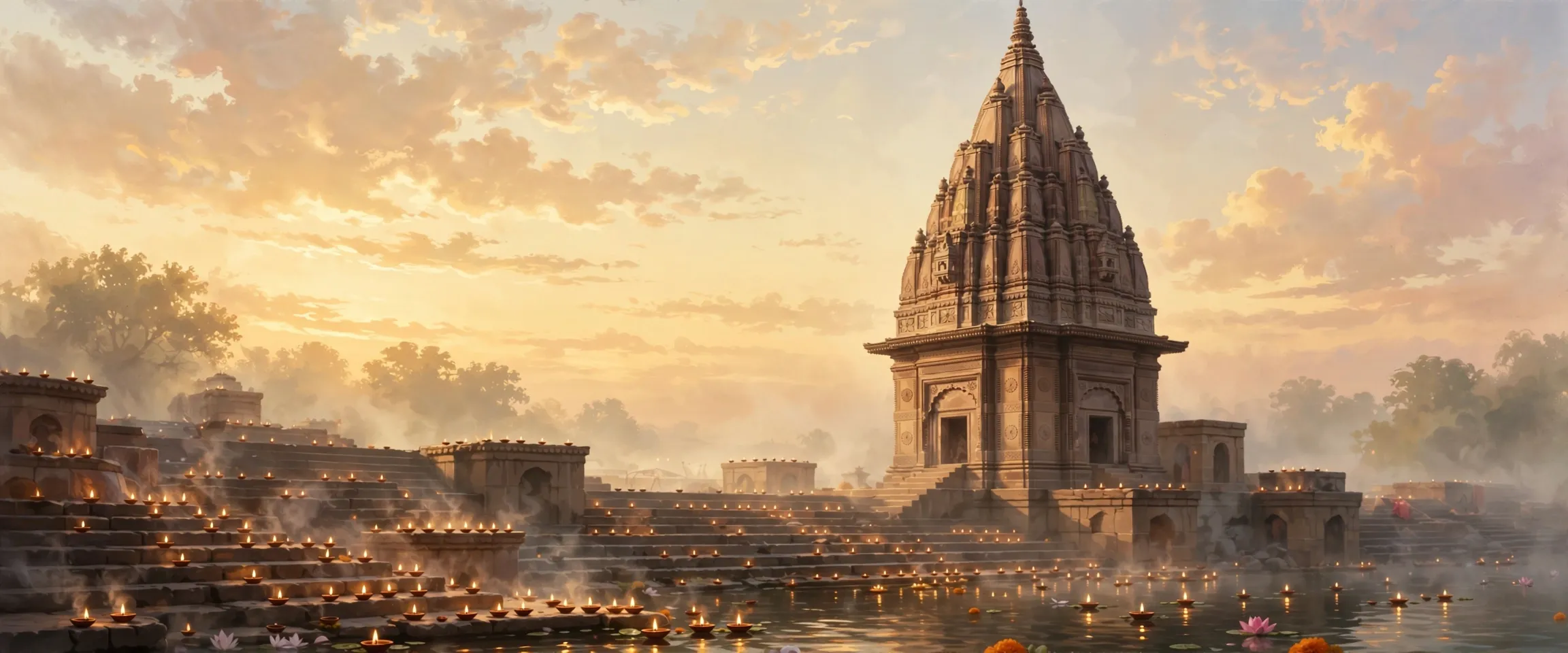
Kashi Vishwanath Temple in Varanasi, Uttar Pradesh, is the most revered of the twelve Jyotirlingas, the shrines where Shiva is worshipped as a self-manifested pillar of light. The present temple was built in 1780 by Maharani Ahilyabai Holkar of Indore beside the Gyanvapi Mosque, and its three domes were plated with a tonne of gold donated by Maharaja Ranjit Singh in 1835. In December 2021 the Kashi Vishwanath Corridor opened, expanding the temple precinct from about 3,000 square feet to nearly five lakh square feet.
- Punjabi name
- ਕਾਸ਼ੀ ਵਿਸ਼ਵਨਾਥ ਮੰਦਰ
- Country
- India
- State
- Uttar Pradesh
- City
- Varanasi
- Location
- Vishwanath Gali, on the western bank of the Ganga
- Deity
- Shiva (as Vishwanath, Lord of the Universe)
All 14 facts
- Jyotirlinga
- One of the twelve, among the most revered
- Present temple built
- 1780, by Maharani Ahilyabai Holkar
- Golden domes
- Three, plated with a tonne of gold donated by Maharaja Ranjit Singh, 1835
- Architectural style
- Nagara
- Spire height
- 15.5 metres
- Corridor opened
- 13 December 2021
- Managed by
- Shri Kashi Vishwanath Temple Trust
- Major festivals
- Maha Shivaratri, Rangbhari Ekadashi
Kashi Vishwanath Temple in Varanasi, Uttar Pradesh, is the most revered of the twelve Jyotirlingas, the shrines where Shiva is worshipped as a self-manifested pillar of light. The present temple was built in 1780 by Maharani Ahilyabai Holkar of Indore, and its three domes were plated with a tonne of gold donated by Maharaja Ranjit Singh in 1835.
What is Kashi Vishwanath Temple?
Kashi Vishwanath is a Hindu temple to Shiva in Varanasi, Uttar Pradesh, and the most revered of the twelve Jyotirlingas. Vishwanath means Lord of the Universe, and for Hindus the temple is the spiritual heart of Kashi, the ancient city on the western bank of the Ganga that is counted among the oldest living cities in the world. Pilgrims come here seeking darshan of the jyotirlinga, the self-manifested pillar of light that is Shiva's presence, and tradition holds that a visit to Kashi Vishwanath carries a special spiritual weight: in the Hindu imagination, Kashi is the city Shiva never abandons.
Who built the present temple?
The temple standing today was built in 1780 by Maharani Ahilyabai Holkar of Indore, the Maratha ruler remembered across India as a restorer of shrines. It rose on a site beside the Gyanvapi Mosque, after a long history of destruction and rebuilding. According to several historical accounts, the Ghurids destroyed an earlier temple in 1194; it was rebuilt, demolished again under Sikandar Lodi in the late 15th and early 16th century, and rebuilt once more in 1585 by Raja Man Singh I and Todar Mal during Akbar's reign. Then, according to several historical accounts, the Mughal emperor Aurangzeb ordered the Vishweshwar temple demolished in 1669, and the Gyanvapi Mosque was raised on its site in the years after. Some scholars argue the 1669 demolition was aimed at rebellious local zamindars rather than being purely religious iconoclasm, so the motive remains a matter of scholarly debate. Ahilyabai's 1780 temple, built in the traditional North Indian Nagara style, is the shrine pilgrims enter today.
Why is it called the Golden Temple of Varanasi?
In 1835, Maharaja Ranjit Singh of the Sikh Empire, at the behest of his wife Maharani Datar Kaur, donated a tonne of gold to plate the temple's domes. Three domes of the temple are covered in pure gold, which is why Varanasi's shrine is also known as the Golden Temple, not to be confused with Amritsar's Harmandir Sahib. The temple's shikhara rises 15.5 metres; the main lingam stands 60 cm tall with a 90 cm circumference on a silver altar. Around the main shrine cluster smaller sanctums to Kala Bhairava, Kartikeya, Avimukteshwara, Vishnu, Ganesha, Shani, Shiva and Parvati. North of the main temple lies the Jnana Vapi, the well of wisdom, where tradition holds the jyotirlinga was hidden for safekeeping during the Mughal invasion. Like Somnath, Kashi Vishwanath is a shrine that has been broken and raised again across the centuries, and each rebuilding has deepened its place in the Hindu imagination.
What is the Kashi Vishwanath Corridor?
For centuries pilgrims reached the temple through the narrow, congested lanes of Vishwanath Gali. The Kashi Vishwanath Corridor, whose foundation stone was laid in March 2019, changed that: its first phase was inaugurated on 13 December 2021, opening a direct, grand pathway from the Ganga's ghats to the temple. The temple precinct grew from about 3,000 square feet to nearly five lakh square feet, with 23 new buildings including a tourist facilitation centre, a Vedic Kendra, a city museum and pilgrim rest houses. During construction, more than 40 buried ancient temples were found and restored. The corridor now handles an average of 45,000 pilgrims a day, and the temple trust recorded 10 crore visitors in the years since the inauguration. A kumbhabhishekham, the ritual reconsecration of the temple, was held in July 2018 after a gap of 239 years, and in February 2022 the sanctum itself was gold-plated with 60 kg of gold given by an anonymous donor from South India.
Is Kashi a Shakti Pitha too?
The Shakti Pitha of Kashi is not the Vishwanath temple itself but its neighbour. About 250 metres north-west of Kashi Vishwanath, at Mir Ghat, stands the Vishalakshi Temple, regarded as one of the 51 Shakti Pithas, the seats of the Goddess. There Shakti is worshipped as Vishalakshi Devi with Kaal Bhairav as her Bhairava, and tradition holds that the gem from Sati's earring fell at this spot. Pilgrims commonly visit the two shrines together, honouring Shiva as Vishwanath and the Goddess as Vishalakshi in a single Kashi yatra. Kashi's religious geography is full of such pairings: the city is at once Shaiva, Shakta and deeply woven into the lives of its ghats, wells and lanes.
Festivals and daily worship
Maha Shivaratri is the temple's great festival, when Varanasi fills with devotees through the night. Twelve days later comes Rangbhari Ekadashi, a tradition more than 200 years old, when Shiva is believed to return to Kashi with Parvati after his wedding, and the city plays Holi with colour in his honour. On Vasant Panchami, the tilak ceremony is performed for Baba Vishwanath. Daily worship follows a fixed rhythm through the day: the Mangala Aarti before dawn, the Bhog Aarti at midday, the Shringar Aarti late in the evening and the Saptarishi Aarti at 7:30 in the evening, each drawing crowds into the sanctum courtyard.
What is the Gyanvapi Mosque, and how is it connected to the temple?
The Gyanvapi Mosque stands immediately beside Kashi Vishwanath, on the site where, according to several historical accounts, the earlier Vishweshwar temple was demolished in 1669 and the mosque raised in the years after. Remains associated with the old temple are visible in parts of the mosque's structure, including its foundation, columns and rear portion. The site has a live legal history: a title suit was filed in 1991, and petitions concerning worship at the Shringar Gauri shrine within the complex were filed in 2021. The status of the site remains disputed and before the courts. Visitors should know that the temple and the mosque share one of the most closely watched religious sites in India, and the entry describes the history as the sources report it, without taking a position on the dispute.
ਵਾਰਾਣਸੀ, ਉੱਤਰ ਪ੍ਰਦੇਸ਼ ਦਾ ਕਾਸ਼ੀ ਵਿਸ਼ਵਨਾਥ ਮੰਦਰ ਬਾਰਾਂ ਜੋਤਿਰਲਿੰਗਾਂ ਵਿੱਚੋਂ ਸਭ ਤੋਂ ਵੱਧ ਪੂਜਿਤ ਹੈ, ਉਹ ਧਾਰਮਿਕ ਸਥਾਨ ਜਿੱਥੇ ਸ਼ਿਵ ਦੀ ਪੂਜਾ ਸਵੈ-ਪ੍ਰਗਟ ਜੋਤਿ ਦੇ ਰੂਪ ਵਿੱਚ ਹੁੰਦੀ ਹੈ ਮੌਜੂਦਾ ਮੰਦਰ 1780 ਵਿੱਚ ਇੰਦੌਰ ਦੀ ਮਹਾਰਾਣੀ ਅਹਿਲਿਆਬਾਈ ਹੋਲਕਰ ਵੱਲੋਂ ਬਣਵਾਇਆ ਗਿਆ ਸੀ, ਅਤੇ ਇਸ ਦੇ ਤਿੰਨ ਗੁੰਬਦਾਂ ਉੱਤੇ 1835 ਵਿੱਚ ਮਹਾਰਾਜਾ ਰਣਜੀਤ ਸਿੰਘ ਵੱਲੋਂ ਦਿੱਤੇ ਇੱਕ ਟਨ ਸੋਨੇ ਦੀ ਪਰਤ ਚੜ੍ਹਾਈ ਗਈ ਸੀ
ਕਾਸ਼ੀ ਵਿਸ਼ਵਨਾਥ ਮੰਦਰ ਕੀ ਹੈ?
ਕਾਸ਼ੀ ਵਿਸ਼ਵਨਾਥ ਉੱਤਰ ਪ੍ਰਦੇਸ਼ ਦੇ ਵਾਰਾਣਸੀ ਵਿੱਚ ਸ਼ਿਵ ਦਾ ਇੱਕ ਹਿੰਦੂ ਮੰਦਰ ਹੈ ਅਤੇ ਬਾਰਾਂ ਜੋਤਿਰਲਿੰਗਾਂ ਵਿੱਚੋਂ ਸਭ ਤੋਂ ਵੱਧ ਸਤਿਕਾਰਿਆ ਜਾਂਦਾ ਹੈ ਵਿਸ਼ਵਨਾਥ ਦਾ ਅਰਥ ਹੈ ਬ੍ਰਹਿਮੰਡ ਦਾ ਸਵਾਮੀ, ਅਤੇ ਹਿੰਦੂਆਂ ਲਈ ਇਹ ਮੰਦਰ ਕਾਸ਼ੀ ਦਾ ਅਧਿਆਤਮਿਕ ਹਿਰਦਾ ਹੈ, ਗੰਗਾ ਦੇ ਪੱਛਮੀ ਕੰਢੇ ਉੱਤੇ ਉਹ ਪ੍ਰਾਚੀਨ ਨਗਰੀ ਜਿਸਨੂੰ ਦੁਨੀਆ ਦੇ ਸਭ ਤੋਂ ਪੁਰਾਣੇ ਜੀਵਿਤ ਸ਼ਹਿਰਾਂ ਵਿੱਚ ਗਿਣਿਆ ਜਾਂਦਾ ਹੈ ਸ਼ਰਧਾਲੂ ਇੱਥੇ ਜੋਤਿਰਲਿੰਗ ਦੇ ਦਰਸ਼ਨ ਲਈ ਆਉਂਦੇ ਹਨ, ਸਵੈ-ਪ੍ਰਗਟ ਰੋਸ਼ਨੀ ਦਾ ਉਹ ਥੰਮ੍ਹ ਜੋ ਸ਼ਿਵ ਦੀ ਹਾਜ਼ਰੀ ਹੈ, ਅਤੇ ਪਰੰਪਰਾ ਮੰਨਦੀ ਹੈ ਕਿ ਕਾਸ਼ੀ ਵਿਸ਼ਵਨਾਥ ਦੇ ਦਰਸ਼ਨ ਦਾ ਵਿਸ਼ੇਸ਼ ਅਧਿਆਤਮਿਕ ਮਹੱਤਵ ਹੈ: ਹਿੰਦੂ ਕਲਪਨਾ ਵਿੱਚ ਕਾਸ਼ੀ ਉਹ ਨਗਰੀ ਹੈ ਜਿਸਨੂੰ ਸ਼ਿਵ ਕਦੇ ਨਹੀਂ ਛੱਡਦੇ
ਮੌਜੂਦਾ ਮੰਦਰ ਕਿਸਨੇ ਬਣਵਾਇਆ?
ਅੱਜ ਖੜ੍ਹਾ ਮੰਦਰ 1780 ਵਿੱਚ ਇੰਦੌਰ ਦੀ ਮਹਾਰਾਣੀ ਅਹਿਲਿਆਬਾਈ ਹੋਲਕਰ ਵੱਲੋਂ ਬਣਵਾਇਆ ਗਿਆ ਸੀ, ਉਹ ਮਰਾਠਾ ਸ਼ਾਸਕ ਜਿਸਨੂੰ ਪੂਰੇ ਭਾਰਤ ਵਿੱਚ ਮੰਦਰਾਂ ਦੀ ਸੁਧਾਰਕ ਵਜੋਂ ਯਾਦ ਕੀਤਾ ਜਾਂਦਾ ਹੈ ਇਹ ਗਿਆਨਵਾਪੀ ਮਸਜਿਦ ਦੇ ਨਾਲ ਵਾਲੀ ਥਾਂ ਉੱਤੇ ਉੱਠਿਆ, ਤਬਾਹੀ ਅਤੇ ਮੁੜ ਉਸਾਰੀ ਦੇ ਲੰਬੇ ਇਤਿਹਾਸ ਤੋਂ ਬਾਅਦ ਕਈ ਇਤਿਹਾਸਕ ਵੇਰਵਿਆਂ ਅਨੁਸਾਰ 1194 ਵਿੱਚ ਗ਼ੌਰੀਆਂ ਨੇ ਪੁਰਾਣਾ ਮੰਦਰ ਤਬਾਹ ਕੀਤਾ, ਫਿਰ ਇਹ ਬਣਿਆ, 15ਵੀਂ ਸਦੀ ਦੇ ਅੰਤ ਅਤੇ 16ਵੀਂ ਸਦੀ ਦੇ ਅਰੰਭ ਵਿੱਚ ਸਿਕੰਦਰ ਲੋਧੀ ਦੇ ਸਮੇਂ ਫਿਰ ਢਾਹਿਆ ਗਿਆ, ਅਤੇ ਅਕਬਰ ਦੇ ਰਾਜ ਵਿੱਚ 1585 ਵਿੱਚ ਰਾਜਾ ਮਾਨ ਸਿੰਘ ਪਹਿਲੇ ਅਤੇ ਟੋਡਰ ਮੱਲ ਵੱਲੋਂ ਇੱਕ ਵਾਰ ਫਿਰ ਬਣਵਾਇਆ ਗਿਆ ਫਿਰ, ਕਈ ਇਤਿਹਾਸਕ ਵੇਰਵਿਆਂ ਅਨੁਸਾਰ, ਮੁਗ਼ਲ ਬਾਦਸ਼ਾਹ ਔਰੰਗਜ਼ੇਬ ਨੇ 1669 ਵਿੱਚ ਵਿਸ਼ਵੇਸ਼ਵਰ ਮੰਦਰ ਢਾਹੁਣ ਦਾ ਹੁਕਮ ਦਿੱਤਾ, ਅਤੇ ਉਸ ਤੋਂ ਬਾਅਦ ਦੇ ਸਾਲਾਂ ਵਿੱਚ ਉਸ ਥਾਂ ਉੱਤੇ ਗਿਆਨਵਾਪੀ ਮਸਜਿਦ ਉਸਾਰੀ ਗਈ ਕੁਝ ਵਿਦਵਾਨਾਂ ਦਾ ਮੰਨਣਾ ਹੈ ਕਿ 1669 ਦੀ ਤਬਾਹੀ ਬਾਗ਼ੀ ਸਥਾਨਕ ਜ਼ਿਮੀਂਦਾਰਾਂ ਨੂੰ ਚੇਤਾਵਨੀ ਦੇਣ ਲਈ ਸੀ, ਨਾ ਕਿ ਸਿਰਫ਼ ਧਾਰਮਿਕ ਮੂਰਤੀ-ਭੰਜਨ, ਇਸ ਲਈ ਇਸਦਾ ਮਕਸਦ ਵਿਦਵਾਨਾਂ ਵਿੱਚ ਬਹਿਸ ਦਾ ਵਿਸ਼ਾ ਹੈ ਅਹਿਲਿਆਬਾਈ ਦਾ 1780 ਦਾ ਮੰਦਰ, ਪਰੰਪਰਾਗਤ ਉੱਤਰ ਭਾਰਤੀ ਨਾਗਰ ਢੰਗ ਵਿੱਚ ਬਣਿਆ, ਉਹੀ ਧਾਮ ਹੈ ਜਿਸ ਵਿੱਚ ਸ਼ਰਧਾਲੂ ਅੱਜ ਪ੍ਰਵੇਸ਼ ਕਰਦੇ ਹਨ
ਇਸਨੂੰ ਵਾਰਾਣਸੀ ਦਾ ਸੁਨਹਿਰੀ ਮੰਦਰ ਕਿਉਂ ਕਹਿੰਦੇ ਹਨ?
1835 ਵਿੱਚ ਸਿੱਖ ਸਾਮਰਾਜ ਦੇ ਮਹਾਰਾਜਾ ਰਣਜੀਤ ਸਿੰਘ ਨੇ ਆਪਣੀ ਪਤਨੀ ਮਹਾਰਾਣੀ ਦਾਤਾਰ ਕੌਰ ਦੀ ਪ੍ਰੇਰਨਾ ਉੱਤੇ ਮੰਦਰ ਦੇ ਗੁੰਬਦਾਂ ਉੱਤੇ ਚੜ੍ਹਾਉਣ ਲਈ ਇੱਕ ਟਨ ਸੋਨਾ ਦਾਨ ਕੀਤਾ ਮੰਦਰ ਦੇ ਤਿੰਨ ਗੁੰਬਦ ਸ਼ੁੱਧ ਸੋਨੇ ਨਾਲ ਢਕੇ ਹਨ, ਇਸੇ ਕਰਕੇ ਵਾਰਾਣਸੀ ਦੇ ਇਸ ਧਾਮ ਨੂੰ ਸੁਨਹਿਰੀ ਮੰਦਰ ਵੀ ਕਿਹਾ ਜਾਂਦਾ ਹੈ, ਇਸਨੂੰ ਅੰਮ੍ਰਿਤਸਰ ਦੇ ਹਰਿਮੰਦਰ ਸਾਹਿਬ ਨਾਲ ਨਹੀਂ ਰਲਾਉਣਾ ਚਾਹੀਦਾ ਮੰਦਰ ਦਾ ਸ਼ਿਖਰ 15.5 ਮੀਟਰ ਉੱਚਾ ਹੈ, ਮੁੱਖ ਲਿੰਗਮ 60 ਸੈਂਟੀਮੀਟਰ ਉੱਚਾ ਹੈ ਅਤੇ ਚਾਂਦੀ ਦੀ ਜਲਹਰੀ ਉੱਤੇ 90 ਸੈਂਟੀਮੀਟਰ ਘੇਰੇ ਵਿੱਚ ਸਥਿਤ ਹੈ ਮੁੱਖ ਮੰਦਰ ਦੇ ਆਲੇ-ਦੁਆਲੇ ਕਾਲ ਭੈਰਵ, ਕਾਰਤਿਕੇਯ, ਅਵਿਮੁਕਤੇਸ਼ਵਰ, ਵਿਸ਼ਨੂੰ, ਗਣੇਸ਼, ਸ਼ਨੀ, ਸ਼ਿਵ ਅਤੇ ਪਾਰਵਤੀ ਦੇ ਛੋਟੇ ਮੰਦਰ ਹਨ ਮੁੱਖ ਮੰਦਰ ਦੇ ਉੱਤਰ ਵਿੱਚ ਜ್ಞਾਨ ਵਾਪੀ, ਗਿਆਨ ਦਾ ਖੂਹ ਹੈ, ਜਿੱਥੇ ਪਰੰਪਰਾ ਮੰਨਦੀ ਹੈ ਕਿ ਮੁਗ਼ਲ ਹਮਲੇ ਦੌਰਾਨ ਜੋਤਿਰਲਿੰਗ ਨੂੰ ਸੁਰੱਖਿਆ ਲਈ ਲੁਕਾਇਆ ਗਿਆ ਸੀ ਸੋਮਨਾਥ ਵਾਂਗ, ਕਾਸ਼ੀ ਵਿਸ਼ਵਨਾਥ ਵੀ ਉਹ ਧਾਮ ਹੈ ਜੋ ਸਦੀਆਂ ਵਿੱਚ ਟੁੱਟਿਆ ਅਤੇ ਫਿਰ ਉੱਠਿਆ ਹੈ, ਅਤੇ ਹਰ ਮੁੜ ਉਸਾਰੀ ਨੇ ਹਿੰਦੂ ਕਲਪਨਾ ਵਿੱਚ ਇਸਦਾ ਸਥਾਨ ਹੋਰ ਡੂੰਘਾ ਕੀਤਾ ਹੈ
ਕਾਸ਼ੀ ਵਿਸ਼ਵਨਾਥ ਕਾਰੀਡੋਰ ਕੀ ਹੈ?
ਸਦੀਆਂ ਤੋਂ ਸ਼ਰਧਾਲੂ ਮੰਦਰ ਤੱਕ ਵਿਸ਼ਵਨਾਥ ਗਲੀ ਦੀਆਂ ਤੰਗ, ਭੀੜੀਆਂ ਗਲੀਆਂ ਰਾਹੀਂ ਪਹੁੰਚਦੇ ਸਨ ਕਾਸ਼ੀ ਵਿਸ਼ਵਨਾਥ ਕਾਰੀਡੋਰ, ਜਿਸਦਾ ਨੀਂਹ ਪੱਥਰ ਮਾਰਚ 2019 ਵਿੱਚ ਰੱਖਿਆ ਗਿਆ, ਨੇ ਇਹ ਬਦਲ ਦਿੱਤਾ: ਇਸਦਾ ਪਹਿਲਾ ਪੜਾਅ 13 ਦਸੰਬਰ 2021 ਨੂੰ ਖੁੱਲ੍ਹਿਆ, ਜਿਸ ਨਾਲ ਗੰਗਾ ਦੇ ਘਾਟਾਂ ਤੋਂ ਮੰਦਰ ਤੱਕ ਸਿੱਧਾ, ਸ਼ਾਨਦਾਰ ਰਸਤਾ ਬਣ ਗਿਆ ਮੰਦਰ ਪਰਿਸਰ ਲਗਭਗ 3,000 ਵਰਗ ਫੁੱਟ ਤੋਂ ਵੱਧ ਕੇ ਲਗਭਗ ਪੰਜ ਲੱਖ ਵਰਗ ਫੁੱਟ ਹੋ ਗਿਆ, ਜਿਸ ਵਿੱਚ 23 ਨਵੀਆਂ ਇਮਾਰਤਾਂ ਹਨ, ਸੈਲਾਨੀ ਸਹੂਲਤ ਕੇਂਦਰ, ਵੈਦਿਕ ਕੇਂਦਰ, ਸ਼ਹਿਰ ਅਜਾਇਬਘਰ ਅਤੇ ਯਾਤਰੀ ਨਿਵਾਸ ਸਹਿਤ ਉਸਾਰੀ ਦੌਰਾਨ 40 ਤੋਂ ਵੱਧ ਦੱਬੇ ਹੋਏ ਪ੍ਰਾਚੀਨ ਮੰਦਰ ਮਿਲੇ ਅਤੇ ਉਨ੍ਹਾਂ ਦੀ ਮੁਰੰਮਤ ਕੀਤੀ ਗਈ ਕਾਰੀਡੋਰ ਵਿੱਚ ਹੁਣ ਔਸਤਨ 45,000 ਸ਼ਰਧਾਲੂ ਰੋਜ਼ ਆਉਂਦੇ ਹਨ, ਅਤੇ ਮੰਦਰ ਟਰੱਸਟ ਨੇ ਉਦਘਾਟਨ ਤੋਂ ਬਾਅਦ ਦੇ ਸਾਲਾਂ ਵਿੱਚ 10 ਕਰੋੜ ਦਰਸ਼ਨਾਰਥੀ ਦਰਜ ਕੀਤੇ ਹਨ 239 ਸਾਲਾਂ ਦੇ ਅੰਤਰਾਲ ਤੋਂ ਬਾਅਦ ਜੁਲਾਈ 2018 ਵਿੱਚ ਮੰਦਰ ਦਾ ਕੁੰਭਾਭਿਸ਼ੇਕਮ, ਰੀਤੀਗਤ ਪੁਨਰ-ਪ੍ਰਤਿਸ਼ਠਾ, ਹੋਇਆ, ਅਤੇ ਫਰਵਰੀ 2022 ਵਿੱਚ ਗਰਭਗ੍ਰਹਿ ਉੱਤੇ ਦੱਖਣ ਭਾਰਤ ਦੇ ਇੱਕ ਅਣਪਛਾਤੇ ਦਾਨੀ ਵੱਲੋਂ ਦਿੱਤੇ 60 ਕਿਲੋ ਸੋਨੇ ਦੀ ਪਰਤ ਚੜ੍ਹਾਈ ਗਈ
ਕੀ ਕਾਸ਼ੀ ਸ਼ਕਤੀ ਪੀਠ ਵੀ ਹੈ?
ਕਾਸ਼ੀ ਦੀ ਸ਼ਕਤੀ ਪੀਠ ਵਿਸ਼ਵਨਾਥ ਮੰਦਰ ਖ਼ੁਦ ਨਹੀਂ, ਸਗੋਂ ਇਸਦਾ ਗੁਆਂਢੀ ਹੈ ਕਾਸ਼ੀ ਵਿਸ਼ਵਨਾਥ ਤੋਂ ਲਗਭਗ 250 ਮੀਟਰ ਉੱਤਰ-ਪੱਛਮ ਵਿੱਚ, ਮੀਰ ਘਾਟ ਵਿਖੇ, ਵਿਸ਼ਾਲਾਕਸ਼ੀ ਮੰਦਰ ਹੈ, ਜਿਸਨੂੰ 51 ਸ਼ਕਤੀ ਪੀਠਾਂ ਵਿੱਚੋਂ ਇੱਕ ਮੰਨਿਆ ਜਾਂਦਾ ਹੈ, ਦੇਵੀ ਦੇ ਆਸਣ ਉੱਥੇ ਸ਼ਕਤੀ ਦੀ ਪੂਜਾ ਵਿਸ਼ਾਲਾਕਸ਼ੀ ਦੇਵੀ ਵਜੋਂ ਹੁੰਦੀ ਹੈ ਅਤੇ ਕਾਲ ਭੈਰਵ ਉਨ੍ਹਾਂ ਦੇ ਭੈਰਵ ਹਨ, ਅਤੇ ਪਰੰਪਰਾ ਮੰਨਦੀ ਹੈ ਕਿ ਸਤੀ ਦੇ ਕੰਨ ਦੇ ਗਹਿਣੇ ਦਾ ਨਗ ਇਸ ਥਾਂ ਉੱਤੇ ਡਿੱਗਾ ਸੀ ਸ਼ਰਧਾਲੂ ਆਮ ਤੌਰ ਉੱਤੇ ਦੋਵੇਂ ਧਾਮ ਇਕੱਠੇ ਜਾਂਦੇ ਹਨ, ਇੱਕੋ ਕਾਸ਼ੀ ਯਾਤਰਾ ਵਿੱਚ ਸ਼ਿਵ ਨੂੰ ਵਿਸ਼ਵਨਾਥ ਵਜੋਂ ਅਤੇ ਦੇਵੀ ਨੂੰ ਵਿਸ਼ਾਲਾਕਸ਼ੀ ਵਜੋਂ ਨਮਸਕਾਰ ਕਰਦੇ ਹੋਏ ਕਾਸ਼ੀ ਦਾ ਧਾਰਮਿਕ ਭੂਗੋਲ ਅਜਿਹੇ ਜੋੜਿਆਂ ਨਾਲ ਭਰਿਆ ਹੈ: ਇਹ ਨਗਰੀ ਇੱਕੋ ਸਮੇਂ ਸ਼ੈਵ, ਸ਼ਾਕਤ ਅਤੇ ਆਪਣੇ ਘਾਟਾਂ, ਖੂਹਾਂ ਅਤੇ ਗਲੀਆਂ ਦੀਆਂ ਜ਼ਿੰਦਗੀਆਂ ਨਾਲ ਡੂੰਘੀ ਜੁੜੀ ਹੈ
ਤਿਉਹਾਰ ਅਤੇ ਨਿੱਤ ਪੂਜਾ
ਮਹਾ ਸ਼ਿਵਰਾਤ੍ਰੀ ਮੰਦਰ ਦਾ ਮਹਾਨ ਤਿਉਹਾਰ ਹੈ, ਜਦੋਂ ਵਾਰਾਣਸੀ ਰਾਤ ਭਰ ਸ਼ਰਧਾਲੂਆਂ ਨਾਲ ਭਰ ਜਾਂਦੀ ਹੈ ਇਸ ਤੋਂ ਬਾਰਾਂ ਦਿਨ ਬਾਅਦ ਰੰਗਭਰੀ ਏਕਾਦਸ਼ੀ ਆਉਂਦੀ ਹੈ, 200 ਸਾਲਾਂ ਤੋਂ ਵੱਧ ਪੁਰਾਣੀ ਪਰੰਪਰਾ, ਜਦੋਂ ਮੰਨਿਆ ਜਾਂਦਾ ਹੈ ਕਿ ਸ਼ਿਵ ਆਪਣੇ ਵਿਆਹ ਤੋਂ ਬਾਅਦ ਪਾਰਵਤੀ ਨਾਲ ਕਾਸ਼ੀ ਪਰਤਦੇ ਹਨ, ਅਤੇ ਸ਼ਹਿਰ ਉਨ੍ਹਾਂ ਦੇ ਸਨਮਾਨ ਵਿੱਚ ਰੰਗਾਂ ਨਾਲ ਹੋਲੀ ਖੇਡਦਾ ਹੈ ਵਸੰਤ ਪੰਚਮੀ ਨੂੰ ਬਾਬਾ ਵਿਸ਼ਵਨਾਥ ਲਈ ਤਿਲਕ ਦੀ ਰਸਮ ਹੁੰਦੀ ਹੈ ਰੋਜ਼ਾਨਾ ਪੂਜਾ ਦਿਨ ਭਰ ਇੱਕ ਨਿਸ਼ਚਿਤ ਲੈਅ ਵਿੱਚ ਹੁੰਦੀ ਹੈ: ਸਵੇਰੇ ਮੰਗਲਾ ਆਰਤੀ, ਦੁਪਹਿਰ ਨੂੰ ਭੋਗ ਆਰਤੀ, ਸ਼ਾਮ ਨੂੰ ਸ਼ਿੰਗਾਰ ਆਰਤੀ ਅਤੇ ਸ਼ਾਮ 7:30 ਵਜੇ ਸਪਤਰਿਸ਼ੀ ਆਰਤੀ, ਹਰ ਇੱਕ ਗਰਭਗ੍ਰਹਿ ਵਿਹੜੇ ਵਿੱਚ ਭੀੜ ਲਿਆਉਂਦੀ ਹੈ
ਗਿਆਨਵਾਪੀ ਮਸਜਿਦ ਕੀ ਹੈ, ਅਤੇ ਇਸਦਾ ਮੰਦਰ ਨਾਲ ਕੀ ਸੰਬੰਧ ਹੈ?
ਗਿਆਨਵਾਪੀ ਮਸਜਿਦ ਕਾਸ਼ੀ ਵਿਸ਼ਵਨਾਥ ਦੇ ਬਿਲਕੁਲ ਨਾਲ ਖੜ੍ਹੀ ਹੈ, ਉਸ ਥਾਂ ਉੱਤੇ ਜਿੱਥੇ ਕਈ ਇਤਿਹਾਸਕ ਵੇਰਵਿਆਂ ਅਨੁਸਾਰ 1669 ਵਿੱਚ ਪੁਰਾਣਾ ਵਿਸ਼ਵੇਸ਼ਵਰ ਮੰਦਰ ਢਾਹਿਆ ਗਿਆ ਸੀ ਅਤੇ ਉਸ ਤੋਂ ਬਾਅਦ ਦੇ ਸਾਲਾਂ ਵਿੱਚ ਮਸਜਿਦ ਉਸਾਰੀ ਗਈ ਸੀ ਪੁਰਾਣੇ ਮੰਦਰ ਨਾਲ ਜੁੜੇ ਅਵਸ਼ੇਸ਼ ਮਸਜਿਦ ਦੀ ਬਣਤਰ ਦੇ ਕੁਝ ਹਿੱਸਿਆਂ ਵਿੱਚ ਦਿਸਦੇ ਹਨ, ਜਿਸ ਵਿੱਚ ਇਸਦੀ ਨੀਂਹ, ਥੰਮ੍ਹ ਅਤੇ ਪਿਛਲਾ ਹਿੱਸਾ ਸ਼ਾਮਲ ਹਨ ਇਸ ਥਾਂ ਦਾ ਜੀਵਿਤ ਕਾਨੂੰਨੀ ਇਤਿਹਾਸ ਹੈ: 1991 ਵਿੱਚ ਮਾਲਕੀ ਦਾ ਮੁਕੱਦਮਾ ਦਾਇਰ ਹੋਇਆ ਸੀ, ਅਤੇ 2021 ਵਿੱਚ ਪਰਿਸਰ ਦੇ ਅੰਦਰ ਸ਼ਿੰਗਾਰ ਗੌਰੀ ਧਾਮ ਵਿਖੇ ਪੂਜਾ ਸੰਬੰਧੀ ਅਰਜ਼ੀਆਂ ਦਾਇਰ ਹੋਈਆਂ ਸਨ ਇਸ ਥਾਂ ਦੀ ਸਥਿਤੀ ਵਿਵਾਦਿਤ ਹੈ ਅਤੇ ਅਦਾਲਤਾਂ ਸਾਹਮਣੇ ਹੈ ਸੈਲਾਨੀਆਂ ਨੂੰ ਪਤਾ ਹੋਣਾ ਚਾਹੀਦਾ ਹੈ ਕਿ ਮੰਦਰ ਅਤੇ ਮਸਜਿਦ ਭਾਰਤ ਦੇ ਸਭ ਤੋਂ ਨੇੜਿਓਂ ਨਿਗਰਾਨੀ ਵਾਲੇ ਧਾਰਮਿਕ ਸਥਾਨਾਂ ਵਿੱਚੋਂ ਇੱਕ ਨੂੰ ਸਾਂਝਾ ਕਰਦੇ ਹਨ, ਅਤੇ ਇਹ ਲੇਖ ਇਤਿਹਾਸ ਨੂੰ ਉਵੇਂ ਦੱਸਦਾ ਹੈ ਜਿਵੇਂ ਸਰੋਤ ਦੱਸਦੇ ਹਨ, ਵਿਵਾਦ ਉੱਤੇ ਕੋਈ ਪੱਖ ਲਏ ਬਿਨਾਂ