
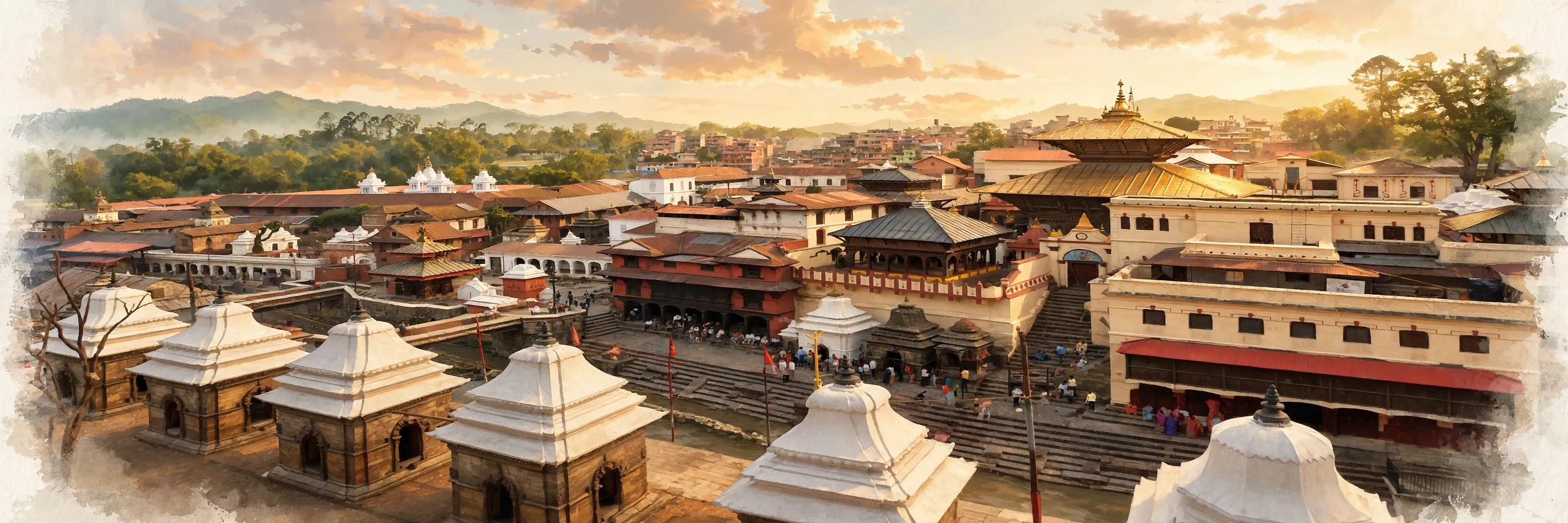
Pashupatinath Temple is a Hindu temple dedicated to Pashupati, a form of Shiva, on the banks of the Bagmati River in Kathmandu, Nepal. Listed by UNESCO as a World Heritage Site since 1979, its 246 hectare precinct holds 518 mini temples around a gold roofed pagoda whose Mukhalinga devotees honour as the head of Shiva. It is the oldest Hindu temple in Kathmandu, recorded as early as 400 CE.
- Punjabi name
- ਪਸ਼ੂਪਤੀਨਾਥ ਮੰਦਰ
- Country
- Nepal
- Province
- Bagmati Province
- City
- Kathmandu
- Deity
- Pashupati, a form of Shiva
- Architectural style
- Newari pagoda style
All 9 facts
- Heritage status
- UNESCO World Heritage Site since 1979, part of Kathmandu Valley
- Festivals
- Maha Shivaratri, Teej
- Coordinates
- 27.70972 N, 85.34861 E
On the eastern edge of Kathmandu, the Bagmati River bends past a hillside of gold roofs, white shrines and stone cremation steps, and at its heart stands the temple Hindus across Nepal and India know simply as the home of the Lord of all beings. Pashupatinath Temple is a Hindu temple dedicated to Pashupati, a form of Shiva, in Kathmandu, Nepal. The precinct spreads over 246 hectares along both banks of the sacred Bagmati and holds 518 mini temples around its principal pagoda. UNESCO placed it on the World Heritage List in 1979 as part of the Kathmandu Valley, and for devotees it is counted among the holiest abodes of Shiva in the world.
What is Pashupatinath Temple?
Pashupatinath Temple is the oldest Hindu temple in Kathmandu and one of the most significant Shiva shrines in South Asia. Its existence is recorded as early as 400 CE, and tradition traces the site to a Licchavi king, Prachanda Deva, with rebuilding under the medieval king Shivadeva and the main temple taking its present form in a renovation of 1692 after termites and earthquakes damaged the earlier structures. Inside the sanctum stands a stone Mukhalinga, a linga with faces, about one metre high on a silver base bound with a silver serpent. Its faces look to four directions and represent aspects of Shiva: Sadyojata, Vamadeva, Tatpurusha and Aghora, with Ishana as the imagined fifth. Only four priests may touch the idol, and daily worship is carried by two groups, the Bhatta priests who perform the rituals and the Rajbhandaris who serve as caretakers and assistants.
The head of Shiva: Pashupatinath, Kashi and Kedarnath
In the sacred geography told by devotees, Pashupatinath is honoured as the head of Shiva, with his body stretching south to the Kashi Vishwanath Temple in Varanasi, India. The Shiva Purana tells how Shiva, hiding from the Pandavas in the form of a bull, sank into the earth and reappeared in parts: his head at Pashupatinath, his hump at Kedarnath, his face at Rudranath, his arms at Tungnath and his navel at Madhyamaheshwar. The same chapter praises the linga of Pashupatinath as a bestower of wishes. These are beliefs of the tradition, told here as devotees tell them, and they explain why a pilgrim who comes to Kathmandu so often feels the journey continues across the border to the Himalayan shrines of India.
How is the temple built?
The main temple is built in the Newari pagoda style of the Kathmandu Valley. Two levels of roof rise in copper covered with gold over a square base, reaching 23 metres from base to pinnacle, and a gold pinnacle crowns the top. Four main doors, all covered with silver sheets, lead toward two sanctums: an inner garbhagriha where the Mukhalinga stands, and an outer sanctum like an open corridor. Around the main shrine the precinct has grown over centuries into a small sacred city of temples, ashrams, inscriptions and images, including a Vaishnava temple complex with a Rama temple from the 14th century and the Guhyeshwari Temple, mentioned in an 11th century manuscript. Along the river, the cremation ghats remind every visitor that Pashupatinath is a place of endings as well as beginnings.
Which festivals are celebrated at Pashupatinath?
The year's greatest gathering is Maha Shivaratri, the night of Shiva, when devotees fill the precinct from before dawn. Teej, the festival at which women pray for their families and for long life, is the other great celebration named for this temple, drawing crowds of women in red to the Bagmati banks. Through the rest of the year the temple keeps a daily rhythm of ritual carried by its two priestly groups, the Bhattas and the 108 Rajbhandaris who rotate in sets of three and change on every full moon day. Buddhists also hold the complex sacred: in Vajrayana tradition its cremation ground is revered as one of the eight great charnel grounds, linked with Padmasambhava and with teachers such as Matsyendranath and Gorakhnath, whose temple stands within the wider Pashupati area.
Visiting Pashupatinath
The temple stands in the Deopatan area of eastern Kathmandu, at about 817 metres above sea level, and most visitors walk its outer precinct, watch the Bagmati aarti from across the river and take in the panorama of shrines from the far bank, where the white shivalayas line up above the ghats. The inner sanctum follows the temple's own rules of entry and worship, which visitors should respect as they would at any living shrine. Read Pashupatinath alongside its Himalayan partner Kedarnath and Nepal's other great pilgrimage in this collection, Muktinath in Mustang, the high temple of liberation at the foot of the Thorong La pass.
ਕਾਠਮੰਡੂ ਦੇ ਪੂਰਬੀ ਕਿਨਾਰੇ ਉੱਤੇ, ਬਾਗਮਤੀ ਦਰਿਆ ਸੋਨੇ ਦੀਆਂ ਛੱਤਾਂ, ਚਿੱਟੇ ਧਾਮਾਂ ਅਤੇ ਪੱਥਰ ਦੀਆਂ ਸਸਕਾਰ ਪੌੜੀਆਂ ਵਾਲੀ ਇੱਕ ਪਹਾੜੀ ਕੋਲੋਂ ਮੁੜਦਾ ਹੈ, ਅਤੇ ਇਸਦੇ ਹਿਰਦੇ ਵਿੱਚ ਉਹ ਮੰਦਰ ਖੜ੍ਹਾ ਹੈ ਜਿਸਨੂੰ ਨੇਪਾਲ ਅਤੇ ਭਾਰਤ ਭਰ ਦੇ ਹਿੰਦੂ ਸਿਰਫ਼ ਸਾਰੇ ਜੀਵਾਂ ਦੇ ਸੁਆਮੀ ਦਾ ਘਰ ਜਾਣਦੇ ਹਨ ਪਸ਼ੂਪਤੀਨਾਥ ਮੰਦਰ ਸ਼ਿਵ ਦੇ ਇੱਕ ਰੂਪ ਪਸ਼ੂਪਤੀ ਨੂੰ ਸਮਰਪਿਤ ਇੱਕ ਹਿੰਦੂ ਮੰਦਰ ਹੈ, ਕਾਠਮੰਡੂ, ਨੇਪਾਲ ਵਿੱਚ ਇਹ ਪਰਿਸਰ ਪਵਿੱਤਰ ਬਾਗਮਤੀ ਦੇ ਦੋਵੇਂ ਕੰਢਿਆਂ ਨਾਲ 246 ਹੈਕਟੇਅਰ ਵਿੱਚ ਫੈਲਿਆ ਹੈ ਅਤੇ ਇਸਦੇ ਮੁੱਖ ਪੈਗੋਡਾ ਦੇ ਆਲੇ ਦੁਆਲੇ 518 ਛੋਟੇ ਮੰਦਰ ਹਨ ਯੂਨੈਸਕੋ ਨੇ ਇਸਨੂੰ 1979 ਵਿੱਚ ਕਾਠਮੰਡੂ ਵਾਦੀ ਦੇ ਹਿੱਸੇ ਵਜੋਂ ਵਿਸ਼ਵ ਵਿਰਾਸਤ ਸੂਚੀ ਵਿੱਚ ਰੱਖਿਆ, ਅਤੇ ਸ਼ਰਧਾਲੂਆਂ ਲਈ ਇਹ ਦੁਨੀਆ ਵਿੱਚ ਸ਼ਿਵ ਦੇ ਸਭ ਤੋਂ ਪਵਿੱਤਰ ਧਾਮਾਂ ਵਿੱਚ ਗਿਣਿਆ ਜਾਂਦਾ ਹੈ
ਪਸ਼ੂਪਤੀਨਾਥ ਮੰਦਰ ਕੀ ਹੈ?
ਪਸ਼ੂਪਤੀਨਾਥ ਮੰਦਰ ਕਾਠਮੰਡੂ ਦਾ ਸਭ ਤੋਂ ਪੁਰਾਣਾ ਹਿੰਦੂ ਮੰਦਰ ਹੈ ਅਤੇ ਦੱਖਣੀ ਏਸ਼ੀਆ ਦੇ ਸਭ ਤੋਂ ਮਹੱਤਵਪੂਰਨ ਸ਼ਿਵ ਧਾਮਾਂ ਵਿੱਚੋਂ ਇੱਕ ਹੈ ਇਸਦੀ ਹੋਂਦ 400 ਈਸਵੀ ਜਿੰਨੀ ਪਹਿਲਾਂ ਦਰਜ ਹੈ, ਅਤੇ ਪਰੰਪਰਾ ਸਥਾਨ ਨੂੰ ਲਿਛਵੀ ਰਾਜੇ ਪ੍ਰਚੰਡ ਦੇਵ ਨਾਲ ਜੋੜਦੀ ਹੈ, ਮੱਧਕਾਲੀ ਰਾਜੇ ਸ਼ਿਵਦੇਵ ਦੇ ਅਧੀਨ ਮੁੜ ਨਿਰਮਾਣ ਹੋਇਆ ਅਤੇ ਮੁੱਖ ਮੰਦਰ ਨੇ 1692 ਦੇ ਨਵੀਨੀਕਰਨ ਵਿੱਚ ਆਪਣਾ ਮੌਜੂਦਾ ਰੂਪ ਲਿਆ, ਜਦੋਂ ਸਿਉਂਕ ਅਤੇ ਭੂਚਾਲਾਂ ਨੇ ਪਹਿਲੀਆਂ ਇਮਾਰਤਾਂ ਨੂੰ ਨੁਕਸਾਨ ਪਹੁੰਚਾਇਆ ਸੀ ਗਰਭਗ੍ਰਹਿ ਅੰਦਰ ਇੱਕ ਪੱਥਰ ਮੁਖਲਿੰਗ ਖੜ੍ਹਾ ਹੈ, ਮੁਖਾਂ ਵਾਲਾ ਲਿੰਗ, ਚਾਂਦੀ ਦੇ ਅਧਾਰ ਉੱਤੇ ਲਗਭਗ ਇੱਕ ਮੀਟਰ ਉੱਚਾ, ਚਾਂਦੀ ਦੇ ਨਾਗ ਨਾਲ ਬੰਨ੍ਹਿਆ ਇਸਦੇ ਮੁਖ ਚਾਰ ਦਿਸ਼ਾਵਾਂ ਵੱਲ ਦੇਖਦੇ ਹਨ ਅਤੇ ਸ਼ਿਵ ਦੇ ਪੱਖਾਂ ਨੂੰ ਦਰਸਾਉਂਦੇ ਹਨ: ਸਦਯੋਜਾਤ, ਵਾਮਦੇਵ, ਤਤਪੁਰੁਸ਼ ਅਤੇ ਅਘੋਰ, ਕਲਪਿਤ ਪੰਜਵੇਂ ਵਜੋਂ ਈਸ਼ਾਨ ਸਿਰਫ਼ ਚਾਰ ਪੁਜਾਰੀ ਮੂਰਤੀ ਨੂੰ ਛੂਹ ਸਕਦੇ ਹਨ, ਅਤੇ ਰੋਜ਼ਾਨਾ ਪੂਜਾ ਦੋ ਸਮੂਹ ਕਰਦੇ ਹਨ, ਭੱਟ ਪੁਜਾਰੀ ਜੋ ਰਸਮਾਂ ਕਰਦੇ ਹਨ ਅਤੇ ਰਾਜਭੰਡਾਰੀ ਜੋ ਸੰਭਾਲਕ ਅਤੇ ਸਹਾਇਕ ਵਜੋਂ ਸੇਵਾ ਕਰਦੇ ਹਨ
ਸ਼ਿਵ ਦਾ ਸਿਰ: ਪਸ਼ੂਪਤੀਨਾਥ, ਕਾਸ਼ੀ ਅਤੇ ਕੇਦਾਰਨਾਥ
ਸ਼ਰਧਾਲੂਆਂ ਵੱਲੋਂ ਦੱਸੀ ਪਵਿੱਤਰ ਭੂਗੋਲਿਕ ਕਹਾਣੀ ਵਿੱਚ, ਪਸ਼ੂਪਤੀਨਾਥ ਨੂੰ ਸ਼ਿਵ ਦੇ ਸਿਰ ਵਜੋਂ ਸਤਕਾਰਿਆ ਜਾਂਦਾ ਹੈ, ਉਨ੍ਹਾਂ ਦਾ ਸਰੀਰ ਦੱਖਣ ਵੱਲ ਵਾਰਾਣਸੀ, ਭਾਰਤ ਵਿੱਚ ਕਾਸ਼ੀ ਵਿਸ਼ਵਨਾਥ ਮੰਦਰ ਤੱਕ ਫੈਲਿਆ ਸ਼ਿਵ ਪੁਰਾਣ ਦੱਸਦਾ ਹੈ ਕਿ ਸ਼ਿਵ, ਪਾਂਡਵਾਂ ਤੋਂ ਸਾਨ੍ਹ ਦੇ ਰੂਪ ਵਿੱਚ ਲੁਕਦੇ ਹੋਏ, ਧਰਤੀ ਵਿੱਚ ਧਸ ਗਏ ਅਤੇ ਹਿੱਸਿਆਂ ਵਿੱਚ ਮੁੜ ਪ੍ਰਗਟ ਹੋਏ: ਉਨ੍ਹਾਂ ਦਾ ਸਿਰ ਪਸ਼ੂਪਤੀਨਾਥ ਵਿਖੇ, ਕੁੱਬ ਕੇਦਾਰਨਾਥ ਵਿਖੇ, ਮੁਖ ਰੁਦਰਨਾਥ ਵਿਖੇ, ਬਾਹਾਂ ਤੁੰਗਨਾਥ ਵਿਖੇ ਅਤੇ ਨਾਭੀ ਮਧਯਮਹੇਸ਼ਵਰ ਵਿਖੇ ਉਹੀ ਅਧਿਆਇ ਪਸ਼ੂਪਤੀਨਾਥ ਦੇ ਲਿੰਗ ਦੀ ਇੱਛਾਵਾਂ ਪੂਰੀਆਂ ਕਰਨ ਵਾਲੇ ਵਜੋਂ ਉਸਤਤਿ ਕਰਦਾ ਹੈ ਇਹ ਪਰੰਪਰਾ ਦੀਆਂ ਮਾਨਤਾਵਾਂ ਹਨ, ਇੱਥੇ ਉਵੇਂ ਦੱਸੀਆਂ ਜਿਵੇਂ ਸ਼ਰਧਾਲੂ ਦੱਸਦੇ ਹਨ, ਅਤੇ ਇਹ ਸਮਝਾਉਂਦੀਆਂ ਹਨ ਕਿ ਕਾਠਮੰਡੂ ਆਇਆ ਸ਼ਰਧਾਲੂ ਇੰਨੀ ਵਾਰ ਕਿਉਂ ਮਹਿਸੂਸ ਕਰਦਾ ਹੈ ਕਿ ਯਾਤਰਾ ਸਰਹੱਦ ਪਾਰ ਭਾਰਤ ਦੇ ਹਿਮਾਲਿਆ ਧਾਮਾਂ ਤੱਕ ਜਾਰੀ ਰਹਿੰਦੀ ਹੈ
ਮੰਦਰ ਕਿਵੇਂ ਬਣਿਆ ਹੈ?
ਮੁੱਖ ਮੰਦਰ ਕਾਠਮੰਡੂ ਵਾਦੀ ਦੀ ਨੇਵਾਰੀ ਪੈਗੋਡਾ ਸ਼ੈਲੀ ਵਿੱਚ ਬਣਿਆ ਹੈ ਛੱਤ ਦੇ ਦੋ ਪੱਧਰ ਇੱਕ ਵਰਗਾਕਾਰ ਅਧਾਰ ਉੱਤੇ ਸੋਨੇ ਨਾਲ ਢੱਕੇ ਤਾਂਬੇ ਵਿੱਚ ਉੱਠਦੇ ਹਨ, ਅਧਾਰ ਤੋਂ ਸਿਖਰ ਤੱਕ 23 ਮੀਟਰ ਤੱਕ ਪਹੁੰਚਦੇ ਹਨ, ਅਤੇ ਸਿਖਰ ਉੱਤੇ ਸੋਨੇ ਦਾ ਕਲਸ਼ ਹੈ ਚਾਰ ਮੁੱਖ ਦਰਵਾਜ਼ੇ, ਸਾਰੇ ਚਾਂਦੀ ਦੀਆਂ ਚਾਦਰਾਂ ਨਾਲ ਢੱਕੇ, ਦੋ ਗਰਭਗ੍ਰਹਿਆਂ ਵੱਲ ਲੈ ਜਾਂਦੇ ਹਨ: ਇੱਕ ਅੰਦਰਲਾ ਗਰਭਗ੍ਰਹਿ ਜਿੱਥੇ ਮੁਖਲਿੰਗ ਖੜ੍ਹਾ ਹੈ, ਅਤੇ ਇੱਕ ਬਾਹਰਲਾ ਗਰਭਗ੍ਰਹਿ ਜੋ ਖੁੱਲ੍ਹੇ ਵਰਾਂਡੇ ਵਰਗਾ ਹੈ ਮੁੱਖ ਧਾਮ ਦੇ ਆਲੇ ਦੁਆਲੇ ਪਰਿਸਰ ਸਦੀਆਂ ਵਿੱਚ ਮੰਦਰਾਂ, ਆਸ਼ਰਮਾਂ, ਸ਼ਿਲਾਲੇਖਾਂ ਅਤੇ ਮੂਰਤੀਆਂ ਦਾ ਇੱਕ ਛੋਟਾ ਪਵਿੱਤਰ ਸ਼ਹਿਰ ਬਣ ਗਿਆ ਹੈ, ਜਿਸ ਵਿੱਚ 14ਵੀਂ ਸਦੀ ਦੇ ਰਾਮ ਮੰਦਰ ਵਾਲਾ ਇੱਕ ਵੈਸ਼ਨਵ ਮੰਦਰ ਪਰਿਸਰ ਅਤੇ ਗੁਹਏਸ਼ਵਰੀ ਮੰਦਰ ਸ਼ਾਮਲ ਹੈ, ਜਿਸਦਾ ਜ਼ਿਕਰ 11ਵੀਂ ਸਦੀ ਦੀ ਇੱਕ ਹੱਥ ਲਿਖਤ ਵਿੱਚ ਹੈ ਦਰਿਆ ਨਾਲ, ਸਸਕਾਰ ਘਾਟ ਹਰ ਸੈਲਾਨੀ ਨੂੰ ਯਾਦ ਦਿਵਾਉਂਦੇ ਹਨ ਕਿ ਪਸ਼ੂਪਤੀਨਾਥ ਅੰਤਾਂ ਦੇ ਨਾਲ ਨਾਲ ਸ਼ੁਰੂਆਤਾਂ ਦੀ ਵੀ ਥਾਂ ਹੈ
ਪਸ਼ੂਪਤੀਨਾਥ ਵਿਖੇ ਕਿਹੜੇ ਤਿਉਹਾਰ ਮਨਾਏ ਜਾਂਦੇ ਹਨ?
ਸਾਲ ਦਾ ਸਭ ਤੋਂ ਵੱਡਾ ਇਕੱਠ ਮਹਾਂ ਸ਼ਿਵਰਾਤਰੀ ਹੈ, ਸ਼ਿਵ ਦੀ ਰਾਤ, ਜਦੋਂ ਸ਼ਰਧਾਲੂ ਤੜਕੇ ਤੋਂ ਪਹਿਲਾਂ ਹੀ ਪਰਿਸਰ ਭਰ ਦਿੰਦੇ ਹਨ ਤੀਜ, ਉਹ ਤਿਉਹਾਰ ਜਿਸ ਵਿੱਚ ਔਰਤਾਂ ਆਪਣੇ ਪਰਿਵਾਰਾਂ ਅਤੇ ਲੰਮੀ ਉਮਰ ਲਈ ਅਰਦਾਸ ਕਰਦੀਆਂ ਹਨ, ਇਸ ਮੰਦਰ ਲਈ ਨਾਮਜ਼ਦ ਦੂਜਾ ਮਹਾਨ ਜਸ਼ਨ ਹੈ, ਜੋ ਬਾਗਮਤੀ ਕੰਢਿਆਂ ਉੱਤੇ ਲਾਲ ਪਹਿਰਾਵੇ ਵਿੱਚ ਔਰਤਾਂ ਦੀਆਂ ਭੀੜਾਂ ਖਿੱਚਦਾ ਹੈ ਸਾਲ ਦੇ ਬਾਕੀ ਸਮੇਂ ਵਿੱਚ ਮੰਦਰ ਆਪਣੇ ਦੋ ਪੁਜਾਰੀ ਸਮੂਹਾਂ ਵੱਲੋਂ ਕੀਤੀ ਰੋਜ਼ਾਨਾ ਰਸਮ ਦੀ ਲੈਅ ਰੱਖਦਾ ਹੈ, ਭੱਟ ਅਤੇ 108 ਰਾਜਭੰਡਾਰੀ ਜੋ ਤਿੰਨਾਂ ਦੇ ਸਮੂਹਾਂ ਵਿੱਚ ਵਾਰੀ ਲੈਂਦੇ ਹਨ ਅਤੇ ਹਰ ਪੂਰਨਮਾਸ਼ੀ ਵਾਲੇ ਦਿਨ ਬਦਲਦੇ ਹਨ ਬੋਧੀ ਵੀ ਪਰਿਸਰ ਨੂੰ ਪਵਿੱਤਰ ਮੰਨਦੇ ਹਨ: ਵਜਰਯਾਨ ਪਰੰਪਰਾ ਵਿੱਚ ਇਸਦੇ ਸਸਕਾਰ ਮੈਦਾਨ ਨੂੰ ਅੱਠ ਮਹਾਨ ਸ਼ਮਸ਼ਾਨ ਭੂਮੀਆਂ ਵਿੱਚੋਂ ਇੱਕ ਵਜੋਂ ਸਤਕਾਰਿਆ ਜਾਂਦਾ ਹੈ, ਪਦਮਸੰਭਵ ਨਾਲ ਅਤੇ ਮਤਸਯੇਂਦਰਨਾਥ ਅਤੇ ਗੋਰਖਨਾਥ ਵਰਗੇ ਗੁਰੂਆਂ ਨਾਲ ਜੁੜਿਆ, ਜਿਨ੍ਹਾਂ ਦਾ ਮੰਦਰ ਵੱਡੇ ਪਸ਼ੂਪਤੀ ਇਲਾਕੇ ਵਿੱਚ ਖੜ੍ਹਾ ਹੈ
ਪਸ਼ੂਪਤੀਨਾਥ ਦੀ ਯਾਤਰਾ
ਮੰਦਰ ਪੂਰਬੀ ਕਾਠਮੰਡੂ ਦੇ ਦੇਵਪਾਟਨ ਇਲਾਕੇ ਵਿੱਚ ਖੜ੍ਹਾ ਹੈ, ਸਮੁੰਦਰ ਤਲ ਤੋਂ ਲਗਭਗ 817 ਮੀਟਰ ਉੱਤੇ, ਅਤੇ ਜ਼ਿਆਦਾਤਰ ਸੈਲਾਨੀ ਇਸਦੇ ਬਾਹਰਲੇ ਪਰਿਸਰ ਵਿੱਚ ਘੁੰਮਦੇ ਹਨ, ਦਰਿਆ ਦੇ ਪਾਰੋਂ ਬਾਗਮਤੀ ਆਰਤੀ ਦੇਖਦੇ ਹਨ ਅਤੇ ਦੂਰ ਕੰਢੇ ਤੋਂ ਧਾਮਾਂ ਦਾ ਨਜ਼ਾਰਾ ਲੈਂਦੇ ਹਨ, ਜਿੱਥੇ ਚਿੱਟੇ ਸ਼ਿਵਾਲੇ ਘਾਟਾਂ ਦੇ ਉੱਪਰ ਕਤਾਰ ਵਿੱਚ ਖੜ੍ਹੇ ਹਨ ਅੰਦਰਲਾ ਗਰਭਗ੍ਰਹਿ ਮੰਦਰ ਦੇ ਆਪਣੇ ਦਾਖ਼ਲੇ ਅਤੇ ਪੂਜਾ ਦੇ ਨਿਯਮਾਂ ਦੀ ਪਾਲਣਾ ਕਰਦਾ ਹੈ, ਜਿਨ੍ਹਾਂ ਦਾ ਸੈਲਾਨੀਆਂ ਨੂੰ ਕਿਸੇ ਵੀ ਜੀਵਿਤ ਧਾਮ ਵਾਂਗ ਸਤਕਾਰ ਕਰਨਾ ਚਾਹੀਦਾ ਹੈ ਪਸ਼ੂਪਤੀਨਾਥ ਨੂੰ ਇਸਦੇ ਹਿਮਾਲਿਆ ਸਾਥੀ ਕੇਦਾਰਨਾਥ ਅਤੇ ਇਸ ਸੰਗ੍ਰਹਿ ਵਿੱਚ ਨੇਪਾਲ ਦੀ ਦੂਜੀ ਮਹਾਨ ਤੀਰਥ ਯਾਤਰਾ, ਮੁਸਤਾਂਗ ਵਿੱਚ ਮੁਕਤੀਨਾਥ, ਥੋਰੋਂਗ ਲਾ ਦੱਰੇ ਦੇ ਪੈਰਾਂ ਵਿੱਚ ਮੁਕਤੀ ਦੇ ਉੱਚੇ ਮੰਦਰ, ਨਾਲ ਪੜ੍ਹੋ