
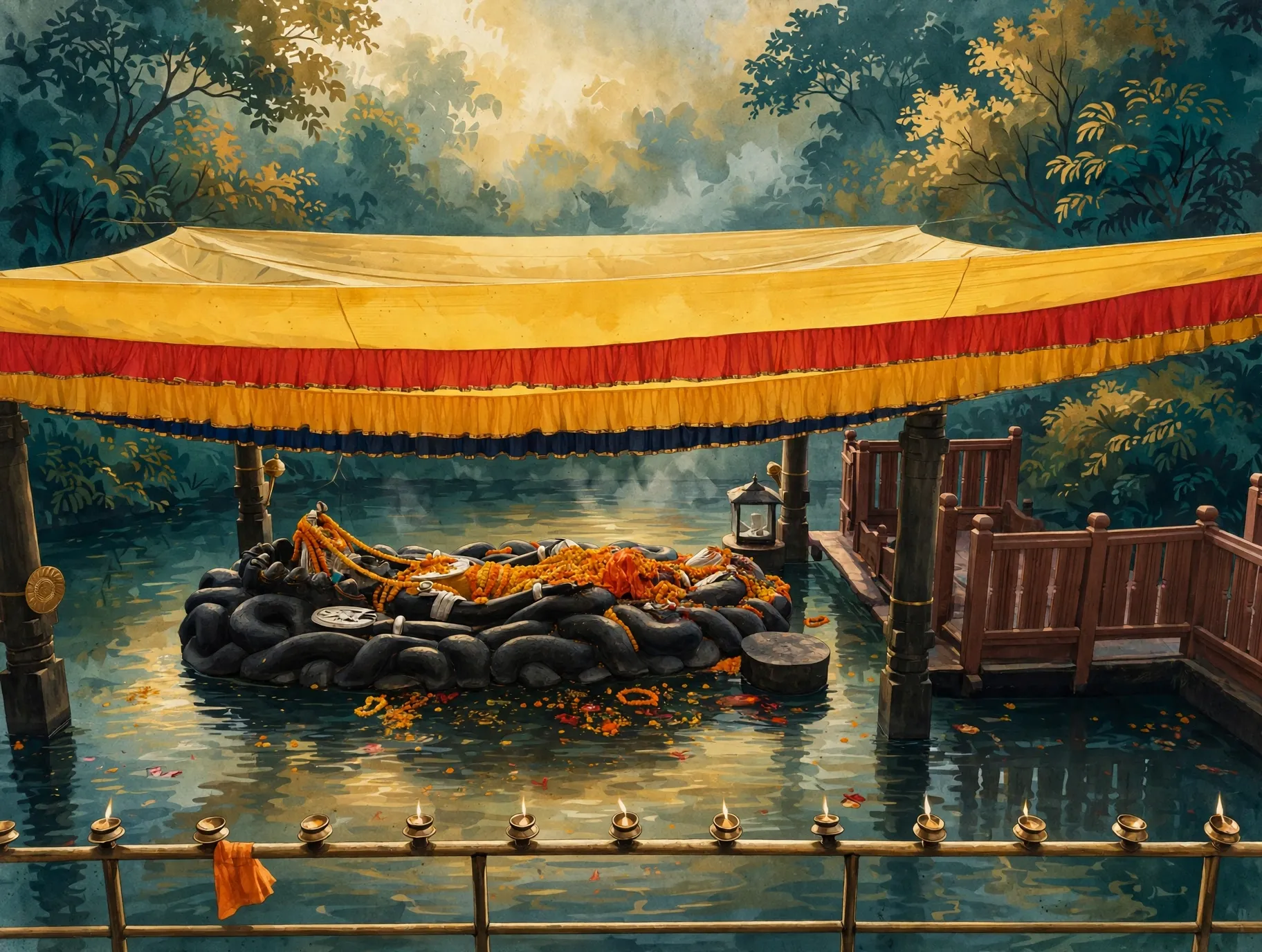
Budhanilkantha Temple is an open air Hindu temple to Vishnu in Budhanilkantha, Kathmandu district, Nepal, centred on a 5 metre reclining statue of the god carved from a single block of black basalt and lying in a 13 metre pond. Believed to be over 1,400 years old, it is considered the largest stone carving in Nepal, and its great festival, Haribodhini Ekadashi, ritually wakes the sleeping god.
- Punjabi name
- ਬੁੱਢਾਨੀਲਕੰਠ ਮੰਦਰ
- Country
- Nepal
- Province
- Bagmati Province
- District
- Kathmandu
- Town
- Budhanilkantha, below Shivapuri Hill
- Deity
- Vishnu, as Mahavishnu (Narayan)
All 10 facts
- Statue
- Reclining Vishnu, 5 m, single block of black basalt, in a 13 m pond
- Age
- Believed to be more than 1,400 years old
- Festival
- Haribodhini Ekadashi Mela, Kartika (October to November)
- Status
- Protected Ancient Monument, Ancient Monuments Preservation Act 1956
At the northern edge of the Kathmandu Valley, below the green slopes of Shivapuri Hill, a god sleeps on water. Budhanilkantha Temple is an open air Hindu temple dedicated to Vishnu, built around a single extraordinary object: a five metre statue of the god reclining on the coils of the cosmic serpent, lying in the middle of a recessed pond. There is no towering shrine room here and no roof over the deity. The statue itself is the temple, garlanded, canopied and attended in the open air, and it is considered the largest stone carving in Nepal. Pilgrims read this Kathmandu shrine alongside the valley's other great houses of worship on Jugti's Mandirs in Nepal hub, from Pashupatinath to Dakshinkali.
What is Budhanilkantha Temple?
Budhanilkantha Temple, also known as the Narayanthan Temple, is a Hindu open air temple in Budhanilkantha municipality, Kathmandu district, Nepal, about 9 kilometres from Thamel in the capital. Its name translates as Old Blue Throat. The temple is identified by its large reclining statue of Mahavishnu, the preserver god of the Hindu Trimurti alongside Brahma and Shiva. The shrine is sacred to Hindus and is also venerated by Buddhists, a sharing that local tradition presents as a sign of the religious harmony that has existed in the region since ancient times. The site is protected as an ancient monument under Nepal's Ancient Monuments Preservation Act of 1956.
The sleeping Vishnu in the pond
The main statue is carved from a single block of black basalt. It measures 5 metres, around 16.4 feet, and rests in the middle of a recessed pool of water 13 metres long. Vishnu reclines on the serpent Shesha, and in his four hands he holds the Sudarshana Chakra, a club, a conch shell and a gem. His crown is engraved with multiple Kirtimukha images and is often overlapped by a silver crown. The statue is believed to be more than 1,400 years old. For many years it was popularly suggested that the statue floats in the pool: a limited scientific check in 1957 could neither confirm nor refute the claim, but a small chip taken from the statue confirmed it is a silica based stone with a remarkably low density, similar to lava rock. Local legend also tells of a mirror like image of Shiva seen beside the statue in the water at the annual Shiva festival each August; the page records that as legend, as devotees tell it.
Why is a Vishnu temple named for Shiva's blue throat?
The puzzle sits in the name itself. Nilkantha, blue throat, is a title of Shiva, earned in the story of the churning of the ocean, Samudra manthan, when Shiva drank poison to save the world. Yet the god in the pond is Vishnu. The tradition told at the temple connects the two: the spring that feeds the pond at Budhanilkantha is said to be connected to Gosaikunda, the sacred lake tied to Shiva and to the Samudra manthan story told in the Bhagavata Purana, the Vishnu Purana and the epics Ramayana and Mahabharata. Because its water is linked to Shiva's lake, the temple carries Shiva's blue throat title even though its statue is dedicated to Vishnu. Another local legend explains how the statue came to light: farmers ploughing a field at the site struck stone with their plough, dug further, and uncovered the massive image of the reclining Vishnu buried in the ground, where it has been revered ever since as a divine revelation rather than a mere archaeological find.
The festival that wakes the god
Budhanilkantha's year turns on sleep and waking. Thousands of pilgrims visit for the Haribodhini Ekadashi Mela on the 11th day of the Hindu month of Kartika, in October to November, a special ritual to wake Vishnu from his long sleep. A big fair is also held at the temple on auspicious occasions such as the Ekadashis, while Harishayani and Haribodhini mark the four month sleeping period of Vishnu in the Hindu lunar calendar. Outside festival days the shrine keeps the calm of an open air village temple: the god lies under his canopy in the pond while attendants garland him and worshippers circle the water. It makes a natural pairing with Nepal's high Vishnu shrine, Muktinath in Mustang, where Vishnu is worshipped at 3,762 metres.
Why did Nepal's kings stay away from Budhanilkantha?
One of the temple's most repeated stories concerns the kings of Nepal, and it is told as legend. King Pratap Malla, who reigned from 1641 to 1674, is said to have had a prophetic vision in which it was claimed the king was cursed: if he visited Budhanilkantha Temple, he would die prematurely. The vision led him to believe that the kings of Nepal would die if they visited the temple, and royal family members, including the monarchs who followed Pratap Malla, never visited the temple for fear of the prophecy. A second, smaller image of the sleeping god at Balaju, known as Balaji Budhanilkantha, gave the court a place to honour the deity without breaking the rule the legend imposed. Whatever its origin, the story is part of how Kathmandu understands this shrine: a god so powerful that even kings kept their distance.
Visiting Budhanilkantha
Budhanilkantha sits below Shivapuri Hill at the northern end of the Kathmandu Valley, on Golfutar Main Road, about 10 kilometres from Tribhuvan International Airport and 9 kilometres from Thamel. Come early in the day for the quietest darshan, and time a visit for Kartika if you want to see the Haribodhini Ekadashi fair that wakes the god. The temple is an open air, working place of worship, so approach the pond as a guest: follow the attendants' directions, keep to the viewing areas around the water, and let worshippers with offerings pass first. From here, the other entries on the Mandirs in Nepal hub complete the valley circuit south and east.
ਕਾਠਮੰਡੂ ਵਾਦੀ ਦੇ ਉੱਤਰੀ ਕਿਨਾਰੇ ਉੱਤੇ, ਸ਼ਿਵਪੁਰੀ ਪਹਾੜੀ ਦੀਆਂ ਹਰੀਆਂ ਢਲਾਣਾਂ ਹੇਠਾਂ, ਇੱਕ ਦੇਵਤਾ ਪਾਣੀ ਉੱਤੇ ਸੁੱਤਾ ਹੈ ਬੁੱਢਾਨੀਲਕੰਠ ਮੰਦਰ ਵਿਸ਼ਨੂੰ ਨੂੰ ਸਮਰਪਿਤ ਇੱਕ ਖੁੱਲ੍ਹੀ ਹਵਾ ਵਾਲਾ ਹਿੰਦੂ ਮੰਦਰ ਹੈ, ਇੱਕ ਅਸਾਧਾਰਨ ਵਸਤੂ ਦੇ ਆਲੇ ਦੁਆਲੇ ਬਣਿਆ: ਬ੍ਰਹਿਮੰਡੀ ਸੱਪ ਦੀਆਂ ਕੁੰਡਲੀਆਂ ਉੱਤੇ ਲੇਟੇ ਦੇਵਤੇ ਦੀ ਪੰਜ ਮੀਟਰ ਮੂਰਤੀ, ਇੱਕ ਡੂੰਘੇ ਤਲਾਅ ਦੇ ਵਿਚਕਾਰ ਪਈ ਇੱਥੇ ਕੋਈ ਉੱਚਾ ਮੰਦਰ ਕਮਰਾ ਨਹੀਂ ਅਤੇ ਦੇਵਤੇ ਉੱਤੇ ਕੋਈ ਛੱਤ ਨਹੀਂ ਮੂਰਤੀ ਖੁਦ ਹੀ ਮੰਦਰ ਹੈ, ਹਾਰ ਪਾਈ, ਛਤਰੀ ਹੇਠਾਂ ਅਤੇ ਖੁੱਲ੍ਹੀ ਹਵਾ ਵਿੱਚ ਸੇਵਾ ਕੀਤੀ ਜਾਂਦੀ, ਅਤੇ ਇਹ ਨੇਪਾਲ ਦੀ ਸਭ ਤੋਂ ਵੱਡੀ ਪੱਥਰ ਨੱਕਾਸ਼ੀ ਮੰਨੀ ਜਾਂਦੀ ਹੈ ਸ਼ਰਧਾਲੂ ਇਸ ਕਾਠਮੰਡੂ ਧਾਮ ਨੂੰ ਜਗਤੀ ਦੇ ਨੇਪਾਲ ਵਿੱਚ ਮੰਦਰ ਹੱਬ ਉੱਤੇ ਵਾਦੀ ਦੇ ਹੋਰ ਮਹਾਨ ਪੂਜਾ ਘਰਾਂ ਨਾਲ ਪੜ੍ਹਦੇ ਹਨ, ਪਸ਼ੂਪਤੀਨਾਥ ਤੋਂ ਦਕਸ਼ਿਣਕਾਲੀ ਤੱਕ
ਬੁੱਢਾਨੀਲਕੰਠ ਮੰਦਰ ਕੀ ਹੈ?
ਬੁੱਢਾਨੀਲਕੰਠ ਮੰਦਰ, ਜਿਸਨੂੰ ਨਾਰਾਇਣਥਾਨ ਮੰਦਰ ਵੀ ਕਿਹਾ ਜਾਂਦਾ ਹੈ, ਨੇਪਾਲ ਦੇ ਕਾਠਮੰਡੂ ਜ਼ਿਲ੍ਹੇ ਦੀ ਬੁੱਢਾਨੀਲਕੰਠ ਨਗਰਪਾਲਿਕਾ ਵਿੱਚ ਇੱਕ ਹਿੰਦੂ ਖੁੱਲ੍ਹੀ ਹਵਾ ਵਾਲਾ ਮੰਦਰ ਹੈ, ਰਾਜਧਾਨੀ ਦੇ ਥਮੇਲ ਤੋਂ ਲਗਭਗ 9 ਕਿਲੋਮੀਟਰ ਇਸਦੇ ਨਾਂ ਦਾ ਅਰਥ ਹੈ ਪੁਰਾਣਾ ਨੀਲਾ ਗਲਾ ਮੰਦਰ ਮਹਾਵਿਸ਼ਨੂੰ ਦੀ ਵੱਡੀ ਲੇਟੀ ਮੂਰਤੀ ਤੋਂ ਪਛਾਣਿਆ ਜਾਂਦਾ ਹੈ, ਬ੍ਰਹਮਾ ਅਤੇ ਸ਼ਿਵ ਨਾਲ ਹਿੰਦੂ ਤ੍ਰਿਮੂਰਤੀ ਦੇ ਪਾਲਣਹਾਰ ਦੇਵਤੇ ਧਾਮ ਹਿੰਦੂਆਂ ਲਈ ਪਵਿੱਤਰ ਹੈ ਅਤੇ ਬੋਧੀਆਂ ਵੱਲੋਂ ਵੀ ਸਤਕਾਰਿਆ ਜਾਂਦਾ ਹੈ, ਇੱਕ ਸਾਂਝ ਜਿਸਨੂੰ ਸਥਾਨਕ ਪਰੰਪਰਾ ਉਸ ਧਾਰਮਿਕ ਸਦਭਾਵਨਾ ਦੀ ਨਿਸ਼ਾਨੀ ਵਜੋਂ ਪੇਸ਼ ਕਰਦੀ ਹੈ ਜੋ ਪ੍ਰਾਚੀਨ ਸਮਿਆਂ ਤੋਂ ਖੇਤਰ ਵਿੱਚ ਰਹੀ ਹੈ ਇਹ ਸਥਾਨ ਨੇਪਾਲ ਦੇ 1956 ਦੇ ਪ੍ਰਾਚੀਨ ਯਾਦਗਾਰ ਸੰਭਾਲ ਕਾਨੂੰਨ ਅਧੀਨ ਇੱਕ ਪ੍ਰਾਚੀਨ ਯਾਦਗਾਰ ਵਜੋਂ ਸੁਰੱਖਿਅਤ ਹੈ
ਤਲਾਅ ਵਿੱਚ ਸੁੱਤਾ ਵਿਸ਼ਨੂੰ
ਮੁੱਖ ਮੂਰਤੀ ਕਾਲੇ ਬੇਸਾਲਟ ਦੇ ਇੱਕੋ ਟੁਕੜੇ ਤੋਂ ਘੜੀ ਗਈ ਹੈ ਇਹ 5 ਮੀਟਰ, ਲਗਭਗ 16.4 ਫੁੱਟ, ਮਾਪਦੀ ਹੈ ਅਤੇ 13 ਮੀਟਰ ਲੰਬੇ ਪਾਣੀ ਦੇ ਡੂੰਘੇ ਤਲਾਅ ਦੇ ਵਿਚਕਾਰ ਟਿਕੀ ਹੈ ਵਿਸ਼ਨੂੰ ਸੱਪ ਸ਼ੇਸ਼ ਉੱਤੇ ਲੇਟਿਆ ਹੈ, ਅਤੇ ਆਪਣੇ ਚਾਰ ਹੱਥਾਂ ਵਿੱਚ ਉਹ ਸੁਦਰਸ਼ਨ ਚੱਕਰ, ਇੱਕ ਗਦਾ, ਇੱਕ ਸ਼ੰਖ ਅਤੇ ਇੱਕ ਰਤਨ ਫੜਦਾ ਹੈ ਉਸਦੇ ਮੁਕਟ ਉੱਤੇ ਕਈ ਕੀਰਤੀਮੁਖ ਚਿੱਤਰ ਉੱਕਰੇ ਹਨ ਅਤੇ ਅਕਸਰ ਉਸ ਉੱਤੇ ਚਾਂਦੀ ਦਾ ਮੁਕਟ ਚੜ੍ਹਿਆ ਹੁੰਦਾ ਹੈ ਮੂਰਤੀ 1,400 ਸਾਲ ਤੋਂ ਵੱਧ ਪੁਰਾਣੀ ਮੰਨੀ ਜਾਂਦੀ ਹੈ ਕਈ ਸਾਲਾਂ ਤੱਕ ਲੋਕਪ੍ਰਿਯ ਤੌਰ ਉੱਤੇ ਸੁਝਾਇਆ ਜਾਂਦਾ ਰਿਹਾ ਕਿ ਮੂਰਤੀ ਤਲਾਅ ਵਿੱਚ ਤੈਰਦੀ ਹੈ: 1957 ਵਿੱਚ ਇੱਕ ਸੀਮਤ ਵਿਗਿਆਨਕ ਜਾਂਚ ਦਾਅਵੇ ਦੀ ਨਾ ਪੁਸ਼ਟੀ ਕਰ ਸਕੀ ਨਾ ਖੰਡਨ, ਪਰ ਮੂਰਤੀ ਤੋਂ ਲਿਆ ਇੱਕ ਛੋਟਾ ਟੁਕੜਾ ਪੁਸ਼ਟੀ ਕਰਦਾ ਹੈ ਕਿ ਇਹ ਸਿਲਿਕਾ ਆਧਾਰਿਤ ਪੱਥਰ ਹੈ ਜਿਸਦੀ ਘਣਤਾ ਕਮਾਲ ਦੀ ਘੱਟ ਹੈ, ਲਾਵਾ ਚੱਟਾਨ ਵਰਗੀ ਸਥਾਨਕ ਕਥਾ ਪਾਣੀ ਵਿੱਚ ਮੂਰਤੀ ਦੇ ਕੋਲ ਸ਼ਿਵ ਦੀ ਸ਼ੀਸ਼ੇ ਵਰਗੀ ਤਸਵੀਰ ਦੀ ਵੀ ਗੱਲ ਕਰਦੀ ਹੈ ਜੋ ਹਰ ਅਗਸਤ ਸਾਲਾਨਾ ਸ਼ਿਵ ਤਿਉਹਾਰ ਉੱਤੇ ਦਿਖਦੀ ਹੈ; ਇਹ ਸਫ਼ਾ ਉਸਨੂੰ ਕਥਾ ਵਜੋਂ ਦਰਜ ਕਰਦਾ ਹੈ, ਜਿਵੇਂ ਸ਼ਰਧਾਲੂ ਦੱਸਦੇ ਹਨ
ਵਿਸ਼ਨੂੰ ਮੰਦਰ ਦਾ ਨਾਂ ਸ਼ਿਵ ਦੇ ਨੀਲੇ ਗਲੇ ਉੱਤੇ ਕਿਉਂ ਹੈ?
ਬੁਝਾਰਤ ਨਾਂ ਵਿੱਚ ਹੀ ਬੈਠੀ ਹੈ ਨੀਲਕੰਠ, ਨੀਲਾ ਗਲਾ, ਸ਼ਿਵ ਦੀ ਉਪਾਧੀ ਹੈ, ਸਮੁੰਦਰ ਮੰਥਨ ਦੀ ਕਥਾ ਵਿੱਚ ਕਮਾਈ ਜਦੋਂ ਸ਼ਿਵ ਨੇ ਦੁਨੀਆ ਨੂੰ ਬਚਾਉਣ ਲਈ ਜ਼ਹਿਰ ਪੀਤਾ ਪਰ ਤਲਾਅ ਵਿੱਚ ਦੇਵਤਾ ਵਿਸ਼ਨੂੰ ਹੈ ਮੰਦਰ ਵਿੱਚ ਦੱਸੀ ਪਰੰਪਰਾ ਦੋਵਾਂ ਨੂੰ ਜੋੜਦੀ ਹੈ: ਬੁੱਢਾਨੀਲਕੰਠ ਵਿਖੇ ਤਲਾਅ ਨੂੰ ਭਰਨ ਵਾਲਾ ਚਸ਼ਮਾ ਗੋਸਾਈਂਕੁੰਡ ਨਾਲ ਜੁੜਿਆ ਕਿਹਾ ਜਾਂਦਾ ਹੈ, ਉਹ ਪਵਿੱਤਰ ਝੀਲ ਜੋ ਸ਼ਿਵ ਅਤੇ ਭਾਗਵਤ ਪੁਰਾਣ, ਵਿਸ਼ਨੂੰ ਪੁਰਾਣ ਅਤੇ ਰਾਮਾਇਣ ਅਤੇ ਮਹਾਭਾਰਤ ਵਿੱਚ ਦੱਸੀ ਸਮੁੰਦਰ ਮੰਥਨ ਕਥਾ ਨਾਲ ਬੱਝੀ ਹੈ ਕਿਉਂਕਿ ਇਸਦਾ ਪਾਣੀ ਸ਼ਿਵ ਦੀ ਝੀਲ ਨਾਲ ਜੁੜਿਆ ਹੈ, ਮੰਦਰ ਸ਼ਿਵ ਦੀ ਨੀਲਾ ਗਲਾ ਉਪਾਧੀ ਰੱਖਦਾ ਹੈ ਭਾਵੇਂ ਇਸਦੀ ਮੂਰਤੀ ਵਿਸ਼ਨੂੰ ਨੂੰ ਸਮਰਪਿਤ ਹੈ ਇੱਕ ਹੋਰ ਸਥਾਨਕ ਕਥਾ ਦੱਸਦੀ ਹੈ ਕਿ ਮੂਰਤੀ ਕਿਵੇਂ ਪ੍ਰਗਟ ਹੋਈ: ਸਥਾਨ ਉੱਤੇ ਖੇਤ ਵਾਹੁੰਦੇ ਕਿਸਾਨਾਂ ਦਾ ਹਲ ਪੱਥਰ ਨਾਲ ਟਕਰਾਇਆ, ਉਨ੍ਹਾਂ ਨੇ ਹੋਰ ਪੁੱਟਿਆ, ਅਤੇ ਜ਼ਮੀਨ ਵਿੱਚ ਦੱਬੀ ਲੇਟੇ ਵਿਸ਼ਨੂੰ ਦੀ ਵਿਸ਼ਾਲ ਮੂਰਤੀ ਕੱਢੀ, ਜਿੱਥੇ ਉਸਤੋਂ ਬਾਅਦ ਇਹ ਸਿਰਫ਼ ਪੁਰਾਤੱਤਵ ਖੋਜ ਦੀ ਬਜਾਏ ਇੱਕ ਬ੍ਰਹਮ ਪ੍ਰਗਟਾਵੇ ਵਜੋਂ ਸਤਕਾਰੀ ਜਾਂਦੀ ਹੈ
ਉਹ ਤਿਉਹਾਰ ਜੋ ਦੇਵਤੇ ਨੂੰ ਜਗਾਉਂਦਾ ਹੈ
ਬੁੱਢਾਨੀਲਕੰਠ ਦਾ ਸਾਲ ਨੀਂਦ ਅਤੇ ਜਾਗਣ ਉੱਤੇ ਘੁੰਮਦਾ ਹੈ ਹਜ਼ਾਰਾਂ ਸ਼ਰਧਾਲੂ ਕਾਰਤਿਕ ਦੇ ਹਿੰਦੂ ਮਹੀਨੇ ਦੇ 11ਵੇਂ ਦਿਨ, ਅਕਤੂਬਰ ਤੋਂ ਨਵੰਬਰ ਵਿੱਚ, ਹਰੀਬੋਧਿਨੀ ਇਕਾਦਸ਼ੀ ਮੇਲੇ ਲਈ ਆਉਂਦੇ ਹਨ, ਵਿਸ਼ਨੂੰ ਨੂੰ ਉਸਦੀ ਲੰਬੀ ਨੀਂਦ ਤੋਂ ਜਗਾਉਣ ਦੀ ਇੱਕ ਖਾਸ ਰਸਮ ਮੰਦਰ ਵਿਖੇ ਇਕਾਦਸ਼ੀਆਂ ਵਰਗੇ ਸ਼ੁਭ ਮੌਕਿਆਂ ਉੱਤੇ ਵੱਡਾ ਮੇਲਾ ਵੀ ਲੱਗਦਾ ਹੈ, ਜਦੋਂ ਕਿ ਹਰੀਸ਼ਯਨੀ ਅਤੇ ਹਰੀਬੋਧਿਨੀ ਹਿੰਦੂ ਚੰਦਰ ਕੈਲੰਡਰ ਵਿੱਚ ਵਿਸ਼ਨੂੰ ਦੀ ਚਾਰ ਮਹੀਨਿਆਂ ਦੀ ਨੀਂਦ ਦੀ ਮਿਆਦ ਨੂੰ ਦਰਸਾਉਂਦੀਆਂ ਹਨ ਤਿਉਹਾਰ ਵਾਲੇ ਦਿਨਾਂ ਤੋਂ ਬਾਹਰ ਧਾਮ ਇੱਕ ਖੁੱਲ੍ਹੀ ਹਵਾ ਵਾਲੇ ਪਿੰਡ ਮੰਦਰ ਦੀ ਸ਼ਾਂਤੀ ਰੱਖਦਾ ਹੈ: ਦੇਵਤਾ ਤਲਾਅ ਵਿੱਚ ਆਪਣੀ ਛਤਰੀ ਹੇਠਾਂ ਲੇਟਿਆ ਰਹਿੰਦਾ ਹੈ ਜਦੋਂ ਸੇਵਾਦਾਰ ਉਸਨੂੰ ਹਾਰ ਪਾਉਂਦੇ ਹਨ ਅਤੇ ਸ਼ਰਧਾਲੂ ਪਾਣੀ ਦੀ ਪਰਿਕਰਮਾ ਕਰਦੇ ਹਨ ਇਹ ਨੇਪਾਲ ਦੇ ਉੱਚੇ ਵਿਸ਼ਨੂੰ ਧਾਮ, ਮੁਸਤਾਂਗ ਵਿੱਚ ਮੁਕਤੀਨਾਥ, ਨਾਲ ਕੁਦਰਤੀ ਜੋੜੀ ਬਣਾਉਂਦਾ ਹੈ, ਜਿੱਥੇ ਵਿਸ਼ਨੂੰ 3,762 ਮੀਟਰ ਉੱਤੇ ਪੂਜਿਆ ਜਾਂਦਾ ਹੈ
ਨੇਪਾਲ ਦੇ ਰਾਜੇ ਬੁੱਢਾਨੀਲਕੰਠ ਤੋਂ ਦੂਰ ਕਿਉਂ ਰਹੇ?
ਮੰਦਰ ਦੀਆਂ ਸਭ ਤੋਂ ਵੱਧ ਦੁਹਰਾਈਆਂ ਕਥਾਵਾਂ ਵਿੱਚੋਂ ਇੱਕ ਨੇਪਾਲ ਦੇ ਰਾਜਿਆਂ ਬਾਰੇ ਹੈ, ਅਤੇ ਇਹ ਕਥਾ ਵਜੋਂ ਦੱਸੀ ਜਾਂਦੀ ਹੈ ਰਾਜਾ ਪ੍ਰਤਾਪ ਮੱਲ, ਜਿਸਨੇ 1641 ਤੋਂ 1674 ਤੱਕ ਰਾਜ ਕੀਤਾ, ਨੂੰ ਇੱਕ ਭਵਿੱਖਬਾਣੀ ਵਾਲਾ ਸੁਪਨਾ ਆਇਆ ਕਿਹਾ ਜਾਂਦਾ ਹੈ ਜਿਸ ਵਿੱਚ ਦਾਅਵਾ ਕੀਤਾ ਗਿਆ ਸੀ ਕਿ ਰਾਜਾ ਸਰਾਪਿਆ ਹੈ: ਜੇ ਉਹ ਬੁੱਢਾਨੀਲਕੰਠ ਮੰਦਰ ਗਿਆ, ਤਾਂ ਉਹ ਸਮੇਂ ਤੋਂ ਪਹਿਲਾਂ ਮਰ ਜਾਵੇਗਾ ਸੁਪਨੇ ਨੇ ਉਸਨੂੰ ਵਿਸ਼ਵਾਸ ਦਿਵਾਇਆ ਕਿ ਨੇਪਾਲ ਦੇ ਰਾਜੇ ਮੰਦਰ ਗਏ ਤਾਂ ਮਰ ਜਾਣਗੇ, ਅਤੇ ਸ਼ਾਹੀ ਪਰਿਵਾਰ ਦੇ ਮੈਂਬਰਾਂ, ਪ੍ਰਤਾਪ ਮੱਲ ਤੋਂ ਬਾਅਦ ਆਏ ਰਾਜਿਆਂ ਸਮੇਤ, ਨੇ ਭਵਿੱਖਬਾਣੀ ਦੇ ਡਰੋਂ ਕਦੇ ਮੰਦਰ ਦੀ ਯਾਤਰਾ ਨਹੀਂ ਕੀਤੀ ਬਾਲਾਜੂ ਵਿਖੇ ਸੁੱਤੇ ਦੇਵਤੇ ਦੀ ਦੂਜੀ, ਛੋਟੀ ਮੂਰਤੀ, ਜਿਸਨੂੰ ਬਾਲਾਜੀ ਬੁੱਢਾਨੀਲਕੰਠ ਕਿਹਾ ਜਾਂਦਾ ਹੈ, ਨੇ ਦਰਬਾਰ ਨੂੰ ਕਥਾ ਵੱਲੋਂ ਲਾਇਆ ਨਿਯਮ ਤੋੜੇ ਬਿਨਾਂ ਦੇਵਤੇ ਦਾ ਸਤਕਾਰ ਕਰਨ ਦੀ ਥਾਂ ਦਿੱਤੀ ਇਸਦਾ ਮੂਲ ਜੋ ਵੀ ਹੋਵੇ, ਕਥਾ ਇਸਦਾ ਹਿੱਸਾ ਹੈ ਕਿ ਕਾਠਮੰਡੂ ਇਸ ਧਾਮ ਨੂੰ ਕਿਵੇਂ ਸਮਝਦਾ ਹੈ: ਇੱਕ ਦੇਵਤਾ ਇੰਨਾ ਸ਼ਕਤੀਸ਼ਾਲੀ ਕਿ ਰਾਜਿਆਂ ਨੇ ਵੀ ਆਪਣੀ ਦੂਰੀ ਬਣਾਈ ਰੱਖੀ
ਬੁੱਢਾਨੀਲਕੰਠ ਦੀ ਯਾਤਰਾ
ਬੁੱਢਾਨੀਲਕੰਠ ਕਾਠਮੰਡੂ ਵਾਦੀ ਦੇ ਉੱਤਰੀ ਸਿਰੇ ਉੱਤੇ ਸ਼ਿਵਪੁਰੀ ਪਹਾੜੀ ਹੇਠਾਂ, ਗੋਲਫੁਟਰ ਮੁੱਖ ਸੜਕ ਉੱਤੇ ਹੈ, ਤ੍ਰਿਭੁਵਨ ਅੰਤਰਰਾਸ਼ਟਰੀ ਹਵਾਈ ਅੱਡੇ ਤੋਂ ਲਗਭਗ 10 ਕਿਲੋਮੀਟਰ ਅਤੇ ਥਮੇਲ ਤੋਂ 9 ਕਿਲੋਮੀਟਰ ਸਭ ਤੋਂ ਸ਼ਾਂਤ ਦਰਸ਼ਨ ਲਈ ਦਿਨ ਵਿੱਚ ਜਲਦੀ ਆਓ, ਅਤੇ ਜੇ ਤੁਸੀਂ ਦੇਵਤੇ ਨੂੰ ਜਗਾਉਣ ਵਾਲਾ ਹਰੀਬੋਧਿਨੀ ਇਕਾਦਸ਼ੀ ਮੇਲਾ ਦੇਖਣਾ ਚਾਹੁੰਦੇ ਹੋ ਤਾਂ ਕਾਰਤਿਕ ਵਿੱਚ ਯਾਤਰਾ ਦਾ ਸਮਾਂ ਰੱਖੋ ਮੰਦਰ ਪੂਜਾ ਦੀ ਇੱਕ ਖੁੱਲ੍ਹੀ ਹਵਾ ਵਾਲੀ, ਕਾਰਜਸ਼ੀਲ ਥਾਂ ਹੈ, ਸੋ ਤਲਾਅ ਕੋਲ ਮਹਿਮਾਨ ਵਜੋਂ ਜਾਓ: ਸੇਵਾਦਾਰਾਂ ਦੇ ਨਿਰਦੇਸ਼ਾਂ ਦੀ ਪਾਲਣਾ ਕਰੋ, ਪਾਣੀ ਦੇ ਆਲੇ ਦੁਆਲੇ ਦੇਖਣ ਵਾਲੀਆਂ ਥਾਵਾਂ ਉੱਤੇ ਰਹੋ, ਅਤੇ ਭੇਟਾਂ ਵਾਲੇ ਸ਼ਰਧਾਲੂਆਂ ਨੂੰ ਪਹਿਲਾਂ ਲੰਘਣ ਦਿਓ ਇੱਥੋਂ, ਨੇਪਾਲ ਵਿੱਚ ਮੰਦਰ ਹੱਬ ਉੱਤੇ ਹੋਰ ਐਂਟਰੀਆਂ ਦੱਖਣ ਅਤੇ ਪੂਰਬ ਵੱਲ ਵਾਦੀ ਦਾ ਚੱਕਰ ਪੂਰਾ ਕਰਦੀਆਂ ਹਨ