
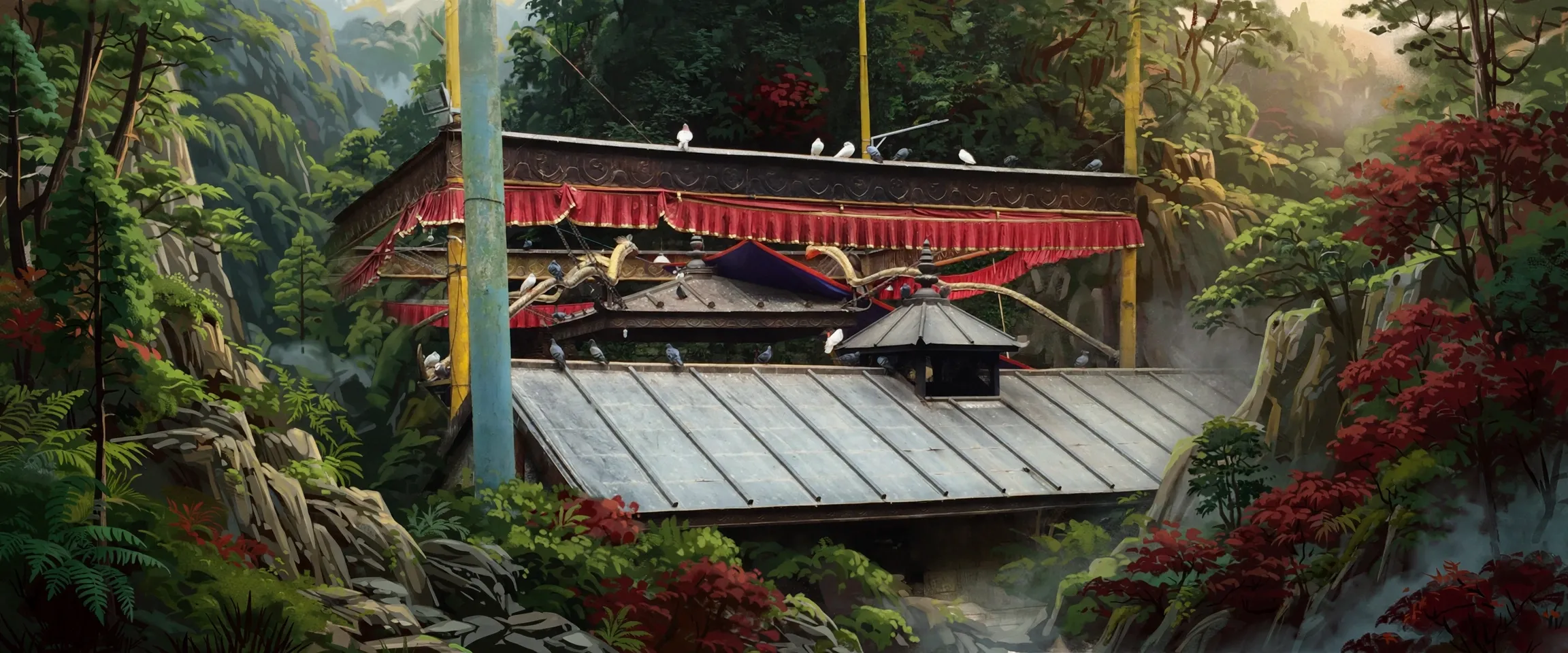
Dakshinkali Temple is a Hindu temple dedicated to the goddess Kali in her benevolent mother form, Dakshina Kali, set in a forested ravine at the confluence of two streams near Pharping, about 22 km south of Kathmandu, Nepal. Devotees worship her above all with offerings on Tuesdays and Saturdays, and the shrine draws its greatest crowds at Dashain. Its religious value is ranked alongside Pashupatinath in Nepal.
- Punjabi name
- ਦਕਸ਼ਿਣਕਾਲੀ ਮੰਦਰ
- Country
- Nepal
- Province
- Bagmati Province
- District
- Kathmandu
- Village
- Pharping
- Deity
- Kali, as Dakshina Kali
All 9 facts
- Setting
- Open air shrine in a forested gorge at the confluence of two streams
- Main worship days
- Tuesdays and Saturdays
- Festival
- Dashain
South of Kathmandu, the road climbs through Pharping village and then drops into a green ravine where two streams meet, and at the bottom of a steep stairway, among bells, marigolds and incense smoke, stands one of the most powerful goddess shrines in Nepal. Dakshinkali Temple is a Hindu temple dedicated to the goddess Kali in her Dakshina Kali form, near Pharping in Kathmandu district, Nepal. Devotees rank its religious value alongside the great Shiva temple of Pashupatinath itself, and on Tuesdays and Saturdays the gorge fills with worshippers bringing offerings to the Mother who, in the words of the tradition, protects her devotees and children from mishaps and misfortunes.
What is Dakshinkali Temple?
Dakshinkali Temple is an open air Hindu shrine to Kali, the fierce form of the goddess, set in a forested ravine at the confluence of two streams about 22 kilometres south of central Kathmandu, just outside the village of Pharping. The black stone image of the goddess, six armed and garlanded, is the heart of the shrine. In her Dakshina Kali form, Kali is shown with her right foot on the chest of Shiva. Tradition distinguishes this from Vamakali, shown with the left foot forward and regarded as the even more fearsome form. Dakshina Kali, by contrast, is honoured above all as a benevolent mother: the most popular form of Kali in Nepal, worshipped as a protector of her devotees.
Why is she called Dakshina Kali?
Several explanations of the name are told, and the temple's own tradition holds them together rather than choosing one. Dakshina means a gift given to a priest before a ritual, or to one's guru, and such gifts are traditionally given with the right hand: Dakshinakali's two right hands are usually depicted in gestures of blessing and of giving boons. Another telling connects the name with the south, dakshina: Yama, the lord of death, has his realm in the south, and when he heard Kali's name he was filled with terror, so her worshippers are said to be able to overcome death itself. A third, simpler link is the map: this temple of the southern Kali stands in the southern part of the Kathmandu Valley, facing the city from its gorge below Pharping.
How is Dakshinkali worshipped?
Animal sacrifice is the main way the goddess is worshipped at Dakshinkali, and it gives the temple its intense, unmistakable atmosphere. The offerings are particularly cockerels and uncastrated male goats, and the great days are Tuesdays and Saturdays, when devotees crowd the stairway and the shrine at the confluence. The year's peak is Dashain, the great autumn festival of the goddess, when families come in large numbers seeking her blessing and protection. After the offering, families typically picnic in the surrounding forest on the sanctified meat, so a sacrifice day at Dakshinkali is also a family festival under the trees. Visitors who would rather not witness sacrifice should come on another day of the week, when the gorge is calm and the shrine can be approached quietly. This page describes the practice as devotees practise it; it is one of the oldest living forms of Shakti worship in the valley.
A shrine at the meeting of two streams
The setting is half of Dakshinkali's power. The temple is an open air shrine at the bottom of a forested gorge, reached by a steep stairway, with the goddess standing where the two streams join. On major sacrifice days the water at the confluence is said to run red, a sight devotees read as the goddess receiving what is offered to her. Around the shrine the forested hillside is rich with birdlife, and the walk down through the trees, with temple bells carrying through the ravine, is part of why Dakshinkali is also a popular hiking destination as well as a place of worship. Read it alongside Nepal's other great goddess and god shrines in this collection: Pashupatinath in Kathmandu, the high shared shrine of Muktinath in Mustang, and India's great Shakti centre, Kamakhya in Guwahati.
Visiting Dakshinkali
Dakshinkali lies near Pharping village, about 22 kilometres south of central Kathmandu, and the drive through Pharping is part of the visit. Plan around the temple's rhythm: Tuesdays and Saturdays are the crowded sacrifice days, Dashain is the busiest season of all, and the temple closes for a period around midday for rituals before reopening. The shrine is a living place of worship, not a monument, so dress and behave as a guest of the goddess and her devotees, follow the directions of the temple staff on the stairway, and let worshippers with offerings pass first.
ਕਾਠਮੰਡੂ ਦੇ ਦੱਖਣ ਵੱਲ, ਸੜਕ ਫਰਪਿੰਗ ਪਿੰਡ ਵਿੱਚੋਂ ਚੜ੍ਹਦੀ ਹੈ ਅਤੇ ਫਿਰ ਇੱਕ ਹਰੀ ਖੱਡ ਵਿੱਚ ਉਤਰਦੀ ਹੈ ਜਿੱਥੇ ਦੋ ਨਾਲੇ ਮਿਲਦੇ ਹਨ, ਅਤੇ ਇੱਕ ਖੜ੍ਹੀ ਪੌੜੀ ਦੇ ਹੇਠਾਂ, ਘੰਟੀਆਂ, ਗੇਂਦੇ ਦੇ ਫੁੱਲਾਂ ਅਤੇ ਧੂਪ ਦੇ ਧੂੰਏਂ ਵਿੱਚ, ਨੇਪਾਲ ਦੇ ਸਭ ਤੋਂ ਸ਼ਕਤੀਸ਼ਾਲੀ ਦੇਵੀ ਧਾਮਾਂ ਵਿੱਚੋਂ ਇੱਕ ਖੜ੍ਹਾ ਹੈ ਦਕਸ਼ਿਣਕਾਲੀ ਮੰਦਰ ਦੇਵੀ ਕਾਲੀ ਨੂੰ ਉਸਦੇ ਦਕਸ਼ਿਣਾ ਕਾਲੀ ਰੂਪ ਵਿੱਚ ਸਮਰਪਿਤ ਇੱਕ ਹਿੰਦੂ ਮੰਦਰ ਹੈ, ਕਾਠਮੰਡੂ ਜ਼ਿਲ੍ਹੇ, ਨੇਪਾਲ ਵਿੱਚ ਫਰਪਿੰਗ ਨੇੜੇ ਸ਼ਰਧਾਲੂ ਇਸਦੇ ਧਾਰਮਿਕ ਮਹੱਤਵ ਨੂੰ ਪਸ਼ੂਪਤੀਨਾਥ ਦੇ ਮਹਾਨ ਸ਼ਿਵ ਮੰਦਰ ਦੇ ਬਰਾਬਰ ਰੱਖਦੇ ਹਨ, ਅਤੇ ਮੰਗਲਵਾਰ ਅਤੇ ਸ਼ਨਿੱਚਰਵਾਰ ਨੂੰ ਖੱਡ ਉਨ੍ਹਾਂ ਸ਼ਰਧਾਲੂਆਂ ਨਾਲ ਭਰ ਜਾਂਦੀ ਹੈ ਜੋ ਮਾਂ ਕੋਲ ਭੇਟਾਂ ਲਿਆਉਂਦੇ ਹਨ, ਜੋ ਪਰੰਪਰਾ ਦੇ ਸ਼ਬਦਾਂ ਵਿੱਚ, ਆਪਣੇ ਸ਼ਰਧਾਲੂਆਂ ਅਤੇ ਬੱਚਿਆਂ ਨੂੰ ਆਫ਼ਤਾਂ ਅਤੇ ਬਦਕਿਸਮਤੀ ਤੋਂ ਬਚਾਉਂਦੀ ਹੈ
ਦਕਸ਼ਿਣਕਾਲੀ ਮੰਦਰ ਕੀ ਹੈ?
ਦਕਸ਼ਿਣਕਾਲੀ ਮੰਦਰ ਕਾਲੀ, ਦੇਵੀ ਦੇ ਉਗਰ ਰੂਪ, ਨੂੰ ਸਮਰਪਿਤ ਇੱਕ ਖੁੱਲ੍ਹੀ ਹਵਾ ਵਾਲਾ ਹਿੰਦੂ ਧਾਮ ਹੈ, ਕੇਂਦਰੀ ਕਾਠਮੰਡੂ ਤੋਂ ਲਗਭਗ 22 ਕਿਲੋਮੀਟਰ ਦੱਖਣ ਵਿੱਚ, ਫਰਪਿੰਗ ਪਿੰਡ ਦੇ ਬਿਲਕੁਲ ਬਾਹਰ, ਦੋ ਨਾਲਿਆਂ ਦੇ ਸੰਗਮ ਉੱਤੇ ਇੱਕ ਜੰਗਲੀ ਖੱਡ ਵਿੱਚ ਸਥਿਤ ਦੇਵੀ ਦੀ ਕਾਲੀ ਪੱਥਰ ਮੂਰਤੀ, ਛੇ ਬਾਹਾਂ ਵਾਲੀ ਅਤੇ ਹਾਰ ਪਾਈ, ਧਾਮ ਦਾ ਹਿਰਦਾ ਹੈ ਆਪਣੇ ਦਕਸ਼ਿਣਾ ਕਾਲੀ ਰੂਪ ਵਿੱਚ, ਕਾਲੀ ਨੂੰ ਸ਼ਿਵ ਦੀ ਛਾਤੀ ਉੱਤੇ ਸੱਜਾ ਪੈਰ ਰੱਖਿਆ ਦਿਖਾਇਆ ਜਾਂਦਾ ਹੈ ਪਰੰਪਰਾ ਇਸਨੂੰ ਵਾਮਕਾਲੀ ਤੋਂ ਵੱਖ ਕਰਦੀ ਹੈ, ਜੋ ਖੱਬਾ ਪੈਰ ਅੱਗੇ ਰੱਖੀ ਦਿਖਾਈ ਜਾਂਦੀ ਹੈ ਅਤੇ ਹੋਰ ਵੀ ਭਿਆਨਕ ਰੂਪ ਮੰਨੀ ਜਾਂਦੀ ਹੈ ਦਕਸ਼ਿਣਾ ਕਾਲੀ, ਇਸਦੇ ਉਲਟ, ਸਭ ਤੋਂ ਉੱਤੇ ਇੱਕ ਦਿਆਲੂ ਮਾਂ ਵਜੋਂ ਸਤਕਾਰੀ ਜਾਂਦੀ ਹੈ: ਨੇਪਾਲ ਵਿੱਚ ਕਾਲੀ ਦਾ ਸਭ ਤੋਂ ਲੋਕਪ੍ਰਿਯ ਰੂਪ, ਆਪਣੇ ਸ਼ਰਧਾਲੂਆਂ ਦੀ ਰਾਖੀ ਕਰਨ ਵਾਲੀ ਵਜੋਂ ਪੂਜੀ ਜਾਂਦੀ
ਉਸਨੂੰ ਦਕਸ਼ਿਣਾ ਕਾਲੀ ਕਿਉਂ ਕਿਹਾ ਜਾਂਦਾ ਹੈ?
ਨਾਂ ਦੀਆਂ ਕਈ ਵਿਆਖਿਆਵਾਂ ਦੱਸੀਆਂ ਜਾਂਦੀਆਂ ਹਨ, ਅਤੇ ਮੰਦਰ ਦੀ ਆਪਣੀ ਪਰੰਪਰਾ ਇੱਕ ਚੁਣਨ ਦੀ ਬਜਾਏ ਉਨ੍ਹਾਂ ਨੂੰ ਇਕੱਠਾ ਰੱਖਦੀ ਹੈ ਦਕਸ਼ਿਣਾ ਦਾ ਅਰਥ ਹੈ ਕਿਸੇ ਰਸਮ ਤੋਂ ਪਹਿਲਾਂ ਪੁਜਾਰੀ ਨੂੰ, ਜਾਂ ਆਪਣੇ ਗੁਰੂ ਨੂੰ, ਦਿੱਤੀ ਭੇਟ, ਅਤੇ ਅਜਿਹੀਆਂ ਭੇਟਾਂ ਪਰੰਪਰਾਗਤ ਤੌਰ ਉੱਤੇ ਸੱਜੇ ਹੱਥ ਨਾਲ ਦਿੱਤੀਆਂ ਜਾਂਦੀਆਂ ਹਨ: ਦਕਸ਼ਿਣਾਕਾਲੀ ਦੇ ਦੋ ਸੱਜੇ ਹੱਥ ਆਮ ਤੌਰ ਉੱਤੇ ਅਸੀਸ ਅਤੇ ਵਰ ਦੇਣ ਦੇ ਇਸ਼ਾਰਿਆਂ ਵਿੱਚ ਦਿਖਾਏ ਜਾਂਦੇ ਹਨ ਇੱਕ ਹੋਰ ਕਥਾ ਨਾਂ ਨੂੰ ਦੱਖਣ, ਦਕਸ਼ਿਣ, ਨਾਲ ਜੋੜਦੀ ਹੈ: ਯਮ, ਮੌਤ ਦੇ ਦੇਵਤੇ, ਦਾ ਰਾਜ ਦੱਖਣ ਵਿੱਚ ਹੈ, ਅਤੇ ਜਦੋਂ ਉਸਨੇ ਕਾਲੀ ਦਾ ਨਾਂ ਸੁਣਿਆ ਤਾਂ ਉਹ ਡਰ ਨਾਲ ਭਰ ਗਿਆ, ਸੋ ਉਸਦੇ ਪੁਜਾਰੀਆਂ ਨੂੰ ਮੌਤ ਉੱਤੇ ਹੀ ਜਿੱਤ ਪਾਉਣ ਦੇ ਯੋਗ ਕਿਹਾ ਜਾਂਦਾ ਹੈ ਤੀਜਾ, ਸੌਖਾ, ਸੰਬੰਧ ਨਕਸ਼ਾ ਹੈ: ਦੱਖਣੀ ਕਾਲੀ ਦਾ ਇਹ ਮੰਦਰ ਕਾਠਮੰਡੂ ਵਾਦੀ ਦੇ ਦੱਖਣੀ ਹਿੱਸੇ ਵਿੱਚ ਖੜ੍ਹਾ ਹੈ, ਫਰਪਿੰਗ ਹੇਠਾਂ ਆਪਣੀ ਖੱਡ ਤੋਂ ਸ਼ਹਿਰ ਵੱਲ ਮੂੰਹ ਕਰਕੇ
ਦਕਸ਼ਿਣਕਾਲੀ ਦੀ ਪੂਜਾ ਕਿਵੇਂ ਹੁੰਦੀ ਹੈ?
ਪਸ਼ੂ ਬਲੀ ਦਕਸ਼ਿਣਕਾਲੀ ਵਿਖੇ ਦੇਵੀ ਦੀ ਪੂਜਾ ਦਾ ਮੁੱਖ ਤਰੀਕਾ ਹੈ, ਅਤੇ ਇਹ ਮੰਦਰ ਨੂੰ ਇਸਦਾ ਤੀਬਰ, ਅਭੁੱਲ ਮਾਹੌਲ ਦਿੰਦੀ ਹੈ ਭੇਟਾਂ ਖਾਸ ਤੌਰ ਉੱਤੇ ਕੁੱਕੜ ਅਤੇ ਨਰ ਬੱਕਰੇ ਹੁੰਦੀਆਂ ਹਨ, ਅਤੇ ਮਹਾਨ ਦਿਨ ਮੰਗਲਵਾਰ ਅਤੇ ਸ਼ਨਿੱਚਰਵਾਰ ਹਨ, ਜਦੋਂ ਸ਼ਰਧਾਲੂ ਪੌੜੀ ਅਤੇ ਸੰਗਮ ਉੱਤੇ ਧਾਮ ਨੂੰ ਭਰ ਦਿੰਦੇ ਹਨ ਸਾਲ ਦਾ ਸਿਖਰ ਦਸ਼ਹਿਰਾ ਹੈ, ਦੇਵੀ ਦਾ ਮਹਾਨ ਪਤਝੜ ਤਿਉਹਾਰ, ਜਦੋਂ ਪਰਿਵਾਰ ਵੱਡੀ ਗਿਣਤੀ ਵਿੱਚ ਉਸਦੀ ਅਸੀਸ ਅਤੇ ਰੱਖਿਆ ਲਈ ਆਉਂਦੇ ਹਨ ਭੇਟ ਤੋਂ ਬਾਅਦ, ਪਰਿਵਾਰ ਆਮ ਤੌਰ ਉੱਤੇ ਆਲੇ ਦੁਆਲੇ ਦੇ ਜੰਗਲ ਵਿੱਚ ਪਵਿੱਤਰ ਮਾਸ ਨਾਲ ਪਿਕਨਿਕ ਕਰਦੇ ਹਨ, ਸੋ ਦਕਸ਼ਿਣਕਾਲੀ ਵਿਖੇ ਬਲੀ ਦਾ ਦਿਨ ਰੁੱਖਾਂ ਹੇਠਾਂ ਇੱਕ ਪਰਿਵਾਰਕ ਤਿਉਹਾਰ ਵੀ ਹੈ ਜਿਹੜੇ ਸੈਲਾਨੀ ਬਲੀ ਨਹੀਂ ਦੇਖਣਾ ਚਾਹੁੰਦੇ, ਉਨ੍ਹਾਂ ਨੂੰ ਹਫ਼ਤੇ ਦੇ ਕਿਸੇ ਹੋਰ ਦਿਨ ਆਉਣਾ ਚਾਹੀਦਾ ਹੈ, ਜਦੋਂ ਖੱਡ ਸ਼ਾਂਤ ਹੁੰਦੀ ਹੈ ਅਤੇ ਧਾਮ ਕੋਲ ਸ਼ਾਂਤੀ ਨਾਲ ਜਾਇਆ ਜਾ ਸਕਦਾ ਹੈ ਇਹ ਸਫ਼ਾ ਅਭਿਆਸ ਨੂੰ ਉਵੇਂ ਦੱਸਦਾ ਹੈ ਜਿਵੇਂ ਸ਼ਰਧਾਲੂ ਇਸਨੂੰ ਕਰਦੇ ਹਨ; ਇਹ ਵਾਦੀ ਵਿੱਚ ਸ਼ਕਤੀ ਪੂਜਾ ਦੇ ਸਭ ਤੋਂ ਪੁਰਾਣੇ ਜੀਵਿਤ ਰੂਪਾਂ ਵਿੱਚੋਂ ਇੱਕ ਹੈ
ਦੋ ਨਾਲਿਆਂ ਦੇ ਮੇਲ ਉੱਤੇ ਇੱਕ ਧਾਮ
ਸੈਟਿੰਗ ਦਕਸ਼ਿਣਕਾਲੀ ਦੀ ਅੱਧੀ ਸ਼ਕਤੀ ਹੈ ਮੰਦਰ ਇੱਕ ਜੰਗਲੀ ਖੱਡ ਦੇ ਹੇਠਾਂ ਇੱਕ ਖੁੱਲ੍ਹੀ ਹਵਾ ਵਾਲਾ ਧਾਮ ਹੈ, ਇੱਕ ਖੜ੍ਹੀ ਪੌੜੀ ਰਾਹੀਂ ਪਹੁੰਚਿਆ ਜਾਂਦਾ ਹੈ, ਦੇਵੀ ਉੱਥੇ ਖੜ੍ਹੀ ਹੈ ਜਿੱਥੇ ਦੋ ਨਾਲੇ ਮਿਲਦੇ ਹਨ ਵੱਡੇ ਬਲੀ ਵਾਲੇ ਦਿਨਾਂ ਵਿੱਚ ਸੰਗਮ ਉੱਤੇ ਪਾਣੀ ਲਾਲ ਵਗਦਾ ਕਿਹਾ ਜਾਂਦਾ ਹੈ, ਇੱਕ ਨਜ਼ਾਰਾ ਜਿਸਨੂੰ ਸ਼ਰਧਾਲੂ ਦੇਵੀ ਵੱਲੋਂ ਉਸਨੂੰ ਭੇਟ ਕੀਤੀ ਚੀਜ਼ ਨੂੰ ਸਵੀਕਾਰ ਕਰਨ ਵਜੋਂ ਪੜ੍ਹਦੇ ਹਨ ਧਾਮ ਦੇ ਆਲੇ ਦੁਆਲੇ ਜੰਗਲੀ ਪਹਾੜੀ ਪੰਛੀਆਂ ਨਾਲ ਭਰਪੂਰ ਹੈ, ਅਤੇ ਰੁੱਖਾਂ ਵਿੱਚੋਂ ਹੇਠਾਂ ਤੁਰਨਾ, ਮੰਦਰ ਦੀਆਂ ਘੰਟੀਆਂ ਖੱਡ ਵਿੱਚ ਗੂੰਜਦੀਆਂ, ਇਸਦਾ ਹਿੱਸਾ ਹੈ ਕਿ ਦਕਸ਼ਿਣਕਾਲੀ ਪੂਜਾ ਸਥਾਨ ਦੇ ਨਾਲ ਨਾਲ ਇੱਕ ਲੋਕਪ੍ਰਿਯ ਹਾਈਕਿੰਗ ਮੰਜ਼ਿਲ ਵੀ ਹੈ ਇਸਨੂੰ ਇਸ ਸੰਗ੍ਰਹਿ ਵਿੱਚ ਨੇਪਾਲ ਦੇ ਹੋਰ ਮਹਾਨ ਦੇਵੀ ਅਤੇ ਦੇਵ ਧਾਮਾਂ ਨਾਲ ਪੜ੍ਹੋ: ਕਾਠਮੰਡੂ ਵਿੱਚ ਪਸ਼ੂਪਤੀਨਾਥ, ਮੁਸਤਾਂਗ ਵਿੱਚ ਮੁਕਤੀਨਾਥ ਦਾ ਉੱਚਾ ਸਾਂਝਾ ਧਾਮ, ਅਤੇ ਭਾਰਤ ਦਾ ਮਹਾਨ ਸ਼ਕਤੀ ਕੇਂਦਰ, ਗੁਵਾਹਾਟੀ ਵਿੱਚ ਕਾਮਾਖਿਆ
ਦਕਸ਼ਿਣਕਾਲੀ ਦੀ ਯਾਤਰਾ
ਦਕਸ਼ਿਣਕਾਲੀ ਫਰਪਿੰਗ ਪਿੰਡ ਨੇੜੇ ਹੈ, ਕੇਂਦਰੀ ਕਾਠਮੰਡੂ ਤੋਂ ਲਗਭਗ 22 ਕਿਲੋਮੀਟਰ ਦੱਖਣ ਵਿੱਚ, ਅਤੇ ਫਰਪਿੰਗ ਵਿੱਚੋਂ ਡਰਾਈਵ ਯਾਤਰਾ ਦਾ ਹਿੱਸਾ ਹੈ ਮੰਦਰ ਦੀ ਲੈਅ ਦੇ ਆਲੇ ਦੁਆਲੇ ਯੋਜਨਾ ਬਣਾਓ: ਮੰਗਲਵਾਰ ਅਤੇ ਸ਼ਨਿੱਚਰਵਾਰ ਭੀੜ ਵਾਲੇ ਬਲੀ ਦੇ ਦਿਨ ਹਨ, ਦਸ਼ਹਿਰਾ ਸਭ ਤੋਂ ਰੁੱਝਿਆ ਮੌਸਮ ਹੈ, ਅਤੇ ਮੰਦਰ ਮੁੜ ਖੁੱਲ੍ਹਣ ਤੋਂ ਪਹਿਲਾਂ ਰਸਮਾਂ ਲਈ ਦੁਪਹਿਰ ਦੇ ਆਲੇ ਦੁਆਲੇ ਕੁਝ ਸਮੇਂ ਲਈ ਬੰਦ ਰਹਿੰਦਾ ਹੈ ਧਾਮ ਪੂਜਾ ਦੀ ਇੱਕ ਜੀਵਿਤ ਥਾਂ ਹੈ, ਕੋਈ ਯਾਦਗਾਰ ਨਹੀਂ, ਸੋ ਦੇਵੀ ਅਤੇ ਉਸਦੇ ਸ਼ਰਧਾਲੂਆਂ ਦੇ ਮਹਿਮਾਨ ਵਜੋਂ ਪਹਿਰਾਵਾ ਪਾਓ ਅਤੇ ਵਿਵਹਾਰ ਕਰੋ, ਪੌੜੀ ਉੱਤੇ ਮੰਦਰ ਸਟਾਫ਼ ਦੇ ਨਿਰਦੇਸ਼ਾਂ ਦੀ ਪਾਲਣਾ ਕਰੋ, ਅਤੇ ਭੇਟਾਂ ਵਾਲੇ ਸ਼ਰਧਾਲੂਆਂ ਨੂੰ ਪਹਿਲਾਂ ਲੰਘਣ ਦਿਓ