
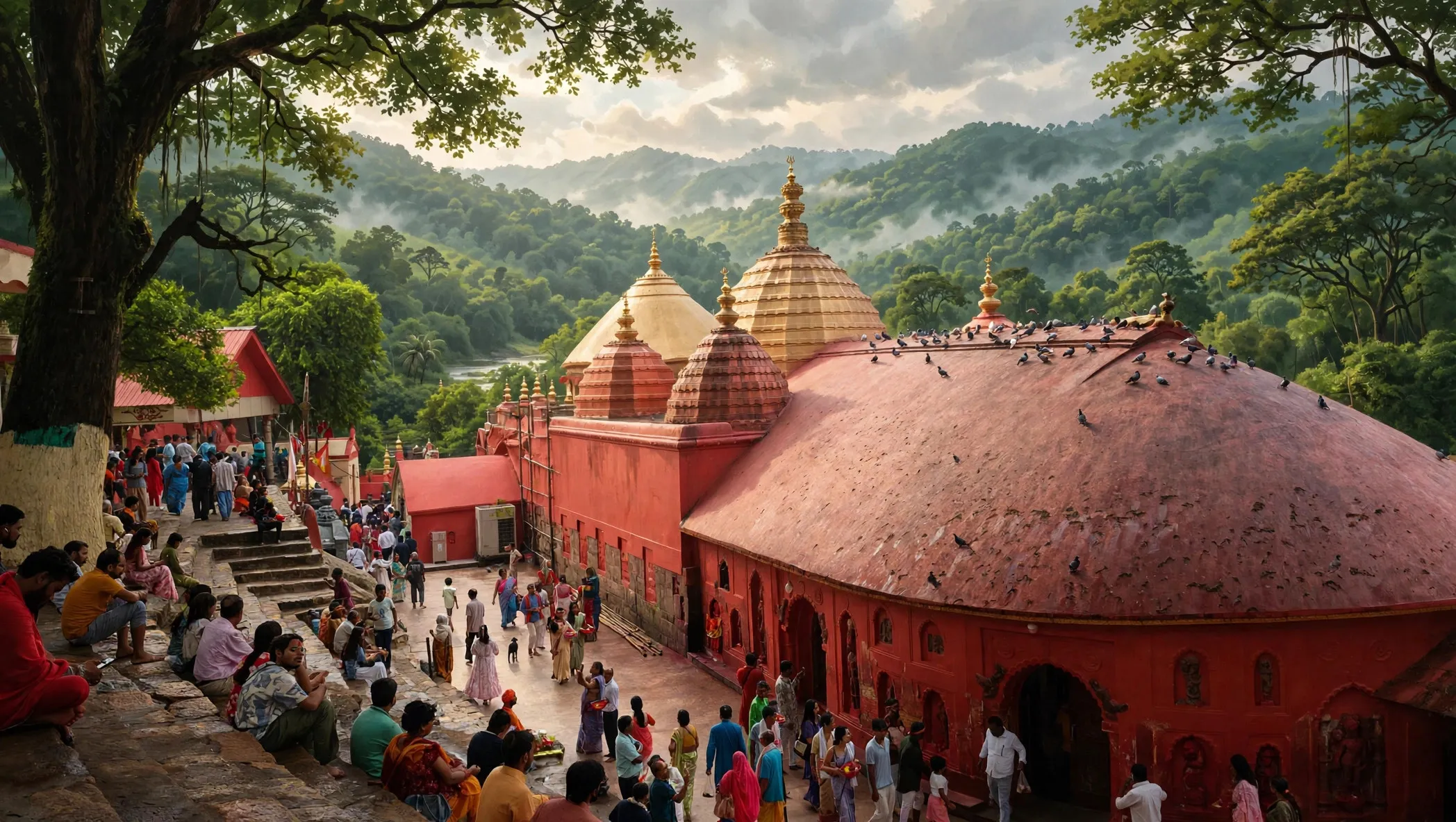
The Kamakhya Temple on Nilachal Hill in Guwahati, Assam, is one of the oldest four of the 51 Shakti Pithas, where a natural spring-fed rock fissure shaped like a yoni is worshipped as the goddess Kamakhya instead of any idol. Dated to the 8th to 9th century and rebuilt in 1565 by the Koch king Nara Narayan, it is the great centre of the Kulachara Tantra Marga and hosts the annual Ambubachi Mela.
- Punjabi name
- ਕਾਮਾਖਿਆ ਮੰਦਰ
- Country
- India
- State
- Assam
- City
- Guwahati, Nilachal Hill
- Deity
- Kamakhya, the goddess as yoni (no idol)
- Tradition
- Shaktism; one of the 51 Shakti Pithas
All 9 facts
- Built
- 8th-9th century origins; rebuilt 1565 by Koch king Nara Narayan
- Architectural style
- Nilachal type (hemispherical dome on cruciform base)
- Famous for
- Ambubachi Mela every June; Kulachara Tantra Marga centre
The Kamakhya Temple on Nilachal Hill above Guwahati is one of Hinduism's most unusual and most powerful shrines. There is no idol in its sanctum. Instead, in a small dark chamber below ground level, a natural rock fissure shaped like a yoni is kept constantly moist by an underground spring, and this is what devotees worship as the goddess Kamakhya herself. Counted among the oldest four of the 51 Shakti Pithas, the temple is the great centre of the Kulachara Tantra Marga and of goddess worship in eastern India.
A goddess with no idol
The heart of Kamakhya is the garbhagriha, reached by narrow, steep stone steps. The chamber is small and dark, and inside it a sheet of stone slopes down from both sides and meets in a yoni-like depression about ten inches deep. The hollow stays filled with water from a perennial underground spring. It is this vulva-shaped depression, not any carved image, that is worshipped as the goddess Kamakhya herself, and tradition regards it as the most important pitha, the abode, of the Devi. The Kalika Purana, an ancient Sanskrit text, describes Kamakhya as the yielder of all desires, the young bride of Shiva, and the giver of salvation. Historians note that the worship here began as the autochthonous cult of a local goddess, and the aniconic worship of the yoni set in natural stone continues to this day.
Where the goddess's yoni fell
According to the Kalika Purana, Kamakhya marks the spot where Sati, the devoted wife of Shiva, used to retire in secret for union with him, and where her yoni fell after Shiva's tandava, the dance of destruction, with the corpse of Sati. A later text, the Yogini Tantra, sets that origin aside and associates Kamakhya with the goddess Kali, emphasising the creative symbolism of the yoni. These are matters of religious tradition, and devotees hold them as sacred truth. On the historical side, scholars suggest the site was once an ancient sacrificial ground of the region's tribal peoples. The first epigraphic notice of the goddess Kamakhya appears in the 9th-century Tezpur plates of Vanamalavarmadeva of the Mleccha dynasty of Kamarupa, the first royal house to patronise the shrine. The Palas, the Koch kings and the Ahoms followed, and the temple became identified with the power of the Kamarupa kingdom itself.
The Nilachal style: a dome unlike any other
The present temple has been built and rebuilt many times, in the 8th to 9th, 11th to 12th and 13th to 14th centuries and later, and its current form dates from the 16th century. The result is a hybrid indigenous style called the Nilachal type: a temple with a hemispherical dome on a cruciform base. Art historians note that the original structure was clearly of the Nagara type, possibly in the Malava manner. What makes Kamakhya unmistakable is its shikhara: a polygonal beehive-like dome of brick, circled by a cluster of minaret-inspired angashikharas of the Bengal charchala type, made by craftsmen more familiar with the Islamic architecture of Bengal. The temple has four chambers: the garbhagriha, the calanta, the pancharatna and the natamandira, the last with an apsidal end and a ridged Ahom-style roof bearing inscriptions of the Ahom kings Rajeswar Singha (1759) and Gaurinath Singha (1782). The entrance is generally through the northern door, of the Ahom dochala type.
Rebuilt by the Koch kings in 1565
Tradition once blamed the temple's ruin on Kalapahar, a general of Sulaiman Karrani, but since the reconstruction date of 1565 precedes his campaigns, and he is not known to have come so far east, historians now believe the temple was destroyed during Hussein Shah's invasion of the Kamata kingdom in 1498. The ruins are said to have been found by Vishwasingha, founder of the Koch dynasty, who revived worship at the site; it was his son Nara Narayan, who ruled from 1540 to 1587, who completed the reconstruction in 1565 under the supervision of his general Chilarai. After two failed attempts to restore the stone shikhara, a Koch artisan named Meghamukdam turned to brick masonry and created the dome seen today. The Ahom kings built over the Koch structure in turn: by the end of 1658 the Ahoms under Jayadhvaj Singha had taken Kamrup, and after the Battle of Itakhuli in 1681 they held the temple without interruption. One piece of living legend: members of the Koch Bihar royal family do not visit the temple, averting their gaze when passing, on account of a legendary curse of the goddess. In July 2015 the Supreme Court of India transferred the temple's administration from the Kamakhya Debutter Board to the Bordeuri Samaj.
Why is the temple closed for three days every June?
Every June the temple hosts the Ambubachi Mela, its great annual festival, which celebrates the menstruation of the goddess. For three days the sanctum stays closed while the goddess is held to be menstruating; when it reopens, thousands of tantra devotees who have gathered from across eastern India press forward for darshan. The mela is one of the largest religious congregations in the region and draws spiritual seekers from far beyond Assam. Two other annual celebrations keep the calendar full: the Manasha Puja and the five-day Durga Puja during Navaratri in autumn.
Tantra, sacrifice and both paths of worship
Kamakhya is basic to Tantric worship, and the goddess is honoured here according to both the vamachara, the left-hand path, and the dakshinachara, the right-hand path. Offerings are usually flowers, though they may include animal sacrifices; the tradition of sacrifice continues today, with devotees coming every morning with animals and birds to offer to the goddess, though female animals are generally exempt, a rule relaxed during mass sacrifices. The main temple is ringed by a complex of individual shrines dedicated to the ten Mahavidyas of Shaktism: Kali, Tara, Tripura Sundari, Bhuvaneshwari, Bhairavi, Chhinnamasta, Dhumavati, Bagalamukhi, Matangi and Kamalatmika. Tripurasundari, Matangi and Kamala reside inside the main temple while the other seven have their own shrines, and such a complete gathering of the Mahavidyas in one complex is rare.
Visiting Kamakhya today
The temple stands on Nilachal Hill in Guwahati, with panoramic views over the city and the Brahmaputra. It opens from 5:30 in the morning to 10 at night, with general darshan from 8 AM, and the best months to visit are October to March. Guwahati airport is about 20 kilometres away and Kamakhya railway station about 7. Nearby, the Umananda Temple sits on Peacock Island in the Brahmaputra. A major change is under way: in February 2024 Prime Minister Narendra Modi laid the foundation stone for the Maa Kamakhya Divyalok Pariyojana, also called the Maa Kamakhya Access Corridor, a redevelopment funded under the central government's PM-DevINE scheme at a cost of about 498 crore rupees. Modelled on the Kashi Vishwanath Corridor, it plans to expand the open space around the temple from roughly 3,000 to 100,000 square feet and to handle 8,000 to 10,000 visitors during peak events such as the Ambubachi Mela. It remains one of the great mandirs of India.
ਕਾਮਾਖਿਆ ਮੰਦਰ ਨੀਲਾਚਲ ਪਹਾੜੀ ਉੱਤੇ ਗੁਹਾਟੀ ਤੋਂ ਉੱਪਰ ਹਿੰਦੂ ਧਰਮ ਦੇ ਸਭ ਤੋਂ ਅਨੂਠੇ ਅਤੇ ਸਭ ਤੋਂ ਸ਼ਕਤੀਸ਼ਾਲੀ ਧਾਮਾਂ ਵਿੱਚੋਂ ਇੱਕ ਹੈ ਇਸਦੇ ਗਰਭਗ੍ਰਹਿ ਵਿੱਚ ਕੋਈ ਮੂਰਤੀ ਨਹੀਂ ਧਰਤੀ ਹੇਠ ਇੱਕ ਛੋਟੀ ਕਾਲੀ ਕੋਠੜੀ ਵਿੱਚ ਯੋਨੀ ਦੇ ਆਕਾਰ ਦੀ ਇੱਕ ਕੁਦਰਤੀ ਚਟਾਨ ਦੀ ਦਰਾਰ ਹੈ, ਜੋ ਭੂਮੀਗਤ ਚਸ਼ਮੇ ਨਾਲ ਸਦਾ ਗਿੱਲੀ ਰਹਿੰਦੀ ਹੈ, ਅਤੇ ਸ਼ਰਧਾਲੂ ਇਸੇ ਨੂੰ ਦੇਵੀ ਕਾਮਾਖਿਆ ਮੰਨ ਕੇ ਪੂਜਦੇ ਹਨ ਇਕਵੰਜਾ ਸ਼ਕਤੀ ਪੀਠਾਂ ਵਿੱਚੋਂ ਸਭ ਤੋਂ ਪੁਰਾਣੇ ਚਾਰਾਂ ਵਿੱਚ ਗਿਣਿਆ ਜਾਣ ਵਾਲਾ ਇਹ ਮੰਦਰ ਕੁਲਾਚਾਰ ਤੰਤਰ ਮਾਰਗ ਦਾ ਅਤੇ ਪੂਰਬੀ ਭਾਰਤ ਵਿੱਚ ਦੇਵੀ ਪੂਜਾ ਦਾ ਮਹਾਨ ਕੇਂਦਰ ਹੈ
ਬਿਨਾਂ ਮੂਰਤੀ ਦੀ ਦੇਵੀ
ਕਾਮਾਖਿਆ ਦਾ ਹਿਰਦਾ ਇਸਦਾ ਗਰਭਗ੍ਰਹਿ ਹੈ, ਜਿੱਥੇ ਤੰਗ, ਤਿੱਖੀਆਂ ਪੱਥਰ ਦੀਆਂ ਪੌੜੀਆਂ ਰਾਹੀਂ ਪਹੁੰਚਿਆ ਜਾਂਦਾ ਹੈ ਕੋਠੜੀ ਛੋਟੀ ਅਤੇ ਕਾਲੀ ਹੈ, ਅਤੇ ਅੰਦਰ ਇੱਕ ਪੱਥਰ ਦੀ ਚਾਦਰ ਦੋਵੇਂ ਪਾਸਿਆਂ ਤੋਂ ਹੇਠਾਂ ਢਲ ਕੇ ਯੋਨੀ ਵਰਗੀ ਇੱਕ ਦਰਾਰ ਵਿੱਚ ਮਿਲਦੀ ਹੈ, ਜੋ ਲਗਭਗ ਦਸ ਇੰਚ ਡੂੰਘੀ ਹੈ ਇਹ ਖੱਡ ਭੂਮੀਗਤ ਸਦੀਵੀ ਚਸ਼ਮੇ ਦੇ ਪਾਣੀ ਨਾਲ ਸਦਾ ਭਰੀ ਰਹਿੰਦੀ ਹੈ ਇਹੀ ਯੋਨੀ ਦੇ ਆਕਾਰ ਦੀ ਦਰਾਰ ਹੈ, ਕੋਈ ਘੜੀ ਹੋਈ ਮੂਰਤੀ ਨਹੀਂ, ਜਿਸਨੂੰ ਦੇਵੀ ਕਾਮਾਖਿਆ ਮੰਨ ਕੇ ਪੂਜਿਆ ਜਾਂਦਾ ਹੈ, ਅਤੇ ਪਰੰਪਰਾ ਇਸਨੂੰ ਦੇਵੀ ਦਾ ਸਭ ਤੋਂ ਮਹੱਤਵਪੂਰਨ ਪੀਠ ਮੰਨਦੀ ਹੈ ਕਾਲਿਕਾ ਪੁਰਾਣ, ਇੱਕ ਪ੍ਰਾਚੀਨ ਸੰਸਕ੍ਰਿਤ ਗ੍ਰੰਥ, ਕਾਮਾਖਿਆ ਨੂੰ ਸਾਰੀਆਂ ਇੱਛਾਵਾਂ ਪੂਰਨ ਕਰਨ ਵਾਲੀ, ਸ਼ਿਵ ਦੀ ਨੌਜਵਾਨ ਵਧੂ ਅਤੇ ਮੁਕਤੀ ਦੇਣ ਵਾਲੀ ਦੱਸਦਾ ਹੈ ਇਤਿਹਾਸਕਾਰ ਨੋਟ ਕਰਦੇ ਹਨ ਕਿ ਇੱਥੋਂ ਦੀ ਪੂਜਾ ਇੱਕ ਸਥਾਨਕ ਦੇਵੀ ਦੇ ਮੂਲ ਪੰਥ ਵਜੋਂ ਸ਼ੁਰੂ ਹੋਈ ਸੀ, ਅਤੇ ਕੁਦਰਤੀ ਪੱਥਰ ਵਿੱਚ ਸਥਿਤ ਯੋਨੀ ਦੀ ਬਿਨਾਂ ਮੂਰਤੀ ਵਾਲੀ ਪੂਜਾ ਅੱਜ ਤੱਕ ਜਾਰੀ ਹੈ
ਜਿੱਥੇ ਦੇਵੀ ਦੀ ਯੋਨੀ ਡਿੱਗੀ
ਕਾਲਿਕਾ ਪੁਰਾਣ ਅਨੁਸਾਰ ਕਾਮਾਖਿਆ ਉਹ ਥਾਂ ਹੈ ਜਿੱਥੇ ਸ਼ਿਵ ਦੀ ਪਤਨੀ ਸਤੀ ਸ਼ਿਵ ਨਾਲ ਮਿਲਣ ਲਈ ਗੁਪਤ ਵਿੱਚ ਆਉਂਦੀ ਸੀ, ਅਤੇ ਜਿੱਥੇ ਸਤੀ ਦੀ ਲਾਸ਼ ਨਾਲ ਸ਼ਿਵ ਦੇ ਤਾਂਡਵ, ਵਿਨਾਸ਼ ਦੇ ਨਾਚ, ਤੋਂ ਬਾਅਦ ਉਸਦੀ ਯੋਨੀ ਡਿੱਗੀ ਬਾਅਦ ਦਾ ਗ੍ਰੰਥ, ਯੋਗਿਨੀ ਤੰਤਰ, ਇਸ ਮੂਲ ਕਥਾ ਨੂੰ ਪਾਸੇ ਰੱਖ ਕੇ ਕਾਮਾਖਿਆ ਨੂੰ ਦੇਵੀ ਕਾਲੀ ਨਾਲ ਜੋੜਦਾ ਹੈ ਅਤੇ ਯੋਨੀ ਦੇ ਸਿਰਜਣਾਤਮਕ ਪ੍ਰਤੀਕ ਉੱਤੇ ਜ਼ੋਰ ਦਿੰਦਾ ਹੈ ਇਹ ਧਾਰਮਿਕ ਪਰੰਪਰਾ ਦੇ ਵਿਸ਼ੇ ਹਨ, ਅਤੇ ਸ਼ਰਧਾਲੂ ਇਹਨਾਂ ਨੂੰ ਪਵਿੱਤਰ ਸੱਚ ਮੰਨਦੇ ਹਨ ਇਤਿਹਾਸਕ ਪੱਖ ਤੋਂ ਵਿਦਵਾਨ ਸੁਝਾਅ ਦਿੰਦੇ ਹਨ ਕਿ ਇਹ ਥਾਂ ਕਦੇ ਖੇਤਰ ਦੇ ਕਬੀਲਾਈ ਲੋਕਾਂ ਦੀ ਪ੍ਰਾਚੀਨ ਬਲੀ ਭੂਮੀ ਸੀ ਦੇਵੀ ਕਾਮਾਖਿਆ ਦਾ ਪਹਿਲਾ ਸ਼ਿਲਾਲੇਖੀ ਜ਼ਿਕਰ ਕਾਮਰੂਪ ਦੇ ਮਲੇਛ ਵੰਸ਼ ਦੇ ਵਨਮਾਲਵਰਮਦੇਵ ਦੀਆਂ ਨੌਵੀਂ ਸਦੀ ਦੀਆਂ ਤੇਜ਼ਪੁਰ ਤਾਮਰਪੱਤਰੀਆਂ ਵਿੱਚ ਮਿਲਦਾ ਹੈ, ਜੋ ਇਸ ਧਾਮ ਦੀ ਸਰਪ੍ਰਸਤੀ ਕਰਨ ਵਾਲਾ ਪਹਿਲਾ ਸ਼ਾਹੀ ਘਰਾਣਾ ਸੀ ਉਸ ਤੋਂ ਬਾਅਦ ਪਾਲ, ਕੋਚ ਰਾਜੇ ਅਤੇ ਅਹੋਮ ਆਏ, ਅਤੇ ਮੰਦਰ ਕਾਮਰੂਪ ਰਾਜ ਦੀ ਸ਼ਕਤੀ ਨਾਲ ਜੁੜ ਗਿਆ
ਨੀਲਾਚਲ ਸ਼ੈਲੀ: ਅਨੂਠਾ ਗੁੰਬਦ
ਮੌਜੂਦਾ ਮੰਦਰ ਕਈ ਵਾਰ ਬਣਿਆ ਅਤੇ ਦੁਬਾਰਾ ਬਣਿਆ ਹੈ, ਅੱਠਵੀਂ ਨੌਵੀਂ, ਗਿਆਰ੍ਹਵੀਂ ਬਾਰ੍ਹਵੀਂ ਅਤੇ ਤੇਰ੍ਹਵੀਂ ਚੌਦ੍ਹਵੀਂ ਸਦੀ ਵਿੱਚ ਅਤੇ ਉਸ ਤੋਂ ਬਾਅਦ ਵੀ, ਅਤੇ ਇਸਦਾ ਅਜੋਕਾ ਰੂਪ ਸੋਲ੍ਹਵੀਂ ਸਦੀ ਦਾ ਹੈ ਨਤੀਜਾ ਇੱਕ ਮਿਲੀ ਜੁਲੀ ਦੇਸੀ ਸ਼ੈਲੀ ਹੈ ਜਿਸਨੂੰ ਨੀਲਾਚਲ ਕਿਸਮ ਕਿਹਾ ਜਾਂਦਾ ਹੈ: ਇੱਕ ਮੰਦਰ ਜਿਸਦਾ ਗੁੰਬਦ ਕ੍ਰਾਸ ਆਕਾਰ ਦੇ ਆਧਾਰ ਉੱਤੇ ਅਰਧਗੋਲਾਕਾਰ ਹੈ ਕਲਾ ਇਤਿਹਾਸਕਾਰ ਨੋਟ ਕਰਦੇ ਹਨ ਕਿ ਮੂਲ ਢਾਂਚਾ ਸਪੱਸ਼ਟ ਤੌਰ ਉੱਤੇ ਨਾਗਰ ਕਿਸਮ ਦਾ ਸੀ, ਸ਼ਾਇਦ ਮਾਲਵ ਢੰਗ ਵਿੱਚ ਕਾਮਾਖਿਆ ਨੂੰ ਅਨੂਠਾ ਬਣਾਉਣ ਵਾਲਾ ਇਸਦਾ ਸ਼ਿਖਰ ਹੈ: ਇੱਟਾਂ ਦਾ ਬਹੁਭੁਜ ਛੱਤੇ ਵਰਗਾ ਗੁੰਬਦ, ਜਿਸਦੇ ਆਲੇ ਦੁਆਲੇ ਬੰਗਾਲ ਦੇ ਚਰਚਲਾ ਕਿਸਮ ਦੇ ਮੀਨਾਰ ਤੋਂ ਪ੍ਰੇਰਿਤ ਅੰਗਸ਼ਿਖਰ ਹਨ, ਜੋ ਬੰਗਾਲ ਦੀ ਇਸਲਾਮੀ ਭਵਨ ਨਿਰਮਾਣ ਕਲਾ ਤੋਂ ਜਾਣੂ ਕਾਰੀਗਰਾਂ ਨੇ ਬਣਾਏ ਮੰਦਰ ਵਿੱਚ ਚਾਰ ਕੋਠੜੀਆਂ ਹਨ: ਗਰਭਗ੍ਰਹਿ, ਚਲੰਤ, ਪੰਚਰਤਨ ਅਤੇ ਨਾਟਮੰਡਿਰ, ਜਿਸਦੀ ਆਖਰੀ ਦਾ ਪਿਛਲਾ ਸਿਰਾ ਗੋਲ ਅਤੇ ਅਹੋਮ ਸ਼ੈਲੀ ਦੀ ਢਲਵੀਂ ਛੱਤ ਹੈ, ਜਿਸ ਉੱਤੇ ਅਹੋਮ ਰਾਜਿਆਂ ਰਾਜੇਸ਼ਵਰ ਸਿੰਘ (1759) ਅਤੇ ਗੌਰੀਨਾਥ ਸਿੰਘ (1782) ਦੇ ਸ਼ਿਲਾਲੇਖ ਹਨ ਪ੍ਰਵੇਸ਼ ਆਮ ਤੌਰ ਉੱਤੇ ਉੱਤਰੀ ਦਰਵਾਜ਼ੇ ਰਾਹੀਂ ਹੁੰਦਾ ਹੈ, ਜੋ ਅਹੋਮ ਦੋਚਾਲਾ ਕਿਸਮ ਦਾ ਹੈ
1565 ਵਿੱਚ ਕੋਚ ਰਾਜਿਆਂ ਨੇ ਦੁਬਾਰਾ ਬਣਵਾਇਆ
ਪਰੰਪਰਾ ਕਦੇ ਮੰਦਰ ਦੀ ਤਬਾਹੀ ਦਾ ਦੋਸ਼ ਸੁਲੇਮਾਨ ਕਰਰਾਨੀ ਦੇ ਸੈਨਾਪਤੀ ਕਾਲਾਪਹਾੜ ਉੱਤੇ ਲਾਉਂਦੀ ਸੀ, ਪਰ ਕਿਉਂਕਿ 1565 ਦੀ ਪੁਨਰ ਨਿਰਮਾਣ ਤਾਰੀਖ ਉਸਦੇ ਹਮਲਿਆਂ ਤੋਂ ਪਹਿਲਾਂ ਦੀ ਹੈ, ਅਤੇ ਉਹ ਇੰਨਾ ਪੂਰਬ ਆਇਆ ਨਹੀਂ ਜਾਣਿਆ ਜਾਂਦਾ, ਇਤਿਹਾਸਕਾਰ ਹੁਣ ਮੰਨਦੇ ਹਨ ਕਿ ਮੰਦਰ 1498 ਵਿੱਚ ਹੁਸੈਨ ਸ਼ਾਹ ਦੇ ਕਾਮਤਾ ਰਾਜ ਉੱਤੇ ਹਮਲੇ ਦੌਰਾਨ ਤਬਾਹ ਹੋਇਆ ਕਿਹਾ ਜਾਂਦਾ ਹੈ ਕਿ ਖੰਡਰ ਕੋਚ ਵੰਸ਼ ਦੇ ਸੰਸਥਾਪਕ ਵਿਸ਼ਵਸਿੰਘ ਨੇ ਲੱਭੇ, ਜਿਸਨੇ ਉੱਥੇ ਪੂਜਾ ਮੁੜ ਸ਼ੁਰੂ ਕੀਤੀ; ਪਰ ਪੁਨਰ ਨਿਰਮਾਣ ਉਸਦੇ ਪੁੱਤਰ ਨਰਨਾਰਾਇਣ ਨੇ ਪੂਰਾ ਕੀਤਾ, ਜਿਸਨੇ 1540 ਤੋਂ 1587 ਤੱਕ ਰਾਜ ਕੀਤਾ, ਆਪਣੇ ਸੈਨਾਪਤੀ ਚਿਲਾਰਾਇ ਦੀ ਨਿਗਰਾਨੀ ਹੇਠ 1565 ਵਿੱਚ ਪੱਥਰ ਦਾ ਸ਼ਿਖਰ ਦੁਬਾਰਾ ਬਣਾਉਣ ਦੀਆਂ ਦੋ ਅਸਫਲ ਕੋਸ਼ਿਸ਼ਾਂ ਤੋਂ ਬਾਅਦ ਮੇਘਮੁਕਦਮ ਨਾਂ ਦੇ ਕੋਚ ਕਾਰੀਗਰ ਨੇ ਇੱਟਾਂ ਦੀ ਚਿਣਾਈ ਅਪਣਾਈ ਅਤੇ ਅੱਜ ਦਿਸਦਾ ਗੁੰਬਦ ਬਣਾਇਆ ਅਹੋਮ ਰਾਜਿਆਂ ਨੇ ਕੋਚ ਢਾਂਚੇ ਉੱਤੇ ਹੋਰ ਉਸਾਰੀ ਕੀਤੀ: 1658 ਦੇ ਅੰਤ ਤੱਕ ਜੈਧਵਜ ਸਿੰਘ ਹੇਠ ਅਹੋਮਾਂ ਨੇ ਕਾਮਰੂਪ ਲੈ ਲਿਆ ਸੀ, ਅਤੇ 1681 ਵਿੱਚ ਇਟਾਖੁਲੀ ਦੀ ਲੜਾਈ ਤੋਂ ਬਾਅਦ ਉਹਨਾਂ ਦਾ ਮੰਦਰ ਉੱਤੇ ਨਿਰਵਿਘਨ ਕਬਜ਼ਾ ਰਿਹਾ ਇੱਕ ਜਿਉਂਦੀ ਕਥਾ: ਕੋਚ ਬਿਹਾਰ ਸ਼ਾਹੀ ਪਰਿਵਾਰ ਦੇ ਮੈਂਬਰ ਦੇਵੀ ਦੇ ਇੱਕ ਪੌਰਾਣਿਕ ਸਰਾਪ ਕਾਰਨ ਮੰਦਰ ਨਹੀਂ ਜਾਂਦੇ, ਲੰਘਦੇ ਸਮੇਂ ਨਜ਼ਰ ਫੇਰ ਲੈਂਦੇ ਹਨ ਜੁਲਾਈ 2015 ਵਿੱਚ ਭਾਰਤ ਦੇ ਸੁਪਰੀਮ ਕੋਰਟ ਨੇ ਮੰਦਰ ਦਾ ਪ੍ਰਬੰਧ ਕਾਮਾਖਿਆ ਦੇਬੋਤਰ ਬੋਰਡ ਤੋਂ ਬੋਰਦੂਰੀ ਸਮਾਜ ਨੂੰ ਸੌਂਪ ਦਿੱਤਾ
ਹਰ ਜੂਨ ਵਿੱਚ ਮੰਦਰ ਤਿੰਨ ਦਿਨ ਕਿਉਂ ਬੰਦ ਰਹਿੰਦਾ ਹੈ?
ਹਰ ਜੂਨ ਵਿੱਚ ਮੰਦਰ ਆਪਣਾ ਮਹਾਨ ਸਾਲਾਨਾ ਉਤਸਵ, ਅੰਬੁਬਾਚੀ ਮੇਲਾ ਮਨਾਉਂਦਾ ਹੈ, ਜੋ ਦੇਵੀ ਦੇ ਮਾਹਵਾਰੀ ਦਾ ਜਸ਼ਨ ਹੈ ਤਿੰਨ ਦਿਨ ਗਰਭਗ੍ਰਹਿ ਬੰਦ ਰਹਿੰਦਾ ਹੈ ਜਦੋਂ ਦੇਵੀ ਦੇ ਮਾਹਵਾਰੀ ਹੋਣ ਦਾ ਮੰਨਿਆ ਜਾਂਦਾ ਹੈ; ਜਦੋਂ ਇਹ ਮੁੜ ਖੁੱਲ੍ਹਦਾ ਹੈ, ਤਾਂ ਪੂਰਬੀ ਭਾਰਤ ਭਰ ਤੋਂ ਇਕੱਠੇ ਹੋਏ ਹਜ਼ਾਰਾਂ ਤੰਤਰ ਸ਼ਰਧਾਲੂ ਦਰਸ਼ਨ ਲਈ ਅੱਗੇ ਵਧਦੇ ਹਨ ਇਹ ਮੇਲਾ ਖੇਤਰ ਦੇ ਸਭ ਤੋਂ ਵੱਡੇ ਧਾਰਮਿਕ ਇਕੱਠਾਂ ਵਿੱਚੋਂ ਇੱਕ ਹੈ ਅਤੇ ਅਸਮ ਤੋਂ ਦੂਰ ਦੇ ਆਤਮਿਕ ਖੋਜੀਆਂ ਨੂੰ ਖਿੱਚਦਾ ਹੈ ਸਾਲ ਦੇ ਦੋ ਹੋਰ ਉਤਸਵ ਵੀ ਮਨਾਏ ਜਾਂਦੇ ਹਨ: ਮਨਸਾ ਪੂਜਾ ਅਤੇ ਪਤਝੜ ਵਿੱਚ ਨਵਰਾਤਰੀ ਦੌਰਾਨ ਪੰਜ ਦਿਨਾਂ ਦੀ ਦੁਰਗਾ ਪੂਜਾ
ਤੰਤਰ, ਬਲੀ ਅਤੇ ਪੂਜਾ ਦੇ ਦੋਵੇਂ ਮਾਰਗ
ਕਾਮਾਖਿਆ ਤਾਂਤਰਿਕ ਪੂਜਾ ਦਾ ਆਧਾਰ ਹੈ, ਅਤੇ ਦੇਵੀ ਦੀ ਪੂਜਾ ਇੱਥੇ ਵਾਮਾਚਾਰ, ਖੱਬੇ ਹੱਥ ਦੇ ਮਾਰਗ, ਅਤੇ ਦੱਖਿਣਾਚਾਰ, ਸੱਜੇ ਹੱਥ ਦੇ ਮਾਰਗ, ਦੋਵਾਂ ਅਨੁਸਾਰ ਹੁੰਦੀ ਹੈ ਭੇਟਾਂ ਆਮ ਤੌਰ ਉੱਤੇ ਫੁੱਲ ਹੁੰਦੀਆਂ ਹਨ, ਹਾਲਾਂਕਿ ਇਹਨਾਂ ਵਿੱਚ ਪਸ਼ੂ ਬਲੀ ਵੀ ਸ਼ਾਮਲ ਹੋ ਸਕਦੀ ਹੈ; ਬਲੀ ਦੀ ਪਰੰਪਰਾ ਅੱਜ ਵੀ ਜਾਰੀ ਹੈ, ਸ਼ਰਧਾਲੂ ਹਰ ਸਵੇਰ ਦੇਵੀ ਨੂੰ ਭੇਟ ਕਰਨ ਲਈ ਪਸ਼ੂ ਅਤੇ ਪੰਛੀ ਲੈ ਕੇ ਆਉਂਦੇ ਹਨ, ਹਾਲਾਂਕਿ ਮਾਦਾ ਪਸ਼ੂ ਆਮ ਤੌਰ ਉੱਤੇ ਬਲੀ ਤੋਂ ਬਾਹਰ ਹਨ, ਇੱਕ ਨਿਯਮ ਜੋ ਸਮੂਹਿਕ ਬਲੀਆਂ ਦੌਰਾਨ ਢਿੱਲਾ ਪੈ ਜਾਂਦਾ ਹੈ ਮੁੱਖ ਮੰਦਰ ਦੇ ਆਲੇ ਦੁਆਲੇ ਸ਼ਾਕਤ ਧਰਮ ਦੀਆਂ ਦਸ ਮਹਾਵਿਦਿਆਵਾਂ ਨੂੰ ਸਮਰਪਿਤ ਅਲੱਗ ਅਲੱਗ ਧਾਮਾਂ ਦਾ ਸਮੂਹ ਹੈ: ਕਾਲੀ, ਤਾਰਾ, ਤ੍ਰਿਪੁਰਸੁੰਦਰੀ, ਭੁਵਨੇਸ਼ਵਰੀ, ਭੈਰਵੀ, ਛਿੰਨਮਸਤਾ, ਧੂਮਾਵਤੀ, ਬਗਲਾਮੁਖੀ, ਮਾਤੰਗੀ ਅਤੇ ਕਮਲਾਤਮਿਕਾ ਤ੍ਰਿਪੁਰਸੁੰਦਰੀ, ਮਾਤੰਗੀ ਅਤੇ ਕਮਲਾ ਮੁੱਖ ਮੰਦਰ ਦੇ ਅੰਦਰ ਹਨ ਜਦੋਂ ਕਿ ਬਾਕੀ ਸੱਤ ਦੇ ਆਪਣੇ ਧਾਮ ਹਨ, ਅਤੇ ਇੱਕੋ ਪਰਿਸਰ ਵਿੱਚ ਮਹਾਵਿਦਿਆਵਾਂ ਦਾ ਅਜਿਹਾ ਪੂਰਾ ਇਕੱਠ ਦੁਰਲੱਭ ਹੈ
ਅੱਜ ਕਾਮਾਖਿਆ ਜਾਣਾ
ਮੰਦਰ ਗੁਹਾਟੀ ਵਿੱਚ ਨੀਲਾਚਲ ਪਹਾੜੀ ਉੱਤੇ ਖੜ੍ਹਾ ਹੈ, ਜਿੱਥੋਂ ਸ਼ਹਿਰ ਅਤੇ ਬ੍ਰਹਮਪੁੱਤਰ ਦਾ ਸੁੰਦਰ ਨਜ਼ਾਰਾ ਦਿਸਦਾ ਹੈ ਇਹ ਸਵੇਰੇ ਸਾਢੇ ਪੰਜ ਤੋਂ ਰਾਤ ਦਸ ਵਜੇ ਤੱਕ ਖੁੱਲ੍ਹਦਾ ਹੈ, ਆਮ ਦਰਸ਼ਨ ਸਵੇਰੇ ਅੱਠ ਵਜੇ ਤੋਂ, ਅਤੇ ਜਾਣ ਦੇ ਸਭ ਤੋਂ ਵਧੀਆ ਮਹੀਨੇ ਅਕਤੂਬਰ ਤੋਂ ਮਾਰਚ ਹਨ ਗੁਹਾਟੀ ਹਵਾਈ ਅੱਡਾ ਲਗਭਗ ਵੀਹ ਕਿਲੋਮੀਟਰ ਅਤੇ ਕਾਮਾਖਿਆ ਰੇਲਵੇ ਸਟੇਸ਼ਨ ਲਗਭਗ ਸੱਤ ਕਿਲੋਮੀਟਰ ਦੂਰ ਹੈ ਨੇੜੇ ਹੀ ਬ੍ਰਹਮਪੁੱਤਰ ਵਿੱਚ ਮੋਰ ਟਾਪੂ ਉੱਤੇ ਉਮਾਨੰਦ ਮੰਦਰ ਹੈ ਇੱਕ ਵੱਡਾ ਬਦਲਾਅ ਚੱਲ ਰਿਹਾ ਹੈ: ਫਰਵਰੀ 2024 ਵਿੱਚ ਪ੍ਰਧਾਨ ਮੰਤਰੀ ਨਰਿੰਦਰ ਮੋਦੀ ਨੇ ਮਾਂ ਕਾਮਾਖਿਆ ਦਿਵਯਲੋਕ ਪਰਿਯੋਜਨਾ, ਜਿਸਨੂੰ ਮਾਂ ਕਾਮਾਖਿਆ ਐਕਸੈਸ ਕਾਰੀਡੋਰ ਵੀ ਕਿਹਾ ਜਾਂਦਾ ਹੈ, ਦਾ ਨੀਂਹ ਪੱਥਰ ਰੱਖਿਆ, ਕੇਂਦਰ ਸਰਕਾਰ ਦੀ ਪੀਐਮ-ਡਿਵਾਈਨ ਯੋਜਨਾ ਹੇਠ ਲਗਭਗ 498 ਕਰੋੜ ਰੁਪਏ ਦੀ ਲਾਗਤ ਵਾਲਾ ਪੁਨਰ ਵਿਕਾਸ ਕਾਸ਼ੀ ਵਿਸ਼ਵਨਾਥ ਕਾਰੀਡੋਰ ਦੀ ਤਰਜ਼ ਉੱਤੇ ਇਹ ਮੰਦਰ ਦੇ ਆਲੇ ਦੁਆਲੇ ਦੀ ਖੁੱਲ੍ਹੀ ਥਾਂ ਨੂੰ ਲਗਭਗ 3,000 ਤੋਂ 100,000 ਵਰਗ ਫੁੱਟ ਤੱਕ ਵਧਾਉਣ ਅਤੇ ਅੰਬੁਬਾਚੀ ਮੇਲੇ ਵਰਗੇ ਭੀੜ ਵਾਲੇ ਮੌਕਿਆਂ ਦੌਰਾਨ 8,000 ਤੋਂ 10,000 ਸੈਲਾਨੀਆਂ ਨੂੰ ਸੰਭਾਲਣ ਦੀ ਯੋਜਨਾ ਰੱਖਦਾ ਹੈ ਇਹ ਭਾਰਤ ਦੇ ਮਹਾਨ ਮੰਦਰਾਂ ਵਿੱਚੋਂ ਇੱਕ ਹੈ