
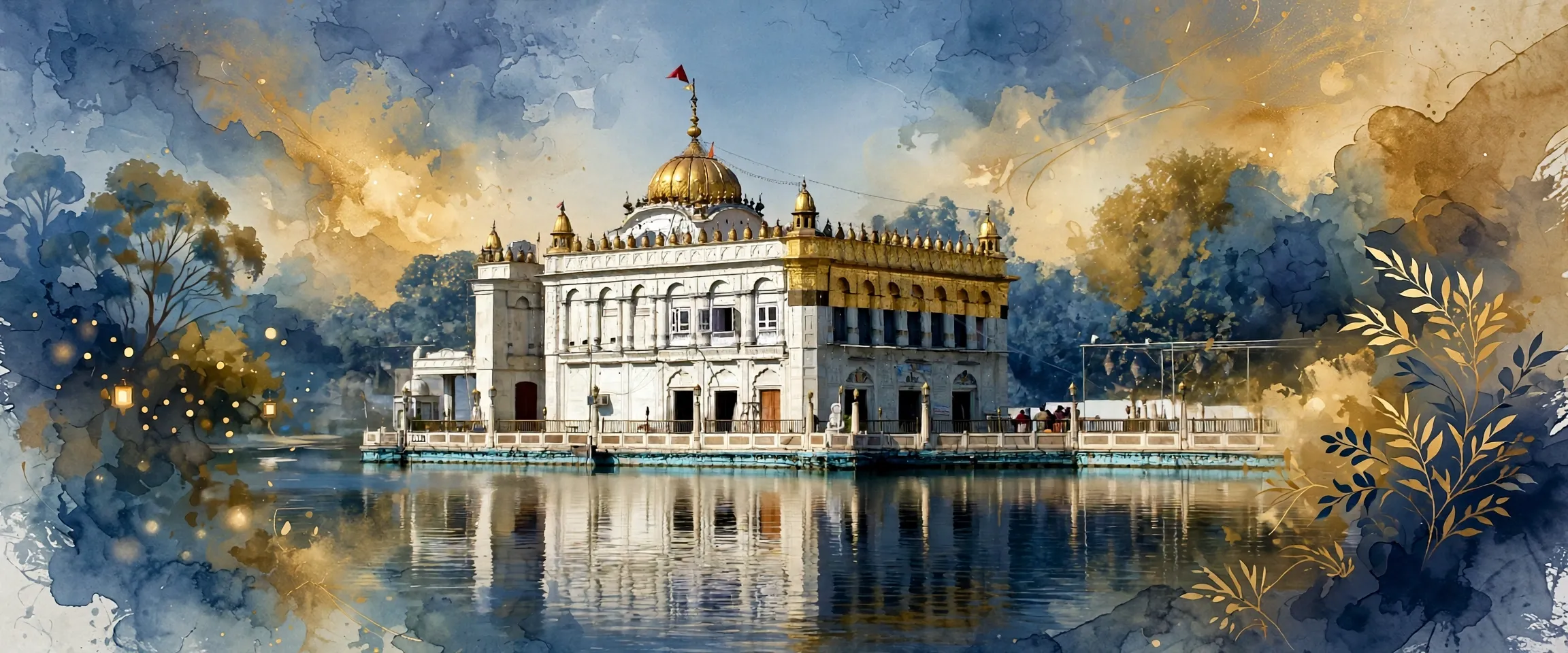
The Durgiana Temple is a Hindu temple in Amritsar, Punjab, dedicated to the goddess Durga, with shrines of Lakshmi and Vishnu. It stands in the middle of a sacred lake about 160 by 130 metres, in the architectural pattern of the Golden Temple, and was rebuilt in 1921 by Guru Harsai Mal Kapoor. Its large silver doors give it another name, the Silver Temple.
- Punjabi name
- ਦੁਰਗਿਆਣਾ ਮੰਦਰ
- Country
- India
- State
- Punjab
- City
- Amritsar
- Deity
- Durga, with Lakshmi and Vishnu also worshipped
- Also known as
- Lakshmi Narayan Temple, Silver Temple, Sitla Mandir
All 9 facts
- Rebuilt
- 1921, by Guru Harsai Mal Kapoor, in the pattern of the Harmandir Sahib
- Sarovar
- About 160 metres by 130 metres
- Festival
- Navratri, with the Langur Mela at the Bara Hanuman temple
Amritsar is known across the world for one shrine above all, the Golden Temple, but the city holds a second great temple in a lake of its own. The Durgiana Temple, also called Shri Durgiana Mandir, the Lakshmi Narayan Temple and the Silver Temple, stands in the middle of the Durgiana Sarovar near the Hathi Gate, reached by a bridge, its gilded dome rising over white marble. It is dedicated above all to the goddess Durga, and images of Lakshmi and Vishnu are worshipped here too, which is why many devotees know it by the Lakshmi Narayan name. For Hindu pilgrims coming to Amritsar, this is the city's principal mandir, and it is the natural first entry in Jugti's Punjab mandirs collection.
What is the Durgiana Temple?
The Durgiana Temple is a Hindu temple in Amritsar, Punjab, dedicated to the goddess Durga, with shrines of Lakshmi and Vishnu and smaller historic shrines of Seetla Mata and Bara Hanuman inside the complex. The temple stands in a sacred lake that measures about 160 metres by 130 metres. Its dome and canopies follow the design of the Harmandir Sahib, the Golden Temple, in the same city: a sanctum in the water, a causeway bridge, a gilded dome and marble used throughout. The temple takes one of its nicknames, the Silver Temple, from its large, finely worked silver doors.
An old shrine, rebuilt in 1921
The site is far older than the building a visitor sees today. The original temple is reported to have been built in the 16th century, and a British report of 1880 described a brick temple of the mid 18th century with colour decoration. The Durgiana Sarovar and its Devi Dwara, the goddess's doorway, appear in the Amritsar District Gazetteer of 1893, which records that Hindu pilgrims thronged here. The present temple was rebuilt in 1921 by Guru Harsai Mal Kapoor, a descendant of Prithi Chand and so of Guru Ram Das, who raised it deliberately in the architectural style of the Harmandir Sahib. Some accounts give 1924 for the laying of the foundation stone by Pandit Madan Mohan Malaviya, the educationist and founder of Banaras Hindu University. A beautification programme around the temple precincts ran from 2013 to 2015, clearing space for worshippers inside and outside the complex.
In the middle of the water: architecture and shrines
Like its model, the temple is approached across the water, and the view that greets a visitor is of the dome and its reflection together. The dome is gilded and lit with coloured lights after dark, and the complex holds a rich collection of Hindu scriptures. Inside, paintings show Durga in her various forms, and images of Lakshmi Narayan, Radha and Krishna, and Sita and Ram are also worshipped. Two smaller shrines carry their own long histories: the Seetla Mata temple, which gives the complex another of its names, Sitla Mandir, and the Bara Hanuman temple. Temple tradition links the ground to the Ramayana: it is believed locally that Sita spent her last years near here in the ashram of Valmiki, that her sons Luv and Kush grew up in this area, and that a tree in the courtyard is the one to which the boys tied Hanuman after he came with Rama's Ashvamedha horse. These are beliefs held and retold by devotees, and the temple presents them as part of its sacred story.
Festivals at Durgiana
The temple's great days follow the Hindu festival year. Navratri and Dussehra bring its largest crowds, and with them the Langur Mela, when for ten days parents bring children dressed as langurs, the monkey companions of Hanuman, to offer prayers at the Bara Hanuman temple. Janmashtami, Ram Navami and Diwali are also celebrated here with much ceremony. In the month of Sawan, newlywed couples gather to worship Radha and Krishna, the women wearing jewellery made of flowers. The temple stands close to Amritsar railway station, about 1.5 kilometres from the bus station, so most pilgrims pair it with the Golden Temple, Jallianwala Bagh and the old city's bazaars in a single visit. Tobacco, liquor and meat sales are prohibited within 200 metres of both this temple and the Harmandir Sahib.
Why does Amritsar have two great temples in lakes?
Visitors often ask why Durgiana looks so much like the Golden Temple. The answer is in its rebuilding: when Guru Harsai Mal Kapoor raised the present temple in 1921, he chose the Harmandir Sahib's own form, a shrine standing in a sacred pool, as the pattern for his city's Hindu temple. The resemblance is a point of pride in Amritsar, where the two shrines stand a short distance apart and the same streets serve pilgrims of both faiths. Read with Jugti's entry on the Harmandir Sahib, the Durgiana Temple completes the picture of a city built around sacred water. More Punjab mandirs will join it in this collection as Jugti's mandirs in Indian Punjab guide takes shape.
ਅੰਮ੍ਰਿਤਸਰ ਦੁਨੀਆ ਭਰ ਵਿੱਚ ਸਭ ਤੋਂ ਵੱਧ ਇੱਕ ਧਾਮ ਲਈ ਜਾਣਿਆ ਜਾਂਦਾ ਹੈ, ਸ੍ਰੀ ਹਰਿਮੰਦਰ ਸਾਹਿਬ, ਪਰ ਸ਼ਹਿਰ ਆਪਣੀ ਝੀਲ ਵਿੱਚ ਇੱਕ ਦੂਜਾ ਮਹਾਨ ਮੰਦਰ ਵੀ ਸਾਂਭਦਾ ਹੈ ਦੁਰਗਿਆਣਾ ਮੰਦਰ, ਜਿਸਨੂੰ ਸ੍ਰੀ ਦੁਰਗਿਆਣਾ ਮੰਦਰ, ਲਕਸ਼ਮੀ ਨਰਾਇਣ ਮੰਦਰ ਅਤੇ ਚਾਂਦੀ ਮੰਦਰ ਵੀ ਕਿਹਾ ਜਾਂਦਾ ਹੈ, ਹਾਥੀ ਗੇਟ ਦੇ ਨੇੜੇ ਦੁਰਗਿਆਣਾ ਸਰੋਵਰ ਦੇ ਵਿਚਕਾਰ ਖੜ੍ਹਾ ਹੈ, ਇੱਕ ਪੁਲ ਰਾਹੀਂ ਪਹੁੰਚਿਆ ਜਾਂਦਾ ਹੈ, ਚਿੱਟੇ ਸੰਗਮਰਮਰ ਉੱਤੇ ਉੱਠਿਆ ਇਸਦਾ ਸੁਨਹਿਰੀ ਗੁੰਬਦ ਇਹ ਸਭ ਤੋਂ ਵੱਧ ਦੇਵੀ ਦੁਰਗਾ ਨੂੰ ਸਮਰਪਿਤ ਹੈ, ਅਤੇ ਇੱਥੇ ਲਕਸ਼ਮੀ ਅਤੇ ਵਿਸ਼ਨੂੰ ਦੀਆਂ ਮੂਰਤੀਆਂ ਦੀ ਵੀ ਪੂਜਾ ਹੁੰਦੀ ਹੈ, ਇਸੇ ਲਈ ਬਹੁਤ ਸਾਰੇ ਸ਼ਰਧਾਲੂ ਇਸਨੂੰ ਲਕਸ਼ਮੀ ਨਰਾਇਣ ਨਾਂ ਨਾਲ ਜਾਣਦੇ ਹਨ ਅੰਮ੍ਰਿਤਸਰ ਆਉਣ ਵਾਲੇ ਹਿੰਦੂ ਸ਼ਰਧਾਲੂਆਂ ਲਈ ਇਹ ਸ਼ਹਿਰ ਦਾ ਪ੍ਰਮੁੱਖ ਮੰਦਰ ਹੈ, ਅਤੇ ਇਹ ਜੁਗਤੀ ਦੇ ਪੰਜਾਬ ਮੰਦਰ ਸੰਗ੍ਰਹਿ ਵਿੱਚ ਕੁਦਰਤੀ ਪਹਿਲੀ ਐਂਟਰੀ ਹੈ
ਦੁਰਗਿਆਣਾ ਮੰਦਰ ਕੀ ਹੈ?
ਦੁਰਗਿਆਣਾ ਮੰਦਰ ਅੰਮ੍ਰਿਤਸਰ, ਪੰਜਾਬ ਵਿੱਚ ਇੱਕ ਹਿੰਦੂ ਮੰਦਰ ਹੈ, ਜੋ ਦੇਵੀ ਦੁਰਗਾ ਨੂੰ ਸਮਰਪਿਤ ਹੈ, ਪਰਿਸਰ ਅੰਦਰ ਲਕਸ਼ਮੀ ਅਤੇ ਵਿਸ਼ਨੂੰ ਦੇ ਧਾਮ ਅਤੇ ਸੀਤਲਾ ਮਾਤਾ ਅਤੇ ਬੜਾ ਹਨੂੰਮਾਨ ਦੇ ਛੋਟੇ ਇਤਿਹਾਸਕ ਧਾਮ ਹਨ ਮੰਦਰ ਇੱਕ ਪਵਿੱਤਰ ਝੀਲ ਵਿੱਚ ਖੜ੍ਹਾ ਹੈ ਜਿਸਦਾ ਮਾਪ ਲਗਭਗ 160 ਮੀਟਰ ਗੁਣਾ 130 ਮੀਟਰ ਹੈ ਇਸਦਾ ਗੁੰਬਦ ਅਤੇ ਛੱਤਰੀਆਂ ਉਸੇ ਸ਼ਹਿਰ ਦੇ ਸ੍ਰੀ ਹਰਿਮੰਦਰ ਸਾਹਿਬ ਦੇ ਨਮੂਨੇ ਉੱਤੇ ਹਨ: ਪਾਣੀ ਵਿੱਚ ਗਰਭਗ੍ਰਹਿ, ਪੁਲ ਵਾਲਾ ਰਸਤਾ, ਸੁਨਹਿਰੀ ਗੁੰਬਦ ਅਤੇ ਹਰ ਥਾਂ ਸੰਗਮਰਮਰ ਮੰਦਰ ਆਪਣਾ ਇੱਕ ਉਪਨਾਮ, ਚਾਂਦੀ ਮੰਦਰ, ਆਪਣੇ ਵੱਡੇ, ਬਾਰੀਕੀ ਨਾਲ ਘੜੇ ਚਾਂਦੀ ਦੇ ਦਰਵਾਜ਼ਿਆਂ ਤੋਂ ਲੈਂਦਾ ਹੈ
ਇੱਕ ਪੁਰਾਣਾ ਧਾਮ, 1921 ਵਿੱਚ ਮੁੜ ਬਣਿਆ
ਇਹ ਥਾਂ ਅੱਜ ਸੈਲਾਨੀ ਨੂੰ ਦਿਖਦੀ ਇਮਾਰਤ ਨਾਲੋਂ ਕਿਤੇ ਪੁਰਾਣੀ ਹੈ ਮੂਲ ਮੰਦਰ ਸੋਲ੍ਹਵੀਂ ਸਦੀ ਵਿੱਚ ਬਣਿਆ ਦੱਸਿਆ ਜਾਂਦਾ ਹੈ, ਅਤੇ 1880 ਦੀ ਇੱਕ ਬ੍ਰਿਟਿਸ਼ ਰਿਪੋਰਟ ਵਿੱਚ ਅਠਾਰ੍ਹਵੀਂ ਸਦੀ ਦੇ ਵਿਚਕਾਰ ਦੇ ਰੰਗਦਾਰ ਸਜਾਵਟ ਵਾਲੇ ਇੱਟਾਂ ਦੇ ਮੰਦਰ ਦਾ ਵਰਣਨ ਹੈ ਦੁਰਗਿਆਣਾ ਸਰੋਵਰ ਅਤੇ ਇਸਦਾ ਦੇਵੀ ਦੁਆਰਾ 1893 ਦੇ ਅੰਮ੍ਰਿਤਸਰ ਜ਼ਿਲ੍ਹਾ ਗਜ਼ਟੀਅਰ ਵਿੱਚ ਆਉਂਦਾ ਹੈ, ਜਿਸ ਵਿੱਚ ਦਰਜ ਹੈ ਕਿ ਹਿੰਦੂ ਸ਼ਰਧਾਲੂ ਇੱਥੇ ਭੀੜ ਕਰਦੇ ਸਨ ਮੌਜੂਦਾ ਮੰਦਰ 1921 ਵਿੱਚ ਗੁਰੂ ਹਰਸਾਈ ਮੱਲ ਕਪੂਰ ਨੇ ਮੁੜ ਬਣਾਇਆ, ਜੋ ਪਿਰਥੀ ਚੰਦ ਦੇ ਅਤੇ ਇਸ ਤਰ੍ਹਾਂ ਗੁਰੂ ਰਾਮ ਦਾਸ ਜੀ ਦੇ ਵੰਸ਼ਜ ਸਨ, ਅਤੇ ਉਨ੍ਹਾਂ ਇਸਨੂੰ ਜਾਣ ਬੁੱਝ ਕੇ ਸ੍ਰੀ ਹਰਿਮੰਦਰ ਸਾਹਿਬ ਦੀ ਭਵਨ ਸ਼ੈਲੀ ਵਿੱਚ ਉੱਠਾਇਆ ਕੁਝ ਬਿਰਤਾਂਤ ਪੰਡਿਤ ਮਦਨ ਮੋਹਨ ਮਾਲਵੀਆ, ਸਿੱਖਿਆ ਸ਼ਾਸਤਰੀ ਅਤੇ ਬਨਾਰਸ ਹਿੰਦੂ ਯੂਨੀਵਰਸਿਟੀ ਦੇ ਸੰਸਥਾਪਕ, ਵੱਲੋਂ ਨੀਂਹ ਪੱਥਰ ਰੱਖਣ ਲਈ 1924 ਦਿੰਦੇ ਹਨ ਮੰਦਰ ਪਰਿਸਰ ਦੇ ਆਲੇ ਦੁਆਲੇ ਸੁੰਦਰੀਕਰਨ ਪ੍ਰੋਗਰਾਮ 2013 ਤੋਂ 2015 ਤੱਕ ਚੱਲਿਆ, ਜਿਸਨੇ ਪਰਿਸਰ ਅੰਦਰ ਅਤੇ ਬਾਹਰ ਸ਼ਰਧਾਲੂਆਂ ਲਈ ਥਾਂ ਖੋਲ੍ਹੀ
ਪਾਣੀ ਦੇ ਵਿਚਕਾਰ: ਭਵਨ ਕਲਾ ਅਤੇ ਧਾਮ
ਆਪਣੇ ਨਮੂਨੇ ਵਾਂਗ, ਮੰਦਰ ਤੱਕ ਪਾਣੀ ਉੱਤੋਂ ਲੰਘ ਕੇ ਪਹੁੰਚਿਆ ਜਾਂਦਾ ਹੈ, ਅਤੇ ਸੈਲਾਨੀ ਨੂੰ ਸਵਾਗਤ ਕਰਨ ਵਾਲਾ ਨਜ਼ਾਰਾ ਗੁੰਬਦ ਅਤੇ ਇਸਦੇ ਪਰਛਾਵੇਂ ਦਾ ਇਕੱਠਾ ਹੈ ਗੁੰਬਦ ਸੁਨਹਿਰੀ ਹੈ ਅਤੇ ਹਨੇਰੇ ਤੋਂ ਬਾਅਦ ਰੰਗਦਾਰ ਰੌਸ਼ਨੀਆਂ ਨਾਲ ਜਗਦਾ ਹੈ, ਅਤੇ ਪਰਿਸਰ ਹਿੰਦੂ ਗ੍ਰੰਥਾਂ ਦਾ ਅਮੀਰ ਸੰਗ੍ਰਹਿ ਸਾਂਭਦਾ ਹੈ ਅੰਦਰ, ਚਿੱਤਰ ਦੁਰਗਾ ਨੂੰ ਉਸਦੇ ਕਈ ਰੂਪਾਂ ਵਿੱਚ ਦਿਖਾਉਂਦੇ ਹਨ, ਅਤੇ ਲਕਸ਼ਮੀ ਨਰਾਇਣ, ਰਾਧਾ ਅਤੇ ਕ੍ਰਿਸ਼ਨ, ਅਤੇ ਸੀਤਾ ਅਤੇ ਰਾਮ ਦੀਆਂ ਮੂਰਤੀਆਂ ਦੀ ਵੀ ਪੂਜਾ ਹੁੰਦੀ ਹੈ ਦੋ ਛੋਟੇ ਧਾਮ ਆਪਣੇ ਲੰਬੇ ਇਤਿਹਾਸ ਸਾਂਭਦੇ ਹਨ: ਸੀਤਲਾ ਮਾਤਾ ਮੰਦਰ, ਜੋ ਪਰਿਸਰ ਨੂੰ ਇਸਦਾ ਇੱਕ ਹੋਰ ਨਾਂ, ਸੀਤਲਾ ਮੰਦਰ, ਦਿੰਦਾ ਹੈ, ਅਤੇ ਬੜਾ ਹਨੂੰਮਾਨ ਮੰਦਰ ਮੰਦਰ ਪਰੰਪਰਾ ਇਸ ਥਾਂ ਨੂੰ ਰਾਮਾਇਣ ਨਾਲ ਜੋੜਦੀ ਹੈ: ਸਥਾਨਕ ਤੌਰ ਉੱਤੇ ਮੰਨਿਆ ਜਾਂਦਾ ਹੈ ਕਿ ਸੀਤਾ ਨੇ ਆਪਣੇ ਆਖਰੀ ਸਾਲ ਇੱਥੇ ਨੇੜੇ ਵਾਲਮੀਕ ਦੇ ਆਸ਼ਰਮ ਵਿੱਚ ਬਿਤਾਏ, ਉਸਦੇ ਪੁੱਤਰ ਲਵ ਅਤੇ ਕੁਸ਼ ਇਸ ਇਲਾਕੇ ਵਿੱਚ ਵੱਡੇ ਹੋਏ, ਅਤੇ ਵਿਹੜੇ ਵਿੱਚ ਇੱਕ ਰੁੱਖ ਉਹ ਹੈ ਜਿਸ ਨਾਲ ਮੁੰਡਿਆਂ ਨੇ ਹਨੂੰਮਾਨ ਨੂੰ ਬੰਨ੍ਹਿਆ ਸੀ ਜਦੋਂ ਉਹ ਰਾਮ ਦੇ ਅਸ਼ਵਮੇਧ ਘੋੜੇ ਨਾਲ ਆਇਆ ਸੀ ਇਹ ਸ਼ਰਧਾਲੂਆਂ ਵੱਲੋਂ ਰੱਖੀਆਂ ਅਤੇ ਸੁਣਾਈਆਂ ਜਾਂਦੀਆਂ ਮਾਨਤਾਵਾਂ ਹਨ, ਅਤੇ ਮੰਦਰ ਇਹਨਾਂ ਨੂੰ ਆਪਣੀ ਪਵਿੱਤਰ ਕਹਾਣੀ ਦੇ ਹਿੱਸੇ ਵਜੋਂ ਪੇਸ਼ ਕਰਦਾ ਹੈ
ਦੁਰਗਿਆਣਾ ਵਿਖੇ ਤਿਉਹਾਰ
ਮੰਦਰ ਦੇ ਮਹਾਨ ਦਿਨ ਹਿੰਦੂ ਤਿਉਹਾਰ ਸਾਲ ਅਨੁਸਾਰ ਆਉਂਦੇ ਹਨ ਨਵਰਾਤਰੀ ਅਤੇ ਦੁਸਹਿਰਾ ਇਸਦੀ ਸਭ ਤੋਂ ਵੱਡੀ ਭੀੜ ਲਿਆਉਂਦੇ ਹਨ, ਅਤੇ ਉਨ੍ਹਾਂ ਨਾਲ ਲੰਗੂਰ ਮੇਲਾ, ਜਦੋਂ ਦਸ ਦਿਨ ਮਾਪੇ ਬੱਚਿਆਂ ਨੂੰ ਲੰਗੂਰ, ਹਨੂੰਮਾਨ ਦੇ ਬਾਂਦਰ ਸਾਥੀ, ਦਾ ਭੇਸ ਪਾ ਕੇ ਬੜਾ ਹਨੂੰਮਾਨ ਮੰਦਰ ਵਿੱਚ ਮੱਥਾ ਟੇਕਣ ਲਿਆਉਂਦੇ ਹਨ ਜਨਮ ਅਸ਼ਟਮੀ, ਰਾਮ ਨਵਮੀ ਅਤੇ ਦੀਵਾਲੀ ਵੀ ਇੱਥੇ ਬਹੁਤ ਰਸਮਾਂ ਨਾਲ ਮਨਾਈਆਂ ਜਾਂਦੀਆਂ ਹਨ ਸਾਵਣ ਦੇ ਮਹੀਨੇ ਵਿੱਚ ਨਵਵਿਆਹੇ ਜੋੜੇ ਰਾਧਾ ਅਤੇ ਕ੍ਰਿਸ਼ਨ ਦੀ ਪੂਜਾ ਲਈ ਇਕੱਠੇ ਹੁੰਦੇ ਹਨ, ਔਰਤਾਂ ਫੁੱਲਾਂ ਦੇ ਗਹਿਣੇ ਪਹਿਨਦੀਆਂ ਹਨ ਮੰਦਰ ਅੰਮ੍ਰਿਤਸਰ ਰੇਲਵੇ ਸਟੇਸ਼ਨ ਦੇ ਨੇੜੇ ਹੈ, ਬੱਸ ਅੱਡੇ ਤੋਂ ਲਗਭਗ 1.5 ਕਿਲੋਮੀਟਰ, ਇਸ ਲਈ ਜ਼ਿਆਦਾਤਰ ਸ਼ਰਧਾਲੂ ਇਸਨੂੰ ਇੱਕੋ ਯਾਤਰਾ ਵਿੱਚ ਸ੍ਰੀ ਹਰਿਮੰਦਰ ਸਾਹਿਬ, ਜੱਲਿਆਂਵਾਲਾ ਬਾਗ ਅਤੇ ਪੁਰਾਣੇ ਸ਼ਹਿਰ ਦੇ ਬਾਜ਼ਾਰਾਂ ਨਾਲ ਜੋੜਦੇ ਹਨ ਇਸ ਮੰਦਰ ਅਤੇ ਸ੍ਰੀ ਹਰਿਮੰਦਰ ਸਾਹਿਬ ਦੋਵਾਂ ਦੇ 200 ਮੀਟਰ ਦੇ ਘੇਰੇ ਵਿੱਚ ਤੰਬਾਕੂ, ਸ਼ਰਾਬ ਅਤੇ ਮਾਸ ਦੀ ਵਿਕਰੀ ਉੱਤੇ ਪਾਬੰਦੀ ਹੈ
ਅੰਮ੍ਰਿਤਸਰ ਵਿੱਚ ਝੀਲਾਂ ਵਿੱਚ ਦੋ ਮਹਾਨ ਮੰਦਰ ਕਿਉਂ ਹਨ?
ਸੈਲਾਨੀ ਅਕਸਰ ਪੁੱਛਦੇ ਹਨ ਕਿ ਦੁਰਗਿਆਣਾ ਸ੍ਰੀ ਹਰਿਮੰਦਰ ਸਾਹਿਬ ਵਰਗਾ ਕਿਉਂ ਦਿਖਦਾ ਹੈ ਜਵਾਬ ਇਸਦੀ ਮੁੜ ਉਸਾਰੀ ਵਿੱਚ ਹੈ: ਜਦੋਂ ਗੁਰੂ ਹਰਸਾਈ ਮੱਲ ਕਪੂਰ ਨੇ 1921 ਵਿੱਚ ਮੌਜੂਦਾ ਮੰਦਰ ਉੱਠਾਇਆ, ਉਨ੍ਹਾਂ ਆਪਣੇ ਸ਼ਹਿਰ ਦੇ ਹਿੰਦੂ ਮੰਦਰ ਲਈ ਸ੍ਰੀ ਹਰਿਮੰਦਰ ਸਾਹਿਬ ਦਾ ਆਪਣਾ ਰੂਪ, ਪਵਿੱਤਰ ਤਾਲਾਬ ਵਿੱਚ ਖੜ੍ਹਾ ਧਾਮ, ਨਮੂਨੇ ਵਜੋਂ ਚੁਣਿਆ ਇਹ ਸਮਾਨਤਾ ਅੰਮ੍ਰਿਤਸਰ ਵਿੱਚ ਮਾਣ ਦਾ ਵਿਸ਼ਾ ਹੈ, ਜਿੱਥੇ ਦੋਵੇਂ ਧਾਮ ਥੋੜ੍ਹੀ ਦੂਰੀ ਉੱਤੇ ਖੜ੍ਹੇ ਹਨ ਅਤੇ ਇੱਕੋ ਗਲੀਆਂ ਦੋਵਾਂ ਧਰਮਾਂ ਦੇ ਸ਼ਰਧਾਲੂਆਂ ਦੀ ਸੇਵਾ ਕਰਦੀਆਂ ਹਨ ਜੁਗਤੀ ਦੀ ਸ੍ਰੀ ਹਰਿਮੰਦਰ ਸਾਹਿਬ ਬਾਰੇ ਐਂਟਰੀ ਨਾਲ ਪੜ੍ਹਿਆਂ, ਦੁਰਗਿਆਣਾ ਮੰਦਰ ਪਵਿੱਤਰ ਪਾਣੀ ਦੇ ਆਲੇ ਦੁਆਲੇ ਬਣੇ ਸ਼ਹਿਰ ਦੀ ਤਸਵੀਰ ਪੂਰੀ ਕਰਦਾ ਹੈ ਹੋਰ ਪੰਜਾਬ ਮੰਦਰ ਇਸ ਸੰਗ੍ਰਹਿ ਵਿੱਚ ਸ਼ਾਮਲ ਹੋਣਗੇ ਜਿਵੇਂ ਜਿਵੇਂ ਜੁਗਤੀ ਦੀ ਭਾਰਤੀ ਪੰਜਾਬ ਦੇ ਮੰਦਰਾਂ ਦੀ ਗਾਈਡ ਆਕਾਰ ਲੈਂਦੀ ਹੈ