
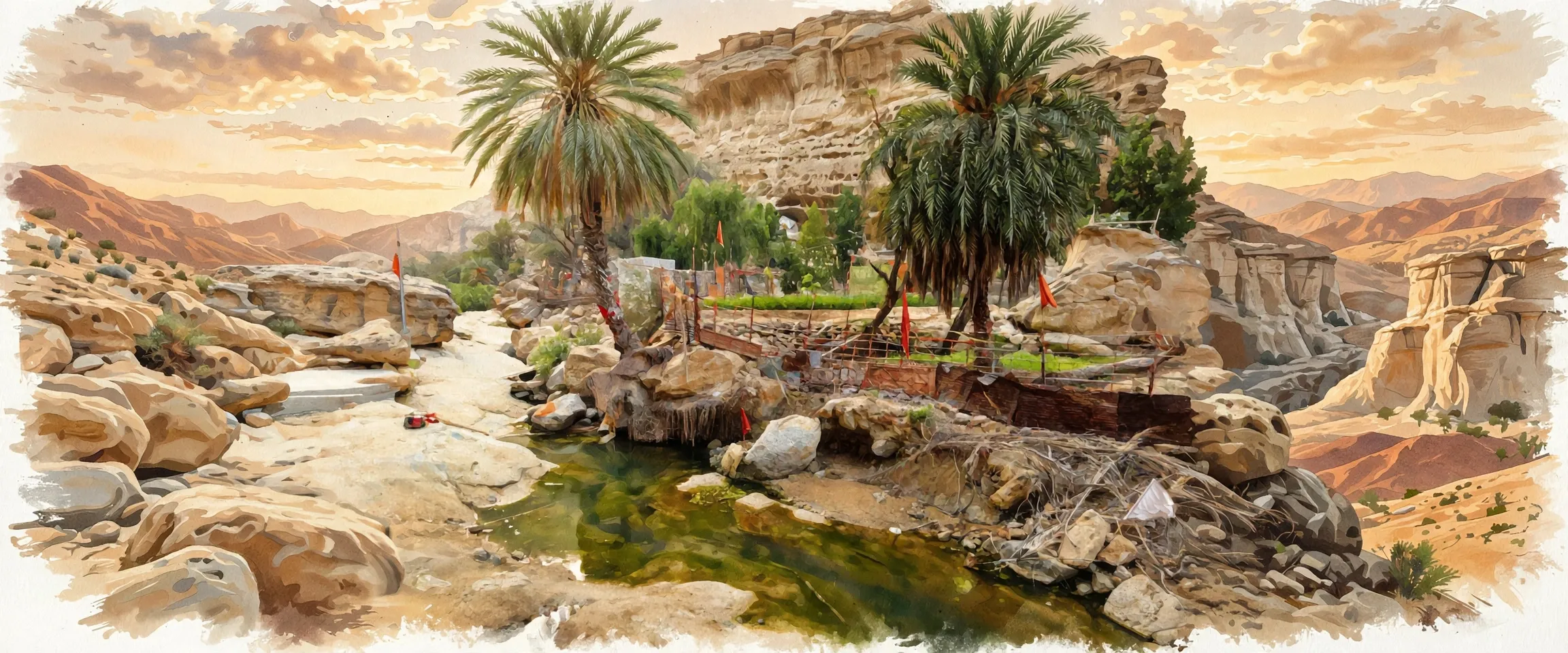
Hinglaj Mata Temple is a Hindu cave temple at Hinglaj in Lasbela district, Balochistan, Pakistan, inside Hingol National Park on the banks of the Hingol River. It is counted among the 51 Shakta pithas, where a part of the goddess Sati's upper head is believed to have fallen, and the goddess is worshipped as a sindoor smeared stone with no idol. Its four day April yatra is the largest Hindu pilgrimage in Pakistan.
- Punjabi name
- ਹਿੰਗਲਾਜ ਮਾਤਾ ਮੰਦਰ
- Country
- Pakistan
- Province
- Balochistan
- City
- Hinglaj, Makran coast
- District
- Lasbela
- Deity
- Hinglaj Mata, a form of Durga or Devi
All 10 facts
- Tradition
- One of the 51 Shakta pithas; one of two in Pakistan
- Architectural style
- Natural cave shrine in a river gorge
- Festivals
- Four day Hinglaj Yatra in April, Navaratri
- Coordinates
- 25.51389 N, 65.51528 E
At the end of a long desert road west of Karachi, a river cuts a narrow gorge through pale cliffs, and inside a cave in that gorge burns one of the oldest goddess shrines of the western subcontinent. Hinglaj Mata, also called Hinglaj Devi, Hingula Devi and, by local people of every faith, Nani Mandir, is a Hindu cave temple at Hinglaj on the Makran coast, in Lasbela district, Balochistan. It stands on the west bank of the Hingol River inside Hingol National Park. Devotees count it among the 51 Shakta pithas, the places where parts of the goddess Sati are believed to have fallen, and here the part is the Brahmarandhra, a part of the upper head. Its spring pilgrimage is described as the largest Hindu pilgrimage in Pakistan.
What is Hinglaj Mata Temple?
Hinglaj Mata Temple is a Hindu cave temple in Lasbela district, Balochistan, Pakistan, dedicated to the goddess as Hinglaj Mata, a form of Durga or Devi. There is no built stone temple and no carved idol at its heart. Inside a mountain cavern on the banks of the Hingol River, a stone smeared with sindoor is worshipped as the goddess herself, under names the scriptures also give as Kottari and Kottavi, with Bhimalochana as her Bhairava. The shrine is one of only two Shakta pithas in Pakistan, the other being Sharada Peeth in the Neelum Valley. Over the last three decades Hinglaj has grown into a unifying point of reference for Pakistan's Hindu communities, who travel here from Sindh, Karachi and across the country.
A cave, a river and a sacred valley
The temple sits in a narrow gorge in the Lyari Tehsil hills, about 250 kilometres northwest of Karachi, some 19 kilometres inland from the Arabian Sea and at the end of a Kirthar mountain range in the Makran desert stretch. The whole valley around it is treated as sacred, as Hinglaj herself, and commercial activity is not allowed inside it. Around the main cave stand smaller places of worship that pilgrims visit in sequence, among them Ganesh Deva, Mata Kali, Guru Gorakhnath's Dooni, Gurunanak Kharao, Ramjarokha Bethak and the Chandra Goop. Before entering the shrine, pilgrims bathe in the Hingol River, and on the way many climb the Chandragup mud volcano, worshipped as an embodiment of Shiva and called Baba Chandragup, where coconuts are thrown into the crater and sins are confessed at its rim.
Why do local Muslims call it Nani Mandir?
Hinglaj is revered well beyond the Hindu community. Local Muslims, particularly Zikri Muslims, hold the goddess in reverence and help provide security to the shrine, and they call the temple Nani Mandir, the maternal grandmother's temple. Some local people call the pilgrimage itself the Nani Ki Haj. The Sindhi Sufi poet Shah Abdul Latif Bhittai is remembered as having made the hard journey to Hinglaj and offered milk to the goddess, and his Sur Ramkali was composed in reverence to Hinglaj Mata and the jogis who visited her. That shared reverence, across faiths in a remote desert valley, is one of the reasons Hinglaj is spoken of as a symbol of Balochistan's older, layered religious life.
The Hinglaj Yatra: Pakistan's largest Hindu pilgrimage
The annual pilgrimage, the Hinglaj Yatra or Theerth Yatra, runs for four days in April, around Navaratri season, and its main ceremony falls on the third day, when the shrine's priests recite mantras over the pilgrims' offerings, chiefly three coconuts. Pilgrim groups traditionally set out from the Nanad Panthi Akhada in Karachi, led by a holy staff bearer called the chaadiar, and Hindus of the Thar region form the largest contingent. For centuries the journey meant a trek of more than 150 kilometres on foot through desert from the nearest road. The Makran Coastal Highway, linking Karachi with Gwadar, changed that: Hinglaj is now about 328 kilometres and nearly four hours by road from Karachi, and reported pilgrim numbers have risen sharply, with a figure of 300,000 reported for the spring pilgrimage. Volunteers run vast community kitchens, temporary camps and bathing facilities for the crowds. The Hinglaj Sheva Mandali, the temple committee founded on 5 January 1986, remains the main organisation serving the shrine and its pilgrims.
A shrine that could not be moved
In 2008, Pakistan's Water and Power Development Authority proposed a dam on the Hingol River close to the shrine, which would have flooded the temple's access roads and endangered the site and its festivals. The Hindu community protested, the Balochistan Assembly asked the federal government to stop the project, and a later suggestion to relocate three holy places uphill was rejected by the Hinglaj Sheva Mandali, which argued that such sites are not ordinary temples and cannot simply be moved. In 2009 the dam site was shifted a few kilometres north to protect the temple, by agreement between the authority, the Assembly and the Hindu community. The episode is now part of the shrine's modern story: a cave that has drawn pilgrims for centuries was defended, in the end, as a place that belongs exactly where it is.
Visiting Hinglaj Mata
Most visitors come by bus or private car along the Makran Coastal Highway from Karachi, pairing the shrine with the mud volcanoes and the Hingol National Park landscape. The four April days of the yatra are the fullest and most demanding time to come, while a quieter visit outside the festival sees the gorge much as solitary pilgrims knew it. Read Hinglaj alongside Jugti's other Shakti Peeth entries, Devi Talab Mandir in Jalandhar and Kamakhya in Guwahati, and with the Salt Range complex of Katas Raj in Chakwal, the two great Hindu pilgrimages of Pakistan now standing side by side in this collection.
ਕਰਾਚੀ ਦੇ ਪੱਛਮ ਵਿੱਚ ਇੱਕ ਲੰਬੀ ਮਾਰੂਥਲ ਸੜਕ ਦੇ ਅੰਤ ਉੱਤੇ, ਇੱਕ ਦਰਿਆ ਪੀਲੀਆਂ ਚੱਟਾਨਾਂ ਵਿੱਚੋਂ ਇੱਕ ਤੰਗ ਖੱਡ ਕੱਟਦਾ ਹੈ, ਅਤੇ ਉਸ ਖੱਡ ਵਿੱਚ ਇੱਕ ਗੁਫ਼ਾ ਅੰਦਰ ਪੱਛਮੀ ਉਪਮਹਾਂਦੀਪ ਦੇ ਸਭ ਤੋਂ ਪੁਰਾਣੇ ਦੇਵੀ ਧਾਮਾਂ ਵਿੱਚੋਂ ਇੱਕ ਜਗਦਾ ਹੈ ਹਿੰਗਲਾਜ ਮਾਤਾ, ਜਿਸਨੂੰ ਹਿੰਗਲਾਜ ਦੇਵੀ, ਹਿੰਗੁਲਾ ਦੇਵੀ ਅਤੇ, ਹਰ ਧਰਮ ਦੇ ਸਥਾਨਕ ਲੋਕਾਂ ਵੱਲੋਂ, ਨਾਨੀ ਮੰਦਰ ਵੀ ਕਿਹਾ ਜਾਂਦਾ ਹੈ, ਮਕਰਾਨ ਤੱਟ ਉੱਤੇ ਹਿੰਗਲਾਜ ਵਿਖੇ ਇੱਕ ਹਿੰਦੂ ਗੁਫ਼ਾ ਮੰਦਰ ਹੈ, ਲਸਬੇਲਾ ਜ਼ਿਲ੍ਹੇ, ਬਲੋਚਿਸਤਾਨ ਵਿੱਚ ਇਹ ਹਿੰਗੋਲ ਰਾਸ਼ਟਰੀ ਪਾਰਕ ਅੰਦਰ ਹਿੰਗੋਲ ਦਰਿਆ ਦੇ ਪੱਛਮੀ ਕੰਢੇ ਉੱਤੇ ਖੜ੍ਹਾ ਹੈ ਸ਼ਰਧਾਲੂ ਇਸਨੂੰ 51 ਸ਼ਕਤੀ ਪੀਠਾਂ ਵਿੱਚ ਗਿਣਦੇ ਹਨ, ਉਹ ਥਾਵਾਂ ਜਿੱਥੇ ਦੇਵੀ ਸਤੀ ਦੇ ਅੰਗ ਡਿੱਗੇ ਮੰਨੇ ਜਾਂਦੇ ਹਨ, ਅਤੇ ਇੱਥੇ ਉਹ ਅੰਗ ਬ੍ਰਹਮਰੰਧਰ ਹੈ, ਸਿਰ ਦੇ ਉੱਪਰਲੇ ਹਿੱਸੇ ਦਾ ਇੱਕ ਭਾਗ ਇਸਦੀ ਬਸੰਤ ਤੀਰਥ ਯਾਤਰਾ ਨੂੰ ਪਾਕਿਸਤਾਨ ਦੀ ਸਭ ਤੋਂ ਵੱਡੀ ਹਿੰਦੂ ਤੀਰਥ ਯਾਤਰਾ ਦੱਸਿਆ ਜਾਂਦਾ ਹੈ
ਹਿੰਗਲਾਜ ਮਾਤਾ ਮੰਦਰ ਕੀ ਹੈ?
ਹਿੰਗਲਾਜ ਮਾਤਾ ਮੰਦਰ ਲਸਬੇਲਾ ਜ਼ਿਲ੍ਹੇ, ਬਲੋਚਿਸਤਾਨ, ਪਾਕਿਸਤਾਨ ਵਿੱਚ ਇੱਕ ਹਿੰਦੂ ਗੁਫ਼ਾ ਮੰਦਰ ਹੈ, ਦੇਵੀ ਨੂੰ ਹਿੰਗਲਾਜ ਮਾਤਾ ਵਜੋਂ ਸਮਰਪਿਤ, ਦੁਰਗਾ ਜਾਂ ਦੇਵੀ ਦਾ ਇੱਕ ਰੂਪ ਇਸਦੇ ਹਿਰਦੇ ਵਿੱਚ ਕੋਈ ਬਣਿਆ ਪੱਥਰ ਮੰਦਰ ਅਤੇ ਕੋਈ ਉੱਕਰੀ ਮੂਰਤੀ ਨਹੀਂ ਹੈ ਹਿੰਗੋਲ ਦਰਿਆ ਦੇ ਕੰਢਿਆਂ ਉੱਤੇ ਇੱਕ ਪਹਾੜੀ ਗੁਫ਼ਾ ਅੰਦਰ, ਸਿੰਦੂਰ ਨਾਲ ਲਿੱਪਿਆ ਇੱਕ ਪੱਥਰ ਆਪਣੇ ਆਪ ਦੇਵੀ ਵਜੋਂ ਪੂਜਿਆ ਜਾਂਦਾ ਹੈ, ਉਨ੍ਹਾਂ ਨਾਵਾਂ ਹੇਠ ਜੋ ਗ੍ਰੰਥ ਉਸਨੂੰ ਕੋਟਰੀ ਅਤੇ ਕੋਟਵੀ ਵੀ ਦਿੰਦੇ ਹਨ, ਭੀਮਲੋਚਨ ਉਸਦੇ ਭੈਰਵ ਵਜੋਂ ਇਹ ਧਾਮ ਪਾਕਿਸਤਾਨ ਦੇ ਸਿਰਫ਼ ਦੋ ਸ਼ਕਤੀ ਪੀਠਾਂ ਵਿੱਚੋਂ ਇੱਕ ਹੈ, ਦੂਜਾ ਨੀਲਮ ਵਾਦੀ ਵਿੱਚ ਸ਼ਾਰਦਾ ਪੀਠ ਹੈ ਪਿਛਲੇ ਤਿੰਨ ਦਹਾਕਿਆਂ ਵਿੱਚ ਹਿੰਗਲਾਜ ਪਾਕਿਸਤਾਨ ਦੇ ਹਿੰਦੂ ਭਾਈਚਾਰਿਆਂ ਲਈ ਇੱਕ ਸਾਂਝਾ ਕੇਂਦਰ ਬਣ ਗਿਆ ਹੈ, ਜੋ ਇੱਥੇ ਸਿੰਧ, ਕਰਾਚੀ ਅਤੇ ਸਾਰੇ ਦੇਸ਼ ਤੋਂ ਯਾਤਰਾ ਕਰਦੇ ਹਨ
ਇੱਕ ਗੁਫ਼ਾ, ਇੱਕ ਦਰਿਆ ਅਤੇ ਇੱਕ ਪਵਿੱਤਰ ਵਾਦੀ
ਮੰਦਰ ਲਿਆਰੀ ਤਹਿਸੀਲ ਪਹਾੜੀਆਂ ਵਿੱਚ ਇੱਕ ਤੰਗ ਖੱਡ ਵਿੱਚ ਸਥਿਤ ਹੈ, ਕਰਾਚੀ ਤੋਂ ਲਗਭਗ 250 ਕਿਲੋਮੀਟਰ ਉੱਤਰ ਪੱਛਮ ਵਿੱਚ, ਅਰਬ ਸਾਗਰ ਤੋਂ ਲਗਭਗ 19 ਕਿਲੋਮੀਟਰ ਅੰਦਰ ਅਤੇ ਮਕਰਾਨ ਮਾਰੂਥਲ ਫੈਲਾਅ ਵਿੱਚ ਕਿਰਥਰ ਪਰਬਤ ਲੜੀ ਦੇ ਅੰਤ ਉੱਤੇ ਇਸਦੇ ਆਲੇ ਦੁਆਲੇ ਸਾਰੀ ਵਾਦੀ ਨੂੰ ਪਵਿੱਤਰ ਮੰਨਿਆ ਜਾਂਦਾ ਹੈ, ਆਪਣੇ ਆਪ ਹਿੰਗਲਾਜ ਵਜੋਂ, ਅਤੇ ਇਸਦੇ ਅੰਦਰ ਵਪਾਰਕ ਗਤੀਵਿਧੀ ਦੀ ਆਗਿਆ ਨਹੀਂ ਹੈ ਮੁੱਖ ਗੁਫ਼ਾ ਦੇ ਆਲੇ ਦੁਆਲੇ ਛੋਟੇ ਪੂਜਾ ਸਥਾਨ ਖੜ੍ਹੇ ਹਨ ਜਿਨ੍ਹਾਂ ਦੇ ਸ਼ਰਧਾਲੂ ਕ੍ਰਮ ਵਿੱਚ ਦਰਸ਼ਨ ਕਰਦੇ ਹਨ, ਉਨ੍ਹਾਂ ਵਿੱਚ ਗਣੇਸ਼ ਦੇਵਾ, ਮਾਤਾ ਕਾਲੀ, ਗੁਰੂ ਗੋਰਖਨਾਥ ਦੀ ਧੂਣੀ, ਗੁਰੂਨਾਨਕ ਖੜਾਓ, ਰਾਮਜਰੋਖਾ ਬੈਠਕ ਅਤੇ ਚੰਦਰ ਗੂਪ ਸ਼ਾਮਲ ਹਨ ਧਾਮ ਵਿੱਚ ਦਾਖ਼ਲ ਹੋਣ ਤੋਂ ਪਹਿਲਾਂ, ਸ਼ਰਧਾਲੂ ਹਿੰਗੋਲ ਦਰਿਆ ਵਿੱਚ ਇਸ਼ਨਾਨ ਕਰਦੇ ਹਨ, ਅਤੇ ਰਸਤੇ ਵਿੱਚ ਕਈ ਚੰਦਰਗੁਪ ਮਿੱਟੀ ਜਵਾਲਾਮੁਖੀ ਉੱਤੇ ਚੜ੍ਹਦੇ ਹਨ, ਜਿਸਨੂੰ ਸ਼ਿਵ ਦਾ ਰੂਪ ਮੰਨਿਆ ਜਾਂਦਾ ਹੈ ਅਤੇ ਬਾਬਾ ਚੰਦਰਗੁਪ ਕਿਹਾ ਜਾਂਦਾ ਹੈ, ਜਿੱਥੇ ਨਾਰੀਅਲ ਗੱਡੇ ਵਿੱਚ ਸੁੱਟੇ ਜਾਂਦੇ ਹਨ ਅਤੇ ਇਸਦੇ ਕਿਨਾਰੇ ਉੱਤੇ ਪਾਪਾਂ ਦਾ ਇਕਬਾਲ ਕੀਤਾ ਜਾਂਦਾ ਹੈ
ਸਥਾਨਕ ਮੁਸਲਮਾਨ ਇਸਨੂੰ ਨਾਨੀ ਮੰਦਰ ਕਿਉਂ ਕਹਿੰਦੇ ਹਨ?
ਹਿੰਗਲਾਜ ਨੂੰ ਹਿੰਦੂ ਭਾਈਚਾਰੇ ਤੋਂ ਕਿਤੇ ਪਰੇ ਸਤਕਾਰਿਆ ਜਾਂਦਾ ਹੈ ਸਥਾਨਕ ਮੁਸਲਮਾਨ, ਖ਼ਾਸ ਕਰਕੇ ਜ਼ਿਕਰੀ ਮੁਸਲਮਾਨ, ਦੇਵੀ ਨੂੰ ਸਤਕਾਰ ਵਿੱਚ ਰੱਖਦੇ ਹਨ ਅਤੇ ਧਾਮ ਨੂੰ ਸੁਰੱਖਿਆ ਦੇਣ ਵਿੱਚ ਮਦਦ ਕਰਦੇ ਹਨ, ਅਤੇ ਉਹ ਮੰਦਰ ਨੂੰ ਨਾਨੀ ਮੰਦਰ, ਨਾਨੀ ਦਾ ਮੰਦਰ, ਕਹਿੰਦੇ ਹਨ ਕੁਝ ਸਥਾਨਕ ਲੋਕ ਤੀਰਥ ਯਾਤਰਾ ਨੂੰ ਆਪਣੇ ਆਪ ਨੂੰ ਨਾਨੀ ਕੀ ਹੱਜ ਕਹਿੰਦੇ ਹਨ ਸਿੰਧੀ ਸੂਫ਼ੀ ਕਵੀ ਸ਼ਾਹ ਅਬਦੁਲ ਲਤੀਫ਼ ਭਿੱਟਾਈ ਨੂੰ ਹਿੰਗਲਾਜ ਦੀ ਔਖੀ ਯਾਤਰਾ ਕੀਤੀ ਅਤੇ ਦੇਵੀ ਨੂੰ ਦੁੱਧ ਭੇਟ ਕੀਤਾ ਯਾਦ ਕੀਤਾ ਜਾਂਦਾ ਹੈ, ਅਤੇ ਉਨ੍ਹਾਂ ਦਾ ਸੁਰ ਰਾਮਕਲੀ ਹਿੰਗਲਾਜ ਮਾਤਾ ਅਤੇ ਉਸਦੇ ਦਰਸ਼ਨਾਂ ਨੂੰ ਆਏ ਜੋਗੀਆਂ ਦੇ ਸਤਕਾਰ ਵਿੱਚ ਰਚਿਆ ਗਿਆ ਉਹ ਸਾਂਝਾ ਸਤਕਾਰ, ਇੱਕ ਦੂਰ ਮਾਰੂਥਲ ਵਾਦੀ ਵਿੱਚ ਧਰਮਾਂ ਤੋਂ ਪਾਰ, ਇੱਕ ਕਾਰਨ ਹੈ ਕਿ ਹਿੰਗਲਾਜ ਨੂੰ ਬਲੋਚਿਸਤਾਨ ਦੇ ਪੁਰਾਣੇ, ਪਰਤਦਾਰ ਧਾਰਮਿਕ ਜੀਵਨ ਦੇ ਪ੍ਰਤੀਕ ਵਜੋਂ ਬੋਲਿਆ ਜਾਂਦਾ ਹੈ
ਹਿੰਗਲਾਜ ਯਾਤਰਾ: ਪਾਕਿਸਤਾਨ ਦੀ ਸਭ ਤੋਂ ਵੱਡੀ ਹਿੰਦੂ ਤੀਰਥ ਯਾਤਰਾ
ਸਾਲਾਨਾ ਤੀਰਥ ਯਾਤਰਾ, ਹਿੰਗਲਾਜ ਯਾਤਰਾ ਜਾਂ ਤੀਰਥ ਯਾਤਰਾ, ਅਪ੍ਰੈਲ ਵਿੱਚ ਚਾਰ ਦਿਨ ਚੱਲਦੀ ਹੈ, ਨਵਰਾਤਰੀ ਰੁੱਤ ਦੇ ਆਲੇ ਦੁਆਲੇ, ਅਤੇ ਇਸਦਾ ਮੁੱਖ ਸਮਾਰੋਹ ਤੀਜੇ ਦਿਨ ਪੈਂਦਾ ਹੈ, ਜਦੋਂ ਧਾਮ ਦੇ ਪੁਜਾਰੀ ਸ਼ਰਧਾਲੂਆਂ ਦੀਆਂ ਭੇਟਾਂ ਉੱਤੇ ਮੰਤਰ ਪੜ੍ਹਦੇ ਹਨ, ਮੁੱਖ ਤੌਰ ਉੱਤੇ ਤਿੰਨ ਨਾਰੀਅਲ ਸ਼ਰਧਾਲੂ ਸਮੂਹ ਪਰੰਪਰਾ ਅਨੁਸਾਰ ਕਰਾਚੀ ਵਿੱਚ ਨਾਨਦ ਪੰਥੀ ਅਖਾੜੇ ਤੋਂ ਰਵਾਨਾ ਹੁੰਦੇ ਹਨ, ਇੱਕ ਪਵਿੱਤਰ ਡੰਡਾ ਚੁੱਕਣ ਵਾਲੇ ਦੀ ਅਗਵਾਈ ਵਿੱਚ ਜਿਸਨੂੰ ਛੜੀਦਾਰ ਕਿਹਾ ਜਾਂਦਾ ਹੈ, ਅਤੇ ਥਰ ਇਲਾਕੇ ਦੇ ਹਿੰਦੂ ਸਭ ਤੋਂ ਵੱਡਾ ਜਥਾ ਬਣਾਉਂਦੇ ਹਨ ਸਦੀਆਂ ਤੱਕ ਯਾਤਰਾ ਦਾ ਅਰਥ ਸੀ ਨੇੜਲੀ ਸੜਕ ਤੋਂ ਮਾਰੂਥਲ ਵਿੱਚੋਂ ਪੈਦਲ 150 ਕਿਲੋਮੀਟਰ ਤੋਂ ਵੱਧ ਦਾ ਸਫ਼ਰ ਮਕਰਾਨ ਤੱਟੀ ਹਾਈਵੇ, ਜੋ ਕਰਾਚੀ ਨੂੰ ਗਵਾਦਰ ਨਾਲ ਜੋੜਦਾ ਹੈ, ਨੇ ਉਹ ਬਦਲ ਦਿੱਤਾ: ਹਿੰਗਲਾਜ ਹੁਣ ਕਰਾਚੀ ਤੋਂ ਸੜਕ ਰਾਹੀਂ ਲਗਭਗ 328 ਕਿਲੋਮੀਟਰ ਅਤੇ ਲਗਭਗ ਚਾਰ ਘੰਟੇ ਹੈ, ਅਤੇ ਸ਼ਰਧਾਲੂਆਂ ਦੀ ਗਿਣਤੀ ਤੇਜ਼ੀ ਨਾਲ ਵਧੀ ਹੈ, ਬਸੰਤ ਤੀਰਥ ਯਾਤਰਾ ਲਈ 300,000 ਦਾ ਅੰਕੜਾ ਦੱਸਿਆ ਗਿਆ ਹੈ ਸਵੈਸੇਵੀ ਵੱਡੀਆਂ ਸਾਂਝੀਆਂ ਰਸੋਈਆਂ, ਅਸਥਾਈ ਡੇਰੇ ਅਤੇ ਇਸ਼ਨਾਨ ਸਹੂਲਤਾਂ ਭੀੜਾਂ ਲਈ ਚਲਾਉਂਦੇ ਹਨ ਹਿੰਗਲਾਜ ਸੇਵਾ ਮੰਡਲੀ, 5 ਜਨਵਰੀ 1986 ਨੂੰ ਬਣੀ ਮੰਦਰ ਕਮੇਟੀ, ਧਾਮ ਅਤੇ ਇਸਦੇ ਸ਼ਰਧਾਲੂਆਂ ਦੀ ਸੇਵਾ ਕਰਨ ਵਾਲੀ ਮੁੱਖ ਸੰਸਥਾ ਬਣੀ ਹੋਈ ਹੈ
ਇੱਕ ਧਾਮ ਜਿਸਨੂੰ ਹਿਲਾਇਆ ਨਹੀਂ ਜਾ ਸਕਿਆ
2008 ਵਿੱਚ, ਪਾਕਿਸਤਾਨ ਦੇ ਜਲ ਅਤੇ ਬਿਜਲੀ ਵਿਕਾਸ ਅਥਾਰਟੀ ਨੇ ਧਾਮ ਦੇ ਨੇੜੇ ਹਿੰਗੋਲ ਦਰਿਆ ਉੱਤੇ ਇੱਕ ਡੈਮ ਦਾ ਪ੍ਰਸਤਾਵ ਰੱਖਿਆ, ਜੋ ਮੰਦਰ ਦੀਆਂ ਪਹੁੰਚ ਸੜਕਾਂ ਨੂੰ ਡੋਬ ਦਿੰਦਾ ਅਤੇ ਸਥਾਨ ਅਤੇ ਇਸਦੇ ਤਿਉਹਾਰਾਂ ਨੂੰ ਖ਼ਤਰੇ ਵਿੱਚ ਪਾ ਦਿੰਦਾ ਹਿੰਦੂ ਭਾਈਚਾਰੇ ਨੇ ਵਿਰੋਧ ਕੀਤਾ, ਬਲੋਚਿਸਤਾਨ ਅਸੈਂਬਲੀ ਨੇ ਸੰਘੀ ਸਰਕਾਰ ਨੂੰ ਪ੍ਰੋਜੈਕਟ ਰੋਕਣ ਲਈ ਕਿਹਾ, ਅਤੇ ਬਾਅਦ ਵਿੱਚ ਤਿੰਨ ਪਵਿੱਤਰ ਸਥਾਨਾਂ ਨੂੰ ਉੱਚੀ ਥਾਂ ਉੱਤੇ ਲਿਜਾਣ ਦਾ ਸੁਝਾਅ ਹਿੰਗਲਾਜ ਸੇਵਾ ਮੰਡਲੀ ਨੇ ਰੱਦ ਕਰ ਦਿੱਤਾ, ਜਿਸਨੇ ਦਲੀਲ ਦਿੱਤੀ ਕਿ ਅਜਿਹੇ ਸਥਾਨ ਆਮ ਮੰਦਰ ਨਹੀਂ ਹਨ ਅਤੇ ਸਿਰਫ਼ ਹਿਲਾਏ ਨਹੀਂ ਜਾ ਸਕਦੇ 2009 ਵਿੱਚ ਡੈਮ ਸਥਾਨ ਨੂੰ ਮੰਦਰ ਦੀ ਰੱਖਿਆ ਲਈ ਕੁਝ ਕਿਲੋਮੀਟਰ ਉੱਤਰ ਵੱਲ ਹਟਾ ਦਿੱਤਾ ਗਿਆ, ਅਥਾਰਟੀ, ਅਸੈਂਬਲੀ ਅਤੇ ਹਿੰਦੂ ਭਾਈਚਾਰੇ ਦਰਮਿਆਨ ਸਹਿਮਤੀ ਨਾਲ ਇਹ ਘਟਨਾ ਹੁਣ ਧਾਮ ਦੀ ਆਧੁਨਿਕ ਕਹਾਣੀ ਦਾ ਹਿੱਸਾ ਹੈ: ਇੱਕ ਗੁਫ਼ਾ ਜਿਸਨੇ ਸਦੀਆਂ ਤੋਂ ਸ਼ਰਧਾਲੂਆਂ ਨੂੰ ਖਿੱਚਿਆ ਹੈ, ਅੰਤ ਵਿੱਚ, ਇੱਕ ਅਜਿਹੀ ਥਾਂ ਵਜੋਂ ਬਚਾਈ ਗਈ ਜੋ ਬਿਲਕੁਲ ਉੱਥੇ ਹੈ ਜਿੱਥੇ ਇਹ ਹੈ
ਹਿੰਗਲਾਜ ਮਾਤਾ ਦੀ ਯਾਤਰਾ
ਜ਼ਿਆਦਾਤਰ ਸੈਲਾਨੀ ਕਰਾਚੀ ਤੋਂ ਮਕਰਾਨ ਤੱਟੀ ਹਾਈਵੇ ਰਾਹੀਂ ਬੱਸ ਜਾਂ ਨਿੱਜੀ ਕਾਰ ਨਾਲ ਆਉਂਦੇ ਹਨ, ਧਾਮ ਨੂੰ ਮਿੱਟੀ ਜਵਾਲਾਮੁਖੀਆਂ ਅਤੇ ਹਿੰਗੋਲ ਰਾਸ਼ਟਰੀ ਪਾਰਕ ਦੇ ਨਜ਼ਾਰੇ ਨਾਲ ਜੋੜਦੇ ਹੋਏ ਯਾਤਰਾ ਦੇ ਚਾਰ ਅਪ੍ਰੈਲ ਦਿਨ ਆਉਣ ਦਾ ਸਭ ਤੋਂ ਭਰਿਆ ਅਤੇ ਸਭ ਤੋਂ ਮੰਗਵਾਂ ਸਮਾਂ ਹਨ, ਜਦੋਂ ਕਿ ਤਿਉਹਾਰ ਤੋਂ ਬਾਹਰ ਇੱਕ ਸ਼ਾਂਤ ਯਾਤਰਾ ਖੱਡ ਨੂੰ ਬਹੁਤ ਹੱਦ ਤੱਕ ਉਸੇ ਤਰ੍ਹਾਂ ਦੇਖਦੀ ਹੈ ਜਿਵੇਂ ਇਕੱਲੇ ਸ਼ਰਧਾਲੂ ਇਸਨੂੰ ਜਾਣਦੇ ਸਨ ਹਿੰਗਲਾਜ ਨੂੰ ਜੁਗਤੀ ਦੀਆਂ ਹੋਰ ਸ਼ਕਤੀ ਪੀਠ ਐਂਟਰੀਆਂ ਨਾਲ ਪੜ੍ਹੋ, ਜਲੰਧਰ ਦਾ ਦੇਵੀ ਤਾਲਾਬ ਮੰਦਰ ਅਤੇ ਗੁਵਾਹਾਟੀ ਵਿੱਚ ਕਾਮਾਖਿਆ, ਅਤੇ ਲੂਣ ਪਰਬਤ ਪਰਿਸਰ ਚਕਵਾਲ ਵਿੱਚ ਕਟਾਸ ਰਾਜ ਨਾਲ, ਪਾਕਿਸਤਾਨ ਦੀਆਂ ਦੋ ਮਹਾਨ ਹਿੰਦੂ ਤੀਰਥ ਯਾਤਰਾਵਾਂ ਹੁਣ ਇਸ ਸੰਗ੍ਰਹਿ ਵਿੱਚ ਨਾਲ ਨਾਲ ਖੜ੍ਹੀਆਂ ਹਨ