
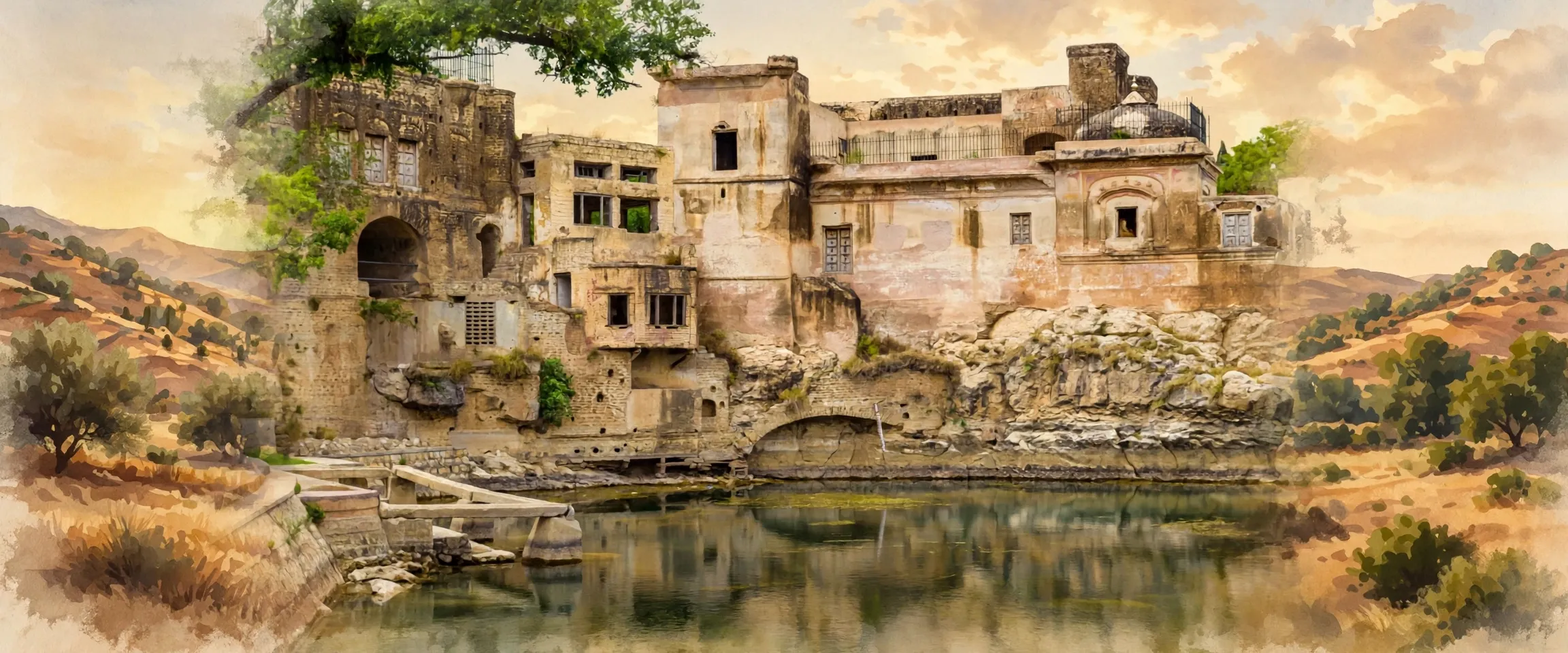
The Katas Raj Temples are a complex of Hindu temples near Choa Saidanshah in Chakwal district, Punjab, Pakistan, built around a pond Hindus regard as sacred. Raised under the Hindu Shahis from the 7th to the 10th century, the twelve temples, seven of them original, honour Shiva above all, with shrines of Rama and Hanuman. Tradition links the pond to Shiva's tears for Sati and the site to the Pandavas' exile.
- Punjabi name
- ਕਟਾਸ ਰਾਜ ਮੰਦਰ
- Country
- Pakistan
- Province
- Punjab
- City
- Choa Saidanshah, near Kallar Kahar
- District
- Chakwal
- Deity
- Shiva, with temples of Ramachandra and Hanuman
All 10 facts
- Architectural style
- Kashmiri Hindu temple style, Hindu Shahi period
- Built
- From the mid 7th to the 10th century, under the Hindu Shahis
- Festival
- Maha Shivaratri
- Coordinates
- 32.724 N, 72.951639 E
High in the Salt Range of Pakistani Punjab, a group of old stone temples gathers around a still, green pond. The Katas Raj Temples, also called Qila Katas, stand near Choa Saidanshah in Chakwal district, close to the Kallar Kahar interchange of the M2 motorway between Islamabad and Lahore. Hindus regard the pond at the centre of the complex as sacred, and tradition in the Puranas says it formed from the tears of Shiva as he wandered in grief after the death of his wife Sati. The name itself is linked to the Sanskrit word kataksha, meaning tearful eyes. Few temple sites in either Punjab carry so many layers in one small valley: epic story, early travellers, Sikh era buildings, and a modern court battle to save the pond itself.
What are the Katas Raj Temples?
The Katas Raj Temples are a complex of Hindu temples in Chakwal district, Punjab, Pakistan, linked to one another by walkways around a sacred pond. The site holds twelve temples in all, seven of them original. The oldest group, called the Satgraha, is a cluster of seven ancient temples, joined by five later medieval temples, the remains of a Buddhist stupa, and havelis scattered around the water. The temples were raised under the Hindu Shahis from around the middle of the 7th century to the 10th century. Shiva is the principal deity, and the complex also holds temples of Ramachandra and Hanuman. Set at about 2,000 feet in the Potohar plateau country, Katas Raj is counted among the most sacred Hindu sites in Pakistan, and its great festival is Maha Shivaratri.
The pond of Shiva's tears
Everything at Katas begins with the water. The pond covers two kanals and fifteen marlas and is about twenty feet deep at its deepest, and devotees believe its clear water washes away sins. In the telling preserved in the Puranas, some of Shiva's tears gathered here, and others at Pushkar near Ajmer, so the two ponds are spoken of as a pair. The pond was known by older names before Katakshkund, the spring of tearful eyes, among them Viskund and Amarkund, and in Urdu and Persian it is called Chashm-e-Alam, the sorrowful eyes. Because the whole complex stands or falls with this one spring fed pool, the health of the pond has become the site's central modern story, told below.
Pandavas, travellers and kings
Hindu tradition places the Pandava brothers of the Mahabharata at Katas for a large part of their exile, and tells that this pond is where a yaksha challenged the brothers with riddles, the Yaksha Prashna. Four brothers fell lifeless, the story goes, until Yudhishthira answered wisely and brought them back to life. Another tradition says Krishna laid the temple's foundation and set a hand made lingam here. These are beliefs of the tradition, and they sit alongside recorded visits. The Chinese monk Faxian described a temple here in the 4th century, and the 7th century traveller Xuanzang reported a Buddhist stupa of the Ashoka era, said to be 200 feet tall and ringed by ten springs. Guru Nanak is believed to have visited Katas, and Maharaja Ranjit Singh came on pilgrimage repeatedly, for Vaisakhi in 1806 and again in 1818 and 1824. His general Hari Singh Nalwa built the fort and haveli that still overlook the temples.
How are the temples built?
The temples at Katas show the character of Kashmiri Hindu temple building. Most stand on square platforms, their outer walls rising in a series of cornices with small rows of pillars, crowned by ribbed domes. The seven old temples share dentils, fluted pillars, trefoil arches and pointed rooflines. Inside, the Ramachandra temple, east of the Hari Singh haveli, is a double storeyed building with eight rooms on the ground floor and decorated ceilings, while the Hanuman temple stands at the western end of a high enclosure and the Shiva temple rises on its own square platform. Readers who want the wider northern style can compare this complex with Jugti's explainer on Nagara temple architecture, the North Indian tradition to which these Salt Range shrines belong in spirit.
Decline, restoration and the fight for water
Before Partition in 1947, large crowds came to Katas for Maha Shivaratri. After Partition the local Hindu community left for India, visits from Indian pilgrims stopped and started again across the decades, and the complex fell into neglect, its pond littered and its murals fading. India's former deputy prime minister Lal Krishna Advani visited in 2005 and spoke against its condition. Pakistan began restoration in 2006, cleaning the pond and restoring temples, placed murtis in the seven temples, and in January 2017 began installing shikharas and a water filtration plant. In 2012 and again in 2017 the pond's level fell as nearby cement factories and eucalyptus planting drew down the water table. Pakistan's Supreme Court took up the case, and in May 2018 it ruled that the cement factories must take their water from elsewhere and pay the Punjab government for what they drew. Pakistani Hindu pilgrims, about 2,000 of them in 2010 and 2011, had by then revived the Maha Shivaratri gathering at the shrine.
Visiting Katas Raj
Katas Raj stands beside the road between Kallar Kahar and Choa Saidanshah, near the village of Dulmial and about 100 kilometres by road from the Tilla Jogian temple complex. Its setting, a walled temple town around spring water in dry Salt Range hills, makes it a natural companion read to Jugti's Punjab goddess shrine across the border, Devi Talab Mandir in Jalandhar, and to the cave pilgrimage of Hinglaj Mata in Balochistan, Pakistan's other great Hindu pilgrimage covered in this collection.
ਪਾਕਿਸਤਾਨੀ ਪੰਜਾਬ ਦੀ ਲੂਣ ਪਰਬਤ ਲੜੀ ਵਿੱਚ ਉੱਚੀ ਥਾਂ ਉੱਤੇ, ਪੁਰਾਣੇ ਪੱਥਰ ਮੰਦਰਾਂ ਦਾ ਇੱਕ ਸਮੂਹ ਇੱਕ ਸ਼ਾਂਤ, ਹਰੇ ਤਾਲਾਬ ਦੇ ਆਲੇ ਦੁਆਲੇ ਇਕੱਠਾ ਹੈ ਕਟਾਸ ਰਾਜ ਮੰਦਰ, ਜਿਨ੍ਹਾਂ ਨੂੰ ਕਿਲਾ ਕਟਾਸ ਵੀ ਕਿਹਾ ਜਾਂਦਾ ਹੈ, ਚਕਵਾਲ ਜ਼ਿਲ੍ਹੇ ਵਿੱਚ ਚੋਆ ਸੈਦਨਸ਼ਾਹ ਦੇ ਨੇੜੇ ਖੜ੍ਹੇ ਹਨ, ਇਸਲਾਮਾਬਾਦ ਅਤੇ ਲਾਹੌਰ ਦਰਮਿਆਨ ਐਮ ਟੂ ਮੋਟਰਵੇ ਦੇ ਕੱਲਰ ਕਹਾਰ ਇੰਟਰਚੇਂਜ ਦੇ ਨੇੜੇ ਹਿੰਦੂ ਪਰਿਸਰ ਦੇ ਕੇਂਦਰ ਵਿੱਚ ਤਾਲਾਬ ਨੂੰ ਪਵਿੱਤਰ ਮੰਨਦੇ ਹਨ, ਅਤੇ ਪੁਰਾਣਾਂ ਦੀ ਪਰੰਪਰਾ ਕਹਿੰਦੀ ਹੈ ਕਿ ਇਹ ਸ਼ਿਵ ਦੇ ਹੰਝੂਆਂ ਤੋਂ ਬਣਿਆ, ਜਦੋਂ ਉਹ ਆਪਣੀ ਪਤਨੀ ਸਤੀ ਦੀ ਮੌਤ ਤੋਂ ਬਾਅਦ ਸੋਗ ਵਿੱਚ ਭਟਕਦੇ ਫਿਰੇ ਨਾਂ ਆਪਣੇ ਆਪ ਵਿੱਚ ਸੰਸਕ੍ਰਿਤ ਸ਼ਬਦ ਕਟਾਕਸ਼ ਨਾਲ ਜੋੜਿਆ ਜਾਂਦਾ ਹੈ, ਜਿਸਦਾ ਅਰਥ ਹੈ ਹੰਝੂਆਂ ਭਰੀਆਂ ਅੱਖਾਂ ਦੋਵਾਂ ਪੰਜਾਬਾਂ ਵਿੱਚ ਘੱਟ ਹੀ ਕੋਈ ਮੰਦਰ ਸਥਾਨ ਇੱਕ ਛੋਟੀ ਵਾਦੀ ਵਿੱਚ ਇੰਨੀਆਂ ਪਰਤਾਂ ਸਾਂਭਦਾ ਹੈ: ਮਹਾਂਕਾਵਿ ਕਹਾਣੀ, ਮੁੱਢਲੇ ਯਾਤਰੀ, ਸਿੱਖ ਕਾਲ ਦੀਆਂ ਇਮਾਰਤਾਂ, ਅਤੇ ਤਾਲਾਬ ਨੂੰ ਬਚਾਉਣ ਲਈ ਇੱਕ ਆਧੁਨਿਕ ਅਦਾਲਤੀ ਲੜਾਈ
ਕਟਾਸ ਰਾਜ ਮੰਦਰ ਕੀ ਹਨ?
ਕਟਾਸ ਰਾਜ ਮੰਦਰ ਚਕਵਾਲ ਜ਼ਿਲ੍ਹੇ, ਪੰਜਾਬ, ਪਾਕਿਸਤਾਨ ਵਿੱਚ ਹਿੰਦੂ ਮੰਦਰਾਂ ਦਾ ਇੱਕ ਪਰਿਸਰ ਹੈ, ਜੋ ਇੱਕ ਪਵਿੱਤਰ ਤਾਲਾਬ ਦੇ ਆਲੇ ਦੁਆਲੇ ਰਸਤਿਆਂ ਨਾਲ ਇੱਕ ਦੂਜੇ ਨਾਲ ਜੁੜੇ ਹਨ ਇਸ ਸਥਾਨ ਉੱਤੇ ਕੁੱਲ ਬਾਰਾਂ ਮੰਦਰ ਹਨ, ਉਨ੍ਹਾਂ ਵਿੱਚੋਂ ਸੱਤ ਮੂਲ ਹਨ ਸਭ ਤੋਂ ਪੁਰਾਣਾ ਸਮੂਹ, ਜਿਸਨੂੰ ਸਤਗ੍ਰਹ ਕਿਹਾ ਜਾਂਦਾ ਹੈ, ਸੱਤ ਪ੍ਰਾਚੀਨ ਮੰਦਰਾਂ ਦਾ ਝੁੰਡ ਹੈ, ਜਿਸ ਨਾਲ ਪੰਜ ਬਾਅਦ ਦੇ ਮੱਧਕਾਲੀ ਮੰਦਰ, ਇੱਕ ਬੋਧੀ ਸਤੂਪ ਦੇ ਅਵਸ਼ੇਸ਼, ਅਤੇ ਪਾਣੀ ਦੇ ਆਲੇ ਦੁਆਲੇ ਖਿੰਡੀਆਂ ਹਵੇਲੀਆਂ ਜੁੜਦੀਆਂ ਹਨ ਮੰਦਰ ਹਿੰਦੂ ਸ਼ਾਹੀਆਂ ਦੇ ਅਧੀਨ ਲਗਭਗ 7ਵੀਂ ਸਦੀ ਦੇ ਮੱਧ ਤੋਂ 10ਵੀਂ ਸਦੀ ਤੱਕ ਬਣਾਏ ਗਏ ਸ਼ਿਵ ਮੁੱਖ ਦੇਵਤਾ ਹਨ, ਅਤੇ ਪਰਿਸਰ ਵਿੱਚ ਰਾਮਚੰਦਰ ਅਤੇ ਹਨੂੰਮਾਨ ਦੇ ਮੰਦਰ ਵੀ ਹਨ ਸਮੁੰਦਰ ਤਲ ਤੋਂ ਲਗਭਗ 2,000 ਫੁੱਟ ਉੱਤੇ ਪੋਠੋਹਾਰ ਪਠਾਰ ਇਲਾਕੇ ਵਿੱਚ ਸਥਿਤ, ਕਟਾਸ ਰਾਜ ਪਾਕਿਸਤਾਨ ਦੇ ਸਭ ਤੋਂ ਪਵਿੱਤਰ ਹਿੰਦੂ ਸਥਾਨਾਂ ਵਿੱਚ ਗਿਣਿਆ ਜਾਂਦਾ ਹੈ, ਅਤੇ ਇਸਦਾ ਮਹਾਨ ਤਿਉਹਾਰ ਮਹਾਂ ਸ਼ਿਵਰਾਤਰੀ ਹੈ
ਸ਼ਿਵ ਦੇ ਹੰਝੂਆਂ ਦਾ ਤਾਲਾਬ
ਕਟਾਸ ਵਿੱਚ ਹਰ ਚੀਜ਼ ਪਾਣੀ ਤੋਂ ਸ਼ੁਰੂ ਹੁੰਦੀ ਹੈ ਤਾਲਾਬ ਦੋ ਕਨਾਲ ਅਤੇ ਪੰਦਰਾਂ ਮਰਲੇ ਵਿੱਚ ਫੈਲਿਆ ਹੈ ਅਤੇ ਆਪਣੀ ਸਭ ਤੋਂ ਡੂੰਘੀ ਥਾਂ ਉੱਤੇ ਲਗਭਗ ਵੀਹ ਫੁੱਟ ਡੂੰਘਾ ਹੈ, ਅਤੇ ਸ਼ਰਧਾਲੂ ਮੰਨਦੇ ਹਨ ਕਿ ਇਸਦਾ ਸਾਫ਼ ਪਾਣੀ ਪਾਪ ਧੋ ਦਿੰਦਾ ਹੈ ਪੁਰਾਣਾਂ ਵਿੱਚ ਸਾਂਭੀ ਕਹਾਣੀ ਵਿੱਚ, ਸ਼ਿਵ ਦੇ ਕੁਝ ਹੰਝੂ ਇੱਥੇ ਇਕੱਠੇ ਹੋਏ, ਅਤੇ ਹੋਰ ਅਜਮੇਰ ਦੇ ਨੇੜੇ ਪੁਸ਼ਕਰ ਵਿਖੇ, ਇਸ ਲਈ ਦੋਵੇਂ ਤਾਲਾਬਾਂ ਨੂੰ ਜੋੜੇ ਵਜੋਂ ਬੋਲਿਆ ਜਾਂਦਾ ਹੈ ਤਾਲਾਬ ਨੂੰ ਕਟਾਕਸ਼ਕੁੰਡ, ਹੰਝੂਆਂ ਭਰੀਆਂ ਅੱਖਾਂ ਦਾ ਸੋਮਾ, ਤੋਂ ਪਹਿਲਾਂ ਪੁਰਾਣੇ ਨਾਵਾਂ ਨਾਲ ਜਾਣਿਆ ਜਾਂਦਾ ਸੀ, ਉਨ੍ਹਾਂ ਵਿੱਚ ਵਿਸਕੁੰਡ ਅਤੇ ਅਮਰਕੁੰਡ ਸਨ, ਅਤੇ ਉਰਦੂ ਅਤੇ ਫ਼ਾਰਸੀ ਵਿੱਚ ਇਸਨੂੰ ਚਸ਼ਮ-ਏ-ਆਲਮ, ਸੋਗ ਭਰੀਆਂ ਅੱਖਾਂ, ਕਿਹਾ ਜਾਂਦਾ ਹੈ ਕਿਉਂਕਿ ਸਾਰਾ ਪਰਿਸਰ ਇਸ ਇੱਕ ਸੋਮੇ ਤੋਂ ਭਰੇ ਤਾਲਾਬ ਉੱਤੇ ਖੜ੍ਹਾ ਜਾਂ ਡਿੱਗਦਾ ਹੈ, ਤਾਲਾਬ ਦੀ ਸਿਹਤ ਸਥਾਨ ਦੀ ਕੇਂਦਰੀ ਆਧੁਨਿਕ ਕਹਾਣੀ ਬਣ ਗਈ ਹੈ, ਜੋ ਹੇਠਾਂ ਦੱਸੀ ਗਈ ਹੈ
ਪਾਂਡਵ, ਯਾਤਰੀ ਅਤੇ ਰਾਜੇ
ਹਿੰਦੂ ਪਰੰਪਰਾ ਮਹਾਭਾਰਤ ਦੇ ਪਾਂਡਵ ਭਰਾਵਾਂ ਨੂੰ ਉਨ੍ਹਾਂ ਦੇ ਬਨਵਾਸ ਦੇ ਵੱਡੇ ਹਿੱਸੇ ਲਈ ਕਟਾਸ ਰੱਖਦੀ ਹੈ, ਅਤੇ ਦੱਸਦੀ ਹੈ ਕਿ ਇਹ ਤਾਲਾਬ ਉਹ ਥਾਂ ਹੈ ਜਿੱਥੇ ਇੱਕ ਯਕਸ਼ ਨੇ ਭਰਾਵਾਂ ਨੂੰ ਬੁਝਾਰਤਾਂ ਨਾਲ ਚੁਣੌਤੀ ਦਿੱਤੀ, ਯਕਸ਼ ਪ੍ਰਸ਼ਨ ਕਹਾਣੀ ਕਹਿੰਦੀ ਹੈ, ਚਾਰ ਭਰਾ ਬੇਜਾਨ ਡਿੱਗ ਪਏ, ਜਦੋਂ ਤੱਕ ਯੁਧਿਸ਼ਟਰ ਨੇ ਸਿਆਣਪ ਨਾਲ ਜਵਾਬ ਨਾ ਦਿੱਤਾ ਅਤੇ ਉਨ੍ਹਾਂ ਨੂੰ ਜੀਵਨ ਵਿੱਚ ਵਾਪਸ ਨਾ ਲਿਆਂਦਾ ਇੱਕ ਹੋਰ ਪਰੰਪਰਾ ਕਹਿੰਦੀ ਹੈ ਕਿ ਕ੍ਰਿਸ਼ਨ ਨੇ ਮੰਦਰ ਦੀ ਨੀਂਹ ਰੱਖੀ ਅਤੇ ਇੱਥੇ ਹੱਥ ਨਾਲ ਬਣਾਇਆ ਲਿੰਗਮ ਸਥਾਪਿਤ ਕੀਤਾ ਇਹ ਪਰੰਪਰਾ ਦੀਆਂ ਮਾਨਤਾਵਾਂ ਹਨ, ਅਤੇ ਇਹ ਦਰਜ ਯਾਤਰਾਵਾਂ ਦੇ ਨਾਲ ਬੈਠਦੀਆਂ ਹਨ ਚੀਨੀ ਭਿਕਸ਼ੂ ਫ਼ਾਸ਼ੀਅਨ ਨੇ 4ਵੀਂ ਸਦੀ ਵਿੱਚ ਇੱਥੇ ਇੱਕ ਮੰਦਰ ਦਾ ਵਰਣਨ ਕੀਤਾ, ਅਤੇ 7ਵੀਂ ਸਦੀ ਦੇ ਯਾਤਰੀ ਸ਼ੁਆਨਜ਼ਾਂਗ ਨੇ ਅਸ਼ੋਕ ਕਾਲ ਦੇ ਇੱਕ ਬੋਧੀ ਸਤੂਪ ਦੀ ਖ਼ਬਰ ਦਿੱਤੀ, ਜੋ 200 ਫੁੱਟ ਉੱਚਾ ਅਤੇ ਦਸ ਸੋਮਿਆਂ ਨਾਲ ਘਿਰਿਆ ਦੱਸਿਆ ਗਿਆ ਗੁਰੂ ਨਾਨਕ ਜੀ ਨੇ ਕਟਾਸ ਦੀ ਯਾਤਰਾ ਕੀਤੀ ਮੰਨੀ ਜਾਂਦੀ ਹੈ, ਅਤੇ ਮਹਾਰਾਜਾ ਰਣਜੀਤ ਸਿੰਘ ਵਾਰ ਵਾਰ ਤੀਰਥ ਯਾਤਰਾ ਉੱਤੇ ਆਏ, 1806 ਵਿੱਚ ਵਿਸਾਖੀ ਲਈ ਅਤੇ ਫਿਰ 1818 ਅਤੇ 1824 ਵਿੱਚ ਉਨ੍ਹਾਂ ਦੇ ਜਰਨੈਲ ਹਰੀ ਸਿੰਘ ਨਲਵੇ ਨੇ ਉਹ ਕਿਲਾ ਅਤੇ ਹਵੇਲੀ ਬਣਾਈ ਜੋ ਅਜੇ ਵੀ ਮੰਦਰਾਂ ਉੱਤੇ ਨਿਗਾਹ ਰੱਖਦੀ ਹੈ
ਮੰਦਰ ਕਿਵੇਂ ਬਣੇ ਹਨ?
ਕਟਾਸ ਦੇ ਮੰਦਰ ਕਸ਼ਮੀਰੀ ਹਿੰਦੂ ਮੰਦਰ ਨਿਰਮਾਣ ਦਾ ਸੁਭਾਅ ਦਿਖਾਉਂਦੇ ਹਨ ਜ਼ਿਆਦਾਤਰ ਵਰਗਾਕਾਰ ਚਬੂਤਰਿਆਂ ਉੱਤੇ ਖੜ੍ਹੇ ਹਨ, ਉਨ੍ਹਾਂ ਦੀਆਂ ਬਾਹਰੀ ਕੰਧਾਂ ਛੋਟੀਆਂ ਥੰਮ੍ਹ ਕਤਾਰਾਂ ਵਾਲੇ ਕਾਰਨਿਸਾਂ ਦੀ ਲੜੀ ਵਿੱਚ ਉੱਠਦੀਆਂ ਹਨ, ਉੱਤੇ ਪੱਸਲੀਦਾਰ ਗੁੰਬਦ ਹਨ ਸੱਤ ਪੁਰਾਣੇ ਮੰਦਰ ਦੰਦੇਦਾਰ ਕਿਨਾਰੇ, ਨਾਲੀਦਾਰ ਥੰਮ੍ਹ, ਤਿਕੋਣੇ ਮਿਹਰਾਬ ਅਤੇ ਨੋਕਦਾਰ ਛੱਤ ਰੇਖਾਵਾਂ ਸਾਂਝੀਆਂ ਕਰਦੇ ਹਨ ਅੰਦਰ, ਹਰੀ ਸਿੰਘ ਹਵੇਲੀ ਦੇ ਪੂਰਬ ਵਿੱਚ ਰਾਮਚੰਦਰ ਮੰਦਰ, ਇੱਕ ਦੋ ਮੰਜ਼ਿਲਾ ਇਮਾਰਤ ਹੈ ਜਿਸਦੀ ਹੇਠਲੀ ਮੰਜ਼ਿਲ ਉੱਤੇ ਅੱਠ ਕਮਰੇ ਅਤੇ ਸਜਾਵਟੀ ਛੱਤਾਂ ਹਨ, ਜਦੋਂ ਕਿ ਹਨੂੰਮਾਨ ਮੰਦਰ ਇੱਕ ਉੱਚੇ ਘੇਰੇ ਦੇ ਪੱਛਮੀ ਸਿਰੇ ਉੱਤੇ ਖੜ੍ਹਾ ਹੈ ਅਤੇ ਸ਼ਿਵ ਮੰਦਰ ਆਪਣੇ ਵਰਗਾਕਾਰ ਚਬੂਤਰੇ ਉੱਤੇ ਉੱਠਦਾ ਹੈ ਵੱਡੀ ਉੱਤਰੀ ਸ਼ੈਲੀ ਚਾਹੁਣ ਵਾਲੇ ਪਾਠਕ ਇਸ ਪਰਿਸਰ ਦੀ ਤੁਲਨਾ ਜੁਗਤੀ ਦੇ ਨਾਗਰ ਮੰਦਰ ਭਵਨ ਕਲਾ ਦੇ ਵਿਆਖਿਆਕਾਰ ਨਾਲ ਕਰ ਸਕਦੇ ਹਨ, ਉੱਤਰ ਭਾਰਤੀ ਪਰੰਪਰਾ ਜਿਸ ਨਾਲ ਇਹ ਲੂਣ ਪਰਬਤ ਧਾਮ ਭਾਵਨਾ ਵਿੱਚ ਸੰਬੰਧਿਤ ਹਨ
ਪਤਨ, ਬਹਾਲੀ ਅਤੇ ਪਾਣੀ ਲਈ ਲੜਾਈ
1947 ਵਿੱਚ ਵੰਡ ਤੋਂ ਪਹਿਲਾਂ, ਮਹਾਂ ਸ਼ਿਵਰਾਤਰੀ ਲਈ ਕਟਾਸ ਵਿਖੇ ਵੱਡੀਆਂ ਭੀੜਾਂ ਆਉਂਦੀਆਂ ਸਨ ਵੰਡ ਤੋਂ ਬਾਅਦ ਸਥਾਨਕ ਹਿੰਦੂ ਭਾਈਚਾਰਾ ਭਾਰਤ ਚਲਾ ਗਿਆ, ਭਾਰਤੀ ਸ਼ਰਧਾਲੂਆਂ ਦੀਆਂ ਯਾਤਰਾਵਾਂ ਦਹਾਕਿਆਂ ਵਿੱਚ ਰੁਕੀਆਂ ਅਤੇ ਮੁੜ ਸ਼ੁਰੂ ਹੋਈਆਂ, ਅਤੇ ਪਰਿਸਰ ਅਣਗਹਿਲੀ ਵਿੱਚ ਪੈ ਗਿਆ, ਇਸਦਾ ਤਾਲਾਬ ਕੂੜੇ ਨਾਲ ਭਰਿਆ ਅਤੇ ਇਸਦੇ ਭਿੱਤੀ ਚਿੱਤਰ ਮਿਟਦੇ ਗਏ ਭਾਰਤ ਦੇ ਸਾਬਕਾ ਉਪ ਪ੍ਰਧਾਨ ਮੰਤਰੀ ਲਾਲ ਕ੍ਰਿਸ਼ਨ ਅਡਵਾਨੀ ਨੇ 2005 ਵਿੱਚ ਯਾਤਰਾ ਕੀਤੀ ਅਤੇ ਇਸਦੀ ਹਾਲਤ ਵਿਰੁੱਧ ਬੋਲਿਆ ਪਾਕਿਸਤਾਨ ਨੇ 2006 ਵਿੱਚ ਬਹਾਲੀ ਸ਼ੁਰੂ ਕੀਤੀ, ਤਾਲਾਬ ਸਾਫ਼ ਕੀਤਾ ਅਤੇ ਮੰਦਰ ਬਹਾਲ ਕੀਤੇ, ਸੱਤ ਮੰਦਰਾਂ ਵਿੱਚ ਮੂਰਤੀਆਂ ਰੱਖੀਆਂ, ਅਤੇ ਜਨਵਰੀ 2017 ਵਿੱਚ ਸ਼ਿਖਰ ਅਤੇ ਪਾਣੀ ਸਾਫ਼ ਕਰਨ ਦਾ ਪਲਾਂਟ ਲਾਉਣਾ ਸ਼ੁਰੂ ਕੀਤਾ 2012 ਵਿੱਚ ਅਤੇ ਫਿਰ 2017 ਵਿੱਚ ਤਾਲਾਬ ਦਾ ਪੱਧਰ ਡਿੱਗਿਆ ਕਿਉਂਕਿ ਨੇੜਲੀਆਂ ਸੀਮਿੰਟ ਫੈਕਟਰੀਆਂ ਅਤੇ ਸਫ਼ੈਦੇ ਦੇ ਬੂਟਿਆਂ ਨੇ ਪਾਣੀ ਦਾ ਪੱਧਰ ਖਿੱਚ ਲਿਆ ਪਾਕਿਸਤਾਨ ਦੀ ਸੁਪਰੀਮ ਕੋਰਟ ਨੇ ਕੇਸ ਹੱਥ ਵਿੱਚ ਲਿਆ, ਅਤੇ ਮਈ 2018 ਵਿੱਚ ਇਸਨੇ ਫ਼ੈਸਲਾ ਦਿੱਤਾ ਕਿ ਸੀਮਿੰਟ ਫੈਕਟਰੀਆਂ ਨੂੰ ਆਪਣਾ ਪਾਣੀ ਕਿਤੇ ਹੋਰੋਂ ਲੈਣਾ ਚਾਹੀਦਾ ਹੈ ਅਤੇ ਉਨ੍ਹਾਂ ਨੇ ਜੋ ਖਿੱਚਿਆ ਉਸ ਲਈ ਪੰਜਾਬ ਸਰਕਾਰ ਨੂੰ ਭੁਗਤਾਨ ਕਰਨਾ ਚਾਹੀਦਾ ਹੈ ਪਾਕਿਸਤਾਨੀ ਹਿੰਦੂ ਸ਼ਰਧਾਲੂਆਂ ਨੇ, 2010 ਅਤੇ 2011 ਵਿੱਚ ਉਨ੍ਹਾਂ ਵਿੱਚੋਂ ਲਗਭਗ 2,000 ਨੇ, ਉਦੋਂ ਤੱਕ ਧਾਮ ਉੱਤੇ ਮਹਾਂ ਸ਼ਿਵਰਾਤਰੀ ਇਕੱਠ ਮੁੜ ਜੀਵਿਤ ਕਰ ਦਿੱਤਾ ਸੀ
ਕਟਾਸ ਰਾਜ ਦੀ ਯਾਤਰਾ
ਕਟਾਸ ਰਾਜ ਕੱਲਰ ਕਹਾਰ ਅਤੇ ਚੋਆ ਸੈਦਨਸ਼ਾਹ ਦਰਮਿਆਨ ਸੜਕ ਦੇ ਕੰਢੇ ਖੜ੍ਹਾ ਹੈ, ਦੁਲਮਿਆਲ ਪਿੰਡ ਦੇ ਨੇੜੇ ਅਤੇ ਟਿੱਲਾ ਜੋਗੀਆਂ ਮੰਦਰ ਪਰਿਸਰ ਤੋਂ ਸੜਕ ਰਾਹੀਂ ਲਗਭਗ 100 ਕਿਲੋਮੀਟਰ ਦੂਰ ਇਸਦੀ ਸੈਟਿੰਗ, ਸੁੱਕੀਆਂ ਲੂਣ ਪਰਬਤ ਪਹਾੜੀਆਂ ਵਿੱਚ ਸੋਮੇ ਦੇ ਪਾਣੀ ਦੇ ਆਲੇ ਦੁਆਲੇ ਇੱਕ ਕੰਧ ਵਾਲਾ ਮੰਦਰ ਸ਼ਹਿਰ, ਇਸਨੂੰ ਸਰਹੱਦ ਪਾਰ ਜੁਗਤੀ ਦੇ ਪੰਜਾਬ ਦੇਵੀ ਧਾਮ, ਜਲੰਧਰ ਦੇ ਦੇਵੀ ਤਾਲਾਬ ਮੰਦਰ, ਅਤੇ ਬਲੋਚਿਸਤਾਨ ਦੀ ਗੁਫ਼ਾ ਤੀਰਥ ਯਾਤਰਾ ਹਿੰਗਲਾਜ ਮਾਤਾ ਦਾ ਕੁਦਰਤੀ ਸਾਥੀ ਪਾਠ ਬਣਾਉਂਦੀ ਹੈ, ਪਾਕਿਸਤਾਨ ਦੀ ਦੂਜੀ ਮਹਾਨ ਹਿੰਦੂ ਤੀਰਥ ਯਾਤਰਾ ਜੋ ਇਸ ਸੰਗ੍ਰਹਿ ਵਿੱਚ ਕਵਰ ਹੈ