
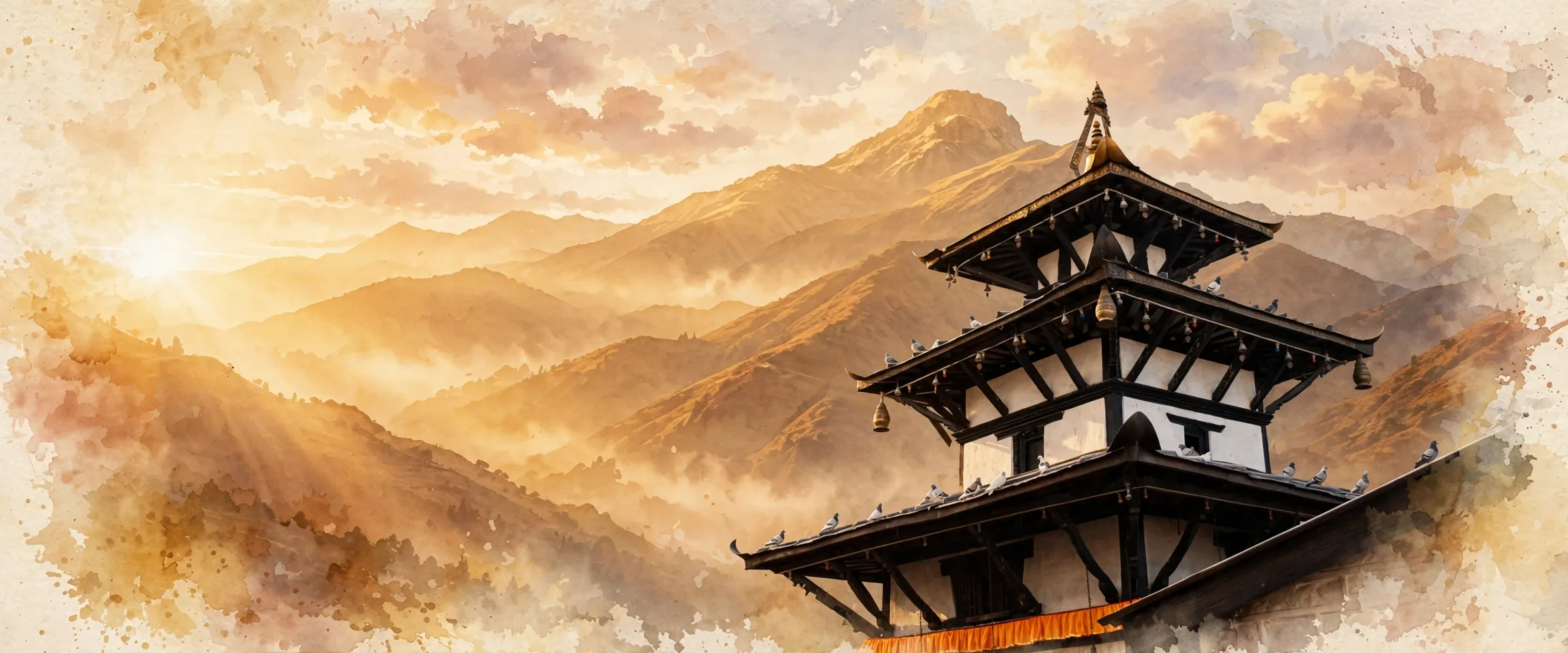
Muktinath Temple is an ancient Vishnu temple in Mustang district, Nepal, standing at 3,762 metres at the foot of the Thorong La pass. Hindus honour it as Mukti Kshetra, the place of liberation: one of the 108 Divya Desams and one of Nepal's Char Dhams. Tibetan Buddhists revere the same shrine as Chumig Gyatsa, the Hundred Waters, an abode of Avalokitesvara.
- Punjabi name
- ਮੁਕਤੀਨਾਥ ਮੰਦਰ
- Country
- Nepal
- Province
- Gandaki Province
- City
- Muktinath, Mustang
- District
- Mustang
- Deity
- Vishnu, with Sridevi and Bhudevi; Avalokitesvara for Buddhists
All 9 facts
- Architectural style
- Pagoda style
- Altitude
- 3,762 metres (12,343 feet)
- Coordinates
- 28.817083 N, 83.871694 E
High in the rain shadow of the Annapurnas, where the Kali Gandaki valley narrows toward Tibet, a small pagoda temple stands at 3,762 metres with cold spring water running through 108 brass spouts and a natural flame burning beside the shrine. Muktinath Temple, in Mustang district, Nepal, is sacred to two religions at once. Hindus worship here Vishnu as the lord of liberation, and Tibetan Buddhists know the same place as Chumig Gyatsa, the Hundred Waters, an abode of Avalokitesvara, the bodhisattva of compassion. Few temples anywhere are shared so completely, or stand so high.
What is Muktinath Temple?
Muktinath is an ancient Vishnu temple in the Muktinath valley of Mustang, at the foot of the Thorong La mountain pass on the Annapurna Circuit. Its very name states its promise: Mukti Kshetra, the place of liberation, or moksha. In the Sri Vaishnava tradition it holds an eminent place as one of the 108 Divya Desams, the holy abodes of Vishnu praised in the Tamil Alvar canon, and as one of the eight self manifested shrines, the Svayam Vyakta Ksetras. It is also counted among the Char Dham of Nepal. The deity, Vishnu with his consorts Sridevi and Bhudevi, is regarded by devotees as granting liberation, and the temple is praised in hymns of the Nalayira Divya Prabandham, including verses of Thirumangai Alvar and Periyalvar, who sang of Vishnu as the Lord of Salagramam.
Why do both Hindus and Buddhists worship at Muktinath?
For Hindus, Muktinath joins several sacred identities in one small complex. It is a Divya Desam of Vishnu, and in Shaktism it is also counted among the Shakta pithas, linked with the head or face of the goddess Sati: its Shakti is addressed as Gandaki Chandi and its Bhairava as Chakrapani. For Tibetan Buddhists, the same ground is one of the 24 Tantric places, a residence of dakinis, the sky dancer goddesses, and a place tied to Padmasambhava, the founder of Tibetan Buddhism, whose statue in his own image is tended by the temple's nuns in the Mharme Lhakhang Gompa. The nuns of the complex are themselves honoured as dakinis. One valley, two great traditions, and a single shared reverence: Muktinath is often held up as an example of religious symbiosis in the Himalayas.
The 108 waters and the river of sacred stones
Behind the temple, a curved wall carries 108 bull faced water spouts, the mukti dhara, and pilgrims walk beneath every one of the icy streams, with two sacred ponds in the complex completing the ritual bath. The number 108 runs through the site's identity: 108 spouts, 108 Divya Desams. Beside the temple flows the Gandaki River, famed for the shaligrama stones found in its bed, black fossil stones whose patterns devotees worship as forms of Vishnu: white as Vasudeva, black as Vishnu, green as Narayana, blue as Krishna, and golden or reddish yellow as Narasimha and Vamana. Next to the main temple stands the Jwala Mai Temple, worshipped for a sacred flame fed by natural gas rising from the earth. Together with the water, the stones and the high mountain air, the flame lets devotees read the whole complex as a home of all five elements: fire, water, sky, earth and air.
A pagoda at the foot of Thorong La
The temple itself is built in pagoda style, the tiered roof form of the Himalayan hills, modest in size beside the great temple cities of the plains but made extraordinary by its setting. At 3,762 metres it is among the highest temples in the world, ringed by prayer flags, bare Mustang hills and the snow line of the Annapurna range. Many visitors arrive as pilgrims on the road up the Kali Gandaki from Jomsom; others meet Muktinath as the high point of the Annapurna Circuit trek, descending from the Thorong La pass at 5,416 metres. The approach matters to the experience: this is a shrine you reach by climbing, and the thin air and cold spout water are part of what pilgrims remember.
Visiting Muktinath
Muktinath stands in Mustang district, Gandaki Province, and the journey usually runs through Pokhara and Jomsom, by flight or mountain road, then up the valley to the temple town of Ranipauwa below the shrine. Altitude is the main planning fact: sleep low, climb slowly, and treat the 108 spouts as the cold shock they are. Read Muktinath alongside Nepal's other great pilgrimage in this collection, Pashupatinath in Kathmandu, and with India's Divya Desam and Char Dham shrine Ramanathaswamy in Rameswaram, which shares Muktinath's rare double honour in the Vaishnava tradition.
ਅੰਨਪੂਰਨਾ ਪਰਬਤਾਂ ਦੇ ਮੀਂਹ ਛਾਂ ਵਾਲੇ ਪਾਸੇ ਉੱਚੀ ਥਾਂ ਉੱਤੇ, ਜਿੱਥੇ ਕਾਲੀ ਗੰਡਕੀ ਵਾਦੀ ਤਿੱਬਤ ਵੱਲ ਤੰਗ ਹੁੰਦੀ ਹੈ, ਇੱਕ ਛੋਟਾ ਪੈਗੋਡਾ ਮੰਦਰ 3,762 ਮੀਟਰ ਉੱਤੇ ਖੜ੍ਹਾ ਹੈ, ਜਿਸ ਵਿੱਚ 108 ਪਿੱਤਲ ਟੂਟੀਆਂ ਵਿੱਚੋਂ ਠੰਡਾ ਸੋਮੇ ਦਾ ਪਾਣੀ ਵਗਦਾ ਹੈ ਅਤੇ ਧਾਮ ਦੇ ਨਾਲ ਇੱਕ ਕੁਦਰਤੀ ਲਾਟ ਜਗਦੀ ਹੈ ਮੁਕਤੀਨਾਥ ਮੰਦਰ, ਮੁਸਤਾਂਗ ਜ਼ਿਲ੍ਹੇ, ਨੇਪਾਲ ਵਿੱਚ, ਇੱਕੋ ਵੇਲੇ ਦੋ ਧਰਮਾਂ ਲਈ ਪਵਿੱਤਰ ਹੈ ਹਿੰਦੂ ਇੱਥੇ ਵਿਸ਼ਨੂੰ ਨੂੰ ਮੁਕਤੀ ਦੇ ਸੁਆਮੀ ਵਜੋਂ ਪੂਜਦੇ ਹਨ, ਅਤੇ ਤਿੱਬਤੀ ਬੋਧੀ ਉਸੇ ਥਾਂ ਨੂੰ ਚੁਮਿਗ ਗਯਾਤਸਾ, ਸੌ ਪਾਣੀ, ਵਜੋਂ ਜਾਣਦੇ ਹਨ, ਕਰੁਣਾ ਦੇ ਬੋਧੀਸਤਵ ਅਵਲੋਕਿਤੇਸ਼ਵਰ ਦਾ ਧਾਮ ਘੱਟ ਹੀ ਕੋਈ ਮੰਦਰ ਕਿਤੇ ਇੰਨਾ ਮੁਕੰਮਲ ਸਾਂਝਾ ਹੁੰਦਾ ਹੈ, ਜਾਂ ਇੰਨਾ ਉੱਚਾ ਖੜ੍ਹਾ ਹੁੰਦਾ ਹੈ
ਮੁਕਤੀਨਾਥ ਮੰਦਰ ਕੀ ਹੈ?
ਮੁਕਤੀਨਾਥ ਮੁਸਤਾਂਗ ਦੀ ਮੁਕਤੀਨਾਥ ਵਾਦੀ ਵਿੱਚ ਇੱਕ ਪ੍ਰਾਚੀਨ ਵਿਸ਼ਨੂੰ ਮੰਦਰ ਹੈ, ਅੰਨਪੂਰਨਾ ਸਰਕਟ ਉੱਤੇ ਥੋਰੋਂਗ ਲਾ ਪਰਬਤ ਦੱਰੇ ਦੇ ਪੈਰਾਂ ਵਿੱਚ ਇਸਦਾ ਨਾਂ ਹੀ ਇਸਦਾ ਵਾਅਦਾ ਦੱਸਦਾ ਹੈ: ਮੁਕਤੀ ਖੇਤਰ, ਮੁਕਤੀ, ਜਾਂ ਮੋਕਸ਼, ਦੀ ਥਾਂ ਸ੍ਰੀ ਵੈਸ਼ਨਵ ਪਰੰਪਰਾ ਵਿੱਚ ਇਸਨੂੰ 108 ਦਿਵਯ ਦੇਸਮਾਂ ਵਿੱਚੋਂ ਇੱਕ ਵਜੋਂ ਉੱਚਾ ਸਥਾਨ حاصل ਹੈ, ਵਿਸ਼ਨੂੰ ਦੇ ਪਵਿੱਤਰ ਧਾਮ ਜਿਨ੍ਹਾਂ ਦੀ ਤਾਮਿਲ ਆਲਵਾਰ ਗ੍ਰੰਥਾਂ ਵਿੱਚ ਉਸਤਤਿ ਹੈ, ਅਤੇ ਅੱਠ ਸਵੈ ਪ੍ਰਗਟ ਧਾਮਾਂ, ਸਵਯੰ ਵਿਅਕਤ ਖੇਤਰਾਂ, ਵਿੱਚੋਂ ਇੱਕ ਵਜੋਂ ਇਹ ਨੇਪਾਲ ਦੇ ਚਾਰ ਧਾਮਾਂ ਵਿੱਚ ਵੀ ਗਿਣਿਆ ਜਾਂਦਾ ਹੈ ਦੇਵਤਾ, ਵਿਸ਼ਨੂੰ ਆਪਣੀਆਂ ਪਤਨੀਆਂ ਸ੍ਰੀਦੇਵੀ ਅਤੇ ਭੂਦੇਵੀ ਨਾਲ, ਨੂੰ ਸ਼ਰਧਾਲੂ ਮੁਕਤੀ ਦੇਣ ਵਾਲਾ ਮੰਨਦੇ ਹਨ, ਅਤੇ ਮੰਦਰ ਦੀ ਉਸਤਤਿ ਨਾਲਾਇਰਾ ਦਿਵਯ ਪ੍ਰਬੰਧਮ ਦੇ ਭਜਨਾਂ ਵਿੱਚ ਹੈ, ਜਿਸ ਵਿੱਚ ਤਿਰੂਮੰਗਾਈ ਆਲਵਾਰ ਅਤੇ ਪੇਰੀਆਲਵਾਰ ਦੀਆਂ ਰਚਨਾਵਾਂ ਸ਼ਾਮਲ ਹਨ, ਜਿਨ੍ਹਾਂ ਨੇ ਵਿਸ਼ਨੂੰ ਨੂੰ ਸਾਲਾਗ੍ਰਾਮ ਦੇ ਸੁਆਮੀ ਵਜੋਂ ਗਾਇਆ
ਹਿੰਦੂ ਅਤੇ ਬੋਧੀ ਦੋਵੇਂ ਮੁਕਤੀਨਾਥ ਕਿਉਂ ਪੂਜਦੇ ਹਨ?
ਹਿੰਦੂਆਂ ਲਈ, ਮੁਕਤੀਨਾਥ ਇੱਕ ਛੋਟੇ ਪਰਿਸਰ ਵਿੱਚ ਕਈ ਪਵਿੱਤਰ ਪਛਾਣਾਂ ਜੋੜਦਾ ਹੈ ਇਹ ਵਿਸ਼ਨੂੰ ਦਾ ਇੱਕ ਦਿਵਯ ਦੇਸਮ ਹੈ, ਅਤੇ ਸ਼ਕਤੀ ਪਰੰਪਰਾ ਵਿੱਚ ਇਹ ਸ਼ਕਤੀ ਪੀਠਾਂ ਵਿੱਚ ਵੀ ਗਿਣਿਆ ਜਾਂਦਾ ਹੈ, ਦੇਵੀ ਸਤੀ ਦੇ ਸਿਰ ਜਾਂ ਮੁਖ ਨਾਲ ਜੁੜਿਆ: ਇਸਦੀ ਸ਼ਕਤੀ ਨੂੰ ਗੰਡਕੀ ਚੰਡੀ ਅਤੇ ਇਸਦੇ ਭੈਰਵ ਨੂੰ ਚਕਰਪਾਣੀ ਕਿਹਾ ਜਾਂਦਾ ਹੈ ਤਿੱਬਤੀ ਬੋਧੀਆਂ ਲਈ, ਉਹੀ ਧਰਤੀ 24 ਤਾਂਤਰਿਕ ਸਥਾਨਾਂ ਵਿੱਚੋਂ ਇੱਕ ਹੈ, ਡਾਕਿਨੀਆਂ, ਅਕਾਸ਼ ਨਾਚੀਆਂ ਦੇਵੀਆਂ, ਦਾ ਨਿਵਾਸ, ਅਤੇ ਪਦਮਸੰਭਵ ਨਾਲ ਜੁੜੀ ਥਾਂ, ਤਿੱਬਤੀ ਬੋਧ ਧਰਮ ਦੇ ਬਾਨੀ, ਜਿਨ੍ਹਾਂ ਦੀ ਆਪਣੀ ਸੂਰਤ ਵਾਲੀ ਮੂਰਤੀ ਦੀ ਸੰਭਾਲ ਮੰਦਰ ਦੀਆਂ ਸਾਧਵੀਆਂ ਮਹਾਰਮੇ ਲਹਾਖਾਂਗ ਗੋਂਪਾ ਵਿੱਚ ਕਰਦੀਆਂ ਹਨ ਪਰਿਸਰ ਦੀਆਂ ਸਾਧਵੀਆਂ ਨੂੰ ਆਪਣੇ ਆਪ ਨੂੰ ਡਾਕਿਨੀਆਂ ਵਜੋਂ ਸਤਕਾਰਿਆ ਜਾਂਦਾ ਹੈ ਇੱਕ ਵਾਦੀ, ਦੋ ਮਹਾਨ ਪਰੰਪਰਾਵਾਂ, ਅਤੇ ਇੱਕ ਸਾਂਝਾ ਸਤਕਾਰ: ਮੁਕਤੀਨਾਥ ਨੂੰ ਅਕਸਰ ਹਿਮਾਲਿਆ ਵਿੱਚ ਧਾਰਮਿਕ ਸਾਂਝ ਦੀ ਮਿਸਾਲ ਵਜੋਂ ਪੇਸ਼ ਕੀਤਾ ਜਾਂਦਾ ਹੈ
108 ਪਾਣੀ ਅਤੇ ਪਵਿੱਤਰ ਪੱਥਰਾਂ ਦਾ ਦਰਿਆ
ਮੰਦਰ ਦੇ ਪਿੱਛੇ, ਇੱਕ ਮੁੜੀ ਕੰਧ ਉੱਤੇ 108 ਸਾਨ੍ਹ ਮੁਖੀ ਪਾਣੀ ਟੂਟੀਆਂ ਹਨ, ਮੁਕਤੀ ਧਾਰਾ, ਅਤੇ ਸ਼ਰਧਾਲੂ ਹਰ ਇੱਕ ਬਰਫ਼ੀਲੀ ਧਾਰ ਹੇਠੋਂ ਲੰਘਦੇ ਹਨ, ਪਰਿਸਰ ਵਿੱਚ ਦੋ ਪਵਿੱਤਰ ਤਾਲਾਬ ਰਸਮੀ ਇਸ਼ਨਾਨ ਨੂੰ ਪੂਰਾ ਕਰਦੇ ਹਨ ਅੰਕ 108 ਸਥਾਨ ਦੀ ਪਛਾਣ ਵਿੱਚ ਘੁੰਮਦਾ ਹੈ: 108 ਟੂਟੀਆਂ, 108 ਦਿਵਯ ਦੇਸਮ ਮੰਦਰ ਦੇ ਨਾਲ ਗੰਡਕੀ ਦਰਿਆ ਵਗਦਾ ਹੈ, ਆਪਣੇ ਤਲ ਵਿੱਚ ਮਿਲਦੇ ਸ਼ਾਲਿਗ੍ਰਾਮ ਪੱਥਰਾਂ ਲਈ ਮਸ਼ਹੂਰ, ਕਾਲੇ ਜੀਵਾਸ਼ਮ ਪੱਥਰ ਜਿਨ੍ਹਾਂ ਦੇ ਨਮੂਨਿਆਂ ਨੂੰ ਸ਼ਰਧਾਲੂ ਵਿਸ਼ਨੂੰ ਦੇ ਰੂਪਾਂ ਵਜੋਂ ਪੂਜਦੇ ਹਨ: ਚਿੱਟਾ ਵਾਸੁਦੇਵ ਵਜੋਂ, ਕਾਲਾ ਵਿਸ਼ਨੂੰ ਵਜੋਂ, ਹਰਾ ਨਾਰਾਇਣ ਵਜੋਂ, ਨੀਲਾ ਕ੍ਰਿਸ਼ਨ ਵਜੋਂ, ਅਤੇ ਸੁਨਹਿਰੀ ਜਾਂ ਲਾਲ ਪੀਲਾ ਨਰਸਿੰਘ ਅਤੇ ਵਾਮਨ ਵਜੋਂ ਮੁੱਖ ਮੰਦਰ ਦੇ ਨਾਲ ਜਵਾਲਾ ਮਾਈ ਮੰਦਰ ਖੜ੍ਹਾ ਹੈ, ਧਰਤੀ ਵਿੱਚੋਂ ਉੱਠਦੀ ਕੁਦਰਤੀ ਗੈਸ ਨਾਲ ਜਗਦੀ ਪਵਿੱਤਰ ਲਾਟ ਲਈ ਪੂਜਿਆ ਜਾਂਦਾ ਪਾਣੀ, ਪੱਥਰਾਂ ਅਤੇ ਉੱਚੀ ਪਹਾੜੀ ਹਵਾ ਨਾਲ ਮਿਲ ਕੇ, ਲਾਟ ਸ਼ਰਧਾਲੂਆਂ ਨੂੰ ਸਾਰਾ ਪਰਿਸਰ ਪੰਜਾਂ ਤੱਤਾਂ ਦਾ ਘਰ ਪੜ੍ਹਨ ਦਿੰਦੀ ਹੈ: ਅੱਗ, ਪਾਣੀ, ਅਕਾਸ਼, ਧਰਤੀ ਅਤੇ ਹਵਾ
ਥੋਰੋਂਗ ਲਾ ਦੇ ਪੈਰਾਂ ਵਿੱਚ ਇੱਕ ਪੈਗੋਡਾ
ਮੰਦਰ ਆਪਣੇ ਆਪ ਵਿੱਚ ਪੈਗੋਡਾ ਸ਼ੈਲੀ ਵਿੱਚ ਬਣਿਆ ਹੈ, ਹਿਮਾਲਿਆ ਪਹਾੜੀਆਂ ਦਾ ਪੱਧਰਦਾਰ ਛੱਤ ਰੂਪ, ਮੈਦਾਨਾਂ ਦੇ ਮਹਾਨ ਮੰਦਰ ਸ਼ਹਿਰਾਂ ਦੇ ਨਾਲ ਆਕਾਰ ਵਿੱਚ ਸਾਦਾ ਪਰ ਆਪਣੀ ਸੈਟਿੰਗ ਨਾਲ ਅਸਾਧਾਰਨ ਬਣਾਇਆ 3,762 ਮੀਟਰ ਉੱਤੇ ਇਹ ਦੁਨੀਆ ਦੇ ਸਭ ਤੋਂ ਉੱਚੇ ਮੰਦਰਾਂ ਵਿੱਚੋਂ ਇੱਕ ਹੈ, ਪ੍ਰਾਰਥਨਾ ਝੰਡਿਆਂ, ਨੰਗੀਆਂ ਮੁਸਤਾਂਗ ਪਹਾੜੀਆਂ ਅਤੇ ਅੰਨਪੂਰਨਾ ਲੜੀ ਦੀ ਬਰਫ਼ ਰੇਖਾ ਨਾਲ ਘਿਰਿਆ ਕਈ ਸੈਲਾਨੀ ਜੋਮਸੋਮ ਤੋਂ ਕਾਲੀ ਗੰਡਕੀ ਉੱਤੇ ਸੜਕ ਰਾਹੀਂ ਸ਼ਰਧਾਲੂਆਂ ਵਜੋਂ ਪਹੁੰਚਦੇ ਹਨ; ਹੋਰ ਮੁਕਤੀਨਾਥ ਨੂੰ ਅੰਨਪੂਰਨਾ ਸਰਕਟ ਟ੍ਰੈਕ ਦੇ ਉੱਚੇ ਬਿੰਦੂ ਵਜੋਂ ਮਿਲਦੇ ਹਨ, 5,416 ਮੀਟਰ ਉੱਤੇ ਥੋਰੋਂਗ ਲਾ ਦੱਰੇ ਤੋਂ ਉਤਰਦੇ ਹੋਏ ਪਹੁੰਚ ਅਨੁਭਵ ਲਈ ਮਹੱਤਵਪੂਰਨ ਹੈ: ਇਹ ਇੱਕ ਧਾਮ ਹੈ ਜਿੱਥੇ ਤੁਸੀਂ ਚੜ੍ਹ ਕੇ ਪਹੁੰਚਦੇ ਹੋ, ਅਤੇ ਪਤਲੀ ਹਵਾ ਅਤੇ ਠੰਡਾ ਟੂਟੀ ਪਾਣੀ ਉਸ ਦਾ ਹਿੱਸਾ ਹਨ ਜੋ ਸ਼ਰਧਾਲੂ ਯਾਦ ਰੱਖਦੇ ਹਨ
ਮੁਕਤੀਨਾਥ ਦੀ ਯਾਤਰਾ
ਮੁਕਤੀਨਾਥ ਮੁਸਤਾਂਗ ਜ਼ਿਲ੍ਹੇ, ਗੰਡਕੀ ਪ੍ਰਾਂਤ ਵਿੱਚ ਖੜ੍ਹਾ ਹੈ, ਅਤੇ ਯਾਤਰਾ ਆਮ ਤੌਰ ਉੱਤੇ ਪੋਖਰਾ ਅਤੇ ਜੋਮਸੋਮ ਰਾਹੀਂ ਚੱਲਦੀ ਹੈ, ਉਡਾਣ ਜਾਂ ਪਹਾੜੀ ਸੜਕ ਰਾਹੀਂ, ਫਿਰ ਵਾਦੀ ਉੱਤੇ ਧਾਮ ਹੇਠਾਂ ਮੰਦਰ ਸ਼ਹਿਰ ਰਾਣੀਪੌਵਾ ਤੱਕ ਉਚਾਈ ਯੋਜਨਾ ਦਾ ਮੁੱਖ ਤੱਥ ਹੈ: ਨੀਵਾਂ ਸੌਂਵੋ, ਹੌਲੀ ਚੜ੍ਹੋ, ਅਤੇ 108 ਟੂਟੀਆਂ ਨੂੰ ਉਹ ਠੰਡਾ ਝਟਕਾ ਸਮਝੋ ਜੋ ਉਹ ਹਨ ਮੁਕਤੀਨਾਥ ਨੂੰ ਇਸ ਸੰਗ੍ਰਹਿ ਵਿੱਚ ਨੇਪਾਲ ਦੀ ਦੂਜੀ ਮਹਾਨ ਤੀਰਥ ਯਾਤਰਾ, ਕਾਠਮੰਡੂ ਵਿੱਚ ਪਸ਼ੂਪਤੀਨਾਥ, ਅਤੇ ਭਾਰਤ ਦੇ ਦਿਵਯ ਦੇਸਮ ਅਤੇ ਚਾਰ ਧਾਮ ਧਾਮ ਰਾਮੇਸ਼ਵਰਮ ਵਿੱਚ ਰਾਮਨਾਥਸਵਾਮੀ, ਨਾਲ ਪੜ੍ਹੋ, ਜੋ ਵੈਸ਼ਨਵ ਪਰੰਪਰਾ ਵਿੱਚ ਮੁਕਤੀਨਾਥ ਦਾ ਦੁਰਲੱਭ ਦੋਹਰਾ ਸਨਮਾਨ ਸਾਂਝਾ ਕਰਦਾ ਹੈ