
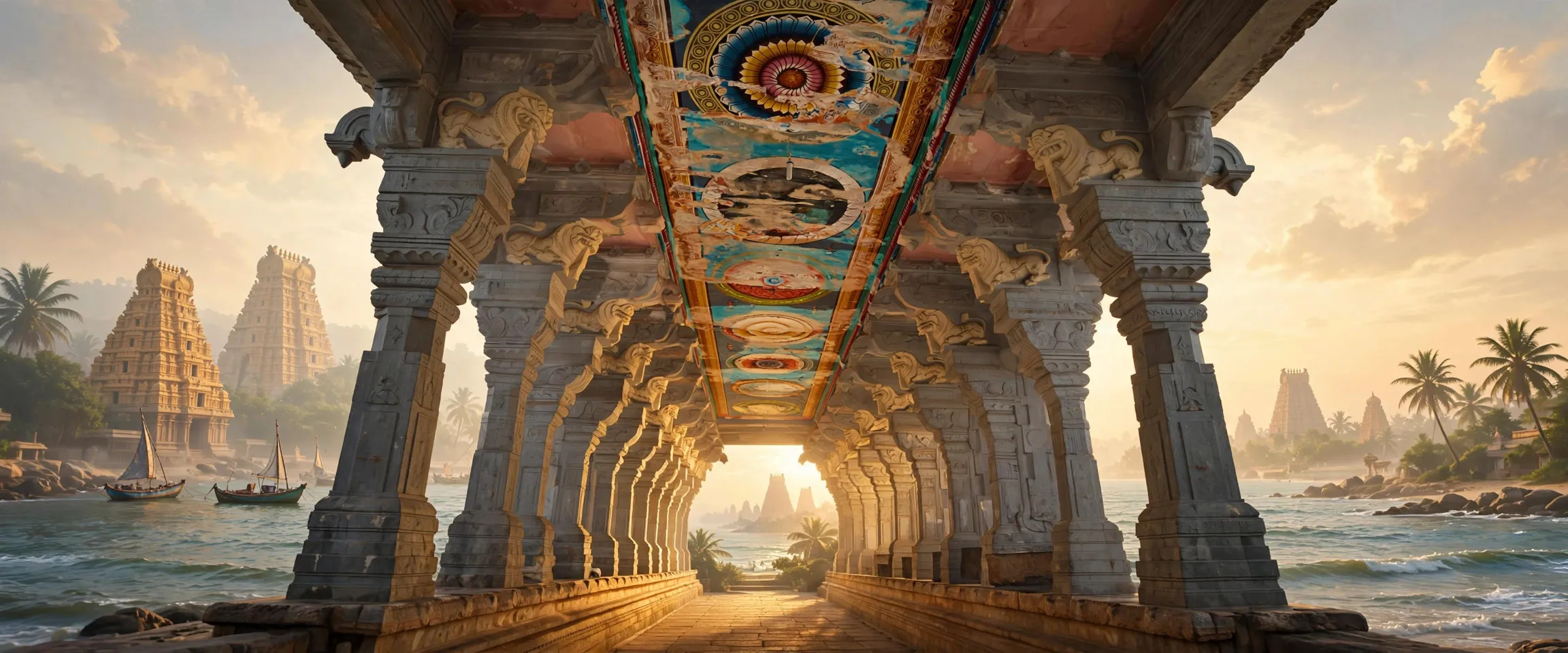
Ramanathaswamy Temple on Rameswaram island in Tamil Nadu is the southernmost of the twelve Jyotirlingas and the southern shrine of the Char Dham. Tradition holds that Rama established its lingam before his bridge to Lanka, and its pillared corridors, some 3,850 feet in all, are the longest of any Hindu temple in India.
- Punjabi name
- ਰਾਮਨਾਥਸੁਆਮੀ ਮੰਦਰ
- Country
- India
- State
- Tamil Nadu
- District
- Ramanathapuram
- Location
- Rameswaram island
- Deities
- Ramanathaswamy (Shiva); Parvatavardhini (Parvati)
All 14 facts
- Traditions
- Jyotirlinga (southernmost of the 12); Char Dham (southern shrine); Paadal Petra Sthalam
- Architecture
- Tamil (Dravidian); rajagopuram 53 m
- Corridors
- Longest of any Hindu temple in India; outer corridor ~1,212 pillars; total ~3,850 ft
- Theerthams
- 22 within the temple (of 64 on the island); Agni Theertham is the sea
- Sanctum
- Two lingams: Ramalingam (main) and Vishvalingam (worshipped first)
- Present structure
- Largely 17th c.; third corridor (Chokkatan Mandapam) late 18th c. under Muthuramalinga Setupati (r. 1763-1795)
- Administration
- TN Hindu Religious and Charitable Endowments Department
- Festivals
- Vasanthotsavam; Adi and Masi sixth-day festivals
What is Ramanathaswamy Temple?
Ramanathaswamy Temple on Rameswaram island in Tamil Nadu is the southernmost of the twelve Jyotirlingas and the southern shrine of the Char Dham, two of Hinduism’s greatest pilgrimages in a single complex. Tradition holds that Rama himself established its lingam before his bridge to Lanka, and its corridors are the longest of any Hindu temple in India.
The presiding deity is Ramanathaswamy, a form of Shiva worshipped as a lingam, with his consort Parvatavardhini (Parvati) in a separate shrine. The temple is sacred to Shaivites, Vaishnavites and Smartas alike, and is counted among the 276 Paadal Petra Sthalams glorified by the Nayanar poet-saints.
The legend of Rama’s lingam
According to tradition, Rama worshipped Shiva here as a lingam before crossing the bridge called Rama Setu to Lanka, and the spot is described in the Ramayana’s Yuddha Kanda as supremely sacred. The Shiva Purana tells that Rama propitiated Shiva on the shore of Rameswaram, and that the deity, pleased, granted him victory over Ravana and agreed to remain on the island. The temple's official site tells the story slightly differently: that Rama installed the lingam after his victory over Ravana, on the advice of the sage Agastya, to expiate the sin of killing him, and that it was Sita who shaped the sand lingam. Both tellings are presented here as tradition.
Inside the sanctum there are two lingams. Tradition names the main deity the Ramalingam, made of sand by Rama himself, and the second the Vishvalingam, brought by Hanuman from Kailash. Rama is said to have instructed that the Vishvalingam be worshipped first, a tradition that continues today.
Why do pilgrims bathe in 22 theerthams?
There are 64 theerthams, holy water bodies, in and around Rameswaram island; 22 of them lie within the temple itself, in the form of ponds and wells. The number 22 is said to represent the 22 arrows in Rama’s quiver. Bathing in these theerthams is a major part of the Rameswaram pilgrimage and is considered equivalent to penance.
The first and greatest is Agni Theertham, the sea itself, the Bay of Bengal lapping the temple’s shore. Rameswaram is one of the few temples distinguished as sthala, murthy and theertham together: the place, the deity and the holy water.
The longest corridors of any Hindu temple
The temple is built in the Tamil (Dravidian), architectural tradition, ringed by a high compound wall with great gopuram towers to the east and west; the main rajagopuram stands 53 metres tall. But its fame rests on the corridors: the outer set runs about 1,212 carved sandstone pillars, each around 30 feet high, and the total length of the corridors is some 3,850 feet, the longest of any Hindu temple in India.
The present structure is the work of centuries. The Pandyas expanded it in the 12th century; the sanctum was renovated by the Jaffna kings Jeyaveera Cinkaiariyan (1380–1410) and his successor Gunaveera Cinkaiariyan; the 17th-century Setupatis of Ramanathapuram built much of what stands today; and the world-famous third corridor, the Chokkatan Mandapam, was completed in the late 18th century by Muthuramalinga Setupati, who ruled from 1763 to 1795.
Jyotirlinga and Char Dham in one shrine
Rameswaram is the southernmost of the twelve Jyotirlingas, the shrines where Shiva is worshipped as a fiery pillar of light. It is also the southern of the four Char Dham, the pilgrimage across India’s four cardinal points whose origin is attributed to the philosopher Adi Shankara: Badrinath in the north, Puri in the east, Dwarka in the west, and Rameswaram in the south.
Hindus traditionally aspire to visit all four Dhams once in a lifetime, beginning at Puri in the east and moving clockwise. For the full set of twelve Jyotirlingas and the wider circuit, see Somnath, the first of the twelve, and the guide to Hindu mandirs in India.
Visiting Rameswaram
The temple stands on Rameswaram island, Ramanathapuram district, Tamil Nadu, near the southern tip of peninsular India. It is administered by the Hindu Religious and Charitable Endowments Department of the Government of Tamil Nadu.
The temple calendar includes the Vasanthotsavam spring festival and the sixth-day festivals of Adi (July–August) and Masi (February–March), when the utsava deities are kept in the Chokkatan Mandapam.
ਰਾਮਨਾਥਸੁਆਮੀ ਮੰਦਰ ਕੀ ਹੈ?
ਤਮਿਲ ਨਾਡੂ ਵਿੱਚ ਰਾਮੇਸ਼ਵਰਮ ਟਾਪੂ 'ਤੇ ਰਾਮਨਾਥਸੁਆਮੀ ਮੰਦਰ ਬਾਰਾਂ ਜੋਤਿਰਲਿੰਗਾਂ ਵਿੱਚੋਂ ਸਭ ਤੋਂ ਦੱਖਣੀ ਹੈ ਅਤੇ ਚਾਰ ਧਾਮ ਦਾ ਦੱਖਣੀ ਅਸਥਾਨ ਹੈ ਇਸ ਤਰ੍ਹਾਂ ਹਿੰਦੂ ਧਰਮ ਦੀਆਂ ਦੋ ਸਭ ਤੋਂ ਵੱਡੀਆਂ ਯਾਤਰਾਵਾਂ ਇੱਕੋ ਪਰਿਸਰ ਵਿੱਚ ਮਿਲਦੀਆਂ ਹਨ ਪਰੰਪਰਾ ਕਹਿੰਦੀ ਹੈ ਕਿ ਰਾਮ ਨੇ ਲੰਕਾ ਵੱਲ ਆਪਣੇ ਪੁਲ ਤੋਂ ਪਹਿਲਾਂ ਇੱਥੇ ਖ਼ੁਦ ਲਿੰਗ ਸਥਾਪਤ ਕੀਤਾ ਸੀ, ਅਤੇ ਇਸਦੀਆਂ ਗਲਿਆਰੀਆਂ ਭਾਰਤ ਦੇ ਕਿਸੇ ਵੀ ਹਿੰਦੂ ਮੰਦਰ ਵਿੱਚੋਂ ਸਭ ਤੋਂ ਲੰਬੀਆਂ ਹਨ
ਮੁੱਖ ਦੇਵਤਾ ਰਾਮਨਾਥਸੁਆਮੀ ਹਨ, ਲਿੰਗ ਰੂਪ ਵਿੱਚ ਸ਼ਿਵ, ਅਤੇ ਉਨ੍ਹਾਂ ਦੀ ਪਤਨੀ ਪਾਰਵਤਵਰਧਿਨੀ (ਪਾਰਵਤੀ) ਦਾ ਅਲੱਗ ਮੰਦਰ ਹੈ ਇਹ ਮੰਦਰ ਸ਼ੈਵਾਂ, ਵੈਸ਼ਨਵਾਂ ਅਤੇ ਸਮਾਰਤਾਂ ਸਭ ਲਈ ਪਵਿੱਤਰ ਹੈ ਅਤੇ ਨਾਯਨਾਰ ਭਗਤ-ਕਵੀਆਂ ਵੱਲੋਂ ਮਹਿਮਾ ਕੀਤੇ 276 ਪਾਡਲ ਪੇਤਰ ਸਥਲਮਾਂ ਵਿੱਚ ਗਿਣਿਆ ਜਾਂਦਾ ਹੈ
ਰਾਮ ਦੇ ਲਿੰਗ ਦੀ ਕਥਾ
ਪਰੰਪਰਾ ਅਨੁਸਾਰ, ਰਾਮ ਨੇ ਲੰਕਾ ਵੱਲ ਰਾਮ ਸੇਤੂ ਪਾਰ ਕਰਨ ਤੋਂ ਪਹਿਲਾਂ ਇੱਥੇ ਲਿੰਗ ਰੂਪ ਵਿੱਚ ਸ਼ਿਵ ਦੀ ਪੂਜਾ ਕੀਤੀ ਸੀ, ਅਤੇ ਰਾਮਾਇਣ ਦੇ ਯੁੱਧ ਕਾਂਡ ਵਿੱਚ ਇਸ ਥਾਂ ਨੂੰ ਅਤਿ ਪਵਿੱਤਰ ਦੱਸਿਆ ਗਿਆ ਹੈ ਸ਼ਿਵ ਪੁਰਾਣ ਕਹਿੰਦਾ ਹੈ ਕਿ ਰਾਮ ਨੇ ਰਾਮੇਸ਼ਵਰਮ ਦੇ ਕੰਢੇ ਸ਼ਿਵ ਨੂੰ ਪ੍ਰਸੰਨ ਕੀਤਾ, ਅਤੇ ਦੇਵਤੇ ਨੇ ਪ੍ਰਸੰਨ ਹੋ ਕੇ ਰਾਵਣ 'ਤੇ ਜਿੱਤ ਦਾ ਵਰ ਦਿੱਤਾ ਅਤੇ ਟਾਪੂ 'ਤੇ ਟਿਕਣਾ ਸਵੀਕਾਰ ਕੀਤਾ ਮੰਦਰ ਦੀ ਅਧਿਕਾਰਤ ਵੈੱਬਸਾਈਟ ਕਥਾ ਨੂੰ ਥੋੜ੍ਹਾ ਵੱਖਰਾ ਦੱਸਦੀ ਹੈ: ਰਾਮ ਨੇ ਰਾਵਣ 'ਤੇ ਜਿੱਤ ਤੋਂ ਬਾਅਦ, ਰਿਸ਼ੀ ਅਗਸਤਿਆ ਦੀ ਸਲਾਹ 'ਤੇ, ਉਸਨੂੰ ਮਾਰਨ ਦੇ ਪਾਪ ਤੋਂ ਮੁਕਤੀ ਲਈ ਲਿੰਗ ਸਥਾਪਤ ਕੀਤਾ ਸੀ, ਅਤੇ ਰੇਤ ਦਾ ਲਿੰਗ ਸੀਤਾ ਨੇ ਬਣਾਇਆ ਸੀ ਦੋਵੇਂ ਕਥਨ ਇੱਥੇ ਪਰੰਪਰਾ ਵਜੋਂ ਪੇਸ਼ ਕੀਤੇ ਗਏ ਹਨ
ਗਰਭਗ੍ਰਿਹ ਦੇ ਅੰਦਰ ਦੋ ਲਿੰਗ ਹਨ ਪਰੰਪਰਾ ਮੁੱਖ ਦੇਵਤੇ ਨੂੰ ਰਾਮਲਿੰਗਮ ਕਹਿੰਦੀ ਹੈ, ਜਿਸਨੂੰ ਰਾਮ ਨੇ ਖ਼ੁਦ ਰੇਤ ਤੋਂ ਬਣਾਇਆ ਸੀ, ਅਤੇ ਦੂਜੇ ਨੂੰ ਵਿਸ਼ਵਲਿੰਗਮ, ਜਿਸਨੂੰ ਹਨੂੰਮਾਨ ਕੈਲਾਸ਼ ਤੋਂ ਲਿਆਏ ਸਨ ਕਿਹਾ ਜਾਂਦਾ ਹੈ ਕਿ ਰਾਮ ਨੇ ਹੁਕਮ ਦਿੱਤਾ ਸੀ ਕਿ ਪਹਿਲਾਂ ਵਿਸ਼ਵਲਿੰਗਮ ਦੀ ਪੂਜਾ ਹੋਵੇ, ਅਤੇ ਇਹ ਪਰੰਪਰਾ ਅੱਜ ਵੀ ਚੱਲਦੀ ਹੈ
ਸ਼ਰਧਾਲੂ 22 ਤੀਰਥਮਾਂ ਵਿੱਚ ਇਸ਼ਨਾਨ ਕਿਉਂ ਕਰਦੇ ਹਨ?
ਰਾਮੇਸ਼ਵਰਮ ਟਾਪੂ 'ਤੇ ਅਤੇ ਆਲੇ-ਦੁਆਲੇ 64 ਤੀਰਥਮ, ਪਵਿੱਤਰ ਜਲ-ਅਸਥਾਨ ਹਨ ਇਨ੍ਹਾਂ ਵਿੱਚੋਂ 22 ਮੰਦਰ ਦੇ ਅੰਦਰ ਹੀ ਹਨ, ਤਲਾਅ ਅਤੇ ਖੂਹਾਂ ਦੇ ਰੂਪ ਵਿੱਚ 22 ਦੀ ਸੰਖਿਆ ਰਾਮ ਦੇ ਤਰਕਸ਼ ਦੇ 22 ਤੀਰਾਂ ਨੂੰ ਦਰਸਾਉਂਦੀ ਹੈ ਇਨ੍ਹਾਂ ਤੀਰਥਮਾਂ ਵਿੱਚ ਇਸ਼ਨਾਨ ਰਾਮੇਸ਼ਵਰਮ ਯਾਤਰਾ ਦਾ ਮੁੱਖ ਅੰਗ ਹੈ ਅਤੇ ਇਸਨੂੰ ਤਪੱਸਿਆ ਦੇ ਬਰਾਬਰ ਮੰਨਿਆ ਜਾਂਦਾ ਹੈ
ਪਹਿਲਾ ਅਤੇ ਸਭ ਤੋਂ ਵੱਡਾ ਅਗਨਿ ਤੀਰਥਮ ਹੈ, ਸਮੁੰਦਰ ਖ਼ੁਦ, ਮੰਦਰ ਦੇ ਕੰਢੇ ਲੱਗਦਾ ਬੰਗਾਲ ਦੀ ਖਾੜੀ ਰਾਮੇਸ਼ਵਰਮ ਉਨ੍ਹਾਂ ਗਿਣੇ-ਚੁਣੇ ਮੰਦਰਾਂ ਵਿੱਚੋਂ ਹੈ ਜਿੱਥੇ ਸਥਲ, ਮੂਰਤੀ ਅਤੇ ਤੀਰਥਮ ਤਿੰਨੋਂ ਇਕੱਠੇ ਹਨ: ਥਾਂ, ਦੇਵਤਾ ਅਤੇ ਪਵਿੱਤਰ ਜਲ
ਕਿਸੇ ਵੀ ਹਿੰਦੂ ਮੰਦਰ ਦੀਆਂ ਸਭ ਤੋਂ ਲੰਬੀਆਂ ਗਲਿਆਰੀਆਂ
ਮੰਦਰ ਤਮਿਲ (ਦ੍ਰਾਵਿੜ) ਸ਼ੈਲੀ ਵਿੱਚ ਬਣਿਆ ਹੈ, ਚਾਰੇ ਪਾਸੇ ਉੱਚੀ ਚਾਰਦੀਵਾਰੀ ਅਤੇ ਪੂਰਬ-ਪੱਛਮ ਵਿੱਚ ਵਿਸ਼ਾਲ ਗੋਪੁਰਮਾਂ ਨਾਲ ਮੁੱਖ ਰਾਜਗੋਪੁਰਮ 53 ਮੀਟਰ ਉੱਚਾ ਹੈ ਪਰ ਇਸਦੀ ਪ੍ਰਸਿੱਧੀ ਗਲਿਆਰੀਆਂ ਕਰਕੇ ਹੈ: ਬਾਹਰੀ ਗਲਿਆਰਿਆਂ ਵਿੱਚ ਲਗਭਗ 1,212 ਉੱਕਰੇ ਰੇਤਲੇ ਪੱਥਰ ਦੇ ਥੰਮ੍ਹ ਹਨ, ਹਰ ਇੱਕ ਤਕਰੀਬਨ 30 ਫੁੱਟ ਉੱਚਾ, ਅਤੇ ਗਲਿਆਰੀਆਂ ਦੀ ਕੁੱਲ ਲੰਬਾਈ ਲਗਭਗ 3,850 ਫੁੱਟ ਹੈ, ਜੋ ਭਾਰਤ ਦੇ ਕਿਸੇ ਵੀ ਹਿੰਦੂ ਮੰਦਰ ਵਿੱਚੋਂ ਸਭ ਤੋਂ ਲੰਬੀ ਹੈ
ਮੌਜੂਦਾ ਢਾਂਚਾ ਸਦੀਆਂ ਦੇ ਕੰਮ ਦਾ ਨਤੀਜਾ ਹੈ 12ਵੀਂ ਸਦੀ ਵਿੱਚ ਪਾਂਡਿਆਂ ਨੇ ਇਸਦਾ ਵਿਸਤਾਰ ਕੀਤਾ ਗਰਭਗ੍ਰਿਹ ਦੀ ਮੁਰੰਮਤ ਜਾਫਨਾ ਦੇ ਰਾਜਿਆਂ ਜੈਵੀਰ ਚਿੰਕੈਆਰੀਅਨ (1380-1410) ਅਤੇ ਉਨ੍ਹਾਂ ਦੇ ਉੱਤਰਾਧਿਕਾਰੀ ਗੁਣਵੀਰ ਚਿੰਕੈਆਰੀਅਨ ਨੇ ਕਰਵਾਈ 17ਵੀਂ ਸਦੀ ਦੇ ਰਾਮਨਾਥਪੁਰਮ ਦੇ ਸੇਤੁਪਤੀਆਂ ਨੇ ਅੱਜ ਖੜ੍ਹਾ ਬਹੁਤਾ ਹਿੱਸਾ ਬਣਵਾਇਆ ਅਤੇ ਦੁਨੀਆ-ਪ੍ਰਸਿੱਧ ਤੀਜੀ ਗਲਿਆਰੀ, ਚੋੱਕਤਨ ਮੰਡਪਮ, 18ਵੀਂ ਸਦੀ ਦੇ ਅੰਤ ਵਿੱਚ ਮੁਥੁਰਾਮਲਿੰਗ ਸੇਤੁਪਤੀ ਨੇ ਪੂਰੀ ਕਰਵਾਈ, ਜਿਨ੍ਹਾਂ ਦਾ ਰਾਜ 1763 ਤੋਂ 1795 ਤੱਕ ਰਿਹਾ
ਇੱਕੋ ਅਸਥਾਨ ਵਿੱਚ ਜੋਤਿਰਲਿੰਗ ਅਤੇ ਚਾਰ ਧਾਮ
ਰਾਮੇਸ਼ਵਰਮ ਬਾਰਾਂ ਜੋਤਿਰਲਿੰਗਾਂ ਵਿੱਚੋਂ ਸਭ ਤੋਂ ਦੱਖਣੀ ਹੈ, ਉਹ ਅਸਥਾਨ ਜਿੱਥੇ ਸ਼ਿਵ ਦੀ ਜੋਤਿ ਦੇ ਅਗਨਿ-ਥੰਮ੍ਹ ਰੂਪ ਵਿੱਚ ਪੂਜਾ ਹੁੰਦੀ ਹੈ ਇਹ ਚਾਰ ਧਾਮ ਦਾ ਦੱਖਣੀ ਅਸਥਾਨ ਵੀ ਹੈ, ਭਾਰਤ ਦੀਆਂ ਚਾਰ ਦਿਸ਼ਾਵਾਂ ਦੀ ਯਾਤਰਾ, ਜਿਸਦੀ ਸਥਾਪਨਾ ਦਾਰਸ਼ਨਿਕ ਆਦਿ ਸ਼ੰਕਰਾਚਾਰੀਆ ਨਾਲ ਜੋੜੀ ਜਾਂਦੀ ਹੈ: ਉੱਤਰ ਵਿੱਚ ਬਦਰੀਨਾਥ, ਪੂਰਬ ਵਿੱਚ ਪੁਰੀ, ਪੱਛਮ ਵਿੱਚ ਦ੍ਵਾਰਕਾ ਅਤੇ ਦੱਖਣ ਵਿੱਚ ਰਾਮੇਸ਼ਵਰਮ
ਹਿੰਦੂ ਪਰੰਪਰਾ ਵਿੱਚ ਜੀਵਨ ਵਿੱਚ ਇੱਕ ਵਾਰ ਚਾਰੇ ਧਾਮਾਂ ਦੀ ਯਾਤਰਾ ਦੀ ਇੱਛਾ ਰੱਖੀ ਜਾਂਦੀ ਹੈ, ਜੋ ਪੂਰਬ ਵਿੱਚ ਪੁਰੀ ਤੋਂ ਸ਼ੁਰੂ ਹੋ ਕੇ ਘੜੀ ਦੀ ਦਿਸ਼ਾ ਵਿੱਚ ਹੁੰਦੀ ਹੈ
ਰਾਮੇਸ਼ਵਰਮ ਦੀ ਯਾਤਰਾ
ਮੰਦਰ ਤਮਿਲ ਨਾਡੂ ਦੇ ਰਾਮਨਾਥਪੁਰਮ ਜ਼ਿਲ੍ਹੇ ਵਿੱਚ ਰਾਮੇਸ਼ਵਰਮ ਟਾਪੂ 'ਤੇ ਹੈ, ਪ੍ਰਾਇਦੀਪੀ ਭਾਰਤ ਦੇ ਦੱਖਣੀ ਸਿਰੇ ਨੇੜੇ ਇਸਦਾ ਪ੍ਰਬੰਧਨ ਤਮਿਲ ਨਾਡੂ ਸਰਕਾਰ ਦਾ ਹਿੰਦੂ ਧਾਰਮਿਕ ਅਤੇ ਚੈਰੀਟੇਬਲ ਐਂਡੋਵਮੈਂਟ ਵਿਭਾਗ ਕਰਦਾ ਹੈ
ਮੰਦਰ ਦੇ ਕੈਲੰਡਰ ਵਿੱਚ ਵਸੰਤੋਤਸਵਮ ਬਸੰਤ-ਤਿਉਹਾਰ ਅਤੇ ਆਦਿ (ਜੁਲਾਈ-ਅਗਸਤ) ਅਤੇ ਮਾਸੀ (ਫਰਵਰੀ-ਮਾਰਚ) ਦੇ ਛੇਵੇਂ ਦਿਨ ਦੇ ਤਿਉਹਾਰ ਸ਼ਾਮਲ ਹਨ, ਜਦੋਂ ਉਤਸਵ-ਮੂਰਤੀਆਂ ਚੋੱਕਤਨ ਮੰਡਪਮ ਵਿੱਚ ਰੱਖੀਆਂ ਜਾਂਦੀਆਂ ਹਨ