
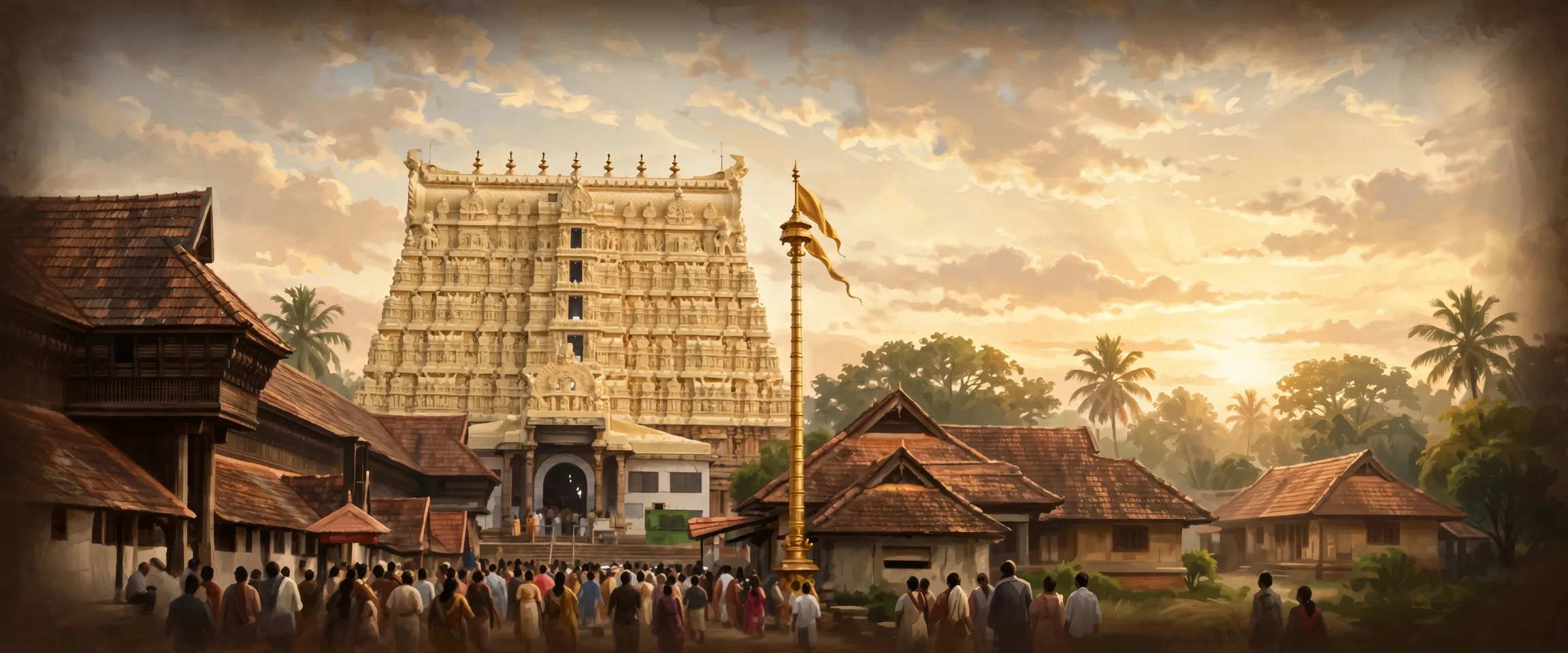
Sree Padmanabhaswamy Temple in Thiruvananthapuram, Kerala, is a Hindu temple to Vishnu as Anantha Padmanabhaswamy, shown reclining in eternal yogic sleep on the serpent Anantha. It is one of the 108 Divya Desams, the holiest Vishnu shrines of the Sri Vaishnava tradition, and the city is named for it. It is the family deity of the Travancore royal family, to whom King Marthanda Varma surrendered his whole kingdom in 1750, and its 2011-opened underground vaults hold gold, jewels and coins estimated at over 1 lakh crore rupees, the largest temple hoard ever recorded.
- Punjabi name
- ਸ੍ਰੀ ਪਦਮਨਾਭਸੁਆਮੀ ਮੰਦਰ, ਤਿਰੁਵਨੰਤਪੁਰਮ
- Country
- India
- State
- Kerala
- City
- Thiruvananthapuram (Trivandrum)
- Deity
- Anantha Padmanabhaswamy (Vishnu) in Anantha Shayana, the eternal yogic sleep; also Lakshmi, Bhudevi, Brahma
- Tradition
- Sri Vaishnavism; one of the 108 Divya Desams glorified by the Alvars
All 11 facts
- Architectural style
- Fusion of Kerala and Tamil architecture; 100-foot, seven-tier Pandyan-style gopuram (foundation 1566)
- History
- Origins dated to the 8th century; present granite form largely 18th century under Marthanda Varma; re-consecrated 1731; Thrippadidanam 17 January 1750
- Vaults
- Six known underground vaults (A to F), plus G and H reported in 2014; five opened 2011-2012; Vault B (Mahabharata Kallara) still sealed
- Administration
- Administrative Committee under Supreme Court directions since 13 July 2020; trustee: titular Maharaja of Travancore
- Entry
- Hindus only; strict dress code (men: vesti and angavastram; women: sari); no photography or mobiles inside
Sree Padmanabhaswamy Temple stands inside the East Fort of Thiruvananthapuram, the capital of Kerala, and is one of the most storied Vishnu shrines in India. The presiding deity is Padmanabhaswamy, a form of Vishnu shown in Anantha Shayana, the eternal yogic sleep, reclining on the many-hooded serpent Anantha, with the lotus-born Brahma rising from his navel. It is one of the 108 Divya Desams, the sacred Vishnu shrines of the Sri Vaishnava tradition praised in the Tamil hymns of the Alvars, and the city itself is named for it: Thiru Anantha Puram, the sacred city of Anantha. It is the tutelary deity of the Travancore royal family, and in 2011 its sealed underground vaults were found to hold gold, jewels and coins estimated at over 1 lakh crore rupees, the largest temple hoard ever recorded.
What is Anantha Shayana, and why is the deity seen through three doors?
The idol of Padmanabha is more than eighteen feet long, too large to take in at a glance, so devotees see it in parts through the three doors of the sanctum. Through the first door appears the head: Vishnu reclining, his right hand resting over a Shiva lingam, the goddess Sridevi by his side and the sage Bhrigu Muni before him, while Brahma sits on a lotus that rises from the deity's navel. The name Padmanabha itself means the one with the lotus in the navel. Through the second door, the middle, devotees see the gold abhisheka idols of Padmanabha, Sridevi and Bhudevi, and the silver processional idol used in festivals. Through the third door appear the feet, with Bhudevi and the sage Markandeya Muni. Above the reclining figure, the serpent Anantha spreads five hoods turned inward, a sign of contemplation. The idol is built from 12,008 saligrams, the sacred stones of the Gandaki river in Nepal, coated in a special ayurvedic preparation called Katusarkara yogam. Inside the same complex are two other major shrines: Thekkedom, dedicated to the fierce form Ugra Narasimha, and Thiruvambadi, to Krishna as Parthasarathi, the charioteer of Arjuna. Smaller shrines honour Rama with Sita, Lakshmana and Hanuman, Ganapati, and the guardian Kshetrapala.
How old is the temple, and what did Marthanda Varma do here?
The shrine is very old. It is mentioned in Sangam-period Tamil literature, including the Cilappatikaram, and the Tamil Alvar saints glorified it in hymns of the seventh and eighth centuries. Historians date the temple to the 8th century, and the Puranas and the Mahabharata also name it. Legend, told in the Kerala Mahathmyam, says Parashurama purified and venerated the idol in the Dvapara Yuga and entrusted the temple's care to seven Potti families, charging King Adithya Vikrama of Venad with its protection. The granite temple seen today is largely the work of the 18th century, under Marthanda Varma (1706 to 58), the Travancore king who rebuilt it. The idol was re-consecrated in 906 of the Malayalam era, that is 1731 CE, for which he brought 12,000 shaligrams from the Gandaki river, and the Ottakkal-mandapam, the massive single-stone platform before the deity, was cut from a rock at Tirumala and installed in 1731. His most famous act came on 17 January 1750, the Thrippadidanam: he surrendered the entire kingdom of Travancore to Padmanabhaswamy and pledged that he and his descendants would rule only as the deity's servants, taking the title Padmanabha Dasa, servant of Padmanabha. Every later Travancore king carried that title, and the royal women were called Sree Padmanabha Sevini.
What is the temple's architecture?
The temple is a fusion of Kerala and Tamil architectural styles. Rising over the eastern entrance is a 100-foot, seven-tier gopuram built in the Pandyan style, a Dravidian idiom (see the Dravida architecture explainer); its foundation was laid in 1566. From the east, a corridor of 365 and one-quarter sculptured granite pillars, each carved from a single stone, runs into the sanctum, a showpiece of the Vishwakarma sthapathis' craft. An 80-foot flagstaff stands before the main entry from the inner courtyard. The temple stands beside Padma Theertham, the Lotus Spring, one of the oldest water bodies in the city, and the roofed sanctum keeps the low, circular Kerala profile that suits the coast's heat. The Ottakkal-mandapam platform in front of the deity is cut from one rock, and tradition holds that only the King of Travancore may prostrate on it, because to do so is to surrender everything to the deity, which the king had already done in 1750.
What was found in the temple vaults?
The temple has six known underground vaults, the nilavaras or kallaras, labelled A to F for bookkeeping, and a 2014 court-appointed report mentions two more subterranean vaults, G and H. For generations the vaults stayed sealed, opened only now and then by the two Nambi priests who are their custodians. In June 2011, after litigation brought by T. P. Sundararajan, the Supreme Court of India ordered the chambers opened and inventoried. Vaults C to F were opened, and Vault A was opened for inventory alone. What came out is considered the largest collection of temple gold and precious stones ever found: a three-and-a-half-foot solid gold idol of Mahavishnu studded with diamonds and rubies; an eighteen-foot-long pure gold chain; a 500-kg gold sheaf; a 36-kg golden veil; 1,200 Sarappalli gold coin-chains encrusted with precious stones; gold coconut shells set with rubies and emeralds; ceremonial gold attire weighing nearly 30 kg; eighteenth-century Napoleonic-era coins; lakhs of gold coins of the Roman Empire; and, in Vault A, an 800-kg hoard of gold coins dating to around 200 BCE. Over 1.02 lakh articles were retrieved from Vault A and its antechambers, including more than 60,000 precious stones set in larger pieces of gold jewellery. Estimates put the value at over 1 lakh crore rupees. Vault B, called the Mahabharata Kallara, is the largest of all and is believed to have stayed unopened since the 1880s. An attempted opening in 1908 failed: as the English visitor Emily Gilchriest Hatch recorded in her 1933 guidebook, the men found the vaults infested with cobras and fled for their lives. A 2011 astrological consultation, the Ashtamangala Devaprasnam, declared the chamber a forbidden zone, and it remains sealed.
Who runs the temple now?
The temple and its assets belong to the deity, and its tutelary deity status has tied it to the Travancore royal family for centuries; the titular Maharaja of Travancore, Moolam Thirunal Rama Varma, is the temple's trustee. Since 13 July 2020 it has been administered by an Administrative Committee set up under directions of the Supreme Court of India: the District Judge of Thiruvananthapuram chairs it, with nominees of the Kerala and Union governments, the Chief Tantri, a representative of the Travancore royal family, and an expert member. The court supervises it on a continuing basis, and its 2020 judgment upheld the royal family's rights in the temple's administration. The traditional bodies continue their old roles: the Ettara Yogam, the Tantri, and the Pushpanjali Swamiyars who conduct the daily flower worship.
What should visitors know before going?
Entry to the sanctum is restricted to those who profess the Hindu faith, and a strict dress code applies: men wear a vesti with an angavastram, the white dhoti and shawl, with no shirt, while women wear a sari; mundus can be rented near the entrance. Photography, mobile phones and cameras are prohibited inside, and security is tight. Darshan runs roughly from 3:30 in the morning, when the Nirmalya Darshanam begins, to noon, and again in the evening, so an early visit avoids the crowds. The temple's two biggest festivals are the ten-day Aipasi (October-November) and Panguni (March-April) festivals, which end with the Aarat, the ritual sea-bath of the processional idols at Shankumugham Beach, escorted on foot by the Maharaja. Navaratri brings the Swathi Sangeethotsavam music festival, and once every six years the Laksha Deepam lights one lakh oil lamps after 56 days of Veda chanting, the Murajapam. The temple sits in the East Fort area, about a kilometre from Trivandrum Central station (see more mandirs of India).
ਤਿਰੁਵਨੰਤਪੁਰਮ, ਕੇਰਲ ਦੀ ਰਾਜਧਾਨੀ ਦੇ ਪੂਰਬੀ ਕਿਲ੍ਹੇ ਅੰਦਰ ਸ੍ਰੀ ਪਦਮਨਾਭਸੁਆਮੀ ਮੰਦਰ ਖੜ੍ਹਾ ਹੈ, ਅਤੇ ਇਹ ਭਾਰਤ ਦੇ ਸਭ ਤੋਂ ਪ੍ਰਸਿੱਧ ਵਿਸ਼ਨੂ ਧਾਮਾਂ ਵਿੱਚੋਂ ਇੱਕ ਹੈ ਇੱਥੋਂ ਦੇ ਮੁੱਖ ਦੇਵਤਾ ਪਦਮਨਾਭਸੁਆਮੀ ਹਨ, ਵਿਸ਼ਨੂ ਦਾ ਇੱਕ ਰੂਪ, ਜੋ ਅਨੰਤ ਸ਼ਯਨ, ਸਦੀਵੀ ਯੋਗ-ਨਿਦਰਾ ਵਿੱਚ, ਬਹੁ-ਫਣਾਂ ਵਾਲੇ ਸੱਪ ਅਨੰਤ ਉੱਤੇ ਲੇਟੇ ਦਿਖਾਏ ਗਏ ਹਨ, ਅਤੇ ਉਨ੍ਹਾਂ ਦੀ ਨਾਭੀ ਤੋਂ ਨਿਕਲੇ ਕਮਲ ਉੱਤੇ ਬ੍ਰਹਮਾ ਵਿਰਾਜਮਾਨ ਹਨ ਇਹ 108 ਦਿਵਯ ਦੇਸਮਾਂ ਵਿੱਚੋਂ ਇੱਕ ਹੈ, ਸ੍ਰੀ ਵੈਸ਼ਨਵ ਪਰੰਪਰਾ ਦੇ ਪਵਿੱਤਰ ਵਿਸ਼ਨੂ ਧਾਮ, ਜਿਨ੍ਹਾਂ ਦੀ ਤਮਿਲ ਆਲਵਾਰ ਸੰਤਾਂ ਨੇ ਆਪਣੇ ਭਜਨਾਂ ਵਿੱਚ ਮਹਿਮਾ ਗਾਈ ਹੈ, ਅਤੇ ਸ਼ਹਿਰ ਦਾ ਨਾਮ ਹੀ ਇਸੇ ਉੱਤੇ ਹੈ: ਤਿਰੁ ਅਨੰਤ ਪੁਰਮ, ਅਨੰਤ ਦਾ ਪਵਿੱਤਰ ਨਗਰ ਇਹ ਤ੍ਰਾਵਣਕੋਰ ਸ਼ਾਹੀ ਪਰਿਵਾਰ ਦਾ ਕੁਲ-ਦੇਵਤਾ ਹੈ, ਅਤੇ 2011 ਵਿੱਚ ਇਸ ਦੇ ਬੰਦ ਤਹਿਖ਼ਾਨੇ ਖੁੱਲ੍ਹਣ ਉੱਤੇ ਇੱਕ ਲੱਖ ਕਰੋੜ ਰੁਪਏ ਤੋਂ ਵੱਧ ਦੇ ਸੋਨੇ, ਗਹਿਣਿਆਂ ਅਤੇ ਸਿੱਕਿਆਂ ਦਾ ਖ਼ਜ਼ਾਨਾ ਮਿਲਿਆ, ਜੋ ਅੱਜ ਤੱਕ ਦਾ ਸਭ ਤੋਂ ਵੱਡਾ ਮੰਦਰੀ ਖ਼ਜ਼ਾਨਾ ਹੈ
ਅਨੰਤ ਸ਼ਯਨ ਕੀ ਹੈ, ਅਤੇ ਦੇਵਤਾ ਤਿੰਨ ਦਰਵਾਜ਼ਿਆਂ ਰਾਹੀਂ ਕਿਉਂ ਦਿਸਦਾ ਹੈ?
ਪਦਮਨਾਭ ਦੀ ਮੂਰਤੀ ਅਠਾਰਾਂ ਫੁੱਟ ਤੋਂ ਵੱਧ ਲੰਬੀ ਹੈ, ਇੱਕ ਨਜ਼ਰ ਵਿੱਚ ਪੂਰੀ ਨਹੀਂ ਵੇਖੀ ਜਾ ਸਕਦੀ, ਇਸ ਲਈ ਸ਼ਰਧਾਲੂ ਗਰਭਗ੍ਰਹਿ ਦੇ ਤਿੰਨ ਦਰਵਾਜ਼ਿਆਂ ਰਾਹੀਂ ਇਸ ਨੂੰ ਹਿੱਸਿਆਂ ਵਿੱਚ ਵੇਖਦੇ ਹਨ ਪਹਿਲੇ ਦਰਵਾਜ਼ੇ ਤੋਂ ਸਿਰ ਦਿਸਦਾ ਹੈ: ਲੇਟੇ ਹੋਏ ਵਿਸ਼ਨੂ, ਉਨ੍ਹਾਂ ਦਾ ਸੱਜਾ ਹੱਥ ਇੱਕ ਸ਼ਿਵਲਿੰਗ ਉੱਤੇ ਟਿਕਿਆ, ਕੋਲ ਦੇਵੀ ਸ੍ਰੀਦੇਵੀ ਅਤੇ ਸਾਹਮਣੇ ਰਿਸ਼ੀ ਭ੍ਰਿਗੁ ਮੁਨਿ, ਅਤੇ ਉਨ੍ਹਾਂ ਦੀ ਨਾਭੀ ਤੋਂ ਨਿਕਲੇ ਕਮਲ ਉੱਤੇ ਬ੍ਰਹਮਾ ਵਿਰਾਜਮਾਨ ਪਦਮਨਾਭ ਦਾ ਅਰਥ ਹੀ ਹੈ ਜਿਸ ਦੀ ਨਾਭੀ ਵਿੱਚ ਕਮਲ ਹੋਵੇ ਦੂਜੇ ਦਰਵਾਜ਼ੇ ਤੋਂ, ਮੱਧ ਭਾਗ, ਪਦਮਨਾਭ, ਸ੍ਰੀਦੇਵੀ ਅਤੇ ਭੂਦੇਵੀ ਦੀਆਂ ਸੋਨੇ ਦੀਆਂ ਅਭਿਸ਼ੇਕ ਮੂਰਤੀਆਂ ਅਤੇ ਤਿਉਹਾਰਾਂ ਵਿੱਚ ਵਰਤੀ ਜਾਂਦੀ ਚਾਂਦੀ ਦੀ ਉਤਸਵ ਮੂਰਤੀ ਦਿਸਦੀ ਹੈ ਤੀਜੇ ਦਰਵਾਜ਼ੇ ਤੋਂ ਚਰਨ ਦਿਸਦੇ ਹਨ, ਭੂਦੇਵੀ ਅਤੇ ਮਾਰਕੰਡੇਯ ਮੁਨਿ ਨਾਲ ਲੇਟੇ ਹੋਏ ਰੂਪ ਦੇ ਉੱਪਰ ਸੱਪ ਅਨੰਤ ਆਪਣੇ ਪੰਜ ਫਣ ਫੈਲਾਉਂਦਾ ਹੈ, ਅੰਦਰ ਵੱਲ ਮੁੜੇ ਹੋਏ, ਜੋ ਚਿੰਤਨ ਦਾ ਪ੍ਰਤੀਕ ਹੈ ਮੂਰਤੀ ਨੇਪਾਲ ਦੀ ਗੰਡਕੀ ਨਦੀ ਦੇ 12,008 ਸਾਲੀਗ੍ਰਾਮਾਂ ਤੋਂ ਬਣੀ ਹੈ, ਅਤੇ ਇਸ ਉੱਤੇ ਕਟੁਸਰਕਰਾ ਯੋਗਮ ਨਾਮ ਦੀ ਵਿਸ਼ੇਸ਼ ਆਯੁਰਵੈਦਿਕ ਲੇਪ ਲੱਗੀ ਹੈ ਇਸੇ ਪਰਿਸਰ ਵਿੱਚ ਦੋ ਹੋਰ ਵੱਡੇ ਧਾਮ ਹਨ: ਥੇਕੇਦੋਮ, ਉਗਰ ਨਰਸਿੰਹ ਨੂੰ ਸਮਰਪਿਤ, ਅਤੇ ਤਿਰੁਵੰਬਾਡੀ, ਅਰਜੁਨ ਦੇ ਸਾਰਥੀ ਪਾਰਥਸਾਰਥੀ ਰੂਪ ਵਿੱਚ ਕ੍ਰਿਸ਼ਨ ਨੂੰ ਛੋਟੇ ਧਾਮਾਂ ਵਿੱਚ ਸੀਤਾ ਨਾਲ ਰਾਮ, ਲਕਸ਼ਮਣ ਅਤੇ ਹਨੂੰਮਾਨ, ਗਣਪਤੀ ਅਤੇ ਰੱਖਿਅਕ ਕਸ਼ੇਤਰਪਾਲ ਹਨ
ਮੰਦਰ ਕਿੰਨਾ ਪੁਰਾਣਾ ਹੈ, ਅਤੇ ਮਾਰਤੰਡ ਵਰਮਾ ਨੇ ਇੱਥੇ ਕੀ ਕੀਤਾ?
ਇਹ ਧਾਮ ਬਹੁਤ ਪੁਰਾਣਾ ਹੈ ਸੰਗਮ ਯੁੱਗ ਦੇ ਤਮਿਲ ਸਾਹਿਤ, ਜਿਸ ਵਿੱਚ ਚਿਲਪਤਿਕਾਰਮ ਵੀ ਹੈ, ਇਸ ਦਾ ਜ਼ਿਕਰ ਕਰਦਾ ਹੈ, ਅਤੇ ਸੱਤਵੀਂ-ਅੱਠਵੀਂ ਸਦੀ ਦੇ ਤਮਿਲ ਆਲਵਾਰ ਸੰਤਾਂ ਨੇ ਆਪਣੇ ਭਜਨਾਂ ਵਿੱਚ ਇਸ ਦੀ ਮਹਿਮਾ ਗਾਈ ਇਤਿਹਾਸਕਾਰ ਮੰਦਰ ਨੂੰ 8ਵੀਂ ਸਦੀ ਦਾ ਮੰਨਦੇ ਹਨ, ਅਤੇ ਪੁਰਾਣਾਂ ਤੇ ਮਹਾਭਾਰਤ ਵਿੱਚ ਵੀ ਇਸ ਦਾ ਨਾਮ ਹੈ ਕੇਰਲ ਮਹਾਤਮਯਮ ਵਿੱਚ ਦੱਸੀ ਪਰੰਪਰਾ ਅਨੁਸਾਰ ਪਰਸ਼ੁਰਾਮ ਨੇ ਦਵਾਪਰ ਯੁੱਗ ਵਿੱਚ ਮੂਰਤੀ ਦੀ ਸ਼ੁੱਧੀ ਅਤੇ ਪੂਜਾ ਕੀਤੀ ਅਤੇ ਮੰਦਰ ਦੀ ਦੇਖਭਾਲ ਸੱਤ ਪੋਟੀ ਪਰਿਵਾਰਾਂ ਨੂੰ ਸੌਂਪੀ, ਵੇਨਾਡ ਦੇ ਰਾਜਾ ਆਦਿਤਯ ਵਿਕਰਮ ਨੂੰ ਇਸ ਦੀ ਰੱਖਿਆ ਦਾ ਭਾਰ ਦਿੱਤਾ ਅੱਜ ਦਿਸਦਾ ਗ੍ਰੇਨਾਈਟ ਦਾ ਮੰਦਰ ਵੱਡੇ ਪੱਧਰ ਉੱਤੇ 18ਵੀਂ ਸਦੀ ਦਾ ਕੰਮ ਹੈ, ਤ੍ਰਾਵਣਕੋਰ ਦੇ ਰਾਜਾ ਮਾਰਤੰਡ ਵਰਮਾ (1706 ਤੋਂ 58) ਦੇ ਸਮੇਂ ਦਾ ਮਲਿਆਲਮ ਸੰਵਤ 906, ਭਾਵ 1731 ਈਸਵੀ ਵਿੱਚ ਮੂਰਤੀ ਦੀ ਮੁੜ-ਪ੍ਰਤਿਸ਼ਠਾ ਹੋਈ, ਜਿਸ ਲਈ ਉਹ ਗੰਡਕੀ ਨਦੀ ਤੋਂ 12,000 ਸ਼ਾਲੀਗ੍ਰਾਮ ਲਿਆਇਆ, ਅਤੇ ਦੇਵਤਾ ਸਾਹਮਣੇ ਓਟਕਲ-ਮੰਡਪਮ, ਇੱਕ ਹੀ ਪੱਥਰ ਦਾ ਵਿਸ਼ਾਲ ਚਬੂਤਰਾ, ਤਿਰੁਮਲਾ ਦੀ ਚੱਟਾਨ ਤੋਂ ਕੱਟ ਕੇ 1731 ਵਿੱਚ ਲਗਾਇਆ ਗਿਆ ਉਸ ਦਾ ਸਭ ਤੋਂ ਪ੍ਰਸਿੱਧ ਕਾਰਜ 17 ਜਨਵਰੀ 1750 ਦਾ ਤ੍ਰਿੱਪਾਦਿਦਾਨਮ ਸੀ: ਉਸ ਨੇ ਪੂਰਾ ਤ੍ਰਾਵਣਕੋਰ ਰਾਜ ਪਦਮਨਾਭਸੁਆਮੀ ਨੂੰ ਸੌਂਪ ਦਿੱਤਾ ਅਤੇ ਪ੍ਰਣ ਲਿਆ ਕਿ ਉਹ ਅਤੇ ਉਸ ਦੇ ਵੰਸ਼ਜ ਸਿਰਫ਼ ਦੇਵਤਾ ਦੇ ਸੇਵਕ ਬਣ ਕੇ ਰਾਜ ਕਰਨਗੇ, ਪਦਮਨਾਭ ਦਾਸ, ਭਾਵ ਪਦਮਨਾਭ ਦਾ ਸੇਵਕ ਦਾ ਖ਼ਿਤਾਬ ਲੈ ਕੇ ਉਸ ਤੋਂ ਬਾਅਦ ਹਰ ਤ੍ਰਾਵਣਕੋਰ ਰਾਜਾ ਨੇ ਇਹੀ ਖ਼ਿਤਾਬ ਧਾਰਨ ਕੀਤਾ, ਅਤੇ ਸ਼ਾਹੀ ਔਰਤਾਂ ਨੂੰ ਸ੍ਰੀ ਪਦਮਨਾਭ ਸੇਵਿਨੀ ਕਿਹਾ ਗਿਆ
ਮੰਦਰ ਦੀ ਭਵਨ-ਕਲਾ ਕਿਹੋ ਜਿਹੀ ਹੈ?
ਮੰਦਰ ਕੇਰਲ ਅਤੇ ਤਮਿਲ ਭਵਨ-ਕਲਾ ਸ਼ੈਲੀਆਂ ਦਾ ਸੁਮੇਲ ਹੈ ਪੂਰਬੀ ਪ੍ਰਵੇਸ਼ ਉੱਤੇ 100 ਫੁੱਟ ਉੱਚਾ, ਸੱਤ-ਮੰਜ਼ਿਲਾ ਗੋਪੁਰਮ ਹੈ, ਪਾਂਡਿਆ ਸ਼ੈਲੀ ਵਿੱਚ, ਜੋ ਦ੍ਰਾਵਿਡ਼ ਰੂਪ ਹੈ, ਇਸ ਦੀ ਨੀਂਹ 1566 ਵਿੱਚ ਰੱਖੀ ਗਈ ਸੀ ਪੂਰਬ ਵੱਲੋਂ 365 ਅਤੇ ਇੱਕ ਚੌਥਾਈ ਨੱਕਾਸ਼ੀਦਾਰ ਗ੍ਰੇਨਾਈਟ ਥੰਮ੍ਹਾਂ ਦਾ ਬਰਾਂਡਾ ਗਰਭਗ੍ਰਹਿ ਤੱਕ ਜਾਂਦਾ ਹੈ, ਹਰ ਥੰਮ੍ਹ ਇੱਕੋ ਪੱਥਰ ਤੋਂ ਕੱਟਿਆ, ਵਿਸ਼ਵਕਰਮਾ ਸਥਪਤੀਆਂ ਦੀ ਕਲਾ ਦਾ ਨਮੂਨਾ ਅੰਦਰਲੇ ਵਿਹੜੇ ਤੋਂ ਮੁੱਖ ਪ੍ਰਵੇਸ਼ ਸਾਹਮਣੇ 80 ਫੁੱਟ ਉੱਚਾ ਧਵਜਾ ਸਤੰਭ ਖੜ੍ਹਾ ਹੈ ਮੰਦਰ ਪਦਮ ਤੀਰਥਮ, ਕਮਲ ਝਰਨਾ ਦੇ ਕੰਢੇ ਹੈ, ਸ਼ਹਿਰ ਦੇ ਸਭ ਤੋਂ ਪੁਰਾਣੇ ਜਲ-ਸਰੋਤਾਂ ਵਿੱਚੋਂ ਇੱਕ, ਅਤੇ ਛੱਤ ਵਾਲਾ ਗਰਭਗ੍ਰਹਿ ਕੇਰਲ ਦੀ ਨੀਵੀਂ, ਗੋਲ ਪ੍ਰੋਫਾਈਲ ਰੱਖਦਾ ਹੈ ਜੋ ਸਮੁੰਦਰੀ ਕੰਢੇ ਦੀ ਗਰਮੀ ਅਨੁਕੂਲ ਹੈ ਦੇਵਤਾ ਸਾਹਮਣੇ ਓਟਕਲ-ਮੰਡਪਮ ਚਬੂਤਰਾ ਇੱਕ ਹੀ ਚੱਟਾਨ ਤੋਂ ਕੱਟਿਆ ਹੈ, ਅਤੇ ਪਰੰਪਰਾ ਕਹਿੰਦੀ ਹੈ ਕਿ ਇਸ ਉੱਤੇ ਸਿਰਫ਼ ਤ੍ਰਾਵਣਕੋਰ ਦਾ ਰਾਜਾ ਹੀ ਦੰਡਵਤ ਕਰ ਸਕਦਾ ਹੈ, ਕਿਉਂਕਿ ਅਜਿਹਾ ਕਰਨਾ ਸਭ ਕੁਝ ਦੇਵਤਾ ਨੂੰ ਸੌਂਪਣਾ ਹੈ, ਜੋ ਰਾਜਾ 1750 ਵਿੱਚ ਪਹਿਲਾਂ ਹੀ ਕਰ ਚੁੱਕਾ ਸੀ
ਮੰਦਰ ਦੇ ਤਹਿਖ਼ਾਨਿਆਂ ਵਿੱਚੋਂ ਕੀ ਮਿਲਿਆ?
ਮੰਦਰ ਦੇ ਛੇ ਜਾਣੇ-ਪਛਾਣੇ ਭੂਮੀਗਤ ਤਹਿਖ਼ਾਨੇ ਹਨ, ਨੀਲਵਰ ਜਾਂ ਕੱਲਰ, ਜਿਨ੍ਹਾਂ ਨੂੰ ਹਿਸਾਬ-ਕਿਤਾਬ ਲਈ ਏ ਤੋਂ ਐੱਫ ਨਾਮ ਦਿੱਤੇ ਗਏ, ਅਤੇ 2014 ਦੀ ਅਦਾਲਤ-ਨਿਯੁਕਤ ਰਿਪੋਰਟ ਵਿੱਚ ਦੋ ਹੋਰ ਭੂਮੀਗਤ ਤਹਿਖ਼ਾਨਿਆਂ, ਜੀ ਅਤੇ ਐੱਚ ਦਾ ਜ਼ਿਕਰ ਹੈ ਪੀੜ੍ਹੀਆਂ ਤੱਕ ਤਹਿਖ਼ਾਨੇ ਬੰਦ ਰਹੇ, ਸਿਰਫ਼ ਕਦੇ-ਕਦਾਈਂ ਉਨ੍ਹਾਂ ਦੇ ਰਖਵਾਲੇ ਦੋ ਨੰਬੀ ਪੁਜਾਰੀਆਂ ਵੱਲੋਂ ਖੋਲ੍ਹੇ ਜਾਂਦੇ ਸਨ ਜੂਨ 2011 ਵਿੱਚ, ਟੀ.ਪੀ. ਸੁੰਦਰਰਾਜਨ ਦੀ ਮੁਕੱਦਮੇਬਾਜ਼ੀ ਤੋਂ ਬਾਅਦ, ਭਾਰਤ ਦੀ ਸੁਪਰੀਮ ਕੋਰਟ ਨੇ ਕਮਰੇ ਖੋਲ੍ਹਣ ਅਤੇ ਸੂਚੀ ਬਣਾਉਣ ਦਾ ਹੁਕਮ ਦਿੱਤਾ ਸੀ ਤੋਂ ਐੱਫ ਤਹਿਖ਼ਾਨੇ ਖੋਲ੍ਹੇ ਗਏ, ਅਤੇ ਤਹਿਖ਼ਾਨਾ ਏ ਸਿਰਫ਼ ਸੂਚੀ ਲਈ ਖੋਲ੍ਹਿਆ ਗਿਆ ਜੋ ਨਿਕਲਿਆ ਉਹ ਅੱਜ ਤੱਕ ਦਾ ਮਿਲਿਆ ਸਭ ਤੋਂ ਵੱਡਾ ਮੰਦਰੀ ਸੋਨਾ ਅਤੇ ਕੀਮਤੀ ਪੱਥਰਾਂ ਦਾ ਭੰਡਾਰ ਮੰਨਿਆ ਜਾਂਦਾ ਹੈ: ਹੀਰਿਆਂ ਅਤੇ ਮਾਣਕਾਂ ਨਾਲ ਜੜੀ ਸਾਢੇ ਤਿੰਨ ਫੁੱਟ ਉੱਚੀ ਮਹਾਵਿਸ਼ਨੂ ਦੀ ਠੋਸ ਸੋਨੇ ਦੀ ਮੂਰਤੀ, ਅਠਾਰਾਂ ਫੁੱਟ ਲੰਬੀ ਸ਼ੁੱਧ ਸੋਨੇ ਦੀ ਜ਼ੰਜੀਰ, 500 ਕਿਲੋ ਦਾ ਸੋਨੇ ਦਾ ਗੱਠਾ, 36 ਕਿਲੋ ਦਾ ਸੋਨੇ ਦਾ ਪਰਦਾ, ਕੀਮਤੀ ਪੱਥਰਾਂ ਨਾਲ ਜੜੀਆਂ 1,200 ਸਰੱਪੱਲੀ ਸੋਨੇ ਦੀਆਂ ਸਿੱਕਾ-ਮਾਲਾਵਾਂ, ਮਾਣਕਾਂ ਅਤੇ ਪੰਨਿਆਂ ਨਾਲ ਜੜੇ ਸੋਨੇ ਦੇ ਨਾਰੀਅਲ ਦੇ ਖੋਲ, ਲਗਭਗ 30 ਕਿਲੋ ਦਾ ਸੋਨੇ ਦਾ ਉਤਸਵੀ ਪਹਿਰਾਵਾ, ਅਠਾਰਵੀਂ ਸਦੀ ਦੇ ਨੈਪੋਲੀਅਨ ਯੁੱਗ ਦੇ ਸਿੱਕੇ, ਰੋਮਨ ਸਾਮਰਾਜ ਦੇ ਲੱਖਾਂ ਸੋਨੇ ਦੇ ਸਿੱਕੇ, ਅਤੇ ਤਹਿਖ਼ਾਨਾ ਏ ਵਿੱਚੋਂ 200 ਈਸਾ ਪੂਰਵ ਦੇ ਲਗਭਗ ਦੇ 800 ਕਿਲੋ ਸੋਨੇ ਦੇ ਸਿੱਕਿਆਂ ਦਾ ਭੰਡਾਰ ਤਹਿਖ਼ਾਨਾ ਏ ਅਤੇ ਇਸ ਦੇ ਅੱਗਲੇ ਕਮਰਿਆਂ ਤੋਂ 1.02 ਲੱਖ ਤੋਂ ਵੱਧ ਵਸਤਾਂ ਕੱਢੀਆਂ ਗਈਆਂ, ਜਿਨ੍ਹਾਂ ਵਿੱਚ ਸੋਨੇ ਦੇ ਵੱਡੇ ਗਹਿਣਿਆਂ ਵਿੱਚ ਜੜੇ 60,000 ਤੋਂ ਵੱਧ ਕੀਮਤੀ ਪੱਥਰ ਸਨ ਅੰਦਾਜ਼ਾ ਹੈ ਕਿ ਮੁੱਲ ਇੱਕ ਲੱਖ ਕਰੋੜ ਰੁਪਏ ਤੋਂ ਵੱਧ ਹੈ ਤਹਿਖ਼ਾਨਾ ਬੀ, ਜਿਸਨੂੰ ਮਹਾਭਾਰਤ ਕੱਲਰ ਕਹਿੰਦੇ ਹਨ, ਸਭ ਤੋਂ ਵੱਡਾ ਹੈ ਅਤੇ 1880ਵਿਆਂ ਤੋਂ ਬੰਦ ਮੰਨਿਆ ਜਾਂਦਾ ਹੈ 1908 ਵਿੱਚ ਇਸਨੂੰ ਖੋਲ੍ਹਣ ਦੀ ਕੋਸ਼ਿਸ਼ ਨਾਕਾਮ ਰਹੀ: ਅੰਗਰੇਜ਼ ਯਾਤਰੀ ਐਮਿਲੀ ਗਿਲਕ੍ਰਿਸਟ ਹੈਚ ਨੇ ਆਪਣੀ 1933 ਦੀ ਗਾਈਡਬੁੱਕ ਵਿੱਚ ਲਿਖਿਆ ਕਿ ਆਦਮੀਆਂ ਨੂੰ ਤਹਿਖ਼ਾਨੇ ਕੋਬਰਾ ਸੱਪਾਂ ਨਾਲ ਭਰੇ ਮਿਲੇ ਅਤੇ ਉਹ ਜਾਨ ਬਚਾ ਕੇ ਭੱਜੇ 2011 ਦੇ ਜੋਤਿਸ਼ੀ ਪਰਾਮਰਸ਼, ਅਸ਼ਟਮੰਗਲ ਦੇਵਪ੍ਰਸ਼ਨਮ ਨੇ ਇਸ ਕਮਰੇ ਨੂੰ ਵਰਜਿਤ ਖੇਤਰ ਘੋਸ਼ਿਤ ਕੀਤਾ, ਅਤੇ ਇਹ ਅੱਜ ਵੀ ਬੰਦ ਹੈ
ਅੱਜ ਮੰਦਰ ਕੌਣ ਚਲਾਉਂਦਾ ਹੈ?
ਮੰਦਰ ਅਤੇ ਇਸ ਦੀ ਸੰਪਤੀ ਦੇਵਤਾ ਦੀ ਹੈ, ਅਤੇ ਆਪਣੇ ਕੁਲ-ਦੇਵਤਾ ਹੋਣ ਕਰਕੇ ਇਹ ਸਦੀਆਂ ਤੋਂ ਤ੍ਰਾਵਣਕੋਰ ਸ਼ਾਹੀ ਪਰਿਵਾਰ ਨਾਲ ਜੁੜਿਆ ਹੈ, ਤ੍ਰਾਵਣਕੋਰ ਦੇ ਨਾਮਧਾਰੀ ਮਹਾਰਾਜਾ ਮੂਲਮ ਤਿਰੁਨਾਲ ਰਾਮ ਵਰਮਾ ਮੰਦਰ ਦੇ ਟਰੱਸਟੀ ਹਨ 13 ਜੁਲਾਈ 2020 ਤੋਂ ਇਹ ਭਾਰਤ ਦੀ ਸੁਪਰੀਮ ਕੋਰਟ ਦੇ ਨਿਰਦੇਸ਼ਾਂ ਹੇਠ ਬਣੀ ਪ੍ਰਸ਼ਾਸਕੀ ਕਮੇਟੀ ਚਲਾ ਰਹੀ ਹੈ: ਤਿਰੁਵਨੰਤਪੁਰਮ ਦੇ ਜ਼ਿਲ੍ਹਾ ਜੱਜ ਇਸ ਦੇ ਪ੍ਰਧਾਨ ਹਨ, ਕੇਰਲ ਅਤੇ ਕੇਂਦਰ ਸਰਕਾਰਾਂ ਦੇ ਨੁਮਾਇੰਦੇ, ਮੁੱਖ ਤਾਂਤਰੀ, ਤ੍ਰਾਵਣਕੋਰ ਸ਼ਾਹੀ ਪਰਿਵਾਰ ਦਾ ਪ੍ਰਤੀਨਿਧੀ ਅਤੇ ਇੱਕ ਮਾਹਿਰ ਮੈਂਬਰ ਇਸ ਵਿੱਚ ਹਨ ਅਦਾਲਤ ਲਗਾਤਾਰ ਇਸ ਦੀ ਨਿਗਰਾਨੀ ਕਰਦੀ ਹੈ, ਅਤੇ ਇਸ ਦੇ 2020 ਦੇ ਫ਼ੈਸਲੇ ਨੇ ਮੰਦਰ ਪ੍ਰਸ਼ਾਸਨ ਵਿੱਚ ਸ਼ਾਹੀ ਪਰਿਵਾਰ ਦੇ ਅਧਿਕਾਰਾਂ ਨੂੰ ਕਾਇਮ ਰੱਖਿਆ ਪਰੰਪਰਾਗਤ ਸੰਸਥਾਵਾਂ ਆਪਣੀਆਂ ਪੁਰਾਣੀਆਂ ਭੂਮਿਕਾਵਾਂ ਨਿਭਾ ਰਹੀਆਂ ਹਨ: ਏਟਰਾ ਯੋਗਮ, ਤਾਂਤਰੀ, ਅਤੇ ਰੋਜ਼ਾਨਾ ਪੁਸ਼ਪਾਂਜਲੀ ਕਰਨ ਵਾਲੇ ਪੁਸ਼ਪਾਂਜਲੀ ਸਵਾਮੀਆਰ
ਜਾਣ ਤੋਂ ਪਹਿਲਾਂ ਦਰਸ਼ਕਾਂ ਨੂੰ ਕੀ ਪਤਾ ਹੋਣਾ ਚਾਹੀਦਾ ਹੈ?
ਗਰਭਗ੍ਰਹਿ ਵਿੱਚ ਪ੍ਰਵੇਸ਼ ਸਿਰਫ਼ ਹਿੰਦੂ ਧਰਮ ਮੰਨਣ ਵਾਲਿਆਂ ਲਈ ਹੈ, ਅਤੇ ਸਖ਼ਤ ਪਹਿਰਾਵਾ ਲਾਗੂ ਹੈ: ਮਰਦ ਵੇਸ਼ਟੀ ਨਾਲ ਅੰਗਵਸਤਰਮ, ਚਿੱਟੀ ਧੋਤੀ ਅਤੇ ਸ਼ਾਲ ਪਹਿਨਦੇ ਹਨ, ਬਿਨਾਂ ਕਮੀਜ਼, ਜਦੋਂਕਿ ਔਰਤਾਂ ਸਾੜ੍ਹੀ ਪਹਿਨਦੀਆਂ ਹਨ, ਪ੍ਰਵੇਸ਼ ਕੋਲ ਮੁੰਡੂ ਕਿਰਾਏ ਉੱਤੇ ਮਿਲਦੇ ਹਨ ਅੰਦਰ ਫੋਟੋਗ੍ਰਾਫੀ, ਮੋਬਾਈਲ ਫੋਨ ਅਤੇ ਕੈਮਰੇ ਵਰਜਿਤ ਹਨ, ਅਤੇ ਸੁਰੱਖਿਆ ਸਖ਼ਤ ਹੈ ਦਰਸ਼ਨ ਲਗਭਗ ਸਵੇਰੇ 3:30 ਵਜੇ, ਜਦੋਂ ਨਿਰਮਾਲਯ ਦਰਸ਼ਨਮ ਸ਼ੁਰੂ ਹੁੰਦਾ ਹੈ, ਦੁਪਹਿਰ ਤੱਕ, ਅਤੇ ਫਿਰ ਸ਼ਾਮ ਨੂੰ ਹੁੰਦਾ ਹੈ, ਇਸ ਲਈ ਸਵੇਰੇ ਜਲਦੀ ਜਾਣਾ ਭੀੜ ਤੋਂ ਬਚਾਉਂਦਾ ਹੈ ਮੰਦਰ ਦੇ ਦੋ ਸਭ ਤੋਂ ਵੱਡੇ ਤਿਉਹਾਰ ਦਸ-ਦਸ ਦਿਨ ਦੇ ਆਇਪਸੀ (ਅਕਤੂਬਰ-ਨਵੰਬਰ) ਅਤੇ ਪੰਗੁਨੀ (ਮਾਰਚ-ਅਪ੍ਰੈਲ) ਹਨ, ਜੋ ਆਰਾਟ ਨਾਲ ਸਮਾਪਤ ਹੁੰਦੇ ਹਨ, ਸ਼ੰਕੁਮੁਘਮ ਸਮੁੰਦਰੀ ਕੰਢੇ ਉੱਤੇ ਉਤਸਵ ਮੂਰਤੀਆਂ ਦਾ ਰਸਮੀ ਸਮੁੰਦਰ-ਸਨਾਨ, ਜਿਸ ਵਿੱਚ ਮਹਾਰਾਜਾ ਪੈਦਲ ਨਾਲ ਜਾਂਦੇ ਹਨ ਨਵਰਾਤਰੀ ਵਿੱਚ ਸਵਾਤੀ ਸੰਗੀਤੋਤਸਵਮ ਸੰਗੀਤ ਉਤਸਵ ਹੁੰਦਾ ਹੈ, ਅਤੇ ਹਰ ਛੇ ਸਾਲ ਵਿੱਚ ਇੱਕ ਵਾਰ ਲਕਸ਼ ਦੀਪਮ ਵਿੱਚ 56 ਦਿਨ ਦੇ ਵੇਦ-ਪਾਠ, ਮੁਰਜਪਮ ਤੋਂ ਬਾਅਦ ਇੱਕ ਲੱਖ ਤੇਲ ਦੇ ਦੀਵੇ ਜਗਾਏ ਜਾਂਦੇ ਹਨ ਮੰਦਰ ਪੂਰਬੀ ਕਿਲ੍ਹਾ ਇਲਾਕੇ ਵਿੱਚ ਹੈ, ਤ੍ਰਿਵੇਂਦਰਮ ਸੈਂਟਰਲ ਸਟੇਸ਼ਨ ਤੋਂ ਲਗਭਗ ਇੱਕ ਕਿਲੋਮੀਟਰ