
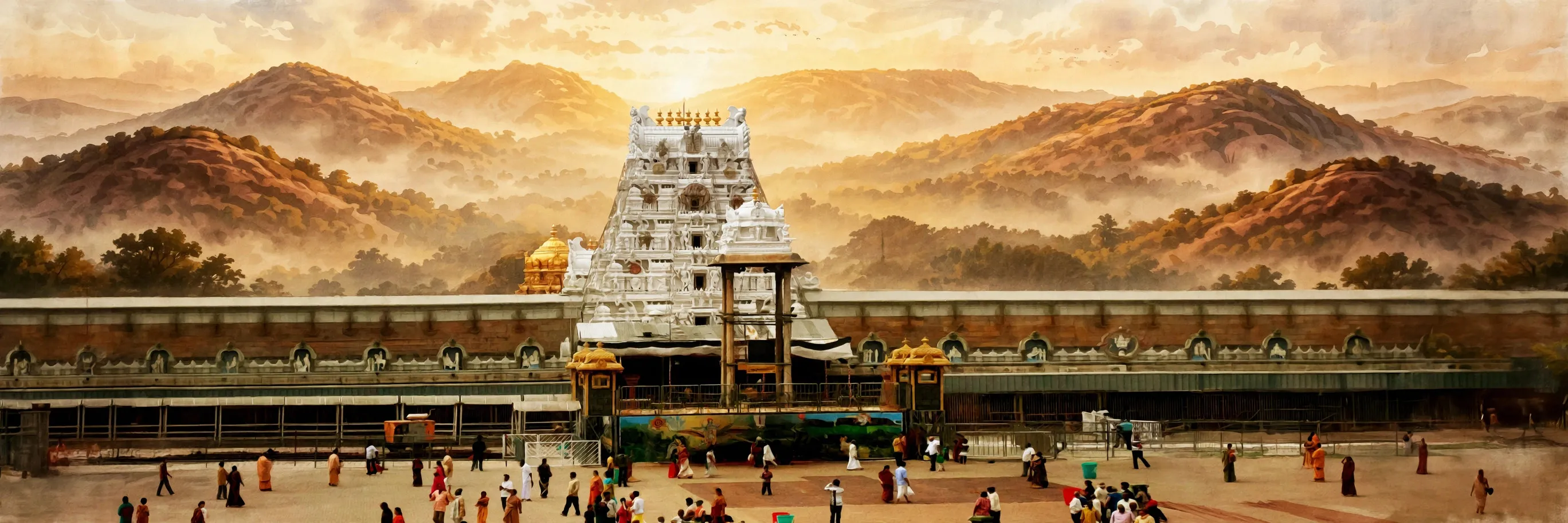
Venkateswara Temple at Tirumala, in Andhra Pradesh's Tirupati district, is the shrine of Tirupati Balaji, a form of Vishnu, and one of the most visited religious sites in the world, drawing around 24 million devotees a year. The temple stands on Venkatadri, the seventh of the seven Tirumala hills, on the southern banks of the holy tank Swami Pushkarini, and is counted among the eight self-manifested Vishnu shrines and the 108 Divya Desams. Built by a Tondaiman king and enriched over centuries by the Pallavas, Cholas and Vijayanagara emperors, it is managed today by the Tirumala Tirupati Devasthanams.
- Punjabi name
- ਤਿਰੁਮਲਾ ਵੈਂਕਟੇਸ਼ਵਰ ਮੰਦਰ
- Country
- India
- State
- Andhra Pradesh
- District
- Tirupati
- Town
- Tirumala
- Location
- Venkatadri, the seventh of the seven hills, southern banks of Swami Pushkarini
All 17 facts
- Deity
- Venkateswara (a form of Vishnu)
- Also known as
- Balaji, Govinda, Srinivasa
- Architectural style
- Dravidian
- Elevation
- 853 m (2,799 ft)
- First recorded endowment
- 966 CE, by Pallava queen Samavai
- Inscriptions
- 640 (Kannada, Sanskrit, Tamil, Telugu)
- Divya Desam
- 75th of the 108
- Annual visitors
- Around 24 million
- Laddu GI tag
- 2009
- Managed by
- Tirumala Tirupati Devasthanams (TTD), under Andhra Pradesh government
- Major festivals
- Srivari Brahmotsavam (October), Vaikunta Ekadasi, Ratha Saptami
Venkateswara Temple at Tirumala, in Andhra Pradesh's Tirupati district, is the great shrine of Tirupati Balaji, drawing around 24 million devotees a year, among the most visited religious sites in the world. The temple stands on Venkatadri, the seventh of the Tirumala hills, on the southern banks of the holy tank Swami Pushkarini.
What is Tirumala Venkateswara Temple?
Tirumala Venkateswara is a Hindu temple to Venkateswara, a form of Vishnu, and, like the great shrines gathered in the mandirs of India, it is one of the most visited religious sites in the world. Tradition holds that the deity appeared on earth to save mankind from the trials of the Kali Yuga, the present age in Hindu reckoning, which is why the shrine is called Kaliyuga Vaikuntha and the deity Kaliyuga Prathyaksha Daivam. He is known by many names, Balaji, Govinda and Srinivasa among them, and the temple is counted among the eight self-manifested Vishnu shrines, including Badrinath, and as the 75th of the 108 Divya Desams praised by the Alvars. The complex is built in the Dravidian idiom of the South, the temple language of towering gopurams and pillared halls, distinct from the Nagara style of the North. Worship follows the Vaikhanasa Agama tradition, and the temple is run by the Tirumala Tirupati Devasthanams, an autonomous trust under the Andhra Pradesh government.
How did a hill shrine become a great temple?
The temple was built by a Tondaiman king and, by tradition, construction began as early as 300 CE; it grew over the centuries as every great dynasty of the South claimed it. The first recorded endowment came in 966 CE, when the Pallava queen Samavai gave jewels and land, two parcels of ten and thirteen acres, and ordered their revenue to fund the temple's major festivals. The Pallavas, the Cholas, the Reddis and the Vijayanagara rulers followed, and the temple gained most of its present wealth and size under Vijayanagara: in 1517 Emperor Krishnadevaraya's gifts of gold and jewels enabled the roofing of the inner shrine, the Ananda Nilayam, to be gilded, and on 2 January 1517 he installed his own statue in the temple. In the 11th and 12th centuries the philosopher Ramanujacharya visited three times, settled a dispute over the deity's identity, ordered worship under the Vaikhanasa Agama tradition and founded the Tirupati Jeeyar Mutt in 1119 to institutionalise service to the deity, a role its Jeeyars still hold. The temple is old enough to appear in the Cilappatikaram, one of the five great Tamil epics. Its walls carry 640 inscriptions in Kannada, Sanskrit, Tamil and Telugu, and about 3,000 copper plates preserve the sankirtanas of the poet-saint Annamacharya. After the Vijayanagara decline the temple passed through Golconda, the French and the Nawab of Carnatic, then to the East India Company in the early 19th century; in 1843 administration moved to the Mahants of Hathiramji Muth for six generations, until the Tirumala Tirupati Devasthanams was formed under the TTD Act of 1933.
What do the seven hills mean?
The Tirumala hills are part of the Seshachalam range, rising about 853 metres above sea level, and by local tradition their seven peaks represent the seven heads of Adisesha, the serpent on whom Vishnu rests. Each hill has its name and story: Vrushabhadri, Anjanadri, Neeladri, Garudadri, Seshadri, Narayanadri and Venkatadri, on which the temple stands. This is why Tirumala is called the Temple of Seven Hills, and why the deity is also Sapthagirisha, Lord of the Seven Hills. On Narayanadri lie Srivari Padalu, footprints held by tradition to be Venkateswara's own from his first step onto the hills. Beside the main temple, on the northern banks of Swami Pushkarini, stands the Bhuvaraha Swamy Temple, dedicated to Varaha, the boar form of Vishnu, and believed to be older than the Venkateswara shrine itself; by tradition devotees seek darshan of Varaha before they approach Venkateswara, and the first naivedyam, the food offering, goes to him.
Why do devotees offer their hair?
One of Tirumala's most distinctive sights is the tonsure hall, where pilgrims have their heads shaved as mokku, an offering to the deity. By one account the daily hair collected exceeds a ton, and the temple sells it internationally, creating a substantial profit. The legend behind it tells of Neela Devi, a Gandharva princess, who cut a lock of her own hair and implanted it on Venkateswara's scalp after a cowherd's blow left a small bald patch; moved by the sacrifice, the deity promised that all his devotees would offer their hair to him, with Neela Devi as its recipient, and Neeladri, one of the seven hills, is named for her. Traditionally the tonsuring barbers were men of the Nayee caste; after a campaign led by Kagganapalli Radha Devi, the temple agreed to appoint women barbers, and she received the Nari Shakti Puraskar from the President of India in 2019. A second legend governs the hundi, the donation pot: Srinivasa, as Venkateswara was known in his earthly life, is said to have borrowed gold from Kubera, the treasurer of the gods, to pay for his wedding to Padmavati. Devotees donate to the hundi so the deity can repay the loan, and collections run as high as 22.5 million rupees a day.
What is the Tirupati laddu?
The laddu is Tirumala's other famous offering, a sweet prasadam that has become a pilgrimage souvenir in its own right. Laddu offerings began at the temple on 2 August 1715, evolving from a loose, chunky sweet called Manoharam; the present spherical form was standardised under the Madras Government in 1940. It is made only in the temple's own Laddu Potu kitchen inside the Sampangi Pradakshinam, by around 620 people including 270 cooks, to a fixed recipe called the dittam: gram flour, cashew nuts, cardamom, ghee, sugar, sugar candy and raisins. The Potu turns out an average of 2.8 lakh laddus a day and can make up to 8 lakh. To stop black-marketing, the TTD registered the laddu for a Geographical Indication tag in 2008 and secured it in 2009, so only laddus made under TTD's supervision at Tirumala may bear the name. The common Proktham laddu weighs 165 to 175 grams and goes to ordinary pilgrims; the festive Asthanam laddu weighs 750 grams and is made only on special occasions.
Which festivals draw the biggest crowds?
More than 433 festivals are observed in the temple's 365 days, suiting its title Nitya Kalyanam Paccha Toranam, where every day is a festival. The greatest is the Srivari Brahmotsavam, nine days in October, when the processional deity Malayappa, with his consorts SriDevi and BhuDevi, is carried through the four streets around the temple on different vahanams, and lakhs gather, especially for the Garuda vahanam. Vaikunta Ekadasi is the most important Vaishnavite festival of the year: on that single day up to 150,000 devotees pass through the Vaikunta Dwaram, the special entrance that encircles the inner sanctum. In February comes Ratha Saptami, with the processional deity taken around the temple on seven vahanams from morning to night. Daily footfall averages above 60,000 and crosses one lakh during the great festivals. The pre-dawn Suprabhatam, 70 verses composed in the 13th century to wake the deity, still opens each day, and the air carries the sankirtanas of Annamacharya, the 14th-century poet-saint who sang tens of thousands of songs in praise of Venkateswara. Alongside Jagannath Puri, Tirumala stands among the most visited Vaishnavite shrines in the world.
ਆਂਧਰ ਪ੍ਰਦੇਸ਼ ਦੇ ਤਿਰੁਪਤੀ ਜ਼ਿਲ੍ਹੇ ਵਿੱਚ ਤਿਰੁਮਲਾ ਦਾ ਵੈਂਕਟੇਸ਼ਵਰ ਮੰਦਰ ਤਿਰੁਪਤੀ ਬਾਲਾਜੀ ਦਾ ਮਹਾਨ ਧਾਮ ਹੈ, ਜਿੱਥੇ ਸਾਲ ਵਿੱਚ ਲਗਭਗ 2.4 ਕਰੋੜ ਸ਼ਰਧਾਲੂ ਆਉਂਦੇ ਹਨ ਅਤੇ ਇਹ ਦੁਨੀਆ ਦੇ ਸਭ ਤੋਂ ਵੱਧ ਦਰਸ਼ਨ ਵਾਲੇ ਧਾਰਮਿਕ ਸਥਾਨਾਂ ਵਿੱਚ ਗਿਣਿਆ ਜਾਂਦਾ ਹੈ ਇਹ ਮੰਦਰ ਤਿਰੁਮਲਾ ਦੀਆਂ ਸੱਤ ਪਹਾੜੀਆਂ ਵਿੱਚੋਂ ਸੱਤਵੀਂ, ਵੈਂਕਟਾਦ੍ਰਿ ਉੱਤੇ, ਪਵਿੱਤਰ ਸਰੋਵਰ ਸਵਾਮੀ ਪੁਸ਼ਕਰਿਣੀ ਦੇ ਦੱਖਣੀ ਕੰਢੇ ਉੱਤੇ ਸਥਿਤ ਹੈ
ਤਿਰੁਮਲਾ ਵੈਂਕਟੇਸ਼ਵਰ ਮੰਦਰ ਕੀ ਹੈ?
ਤਿਰੁਮਲਾ ਵੈਂਕਟੇਸ਼ਵਰ ਵਿਸ਼ਨੂੰ ਦੇ ਰੂਪ ਵੈਂਕਟੇਸ਼ਵਰ ਦਾ ਇੱਕ ਹਿੰਦੂ ਮੰਦਰ ਹੈ ਅਤੇ ਇਹ ਦੁਨੀਆ ਦੇ ਸਭ ਤੋਂ ਵੱਧ ਦਰਸ਼ਨ ਵਾਲੇ ਧਾਰਮਿਕ ਸਥਾਨਾਂ ਵਿੱਚੋਂ ਇੱਕ ਹੈ ਪਰੰਪਰਾ ਮੰਨਦੀ ਹੈ ਕਿ ਇਹ ਦੇਵਤਾ ਕਲਿਯੁਗ ਦੀਆਂ ਮੁਸੀਬਤਾਂ ਤੋਂ ਮਨੁੱਖਤਾ ਨੂੰ ਬਚਾਉਣ ਲਈ ਧਰਤੀ ਉੱਤੇ ਪ੍ਰਗਟ ਹੋਏ, ਇਸੇ ਕਰਕੇ ਇਸ ਧਾਮ ਨੂੰ ਕਲਿਯੁਗ ਵੈਕੁੰਠ ਅਤੇ ਦੇਵਤਾ ਨੂੰ ਕਲਿਯੁਗ ਪ੍ਰਤੱਖ ਦੈਵਮ ਕਿਹਾ ਜਾਂਦਾ ਹੈ ਉਨ੍ਹਾਂ ਦੇ ਕਈ ਨਾਮ ਹਨ, ਬਾਲਾਜੀ, ਗੋਵਿੰਦਾ ਅਤੇ ਸ਼੍ਰੀਨਿਵਾਸ ਸਹਿਤ, ਅਤੇ ਇਹ ਮੰਦਰ ਵਿਸ਼ਨੂੰ ਦੇ ਅੱਠ ਸਵੈ-ਪ੍ਰਗਟ ਧਾਮਾਂ ਵਿੱਚੋਂ ਇੱਕ ਹੈ ਅਤੇ ਆਲਵਾਰਾਂ ਵੱਲੋਂ ਵਡਿਆਏ 108 ਦਿਵਯ ਦੇਸ਼ਮਾਂ ਵਿੱਚੋਂ 75ਵਾਂ ਹੈ ਇਹ ਪਰਿਸਰ ਦੱਖਣ ਦੀ ਦਰਾਵਿੜੀ ਵਾਸਤੂਕਲਾ ਵਿੱਚ ਬਣਿਆ ਹੈ, ਉੱਚੇ ਗੋਪੁਰਮਾਂ ਅਤੇ ਥੰਮ੍ਹਾਂ ਵਾਲੇ ਮੰਡਪਾਂ ਦੀ ਮੰਦਰ ਭਾਸ਼ਾ, ਜੋ ਉੱਤਰ ਦੀ ਨਾਗਰ ਸ਼ੈਲੀ ਤੋਂ ਵੱਖਰੀ ਹੈ ਇੱਥੇ ਪੂਜਾ ਵੈਖਾਨਸ ਆਗਮ ਪਰੰਪਰਾ ਅਨੁਸਾਰ ਹੁੰਦੀ ਹੈ, ਅਤੇ ਮੰਦਰ ਦਾ ਪ੍ਰਬੰਧ ਤਿਰੁਮਲਾ ਤਿਰੁਪਤੀ ਦੇਵਸਥਾਨਮ, ਆਂਧਰ ਪ੍ਰਦੇਸ਼ ਸਰਕਾਰ ਅਧੀਨ ਇੱਕ ਖ਼ੁਦਮੁਖ਼ਤਿਆਰ ਟਰੱਸਟ, ਚਲਾਉਂਦਾ ਹੈ
ਪਹਾੜੀ ਧਾਮ ਮਹਾਨ ਮੰਦਰ ਕਿਵੇਂ ਬਣਿਆ?
ਇਹ ਮੰਦਰ ਤੋਂਡੈਮਾਨ ਰਾਜੇ ਵੱਲੋਂ ਬਣਵਾਇਆ ਗਿਆ ਸੀ ਅਤੇ ਪਰੰਪਰਾ ਅਨੁਸਾਰ ਇਸਦੀ ਉਸਾਰੀ 300 ਈਸਵੀ ਦੇ ਆਸਪਾਸ ਸ਼ੁਰੂ ਹੋਈ; ਇਹ ਸਦੀਆਂ ਵਿੱਚ ਵਧਿਆ ਜਦੋਂ ਦੱਖਣ ਦੇ ਹਰ ਮਹਾਨ ਰਾਜਵੰਸ਼ ਨੇ ਇਸਨੂੰ ਅਪਣਾਇਆ ਪਹਿਲਾ ਦਰਜ ਦਾਨ 966 ਈਸਵੀ ਵਿੱਚ ਆਇਆ, ਜਦੋਂ ਪੱਲਵ ਰਾਣੀ ਸਮਵੈ ਨੇ ਗਹਿਣੇ ਅਤੇ ਜ਼ਮੀਨ ਦਿੱਤੀ, ਦਸ ਅਤੇ ਤੇਰਾਂ ਏਕੜ ਦੇ ਦੋ ਟੁਕੜੇ, ਅਤੇ ਹੁਕਮ ਦਿੱਤਾ ਕਿ ਉਨ੍ਹਾਂ ਦੀ ਆਮਦਨੀ ਮੰਦਰ ਦੇ ਮੁੱਖ ਤਿਉਹਾਰਾਂ ਉੱਤੇ ਖ਼ਰਚ ਹੋਵੇ ਪੱਲਵਾਂ, ਚੋਲਾਂ, ਰੈੱਡੀਆਂ ਅਤੇ ਵਿਜਯਨਗਰ ਸ਼ਾਸਕਾਂ ਨੇ ਇਹ ਪਰੰਪਰਾ ਅੱਗੇ ਵਧਾਈ, ਅਤੇ ਵਿਜਯਨਗਰ ਸਾਮਰਾਜ ਹੇਠ ਮੰਦਰ ਨੇ ਆਪਣੀ ਮੌਜੂਦਾ ਦੌਲਤ ਅਤੇ ਵਿਸ਼ਾਲਤਾ ਦਾ ਬਹੁਤਾ ਹਿੱਸਾ ਪਾਇਆ: 1517 ਵਿੱਚ ਸਮਰਾਟ ਕ੍ਰਿਸ਼ਨਦੇਵਰਾਯ ਦੇ ਸੋਨੇ ਅਤੇ ਗਹਿਣਿਆਂ ਦੇ ਦਾਨ ਨਾਲ ਅੰਦਰੂਨੀ ਗਰਭਗ੍ਰਹਿ, ਆਨੰਦ ਨਿਲਯਮ, ਦੀ ਛੱਤ ਉੱਤੇ ਸੋਨੇ ਦੀ ਪਰਤ ਚੜ੍ਹ ਸਕੀ, ਅਤੇ 2 ਜਨਵਰੀ 1517 ਨੂੰ ਉਨ੍ਹਾਂ ਨੇ ਮੰਦਰ ਵਿੱਚ ਆਪਣੀ ਮੂਰਤੀ ਸਥਾਪਤ ਕਰਵਾਈ 11ਵੀਂ ਅਤੇ 12ਵੀਂ ਸਦੀ ਵਿੱਚ ਦਾਰਸ਼ਨਿਕ ਰਾਮਾਨੁਜਾਚਾਰੀਆ ਤਿੰਨ ਵਾਰ ਆਏ, ਦੇਵਤਾ ਦੀ ਪਛਾਣ ਬਾਰੇ ਵਿਵਾਦ ਸੁਲਝਾਇਆ, ਵੈਖਾਨਸ ਆਗਮ ਪਰੰਪਰਾ ਅਨੁਸਾਰ ਪੂਜਾ ਦਾ ਪ੍ਰਬੰਧ ਕੀਤਾ ਅਤੇ 1119 ਵਿੱਚ ਤਿਰੁਪਤੀ ਜੀਯਰ ਮੱਠ ਸਥਾਪਤ ਕੀਤਾ ਤਾਂ ਜੋ ਦੇਵਤਾ ਦੀ ਸੇਵਾ ਸੰਸਥਾਗਤ ਹੋ ਸਕੇ, ਜੋ ਭੂਮਿਕਾ ਇਸਦੇ ਜੀਯਰ ਅੱਜ ਵੀ ਨਿਭਾਉਂਦੇ ਹਨ ਇਹ ਮੰਦਰ ਇੰਨਾ ਪ੍ਰਾਚੀਨ ਹੈ ਕਿ ਤਮਿਲ ਦੇ ਪੰਜ ਮਹਾਨ ਮਹਾਕਾਵਿਆਂ ਵਿੱਚੋਂ ਇੱਕ, ਸਿਲਪਤਿਕਾਰਮ ਵਿੱਚ ਇਸਦਾ ਜ਼ਿਕਰ ਹੈ ਇਸਦੀਆਂ ਕੰਧਾਂ ਉੱਤੇ ਕੰਨੜ, ਸੰਸਕ੍ਰਿਤ, ਤਮਿਲ ਅਤੇ ਤੇਲਗੂ ਵਿੱਚ 640 ਸ਼ਿਲਾਲੇਖ ਹਨ, ਅਤੇ ਲਗਭਗ 3,000 ਤਾਂਬੇ ਦੀਆਂ ਪਲੇਟਾਂ ਕਵੀ-ਸੰਤ ਅੰਨਾਮਾਚਾਰੀਆ ਦੇ ਸੰਕੀਰਤਨ ਸੰਭਾਲਦੀਆਂ ਹਨ ਵਿਜਯਨਗਰ ਦੇ ਪਤਨ ਤੋਂ ਬਾਅਦ ਮੰਦਰ ਗੋਲਕੁੰਡਾ, ਫ਼ਰਾਂਸੀਸੀਆਂ ਅਤੇ ਕਰਨਾਟਕ ਦੇ ਨਵਾਬ ਦੇ ਹੱਥਾਂ ਵਿੱਚੋਂ ਲੰਘਿਆ, ਫਿਰ 19ਵੀਂ ਸਦੀ ਦੇ ਅਰੰਭ ਵਿੱਚ ਈਸਟ ਇੰਡੀਆ ਕੰਪਨੀ ਕੋਲ ਆਇਆ; 1843 ਵਿੱਚ ਪ੍ਰਬੰਧ ਹਾਥੀਰਾਮਜੀ ਮੱਠ ਦੇ ਮਹੰਤਾਂ ਕੋਲ ਗਿਆ, ਛੇ ਪੀੜ੍ਹੀਆਂ ਤੱਕ, ਜਦੋਂ ਤੱਕ 1933 ਦੇ ਟੀਟੀਡੀ ਐਕਟ ਹੇਠ ਤਿਰੁਮਲਾ ਤਿਰੁਪਤੀ ਦੇਵਸਥਾਨਮ ਨਹੀਂ ਬਣਿਆ
ਸੱਤ ਪਹਾੜੀਆਂ ਦਾ ਕੀ ਅਰਥ ਹੈ?
ਤਿਰੁਮਲਾ ਦੀਆਂ ਪਹਾੜੀਆਂ ਸ਼ੇਸ਼ਾਚਲਮ ਲੜੀ ਦਾ ਹਿੱਸਾ ਹਨ, ਸਮੁੰਦਰ ਤਲ ਤੋਂ ਲਗਭਗ 853 ਮੀਟਰ ਉੱਚੀਆਂ, ਅਤੇ ਸਥਾਨਕ ਪਰੰਪਰਾ ਮੰਨਦੀ ਹੈ ਕਿ ਇਨ੍ਹਾਂ ਦੀਆਂ ਸੱਤ ਚੋਟੀਆਂ ਆਦਿਸ਼ੇਸ਼ ਦੇ ਸੱਤ ਫਣਾਂ ਨੂੰ ਦਰਸਾਉਂਦੀਆਂ ਹਨ, ਉਹ ਸੱਪ ਜਿਸ ਉੱਤੇ ਵਿਸ਼ਨੂੰ ਸੌਂਦੇ ਹਨ ਹਰ ਪਹਾੜੀ ਦਾ ਆਪਣਾ ਨਾਮ ਅਤੇ ਕਥਾ ਹੈ: ਵ੍ਰਿਸ਼ਭਾਦ੍ਰਿ, ਅੰਜਨਾਦ੍ਰਿ, ਨੀਲਾਦ੍ਰਿ, ਗਰੁੜਾਦ੍ਰਿ, ਸ਼ੇਸ਼ਾਦ੍ਰਿ, ਨਾਰਾਇਣਾਦ੍ਰਿ ਅਤੇ ਵੈਂਕਟਾਦ੍ਰਿ, ਜਿਸ ਉੱਤੇ ਮੰਦਰ ਖੜ੍ਹਾ ਹੈ ਇਸੇ ਕਰਕੇ ਤਿਰੁਮਲਾ ਨੂੰ ਸੱਤ ਪਹਾੜੀਆਂ ਦਾ ਮੰਦਰ ਕਿਹਾ ਜਾਂਦਾ ਹੈ, ਅਤੇ ਦੇਵਤਾ ਨੂੰ ਸਪਤਗਿਰੀਸ਼, ਸੱਤ ਪਹਾੜੀਆਂ ਦੇ ਸਵਾਮੀ ਵੀ ਕਿਹਾ ਜਾਂਦਾ ਹੈ ਨਾਰਾਇਣਾਦ੍ਰਿ ਉੱਤੇ ਸ਼੍ਰੀਵਾਰੀ ਪਾਦਲੁ ਹਨ, ਉਹ ਪੈਰਾਂ ਦੇ ਨਿਸ਼ਾਨ ਜਿਨ੍ਹਾਂ ਨੂੰ ਪਰੰਪਰਾ ਪਹਾੜੀਆਂ ਉੱਤੇ ਵੈਂਕਟੇਸ਼ਵਰ ਦੇ ਪਹਿਲੇ ਕਦਮ ਮੰਨਦੀ ਹੈ ਮੁੱਖ ਮੰਦਰ ਦੇ ਨਾਲ, ਸਵਾਮੀ ਪੁਸ਼ਕਰਿਣੀ ਦੇ ਉੱਤਰੀ ਕੰਢੇ ਉੱਤੇ, ਭੂਵਰਾਹ ਸਵਾਮੀ ਮੰਦਰ ਹੈ, ਜੋ ਵਿਸ਼ਨੂੰ ਦੇ ਸੂਰ ਰੂਪ ਵਰਾਹ ਨੂੰ ਸਮਰਪਿਤ ਹੈ ਅਤੇ ਮੰਨਿਆ ਜਾਂਦਾ ਹੈ ਕਿ ਵੈਂਕਟੇਸ਼ਵਰ ਮੰਦਰ ਤੋਂ ਵੀ ਪੁਰਾਣਾ ਹੈ; ਪਰੰਪਰਾ ਅਨੁਸਾਰ ਸ਼ਰਧਾਲੂ ਵੈਂਕਟੇਸ਼ਵਰ ਕੋਲ ਜਾਣ ਤੋਂ ਪਹਿਲਾਂ ਵਰਾਹ ਦੇ ਦਰਸ਼ਨ ਕਰਦੇ ਹਨ, ਅਤੇ ਪਹਿਲਾ ਨੈਵੇਦਯ, ਭੋਜਨ ਦਾ ਭੋਗ, ਉਨ੍ਹਾਂ ਨੂੰ ਹੀ ਲੱਗਦਾ ਹੈ
ਸ਼ਰਧਾਲੂ ਆਪਣੇ ਵਾਲ ਕਿਉਂ ਚੜ੍ਹਾਉਂਦੇ ਹਨ?
ਤਿਰੁਮਲਾ ਦੇ ਸਭ ਤੋਂ ਵਿਲੱਖਣ ਨਜ਼ਾਰਿਆਂ ਵਿੱਚੋਂ ਇੱਕ ਮੁੰਡਨ ਹਾਲ ਹੈ, ਜਿੱਥੇ ਸ਼ਰਧਾਲੂ ਮੋੱਕੂ ਵਜੋਂ, ਦੇਵਤਾ ਨੂੰ ਭੇਟ ਵਜੋਂ, ਆਪਣਾ ਸਿਰ ਮੁੰਡਵਾਉਂਦੇ ਹਨ ਇੱਕ ਅਨੁਮਾਨ ਅਨੁਸਾਰ ਰੋਜ਼ ਇਕੱਠੇ ਹੋਣ ਵਾਲੇ ਵਾਲ ਇੱਕ ਟਨ ਤੋਂ ਵੱਧ ਹੁੰਦੇ ਹਨ, ਅਤੇ ਮੰਦਰ ਇਨ੍ਹਾਂ ਨੂੰ ਅੰਤਰਰਾਸ਼ਟਰੀ ਪੱਧਰ ਉੱਤੇ ਵੇਚਦਾ ਹੈ, ਜਿਸ ਨਾਲ ਕਾਫ਼ੀ ਆਮਦਨ ਹੁੰਦੀ ਹੈ ਇਸਦੇ ਪਿੱਛੇ ਦੀ ਕਥਾ ਨੀਲਾ ਦੇਵੀ ਦੀ ਹੈ, ਇੱਕ ਗੰਧਰਵ ਰਾਜਕੁਮਾਰੀ, ਜਿਸ ਨੇ ਆਪਣੇ ਵਾਲਾਂ ਦੀ ਇੱਕ ਲਟ ਕੱਟ ਕੇ ਵੈਂਕਟੇਸ਼ਵਰ ਦੇ ਸਿਰ ਉੱਤੇ ਲਗਾਈ, ਜਦੋਂ ਇੱਕ ਗਵਾਲੇ ਦੀ ਸੱਟ ਨਾਲ ਉੱਥੇ ਛੋਟਾ ਗੰਜਾ ਧੱਬਾ ਪੈ ਗਿਆ ਸੀ; ਇਸ ਕੁਰਬਾਨੀ ਤੋਂ ਪ੍ਰਭਾਵਿਤ ਹੋ ਕੇ ਦੇਵਤਾ ਨੇ ਵਚਨ ਦਿੱਤਾ ਕਿ ਉਨ੍ਹਾਂ ਦੇ ਸਾਰੇ ਸ਼ਰਧਾਲੂ ਆਪਣੇ ਵਾਲ ਉਨ੍ਹਾਂ ਨੂੰ ਚੜ੍ਹਾਉਣਗੇ ਅਤੇ ਨੀਲਾ ਦੇਵੀ ਇਨ੍ਹਾਂ ਦੀ ਗ੍ਰਹਿਤਾ ਹੋਵੇਗੀ, ਅਤੇ ਸੱਤ ਪਹਾੜੀਆਂ ਵਿੱਚੋਂ ਇੱਕ, ਨੀਲਾਦ੍ਰਿ, ਉਨ੍ਹਾਂ ਦੇ ਨਾਮ ਉੱਤੇ ਹੈ ਪਰੰਪਰਾਗਤ ਤੌਰ ਉੱਤੇ ਮੁੰਡਨ ਕਰਨ ਵਾਲੇ ਨਾਈ ਜਾਤੀ ਦੇ ਮਰਦ ਸਨ; ਕਾਗਨਪੱਲੀ ਰਾਧਾ ਦੇਵੀ ਦੀ ਅਗਵਾਈ ਵਾਲੀ ਮੁਹਿੰਮ ਤੋਂ ਬਾਅਦ ਮੰਦਰ ਮਹਿਲਾ ਨਾਈ ਨਿਯੁਕਤ ਕਰਨ ਲਈ ਸਹਿਮਤ ਹੋਇਆ, ਅਤੇ 2019 ਵਿੱਚ ਉਨ੍ਹਾਂ ਨੂੰ ਭਾਰਤ ਦੇ ਰਾਸ਼ਟਰਪਤੀ ਵੱਲੋਂ ਨਾਰੀ ਸ਼ਕਤੀ ਪੁਰਸਕਾਰ ਮਿਲਿਆ ਦੂਜੀ ਕਥਾ ਹੁੰਡੀ, ਦਾਨ ਪਾਤਰ, ਨਾਲ ਜੁੜੀ ਹੈ: ਕਿਹਾ ਜਾਂਦਾ ਹੈ ਕਿ ਸ਼੍ਰੀਨਿਵਾਸ, ਜਿਵੇਂ ਵੈਂਕਟੇਸ਼ਵਰ ਨੂੰ ਉਨ੍ਹਾਂ ਦੇ ਧਰਤੀ ਜੀਵਨ ਵਿੱਚ ਕਿਹਾ ਜਾਂਦਾ ਸੀ, ਨੇ ਪਦਮਾਵਤੀ ਨਾਲ ਆਪਣੇ ਵਿਆਹ ਦਾ ਖ਼ਰਚਾ ਚੁਕਾਉਣ ਲਈ ਦੇਵਤਿਆਂ ਦੇ ਖ਼ਜ਼ਾਨਚੀ ਕੁਬੇਰ ਤੋਂ ਸੋਨਾ ਉਧਾਰ ਲਿਆ ਸੀ ਸ਼ਰਧਾਲੂ ਹੁੰਡੀ ਵਿੱਚ ਦਾਨ ਦਿੰਦੇ ਹਨ ਤਾਂ ਜੋ ਦੇਵਤਾ ਇਹ ਕਰਜ਼ਾ ਮੋੜ ਸਕਣ, ਅਤੇ ਰੋਜ਼ਾਨਾ ਇਕੱਠ 22.5 ਮਿਲੀਅਨ ਰੁਪਏ ਤੱਕ ਪਹੁੰਚ ਜਾਂਦਾ ਹੈ
ਤਿਰੁਪਤੀ ਲੱਡੂ ਕੀ ਹੈ?
ਲੱਡੂ ਤਿਰੁਮਲਾ ਦੀ ਦੂਜੀ ਮਸ਼ਹੂਰ ਭੇਟ ਹੈ, ਇੱਕ ਮਿੱਠਾ ਪ੍ਰਸਾਦ ਜੋ ਆਪਣੇ ਆਪ ਵਿੱਚ ਯਾਤਰਾ ਦੀ ਯਾਦਗਾਰ ਬਣ ਗਿਆ ਹੈ ਮੰਦਰ ਵਿੱਚ ਲੱਡੂ ਚੜ੍ਹਾਉਣ ਦੀ ਸ਼ੁਰੂਆਤ 2 ਅਗਸਤ 1715 ਨੂੰ ਹੋਈ, ਜੋ ਮਨੋਹਰਮ ਨਾਮਕ ਢਿੱਲੀ, ਟੁਕੜਿਆਂ ਵਾਲੀ ਮਿਠਾਈ ਤੋਂ ਵਿਕਸਿਤ ਹੋਇਆ; ਮੌਜੂਦਾ ਗੋਲ ਰੂਪ 1940 ਵਿੱਚ ਮਦਰਾਸ ਸਰਕਾਰ ਹੇਠ ਮਾਨਕੀਕ੍ਰਿਤ ਹੋਇਆ ਇਹ ਸਿਰਫ਼ ਮੰਦਰ ਦੀ ਆਪਣੀ ਲੱਡੂ ਪੋਟੁ ਰਸੋਈ ਵਿੱਚ, ਸੰਪੰਗੀ ਪ੍ਰਦਕਸ਼ਿਣਮ ਦੇ ਅੰਦਰ, ਲਗਭਗ 620 ਲੋਕਾਂ ਵੱਲੋਂ ਬਣਾਇਆ ਜਾਂਦਾ ਹੈ, ਜਿਨ੍ਹਾਂ ਵਿੱਚ 270 ਰਸੋਈਏ ਹਨ, ਇੱਕ ਨਿਸ਼ਚਿਤ ਵਿਅੰਜਨ ਅਨੁਸਾਰ ਜਿਸਨੂੰ ਦਿੱਤਮ ਕਿਹਾ ਜਾਂਦਾ ਹੈ: ਬੇਸਣ, ਕਾਜੂ, ਇਲਾਇਚੀ, ਘਿਓ, ਖੰਡ, ਮਿਸ਼ਰੀ ਅਤੇ ਕਿਸ਼ਮਿਸ਼ ਪੋਟੁ ਵਿੱਚ ਰੋਜ਼ ਔਸਤਨ 2.8 ਲੱਖ ਲੱਡੂ ਬਣਦੇ ਹਨ ਅਤੇ ਇਹ 8 ਲੱਖ ਤੱਕ ਬਣਾ ਸਕਦਾ ਹੈ ਕਾਲਾ ਬਾਜ਼ਾਰੀ ਰੋਕਣ ਲਈ ਟੀਟੀਡੀ ਨੇ 2008 ਵਿੱਚ ਲੱਡੂ ਲਈ ਭੂਗੋਲਿਕ ਸੰਕੇਤ ਟੈਗ ਦਰਜ ਕਰਵਾਇਆ ਅਤੇ 2009 ਵਿੱਚ ਇਹ ਪ੍ਰਾਪਤ ਕੀਤਾ, ਤਾਂ ਜੋ ਸਿਰਫ਼ ਤਿਰੁਮਲਾ ਵਿੱਚ ਟੀਟੀਡੀ ਦੀ ਨਿਗਰਾਨੀ ਹੇਠ ਬਣੇ ਲੱਡੂ ਹੀ ਇਹ ਨਾਮ ਵਰਤ ਸਕਣ ਆਮ ਪ੍ਰੋਕਤਮ ਲੱਡੂ 165 ਤੋਂ 175 ਗ੍ਰਾਮ ਦਾ ਹੁੰਦਾ ਹੈ ਅਤੇ ਆਮ ਸ਼ਰਧਾਲੂਆਂ ਨੂੰ ਮਿਲਦਾ ਹੈ; ਤਿਉਹਾਰੀ ਅਸਥਾਨਮ ਲੱਡੂ 750 ਗ੍ਰਾਮ ਦਾ ਹੁੰਦਾ ਹੈ ਅਤੇ ਸਿਰਫ਼ ਵਿਸ਼ੇਸ਼ ਮੌਕਿਆਂ ਉੱਤੇ ਬਣਦਾ ਹੈ
ਕਿਹੜੇ ਤਿਉਹਾਰ ਸਭ ਤੋਂ ਵੱਧ ਭੀੜ ਲਿਆਉਂਦੇ ਹਨ?
ਮੰਦਰ ਦੇ 365 ਦਿਨਾਂ ਵਿੱਚ 433 ਤੋਂ ਵੱਧ ਤਿਉਹਾਰ ਮਨਾਏ ਜਾਂਦੇ ਹਨ, ਜੋ ਇਸਦੇ ਖ਼ਿਤਾਬ ਨਿਤਯ ਕਲਿਆਣਮ ਪੱਚ ਤੋਰਣਮ ਦੇ ਅਨੁਕੂਲ ਹੈ, ਜਿੱਥੇ ਹਰ ਦਿਨ ਤਿਉਹਾਰ ਹੈ ਸਭ ਤੋਂ ਵੱਡਾ ਅਕਤੂਬਰ ਵਿੱਚ ਨੌਂ ਦਿਨਾਂ ਦਾ ਸ਼੍ਰੀਵਾਰੀ ਬ੍ਰਹਮੋਤਸਵ ਹੈ, ਜਦੋਂ ਉਤਸਵ ਮੂਰਤੀ ਮਲਯੱਪਾ, ਆਪਣੀਆਂ ਪਤਨੀਆਂ ਸ਼੍ਰੀਦੇਵੀ ਅਤੇ ਭੂਦੇਵੀ ਨਾਲ, ਮੰਦਰ ਦੇ ਆਲੇ-ਦੁਆਲੇ ਦੀਆਂ ਚਾਰ ਗਲੀਆਂ ਵਿੱਚ ਵੱਖ-ਵੱਖ ਵਾਹਨਾਂ ਉੱਤੇ ਸ਼ੋਭਾ ਯਾਤਰਾ ਵਿੱਚ ਨਿਕਲਦੇ ਹਨ, ਅਤੇ ਲੱਖਾਂ ਲੋਕ ਇਕੱਠੇ ਹੁੰਦੇ ਹਨ, ਖ਼ਾਸਕਰ ਗਰੁੜ ਵਾਹਨਮ ਵੇਲੇ ਵੈਕੁੰਠ ਏਕਾਦਸ਼ੀ ਸਾਲ ਦਾ ਸਭ ਤੋਂ ਮਹੱਤਵਪੂਰਨ ਵੈਸ਼ਨਵ ਤਿਉਹਾਰ ਹੈ: ਉਸ ਇੱਕ ਦਿਨ ਵਿੱਚ 1,50,000 ਤੱਕ ਸ਼ਰਧਾਲੂ ਵੈਕੁੰਠ ਦੁਆਰਮ, ਉਹ ਵਿਸ਼ੇਸ਼ ਪ੍ਰਵੇਸ਼ ਦੁਆਰ ਜੋ ਅੰਦਰੂਨੀ ਗਰਭਗ੍ਰਹਿ ਨੂੰ ਘੇਰਦਾ ਹੈ, ਰਾਹੀਂ ਲੰਘਦੇ ਹਨ ਫਰਵਰੀ ਵਿੱਚ ਰਥ ਸਪਤਮੀ ਆਉਂਦੀ ਹੈ, ਜਦੋਂ ਉਤਸਵ ਮੂਰਤੀ ਸਵੇਰ ਤੋਂ ਰਾਤ ਤੱਕ ਸੱਤ ਵਾਹਨਾਂ ਉੱਤੇ ਮੰਦਰ ਦੇ ਦੁਆਲੇ ਲਿਜਾਈ ਜਾਂਦੀ ਹੈ ਰੋਜ਼ਾਨਾ ਦਰਸ਼ਨਾਰਥੀਆਂ ਦੀ ਗਿਣਤੀ ਔਸਤਨ 60,000 ਤੋਂ ਵੱਧ ਹੁੰਦੀ ਹੈ ਅਤੇ ਵੱਡੇ ਤਿਉਹਾਰਾਂ ਦੌਰਾਨ ਇੱਕ ਲੱਖ ਤੋਂ ਪਾਰ ਚਲੀ ਜਾਂਦੀ ਹੈ 13ਵੀਂ ਸਦੀ ਵਿੱਚ ਰਚੇ 70 ਸ਼ਲੋਕਾਂ ਵਾਲਾ ਸਵੇਰ ਦਾ ਸੁਪ੍ਰਭਾਤਮ, ਦੇਵਤਾ ਨੂੰ ਜਗਾਉਣ ਲਈ, ਅੱਜ ਵੀ ਹਰ ਦਿਨ ਦੀ ਸ਼ੁਰੂਆਤ ਕਰਦਾ ਹੈ, ਅਤੇ ਹਵਾ ਵਿੱਚ ਅੰਨਾਮਾਚਾਰੀਆ ਦੇ ਸੰਕੀਰਤਨ ਗੂੰਜਦੇ ਹਨ, ਉਹ 14ਵੀਂ ਸਦੀ ਦੇ ਕਵੀ-ਸੰਤ ਜਿਨ੍ਹਾਂ ਨੇ ਵੈਂਕਟੇਸ਼ਵਰ ਦੀ ਪ੍ਰਸ਼ੰਸਾ ਵਿੱਚ ਹਜ਼ਾਰਾਂ ਗੀਤ ਗਾਏ ਜਗਨਨਾਥ ਪੁਰੀ ਵਾਂਗ, ਤਿਰੁਮਲਾ ਵੀ ਦੁਨੀਆ ਦੇ ਸਭ ਤੋਂ ਵੱਧ ਦਰਸ਼ਨ ਵਾਲੇ ਵੈਸ਼ਨਵ ਧਾਮਾਂ ਵਿੱਚੋਂ ਇੱਕ ਹੈ