
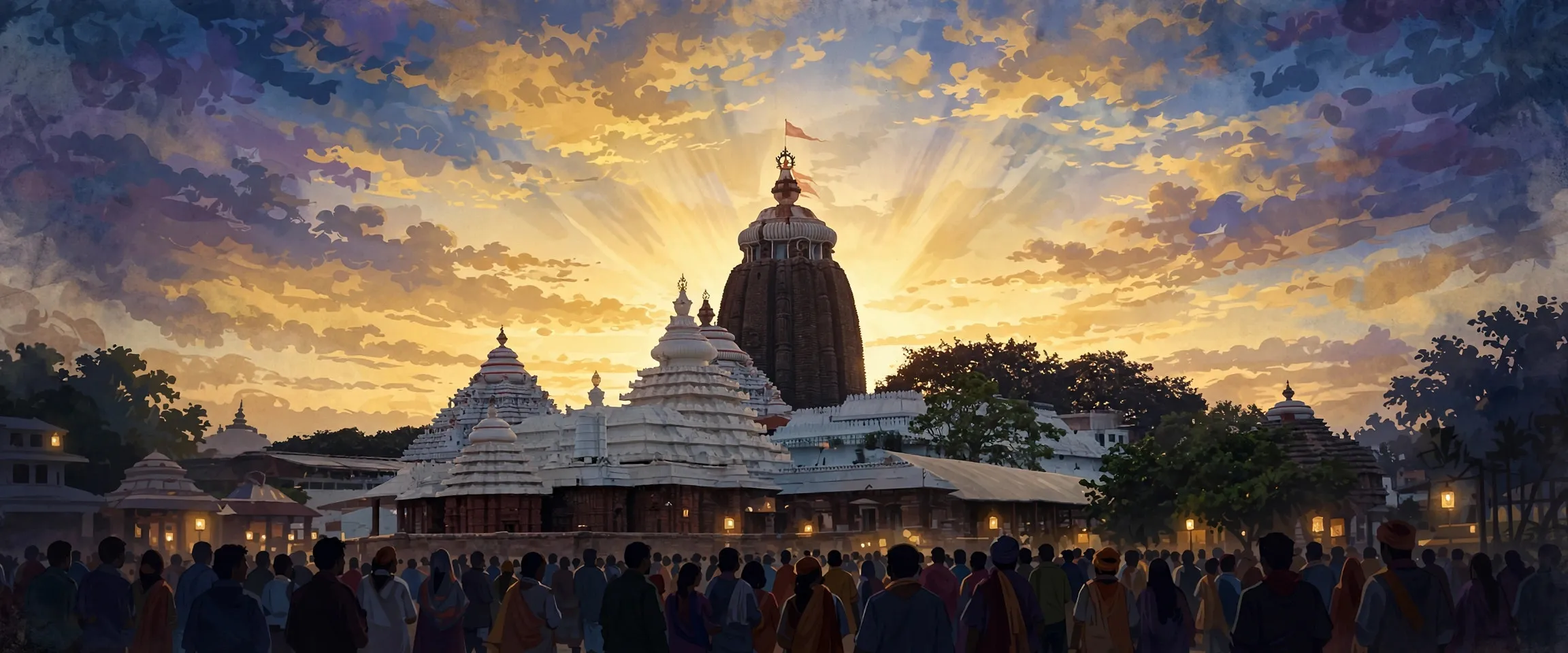
The Jagannath Temple in Puri, Odisha, is the eastern seat of the Char Dham and one of Hinduism's most visited pilgrimage sites. Its 65-metre Kalinga tower was built in the 12th century by King Anantavarman Chodaganga of the Eastern Ganga dynasty over Nilachala, the Blue Hill. Its deities, Jagannath, Balabhadra and Subhadra, are carved from neem wood and renewed every 12 or 19 years in the Nabakalebara ritual; each summer they ride giant chariots to the Gundicha Temple in the famous Ratha Yatra.
- Punjabi name
- ਜਗਨਨਾਥ ਮੰਦਰ, ਪੁਰੀ
- Country
- India
- State
- Odisha
- City
- Puri
- Location
- Nilachala (the Blue Hill), on the eastern coast
- Deity
- Jagannath (a form of Vishnu), with Balabhadra and Subhadra
All 13 facts
- Completed
- 1161 CE, begun by Anantavarman Chodaganga (Eastern Ganga dynasty)
- Tower height
- 65 m (214 ft), the tallest temple in Odisha
- Architectural style
- Kalinga (Rekha Deula)
- Complex
- ~10 acres inside the Meghanada Pacheri wall; ~30 minor shrines
- Pilgrimage
- Char Dham (eastern seat)
- Managed by
- Shri Jagannath Temple Managing Committee, headed by the Gajapati Maharaja of Puri
- Website
- shreejagannatha.in
The Jagannath Temple at Puri, Odisha, is the eastern seat of the Char Dham and one of Hinduism's most visited pilgrimage sites. Its 65-metre Kalinga tower was built in the 12th century by the Eastern Ganga king Anantavarman Chodaganga. Its gods, Jagannath, Balabhadra and Subhadra, are carved from neem wood and renewed every 12 or 19 years in the Nabakalebara ritual.
Why are the deities made of wood?
In almost every other major Hindu temple the gods stand in stone or metal. At Puri they are carved from margosa, neem wood, and tradition calls Jagannath Daru Brahma, the god made of wood. Every 12 or 19 years, when a lunar year carries two months of Ashadha, the temple performs Nabakalebara, the renewal of the body: new images are carved from sacred neem trees and the old ones are buried in the temple garden at Koili Vaikuntha, while a small sacred substance, the Brahma Padartha, is transferred from the old idols to the new in a secret night ritual. The last Nabakalebara, in 2015, drew more than three million devotees to Puri. Legend explains the unfinished look of the idols. When King Indradyumna, the traditional founder, found a radiant log floating in the sea, the god Vishwakarma arrived disguised as a carpenter and began carving, on condition that no one disturb him. After two weeks the anxious queen had the door opened, and the carpenter vanished, leaving the deities without arms or fully formed hands. A divine voice is said to have told the king to install them anyway: the lord without hands, the saying goes, still holds the world. The worship itself is older than the present temple. Many historians trace it to the Bhil and Sabar tribal communities of the region, whose priests, the Daitapatis, still claim descent from those tribes and still perform some of the temple's most intimate rituals.
Who built the present temple?
The present stone temple was begun by Anantavarman Chodaganga, the first ruler of the Eastern Ganga dynasty, who reigned around 1078 to 1150 CE. A Shaivite who turned Vaishnavite after conquering the Utkala region in 1112, he raised the great tower over an older shrine site that the Puranas already called Purushottama Kshetra. His successor Anangabhima Deva III formally dedicated his whole kingdom to Jagannath and issued inscriptions describing himself not as a sovereign but as the Rauta, the servant, of the deity. Under the Gajapati kings of the 15th and 16th centuries the temple became a state-supported religious centre. It also became a target. In 1568 the Afghan general Kalapahar invaded Puri, looted the treasury and burned the wooden images; tradition says the Brahma Padartha was rescued and hidden in a drum, and in 1575 Ramachandra Deva of Khurda reinstalled new images, the first ritual Nabakalebara. The temple chronicle, the Madala Panji, records 18 invasions and plunderings, and servitors repeatedly carried the deities to hiding places around Chilika and Khurda. After the British conquest of Odisha in 1803, the East India Company ran the temple under its own board and kept the old pilgrim tax until missionary-led pressure in Britain had it abolished in 1840. Independent India reorganised administration under the Shri Jagannath Temple Act of 1955, and the temple is now managed by a committee headed by the Gajapati Maharaja of Puri. Hindus who complete the Char Dham begin the journey here, in the east, before turning to Badrinath, Dwarkadhish and Ramanathaswamy, a clockwise circuit pilgrims are expected to make once in their lives.
What happens at Ratha Yatra?
Every year in Ashadha, the monsoon month that falls in June or July, the three deities leave their sanctum through the eastern Singhadwara and travel about three kilometres down the Bada Danda, the Grand Road, to the Gundicha Temple, traditionally their birthplace. There they stay nine days before returning on the Bahuda Yatra. The vehicles are enormous wooden chariots, rebuilt from scratch every year: Jagannath's ratha stands about 14 metres high, takes nearly two months to construct, and is pulled by devotees with thick ropes. The most famous rite is the Chhera Pahara, when the Gajapati king, the most exalted person in the old Kalinga order, dresses as a sweeper and cleans the road before the chariots with a gold-handled broom, sprinkling sandalwood water. Under the lordship of Jagannath, the ritual says, there is no difference between a king and the humblest devotee. The Ratha Yatra gave English the word juggernaut, from the massive chariots that roll through Puri. It is among the oldest Hindu festivals known to the Western world: a Franciscan friar, Odoric of Pordenone, described the chariot procession in an account written in 1321. Before the yatra comes the Snana Yatra, the ceremonial bathing of the deities, after which tradition says they fall ill and retire for fifteen days, the Anavasara, tended by the Daitapati servitors while devotees worship at the nearby Alarnath temple instead. On the return, the Niladri Bije, Jagannath must offer rasgulla to his consort Lakshmi, who was left behind, before she lets the deities back inside.
The temple kitchen that feeds thousands
The Rosaghara, the temple kitchen, is counted among the largest temple kitchens in the world. Fifty-six varieties of vegetarian food are cooked without onion or garlic in earthen pots stacked over wood fires, under the supervision, tradition says, of the goddess Lakshmi herself. The cooked food becomes Mahaprasad only after it is offered to the goddess Vimala, whose shrine inside the complex is counted among the most important Shakti Pithas. Six food offerings are made through the day, from the morning Gopala Vallabha Bhoga to the night's Bada Singhara Bhoga, and the prasad is shared with devotees who gather at the Anand Bazaar inside the temple, one of the great communal meals of Hinduism.
Guru Nanak's aarti of the sky
Puri's pull reached beyond Vaishnavism. Guru Nanak, the first Sikh Guru, visited the temple in 1506 or 1508 during his eastern udasi, and there, tradition holds, he recited the aarti "Gagan mein thaal", an aarti sung without platters or lamps, with the sky itself as the salver. The temple drew many of the great acharyas: Adi Shankaracharya established his Govardhan Math here, one of the four seats of his tradition; Ramanuja founded the Emar Matha in the south-eastern corner; Chaitanya Mahaprabhu, the founder of Gaudiya Vaishnavism, lived in Puri for twenty-four years and taught the chanting of the Hare Krishna mantra; and Vallabhacharya is remembered for a seven-day recitation of the Bhagavata here. The memory of the Guru's visit is part of why Puri appears in Sikh tradition alongside the great Hindu tirthas. Guru Nanak Dev Ji, like Chaitanya, found in Jagannath a god who draws every tradition toward him.
Architecture: the tallest tower of Odisha
The temple is the finest surviving work of Kalinga architecture, the regional stone style of Odisha. The sanctum rises as a curvilinear Rekha Deula, a tower on a raised platform that climbs 65 metres, making it the tallest temple in Odisha. It is crowned by the Nila Chakra, an eight-spoked wheel of ashtadhatu, an eight-metal alloy, about 3.5 metres tall. Every day a servitor climbs the tower to change the Patita Pavana flag, a rite so central that the flag is treated as equal to the deities themselves. The complex spreads over about ten acres inside the Meghanada Pacheri, a fortified wall 6.1 metres high, and holds some thirty smaller shrines. Four gates face the cardinal directions, the eastern Singhadwara with its crouching lions being the main entrance, reached by twenty-two steps, the Baisi Pahacha. On its right a painting of Patita Pavana, saviour of the fallen, once received the prayers of those who could not enter. Before the gate stands the sixteen-sided Aruna Stambha, a monolithic pillar topped by Aruna, the sun god's charioteer, brought here from the Konark Sun Temple by a Maratha guru. Inside, the deities stand on the Ratnavedi, the throne of pearls, flanked by shrines to Ganesha, Shiva, Surya, Saraswati, Narasimha, Rama and Hanuman. A 75-metre Shree Mandir Parikrama heritage corridor now rings the Meghanada Pacheri; its foundation was laid in November 2021 and it was inaugurated on 17 January 2024, giving pilgrims an open pathway around the temple.
ਉੜੀਸਾ ਦੇ ਪੁਰੀ ਵਿਖੇ ਜਗਨਨਾਥ ਮੰਦਰ ਚਾਰ ਧਾਮਾਂ ਦਾ ਪੂਰਬੀ ਧਾਮ ਹੈ ਅਤੇ ਹਿੰਦੂ ਧਰਮ ਦੇ ਸਭ ਤੋਂ ਵੱਧ ਦਰਸ਼ਨ ਵਾਲੇ ਤੀਰਥਾਂ ਵਿੱਚੋਂ ਇੱਕ ਹੈ ਇਸ ਦਾ 65 ਮੀਟਰ ਉੱਚਾ ਕਲਿੰਗਾ ਸ਼ਿਖਰ 12ਵੀਂ ਸਦੀ ਵਿੱਚ ਪੂਰਬੀ ਗੰਗਾ ਵੰਸ਼ ਦੇ ਰਾਜਾ ਅਨੰਤਵਰਮਨ ਚੋੜਗੰਗ ਵੱਲੋਂ ਬਣਵਾਇਆ ਗਿਆ ਸੀ ਇਸ ਦੇ ਦੇਵਤੇ, ਜਗਨਨਾਥ, ਬਲਭੱਦਰ ਅਤੇ ਸੁਭਦਰਾ, ਨਿੰਮ ਦੀ ਲੱਕੜ ਦੇ ਬਣੇ ਹਨ ਅਤੇ ਹਰ 12 ਜਾਂ 19 ਸਾਲ ਬਾਅਦ ਨਬਕਲੇਬਰ ਦੀ ਰੀਤ ਨਾਲ ਨਵੇਂ ਬਣਾਏ ਜਾਂਦੇ ਹਨ
ਮੂਰਤੀਆਂ ਲੱਕੜ ਦੀਆਂ ਕਿਉਂ ਹਨ?
ਲਗਭਗ ਹਰ ਵੱਡੇ ਹਿੰਦੂ ਮੰਦਰ ਵਿੱਚ ਦੇਵਤੇ ਪੱਥਰ ਜਾਂ ਧਾਤ ਦੇ ਹੁੰਦੇ ਹਨ ਪੁਰੀ ਵਿੱਚ ਉਹ ਨਿੰਮ ਦੀ ਲੱਕੜ ਦੇ ਬਣੇ ਹਨ, ਅਤੇ ਪਰੰਪਰਾ ਜਗਨਨਾਥ ਨੂੰ ਦਾਰੂ ਬ੍ਰਹਮ ਕਹਿੰਦੀ ਹੈ, ਲੱਕੜ ਦਾ ਬਣਿਆ ਭਗਵਾਨ ਹਰ 12 ਜਾਂ 19 ਸਾਲ ਬਾਅਦ, ਜਦੋਂ ਚੰਦਰ ਵਰ੍ਹੇ ਵਿੱਚ ਆਸਾਢ਼ ਦੇ ਦੋ ਮਹੀਨੇ ਆਉਂਦੇ ਹਨ, ਮੰਦਰ ਨਬਕਲੇਬਰ ਕਰਦਾ ਹੈ, ਸਰੀਰ ਦਾ ਨਵੀਨੀਕਰਨ: ਪਵਿੱਤਰ ਨਿੰਮ ਦੇ ਰੁੱਖਾਂ ਤੋਂ ਨਵੀਆਂ ਮੂਰਤੀਆਂ ਬਣਾਈਆਂ ਜਾਂਦੀਆਂ ਹਨ ਅਤੇ ਪੁਰਾਣੀਆਂ ਨੂੰ ਮੰਦਰ ਦੇ ਬਾਗ਼ ਕੋਇਲੀ ਵੈਕੁੰਠ ਵਿੱਚ ਦਫ਼ਨਾਇਆ ਜਾਂਦਾ ਹੈ, ਜਦੋਂਕਿ ਇੱਕ ਛੋਟਾ ਪਵਿੱਤਰ ਪਦਾਰਥ, ਬ੍ਰਹਮ ਪਦਾਰਥ, ਗੁਪਤ ਰਾਤ ਦੀ ਰੀਤ ਵਿੱਚ ਪੁਰਾਣੀਆਂ ਮੂਰਤੀਆਂ ਤੋਂ ਨਵੀਆਂ ਵਿੱਚ ਤਬਦੀਲ ਕੀਤਾ ਜਾਂਦਾ ਹੈ 2015 ਦੇ ਆਖ਼ਰੀ ਨਬਕਲੇਬਰ ਵਿੱਚ ਤੀਹ ਲੱਖ ਤੋਂ ਵੱਧ ਸ਼ਰਧਾਲੂ ਪੁਰੀ ਆਏ ਸਨ ਮੂਰਤੀਆਂ ਦੇ ਅਧੂਰੇ ਦਿੱਸਣ ਪਿੱਛੇ ਕਥਾ ਹੈ ਜਦੋਂ ਪਰੰਪਰਾਗਤ ਸੰਸਥਾਪਕ ਰਾਜਾ ਇੰਦਰਦਿਉਮਨ ਨੂੰ ਸਮੁੰਦਰ ਵਿੱਚ ਤੈਰਦਾ ਇੱਕ ਚਮਕਦਾਰ ਲੱਕੜ ਦਾ ਟੋਟਾ ਮਿਲਿਆ, ਤਾਂ ਦੇਵਤਿਆਂ ਦਾ ਸ਼ਿਲਪੀ ਵਿਸ਼ਵਕਰਮਾ ਤਰਖਾਣ ਦੇ ਭੇਸ ਵਿੱਚ ਆਇਆ ਅਤੇ ਸ਼ਰਤ ਉੱਤੇ ਕੰਮ ਸ਼ੁਰੂ ਕੀਤਾ ਕਿ ਕੋਈ ਉਸਨੂੰ ਪਰੇਸ਼ਾਨ ਨਾ ਕਰੇ ਦੋ ਹਫ਼ਤਿਆਂ ਬਾਅਦ ਚਿੰਤਤ ਰਾਣੀ ਨੇ ਦਰਵਾਜ਼ਾ ਖੁਲ੍ਹਵਾ ਦਿੱਤਾ, ਅਤੇ ਤਰਖਾਣ ਅਲੋਪ ਹੋ ਗਿਆ, ਦੇਵਤਿਆਂ ਨੂੰ ਬਾਹਾਂ ਜਾਂ ਪੂਰੇ ਹੱਥਾਂ ਤੋਂ ਬਿਨਾਂ ਛੱਡ ਕੇ ਕਿਹਾ ਜਾਂਦਾ ਹੈ ਕਿ ਇੱਕ ਦਿਵਯ ਬਾਣੀ ਨੇ ਰਾਜੇ ਨੂੰ ਉਨ੍ਹਾਂ ਨੂੰ ਇਵੇਂ ਹੀ ਸਥਾਪਿਤ ਕਰਨ ਲਈ ਕਿਹਾ: ਬਿਨਾਂ ਹੱਥਾਂ ਵਾਲਾ ਪ੍ਰਭੂ, ਕਹਾਵਤ ਹੈ, ਫਿਰ ਵੀ ਸੰਸਾਰ ਨੂੰ ਸੰਭਾਲਦਾ ਹੈ ਇਹ ਪੂਜਾ ਮੌਜੂਦਾ ਮੰਦਰ ਤੋਂ ਪੁਰਾਣੀ ਹੈ ਕਈ ਇਤਿਹਾਸਕਾਰ ਇਸਨੂੰ ਇਲਾਕੇ ਦੇ ਭੀਲ ਅਤੇ ਸਬਰ ਆਦਿਵਾਸੀ ਭਾਈਚਾਰਿਆਂ ਨਾਲ ਜੋੜਦੇ ਹਨ, ਜਿਨ੍ਹਾਂ ਦੇ ਪੁਜਾਰੀ, ਦੈਤਾਪਤੀ, ਅੱਜ ਵੀ ਉਨ੍ਹਾਂ ਕਬੀਲਿਆਂ ਦੇ ਵੰਸ਼ਜ ਹੋਣ ਦਾ ਦਾਅਵਾ ਕਰਦੇ ਹਨ ਅਤੇ ਮੰਦਰ ਦੀਆਂ ਕੁਝ ਸਭ ਤੋਂ ਅੰਤਰੰਗ ਰੀਤਾਂ ਅੱਜ ਵੀ ਨਿਭਾਉਂਦੇ ਹਨ
ਮੌਜੂਦਾ ਮੰਦਰ ਕਿਸਨੇ ਬਣਵਾਇਆ?
ਮੌਜੂਦਾ ਪੱਥਰ ਦਾ ਮੰਦਰ ਪੂਰਬੀ ਗੰਗਾ ਵੰਸ਼ ਦੇ ਪਹਿਲੇ ਸ਼ਾਸਕ ਅਨੰਤਵਰਮਨ ਚੋੜਗੰਗ ਵੱਲੋਂ ਸ਼ੁਰੂ ਕੀਤਾ ਗਿਆ ਸੀ, ਜਿਸਨੇ ਲਗਭਗ 1078 ਤੋਂ 1150 ਈਸਵੀ ਤੱਕ ਰਾਜ ਕੀਤਾ 1112 ਵਿੱਚ ਉਤਕਲ ਇਲਾਕਾ ਜਿੱਤਣ ਤੋਂ ਬਾਅਦ ਸ਼ੈਵ ਤੋਂ ਵੈਸ਼ਨਵ ਬਣਿਆ ਇਹ ਰਾਜਾ ਪੁਰਾਣੇ ਧਾਮ ਦੀ ਥਾਂ ਉੱਤੇ ਮਹਾਨ ਸ਼ਿਖਰ ਉਸਾਰਿਆ, ਉਸ ਥਾਂ ਉੱਤੇ ਜਿਸਨੂੰ ਪੁਰਾਣ ਪਹਿਲਾਂ ਹੀ ਪੁਰਸ਼ੋਤਮ ਖੇਤਰ ਕਹਿੰਦੇ ਸਨ ਉਸ ਦੇ ਉੱਤਰਾਧਿਕਾਰੀ ਅਨੰਗਭੀਮ ਦੇਵ ਤੀਜੇ ਨੇ ਰਸਮੀ ਤੌਰ ਉੱਤੇ ਆਪਣਾ ਸਾਰਾ ਰਾਜ ਜਗਨਨਾਥ ਨੂੰ ਅਰਪਿਤ ਕਰ ਦਿੱਤਾ ਅਤੇ ਸ਼ਿਲਾਲੇਖਾਂ ਵਿੱਚ ਆਪਣੇ ਆਪ ਨੂੰ ਸ਼ਾਸਕ ਨਹੀਂ, ਸਗੋਂ ਦੇਵਤੇ ਦਾ ਰਾਉਤ, ਸੇਵਕ, ਦੱਸਿਆ 15ਵੀਂ ਅਤੇ 16ਵੀਂ ਸਦੀ ਵਿੱਚ ਗਜਪਤੀ ਰਾਜਿਆਂ ਹੇਠ ਮੰਦਰ ਰਾਜ-ਸਮਰਥਿਤ ਧਾਰਮਿਕ ਕੇਂਦਰ ਬਣ ਗਿਆ ਇਹ ਨਿਸ਼ਾਨਾ ਵੀ ਬਣਿਆ 1568 ਵਿੱਚ ਅਫ਼ਗ਼ਾਨ ਜਰਨੈਲ ਕਾਲਾਪਹਾੜ ਨੇ ਪੁਰੀ ਉੱਤੇ ਹਮਲਾ ਕੀਤਾ, ਖ਼ਜ਼ਾਨਾ ਲੁੱਟਿਆ ਅਤੇ ਲੱਕੜ ਦੀਆਂ ਮੂਰਤੀਆਂ ਸਾੜ ਦਿੱਤੀਆਂ, ਪਰੰਪਰਾ ਕਹਿੰਦੀ ਹੈ ਕਿ ਬ੍ਰਹਮ ਪਦਾਰਥ ਬਚਾ ਕੇ ਢੋਲ ਵਿੱਚ ਲੁਕਾਇਆ ਗਿਆ ਸੀ, ਅਤੇ 1575 ਵਿੱਚ ਖੁਰਦਾ ਦੇ ਰਾਮਚੰਦਰ ਦੇਵ ਨੇ ਨਵੀਆਂ ਮੂਰਤੀਆਂ ਸਥਾਪਿਤ ਕੀਤੀਆਂ, ਪਹਿਲਾ ਰੀਤੀਗਤ ਨਬਕਲੇਬਰ ਮੰਦਰ ਦੀ ਵੰਸ਼ਾਵਲੀ, ਮਦਲਾ ਪਾਂਜੀ, 18 ਹਮਲਿਆਂ ਅਤੇ ਲੁੱਟਾਂ ਦਾ ਜ਼ਿਕਰ ਕਰਦੀ ਹੈ, ਅਤੇ ਸੇਵਾਦਾਰ ਦੇਵਤਿਆਂ ਨੂੰ ਵਾਰ-ਵਾਰ ਚਿਲਕਾ ਅਤੇ ਖੁਰਦਾ ਦੇ ਆਲੇ-ਦੁਆਲੇ ਲੁਕਾਉਣ ਲਈ ਲੈ ਜਾਂਦੇ ਸਨ 1803 ਵਿੱਚ ਉੜੀਸਾ ਦੀ ਬ੍ਰਿਟਿਸ਼ ਜਿੱਤ ਤੋਂ ਬਾਅਦ ਈਸਟ ਇੰਡੀਆ ਕੰਪਨੀ ਨੇ ਮੰਦਰ ਆਪਣੇ ਬੋਰਡ ਹੇਠ ਚਲਾਇਆ ਅਤੇ ਪੁਰਾਣਾ ਯਾਤਰੀ ਕਰ ਰੱਖਿਆ, ਜਦੋਂ ਤੱਕ ਬ੍ਰਿਟੇਨ ਵਿੱਚ ਮਿਸ਼ਨਰੀ ਦਬਾਅ ਕਾਰਨ 1840 ਵਿੱਚ ਇਸਨੂੰ ਖ਼ਤਮ ਨਹੀਂ ਕੀਤਾ ਗਿਆ ਆਜ਼ਾਦ ਭਾਰਤ ਨੇ 1955 ਦੇ ਸ਼੍ਰੀ ਜਗਨਨਾਥ ਮੰਦਰ ਐਕਟ ਹੇਠ ਪ੍ਰਬੰਧਨ ਮੁੜ ਸੰਗਠਿਤ ਕੀਤਾ, ਅਤੇ ਅੱਜ ਮੰਦਰ ਪੁਰੀ ਦੇ ਗਜਪਤੀ ਮਹਾਰਾਜਾ ਦੀ ਅਗਵਾਈ ਵਾਲੀ ਕਮੇਟੀ ਚਲਾਉਂਦੀ ਹੈ
ਰਥ ਯਾਤਰਾ ਵਿੱਚ ਕੀ ਹੁੰਦਾ ਹੈ?
ਹਰ ਸਾਲ ਆਸਾਢ਼ ਵਿੱਚ, ਜੂਨ ਜਾਂ ਜੁਲਾਈ ਵਿੱਚ ਪੈਣ ਵਾਲੇ ਬਰਸਾਤੀ ਮਹੀਨੇ ਵਿੱਚ, ਤਿੰਨੇ ਦੇਵਤੇ ਆਪਣੇ ਗਰਭਗ੍ਰਹਿ ਤੋਂ ਪੂਰਬੀ ਸਿੰਘਦਵਾਰ ਰਾਹੀਂ ਨਿਕਲਦੇ ਹਨ ਅਤੇ ਬੜਾ ਦੰਡ, ਮਹਾਨ ਸੜਕ ਉੱਤੇ ਲਗਭਗ ਤਿੰਨ ਕਿਲੋਮੀਟਰ ਗੁੰਡੀਚਾ ਮੰਦਰ ਤੱਕ ਜਾਂਦੇ ਹਨ, ਜਿਸਨੂੰ ਪਰੰਪਰਾ ਉਨ੍ਹਾਂ ਦਾ ਜਨਮ-ਸਥਾਨ ਮੰਨਦੀ ਹੈ ਉੱਥੇ ਉਹ ਨੌਂ ਦਿਨ ਰਹਿੰਦੇ ਹਨ ਅਤੇ ਫਿਰ ਬਹੁੜਾ ਯਾਤਰਾ ਵਿੱਚ ਵਾਪਸ ਆਉਂਦੇ ਹਨ ਸਵਾਰੀਆਂ ਵਿਸ਼ਾਲ ਲੱਕੜ ਦੇ ਰਥ ਹਨ, ਹਰ ਸਾਲ ਨਵੇਂ ਬਣਾਏ ਜਾਂਦੇ ਹਨ: ਜਗਨਨਾਥ ਦਾ ਰਥ ਲਗਭਗ 14 ਮੀਟਰ ਉੱਚਾ ਹੁੰਦਾ ਹੈ, ਬਣਨ ਵਿੱਚ ਲਗਭਗ ਦੋ ਮਹੀਨੇ ਲੱਗਦੇ ਹਨ, ਅਤੇ ਸ਼ਰਧਾਲੂ ਇਸਨੂੰ ਮੋਟੀਆਂ ਰੱਸੀਆਂ ਨਾਲ ਖਿੱਚਦੇ ਹਨ ਸਭ ਤੋਂ ਮਸ਼ਹੂਰ ਰੀਤ ਛੇਰਾ ਪਹਰਾ ਹੈ, ਜਦੋਂ ਗਜਪਤੀ ਰਾਜਾ, ਪੁਰਾਣੇ ਕਲਿੰਗਾ ਕ੍ਰਮ ਵਿੱਚ ਸਭ ਤੋਂ ਉੱਚਾ ਵਿਅਕਤੀ, ਝਾੜੂ ਵਾਲੇ ਦੇ ਭੇਸ ਵਿੱਚ ਆਉਂਦਾ ਹੈ ਅਤੇ ਸੋਨੇ ਦੇ ਦਸਤੇ ਵਾਲੇ ਝਾੜੂ ਨਾਲ ਰਥਾਂ ਅੱਗੇ ਸੜਕ ਸਾਫ਼ ਕਰਦਾ ਹੈ, ਚੰਦਨ ਦਾ ਪਾਣੀ ਛਿੜਕਦਾ ਹੈ ਰੀਤ ਕਹਿੰਦੀ ਹੈ ਕਿ ਜਗਨਨਾਥ ਦੇ ਪ੍ਰਭੁਤਾ ਹੇਠ ਰਾਜੇ ਅਤੇ ਸਭ ਤੋਂ ਨਿਮਾਣੇ ਸ਼ਰਧਾਲੂ ਵਿੱਚ ਕੋਈ ਫ਼ਰਕ ਨਹੀਂ ਰਥ ਯਾਤਰਾ ਨੇ ਅੰਗਰੇਜ਼ੀ ਨੂੰ ਜਗਰਨਾਟ ਸ਼ਬਦ ਦਿੱਤਾ, ਪੁਰੀ ਵਿੱਚੋਂ ਲੰਘਦੇ ਵਿਸ਼ਾਲ ਰਥਾਂ ਤੋਂ ਇਹ ਪੱਛਮੀ ਸੰਸਾਰ ਨੂੰ ਪਤਾ ਲੱਗਣ ਵਾਲੇ ਸਭ ਤੋਂ ਪੁਰਾਣੇ ਹਿੰਦੂ ਤਿਉਹਾਰਾਂ ਵਿੱਚੋਂ ਇੱਕ ਹੈ: ਫਰਾਂਸਿਸਕਨ ਭਿਕਸ਼ੂ ਪੋਰਡੇਨੋਨ ਦੇ ਓਡੋਰਿਕ ਨੇ 1321 ਵਿੱਚ ਲਿਖੇ ਵੇਰਵੇ ਵਿੱਚ ਰਥ ਦੀ ਸ਼ੋਭਾ ਯਾਤਰਾ ਦਾ ਜ਼ਿਕਰ ਕੀਤਾ ਯਾਤਰਾ ਤੋਂ ਪਹਿਲਾਂ ਸਨਾਨ ਯਾਤਰਾ ਹੁੰਦੀ ਹੈ, ਦੇਵਤਿਆਂ ਦਾ ਰੀਤੀਗਤ ਇਸ਼ਨਾਨ, ਜਿਸ ਤੋਂ ਬਾਅਦ ਪਰੰਪਰਾ ਕਹਿੰਦੀ ਹੈ ਕਿ ਉਹ ਬਿਮਾਰ ਹੋ ਜਾਂਦੇ ਹਨ ਅਤੇ ਪੰਦਰਾਂ ਦਿਨ ਅਨਵਸਰ ਵਿੱਚ ਰਹਿੰਦੇ ਹਨ, ਦੈਤਾਪਤੀ ਸੇਵਾਦਾਰਾਂ ਦੀ ਸੇਵਾ ਵਿੱਚ, ਜਦੋਂਕਿ ਸ਼ਰਧਾਲੂ ਇਸ ਦੀ ਥਾਂ ਨੇੜਲੇ ਅਲਾਰਨਾਥ ਮੰਦਰ ਵਿੱਚ ਪੂਜਾ ਕਰਦੇ ਹਨ ਵਾਪਸੀ ਉੱਤੇ, ਨੀਲਾਦ੍ਰਿ ਬੀਜੇ ਨੂੰ, ਜਗਨਨਾਥ ਨੂੰ ਆਪਣੀ ਪਤਨੀ ਲਕਸ਼ਮੀ ਨੂੰ ਰਸਗੁੱਲਾ ਭੇਟ ਕਰਨਾ ਪੈਂਦਾ ਹੈ, ਜਿਨ੍ਹਾਂ ਨੂੰ ਪਿੱਛੇ ਛੱਡਿਆ ਗਿਆ ਸੀ, ਤਾਂ ਜੋ ਉਹ ਦੇਵਤਿਆਂ ਨੂੰ ਅੰਦਰ ਆਉਣ ਦੇਣ
ਹਜ਼ਾਰਾਂ ਨੂੰ ਖਵਾਉਣ ਵਾਲੀ ਮੰਦਰ ਦੀ ਰਸੋਈ
ਰੋਸਘਰ, ਮੰਦਰ ਦੀ ਰਸੋਈ, ਦੁਨੀਆ ਦੀਆਂ ਸਭ ਤੋਂ ਵੱਡੀਆਂ ਮੰਦਰ ਰਸੋਈਆਂ ਵਿੱਚ ਗਿਣੀ ਜਾਂਦੀ ਹੈ ਲੱਕੜ ਦੀ ਅੱਗ ਉੱਤੇ ਮਿੱਟੀ ਦੇ ਬਰਤਨਾਂ ਵਿੱਚ ਪਿਆਜ਼ ਜਾਂ ਲਸਣ ਤੋਂ ਬਿਨਾਂ ਸ਼ਾਕਾਹਾਰੀ ਭੋਜਨ ਦੀਆਂ ਛਪਨ ਕਿਸਮਾਂ ਬਣਦੀਆਂ ਹਨ, ਪਰੰਪਰਾ ਕਹਿੰਦੀ ਹੈ ਕਿ ਦੇਵੀ ਲਕਸ਼ਮੀ ਖ਼ੁਦ ਇਸ ਦੀ ਨਿਗਰਾਨੀ ਕਰਦੀਆਂ ਹਨ ਪਕਿਆ ਭੋਜਨ ਤਦ ਹੀ ਮਹਾਪ੍ਰਸਾਦ ਬਣਦਾ ਹੈ ਜਦੋਂ ਇਹ ਦੇਵੀ ਵਿਮਲਾ ਨੂੰ ਭੇਟ ਕੀਤਾ ਜਾਂਦਾ ਹੈ, ਜਿਨ੍ਹਾਂ ਦਾ ਪਰਿਸਰ ਦੇ ਅੰਦਰ ਧਾਮ ਸਭ ਤੋਂ ਮਹੱਤਵਪੂਰਨ ਸ਼ਕਤੀ ਪੀਠਾਂ ਵਿੱਚ ਗਿਣਿਆ ਜਾਂਦਾ ਹੈ ਦਿਨ ਭਰ ਛੇ ਭੋਜਨ ਭੇਟ ਹੁੰਦੇ ਹਨ, ਸਵੇਰ ਦੇ ਗੋਪਾਲ ਵੱਲਭ ਭੋਗ ਤੋਂ ਰਾਤ ਦੇ ਬੜਾ ਸਿੰਘਾਰ ਭੋਗ ਤੱਕ, ਅਤੇ ਪ੍ਰਸਾਦ ਮੰਦਰ ਦੇ ਅੰਦਰ ਆਨੰਦ ਬਾਜ਼ਾਰ ਵਿੱਚ ਇਕੱਠੇ ਹੋਏ ਸ਼ਰਧਾਲੂਆਂ ਨਾਲ ਵੰਡਿਆ ਜਾਂਦਾ ਹੈ, ਹਿੰਦੂ ਧਰਮ ਦੇ ਮਹਾਨ ਸਾਂਝੇ ਭੋਜਨਾਂ ਵਿੱਚੋਂ ਇੱਕ
ਗੁਰੂ ਨਾਨਕ ਦੀ ਆਕਾਸ਼ ਦੀ ਆਰਤੀ
ਪੁਰੀ ਦੀ ਖਿੱਚ ਵੈਸ਼ਨਵ ਧਰਮ ਤੋਂ ਪਾਰ ਪਹੁੰਚੀ ਪਹਿਲੇ ਸਿੱਖ ਗੁਰੂ, ਗੁਰੂ ਨਾਨਕ ਦੇਵ ਜੀ, 1506 ਜਾਂ 1508 ਵਿੱਚ ਆਪਣੀ ਪੂਰਬੀ ਉਦਾਸੀ ਦੌਰਾਨ ਮੰਦਰ ਆਏ, ਅਤੇ ਉੱਥੇ, ਪਰੰਪਰਾ ਕਹਿੰਦੀ ਹੈ, ਉਨ੍ਹਾਂ ਨੇ "ਗਗਨ ਮੈਂ ਥਾਲ" ਆਰਤੀ ਉਚਾਰੀ, ਬਿਨਾਂ ਥਾਲੀਆਂ ਜਾਂ ਦੀਵਿਆਂ ਦੀ ਆਰਤੀ, ਜਿਸ ਵਿੱਚ ਆਕਾਸ਼ ਹੀ ਥਾਲ ਹੈ ਮੰਦਰ ਨੇ ਕਈ ਮਹਾਨ ਆਚਾਰਿਆਂ ਨੂੰ ਖਿੱਚਿਆ: ਆਦਿ ਸ਼ੰਕਰਾਚਾਰੀਆ ਨੇ ਇੱਥੇ ਆਪਣਾ ਗੋਵਰਧਨ ਮਠ ਸਥਾਪਿਤ ਕੀਤਾ, ਉਨ੍ਹਾਂ ਦੀ ਪਰੰਪਰਾ ਦੀਆਂ ਚਾਰ ਗੱਦੀਆਂ ਵਿੱਚੋਂ ਇੱਕ, ਰਾਮਾਨੁਜ ਨੇ ਦੱਖਣ-ਪੂਰਬੀ ਕੋਨੇ ਵਿੱਚ ਏਮਾਰ ਮਠ ਬਣਾਇਆ, ਗੌੜੀਆ ਵੈਸ਼ਨਵ ਧਰਮ ਦੇ ਸੰਸਥਾਪਕ ਚੈਤੰਨਿਆ ਮਹਾਪ੍ਰਭੂ ਪੁਰੀ ਵਿੱਚ ਚੌਵੀ ਸਾਲ ਰਹੇ ਅਤੇ ਹਰੇ ਕ੍ਰਿਸ਼ਨ ਮੰਤਰ ਦਾ ਜਾਪ ਸਿਖਾਇਆ, ਅਤੇ ਵੱਲਭਾਚਾਰੀਆ ਇੱਥੇ ਭਾਗਵਤ ਦੇ ਸੱਤ ਦਿਨਾਂ ਦੇ ਪਾਠ ਲਈ ਯਾਦ ਕੀਤੇ ਜਾਂਦੇ ਹਨ ਗੁਰੂ ਜੀ ਦੇ ਦਰਸ਼ਨ ਦੀ ਯਾਦ ਇਸੇ ਕਰਕੇ ਸਿੱਖ ਪਰੰਪਰਾ ਵਿੱਚ ਪੁਰੀ ਮਹਾਨ ਹਿੰਦੂ ਤੀਰਥਾਂ ਨਾਲ ਜੁੜਿਆ ਹੈ
ਭਵਨ-ਕਲਾ: ਉੜੀਸਾ ਦਾ ਸਭ ਤੋਂ ਉੱਚਾ ਸ਼ਿਖਰ
ਇਹ ਮੰਦਰ ਕਲਿੰਗਾ ਭਵਨ-ਕਲਾ ਦਾ ਸਭ ਤੋਂ ਵਧੀਆ ਬਚਿਆ ਨਮੂਨਾ ਹੈ, ਉੜੀਸਾ ਦੀ ਇਲਾਕਾਈ ਪੱਥਰ ਕਲਾ ਗਰਭਗ੍ਰਹਿ ਵਕਰ ਰੇਖਾ ਦੇਉਲ ਵਜੋਂ ਉੱਠਦਾ ਹੈ, ਉੱਚੇ ਚਬੂਤਰੇ ਉੱਤੇ ਇੱਕ ਸ਼ਿਖਰ ਜੋ 65 ਮੀਟਰ ਚੜ੍ਹਦਾ ਹੈ, ਜਿਸ ਨਾਲ ਇਹ ਉੜੀਸਾ ਦਾ ਸਭ ਤੋਂ ਉੱਚਾ ਮੰਦਰ ਹੈ ਇਸ ਉੱਤੇ ਨੀਲ ਚੱਕਰ ਹੈ, ਅਸ਼ਟਧਾਤੁ ਦਾ ਅੱਠ ਤੀਲੀਆਂ ਵਾਲਾ ਚੱਕਰ, ਲਗਭਗ 3.5 ਮੀਟਰ ਉੱਚਾ ਹਰ ਰੋਜ਼ ਇੱਕ ਸੇਵਾਦਾਰ ਸ਼ਿਖਰ ਉੱਤੇ ਚੜ੍ਹ ਕੇ ਪਤਿਤ ਪਾਵਨ ਝੰਡਾ ਬਦਲਦਾ ਹੈ, ਇੱਕ ਅਜਿਹੀ ਰੀਤ ਜੋ ਇੰਨੀ ਕੇਂਦਰੀ ਹੈ ਕਿ ਝੰਡੇ ਨੂੰ ਦੇਵਤਿਆਂ ਦੇ ਬਰਾਬਰ ਮੰਨਿਆ ਜਾਂਦਾ ਹੈ ਪਰਿਸਰ ਮੇਘਨਾਦ ਪਾਚੇਰੀ ਦੇ ਅੰਦਰ ਲਗਭਗ ਦਸ ਏਕੜ ਵਿੱਚ ਫੈਲਿਆ ਹੈ, 6.1 ਮੀਟਰ ਉੱਚੀ ਕਿਲਾਬੰਦ ਕੰਧ, ਅਤੇ ਇਸ ਵਿੱਚ ਲਗਭਗ ਤੀਹ ਛੋਟੇ ਧਾਮ ਹਨ ਚਾਰ ਦਰਵਾਜ਼ੇ ਚਾਰ ਦਿਸ਼ਾਵਾਂ ਵੱਲ ਹਨ, ਪੂਰਬੀ ਸਿੰਘਦਵਾਰ ਆਪਣੇ ਝੁਕੇ ਸ਼ੇਰਾਂ ਨਾਲ ਮੁੱਖ ਪ੍ਰਵੇਸ਼ ਹੈ, ਜਿਸ ਤੱਕ ਬਾਈਸੀ ਪਹਾਚਾ, ਬਾਈ ਪੌੜੀਆਂ ਚੜ੍ਹਦੀਆਂ ਹਨ ਇਸ ਦੇ ਸੱਜੇ ਪਾਸੇ ਪਤਿਤ ਪਾਵਨ, ਪਤਿਤਾਂ ਦੇ ਮੁਕਤੀਦਾਤਾ ਦੀ ਤਸਵੀਰ ਬਣੀ ਹੈ, ਜਿਸ ਅੱਗੇ ਕਦੇ ਉਹ ਪ੍ਰਾਰਥਨਾ ਕਰਦੇ ਸਨ ਜੋ ਅੰਦਰ ਨਹੀਂ ਜਾ ਸਕਦੇ ਸਨ ਦਰਵਾਜ਼ੇ ਅੱਗੇ ਸੋਲ੍ਹਾਂ ਪਹਿਲੂਆਂ ਵਾਲਾ ਅਰੁਣ ਸਤੰਭ ਖੜ੍ਹਾ ਹੈ, ਸੂਰਜ ਦੇਵ ਦੇ ਸਾਰਥੀ ਅਰੁਣ ਦੀ ਮੂਰਤੀ ਵਾਲਾ ਇੱਕੋ ਪੱਥਰ ਦਾ ਥੰਮ੍ਹ, ਜਿਸਨੂੰ ਇੱਕ ਮਰਾਠਾ ਗੁਰੂ ਕੋਣਾਰਕ ਸੂਰਜ ਮੰਦਰ ਤੋਂ ਇੱਥੇ ਲਿਆਇਆ ਸੀ ਅੰਦਰ ਦੇਵਤੇ ਰਤਨਵੇਦੀ, ਮੋਤੀਆਂ ਦੇ ਸਿੰਘਾਸਨ ਉੱਤੇ ਖੜ੍ਹੇ ਹਨ, ਗਣੇਸ਼, ਸ਼ਿਵ, ਸੂਰਜ, ਸਰਸਵਤੀ, ਨਰਸਿੰਘ, ਰਾਮ ਅਤੇ ਹਨੂੰਮਾਨ ਦੇ ਧਾਮਾਂ ਨਾਲ ਘਿਰੇ ਹੁਣ ਮੇਘਨਾਦ ਪਾਚੇਰੀ ਦੇ ਦੁਆਲੇ 75 ਮੀਟਰ ਚੌੜਾ ਸ਼੍ਰੀ ਮੰਦਰ ਪਰਿਕਰਮਾ ਵਿਰਾਸਤੀ ਲਾਂਘਾ ਹੈ, ਜਿਸਦਾ ਨੀਂਹ ਪੱਥਰ ਨਵੰਬਰ 2021 ਵਿੱਚ ਰੱਖਿਆ ਗਿਆ ਅਤੇ 17 ਜਨਵਰੀ 2024 ਨੂੰ ਇਸਦਾ ਉਦਘਾਟਨ ਹੋਇਆ, ਜਿਸ ਨਾਲ ਸ਼ਰਧਾਲੂਆਂ ਨੂੰ ਮੰਦਰ ਦੇ ਦੁਆਲੇ ਖੁੱਲ੍ਹਾ ਰਸਤਾ ਮਿਲ ਗਿਆ