
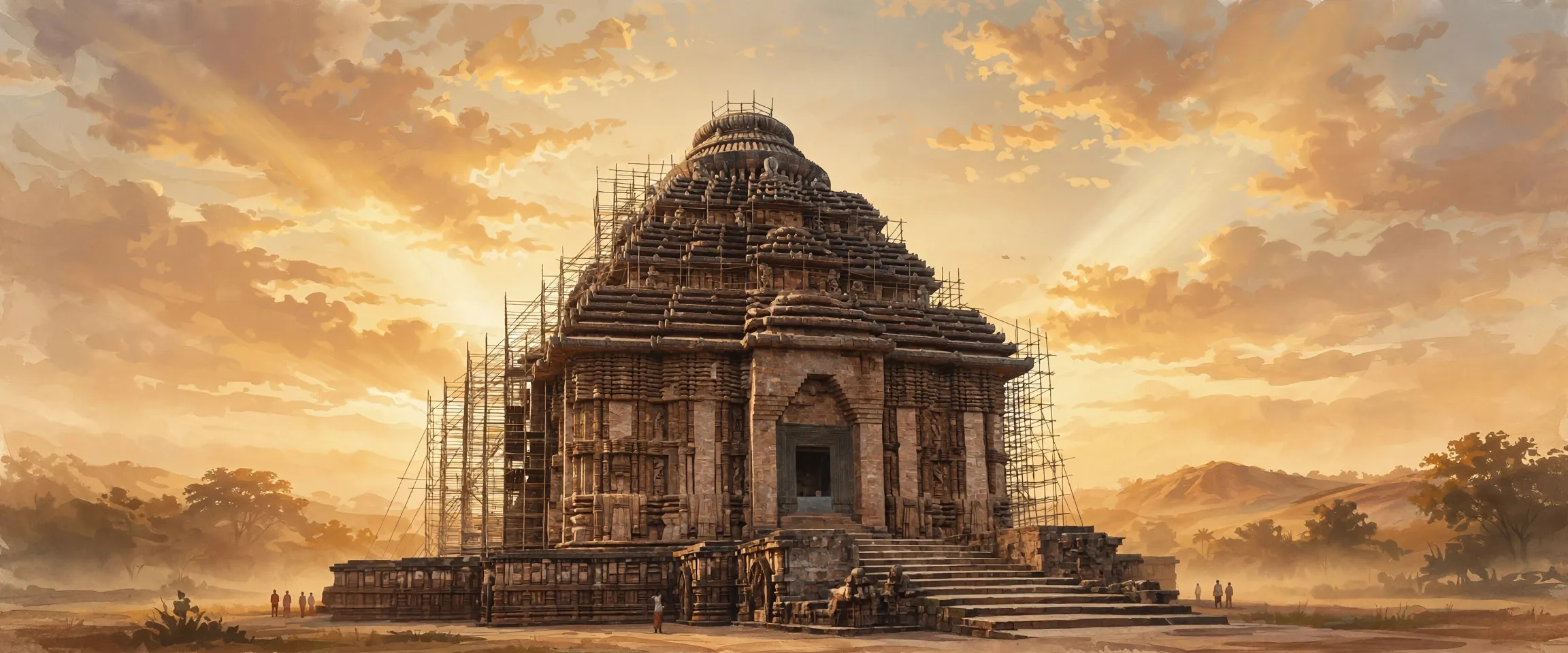
The Konark Sun Temple in Puri district, Odisha, is a 13th-century Hindu temple dedicated to Surya, the sun god, built around 1250 CE by King Narasimha Deva I of the Eastern Ganga dynasty. Conceived as a colossal stone chariot with 24 carved wheels and seven horses, it is the culmination of Kalinga architecture and has been a UNESCO World Heritage Site since 1984.
- Punjabi name
- ਕੋਨਾਰਕ ਸੂਰਜ ਮੰਦਰ
- Country
- India
- State
- Odisha
- District
- Puri
- Deity
- Surya, the sun god
- Built
- c. 1250 CE by King Narasimha Deva I, Eastern Ganga dynasty
All 9 facts
- Architectural style
- Kalinga (Odishan Nagara tradition)
- UNESCO
- World Heritage Site since 1984 (criteria i, iii, vi)
- Design
- 24 stone wheels (about 3 m diameter), 7 stone horses
The Konark Sun Temple on the Odisha coast is a stone chariot that never moves. Built around 1250 CE by King Narasimha Deva I of the Eastern Ganga dynasty, this Hindu temple is dedicated to Surya, the sun god, and represents the culmination of Kalinga temple architecture. Twenty-four elaborately carved stone wheels and seven stone horses carry the shrine in sculpture, and the temple has been a UNESCO World Heritage Site since 1984.
A chariot for the sun god
In the Vedic imagination, Surya crosses the sky each day in a chariot drawn by seven horses, driven by the charioteer Aruna. At Konark, that image was built at colossal scale. The temple platform carries twelve pairs of stone wheels, one pair for each month of the Hindu calendar, and seven stone horses strain forward as if pulling the shrine across the heavens. The horses are named for the seven metres of Sanskrit prosody: Gayatri, Brihati, Ushnih, Jagati, Trishtubh, Anushtubh and Pankti. The temple faces east, so the first rays of the rising sun strike its entrance, and the spokes of the great wheels are carved finely enough that they are said to work as sundials. The style is Kalinga, the Odishan branch of the Nagara tradition, given its own definitive form here.
Twelve years, twelve hundred artisans
UNESCO's records of the site preserve the tradition that the temple rose over twelve years through the labour of 1,200 artisans, directed by a master builder remembered as Bisu Moharana, whose son is said in legend to have set the crowning cupola and then given his life for the work. It was the capstone project of King Narasimha Deva I, who ruled the Eastern Ganga kingdom from 1238 to 1264 CE. The scale and refinement of the temple still testify to the strength of that 13th-century kingdom. Three stones went into the building: khondalite for the main fabric, chlorite for door frames and fine sculpture, and laterite for the platform core. None occurs naturally nearby, so the builders must have floated the blocks down rivers and channels, then dressed them so finely that the joints are barely visible.
What happened to the great tower?
The temple that stands today is a ruin, and a magnificent one. The original sanctuary tower, the deul, may once have risen over 61 metres; it collapsed in stages and had reached its ruined state by 1837. Scholars still debate the cause, with theories ranging from structural failure and coastal weathering to deliberate destruction during the sackings of the region between the 15th and 17th centuries. What survives is the great assembly hall, the jagamohana, about 39 metres tall with its pyramidal roof, plus the dance hall and the dining hall. British India-era archaeological teams conserved the ruins, and the temple is now protected by the Archaeological Survey of India. European sailors knew the dark, tiered tower as the Black Pagoda as early as 1676, using it as a landmark on the Bay of Bengal, while the Jagannath Temple at Puri was the White Pagoda.
Why is Konark a UNESCO World Heritage Site?
UNESCO inscribed the Sun Temple in 1984 under three criteria: as a masterpiece of creative genius, as an outstanding testimony to the 13th-century kingdom of Orissa, and as a monument directly linked to the cult of Surya, the personified sun god of the Vedas. The listing calls it the culmination of Kalingan temple architecture, with all its defining elements in complete and perfect form. Few Indian monuments are as widely recognised: the temple appears on the reverse of the Indian ten-rupee note, and its wheels and horses have become shorthand for Odisha itself.
What the carvings say
Every surface of the surviving structure is carved, from jewel-fine miniatures to life-size guardians. Deities and apsaras share the walls with musicians, dancers, animals and scenes of everyday life: processions, hunting parties, caravans of bullock carts, families at leisure. The temple is also famous for its erotic sculpture, kama and mithuna couples carved on the tower. Some panels turn inward to history, showing King Narasimha receiving counsel from his guru, the king rendered deliberately smaller than the holy man. Between the wheels, the plinth carries friezes of lions, elephants and dancers. An Aruna pillar that once stood before the eastern stair now stands in front of the Jagannath Temple at Puri, a reminder that Konark's story is still entangled with its living neighbour.
Visiting Konark today
The temple stands in its eponymous town about 35 kilometres northeast of Puri and 65 kilometres southeast of Bhubaneswar, no longer on the shoreline but set back from the Bay of Bengal. Each February, Hindu pilgrims gather here for the Chandrabhaga Mela, honouring Surya at the nearby Chandrabhaga beach, and the site hosts a celebrated festival of classical Indian dance. The monument is open to visitors through the day under ASI care, and it remains one of the great mandirs of India.
ਕੋਨਾਰਕ ਸੂਰਜ ਮੰਦਰ ਓਡੀਸ਼ਾ ਦੇ ਸਮੁੰਦਰੀ ਕੰਢੇ ਉੱਤੇ ਇੱਕ ਅਜਿਹਾ ਪੱਥਰ ਦਾ ਰੱਥ ਹੈ ਜੋ ਕਦੇ ਹਿੱਲਦਾ ਨਹੀਂ ਪੂਰਬੀ ਗੰਗ ਵੰਸ਼ ਦੇ ਰਾਜਾ ਨਰਸਿੰਘ ਦੇਵ ਪਹਿਲੇ ਨੇ ਇਸਨੂੰ ਲਗਭਗ 1250 ਈਸਵੀ ਵਿੱਚ ਬਣਵਾਇਆ ਸੀ ਇਹ ਮੰਦਰ ਸੂਰਜ ਦੇਵਤਾ ਨੂੰ ਸਮਰਪਿਤ ਹੈ ਅਤੇ ਕਲਿੰਗ ਭਵਨ ਨਿਰਮਾਣ ਕਲਾ ਦੀ ਸਿਖਰਲੀ ਮਿਸਾਲ ਹੈ ਚੌਵੀ ਬਾਰੀਕ ਨੱਕਾਸ਼ੀ ਵਾਲੇ ਪਹੀਏ ਅਤੇ ਸੱਤ ਪੱਥਰ ਦੇ ਘੋੜੇ ਇਸਨੂੰ ਮੂਰਤੀ ਕਲਾ ਵਿੱਚ ਖਿੱਚਦੇ ਹਨ, ਅਤੇ 1984 ਤੋਂ ਇਹ ਯੂਨੈਸਕੋ ਵਿਸ਼ਵ ਵਿਰਾਸਤ ਥਾਂ ਹੈ
ਸੂਰਜ ਦੇਵਤੇ ਦਾ ਰੱਥ
ਵੈਦਿਕ ਕਲਪਨਾ ਵਿੱਚ ਸੂਰਜ ਹਰ ਰੋਜ਼ ਸੱਤ ਘੋੜਿਆਂ ਦੇ ਰੱਥ ਵਿੱਚ ਅਸਮਾਨ ਪਾਰ ਕਰਦਾ ਹੈ, ਜਿਸਨੂੰ ਸਾਰਥੀ ਅਰੁਣ ਹੱਕਦਾ ਹੈ ਕੋਨਾਰਕ ਵਿੱਚ ਇਸੇ ਦ੍ਰਿਸ਼ ਨੂੰ ਵਿਸ਼ਾਲ ਰੂਪ ਦਿੱਤਾ ਗਿਆ ਮੰਦਰ ਦੇ ਚਬੂਤਰੇ ਉੱਤੇ ਬਾਰਾਂ ਜੋੜੇ ਪੱਥਰ ਦੇ ਪਹੀਏ ਹਨ, ਹਿੰਦੂ ਪੰਚਾਂਗ ਦੇ ਹਰ ਮਹੀਨੇ ਲਈ ਇੱਕ ਜੋੜਾ, ਅਤੇ ਸੱਤ ਪੱਥਰ ਦੇ ਘੋੜੇ ਇਸ ਤਰ੍ਹਾਂ ਅੱਗੇ ਵਧਦੇ ਹਨ ਜਿਵੇਂ ਮੰਦਰ ਨੂੰ ਅਸਮਾਨ ਵਿੱਚ ਖਿੱਚ ਰਹੇ ਹੋਣ ਘੋੜਿਆਂ ਦੇ ਨਾਂ ਸੰਸਕ੍ਰਿਤ ਛੰਦਾਂ ਦੇ ਸੱਤ ਮਾਪਾਂ ਉੱਤੇ ਹਨ: ਗਾਇਤ੍ਰੀ, ਬ੍ਰਿਹਤੀ, ਉਸ਼ਣਿਕ, ਜਗਤੀ, ਤ੍ਰਿਸ਼ਟੁਭ, ਅਨੁਸ਼ਟੁਭ ਅਤੇ ਪੰਕਤਿ ਮੰਦਰ ਦਾ ਮੂੰਹ ਪੂਰਬ ਵੱਲ ਹੈ, ਤਾਂ ਜੋ ਉੱਗਦੇ ਸੂਰਜ ਦੀਆਂ ਪਹਿਲੀਆਂ ਕਿਰਨਾਂ ਇਸਦੇ ਦਰਵਾਜ਼ੇ ਉੱਤੇ ਪੈਣ, ਅਤੇ ਵੱਡੇ ਪਹੀਆਂ ਦੀਆਂ ਤੀਲੀਆਂ ਇੰਨੀ ਬਾਰੀਕ ਬਣੀਆਂ ਹਨ ਕਿ ਕਿਹਾ ਜਾਂਦਾ ਹੈ ਕਿ ਉਹ ਧੁੱਪ ਘੜੀ ਵਾਂਗ ਕੰਮ ਕਰਦੀਆਂ ਹਨ ਇਹ ਸ਼ੈਲੀ ਕਲਿੰਗ ਹੈ, ਨਾਗਰ ਪਰੰਪਰਾ ਦੀ ਉੜੀਸਾ ਸ਼ਾਖਾ, ਜਿਸਨੂੰ ਇੱਥੇ ਆਪਣਾ ਨਿਸ਼ਚਿਤ ਰੂਪ ਮਿਲਿਆ
ਬਾਰਾਂ ਸਾਲ, ਬਾਰਾਂ ਸੌ ਕਾਰੀਗਰ
ਯੂਨੈਸਕੋ ਦੇ ਰਿਕਾਰਡ ਵਿੱਚ ਇਹ ਪਰੰਪਰਾ ਦਰਜ ਹੈ ਕਿ ਮੰਦਰ ਬਾਰਾਂ ਸਾਲਾਂ ਵਿੱਚ ਬਾਰਾਂ ਸੌ ਕਾਰੀਗਰਾਂ ਦੀ ਮਿਹਨਤ ਨਾਲ ਉੱਠਿਆ, ਜਿਨ੍ਹਾਂ ਦੀ ਅਗਵਾਈ ਬਿਸੂ ਮੋਹਾਰਾਣਾ ਨਾਂ ਦੇ ਮੁੱਖ ਸ਼ਿਲਪੀ ਨੇ ਕੀਤੀ ਕਥਾ ਕਹਿੰਦੀ ਹੈ ਕਿ ਉਸਦੇ ਪੁੱਤਰ ਨੇ, ਜੋ ਕੰਮ ਦੌਰਾਨ ਜਨਮਿਆ ਸੀ, ਉਹ ਕਲਸ਼ ਰੱਖਿਆ ਜੋ ਉਸਦਾ ਪਿਤਾ ਨਾ ਰੱਖ ਸਕਿਆ, ਅਤੇ ਫਿਰ ਆਪਣੀ ਜਾਨ ਦੇ ਦਿੱਤੀ ਇਹ ਪੂਰਬੀ ਗੰਗ ਵੰਸ਼ ਦੇ ਰਾਜਾ ਨਰਸਿੰਘ ਦੇਵ ਪਹਿਲੇ (ਰਾਜ 1238-1264 ਈਸਵੀ) ਦੀ ਸਿਖਰਲੀ ਯੋਜਨਾ ਸੀ ਮੰਦਰ ਦਾ ਵਿਸ਼ਾਲ ਆਕਾਰ ਅਤੇ ਬਾਰੀਕ ਕਾਰੀਗਰੀ ਅੱਜ ਵੀ ਉਸ ਤੇਰ੍ਹਵੀਂ ਸਦੀ ਦੇ ਰਾਜ ਦੀ ਤਾਕਤ ਦੀ ਗਵਾਹੀ ਦਿੰਦੇ ਹਨ ਇਮਾਰਤ ਵਿੱਚ ਤਿੰਨ ਪੱਥਰ ਲੱਗੇ: ਮੁੱਖ ਢਾਂਚੇ ਲਈ ਖੋਂਡਾਲਾਈਟ, ਦਰਵਾਜ਼ਿਆਂ ਅਤੇ ਬਾਰੀਕ ਮੂਰਤੀਆਂ ਲਈ ਕਲੋਰਾਈਟ, ਅਤੇ ਚਬੂਤਰੇ ਦੀ ਨੀਂਹ ਲਈ ਲੈਟਰਾਈਟ ਇਹਨਾਂ ਵਿੱਚੋਂ ਕੋਈ ਨੇੜੇ ਨਹੀਂ ਮਿਲਦਾ, ਇਸ ਲਈ ਕਾਰੀਗਰਾਂ ਨੇ ਸ਼ਾਇਦ ਪੱਥਰ ਨਦੀਆਂ ਰਾਹੀਂ ਤਾਰ ਕੇ ਲਿਆਂਦੇ ਅਤੇ ਇੰਨੀ ਸਫਾਈ ਨਾਲ ਘੜੇ ਕਿ ਜੋੜ ਮੁਸ਼ਕਲ ਨਾਲ ਦਿਸਦੇ ਹਨ
ਮਹਾਨ ਸ਼ਿਖਰ ਦਾ ਕੀ ਬਣਿਆ?
ਅੱਜ ਜੋ ਮੰਦਰ ਖੜ੍ਹਾ ਹੈ ਉਹ ਖੰਡਰ ਹੈ, ਪਰ ਸ਼ਾਨਦਾਰ ਖੰਡਰ ਮੂਲ ਗਰਭਗ੍ਰਹਿ ਦਾ ਸ਼ਿਖਰ ਕਦੇ ਇਕੱਠ ਮੀਟਰ ਤੋਂ ਉੱਚਾ ਹੋ ਸਕਦਾ ਸੀ; ਉਹ ਹੌਲੀ ਹੌਲੀ ਡਿੱਗਿਆ ਅਤੇ 1837 ਤੱਕ ਖੰਡਰ ਹੋ ਚੁੱਕਾ ਸੀ ਵਿਦਵਾਨ ਅਜੇ ਵੀ ਕਾਰਨ ਉੱਤੇ ਬਹਿਸ ਕਰਦੇ ਹਨ: ਕੁਦਰਤੀ ਟੁੱਟ ਭੱਜ ਤੋਂ ਲੈ ਕੇ ਪੰਦਰਵੀਂ ਤੋਂ ਸਤਾਰ੍ਹਵੀਂ ਸਦੀ ਦਰਮਿਆਨ ਹਮਲਿਆਂ ਵਿੱਚ ਜਾਣਬੁੱਝ ਕੇ ਤਬਾਹੀ ਤੱਕ ਜੋ ਬਚਿਆ ਹੈ ਉਹ ਮਹਾਨ ਸਭਾ ਮੰਡਪ, ਜਗਮੋਹਨ ਹੈ, ਲਗਭਗ ਉਨਤਾਲੀ ਮੀਟਰ ਉੱਚਾ, ਜਿਸਦੀ ਪਿਰਾਮਿਡ ਵਰਗੀ ਛੱਤ ਹੈ, ਨਾਲ ਹੀ ਨਾਚ ਮੰਡਪ ਅਤੇ ਭੋਗ ਮੰਡਪ ਬ੍ਰਿਟਿਸ਼ ਕਾਲ ਦੀਆਂ ਪੁਰਾਤੱਤਵ ਟੀਮਾਂ ਨੇ ਖੰਡਰਾਂ ਦੀ ਸਾਂਭ ਸੰਭਾਲ ਕੀਤੀ, ਅਤੇ ਅੱਜ ਇਹ ਭਾਰਤੀ ਪੁਰਾਤੱਤਵ ਸਰਵੇਖਣ ਦੀ ਦੇਖਰੇਖ ਹੇਠ ਹੈ ਯੂਰਪੀ ਮਲਾਹ ਇਸ ਕਾਲੇ, ਮੰਜ਼ਲਦਾਰ ਮੀਨਾਰ ਨੂੰ 1676 ਤੋਂ ਹੀ 'ਕਾਲਾ ਪਗੋਡਾ' ਕਹਿੰਦੇ ਸਨ ਅਤੇ ਬੰਗਾਲ ਦੀ ਖਾੜੀ ਵਿੱਚ ਇਸਨੂੰ ਨਿਸ਼ਾਨੀ ਵਜੋਂ ਵਰਤਦੇ ਸਨ, ਜਦੋਂ ਕਿ ਪੁਰੀ ਦਾ ਜਗਨਨਾਥ ਮੰਦਰ 'ਚਿੱਟਾ ਪਗੋਡਾ' ਸੀ
ਕੋਨਾਰਕ ਯੂਨੈਸਕੋ ਵਿਸ਼ਵ ਵਿਰਾਸਤ ਕਿਉਂ ਹੈ?
ਯੂਨੈਸਕੋ ਨੇ 1984 ਵਿੱਚ ਸੂਰਜ ਮੰਦਰ ਨੂੰ ਤਿੰਨ ਆਧਾਰਾਂ ਉੱਤੇ ਸੂਚੀਬੱਧ ਕੀਤਾ: ਰਚਨਾਤਮਕ ਪ੍ਰਤਿਭਾ ਦੀ ਉੱਤਮ ਮਿਸਾਲ ਵਜੋਂ, ਤੇਰ੍ਹਵੀਂ ਸਦੀ ਦੇ ਉੜੀਸਾ ਰਾਜ ਦੀ ਅਨੂਠੀ ਗਵਾਹੀ ਵਜੋਂ, ਅਤੇ ਵੇਦਾਂ ਦੇ ਸੂਰਜ ਦੇਵਤਾ ਸੂਰਜ ਦੀ ਪੂਜਾ ਨਾਲ ਸਿੱਧੇ ਜੁੜੇ ਸਮਾਰਕ ਵਜੋਂ ਸੂਚੀ ਇਸਨੂੰ ਕਲਿੰਗ ਭਵਨ ਨਿਰਮਾਣ ਕਲਾ ਦੀ ਸਿਖਰ ਦੱਸਦੀ ਹੈ, ਜਿਸਦੇ ਸਾਰੇ ਨਿਸ਼ਚਿਤ ਅੰਗ ਪੂਰਨ ਰੂਪ ਵਿੱਚ ਮੌਜੂਦ ਹਨ ਭਾਰਤ ਦੇ ਬਹੁਤ ਘੱਟ ਸਮਾਰਕ ਇੰਨੇ ਪਛਾਣੇ ਜਾਂਦੇ ਹਨ: ਇਹ ਮੰਦਰ ਦਸ ਰੁਪਏ ਦੇ ਭਾਰਤੀ ਨੋਟ ਦੇ ਪਿਛਲੇ ਪਾਸੇ ਛਪਿਆ ਹੈ, ਅਤੇ ਇਸਦੇ ਪਹੀਏ ਤੇ ਘੋੜੇ ਓਡੀਸ਼ਾ ਦੀ ਪਛਾਣ ਬਣ ਗਏ ਹਨ
ਨੱਕਾਸ਼ੀ ਕੀ ਕਹਿੰਦੀ ਹੈ
ਬਚੀ ਹੋਈ ਇਮਾਰਤ ਦੀ ਹਰ ਸਤ੍ਹਾ ਨੱਕਾਸ਼ ਹੈ, ਗਹਿਣਿਆਂ ਜਿਹੀ ਬਾਰੀਕ ਮੂਰਤੀਆਂ ਤੋਂ ਲੈ ਕੇ ਜੀਵਨ ਆਕਾਰ ਦੇ ਰਾਖਿਆਂ ਤੱਕ ਕੰਧਾਂ ਉੱਤੇ ਦੇਵਤੇ ਅਤੇ ਅਪਸਰਾਵਾਂ ਦੇ ਨਾਲ ਸੰਗੀਤਕਾਰ, ਨਰਤਕ, ਜਾਨਵਰ ਅਤੇ ਰੋਜ਼ਾਨਾ ਜੀਵਨ ਦੇ ਦ੍ਰਿਸ਼ ਹਨ: ਸ਼ੋਭਾ ਯਾਤਰਾਵਾਂ, ਸ਼ਿਕਾਰ ਦਲ, ਬਲਦ ਗੱਡੀਆਂ ਦੇ ਕਾਫਲੇ, ਆਰਾਮ ਕਰਦੇ ਪਰਿਵਾਰ ਮੰਦਰ ਆਪਣੀ ਸ਼ਿੰਗਾਰਕ ਮੂਰਤੀ ਕਲਾ ਲਈ ਵੀ ਮਸ਼ਹੂਰ ਹੈ, ਸ਼ਿਖਰ ਉੱਤੇ ਕਾਮ ਅਤੇ ਮਿਥੁਨ ਜੋੜੇ ਕੁਝ ਪੱਟੀਆਂ ਇਤਿਹਾਸ ਵੱਲ ਮੁੜਦੀਆਂ ਹਨ, ਜਿਵੇਂ ਰਾਜਾ ਨਰਸਿੰਘ ਆਪਣੇ ਗੁਰੂ ਤੋਂ ਸਲਾਹ ਲੈਂਦਾ ਹੈ, ਜਿੱਥੇ ਰਾਜੇ ਨੂੰ ਜਾਣਬੁੱਝ ਕੇ ਗੁਰੂ ਤੋਂ ਛੋਟਾ ਦਿਖਾਇਆ ਗਿਆ ਹੈ ਪਹੀਆਂ ਦੇ ਵਿਚਕਾਰ ਚਬੂਤਰੇ ਉੱਤੇ ਸ਼ੇਰਾਂ, ਹਾਥੀਆਂ ਅਤੇ ਨਰਤਕਾਂ ਦੀਆਂ ਪੱਟੀਆਂ ਹਨ ਪੂਰਬੀ ਪੌੜੀਆਂ ਸਾਹਮਣੇ ਖੜ੍ਹਾ ਅਰੁਣ ਥੰਮ੍ਹ ਹੁਣ ਪੁਰੀ ਦੇ ਜਗਨਨਾਥ ਮੰਦਰ ਸਾਹਮਣੇ ਖੜ੍ਹਾ ਹੈ, ਇਹ ਯਾਦ ਦਿਵਾਉਂਦਾ ਹੈ ਕਿ ਕੋਨਾਰਕ ਦੀ ਕਹਾਣੀ ਅੱਜ ਵੀ ਆਪਣੇ ਜਿਉਂਦੇ ਗੁਆਂਢੀ ਨਾਲ ਜੁੜੀ ਹੈ
ਅੱਜ ਕੋਨਾਰਕ ਜਾਣਾ
ਮੰਦਰ ਆਪਣੇ ਨਾਂ ਵਾਲੇ ਕਸਬੇ ਵਿੱਚ ਖੜ੍ਹਾ ਹੈ, ਪੁਰੀ ਤੋਂ ਲਗਭਗ ਪੈਂਤੀ ਕਿਲੋਮੀਟਰ ਉੱਤਰ ਪੂਰਬ ਅਤੇ ਭੁਵਨੇਸ਼ਵਰ ਤੋਂ ਪੈਂਸਠ ਕਿਲੋਮੀਟਰ ਦੱਖਣ ਪੂਰਬ, ਹੁਣ ਸਮੁੰਦਰੀ ਕੰਢੇ ਤੋਂ ਥੋੜ੍ਹਾ ਅੰਦਰ ਹਰ ਫਰਵਰੀ ਵਿੱਚ ਹਿੰਦੂ ਸ਼ਰਧਾਲੂ ਚੰਦਰਭਾਗਾ ਮੇਲੇ ਲਈ ਇੱਥੇ ਇਕੱਠੇ ਹੁੰਦੇ ਹਨ, ਨੇੜਲੇ ਚੰਦਰਭਾਗਾ ਸਮੁੰਦਰੀ ਕੰਢੇ ਉੱਤੇ ਸੂਰਜ ਦਾ ਸਤਿਕਾਰ ਕਰਦੇ ਹਨ, ਅਤੇ ਇਹ ਥਾਂ ਭਾਰਤੀ ਸ਼ਾਸਤਰੀ ਨਾਚ ਦੇ ਮਸ਼ਹੂਰ ਉਤਸਵ ਦੀ ਮੇਜ਼ਬਾਨੀ ਕਰਦੀ ਹੈ ਸਮਾਰਕ ਭਾਰਤੀ ਪੁਰਾਤੱਤਵ ਸਰਵੇਖਣ ਦੀ ਦੇਖਰੇਖ ਹੇਠ ਦਿਨ ਭਰ ਸੈਲਾਨੀਆਂ ਲਈ ਖੁੱਲ੍ਹਾ ਰਹਿੰਦਾ ਹੈ, ਅਤੇ ਇਹ ਭਾਰਤ ਦੇ ਮਹਾਨ ਮੰਦਰਾਂ ਵਿੱਚੋਂ ਇੱਕ ਹੈ